12 ad copy examples, grouped by the technique behind them
Twelve real ad copy examples from 2021 to 2026 across out-of-home, TV and social, plus the limits for search ads, with the exact line and the technique behind it.

In 2023 a bus shelter poster told people walking past that “Serena Williams eats our cereal,” and a footnote underneath admitted she was a student from London. The headline makes you stop, and the footnote deals with your doubt before you’ve finished having it. Every line below does one narrow job like that, and most of them keep working when the picture beside them turns out weaker than planned.
I work at Moonb, and the weakest copy I read tries to do everything at once; “make the headline pop” is a brief line I push back on for that reason. Most lists for this search recycle last century’s famous slogans. I will allow one, because it still explains the whole game in three words: in 1962 Avis adopted “We Try Harder” to put a positive spin on being the second-largest car rental company in the US, behind Hertz, and kept it for 50 years (Wikipedia). The rest ran between 2021 and 2026. I grouped them by the trick each line plays and left search for the end, where Google’s character limits box you in.
In a 2017 piece, Nielsen wrote that among the drivers of sales, good creative “is still the most important element,” even as the effect of media on sales rose to 36% from 15% over 11 years. Plenty of these examples are billboards. Our roundup of the best billboard ads covers that medium properly, and I’ve kept this one to the words.
Specific beats clever
1. e.l.f. Beauty, “So Many Dicks” (2024)
In May 2024 e.l.f. Beauty put a campaign called “So Many Dicks” on digital screens around Wall Street, including Fulton Street Station and The Oculus, through June 10. The press release ran under the headline “So Many ‘Dicks’ So Few of Everyone Else.”
The headline is rude on purpose, and it has a spreadsheet behind it. With the agency OBERLAND, e.l.f. went through 36,957 board members across 4,429 US public companies and counted 566 men named Richard, Rick or Dick. The release puts that next to 806 Black women and 774 Asian women on the same boards.
e.l.f. posted a short walk-through of the installation on its own channel.
The rude word goes up front, and the follow-through panels in the video come right behind it: “So few of everyone else” and “Learn how diversity creates profitability for everyone. Even Dicks.” I love that second line, because it invites in the men being counted. Plenty of brands would never put their name to any of it.
2. Heinz, “A.I. Ketchup” (2022)
In July 2022 Heinz posted what DALL-E 2 made of a run of ketchup prompts. The brand’s own YouTube description is the copy: “we wanted to find out what A.I. thinks ‘ketchup’ looks like… The result? Just like humans, A.I. prefers Heinz.”
Most of the on-screen copy is prompts typed into a search bar (“Fry castle,” “Ketchup synthwave”) over the generated images. Heinz never claims, in its own voice, to be the default ketchup. DALL-E 2 makes that claim for it, and the description reads like a lab note on the result.
Answer the objection before it forms
3. Surreal, the celebrity namesake billboards (2023)
Surreal is a UK cereal brand launched in late 2021 (Wikipedia). In March 2023 it ran posters “endorsed” by Serena Williams, Dwayne Johnson, Ronaldo and Michael Jordan, all of them people who happened to share those names (Creative Bloq).
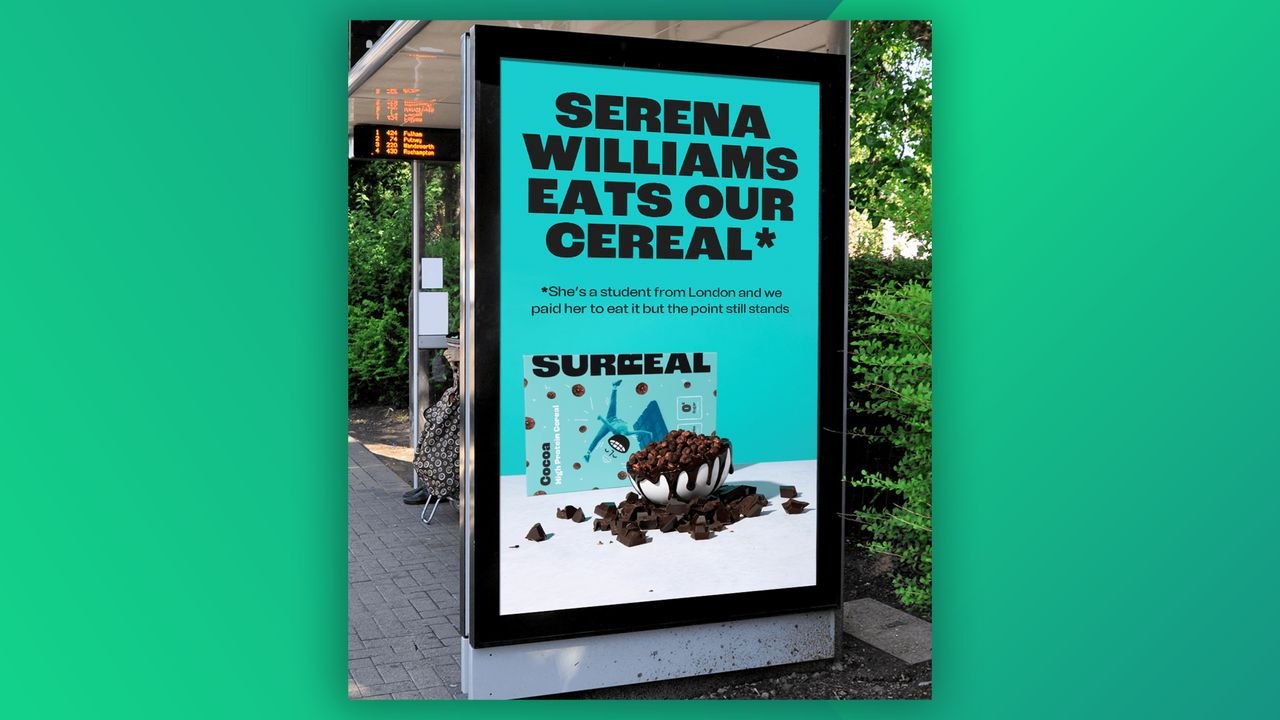 Image: Surreal, via Creative Bloq
The headline says “Serena Williams eats our cereal*” and the footnote owns up straight away: “*She’s a student from London and we paid her to eat it but the point still stands.” The Dwayne Johnson version explained in the small print that “Dwayne is a bus driver from London.” You might think “that can’t be the real one” but the footnote has already said so. For a small brand with no celebrity money, it’s the most copyable entry on this list. Co-founder Kit Gammell kept it going in the press with “If anyone knows a Dave Beckham, please get in touch.”
4. Lendela, “Loans so transparent you can see right through” (2025)
Lendela is a Singapore-based fintech platform. In June 2025 it turned MRT station windows in Sengkang and Punggol into see-through billboards with creative agency Sweatshop and Moove Media (Marketing-Interactive).
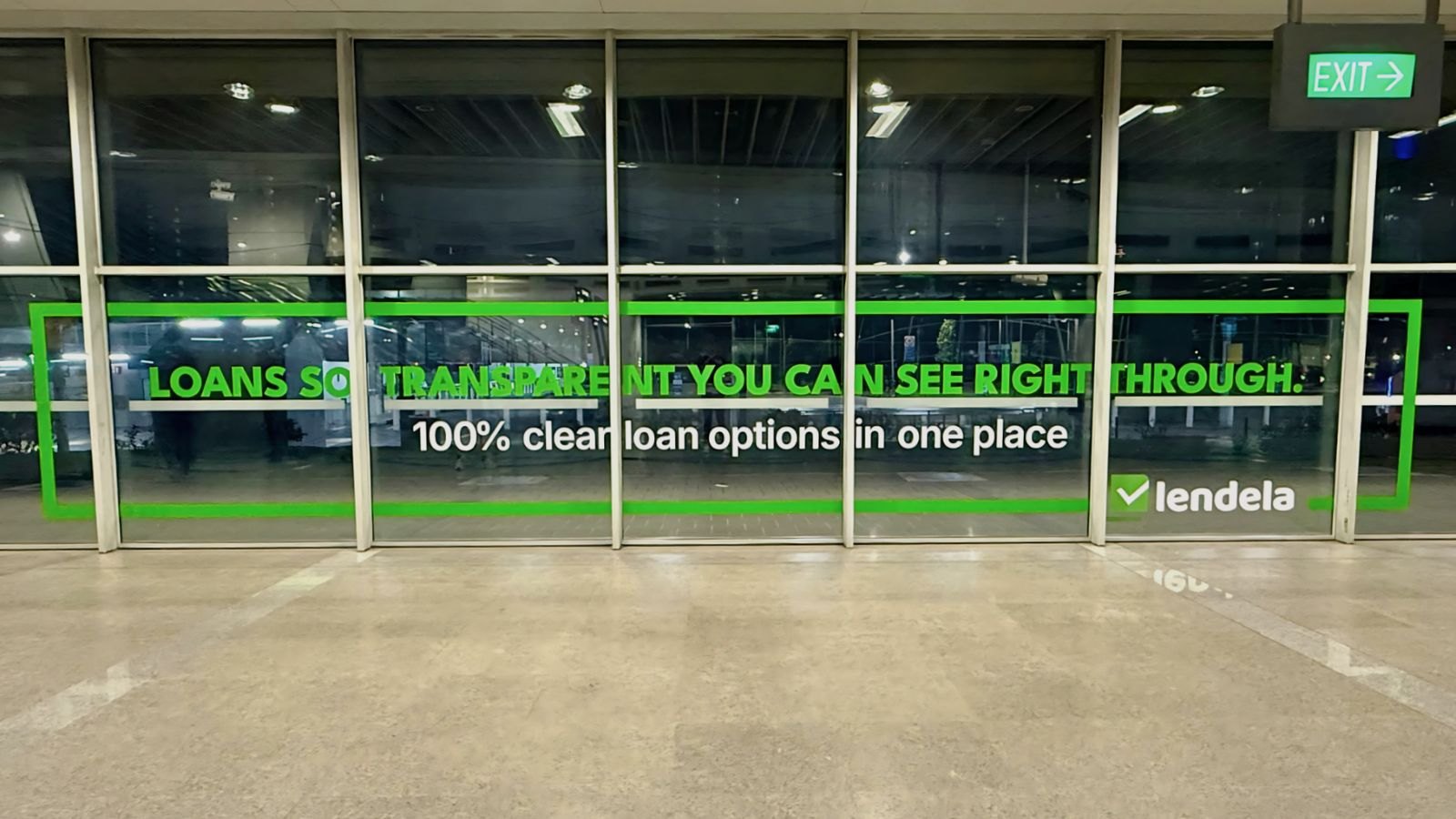 Image: Lendela, via Marketing-Interactive
“Loans so transparent you can see right through.” sits on the glass, with “100% clean loan options in one place” underneath. Loans mean fine print to most people, and here you read the claim through a window. The board picks that one fear and says nothing about the rest. Vanessa Ng, Lendela’s head of marketing in Singapore, said “getting a loan should be as transparent as these billboards.”
5. Weetabix, “Beanz on Bix” (2021)
On February 9, 2021, Weetabix posted a photo of two biscuits topped with Heinz baked beans, with the caption “Why should bread have all the fun, when there’s Weetabix? Serving up @HeinzUK Beanz on bix for breakfast with a twist. #ItHasToBeHeinz #HaveYouHadYourWeetabix” (Heart).
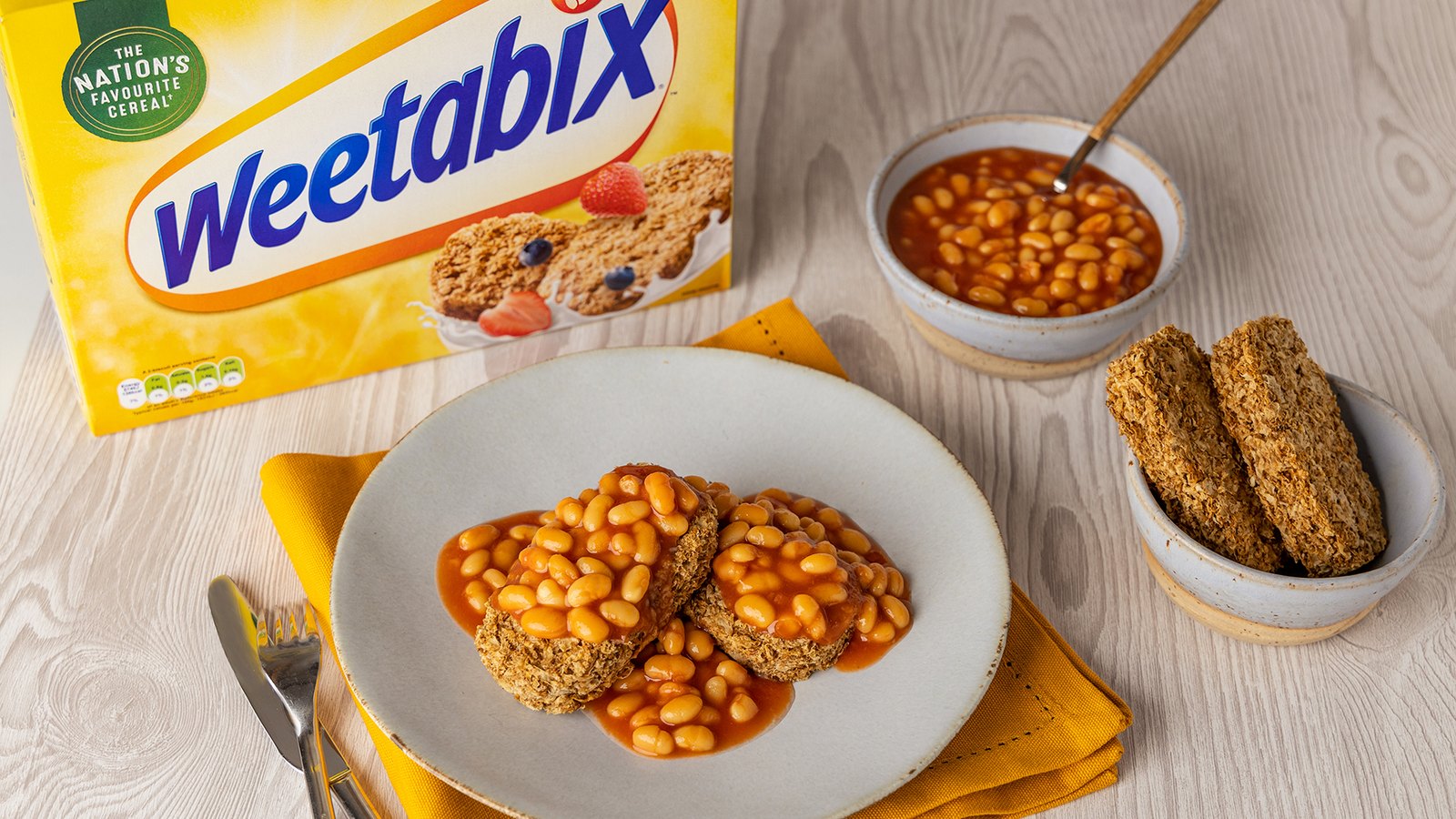 Image: @weetabix on X
This time the brand went looking for the objection. Beans on cereal, really? The internet supplied the outrage, and other brands piled in the same day; Domino’s Pizza UK wrote “Us: Pineapple on pizza is the most controversial food ever. Weetabix: Hold my spoon.” (Social Samosa).
Say what you are not
6. Polestar, “No Compromises” (2022)
Polestar’s 30-second Super Bowl LVI spot is a list of things the brand is not. Fortune reported that the $7 million ad bragged of “no conquering Mars” and “no Dieselgate,” a dig at Tesla’s boss and at Volkswagen’s 2015 emissions scandal (Fortune).
The spot puts short lines of plain type beside the car, “No dieselgate,” “No greenwashing,” and a lone “No.” That middle one sneaks a sustainability claim in without bragging about anything. For a Super Bowl slot it’s a very quiet spot, and Polestar’s own description says as much: “No epic voiceovers, no punchlines, no compromises.”
7. The Economist, the red one-liners (2025)
In June 2025, according to Marketing-Interactive, The Economist took over billboards under bridges and at intersections with short lines of white type on red.
 Image: The Economist, photo by Ant Melder, via Marketing-Interactive
The lines included “Make AI worried you’re going to take its job,” “Don’t jump to conclusions. Stroll there while enjoying the view,” “Do you have an unprompted opinion?” (I quote “Unprompted opinion” in meetings more than I should) and “Take the humble out of ‘IMHO’.” Each one needles a lazier version of the reader, and not one of them mentions the journalism.
8. Wonda Coffee, the real M. Nasir (2025)
This contrast was built on somebody else’s billboard. ZUS Coffee had run “ZUS Coffee kegemaran M. Nasir” (ZUS Coffee is M. Nasir’s favorite), with an asterisk explaining that this M. Nasir was a math teacher from Alor Setar who likes karaoke, not the music legend. In April 2025, Wonda Coffee answered with the actual singer (Marketing-Interactive).
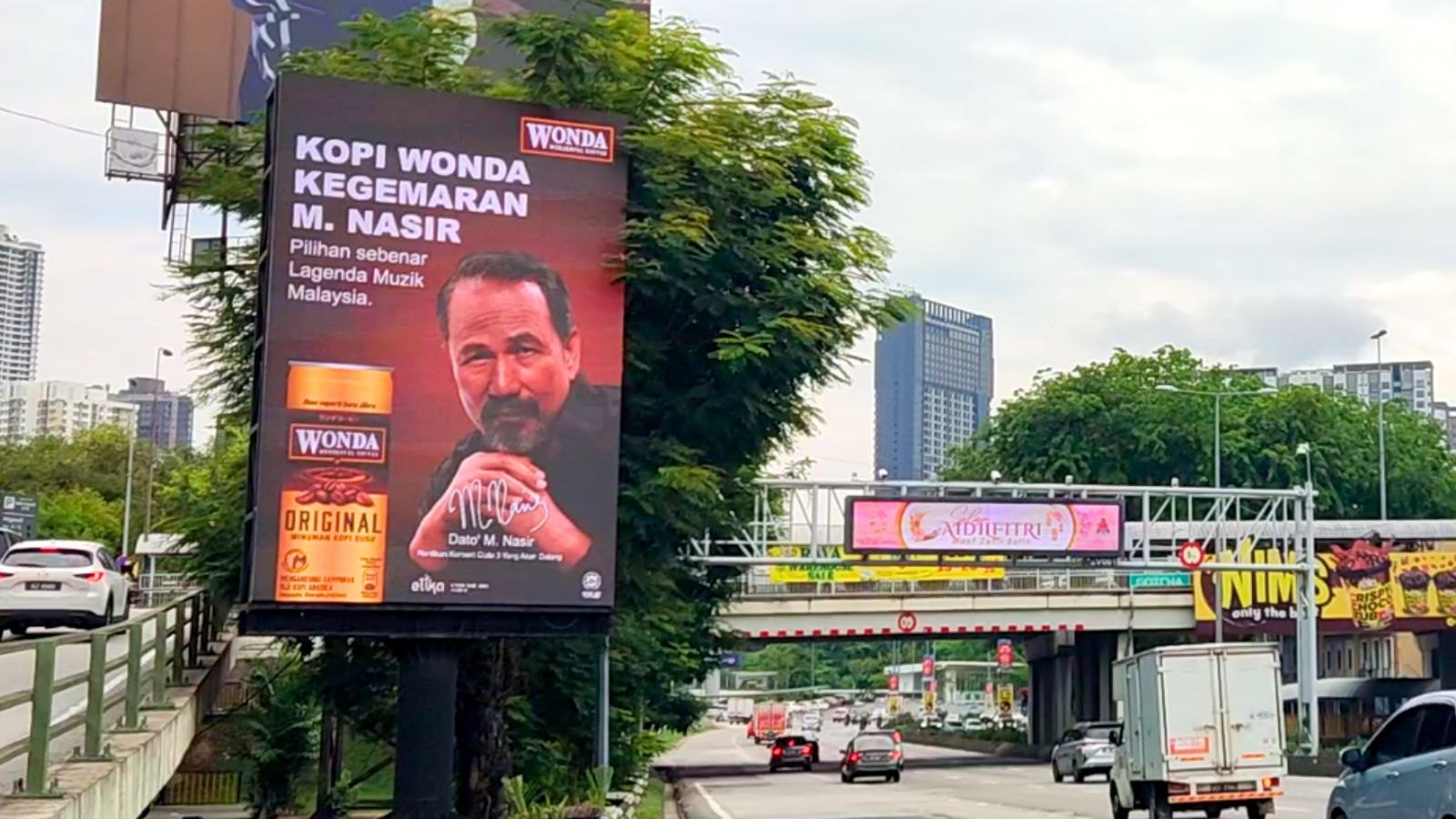 Image: Wonda Coffee, via Marketing-Interactive
“Kopi Wonda kegemaran M. Nasir.” It is the sentence ZUS used, except this time it’s the real man, and his signature is on the board. If you never saw the ZUS board, this one reads as a plain celebrity endorsement. One post on X, in Marketing-Interactive’s translation, read “When ZUS uses Nasir, Wonda uses the real M. Nasir.” Grab Malaysia piled on with “M Nasir’s favourite coffees. Grab has both of them” (Marketing-Interactive). ZUS’s board used the same namesake trick Surreal ran two years before, so read those two entries together.
Lines built to be repeated
Burger King wrote its jingle to be sung back. Jet2 got there by accident, through TikTok, and Spotify skipped the writing and borrowed its users’ words.
9. Jet2, “Nothing beats a Jet2holiday” (2024 ad, 2025 meme)
Jet2’s sign-off was already on its 2022 ads. In summer 2025 it became a TikTok trend, and Jet2 later said the slogan was mentioned in 11.8 million social media posts; Jess Glynne’s “Hold My Hand” was named TikTok’s global Song of the Summer 2025 (Irish News).
The January 2024 sale ad on Jet2’s channel has more than ten million views.
The supers do the selling (“Save £50 per person,” “Free child place holidays.”) and the slogan is what people repeat. TikTok users wrote the jokes; the slogan was short and confident enough to still make sense when they dropped it into the wrong context. In that same results statement the company credited the trend with raising brand awareness among younger generations.
10. Burger King, “You Rule” (2022)
In October 2022 Burger King relaunched its brand around the tagline “You Rule,” a play on the paper crowns, with a remix of the “Have it Your Way” jingle first introduced in the 1970s (Marketing Dive). The rap that sets it up goes “You rule, you’re seizing the day, at BK have it your way” (Tasting Table).
Washington State’s student paper called the “Whopper Whopper” jingle spots a staple of that season’s NFL postseason (The Daily Evergreen). The extended cut on Burger King’s channel has over 18 million views.
Visually it’s not much beyond a patty, a built Whopper and the gold “You Rule.” card, so the audio has to carry the spot. Written down, the jingle is basically a menu set to a beat, and it repeats the product name more often than most briefs would allow.
11. Spotify, “Playlist It” (2026)
In August 2026 Spotify and Uncommon New York put real users’ playlist titles on billboards and street posters in New York, Los Angeles and Miami (Media Marketing). In Los Angeles, one read “I refuse to take accountability so I blame it on the 405.”
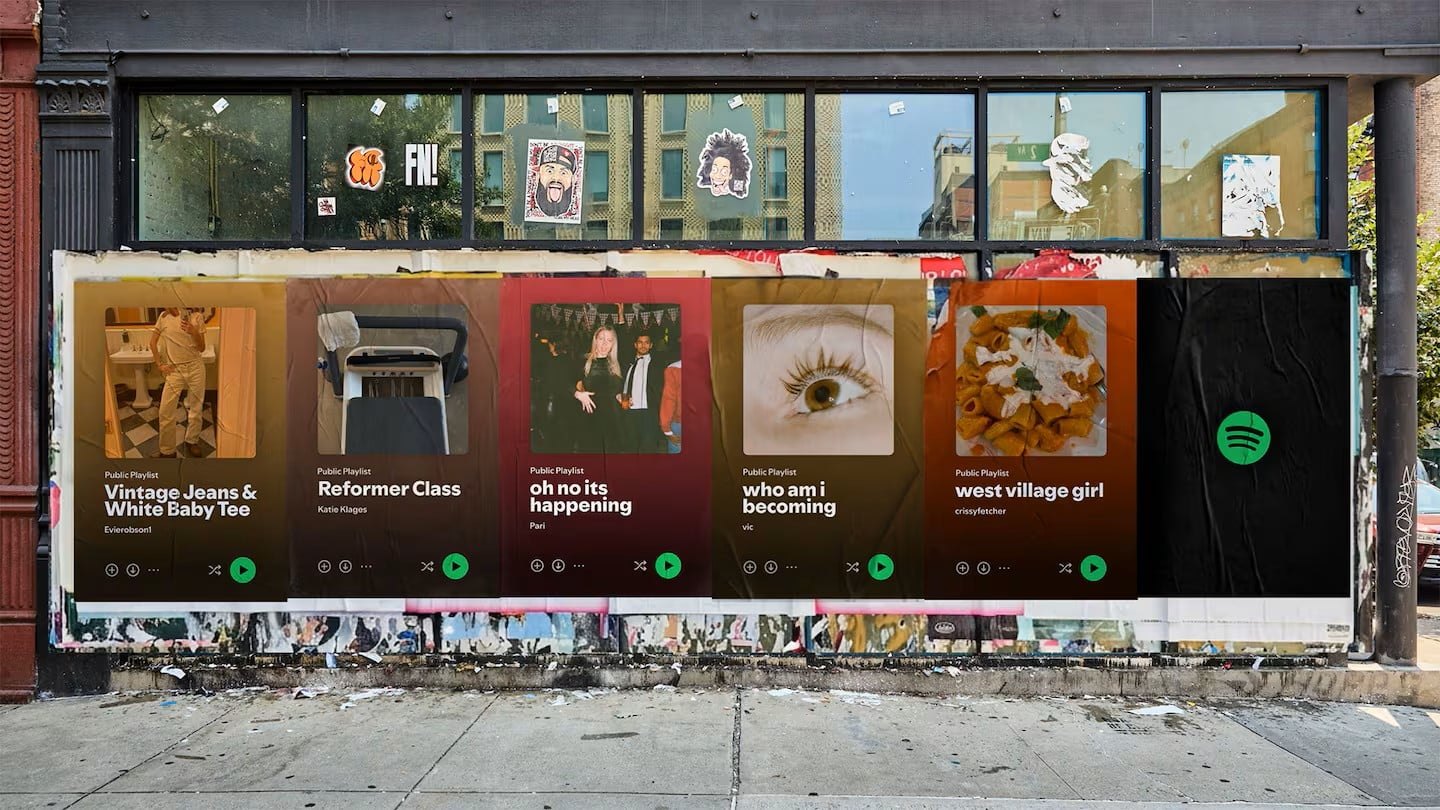 Image: Spotify, via Media Marketing
The copywriting here was picking and placing, which is harder than it sounds when the pool is every public playlist title. Media Marketing describes the 405 title as a reference “any driver stuck on the famous 405 freeway understands very well,” and outside Los Angeles it would mean a lot less. The campaign had started months before, when the Knicks returned to the finals after 27 years and Spotify put fans’ playlists about the wait on the street.
Search copy, and the box it lives in
Nobody writes case studies about a good search headline, so the closest example I could find is a billboard dressed up as a search box. Google’s own limits come after it.
12. Samsung Malaysia, the search history billboard (2025)
In May 2025, billboards across the Klang Valley, Penang, Ipoh, Kota Kinabalu and Kuching showed what looked like someone’s search history left on screen: “who is m nasir,” “is pickleball overrated,” “what does cat food taste like,” “why body itchy after thrifting” (Marketing-Interactive).
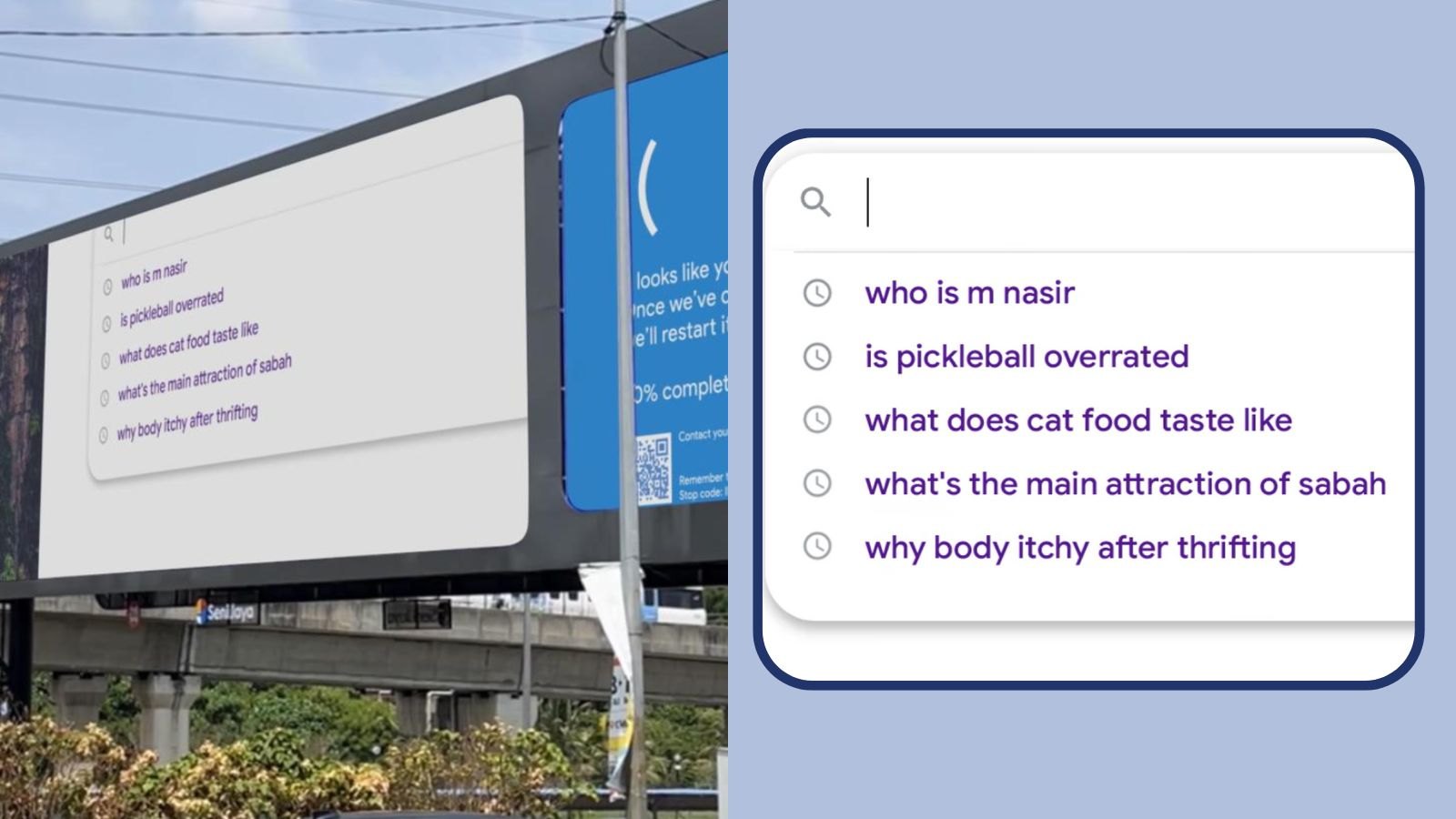 Image: Samsung Malaysia, via Marketing-Interactive
Next to them sat a fake crash screen whose stop code read “INI_LIVE_GEM,” an anagram of Gemini Live. Samsung Malaysia then claimed it on Instagram with “It was us. Always has been,” and said the billboard was a teaser for the Samsung AI TalkSpot with the Galaxy S25 series. Search queries are about the most unguarded writing people do, and everyone recognizes that lowercase, half-grammatical voice. The #TalkNotType pitch asks you to stop typing like that and talk to the phone.
When you write the search ads yourself, the format is strict. Google’s responsive search ad guidance says headlines “support up to 30 characters” and descriptions “up to 90 characters each,” that you need “a minimum of 3 headlines, but you can enter up to 15,” and “a minimum of 2 descriptions, but you can enter up to 4.” It also warns that “headlines and descriptions may appear in any order.”
I’d worry about that last warning more than the character counts. You do not control what any asset sits next to, so each one has to make sense alone. A sample set for an unnamed running-shoe store might look like this:
| Asset | Copy | Characters | Its one job |
|---|---|---|---|
| Headline | Men’s Trail Running Shoes | 25 | Names the audience and the product |
| Headline | Waterproof Trail Shoes | 22 | A feature the shopper can verify |
| Headline | Shop Trail Shoes by Size | 24 | The next step |
| Description | Find waterproof trail shoes in men’s and women’s sizes. | 55 | Restates the claim with the range |
| Description | Compare trail shoes by fit, grip and price. Shop available sizes. | 65 | Gives the comparison reason to click |
Use only details the store can confirm, and send the click to a page that shows them. Google’s page on optimizing ads and landing pages gives its own example: if your ad promises shoes at 20% off, “customers should be able to find and buy shoes at that discounted price on your landing page.”
Writing copy that survives a bad image
Assume the picture will let you down. A media buyer swaps the asset, or the placement crops the product out of frame.
The Economist and Lendela survive almost anything, and Surreal mostly does too, since the footnote carries the joke by itself. Spotify’s posters need the right street, though, and the Wonda line needs the reader to remember a rival’s ad. That’s fine when you control placement and timing. On programmatic social, where the same file might run anywhere, it’s a gamble.
Before a line goes out I pair the headline with a plain product shot, a stock photo of a person and a gray texture, and check the claim still reads on all of them. I strike any word that points at the picture (“this,” “here,” “that color”). And I brief the image with the line attached, so whoever picks a replacement knows what it has to hold up. For the visual half, our guide to ad creatives walks through fifteen creative patterns, the display ad examples post shows one message cut into several sizes, and ad creative testing covers finding out which line wins.
Every line, its job and its technique
| # | Brand and year | Channel | The copy | Job the line does | Technique |
|---|---|---|---|---|---|
| 1 | e.l.f. Beauty, 2024 | Digital OOH, social | “So Many Dicks” | Makes a board-diversity stat impossible to ignore | Specificity, backed by a count |
| 2 | Heinz, 2022 | Online video | “Just like humans, A.I. prefers Heinz.” | Proves brand dominance | Demonstration as proof |
| 3 | Surreal, 2023 | OOH | “Serena Williams eats our cereal*” | Gets a small brand talked about | Objection answered in the footnote |
| 4 | Lendela, 2025 | Station windows | “Loans so transparent you can see right through.” | Counters the fine-print fear | Objection answered by the medium |
| 5 | Weetabix, 2021 | Organic social | “Why should bread have all the fun, when there’s Weetabix?” | Starts a conversation about new ways to eat it | Objection provoked on purpose |
| 6 | Polestar, 2022 | TV, YouTube | “No dieselgate” | Positions a new EV brand against incumbents | Contrast through negatives |
| 7 | The Economist, 2025 | OOH | “Make AI worried you’re going to take its job” | Recruits readers who want to think for themselves | Contrast with the lazy alternative |
| 8 | Wonda Coffee, 2025 | OOH | “Kopi Wonda kegemaran M. Nasir” | Wins a rivalry in public | Contrast with a rival’s ad |
| 9 | Jet2, 2024 to 2025 | TV, TikTok | “Nothing beats a Jet2holiday” | Brand recall, plus the offer in supers | A repeatable sign-off |
| 10 | Burger King, 2022 | TV, social | “You rule, you’re seizing the day, at BK have it your way” | Relaunches the brand promise | Copy written for the ear |
| 11 | Spotify, 2026 | OOH | “I refuse to take accountability so I blame it on the 405” | Shows playlists as self-expression | Borrowed user copy, placed by location |
| 12 | Samsung Malaysia, 2025 | Digital OOH | “why body itchy after thrifting” | Teases a Gemini Live pop-up event | Search-query voice as copy |
For taglines that run for decades, our list of brand tagline examples covers the long-lived end, and social media ad examples has more feed-native work.
Frequently asked questions
Start with the job. Decide whether the line has to make a claim the reader can check or answer a doubt they are about to have, then cut whatever is not doing that. I also pair it with a plain or mismatched image before it ships, because on social and programmatic placements the planned image often gets swapped.
Up to 30 characters for a responsive search ad headline, and up to 90 for each description. You need at least 3 headlines and can add up to 15, plus 2 to 4 descriptions. Google mixes them in any order, so each asset has to make sense alone and should not repeat another one.
The structure is fair game. Admitting a weakness and attaching a promise works for anyone, and so does answering a rival's ad in public. Copying the wording usually backfires, since readers recognize it and credit the original brand. Wonda could answer ZUS with the same sentence because it had the real M. Nasir, and ZUS had a math teacher.


