10 Brand Tagline Examples That Work (and Why)
Explore 10 brand tagline examples from Nike, Apple, De Beers and more. Learn why they work and how to craft your own memorable slogan.

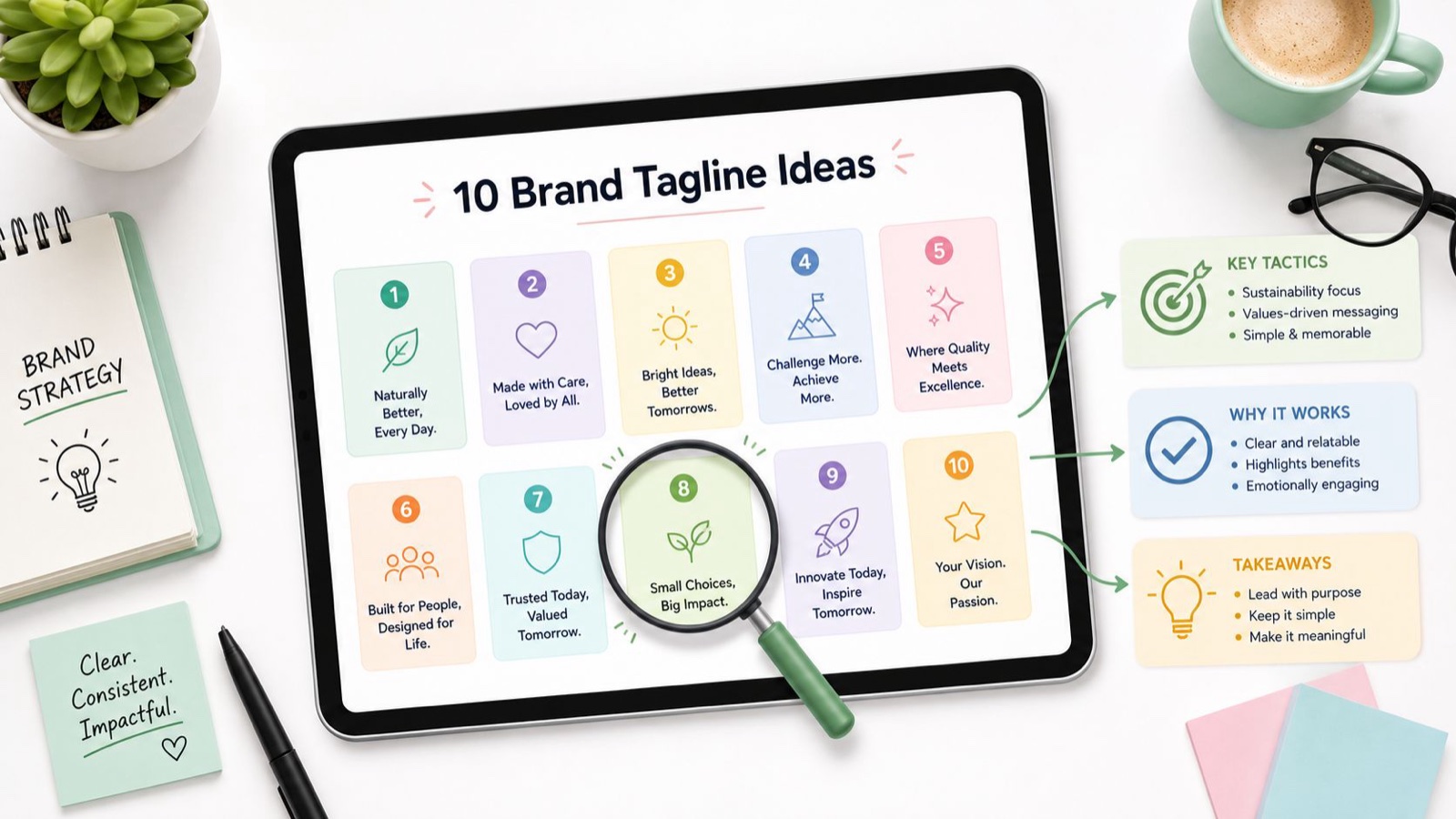
I’ve spent years watching brands fall in love with a clever line and skip the hard part. A tagline has to do more than sound good. It carries a promise. It should still hold up years later, and still make sense when the company grows into new products.
A good tagline compresses what you stand for into something people actually remember. What follows is a set of real examples I keep coming back to. For each one I’ll cover what it is, why it works, and the lesson I pull from it. If you’re thinking about how a message like this scales into everything else you publish, this look at content automation tools for startups is worth a read.
What makes a good brand tagline example
The lines everyone knows tend to be short. A roundup from Simplified puts the most famous company slogans in the 3 to 7 word range, with a soft ceiling around 10 words, and points to McDonald’s “I’m Lovin’ It,” Apple’s “Think Different,” and BMW’s “The Ultimate Driving Machine” as examples that fit (Simplified, no date).
Short doesn’t automatically mean good. Brevity just buys you a shot at being remembered. The line still has to carry a real promise or a feeling people recognize.
Here’s the filter I run most lines through:
- Is it bigger than the product. If the company expands, the line should still make sense.
- Does it create a feeling fast. Good taglines don’t need a paragraph of explanation.
- Can a competitor steal it easily. If yes, it’s too generic.
- Will the brand’s behavior support it. A line can’t carry a promise the company won’t keep.
Practical rule: If the line only sounds good inside a pitch deck, it’s probably not a tagline yet.
What can Nike teach us about brand taglines
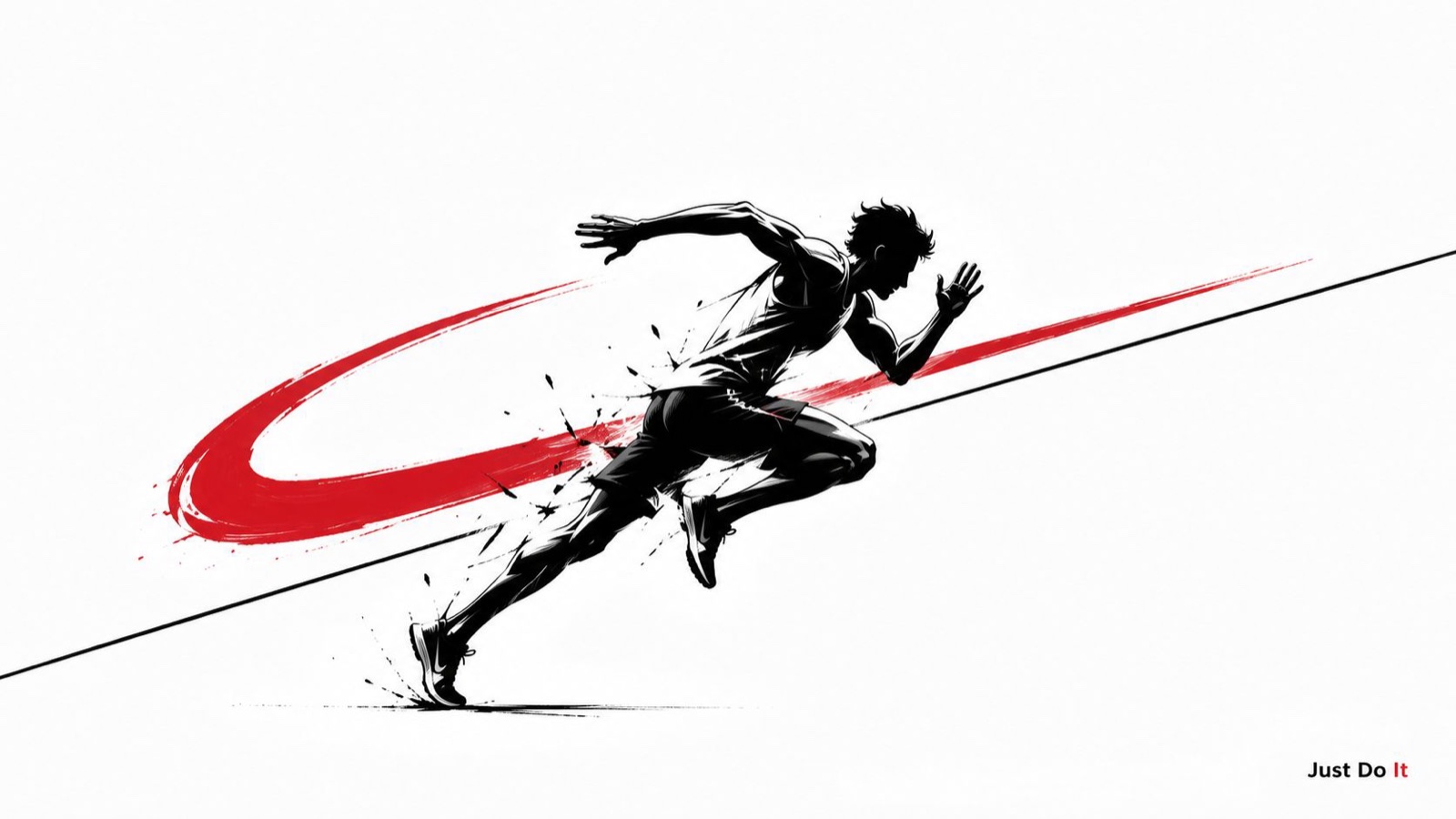
“Just Do It” is my modern benchmark because it never describes a shoe. It describes a state of mind. Want Branding notes that Nike’s tagline was created in 1988 by Wieden+Kennedy, has stayed in use for over 35 years, and is widely regarded as one of the most successful tagline examples in history (Want Branding, no date).
That kind of longevity matters far more to me than a flashy launch. A line that survives product changes and new audiences is doing real strategic work. Nike can put “Just Do It” on footwear, apparel, equipment, and sports tech without it feeling strained.
If you make brand films or awareness campaigns, this is exactly the kind of promise that scales well into motion. It’s one reason teams spend so much effort on brand awareness videos, because a line this compact needs strong creative execution around it.
Why this line lasted
It’s a command, and commands can read as pressure when the writing is clumsy. Here it lands as permission instead.
Notice what the line leaves out. There’s no spec, no category claim, nothing about price. Leaving all of that out is the whole point.
A durable tagline should still feel true when the product list changes.
Lesson to take away: Write one version of your line, then test it outside your current category. If it stops making sense the moment you remove the product name, it’s probably too narrow.
How did De Beers make a tagline shape culture
“A Diamond Is Forever” is one of the clearest examples I know of a tagline doing more than advertising. It helped tie a product to a life ritual, and that almost never happens.
What makes it powerful is the compression. The physical property of the diamond and the emotional idea of lasting love get fused into one sentence. “Forever” does nearly all the heavy lifting, but the line stays grounded because “diamond” makes it concrete.
What the words are really doing
The line skips features entirely and reframes the category. Instead of asking whether someone wants a diamond, it nudges the audience toward seeing diamonds as the natural symbol of commitment.
The ambition goes well past a single purchase. The line is trying to change how people see the whole category.
- What it is: A category-defining line tied to love, permanence, and ritual.
- Why it works: It joins a product truth and an emotional truth in the same phrase.
- Lesson: If you want a tagline to last, anchor it in a belief people want to keep repeating.
The caution is obvious to me. A line this large needs total consistency in brand storytelling. If the execution slips, the promise starts to feel theatrical instead of real.
Why did Apple’s tagline work so well
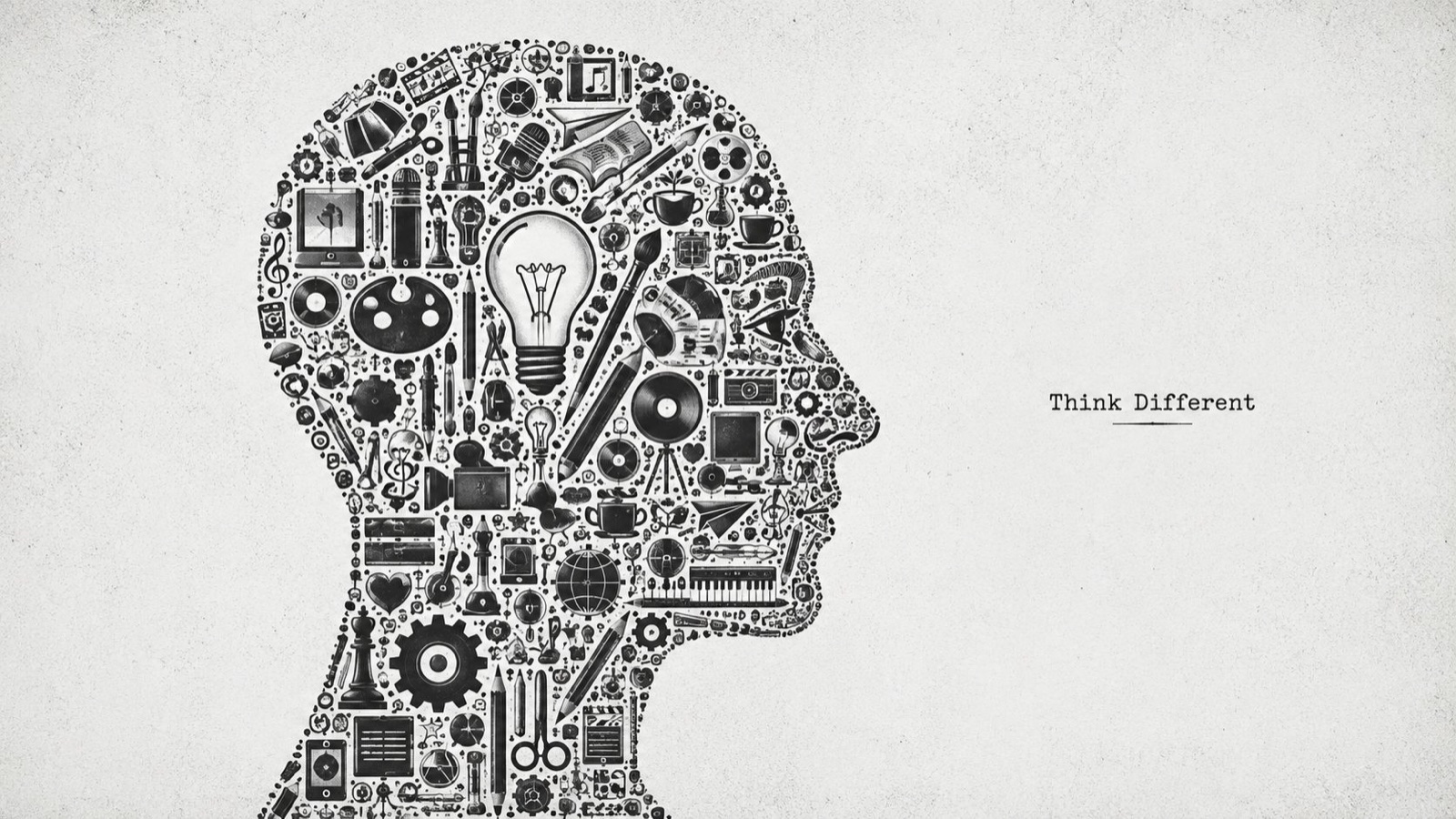
“Think Different” worked because Apple used it as repositioning, not decoration. Zignalytics describes Nike’s line as a brand revitalization tool and points to Airbnb’s “Belong Anywhere” as another phrase that reshaped an identity (Zignalytics, no date). Apple belongs in that same conversation.
The phrase never explained the computers. It told people what choosing Apple said about them. A lot of the time that’s the real job of a tagline. It hands the customer an identity to step into, rather than a product spec to evaluate.
If you’re working through that kind of repositioning, a solid brand audit usually comes before the line, not after. Otherwise you end up writing language for a brand the market no longer sees.
The real lesson
Abstract taglines are risky. They can float away if the visuals and the product don’t pin them down.
Apple made the abstraction feel concrete through iconic imagery and later product choices. That’s the standard I hold these to. A beautiful line without matching proof just becomes wallpaper.
Lesson to take away: If your tagline is abstract, your brand system has to do extra work. Strong visuals and product behavior have to complete the sentence.
Why does LOréal’s tagline still hold up
“Because You’re Worth It” is a direct appeal to self-worth. That’s why it travels so well across products. It isn’t trapped inside hair color, skincare, or cosmetics. It’s built on a human truth, not a product claim.
I like this example because it shows how a tagline can validate a customer instead of describing a brand. That’s often more powerful. People don’t always want more information. Sometimes they just want permission.
What to borrow from it
The phrase uses direct address. “You” makes the line intimate. It sounds like someone speaking to the customer, not a company talking about itself.
That intimacy is hard to fake. If a brand uses this kind of language but behaves in a cold or patronizing way, the gap shows fast. That’s why message consistency matters so much in practical tools like brand guidelines examples.
- What it is: A self-worth based line that justifies purchase through identity, not function.
- Why it works: It turns buying into an act of affirmation.
- Lesson: If your customer needs reassurance, write toward the emotional permission behind the purchase.
How did MasterCard turn one word into a brand asset
“Priceless” is unusually strong because the campaign taught people how to interpret the word. By itself, it’s evocative but vague. In use, it became unmistakably MasterCard.
The long-running format did the real work. Small purchases were listed with prices, then the final moment was “priceless.” That gave the line a structure people could anticipate and repeat.
Here’s a classic example of how the idea was executed in motion:
What makes one-word taglines hard
A single word can feel elegant. Without a repeatable story feeding it, that same word feels hollow. What separates the two is whether the brand has a real storytelling system behind it.
“Priceless” worked because MasterCard wasn’t trying to make a credit card itself emotional. It made the moments around the card emotional. That’s a smart move when the product is mostly an enabler.
If the product is ordinary, the surrounding meaning has to do more work.
Lesson to take away: If you want a minimalist tagline, build the campaign format at the same time. Don’t expect one word to carry everything on its own.
Why is BMW’s line still one of the clearest positioning plays
“The Ultimate Driving Machine” is less poetic than several examples on this list, and that’s exactly why I rate it. It makes a clear claim about the product experience.
This line is product-forward, but it still has personality. “Driving machine” emphasizes performance and feel, not just transport. It tells you what BMW wants to own in the buyer’s mind.
When explicit claims work
Explicit claims are harder to sustain than emotional ones. They invite scrutiny. When a company can actually support the promise, though, they create sharp positioning.
BMW’s line also fits the brevity pattern I mentioned earlier. It lands in the range most famous taglines share, which helps with memory. More important, every word earns its place.
- What it is: A claim-based tagline focused on product experience.
- Why it works: It narrows the brand to one ownable idea, driving.
- Lesson: If you make an explicit promise, keep it disciplined and repeat it for years.
Many brands lose this discipline. They chase novelty and dilute the one thing buyers remembered.
What makes M&Ms one of the best functional taglines ever
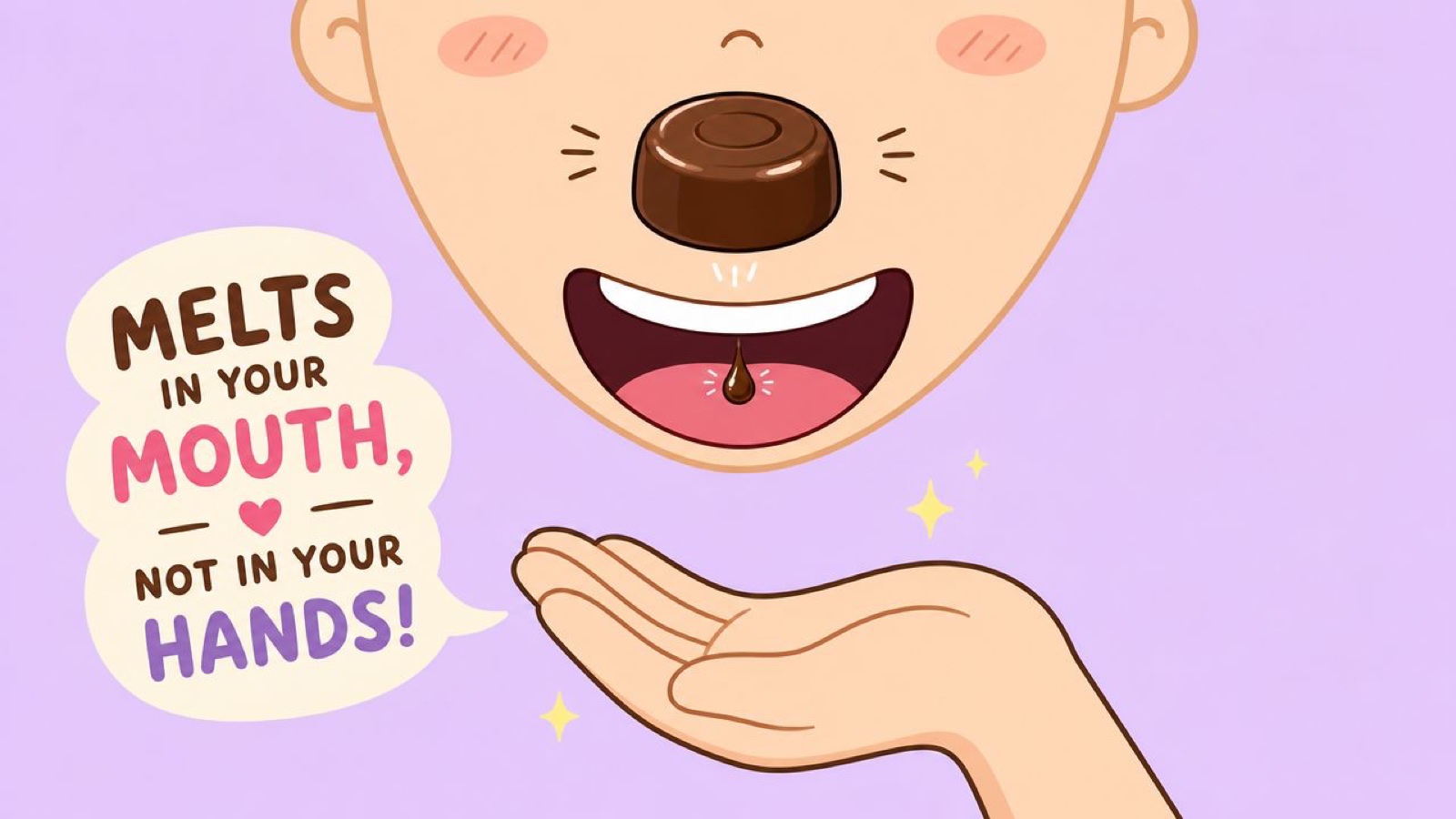
“Melts in Your Mouth, Not in Your Hands” solves a real problem in plain language. It’s practical, but it still sounds good. That mix is rare.
I bring this one up whenever a team assumes the best tagline has to be emotional or lofty. Sometimes the strongest line is just a vivid answer to a customer annoyance.
For brands that need to show a product truth quickly, motion can help the line land faster than static copy. That’s why product-led teams often lean on animated advertisements to make a concrete claim memorable.
Why functional language sticks
The contrast does the memory work. Mouth versus hands. Desired outcome versus avoided mess. The rhythm helps too.
This is a good reminder that poetry in taglines doesn’t have to mean vague language. It can mean a clean contrast people can actually repeat.
Lesson to take away: List the irritation your product removes. Then write the line as a before-and-after in one breath.
How did Volkswagen make a weakness feel smart
“Think Small” is one of advertising’s great inversions. Volkswagen didn’t hide the Beetle’s small size. It reframed that size as intelligence.
That move still matters because plenty of brands are selling against a category norm. Smaller, slower, simpler, more focused, less flashy. Those traits can feel like liabilities until the language makes them a point of pride.
A useful rewrite prompt
A creative brief matters more than most teams admit. If nobody has agreed on the audience or the core message, the line will wobble. I like a brief that spells out the brand basics too, the logos, the CTA, the tagline, any legal lines, so nobody is digging around for core assets halfway through production. If you want to tighten that process, this guide on how to write a creative brief is a good place to start.
Try this prompt: We’re the only ______ that ______.
It forces differentiation. Then ask, is the thing we’ve been apologizing for actually our advantage?
Small, plain, narrow, local, simple. Any of those can become a positioning asset if the audience already distrusts the category norm.
What did Coca-Cola get right with Open Happiness
“Open Happiness” shifted the story from refreshment to feeling. That’s a classic move for a mature brand. Once the product benefit is already well known, the tagline can aim higher.
The phrase works because “open” does double duty. It names the physical action and the emotional one. That kind of dual meaning gives a line extra life.
The trade-off
Emotional taglines travel well across channels and markets. They’re also easier to overuse. If every campaign says “happiness” without showing anything grounded, the message starts to blur.
- What it is: An emotional tagline built on a literal action.
- Why it works: One word connects product use and mood.
- Lesson: Look for words that operate in both physical and symbolic ways.
This is often where teams overreach. They jump to emotion before they’ve earned the right to. Coca-Cola could do it because the functional role of the product was already familiar.
When does a provocative tagline actually work
Dollar Shave Club’s “Our Blades Are F***ing Great” worked because the tone matched the founder’s actual voice and the frustration people already felt with the category. It didn’t feel like rebellion added by committee.
That’s the part I’d underline. Provocation earns its place when it signals the brand means what it says. It falls flat when it’s only there to grab attention for a day.
Use this carefully
A line like this can instantly separate a brand from polished category language. It can also age badly if the company can’t sustain the voice. You can’t launch with irreverence and then become stiff everywhere else.
Edginess on its own does nothing. What carries a line like this is speaking in a voice your audience already trusts.
Lesson to take away: If your category hides behind polished language, plain bluntness can be a real differentiator. But only if the rest of the brand sounds like the same person.
What about McDonald’s and other short modern classics
McDonald’s “I’m Lovin’ It” deserves a spot in any serious list of brand tagline examples because it shows how conversational language can travel globally. It sounds casual and lived-in, the way people actually talk.
It also supports the broader pattern. The most famous company slogans tend to be short, and McDonald’s is one of the examples often cited in that 3 to 7 word range I mentioned earlier. Short isn’t a magic formula, but it’s a useful constraint.
The pattern behind them
Look across Nike, Apple, BMW, McDonald’s, and L’Oréal and you see a few repeat moves:
- Imperative lines: “Just Do It,” “Think Small.”
- Identity lines: “Think Different,” “Because You’re Worth It.”
- Claim lines: “The Ultimate Driving Machine.”
- Benefit lines: “Melts in Your Mouth, Not in Your Hands.”
If you’re stuck, start there. Instead of asking what sounds cool, ask which kind of promise your brand is actually in a position to make.
How should you test a tagline before launch
This is where a lot of tagline advice runs out of road. It tells you to brainstorm a big list and then goes quiet. Coming up with options is the easy half. The part almost nobody covers is how you check whether a line works before you commit to it.
What to measure before rollout
I wouldn’t lean on click data alone. A tagline’s real job is long-term recall and association, and a fast ad test only catches part of that. There are still practical ways to pressure-test a line.
- Run matched ad tests: Use Meta or Google ads to compare two headline versions with similar audiences. Watch click-through, cost-per-click, and conversion directionally.
- Split test landing pages: Tools like VWO or Optimizely can help compare message variants in a controlled environment.
- Use recall surveys: Ask people what they remember after a short delay, what brand they associate the line with, and what promise they think it makes.
- Set success metrics in the brief: A creative brief should explicitly list success metrics, alongside objectives, key messages, timeline, resourcing, and the approval process (monday.com, no date).
There’s an operational piece people skip. Every creative project needs one person with final say, because that cuts down on conflicting feedback and the endless revision loops that follow. Taglines get weaker when too many hands keep sanding them down.
If you’re building this into a weekly content system, one dedicated creative team makes it far easier. At Moonb, that means the line, the visuals around it, and the rollout assets stay aligned on a steady weekly rhythm instead of getting reinterpreted by a different group every time.
10 Iconic Brand Taglines Compared
| Tagline (Brand, Year) | Implementation Complexity | Resource Requirements | Expected Outcomes | Ideal Use Cases | Key Advantages |
|---|---|---|---|---|---|
| “Just Do It” (Nike, 1988) | Medium, short copy but needs sustained visual/campaign reinforcement | Medium, ongoing creative campaigns and brand alignment | Strong emotional association and cross-category applicability | Aspirational branding, category expansion | Memorable, versatile, motivational |
| “A Diamond Is Forever” (De Beers, 1947) | High, requires coordinated cultural narrative and long-term commitment | High, celebrity partnerships, media, cultural placement over decades | Cultural behavior change; category ritualization | Category creation, shifting social norms | Timeless emotional resonance; defines category |
| “Think Different” (Apple, 1997) | Medium to High, abstract positioning that needs iconic visuals and product follow-through | High, iconic creative, celebrity imagery, product innovation | Repositioning and identity-driven appeal to innovators | Brand turnaround or repositioning | Identity-focused, aspirational, differentiating |
| “Because You’re Worth It” (L’Oréal, 1973) | Medium, psychological promise requiring consistent tone | Medium, broad campaigns across product lines and markets | Loyalty through empowerment and personal connection | Emotional/personal-care categories | Personal address; adaptable; builds self-worth connection |
| “Priceless” (MasterCard, 1997) | Medium, single word needs a concrete campaign format | High, extensive global spots and format production | Association of brand with meaningful human moments | Service brands needing emotional framing | Exceptionally memorable; campaign format extends meaning |
| “The Ultimate Driving Machine” (BMW, 1974) | Low to Medium, explicit claim but demands product consistency | High, engineering credibility plus disciplined marketing | Credibility with performance enthusiasts; long-term positioning | Product-led brands emphasizing capability | Specific, credible claim; long-term consistency |
| “Melts in Your Mouth, Not in Your Hands” (M&M’s, 1954) | Low, functional, benefit-driven wording | Low to Medium, product truth supports simple creative | Immediate purchase reason; high recall | Consumer goods with clear functional differentiator | Solves real customer problem; highly memorable |
| “Think Small” (Volkswagen, 1960s) | Medium, inversion of category norms with minimalist design | Medium, distinctive creative and disciplined messaging | Loyal niche audience; reframed perception of limitation | Brands that can reframe a limitation as a virtue | Differentiation by reframing; cultural permission to choose different |
| “Open Happiness” (Coca-Cola, 2009) | Medium, shifts from functional to emotional promise | High, global creative, music, packaging and digital integration | Lifestyle and mood association; broader storytelling | Habit brands ready to move from product to emotion | Dual-meaning wording; rich storytelling potential |
| “Our Blades Are F***ing Great” (Dollar Shave Club, 2012) | Low to Medium, simple but tone-risky; must be authentic | Low to Medium, viral content and direct channels | Rapid distinctiveness and community engagement | DTC challengers and category disruptors | Bold differentiation; authentic, viral voice |
Next steps for your tagline
The strongest lesson from all of these is that a good line does more than sound good. It carries a promise the brand can actually keep, and it usually does that in very few words. The best ones say one clear thing and still leave room for the audience to feel something as the company grows.
If you’re writing your own, start with constraints. Try these prompts:
- We’re the only ______ that ______.
- Write the one-line promise, then cut every nonessential word.
- Ask “so what?” until you reach the emotional payoff.
- List what the customer fears or wants, then write the line as the answer.
- Draft 50 fast options, then kill every generic one.
That last part matters. Most weak taglines die because they’re interchangeable. “Innovation,” “quality,” “solutions,” “better,” and “future” usually blur together. A useful constraint is to ban those words for the first round.
Also think about the whole life of the line, not just the launch. Some taglines are built to run for decades. Others are really tied to one stage of a company’s growth. It’s worth deciding up front which kind you’re writing, because that changes how much weight you can hang on it.
And memorability isn’t only about sounding nice. One study in India’s FMCG sector found a statistically significant positive correlation between memorable taglines and brand recall, which lines up with the plain idea that a line people can hold onto helps them recognize the product in a crowded market (ShodhKosh, no date). That’s the real job. Be remembered for the right promise.
If you’re pairing your line with campaign creative, launch assets, or video, it pays to think past the words and into execution. This guide for Meta ad campaigns is a practical next read.
Frequently asked questions
In practice, people use the terms loosely. I treat a tagline as the enduring brand line, and a slogan as a campaign line tied to a specific push.
Shorter is usually better. The strongest examples often land between 3 and 7 words, and staying under 10 words is a useful limit.
Sometimes yes, sometimes no. BMW does it directly. Nike and Apple don't. The right answer depends on whether your advantage is functional, emotional, or identity-based.
Yes, taglines can be registered as trademarks if they're distinctive and identify a source. Generic or purely descriptive phrases usually face a much harder path.
I ask three things. Does it stick in memory? Do people connect it to the right brand, not a competitor? And does it name a promise the company can actually keep?