Storyboarding
See the whole video as frames before anyone rolls camera. You catch the pacing problem, move the logo, and cut the scene that runs long while every change still costs a pencil line. The shoot only happens once you know the story works.
See our approach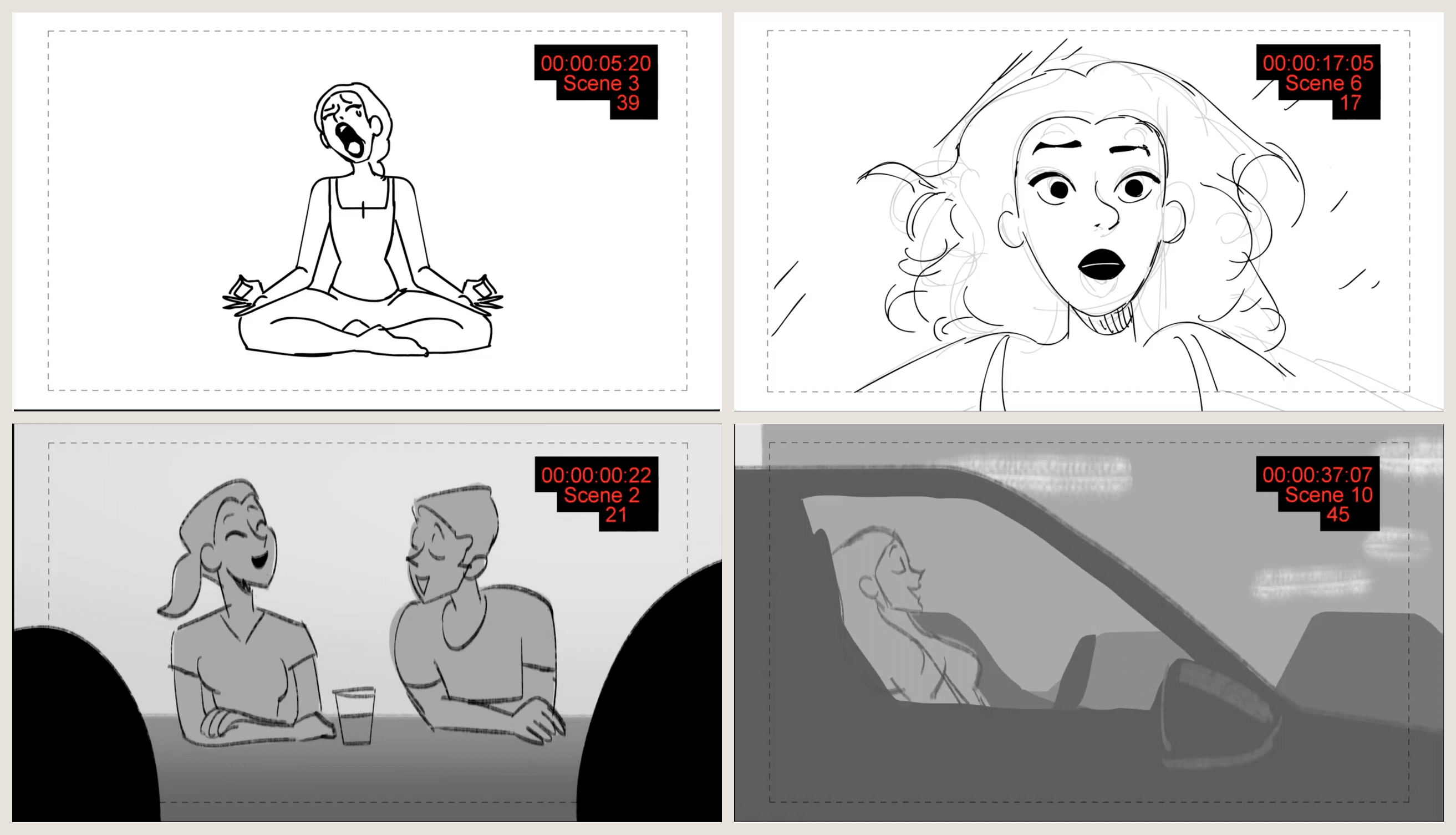



What we produce
The planning stage, run by the same team that shoots and cuts the finished video.
Live-action storyboards
Angles, blocking, and eyelines settled on paper, so your crew shoots to a plan instead of inventing it on the day.
Animatics
Your boards cut and timed to scratch audio, so you feel the pacing before you spend a cent. Catch the scene that runs long while it's still free to fix.
Animation storyboards
Every scene, camera move, and transition for 2D and 3D locked up front, so no animator builds the same thing twice.
Commercial storyboards
Boards built around the exact cut lengths each platform runs (6, 15, 30 seconds), so one shoot delivers every version you need.
Pitch and concept boards
Rough boards that make the idea real enough to greenlight, so stakeholders sign off before a cent goes to production.
Shooting boards
Production-ready frames your crew shoots straight from, with lens, framing, and camera-move notes on every panel.
And more, all of it locked before a single asset gets built.
A storyboard costs less than a reshoot.
The problem was never the camera. It's the plan, or the lack of one, so the flaw only surfaces in the edit, too late and too costly to fix. A storyboard drags every call (is the pacing right, does the logo sit where you want it) to the one stage where changing your mind is free.
Skipping the storyboard is the most expensive shortcut in video.
Teams skip the boards to move faster. Then they shoot for a day, sit down to edit, and find the story doesn't hold. So they pay to shoot it all again, and the day you saved just cost you three.
A storyboard is the one place you're allowed to be wrong. Cut a scene or swap a shot here and it costs a pencil line. On set it's a crew standing around on the clock, in post it's a reshoot, so make the call on paper.
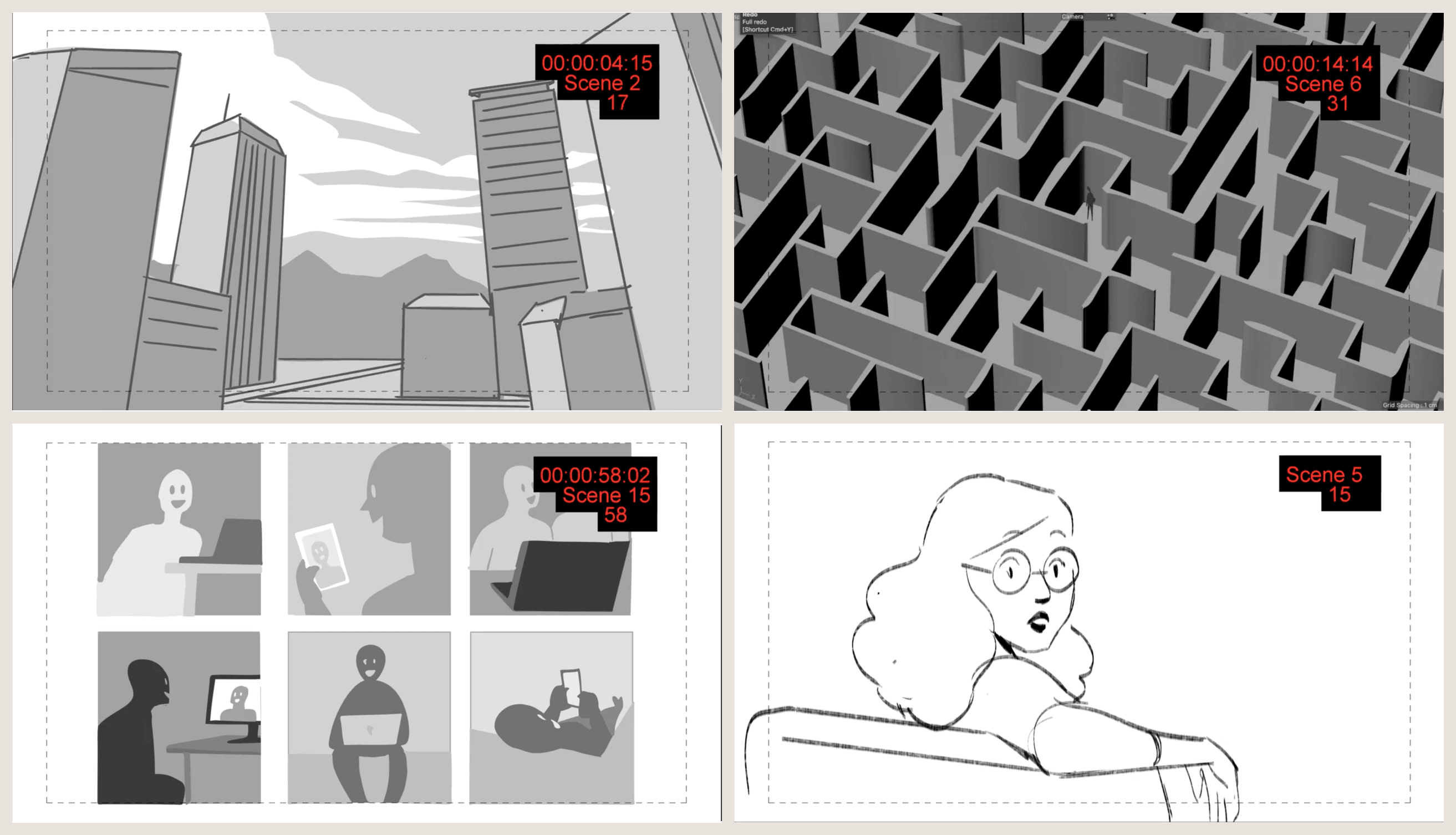
The team that boards it is the team that builds it.
You brief once. The same Creative Director who owns your finished video owns the boards, so the plan and the shoot never drift apart. You watch the whole piece come together as frames, give notes while changes are still free, and greenlight the shoot only once the story holds on paper. No cold handoff to a stranger. No nasty surprises on the day.
Why the cheapest fixes happen on paper
Every problem you catch in boards costs a pencil line to fix; the same problem on a shoot day costs a crew. Storyboards are where the film gets made the first time, shot by shot, so the expensive version only has to be made once.
The boards we draw
Every pre-production drawing a project needs to go smoothly.
- Commercial and ad boards
- Animation and explainer boards
- Shooting boards with lensing notes
- Animatics with timing
- Style frames and look development
- Pitch and concept boards
- Event and stage visualizations
- Thumbnail passes for scripts
Drawn decisions
A board is not an illustration, it is a decision: where the camera stands, what the viewer knows, when the cut lands. We draw fast and decide clearly, so the shoot inherits answers instead of questions.
Boards are decisions, not drawings.
How it works
From signup to first delivery in under 2 days.
Meet your team
You get a Creative Director and a team who learn your brand, your files, and how you like to work.
About 30 minutesSend the work
Brief them like colleagues. Your Creative Director runs the queue and keeps everything on-brand.
As much as you needGet it back fast
Polished work comes back on a steady weekly rhythm, revisions included until it is right.
No change-order feesTheir working process is straightforward and closely aligned with how our internal team operates.
Ready to start your storyboards?
Book a CallFrequently Asked Questions
For a 15-second social clip, probably not. A shot list does the job. But the moment there's a story to hold together, more than one location, animation, or a crew you're paying by the day, board it first. Simple test: if a wrong call on set costs real money to redo, it's worth boarding.
A storyboard is stills, frame by frame, showing what happens and in what order. An animatic takes those frames, times them out, and cuts them to scratch audio, so you feel the pacing before anyone shoots or animates. For simple pieces the storyboard is enough. When timing carries the piece (a joke that has to hit, a beat that has to breathe), the animatic earns its place.
As detailed as the decision needs, no more. Some are rough sketches, just enough to agree on structure. Others are near-final frames with lens and camera notes your crew can shoot straight from. We match the fidelity to what you're actually deciding, not to what makes a deck look impressive in a meeting.
Both. Animation lives or dies on the board, because every frame you skip planning is a frame someone builds twice. We board live action, 2D, and 3D the same way, and we lock the story before anyone opens a production file.
A short board takes a few days. A complex narrative or animation runs one to two weeks. It reads like a delay and it isn't. The time comes straight back at the shoot: your day on set runs shorter, the edit doesn't stall while everyone argues about what the video was meant to be, and most reshoots simply never happen.
A script, or a rough idea, whatever exists. If you have a brand deck, references for the tone you like, or a hard deadline, send those too. If all you've got is a paragraph and a goal, that's a fine place to start. We'll shape the structure with you before drawing a single frame.
You do. The boards are yours to keep, hand to another crew, or pull from on the next project. Most clients keep it all in one place and let the same team carry the board through to the finished video, but the work is yours either way.
Ready to level up your creative?
Tell us what you're working on and we'll take it from there.
Book a Call