A Complete Guide On Brand Awareness Videos (18 Tips & Best Practices)
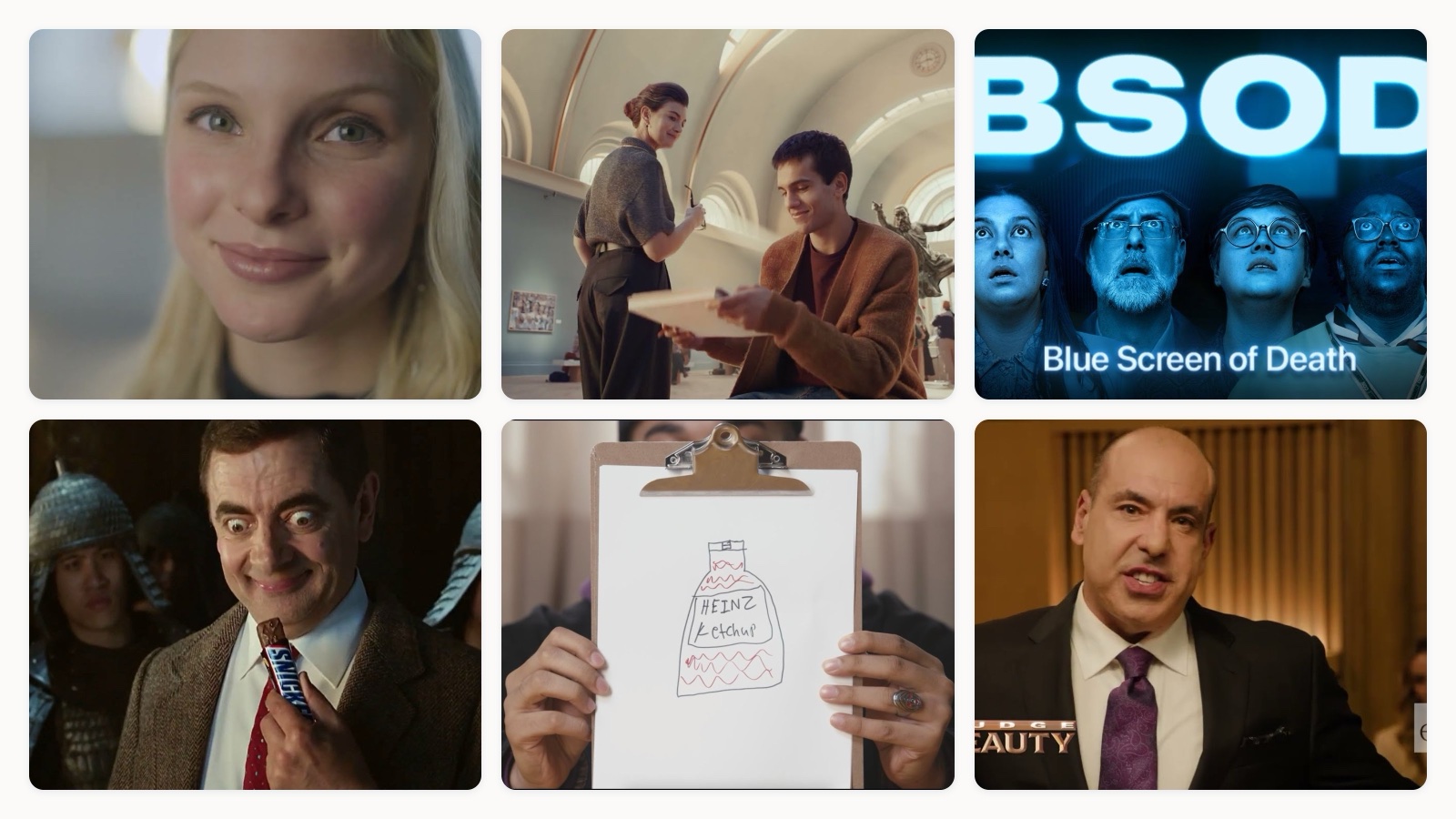
Six famous brand awareness ads dissected: the exact awareness lever behind Dove, Coca-Cola, Apple, Snickers, Heinz and e.l.f., and how to steal each.

A brand awareness video earns its keep by planting a memory that fires weeks later, at the exact moment someone stands in your category with money out and reaches for the first name that surfaces. Reach is the easy half. You can buy it with a card. The memory is the cargo, and most briefs I read spend all their care on the delivery truck.
I produce these films for brands, and the costliest mistake I meet is the belief that awareness means eyeballs. It does not. There is real money in the distinction. A Nielsen study run for Google found a 1 percent lift in brand awareness drove roughly a 0.6 percent lift in long-term sales. Working through about a thousand IPA Databank cases, Les Binet and Peter Field found long-term profit peaks near a 60/40 split between brand building and sales activation, and in no sector they studied did activation beat brand building as the best place to put the money. For scale, the hundred most valuable brands on earth were worth an aggregate 8.7 trillion dollars in 2022. Awareness compounds into the balance sheet, which is why it deserves more than the soft-half treatment marketing usually gives it.
Before the films, one distinction worth thirty seconds, because it decides what you measure. Aided awareness is recognition: shown your logo, a person nods. Unaided awareness is recall: asked to name a chocolate bar or a ketchup, your name arrives unprompted. Recognition is easy to manufacture. Recall is the prize, because recall is the thing that shows up in the buying moment when nobody is holding a card with your logo on it. Every ad below is built for recall, and once you can see the machinery, you can borrow it.
Here is the shortlist, one awareness lever each:
- Dove earns attention with a point of view instead of a pitch.
- Coca-Cola leans so hard on its distinctive assets that every frame is unmistakably its own.
- Apple runs recurring characters, so one ad becomes a serialized world.
- Snickers repeats a single formula (a fluent device) it can recast forever.
- Heinz makes itself the reflex answer for the whole category.
- e.l.f. buys disproportionate fame with one big, funny swing.
Dove, “Cost of Beauty”: earn attention with a point of view
The lever is a stance. Dove barely sells soap in these films; it takes a position on something its audience cares about and rides alongside the conversation. Here is the film, made and released by Dove.
“Cost of Beauty” confronts the toll of social media on young people’s mental health. It is heavy, it is brave, and it has been watched more than 19 million times across platforms, while the earlier “Real Beauty Sketches” reached around 163 million views. A point of view out-travels a product pitch, and it is not close. There is data under the emotion, too: System1, which scores ads for long-term brand building, found that 92.1 percent of ads earning its top emotional ratings also beat the average for short-term sales, so the film that moves you tends to sell now and build for later at once.
I want to flag the trap, because a stance is the most misused idea on this list. It works only when the brand has standing to hold it. Dove has spent two decades on Real Beauty, so this reads as conviction. If you borrow the lever, the discipline is picking a position that connects to what you sell and that you will hold for years, not one quarter. A film with a real opinion behind it is a form of video content creation that keeps earning attention long after the media stops.
Coca-Cola, “Masterpiece”: make every second unmistakably yours
The lever is mental availability through distinctive assets. The contour bottle and that specific red have been drilled into a century of memory, right down to the Spencerian script running through it. Here is “Masterpiece,” produced and released by Coca-Cola.
The ad borrows famous paintings, and every frame still reads as Coke. Clip one second with the sound off and you can name the brand. That is the whole point, and it maps straight to recall: when your assets stay consistent, every impression deposits into the same memory account instead of scattering across a dozen. I have pushed more than one client to put the logo away and trust their colour and their type, and it feels risky in the room every time and pays off in the feed every time. Pick two or three assets and use them with almost annoying consistency. Consistency is the free version of what Coca-Cola bought with a hundred years and a fortune, and it is one of the highest-return levers in digital video marketing that almost nobody pulls hard enough.
Apple, “The Underdogs”: recurring characters build an ownable world
The lever is serialization. Apple’s “Underdogs” films follow the same small office team across many installments, so by the time a new one lands, viewers already know the cast and the running jokes. Awareness compounds. Here is the “Blue Screen of Death” entry, made and released by Apple.
A one-off spot starts its memory from zero. A serialized one inherits everything the last film built, which is a far stronger structure to plant a brand inside. This is the lever I wish more teams with modest resources understood, because it is the friendliest one to a small wallet: recurring characters, or even a recurring format for your explainers, means each new video stands on the memory of the one before. A team shooting monthly gains more from one consistent cast than from a single expensive stranger. If you make corporate video on any regular cadence, serializing turns your whole back catalogue into one growing asset.
Snickers, “You’re Not You When You’re Hungry”: repeat one formula you can recast forever
The lever is a fluent device: a single ownable creative formula so recognizable that any new execution reads as yours before the logo shows. I bring this platform up on kickoff calls more than almost any other. Snickers found one line (“you’re not you when you’re hungry”) and one gag (a hungry person behaves as a wildly different character until they eat), then cast it endlessly. Here is the Mr Bean film, made and released by Snickers.
Rowan Atkinson does a kung-fu turn as the “hungry” version of a fighter, the bar lands, and the character snaps back. Swap in Betty White one year and Joan Collins the next; the formula holds. The platform launched in 2010 and has run across dozens of markets since, one of the most decorated cases the IPA effectiveness archive holds, and System1’s research on fluent devices shows this kind of consistent, recognizable structure drives markedly stronger results than a fresh idea every quarter. That is the part a modest team can steal outright. You do not need a celebrity. You need one repeatable formula, a phrase or a visual joke or a way of shooting, that you commit to long enough for people to recognize it on sight. Most brands invent a new concept every quarter and wonder why nothing sticks; the type of video ad matters far less than whether the next one still feels like you.
Heinz, “Draw Ketchup”: become the reflex answer for the category
The lever is salience: being so bound to the category that people reach for you without thinking. When a client says their product is too plain for a brand film, this is the ad I reach for. Heinz ran a simple test in markets around the world, asking people to “draw ketchup,” and they drew Heinz, down to the label and the keystone-shaped bottle. Here is the film, made and released by Heinz.
The ad is almost nothing but proof of the point: when a brand owns the category cue in people’s heads, it wins the moment before choice even begins. Heinz holds the dominant share of the ketchup market, and this film shows why in the cleanest possible way. You will not command a category the way Heinz does. You can decide which single cue you want to own (a colour, a shape, a phrase, a sound) and then show up with it so consistently that your brand becomes the reflex. Salience is not built in one film. It is built by never confusing the audience about what you are, film after film.
e.l.f. Cosmetics, “In e.l.f We Trust”: buy disproportionate fame with one big swing
The lever is challenger fame: a smaller brand spending one concentrated, unmissable moment to punch far above its weight. e.l.f. took its “In e.l.f We Trust” courtroom idea to the Super Bowl, packed it with famous faces, and played it broad and funny. Here is the film, made and released by e.l.f. Cosmetics.
A legacy giant can afford to be everywhere. A challenger cannot, so the smart move is to concentrate fire: one big, distinctive, quotable swing that earns more attention than the media spend alone should buy. It has worked for e.l.f., which has strung together year after year of growth into the top tier of mass cosmetics. The pressure to do this is rising, too. Nielsen’s 2025 Annual Marketing Report found 54 percent of global marketers planned to cut ad spending, which means every film has to earn its attention rather than buy it. You cannot rent the Super Bowl. You can put most of your firepower behind one idea instead of spreading it thin across ten timid ones, and let a single unmistakable moment do the work of a year of forgettable posts.
What the six share, and the part with nothing to do with budget
Line them up and the thread is loud: each ad runs on one idea plus one asset it commits to, and the production spend is downstream of that, not the source of it. None of them try to say five things. Here is the whole set, and what you can take from each without the money.
| Ad | Awareness lever | Steal this without the money |
|---|---|---|
| Dove, "Cost of Beauty" | A point of view, not a pitch | Take a stance you can hold for years and that connects to what you sell |
| Coca-Cola, "Masterpiece" | Distinctive assets driving mental availability | Use two or three brand assets with obsessive consistency |
| Apple, "The Underdogs" | Recurring characters that compound recall | Serialize a cast or format so each video inherits the last one's memory |
| Snickers, "You're Not You When You're Hungry" | A fluent device recast endlessly | Commit to one repeatable formula so every execution reads as you |
| Heinz, "Draw Ketchup" | Category salience, the reflex answer | Own one cue so consistently your brand becomes the default |
| e.l.f., "In e.l.f We Trust" | Challenger fame from one big swing | Concentrate firepower on a single unmissable idea, not ten timid ones |
The budget matters least, and there is data under that claim. Nielsen’s ROI work found marketers who optimize their digital video investment lift returns by a median of 51 percent, and that 66 percent of media plans were under-invested in video to begin with. Short-form video is also the format marketers name as their highest-return one in HubSpot’s marketing research, which tells you the channel rewards the idea, not the invoice. An inexpensive film with a sharp lever beats an expensive one with none, and I have watched that hold on projects at both ends of the price range.
How to tell if your brand awareness video actually worked
View count is the number I trust least, because views measure delivery, not memory. A film can rack up a million impressions and move nothing. The measures that map to the real job are these. Track unaided recall with a plain before-and-after survey: ask your target to name brands in your category, run the film, ask again, watch whether your name climbs. Run a brand-lift study where the platform allows it, a small poll served to exposed versus unexposed viewers, to isolate the effect. Watch branded search volume in the weeks after launch, because people who remember you go looking for you by name. And read assisted conversions over a long window rather than last click, since awareness pays on a lag, which is exactly why it gets under-credited.
The trap I watch teams fall into is judging a brand film by the yardstick of a performance ad. Different jobs, different clocks. A proper read on video ROI for awareness work looks months out, not days, and asks whether the memory is forming rather than whether the video went briefly loud.
The brands above hired armies to make their films. You do not need one. You need one idea and one asset you will commit to, then the patience to make the next film, and the one after, feel like the same brand. That commitment, film after film, is the part my team spends its days on for clients. If it is the part eating your week, see how Moonb works.
Frequently asked questions
Length follows the mechanism, not a fixed rule. A distinctive-asset piece or a serialized character spot can land in 15 to 30 seconds because recognition does the heavy lifting. A point-of-view film like Dove's needs room to earn its emotion, so two to three minutes is fine when the story justifies it. The research from System1 and others points to emotional engagement, not duration, as the driver of long-term recall, so I decide length by asking how long the idea needs to breathe, then cut everything that is not the idea.
Views measure delivery, not memory. Measure unaided recall with a before-and-after survey (can your audience name your brand in the category, and does that rise after exposure), run a brand-lift poll comparing exposed and unexposed viewers where the platform offers it, watch branded search volume in the weeks after launch, and credit assisted conversions over a longer window instead of last-click. Awareness pays off on a lag, so a report that only looks at the launch week will always undersell it.
No. The thing that travels is the mechanism, one clear idea plus one asset you commit to, and that is free to decide. Volvo's stunt was expensive, but the reason it worked (a real product truth made undeniable) costs nothing to apply. Nielsen's data even shows most media plans are under-invested in video and that optimizing the idea lifts returns more than raising the spend. A sharp concept shot simply beats a vague concept shot lavishly, and I have seen that play out at both ends of the price range.