Brand Guidelines Examples: 7 Curated Sources for Real Brand Books

Explore Brand Guidelines Examples: 7 Curated Sources for Real Brand Books. Learn top brand secrets to apply to your strategy.

Brand Guidelines Examples: 7 Curated Sources for Real Brand Books

You’re probably in one of two situations right now. Either you’re building a brand system from scratch and need real examples that go beyond a logo sheet, or you already have guidelines and they’re not surviving contact with social teams, freelance designers, sales decks, product screenshots, and partner co-marketing.

That’s why static PDFs aren’t enough anymore. The best references in Brand Guidelines Examples: 25 Real Brand Books From Apple, Spotify, Nike & More aren’t just polished manuals. They’re living systems, updated hubs, developer-facing portals, and public design centers that show how brands maintain consistency when content never stops.

Apple is still one of the clearest benchmark cases because its identity system has long relied on tightly controlled visual rules, with detailed instructions for logo placement, clear space, typography, and color discipline, as noted in The Next Web’s look at leading brand books. Spotify belongs in the same conversation for a different reason. Its guidelines are widely cited for translating a digital-first company into a globally consistent identity system across apps, partnerships, and campaigns, as discussed in this Spotify brand guidelines breakdown. Nike adds the emotional layer. Independent branding commentary often points to the way the “Just Do It” platform turns brand guidance into a repeatable narrative architecture rather than a list of visual assets, as explained in this Nike branding analysis.

If you need current examples, not dead links and outdated decks, start with live directories and operational hubs. For teams that want machine-readable access to brand standards, there’s also a styleguide api worth knowing about.

1. Companies.design

Companies.design

Companies.design is the fastest directory here when you need to pull up credible brand references in the middle of a meeting. It feels less like an archive and more like a shortcut into first-party brand portals.

That difference matters. A lot of “brand guidelines examples” lists send you to reposted PDFs or stale screenshots. Companies.design does a better job of pointing you toward browser-based guideline hubs, which is where modern brands publish current assets, rules, and usage patterns.

Why creative teams use it

When I need to compare how a tech company handles motion versus how a fashion label handles logo spacing, this kind of curated directory is more useful than a generic search. The cards are quick to scan, and the category structure keeps you from bouncing aimlessly between unrelated examples.

The strongest use case is early-stage research. You’re not looking for one perfect answer yet. You’re trying to see the range of how serious brands package governance.

  • Direct-to-source links: You spend less time guessing whether a PDF is official.
  • Cross-industry spread: Tech, consumer, media, and luxury references sit close together, which helps when you want pattern recognition instead of narrow benchmarking.
  • Good for inspiration boards: It’s easy to open several examples quickly and compare visual discipline, tone, and asset organization.

Practical rule: Use directories like this to collect examples, then study the official brand hub itself before copying any rule into your own system.

What works and what doesn’t

Its biggest strength is also its limitation. Because it’s curated, it stays cleaner than giant link dumps. But that also means the catalog depth is still growing, and filtering stays fairly light.

That’s fine for strategy calls and moodboard work. It’s less ideal if you need a highly specific subset, like only public-sector design systems or only multilingual enterprise portals. In that case, I’d use Companies.design first, then move to a larger archive.

One useful benchmark to keep in mind while reviewing examples is Apple’s channel-level governance. Apple’s published identity system is written for channel affiliates, authorized resellers, and certified individuals, with explicit rules for sales websites, signatures, reseller store identity, and editorial usage, as described in this overview of Apple Identity Guidelines. That’s the level of operational detail you should be looking for when evaluating any live brand hub.

2. Styleguides.io

Styleguides.io

Styleguides.io has been around long enough to earn a permanent spot in most designers’ bookmarks. It’s one of the few resources that sits at the intersection of brand identity, content style, and product design systems.

That makes it useful when your job isn’t just choosing colors and logos. Today, many teams need to align marketing, UX, UI, editorial, and sometimes code standards. Styleguides.io reflects that reality better than directories that focus only on visual identity manuals.

Best for mixed brand and product research

Some founders still think brand guidelines end at “logo, colors, fonts.” This directory corrects that assumption. You’ll find examples that blend voice and tone guidance with interface patterns and design system documentation.

That broader lens is helpful because the gap in many brand-guideline roundups isn’t inspiration. It’s implementation. Curated industry commentary has noted that many lists show what iconic brand books look like, but rarely explain how to operationalize them across motion, audio, creator ecosystems, and digital products, as discussed in BrandyHQ’s review of brand guidelines examples.

  • Identity plus systems: You can compare brand manuals alongside pattern libraries and UX standards.
  • Useful article library: The editorial side helps teams think about maintenance, not just aesthetics.
  • Good for audits: If your current brand system feels disconnected from product, this directory exposes what “connected” looks like.

Trade-offs to know before you rely on it

The interface is plain. That won’t bother experienced designers, but it does mean discovery can feel manual. You’ll also want to verify older links before sharing them internally.

Still, I’d rather have a durable, slightly utilitarian resource than a glossy directory with weak substance. Styleguides.io is especially good when a client says, “We need examples of brands that treat content, interface, and identity as one system.”

Don’t just screenshot the homepage of a guideline portal. Click far enough to see whether the brand explains usage, exceptions, and edge cases. That’s where the real thinking shows up.

3. Frontify Guide Brand Guidelines Examples

Frontify (Guide: Brand guidelines examples)

If you want commentary, not just links, Frontify’s guide to brand guidelines examples is one of the better editorial resources available. It’s less a raw directory and more a practitioner’s walkthrough of what modern digital brand portals do well.

That makes it useful for marketing leaders who need to convince a team to move beyond a static PDF. You can point to concrete examples of hubs that combine rules, assets, downloads, and governance in one place.

Where it’s strongest

Frontify is at its best when you’re asking operational questions. How should assets be distributed? How visible should do’s and don’ts be? What makes a guideline portal usable by people outside design?

That’s a neglected angle in a lot of roundups. Independent industry commentary has highlighted that many example-led articles don’t address the business case or maintenance model behind modern brand systems, even though large teams increasingly need centralized asset management, filtering, tagging, and collaboration support.

  • Recent examples: The editorial selections skew toward modern brand hubs, not legacy manuals.
  • Built-in analysis: You get a sense of why a portal works, not just what it looks like.
  • Enterprise relevance: Helpful for teams thinking about governance, permissions, and rollout.

Where it’s less useful

If you love old-school corporate identity manuals, this isn’t the richest archive. The emphasis leans digital and current.

That’s a fair trade. Teams reading “Brand Guidelines Examples: 25 Real Brand Books From Apple, Spotify, Nike & More” don’t need another museum tour. They need references that help them build a system people will use next week.

One practical lesson I’d pull from this resource is to judge every example on three questions:

  • Can non-designers find approved assets fast
  • Can partners tell what they’re allowed to do
  • Can the brand evolve without republishing everything from scratch

If the answer is no, the portal may look polished but the governance is weak.

4. Saijo George Brand Style Guide Examples

Saijo George’s brand style guide examples is the kind of resource people keep returning to because it solves a simple problem well. You need credible examples quickly, and you don’t want to dig through clutter to find them.

The list is broad, practical, and easy to browse. It also tends to pull in official sources where possible, which makes it especially handy when you’re preparing decks for clients and need references you can defend.

Best use in real client work

This is one of the better resources for assembling a comparison set fast. If you’re pitching a rebrand, reviewing naming and tone directions, or showing a founder what “good brand governance” looks like in different sectors, this directory gets you moving.

It’s also useful because the catalog isn’t trapped in one category. You’ll see commercial brands, larger organizations, and more institutional examples that reveal different documentation styles.

Field note: The best reference set usually includes one premium consumer brand, one digital product company, one institutional system, and one boring but highly disciplined enterprise example.

That mix keeps teams from mistaking style for substance. A flashy portal can look inspiring while hiding weak rules. Meanwhile, a plain-looking guideline can be brutally effective.

The practical trade-off

Filtering is limited, so this isn’t the place for highly precise searches. You browse, open, compare, and make judgments manually.

That sounds basic, but it mirrors how creative directors often work. Early research isn’t always linear. You collect strong references, notice recurring patterns, and then narrow the system you want to build.

Nike is a good benchmark when you review examples through this lens. Its guidance is often cited not because it exhaustively documents product features, but because it ties the whole brand to a single emotional promise through the “Just Do It” platform. That emotional consistency is part of why Nike is commonly discussed as a model of scalable brand strategy.

Use Saijo George’s list when you need range, speed, and recognizable benchmarks. Don’t use it as your final source of truth. Once you find an example worth studying, go to the official hub and inspect the details there.

5. Visulry Branding Guidelines Archive

Visulry – Branding Guidelines Archive

Visulry’s Branding Guidelines Archive is the resource I’d use when live portals aren’t enough. Sometimes you need historical manuals, multilingual documents, or sector-specific PDFs to study how brands have codified identity over time.

That’s where this archive earns its place. It’s built for deeper comparative research, not just quick inspiration.

Why archives still matter

Living portals show current practice. Archives show how systems were structured, expanded, and documented across different eras and markets.

That’s important because not every useful lesson comes from the newest portal design. Older manuals often explain hierarchy, spacing, print logic, and brand architecture with more discipline than modern hubs that prioritize visual polish.

  • Searchable PDF corpus: Better for side-by-side comparisons than many lightweight directories.
  • Useful filters: Language, year, region, industry, and document details help when you need specificity.
  • Strong for multinational research: Especially helpful when a client operates across markets and needs precedent beyond US consumer brands.

The caution you need

Not every entry is first-party hosted. That means you should verify official status before treating a document as current policy.

This is the archive’s core trade-off. It’s excellent for research, pattern recognition, and historical context. It’s weaker as a final authority on what a brand currently permits.

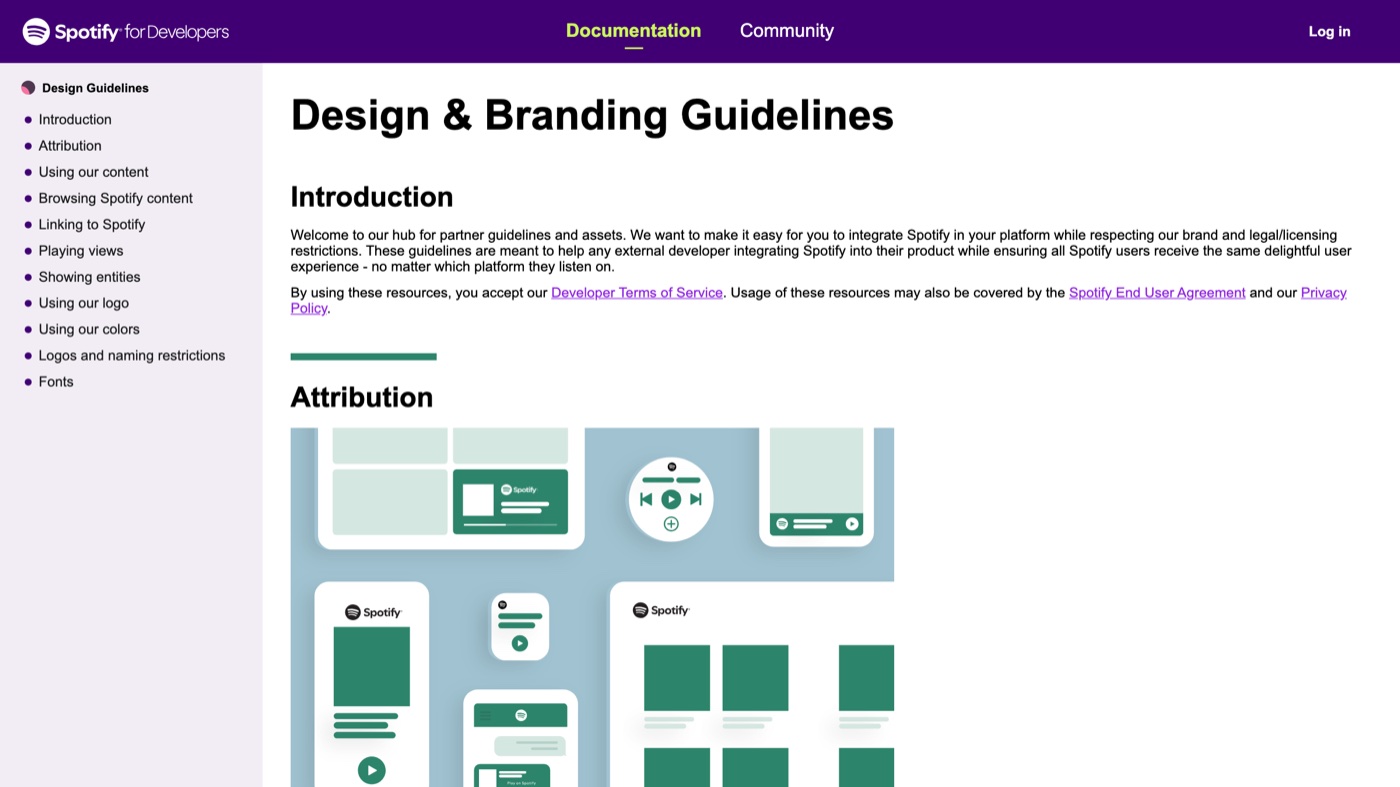
Spotify is a good example of why that distinction matters. Its brand guidelines are frequently cited because they function as a practical production manual covering logo use, color application, font usage, and naming conventions in a digital-first context. That sort of living documentation is often more useful for execution than a beautiful old PDF, even when the older PDF is more extensive on paper.

Use Visulry when you want to understand the anatomy of brand books. Use official hubs when you need current execution rules.

6. Brand Guide Hub

Brand Guide Hub

Brand Guide Hub is especially useful when you care not only about the brand examples themselves, but also about how those examples are published. That’s a different question, and an important one.

A guideline portal built in Frontify behaves differently from one hosted in Brandpad, Bynder, Zeroheight, GitHub, or a custom site. Brand Guide Hub helps you see those publishing patterns more clearly.

Best for platform benchmarking

If you’re auditing a client’s brand operations, this resource can save time. You can compare how brands present typography, colors, assets, and navigation across different publishing environments.

That matters because the delivery mechanism affects adoption. A beautifully written brand system that nobody can search, filter, or download from cleanly won’t hold up in a real organization.

  • Platform-aware catalog: Good for seeing how various software choices shape the guideline experience.
  • Visual snapshots: Helpful when you want quick context before diving deeper.
  • Sector tags: Useful for rough benchmarking across adjacent industries.

What can frustrate people

The interface is basic, and some links may need checking. This isn’t the most refined experience in the set.

But the value isn’t elegance. The value is that it gives you a wider view of modern, web-hosted guideline ecosystems. For teams choosing whether to build a custom hub or publish through an existing platform, that’s practical intelligence.

A recurring failure in branding projects is focusing only on design rules while ignoring governance mechanics. That’s exactly where many public roundups fall short. They celebrate what iconic systems look like, but they rarely help teams understand maintenance, handoff, and day-to-day publishing realities.

A brand book fails in practice when the sales team can’t find the logo, the agency can’t tell which file is approved, and the social team invents motion rules because none exist.

Brand Guide Hub is one of the better resources for spotting those implementation differences before you commit to a tooling path.

7. Logo Design Love Brand Identity Style Guides

Logo Design Love – Brand identity style guides (David Airey)

Logo Design Love’s brand identity style guides collection remains one of the most useful classic roundups for understanding brand book structure. David Airey’s curation has been a reliable starting point for designers for years because it highlights actual manuals, not trend pieces pretending to be research.

This resource is less about shiny portals and more about documentation depth. That makes it valuable for teams writing their own guidelines and trying to figure out what belongs inside.

What it teaches better than newer lists

A lot of modern examples are clean but thin. They show a logo page, a color page, maybe a download area, and then stop. Older and fuller identity manuals often go much farther. They document lockups, exclusions, grids, hierarchy, stationery, signage, layout systems, partner usage, and reproduction rules.

That’s why this roundup still matters. It reminds teams that a brand guide isn’t just a gallery. It’s a control document.

The downside of classic references

Some links point to older manuals, so you need to verify whether they’re still current. That’s not a flaw so much as a research reality.

In practice, this resource works best when you’re writing or expanding a guideline and need to study table-of-contents logic. How do strong manuals sequence information? Where do they place misuse examples? How much space do they give typography versus imagery versus applications?

Apple is often used as a benchmark in brand-guideline roundups for exactly this reason. Its identity discipline reflects the idea that a brand guide is not just a logo file but an operating system for consistent presentation across products and markets. That’s the mindset to bring when using Logo Design Love. Don’t just admire the manuals. Reverse-engineer how they think.

Use this resource when: you’re outlining your own brand book and want to see how serious systems organize rules, not just display them.

7-Source Brand Guidelines Comparison

SourceImplementation complexityResource requirementsExpected outcomesIdeal use casesKey advantages
Companies.designLow, browse curated portal linksMinimal, web accessQuick access to current first‑party brand hubsInspiration boards, strategy calls, fast referenceDirect‑to‑source links; curated by category
Styleguides.ioLow, simple directory browsingMinimal, web accessBroad examples covering identity and product/system guidanceCompare structure/scope across industries; design system researchDeep, time‑tested collection; balanced coverage
Frontify (Guide)Low–Medium, editorial roundup plus linksMinimal, web access; enterprise examplesActionable insights for operationalizing brand governanceEnterprise clients; asset delivery and governance planningFresh commentary; practical recommendations
Saijo George – Brand Style Guide ExamplesLow, hand‑picked listMinimal, web accessCredible references for presentations and pitchesCreating decks, quick credible referencesLarge, regularly maintained catalog; marquee brands
Visulry – Branding Guidelines ArchiveMedium, searchable PDF archiveModerate, may require purchase/downloadsDetailed side‑by‑side and historical comparisonsComparative research, multinational or historical manualsExtensive PDF corpus with strong filtering
Brand Guide HubLow–Medium, aggregated catalogingMinimal, web accessVisibility into platform‑specific guideline implementationsAuditing client ecosystem; benchmarking publishing platformsWide coverage; platform and visual snapshots
Logo Design Love – Brand identity style guidesLow, curated roundupMinimal, web accessUnderstanding full brand book structure and depthLearning organization of comprehensive brand booksTrusted curation by a respected identity designer

Turn Inspiration Into Action Implement Your Brand Guidelines at Scale

Studying strong references is the easy part. Applying them consistently across every asset is where brand adherence often falters.

A founder approves a sharp new brand system. The launch deck looks great. Then the cracks show up fast. Paid social uses the wrong type hierarchy. Sales creates off-brand one-pagers. Product marketing improvises screenshots and callout styles. Regional teams download old logos from an old drive because nobody knows where the current files live.

That’s why the gap between inspiration and execution matters more than ever. The strongest examples in Brand Guidelines Examples: 25 Real Brand Books From Apple, Spotify, Nike & More aren’t just aesthetically disciplined. They’re operational. They tell internal teams, partners, resellers, and contributors exactly how to use the brand without inventing it every time.

Apple shows this clearly in its affiliate and reseller guidance. Spotify shows it in a digital-first system that works across product surfaces and campaigns. Nike shows it in emotional consistency, where the message architecture stays coherent even as the assets change. Those are different models, but they all point to the same principle. A brand system only works if people can execute it repeatedly under pressure.

For most companies, that’s the bottleneck. Not taste. Not strategy. Capacity.

A small in-house team often can’t turn a new guideline into a steady stream of on-brand videos, ads, product launches, social content, sales collateral, and campaign assets without dropping something. Traditional agencies can help, but they also add handoff friction, slower iteration, and cost structures that don’t fit ongoing content production.

That’s where an operational creative partner becomes valuable. If you need to move from “we have guidelines” to “everything shipping this quarter looks and sounds like us,” you need a system for production, not just documentation. A practical example of how a focused brand guideline can be packaged for real use is the Blitzrecorder Brand Guidelines. The format matters because teams need standards they can reference in motion, digital, and campaign work.

Moonb fits into that execution layer. The model is straightforward. You get a dedicated creative team that can apply your brand standards across formats without rebuilding context on every request. That’s especially useful for startups, scale-ups, and enterprise marketing teams that need brand consistency across many outputs but don’t want the overhead of hiring every role internally.

If you’ve spent time studying the best live brand resources, don’t stop at collecting screenshots. Turn those insights into a working system. Build rules people can find, understand, and follow. Then make sure your production process is strong enough to carry them.


If your team has the strategy but not the production bandwidth, Moonb gives you an ongoing creative team that can put brand guidelines into practice across video, design, social, and campaign work. It’s a practical way to keep every asset on-brand without building a full in-house team from scratch.

Related services
Fintech Video Production →SaaS Video Production →Internal and Training Videos →Ecommerce Video Production →

You may also like

All posts
18 November 2024

Top 12 Product Demo Video Companies You Should Work With

Video Production
21 May 2025

28 Commercial Advertisement Examples To Learn From

Video Production
12 September 2025

12 Best AI Tools for Quickly Turning Text Into Video (2025)

AI
10 November 2024

8 Tips For Improving Product Demos Experience To Close More Deals

Marketing

Ready to level up your creative?

Tell us what you're working on and we'll take it from there.

Book a Call