Brand Identity vs Branding vs Brand
Brand, branding, and brand identity are three different things. Here is what each one means, who owns it, and how to tell which layer is actually broken.

I keep running into the same scene. The marketing lead says the brand feels off. The designer says the brand identity is outdated. The founder asks for a branding refresh. Everyone sounds like they agree, but they’re talking about three different things.
That confusion isn’t harmless. It changes budgets, approval paths, timelines, and what gets fixed first. A team can spend weeks updating a logo system when the real problem is customer experience. Or it can pour money into campaigns when the issue is that nobody has defined the voice, positioning, or visual rules well enough for consistent execution.
If you’ve been searching for clarity on brand identity vs branding vs brand, the useful answer isn’t just a set of definitions. It’s an operating model. You need to know what each term means, who owns it, how it shows up in the work, and what to check on Monday morning when results don’t match intent.
The All-Too-Common Brand Identity Crisis
The meeting usually starts with good intentions and bad language. Paid media says the brand needs to be louder. Product marketing says the brand story is muddy. Sales says prospects “don’t get us.” Design gets asked to make the brand more premium by Friday.
Nobody is being careless. The problem is that teams use brand, branding, and brand identity as if they’re interchangeable. They aren’t. When those terms blur together, strategy gets messy fast, and you end up assigning the wrong team to the wrong problem.
Where teams go off track
Here’s a pattern I see often. A company gets a weak response to a campaign and concludes the identity is broken. So it updates the logo, picks a new typeface, and rolls out fresh social templates. But the market still responds the same way, because the issue was never visual. The message lacked proof, the offer was vague, and the post-click experience didn’t back up the promise.
That gap is why this topic matters in practice. Most coverage defines brand as reputation, branding as process, and brand identity as the tangible system, but rarely gets into governance, workflows, approval rights, or what to update when strategy and execution pull in different directions, as noted in this Paperturn breakdown of brand vs branding vs brand identity.
Practical rule: If your team can’t say whether the problem is perception, expression, or execution, it will waste time fixing the wrong layer.
What good teams do differently
The better approach is to separate the layers and diagnose in order:
- Check perception first. What do customers, prospects, and partners think?
- Check expression next. Are your visual and verbal assets coherent?
- Check execution last. Are campaigns and touchpoints applying the system consistently?
A lot of the day-to-day friction that gets blamed on “branding” is really a governance issue. Teams don’t know what good looks like, who approves what, or which assets are current. If that sounds familiar, it’s worth reviewing common branding mistakes teams make during growth.
Deconstructing the Core Concepts of Brand
The cleanest way I’ve found to understand this is to think like a builder.
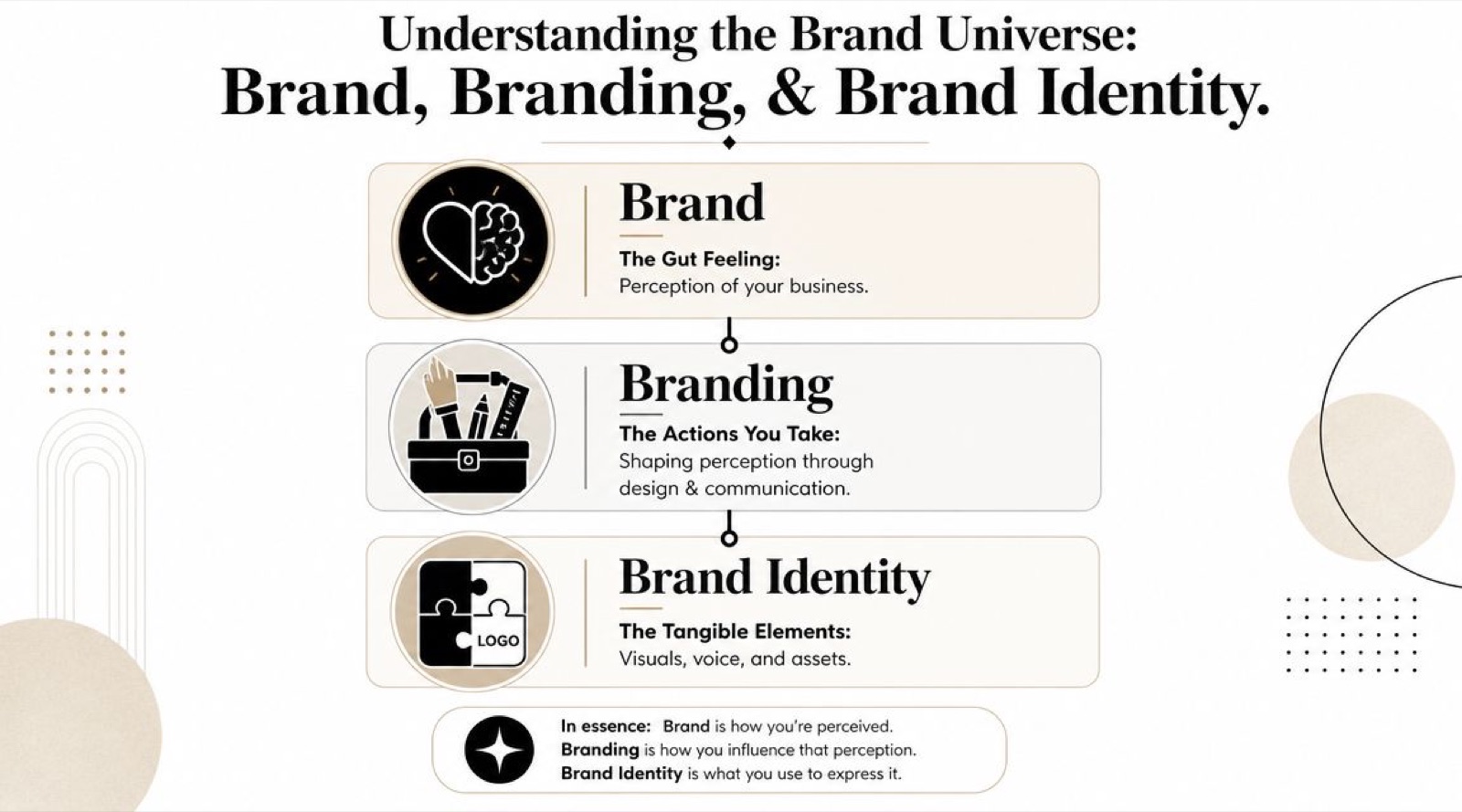
Brand is the reputation of the house once people have lived in it, visited it, and told others what they think. Brand identity is the blueprint and the visible design system. Branding is the work of constructing, presenting, and maintaining the house so people experience it the way you intended.
Brand is the perception
A brand lives in the mind of the audience. It’s what people think and feel when they hear your company name, see your product, or deal with your team. You can influence it, but you don’t own it outright.
That distinction matters because companies often confuse intention with outcome. Internally, you may say the brand stands for clarity, speed, or trust. Externally, customers may experience complexity, delay, or inconsistency. The market decides the final meaning.
Brand identity is what you create and control
Brand identity is the set of tangible signals used to express the company. MarketingProfs draws the distinction cleanly: brand is public perception, branding is the process of shaping that perception, and brand identity is the set of visible and verbal assets used to express it, in its piece on branding vs brand identity.
That’s why identity work isn’t decoration. It includes things like:
- Visual assets such as logo systems, color palette, typography, iconography, layout patterns
- Verbal assets such as tone of voice, naming logic, messaging hierarchy, taglines
- Applied assets such as deck templates, web components, packaging, motion rules, sales collateral
If you need a good example of how design choices support a larger system, this guide to graphic design in branding systems is useful.
Branding is the active process
Branding is the ongoing work. It’s how strategy and identity get put into the market through campaigns, storytelling, product launches, social content, paid media, sales materials, event presence, onboarding, and customer communication.
Branding is where I see departments hit the most friction, because it’s cross-functional. Design can’t do it alone. Neither can marketing. You need alignment across content, product marketing, demand gen, sales enablement, web, and often customer success.
A strong identity can still fail in the market if nobody applies it consistently, and a strong campaign can still underperform if the underlying identity is unclear.
A Side-by-Side Comparison for Ultimate Clarity
The easiest way to stop the language problem is to compare the terms directly. Keep this table close when you’re briefing a partner, planning a refresh, or deciding who approves what.
| Attribute | Brand | Brand Identity | Branding |
|---|---|---|---|
| What it is | Public perception and reputation | Tangible system of expression | Ongoing process of shaping perception |
| Where it lives | In the audience’s mind | In company-owned assets and guidelines | In campaigns, touchpoints, and execution |
| Who controls it | No team fully controls it | Company controls it internally | Company manages it through coordinated action |
| Core components | Customer beliefs, memory, trust, associations | Name, logo, colors, typography, voice, imagery, design elements | Storytelling, advertising, social media, positioning, rollout |
| Primary function | Reflect what people think and feel | Express who the company says it is | Move market perception toward intended meaning |
| Typical owner | Shared outcome across the business | Brand, creative, and leadership | Marketing with cross-functional partners |
| Main risk | Reputation slipping from intent | Inconsistency or vagueness | Fragmented execution |
| Best measurement lens | Perception, sentiment, recall, trust signals | Consistency, adoption, asset coverage | Channel performance, engagement, message uptake |
The most useful distinction for operators
Here’s the distinction teams miss most often. Identity is internal and intentional. Image is external and cumulative. Directive makes that divide especially clear in its guide to brand identity versus brand image.
That matters because a logo-only approach won’t hold up. If values, narrative, and voice aren’t clear, teams will improvise. Once they improvise, every ad, landing page, webinar deck, and email sequence starts sounding like a different company.
How to use the table in real decisions
Use the table as a triage tool.
If prospects say, “I’m not sure what makes you different,” that’s often a brand or positioning problem.
If your homepage, pitch deck, and product screenshots feel unrelated, that’s often a brand identity problem.
If the identity is solid but campaigns keep going off-model, that’s a branding and governance problem.
A lot of expensive rebrands start because the business diagnosed the wrong layer. The visual system gets replaced because it’s visible and easier to change. But what needed attention was messaging discipline, customer proof, or experience consistency.
How These Concepts Drive Real World Growth
A fictional scale-up makes this easier to see.
Call it Northlane. It sells workflow software to operations teams. The product is good, the category is crowded, and growth has stalled. Internally, leadership says the brand feels generic. Sales says prospects compare them on price. Demand gen says campaigns don’t convert as well as expected.
On inspection, the issue isn’t one thing. It’s a broken chain.
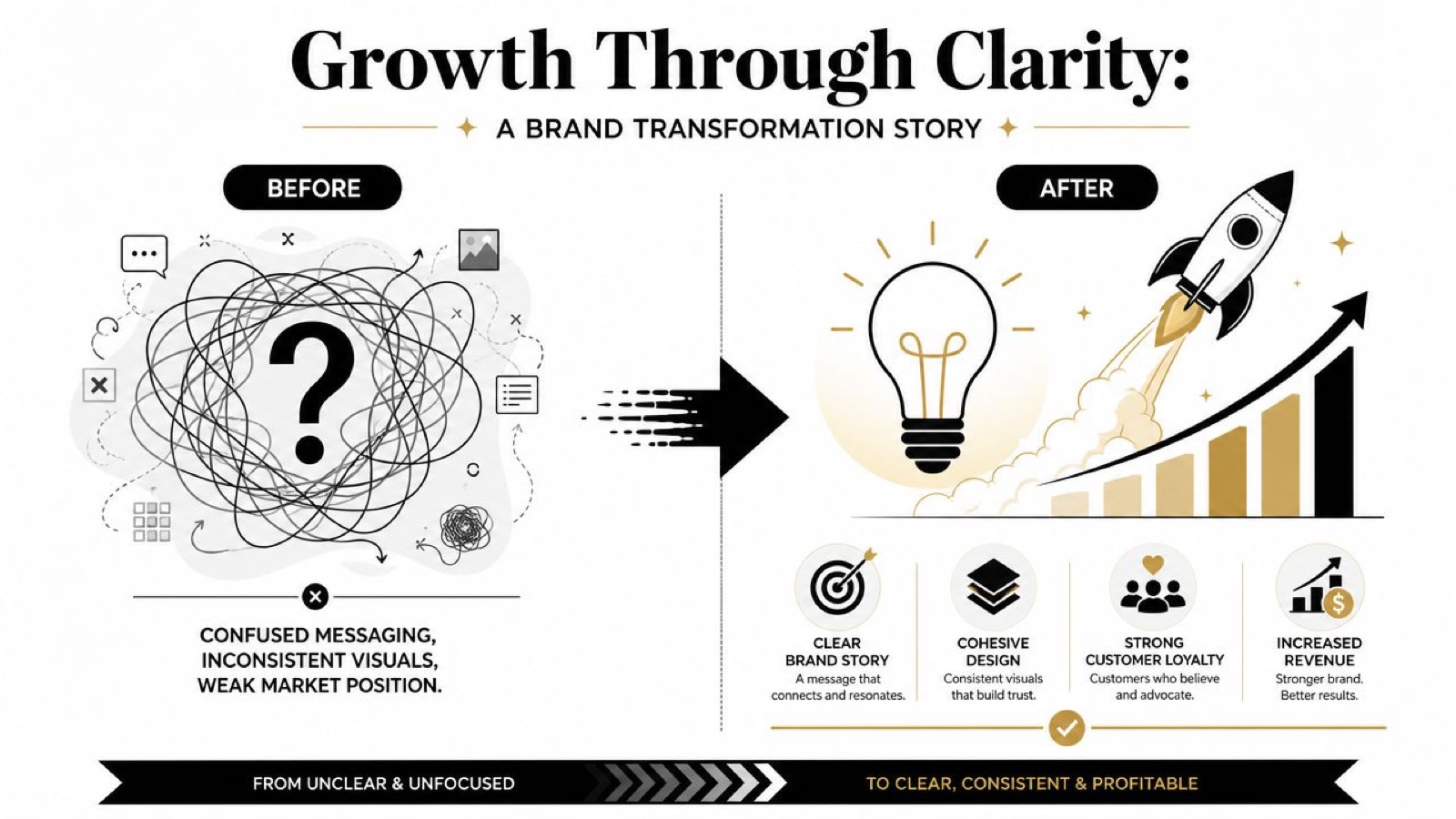
Before the reset
Northlane’s brand identity has come apart. The website uses one tone. Sales decks use another. Product screenshots look like they belong to a different company. LinkedIn posts sound casual, while case study PDFs sound stiff and overwritten.
Its branding is equally fragmented:
- Paid media pushes efficiency claims with no proof
- Email nurture talks about innovation in generic language
- Sales enablement leans on feature lists instead of a market narrative
- Customer onboarding doesn’t reinforce the promise made in acquisition
The result is a weak brand. Buyers don’t describe the company with any clear association. Some treat it as an afterthought. Some think it’s basic. Some can’t remember it at all after a demo.
What changed
The company doesn’t start with logo exploration. It starts with alignment.
Leadership and marketing define the strategic spine first. What does the company stand for? Which audience matters most? What promise can it support with evidence? Then creative translates that into a usable identity system with clear rules for type, color, imagery, interface treatment, voice, and deck structure.
After that, the branding work gets rebuilt across touchpoints. The homepage, ad system, sales narrative, webinar templates, onboarding emails, and product launch materials all start reinforcing the same idea.
When the same promise shows up in ads, decks, demos, and onboarding, buyers stop experiencing your marketing as disconnected pieces. They start experiencing a company.
This is also where outside execution discipline helps. Teams rebuilding visibility often benefit from studying practical brand awareness strategies that connect consistent messaging with repeated market exposure, rather than relying on one-off campaigns.
What the business notices after
The first signs of improvement usually aren’t dramatic visuals. They’re operational.
Sales reports that prospects finally repeat the company’s language back in calls. Web pages stop feeling like standalone assets and start working as a sequence. Product marketing spends less time rewriting decks from scratch. Designers stop hunting for old logos and random slide files.
Marketing also makes better use of content. A single message platform can feed paid creative, landing pages, webinars, product one-pagers, and short-form video. For teams trying to scale that kind of repetition without making it stale, these examples of brand awareness videos are a practical reference.
The point isn’t that identity alone creates growth. It doesn’t. Growth happens when brand identity, branding, and brand perception support each other instead of fighting each other.
Your Practical Playbook for Brand Management
Once the terminology is clear, the next question is operational. Who owns what, and what should the team do?
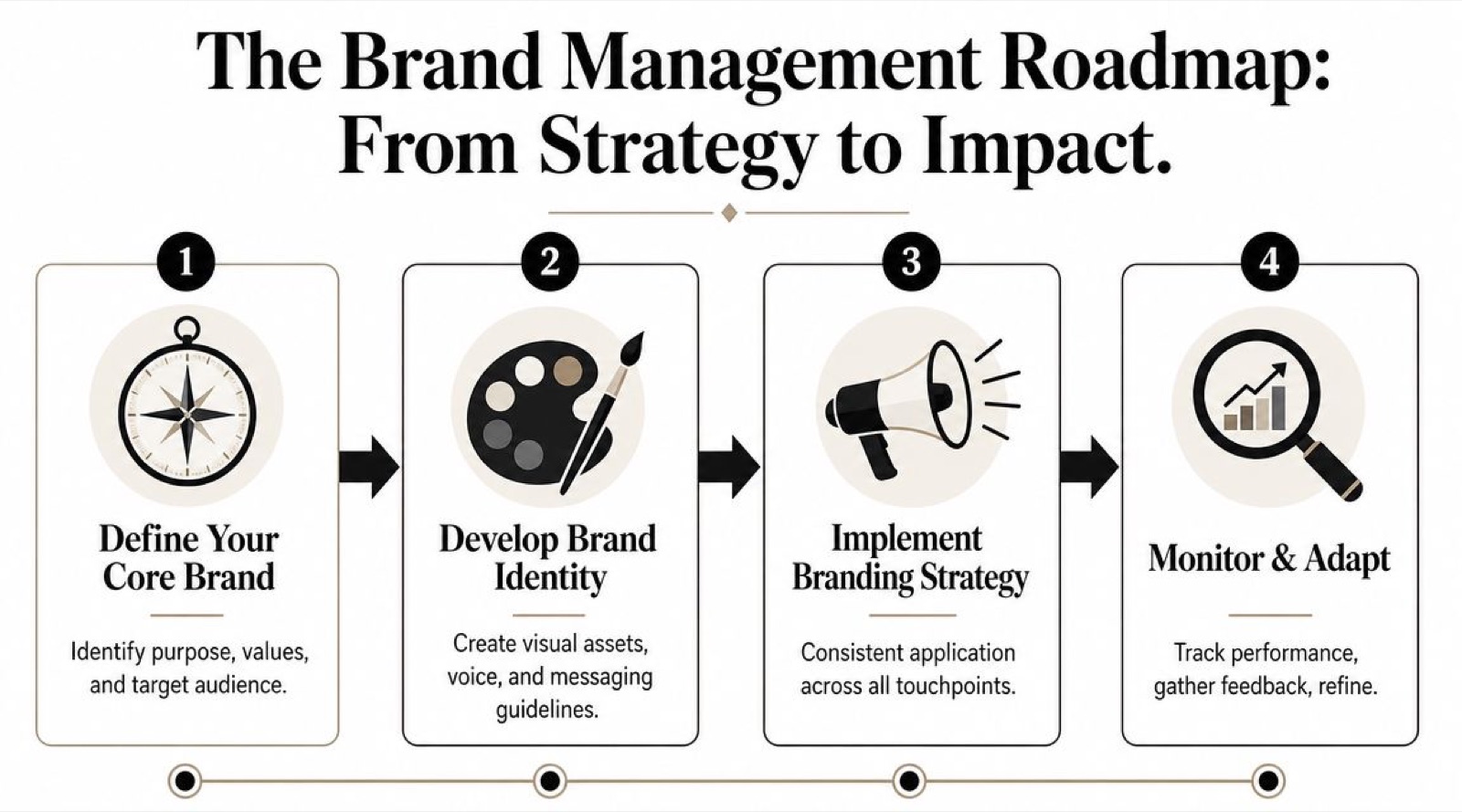
The cleanest model I use is this. Leadership defines the business direction. Brand or creative leadership shapes the identity system. Marketing activates the system through branding. Customer-facing teams either reinforce or damage the resulting brand through lived experience.
Who owns what
A practical ownership model looks like this:
- Founder, CEO, or CMO owns the core business direction. Positioning, ambition, audience priorities, and what the company wants to be known for.
- Creative director or brand lead owns the identity system. That includes visual rules, verbal standards, examples, templates, and approval logic.
- Product marketing owns message clarity. It turns strategy into claims, proof points, category framing, and sales narratives.
- Demand generation and campaign teams own branding execution in market. Ads, landing pages, events, lifecycle sequences, and channel adaptation.
- Sales, support, and customer success shape the lived experience. They don’t “own the brand,” but they strongly influence what the market believes.
Hitchcock Michalski’s explanation is useful here because it defines brand identity as the controlled set of elements like logo, color palette, typography, imagery, and messaging style, while branding is the active process carried out through campaigns, storytelling, social media, and advertising in its guide to brand identity, branding, and brand image.
What the workflow should look like
Teams often jump straight to creative production. That’s backwards. The order should be:
-
Audit the current state
Review the site, decks, paid ads, onboarding emails, social posts, packaging, event materials, and product surfaces. Look for inconsistency, duplication, contradiction, and weak proof. -
Clarify strategy
Lock the audience, positioning, value narrative, and core message pillars before design expansion begins. -
Build or refine identity
Create the system people will use. Not just a logo page. Include typography rules, color usage, imagery principles, icon style, tone guidance, sample messaging, slide frameworks, and component logic. -
Enable execution
Package the system into templates and libraries. Figma components, Google Slides masters, ad layouts, motion presets, social templates, email modules. -
Set governance
Define review rights, approval thresholds, and where current assets live.
The asset checklist most teams need
If you’re trying to build a strong brand, this hands-on guide on how to build a strong brand is a helpful companion to the execution side.
At minimum, most growing teams need:
- Logo system with primary, secondary, icon-only, and reversed versions
- Color specs for digital and presentation use
- Typography rules for web, decks, documents, and ads
- Voice guide with examples of what to say and what to avoid
- Messaging framework including value proposition, pillars, proof points, and elevator version
- Template kit for decks, case studies, social posts, paid ads, one-pagers, and webinar slides
- Image direction covering photography style, illustration approach, and screenshot treatment
A detailed set of brand guidelines creation practices helps teams turn those assets into something enforceable, not just presentable.
What to measure without getting lost in vanity metrics
You don’t need an elaborate measurement stack to start. You do need a sane one.
Track KPIs in three buckets:
-
Perception signals
Brand recall in sales conversations, qualitative feedback from prospects, sentiment in reviews, and whether customers use your intended language back to you. -
Consistency signals
Percentage of new assets built from approved templates, frequency of off-brand exceptions, and how often teams ask for clarification because the system is unclear. -
Performance signals
Website engagement, landing page quality, message resonance in campaigns, sales deck usability, content reuse across channels, and friction in handoff between teams.
What doesn’t work is measuring only impressions, only aesthetics, or only stakeholder opinion. If nobody can connect creative changes to market response and team efficiency, the brand program will always look optional.
If your team needs a faster way to turn strategy into consistent creative work, Moonb gives marketing teams an ongoing creative team to lean on, so it’s easier to maintain brand identity, ship branded assets across channels, and keep execution aligned as the business grows.
If you’d rather hear the distinction explained out loud before you brief anyone, this breakdown covers the same ground well:
Frequently asked questions
Brand is the reputation that lives in your audience's mind. Brand identity is the tangible system you create and control: logo, color, typography, voice, and imagery. Branding is the ongoing work of putting strategy and identity into the market through campaigns, content, and every touchpoint. One is perception, one is expression, one is action.
Diagnose in order. Check perception first (what customers and prospects actually think), expression next (whether your visual and verbal assets hold together), and execution last (whether campaigns apply the system consistently). Most expensive rebrands start by replacing the visual system because it is the easiest thing to see, when the real gap was messaging, proof, or a broken experience.
Usually the second. A lot of what gets blamed on identity is really governance: nobody knows what good looks like, who approves what, or which assets are current. Before commissioning new logos, audit the work you already ship, lock the strategy, then package the system into templates and rules people can actually follow.