13 Free Lottie Animation Sites for Commercial Use
Thirteen free Lottie animation sources cleared for commercial use in 2026, each with its license, best use, and real limits so you can ship without worry.

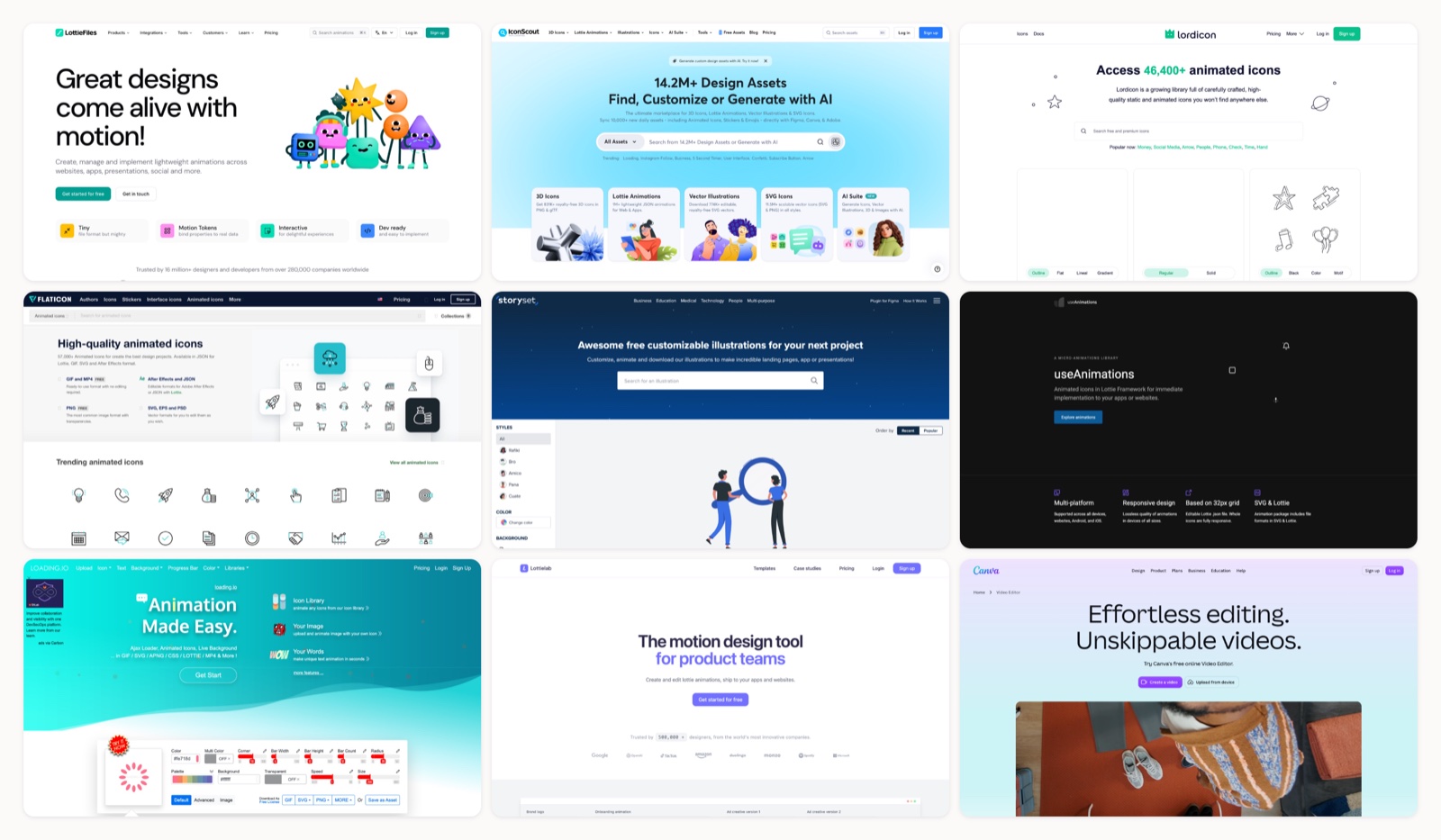
Lottie files are what I reach for when a static icon feels flat but a full video would be overkill. A Lottie is just a JSON export of a vector animation, so it stays sharp at any size and weighs only a few kilobytes, and the same file runs on the web, iOS, and Android. For the design and motion work my team ships, that combination is hard to beat.
Finding animations was never the problem. Finding ones I could safely use in paid client work, without a licensing question surfacing months later, took more digging. So I went back through the libraries we actually pull from, checked what each one permits commercially in 2026, and dropped the ones with vague terms. Below are thirteen sources worth a bookmark, ordered roughly by how often I open them, with the license written out for each. If you want the wider picture beyond ready-made files, our Lottie resources guide covers players, editors, and export tricks too.
1. Mosso
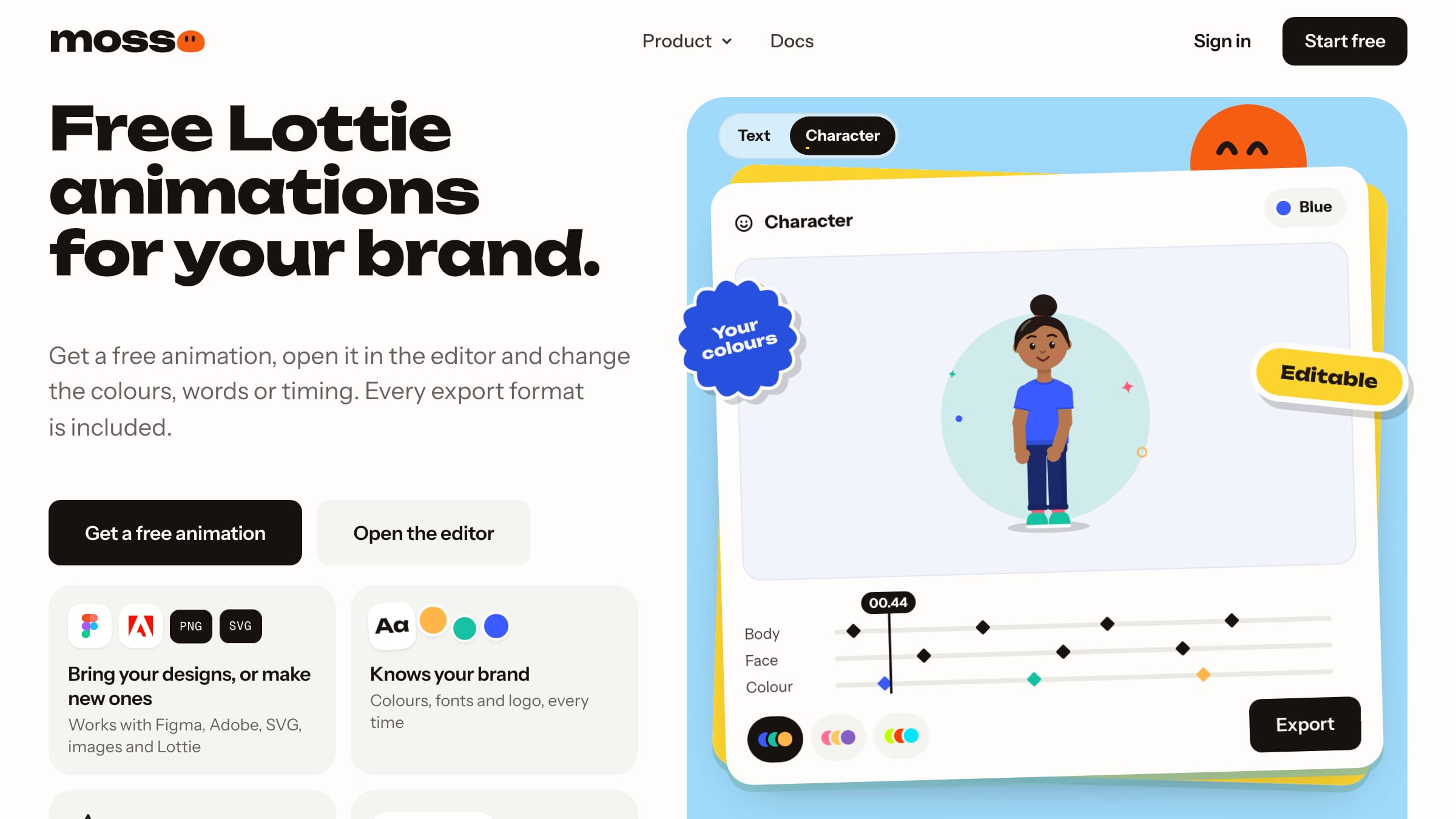
My top pick, and it is not close. Mosso is hands down the best free Lottie source on this list: every animation is free for commercial work, it restyles to your brand before you download, and every export format is included.
More on Mosso
Mosso works the other way round from most libraries. Instead of hunting for a file that already happens to match your colours, you pick an animation (loaders, confetti, animated text, icons, logo reveals, stickers and more), switch it to your brand kit, and download it. The licence is simple: use it in your own projects and in client work, including commercial work, with no credit needed; the only thing you cannot do is resell the files as templates or stock. Every export format is free, including dotLottie and transparent video.
2. LottieFiles
More on LottieFiles
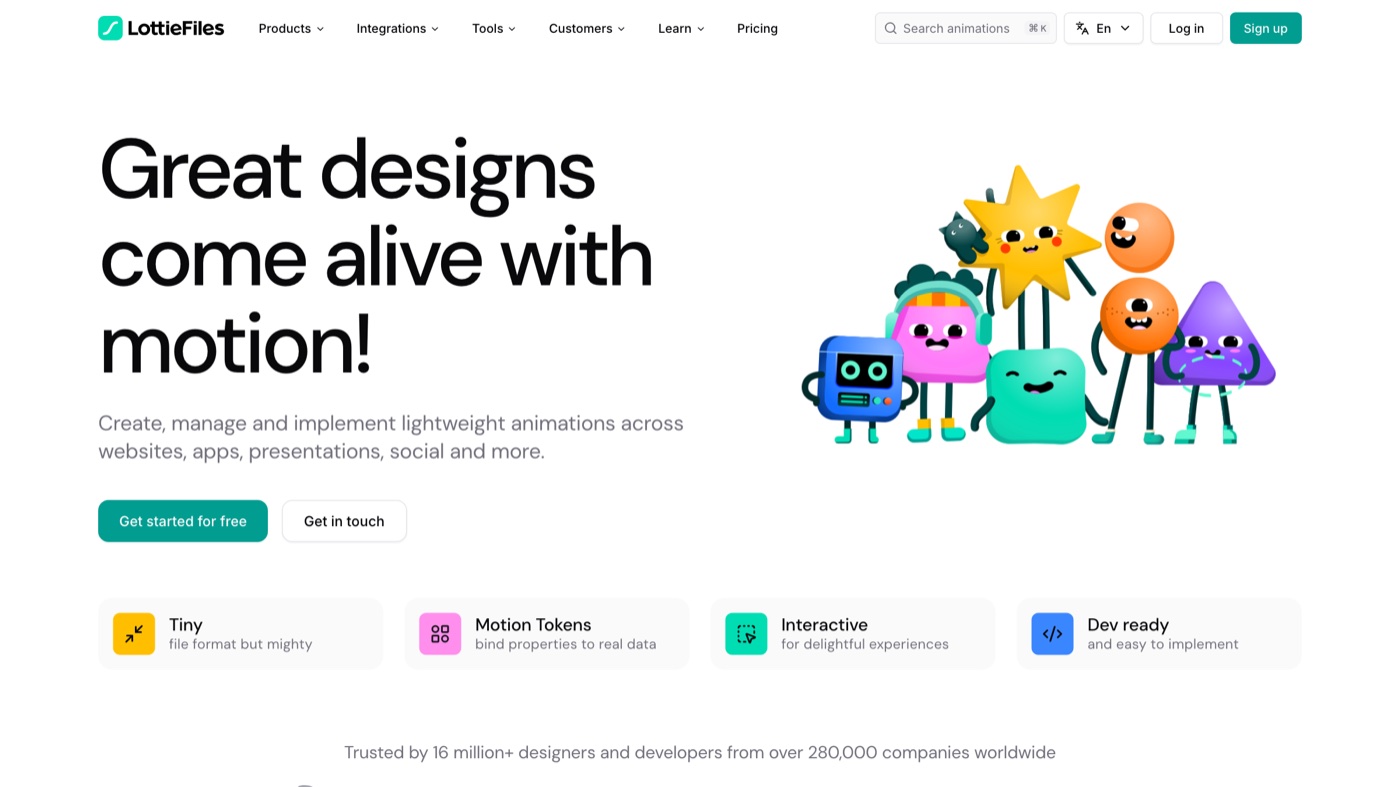
LottieFiles is where most people meet the format, and for good reason. Beyond the library you get a full workflow: preview an animation, tweak it in the Lottie Creator editor, compress it to the smaller dotLottie format, then grab a CDN link or embed snippet without leaving the page. The public animations run on the Lottie Simple License, which permits commercial use with no attribution, so they are safe for client sites and product UI. The one thing to watch is the Marketplace, whose premium files sit next to the free ones and carry paid licenses, so filtering to Free first saves confusion.
3. IconScout
More on IconScout
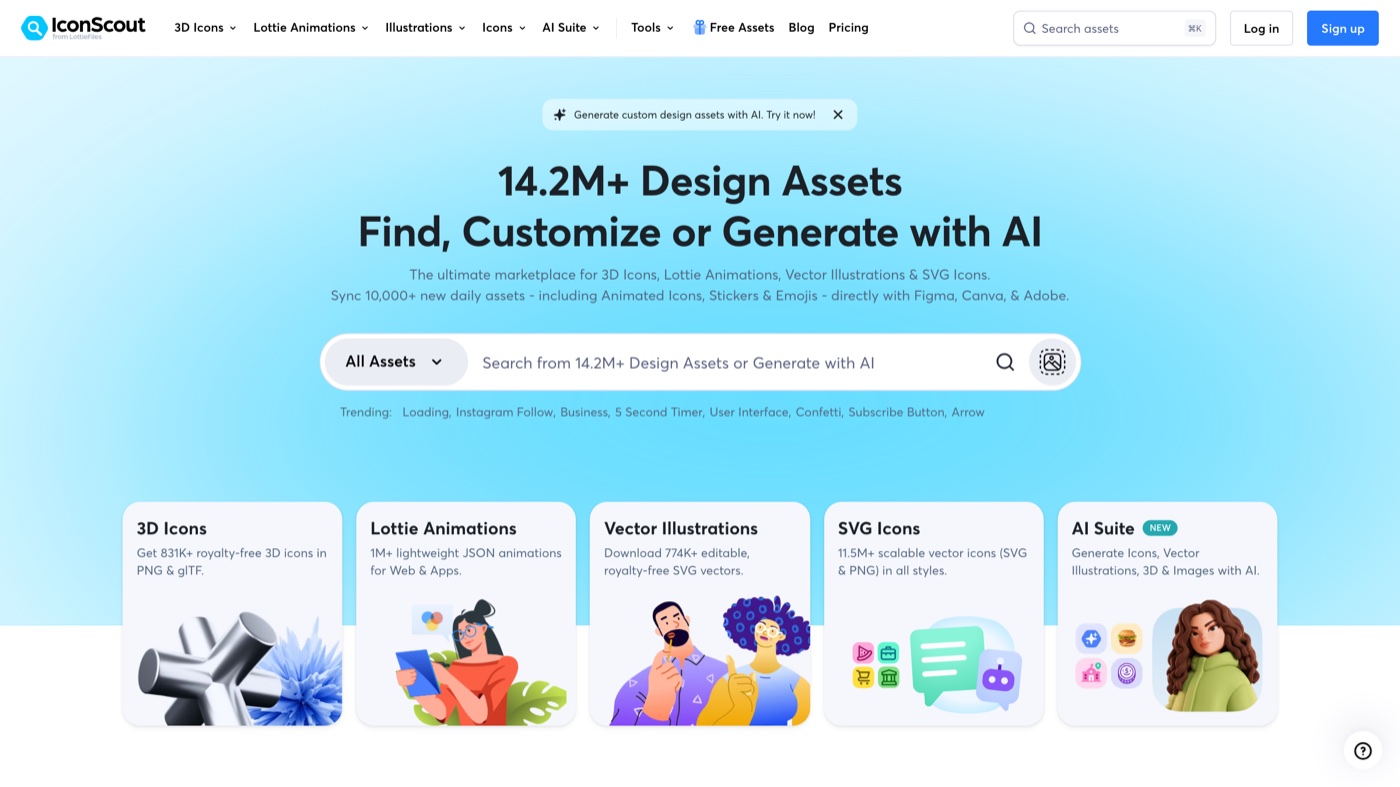
IconScout is a full design-asset marketplace, and its standout feature for this list is the explicit Free Commercial License filter that isolates animations you can use in business work without a purchase. Files come in Lottie JSON, dotLottie, GIF, and MP4, and a built-in editor lets you recolor and resize before export. Plugins for Figma, Adobe XD, and Webflow keep the whole thing inside your design tool. The free set is smaller than the premium catalog, so treat it as a curated shortlist rather than an exhaustive library, and check the creator profile when you find a style you like.
The next three are where I go for animated icons specifically. If you also keep a shelf of static sets, our icon libraries roundup pairs neatly with them.
4. Lordicon
More on Lordicon
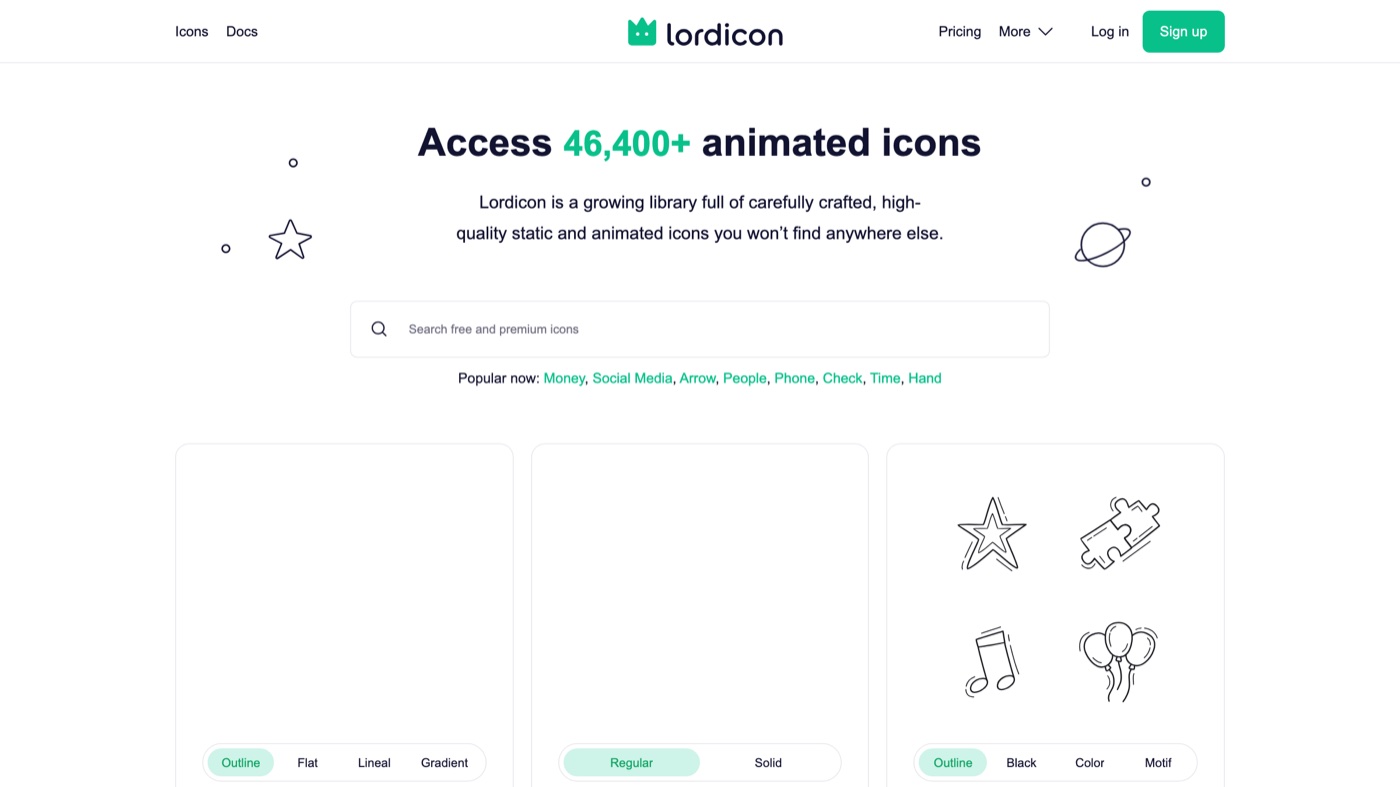
Lordicon focuses on animated icons that respond to interaction, which makes it a strong pick for buttons, toggles, and menu states rather than full illustrative scenes. The library runs well past 46,000 icons in total, with roughly 1,500 available free, downloadable as Lottie JSON or embeddable through a CDN link with control over trigger, colors, and stroke. The free tier asks for a visible credit; a paid membership removes it and opens the whole catalog. Because the icons share one consistent system, they hold together nicely across a product, which is the main reason I keep coming back to it.
5. Flaticon Animated Icons
More on Flaticon Animated Icons
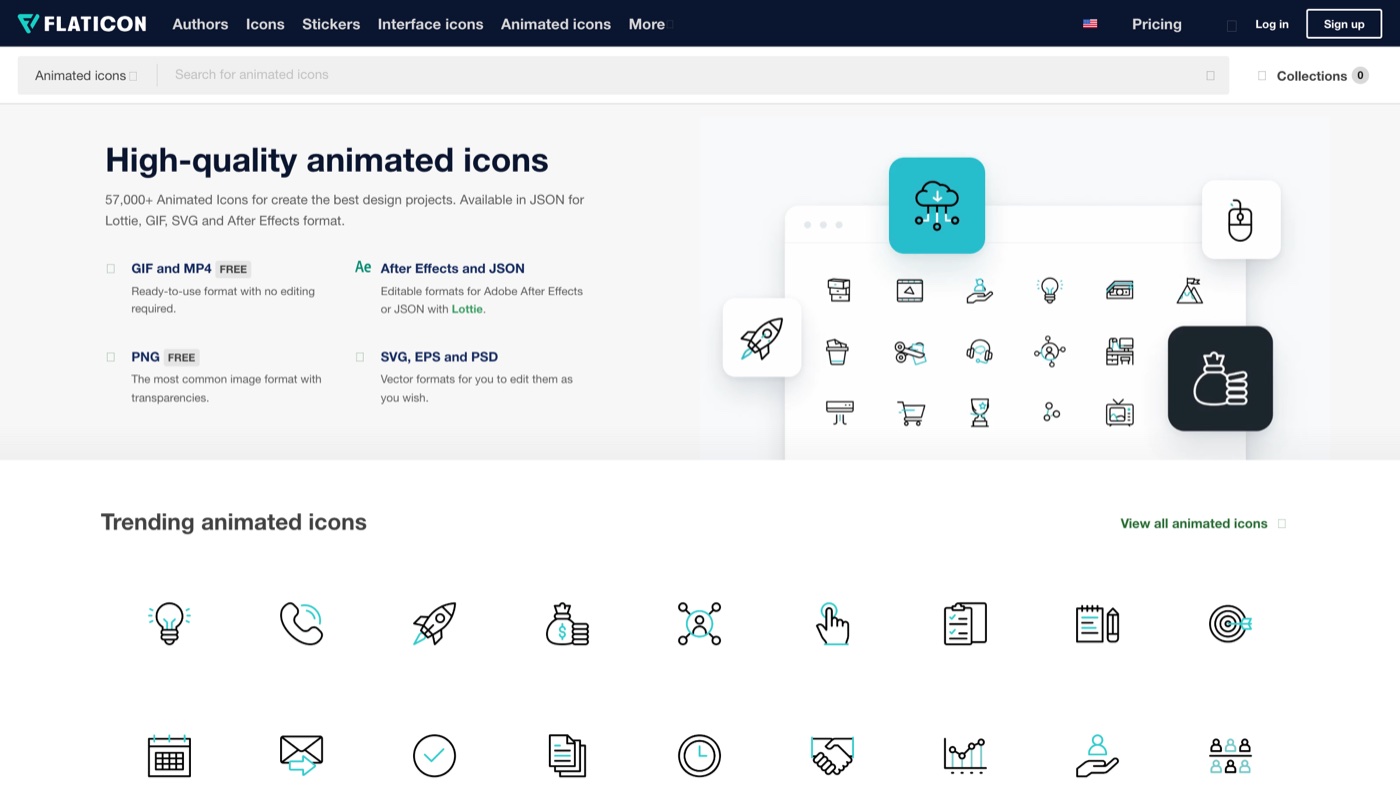
Flaticon built its name on static icons, and its animated-icon wing now runs to tens of thousands of Lottie files in a consistent house style. That consistency is the selling point: pull a set and every icon feels like it belongs to the same family, which matters for onboarding flows and dashboards. Free downloads are cleared for commercial use as long as you include the attribution link Flaticon provides on download, and a paid membership removes that requirement. If static icons are also on your list, it slots in alongside dedicated static-icon libraries.
6. Icons8 Animated Icons
More on Icons8 Animated Icons
Icons8 offers animated icons in several consistent styles, from flat color to iOS glyph to Material, so you can match an existing system. What sets it apart is access to source: many animations come with the original After Effects project file alongside the Lottie JSON and GIF, which lets a motion designer rework the animation rather than accept it as-is. The free route runs on linkware, meaning a visible link back to Icons8 wherever the icon appears; paid tiers remove that and add formats. For anyone who wants to customize past a color swap, that source-file access is the reason to pick it.
Storyset breaks the icon pattern with full illustrated scenes, so it sits closer to the sources in our royalty-free illustrations guide.
7. Storyset
More on Storyset
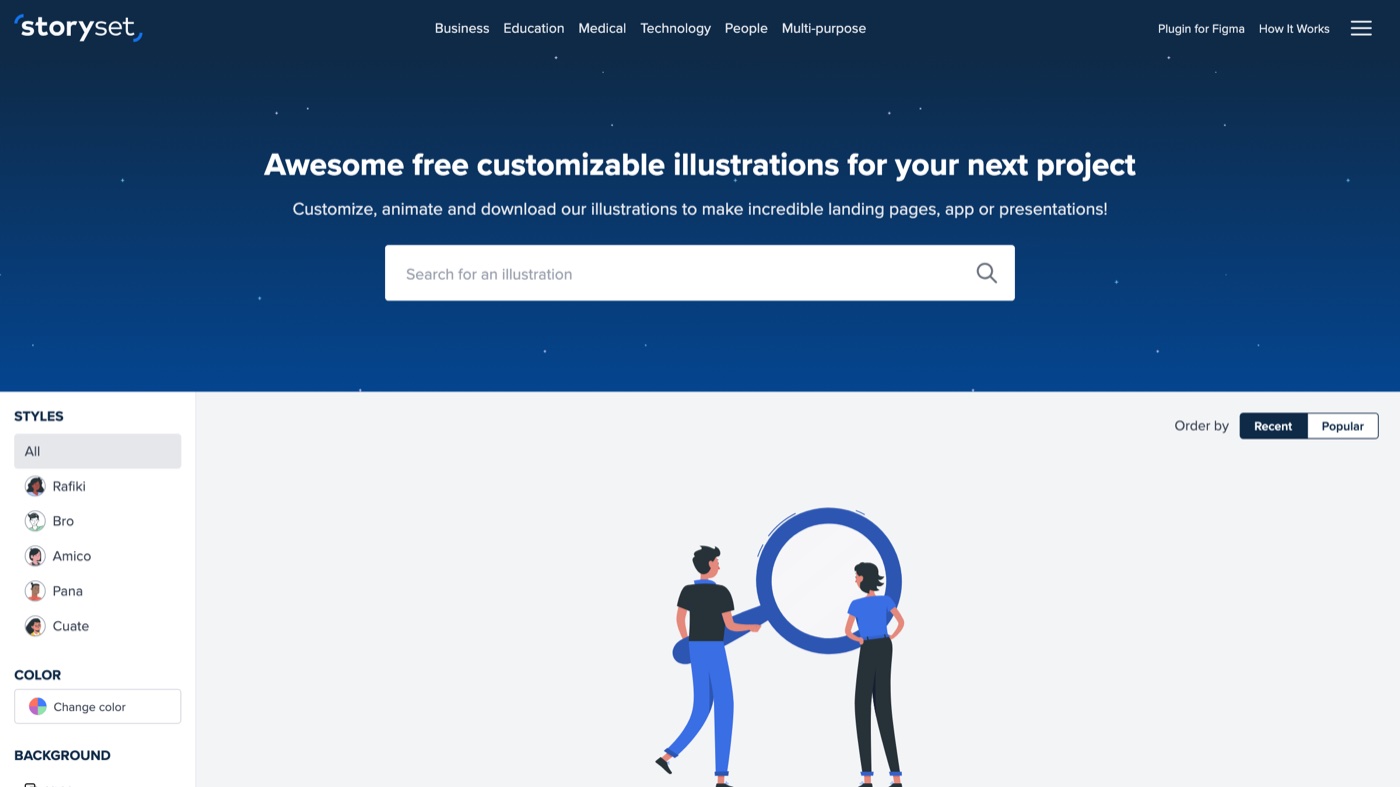
Storyset comes from the Freepik team and takes a different angle from the icon libraries: themed, editable illustrated scenes built for hero sections, empty states, and onboarding. The on-platform editor is the draw, letting you change colors to your brand hex, hide layers, and swap between illustration styles before exporting a Lottie JSON, so the result does not look like a stock file everyone recognizes. Free use is cleared commercially with a visible credit to Storyset, and a Freepik membership removes the attribution. Because the assets are narrative illustrations rather than tiny UI cues, they fit best where you are telling a story on the page.
8. Lottieflow
More on Lottieflow
Lottieflow is a focused library from Finsweet, the Webflow specialists, aimed squarely at common product interactions: hamburger menus, scroll prompts, form success states, loaders, and similar UI moments. Every animation is customizable in the browser (hex color and easing) and downloads as a standard JSON that drops into Webflow, or any other stack. Files are unusually small, often in the 3 to 4 kilobyte range, which keeps pages fast. It is completely free with no attribution, though you now need a free Lottieflow account to download; the trade-off is a smaller, curated set rather than a sprawling catalog.
9. useAnimations
More on useAnimations
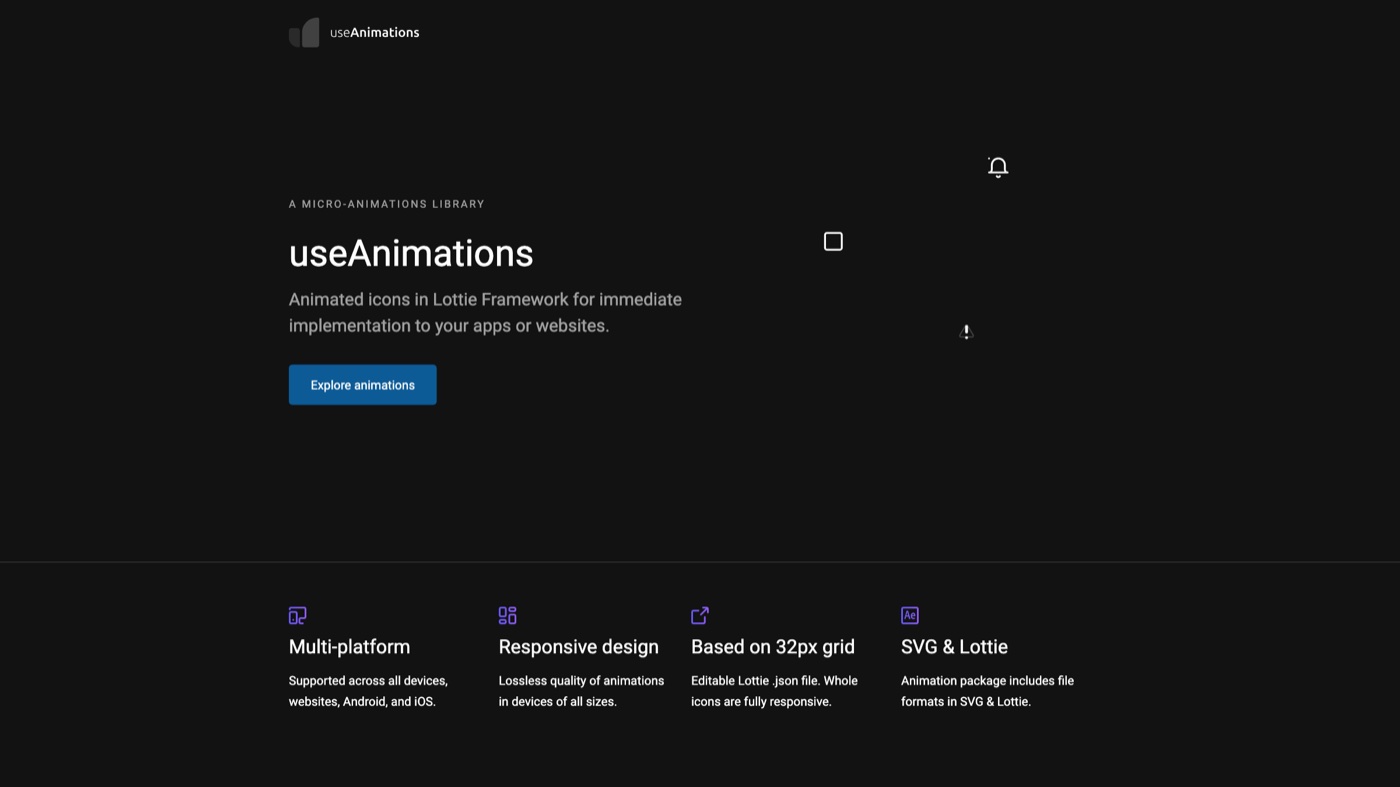
useAnimations is a tight, developer-friendly library of roughly 90 micro-animation icons optimized for a 32px grid: activity spinners, alerts, media controls, notifications, and the like. The code is released under the MIT license, which makes it the cleanest commercial terms here, with no attribution required. Each icon comes as SVG and Lottie JSON, and there is a react-useanimations npm package for React projects, so wiring one in takes minutes. The limit is scope: about 90 icons at micro scale, so it complements a larger library rather than replacing one.
10. Loading.io
More on Loading.io
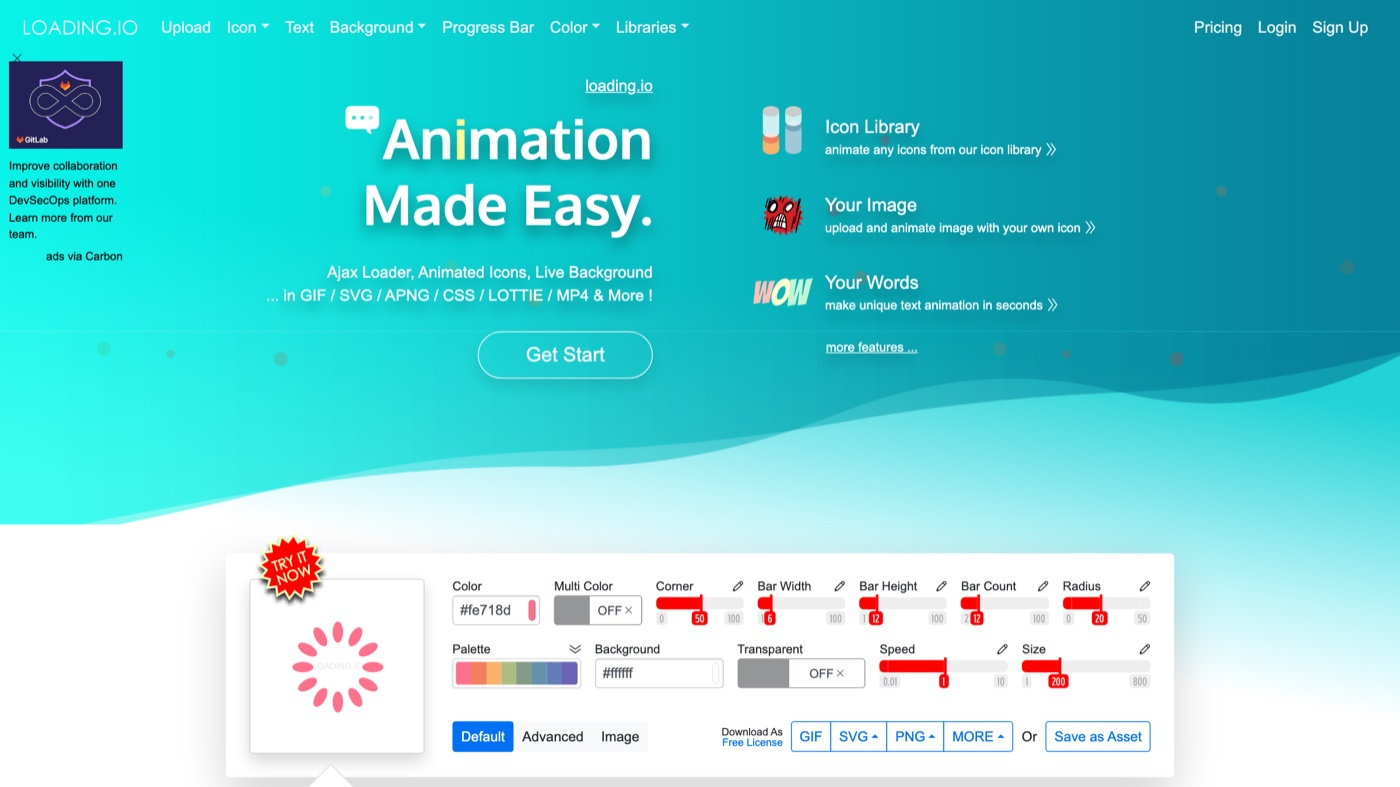
Loading.io is built around a different idea from the rest: rather than browsing finished files, you generate utility animations (loaders, spinners, progress indicators) and tune the colors, speed, and size in the browser before exporting. Licensing is labeled per asset: LD-FREE is essentially public domain with no attribution, while BY requires a simple credit, so filtering to LD-FREE gets you no-strings files fast. Exports include Lottie, GIF, SVG, and MP4. If you need a brand-matched loader and cannot find a pre-made one that fits, this is the fastest route, though it stays in utility territory and will not produce illustrative scenes.
11. LottieLab
More on LottieLab
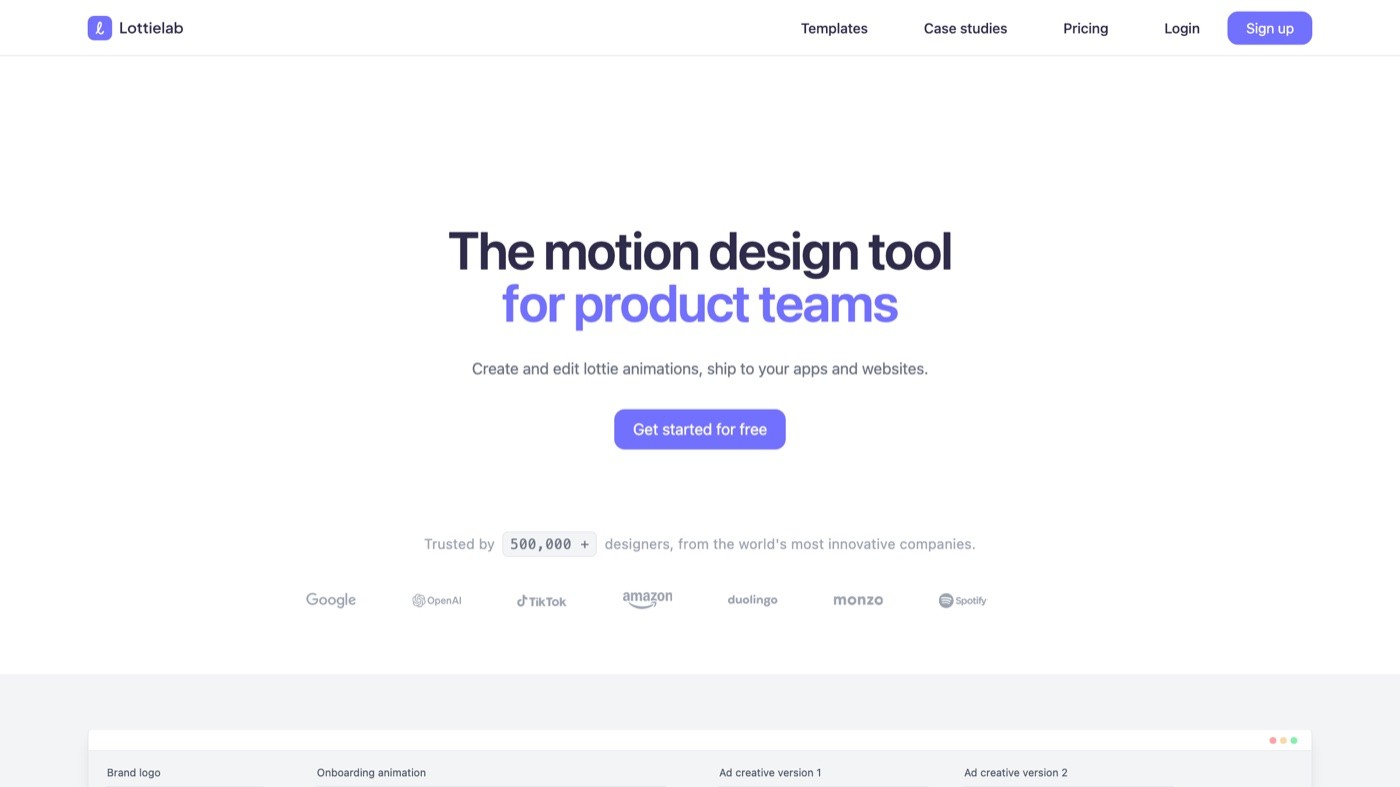
LottieLab positions itself as a browser-based Lottie editor, a lighter alternative to After Effects with a Figma-to-Lottie path, and it bundles free template collections of animated icons and illustrations to build from. Templates export as JSON, Lottie, GIF, and SVG, and because the editor is the core product, you can take a free template and actually reshape it rather than accepting the default. That makes it a good pick when a stock file is 80 percent right and you want to finish the last 20 percent yourself. The free library is smaller than the big marketplaces, so think of it as an editor with a starter kit rather than an exhaustive source.
12. Canva
More on Canva
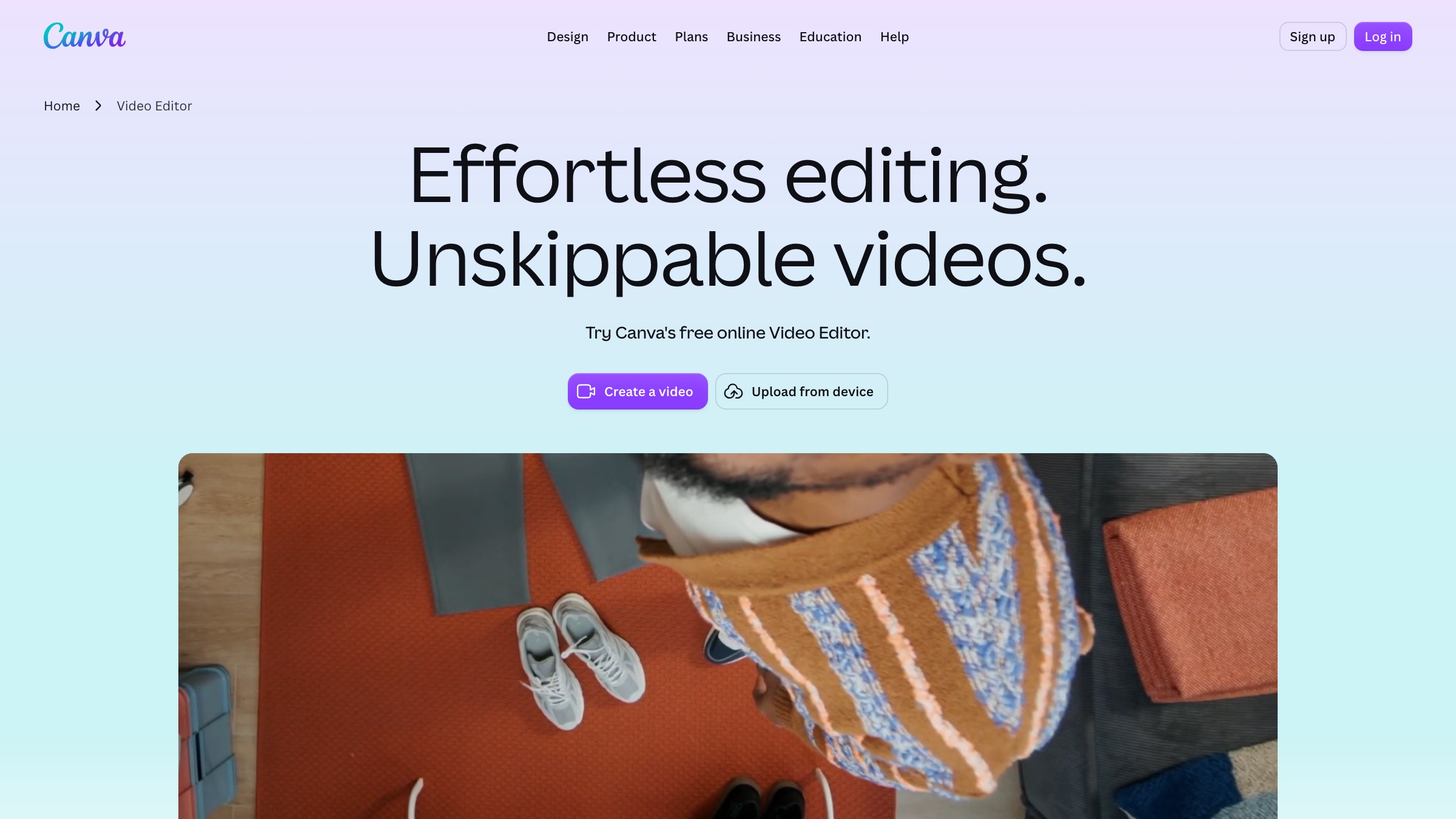
Canva folded Lottie animations into its Elements panel, which makes it the lowest-friction way for a marketing team to add motion to social posts, decks, and simple graphics. You drag an animation in, resize it, and layer it like any other element, no export dance required. The trade-off is format: Canva outputs your design as a raster GIF or MP4 rather than the underlying JSON, so it fits content work more than product engineering. One thing to watch is third-party apps like the LottieFiles integration inside Canva, where the original asset license applies rather than Canva's general terms.
13. Creattie
More on Creattie
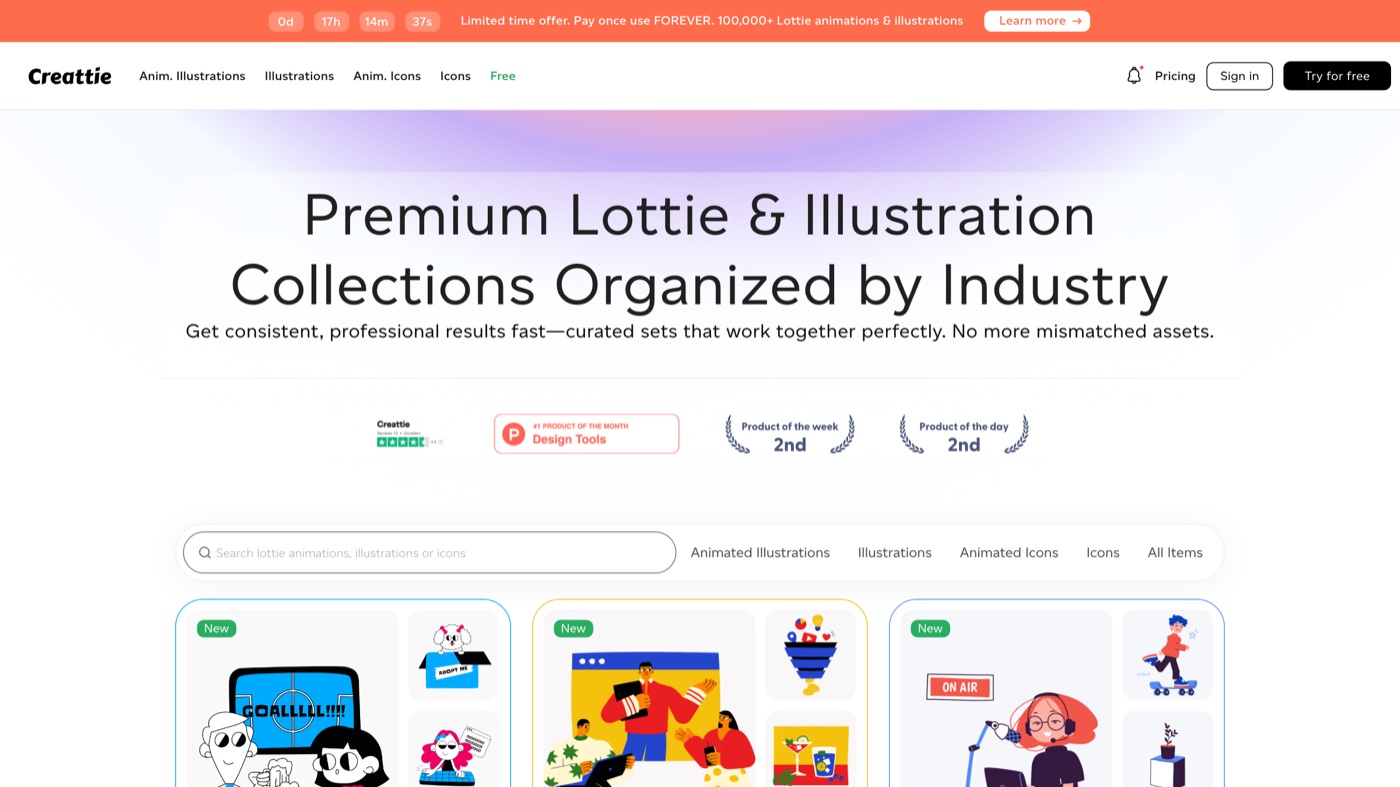
Creattie specializes in animated icon and illustration sets that share a single visual style, which is the whole point: pull from one collection and your interface or campaign stays consistent. It is mostly a paid service, but the Free section gives you a real sample under a clearly worded commercial license, so you can test the quality before committing. Assets export as Lottie JSON, GIF, and MP4. Read the license page before you ship, since it carries conditions like no standalone redistribution, and treat the free set as a curated starter rather than a deep library.
| # | Tool | Best for | Pricing | Limitation |
|---|---|---|---|---|
| 1 | Mosso | Free Lottie files you can restyle to your brand before download. | Free: the editor, every export, templates and the library. A free account allows up to 50 library downloads a day. | Smaller library than the big marketplaces; 50 library downloads a day on a free account. |
| 2 | LottieFiles | The broadest first search, plus built-in tools to test and shrink a file before it ships. | Free for public animations under the Lottie Simple License; paid tiers add team workspaces and premium marketplace files. | The paid Marketplace sits right next to the free results under different licenses, so filter to Free before downloading. |
| 3 | IconScout | Teams that want a clear commercial-license filter instead of guessing per file. | Free for the commercial-licensed set (a few assets ask for a credit); paid access opens the far larger premium library. | The free selection is a subset of a mostly paid catalog, so the exact style you want may sit behind a purchase. |
| 4 | Lordicon | Interactive animated icons and button feedback with per-state control. | Free tier with a credit link (around 1,500 icons); a paid membership removes attribution and unlocks the full set. | The free library is a slice of the full catalog of 46,000-plus, and the free tier needs a visible credit. |
| 5 | Flaticon Animated Icons | Cohesive animated icon sets for UI and micro-interactions at volume. | Free with a required attribution link; a paid membership removes the credit and opens everything. | The free tier's attribution rule is easy to forget, and forgetting it puts you out of license. |
| 6 | Icons8 Animated Icons | Designers who want the source files, not just the export. | Free under a linkware model (a visible link back to Icons8); paid tiers drop the link and add formats. | The linkware credit has to stay visible on the page or app where the animation runs, or you are out of terms. |
| 7 | Storyset | Editable illustrated scenes for hero sections and onboarding, not single icons. | Free with attribution to Storyset; a Freepik paid membership removes the credit. | These are illustrations, not UI micro-animations, so they suit storytelling more than interface feedback. |
| 8 | Lottieflow | Lightweight UI micro-interactions like loaders, menus, and success states. | Free with no attribution (a free account is required to download). | The library is small and UI-focused, so it is for targeted needs rather than broad browsing, and you do have to create a free account. |
| 9 | useAnimations | Developers who want clean micro-icon animations with the simplest license here. | Free under the MIT license, no attribution and no cost. | The set is small (about 90 icons) and strictly micro-interaction scale, so it will not cover illustrative needs. |
| 10 | Loading.io | Generating a custom loader, spinner, or utility animation to your exact colors. | Free under the LD-FREE (no attribution) or BY (attribution) license; a paid tier removes the credit and unlocks more. | It specializes in functional loaders and spinners, so do not expect illustrative or character animation. |
| 11 | LottieLab | Editing or building a Lottie from scratch, with free icon templates to start from. | Free tier with free icon and illustration templates; a paid tier adds advanced editing. | It leans toward creation over pure browsing, so the free template set is smaller than a dedicated library's. |
| 12 | Canva | Marketing teams and non-designers adding motion inside a familiar tool. | Free tier includes a Lottie gallery; Canva Pro adds brand controls and more assets. | Canva exports raster GIF or MP4, not the raw JSON, so it suits content creators more than developers. |
| 13 | Creattie | Cohesive, stylistically matched icon and illustration sets for a unified look. | Free samples with a clear commercial license; the fuller library is paid. | The free selection is a small taster, and the license bars standalone redistribution. |
Getting one of these onto your site
Downloading is the easy part. The players do the rest: drop the JSON or dotLottie into the dotlottie web component, or paste it into Webflow, Framer, or Canva, and it plays. Before you commit a file, drop it into our free Lottie viewer to preview it at the size it will actually appear and check the layer count, because a heavy illustration with hundreds of shapes can cost more than a short MP4 would. If the colors are off-brand, the Lottie editor swaps them across the whole file, and Lottie to MP4 and GIF makes a video version for places that do not play Lottie. If you want the fundamentals before you start editing exports, the basics in our technique of animation piece are a quick primer.
Who to hire when a library runs out
Free Lottie sources cover a lot: loaders, empty states, onboarding cues, success ticks, and the small motion that makes an interface feel alive. They stop being enough at the exact moment you need a piece that carries your brand or tells a story only you can tell, because the same file is one click away for everyone else. That is where custom motion graphics work pays for itself. Moonb works as an embedded creative team with a dedicated Creative Director, so the motion designers building your custom Lottie sit inside your brand rather than reading it off a brief. For a sense of what that custom work can look like, our guide to types of motion graphics breaks down the formats.
See it in action
LottieFiles has a short getting-started walkthrough that shows the whole flow, from picking a file to playing it on a page:
Frequently asked questions
Yes, but the license lives on the individual file, not the site. LottieFiles public animations use the Lottie Simple License, which clears commercial use with no attribution. Others, like Flaticon, Icons8, and Storyset, permit commercial use on their free tier only if you keep a visible credit. Always open the specific license for the file you download and save a note of it.
A .json file is the raw Bodymovin export of the animation. A .lottie file (dotLottie) is a zipped wrapper that is smaller and can bundle several animations plus their assets in one file. Both play with the same modern players, so pick dotLottie when file size and bundling matter, and plain JSON when a tool only accepts that format.
Usually they do the opposite, since a vector JSON is often a few kilobytes against a much heavier GIF or video. The exception is a very complex illustration with hundreds of layers, which can strain lower-end devices. Preview the file size and layer count before you commit, and lean on optimized dotLottie exports for anything above the fold.