12 Best Plugins and Extensions for 2026
The 12 plugins and extensions worth installing in 2026. Browser tools, Figma plugins, and After Effects picks for designers, editors, and marketers.

A good plugin does one small thing, and it does that thing every time you sit down to work. It trims a few seconds off a task you repeat all day, and by Friday those seconds have added up to real hours. These are the ones I keep installed myself, plus the few my team refuses to work without. The tools here are the ones creative teams actually keep installed, whether you build layouts in Figma or cut footage in Premiere Pro.
The list runs in a sensible order. First the browser extensions anyone can add from the Chrome Web Store in a click, then the plugins that live inside Figma, and last the heavier tools for After Effects and Premiere. Every pick is real, live in 2026, and linked to its official home. Most have a usable free version, so you can test before you spend.
One rule of thumb before you start: install for a problem you have this week, not one you might have someday. If you are newer to this world, our roundup of animation tools for non-designers is a gentler place to begin.
1. Fonts Ninja
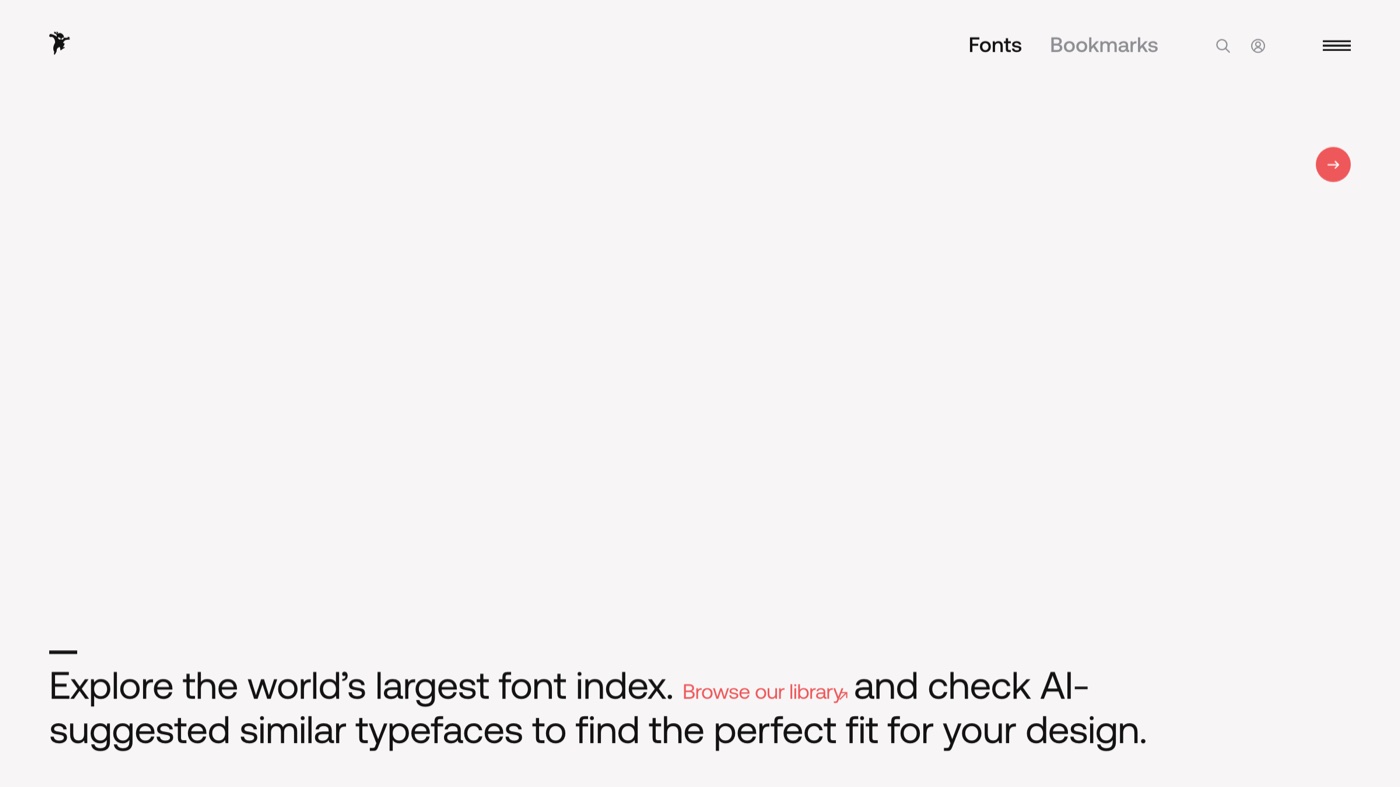
- Best for: naming and testing any font you spot on a website.
- Pricing: Free browser extension (an optional paid desktop app adds licensing and syncing).
- Why it stands out: Hover over any text and Fonts Ninja shows the font name, size, and letter spacing. You can type your own words to preview the face, then bookmark it for later. It reads both Google Fonts and commercial typefaces.
- Worth knowing: Some sites serve fonts in ways that hide the real name, so detection occasionally comes back blank. Identifying a font is also not the same as owning a license to use it.
2. ColorZilla
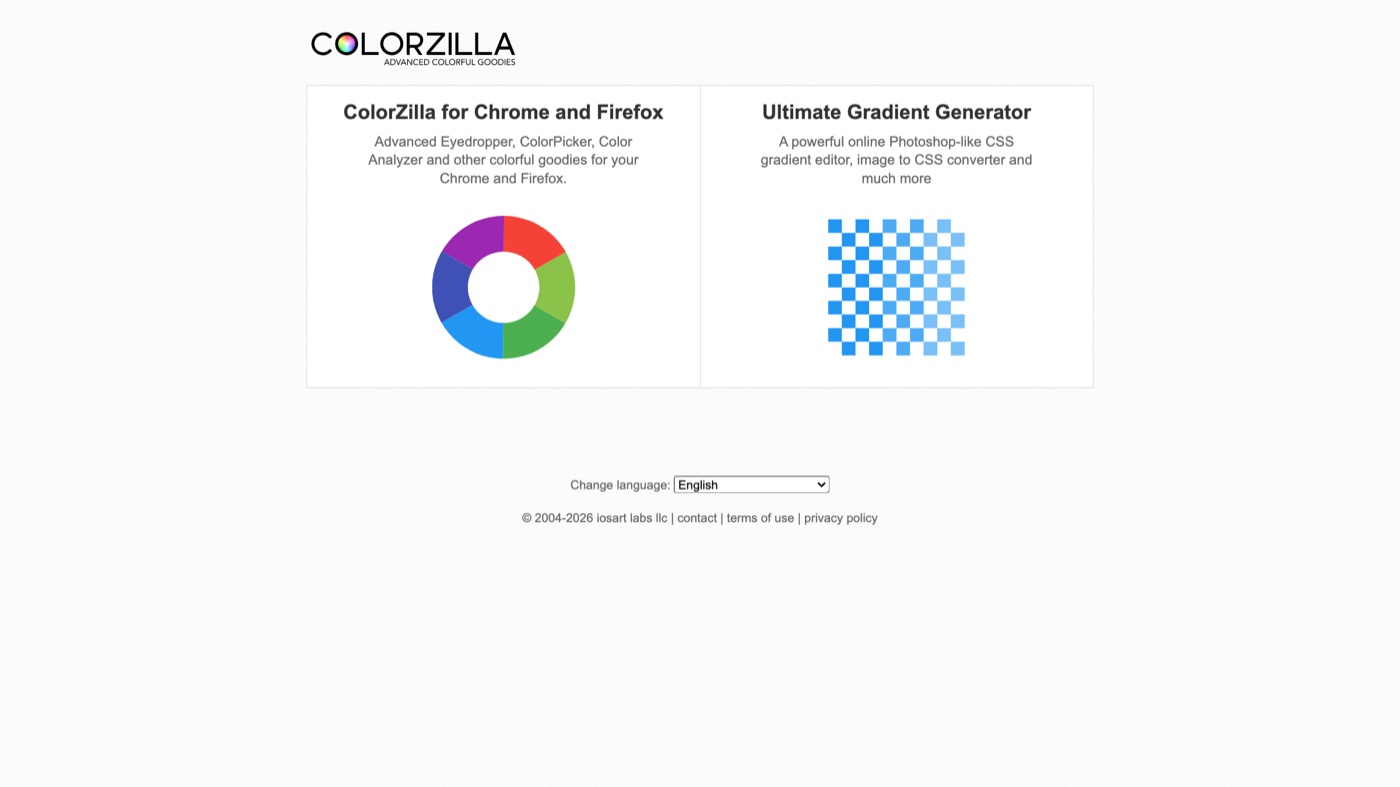
- Best for: pulling an exact color from anything on your screen.
- Pricing: Free for Chrome and Firefox.
- Why it stands out: The eyedropper is only the start. ColorZilla keeps a history of the colors you pick, reads gradients, and hands you ready CSS. More than ten million people have installed it, and it still gets updates after well over a decade.
- Worth knowing: It samples the rendered page, so colors locked inside a cross-origin iframe or some canvas elements can be out of reach.
3. Muzli
- Best for: a daily dose of design inspiration without going looking for it.
- Pricing: Free new-tab extension.
- Why it stands out: Muzli replaces your new-tab page with a stream pulled from Dribbble, Behance, Awwwards, and 160+ sources you can tune to your taste. Open a tab, catch what is moving in the field, get back to work.
- Worth knowing: It fuels ideas rather than producing anything, and a scrolling feed can eat twenty minutes if you let it. Treat it as a coffee break, not a workflow.
4. PerfectPixel by WellDoneCode
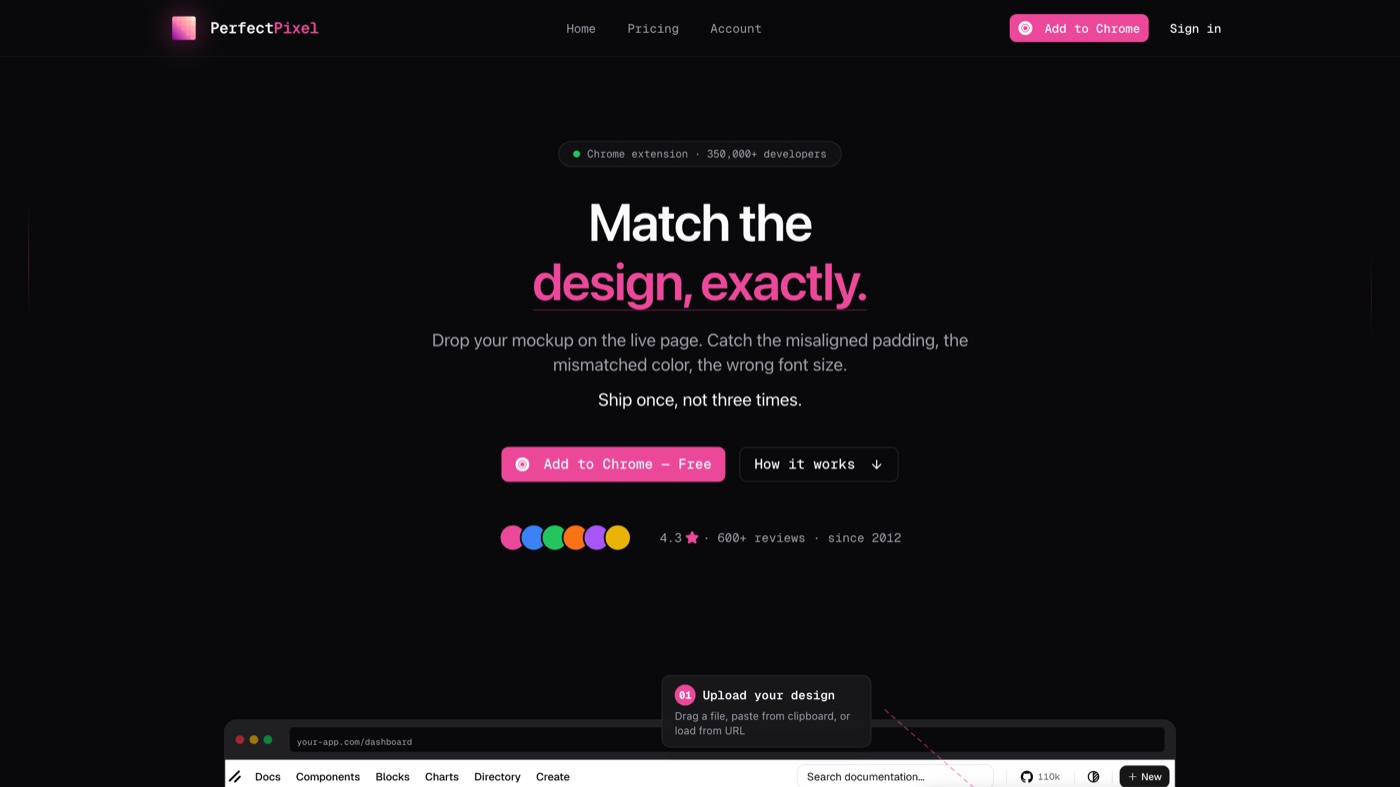
- Best for: matching a built page to the design comp down to the pixel.
- Pricing: Free Chrome and Edge extension.
- Why it stands out: Drop a semi-transparent version of your mockup on top of the live page, then adjust opacity and scale until the build lines up. It remembers layers per site and keeps them between sessions, which helps on long front-end passes.
- Worth knowing: You overlay a flat image, so it checks one static comp at a time. Responsive breakpoints and interactive states still need a real eye.
5. GoFullPage
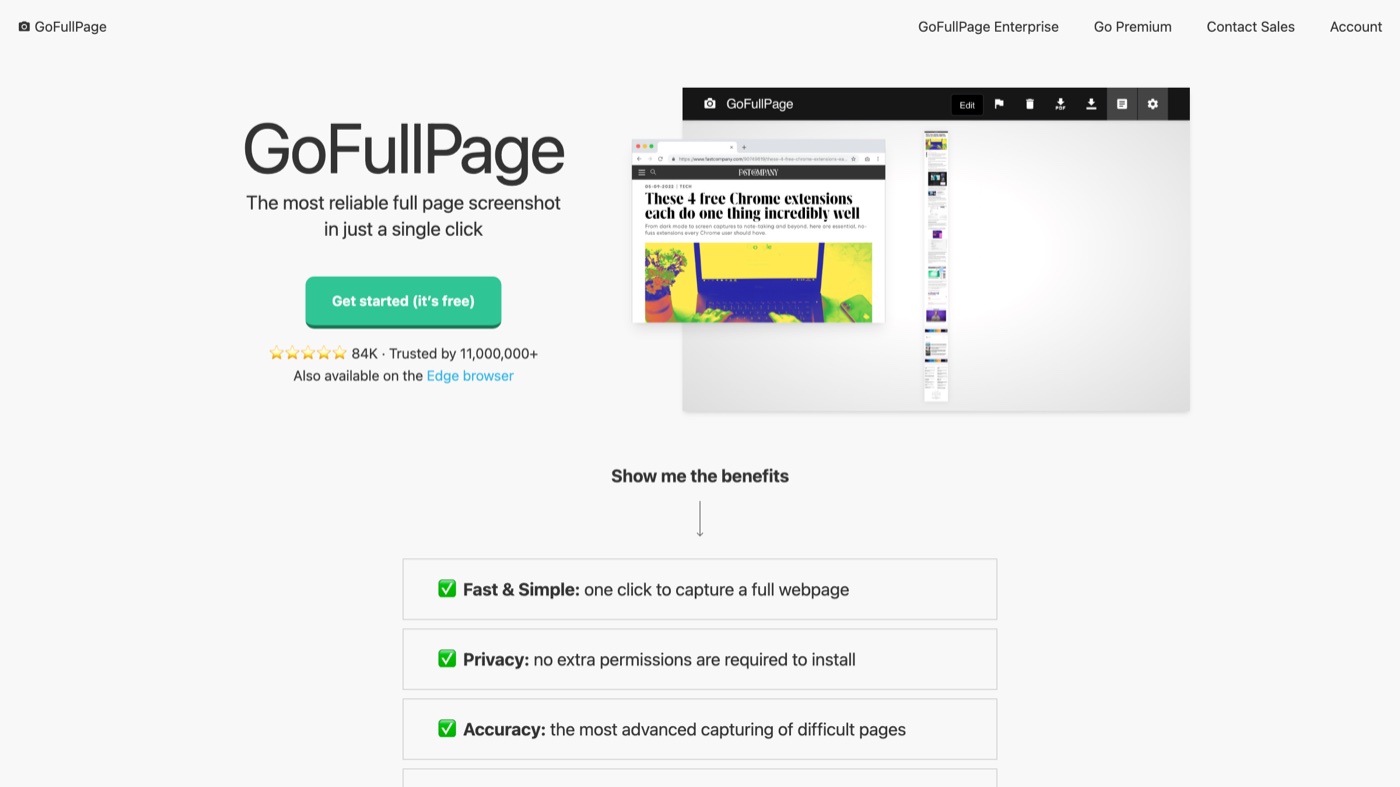
- Best for: capturing an entire long page in a single screenshot.
- Pricing: Free, with an optional Pro tier for extra export and editing features.
- Why it stands out: It handles the cases that trip up other capture tools, including inner scroll areas and embedded iframes, and it is open source. You get a clean image to crop, annotate, and share.
- Worth knowing: Very long or lazy-loading pages can stitch with small seams, and fixed headers sometimes repeat down the capture.
6. Loom
- Best for: sending a quick screen-and-camera walkthrough instead of a wall of text.
- Pricing: Free Starter plan; Business runs $18 per user, per month.
- Why it stands out: Loom records your screen and your face together, transcribes in more than 50 languages, and gives you a shareable link the second you stop. For marketers and remote teams it turns a long email into a two-minute video.
- Worth knowing: The free Starter plan caps you at 25 videos and five minutes each, which an active team burns through in a few weeks.
7. Stark
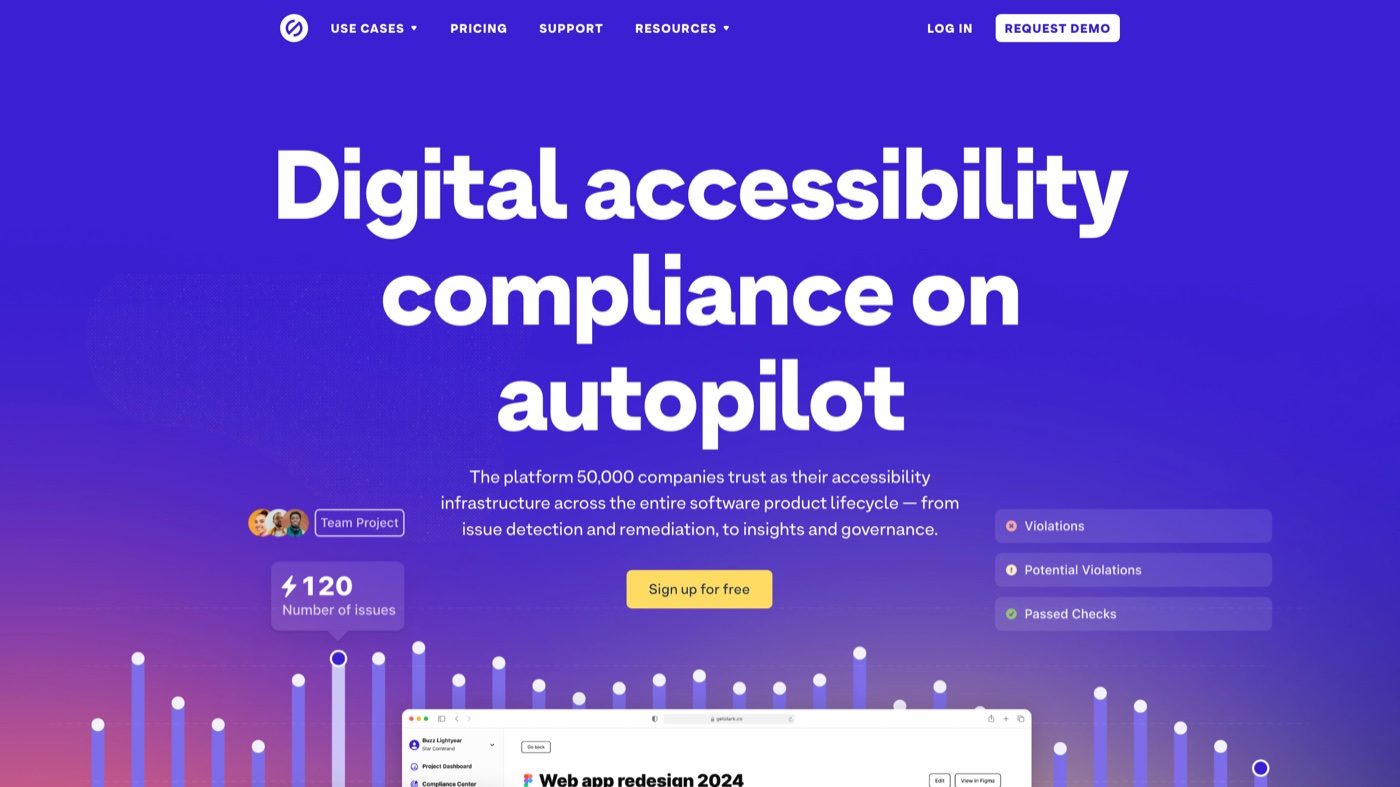
- Best for: checking a design for accessibility before it ships.
- Pricing: Free tier; Pro from $12 per month.
- Why it stands out: Stark is the most complete accessibility suite in the Figma Community, with contrast checking, color-blindness simulation, and alt-text tools in one panel. Catching a failing contrast ratio in Figma costs far less than fixing it after launch, and it keeps your work aligned with WCAG guidelines.
- Worth knowing: The free tier covers the basics like contrast. The audits you lean on most, such as focus order, touch targets, and full alt-text flows, sit inside Pro.
8. Unsplash
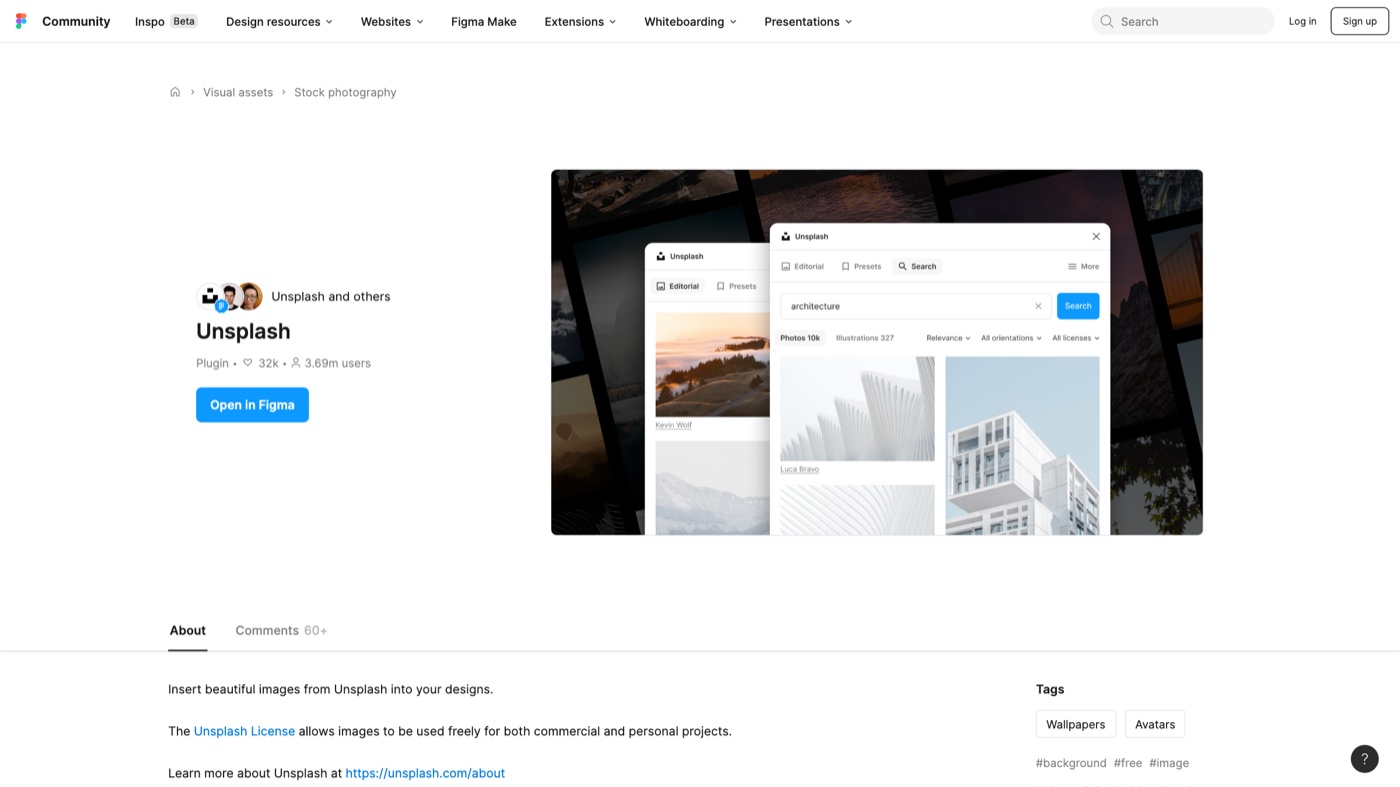
- Best for: dropping real photography into a layout without leaving Figma.
- Pricing: Free.
- Why it stands out: The official Unsplash plugin lets you search a huge library and place images straight onto the canvas, which beats grey boxes for showing a client how a screen will feel. The Unsplash License covers commercial use.
- Worth knowing: The catalog is popular, so the same handful of shots show up on countless sites. For final work, art direct your own images rather than lean on the defaults.
9. html.to.design
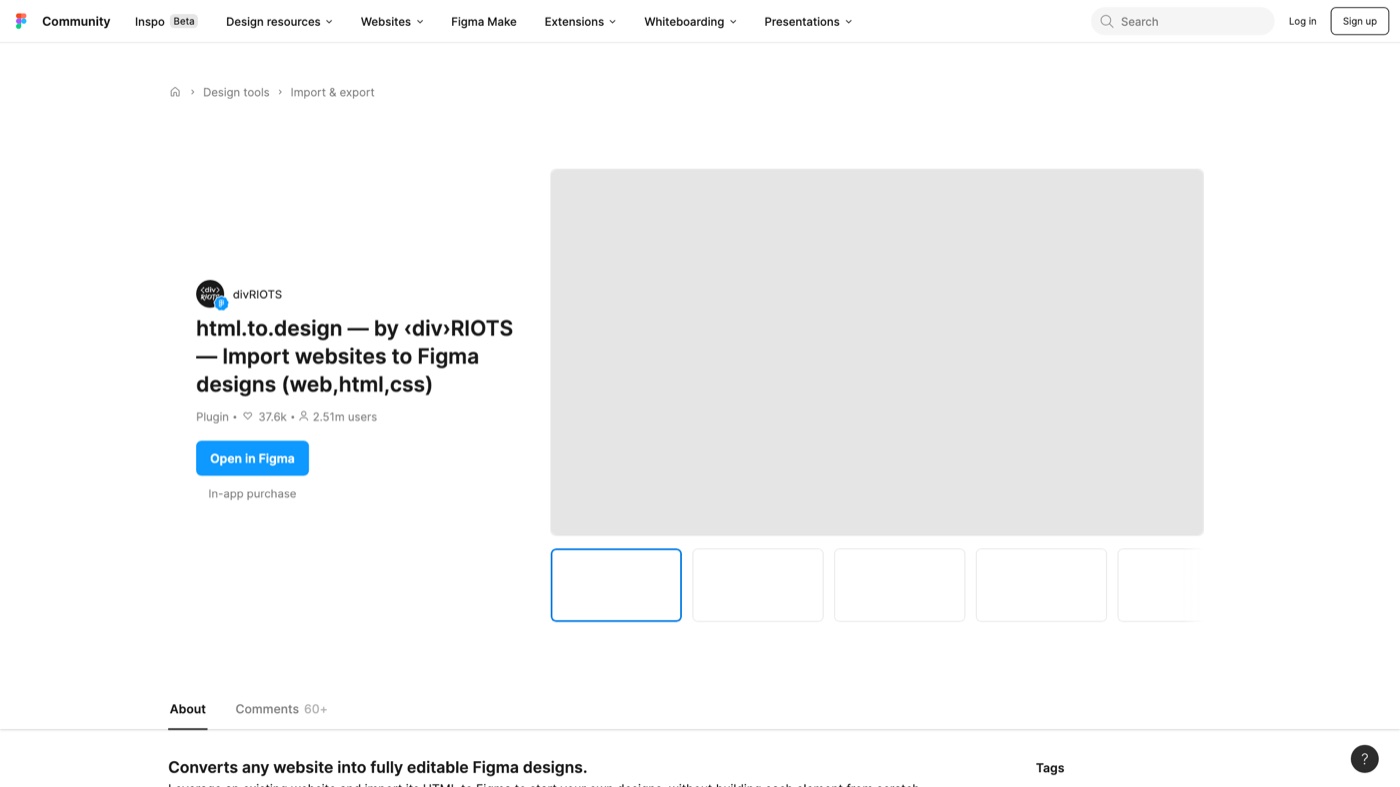
- Best for: pulling a live website into Figma as editable layers.
- Pricing: Free to start, with a paid Pro plan for heavier use.
- Why it stands out: Point it at any URL and html.to.design rebuilds the page inside Figma, ready to redesign, reference, or tear down for a competitive study. It saves the tedious work of rebuilding an existing screen by hand.
- Worth knowing: Complex pages import with messy nesting and detached styles, so plan on some cleanup before the file is truly workable.
10. Motion Studio by Mt. Mograph
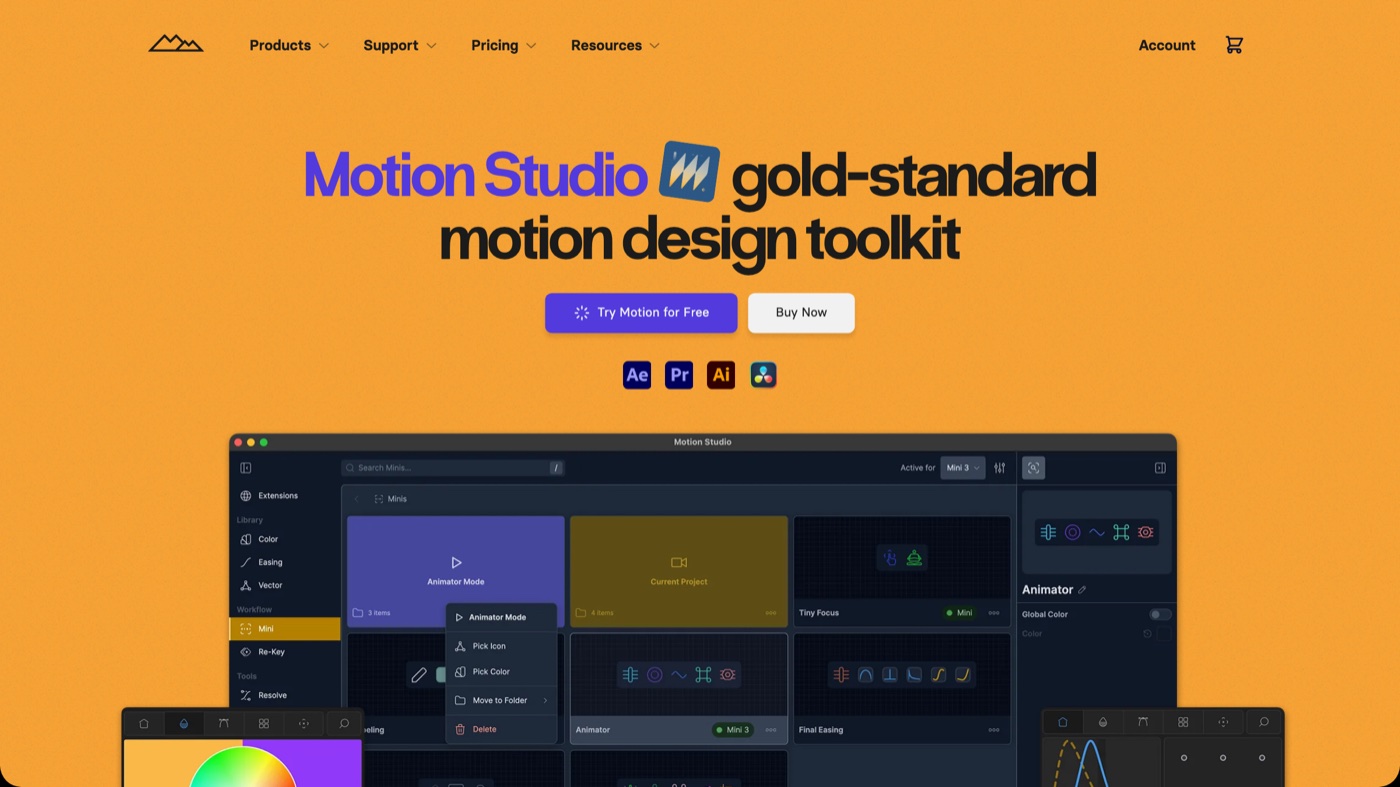
- Best for: speeding up the repetitive parts of After Effects animation.
- Pricing: From $13 per seat, per month billed yearly; an all-tools plan runs $19.
- Why it stands out: Motion Studio bundles 80+ tools across After Effects, Premiere Pro, Illustrator, and DaVinci Resolve. Its easing and stagger controls turn work that used to mean dragging keyframes one by one into a single click. If you are still learning where motion fits, our guide to the types of motion graphics pairs well with it, and Adobe keeps a primer on third-party plug-ins if you are new to installing them.
- Worth knowing: It moved from a one-time license (the old Motion 4) to recurring pricing, which some longtime users pushed back on. It only pays off if you are in After Effects regularly.
11. Duik Ángela
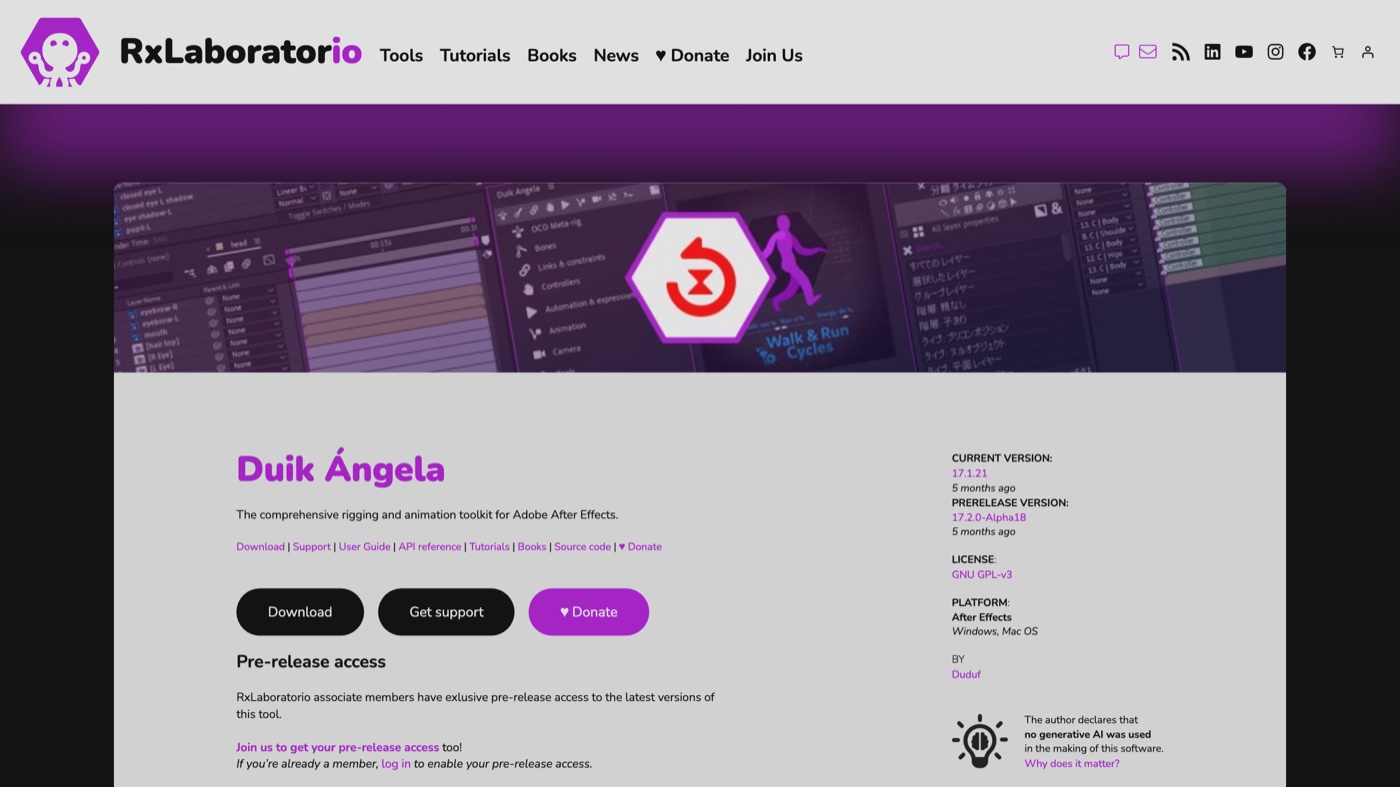
- Best for: rigging and animating characters in After Effects.
- Pricing: Free and open source (donations welcome).
- Why it stands out: Duik brings rigging you would expect from a 3D app, including inverse kinematics, bones, and controllers, into flat 2D animation, plus automations for wiggle, spring, bounce, and walk cycles. Fifteen years of development have made it the standard for character work in After Effects. It slots neatly into a full animation process.
- Worth knowing: It is deep, and the learning curve matches. Expect to spend real time with tutorials before the rigging concepts click.
12. AutoPod
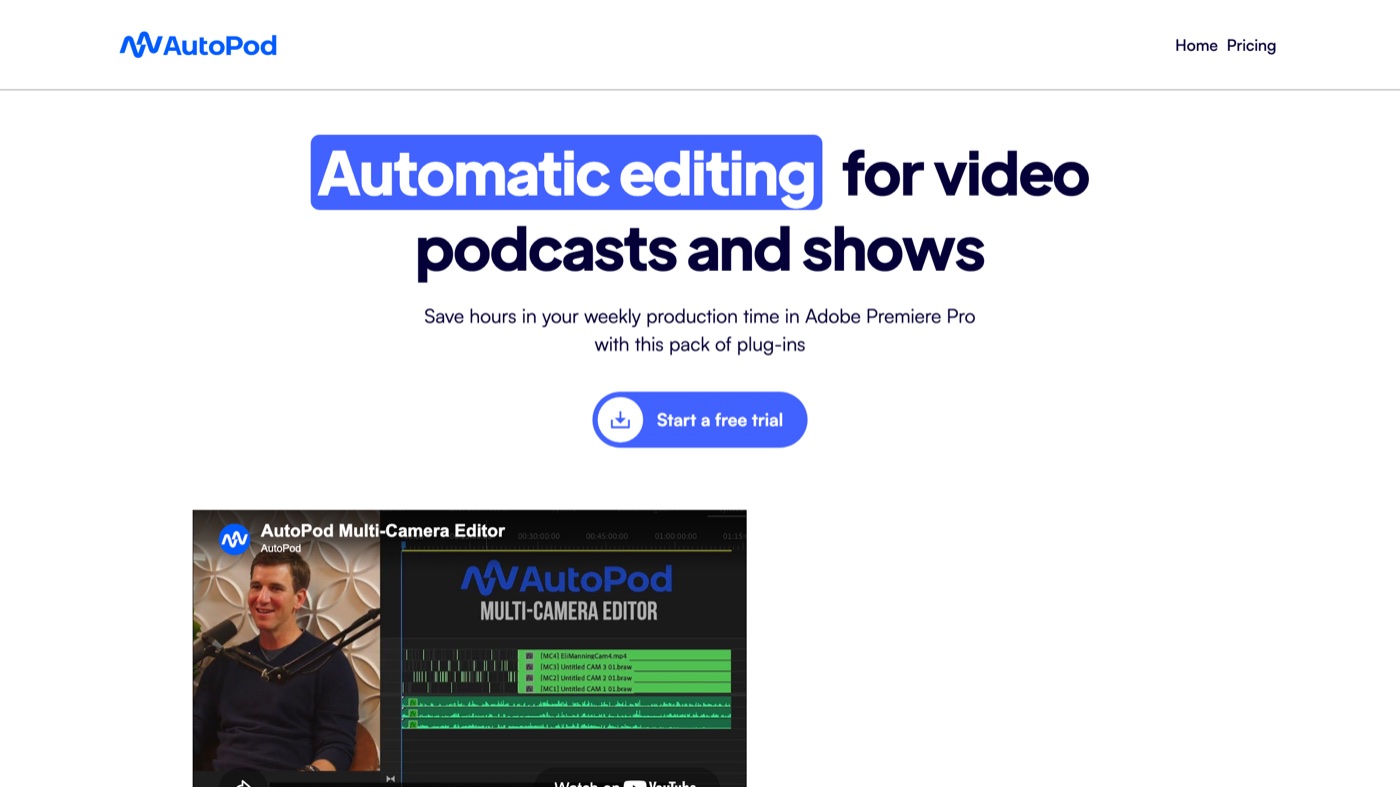
- Best for: cutting multi-camera podcast and interview footage in Premiere Pro.
- Pricing: From $29 per month (a 30-day trial lets you test it first).
- Why it stands out: AutoPod listens to your audio and switches between up to ten camera angles on its own, then strips out the silences and roughs in social clips. For a weekly show it can turn a full day of editing into an afternoon. It is one of a wave of AI-assisted tools worth watching, alongside the ones in our roundup of the best AI animation software.
- Worth knowing: It is built only for multi-camera and talking-head footage on recent Premiere versions, so it does little for other edit styles, and it needs clean, separated audio to switch cameras well.
For a look at plugins like these in motion, the Boone Loves Video channel runs through 26 picks for After Effects:
Here is every pick side by side:
| # | Tool | Best for | Pricing | Limitation |
|---|---|---|---|---|
| 1 | Fonts Ninja | Identifying and testing fonts you spot on any website | Free (browser extension) | Some sites obscure their fonts so detection comes back blank, and naming a font is not the same as licensing it. |
| 2 | ColorZilla | Pulling an exact color from anything on your screen | Free | It samples the rendered page, so colors inside a cross-origin iframe or some canvas elements are out of reach. |
| 3 | Muzli | A daily dose of design inspiration in a new tab | Free | It fuels ideas rather than output, and the feed can eat twenty minutes if you let it. |
| 4 | PerfectPixel by WellDoneCode | Matching a built page to the design comp down to the pixel | Free | You overlay a flat image, so it checks one static comp at a time, not responsive breakpoints or interactive states. |
| 5 | GoFullPage | Capturing an entire long page in one screenshot | Free; optional Pro tier | Very long or lazy-loading pages can stitch with small seams, and fixed headers sometimes repeat. |
| 6 | Loom | Sending a quick screen-and-camera walkthrough instead of a long message | Free Starter plan; Business $18 per user/month | The free Starter plan caps you at 25 videos and five minutes each, which an active team burns through fast. |
| 7 | Stark | Checking a design for accessibility before it ships | Free tier; Pro from $12/month | The free tier covers contrast; the audits you lean on most (focus order, touch targets, alt text) sit inside Pro. |
| 8 | Unsplash | Dropping real photography into a layout without leaving Figma | Free | The catalog is popular, so the same shots show up across countless sites; art direct your own for final work. |
| 9 | html.to.design | Pulling a live website into Figma as editable layers | Free to start; paid Pro plan | Complex pages import with messy nesting and detached styles, so budget time for cleanup. |
| 10 | Motion Studio by Mt. Mograph | Speeding up repetitive After Effects animation work | From $13 per seat/month (billed yearly); all-tools plan $19 | It moved from a one-time license (the old Motion 4) to recurring pricing, and only pays off if you are in After Effects often. |
| 11 | Duik Ángela | Rigging and animating characters in After Effects | Free and open source | It is deep, and the learning curve matches, so expect real time with tutorials before the rigging concepts click. |
| 12 | AutoPod | Cutting multi-camera podcast and interview footage in Premiere Pro | From $29/month (30-day trial) | It is built only for multi-camera and talking-head footage on recent Premiere versions, and needs clean, separated audio. |
When a plugin is not the fix
A plugin makes the person at the keyboard faster. It does not decide what your video should say or hold a brand steady across forty deliverables. That part is judgment, and it comes from people who do the work full time.
I keep the plugins above installed, but I have also watched teams reach for a fifteenth extension when the real gap was that nobody had the hours to do the work. So if your real gap is capacity rather than a missing button, that is a hiring question. Some teams add a staff designer. Others bring in freelancers per project. And some work with an embedded creative team like Moonb, where a dedicated Creative Director and a small crew cover design, video, motion, and animation as an extension of your marketing team. Each route can work. The right one depends on how much you are producing and how steady the flow is.
Start with the plugins, though. Most of the list is free, and the two or three that fix your biggest annoyances will pay for themselves in a week.
Frequently asked questions
In everyday use the words overlap. Extension usually means something you add to a web browser, like ColorZilla or Loom. Plugin usually means something that lives inside a creative app, like Motion Studio in After Effects or Stark in Figma. Both add features to software you already run, so pick by where you spend your time rather than by the label.
Mostly, if you get them from an official source. Install browser extensions from the Chrome Web Store or Firefox Add-ons, and creative-app plugins from the developer site or the app's own marketplace. Check the review count and the last update date, skip anything asking for permissions it should not need, and remove tools you have stopped using. Open-source picks like GoFullPage and Duik Ángela are easy to trust because their code is public.
Start with the ones that fix a daily annoyance. For most designers that is Fonts Ninja and ColorZilla in the browser, plus Stark and Unsplash inside Figma. If you edit video, Motion Studio and AutoPod save the most time, though both are paid, so try them once you know you will use them. Add more slowly, one at a time, so each earns its place.