7 social media ad examples worth studying
Seven verified social media ad examples, from Jacquemus' giant bags to Gap's Katseye dance film, each with the move worth stealing.
The seven social media ad examples worth studying right now are Jacquemus’ giant Bambino bags driving through Paris (2023), Maybelline’s CGI lashes on the London Tube (2023), The North Face’s helicopter jacket delivery (2023), Specsavers’ “The Misheard Version” with Rick Astley (2024), the Liquid Death x e.l.f. Corpse Paint drop (2024), Airbnb’s Icons launch (2024), and Gap’s “Better in Denim” film with Katseye (2025).
I co-founded a creative studio, and social ads are the format clients ask about most, because the feed is where their budget actually goes. The lists that rank for this search tend to be two things I have no use for: roundups of ad libraries dressed up as examples, or the same canon of decade-old campaigns. So this list has rules. Every entry is a real, named piece of social-first work from 2023 to 2025, every visual comes from the brand’s own channel or is credited to the account that carries it, and every claim traces to a named, dated source I checked. The same rules I used for our ad campaign examples roundup, applied to work built for the scroll.
The seven at a glance
| Brand | Campaign | Year | Platform | The move worth stealing |
|---|---|---|---|---|
| Jacquemus | Giant Bambino bags | 2023 | Instagram, TikTok | Blow up your most recognizable product until it stops traffic |
| Maybelline New York | Sky High Tube lashes | 2023 | TikTok, Instagram | Fake the billboard, keep the product demo real |
| The North Face | Helicopter jacket delivery | 2023 | TikTok | Answer a complaint in the format it arrived in |
| Specsavers | The Misheard Version | 2024 | Audio, social | Make the symptom the medium |
| Liquid Death x e.l.f. | Corpse Paint | 2024 | TikTok, YouTube | Trade audiences with a collab both fanbases believe |
| Airbnb | Icons | 2024 | Social launch, YouTube | Build the thing people only saw on screen |
| Gap | Better in Denim | 2025 | TikTok, Instagram, YouTube | Choreograph an ad the internet wants to perform back |
1. Jacquemus, the giant Bambino bags (2023)
In April 2023 the French fashion house posted an eight second clip of its Bambino handbags, scaled up to the size of cars, driving through central Paris. Chocolate brown, orange, and pink, wheels where the base should be, gold hardware catching the sun. Paper reported on April 7, 2023 that the clip was entirely computer generated by Ian Padgham, a Bordeaux-based 3D artist working through his company Origiful, and quoted his estimate that “probably half of the people who see them either think it’s real or can’t tell.”
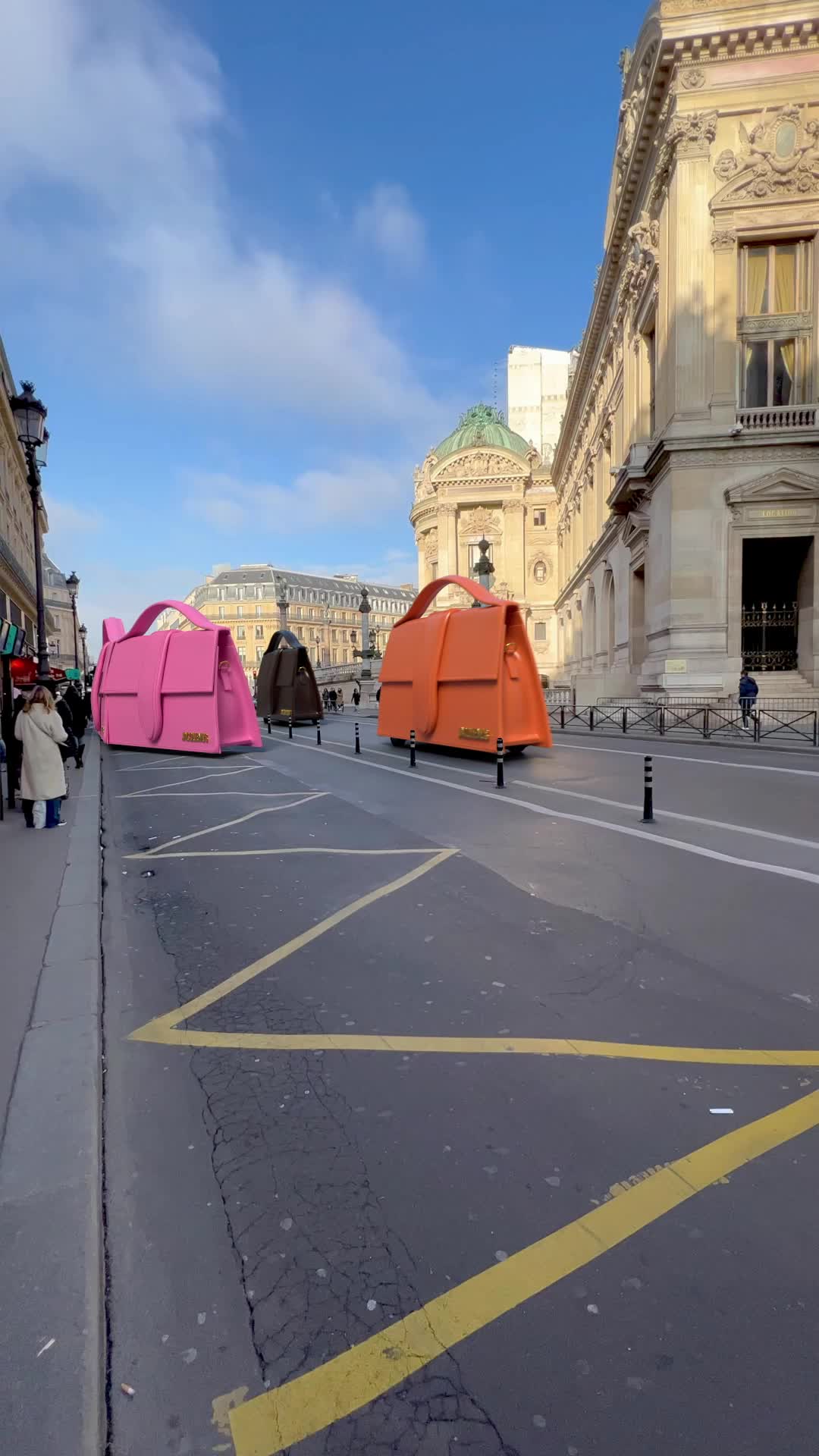
This is the clip that made faux out-of-home, FOOH, a category. The mechanics matter: a real billboard in Paris reaches people in Paris, while a fake one lives in the feed and reaches everyone, with no permits, no build, no media buy. Padgham’s process, per the Paper piece, was to film real streets so the 3D bags could be tracked into the space, then match lighting and shadows until the seams disappeared.
The repeatable device is the scale flip. Jacquemus is famous for comically tiny bags, so comically huge ones were instantly legible as a joke from the brand rather than a random effect. If your product has one iconic visual trait, distorting that trait is a campaign that needs no copy. More Instagram-native work like this sits in our Instagram video ads examples.
2. Maybelline New York, the Sky High Tube lashes (2023)
Three months later the same technique sold mascara. A London Underground train pulls into the platform wearing giant false lashes, and a mascara wand mounted on the tunnel wall coats them as it passes; a bus shaped like the mascara tube itself later roamed New York. Digiday covered the campaign on August 11, 2023, crediting the same Ian Padgham for both films and quoting Fernando Febres, Maybelline’s US VP of marketing: “It was a way to honestly disrupt the environment and get people talking, and wondering, ‘Is it real or is it not?’”
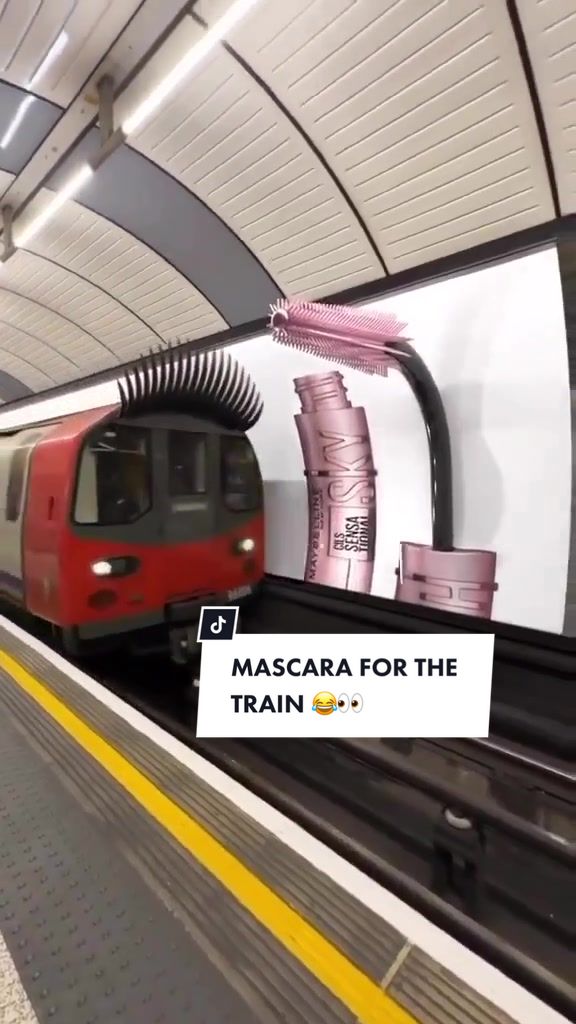
What separates this from most FOOH that followed is that the gag is a product demo. The wand does on the train exactly what it claims to do on your lashes: lift and coat. Plenty of imitators put a giant product in a landmark and called it an idea; Maybelline made the impossible image argue for the purchase.
There is a footnote worth knowing. The brand’s original TikTok upload is no longer live, which is why the figure above credits a media repost. Viral social work evaporates fast, and if you are building a reference file, save what you verify the day you verify it.
3. The North Face, the helicopter jacket delivery (2023)
In November 2023 a hiker named Jenn Jensen posted a TikTok from Hooker Valley in New Zealand, soaked through in a North Face rain jacket, challenging the brand to redesign it and deliver the result to her at the top of the trail. The complaint blew past eleven million views. Advnture reported on December 4, 2023 that The North Face posted its response four days later: an employee grabs a red jacket off a store rack, boards a helicopter, and hands it over on the mountain. The same report noted Jensen’s own clarification in the comments that she received no money for the follow-up video, “just a hiker who was pissed she got wet.”
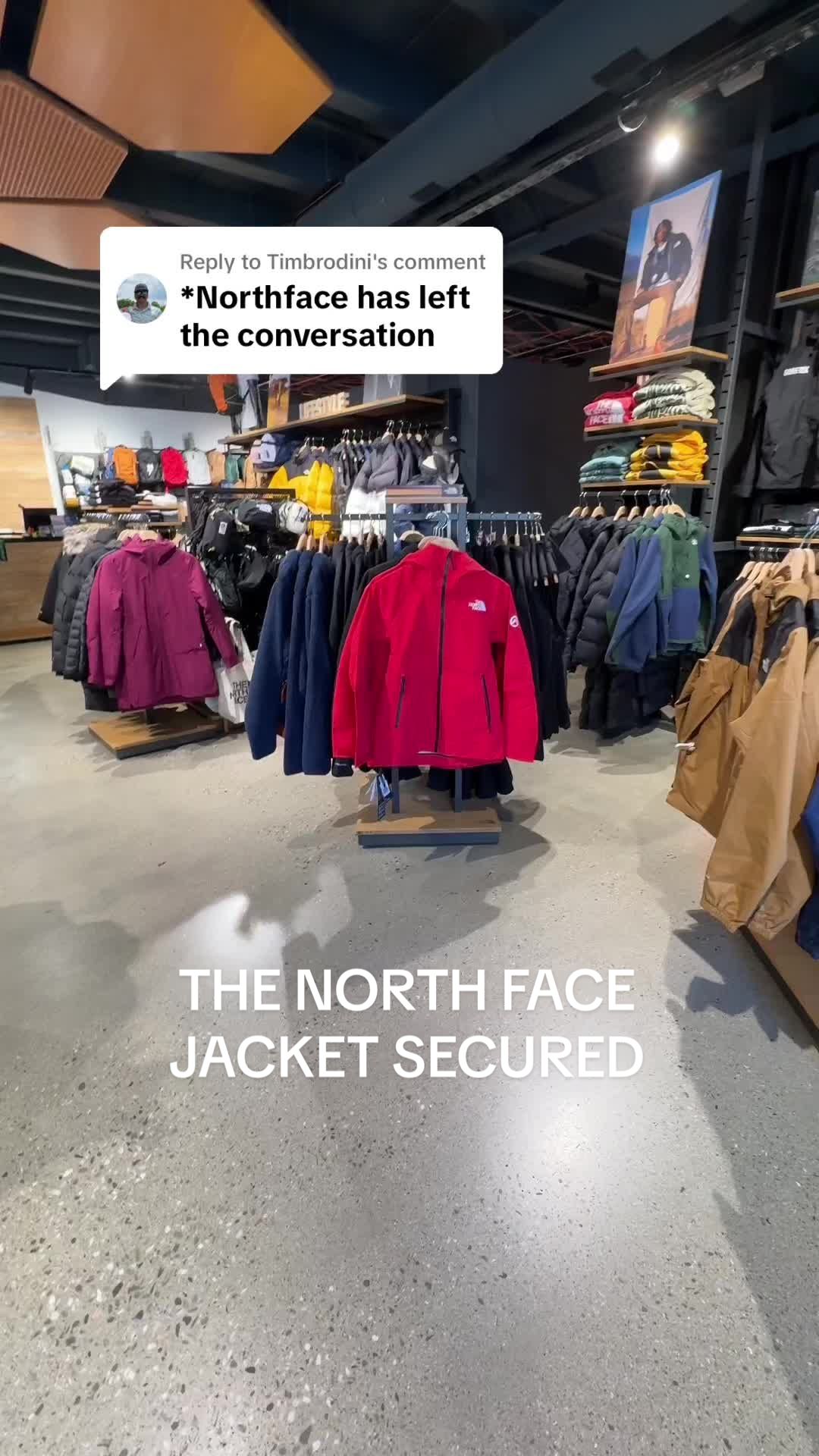
The four day gap is the interesting part. It was long enough for the complaint to peak, so the reply landed on an audience already invested in the story, and short enough that the brand still looked fast. And the response was filmed as a native TikTok reply, stitched into the original conversation, rather than a press statement about product standards.
The device travels well beyond outdoor gear: treat a public complaint as a brief. Most brands answer criticism in the tone of a legal department. Answering it in the tone, format, and thread of the person complaining converts the audience that came for the pile-on.
4. Specsavers, “The Misheard Version” (2024)
The insight behind this one is uncomfortable and precise: nobody wants to talk about hearing loss, and the stigma keeps people from booking a test. So in 2024 Specsavers had Rick Astley re-record “Never Gonna Give You Up” with the lyrics people actually mishear, and put the new version on air. Radiocentre reported on June 18, 2024 that the re-recording “included misheard lyrics such as ‘Never gonna run around with dessert spoons’ and ‘you wouldn’t catch nits from any other guy’”, and that the campaign took the Grand Prix for Audio and Radio at Cannes Lions, the first ever for UK radio work. Contagious’ awards coverage confirmed a second Grand Prix in PR and counted the song played over 20 million times in its first eight hours.
The song did the spreading itself. Listeners caught the wrong lyrics mid-song, argued about them, posted about them, and the reveal pointed everyone to a hearing check. Here is the campaign film on Specsavers’ own channel, with Astley talking through the idea and getting fitted for hearing aids.
The device is making the symptom the medium. The campaign never tells you hearing loss is common; it makes you experience mishearing something familiar, then lets you draw the conclusion. Any brand whose category carries embarrassment, insurance, finance, health, can borrow that shape: demonstrate the problem inside content people enjoy, and the pitch arrives with its defenses already down.
5. Liquid Death x e.l.f., “Corpse Paint” (2024)
In March 2024 a canned water brand and a drugstore makeup brand released black metal face paint together. The launch film on Liquid Death’s channel plays it completely straight: a pastel teen-bedroom “get ready with me,” except the tutorial is corpse paint, taught by a leather-clad metal frontman. The kit itself, five pieces including a black lipstick, an eyeliner pen, and a cream eyeshadow, shipped in a removable coffin keepsake box for 34 dollars, per e.l.f.’s own announcement.
The numbers were absurd for a novelty drop. Marketing Dive, reporting on the sequel collab on January 15, 2026, recapped the original: it “sold out in 45 minutes,” and “68% of the purchasers of that collection were new to E.l.f.’s brand.” That last figure is the one to sit with. Two thirds of buyers came from the partner’s audience, which is the whole argument for collabs in one line.
The split of labor is also instructive. In the announcement, e.l.f. talks about its cruelty free formulas while Liquid Death talks about the black metal community, and the launch film lives on Liquid Death’s channel: each brand contributed the thing its audience trusts it for. The lesson for anyone planning a collab is commitment. A logo swap convinces no one; a fully realized joke, packaging, film, and product all in character, gets both fanbases posting.
6. Airbnb, the “Icons” launch (2024)
On May 1, 2024, Airbnb launched Icons, a category of stays and experiences built with names from film, music, and sport. The launch’s centerpiece was physical: the house from Pixar’s Up, rebuilt among the red rocks of Abiquiu, New Mexico and actually lifted into the air by crane, plus an X-Men ‘97 mansion reimagined in 2D so it reads as animation, Prince’s Purple Rain house, and a night in the Ferrari Museum. It’s Nice That covered the launch on May 3, 2024, counting 11 experiences and noting guests apply in the app and receive a golden ticket if selected.
The launch film on Airbnb’s channel opens on the balloon-lifted Up house and moves through the rest of the lineup.
I include a product launch on a social ads list because of how the media worked. Airbnb spent the budget on building things that only existed on screen, then let every platform’s native behavior distribute them: walkthrough creators, reaction stitches, news segments, screenshots. The paid layer amplified assets the internet was already choosing to pass around.
The device: when the product itself is photographable enough, the ad is documentation. That inverts the usual social brief, which starts with “what should we make people watch” instead of “what should we make.”
7. Gap, “Better in Denim” with Katseye (2025)
The newest entry is proof that a brand film and a social ad can be the same object. On August 19, 2025, Gap released a 90 second spot of the girl group Katseye dancing to Kelis’ “Milkshake,” an escalating group routine in denim and white tanks on a bare studio floor. Marketing Dive covered the launch that day: a global fall campaign spotlighting the retailer’s low-rise denim, choreographed by Robbie Blue, directed by Bethany Vargas, and run across digital, social, in-store, and influencer partnerships. Here is the film on Gap’s own channel.
The feed did the rest. Meltwater’s social listening analysis counted about 131,000 mentions of the ad across social, digital, and traditional media between August 17 and September 1, cited Gap’s own figure of roughly 20 million views within three days, with the spot outperforming the brand’s four previous campaign releases combined, and measured a 171% jump in brand mentions over the period. One fan-made dance cover on YouTube alone pulled 1.5 million views in 12 days.
That last number is the device: choreography is a format the internet performs back. A dance an audience can learn turns one media asset into thousands of self-made ones, the same trend mechanics we break down in our best TikTok ads roundup. Gap had run the same playbook with Troye Sivan’s denim campaign the fall before, per the Marketing Dive piece; this one hit because the routine, the song, and the wardrobe were all simple enough to copy in a school hallway.
Where to study more social ads
A list of seven is a starting point, and the honest way to build on it is to verify before you imitate, because the feed is full of portfolio renders and concept work that never ran as media. Three official libraries cover most of that verification. Meta Ad Library is the public record for Facebook and Instagram: search any advertiser and see the actual paid placements, formats, and active dates. TikTok Creative Center Top Ads shows high-performing paid TikTok creative in the format it ran, useful for studying hooks and CTA wording, with the caveat that it only surfaces winners. Google Ads Transparency Center does the same job for YouTube and the Google network. If a campaign appears in none of these and the brand’s own channels are silent, treat it as unverified.
Two patterns from this list are worth naming as you build your own reference file. First, concentration: Omdia’s 2026 analysis found that 90% of global social ad revenue flows through just six apps, and that video took 60% of social ad revenue in 2025, so studying the native grammar of a handful of feeds covers most of the market. Second, volume: every brand here followed the viral moment with a steady stream of variants, replies, and sequels. That production cadence is its own discipline, the one we unpack in creative as a service, and it extends to the unglamorous asset work too; ecommerce teams increasingly generate their catalog and product imagery with AI, the way fashion brands are scaling product photography with AI, and then cut those assets into statics, motion tests, and social edits. The ads people remember are the visible tip of a system, a point our social media best practices guide makes in more depth, and the same rule shows up in our best YouTube ads breakdown: format-native beats format-ported, every time.
Frequently asked questions
A social ad competes with content, not with other ads. Viewers can skip it in under a second, so the first frame has to earn attention the way a friend's post would: native format, platform-specific pacing, sound-off legibility, and a hook that works before any branding appears. The strongest examples, like Jacquemus' giant bags or The North Face's helicopter reply, are built for the feed's behavior, comments, stitches, and reposts, rather than adapted from a TV cut.
Check the platform's own transparency library before trusting any roundup. Meta Ad Library shows real paid placements on Facebook and Instagram, TikTok Creative Center Top Ads shows paid TikTok creative, and Google Ads Transparency Center covers YouTube. Cross-check the brand's own accounts and a dated trade-press write-up. If a campaign appears in none of those places, it is probably a concept render or portfolio piece, and viral posts also get deleted, so save anything you verify the same day.
It depends on disclosure and intent. Jacquemus and Maybelline both confirmed their films were computer generated once they spread, and the is-it-real debate became part of the reach. The risk starts when a brand presents fabricated footage as a real installation and lets the confusion stand, or fakes social proof like crowds and reactions. Practically, the format works best on one condition: the impossible image should demonstrate something true about the product, not just borrow a landmark for scale.