18 digital design agencies and studios compared
Eighteen digital design agencies and studios, from product and UX shops to digital brand studios and embedded teams, with who suits a one-off project and who suits ongoing work.

A digital design agency designs the screens a business runs on (websites, apps, product interfaces and the design systems behind them), and usually the brand identity that has to match them. These are eighteen I’d put in front of a buyer who wants interface and brand design from one place, and several take on campaigns too. Moonb, my employer, is number one, which you should hold against it.
Judge all of them on the screens nobody puts in a pitch: the empty list, the failed upload, the loading state that drags on, the headline that comes in twice as long as planned. When someone complains to me about a design studio, it’s nearly always because they hired on the homepage mockups and found out later that nobody had designed those.
One project or a standing team
Product and UX studios (Work & Co, MetaLab, ustwo, Fantasy, Clay) design software and usually build it too. Integrated firms and digital brand studios (Instrument, Huge, Code and Theory, BASIC/DEPT, Moving Brands, AREA 17, frog, Upstatement, Athletics, Porto Rocha) take on identity and interface together, often campaigns as well; what tells them apart is size and how far each one goes into engineering, with frog out at the research-heavy end. The first entry and the last two are embedded or on-demand teams, and they keep producing after launch day.
You buy a project studio for one outcome (a redesign, a launch, a product build, a new identity), and it prices around that outcome. When the next project comes along, the relationship often starts over. With a standing team you’re paying for what stays between jobs, meaning the brand knowledge, the tone, the approval habits and the growing pile of files, and the briefs get shorter the longer they work with you. Most companies I talk to redesign every few years at most but ask for new pages and ads every week, so the second kind ends up doing most of the work.
If you end up buying both, the hard part is keeping brand and interface on one system. The Lloyds Bank team talked about exactly that, from the client side, at Config London 2025. They built the bank’s rebrand around its design system and carried elements like color into code through tokens and variables in Figma.
When the job is mostly identity and print, start with the graphic design firms I compared. My guide to choosing a brand design agency goes further into brand-first partners.
The 18 providers
1. Moonb
More on Moonb
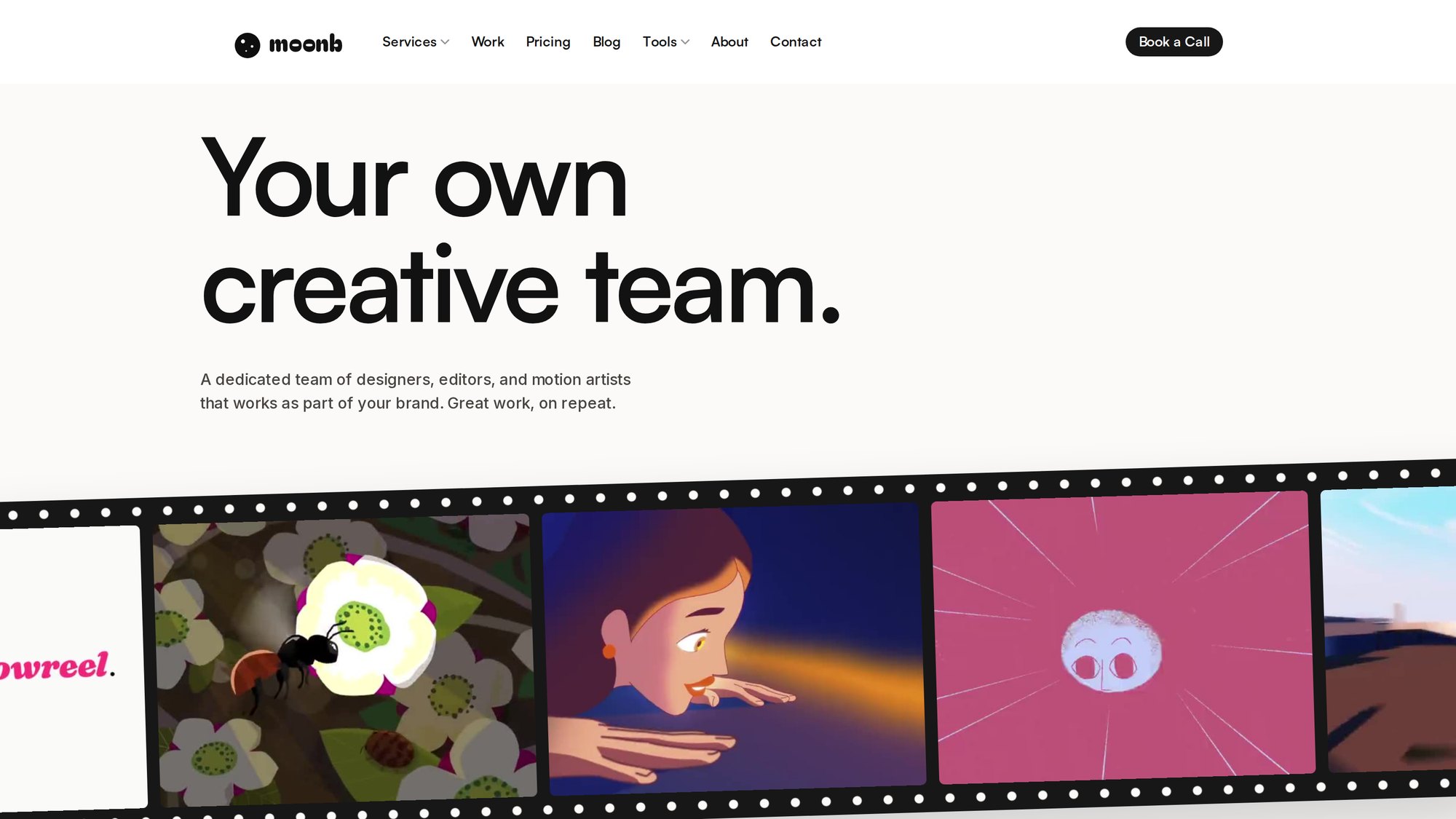
The same Moonb team covers landing pages, site redesigns, brand identity, presentations, ads, motion and video. A full site goes through the same loop as one broken landing page, briefed the way you'd brief someone down the hall and reviewed in Figma. That turnaround figure is measured from brief to first draft, so a full site takes longer than that to finish.
2. Work & Co
More on Work & Co
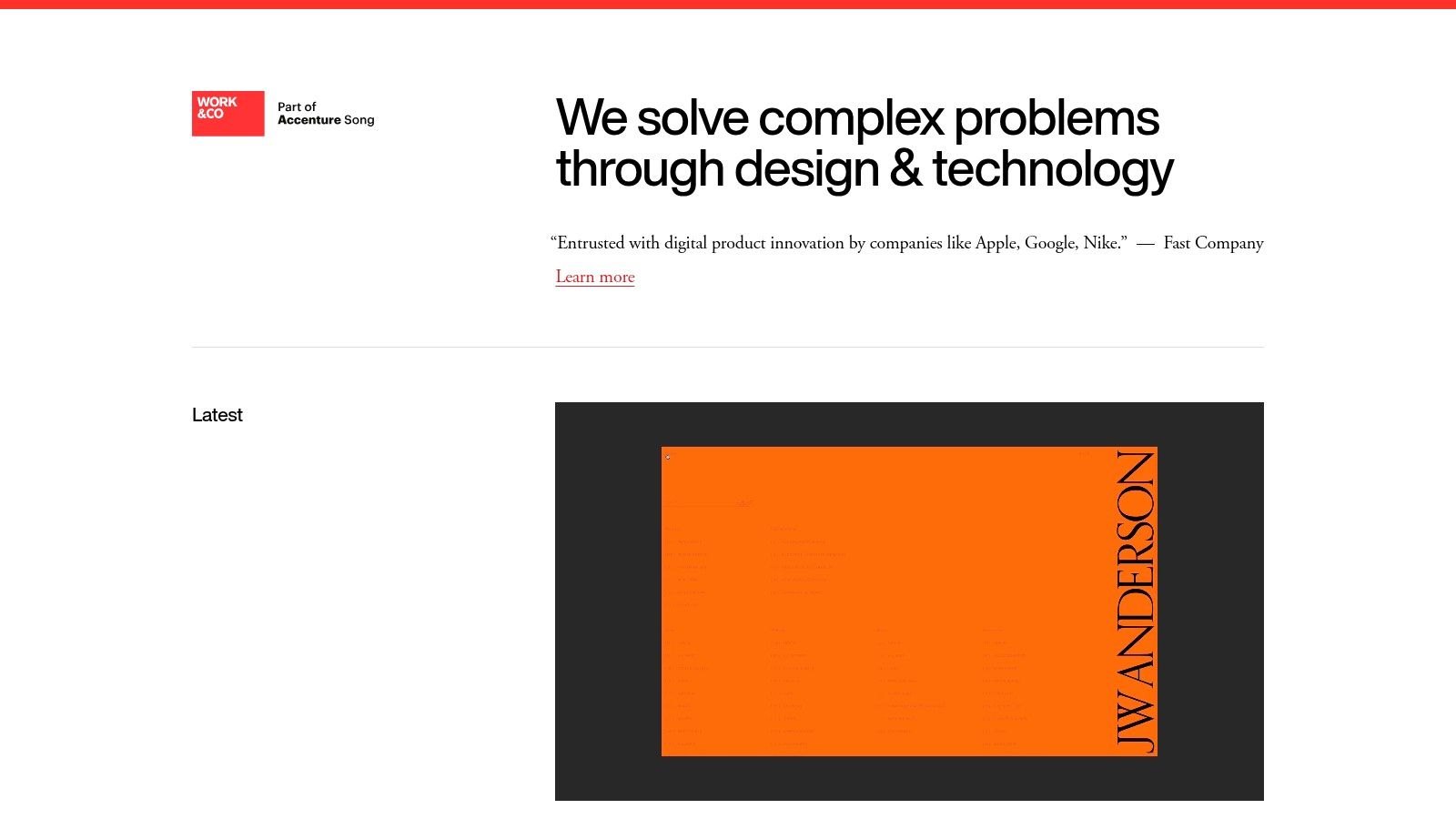
Work & Co counts 467 people in eight cities, with hubs including Brooklyn, Portland, Los Angeles, São Paulo and Copenhagen. Several entries on its client page are long relationships, such as ongoing omnichannel work for IKEA, including the retailer's first ecommerce app, and a global partnership on the Today at Apple retail program. The Panera entry reports 30% growth in users and a 16% increase in order conversion after modernizing the brand and the omnichannel experience. Both figures are Work & Co's own, from its client page.
I’d shortlist it for a large product program and not much below that size.
3. MetaLab
More on MetaLab
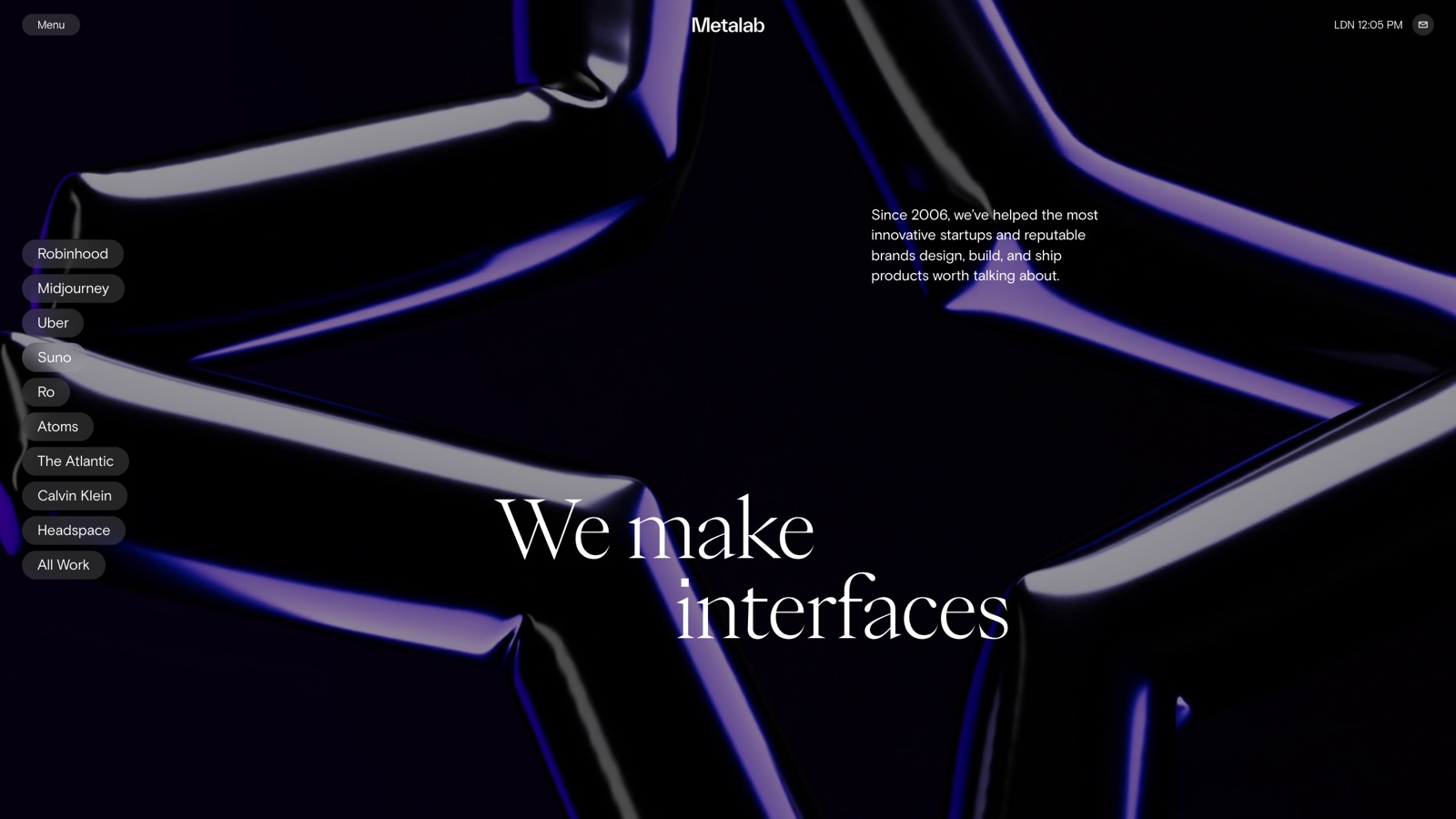
MetaLab's homepage headline is "We make interfaces." It designed Rooms for Midjourney as the company grew past Discord, turned the Atomic Habits book into the Atoms app, and worked on a new advisory product for Robinhood, a case it frames around building for 25M+ investors. Its work page files case studies under Finance, SaaS, Health & Wellness, Media and Ecommerce, with a separate Full Build category.
4. ustwo
Image: ustwo, from ustwo.com
More on ustwo
ustwo says the digital products it has made over 20 years are used by millions. Lately that has meant AI-supported health coaching for RVO Health in the US and a digital experience for The i Paper. It describes itself as a comprehensive design and development studio, and in practice one cross-functional team carries an idea from discovery to launch with no handoff to an outside developer.
If your procurement team scores suppliers on ownership structure or B Corp status, ustwo ticks both.
5. Fantasy
Image: Fantasy, from fantasy.co
More on Fantasy
I'd bring Fantasy a roadmap that already has AI features on it. It says it has spent 25 years combining research, design and technology, and it builds what it designs; the LIV Golf project is described as a replatforming with full-stack AI, design through deployment. For Royal Caribbean it handled an end-to-end digital transformation of every cruise touchpoint, and on the brand side it gave Vimeo a new identity plus what Fantasy calls a unified destination.
6. Clay
Image: Clay, from clay.global
More on Clay
Clay's portfolio mixes brand and product work, including an interactive demo experience for Slack, a web redesign for Grayscale, a website and digital branding for Marqeta, and a commerce and loyalty app for Joe & The Juice. Offices in the footer include San Francisco, New York, Austin and Denver. After the first calls Clay recommends an engagement model and sends a proposal with timeline and cost. Before a meeting, that's about as much pricing detail as most studios will give you.
The site has a whole fintech section, and three of the five clients named above are in finance.
7. Instrument
More on Instrument
Instrument has been designing and building across brand, product and marketing for more than 20 years. I like its Build Week program, run with Vanport Studio, which helps underrepresented founders with brand systems, packaging, digital experiences and product design. Its recent writing argues that taste is the new competitive advantage. I'd like to see that argument play out on a real account, especially one where most of the content is generated.
8. Huge
More on Huge
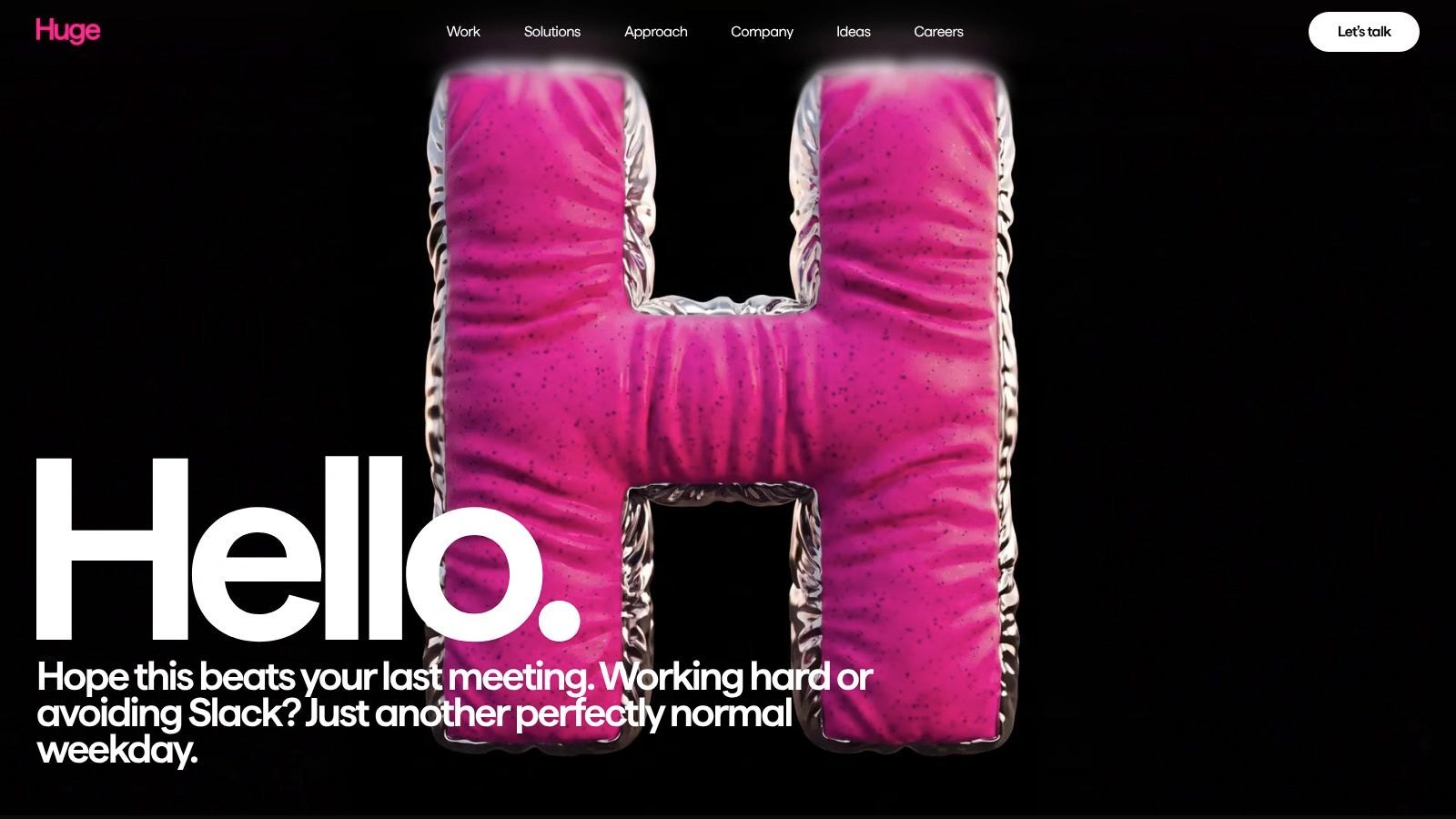
Huge's current description of itself is a human-first, AI-native design and technology company. The clearest AI example on its homepage is for NBCU, AI-assisted discovery of the Olympics schedule. The same page shows crypto tax reporting for CoinTracker and a site for Big Green Egg that blends commerce and cooking.
Between Huge and Instrument, I’d lean Huge when commerce and customer experience carry as much weight as the brand.
9. Code and Theory
More on Code and Theory
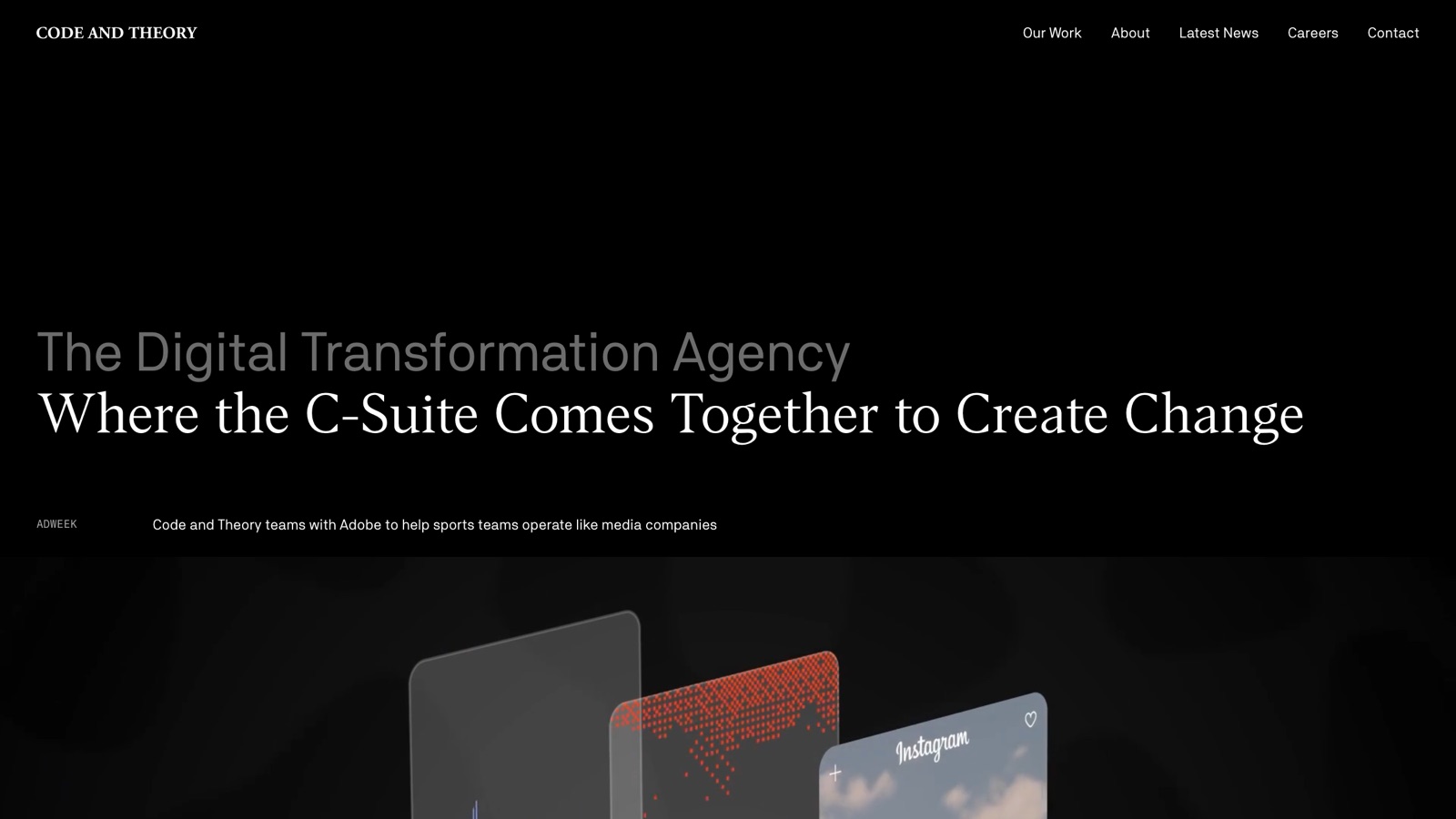
Code and Theory says the half-and-half model has earned the trust of 50+ Fortune 500 CEOs, CMOs and CTOs. Under its forward-deployed expertise model (FD/x), experts work inside the client organization. That puts a firm this size surprisingly close to the embedded model. In July 2026 Stagwell announced it would acquire QStrauss Consulting to expand Code and Theory's Adobe implementation work. If your marketing stack is Adobe, ask about that team.
A mid-size company is unlikely to hire it. I’d still read its case studies as a benchmark for what enterprise transformation work looks like.
10. BASIC/DEPT
Image: BASIC/DEPT’s share image, from basicagency.com
More on BASIC/DEPT
Wilson is the case study I'd open first. BASIC/DEPT reimagined the visual identity and made a brand campaign to support a product drop and the opening of Wilson's first brick-and-mortar store in its 108-year history, and it ran all of that as one job. For KFC it ran a global digital transformation spanning ecommerce, the mobile app and new drive-thru experiences.
11. Moving Brands
More on Moving Brands
For Semgrep it made a series of out-of-home campaigns written in the language of security engineers. For Asana, Moving Brands evolved the brand strategy, visual identity and digital experience together, and the Eppo project covered the brand and how it shows up across the website and product. If a B2B tech company asked me for one studio to handle both the identity and the launch campaign, Moving Brands is the first name I'd give.
12. AREA 17
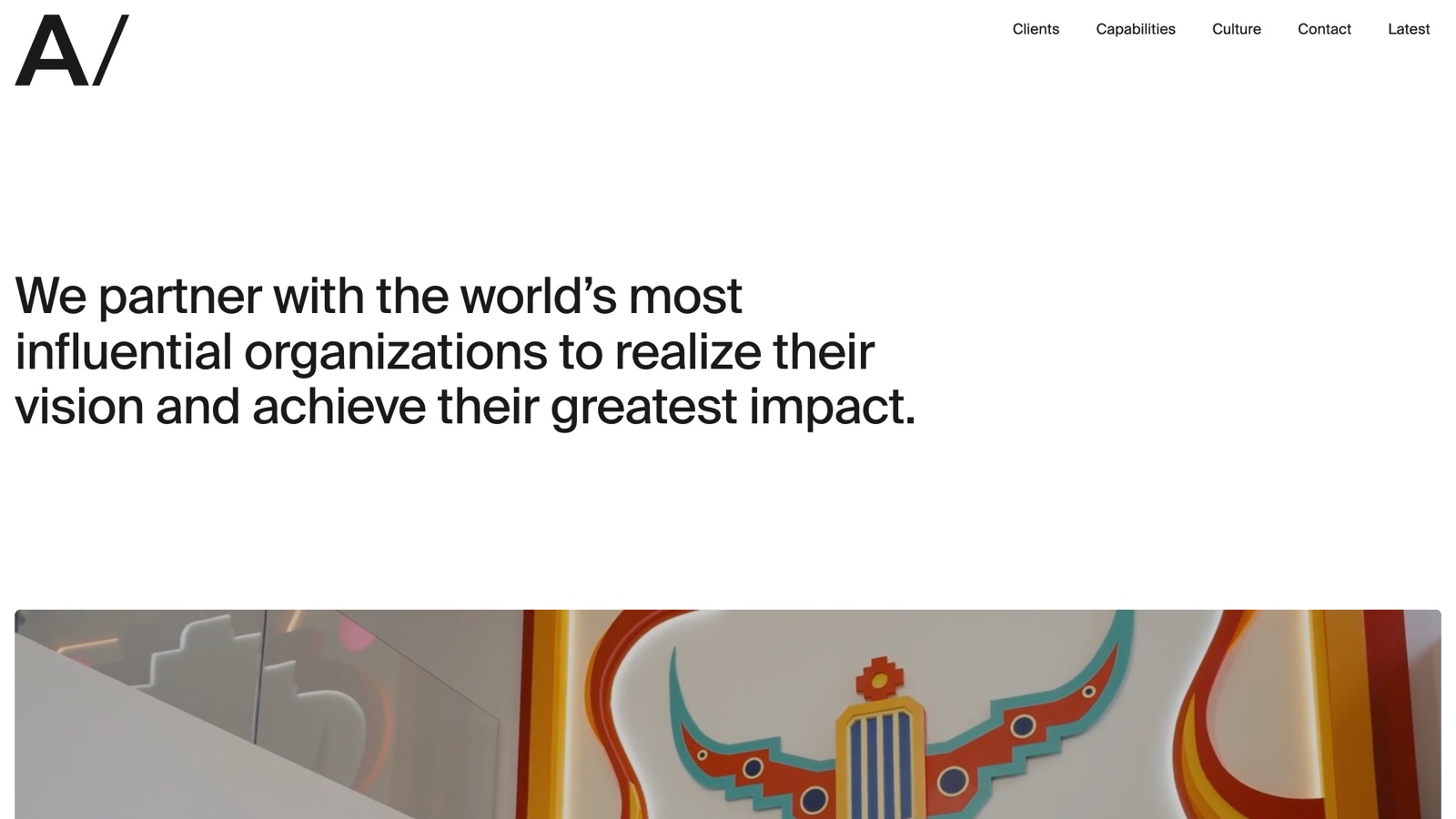
More on AREA 17
Its culture page traces the firm to Arnaud Mercier and George Eid, who still leads it as founder and CEO. The two set out to apply modernist design principles to the web and saw brand, experience and technology as one. It helped scale Magnific, a one-million-subscriber platform, into a creative AI business, and made a digital flagship for the Lucas Museum of Narrative Art. Its capabilities page promises no black boxes or big reveals, and I'd hold it to that in the contract.
13. frog
More on frog
Its case studies include AI-supported mentoring that keeps operational know-how inside National Grid's workforce, a project on luxury craftsmanship for Tiffany & Co. and customer engagement work with IKEA Retail. It also builds new ventures for corporations. I'd suggest frog when the service itself still has to be invented.
14. Upstatement
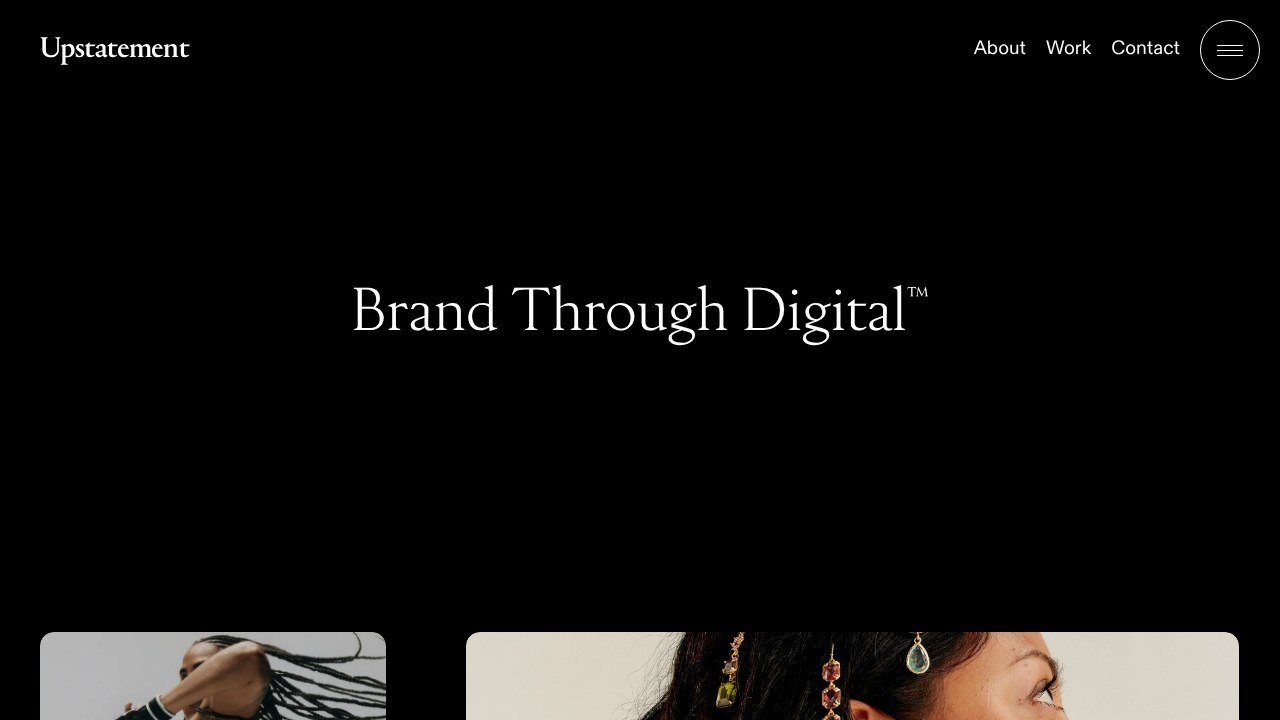
Image: Upstatement, from upstatement.com
More on Upstatement
Its position is that all brands are digital, and the tagline is Brand Through Digital. The Nike project was a global digital brand reset; for Etsy it made The Universe of Special. The journalism background shows in the client list, where Vogue, PBS News and ESPN sit next to MIT and Harvard, and Don Norman isn't the only big name on the homepage; Brené Brown is quoted there too, on collaborating with the team. A site that is mostly content, where the CMS decides how the brand looks day to day, is the job I'd most want to hand it.
15. Athletics
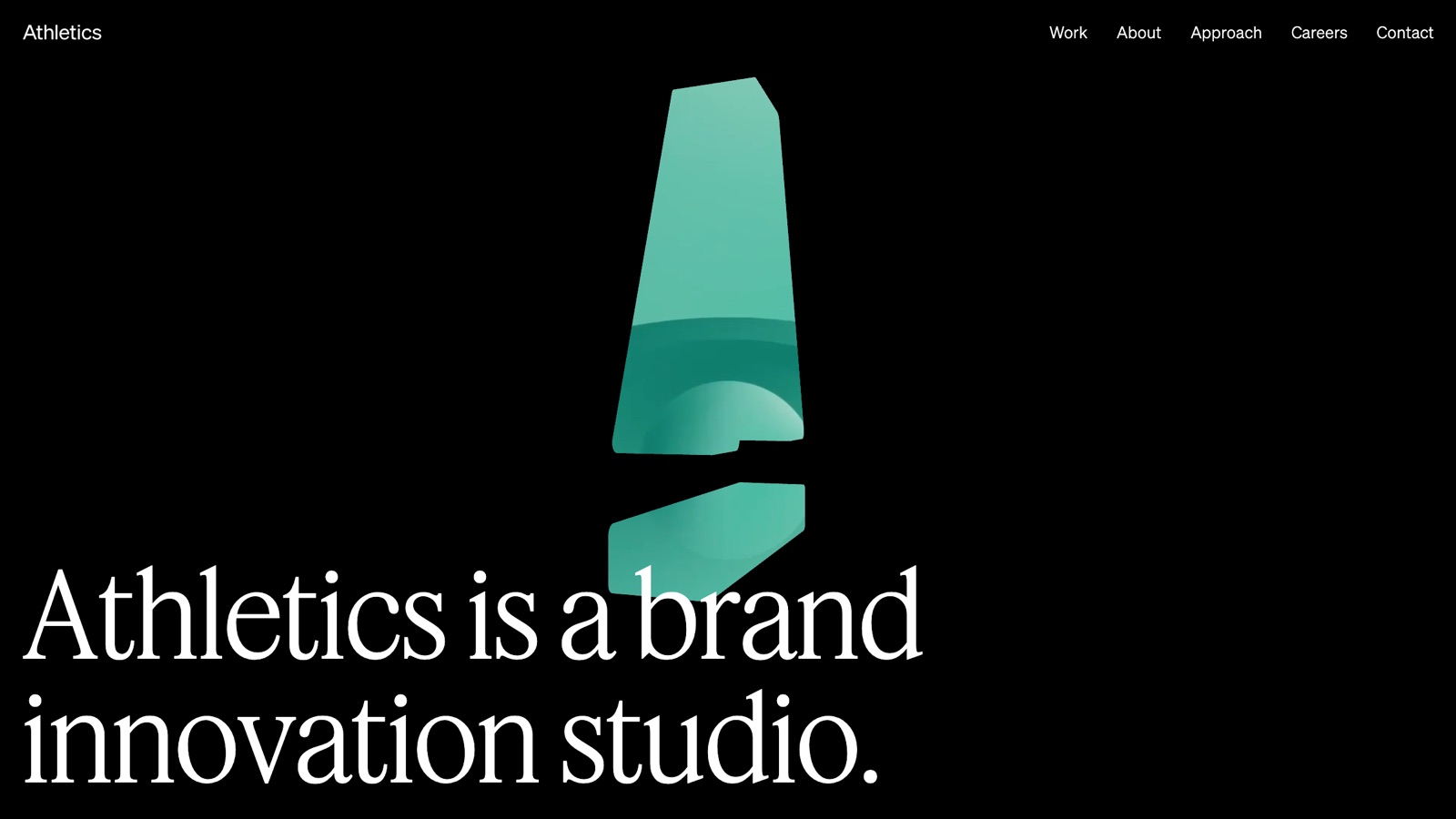
More on Athletics
Athletics talks about prioritizing tools over rules and says it designs everything to scale, from the generators to the strategy frameworks that spark campaign concepts. Its homepage sorts the work into brand strategy, identity systems, digital experiences and next-gen innovation. I like it for a rebrand where the rollout is the hard part and most of the people making assets each week aren't designers.
16. Porto Rocha
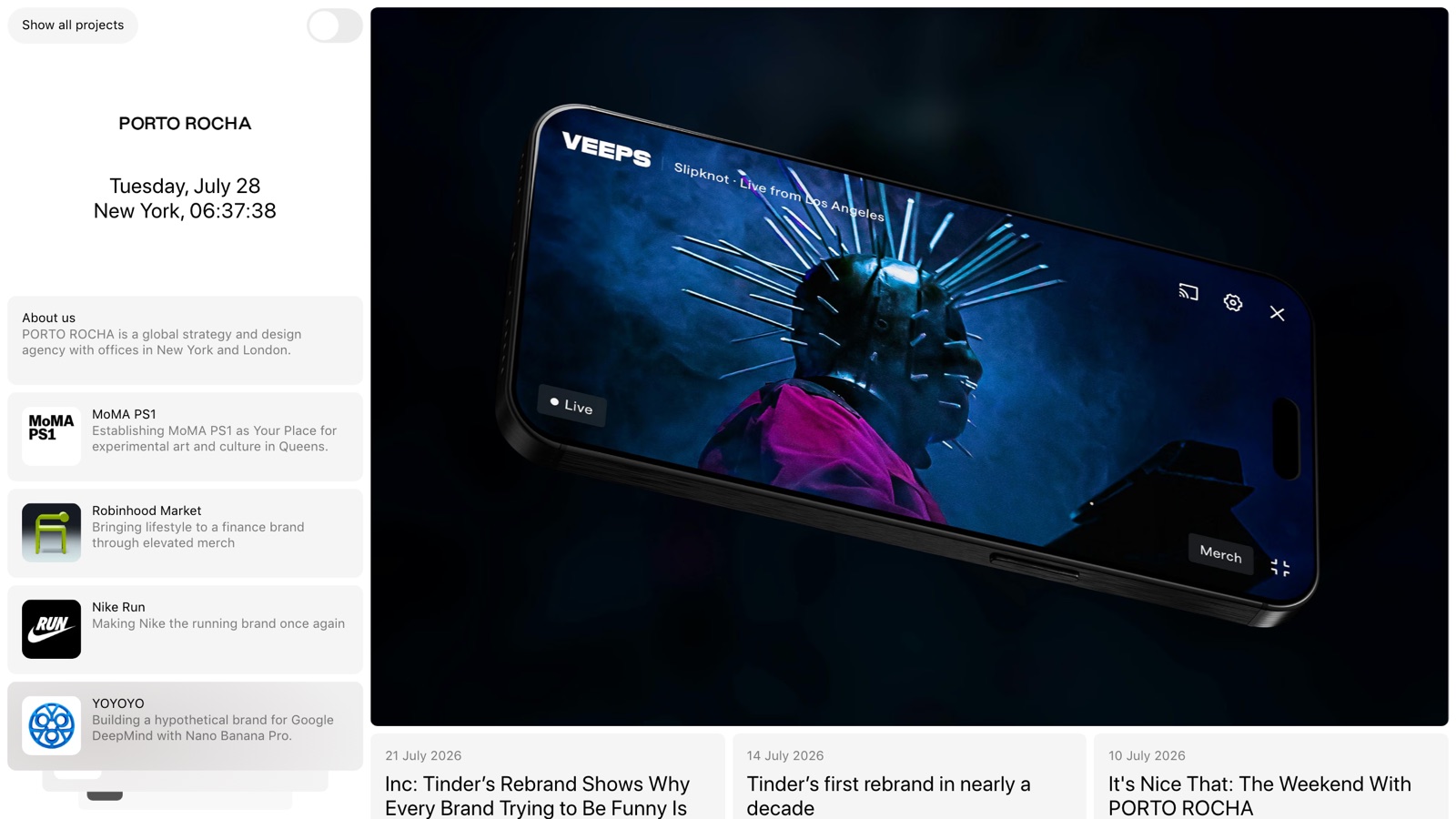
More on Porto Rocha
The project list also has Gemini for Google, a merch line for Robinhood, research into AI-generated imagery, and a hypothetical brand built for Google DeepMind with Nano Banana Pro. Nike Run, another project on the list, set out to make Nike the running brand once again. Most of the portfolio is brand-led, so for a complex product build, pair it with one of the product studios further up.
17. Superside
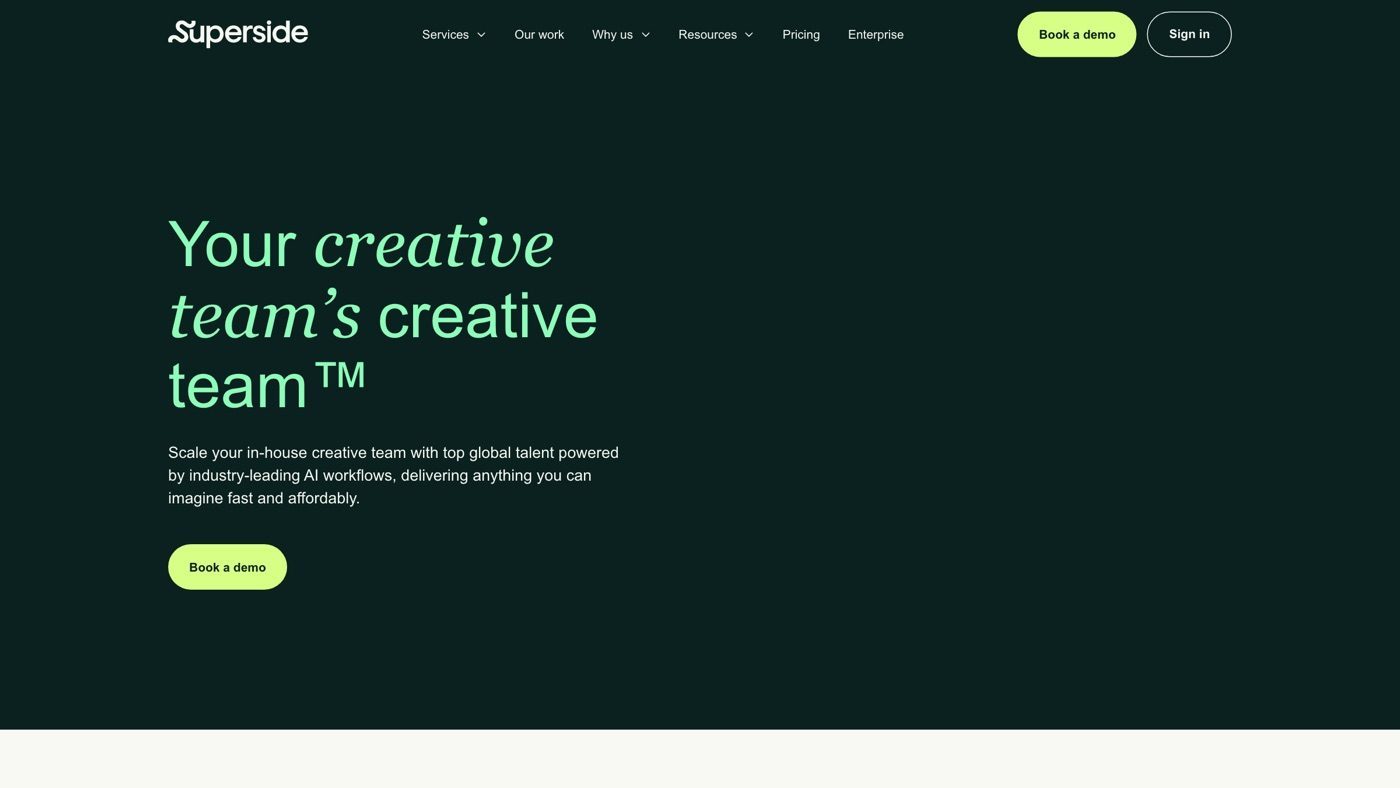
Superside sells to enterprise in-house teams, which it calls the beating heart of enterprise brands.
More on Superside
Its homepage line is "your creative team's creative team," and it says it supports 400+ global brands. The pricing page lays out three ways to work: a Dedicated team with the same people every month, a Flex arrangement where unused budget rolls over month to month, and fixed-scope projects. Product design and design systems are marked new on its menu.
18. ManyPixels
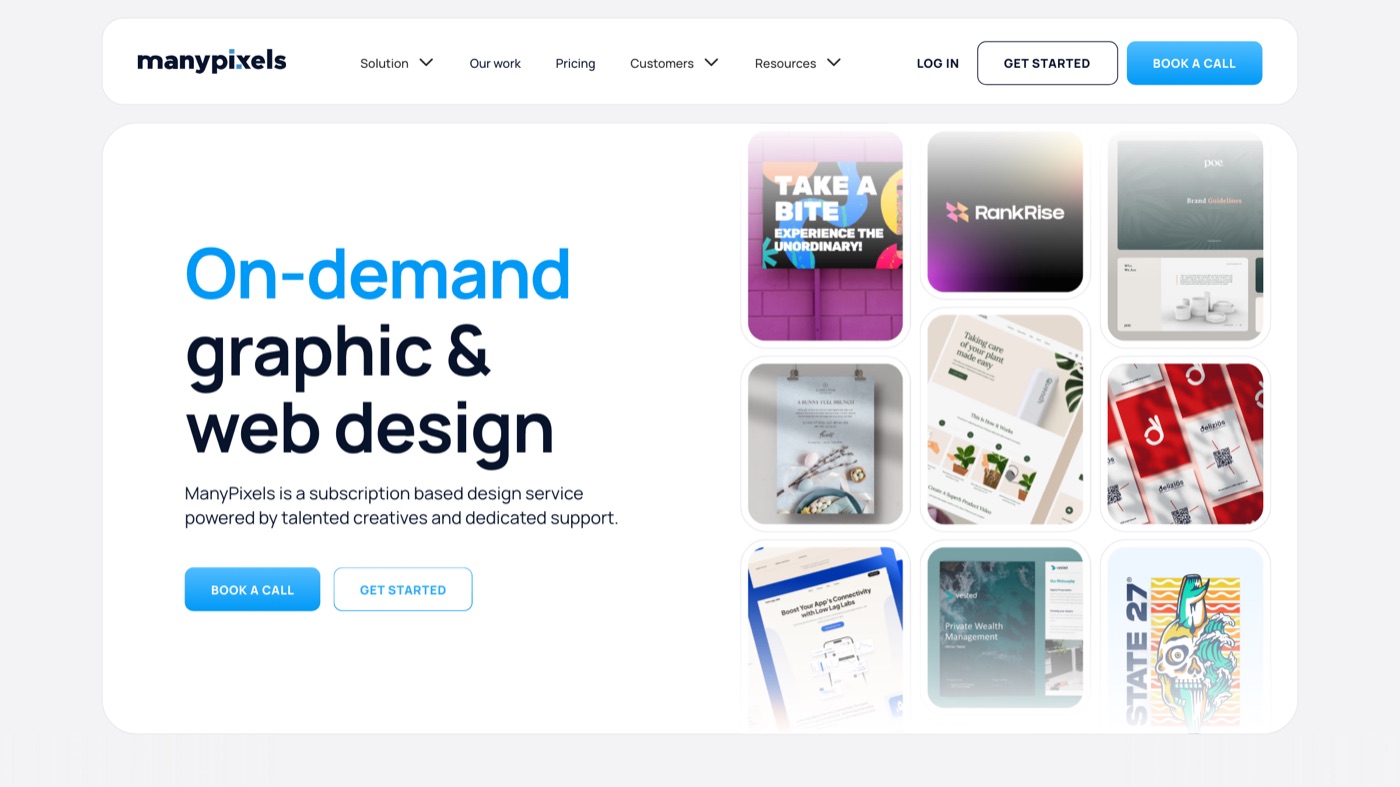
More on ManyPixels
ManyPixels keeps the setup light on purpose. You submit requests in its platform and comment on the designs there. An Assigned designer plan puts one part-time designer in your timezone on the account for $1,399 a month on monthly billing. One case study credits a redesigned website with 400% MRR growth at WP Buffs; it's a client story on the vendor's own site, so read it as one.
A seed-stage company with one marketer could do a lot worse.
All 18 in one table
The “One-off or ongoing” column is my read of how each provider describes its engagements. Pricing shows only figures a company publishes itself.
| Provider | Type | Best for | One-off or ongoing | Pricing signal | Limitation |
|---|---|---|---|---|---|
| Moonb | Embedded creative team | Weekly web, brand and campaign design from one team | Ongoing work | One set monthly rate, or a per-project quote | Not set up for long product research |
| Work & Co | Product studio | Products that are the business | Large projects and programs | On request | Now part of Accenture Song |
| MetaLab | Product studio | The first serious version of a product | Product builds, some long partnerships | On request | Little campaign or ad work |
| ustwo | Product studio | Apps people keep coming back to | Projects, from discovery to scaling | On request | No campaign production listed |
| Fantasy | Product studio | AI features on big consumer platforms | Large projects | On request | Big-company client list |
| Clay | Product and brand studio | SaaS and fintech brand, site and UI | Projects or retainer | Custom proposal | Branding came after UX |
| Instrument | Integrated firm | Brand, product, site and campaigns together | Projects and long relationships | On request | Big for a narrow UX brief |
| Huge | Integrated firm | Multi-year experience programs | Long programs | On request | Expects a long relationship |
| Code and Theory | Integrated firm | Enterprise transformation with engineers | Long programs, embedded experts | On request | Built for C-suite buyers |
| BASIC/DEPT | Digital brand studio | Consumer identity, commerce and product | Projects and ongoing partnerships | On request | Consumer-heavy portfolio |
| Moving Brands | Digital brand studio | Tech brands, identity through launch campaign | Projects | On request | Development not listed in its services |
| AREA 17 | Integrated firm | Brand, experience and technology rebuilds | Multi-phase projects | On request | No campaign production |
| frog | Research and innovation firm | Service design and new products | Consulting programs | On request | Scopes like a consultancy |
| Upstatement | Digital brand studio | Content-heavy sites and editorial platforms | Projects | On request | No ad or campaign production |
| Athletics | Digital brand studio | Identity systems with rollout tools | Projects | On request | Light on product engineering |
| Porto Rocha | Digital brand studio | Culture-led identities and campaigns | Projects | On request; no free pitches | Pair with a product studio for builds |
| Superside | Embedded creative team | Overflow for big in-house teams | Ongoing (annual term), plus fixed projects | $15,000 monthly minimum, annual term | Sized for large, steady volume |
| ManyPixels | On-demand design service | Small teams needing steady execution | Ongoing, cancel any time | $699 a month billed monthly, $559 billed yearly | One project at a time on the entry plan |
When a studio is the wrong hire
You can hire. Web and digital interface designers earned a median annual wage of $104,000 in May 2025, according to the Bureau of Labor Statistics, and that buys one person with one skill set, before benefits. The motion or campaign work you’ll need the week after launch is a second hire. BLS also projects employment of web developers and digital designers to grow 5 percent from 2025 to 2035, faster than the average for all occupations, so you’d be competing for them. Our in-house vs agency comparison goes through that trade in more detail.
Or you can use freelancers. For a contained piece with a clear spec, say one landing page or an icon set, a good freelancer is often the fastest route. Continuity is harder. Someone has to keep the design system straight, and the next person inherits whatever file structure the last one left. If neither fits, my explainer on what creative design agencies actually do covers the in-between options.
How to test a shortlist
Look at the middle of the work, the part that never makes the case study. Ask for flows, component libraries, responsive states, empty states and failure paths, and ask who made each one. A studio that follows UX best practices will have those files and won’t mind sending them.
Research from Nielsen Catalina Solutions, cited by IAB Australia, covered nearly 500 US studies from 2016 and 2017 and found that creative contributes 47% of the impact to sales, on average, across TV and digital. That’s advertising, one slice of what these studios make, but it’s the largest body of evidence I know of that execution moves revenue.
IAB UK’s Fit for Purpose research found that 78% of UK adults are bothered by ads that aren’t suitable for the device they’re using, and that those ads give a negative impression of both the advertiser and the site hosting them. So look at campaign assets on a phone, in their real placements, before anyone signs off; IAB UK’s creative best practice guide has more on fitting creative to the device.
Before the first studio meeting, watch Karri Saarinen, Linear’s co-founder and CEO, at Config 2025 on keeping quality high as a company scales.
I’d send every studio on the shortlist the same questions, word for word.
- What business problem or production gap is this work for, in your words, after the first call?
- Will you design empty, loading, error, permission, long-content and responsive states, or only the main screens?
- Who creates, documents and hands over components, tokens and templates, and who maintains them after launch?
- Who exactly is on the team, and which parts of the portfolio pieces you showed did those people make?
- How many review rounds are planned, and who consolidates feedback on each side?
- Is the price per project, per phase, per role, or for ongoing team capacity?
- When do source files, working files and final assets transfer to us?
- Who fixes defects, adapts assets and supports new releases after launch?
I’d weigh the last three hardest, because pricing basis, file handover and after-launch support are where a project studio and a standing team differ most. For question one, write your own answer down before the calls; my creative brief template is a reasonable start. Our field guide to graphic design agencies lists the red flags worth walking away from.
Frequently asked questions
Mostly websites, apps and product interfaces, plus the design system that keeps them consistent. Many also make the brand identity and the campaign assets that send people to those screens, and some write the code as well. Find out early whether development is in scope, because a proposal that includes the build is a much bigger document than one that stops at the Figma file.
Go with a project studio when there's one defined outcome, like a redesign or a new identity. If design requests keep arriving every week after launch, you want a standing team. Many companies use both in sequence, and then the studio's handover matters a lot, because the standing team builds every new page and ad from those files.
At minimum, the source and working files, the component library with its tokens and usage notes, and a record of what was approved. Ask for the designs of the unglamorous states too (errors, empty screens, very long content) at each screen size. Put in the contract when each of those transfers to you, and who updates the components after the studio has moved on.