13 graphic design firms worth knowing
I checked 13 graphic design firms against their own sites: who each one fits, how the engagement runs, and one honest trade-off apiece, from trademark boutiques to ongoing design teams.

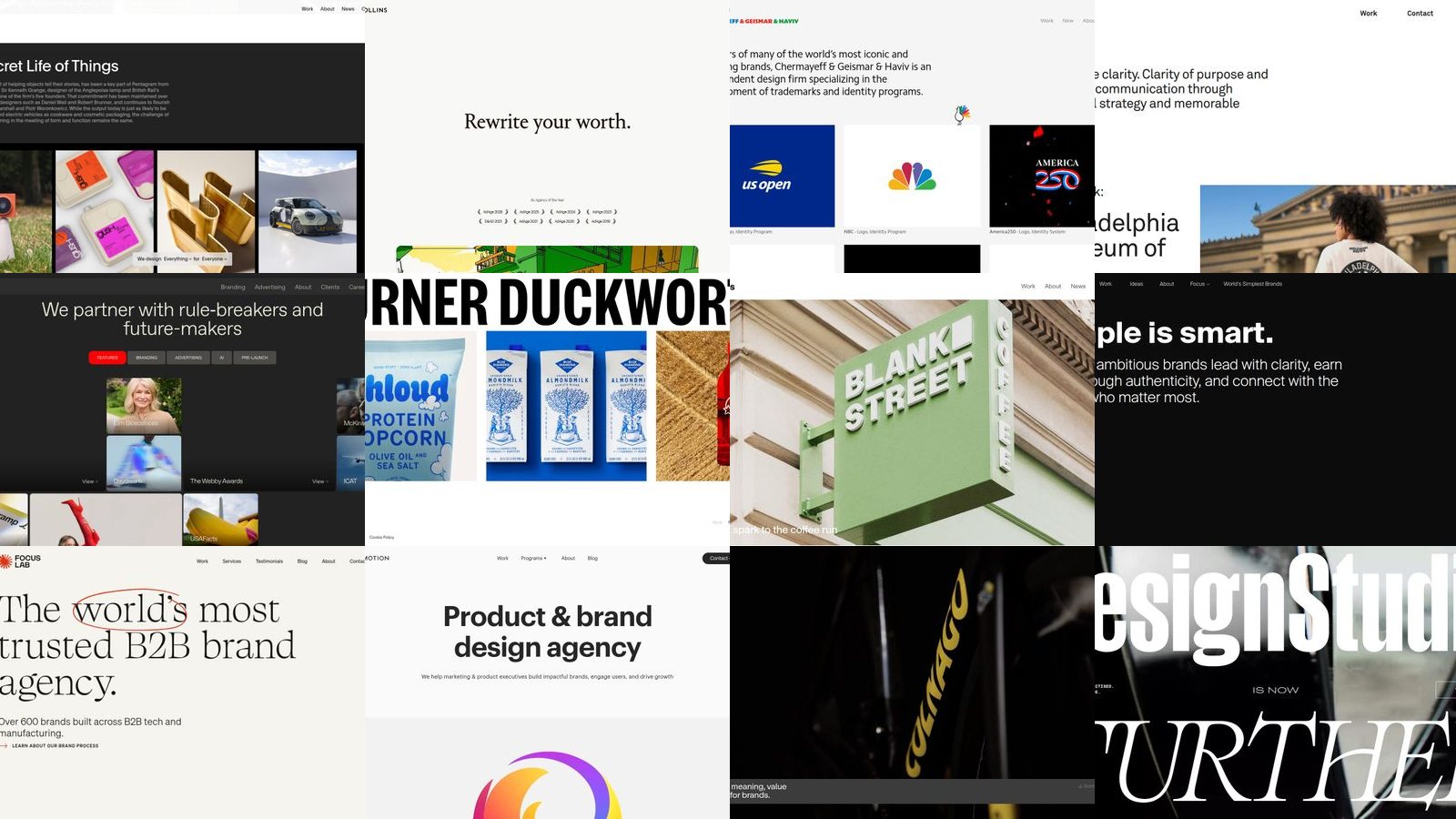
The thirteen graphic design firms worth knowing right now are Moonb (my employer, disclosed below), Pentagram, COLLINS, Chermayeff & Geismar & Haviv, Gretel, Red Antler, Turner Duckworth, Wolff Olins, Siegel+Gale, Focus Lab, Ramotion, Mucho, and Further, the studio formerly known as DesignStudio.
Part of my job at Moonb is reading the shortlists clients send over when they are choosing a design partner, and the most common mistake is not picking a bad firm. It is picking a great firm for the wrong shape of work: a trademark boutique hired to feed a weekly campaign queue, or a production team briefed to invent a positioning it was never built to invent. So this list sorts by what each firm is actually structured to do. I verified every entry against the firm’s own website in September 2026, and since Moonb publishes this list and sits at number one, read that slot with the appropriate skepticism and let the other twelve earn your shortlist on their work.
One distinction runs through everything below: some of these firms build the brand, and some run it every week. A rebrand and a recurring design queue are different purchases, and several buyers on my side of the table end up needing one of each.
1. Moonb
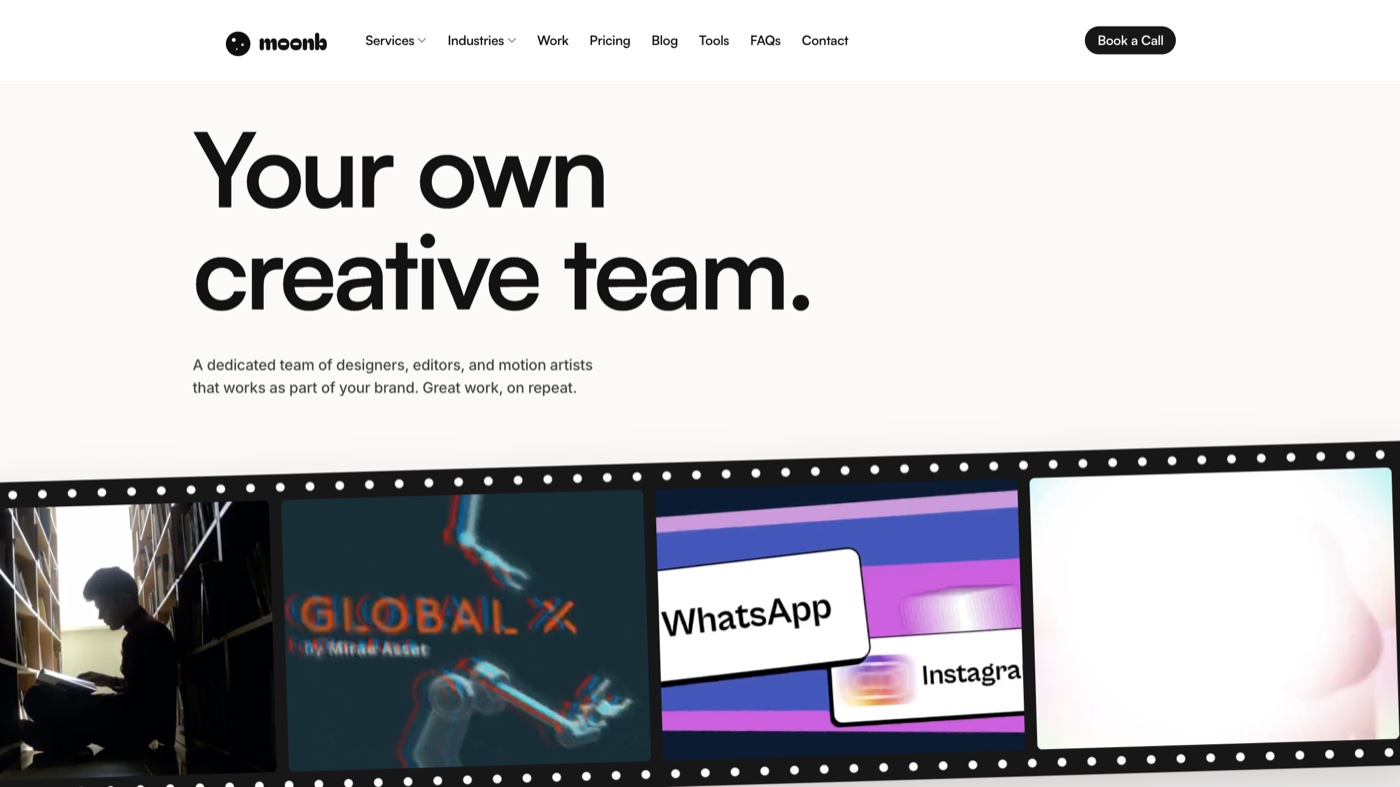
Slot one is my employer, so read it lightly; the identity specialists below do things we do not.
More on Moonb
Moonb is a creative studio that works as a dedicated team inside marketing departments, for companies of all sizes. Graphic design sits inside a wider set that covers video, motion graphics, animation, and brand design, and the retention and turnaround figures above are company-reported, so weigh them the way you would weigh any vendor's own numbers; the Clutch rating is third-party and checkable. The reason a team like this belongs on a graphic design firm list is the recurring case: most companies do not need a new identity this year, they need the existing one applied well, forty times, on deadline. Engagement terms live on the [pricing page](/pricing). For the single defining identity project, keep reading.
2. Pentagram
More on Pentagram
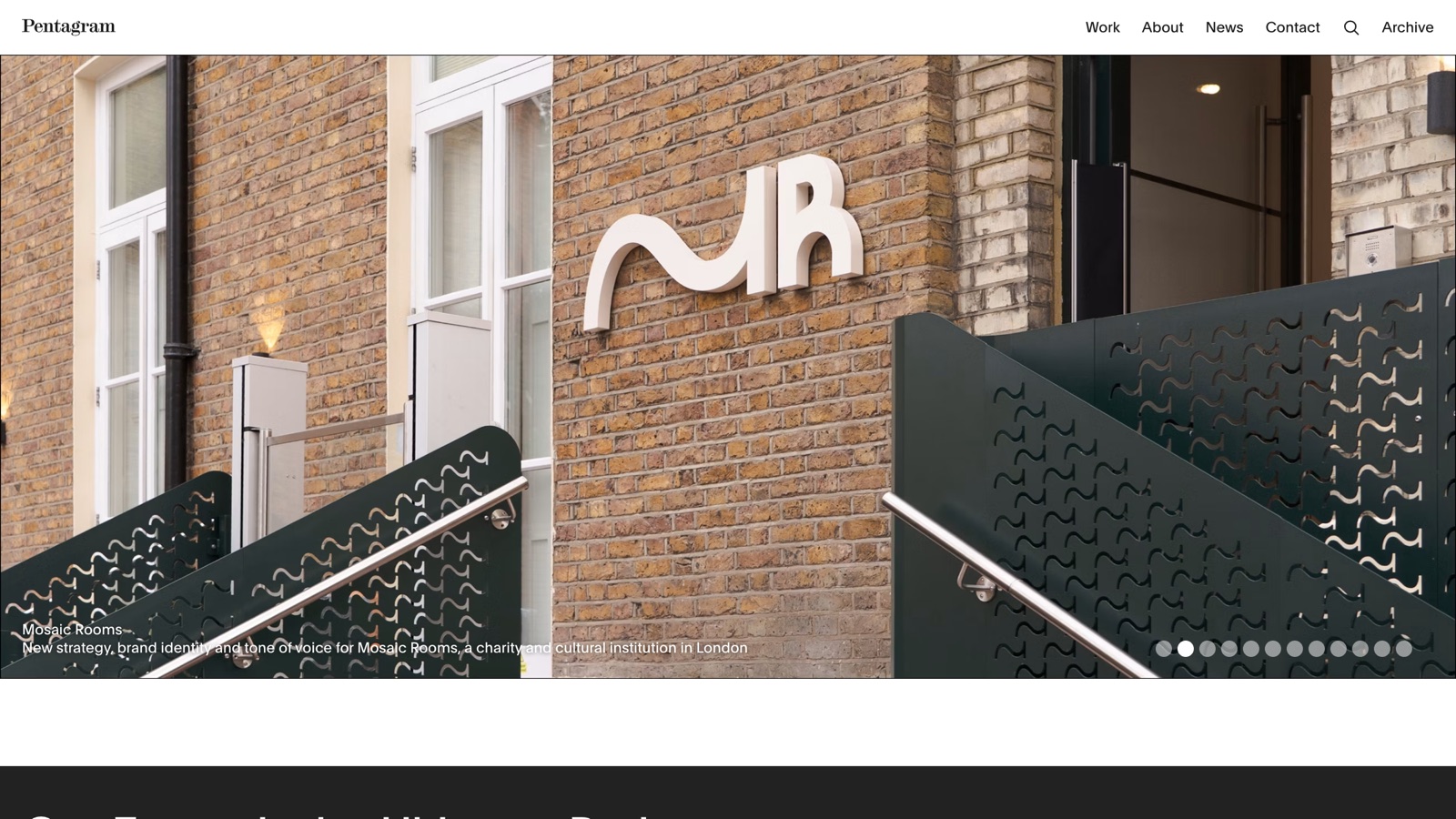
Pentagram has run on the same structure since 1972: independently owned, multi-disciplinary, with partners working from New York, London, Austin, and Berlin. The practical consequence for a buyer is that the firm has no house style on purpose, because each partner's body of work has its own. So the homework is not browsing the general portfolio; it is finding the two or three partners whose body of work resembles your problem and asking about their availability specifically. When the project is the kind a company does once a decade, that homework is worth doing properly.
If you want to see how a firm at this level actually reasons about identity, Netflix’s Abstract episode on Paula Scher, one of Pentagram’s New York partners, is the best free hour on the subject.
3. COLLINS
More on COLLINS
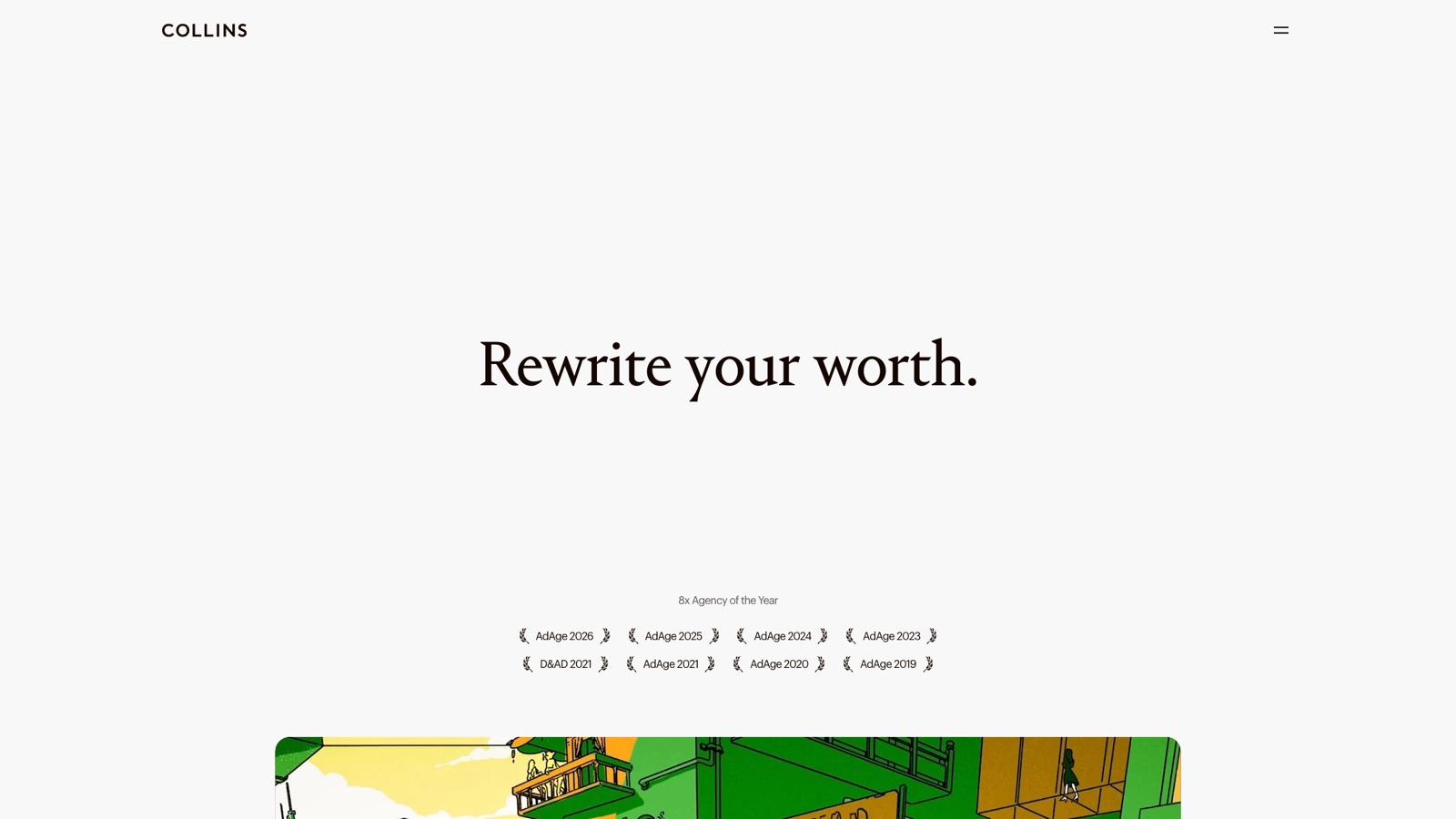
The program menu is the useful tell here. Where most studios sell a generic branding process, COLLINS names the commercial situation each engagement is for, eleven of them, which forces a buyer to admit which situation they are actually in. That admission is half the value. A company that only needs new templates does not need a Turnaround program, and a company entering a new category will waste a smaller firm's time asking for one. If you have not yet put words to which situation you are in, sorting out your [brand positioning](/blog/brand-positioning) first will make every conversation on this list shorter.
4. Chermayeff & Geismar & Haviv
More on Chermayeff & Geismar & Haviv
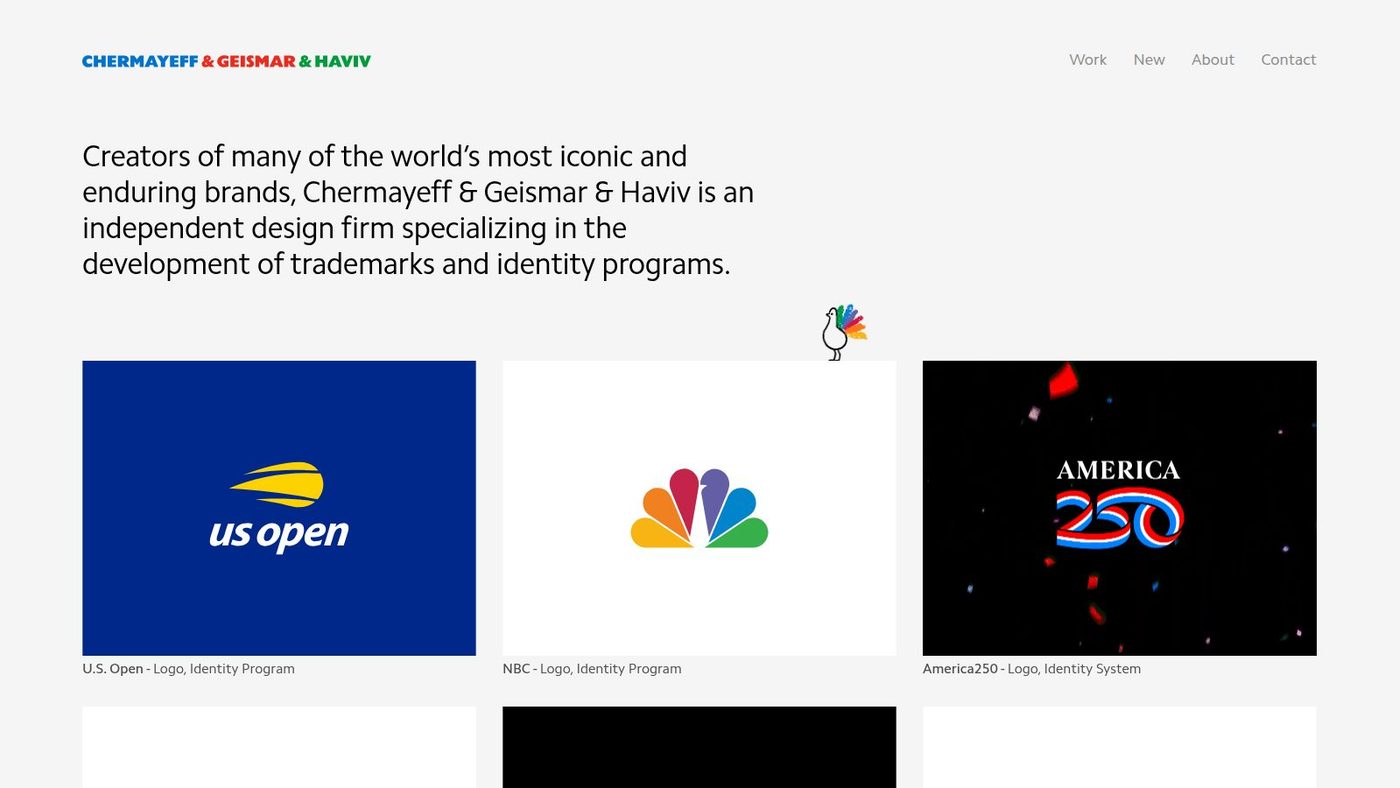
The studio keeps itself independent and focused on purpose; its about page says every project gets the creative vision and strategic thinking of all the firm's principals, working from a single New York office for clients worldwide. That is the opposite bet from every scaled design operation on this list, and for the right project it is the correct one. When the deliverable is a mark that has to survive fifty years of marketing trends, you want fewer, more senior hands on it. For a plain map of what identity engagements like this include and exclude, my breakdown of [brand identity design services](/blog/brand-identity-design-services) covers the scope lines that matter in the contract.
Sagi Haviv has given the clearest public explanation I know of what separates a trademark from decoration; his TEDx talk is worth watching before any identity briefing.
5. Gretel
More on Gretel
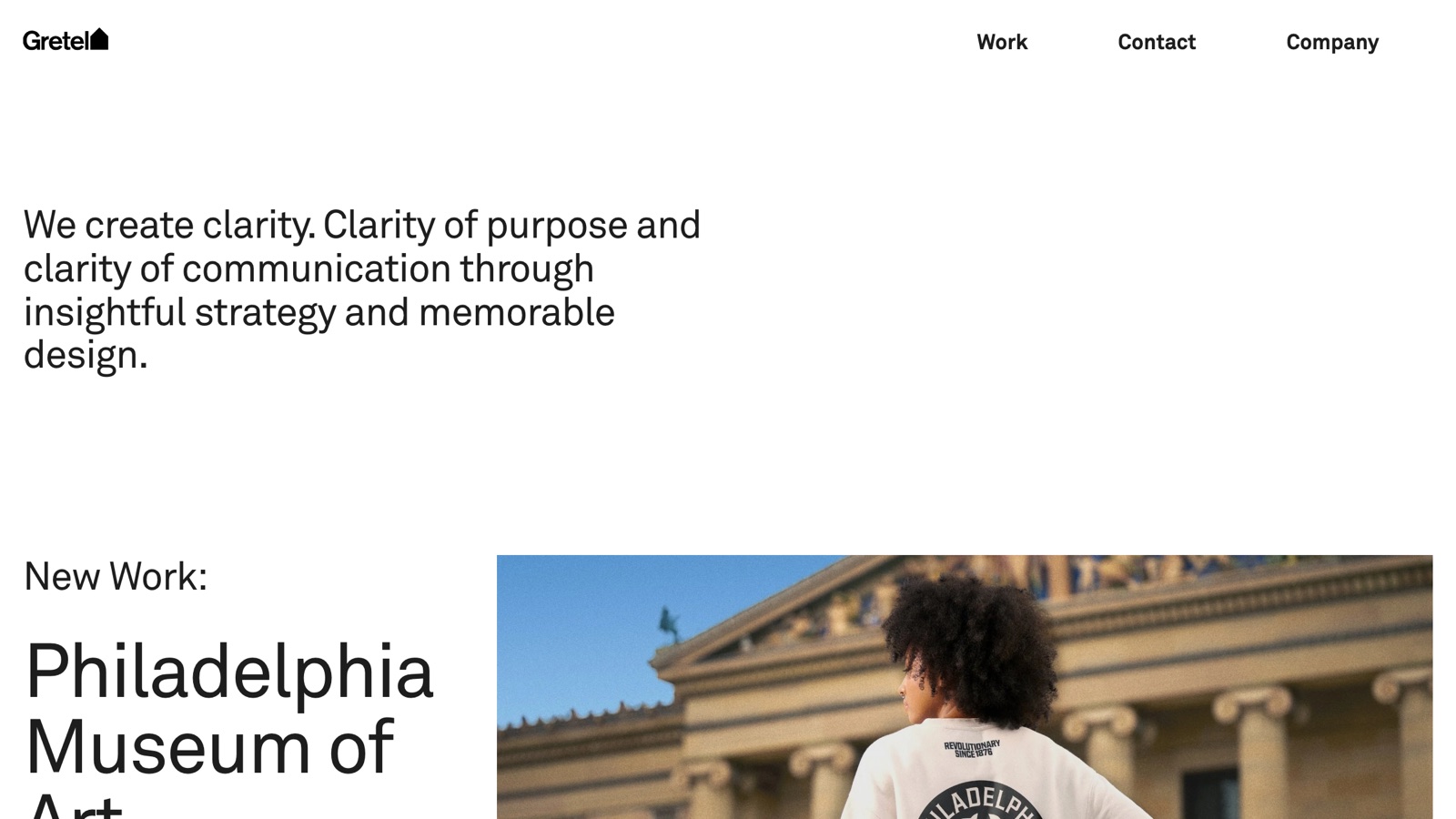
Gretel describes its work as happening at the intersection of opposing forces, old and new, order and chaos, and the portfolio backs the claim more than that kind of studio language usually does. What I would test in a first call is fit of subject matter: the center of gravity is media, culture, and design-literate consumer brands. A B2B buyer should ask to see the closest analog to their own deliverable mix, because a beautiful museum identity proves the system-building skill without proving the category.
6. Red Antler

More on Red Antler
The service map on the about page runs from research, naming, and brand architecture through campaign strategy, experiential, and brand films, which is a wider funnel than most branding firms attempt. For a founder, that width is the point: the identity and the ads that spend against it are designed by people in the same building. The buyer question is sequencing. A launch engagement is intense and finite, so decide before signing who produces the retail updates, the seasonal campaigns, and the sales materials in month seven. If you are earlier than that, my roundup of [branding agencies for startups](/blog/best-branding-agencies-for-startups) covers the stage where this decision first appears.
7. Turner Duckworth
More on Turner Duckworth
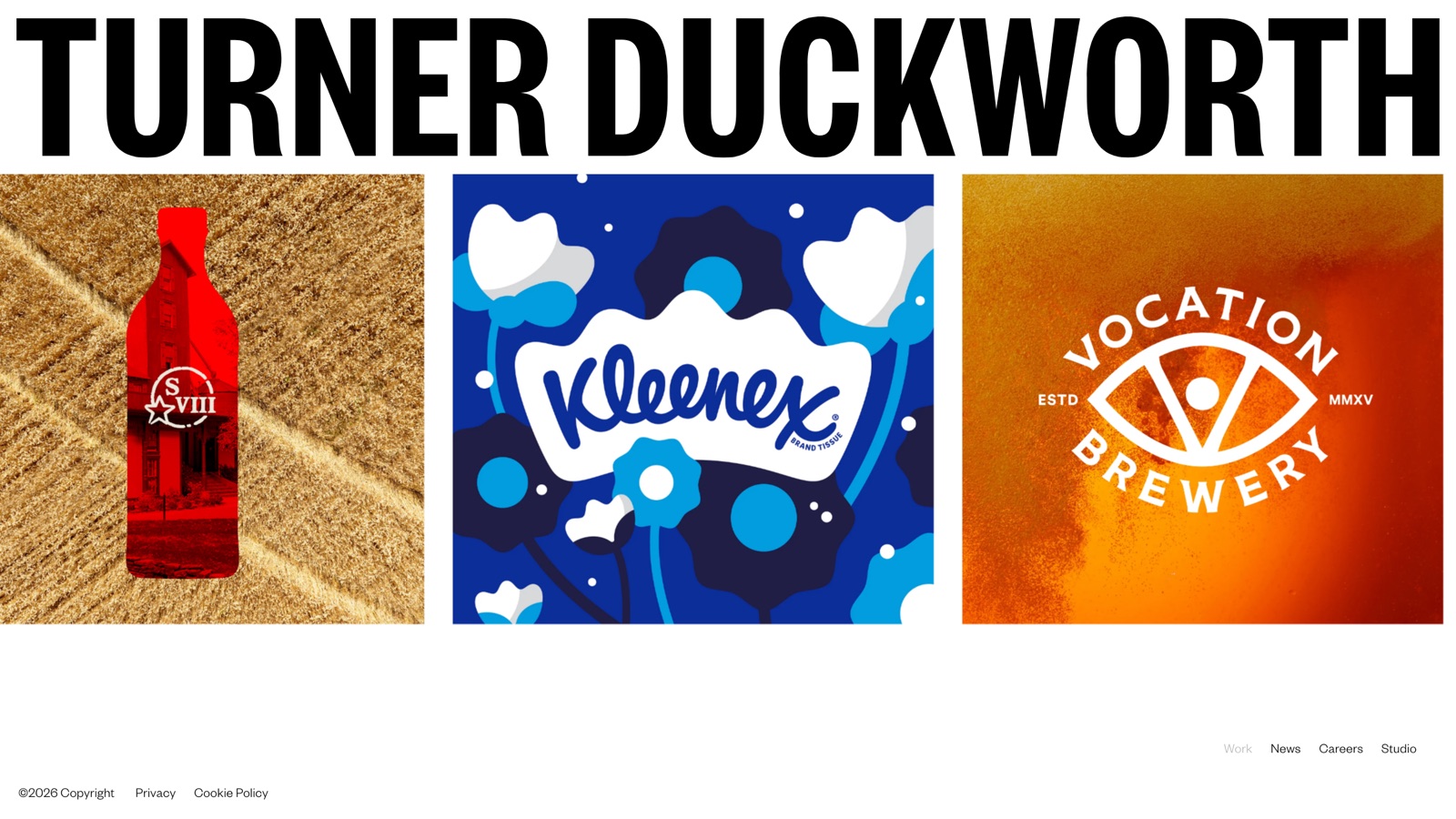
What earns this firm its reputation is a specific test: their marks and packs are designed to be recognized badly. Shrunk, printed off-color, glimpsed sideways in a fridge, the work still reads. That is a different skill from designing for a retina screen, and consumer companies pay for it because the shelf is where the identity actually competes. If the packaging project is part of a wider change, it is worth reading up on [how to run a rebrand](/blog/how-to-rebrand) first, because pack refresh timing and rollout logistics sink more consumer rebrands than the design does.
8. Wolff Olins
More on Wolff Olins
The firm's stated ambition is transformative brands that move businesses, people, and the world forward, and the case studies are tagged accordingly: brand strategy, brand architecture, verbal identity, visual identity, physical environments. The tag list is worth reading closely because it tells you what the engagement produces and what it does not. What follows launch, the daily design production that keeps a new identity alive across a year of campaigns, is exactly the kind of work a transformation consultancy hands back to you. Plan for that second phase at the same time you plan the first.
9. Siegel+Gale
More on Siegel+Gale
The industry focus list is unusually B2B-friendly for a firm with this much consumer heritage: healthcare, manufacturing and industrial, financial services, professional services, energy. That matters because complexity is where simplicity work pays for itself; a company with nine sub-brands and three audiences gets more from this discipline than a startup with one product does. The firm also publishes ongoing research on brand simplicity, which is a fair way to audition the thinking before you spend anything.
10. Focus Lab
More on Focus Lab
Two details make this entry different from the identity boutiques above it. First, the category depth is real: when a firm has done hundreds of B2B tech brands, your buying committee will find directly comparable work instead of extrapolating from a museum identity. Second, the on-call arrangement acknowledges what most identity firms ignore, that the work does not end at handoff. It is one of the few entries here that offers an answer for month seven, not just month one, so if your demand is continuous, compare that arrangement carefully against the dedicated-team model in slot one.
11. Ramotion
More on Ramotion
Ramotion is the entry on this list that most blurs the line this article keeps drawing, because alongside identity projects it sells ongoing design support, and several published engagements are exactly that: continuing design work for a company insights platform, years of design partnership through a client's IPO. For a SaaS team, the appeal is that the same firm that drew the logo can maintain the design system the logo lives in, which removes the usual argument between the brand vendor and the product team about whose rules win.
12. Mucho
More on Mucho
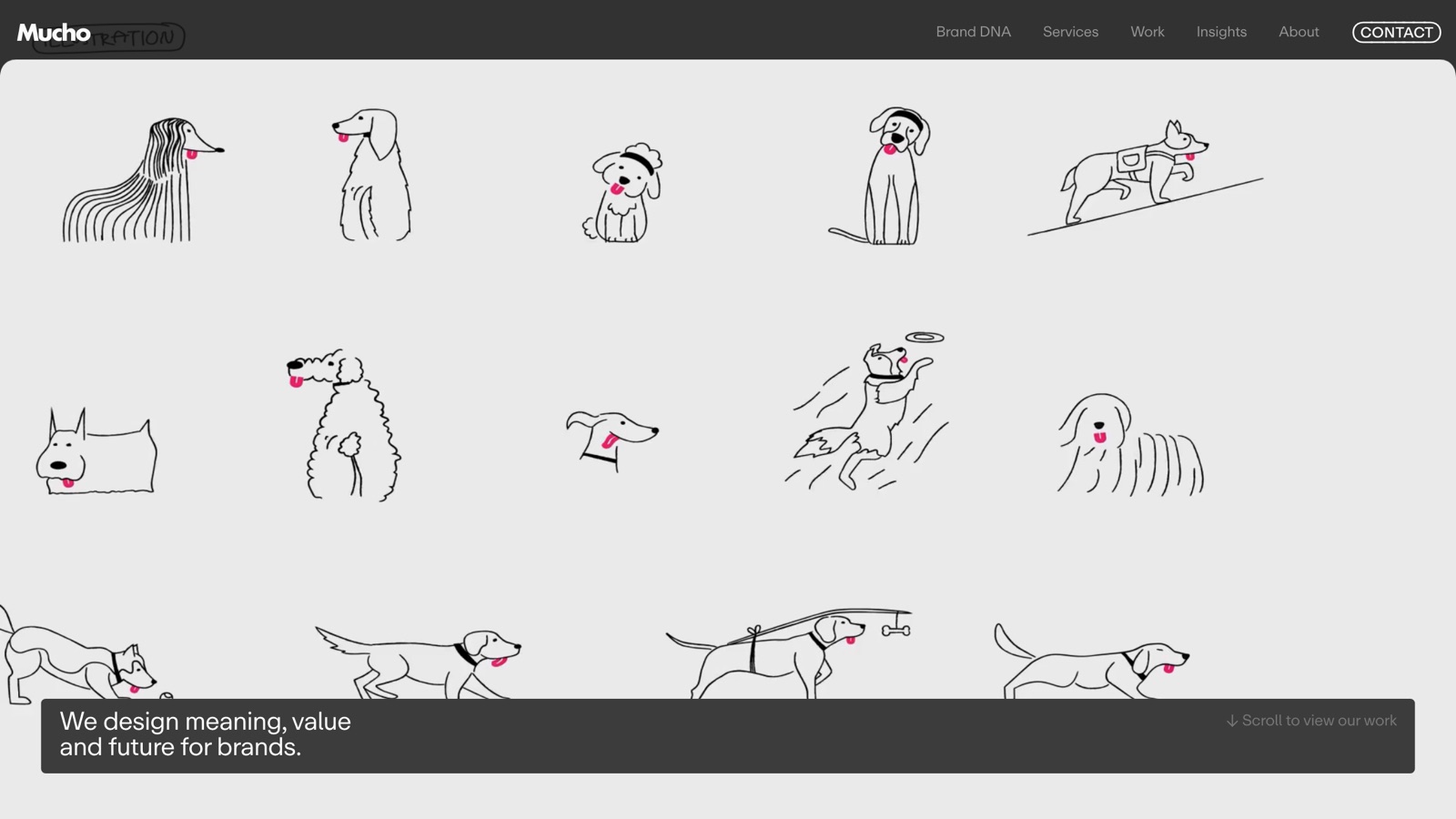
The return-rate figure is the interesting one. A studio that publishes how often clients come back is telling you what it optimizes for, and repeat relationships are a different business than portfolio pieces. The service list also goes further into execution than most identity studios, with motion systems and video production named explicitly, so a buyer who needs the identity and its first year of expression from one partner has a real conversation to have here. Note the address: the studio lives at wearemucho.com, and older directory listings point at domains that no longer resolve.
13. Further (formerly DesignStudio)
More on Further
The old design.studio address now carries a single message, DesignStudio is now Further, with a thesis attached: design will be commoditised, creativity will endure. Agree or not, a studio renaming itself around a thesis about where design is heading is at least being direct about where it thinks the value sits, and the current site frames the firm as a bet on the future and a belief in human creativity. For a buyer the substance is unchanged, big consumer and entertainment rebrands with the motion and campaign systems to carry them, but do your diligence under both names, because the case studies you will be shown were mostly shipped by DesignStudio.
The whole list side by side
| # | Firm | Best for | Model | Trade-off |
|---|---|---|---|---|
| 1 | Moonb | Recurring design demand across campaigns, decks, and social | Dedicated creative team; one set monthly rate, or a per-project quote | Not a trademark boutique for the one landmark identity |
| 2 | Pentagram | Defining identity work under a named partner | Partner-led projects | Partner availability decides the timeline; not built for weekly queues |
| 3 | COLLINS | Repositioning, refresh, and expansion with commercial stakes | Eleven named programs, per project | Premium and in demand; confirm what your team keeps |
| 4 | Chermayeff & Geismar & Haviv | Trademarks and identity programs built to last decades | Small principal-led studio, per project | Foundation only; ongoing production is a separate hire |
| 5 | Gretel | Identity systems for content-heavy media and culture brands | Independent Brooklyn studio, per project | Small team, real calendar constraints |
| 6 | Red Antler | Consumer launches needing brand plus advertising together | Branding and advertising practices, per project | Consumer-centered evidence; thin public B2B case material |
| 7 | Turner Duckworth | Packaging-led consumer identity, shelf to screen | Three studios, per project | Consumer specialization; clarify who does adaptation work |
| 8 | Wolff Olins | Brand transformation tied to business change | Global consultancy, per engagement | Heavy process for anything smaller than transformation |
| 9 | Siegel+Gale | Simplifying complex portfolios, M&A, and naming | Strategy-led, seven offices | Design arrives late; no post-launch production capacity |
| 10 | Focus Lab | B2B tech identity with category-deep evidence | Projects plus an on-call ongoing option | Deep in B2B, light on consumer work; calendar fills |
| 11 | Ramotion | Tech brands needing identity plus product and web design | Projects and ongoing design support programs | Software-only evidence; no packaging or retail work shown |
| 12 | Mucho | European design craft across identity, packaging, and motion | Barcelona and San Francisco studios, per project | Few named public cases relative to its stated volume |
| 13 | Further (formerly DesignStudio) | High-visibility consumer, sports, and gaming rebrands | London, Brooklyn, and Dubai studios, per project | Reputation filed under the old name; verify the team |
Match the firm to the shape of demand
The right firm is the one whose operating model matches the work sitting in your queue, so start by describing the queue honestly. Is the need a one-time identity system, a connected project like a rebrand plus a website, or design every week across campaigns, sales, product, and events? A project firm brings senior thinking and a defined scope, and its continuity ends at handoff. An ongoing team brings speed and consistency, and it is the wrong tool for a one-time strategy sprint. Freelancers start fast and cost less, and one person is a single point of failure who cannot cover every format. I wrote a longer breakdown of what a graphic design agency actually does and how to compare high-volume design services if the weekly-queue side of this is your situation.
Whichever model fits, put the same handful of things in writing before anyone designs anything. Get the names and portfolios of the people who will do the work, because the pitch team and the delivery team are not always the same people. Define the deliverables down to formats, adaptations, and templates. Define what counts as a revision round and route all feedback through one approver, since scattered feedback is the quiet killer of both budgets and quality. And settle ownership of source files explicitly: final PNG and PDF exports are not the same thing as the editable Figma, Illustrator, and PSD files, and a written IP assignment clause in the contract is the clean way to make sure the working files, component libraries and all, end up yours.
Judge every portfolio against the deliverable class you will actually order. A firm celebrated for packaging has proven nothing about weekly B2B sales decks, the same way a law firm choosing a photographer looks at lawyer headshot samples rather than a general portfolio, because the narrow evidence is the only evidence that transfers. Look for systems rather than hero pieces: can one identity carry through a deck, a landing page, a trade show wall, and a social template without falling apart? Craft shows fastest in the type, and an eye for it is trainable; even spending time with typography as art sharpens the instinct that spots sloppy spacing in an agency presentation. When the shortlist is down to two, a small paid test brief beats any amount of portfolio review.
The first month with whichever firm you choose decides most of what follows. Write a brief template that captures audience, objective, channel, mandatory content, and deadline; hand over the full asset library on day one, logos, fonts, guidelines, and past work included; run a real kickoff that covers tone and approval steps; and baseline your own numbers, turnaround by asset class, revision rounds, and rework rate, so that six months in you are judging the relationship on evidence instead of vibes.
A generic enterprise SaaS example shows why buyers often end up with two models at once. The company hired a large brand consultancy for its identity system, then discovered that weekly sales decks, ads, and event graphics did not fit project quotes or multi-week starts. It kept the consultancy’s guidelines and moved the recurring production to an ongoing team. Who builds the brand and who runs it every week turned out to be two separate decisions, and both were right.
Before you contact anyone on this list, count the design requests your team expects next quarter, gather your brand files, and name the single person who will approve the work. Then send the same brief to the two or three firms that match your demand shape and ask each for a named delivery team, source-file terms, and a small paid test. The answers will sort the list faster than any award has.
Frequently asked questions
It depends on the model more than the firm. Project-based identity firms quote per engagement, and the number moves with scope, seniority, and rollout complexity, which is why almost none of the thirteen firms on this list publish a rate card. Ongoing arrangements price capacity instead of deliverables, either monthly or per project. The practical move is to collect two or three quotes against the same written brief, because a quote without a shared brief tells you nothing you can compare.
The labels overlap, but the useful split is what the engagement produces. Branding-led firms sell strategy, positioning, and an identity system, then leave. Design-led firms and ongoing teams sell the weekly output that a brand needs after the system exists: campaigns, decks, packaging adaptations, social assets. Many companies eventually need both, and the common mistake is hiring one kind of firm and expecting the other kind of work from it.
Count your demand first. An in-house designer makes sense when there is enough steady work for at least one full-time person and the formats are consistent. A firm makes sense when demand spikes, spans many formats, or needs senior direction you cannot hire for one salary. The hybrid is common: a small internal team that owns the brand, with an external partner absorbing overflow and specialist formats like motion or packaging.