16 Best B2B Branding Agencies in 2026
Sixteen branding partners ranked on named B2B clients from their own sites: SaaS, fintech, healthcare and industrial, with a real limitation on every entry.

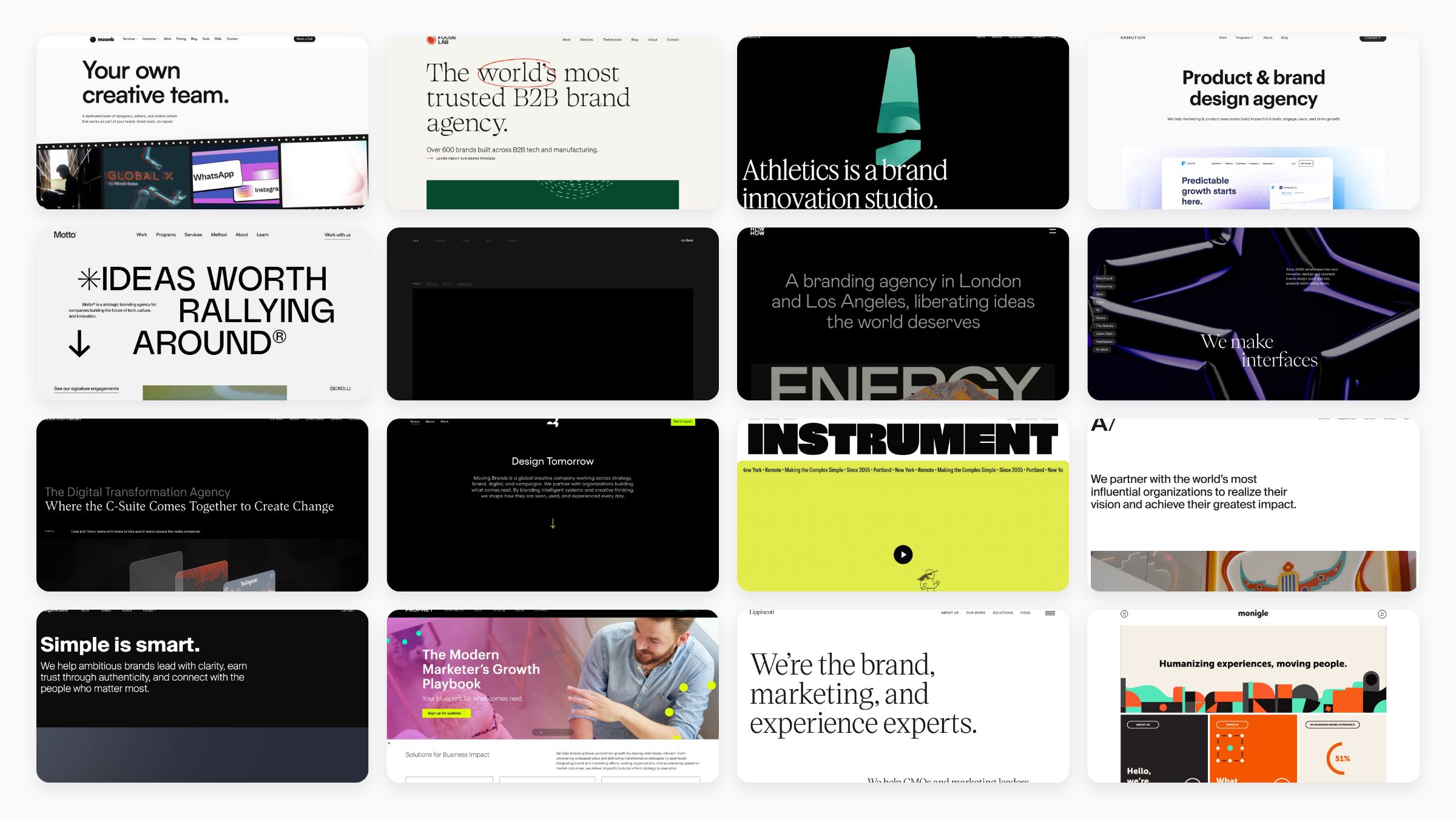
I run Moonb, and we are sitting at number one on our own list, which is the kind of thing you should read with a raised eyebrow. Nobody grades their own homework fairly, so my only defence is that I have written our entry to say plainly what we are wrong for and pointed you at the firm on this list that would do that job better. Everything below number one is ranked on a single rule I applied to all sixteen, and if you disagree with the rule you will disagree with the order.
That rule is named B2B logos published on the agency’s own website. Not awards, not press coverage, not how famous the founder is. If a studio’s case studies show a payroll platform, an identity provider, a data infrastructure company or a hospital system, it moves up. If the portfolio is beautiful but entirely consumer, it does not appear at all, which is why several very good studios you would expect to see here are missing. Consumer identity and B2B identity look similar in a portfolio and behave nothing alike in the field, and confusing the two is the single most expensive mistake I watch B2B marketing leaders make.
The difference is what the work has to survive. A consumer brand mostly has to hold up on a shelf, a feed and a screen. A B2B brand has to hold up inside a sales deck being screen-shared over a bad connection, in a procurement portal that strips your typeface, on a booth wall at a trade show, in a security and compliance page a buyer’s legal team will actually read, in partner co-branding lockups you do not control, and in the hands of sales engineers who will rebuild your slides regardless of what the guidelines say. Systems that assume a controlled environment fall apart in that world. Ask any studio you shortlist to show you the sales deck template and the partner lockup rules from a past project, not the launch film. What comes back tells you almost everything.
There are four shapes of partner in this list and picking the wrong shape costs more than picking the wrong studio inside the right shape. The B2B specialists near the top do positioning and identity for software companies and nothing else, so they arrive already fluent in your funnel, your category language and your investor pressure. The product-led firms treat the interface as part of the brand, which matters if your product is the main place your brand is experienced. The generalist identity studios with real B2B proof bring more visual ambition and less category fluency, and they are the right call when your category has gone visually generic. The consultancies at the bottom of the list are a different purchase entirely rather than weaker firms: they earn their fees on regulated sectors, merger and spin-off events, multi-market rollouts and internal alignment across thousands of employees, and they sit low here only because this list rewards named B2B logos rather than boardroom weight.
I should say what my own work looks like, since this list opens with us. Moonb is an embedded creative team rather than a branding studio, so the work I do sits after the identity exists: on a product launch we usually pick up a positioning document and a set of brand guidelines from whoever built them, then produce the launch film, the product motion, the paid social cuts, the webinar and event graphics and the sales collateral, week after week, with a senior Creative Director holding the line so the fiftieth asset still looks like the first. What tends to happen is that the guidelines survive contact with reality for about a quarter, and then the interesting part of the job becomes extending the system into situations the original designers never scoped, which is slower and less glamorous than a rebrand and matters more to a marketing team’s actual output. We do brand design as part of that, but building a corporate identity from naming upward is not the shape of work we take.
I checked every one of these sixteen in July 2026. Each site loaded, each firm is trading under the name given and taking new work, and every client name in the bullets came off that firm’s own website rather than a directory, a press release or a third-party listicle. Where the client roster is thin or the studio publishes none at all, I say so instead of borrowing names from elsewhere, and that rule applies to our own entry first. Pricing appears only where a firm publishes it, which almost none do. And every entry carries one real limitation, written to be useful in a shortlist conversation rather than to be polite.
INSEAD professor Joerg Niessing lays out why B2B brand stopped being optional, which is the shift most of the firms on this list were built to serve.
The 16 best B2B branding agencies
1. Moonb
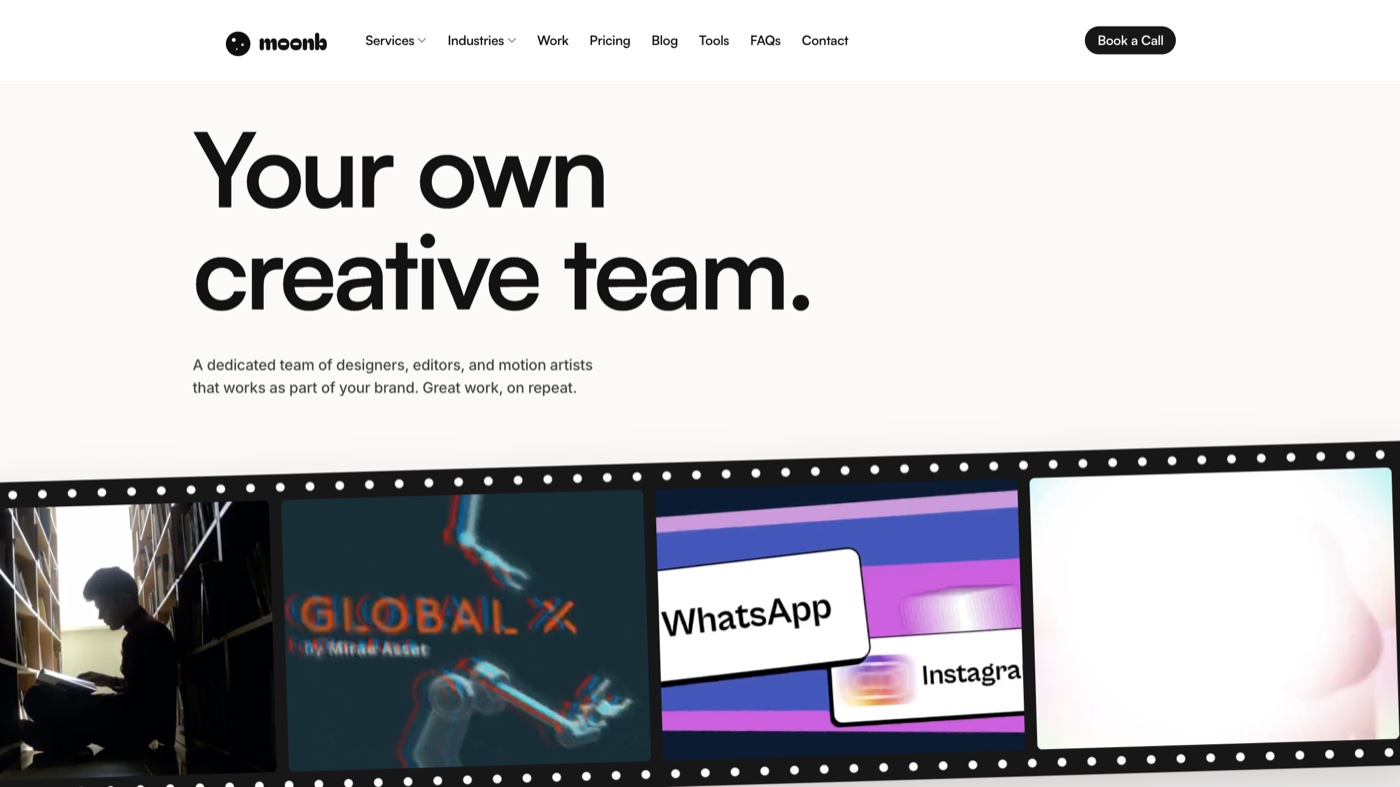
I am biased and you should weigh this entry accordingly. Moonb is an embedded creative team that produces video, motion and design continuously for a marketing department, with a senior Creative Director on every engagement, which makes us the partner you bring in once a brand exists and needs to be manufactured at volume. Most of the firms below us build the system; we are the people who keep feeding it after the launch week is over.
- Best for: B2B marketing teams that already have an identity and need launch films, product motion, paid social, event and sales collateral produced continuously without rebuilding a freelance roster every quarter
- Clients they name: Dell, Toyota, Nestle. I work here, so weigh that the way you would weigh any company citing itself, and ask us for references you can actually call
- Pricing: a set monthly cost, or a per-project quote when the work suits that better
- Why they stand out: the same senior creative lead stays across months of output, so brand consistency comes from a person who knows the system rather than from a PDF nobody reads
- Worth knowing: we are not a branding agency and I would not pitch us for one. If your job is a full corporate identity for a B2B software company, naming and positioning and architecture included, hire Focus Lab at number two, who do that and only that. Come to us afterwards, when the system needs to become hundreds of assets.
More on Moonb
| Best for | Continuous video, motion and design production for an existing B2B brand |
|---|---|
| Scale | Embedded creative team |
| Where they are | Remote and London |
| Named clients | Dell, Toyota, Nestle. I work here, so weigh that the way you would weigh any company citing itself, and ask us for references you can actually call |
| Pricing | a set monthly cost, or a per-project quote when the work suits that better |
Moonb runs as an extension of an in-house team rather than as a vendor taking briefs over a wall. The working pattern is a shared backlog, a weekly rhythm and a Creative Director who sits close enough to the marketing calendar to catch the difference between what was requested and what the campaign actually needs.
Typical engagements are ongoing rather than one-off. The output skews to video and motion, product demos, launch films, conference content, customer story pieces and the long tail of paid and organic assets that a B2B marketing team burns through faster than it expects.
Hire us if your constraint is throughput and consistency: you have a brand, you have a roadmap, and the gap is production capacity with senior taste attached. Do not hire us if your constraint is the brand itself, if you need a naming exercise, a brand architecture decision across acquired product lines, or a positioning fight settled before anything visual makes sense.
Headquarters is remote, and the team works across the client’s hours rather than a fixed studio address.
2. Focus Lab
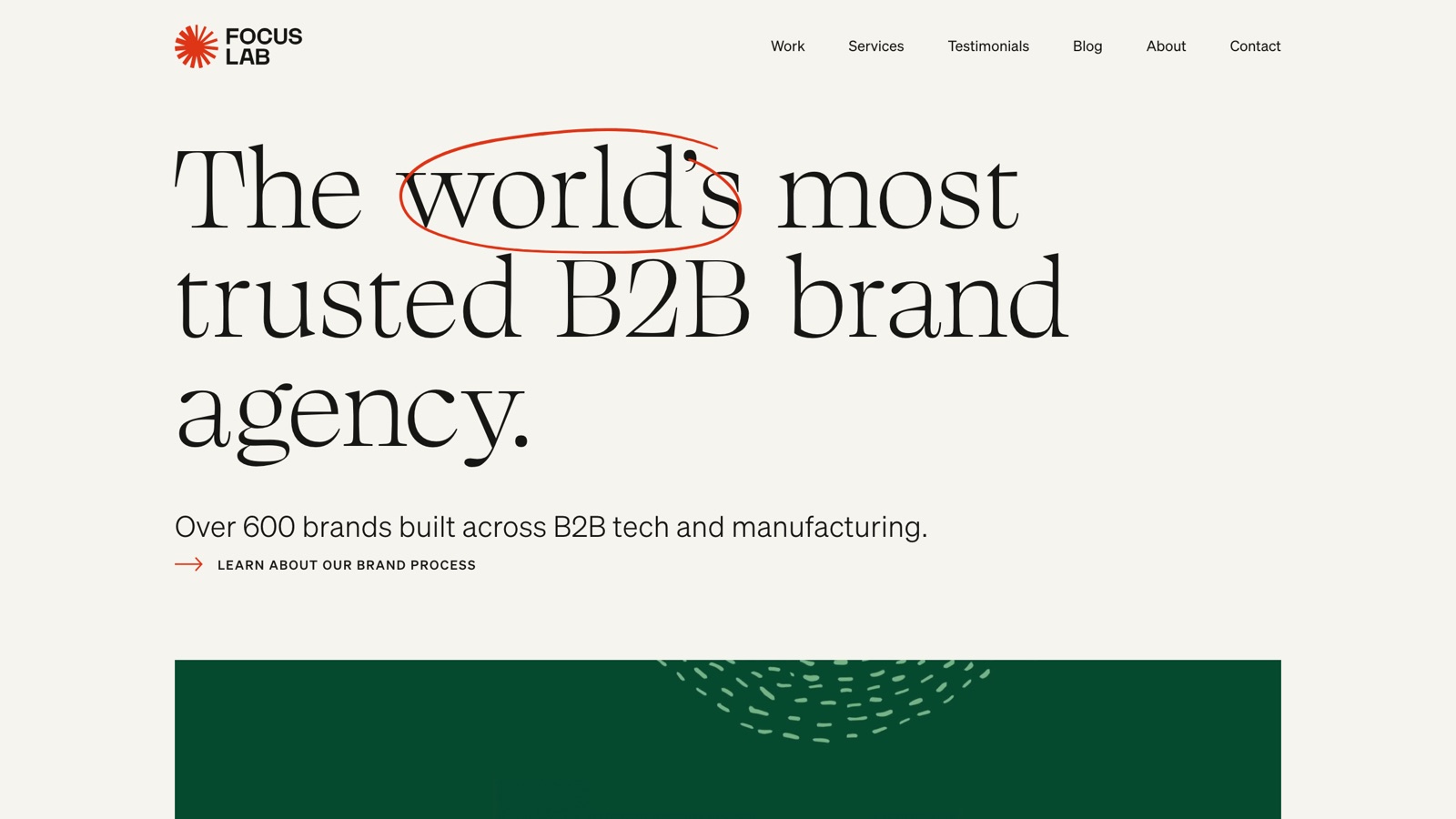
Focus Lab works with B2B software companies and turns down almost everything else, which is unusual enough to be the whole reason they top the ranked portion of this list. Their published roster reads like a sales engineering standup: Salesloft, Zuora, LaunchDarkly, Braze, Contentstack, PolyAI. They also publish the venture funding and unicorn count of their client base, which tells you exactly which buyer they are speaking to.
- Best for: venture-backed B2B SaaS companies rebranding around a category shift, a platform expansion or a raise
- Clients they name: Salesloft, Zuora, LaunchDarkly, Braze, Frame.io, Marketo, Contentstack, PolyAI, Laravel
- Pricing: per project, undisclosed
- Why they stand out: they arrive already fluent in the vocabulary of your category, so the discovery phase spends its time on your actual positioning problem rather than teaching a studio what a design partner ecosystem is
- Worth knowing: the specialisation cuts both ways. There is no industrial, healthcare system, insurance or heavy regulated work in the published portfolio, so a medtech or manufacturing buyer has nothing comparable to judge against. For those categories Siegel+Gale or Lippincott lower down carry the relevant proof.
More on Focus Lab
| Best for | B2B SaaS rebrands around a category shift or a raise |
|---|---|
| Scale | Independent specialist |
| Where they are | Not published |
| Named clients | Salesloft, Zuora, LaunchDarkly, Braze, Frame.io, Marketo, Contentstack, PolyAI, Laravel |
| Pricing | per project, undisclosed |
The practice is built around brand strategy and identity for software companies, delivered as a full system rather than a logo refresh: positioning, messaging, visual identity, and the applications a software company actually needs, from web to product marketing.
They publish aggregate outcomes about their client base, which is a marketing choice worth reading carefully. It tells you they are optimised for companies on a funding trajectory, and that a bootstrapped software company with slower growth may find the engagement shaped for a different pace.
Hire them if your brand is the bottleneck on an enterprise motion you are trying to move upmarket into. Do not hire them if your company is outside software, or if you want a studio that will bring a visual point of view from outside your category as a deliberate contrast.
3. Athletics
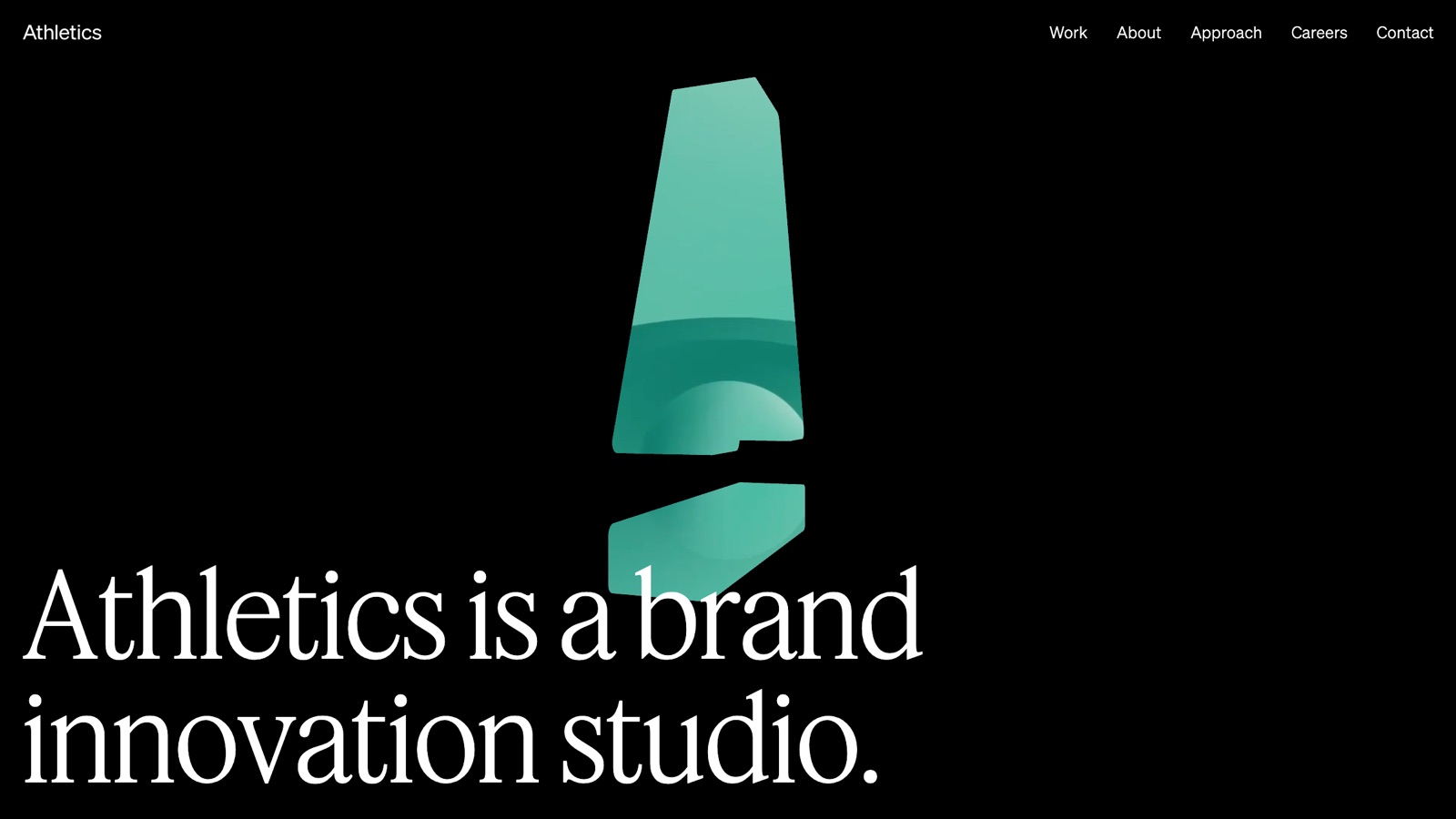
The name suggests sports and the work is mostly enterprise technology, which is exactly the sort of thing this list exists to correct. Athletics has published brand and identity work for IBM Cloud, IBM Consulting, IBM Watson, Salesforce, Okta, Citrix, ShareFile, Zapier and Google Chrome, a run of enterprise software logos that very few independent studios can match. The sports work is real, it is just the smaller half.
- Best for: enterprise technology brands that need identity, sonic and motion systems built to survive inside a very large organisation’s existing brand architecture
- Clients they name: Salesforce, IBM Cloud, IBM Consulting, IBM Watson, IBM TechXchange, Google Chrome, Chromebook Plus, Amazon Design, Citrix, ShareFile, Okta, Zapier, Intuitive, Guild, Tia, Major League Soccer, Seattle Sounders FC, MoMA, New Museum
- Pricing: per project, undisclosed
- Why they stand out: repeat work inside IBM across multiple sub-brands and events, which is the clearest signal available that they can operate inside enterprise governance without the system collapsing
- Worth knowing: one Brooklyn office and nothing else, so non-US clients work entirely across time zones with no local team. The portfolio also has almost no consumer packaged goods, retail or hospitality work, so a brand crossing from B2B into direct-to-consumer will find no comparable case study here.
More on Athletics
| Best for | Enterprise technology identity, sonic and motion systems |
|---|---|
| Scale | Independent studio |
| Where they are | Brooklyn, New York |
| Named clients | Salesforce, IBM Cloud, IBM Consulting, IBM Watson, IBM TechXchange, Google Chrome, Chromebook Plus, Amazon Design, Citrix, ShareFile, Okta, Zapier, Intuitive, Guild, Tia, Major League Soccer, Seattle Sounders FC, MoMA, New Museum |
| Pricing | per project, undisclosed |
The offer covers brand strategy, identity systems including sonic and motion, digital experience, and a newer innovation practice covering AI enablement, futurecasting and product design. In practice the centre of gravity is enterprise and B2B technology branding, with sports and cultural institutions alongside it.
Engagements look like identity systems for large technology sub-brands and product lines rather than whole-company rebrands from zero, which is a distinct skill: fitting a new system into a parent brand’s rules without producing something anonymous.
Hire them if you are a large software organisation launching or repositioning a product line, or a technology company that needs motion and sound treated as first-class parts of the identity. Do not hire them if you need a partner with offices in your market or a portfolio that proves consumer retail fluency.
4. Ramotion
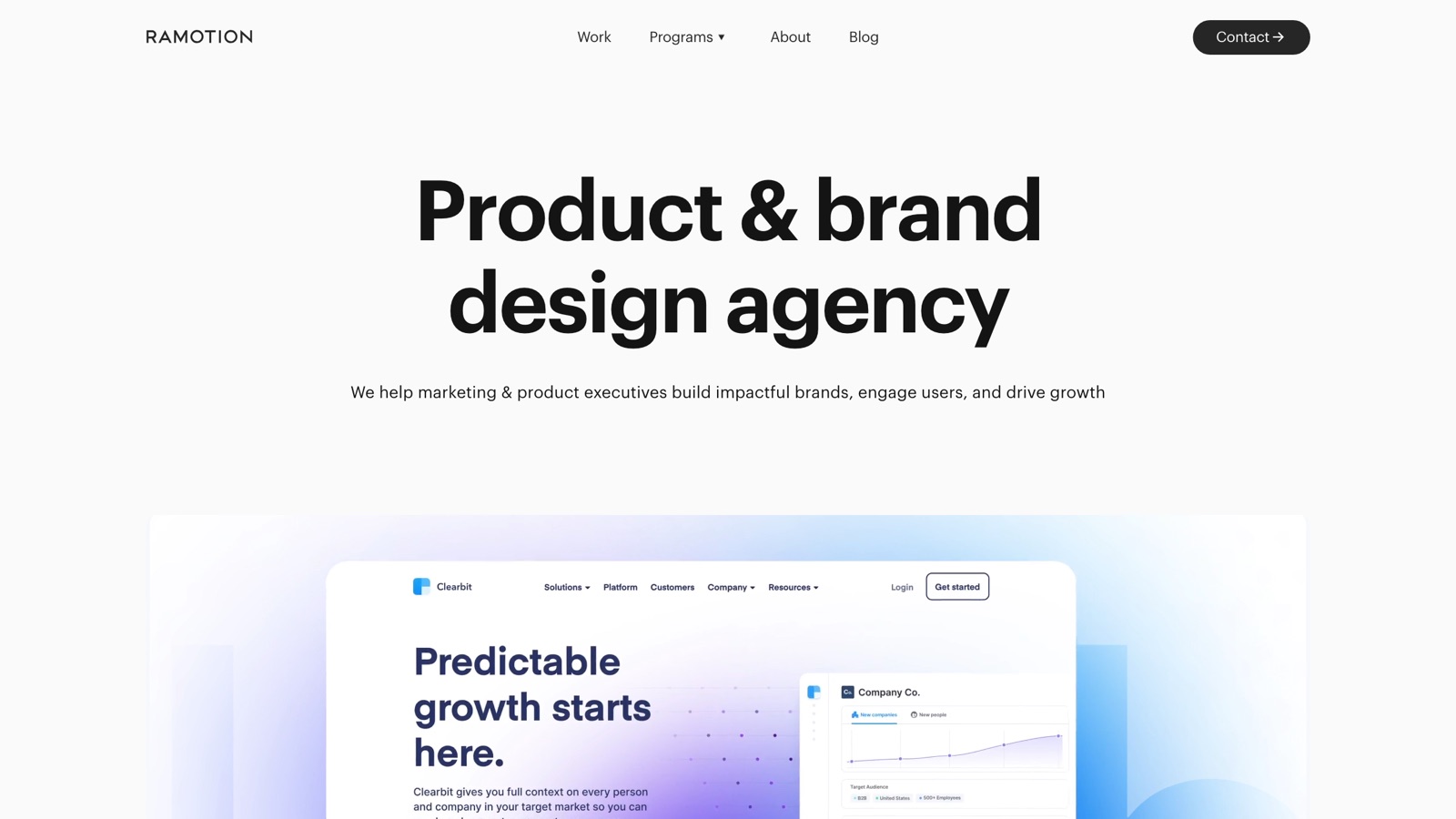
Ramotion sits at the seam between brand and product, and the roster reflects it: Stripe, Okta, Salesforce, Adobe, Mozilla Firefox, Crunchbase, Xero, Descript, NBCUniversal. For a B2B company whose brand is experienced mainly inside a logged-in interface and a developer doc site, that seam is where the real work is.
- Best for: B2B software companies where the identity has to hold together across marketing site, product interface and design system simultaneously
- Clients they name: Netflix, Stripe, Adobe, Salesforce, Okta, Mozilla Firefox, NBCUniversal, Crunchbase, Xero, Descript
- Pricing: per project, undisclosed
- Why they stand out: brand and product design sit in the same team, so the identity arrives with interface behaviour attached rather than as a static guideline document a product team will ignore
- Worth knowing: the site does not scope the engagements behind the largest names, and a component-level project for a company like Adobe is a very different reference from a corporate rebrand. Ask specifically which parts of the system they owned and who approved it before you treat those logos as proof of full identity work.
More on Ramotion
| Best for | Brand plus product design and design systems |
|---|---|
| Scale | Independent studio |
| Where they are | San Francisco, Los Angeles, New York |
| Named clients | Netflix, Stripe, Adobe, Salesforce, Okta, Mozilla Firefox, NBCUniversal, Crunchbase, Xero, Descript |
| Pricing | per project, undisclosed |
Three US offices in San Francisco, Los Angeles and New York, with a practice spanning brand identity, UI and UX design, and design systems. The published work is heavily weighted to technology and software.
Typical engagements pair a visual identity with a website build or a product design system, which means a longer, more technical delivery than a pure identity project and a team composition that includes product designers rather than only brand designers.
Hire them if your brand problem and your interface problem are the same problem. Do not hire them if you need naming, brand architecture across an acquisition, or an internal culture programme, none of which is what this shop is built to do.
5. Motto
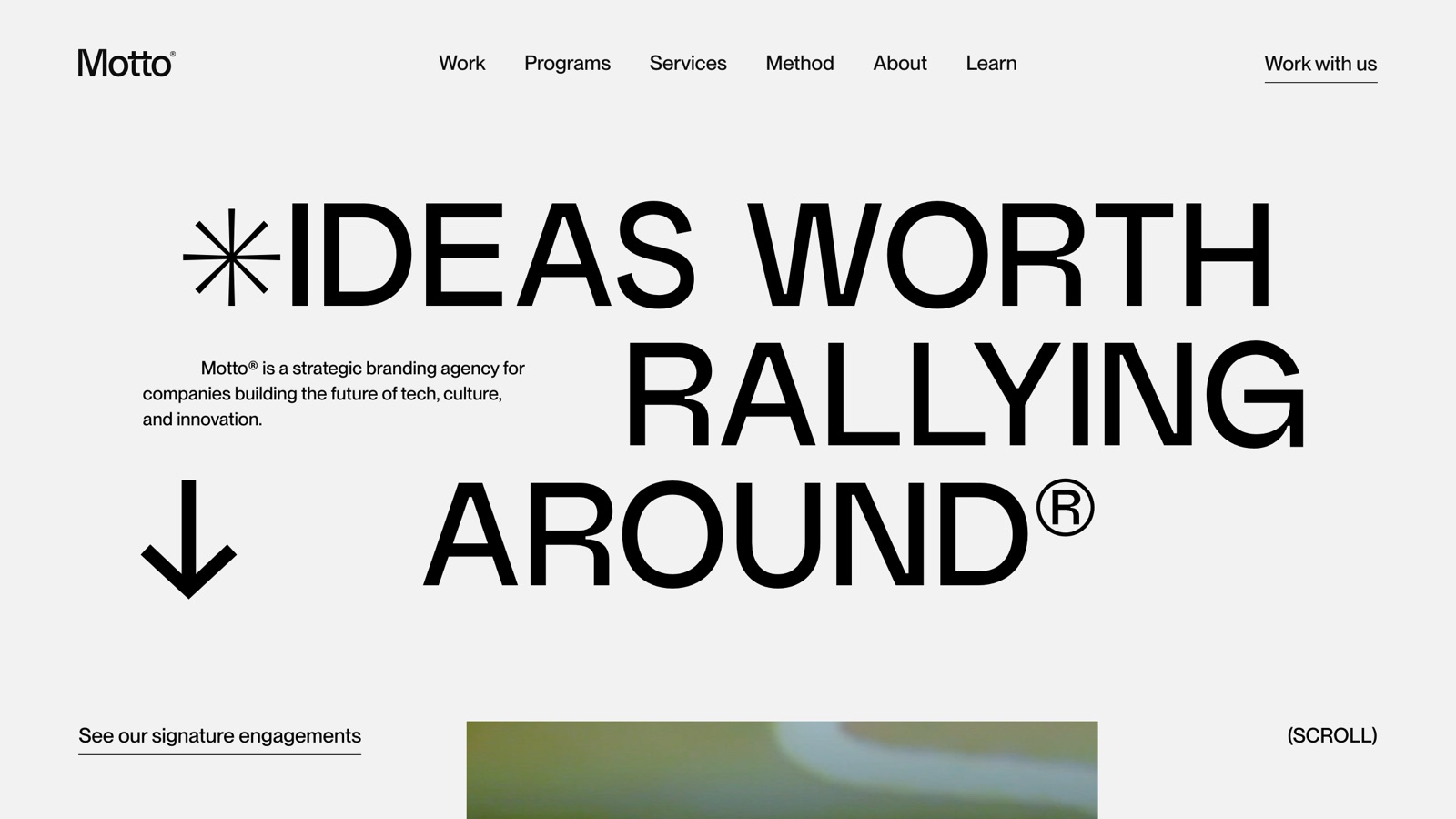
Motto sells a trademarked method called the Idea Worth Rallying Around, and the B2B evidence sits underneath the branding language: Klaviyo, Cresta, CloudBees, Andela, Colliers, Solidatus, Impel. A useful practical note before you search for them, motto.agency is not their site and is a parked domain listing for sale, and wearemotto.com returns a bot challenge to automated checks while loading normally in a browser.
- Best for: founder-led B2B technology companies that need a category position argued and defended before any design starts
- Clients they name: Google, Klaviyo, Cresta, CloudBees, Andela, Colliers, Earnest, Route, Impel, Solidatus, Goodnotes, Virgin Voyages, Protege, Ivo, Neurolign
- Pricing: per project, undisclosed
- Why they stand out: the engagement is built around executive-level positioning rather than visual output, so the deliverable your leadership team argues over is a strategic idea and the identity follows from it
- Worth knowing: roughly sixteen senior people with the two founders visibly central to the product, so availability rather than capability sets your start date. The method is also prescriptive, which is an asset if you want a strong outside view and a poor fit if you need execution inside a framework you have already locked.
More on Motto
| Best for | Founder-led positioning and category definition |
|---|---|
| Scale | Small senior studio |
| Where they are | New York, London |
| Named clients | Google, Klaviyo, Cresta, CloudBees, Andela, Colliers, Earnest, Route, Impel, Solidatus, Goodnotes, Virgin Voyages, Protege, Ivo, Neurolign |
| Pricing | per project, undisclosed |
New York and London, remote-first with a meeting space rather than a full studio you can sit inside. The work covers positioning, category definition, naming and identity design built on top of the strategic idea.
Engagements start with a strategy phase that leadership is expected to participate in directly, which suits companies where the CEO or founder is still the ultimate brand owner and works badly where brand decisions are delegated three layers down.
Hire them if your problem is that nobody inside the company agrees what you are. Do not hire them if you need scale, multi-market rollout, or a team that will take a defined brief and execute it without renegotiating the strategy first.
6. Order
Order is best known for the Standards Manual reissues and its own type foundry, which obscures a B2B client list nobody else on this page can claim in the same way: Justworks, Greenhouse, Enigma, Maxio, Particle Health, Valon, Songtrust. A correction worth carrying, the domain orderorder.com that circulates in directories is not theirs and never was; the studio is at order.design.
- Best for: B2B companies that want a rigorous, systematic identity with custom typography rather than a trend-shaped one
- Clients they name: Justworks, Greenhouse, Enigma, Maxio, Particle Health, Valon, OpenStore, Songtrust, Ribbon, AidKit, Google, Apple News, Apple Podcasts, Knoll, Herman Miller, MoMA, Kickstarter
- Pricing: per project, undisclosed
- Why they stand out: they draw type in-house, so a B2B brand that needs to look distinct in a category where everyone bought the same geometric sans can get an actual proprietary asset out of the engagement
- Worth knowing: very small. Their own contact page names six people in Brooklyn, one on contract, plus a Miami office by appointment run under a separate co-founder. A visible share of the portfolio is self-initiated publishing and typeface work rather than client engagements, so capacity is the binding constraint on anything sizeable.
More on Order
| Best for | Systematic identity with custom typography |
|---|---|
| Scale | Small studio |
| Where they are | Brooklyn, Miami |
| Named clients | Justworks, Greenhouse, Enigma, Maxio, Particle Health, Valon, OpenStore, Songtrust, Ribbon, AidKit, Google, Apple News, Apple Podcasts, Knoll, Herman Miller, MoMA, Kickstarter |
| Pricing | per project, undisclosed |
Stated capabilities run across brand identity, type design, design systems, brand strategy, naming, guidelines, packaging, campaigns and environmental design, delivered with a research-led, systematic approach that shows in the consistency of the output.
The two offices operate independently under separate co-founders, so you are buying one principal’s team rather than a shared bench, and it is worth qualifying which of the two you would actually be working with.
Hire them if you value typographic craft and systemic thinking and you have a timeline that respects a small team. Do not hire them if you need parallel workstreams, a rollout across many markets, or continuous production volume after launch.
7. How&How
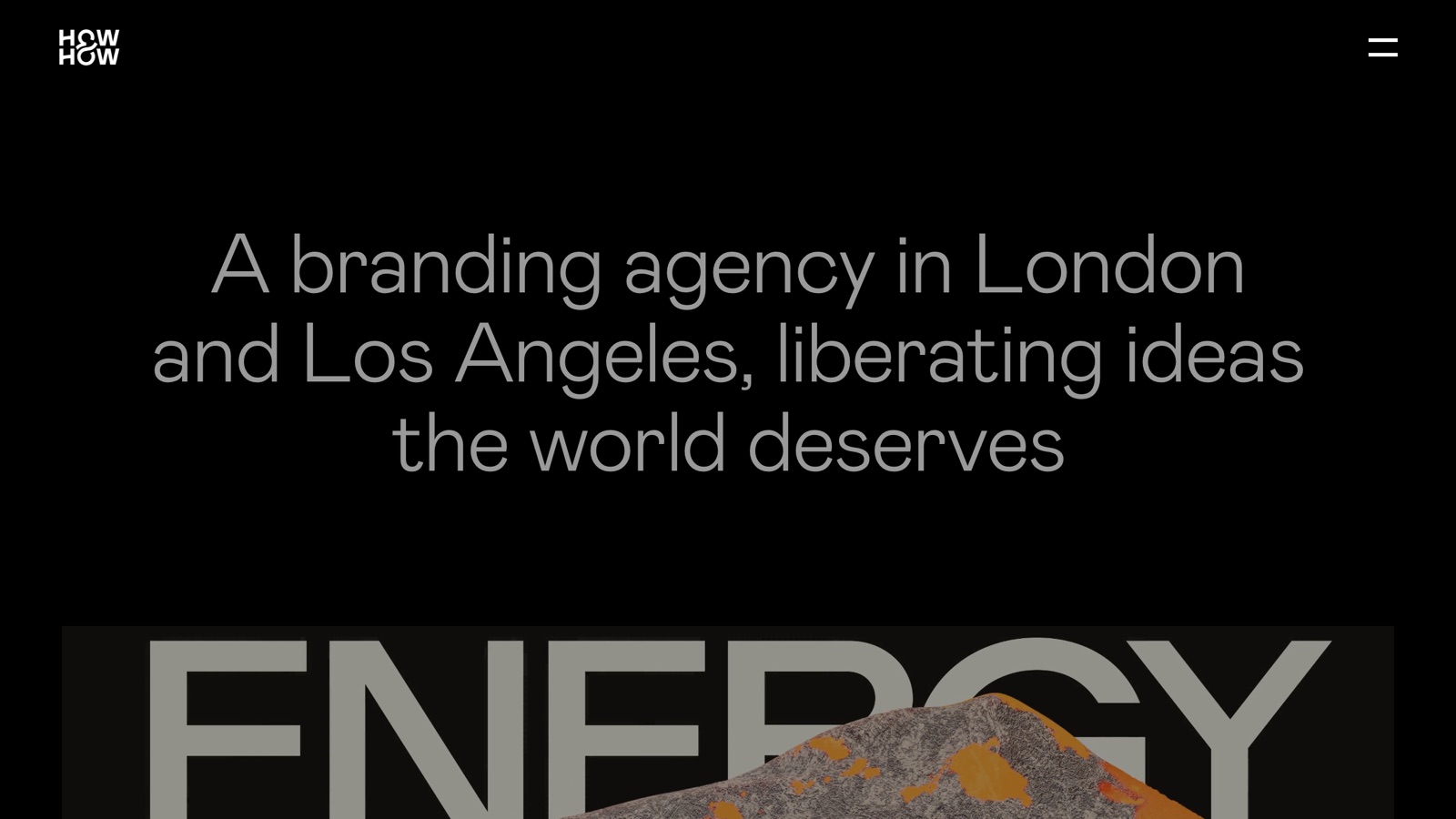
Founded in 2020 and already carrying B2B software proof that older studios lack: Hotjar, Sauce Labs, Veriff, Big Cartel, Ideogram, Pachama. Note the domain, howandhow.co does not resolve and the studio sits at how.studio.
- Best for: growth-stage B2B software brands that want more visual personality than the category norm without losing enterprise credibility
- Clients they name: Hotjar, Big Cartel, Ideogram, Sauce Labs, Veriff, Pachama, Hometree, Chester Zoo
- Pricing: per project, undisclosed
- Why they stand out: identity work for testing infrastructure and identity verification companies that still has illustration and character in it, which is rare in categories that default to blue gradients
- Worth knowing: a young studio with a small footprint across three cities, so there is no long track record of supporting a brand through several years of change after launch, and no published enterprise-scale rollout to point at.
More on How&How
| Best for | Growth-stage B2B software wanting visual personality |
|---|---|
| Scale | Independent studio |
| Where they are | London, Los Angeles |
| Named clients | Hotjar, Big Cartel, Ideogram, Sauce Labs, Veriff, Pachama, Hometree, Chester Zoo |
| Pricing | per project, undisclosed |
How&How is a younger studio, founded in 2020, working from London and Los Angeles across tech, climate and mission-driven brands. For a B2B buyer the appeal is verbal and visual identity with a strong point of view; the caution is a shorter enterprise track record than the consultancies lower down this list.
8. Metalab
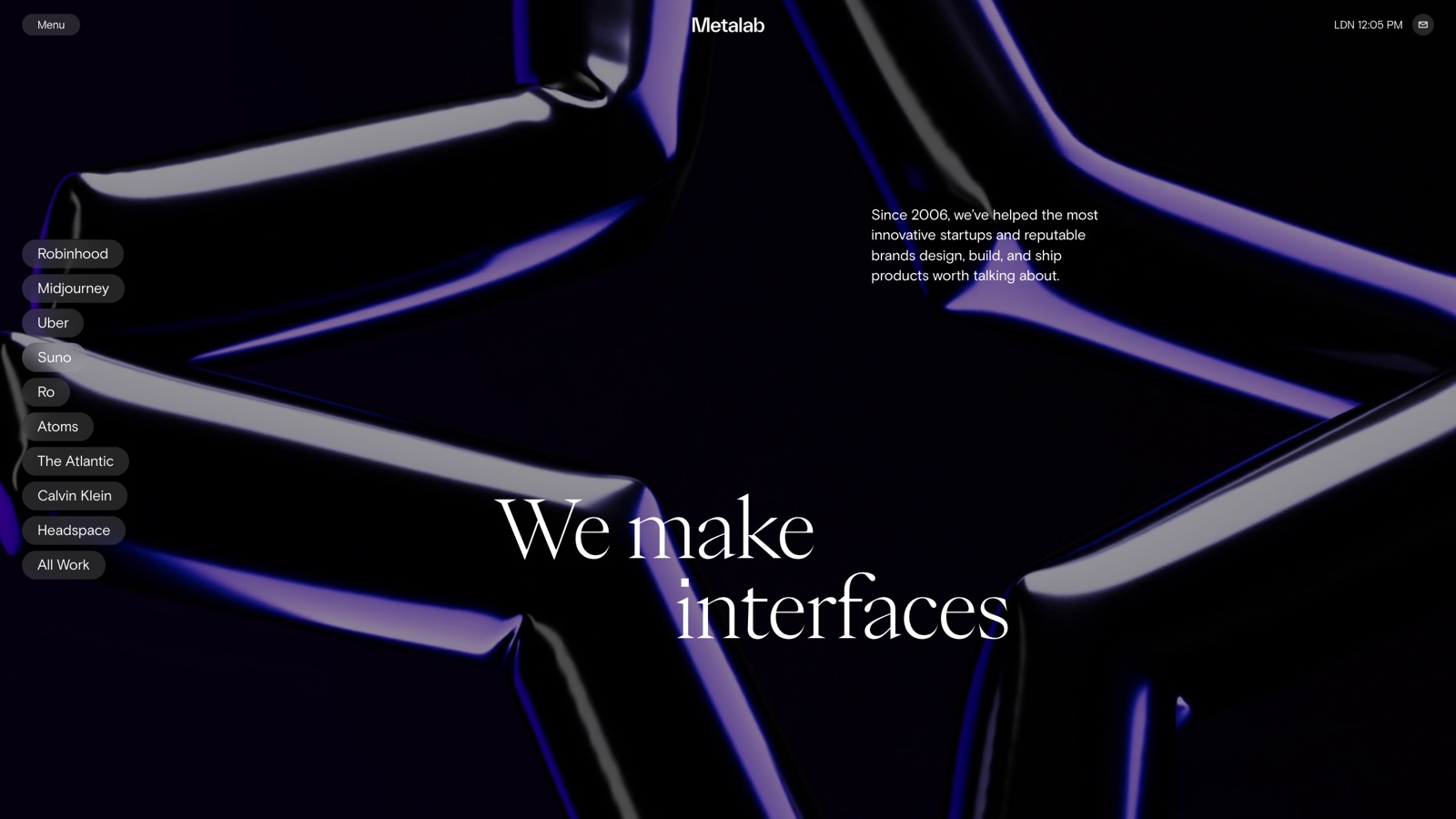
Metalab has been designing software interfaces since 2006 and the current roster is a map of where B2B software is going: Slack, Loom, Webflow, Atlassian, Docusign, Expensify, Addepar, Together AI, Crusoe AI, Windsurf. Two corrections for anyone copying from other lists, the site spells it Metalab rather than MetaLab, and metalab.co now redirects to metalab.com.
- Best for: B2B software companies where the product experience is the brand and the marketing layer follows it
- Clients they name: Slack, Loom, Webflow, Atlassian, Docusign, Expensify, Addepar, NerdWallet, Midjourney, Uber, Coinbase, Robinhood, Nubank, Wealthsimple, Crusoe AI, Windsurf, Together AI
- Pricing: per project, undisclosed
- Why they stand out: two decades of interface work for software companies means they understand how a brand actually degrades inside a dense product UI, which is where most B2B identity systems break first
- Worth knowing: brand is a secondary capability here, tagged on a handful of case studies rather than the core offer. A full identity system with naming, print applications and offline expression is outside the centre of what they do. The team is fully distributed with no client-facing studio address published anywhere.
More on Metalab
| Best for | Product-led software companies where the UI is the brand |
|---|---|
| Scale | Large independent |
| Where they are | Distributed, no office published |
| Named clients | Slack, Loom, Webflow, Atlassian, Docusign, Expensify, Addepar, NerdWallet, Midjourney, Uber, Coinbase, Robinhood, Nubank, Wealthsimple, Crusoe AI, Windsurf, Together AI |
| Pricing | per project, undisclosed |
The positioning line on the site is that they make interfaces, and the published work backs it: product and interface design from startup through Fortune 500, with brand design appearing alongside rather than in front.
Engagements are product-shaped, with design teams embedded against a product roadmap rather than a launch date, and no single time zone to align around given the distributed team.
Hire them if the highest-leverage brand surface you own is the logged-in product. Do not hire them if you need a corporate identity system, event and print applications, or a partner your CFO can visit.
9. Code and Theory
The financial services and regulated-sector roster here is the strongest on this list: JPMorganChase, T. Rowe Price, TIAA, Lazard Asset Management, Apollo Global Management, Baron Capital, Qualcomm, Thomson Reuters, Pfizer, Sutter Health, ConEdison. If your brand problem includes a compliance department, this is a firm that has been through that door repeatedly.
- Best for: enterprise financial services, healthcare and industrial brands that need creative and engineering delivered as one programme
- Clients they name: JPMorganChase, T. Rowe Price, TIAA, Lazard Asset Management, Apollo Global Management, Qualcomm, Amazon Ads, Microsoft, Thomson Reuters, Pfizer, Sutter Health, ConEdison, Polestar, Volvo Trucks, NFL, Marriott
- Pricing: per project, undisclosed
- Why they stand out: the offer pairs brand with CMS replatforming, design systems and data work, which suits a large B2B organisation whose real problem is that the brand and the technology stack cannot be separated
- Worth knowing: two structural facts a B2B buyer should price in. Ownership sits with Stagwell, with six sibling agencies in the same network, so a brief can be routed sideways. And headcount of roughly 800 to 1000 spans New York, Manila and Bengaluru, with delivery frequently offshored, which matters if you have data residency or vendor-location requirements in your procurement process. Ask where the work will physically be done before you sign.
More on Code and Theory
| Best for | Regulated enterprises needing brand plus engineering |
|---|---|
| Scale | Network-owned (Stagwell) |
| Where they are | New York, Manila, Bengaluru |
| Named clients | JPMorganChase, T. Rowe Price, TIAA, Lazard Asset Management, Apollo Global Management, Qualcomm, Amazon Ads, Microsoft, Thomson Reuters, Pfizer, Sutter Health, ConEdison, Polestar, Volvo Trucks, NFL, Marriott |
| Pricing | per project, undisclosed |
The group describes itself as half creativity and half engineering, with capabilities spanning integrated marketing and branding, product strategy, business consulting, AI-enabled transformation, CMS replatforming and design systems.
Engagements are enterprise-scale and multi-year in shape. The senior people who pitch are unlikely to be the people who deliver at this size, which is normal at network scale but should be surfaced in the contract rather than discovered in month three.
Hire them if you are a large regulated organisation that needs brand, content and platform moved together. Do not hire them if you are spending below enterprise level, if you need the founders on your account, or if your compliance team restricts where your assets and data can be handled.
10. Moving Brands
The recent B2B run here is the most current on this list: Vanta, Asana, Gong, Eppo, Globalization Partners, Evisort, Spring Health, Metropolis, NYU Langone Health. Security compliance, revenue intelligence, experimentation and employer of record, which is about as specific a B2B spread as you will find.
- Best for: technology-led B2B companies scaling from growth stage into enterprise sales and needing a brand that can carry both audiences
- Clients they name: Vanta, Asana, Gong, Eppo, Globalization Partners, Evisort, Rula, Spring Health, Metropolis, NYU Langone Health, Google, Netflix, BBC, Microsoft Advertising, United Nations, TikTok for Business, IBM iX, Egon Zehnder
- Pricing: per project, undisclosed
- Why they stand out: identity systems built for organisations in motion, with brand, product and campaign under one roof, and a client list showing they keep winning current-generation B2B software rather than living off legacy work
- Worth knowing: the site publishes no studio cities, no headcount and no engagement sizes, and the contact page routes through two regions only. The logo wall also mixes fresh work with identity projects over a decade old, so you cannot tell from the site which team would staff you or whether the famous names reflect who is there now. Make that the first question on the call.
More on Moving Brands
| Best for | Technology brands scaling into enterprise sales |
|---|---|
| Scale | Large independent |
| Where they are | Not published, North America and Europe contacts |
| Named clients | Vanta, Asana, Gong, Eppo, Globalization Partners, Evisort, Rula, Spring Health, Metropolis, NYU Langone Health, Google, Netflix, BBC, Microsoft Advertising, United Nations, TikTok for Business, IBM iX, Egon Zehnder |
| Pricing | per project, undisclosed |
An independent global design studio working across strategy, brand identity, digital and product design, and campaign work, with a long history in technology and institutional branding.
The opacity about locations and size is a deliberate positioning choice, and it means the qualification burden sits on you. Ask for the team sheet, the time zones and the named creative lead in writing.
Hire them if you want a brand system designed for a company that will not look the same in three years. Do not hire them if you need to know exactly who and where your team is before you commit, since the site will not tell you.
11. Instrument
Instrument publishes ServiceNow, Stripe, Salesforce, Microsoft and Google alongside the consumer names, and describes itself around designers who code and developers who design. At 350-plus people it is the largest independent-feeling operation on this list that is not actually independent.
- Best for: large technology brands running brand, product and marketing as one connected programme
- Clients they name: ServiceNow, Stripe, Salesforce, Microsoft, Google, Nike, Oura, Electronic Arts, Netflix, Spotify, Pinterest, Uber, Marriott, Sonos, PayPal, NBA
- Pricing: per project, undisclosed
- Why they stand out: three service lines under one roof with strategy and craft in the same room, which removes the handoff between the team that decides the brand and the team that builds the thing carrying it
- Worth knowing: Stagwell completed its buyout in January 2022, so this is holding-company scale with network process, network staffing and network pricing, and Instrument’s own about page describes drawing on specialists across that network. An identity-only project or an early-stage company will struggle to hold senior attention here, and no minimum engagement size is published anywhere.
More on Instrument
| Best for | Brand, product and marketing as one programme |
|---|---|
| Scale | Network-owned (Stagwell) |
| Where they are | Portland, New York, remote |
| Named clients | ServiceNow, Stripe, Salesforce, Microsoft, Google, Nike, Oura, Electronic Arts, Netflix, Spotify, Pinterest, Uber, Marriott, Sonos, PayPal, NBA |
| Pricing | per project, undisclosed |
More than sixteen years in operation, offices in Portland and New York plus remote, and a leadership team the site names in full. Service lines are Brand, Marketing and Product.
Engagements are large and cross-disciplinary. The value proposition is that you do not have to coordinate three vendors, which is real, and the cost is that you are inside a network rather than a studio.
Hire them if your programme is big enough to need brand, campaign and product moving together. Do not hire them if your project is a standalone identity, where a smaller specialist further up this list will give you more senior time for less money.
12. AREA 17
The B2B and institutional side of AREA 17 gets overlooked because the luxury clients are louder: American Express, Getty, the International Energy Agency, the Consumer Technology Association, the National Academies of Sciences, plus OpenAI and ElevenLabs. They treat the identity and the digital product that carries it as a single engagement, which is a structural choice worth understanding before you brief them.
- Best for: organisations where the brand lives primarily on a large, complex website or platform and cannot be separated from it
- Clients they name: OpenAI, ElevenLabs, American Express, The New York Times, Getty, Harvard University Press, Consumer Technology Association, International Energy Agency, National Academies of Sciences, Engineering, and Medicine, Fondation Cartier, Saint Laurent, Balenciaga, Estée Lauder, Accor, Pentagram
- Pricing: per project, undisclosed
- Why they stand out: brand and engineering are one team, and the published work consistently pairs identity with a substantial build, which is the right shape for an information-heavy B2B organisation
- Worth knowing: the coupling is not optional in practice. Every case they publish pairs identity with a website or product engagement, so a standalone identity system with no digital delivery is not the shape of client they take. Two offices, Brooklyn and Paris, and no pricing published.
More on AREA 17
| Best for | Brands that live on a large, complex digital platform |
|---|---|
| Scale | Large independent |
| Where they are | Brooklyn, Paris |
| Named clients | OpenAI, ElevenLabs, American Express, The New York Times, Getty, Harvard University Press, Consumer Technology Association, International Energy Agency, National Academies of Sciences, Engineering, and Medicine, Fondation Cartier, Saint Laurent, Balenciaga, Estée Lauder, Accor, Pentagram |
| Pricing | per project, undisclosed |
Integrated brand, digital experience and technology under one roof, with published work concentrated in cultural institutions, luxury houses and well-funded technology companies.
The engagement shape is a long, technical delivery with brand strategy at the front. Scope and timelines signal enterprise, and there is no quick-turn identity option.
Hire them if your website is your main brand surface and it is complex. Do not hire them if you have an internal engineering team that will build the site anyway, since you would be paying for capability you will not use.
13. Koto
Koto’s B2B credentials sit inside a mostly consumer-famous roster: Workday, Microsoft Copilot, Amazon, Coinbase and Deezer alongside Lyft, WhatsApp and Call of Duty. Update your bookmarks, the studio moved from koto.studio to koto.com.
- Best for: technology brands with a consumer-facing surface and an enterprise sales motion that both need to work from one system
- Clients they name: Lyft, Amazon, Microsoft Copilot, Coinbase, WhatsApp, Washington Post, Workday, GoFundMe, Tripadvisor, Deezer, Call of Duty
- Pricing: per project, undisclosed
- Why they stand out: five offices across Los Angeles, New York, London, Berlin and Sydney give real multi-market coverage at studio scale rather than network scale, which is uncommon
- Worth knowing: the published work leans toward large platform brands with consumer visibility, so a mid-market B2B company in an unglamorous category is competing for attention against much bigger and more visible projects. Nothing in the roster they publish points to health systems, insurers or industrials either, so a regulated buyer has no comparable case to judge fit against.
More on Koto
| Best for | Technology brands with consumer and enterprise audiences |
|---|---|
| Scale | Large independent |
| Where they are | Los Angeles, New York, London, Berlin, Sydney |
| Named clients | Lyft, Amazon, Microsoft Copilot, Coinbase, WhatsApp, Washington Post, Workday, GoFundMe, Tripadvisor, Deezer, Call of Duty |
| Pricing | per project, undisclosed |
Five studios and a published client list that runs from Lyft, WhatsApp and Call of Duty to Workday, Microsoft Copilot and Coinbase, which is an unusually wide span to hold together inside one house style.
Engagements are full identity programmes sized for companies with meaningful marketing organisations behind them, and the multi-market footprint is the reason to pick them over a single-city studio.
Hire them if you need reach across markets and a system with visual confidence. Do not hire them if your category needs sober, compliance-heavy expression, where the consultancies below will be more at home.
14. Siegel+Gale
The regulated-sector proof starts here and it is substantial: CVS Health, Bristol Myers Squibb, HPE, Micron, the U.S. Army, H&R Block. Siegel+Gale publishes its whole position as simplicity wins, which is a promise aimed squarely at organisations whose complexity has become the brand problem.
- Best for: large healthcare, pharmaceutical, semiconductor and public-sector organisations whose brand has become impossible for customers to understand
- Clients they name: CVS Health, Bristol Myers Squibb, HPE, Micron, U.S. Army, H&R Block
- Pricing: per project, undisclosed
- Why they stand out: they sell simplification as the deliverable, which is exactly right for a B2B organisation with sprawling product lines, inherited sub-brands and a naming system nobody can explain
- Worth knowing: every client they name is a very large, mostly regulated organisation, so there is no evidence on the site that a mid-market or growth-stage company is a fit. Seven offices means account and stakeholder structure around the work, and a firm selling simplicity is optimising for clarity rather than visual surprise, so if your problem is that your category looks identical this house will not be the one to break the pattern.
More on Siegel+Gale
| Best for | Complex healthcare, pharma and public-sector simplification |
|---|---|
| Scale | Global consultancy |
| Where they are | 7 offices |
| Named clients | CVS Health, Bristol Myers Squibb, HPE, Micron, U.S. Army, H&R Block |
| Pricing | per project, undisclosed |
The published position is simplicity, and the named clients are the shape of organisation that needs it: a national health and pharmacy business, a pharmaceutical group, an enterprise hardware company, a semiconductor manufacturer, a government service and a consumer tax business.
Work at that scale involves substantial stakeholder alignment across divisions, which is the point when the organisation itself is the thing that has become confusing, and it is also why nothing here moves at a startup pace.
Hire them if your organisation has become impossible for a customer to navigate. Do not hire them if you want a visually adventurous identity or a project delivered inside a quarter.
15. Prophet
Prophet is a growth consultancy that does brand work, and the B2B and financial services evidence is real: UBS, Invesco, Amova Asset Management, Supply Wisdom, Kalmar, Institutional Investor, Beazely. Sixteen offices across the US, Europe, the Gulf and Asia.
- Best for: enterprises where the brand decision is inseparable from a business strategy decision and needs to be made at board level
- Clients they name: UBS, Invesco, Supply Wisdom, Amova Asset Management, Kalmar, Institutional Investor, Beazely, AEG, Showmax, Save the Children, 20 Minuten
- Pricing: per project, undisclosed
- Why they stand out: service lines cover business strategy, organisation and culture alongside brand, which means they can carry the internal alignment work that kills most large B2B rebrands after the launch
- Worth knowing: this is a management consultancy, not a studio that makes things. The published work is board-level strategy, there is no fast-turnaround creative execution capability, and a company that needs identity design built and campaign assets produced will end up hiring a second partner for that. Assume the studio work goes elsewhere and price accordingly.
More on Prophet
| Best for | Board-level brand and growth strategy |
|---|---|
| Scale | Global consultancy |
| Where they are | 16 offices across US, Europe, Gulf, Asia |
| Named clients | UBS, Invesco, Supply Wisdom, Amova Asset Management, Kalmar, Institutional Investor, Beazely, AEG, Showmax, Save the Children, 20 Minuten |
| Pricing | per project, undisclosed |
Named service lines are Brand Building, Marketing Excellence, Business Strategy, Experience and Innovation, and Organization and Culture, aimed at large enterprises across sixteen offices.
Engagements are scoped and priced for that audience, with research and stakeholder alignment front-loaded and visual output arriving late if at all.
Hire them if the hard part of your rebrand is convincing your own executive team and your board. Do not hire them if you already have alignment and need execution, where almost everyone above them on this list will serve you better.
16. Lippincott
Lippincott is the firm B2B companies call for corporate events rather than marketing campaigns: mergers, spin-offs, demergers and name changes. The published roster reflects it, with Nokia, DuPont, Danaher, DigiKey and Oportun sitting alongside NYC Pride.
- Best for: industrial and financial companies going through a merger, a spin-off or a corporate name change where the brand has to be built and defended simultaneously
- Clients they name: Nokia, DuPont, Danaher, DigiKey, Oportun, NYC Pride
- Pricing: per project, undisclosed
- Why they stand out: deep experience in transaction-driven branding, where the deadline is a regulatory filing rather than a marketing calendar and the audience includes analysts and employees as much as customers
- Worth knowing: the practice is shaped around corporate-scale events, so a growth-stage B2B company with a straightforward identity project is buying a machine built for a different job, at a price built for that job. Nine offices and no published pricing.
More on Lippincott
| Best for | Mergers, spin-offs and corporate name changes |
|---|---|
| Scale | Global consultancy |
| Where they are | 9 offices |
| Named clients | Nokia, DuPont, Danaher, DigiKey, Oportun, NYC Pride |
| Pricing | per project, undisclosed |
The visible strength is the branding work that surrounds mergers and separations, which is a specific competence: standing up a new corporate identity against a transaction timetable while the old one is still trading.
That kind of work involves heavy stakeholder management, communications planning and phased rollout across markets and business units, spread across nine offices.
Hire them if a corporate event is forcing your brand decision. Do not hire them if your driver is marketing performance rather than corporate structure.
Every studio in one table
| Studio | Best for | Scale | Where they are |
|---|---|---|---|
| Moonb | Continuous video, motion and design production for an existing B2B brand | Embedded creative team | Remote |
| Focus Lab | B2B SaaS rebrands around a category shift or a raise | Independent specialist | Not published |
| Athletics | Enterprise technology identity, sonic and motion systems | Independent studio | Brooklyn, New York |
| Ramotion | Brand plus product design and design systems | Independent studio | San Francisco, Los Angeles, New York |
| Motto | Founder-led positioning and category definition | Small senior studio | New York, London |
| Order | Systematic identity with custom typography | Small studio | Brooklyn, Miami |
| How&How | Growth-stage B2B software wanting visual personality | Independent studio | London, Los Angeles |
| Metalab | Product-led software companies where the UI is the brand | Large independent | Distributed, no office published |
| Code and Theory | Regulated enterprises needing brand plus engineering | Network-owned (Stagwell) | New York, Manila, Bengaluru |
| Moving Brands | Technology brands scaling into enterprise sales | Large independent | Not published, North America and Europe contacts |
| Instrument | Brand, product and marketing as one programme | Network-owned (Stagwell) | Portland, New York, remote |
| AREA 17 | Brands that live on a large, complex digital platform | Large independent | Brooklyn, Paris |
| Koto | Technology brands with consumer and enterprise audiences | Large independent | Los Angeles, New York, London, Berlin, Sydney |
| Siegel+Gale | Complex healthcare, pharma and public-sector simplification | Global consultancy | 7 offices |
| Prophet | Board-level brand and growth strategy | Global consultancy | 16 offices across US, Europe, Gulf, Asia |
| Lippincott | Mergers, spin-offs and corporate name changes | Global consultancy | 9 offices |
How I would recommend choosing
Start by writing down what forced the decision, because that single sentence eliminates most of this list. Anyone weighing agencies more broadly should start from the general best branding agencies list. If a merger, a spin-off or a corporate name change is driving it, you are choosing between Lippincott, Siegel+Gale and Prophet, and the rest of the page is not relevant to you no matter how good the work looks. If a competitor just relaunched and your category suddenly looks dated, you want a studio with visual ambition and B2B proof, which puts Athletics, Order, How&How and Koto in front. If your sales team cannot explain what you do, the problem is positioning and Motto or Focus Lab will get further than any identity studio. If the brand keeps breaking inside the product, Metalab and Ramotion are the only two on this list built for that.
Then apply the test I use on every shortlist call, which is to ask for the least glamorous artefact from a past project. The master sales deck template. The partner co-branding rules. The system documentation a new hire would read. Every firm can show a launch film, and almost none of those films tell you whether the system holds up in the hands of a regional sales manager in month nine. Studios that have done serious B2B work will produce these files without hesitation because they are proud of them. Studios that have not will change the subject to the case study video.
Be specific about the compliance and delivery questions before you fall in love with anyone. Ask where the work will physically be produced, which entity holds the contract, whether any part of delivery is offshored, and who owns the source files and the typeface licence at the end. For Code and Theory the answer involves Manila and Bengaluru, and for both Instrument and Code and Theory the answer involves Stagwell, which may be completely fine for you and may be disqualifying if your procurement team has vendor-location rules. Finding this out in the contract phase after four weeks of chemistry meetings is a waste of everybody’s quarter.
Separate the two purchases in your head from the beginning: building the brand and running the brand. They need different partners, different contract shapes and different money, and the mistake I see repeatedly is a company spending its entire annual creative allocation on the build and then having nothing left to produce the work that carries it into market. A system nobody has the capacity to apply is an expensive PDF. Whether you solve the second half with an in-house team, a production partner or a retained studio, decide it before you sign the first contract rather than discovering the gap three weeks after launch.
Finally, weigh senior availability more heavily than reputation. Several of the strongest firms here are small enough that the founders are the product, so the real question is not whether they can do the work but whether they can start when you need to start and stay on your account when a larger client calls. At the network end the opposite risk applies, where availability is never a problem and the people who impressed you in the pitch are not the people who show up on Monday. Ask for named individuals with named percentages of their time, get it written into the statement of work, and treat any reluctance to commit to that as the answer.
Frequently asked questions
Evidence that their systems survive B2B environments. That means sales deck templates that hold up when a rep rebuilds them, partner co-branding rules, trade show and booth applications, and documentation dense enough for a product marketing team to use without asking. Consumer identity is designed for controlled surfaces like packaging and paid media. B2B identity has to work in procurement portals, RFP responses and slides shared over bad connections.
Almost none of these firms publish pricing, so treat any figure you see in a listicle as invented. The useful signal is the shape of the firm. Small specialist studios of six to twenty people price per project and quote after a scoping call. Global consultancies price multi-phase programmes with research, stakeholder alignment and multi-market rollout built in, which is a different order of magnitude. Ask for a scoped range at the first call rather than after the pitch.
A specialist arrives fluent in your category, your funnel and your buyer, which shortens discovery and reduces the risk of a system that looks good and sells badly. A generalist brings a visual point of view from outside your category, which is worth more when every competitor has converged on the same look. Pick the specialist if positioning is unclear, and the generalist if positioning is settled and differentiation is the problem.