Graphic Design Agency: A Buyer's Field Guide
What a graphic design agency delivers, how pricing really works, and when a different partner model fits better. A field guide from a studio founder.

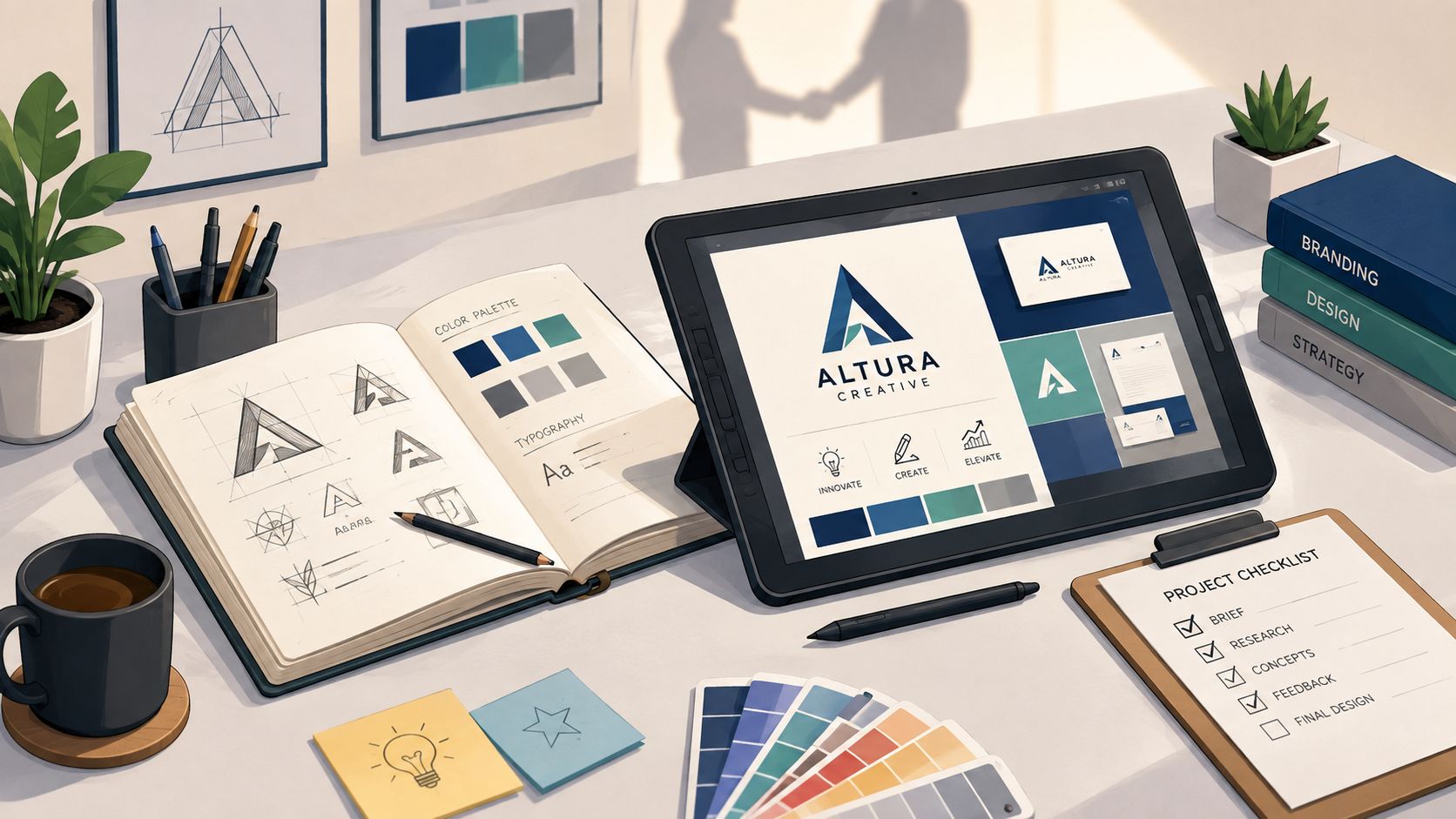
A graphic design agency is a specialized firm you hire for defined, high-stakes visual work such as a rebrand, a launch campaign, or a new identity system, usually priced per project or on retainer. It is the right choice when the work has a clear finish line, and usually the wrong one when you need a steady stream of weekly creative output.
I run Moonb, a creative studio, and a fair share of the companies that reach us have just come out of an agency engagement that fit badly. One enterprise SaaS client arrived with a genuinely beautiful rebrand and no way to produce the sales decks, ad variants, and event graphics the new identity demanded every month; the agency that built the system quoted a change order for each new asset. The system was good. The model was wrong. This guide is about matching the model to the job before you sign anything.
When hiring a graphic design agency makes sense
Hire one when the work has a clear end point, a rebrand, say, or the visual platform for a launch. Skip it when what you actually need is daily or weekly asset production, because the agency model adds coordination layers that slow routine output and raise its cost.
That rule holds because agency work is strongest when strategy and craft have to land together. If your team lacks senior design leadership, if the brand feels stale, or if a major milestone needs a polished visual system, an agency can bring structure fast. If you need a few social graphics a week, a constant flow of ad variations, or rapid-turn production, you are paying for machinery you will barely use. The shorthand I give people on calls: one big strategic job with a clear outcome and a defined timeline points to an agency or boutique studio. Ongoing volume and constant tweaks point elsewhere; our comparison of in-house teams versus outside partners walks through that fork in detail.
It also helps to know how the category has shifted. The old studio model centered on print identity and advertising. The modern one covers websites, apps, paid social, product interfaces, motion, and content systems. That is why I tell buyers to read the actual deliverables list instead of the label on the homepage; two firms with the same title can sell completely different work. For a broader buying angle on internal help versus outside help, this guide on how to decide between selling with or without an agency is a helpful adjacent read.
What a graphic design agency actually delivers
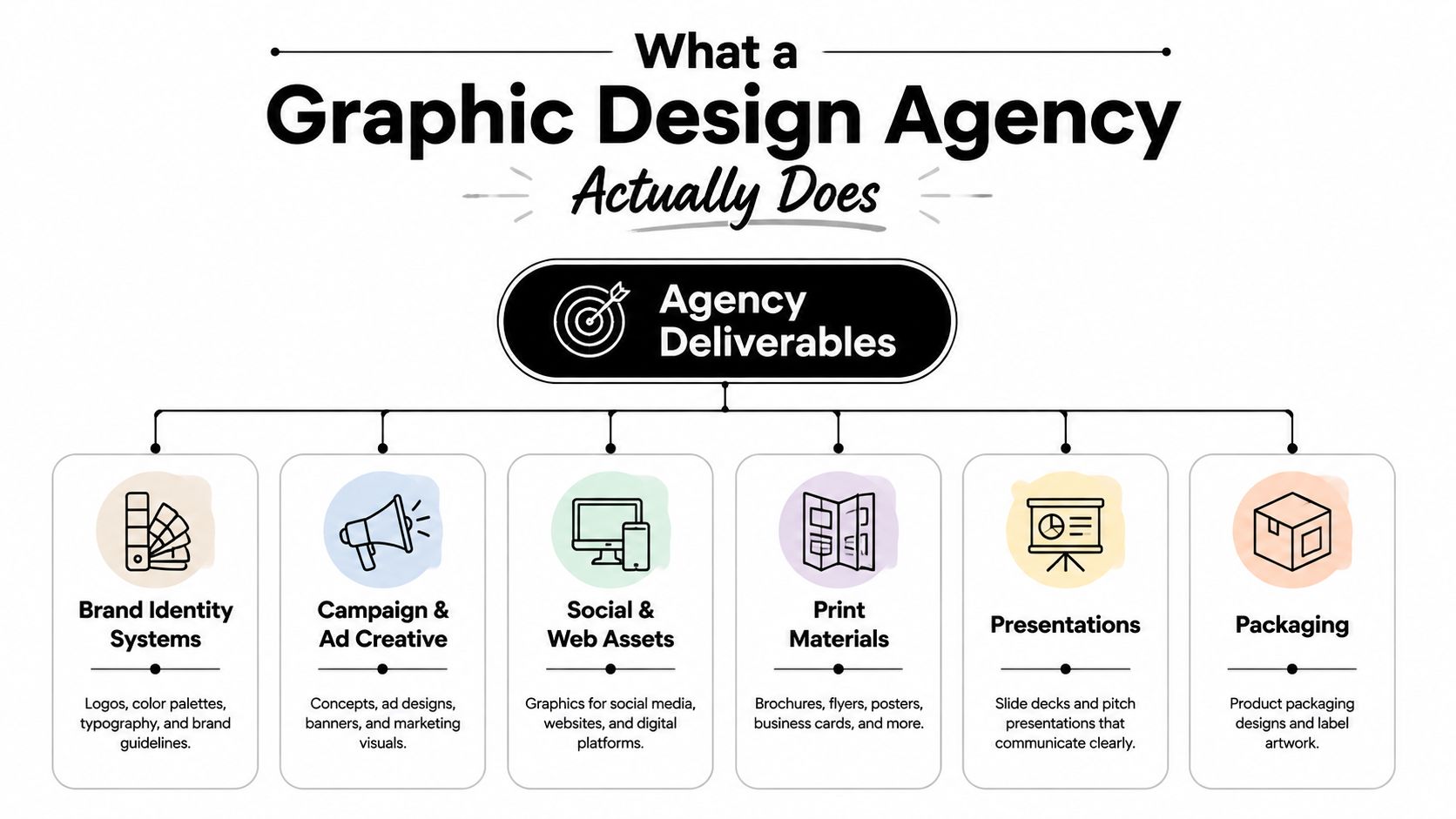
Judge an agency by what your team can still use six months after handoff. The lasting value is the set of files, templates, and guidelines that let different people stay consistent without starting over each time. Pretty finals age fast; usable systems do not.
Brand identity systems
This is the foundation. Buyers usually get a logo set, typography choices, a color palette, usage rules, and a guidelines file that explains what stays fixed and what can flex. If you are building or refreshing a brand, the value goes well past the logo. The deliverable is a system that keeps logo, type, and color coherent across teams and channels.
Before you brief this kind of work, it helps to see what a usable guidelines file actually contains. Adobe’s live session on building brand guidelines is a practical walkthrough of the deliverable you should be asking for.
Campaign and ad creative
Agencies also build the visual layer around launches, promotions, and awareness work. That can mean concept directions, key visuals, ad units, display variants, and campaign templates. Strong work leaves you with a repeatable visual idea, not a stack of attractive one-off files. The failure mode I see most often here: a gorgeous key visual that nobody can adapt to a 300x250 display unit without the whole idea collapsing.
Social and web assets
Many teams need the most help here. A design partner may create landing page layouts, email modules, social templates, paid social cutdowns, and hero graphics. For ongoing volume, some teams use a dedicated creative team or a productized monthly design service; in those setups, get clarity on how many active requests run at once and who owns quality control. Others keep channel output internal and invest in brand guidelines their whole team can actually use so internal and external designers stay aligned. This external walkthrough on how to create brand guidelines teams use covers the same ground from a tooling angle.
Print, presentations, and packaging
The work extends well past screens. Agencies handle brochures, one-pagers, sales decks, trade show graphics, signage, and packaging. If your brand shows up in physical and digital environments, the job is keeping the same visual logic intact across all of them. Some of that physical work sits with specialists rather than generalist design firms; if a trade show booth is on your roadmap, exhibition stand designers are their own category, covering the structural and spatial side that most graphic design shops do not touch.
Whatever the surface, ask one plain question in every pitch: what gets delivered, and how will my team use it after handoff? The answer tells you more than the label does.
Five types of creative partners, compared
There is no single best partner, only the best fit for your volume, your complexity, and your way of working. The table makes the trade-offs plain.
| Partner type | Best for | How you pay | Engagement length | Who you talk to | Strategic input | Speed | Weak spot |
|---|---|---|---|---|---|---|---|
| Traditional agency | One-off strategic work like a rebrand or campaign platform | Project fee or retainer | Defined project or campaign window | Account lead, strategist, designer, sometimes producer | Strong | Usually slower because of layers and approvals | Can be expensive and can hide the real maker behind the pitch team |
| Boutique studio | Senior creative direction plus steady output | Project fee or ongoing agreement | Project plus ongoing support | Directly with the creative lead | Strong, usually hands-on | Faster than large agencies | Smaller bench, so capacity can get tight |
| Productized monthly design service | High-volume, low-complexity assets like ad resizes and social templates | Set recurring cost | Ongoing queue-based work | Usually a project manager or creative lead | Light to moderate | Fast for routine tasks | Limited nuance, can drift toward generic output |
| Freelancer | A single deliverable with a tight scope | Hourly or project fee | Short project | Directly with the designer | Varies by person | Fast if they have room | One-person capacity and no backup if they get booked or sick |
| In-house | Constant volume and deep internal coordination needs | Salary plus benefits and tools | Ongoing employment | Directly with the designer or manager | Strong brand context | Fast once hired | Slow to hire and a fixed cost when work dips |
The hardest call is usually agency versus studio. Agencies suit bigger strategic work and more stakeholders. Studios suit buyers who want a senior creative director close to the work and a steadier rhythm of output, especially when the brand system already exists and the main job is execution. And the label matters less than the operating model underneath it: a retainer can still behave like a project shop, and a monthly service can still feel strategic if a real creative lead sits inside it. When you compare named vendors, cross-check how they handle handoff and volume, not just portfolio polish; our piece on creative as a service covers how the newer models actually operate.
How to choose the right design partner
A clear brief saves time before the first vendor call. Write down the scope, the internal approvers, and what success means in plain language. If your team cannot say whether the goal is a rebrand, a conversion lift, or a cleaner sales process, the partner will spend the opening phase doing strategy that should have happened inside your company, and you will pay for it. If you want to sharpen the document before outreach, use this guide on how to write a creative brief.
Review portfolios for fit, not just polish. A partner with strong consumer work may still miss on technical B2B products, regulated industries, or multi-channel launch systems. Case studies should show process, revision thinking, and how the team worked within constraints, not only final visuals. The partners worth hiring notice problems everyone else has stopped seeing; Tony Fadell’s talk on that habit is a useful calibration before you sit through pitch decks.
Ask who actually does the work, not just who sold it. That single question prevents most bad fits. You want to know whether the senior person in the pitch stays involved, who owns day-to-day design, and how communication runs once the project starts.
Then lock the operational details in writing. Revision terms, turnaround expectations, file handoff, and source file ownership should be set before kickoff, along with communication cadence and how scope changes get priced. When a vendor stays vague here, they are protecting themselves from missed deadlines and surprise work, and you are the one absorbing that uncertainty. A lightweight RFP should stay short: the problem, the deliverables, the deadlines, the audience, the brand constraints, and the stakeholders. Ask for team structure, one relevant case study, and a sample process instead of a glossy deck.
How graphic design pricing works
Pricing mostly reflects scope, seniority, and risk. A project that includes research, positioning, naming, a guidelines document, and rollout assets costs more than a logo and a color palette because the deliverable count is higher and the coordination load is heavier. Vague briefs produce padded estimates for the same reason; the vendor has to price the uncertainty you left in.
The mechanics are less mysterious than proposals make them look. AIGA’s guidance on pricing models for design firms lays out the standard practice: hourly work billed at agreed rates, reimbursable expenses tracked separately, travel reimbursed at cost, and other pass-through expenses marked up by a standard 20 percent. For the in-house comparison, the Bureau of Labor Statistics puts median pay for graphic designers at $62,960 per year as of 2025, before benefits, software, and management time. In any honest cost review, that loaded difference matters more than the headline salary.
| Pricing model | Best for | Risk for you | Key trade-off |
|---|---|---|---|
| Hourly billing | Undefined or evolving work | Medium to high | Flexible, but easy for scope to drift |
| Fixed project fee | Clear deliverables and deadlines | Medium | Predictable upfront, but changes can trigger extra cost |
| Retainer | Ongoing advisory or recurring production | Medium | Helps with continuity, but only if the scope is real |
| Value-based pricing | High-stakes strategic work | High if scope is unclear | Can reward impact, but requires trust and a strong brief |
The hidden costs are the ones buyers forget to list. Licensing, stock images, font usage, rush work, internal review time, and rework all move the total. I have watched a lower proposal become the expensive choice twice in one quarter, both times because half the work had to be redone. For a practical lens on brand work specifically, this guide on what branding really costs helps when you normalize proposals.
Red flags worth walking away from
A few warning signs show up again and again, and they are easy to miss when the portfolio looks strong and the first call goes well.
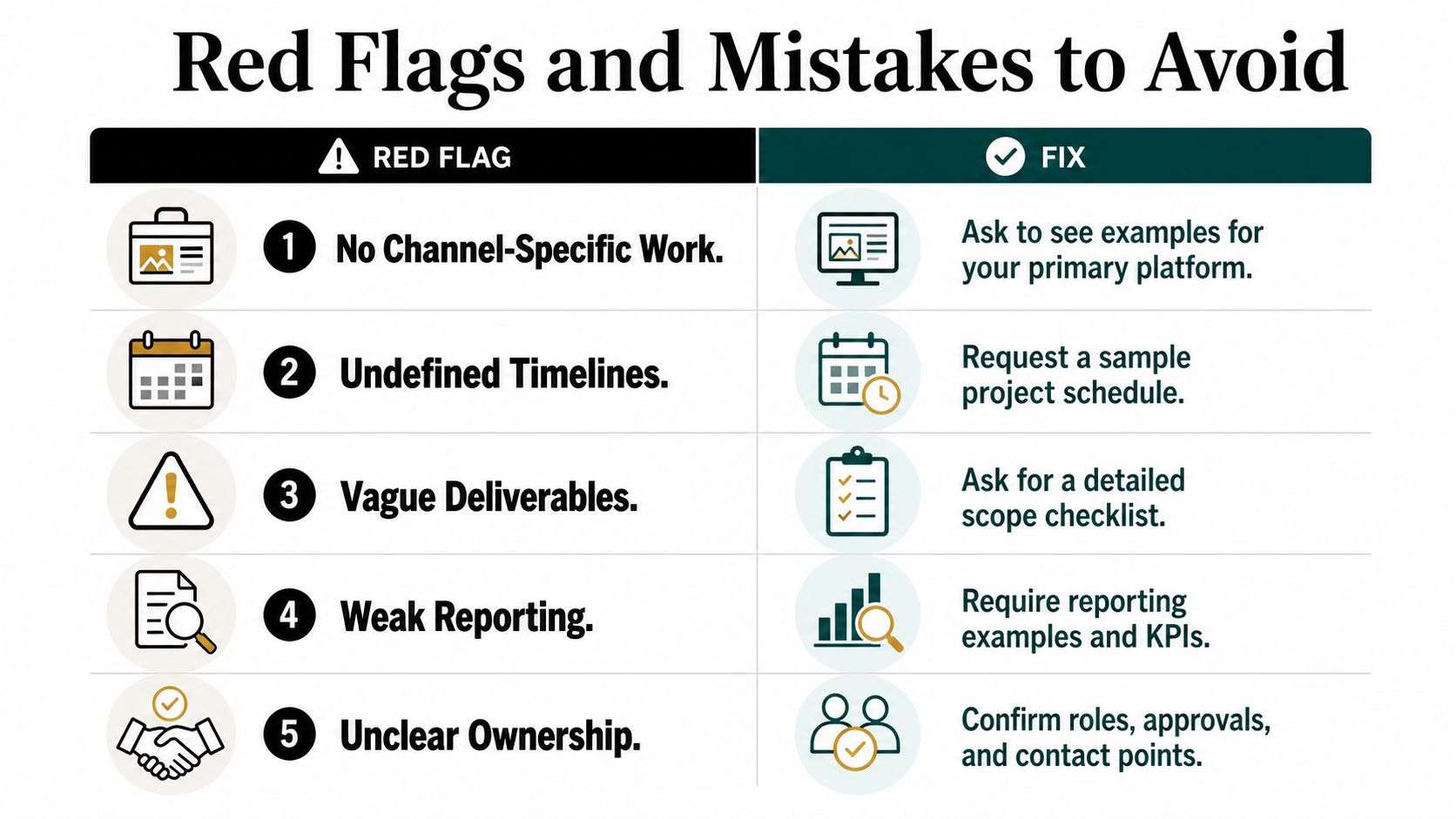
Vendors who only show final visuals are the first. Ask for the brief, the rough concepts, and the revision path; good teams can explain how the work got made. Second, no named team members. If nobody will tell you who does the work, assume the pitch team is not the delivery team, and ask for roles and seniority in writing. Third, agreeing to everything. A partner who never pushes back is overpromising; a strong team challenges a weak brief before it turns into paid revisions. Fourth, no change-order language, which means scope creep gets settled by whoever argues harder. And finally, missing file ownership terms: editable source files and IP transfer should be spelled out before kickoff, never assumed.
A charming sales call tells you nothing about revision discipline or stakeholder messiness. Cultural fit matters too, but you only see it later, in slower responses and mismatched expectations. Two moves protect you from most of this: run a small paid pilot before any large commitment, because one real asset tells you more than three polished proposal decks, and read up on the common branding mistakes other teams have already paid for.
If you are choosing now, shortlist on fit rather than hype. Start with the model that matches your volume and complexity, ask for a tightly scoped first job, and judge the partner on that one real deliverable. And if the honest answer is that your need is recurring rather than finish-line, price a dedicated creative team against the agency quotes before you commit; the comparison usually settles itself.
Frequently asked questions
Yes, and it is often the healthiest setup. Let the agency own the concentrated strategic work, the identity system or campaign platform, while your in-house designer owns daily production and brand policing. Put one person in charge of the handoff, share the same brand guidelines file, and agree early on who has final approval, or the two sides will quietly redo each other's work.
Three is usually enough, five is the ceiling. Past that, you are comparing pitch quality instead of work quality, and the evaluation itself starts eating the timeline. Pick three firms whose past work matches your industry and deliverable type, brief them identically, and weight the conversations about process and team structure more heavily than the decks.
Decide this before kickoff, not after delivery. Ask whether the agency offers a lighter ongoing arrangement for rollout support, how they price small follow-up requests, and who answers questions once the team rolls onto other accounts. Many buyers get a strong launch and then watch the system decay because nobody owned it; a named maintenance path in the contract prevents that.