How Much Does Branding Cost?
A founder's breakdown of what branding costs at each tier, why the range is so wide, and how to compare quotes so you buy the right scope instead of the thinnest one.

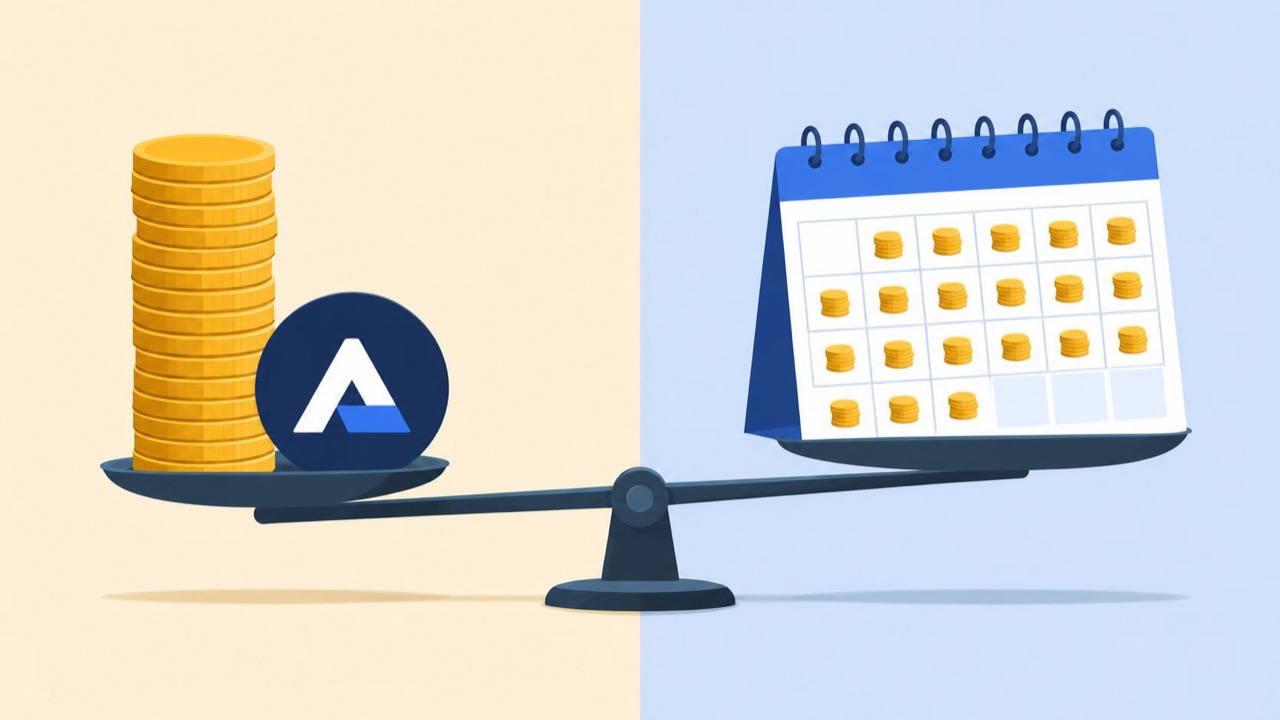
A full branding project usually costs between $10,000 and $60,000, a single freelance logo can be a few hundred dollars, and an enterprise identity system can pass $100,000. Those are the numbers I quote at Moonb and the ones I see when clients forward me proposals from other studios. The spread is that wide because “branding” describes very different amounts of work depending on who wrote the proposal.
Most of that money is senior time. The Bureau of Labor Statistics puts the median wage for an art director at about $53 an hour, or $111,040 a year, and a full brand build is hundreds of those hours, from early strategy through design and the rollout after. Graphic designers sit lower, at a median of $61,300 a year, which is part of why a junior-led logo job and a senior-led brand system can carry the same label and a 10x difference in price. Read a quote as hours of experienced people rather than one deliverable and the range stops looking random.
What branding actually covers beyond a logo
Branding is a system, and the logo is the part everyone points at. It is one piece of a larger set of decisions. A brand project can include any of these:
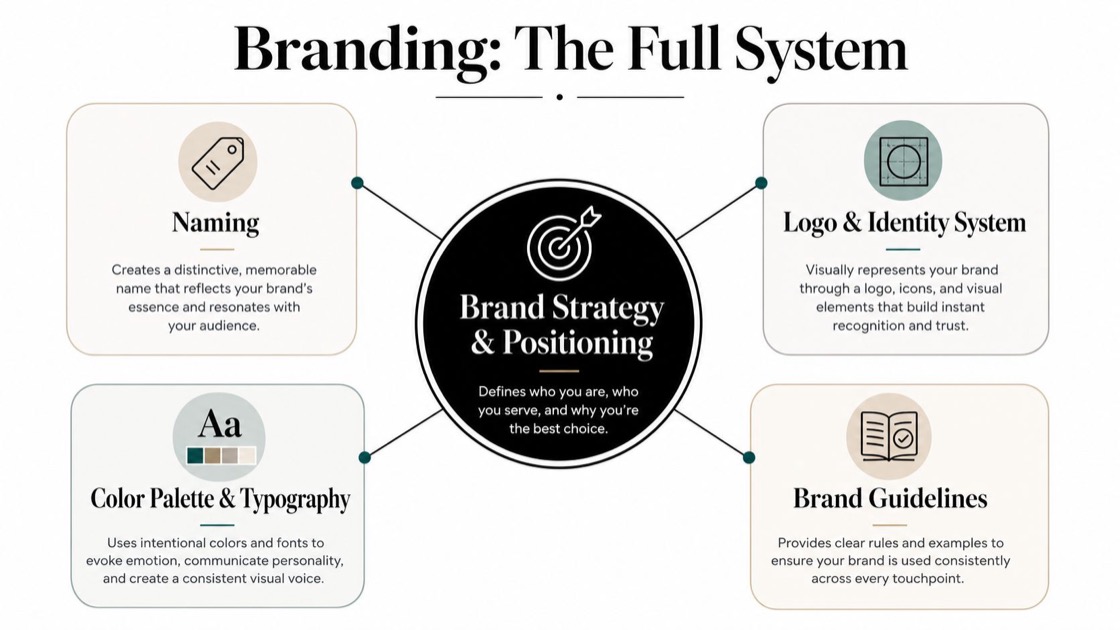
- Strategy and positioning: who the brand is for and why it wins
- Naming, when a company or product needs one
- The identity system: logo, wordmark, color, typography, secondary marks
- Voice and messaging, so the writing sounds like one company
- Guidelines that hold everything together once other people use the brand
- Applications: website, sales decks, social, packaging, motion
That is why the same word can describe a $600 template job and a $60,000 build. The label matches. The work does not.
If a quote does not say how the brand gets used after the logo file ships, it is only pricing a file.
The logo has to work on the website and inside every deck and screen that comes after. Once those surfaces are in scope, the work widens and the number climbs. The strategic layer under the visuals is where a real brand project separates from a design task, and brand positioning is usually the first line item that signals which one you are buying.
What you are actually paying for
Bring the same brief to four providers and you will get four different numbers, and the gap is rarely random. You are paying for scope and for seniority. A one-person freelancer and a senior-led studio price the same word differently, because one sells production and the other sells judgment.
Before you price a brand, it helps to see what the work is really trying to do. This TEDx talk on how to brand anything is a clear primer on the job you are paying for.
Here is roughly how the market breaks down, based on the quotes I write and the ones clients send me to check. These figures move with seniority and location, so treat them as typical rather than fixed.
| Provider type | What you are paying for | Typical range | Where it fits |
|---|---|---|---|
| DIY tools and template builders | Software plus your own time | Under $500 | A placeholder before you have traction |
| Freelancers and marketplaces | One person’s hours, quality varies | $500 to $8,000 | Small scope on a tight timeline |
| Independent studios | Senior hands on the work | $8,000 to $40,000 | Founders who need judgment |
| Brand agencies | A full team and a process | $40,000 to $150,000+ | Larger launches and rollouts |
| Enterprise firms | Deep research and many layers | Six figures and up | Complex, multi-market organizations |
| Embedded creative team | Ongoing output at a steady cadence | Scoped to the work | Brand work needed every week |
Match the provider to the work, or you will pay for process you do not need or underbuy the thinking that matters most. An embedded creative team, which is how I built Moonb, tends to sit between a one-off freelancer and a full agency, and it fits companies that need brand output on a regular rhythm rather than one big project followed by silence.
How each deliverable moves the number
The fastest way to read a quote is by what it includes, because the price should track the work.
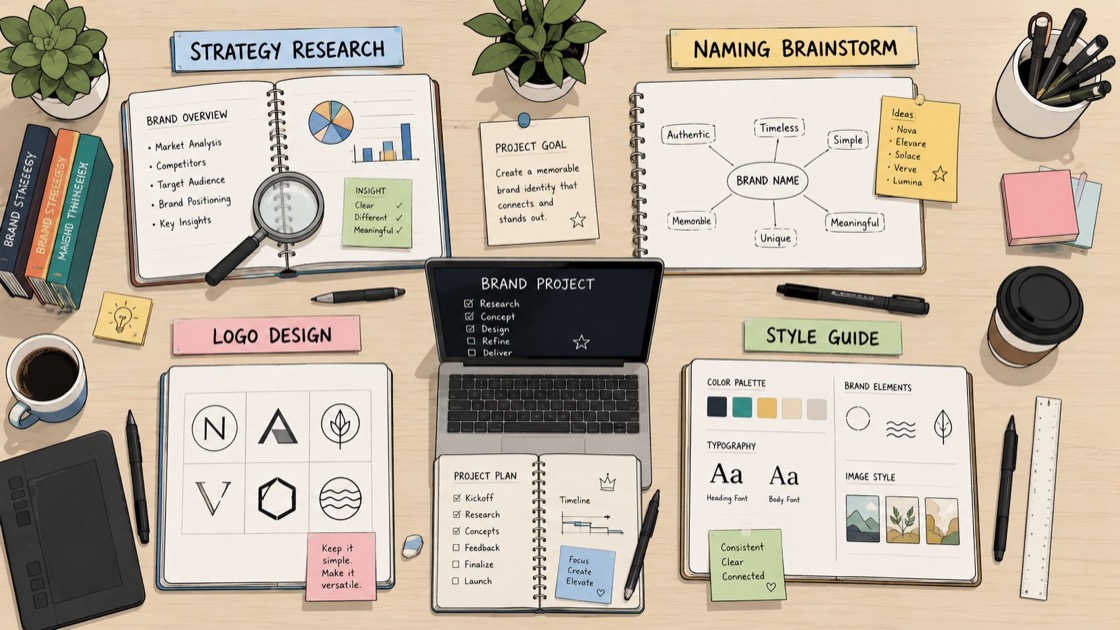
Discovery and strategy are usually the first real jump. That is customer interviews and competitor review, then the positioning work that turns them into a direction, and all of it is senior time before a single visual exists. Naming pushes the number again when it is in scope, because names need iteration and legal checks, and every extra stakeholder adds another round.
The identity system comes next: logo, wordmark, color, and type turned into something repeatable. This is where corporate identity design becomes a system a team can use instead of a folder of files.
A quote climbs fast when the team has to build the brand and then package it for everyone else to use.
Voice and guidelines come next, and then the applications, which is where the hidden hours live. Every asset has to be adapted and handed off cleanly. Strong guidelines make later work faster, because the standards get written once instead of re-argued on every new request. Skip them and each new asset restarts the same conversation.
A rebrand costs more than a first brand
A rebrand almost always costs more than a first brand. A first brand starts clean, so once positioning is set the work moves in a straight line. A rebrand has to account for what already exists and then move the new identity across the business without losing the recognition you already paid for. That adds an audit and migration work that a first-time brand skips. If you have an existing identity to move, how to rebrand is the planning reference.
It is fair to ask whether branding earns its cost at all. Wharton’s Americus Reed makes the case for why brands carry real, measurable value.
The rollout is where people get surprised. New signage and a website rebuild can outweigh the design fee itself, especially when the old brand is stamped on packaging and print everywhere. Budget for the full move, not only the new logo. That second cost is the one that shows up after the design is approved.
How to read a quote fairly
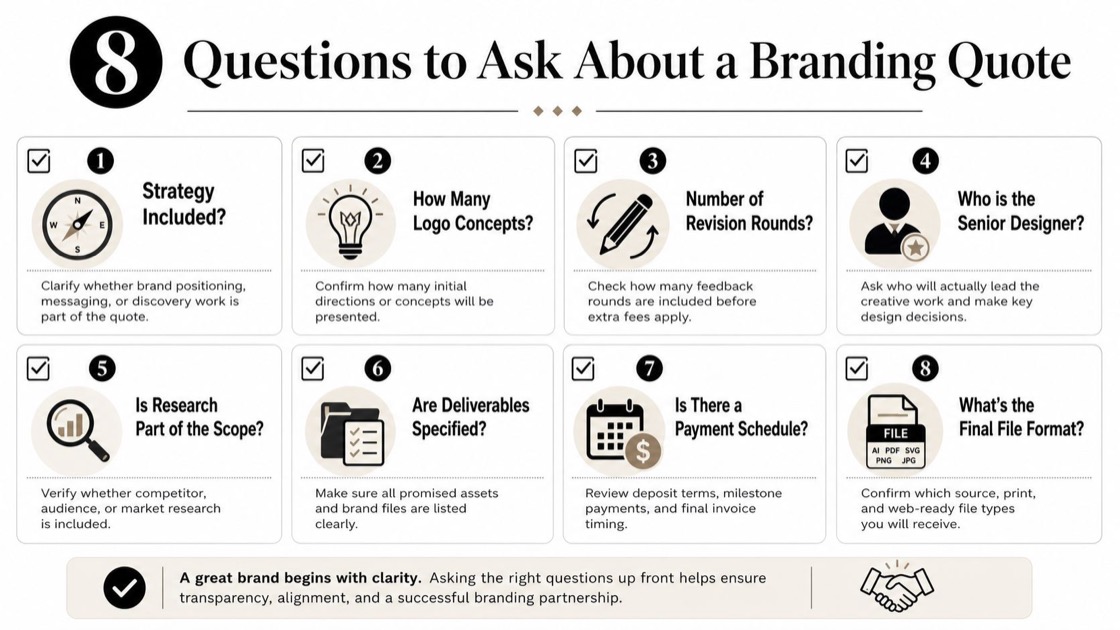
A fair comparison starts with the same brief. If two proposals answer different questions, the lower number usually just means less work. Write a one-page brief and make every provider quote against it, then run the same questions on each proposal:
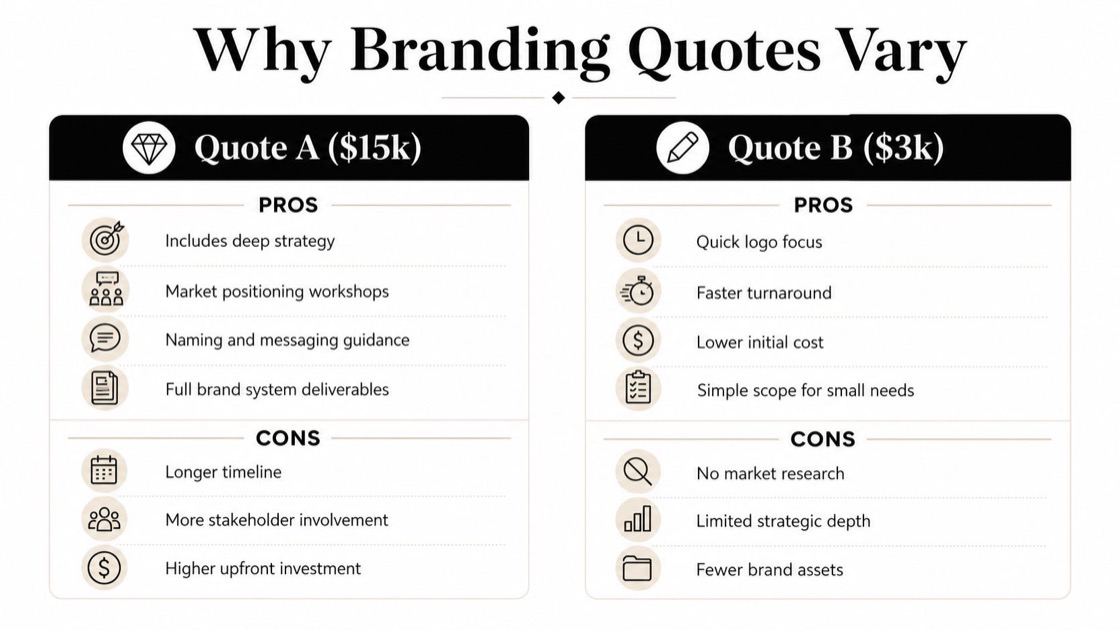
- Is strategy included, or only visuals?
- How many logo concepts, and how many revision rounds?
- Who actually does the work, senior or junior?
- Are brand guidelines part of the deliverable?
- Which applications are covered: web, social, decks, print?
- What is the timeline, and does rush pricing apply?
- Who owns the final files and the usage rights?
A written brief keeps everyone pricing the same scope instead of quoting a private version of the word. A creative brief template is the fastest way to force that. The discipline is the same one that makes any software comparison useful: line up scope and output first, then talk about price.
Spending less without getting burned
A smaller budget can still buy a brand that works. Put the money on the parts that shape how the business is understood, then add the extras once the core is set. For most small teams that means strategy and a focused core identity, plus guidelines so later work stays consistent.
A senior freelancer often fits that brief better than a large agency, because you get judgment where it matters without paying for layers you do not need. If the work is ongoing and needs a weekly rhythm, an embedded creative model can cover brand content and design without rebuilding the system every quarter. Moonb is one option there for companies that want a dedicated creative team delivering on a steady cadence rather than a single project and done.
The lowest bid is usually the one that keeps changing. It looks fine until the revision rounds drag on and the final files still are not usable. A template logo has the opposite problem: it works on day one, then you notice three competitors using the same mark. Spend where the brand gets used over and over, and measure that spend against results rather than a single line item, which is the point of tracking marketing incrementality.
If you are scoping a project this quarter, start with a one-page brief, then ask every provider to quote that exact scope. Fund the work that defines the system first, then add the rollout pieces on purpose. That order is what keeps one branding spend from turning into two.
Further reading: branding cost guide, production studio price options.
Frequently asked questions
You need enough of a brand to look credible to your first buyers, which usually means a clear position and a simple, usable logo and color set you can apply yourself. Full strategy work and deep guidelines can wait until you have traction and know who you actually sell to. Paying for a heavy brand system before the market is proven is where I see early teams waste money.
A focused logo and identity job can be done in two to four weeks. A full brand project that includes strategy and rollout usually runs two to four months, mostly because of review cycles rather than design time. Rush timelines are possible, but they cost more because the work has to interrupt whatever else the team is doing.
A refresh keeps your core identity and updates the surface, such as tightening the logo and modernizing the color and type, so it costs less and moves faster. A full rebrand changes the strategy or the name underneath, which forces new work everywhere and a migration across every place the old brand appears. If your positioning still holds and only the execution looks dated, a refresh is usually the right spend.