12 Best Kimp Alternatives for 2026
A practitioner's look at 12 Kimp alternatives for 2026, from embedded creative teams to single-designer services, sorted by who each one actually fits.

I work at Moonb, so I spend most of my week inside the exact problem Kimp is built to solve. A marketing team needs more design and video than it can staff for, and it needs the output to stay on-brand from the first asset to the fortieth. I have sat on both sides of the queue-based model, first as the person submitting requests and waiting, now as the person helping deliver the work. That seat shapes how I read this whole category, and it is why I wanted to write this down rather than link someone to another ranked list that reads like it was assembled from press pages.
Kimp does one thing well. It gives small teams a dedicated group and a request queue at a predictable monthly cost. For a lot of businesses that is enough, and I am not here to talk anyone out of it. But teams outgrow it, usually for one of two reasons. The volume climbs past what two-at-a-time production can absorb, or the brand stakes rise to the point where “someone moved a task through a pipe” stops being good enough. When that happens, people go looking, and the list of options is longer and stranger than most comparison posts admit.
So I wrote the version I wish existed when I was the one comparing. Twelve real alternatives, all still operating as of July 2026, each judged on the thing that actually decides whether the work earns attention.
Why teams start looking past Kimp
The queue model has a ceiling, and it is a design choice more than a flaw. When work is briefed as discrete tasks and assigned to whoever is free, you get throughput. What you rarely get is a point of view. Nobody is sitting with your brand between requests, thinking about how the launch film, the ad set, and the pitch deck should feel like they came from one company.
That matters more than turnaround time, and there is data behind the hunch. Nielsen’s work on what drives sales found that creative quality accounts for roughly 47 percent of a campaign’s sales contribution, the single biggest lever, ahead of reach and targeting combined. A service optimized purely for how fast a ticket clears is optimizing the wrong variable, and I have watched teams learn that the expensive way.
Marc Pritchard has run brand at Procter and Gamble for years, and the point he keeps making is the one buyers of creative services keep forgetting. Consistency and craft compound over time, and generic output slowly erodes the brand you already paid to build. If your provider cannot hold a look across a quarter of work, you are not saving effort. You are outsourcing the erosion.
How I judged these alternatives
I did not rank on price or fastest-draft claims. Those are easy to game and easy to fake. I looked at four things instead.
First, creative judgment. Does a real creative make the call on the work, or does the model just route tasks. Second, format range. Static only, or does it credibly cover motion, video, and the harder stuff. Third, brand continuity. Is there someone who holds your context from one project to the next. Fourth, how work actually gets briefed and reviewed, because a beautiful portfolio means nothing if the workflow fights you every time you need a change.
That last lens is where most of the category struggles. The B2B Institute and System1 found that 77 percent of B2B ads score the lowest possible mark on creative effectiveness, a one out of five, versus 53 percent for B2C. Weak creative is the default in this market, not the exception. Picking a partner that beats that baseline is most of the job. If you want a sharper filter before you shortlist anyone, a tight creative brief will tell you more about how a service thinks than any sales call.
What Kimp actually is
To compare fairly, here is Kimp on its own terms. It runs a dedicated-team model billed month to month, with a request queue you add to freely and two requests worked at a time. It sells graphics and video as separate services at around 699 dollars a month each, plus a combined option. Revisions are not capped. It is a useful setup for a small brand that wants steady, everyday design without hiring. The alternatives below either do that same job differently, or do a different job entirely.
1. Moonb
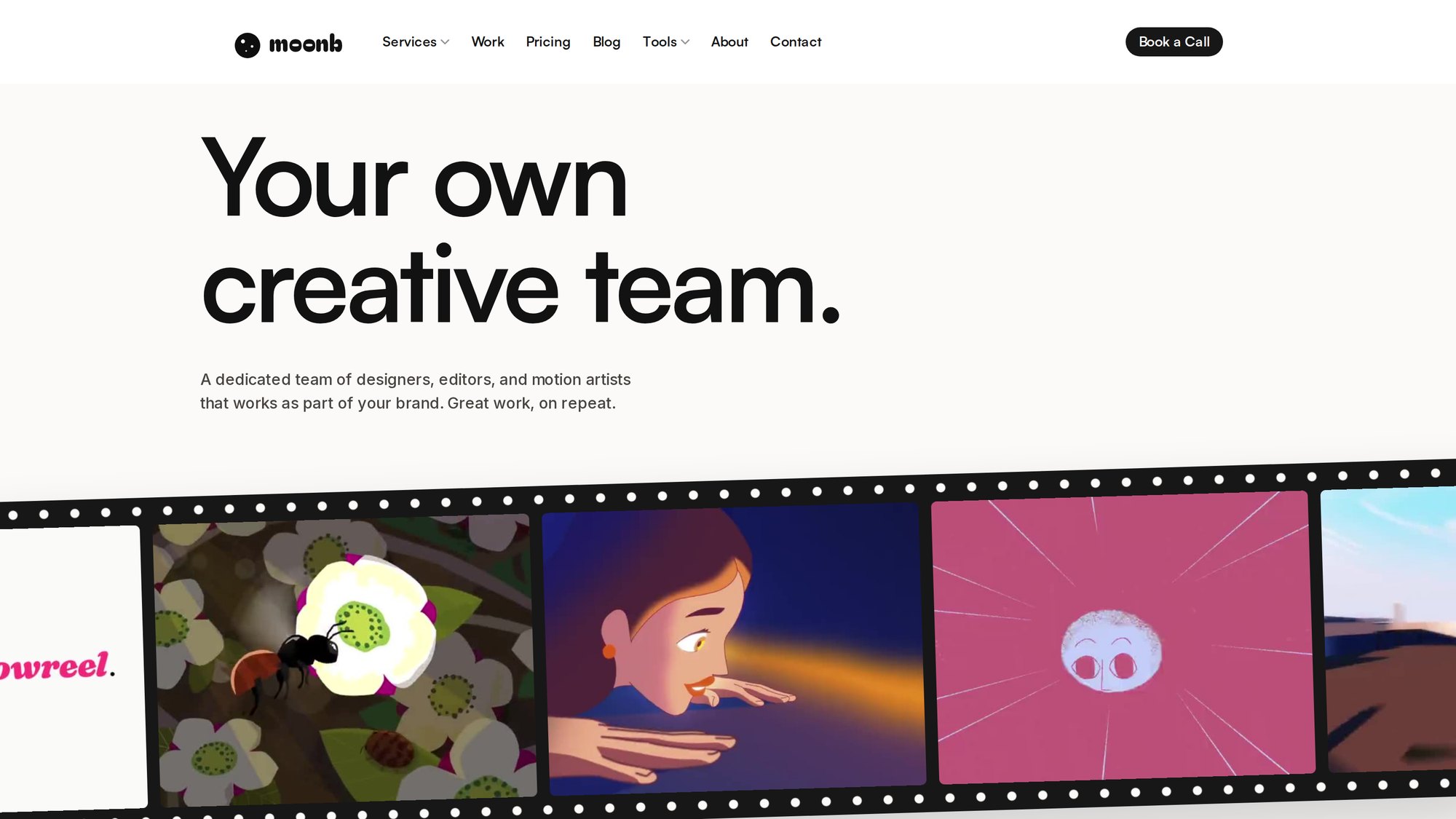
I will be upfront that this is where I work, so read the next few lines with that in mind. Moonb is not a like-for-like swap for Kimp, and pretending otherwise would waste your time. It is an embedded creative team, led by a dedicated Creative Director, covering video, design, motion, and the strategy that ties them together. Instead of a task queue, you get a small group that learns your brand and stays with it, the way an in-house team would if you could hire five specialists at once.
That model fits a specific kind of buyer. A marketing team with a steady stream of work who wants one team accountable for how all of it looks, rather than a rotating cast reassembled per ticket. It is a heavier commitment than a request-queue service and it is not the right call if all you need is the occasional social graphic. Where it earns its keep is continuity, the part that turns forty separate assets into one coherent brand.
Best for: marketing teams that want an embedded creative team led by a dedicated Creative Director across video, design, motion, and strategy, not just a task queue.
2. Superside
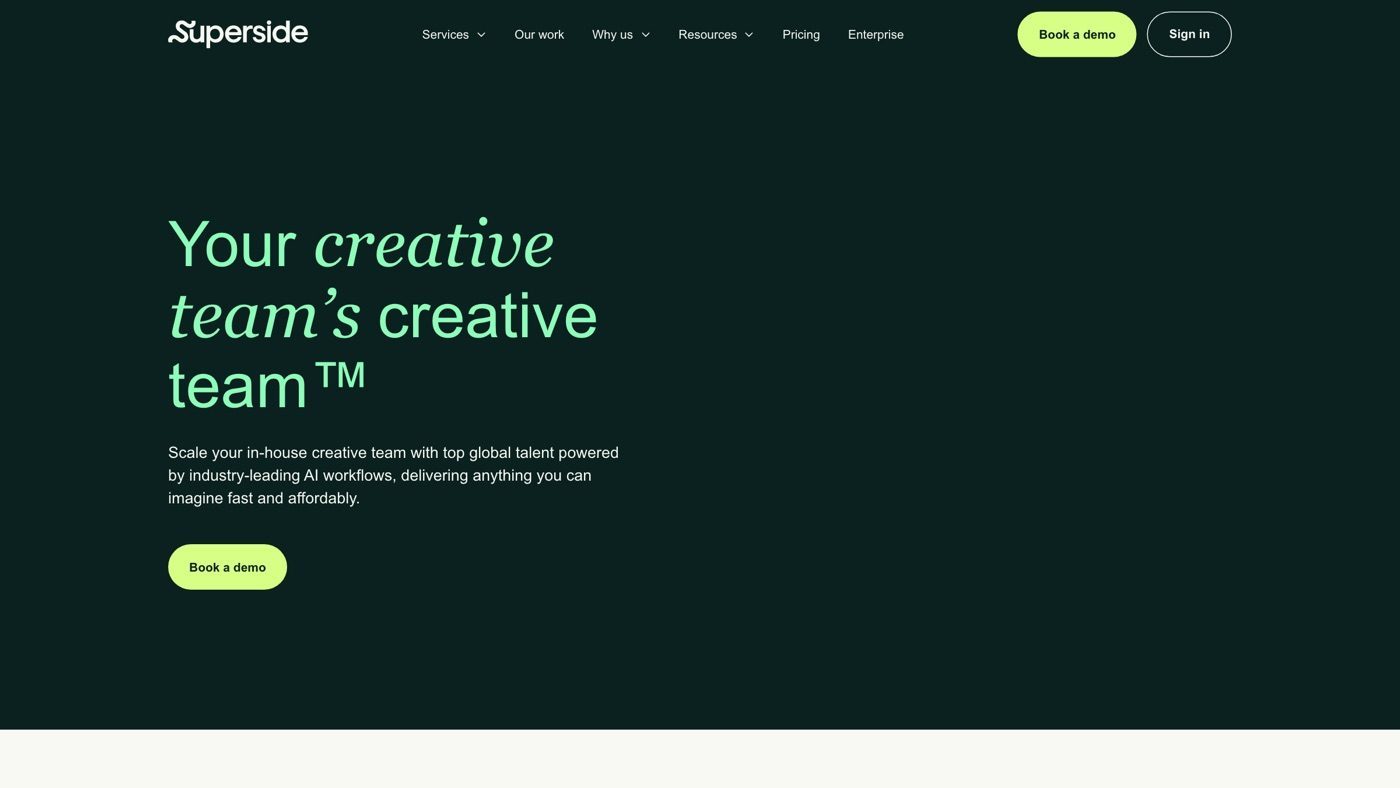
Superside is the enterprise-scale answer in this list. It runs a managed creative operation with a dedicated project manager and customer success manager on each account, service-level turnarounds as fast as roughly 12 hours on some task types, and a broad range across brand, ad creative, and motion. The tradeoff is commitment and cost. Pricing is quoted, it leans toward longer terms, and it is built for organizations that can keep a big queue fed.
If you are a mid-market or enterprise team with real volume and the internal process to brief it well, Superside is one of the few services here that scales cleanly. Smaller teams tend to find it heavier than they need. If it is on your shortlist, it is worth reading around the wider set of Superside-style options before you sign anything long.
Best for: mid-market and enterprise teams that need a managed creative operation with a dedicated project manager and fast SLAs, and can commit long term.
3. Design Pickle
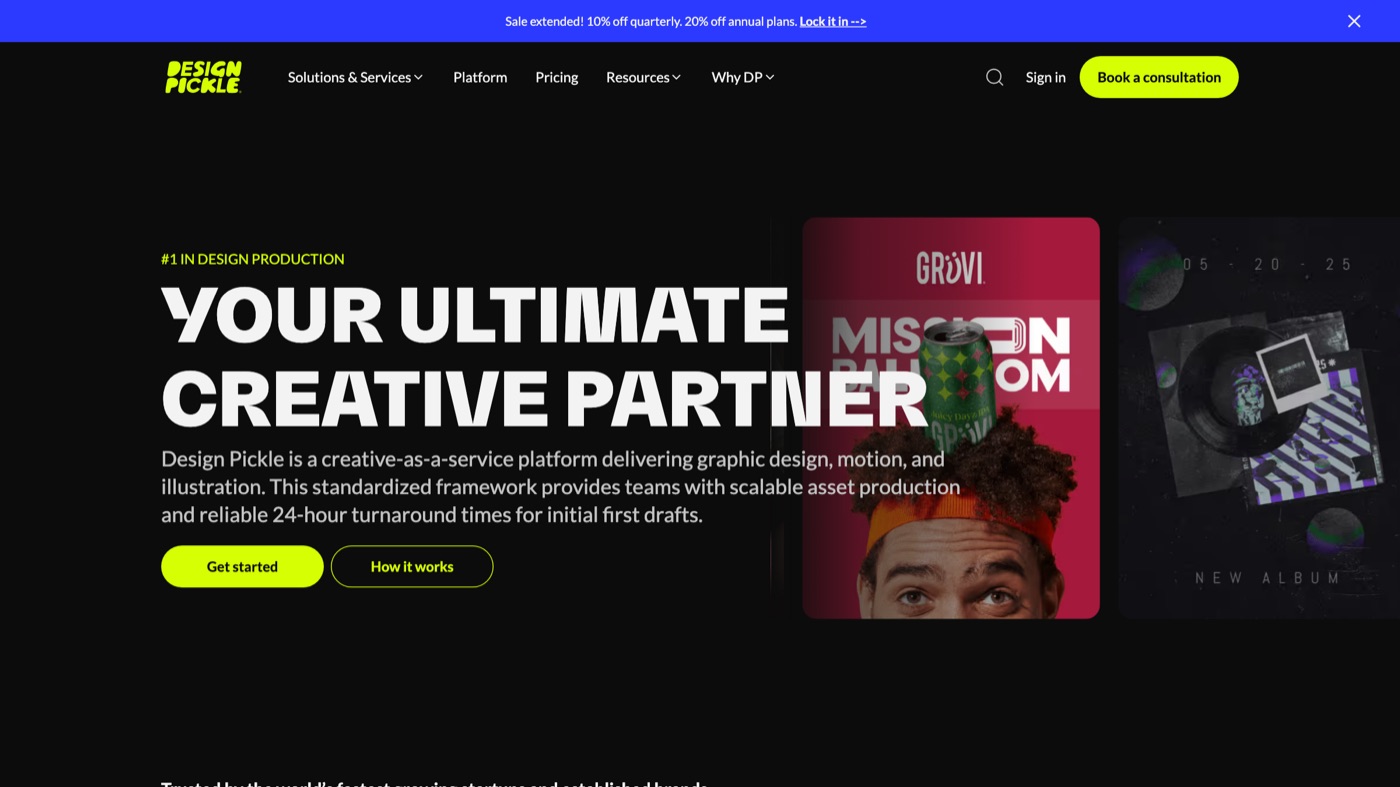
Design Pickle is one of the oldest names in the space and has matured into a single consolidated offering that spans static graphics, motion, video, and presentations. As your daily creative hours scale up, the service adds roles like a Production Coordinator and an Art Director, which brings a layer of oversight most queue services never touch. That structure suits established teams that have outgrown pure ticket-shuffling but do not want an enterprise contract.
The entry point sits higher than the single-designer services, which is the real cost of the managed structure. For a solo founder it is probably more than you need. For a team already running consistent volume across formats, it is a sensible consolidation of vendors.
Best for: established teams wanting one consolidated offering spanning static, motion, video, and presentations with an Art Director as hours scale.
4. Designity
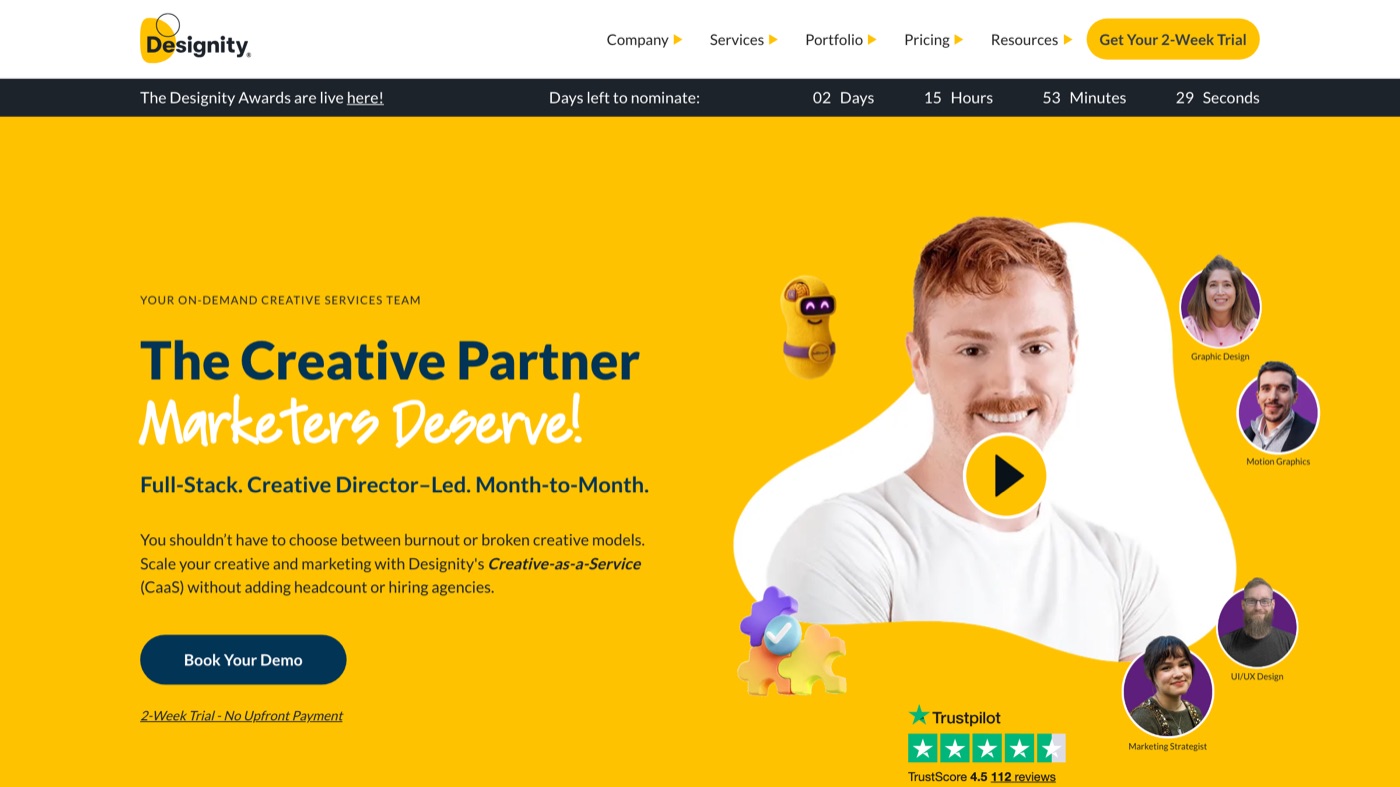
Designity is the closest thing here to Moonb’s shape, built around US-based vetted teams led by a dedicated Creative Director rather than a random designer pool. It runs on monthly creative hours that can support several concurrent projects, and it offers a two-week trial that produces real work before you pay, which is a fair way to test the fit. The Creative Director involvement is the whole point. It pushes the relationship from reactive fulfillment toward actual creative direction.
It is a higher-touch service than the volume shops, priced accordingly. If your brand is sensitive and you want strategic oversight with US-based talent, it belongs on your list.
Best for: brand-sensitive companies that want US-based, Creative-Director-led vetted teams and strategic oversight rather than a random designer pool.
5. DesignJoy
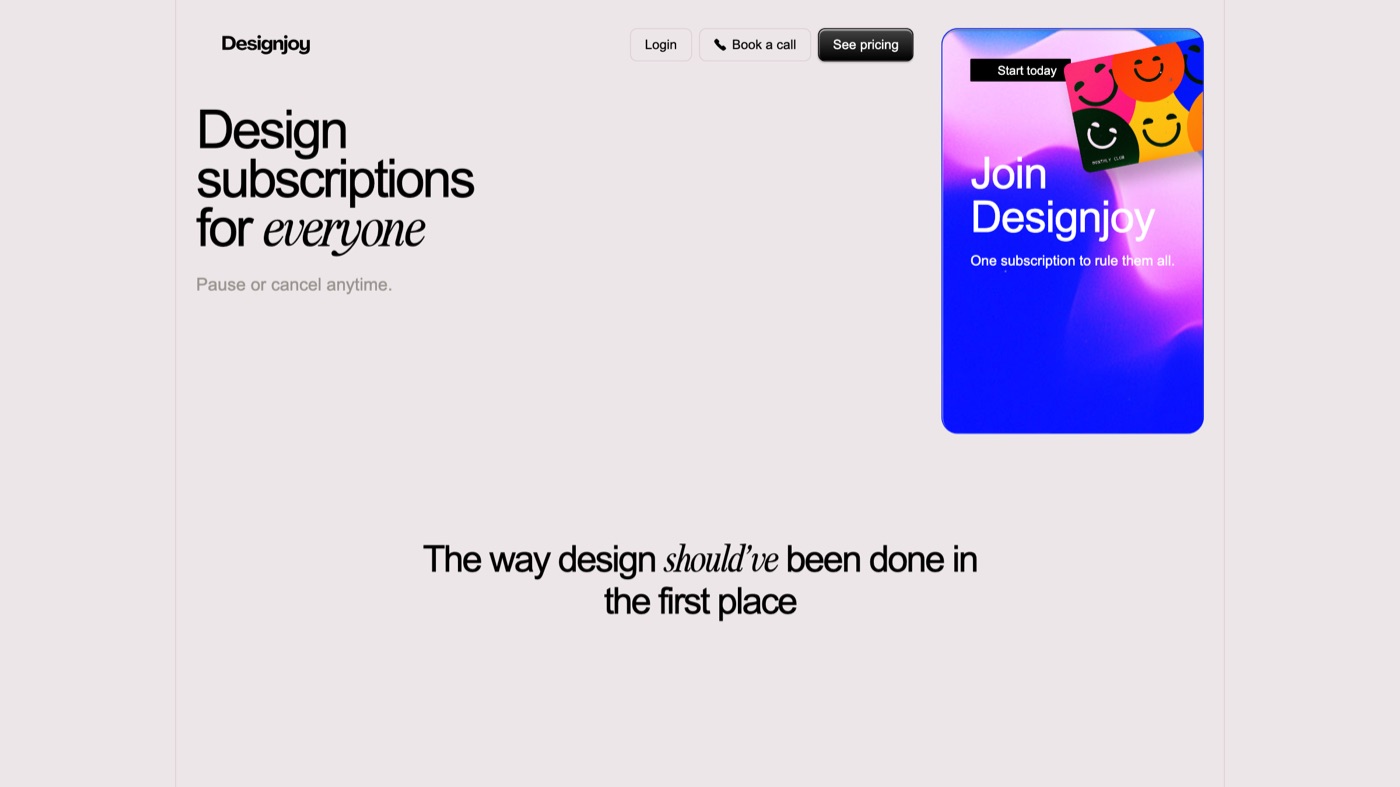
DesignJoy is the famous one-person operation, run by a senior designer who handles everything personally and works one request at a time, typically turning drafts around in about 48 hours. It includes Webflow build, which is unusual and useful for founders who want design and a live site from the same hand. The craft is high because it is one experienced person, not a marketplace.
The obvious limit is volume. One request at a time means it cannot feed a busy marketing calendar, and there is no motion or video depth to speak of. But for a founder or small team that values taste on a focused stream of work, it is hard to beat on polish per dollar.
Best for: founders and small teams who value senior-level craft on one focused request at a time, with Webflow build included.
6. Penji
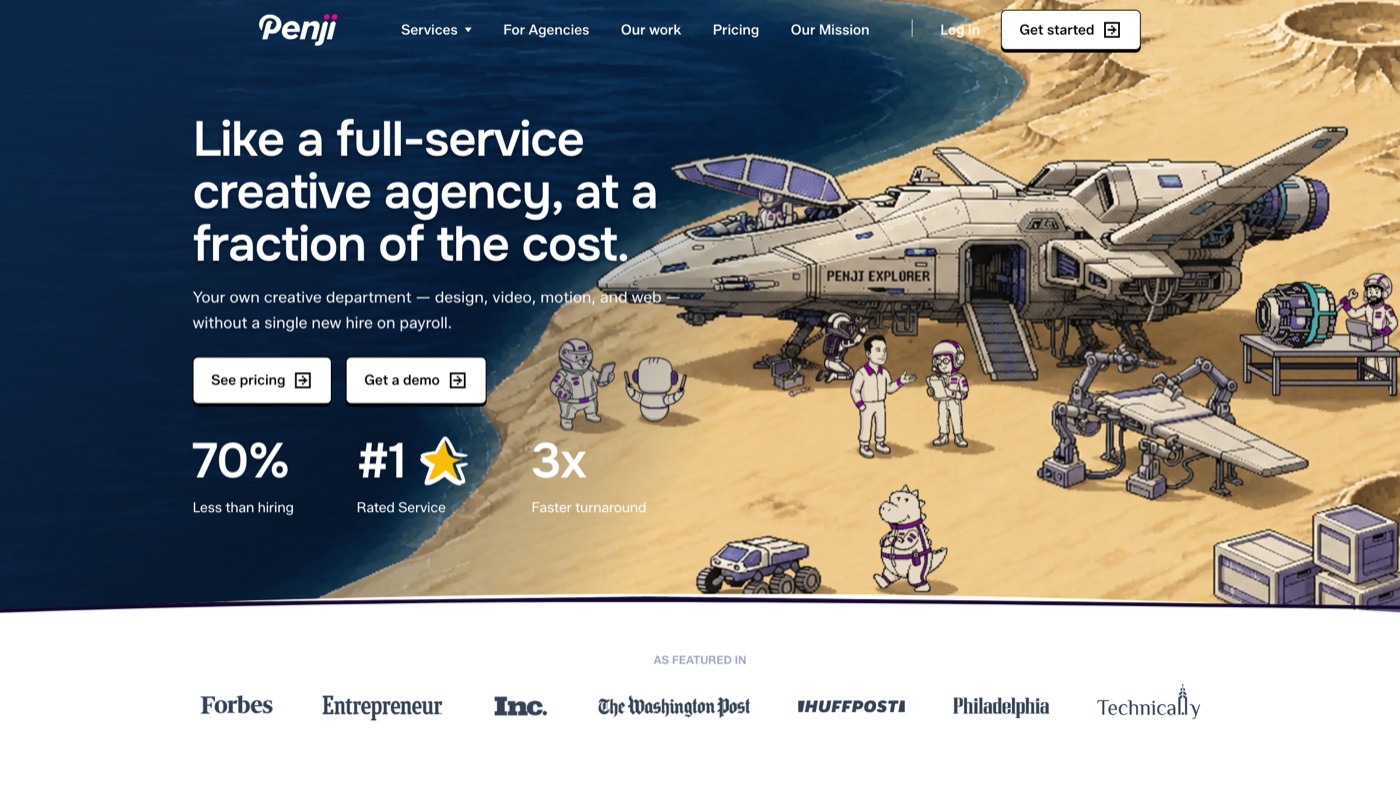
Penji is a dependable graphic-design service with clearly separated tiers, next-business-day drafts on most requests, and a point-and-click revision system that keeps feedback simple. Its higher tier adds motion graphics and short-form video, but the core strength is reliable, fast static design for social, ads, and marketing collateral. A 30-day money-back window makes it a low-risk trial.
Entry-level access runs one active project at a time, which can bottleneck teams that need parallel work. For an SMB or a small marketing team with a manageable queue, it is one of the steadier picks in the category.
Best for: SMBs and small marketing teams needing dependable, fast-turnaround graphic design across clearly tiered options.
7. ManyPixels
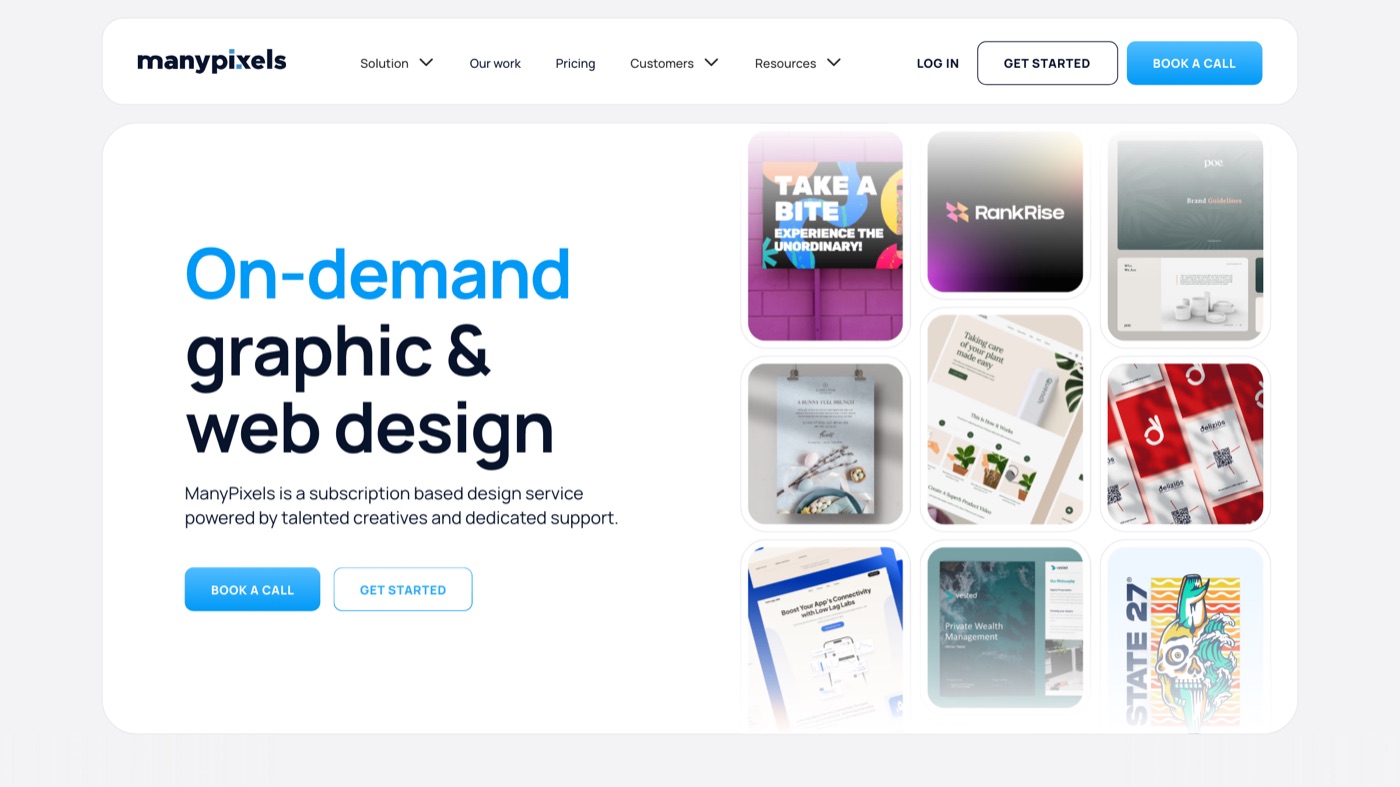
ManyPixels sits in the middle of the market with a clean two-tier structure. A general pool for everyday work, and a dedicated-designer option for teams that want one person learning their brand over time. It covers graphic design, Figma web design, illustration, and basic motion, with same-day or next-day delivery depending on the tier and complexity, and it delivers source files so you keep control of your assets.
It does not stretch to complex UI work or heavy motion, and it is upfront about that. For a steady flow of standard marketing creative with a familiar hand on it, it is a solid, no-drama choice.
Best for: teams that want a dedicated designer for brand continuity on steady, everyday graphic design and basic motion.
8. Flocksy
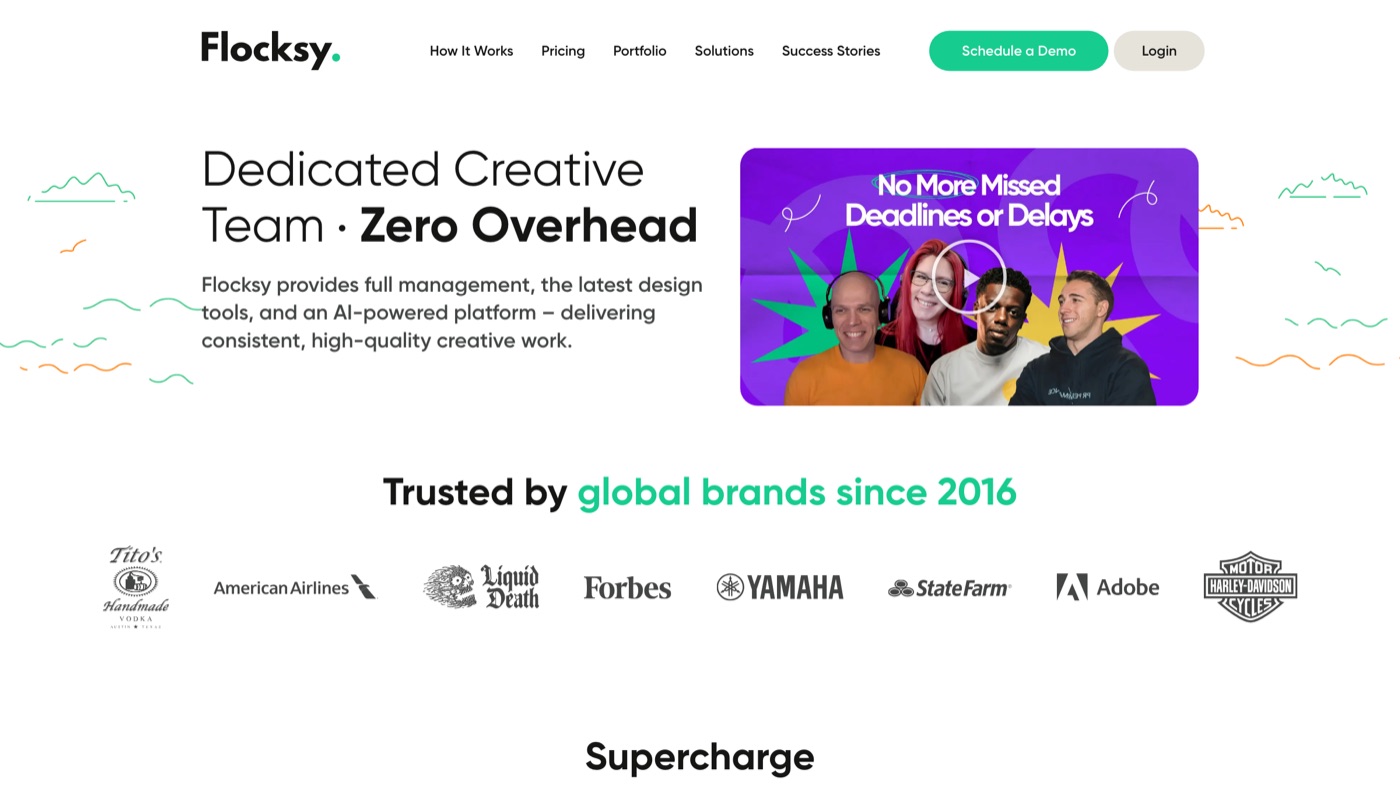
Flocksy casts the widest net on disciplines, bundling design, copywriting, motion graphics, video editing, and even voiceover under one roof, with more than 140 services listed. Its distinctive feature is bankable hours. Unused daily capacity rolls over for up to 30 days, which is a real safety net for teams with uneven workloads. Higher tiers add a Production Coordinator and Art Director for project management.
The breadth is the selling point and the risk. If you only need one or two functions, the range can feel like more than you can use. If you want many small creative jobs handled in one place, few services match its coverage.
Best for: teams that need many creative disciplines (design, copy, motion, video, voiceover) under one roof with bankable hours.
9. Kapa99
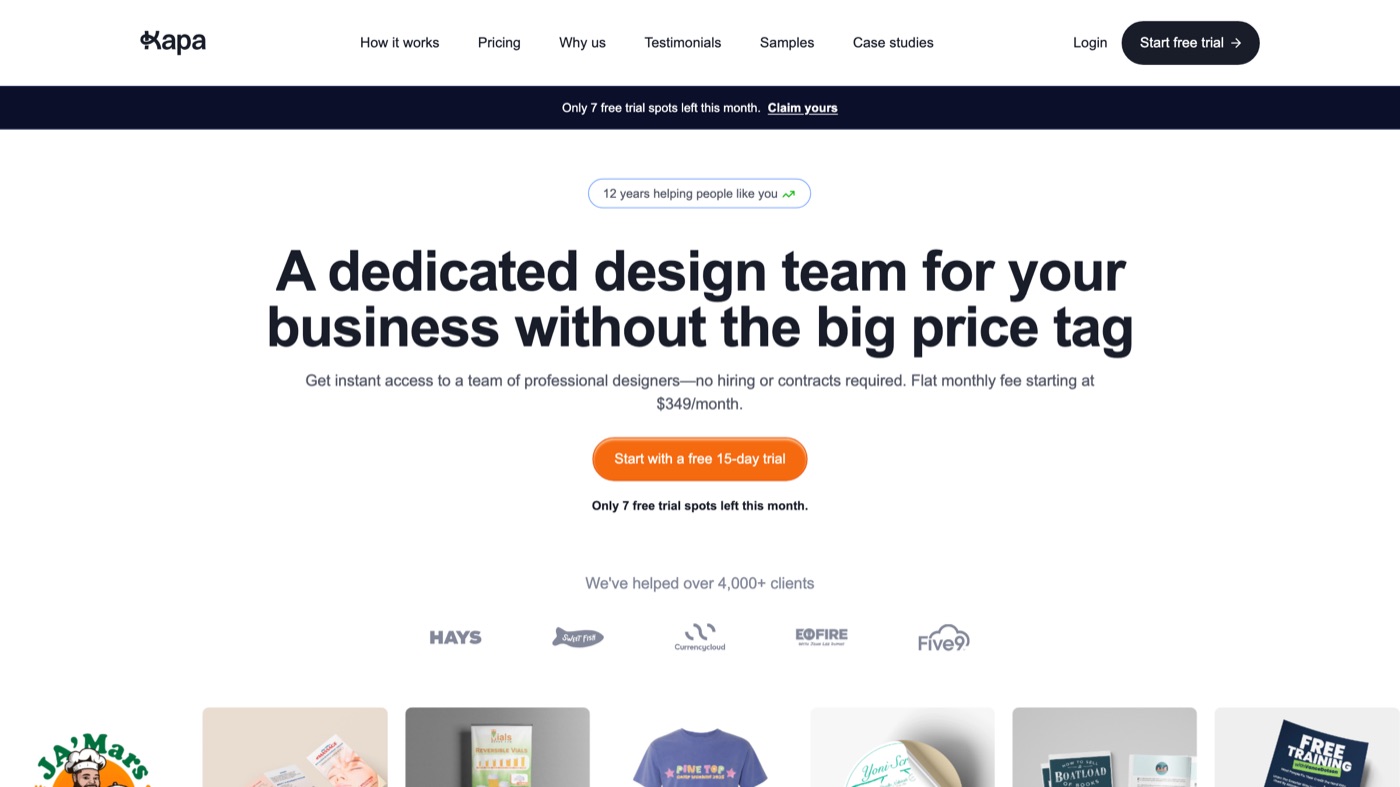
Kapa99 focuses on graphic design with a straightforward queue and two speeds. Async delivery in 24 to 48 hours, or one-day priority. It supports multiple brands, delivers in native Adobe formats and Canva, and offers one of the more generous trial windows in the space, a 15-day trial backed by a 30-day money-back guarantee. That makes it easy to test designer chemistry before committing.
Complex multi-page projects can run past the standard turnaround, and the dedicated-team upgrade jumps in price. It is best matched to a steady diet of single-asset requests rather than large, intricate builds.
Best for: US SMBs with a steady stream of single-asset graphic requests who want async or one-day priority turnaround.
10. Delesign
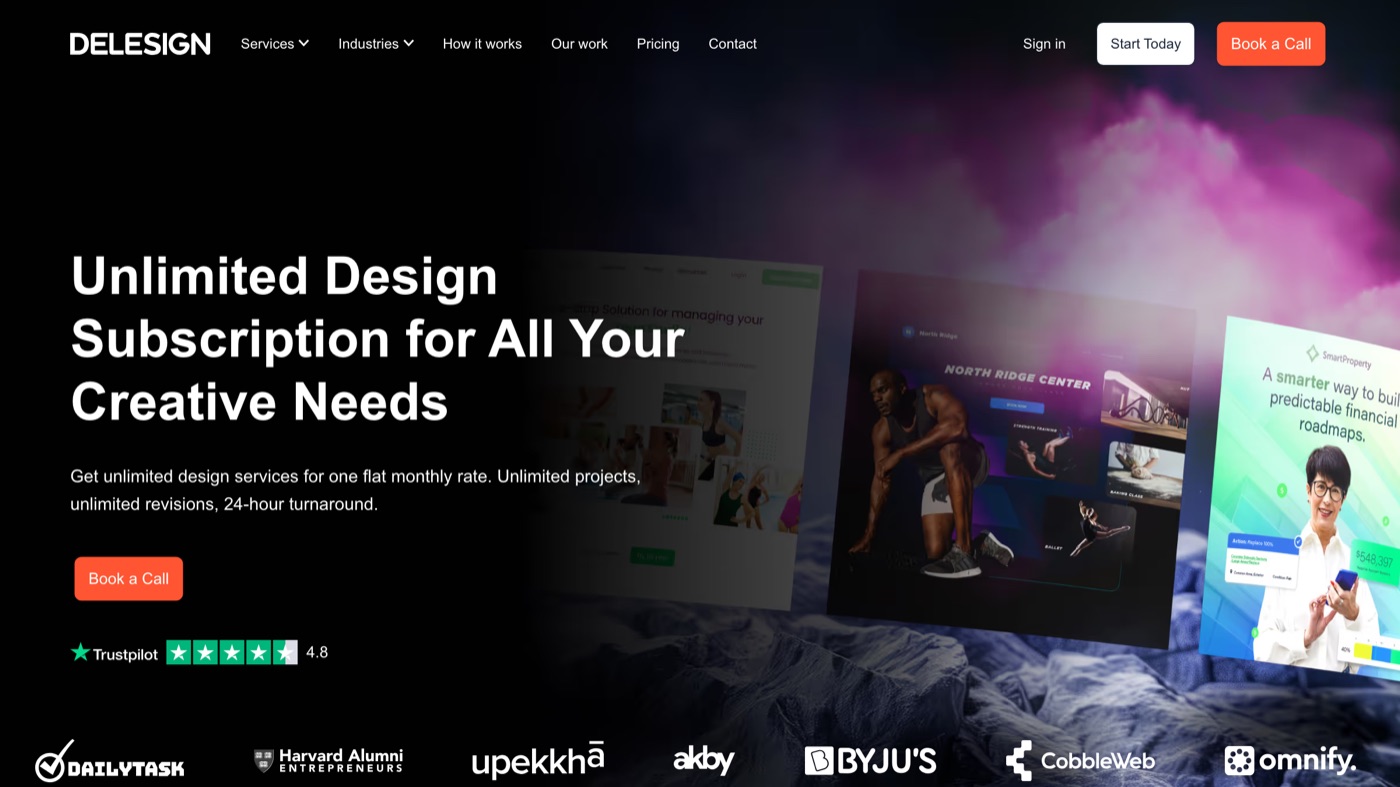
Delesign’s angle is schedule alignment. You get a dedicated designer and pick a working window, day or night, so your designer’s hours overlap your team’s. That real-time overlap makes feedback loops tighter than the fire-and-wait model most queue services run. You can add multimedia specialists for web, motion, or video as needs grow, and invite teammates to submit and manage requests.
Standard turnaround sits around two to three days, which is slower than the priority-tier competitors, and faster work usually means a higher tier. For a team that values a designer who is actually online when they are, the scheduling model is a real differentiator.
Best for: teams that want a dedicated designer aligned to their working hours via a selectable day or night schedule window.
11. Graphically
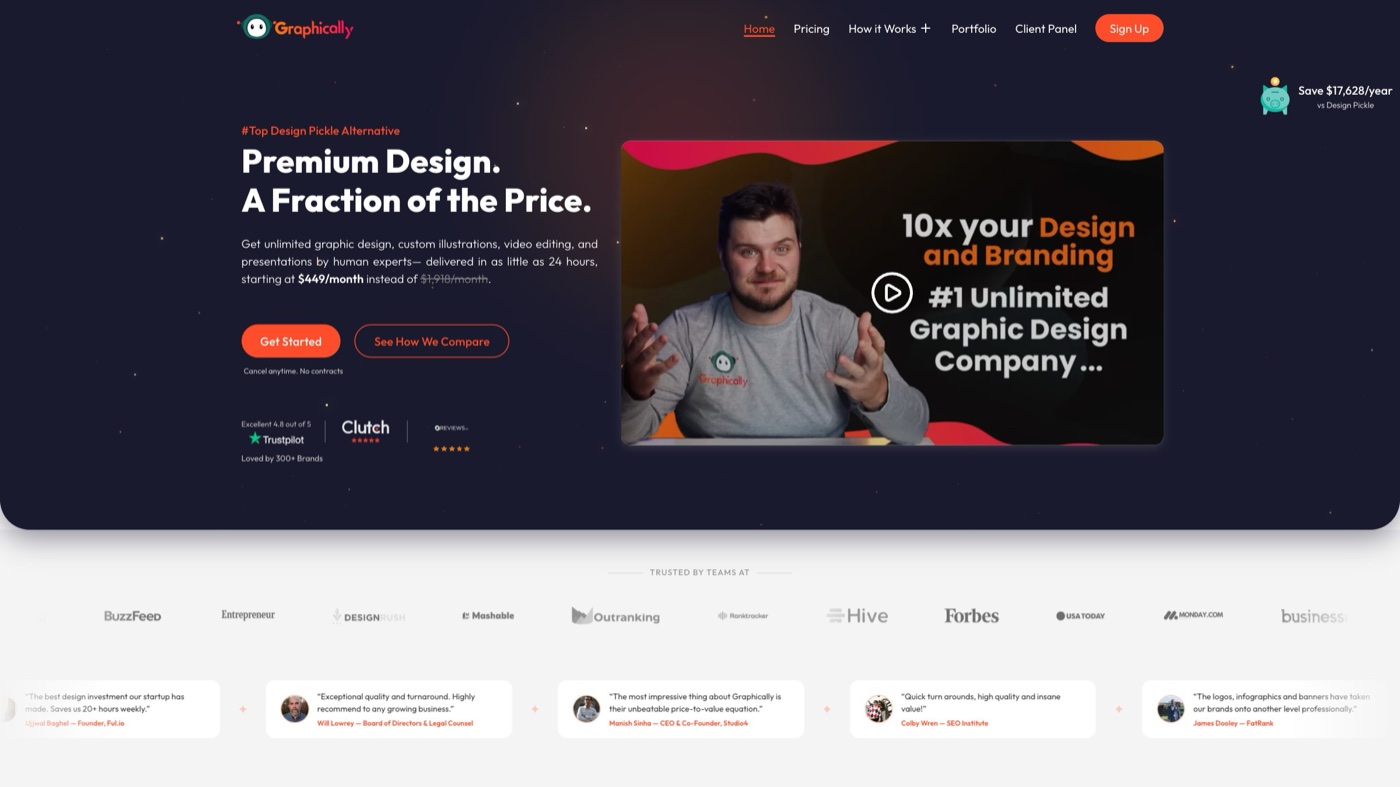
Graphically keeps things simple with two tiers, the Premium one allowing up to three concurrent tasks, plus a dedicated project manager on the account. It covers a broad set of everyday needs, from logos and social graphics to illustration, presentations, and basic motion, and delivers source files with optional Canva templates for teams that like to make their own quick edits.
It is lighter on strategic oversight than the Creative-Director-led services, which is the tradeoff for its accessibility. For a startup or solo operator that needs reliable daily design support without much ceremony, it does the job.
Best for: startups and solo operators needing reliable daily design support and simple two-tier options with a dedicated project manager.
12. No Limit Creatives
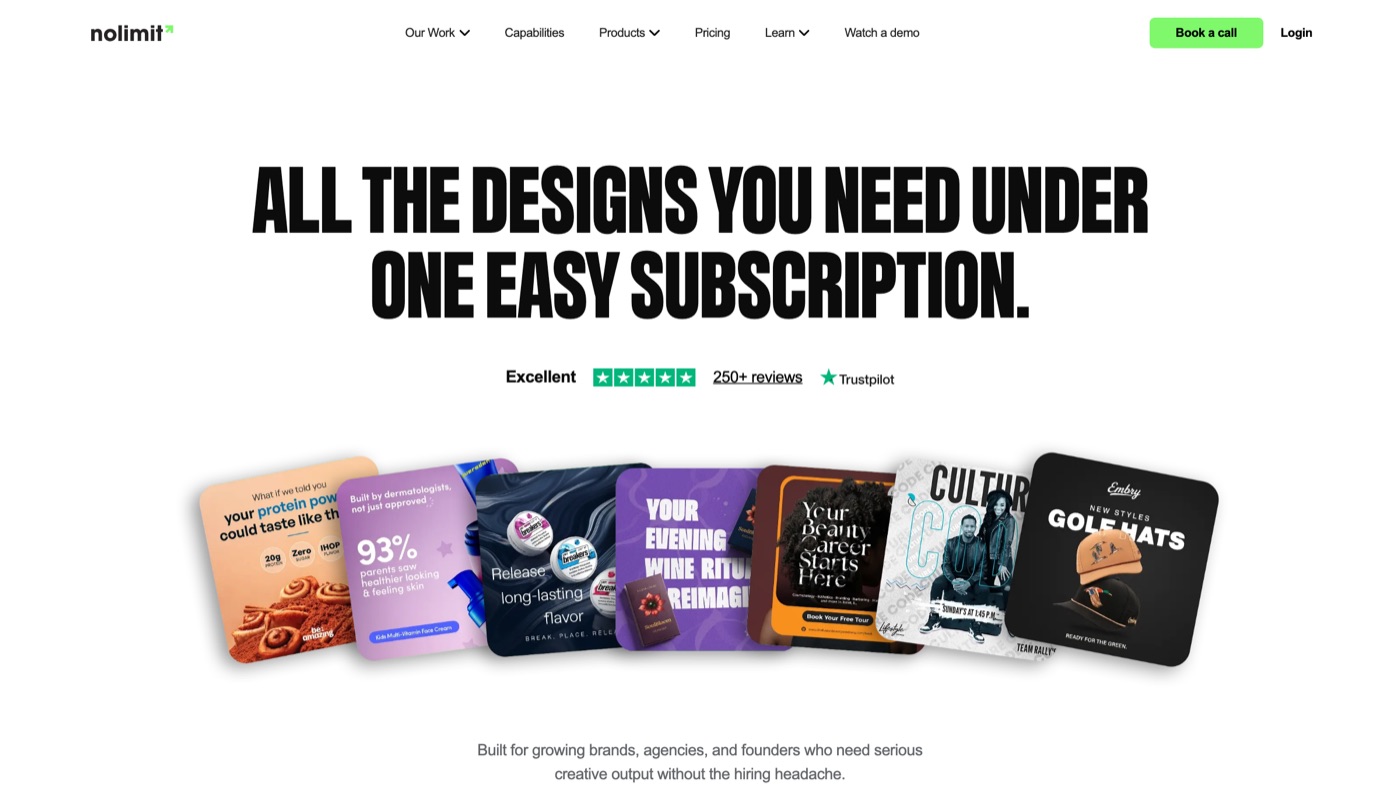
No Limit Creatives is the specialist of the group, built for performance marketers and direct-to-consumer brands that live on ad creative. Its whole workflow is tuned to a constant pipeline of graphics and video ads, with either concurrent active slots or a credit-based model, and dedicated Slack channels on higher tiers for fast back-and-forth. If your bottleneck is producing and testing ad variations at volume, this is the shop designed for exactly that.
Pricing is gated behind a sales conversation, which makes upfront comparison harder, and the focus means it is a poor fit for broad, varied design needs. For DTC teams running rapid creative testing, it is purpose-built.
Best for: DTC and performance marketers who need a constant pipeline of ad creative and rapid A/B variation at volume.
Quick comparison
Here are all twelve side by side, to make the shape of each one obvious at a glance.
| Company | Model | Format range | Standout | Best for |
|---|---|---|---|---|
| Moonb | Embedded creative team, dedicated Creative Director | Video, design, motion, strategy | Brand continuity across all work | Teams wanting one accountable team, not a queue |
| Superside | Managed operation, dedicated PM and CSM | Brand, ad creative, motion | SLAs from roughly 12 hours | Enterprise volume with internal process |
| Design Pickle | Consolidated managed service | Static, motion, video, presentations | Art Director added as hours scale | Established teams consolidating vendors |
| Designity | US-based vetted team, Creative-Director-led | Multi-format, several concurrent projects | Two-week trial before you pay | Brand-sensitive teams wanting oversight |
| DesignJoy | Senior solo designer | Design plus Webflow build | Roughly 48 hour drafts, one at a time | Founders wanting craft on focused work |
| Penji | Tiered graphic design service | Static, motion and short-form on top tier | Next-business-day, point-and-click revisions | SMBs needing fast, reliable static design |
| ManyPixels | Two-tier, general pool or dedicated designer | Graphic, Figma web, illustration, basic motion | Source files, same or next-day delivery | Everyday design with a familiar hand |
| Flocksy | Multi-discipline, one roof | Design, copy, motion, video, voiceover | Bankable hours that roll over | Teams needing many disciplines in one place |
| Kapa99 | Graphic design queue, two speeds | Static, native Adobe and Canva | 15-day trial, 24 to 48 hour or priority | Steady single-asset graphic requests |
| Delesign | Dedicated designer on a scheduled window | Design, add web, motion, video specialists | Day or night hours that overlap yours | Teams wanting a designer online when they are |
| Graphically | Two-tier service, dedicated project manager | Logos, social, illustration, decks, basic motion | Up to three concurrent tasks on Premium | Startups and solo operators wanting simple daily design |
| No Limit Creatives | Ad-creative specialist, slots or credits | Graphics and video ads | Slack channels, rapid A/B variations | DTC and performance marketers at volume |
How to actually choose
Strip away the feature tables and the decision comes down to three questions.
Start with team size and volume. If you are a founder or a small team with a manageable stream of static work, a single-designer service like DesignJoy or a tiered one like Penji will serve you without overpaying for structure you will not use. If you are running real multi-format volume, you want the managed or embedded end. Design Pickle, Superside, Designity, or Moonb.
Then look at your format mix. Static-heavy needs are well covered by most of this list. The moment video and motion become central, the field narrows fast to the few services with real depth there, and it is worth being skeptical of anyone claiming it as an afterthought. This is where the AI question also lands. The share of businesses using AI to help create video more than doubled year over year, from 18 percent to 41 percent, which means the baseline of automated, competent-but-generic output is rising everywhere. Human judgment on top of that baseline is what separates work people watch from work they scroll past.
Finally, weigh your brand stakes. If a wrong-feeling asset is a minor annoyance, optimize for speed and cost. If your brand is the business, optimize for the services where a real creative owns the standard, because consistency stops being a nice-to-have at that level and becomes the whole point. Match the model to the answer, and the shortlist writes itself.
Frequently asked questions
Kimp runs a queue-based model: you submit design or video requests, a dedicated group works two at a time, and you pay a set monthly amount. Moonb is an embedded creative team led by a dedicated Creative Director that covers video, design, motion, and strategy as one connected practice. Kimp is built for steady task throughput. Moonb is built for teams that want one group accountable for how all of their brand looks over time, rather than a rotating cast reassembled per ticket.
Most services in this space are strongest on static work, so the field narrows once video and motion become central. The options with real depth there are Moonb, Superside, Flocksy, and No Limit Creatives. Moonb and Superside cover the fuller range of brand and campaign video, Flocksy handles a wide mix including video editing and voiceover, and No Limit Creatives specializes in high-volume ad video for performance marketers.
Most do, but confirm it in writing before you commit, because the details vary. Services like ManyPixels, Kapa99, and Penji deliver native source files so you keep control of your assets. If rights, NDAs, and native file delivery matter to your legal or brand team, ask each provider directly how ownership transfers and whether working files are included, rather than assuming the default.