12 UGC agencies and creator marketplaces compared
Twelve UGC agencies and creator marketplaces checked on their own sites in November 2026: model, published prices, usage rights, ad codes, and who each one fits.

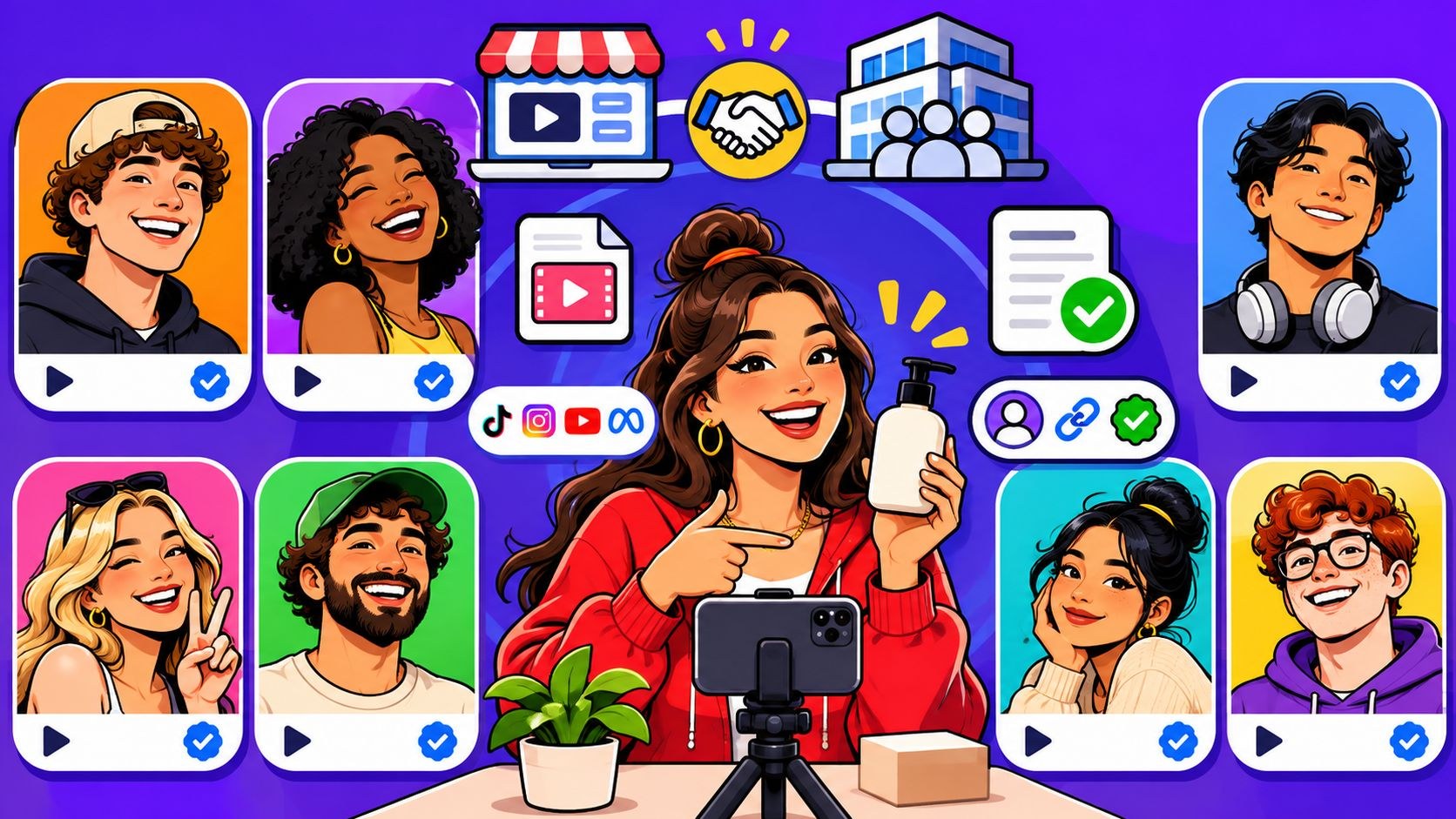
Ten creator videos arrive on a Friday, the ads go live on Monday, and three weeks later someone in legal wants to know whether this clip can run on the brand’s YouTube channel next quarter, and whether the creator’s handle can appear on the paid version. Nobody knows. The invoice is paid, the drive is full, and the terms are somewhere in an email thread. I hear that one a lot.
I work at Moonb. We’re a creative studio: ad creative, motion graphics, animation, and editing of footage brands already have. We don’t recruit creators or film anything. UGC proposals land in my inbox often enough that I wanted one list that puts the rights question first, so I went through the sites of twelve UGC agencies and creator marketplaces in November 2026: UGC Factory, The UGC Agency, UGC SHOP, Insense, minisocial, Upfluence, Billo, JoinBrands, Cohley, Influee, SideShift and Statusphere. About half are managed services that find the creators and hand you edited videos. With the rest, your team writes the brief and picks the people, and the platform handles the payments. Studios like ours get a short note after the table.
The IAB’s 2025 Creator Economy Ad Spend & Strategy Report projects U.S. creator ad spend at $37 billion in 2025, up 26% on the year before and growing nearly four times faster than the media industry overall, with $44 billion expected in 2026. Nearly half of creator ad buyers (48%) now call creators a “must buy.”
Before I look at the price on any quote, I want four answers in writing: where each video can run, for how long, whether paid ads are covered, and whether those ads can use the creator’s handle. The last two are the ones most often missing from the proposals that reach me.
For a second opinion, FindClout’s ranked list of UGC agencies and platforms splits the field into production marketplaces, pay-per-view platforms and managed enterprise UGC. A vendor in the space wrote it, and says so in the opening lines.
1. UGC Factory
More on UGC Factory
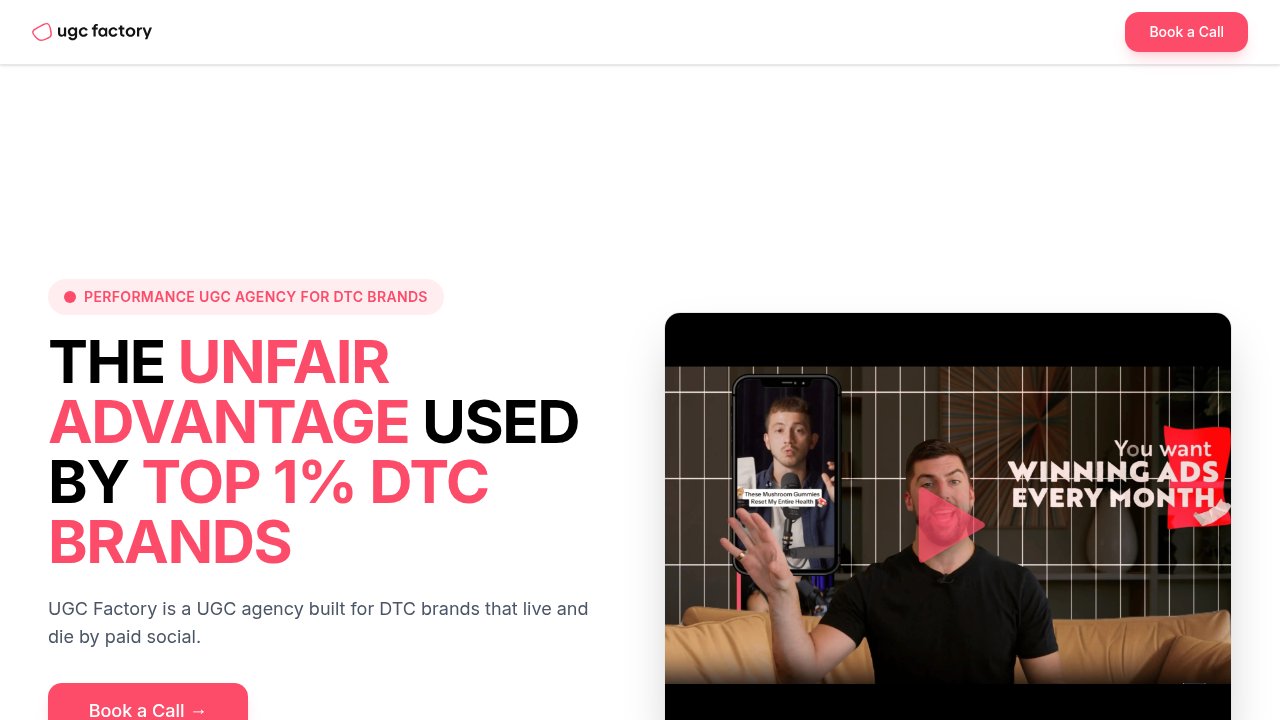
UGC Factory describes itself as a UGC agency built for DTC brands that live and die by paid social. Its recent-work grid sorts ads by format (product demo, podcast, interview, street interview, POV and text-over, testimonial, skit), which is a useful menu to borrow even if you hire someone else. The site says it has created more than 50,000 UGC ads; that is its own count. Its comparison table sets a done-for-you monthly retainer against marketplaces that charge per video.
Name two or three of those formats you want tested and the brief stops being “make us some UGC” and becomes something a team can plan. Whether creator-style should beat polished in the first place is a separate question, and our breakdown of creator-style versus polished video goes through it.
2. The UGC Agency
More on The UGC Agency
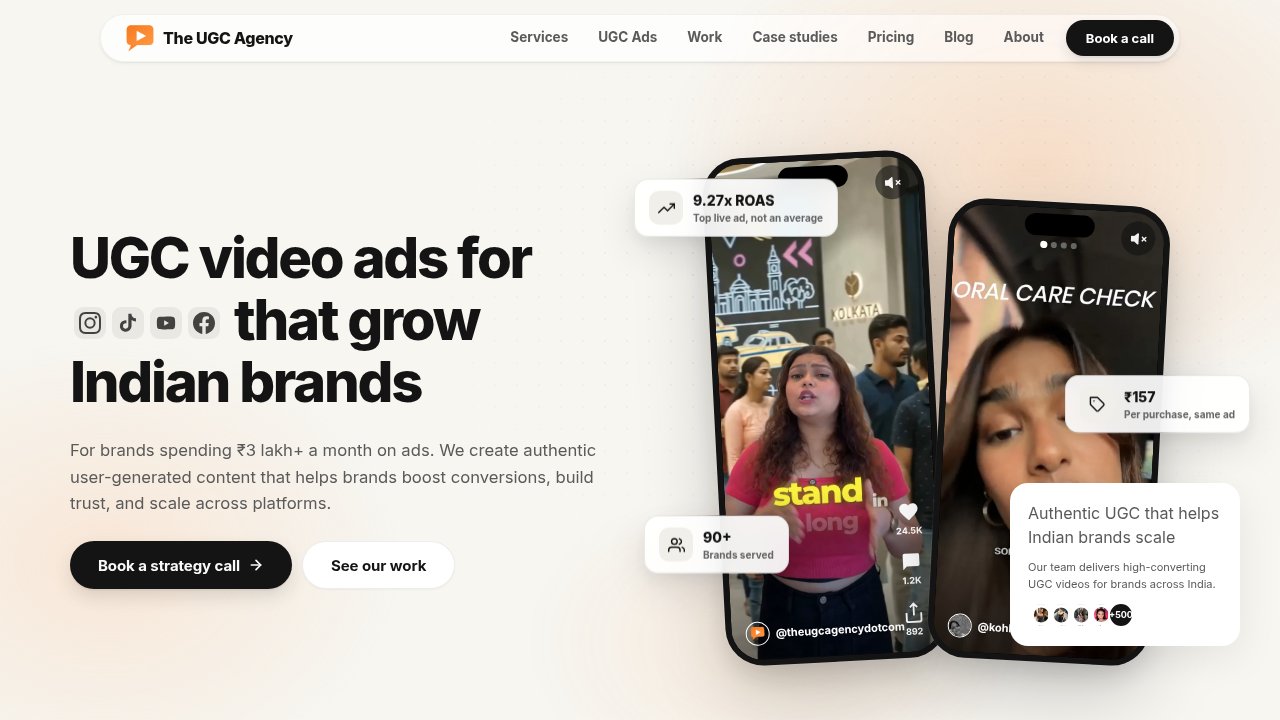
The UGC Agency calls itself an India-first UGC agency with 500+ vetted creators across Indian cities. Its site says the plans differ by production quality and keep the same video count, and its pricing page says custom scopes, such as extra volume or several creators in parallel, are quoted on a call. The case-study numbers on its homepage come from its best live ad, and the site says so next to them, which is more candor than most results pages offer.
That pricing page is worth opening wherever you sell. Volume, hooks, creators per set, format, raw files and rights all sit on one screen, and it’s the clearest picture I found of what a UGC quote ought to spell out. I hold other quotes up against it now.
3. UGC SHOP
More on UGC SHOP
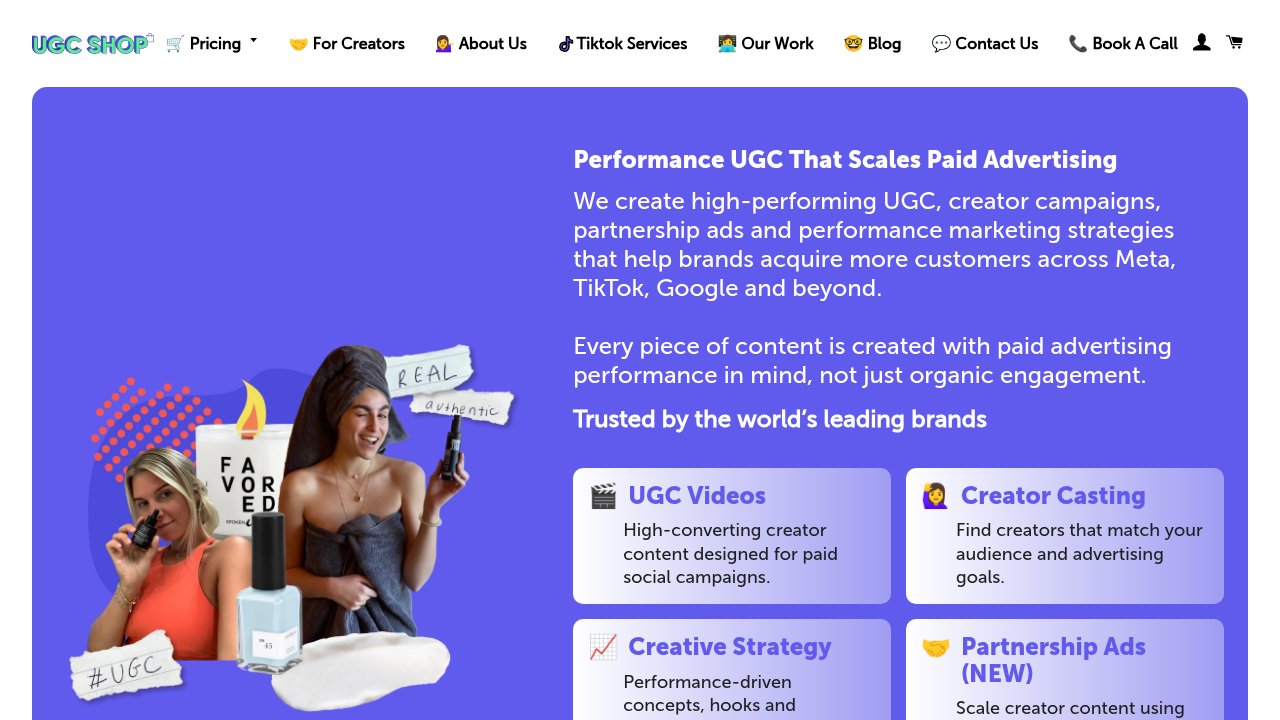
UGC SHOP describes itself as an outsourced content engine that handles creator casting and approvals, strategy, trend analysis, competitor research, production, delivery and Partnership Ads. The Growth package caps videos at 35 seconds and lists one free revision round, a dedicated account manager and royalty-free music. Extra formats cost $50 per video on the Trial page.
Read those package pages slowly. Between the $850 Trial and the $2,400 Growth order, the change that matters most is the right to run clips from the creator’s profile, which for plenty of buyers is the whole reason to hire a UGC shop.
4. Insense
More on Insense
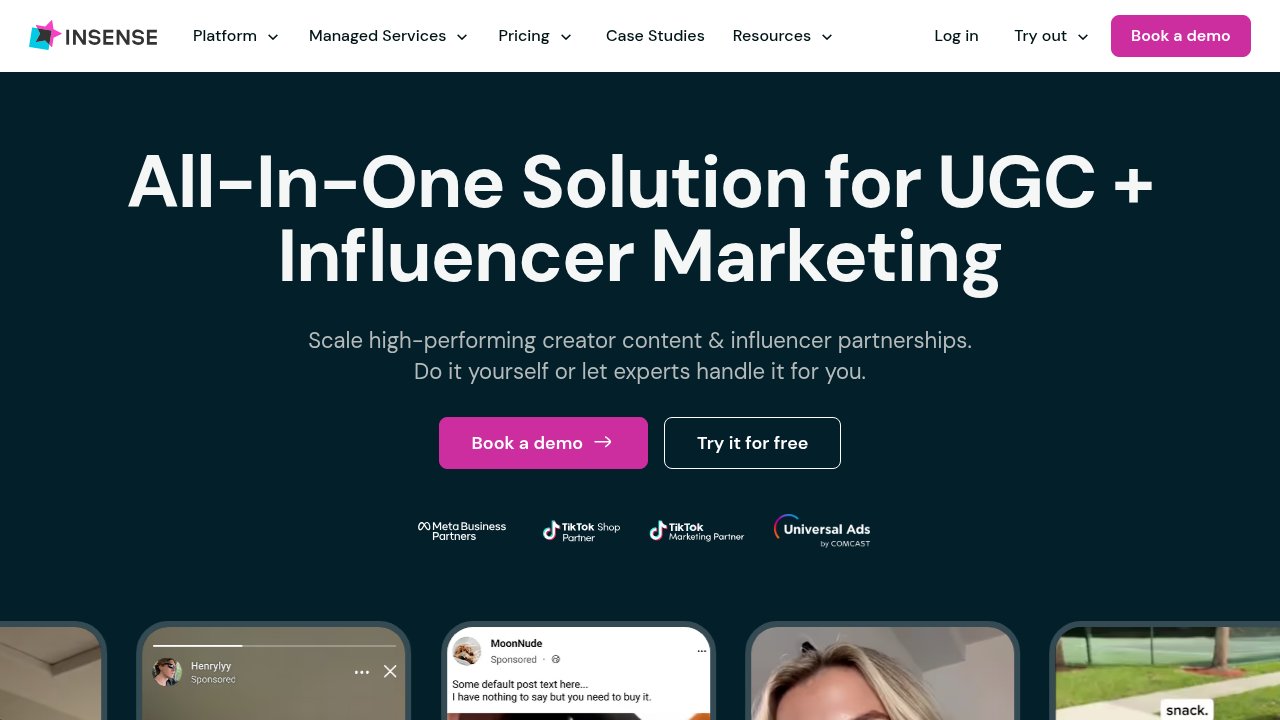
Insense says it has 115,000+ responsive creators across 57+ countries, and that every creator goes through its education program and uses its mobile app. The platform covers briefs, automatic contracts and payments, and campaign types from UGC to TikTok Spark Ads, TikTok Shop and Meta Partnership Ads. The managed service covers strategy, creative concepts, execution and optimization.
On the demo, I’d push hardest on who edits the videos. If it’s your own team, budget their hours along with the three layers above.
5. minisocial
More on minisocial
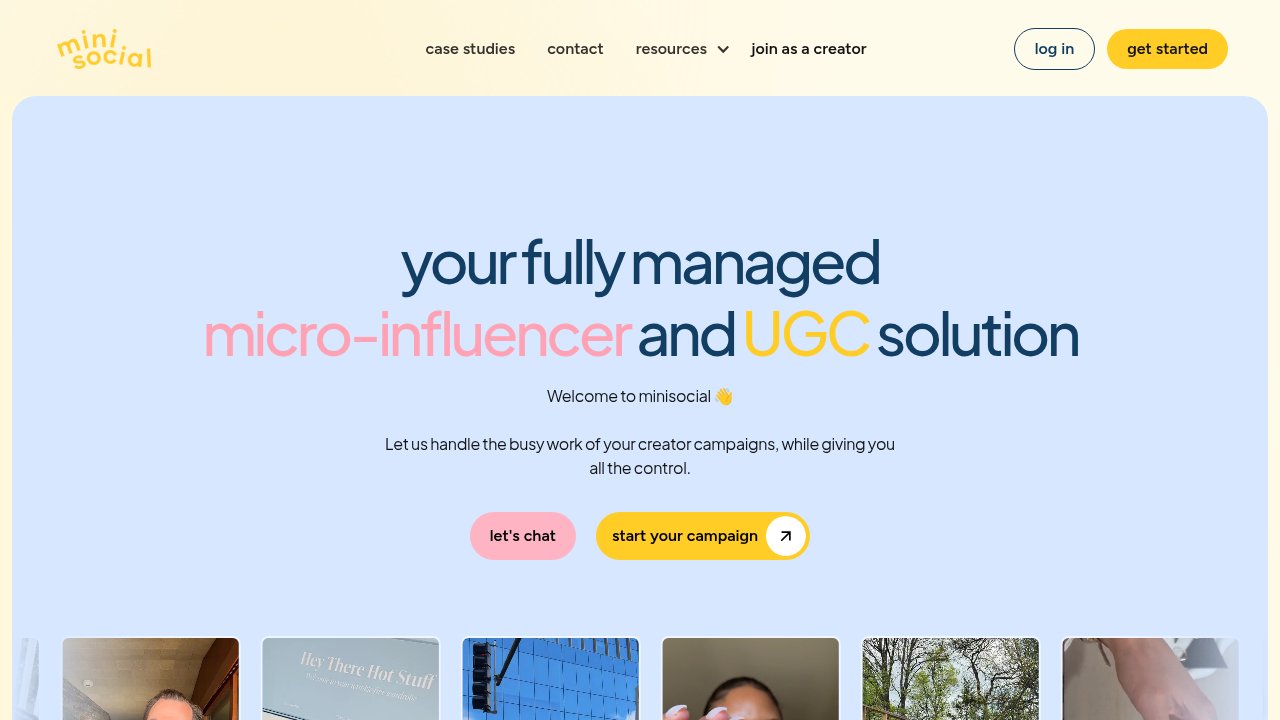
minisocial launched in 2018 and calls itself the original micro-influencer and UGC platform. It says it has managed 500,000+ micro-influencer collaborations with a database of 40,000 creators, and that each creator is vetted twice: once on joining and again when picked for your project. There are no long-term commitments, according to the FAQ.
The creators post too. One project gets you organic posts on micro-influencer accounts plus licensed files for your own ads, which is why I’d look here first for a launch with a fixed date.
6. Upfluence
More on Upfluence
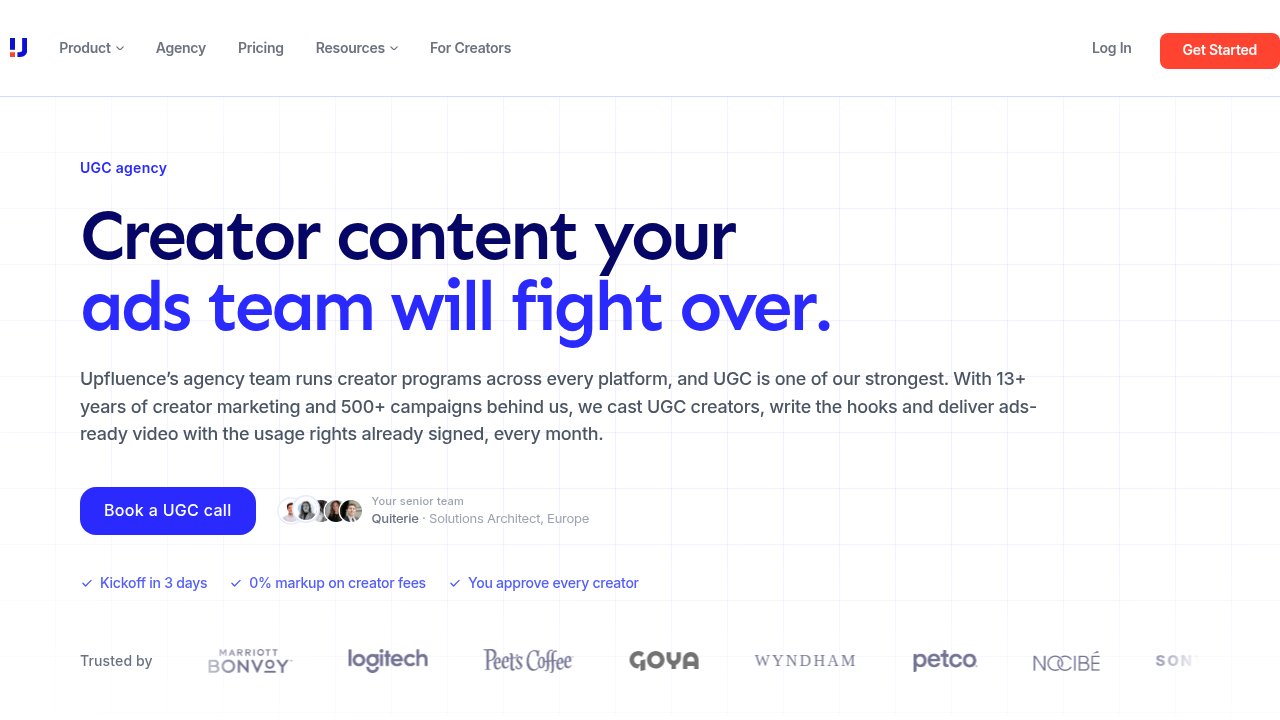
Upfluence cites 13+ years of creator marketing and 500+ campaigns. The UGC page names a senior team led by a VP of Services, with kickoff in 3 days. A sample program mixes 60% UGC specialists, 30% micro creators and 10% mid-tier creators, delivering hook variations in 9:16 and 1:1 cuts with paid usage rights and raw footage.
Paid usage, channels and duration agreed before anyone films: I’d ask any vendor on this list to put that in writing, and I’d want to know why if they won’t.
7. Billo
More on Billo
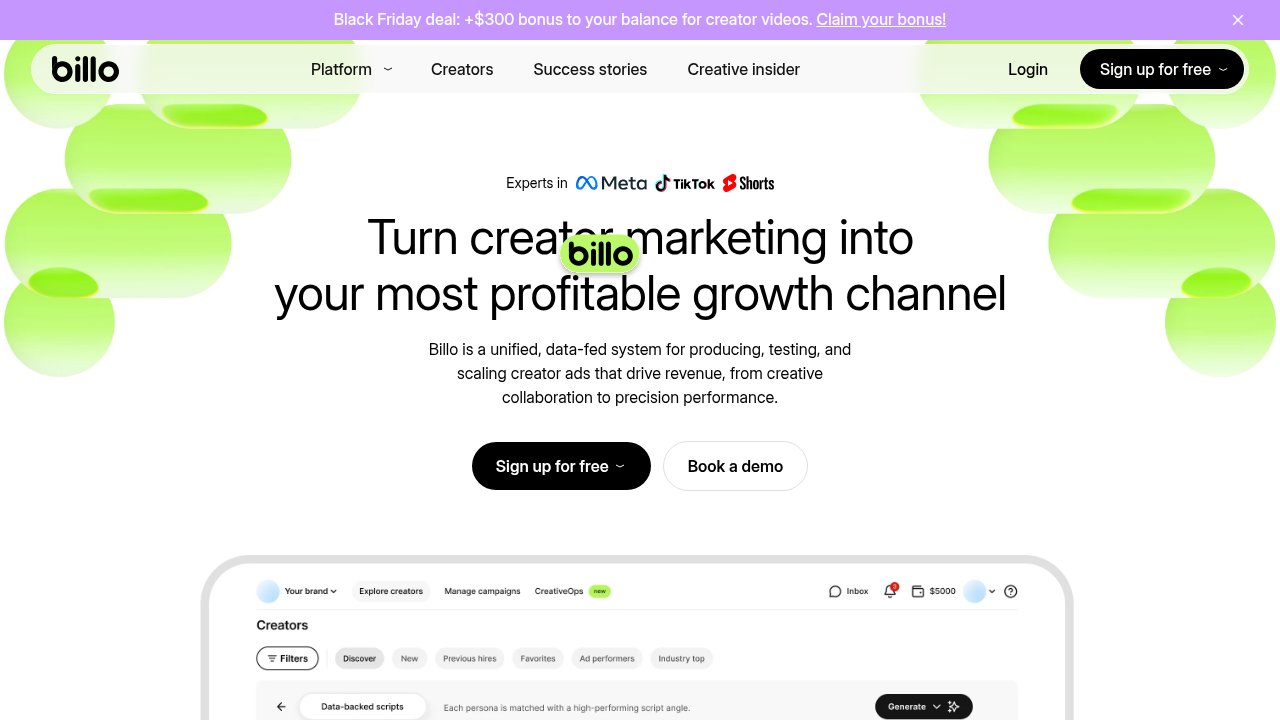
Billo says it is trusted by 37,000+ brands. Beyond videos, it sells organic posting on creator profiles and Partnership Ads from creator handles. The managed service adds end-to-end task coordination, creator follow-up, a post-production team and a dedicated Slack channel; you set the monthly volume and approve the videos.
If you’ve never bought UGC, a pack is a low-risk way to find out what it does for your account. Put the smallest one into a couple of concepts across several creators and decide on the managed tier afterward.
8. JoinBrands
More on JoinBrands
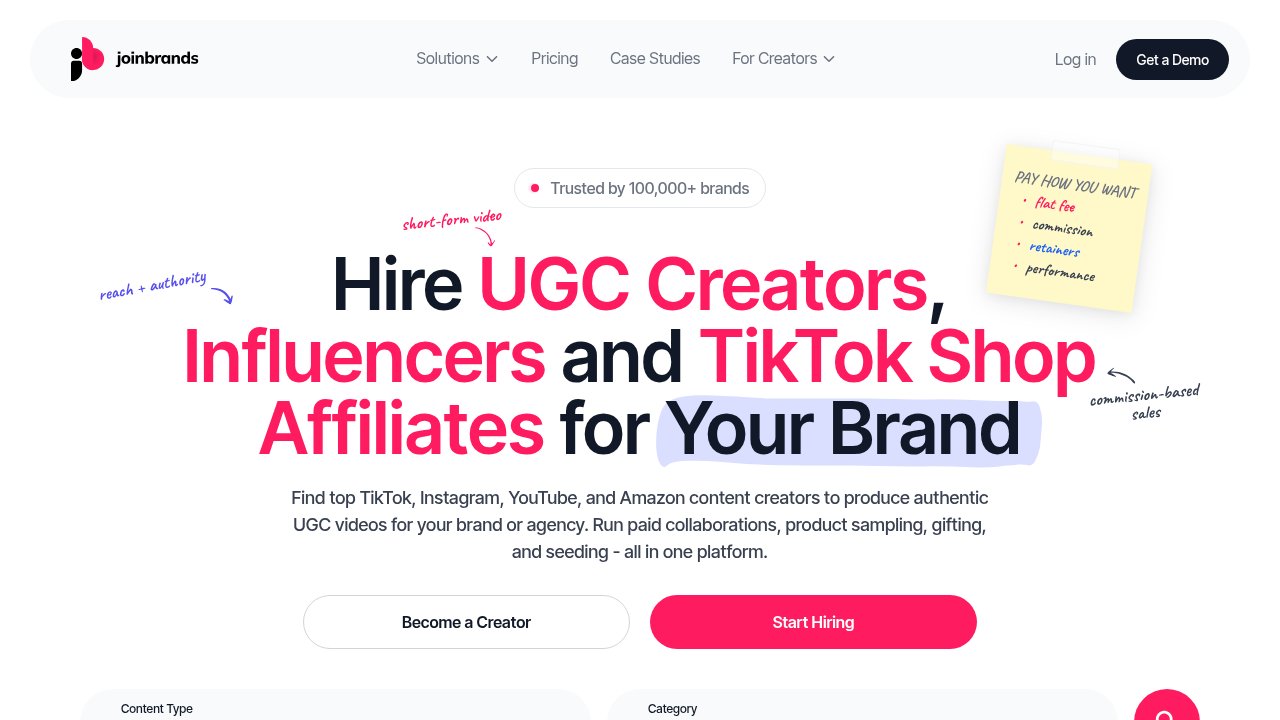
JoinBrands says it connects brands with 4M+ verified creators. Its campaign menu runs from UGC images and videos to social posting, retainers, live streams, local jobs and digital products. The three case studies on its homepage are all supplement brands, and the lead one grew on TikTok Shop.
It works like hiring freelancers. The platform pays people and handles the rights paperwork, and the creative direction is all yours, so send a tight brief and an example of the hook you want.
9. Cohley
More on Cohley
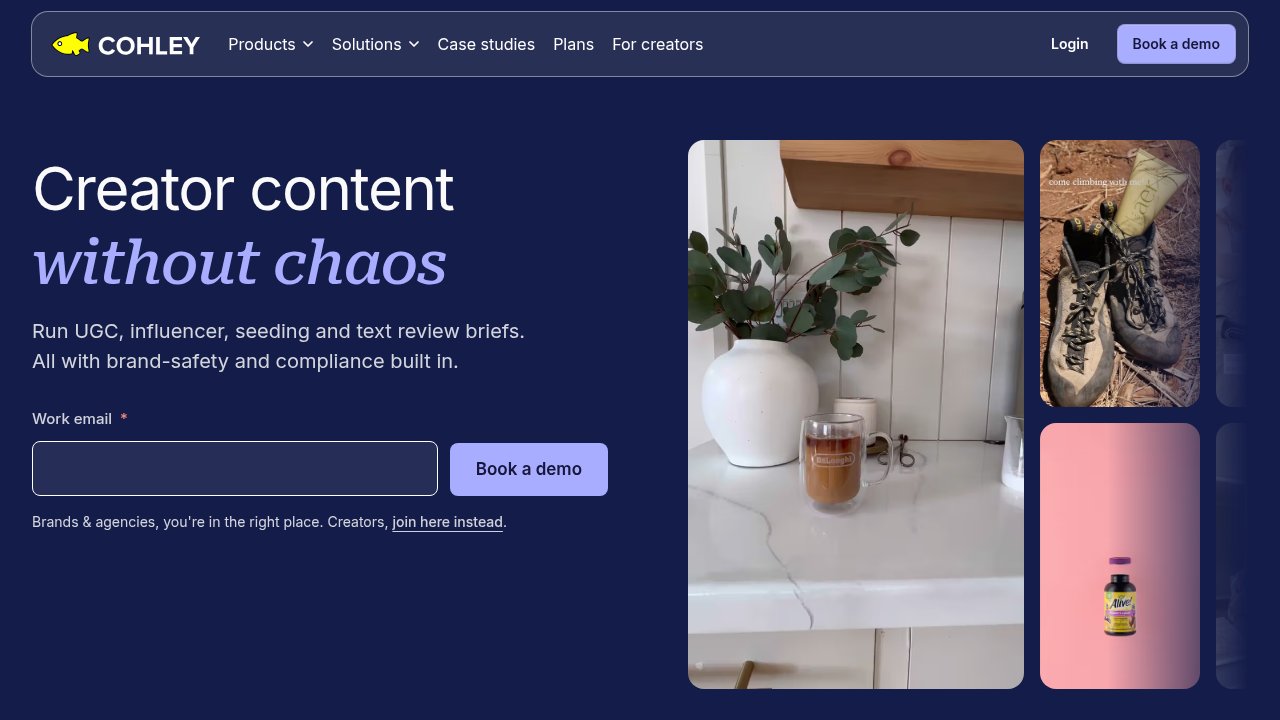
Cohley pitches itself as creator content without chaos. Its homepage leans on brand safety: automated asset analysis, licensed music for eligible briefs, and an AI agent called Finn (in beta) that briefs, matches and manages creators. The managed tier adds strategy, contracts and payments, creator recruiting and live briefing calls.
10. Influee
More on Influee
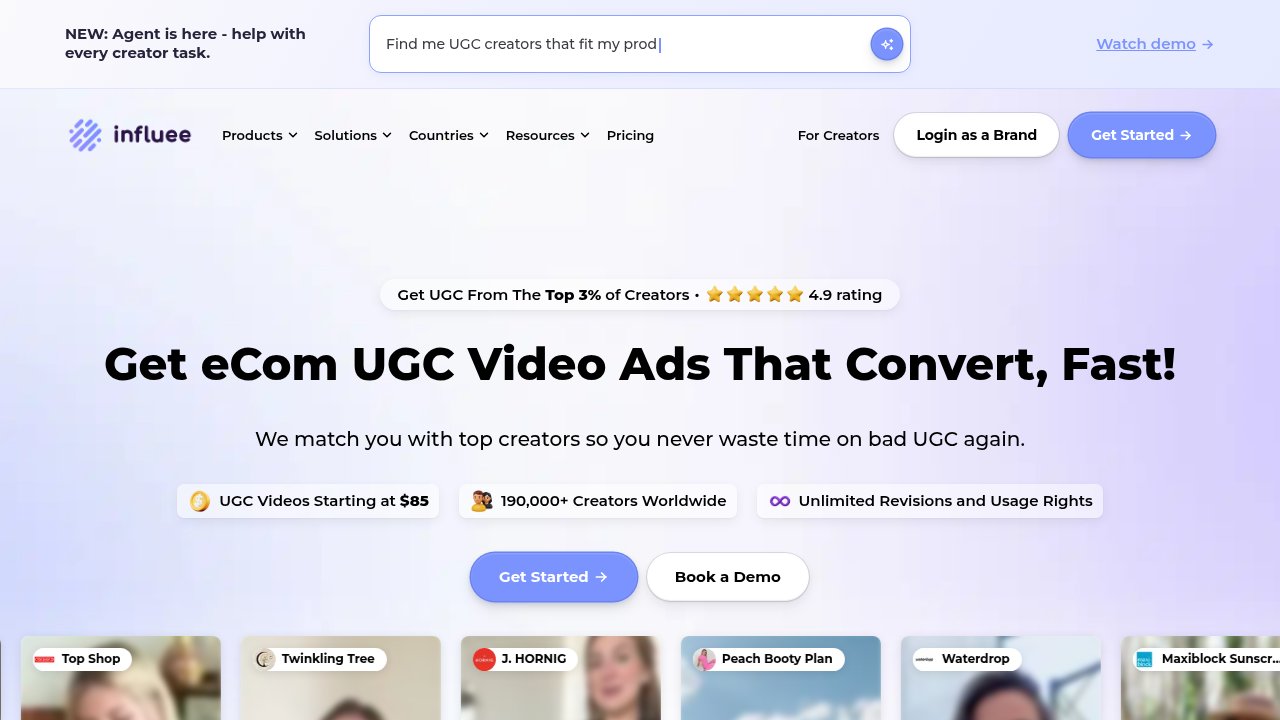
Influee says it has 190,000+ creators worldwide and offers a money-back guarantee. Its homepage lists recent creator work by brand and format (testimonial, Meta ad) and shows each creator's per-video price and when they last made a video. The pricing page puts the average 30-second UGC video in the USA at $93.
Ten collaborations on the $229 tier is enough to try a few hooks on a few faces. Add the creator fees before you call it a small test.
11. SideShift
More on SideShift
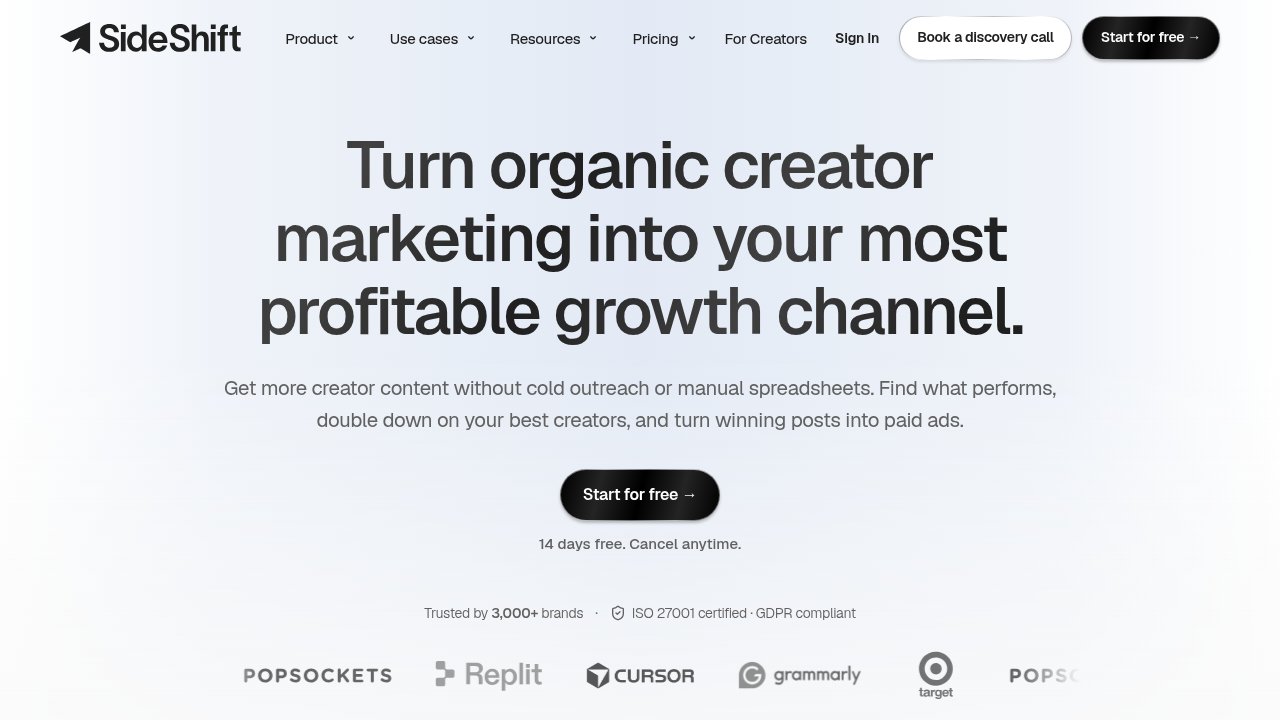
SideShift says it is trusted by 3,000+ brands and is ISO 27001 certified. Its homepage shows platform totals (views on posts in the last 90 days, payouts to creators in the last 30) and a numbered campaign flow in which creators make the content their own, you track results on organic, and the winners run as paid ads.
Of the twelve, SideShift makes it easiest to see organic and paid UGC as two stages of one program. It suits a team that’s happy to let views pick the hook before paying to boost it.
12. Statusphere
More on Statusphere
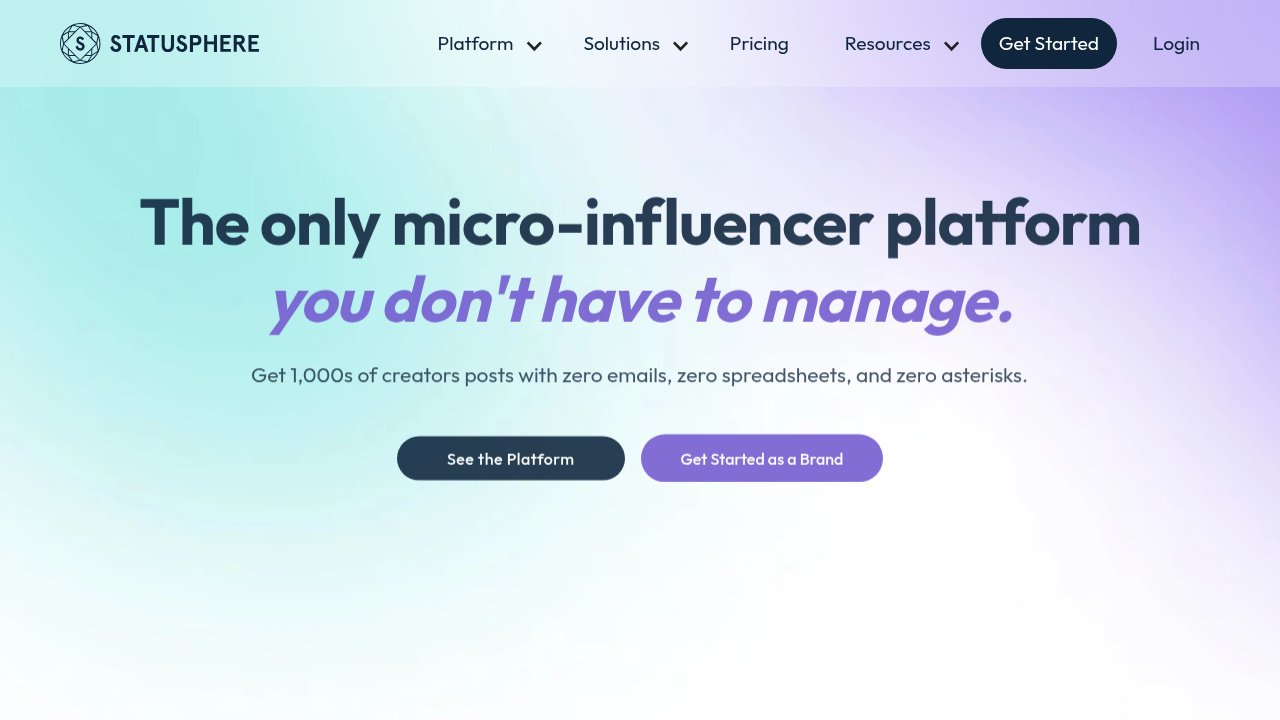
Statusphere calls itself the only micro-influencer platform you do not have to manage. Pricing includes product fulfillment with 48-hour shipping to creators, and covers TikTok, Instagram Stories, feed posts, Reels, YouTube Shorts, reviews and product seeding. Its AI campaign manager is called StevieOps.
I’d only bring Statusphere in with the paid team involved from the first week, since the ad codes are what let you run the best seeded posts as ads.
Model, price and rights, side by side
From each company’s own site, November 2026. “Quote” means no public number.
| Company | Type | Price signal | Rights and ad codes | Best for |
|---|---|---|---|---|
| UGC Factory | Managed, monthly retainer | Quote | Ask in the proposal | DTC brands on paid social |
| The UGC Agency | Managed, fixed monthly tiers | ₹72,000 to ₹2.4 lakh a month plus GST | Full commercial rights, raw masters | Brands advertising in India |
| UGC SHOP | Managed, fixed packages | $850 to $12,400 per package | Usage rights listed; Partnership Ads from Growth up | Packaged batches with creator-handle ads |
| Insense | Marketplace plus managed service | Platform from $400 a month billed yearly ($500 quarterly), plus fees and creator pay; managed from $2,500 a month | Lifetime rights, Partnership and Spark Ads | Teams running briefs themselves |
| minisocial | Managed, per project | From $3,000 for 10 creators, creator pay included | Fully licensed; ad codes and whitelisting | Planned launches with micro-influencers |
| Upfluence | Managed, 90-day pilot then annual | Quote | Paid usage, channels and term set before filming | Brands already running influencer programs |
| Billo | Marketplace plus managed service | Packs from $1,000 (up to 10 videos); managed from $2,000 a month | Ask per order; Partnership Ads offered | Volume testing on paid social |
| JoinBrands | Marketplace | Free with 15% fee, or $99 to $499 a month | 100% licensing and distribution rights | Small teams paying per piece |
| Cohley | Platform plus managed service | Seeding $35 per creator; suite quoted | Perpetual usage rights | Compliance-heavy review processes |
| Influee | Marketplace | $229 to $999 a month, plus 10% fee and creator pay | Usage rights included | E-commerce ad testing |
| SideShift | Organic-first platform | From $210 a month billed yearly ($299 monthly), plus creator spend | Contracts and usage rights included | Organic posts that become paid ads |
| Statusphere | Managed micro-influencer platform | From $10,000 | Ad codes for Spark and Partnership ads | Product seeding at scale |
Organic UGC, paid UGC ads and the rights in between
UGC comes in two shapes, and your contract should say which one you bought.
Organic UGC is a creator posting on their own account, or you posting their video on your brand’s channels. Paid UGC is the same kind of footage running as an ad, from your brand’s ad account or, more and more often, from the creator’s own handle. That’s where people get caught. A clip licensed for your Instagram grid may carry no license for a year of Meta ads, and an ads license may say nothing about using the creator’s name.
Running an ad through the creator’s identity used to be called whitelisting, and the term still shows up in contracts. Each platform now has its own version. On Meta it is partnership ads: according to Meta’s developer documentation on creating partnership ads, permission has to be in place at account or post level before the ad can deliver, and an ad published without it sits in a pending delivery state until the creator approves the brand’s request. If you’re wondering why a brand would bother routing creator content through these ads at all, Meta’s own interview with the VP of Marketing at Pair Eyewear covers it in about three minutes.
On TikTok the equivalent is Spark Ads. TikTok’s Help Center page on Spark Ads, last updated in June 2026, describes them as ads that use organic posts, either your own or other creators’ posts with their authorization, and says you can set how long that authorization code lasts. TikTok’s own walkthrough dates from 2021, so expect Ads Manager to look different today, but its numbered on-screen steps (entering the video code in TikTok Ads Manager, creating a campaign using Spark Ads) still match the authorization flow the Help Center describes.
On every UGC order, I’d get these written down:
- the channels the video may run on (organic brand channels, paid ads, website, retail, email);
- the term, with a start and an end date;
- whether ads can run from the creator’s handle, and who switches that authorization off at the end;
- whether you get raw footage, or only the edited master.
Several vendors above put this in writing on their own pages (The UGC Agency, Upfluence, Cohley and JoinBrands are the most explicit). For the rest, ask.
Disclosure basics: FTC and ASA
Paid UGC is advertising, and the creator’s relationship with the brand has to be disclosed. In the U.S., the FTC’s Disclosures 101 for Social Media Influencers says a disclosure in a video should be in the video itself and not just in the description, that viewers are more likely to notice disclosures made in both audio and video, and that free or discounted products count as a relationship. Simple words like “ad” or “sponsored” are often enough if they are hard to miss.
Brands are on the hook too. The FTC’s guidance on its Endorsement Guides, revised in 2023, says advertisers need reasonable programs in place to train and monitor members of their network, including telling creators exactly how to disclose and periodically checking what they post. So put the disclosure in the script and the brief, where someone can check it before the video goes out.
In the UK, the ASA and CAP publish the Influencers’ guide to making clear that ads are ads. It is now in its fourth edition, developed with the Competition and Markets Authority, and the 2026 update reflects the Digital Markets, Competition and Consumers Act. If your UGC runs in both markets, write the stricter of the two into the brief.
Choosing between a managed agency and a marketplace
A marketplace lowers the cost per video and hands your team the brief, the casting, the review rounds and the rights paperwork. A managed agency takes most of that on and charges for it. I’d count the hours your team can actually give each batch and price both routes with those hours on the bill; marketplaces look a lot less like a bargain once someone’s week is in the total.
Whichever route you pick, ask how many distinct hooks and creators the first batch includes. Ten videos of one concept is one test with nine repeats. Setting up a batch so each variation teaches you something is what our ad creative testing playbook is for. Short on hooks? Pull a few from the ad creative patterns roundup and put them in the brief.
If most of your spend goes to TikTok, the real TikTok ad examples and our list of TikTok marketing agencies cover the platform side. If you need edited social video beyond creator clips, start with the social media video agency comparison.
And ask for one piece of work in your category plus two references you can phone. When you call, ask what a normal month of deliveries looked like.
When the footage is the easy part
Every company above recruits creators and gets footage shot. For some teams that’s the simple bit. What piles up is everything around the footage: cutdowns in five ratios, motion graphics over a creator’s testimonial, an animated explainer for the product page the ads link to, a polished brand ad to sit next to the creator ones.
That’s the half our studio covers. A dedicated Creative Director runs requests across design, video editing, motion graphics and animation, working from footage you already own, creator clips included. We don’t source creators and we don’t do live-action filming or media buying. What we charge is one set monthly rate, or a per-project quote.
Creator ads and studio ads often end up in the same ad set. For the studio half, this is the kind of thing we make: an Apple Pay spot in 3D renders and motion graphics, short and clean.
Frequently asked questions
Marketplaces start lowest and managed services start higher. JoinBrands lists UGC videos from about $25 plus a platform fee, minisocial projects begin at $3,000 for 10 creators, and Statusphere starts at $10,000. Before comparing two quotes, add creator payments, platform fees and paid usage rights to each one, since some prices include them and some don't.
All three mean a paid ad that runs through a creator's identity. Whitelisting is the older term, used on any platform. Partnership ads are Meta's version, where permission is set at account or post level and the ad waits until the creator approves; Spark Ads are TikTok's, where the creator shares an authorization code with a set duration. Whatever you call it, the contract should name a start date, an end date and who revokes access.
Both the creator and the brand. The FTC expects advertisers to train the creators they pay on how to disclose and to check what goes up, and in the UK the ASA and CAP guide is written for brands and agencies as well as influencers. The simplest fix is to write the disclosure into the brief and the script, spoken and shown on screen, so someone checks it before the video ships and nobody is leaning on a caption alone.