12 Top Social Media Video Agency Partners for 2026
A hands-on guide to choosing a social media video partner. I compare 12 options with pricing, pros, cons, and a checklist to help you pick.

Your team needs six new social videos by Friday. Paid wants fresh creative, social wants cutdowns, product marketing wants a demo clip, and brand wants all of it to match. Internal capacity ran out two briefs ago.
I have sat on both sides of that scramble, and it usually comes down to three moves: hire in-house and wait out the ramp, patch the gap with freelancers and manage every handoff yourself, or bring in a partner who can cover strategy, scripting, editing, motion, and delivery in one workflow.
By 2026, video is simply how marketing teams communicate, and social formats sit at the center of the workload. The question I hear is not whether to make video. It is how to produce enough of it without slowing approvals, dropping quality, or turning the brand into a patchwork.
Every model has a cost. In-house teams know the brand and move fast on internal context, but hiring takes months and fixed headcount is hard to flex when things get busy. Freelancers solve a narrow problem quickly, then consistency slips the moment you need several editors, motion support, and steady weekly output. A social media video partner gives you broader capacity and a repeatable system, but only when the onboarding, the feedback loop, and ownership are actually clear.
This guide is built for that decision. I compare twelve partners, explain where each one fits, and flag what to check before you sign, with notes on pricing, evaluation criteria, and onboarding so you can pick a partner and run the relationship well from week one.
If your team needs a steady flow of social creative, social media video production support sits between one-off freelance help and a full internal build. The partner you want does more than ship files. They cut review friction, hold the brand together, and make weekly output something you can actually sustain.
1. Moonb
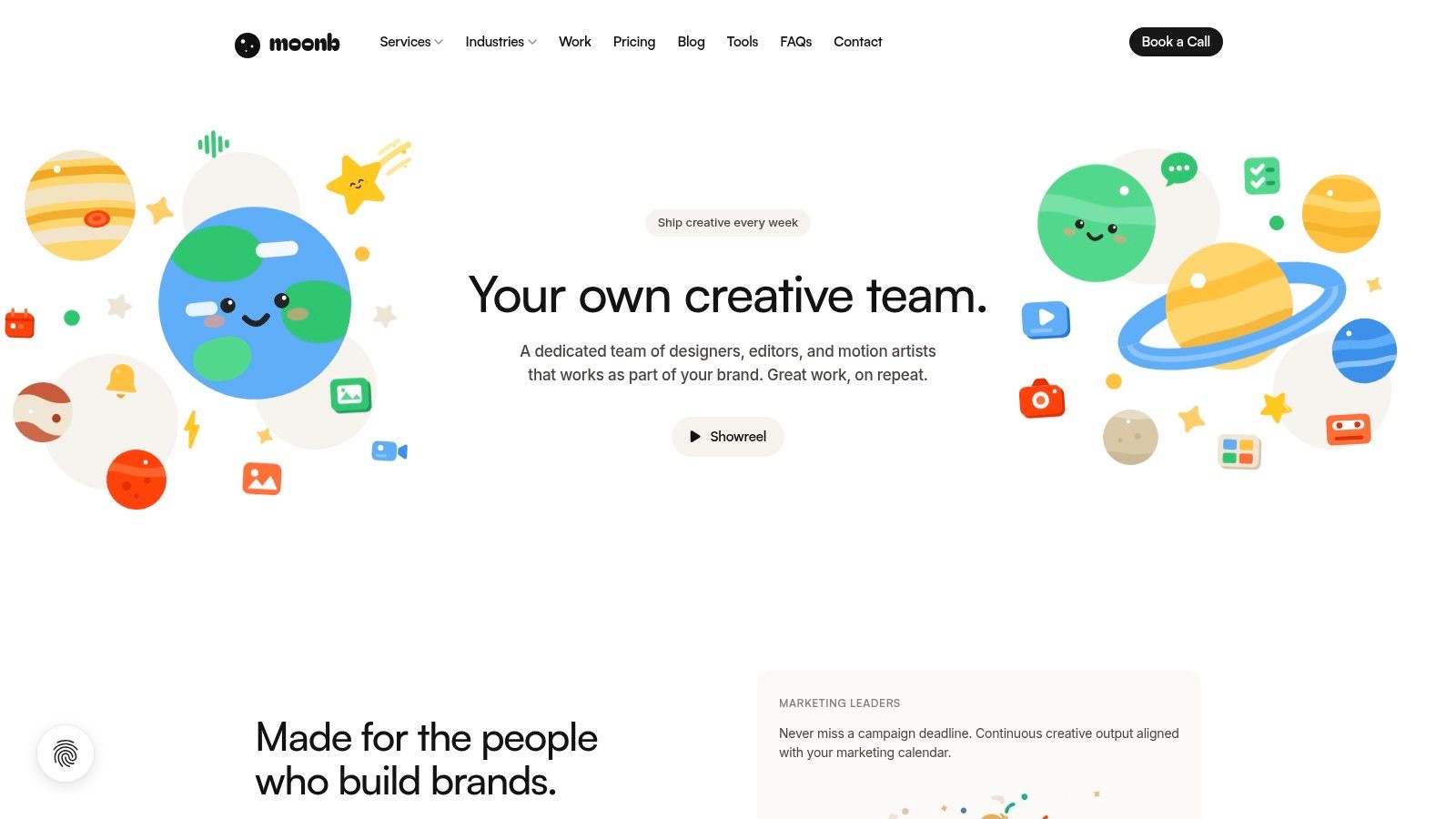
I helped build Moonb, so this entry comes from the inside; weigh it accordingly. With that on the table: Moonb fits B2B marketing teams that need ongoing output rather than the occasional campaign push. It is an embedded creative team led by senior creative directors, producing video, motion design, and design for companies that already know what they need and simply do not have the internal capacity to make all of it.
The practical difference is continuity. You are not handing briefs to a different freelancer every week. You get a dedicated team that learns your brand, holds the brand library, and delivers on a steady weekly rhythm, which matters when social content, product marketing, paid creative, and brand work all have to feel like they came from the same place.
For teams juggling demos, ads, explainers, launch assets, and social clips, one team can stay across most of that workload instead of five.
Pros and cons
- Best for steady output: A dedicated team learns the brand and keeps it consistent across channels.
- Fast enough for social: A weekly cadence and quick turnarounds keep content calendars full.
- Wide production range: Video, motion design, design systems, 2D animation, and 3D animation stay under one roof.
- Operationally clean: Full IP transfer, a shared workspace, and support for multiple brands cut handoff friction.
The trade-offs are real too.
- Pricing: Custom, based on scope.
- Engagement style: Best for teams that need ongoing work, not a single one-off video and then silence.
Plenty of the options below can produce polished work. Fewer can hold brand context over months while still moving quickly, and that is where I would point a team toward Moonb.
2. Chamber.Media
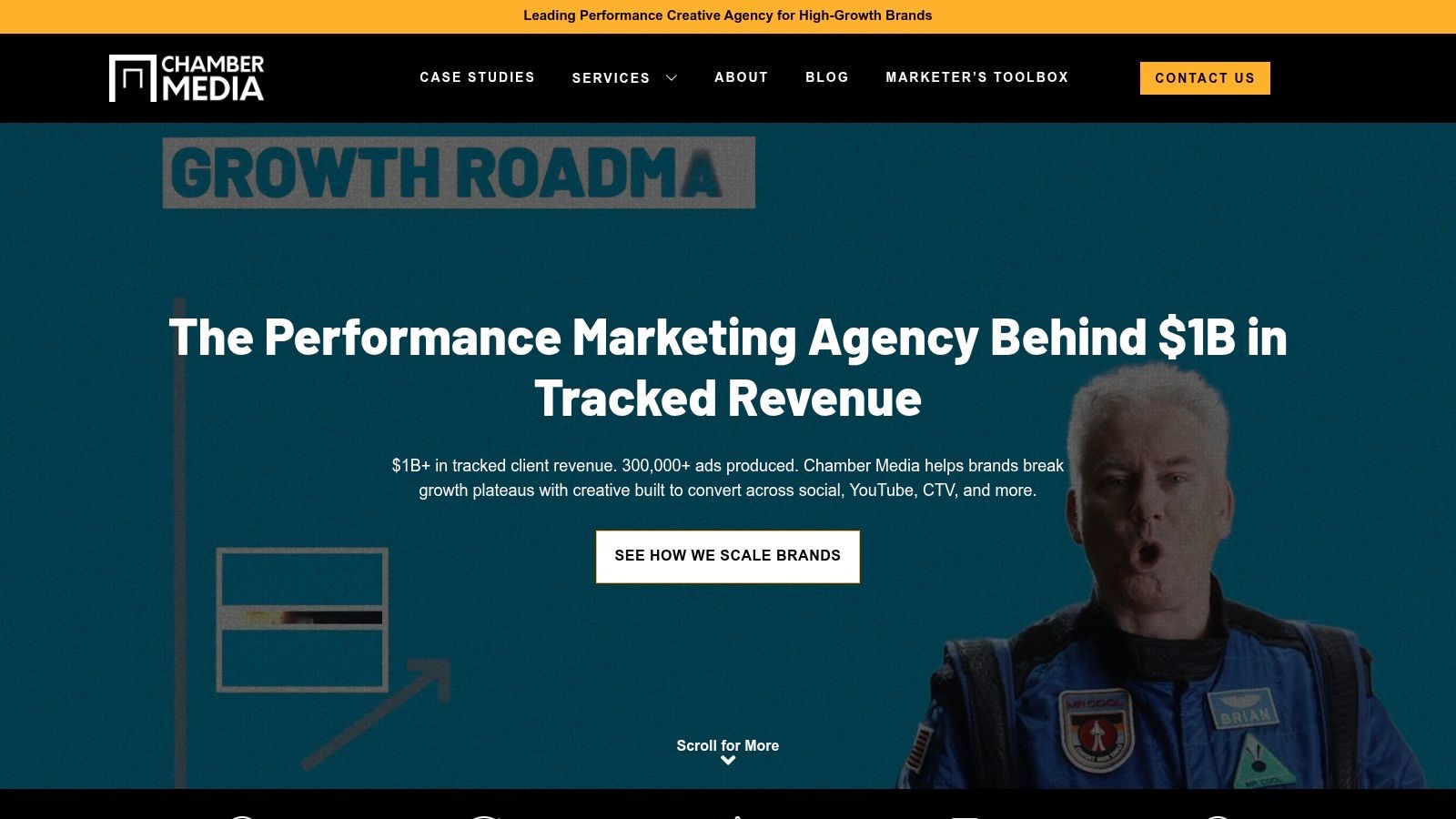
Chamber.Media is built for brands that care about paid social performance first. If your internal conversation is mostly CAC, ROAS, testing velocity, and creative refresh rate, this is the shop to look at.
Their model pairs creative production with media thinking, so they are rarely making one hero asset and calling it done. They produce variations across the funnel, from awareness creative down to retargeting edits.
What stands out
The value is alignment. A lot of teams split creative and media across separate partners, then spend months arguing over what actually drove the result. Chamber.Media narrows that gap by tying social-native video to paid campaign goals.
That makes them a stronger fit for Meta, TikTok, and YouTube ad programs than for brand storytelling or an organic social series. If performance creative is your main need, that focus works in your favor.
A good test for any paid-focused partner is whether they understand platform-native behavior, not just ad specs. Our notes on social media best practices get into how creative should adapt to channel context.
Pros and cons
- Performance orientation: Strong fit for teams running always-on paid social.
- Funnel coverage: They support top-of-funnel and retargeting creative, not just one flagship ad.
- Asset ownership: Clients own the final creative, which matters if you want to repurpose it internally later.
The drawbacks are straightforward.
- Pricing: Custom, quoted per engagement.
- Less suited to organic content: If you need weekly brand content, internal videos, or explainers, this can be narrower than you want.
Paid social teams usually need a creative engine, not just a production vendor, and Chamber.Media sits closer to that.
3. Vidsy
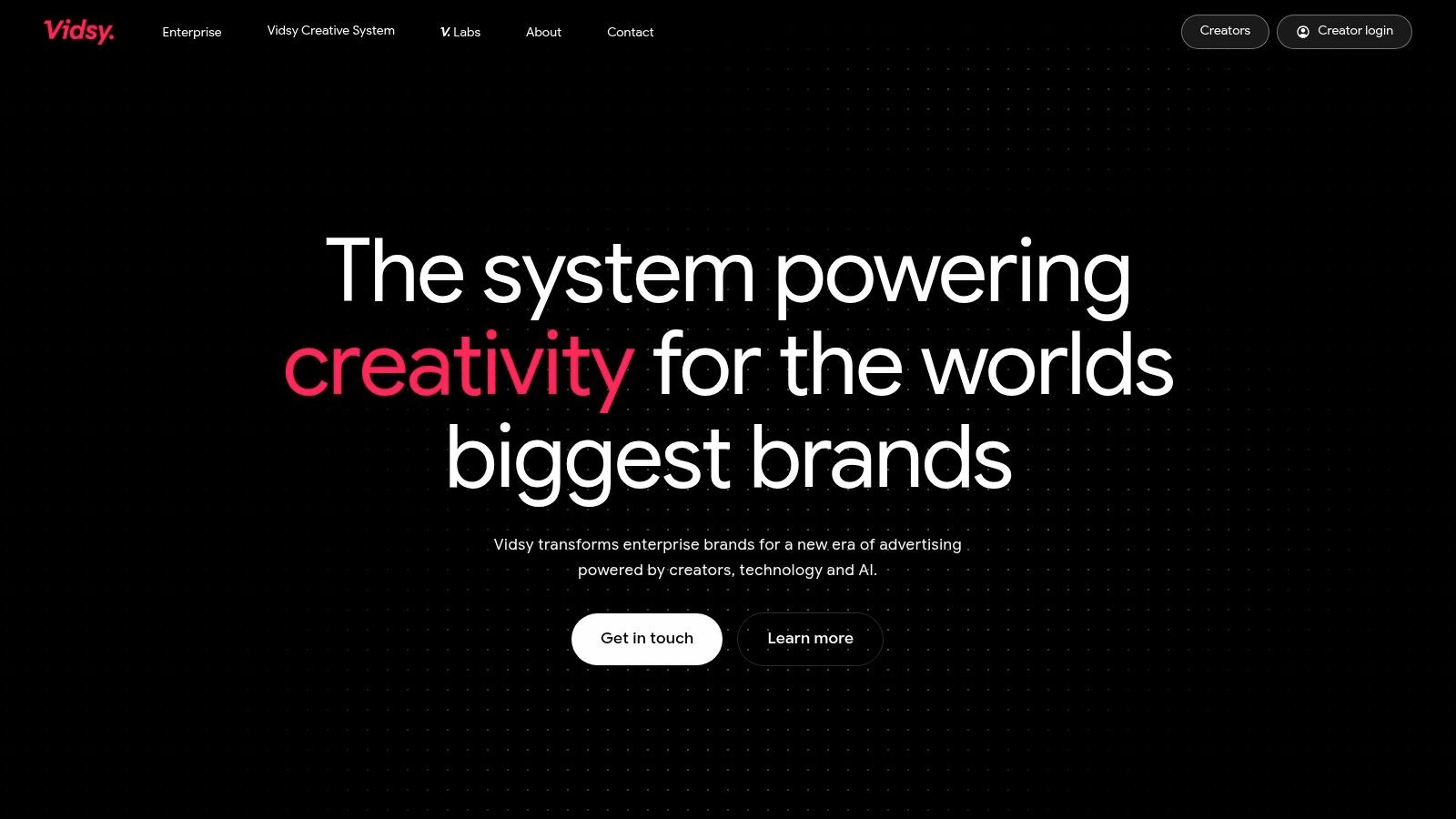
Vidsy is aimed at large brands that need social video across regions, business units, and channels. It runs on a creator-network model with workflows and governance that make more sense at enterprise scale than inside a small marketing team.
That is the lens I would use on it. Do not compare Vidsy to a boutique studio; compare it to the internal mess of a global brand trying to ship local, platform-native content without losing control of approvals or brand standards.
Best use case
Vidsy is strongest when scale is the actual problem. A company producing creative across Meta, TikTok, YouTube, Pinterest, and retail media, with assets that have to work across markets, is where the system earns its keep. It gives enterprise teams a way to organize a lot of content without building a giant internal bench.
Pros and cons
- Enterprise workflows: Strong fit for multi-region and multi-brand operations.
- Platform-native approach: Built around social and retail media formats, not just repurposed video.
- Scalable creator network: Useful when internal teams cannot source enough content styles on their own.
The friction points are predictable.
- Pricing: Custom, scaled to the program.
- Regulated categories: Brands in fintech, healthcare, or other tightly reviewed sectors may need stricter controls than a creator-led model gives by default.
A small team will find Vidsy heavy; a global one may find it necessary.
4. VidMob
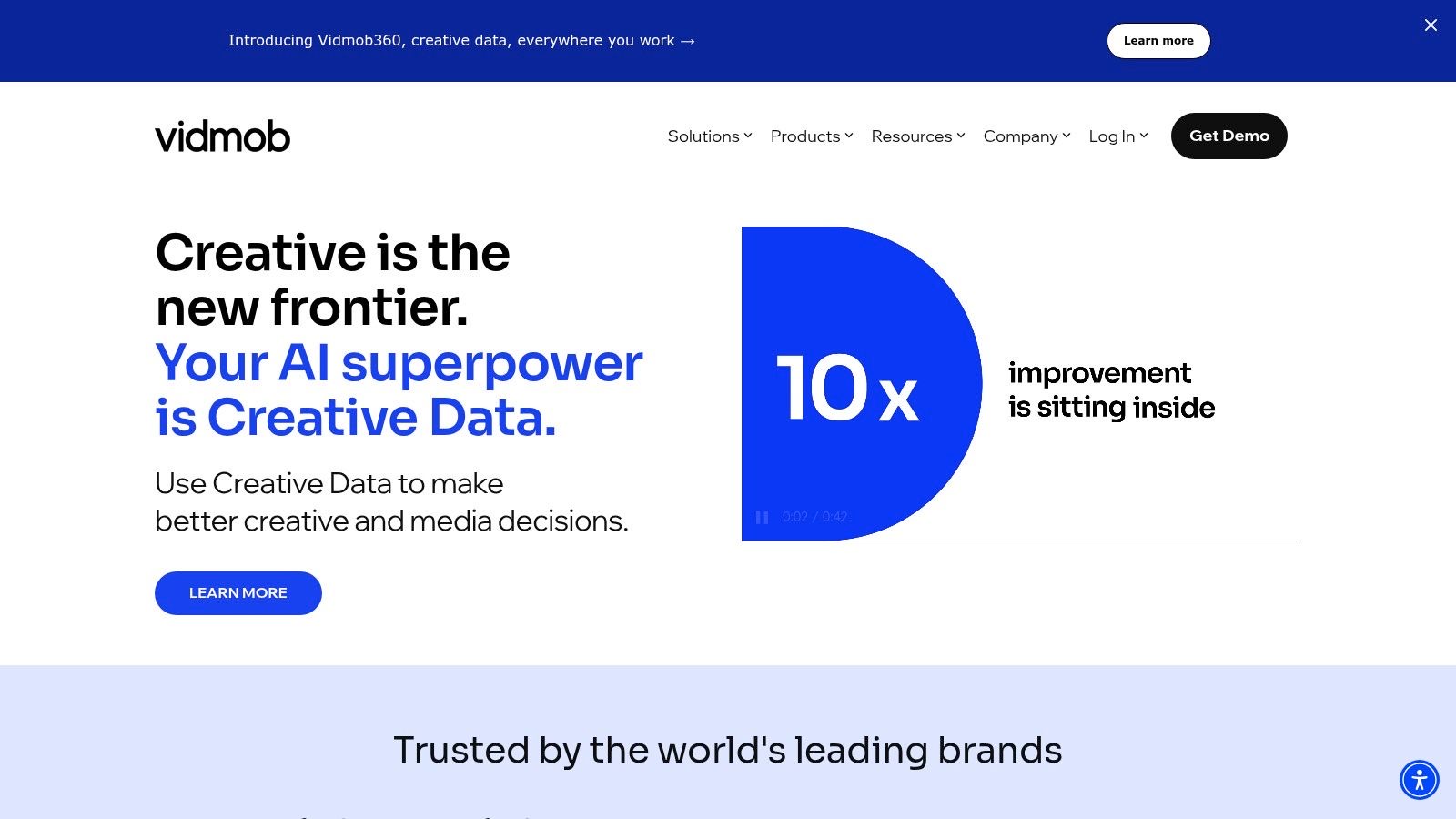
VidMob sits closer to the analytics side of creative. It pairs managed production with performance analysis, so teams can see which parts of an ad are working and which parts need to change.
That helps most when the first ad was never the problem. The hard part is making the next twenty versions with some intelligence behind them.
Why teams pick it
VidMob’s argument is that creative should be measured and optimized with real discipline. Their Creative Analytics and Scoring products are built around that, and official platform relationships add credibility for teams already buying media at scale.
For practitioners, the payoff is less about dashboards and more about edit direction. Once a creative team can see patterns in visuals, hooks, text, and pacing, the next round of assets gets better faster. Teams looking at automation and testing often also weigh broader tooling, which we cover in our roundup of AI tools for social media, but VidMob is more specific: it connects production decisions to paid performance.
Pros and cons
- Strong measurement layer: Better for teams that want feedback loops, not just files.
- Large-market support: Suits brands working across many regions and channels.
- Paid media fit: Most useful when campaigns are live and data is flowing back into creative.
There are limits.
- Pricing: Custom, tied to scale.
- Needs campaign volume: Without continuous paid programs, the analytics layer is more than you need.
A partner like VidMob pays off when your team already has media data and needs better creative decisions, not when you are still sorting out basic content operations.
5. Superside
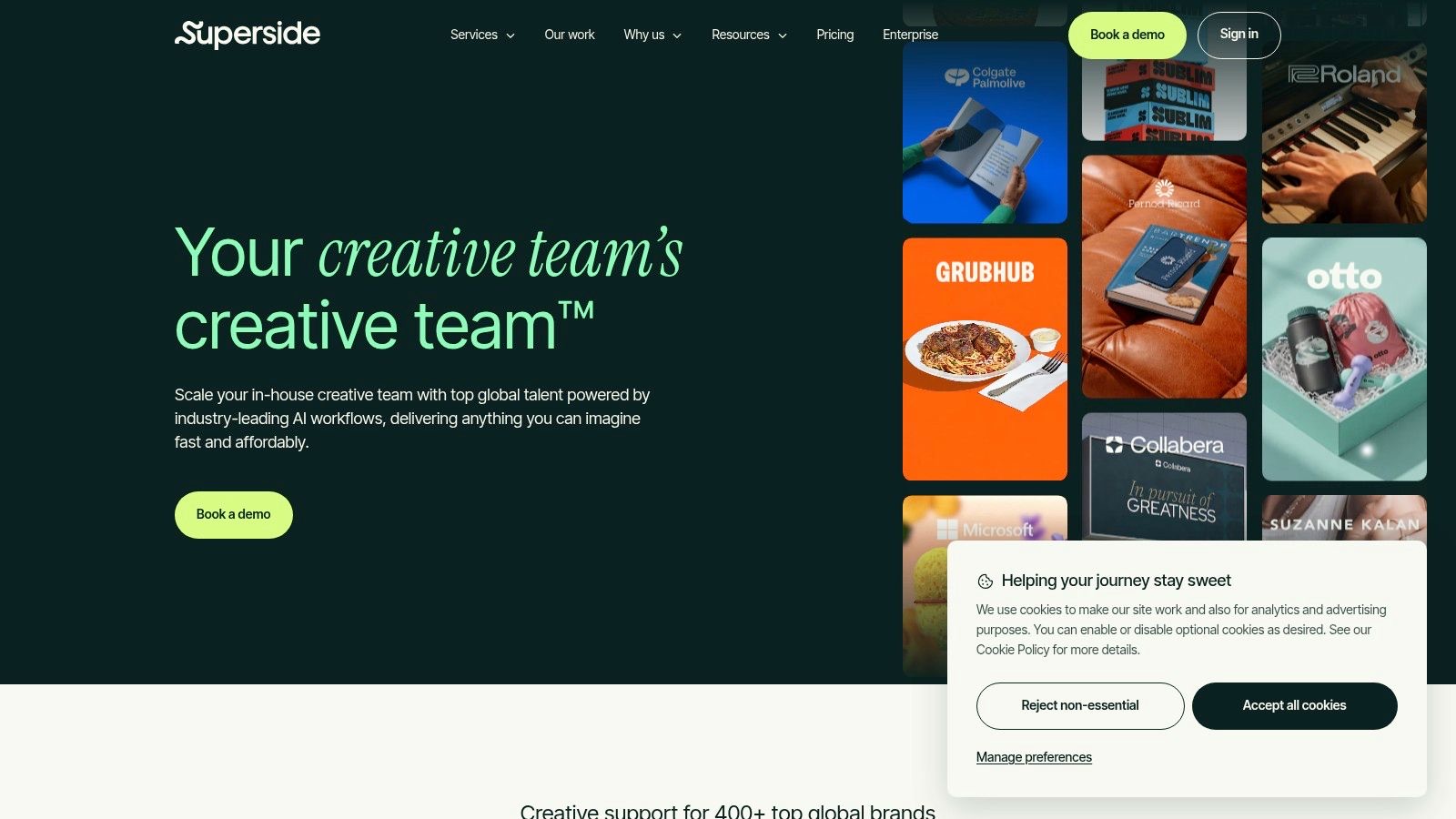
Superside is broader than a typical social video shop. Video is one slice of a much larger creative offering, which can be a real advantage if your campaigns span motion, ads, landing-page visuals, and brand design at the same time.
That breadth is the appeal. One team can cover more campaign surface area without you stitching several vendors together.
Where it works well
Superside is a strong option for enterprise marketing teams that want structured operations and a wide bench. When social video sits inside larger campaign production, the extra design coverage helps you keep motion, ad creative, static assets, and some brand work connected.
The trade-off is specialization. A broad partner can be efficient, though some teams still prefer a more focused video shop when social is the center of the strategy. If video is one lane among many, breadth is useful; if social video is the whole job, a narrower partner can move with sharper focus.
Pros and cons
- Cross-channel support: Helpful when social video connects to larger campaign design.
- Operational structure: Built for organized collaboration and recurring production.
- Enterprise fit: Larger teams tend to like the process discipline.
The downsides are familiar.
- Pricing: Custom, based on the plan you scope.
- Capacity model complexity: Turnaround and output can depend on how work is scoped and prioritized.
One note on language: Superside is often framed around recurring creative capacity. That fits some teams well, but it is still worth asking who will actually know your brand after the first few cycles.
6. Movers+Shakers
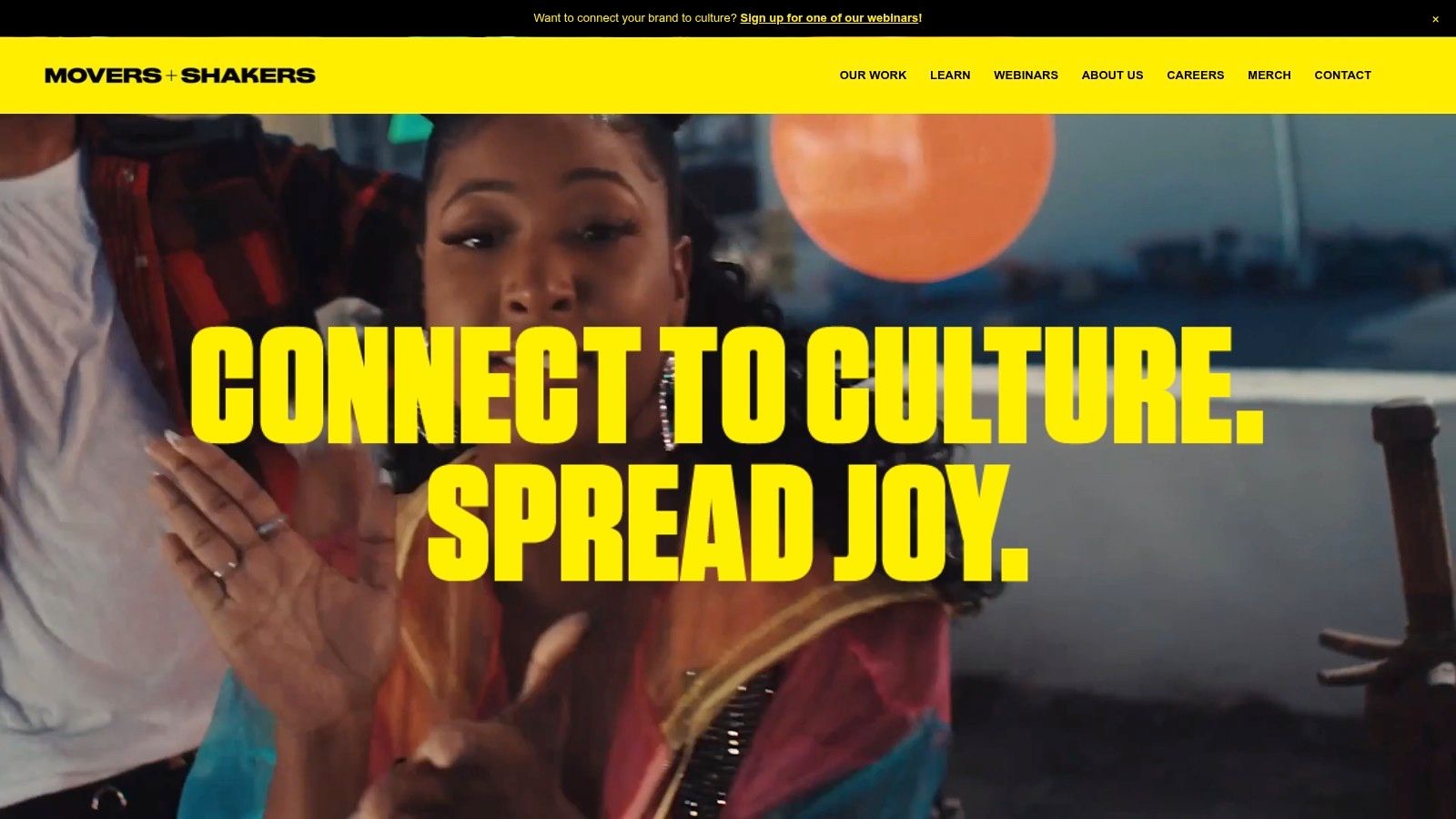
Movers+Shakers has a clear lane. It is one of the best-known names for TikTok-first brand campaigns and creator-led social activations in the U.S. If your team wants reach, participation, and cultural relevance, they belong on the shortlist.
They are not the right call for every brief. Where they shine is when social itself is the campaign rather than a distribution channel for something made elsewhere.
What they do best
Movers+Shakers is at its best when a brand needs native platform ideas instead of repackaged TV thinking. Creator partnerships, challenges, social concepts, and trend-aware execution sit at the core of the model, which is why they stand out for awareness and community work.
For teams building their own creative rules, our guide to short-form video is worth a read, because format changes the storytelling, not just the runtime. If you would rather outsource the work, our short-form video agency shortlist sorts the options by need.
Pros and cons
- Platform fluency: Strong grasp of TikTok-native campaign mechanics.
- Creator activation strength: Good fit when participation and social buzz matter.
- Brand awareness focus: Useful for top and mid-funnel work.
The constraints matter too.
- Pricing: Custom, per campaign.
- Less direct-response oriented: If your main KPI is paid conversion testing, they may not be the first call.
Movers+Shakers is a specialist, and that is a strength when the brief matches them.
7. MuteSix
MuteSix is a performance marketing shop with an in-house creative studio, StudioSix. It is built for paid social programs where media buying and creative testing need to stay close together.
That setup works best when your team treats creative as the lever, not just the packaging. E-commerce brands often like the model because it supports frequent iteration tied to paid results.
Practical fit
MuteSix is strongest in direct-response environments. Producers, editors, and media buyers work in one loop, which usually means faster creative testing and less lag between a performance readout and the next round of edits.
If you are trying to sharpen your ad-testing inputs before choosing a partner, our notes on ad creative make a useful prep read.
Pros and cons
- Tight media and creative loop: Good for continuous paid testing.
- Direct-response experience: Better fit for performance brands than for general brand storytelling.
- Dedicated team model: Useful when you want continuity across testing cycles.
Watch for the trade-offs.
- Pricing: Custom, quoted to the program.
- Not built for one-off projects: It makes more sense for always-on paid work than occasional creative requests.
8. Trendy Grandad
Trendy Grandad is a video production agency built specifically for social-first and YouTube content, covering strategy, scripting, filming, editing, animation and channel management. They produce short-form work for TikTok, Reels and YouTube Shorts alongside long-form YouTube and paid social creative, working on a monthly retainer model with an in-house creative team. They operate across multiple offices including London, Manchester, New York, Seattle and Dubai.
Best fit
Brands wanting a dedicated retainer partner for high-volume YouTube and short-form social video.
Pros and cons
Strengths
- Explicitly specializes in social-first and short-form video rather than treating it as a side service
- Full in-house creative team covering strategy through post-production and channel management
- Global footprint with offices across the UK, US and Dubai for in-person production
Trade-offs
- Retainer model is aimed at brands wanting ongoing volume, not one-off projects
- Heavy emphasis on YouTube alongside short-form, so best when a brand wants both formats
- Not a self-serve or low-cost option for small teams
Website: Trendy Grandad
9. Shuttlerock
Shuttlerock is a creative production system that helps global brands produce large volumes of platform-ready video and social ad assets at scale, combining in-house designers, owned production studios and AI-enabled workflows. They specialize in creating social-first video creative optimized for major platforms and highlight partnerships with the likes of Meta and TikTok. Their model is geared toward high-volume, algorithm-driven marketing across formats, channels and languages.
Best fit
Enterprise brands needing high-volume, platform-optimized social video assets at scale.
Pros and cons
Strengths
- Purpose-built for producing social and short-form video creative at large scale
- Owned global studios and an established platform-partner track record with Meta and TikTok
- Strong for localization and high-volume asset variation across many markets
Trade-offs
- Built for enterprise-scale volume, which can be more than smaller brands need
- Positioned as a production system rather than a bespoke creative-director-led studio
- Recurring pricing sits at a premium tier suited to larger teams
Website: Shuttlerock
10. inBeat
inBeat is a creative growth agency focused on UGC production, creator partnerships and performance creative for social platforms like TikTok, Meta and Snapchat. They combine short-form video and UGC ad production with paid media management and creative testing, positioning creator-led content as the core of their offering. They are certified partners with TikTok, Google and Meta.
Best fit
Brands wanting creator-led UGC and short-form video engineered for paid social performance.
Pros and cons
Strengths
- Strong specialization in UGC and creator-led short-form video for paid social
- Ties creative production to performance testing and paid media optimization
- Certified partner status with TikTok, Google and Meta
Trade-offs
- Broader than pure video, spanning influencer and paid media, so less of a dedicated production studio
- Heavy performance-marketing lean may not suit brands wanting purely brand-led creative
- UGC-first approach is a specific style that won’t fit every brand
Website: inBeat
11. Vidico
Vidico is a creative production company that produces video for tech, SaaS and ecommerce brands, including social media and short-form content for TikTok, Instagram Reels, YouTube Shorts and other platforms alongside explainers, product demos and brand films. They offer social video production and can manage output under a monthly retainer, acting as an extension of a client’s team. Their positioning is heavily oriented toward the technology sector.
Best fit
Tech, SaaS and ecommerce brands wanting social video alongside product and brand films.
Pros and cons
Strengths
- Produces short-form social video alongside a full range of product and brand video formats
- The recurring option gives predictable, ongoing creative output
- Deep specialization and case-study depth in tech, SaaS and ecommerce
Trade-offs
- Describes itself as a broader creative production partner rather than a pure social-media agency
- Strong tech/SaaS focus may be less ideal for non-tech consumer brands
- Best when a brand needs a mix of video types, not just short-form social
Website: Vidico
12. Fresh Content Society
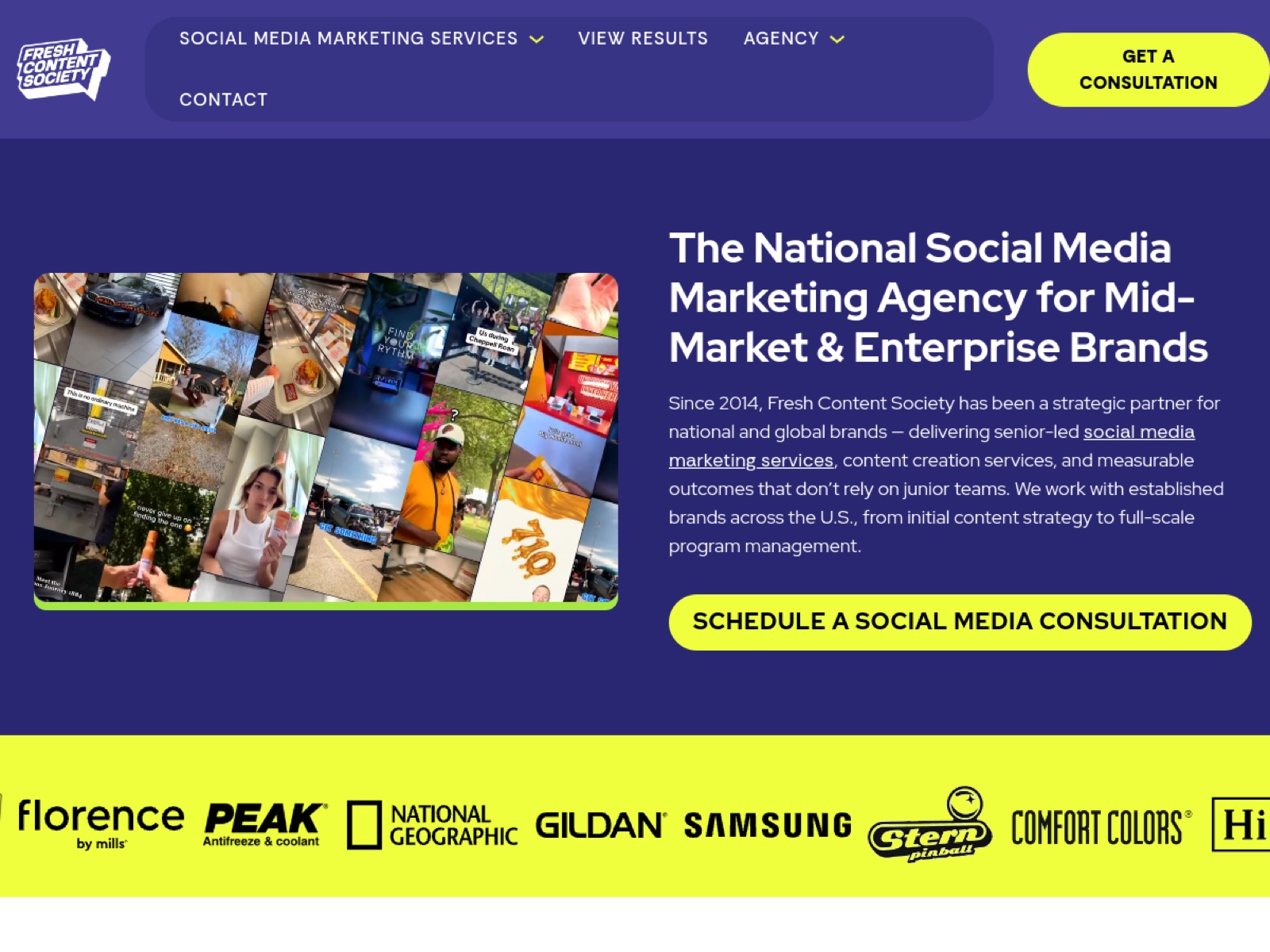
Fresh Content Society is an independent social media marketing agency, founded in 2014, that creates platform-native content for brands across TikTok, Instagram, YouTube, LinkedIn, Facebook and X. Their content services span short-form video, UGC, influencer collaborations and custom graphics, all built to perform on each platform, delivered within senior-led social programs. They focus on mid-market and enterprise brands, including complex B2B, CPG and industrial categories.
Best fit
Mid-market and enterprise brands wanting short-form video inside a full social media program.
Pros and cons
Strengths
- Produces platform-native short-form video and UGC as part of its content offering
- Independent, senior-led teams with experience across B2B, CPG and enterprise clients
- Covers the wider social program (strategy, community, paid) around the video work
Trade-offs
- Positioned as a full social media marketing agency, so video is one part of a broader scope
- Oriented to mid-market and enterprise, less suited to small brands or one-off video needs
- Best when a brand wants an end-to-end social partner, not a standalone video studio
Website: Fresh Content Society
How the 12 partners compare
| Partner | Best fit | Model | Where it stands out |
|---|---|---|---|
| Moonb | Steady weekly output across video, design, and motion | Dedicated embedded team, custom scope | Brand continuity plus roughly 48-hour turnarounds |
| Chamber.Media | Paid social performance | Creative plus media management | Ties social-native creative to paid goals |
| Vidsy | Enterprise, multi-region social | Creator network with governance | Platform-native production at scale |
| VidMob | Data-informed creative iteration | Managed production plus analytics | Creative analytics and scoring |
| Superside | Cross-channel creative at scale | Recurring creative operations | Broad creative bench |
| Movers+Shakers | TikTok-first brand campaigns | Concepting plus creator activations | Native platform and culture ideas |
| MuteSix | Always-on paid and direct response | Creative embedded with media buying | Tight media-to-creative loop |
| Trendy Grandad | High-volume YouTube and short-form | Monthly retainer, in-house team | Social-first and YouTube specialization |
| Shuttlerock | Enterprise, high-volume social assets | Production system, owned studios | Scale and localization across markets |
| inBeat | Creator-led UGC for paid social | UGC production plus paid media | UGC tied to performance testing |
| Vidico | Tech and SaaS social plus brand films | Project or monthly retainer | Depth in tech, SaaS, and ecommerce |
| Fresh Content Society | Short-form inside a full social program | Senior-led social programs | Platform-native content and program coverage |
A checklist for choosing the right partner
By now your team is ready to ship more video, and the hard part is rarely ideas. It is picking a partner who can handle your approval chain, hit deadlines, and hold quality steady after the first few projects. That is what actually separates the good ones.
A social media video partner should fit the way your team already works, or improve it with a process you can maintain. A strong reel helps, but it will not tell you who runs the account, how revision rounds are managed, or what happens when legal feedback lands two hours before launch. So beyond creative taste, you want a way to evaluate the partner, a gut check on pricing, and an onboarding plan that removes friction in month one.
What to ask in the first call
Use the first call to read both creative fit and operating fit.
- Review the portfolio by platform: Does the work feel native to TikTok, Instagram, YouTube, or LinkedIn, or is the same edit just resized and reposted everywhere?
- Ask how the work gets made: How are briefs submitted, who writes scripts, who owns edits, how many review rounds are standard, and how are final assets organized and delivered?
- Press on outcomes: Ask what a given video was meant to do, whether that was reach, paid conversion, product explanation, or thought leadership. Good partners connect the format to the goal.
- Clarify pricing early: Ask what the base scope includes, what triggers extra cost, and whether the model suits weekly output, campaign bursts, or larger launches.
- Meet the delivery team: Confirm who runs your account after kickoff. Senior leadership often sells the work, but producers and editors are the ones who make or break the relationship.
One filter I lean on is speed under constraint. Ask how they handle late script changes, missing footage, stakeholder disagreement, or a platform-specific recut, because the answer tells you more than any polished case study.
The right partner is the one your team can brief clearly, review quickly, and trust week after week.
The onboarding workflow that saves time
Good onboarding is operational, not ceremonial. A partner should ask for brand guidelines, past assets, channel priorities, examples you like and dislike, stakeholder roles, approval order, compliance rules, and file access, and that is how teams avoid a messy first month.
For marketing leaders, four setup steps usually matter most:
- Define the content mix: Separate paid social ads, organic posts, explainers, demos, sales enablement videos, and internal requests. Different formats need different timelines and review standards.
- Set the review chain: Name who gives feedback, who approves final work, and who breaks a tie. This cuts revision loops fast.
- Start with repeatable formats: Build month one around assets you know you need regularly, like weekly cutdowns, product clips, testimonial edits, and founder videos, then expand once the workflow is stable.
- Match metrics to intent: Judge brand videos, direct-response ads, and executive thought leadership differently. One reporting template should not govern all three.
Pricing benchmarks help here too. If a partner cannot explain what a typical monthly scope looks like, how turnaround changes cost, or where extra revision time shows up, your cost planning stays fuzzy. Clear operators can usually outline ranges, production assumptions, and trade-offs before the second call.
Video already earns its spend because it moves reach, consideration, and purchase across channels. The harder question is management: can this partner produce reliable output your team can approve without a fire drill every week? A good one lowers the coordination load. Briefs get sharper and fewer projects stall halfway through.
If your team needs more video, motion, and design than it can make in-house, Moonb is one practical place to start: a dedicated creative team that learns your brand, works on a steady weekly rhythm, and delivers social video, explainers, demos, ad creative, and motion design that is on brand and ready when you need it.
Before you shortlist anyone, it is worth seeing how the people who do this well think about short-form. HubSpot’s marketing team breaks down building a short-form strategy that travels across platforms.
Frequently asked questions
Most do not publish menu pricing. Expect a custom monthly scope or retainer, and the number moves with how much you produce, how many formats you need, how fast you want turnarounds, and whether media buying is bundled in. A performance shop that also runs your paid budget will quote very differently from a partner that only produces creative. Ask each one to walk you through a typical monthly scope before you compare quotes side by side.
It depends on volume and consistency. A freelancer is fine for a narrow, occasional need. An in-house team makes sense once video is core and you can justify the headcount and the ramp. A partner sits in between, giving you more capacity than a freelancer and more flexibility than a new hire, which is why most teams reach for one when weekly output outgrows what they can staff. Match the model to how much you actually ship, not to the org chart you wish you had.
For social cutdowns and simple edits, some partners deliver in roughly a couple of days, and a few build their whole model around a 48-hour rhythm. Larger productions with shoots, animation, or heavy motion take longer and should be scoped as projects. Before you sign, ask for realistic timelines on both a quick weekly cutdown and a bigger launch asset, and confirm how many revision rounds fit inside that window.