Short-Form Video: A Marketer's Guide for 2026
A practical 2026 guide to short form video: creative frameworks, platform strategy for TikTok, Reels, and Shorts, and how to measure and repurpose your wins.

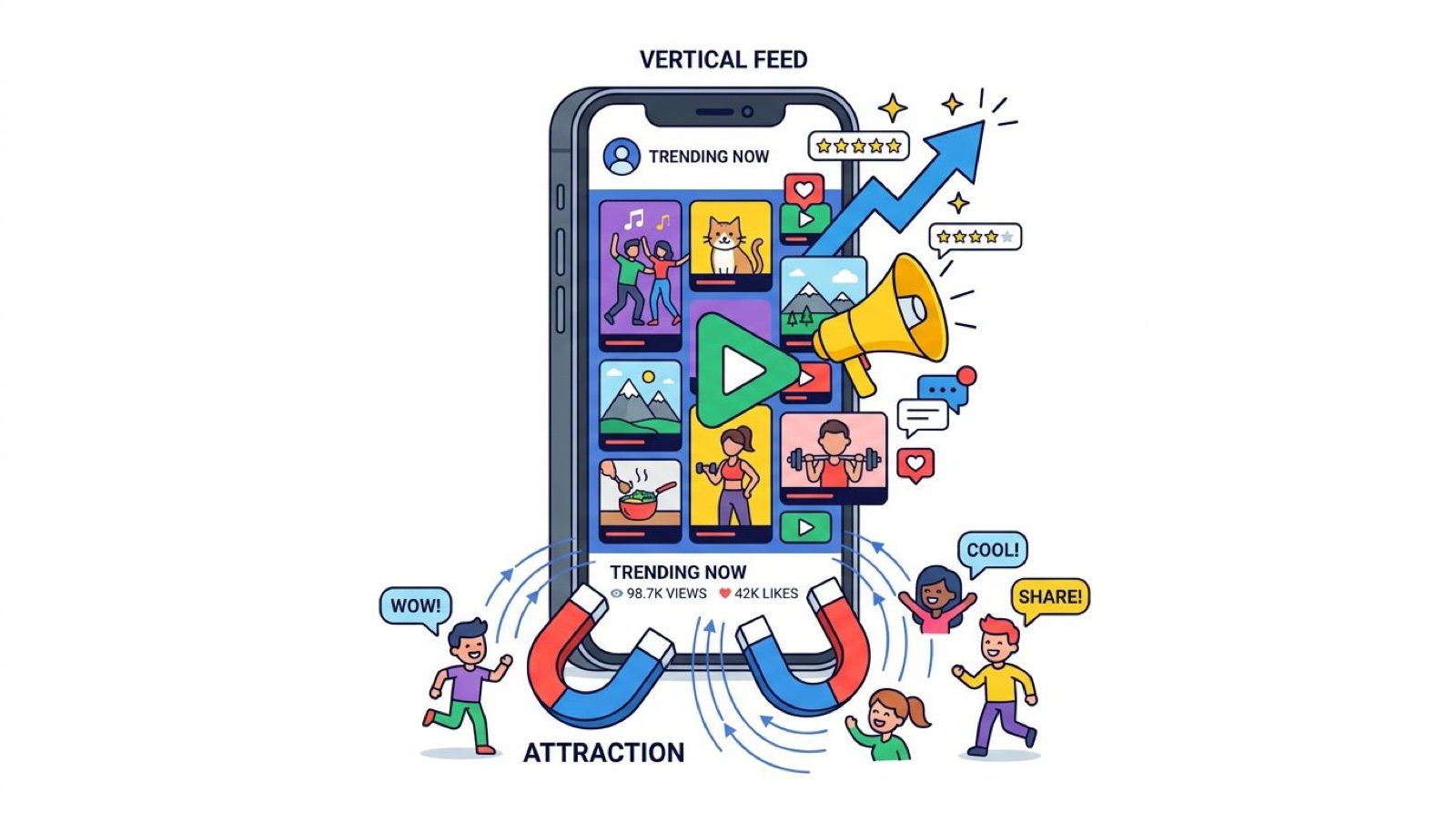
Short form video stopped being a side experiment a while ago. For a lot of the brands I work with, it is now the front door: the first thing a prospect sees, the first proof of relevance, and the first signal that the company understands how people take in information today.
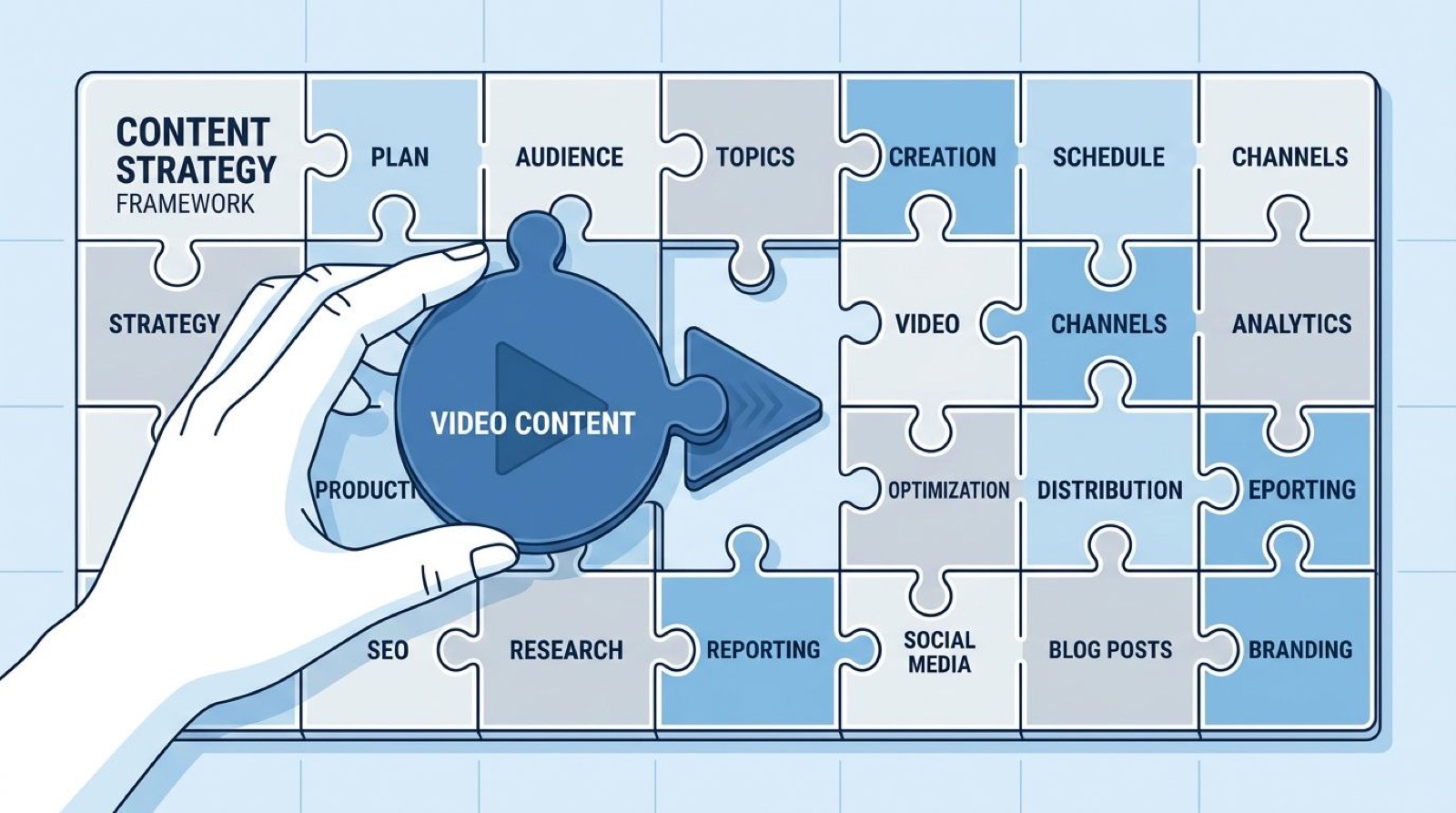
The mistake I still run into is teams treating it like a lottery ticket. They chase one viral clip, copy a trend, post for three weeks, then decide the format doesn’t work for them. Usually that is the system around the video breaking down, not the format. Short form performs best when it is built like an engine: clear inputs, repeatable production, structured testing, and a plan for where the winning clips go next.
The Rise of Short Form Video
Short form video won because it fits how people make decisions on phones. It asks for almost no commitment, delivers value fast, and gives buyers a low-friction way to sample a brand before they visit a site, book a demo, or talk to sales.
That shift has changed how marketers allocate attention and budget. If consumers want quick, visual answers, the brands that package expertise into compact, useful videos get more chances to be discovered. If your team still treats video as a quarterly campaign asset, you are working on the wrong clock speed.
This is not a hunch about where attention is going; it is a pattern marketers have reported for years. In HubSpot’s data, short form video keeps landing as the top ROI content format, with close to half of marketers ranking it among their best-performing assets.
Share of marketers ranking each format among their top ROI-driving content.
Source: HubSpot 2026 State of Marketing
Money is moving the same direction. Statista pegs the global digital video advertising market near $215 billion in 2025, and the IAB’s 2025 outlook has US digital video spend climbing about 14% year over year. Attention went vertical, and the spend followed it.
A lot of teams know this in theory but still organize work around one-off productions. They brief a shoot, wait weeks, publish a handful of assets, then start over. That model breaks down fast on short form platforms, where consistency, testing, and repurposing matter more than a single polished deliverable.
A better approach is to build a content system. That means:
- Start with themes, not random ideas: Define recurring topics your audience cares about.
- Create for reuse: Record in ways that can become clips, ads, site assets, and sales enablement.
- Measure beyond views: Track whether video is increasing discovery, interest, and movement into higher-intent channels.
- Reduce production drag: Remove the bottlenecks that keep good ideas stuck in review or editing limbo.
If you want the wider market picture, my take on the state of video marketing is a useful companion read.
Short form video works best when you stop asking, “Can this go viral?” and start asking, “Can this become part of a repeatable pipeline?”
What Short Form Video Really Is
Short form video is usually described by runtime, but length alone misses the point. A 20-second clip, a 45-second Reel, and a 60-second Short can all qualify, and the exact length caps differ by platform. What makes them effective is their job in the content system: they earn attention fast, deliver one clear idea, and move the viewer to the next step.
Short form video works like a trailer with a business objective. It gives enough context to create recognition, interest, or trust without trying to carry the full sales conversation on its own.
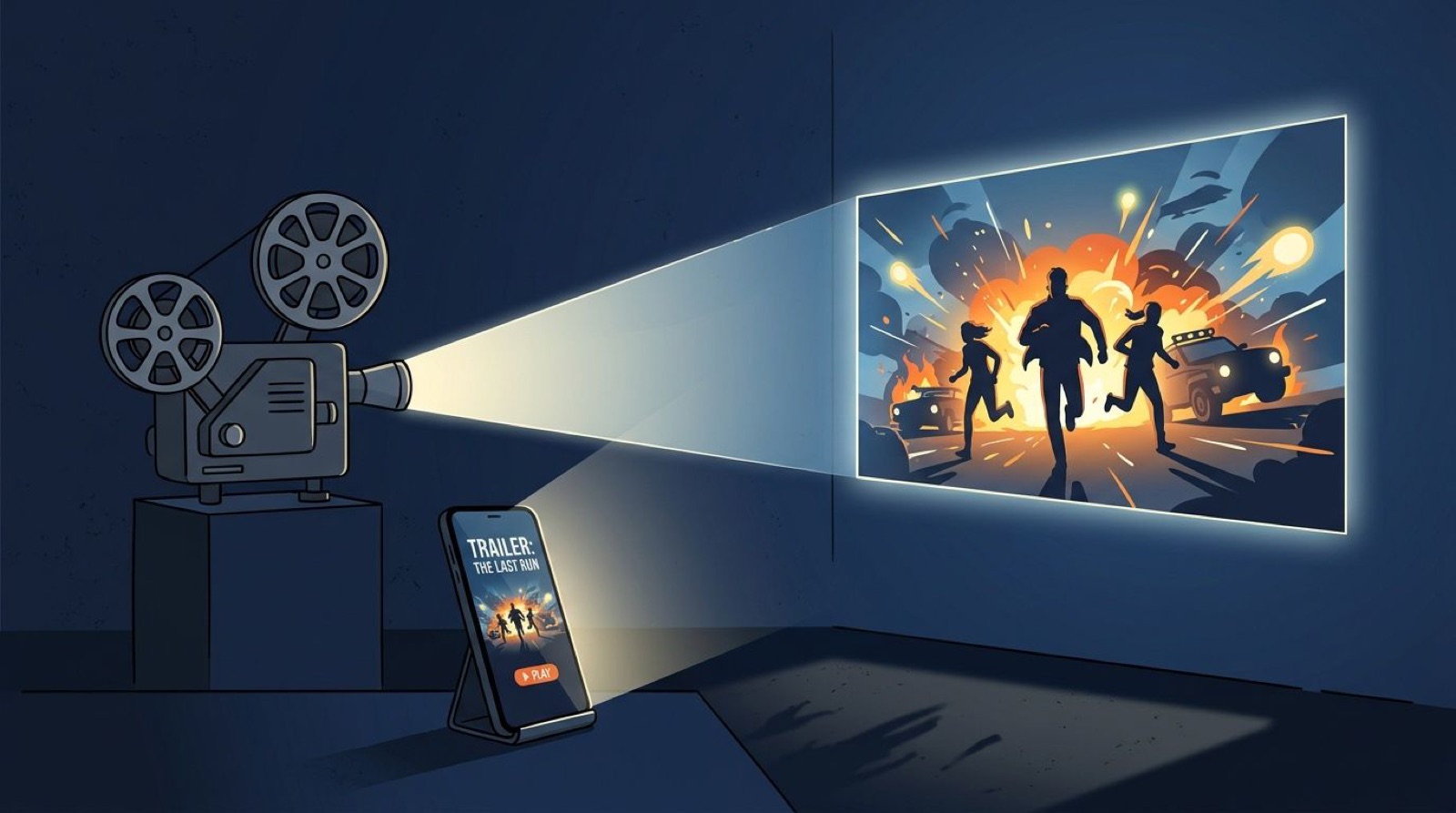
It solves for clarity under attention pressure
A buyer scrolling on mobile is not asking for the full story yet. They are screening for relevance. Is this problem familiar? Is this advice useful? Is this brand credible enough to hear out for another 30 seconds tomorrow, or on a product page later?
That is why short form performs best when each clip carries one sharp message: one problem and one idea worth remembering. Teams that try to squeeze an entire value proposition into a single clip usually end up with dense scripting, rushed edits, and weak retention.
The trade-off is real: the tighter the video, the less room there is for nuance. The operators I trust handle that by splitting the message across a series instead of forcing completeness into one asset.
The format is defined by behavior, not just duration
Short form is built for fast consumption and quick feedback. Viewers decide in seconds whether to stay, and platforms watch those decisions closely. Completion, rewatching, saves, comments, and profile visits all shape distribution.
That changes the creative brief. It stops being about explaining everything and becomes about the single clearest useful idea you can deliver in the first few seconds.
In production that usually means tighter framing, a faster setup, stronger visual pacing, and a script that gets to the point early. It also means accepting that short form is not miniature long-form; it is a different format with its own rules.
A practical way to define the role of short form inside a business is this:
| Role | What the video should do |
|---|---|
| Discovery | Surface a problem, point of view, or recognizable use case |
| Familiarity | Repeatedly expose the audience to the brand’s voice, face, and expertise |
| Traffic support | Send interested viewers to stronger conversion assets such as demos, product pages, or email capture |
| Message testing | Show which hooks, claims, and themes deserve more budget or a longer-form version |
It works best as the front end of a repeatable system
The biggest misunderstanding is treating short form as a batch of isolated posts. In practice, the strongest teams use it as an input and output layer for a larger engine. A customer question becomes a script. A script becomes three platform cuts. The best-performing cut becomes an ad, a landing page embed, a sales follow-up asset, or a longer explainer.
That is where operations matter. Without a workflow for scripting, approvals, editing, tagging, and performance review, short form turns into a pile of disconnected clips. With the right process, it becomes a testing ground that improves the rest of the content program.
For teams mapping that wider mix, our guide to types of video content for different marketing jobs shows how short form fits alongside explainers, testimonials, ads, and product videos.
A strong short form video leaves the viewer with one clear takeaway and a reason to keep going.
Choosing Your Platform: TikTok, Reels, or Shorts
The biggest platform mistake I see is treating TikTok, Instagram Reels, and YouTube Shorts as one channel with three logos. They all carry short form video, but they do not reward the same behavior. One leans hard into discovery, another benefits from the audience you already have, and another keeps working long after you publish because search intent matters more there.
How the three platforms compare in 2026
| Attribute | TikTok | Instagram Reels | YouTube Shorts |
|---|---|---|---|
| Primary strength | Fast discovery and trend responsiveness | Blends discovery with the existing social graph | Discovery plus long-tail relevance inside YouTube |
| Audience expectation | Native, fast, personality-driven content | Polished but still casual, brand-friendly visual storytelling | Useful, searchable, often educational or demonstrative |
| Algorithm feel | Interest graph first. Content can travel without an established following | Relationship graph still matters, though discovery is important | Rewards topic clarity and broader YouTube ecosystem behavior |
| Best content style | Strong opinion, quick insight, trend adaptation, behind-the-scenes | Lifestyle framing, product moments, creator-style brand storytelling | Tutorials, answers, product education, concise explainers |
| Best fit for businesses | Consumer brands, founder-led brands, fast-moving editorial teams | Brands already investing in Instagram presence and visual identity | Education-heavy brands, B2B explainers, product-led companies |
| Weak point | Trend dependency can tempt brands into noise | Easy to over-index on aesthetics and under-deliver substance | Some brands still make Shorts that feel like cut-down ads rather than native video |
| Operational note | Requires strong hook discipline and rapid iteration | Requires careful integration with feed, stories, and brand voice | Works best when Shorts connect to a broader YouTube content strategy |
TikTok when discovery is the priority
TikTok is still the clearest place to test hooks against cold audiences. If your team wants to find out which framing, angle, or story opens the most curiosity, TikTok gives fast feedback.
That makes it useful for brands with strong points of view, founder faces, or repeatable educational formats. It can also punish overproduced content that feels like a commercial trying to cosplay as a native post. If the clip looks manufactured before it earns trust, people swipe.
Reels when brand ecosystem matters
Instagram Reels works well when your brand already lives on Instagram through feed posts, stories, creator partnerships, or community engagement. Reels can support that whole ecosystem.
For e-commerce and visually led brands, this is often the easiest place to connect short form to the rest of the journey. A product teaser, a customer reaction, and a creator-led clip can all sit closer to the profile and shopping context. If you are trying to coordinate posting across channels, this guide on how to boost your reach by linking socials gets practical about cross-platform workflow.
Shorts when utility compounds over time
YouTube Shorts is often underrated by teams who think only in social-first terms. For brands that teach, compare, answer, or demonstrate, Shorts can be a strong bridge into the larger YouTube environment.
I like Shorts for categories where prospects need repeated exposure to understand the offer. SaaS, fintech, health education, and product-led brands tend to benefit from that setup. A short clip can introduce the topic, and the rest of the channel can deepen trust.
For a direct platform-versus-platform breakdown, our article on YouTube Shorts vs TikTok is worth reading before you commit resources. And if you would rather hand the production off, our shortlist of short-form video agencies sorts them by the job you actually need.
Do not pick a platform because it is popular. Pick it because its native behavior matches how your buyer discovers, evaluates, and follows up.
Creative Frameworks That Actually Hook Viewers
Most short form video advice falls apart at the script. Teams get broad prompts like “be authentic” or “tell a story,” then end up filming rambling takes that never survive the first few seconds.
The first moment matters more than anything else. In practice the first couple of seconds decide whether anyone stays, and one long recording (a webinar, an interview, a founder Q&A) can usually be cut into a stack of focused clips in the 20-to-60-second range.
Hook, value, CTA
This is the most reliable baseline structure for brand content.
- Hook: Give the viewer a reason to stay immediately.
- Value: Deliver one sharp insight, demonstration, or perspective.
- CTA: Point to the next smallest action.
For a B2B SaaS brand, that might sound like: “Most demo requests die because the landing page answers the wrong question.” Then the clip shows the mistake, the fix, and ends with “Compare your page against this framework.”
For a consumer brand, it could be: “This is why your skincare routine pills under makeup.” Then show the sequencing problem, the correction, and close with a simple product or follow prompt.
What carries the clip is clarity, not cleverness.
If your team needs fresh examples of stopping-power openings, our piece on how to create video hooks that stop scrolling in seconds is worth bookmarking.
Problem, agitate, solve
This framework is useful when the audience already feels a friction point.
Start with the problem in plain language. Agitate it by naming the cost of ignoring it. Then solve it with one practical move. This structure works especially well for service businesses, consultants, and products that remove operational pain.
Examples:
- Consulting offer: “Your paid ads may be fine. Your landing page message probably isn’t.” Then show the disconnect.
- HR software: “New hires aren’t confused because onboarding is complex. They’re confused because the sequence is fragmented.” Then show one process fix.
- E-commerce: “People aren’t abandoning because the product is weak. They’re hesitating because the page doesn’t answer the obvious objection.”
Practical rule: If the viewer can’t repeat your main point in one sentence after watching, the script is carrying too much.
Show the shift
Some of the best short form videos don’t explain a concept. They reveal a before-and-after.
This can be visual, strategic, or emotional. A designer can show a rough ad becoming a polished version. A founder can contrast a weak pitch with a sharper one. A product marketer can compare a vague homepage headline with a specific one.
That “shift” format is effective because it creates movement. Viewers want resolution.
A useful reminder comes from communities outside mainstream brand marketing. This piece on creating engaging short-form church videos is a good reminder that strong hooks are less about industry and more about human curiosity, clarity, and immediate relevance.
What usually doesn’t work
A few patterns fail again and again:
- Slow greetings: “Hey guys, today I wanted to talk about…” burns the most valuable seconds.
- Too many ideas: One clip should carry one idea. If you have three points, you probably have three videos.
- Broad claims with no payoff: If the hook promises a useful insight, the body has to cash it in quickly.
- Late clarity: Viewers shouldn’t need context halfway through to understand why the video matters.
Creative teams often think the hard part is generating more ideas. Usually the hard part is editing down to the one idea worth saying now.
The Modern Production Workflow: From Idea to Asset
A strong short form program is less about inspiration and more about throughput. Good teams don’t wait for a perfect idea, a perfect shoot day, and a perfect edit. They build a workflow that keeps content moving from concept to usable asset with minimal friction.
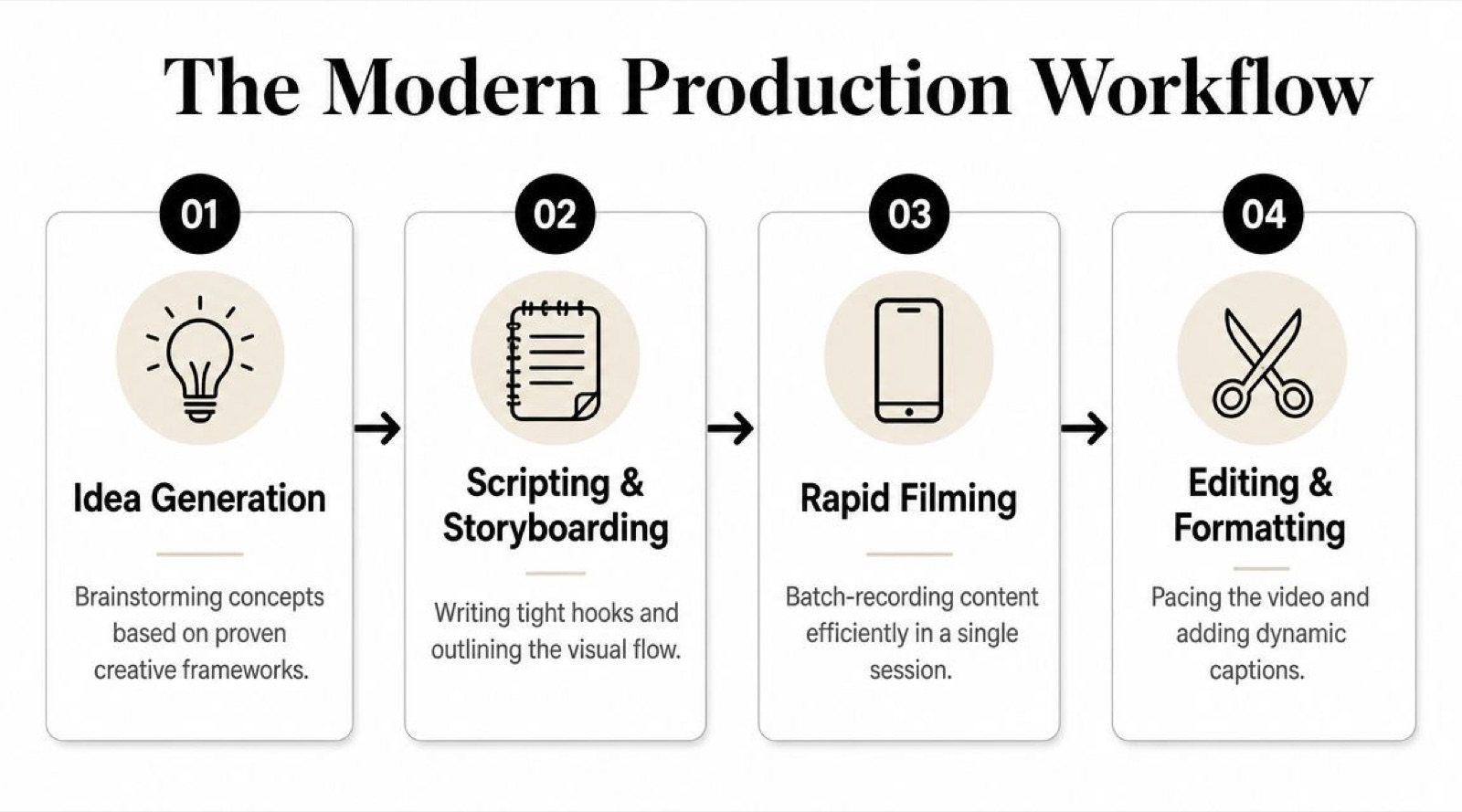
Stage one and two
The front half of the workflow decides whether production will feel efficient or chaotic.
- Idea generation starts with repeatable inputs. Customer questions, objections from sales calls, webinar highlights, product updates, founder opinions, support tickets.
- Scripting and storyboarding turns those raw inputs into tight creative units. Not full essays. Just the hook, the value beat, visual notes, and the closing action.
Most delays happen here because teams confuse “more options” with “better options.” If every video begins with a blank page and six stakeholders, the backlog grows fast.
Stage three and four
Execution gets easier when filming and editing are handled in batches.
- Rapid filming: Record multiple pieces in one session. Keep setup simple, framing consistent, and wardrobe or background changes light but intentional.
- Editing and formatting: Cut aggressively. Add captions, visual emphasis, b-roll, product UI, or motion graphics only where they improve comprehension.
The fastest editors I have worked with think like strategists, not button-pushers. They aren’t just trimming pauses; they are shaping retention, cutting intros, tightening transitions, and moving the most persuasive moment earlier.
Common bottlenecks to eliminate
Here are the problems that kill output:
- Approval sprawl: Too many reviewers create bland videos and missed posting windows.
- Asset hunting: Teams lose time searching for logos, screenshots, old footage, or brand templates.
- One-off tooling: Scripting in one place, files in another, comments in email, approvals in chat.
- No repurposing plan: Great long-form content gets published once and forgotten.
The easiest way to produce more short form video is to remove the moments where a clip stalls between handoffs.
For teams formalizing operations, our article on the creative workflow process lays out the production side in practical terms.
Build or buy the infrastructure
Some teams should build in-house. If you have a steady publishing rhythm, internal editors, a clear creative lead, and enough demand to keep everyone busy, that can work well.
Plenty of startups and scale-ups don’t have that setup. They have a marketer wearing four hats, a founder who can be on camera sometimes, and a backlog of good ideas that never become finished assets. In that case, a dedicated creative team can make more sense than hiring a full internal pod or juggling freelancers. Moonb, for example, works as an ongoing creative team across creative direction, design, animation, scripting, and production inside one operating model.
The practical question isn’t “Should we outsource?” It’s “Where does creative work currently break, and what’s the lowest-friction fix?”
Measuring for Growth and Repurposing Your Wins
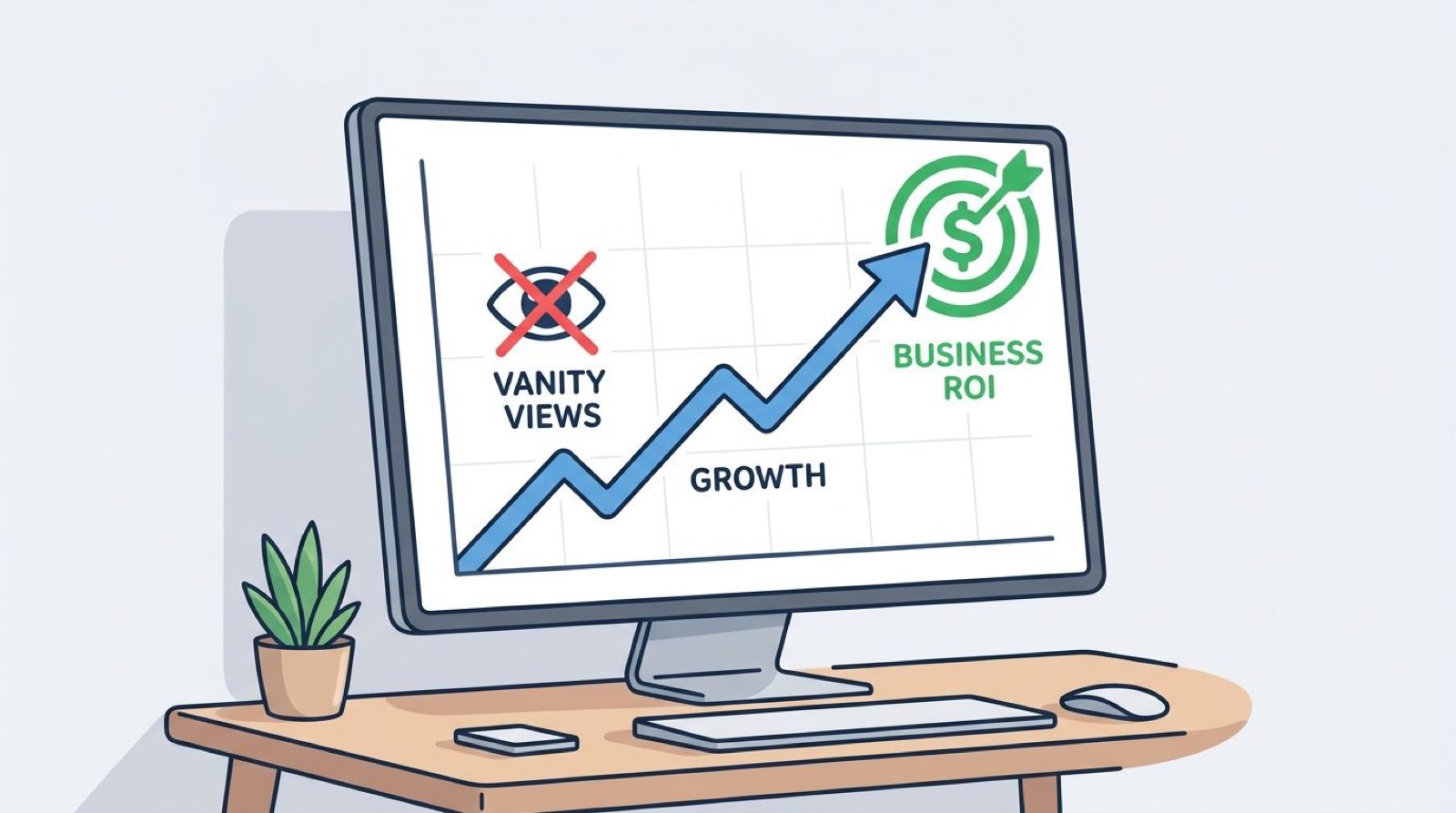
Short form video reaches a lot of people before it drives a single click. Teams that score it only on last-click conversion usually underinvest in the format, kill good concepts too early, and miss the role it plays across the rest of the funnel.
The better approach is to measure short form as part of a content system. A clip can create awareness, spark branded search, shape sales conversations, and supply material for paid, lifecycle, and website content later. That is a very different job from asking every post to convert on its own.
What to look at besides views
Views still matter. They show whether the platform gave the asset a chance.
They are only the first read, though. A stronger review stack looks at what happened after the impression and what happened after the watch:
- Retention: Did viewers stay long enough to hear the key point, proof, or payoff?
- Saves and shares: These are stronger signals of usefulness than raw reach.
- Profile visits and follow activity: Did the video create enough interest for someone to check the brand behind it?
- Traffic quality: Are more people arriving through branded search, direct visits, or other high-intent paths?
- Pipeline signals: Are prospects referencing the same topics your videos have been covering?
Short form video is the point at which your content becomes measurable in a business sense. The clip is the front door. The real question is whether it sends qualified interest deeper into your system, which is exactly what the video marketing ROI breakdown helps you trace.
I usually tell teams to split metrics into two buckets. Distribution metrics tell you whether the platform pushed the video; intent metrics tell you whether the idea mattered to the right audience. Mix the two together and every review meeting gets noisy.
Turn winners into multipliers
A strong clip should not stay trapped in one feed. If people watched, saved, shared, or commented, the market already handed you a useful signal. Use it.
| Winning asset use | How to repurpose it |
|---|---|
| Paid social ad | Keep the hook, tighten the CTA, and test it with cold and warm audiences |
| Landing page module | Place the clip near the value proposition, pricing explainer, or FAQ |
| Email support asset | Use the video in a product launch, webinar invite, or nurture sequence |
| Sales enablement | Give reps a short clip that answers a common objection with speed and clarity |
| Long-form expansion | Build the topic into a deeper article, webinar segment, customer story, or explainer |
The system perspective matters here. One useful idea can become six assets if the team planned for capture, tagging, and reuse from the start. Without that discipline, even strong videos disappear into a content graveyard after one good week.
Teams mapping that broader rollout often benefit from planning the sequence before they scale distribution, because channel order, campaign timing, and asset reuse all affect what you can measure later.
Measure the whole system
Short form gets much more valuable once it connects to the rest of marketing operations. For larger programs, the infrastructure behind that (APIs, automation, CDN-backed delivery, adaptive streaming, and integrations with systems like Salesforce, Adobe Experience Manager, and HubSpot) is well covered in TechTarget’s primer on short-form video strategy for CIOs.
Early-stage teams do not need that full stack on day one. They do need clean handoffs between content, analytics, CRM, and reporting. If video data lives in one tool, campaign data in another, and sales feedback nowhere, nobody can tell which themes are creating business value.
That operational gap is usually the real problem. Creative quality matters, but measurement breaks first when naming conventions are inconsistent, source files are hard to find, clips aren’t tagged by topic, and nobody owns repurposing after publish. The teams that win keep strategy, production, and reuse connected inside one operating rhythm.
A short form video is rarely a finished product. It is a market test, a read on audience interest, and often the raw material for stronger assets elsewhere in the funnel.
Your Action Plan to Launch and Scale
Most teams don’t need a bigger strategy deck; they need a clean starting sequence.
Start with what already exists
Audit your long-form assets first. Pull from webinars, founder interviews, product demos, sales calls, customer conversations, and podcasts. Good short form systems usually begin by extracting value from material you already paid to create.
Choose one platform first
Pick the platform that best matches your buyer behavior and internal bandwidth. One channel run consistently beats three channels run inconsistently. If you are mapping a broader rollout, this guide to planning a social media launch forces useful decisions around sequencing, messaging, and execution.
Define three content pillars
Keep the pillars simple enough that anyone on the team can recognize them. For example:
- Educational clips: Quick answers, frameworks, how-tos
- Proof clips: Product moments, transformations, customer friction solved
- Point-of-view clips: Founder takes, category opinions, myths, mistakes
If the pillars are too broad, scripting gets muddy. If they’re too narrow, the team runs out of angles.
Batch your first set
Film your first five videos in one session. Don’t optimize for perfection. Optimize for learning. You need enough volume to spot patterns in hooks, pacing, and subject matter.
A useful early constraint is to make each clip answer one real question. That keeps each clip earning its place.
Build a lightweight review loop
After publishing, review what held attention, what triggered responses, and which topics deserve repurposing. Then feed those findings into the next batch.
At this point, external creative support can accelerate execution by handling scripting, editing, formatting, and versioning while your internal team focuses on product knowledge, messaging, and distribution. That’s usually where scale starts to feel manageable instead of messy.
If your team needs a more reliable way to produce, test, and repurpose short form video without building a full in-house department, Moonb can help. We work as an ongoing creative team across strategy, scripting, design, editing, and production, so short form becomes an operating system instead of a recurring bottleneck.
HubSpot’s marketing team breaks down how to make Reels work for a business in the video below.
Frequently asked questions
I default to under 60 seconds, and for clips I have cut out of a longer recording the 20-to-45-second range tends to hold attention best. Film it vertical (9:16) so it fills the phone screen. Completion rate matters more than raw length: a 40-second clip people finish beats a 15-second clip they swipe away from halfway through.
It works for B2B, the tone just changes. I keep B2B clips focused on teaching and on putting a face to the company, whether that is a surprising data point or a quick look at how the team actually works. You are still marketing to a person who scrolls the same feed on a lunch break, so the human, useful clips outperform the polished corporate ones every time.
Same core idea, re-cut per platform. Reposting a clip that still has another app's watermark on it usually gets throttled, so at minimum export a clean version and adjust the hook, captions, and pacing to fit. Shorts is the one where a clear, searchable title keeps paying off long after you post, so treat it more like a title-first channel than TikTok or Reels.