16 Best No Copyright Music Sites for Videos (2026)
The free and paid music sites I trust for video that stays cleared after you publish, plus license terms, pricing, and which to use when.

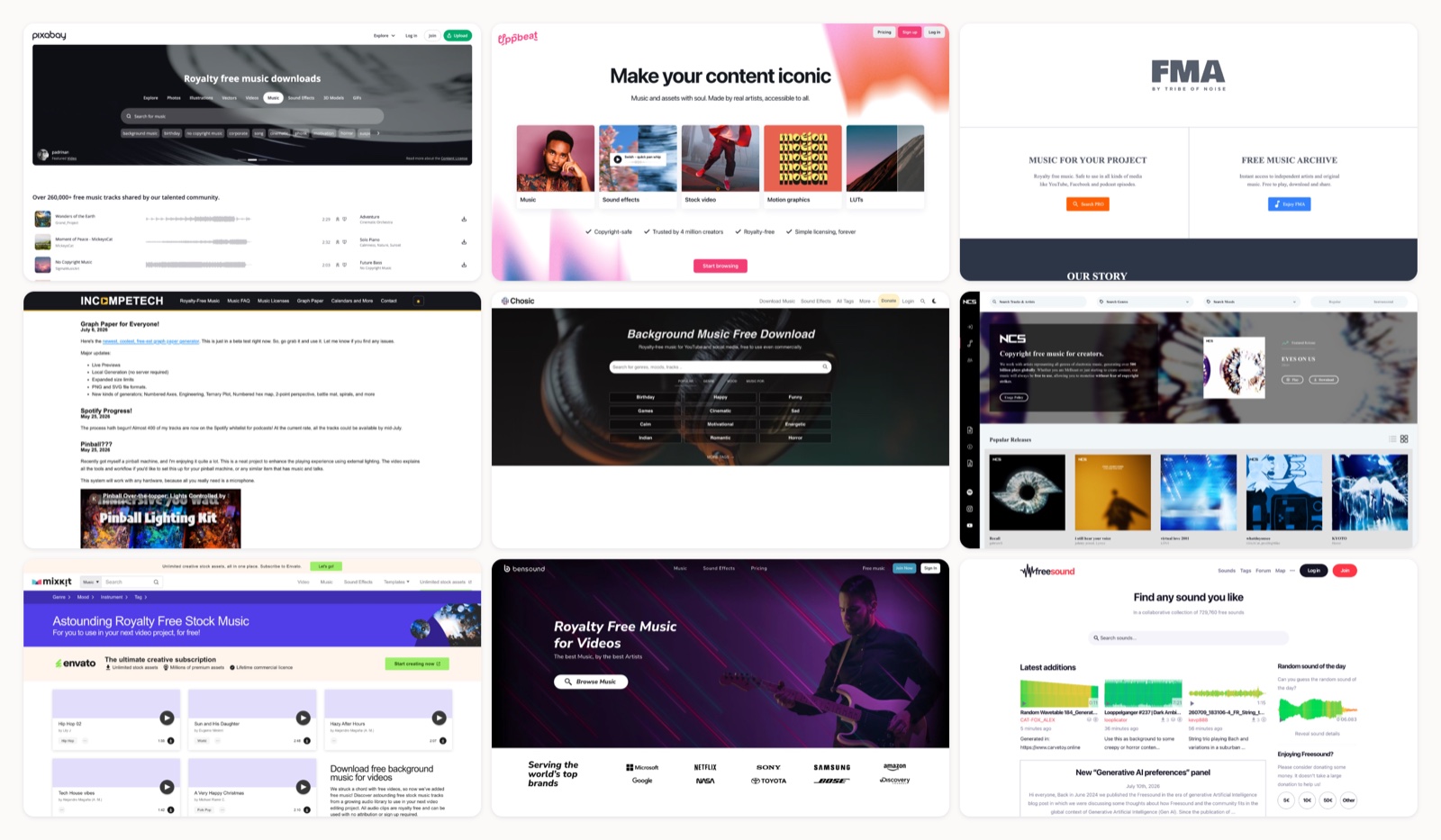
I score and edit a fair amount of video, and the part that used to bite me was never the search for a track. It was publishing a finished cut, then watching a claim show up against it two weeks later. Free music is everywhere. Music that stays cleared once your video is live is the part most people get wrong.
Quick vocabulary, because “non copyright music” is a bit of a lie. Almost everything below is copyrighted. It is simply licensed so you can use it without paying per play. Royalty-free means you license or download once and reuse it across projects. Creative Commons means free with strings: CC0 asks for nothing, CC BY makes you credit the artist by name, CC BY-NC takes commercial use off the table. Public domain means the rights have lapsed entirely, which is why so much classical music is fair game.
And the claim thing, since it panics people: a Content ID claim is not a copyright strike. Plenty of composers give a track away and still register it in Content ID to catch thieves, so YouTube can flag a free song anyway. There is no penalty on your channel from that. You clear it by pasting the license certificate the site handed you at download. I keep every certificate in a folder sitting next to the audio file, named the same thing, so disputing takes a minute instead of an afternoon.
Here are the sixteen I keep coming back to. Free ones first, with the two paid platforms worth the money at the end.
1. YouTube Audio Library
More on YouTube Audio Library
The Audio Library sits right inside YouTube Studio, so if you already publish there it is the shortest path from idea to a cleared track. Everything is pre-vetted for the platform, and a column tells you upfront whether a song needs attribution or nothing at all. The library leans toward safe, useful background beds rather than tracks with a strong point of view, so I use it for tutorials, vlogs, and talking-head cuts more than for a brand film that needs a signature sound. It is also YouTube-first: using these tracks on other platforms is allowed for most, but the whole workflow is built around videos that live on YouTube. For a monetizing channel that just wants to stop thinking about claims, it is the easiest yes on this list.
2. Pixabay Music
More on Pixabay Music
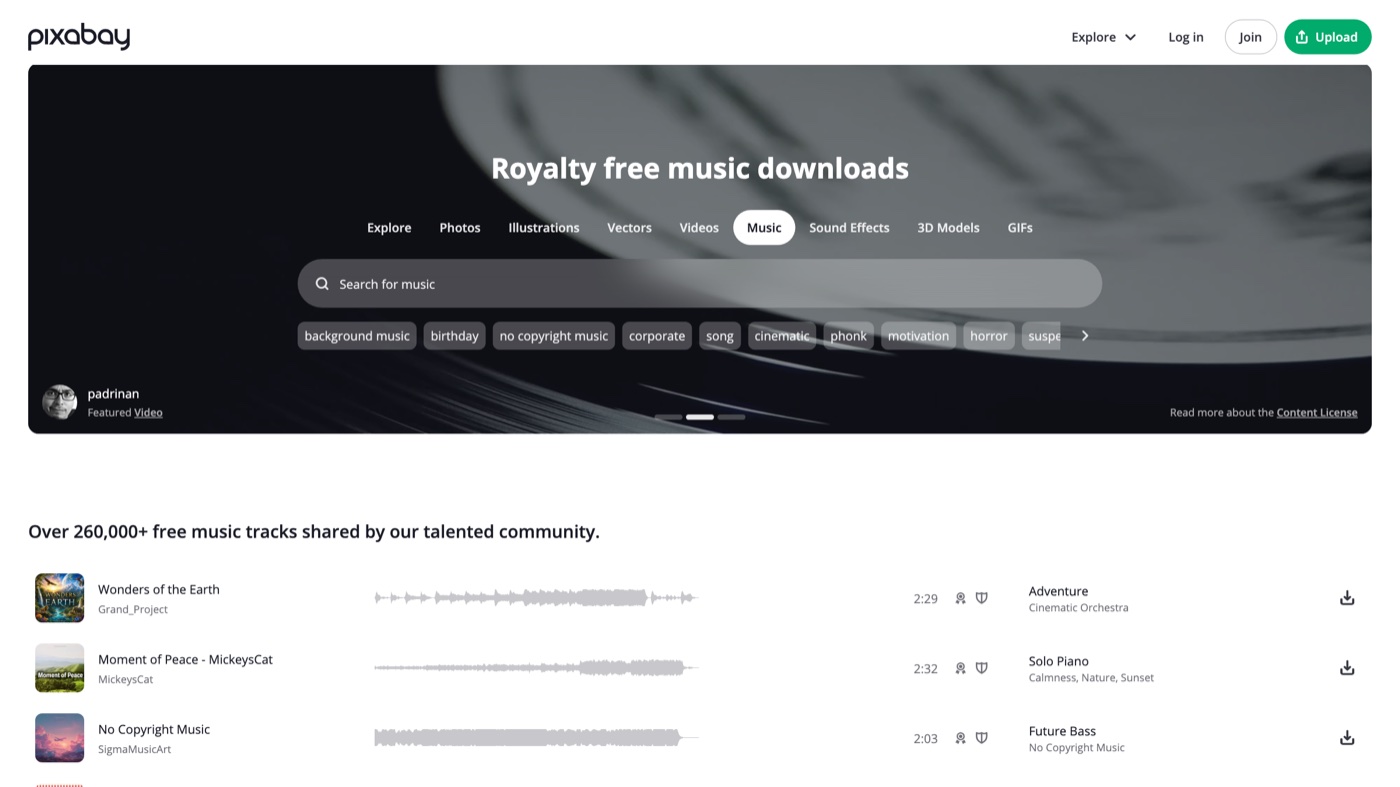
Pixabay is where I send people who want a big, no-strings library without signing up for anything. The Pixabay License allows commercial use with no credit, and the catalog is deep enough that you rarely reuse the same track. My one scar here: a free Pixabay track once triggered a Content ID claim on a video because the composer had registered it, and I had to dispute with the certificate. It cleared, but it taught me to download and file the license text every single time. Great for social, ads, and B-roll, as long as you do not assume no attribution also means never flagged.
3. Uppbeat
More on Uppbeat
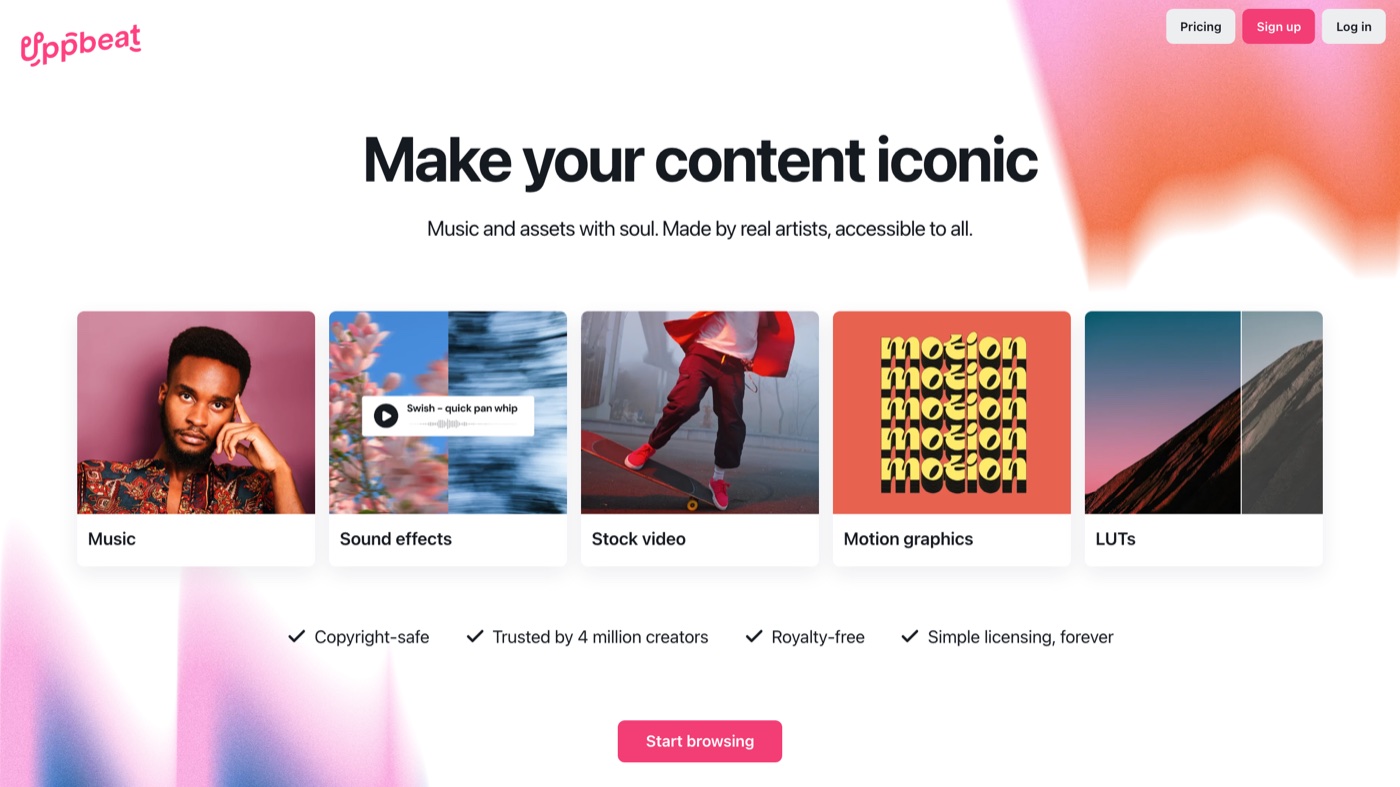
Uppbeat was built for exactly the problem this article is about, and it shows. On the free plan you get a limited number of downloads each month plus a unique Uppbeat Credit code per track that you drop into your description to keep monetization intact. Move to a paid tier (from around $5.59/mo on annual billing, up to $13.99/mo for people doing client work) and you can safelist your channels so claims are prevented before they happen rather than disputed after. I like that the music actually sounds current rather than stock-generic, and the human-made positioning is more than a slogan here. The free cap is real, so heavy publishers will feel the pull toward a paid tier fairly quickly.
4. Free Music Archive
More on Free Music Archive
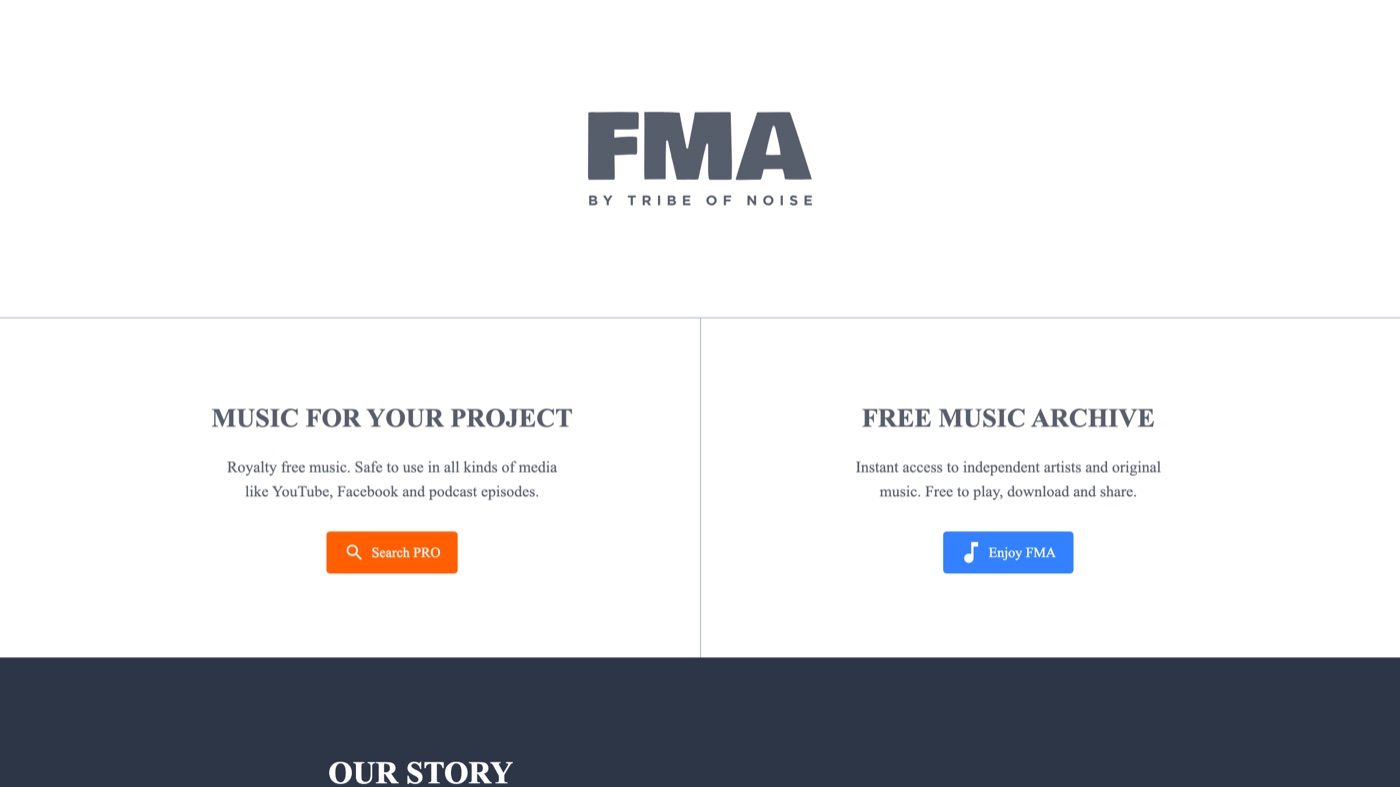
FMA has been around since 2009 and still feels more like a curated station than a search engine, which is why I reach for it when a project needs a track with actual character. It runs on Creative Commons, so the important habit is filtering by license first and reading the terms on the individual track, because the archive mixes CC0, CC BY, and CC BY-NC freely. Attribution is common, and a handful of tracks block commercial use entirely, so it rewards care. It is best for documentary, podcast beds, indie film, and anything where a slightly left-of-center sound is a feature. Not the place for a five-minute deadline unless you already know the artist you want.
5. Incompetech
More on Incompetech
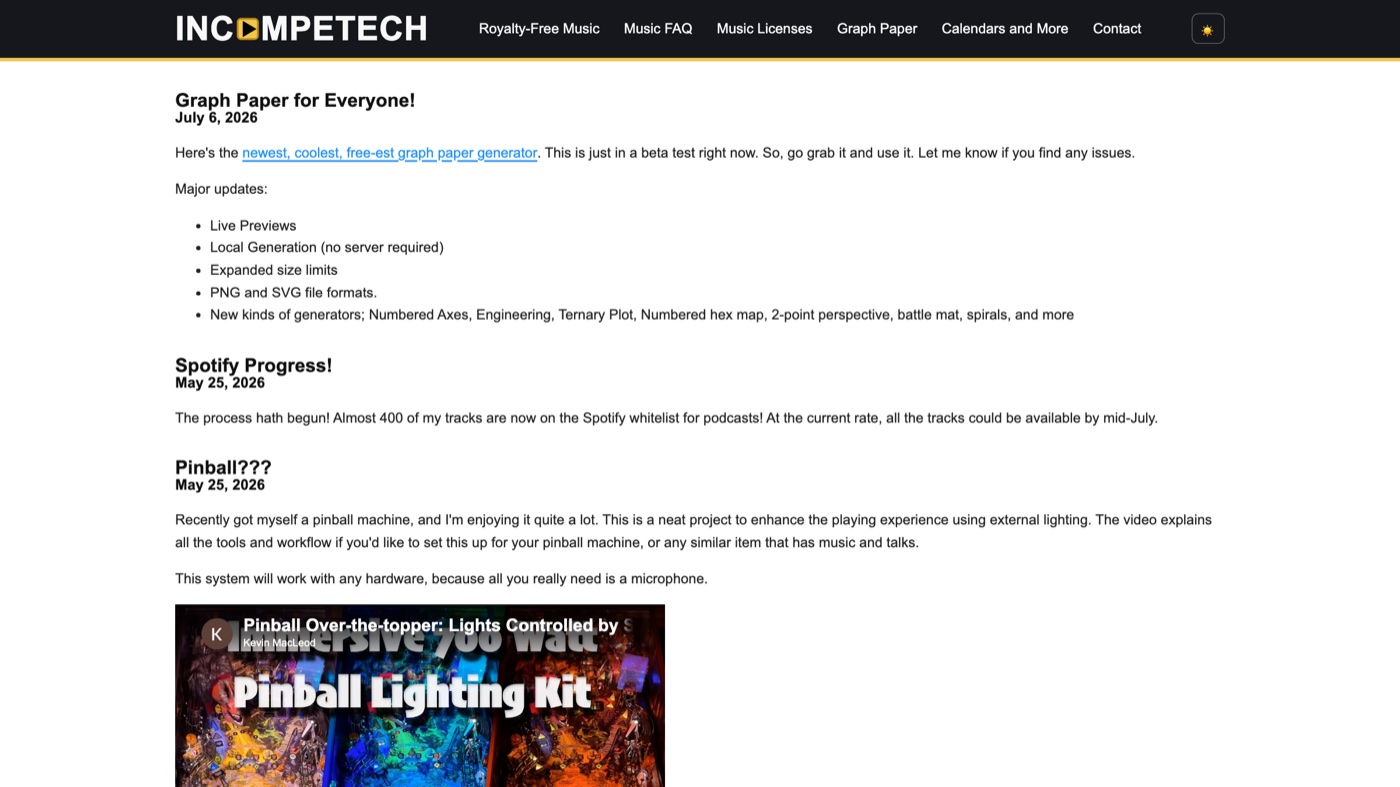
Kevin MacLeod's Incompetech is a piece of internet history at this point, and the music holds up because it is all one composer with a clear sense of mood. You can search by feel (calming, aggressive, quirky) and by tempo and length, which makes matching a cue to a scene fast. Free use runs under CC BY, so you must credit MacLeod and Incompetech in your description; if you cannot show a credit, a one-time license removes the requirement. The site looks like it did a decade ago, and that is fine. For games, explainers, and student films that need a cohesive score without a licensing bill, it is hard to beat.
6. Chosic
More on Chosic
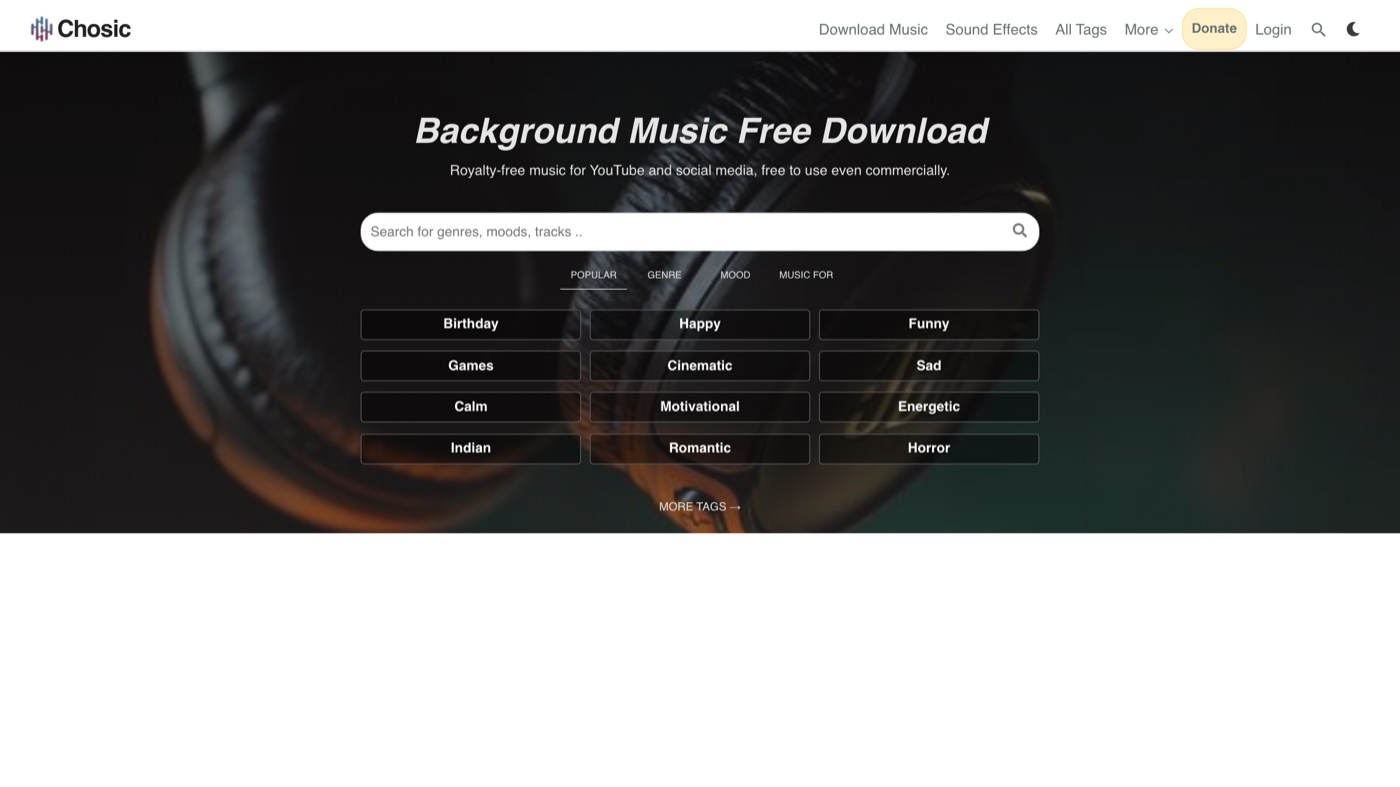
Chosic is the tool I recommend to people who find Creative Commons confusing, because it does the annoying part for you. Each track page states the license plainly and hands you a ready-to-paste attribution line, which removes the usual guesswork about how to credit an artist correctly. The catalog is a mix of CC BY and CC0 pulled together with genre and mood playlists that are actually well made. Because it aggregates from multiple sources, the terms shift from track to track, so it is still on you to confirm commercial rights before a paid project. For quick social work and background beds where you are happy to credit, it is one of the smoothest free experiences here.
7. NoCopyrightSounds (NCS)
More on NoCopyrightSounds (NCS)
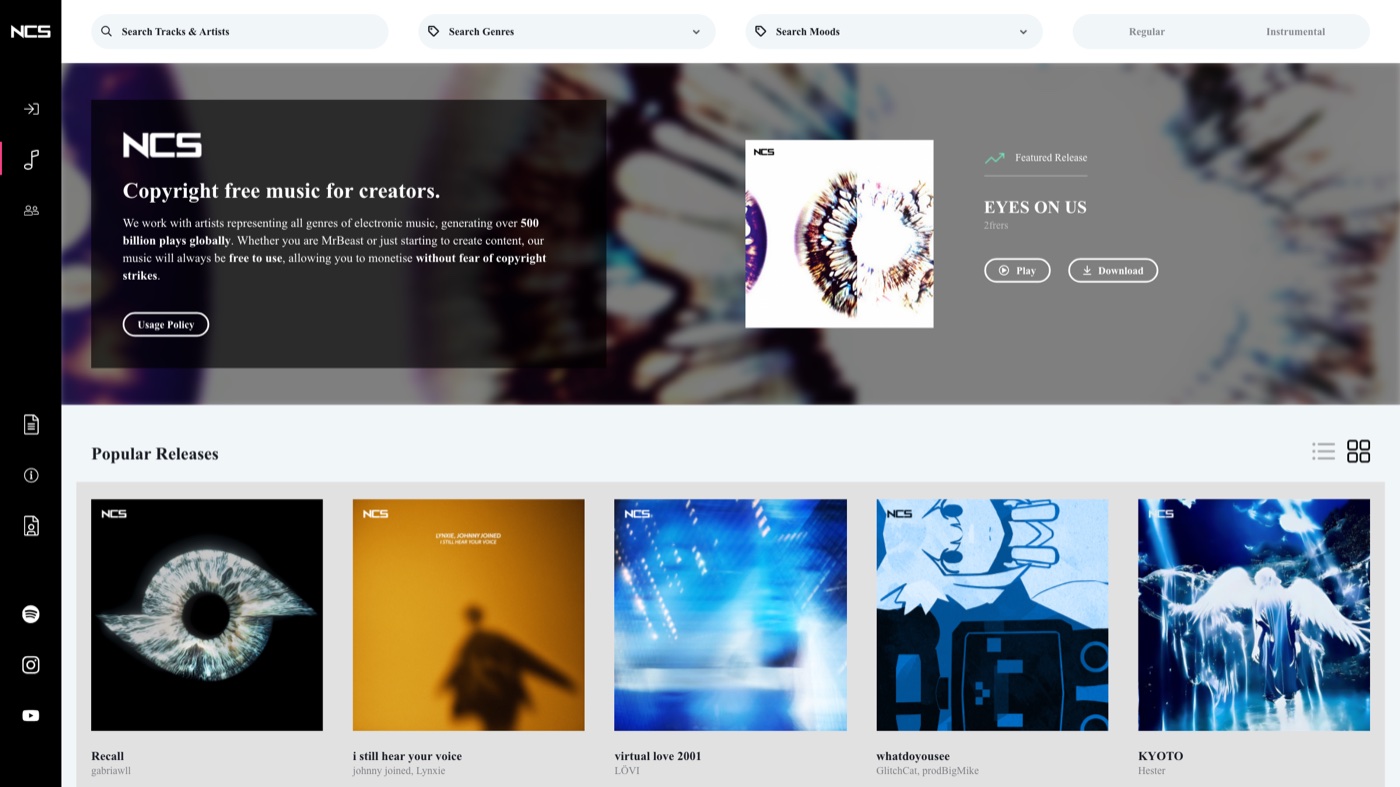
NCS started as a YouTube channel and grew into a label, and it owns the energetic electronic lane the way few free libraries own any genre. For gaming montages, sports edits, and fast vlogs aimed at a younger audience, the sound is exactly right and the quality is label-grade. Free use for independent creators on platforms like YouTube and Twitch requires pasting their credit block in your description; step up to advertising or client production and you need one of their commercial licenses. The obvious limitation is range: if you need warm acoustic or orchestral, this is not your stop. But for a product reveal that wants a drop, NCS delivers.
8. Mixkit
More on Mixkit
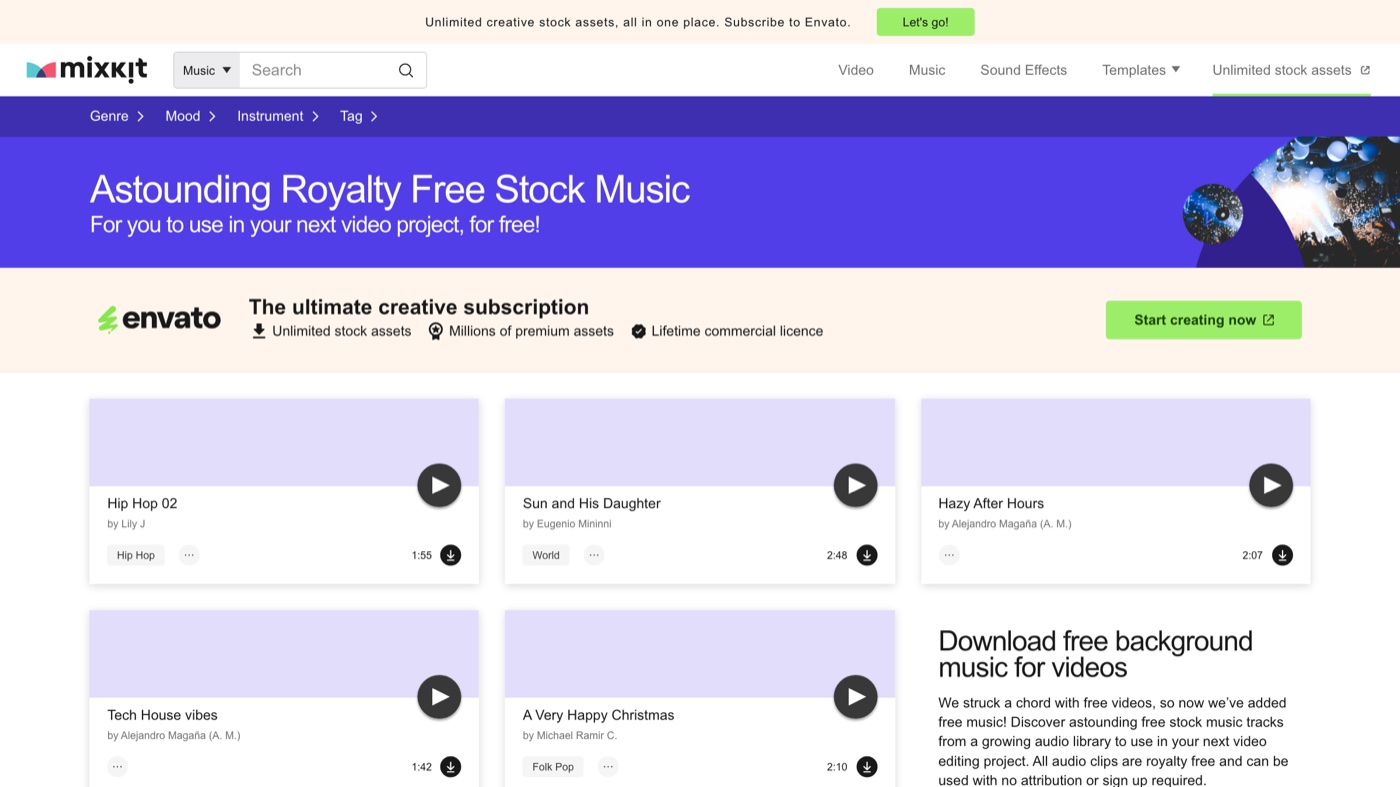
Mixkit is my pick when the priority is a clean license, no credit, done. Backed by Envato, its whole music library is free for commercial and personal projects with no attribution required, which removes the biggest source of licensing anxiety on this list. It leans quality over quantity, so every track feels produced rather than uploaded, and having stock video and sound effects in the same place is handy when you are assembling a spot fast. The trade is size: for a specific or unusual genre you may come up short and end up back at FMA or Pixabay. For social, ads, and corporate work on a deadline, it is a reliable first look.
9. Bensound
More on Bensound
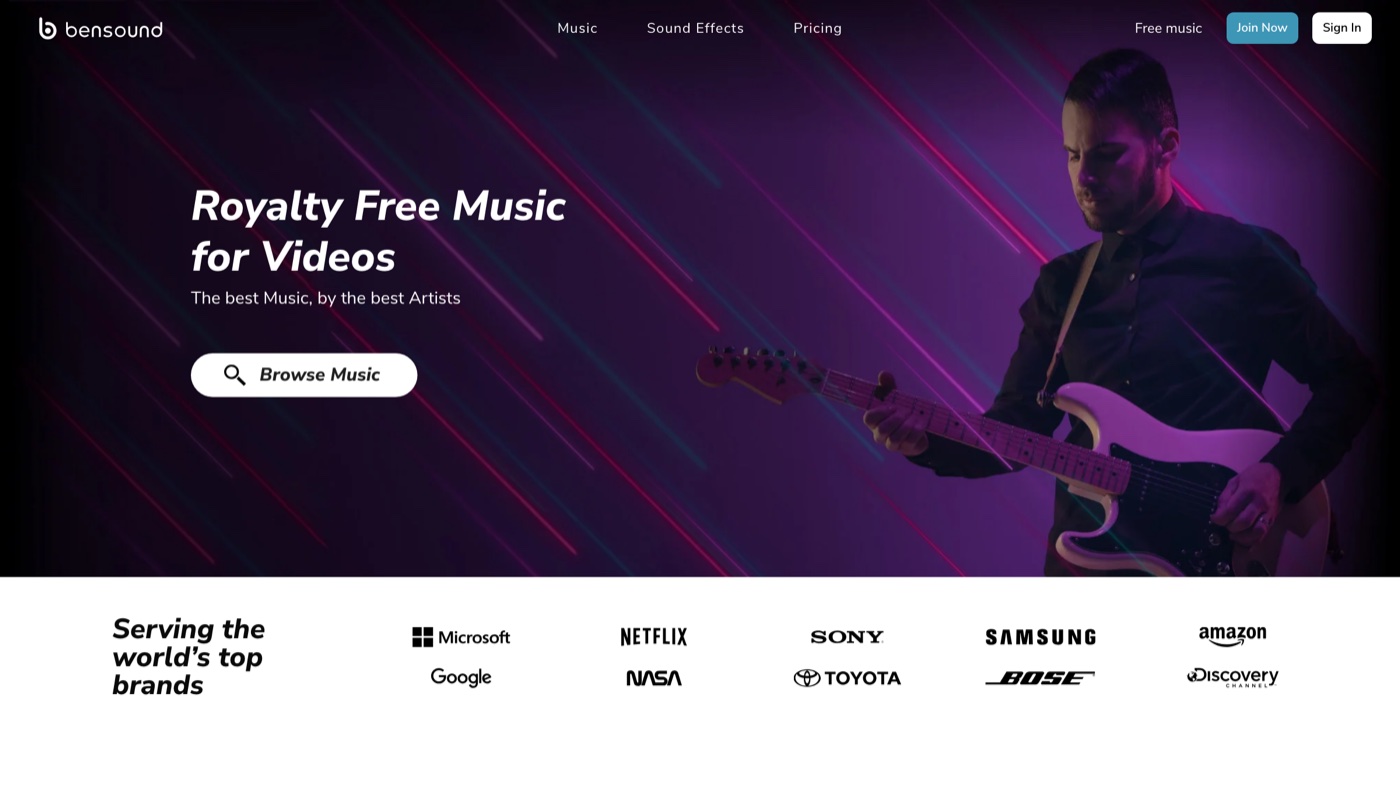
Bensound is another single-composer library (Benjamin Tissot), which gives it a consistent, polished house sound that works well under corporate and product video. It used to be a go-to free source, and that has changed: the free selection is now smaller, requires attribution under CC BY, and is limited to online video and non-revenue educational use, with paid plans (from roughly €144/yr) covering everything broader. The upside is reliability. You know what a Bensound track will sound like, and it will not embarrass a client deck. If you need free and unrestricted, the caveats matter; if you want dependable quality and are fine paying, it is a clean option.
10. Musopen
More on Musopen
Musopen is a nonprofit with a specific mission: getting classical music out of copyright limbo and into your hands. Most of its recordings are public domain, which means no attribution and commercial use with no strings, a rarity on this list. You can filter by composer, instrument, and period, so finding the right Baroque or Romantic piece for a documentary, a real estate walkthrough, or a refined presentation is quick. Free accounts get standard-quality files with a daily download cap, while a paid membership unlocks high-resolution audio and removes the limit. It is classical only, so know that going in.
11. Freesound
More on Freesound
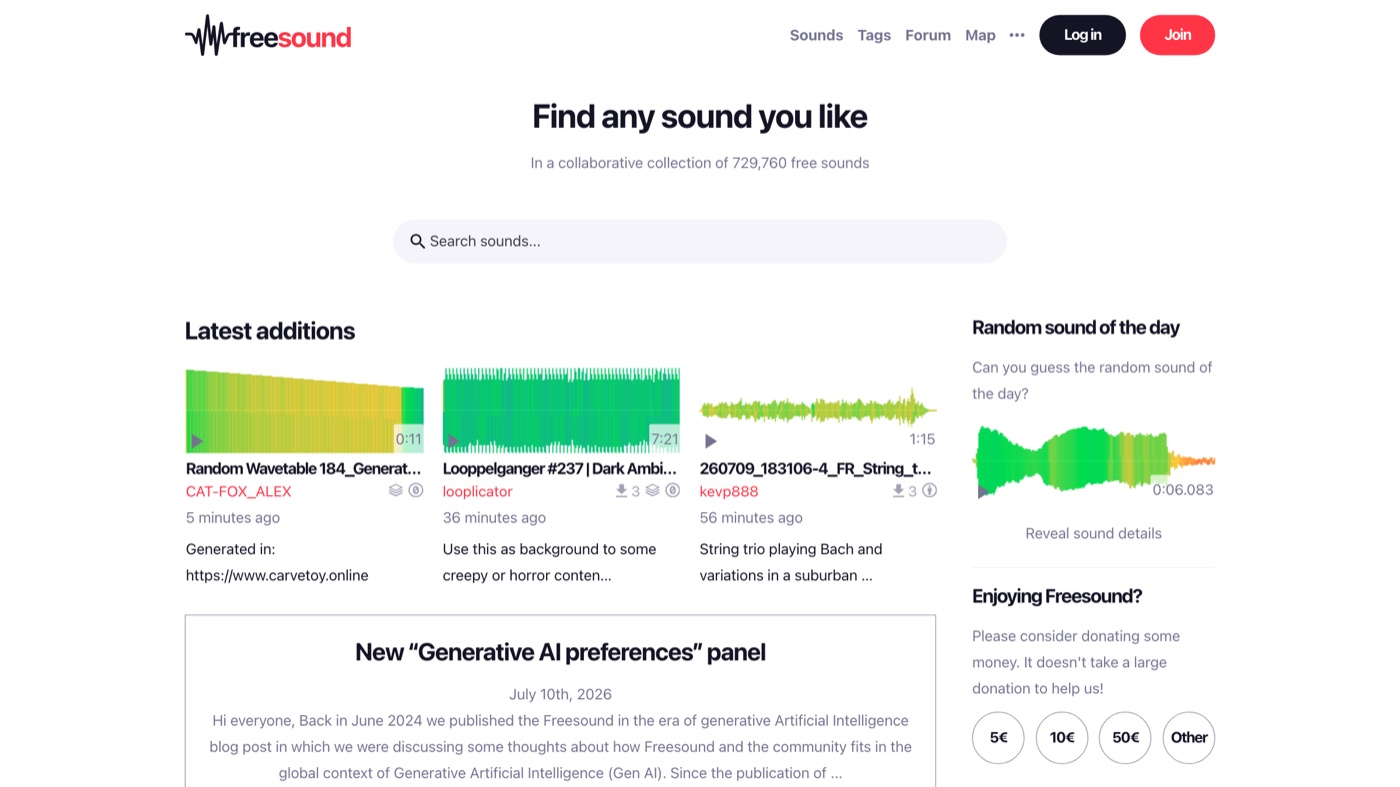
Freesound is not really a music site, and that is exactly why it earns a place here. Run by a university research group, it is a giant community library of individual sounds: foley, ambiences, one-shots, loops, and textures you can layer into a bed or use as accents. The tag search is strong enough to find something like footsteps on gravel or distant city hum in seconds. Everything is Creative Commons, so you check each sound's license (CC0, CC BY, or CC BY-NC) and grab a free account to download. Quality ranges from professional to phone-recorded because anyone can upload, so a quick listen matters. For sound design and podcast stingers, it is indispensable.
12. Jamendo
More on Jamendo
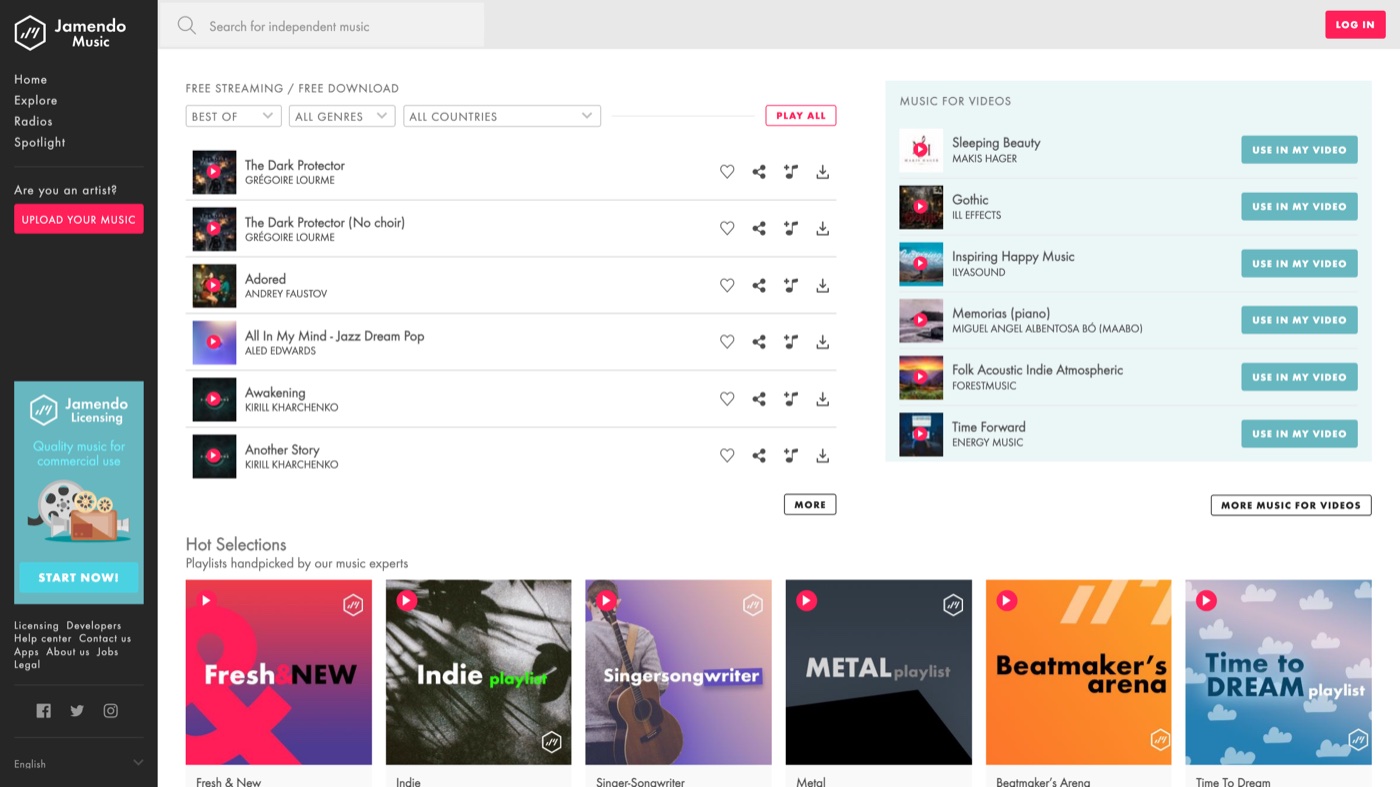
Jamendo splits itself into two doors, and understanding that upfront saves confusion. Jamendo Music is free for personal, non-commercial projects under Creative Commons, while Jamendo Licensing is where you buy a proper license for the same track when the work is commercial. The independent-artist catalog is large and better curated than most open archives, with playlists that make discovery pleasant. I like it as a starting point: you can audition an artist for free on a personal edit, then license them cleanly when a paying project comes along. Just do not blur the line, because using a free Jamendo track in a monetized video or ad without the commercial license is the common mistake here.
13. ccMixter
More on ccMixter
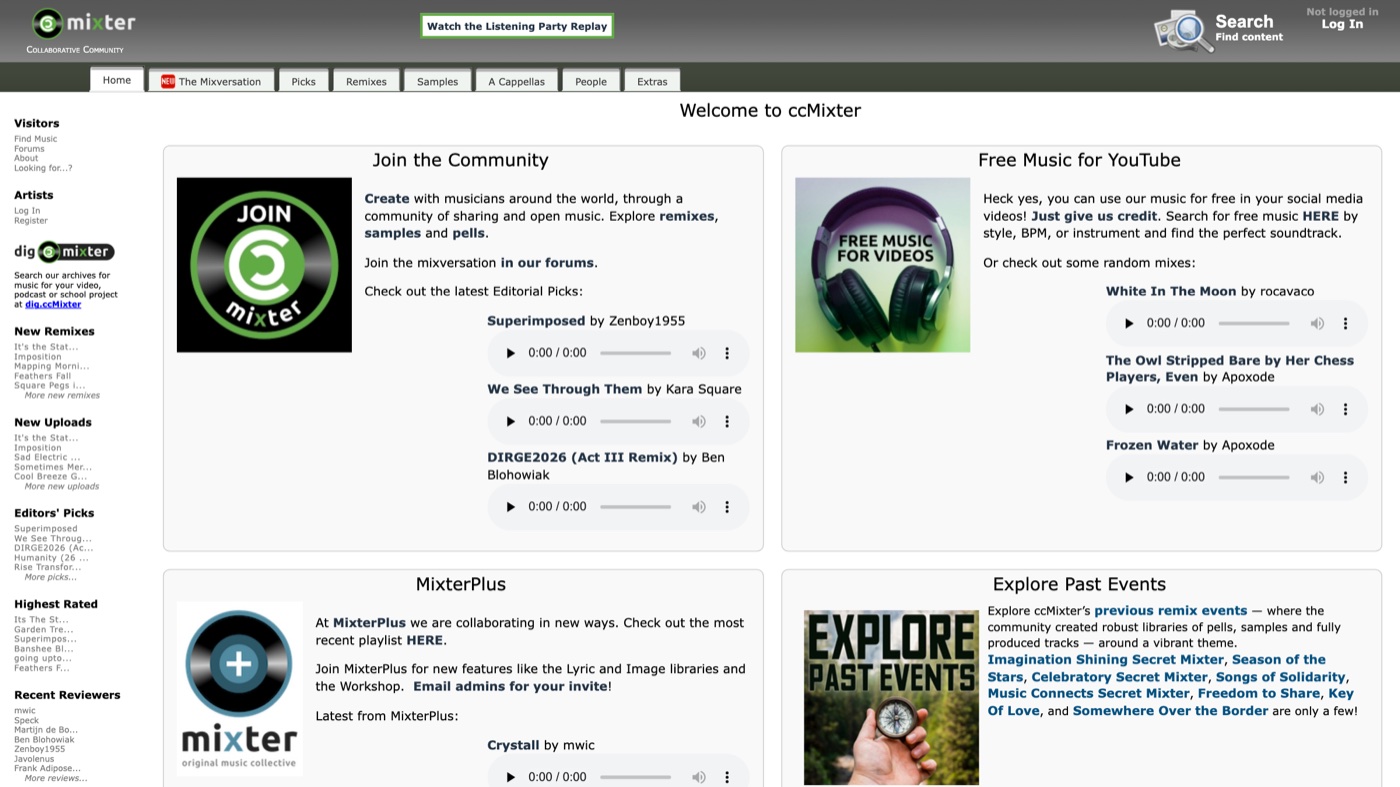
ccMixter is for creators who want to build rather than borrow. Instead of only finished tracks, it hosts samples, a cappella vocals, and instrumental stems that a community remixes into new work, which makes it a goldmine when you want a custom hook or a vocal to score against. Everything runs on Creative Commons, so attribution is usually required and commercial permissions vary; the dig.ccmixter.org section specifically curates music cleared for commercial use, which is where I start. It is niche and the site feels its age, but nothing else on this list gives you raw musical parts this freely. For producers and anyone assembling a bespoke soundtrack, it is worth the dig.
14. Audionautix
More on Audionautix
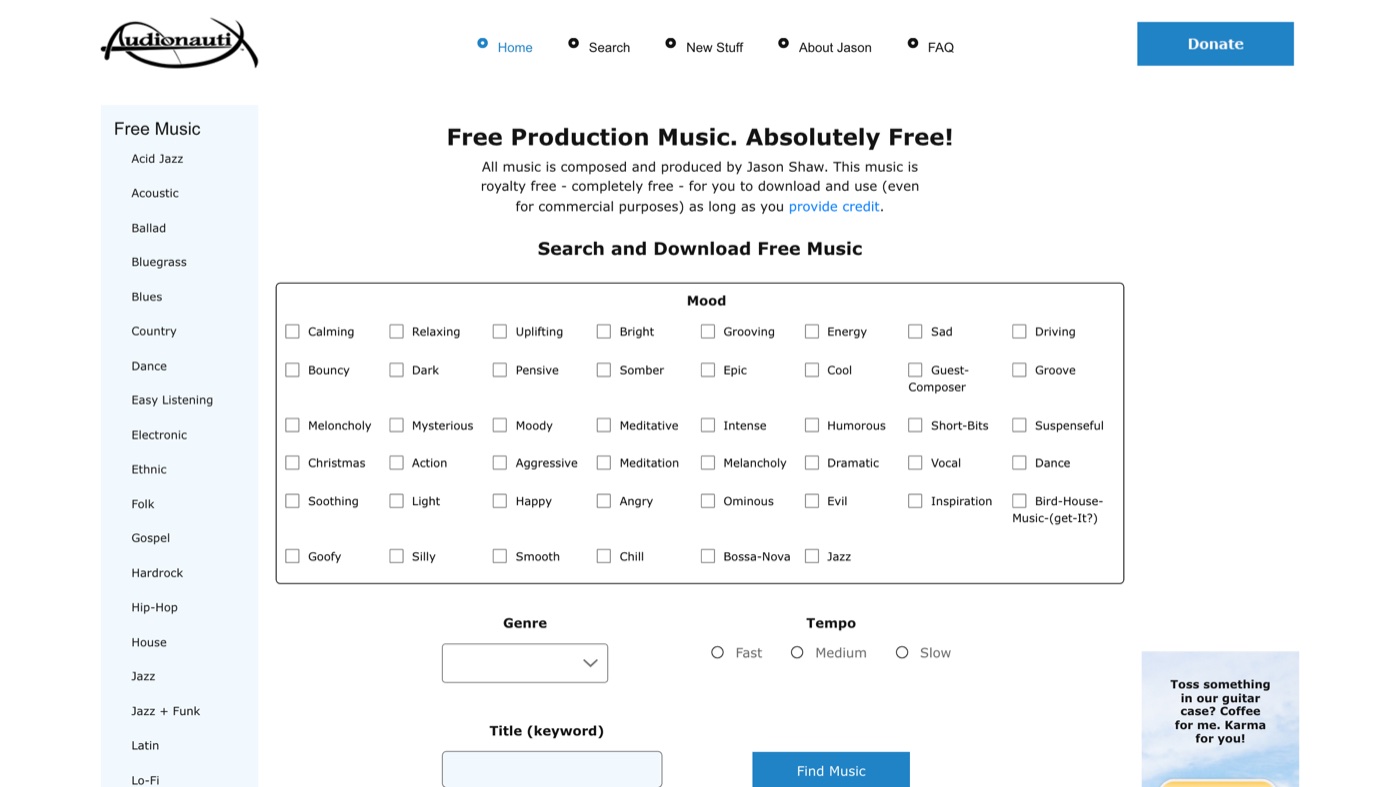
Audionautix is Jason Shaw's personal library, and its appeal is how little thinking it demands. Every track is CC BY 4.0, so one rule covers the whole site: credit Audionautix or Jason Shaw and you can use anything, commercial work included, with no per-track license reading. You can search by genre, mood, and tempo, which is enough to match most straightforward projects. As with other single-composer sites, the sound is consistent and the range is finite, so it suits tutorials, small-business video, and presentations more than a project needing a specific signature track. The interface is plain, but the licensing clarity makes up for it.
15. Epidemic Sound
More on Epidemic Sound
Epidemic Sound is where a lot of serious YouTubers and brand teams land once free libraries start costing them time. For around $16/mo (Personal) or $25/mo (Commercial), you get more than 55,000 tracks and a large sound-effects catalog, all cleared with strong Content ID protection and channel safelisting so claims are handled for you. The music is very good and the search is fast, which is the real value when you publish weekly. The important nuance is the licensing model: your coverage is tied to an active plan, so if you stop paying, the terms around new usage change even though past videos stay fine. For anyone monetizing consistently, the time saved usually justifies the cost.
16. Artlist
More on Artlist
Artlist grew from a music service into a wider creative catalog, and its selling point is licensing that does not make you think. One plan (from about $199/yr Personal, $299/yr Commercial) covers music and sound effects across the places creators actually publish: YouTube, other streaming platforms, podcasts, commercial ads, film festivals, and broadcast. The music curation leans cinematic and modern, which suits brand films and higher-end social work. The commitment is the thing to weigh: it bills annually, so it is a larger single decision than a month-to-month option, and it makes most sense once you know you will use it steadily. For a team producing regularly, the coverage and quality are worth it.
| # | Tool | Best for | Pricing | Limitation |
|---|---|---|---|---|
| 1 | YouTube Audio Library | YouTubers who want zero claims with zero effort | Free with a YouTube account | The audio lives inside YouTube, so using tracks elsewhere is less convenient, and the library skews functional over distinctive. |
| 2 | Pixabay Music | Creators who want a large no-credit library across any platform | Free (Pixabay License, no attribution) | Some composers register their free tracks in Content ID, so you can still catch a YouTube claim; keep the certificate to dispute it. |
| 3 | Uppbeat | Content creators who want claim-free music with a simple credit system | Free plan; paid from $5.59/mo to $13.99/mo | The free plan caps monthly downloads and needs the credit, and channel safelisting is paid only. |
| 4 | Free Music Archive | Distinctive tracks you will not hear on every other channel | Free (per-track Creative Commons) | Every track carries its own CC license to read, and some are CC BY-NC and off-limits for paid work. |
| 5 | Incompetech | Mood-searched instrumental scoring on a credit-and-go basis | Free with credit; paid license for credit-free use | Free use requires crediting Kevin MacLeod and Incompetech, and the interface is very dated. |
| 6 | Chosic | Finding Creative Commons music fast with copy-ready credit lines | Free (CC BY and CC0) | It is a discovery layer over other libraries, so terms shift track to track; confirm commercial rights before a paid project. |
| 7 | NoCopyrightSounds (NCS) | High-energy electronic music for gaming, sports, and vlogs | Free with credit; commercial licenses available | Genre-narrow (mostly EDM), free use still requires the credit block, and ads or client work need a paid license. |
| 8 | Mixkit | No-attribution tracks for quick commercial turnarounds | Free, no attribution required | The library is smaller than the big archives, so selection can feel thin in niche genres. |
| 9 | Bensound | Polished, single-composer tracks for corporate and marketing video | Limited Free tier; paid from about €144/yr | It has shifted mostly paid, and the free tracks now require credit and are limited to online video and non-revenue educational use. |
| 10 | Musopen | Classical and orchestral pieces in the public domain | Free; membership adds high-res files and removes daily caps | Free downloads have a daily limit at standard quality, and the catalog is classical only. |
| 11 | Freesound | Sound effects, foley, textures, and loops rather than full songs | Free (Creative Commons, free account to download) | Quality varies because anyone can upload, and each sound has its own CC license to check. |
| 12 | Jamendo | Indie tracks with a clean split between free personal use and paid commercial licensing | Free for non-commercial use; commercial licenses via Jamendo Licensing | Free use is non-commercial only, so anything monetized or in an ad needs a purchased license. |
| 13 | ccMixter | Stems, samples, and a cappellas to build a custom track | Free with credit; paid tiers drop the credit requirement | It is niche with an old interface, and commercial terms vary, though dig.ccmixter.org curates commercially cleared music. |
| 14 | Audionautix | Simple background music you can use commercially with one credit line | Free with credit (CC BY 4.0) | The site looks dated and the range is limited to one person's output. |
| 15 | Epidemic Sound | Creators and teams who want claim-free music and SFX without reading a license every time | From about $16/mo (Personal) or $25/mo (Commercial) | Coverage is tied to an active plan, so if you stop paying, older uploads are generally fine but new use is not. |
| 16 | Artlist | Teams that want one clear license covering music, SFX, and more across platforms | From about $199/yr (Personal) or $299/yr (Commercial) | It bills yearly, so it is a bigger upfront commitment than paying month to month elsewhere. |
How I actually pick
The decision usually comes down to two questions. Do you need commercial rights, and can you show a credit? If the answer is commercial with no credit, go straight to Mixkit, Pixabay, the YouTube Audio Library, or one of the paid platforms. If you can credit the artist, FMA, Incompetech, Chosic, and NCS open up a much larger and more interesting pool. For anything classical or ad-safe at volume, Musopen and the two paid options carry the load. For scoring a slide deck, Musopen plus a quick walkthrough on adding music to a presentation covers it. Whatever you choose, download the license certificate with the track and store them together, because the version of you disputing a claim in six months will not remember which site it came from.
Picking the track is the quick part of video editing. Turning it into video that holds attention, cut to the beat and mixed under a voiceover, is the actual work, and it is where most of the time goes once you are producing video content every week. If your team has already reached the point where sourcing and editing has become a full job, that is where an embedded creative team like Moonb fits: a dedicated crew handling video, motion, and design end to end, so you brief outcomes instead of hunting for a hook that will not get claimed. For everything you can handle in-house, the sixteen above will take you a long way. And if you are stacking up free assets, the same care applies to free stock video and to how you edit it all together.
See it in action
Frequently asked questions
It depends entirely on the license, not the label. Public domain and CC0 tracks are free for commercial use with no credit. CC BY tracks are free commercially but you must name the artist. CC BY-NC tracks block commercial use altogether. Royalty-free platforms usually clear commercial use on their free or paid tiers, but read the specific terms and save the license certificate before you publish.
Almost always it is a Content ID claim, which is not a copyright strike and puts no penalty on your channel. Many composers register their free tracks in Content ID to catch people stealing them, so the system flags legitimate use too. You dispute it by submitting the license certificate you downloaded with the track, and it usually clears within a few weeks.
The YouTube Audio Library is the simplest, since every track is pre-cleared for the platform. If you want a bigger or more distinctive catalog, a paid platform that safelists your channel (Uppbeat on a paid tier, Epidemic Sound, or Artlist) prevents claims before they happen, which is worth it once publishing is a regular habit.