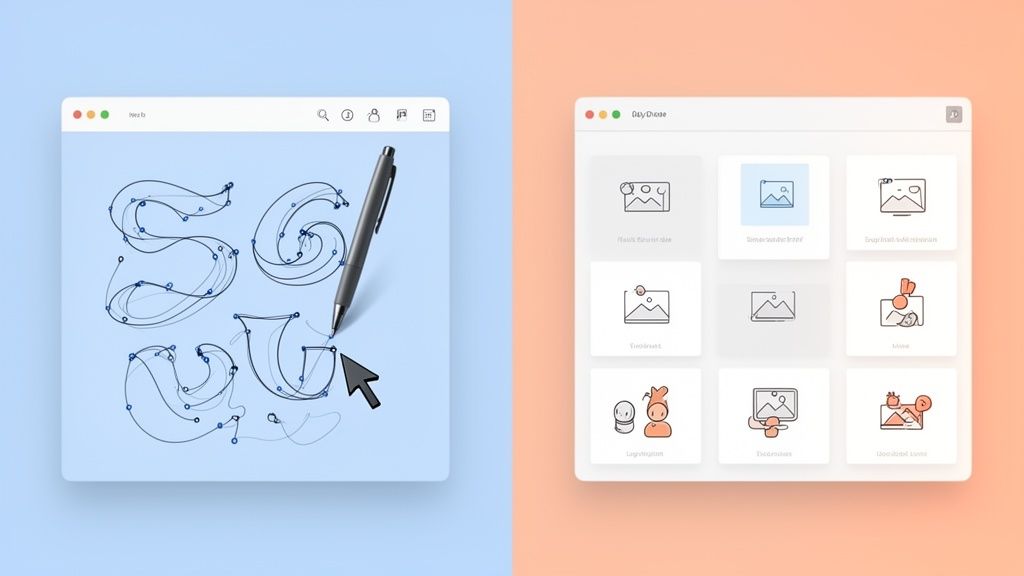

Graphic Design Services That Build Unforgettable Brands


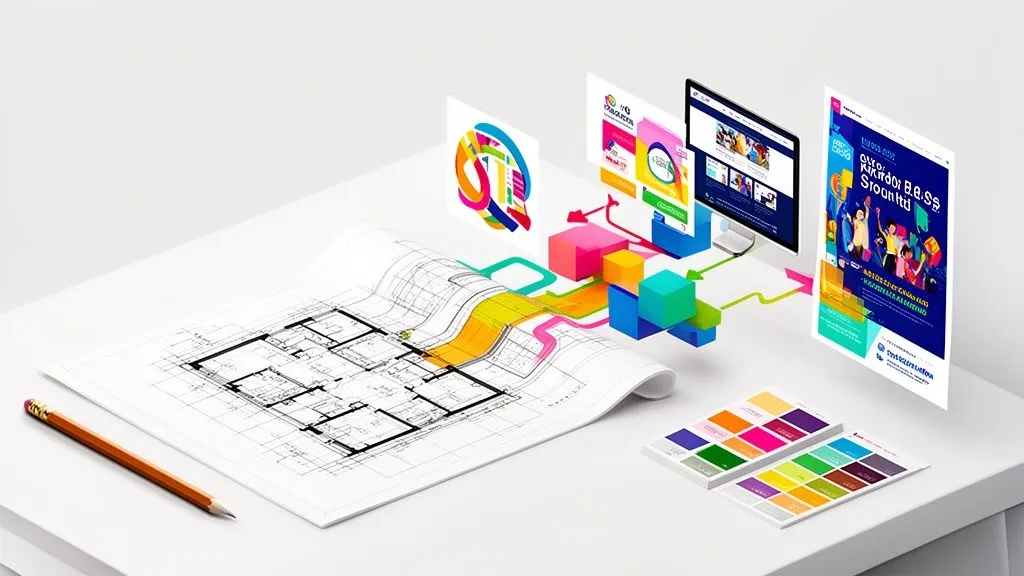
Graphic design services are essentially the visual storytellers for your brand. They take your company's core strategy and turn it into a tangible visual language—the logos, websites, and marketing materials that your customers interact with every day. The goal? To connect with people, build trust, and ultimately, drive sales.
Why Strategic Graphic Design Services Matter
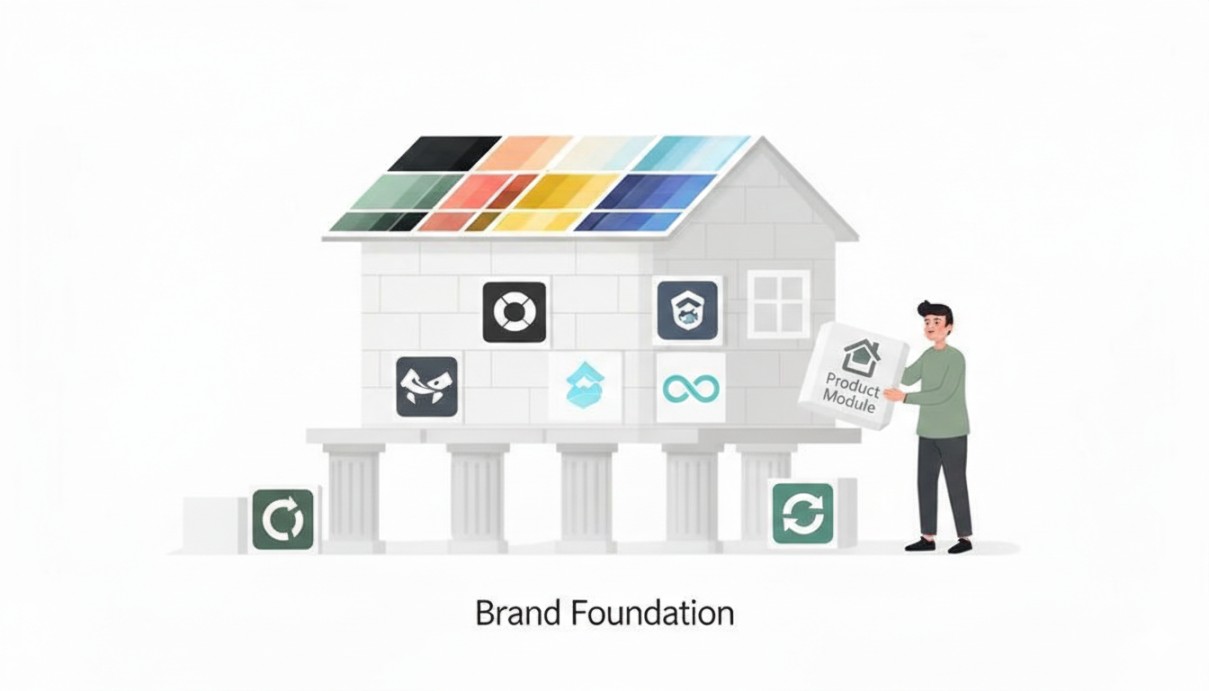
Think of your brand like a custom-built home. Long before you pick out furniture or hang art on the walls, you need a solid foundation and a clear blueprint. Strategic graphic design services provide that blueprint, making sure every visual element—from your logo all the way down to your social media posts—is built with purpose and consistency.
This goes way beyond just making things look nice; it’s about intentional communication. Every color, font, and layout choice sends a subconscious message to your audience. When you get it right, this visual language works quietly in the background to build credibility and make your brand instantly recognizable in a very crowded market.
Turning Strategy Into Visuals
Really effective design acts as a bridge, connecting your abstract business goals to the concrete visuals your customers see and feel. For marketing directors and creative leads, getting this alignment right is what separates a decent campaign from a truly impactful one.
So, what are the real-world benefits of investing in strategic design?
- Better Brand Recognition: A consistent visual identity makes your brand stick in people's minds.
- Stronger Audience Trust: Professional, polished design signals that you're a quality, reliable company.
- Higher Conversion Rates: A well-designed website or ad isn't just pretty—it’s intuitive, guiding users exactly where you want them to go.
- A Competitive Edge: In a sea of sameness, unique and compelling visuals help you stand out.
Meeting Modern Marketing Demands
The pressure to produce high-quality creative work has never been higher. It's not just a hunch; research shows that over 90% of businesses now consider graphic design essential to their branding and marketing efforts. With e-commerce and social media projects now making up over 60% of all design work, having a scalable way to create content is no longer a luxury—it's a must-have for growth.
This is exactly where the link between great design and strong branding becomes so critical. Your visual identity is the face of your brand, and it needs to be consistent and compelling everywhere it appears.
Good design is good business. It’s not just an expense line on a budget; it's a direct investment in your company's future. When you prioritize strategic design, you’re not just polishing your look—you’re building a powerful asset that drives real results and fosters the kind of customer loyalty that lasts.
Exploring the Spectrum of Design Services
Before you can build a killer visual strategy, you have to know what tools are in your toolbox. Graphic design isn't just one big, generic service. It's a whole collection of specialized skills, each fine-tuned to solve a specific business problem.
Think of it like a chef's kitchen. You wouldn't use a meat cleaver for delicate pastry work, and you definitely wouldn't use a tiny paring knife to break down a whole chicken. It’s the same with design.
Knowing when you need a full brand identity overhaul versus a simple UI/UX audit is the key to spending your budget wisely and actually hitting your targets. Let's break down the main categories so you have a clear map of what’s possible.
Brand Identity Design: The Foundation of Your Visual Language
This is the absolute bedrock of your company's visual presence. Brand identity design is all about building a cohesive system that instantly communicates your mission, values, and personality. It’s so much more than a logo—it’s the architectural blueprint for how your brand looks and feels everywhere it shows up.
The core deliverables here usually include:
- Logo Suite: A whole family of primary and secondary logos, icons, and favicons that work flawlessly across every platform.
- Color Palette: A defined set of primary and secondary colors that trigger the right emotions and keep everything consistent.
- Typography System: The specific fonts for headlines, body text, and accents that give your brand its unique voice.
- Brand Style Guide: The rulebook. This comprehensive document spells out exactly how to use all your visual assets correctly.
A solid brand identity ensures every single thing you create—from a business card to a billboard—feels like it came from the same brand, which builds recognition and trust over time.
Marketing And Advertising Design: Fueling Your Growth Engine
If brand identity is the foundation, then marketing and advertising design are the active campaigns you build on top of it. This is all about crafting visuals that stop the scroll, deliver a specific message, and convince people to take action. This is where creative work directly translates into revenue.
The demand here is a great indicator of the industry's health. The global graphic design market has seen some serious growth, on track to hit USD 56.19 billion by the end of this year. It's projected to reach USD 70.53 billion by 2030, which tells you just how essential these services are for modern businesses.
This type of design is pure strategy. Every color, font, and image is chosen to support a campaign goal, whether that’s driving traffic, generating leads, or boosting sales. It’s where raw creativity meets direct-response marketing.
As you explore the wide world of graphic design services, diving into specialties like effective banner ad design is key to really grasping how visual communication works in advertising.
Digital UI/UX Design: Perfecting the User Journey
Today, most of your customer interactions happen on a screen, making User Interface (UI) and User Experience (UX) design absolutely non-negotiable. UI focuses on the aesthetics of a digital product—the buttons, menus, and visual styling. UX, on the other hand, is all about the overall feel and usability of that product.
- UI (User Interface) Design: This is the "what it looks like" part. A good UI is clean, intuitive, and feels like a natural extension of the brand identity.
- UX (User Experience) Design: This is the "how it works" part. Great UX makes an app or website feel effortless and even enjoyable to use, which has a massive impact on reducing bounce rates and increasing conversions.
When they work together, UI and UX ensure your digital platforms aren't just pretty but are also powerful, functional tools that turn casual visitors into loyal customers.
Motion Graphics and Packaging: Capturing Attention in Motion and on Shelves
Finally, there are two specialized fields that solve very specific problems. Motion graphics bring static designs to life with animation, making them a game-changer for explainer videos, social media ads, and presentations. In a feed cluttered with still images, a little bit of movement is a powerful way to grab and hold attention.
Packaging design is that critical first touchpoint for any physical product. It’s your brand identity, but in 3D, and it has to fight for attention on a crowded shelf. Great packaging does more than just protect the product; it informs the buyer and creates a memorable unboxing experience that can spark repeat business and get people sharing on social media.
Choosing Your Creative Partner In-House Agency Or Subscription
Picking the right partner for your graphic design needs is a huge decision. It directly affects how fast you can move, how much you spend, and how consistent your brand looks and feels. This isn't just about finding talented designers; it's about setting up a creative engine that actually syncs up with your company's speed and goals.
Ultimately, you’re looking at three main paths: building your own team, hiring a traditional agency, or signing up for a subscription service. Each has its own flavor of pros and cons when it comes to cost, speed, and strategic fit. Let's break them down so you can figure out what makes the most sense for you.
The Dedicated In-House Team
An in-house creative team is as close to your brand as you can get. They're your people, living and breathing your company culture every day. This is the gold standard for maintaining brand consistency because they have a deep, almost instinctual grasp of your products, customers, and where you're headed.
For companies with a steady, predictable flow of design work, an in-house team can be a massive asset. That intimate brand knowledge is priceless for projects that require a nuanced touch. If you're leaning this way, our complete guide on how to build an in-house creative team is a great resource to see if it's the right fit.
But here’s the catch: the overhead is significant. You’re not just paying salaries. You're covering benefits, software licenses, new hardware, and continuous training. Plus, a small team can easily become a bottleneck if you suddenly need a skill they don't have, like motion graphics or a specific illustration style.
The Traditional Agency Partnership
Hiring a creative agency is like calling in a special-ops team for a major mission. They are perfect for those big, high-stakes projects—think a complete rebrand, a massive product launch, or a multi-channel ad campaign. You get instant access to a full squad of experts: strategists, art directors, copywriters, and designers, all working in sync.
Agencies bring a valuable outside perspective that can challenge your internal assumptions and breathe new life into your brand. They’re built for heavy strategic lifts and usually work on a retainer or per-project basis.
The downsides are often the price tag and the pace. Agency retainers aren't cheap, and their structured process—with layers of account managers and formal approval cycles—can feel slow. This model just isn't built for the quick-turn, day-to-day creative tasks that a fast-moving marketing team constantly juggles.
The Flexible Subscription Service
This is the new kid on the block, and it's a game-changer. Subscription-based graphic design services offer a powerful middle ground, blending the on-demand feel of an in-house team with the diverse talent pool of an agency. This model is practically built for modern marketing teams that need a high volume of quality creative work without all the usual friction.
You pay a flat monthly fee and get access to a full creative team whenever you need it. This model completely strips away the heavy overhead of hiring and the sluggish pace of traditional agency work. It’s all about agility. You can submit as many requests and revisions as you need, which is perfect for churning out social media content, sales decks, digital ads, and presentations at scale.
Subscription services give you a scalable creative infrastructure on tap. Marketing leaders can stay focused on strategy, knowing their creative production engine can handle whatever they throw at it—no scope creep, no surprise invoices.
This shift isn't just a fad; it's a reflection of where the industry is heading. Freelance graphic designers now make up nearly 50% of the industry workforce, showing a clear move toward more flexible, on-demand talent. This trend is supported by employment data showing that 62% of graphic designers now work in remote or hybrid roles. Subscription platforms are brilliant at organizing this global talent pool to deliver incredible creative work. You can dig into more numbers by exploring the latest graphic design statistics on cropink.com.
Choosing the right model means taking an honest look at your real-world needs. To help you decide, let's put these three models side-by-side.
Comparing Creative Service Models In-House Agency Or Subscription
So, what's your answer? Do you need someone who lives and breathes your brand every single day? Are you gearing up for a massive strategic push? Or do you need a fast, flexible, and scalable creative partner to keep up with your marketing?
Figuring that out is the first step to turning your creative function into a true engine for business growth.
How a Successful Design Project Actually Works
Ever wonder what really happens after you approve a design project? It's not magic. Great design is the outcome of a surprisingly structured and collaborative journey that takes an idea from a simple thought to a finished visual asset.
Knowing how this process works is a game-changer for clients. It pulls back the curtain on the creative workflow, helps you give more effective feedback, and makes the entire partnership with your design team a whole lot smoother. Think of it less like a black box and more like building something together, piece by piece, with a shared blueprint.
Let's walk through the five key stages of that journey.
Stage 1: The Creative Brief
This is it—the single most important step. And it happens before anyone even thinks about opening a design program. The creative brief is the foundation for the entire project. It's more than just a to-do list; it’s the strategic document that gets everyone on the same page, from you to the designer to the creative director.
A solid brief nails down the essentials:
- The Objective: What business problem are we actually solving here?
- The Audience: Who are we talking to, and what makes them tick?
- The Key Message: If they only remember one thing, what should it be?
- The Deliverables: What specific things do we need at the end (e.g., a set of social media ads, a landing page mockup)?
Without a clear brief, the whole project is just guesswork. Getting this right saves a ton of time and headaches later on.
Stage 2: Discovery and Research
With the brief in hand, the design team shifts into discovery mode. This is their chance to do a deep dive into your company, your competitors, and the world your audience lives in. They'll look at what's working in your market, spot visual trends, and pull together inspiration that feels true to your brand's personality.
This stage is all about gathering the intel needed to make smart creative choices. It ensures the final design isn't just pretty, but that it's also strategically sharp and relevant to your industry.
Stage 3: Concept Development
Okay, now the fun really starts. In the concept development stage, all that strategy and research gets turned into actual visual ideas. This is where the brainstorming happens, leading to initial sketches, mood boards, or rough wireframes.
This phase is about exploring the big picture, not sweating the small stuff. You’ll likely see two or three different creative directions. Your job here is to give feedback on which concept best hits the mark, not to get hung up on colors or fonts just yet.
This is also where the type of creative partner you have—in-house, agency, or subscription—can really change the dynamic of the workflow.
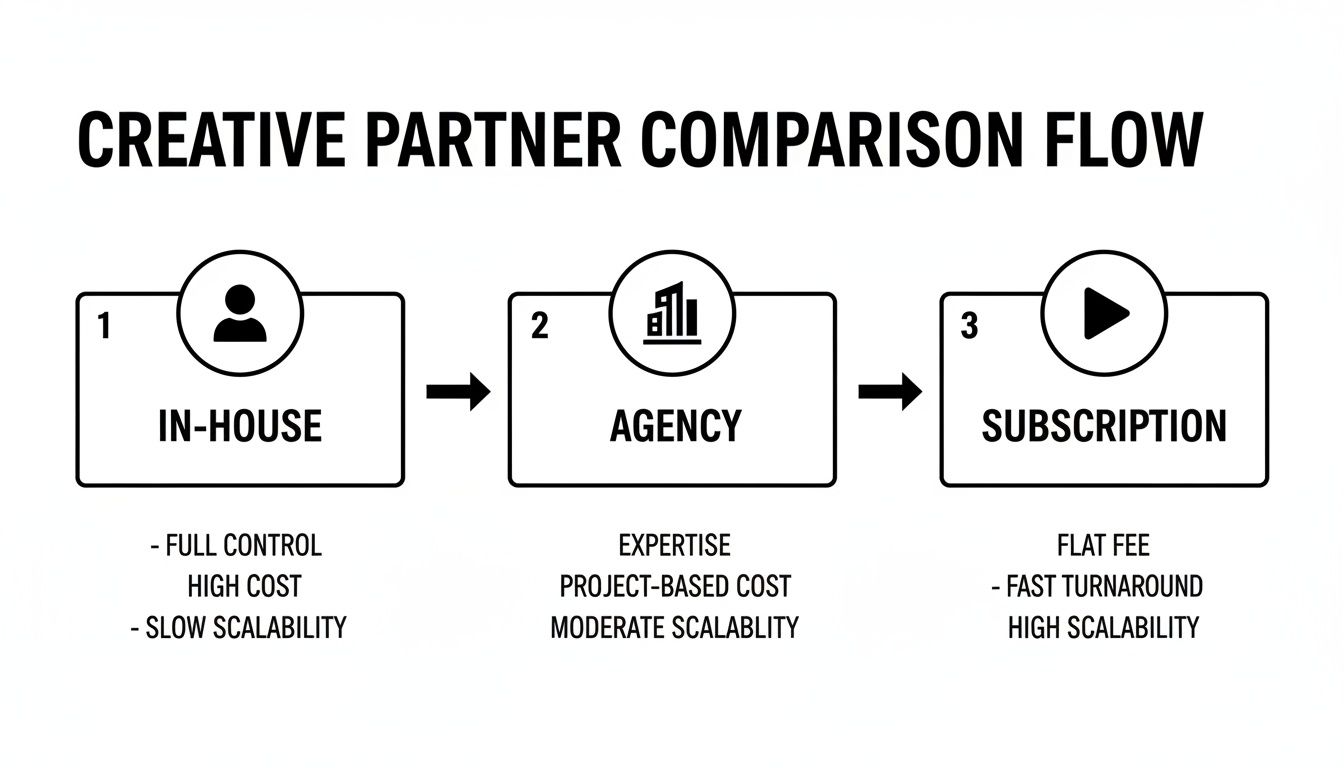
Each model brings its own flavor to the process, whether it's the deep brand knowledge of an in-house team or the flexible horsepower of a subscription service.
Stage 4: Design Execution
Once a concept gets the green light, the team goes into full-on production mode. This is the heads-down work of turning the chosen direction into a polished, high-fidelity design. Designers will lock in the typography, finalize the color palette, create any custom graphics, and build out all the final assets.
Good communication is crucial here. Your design partner should be giving you regular check-ins so you can see how things are progressing and make sure everything is lining up with your expectations. If you want to get a more detailed look at how this works, you can learn more about the complete design process in graphic design and what to expect.
Stage 5: Feedback and Finalization
We're in the home stretch. This final stage is all about refinement. You'll get the polished design for review, and this is your chance to provide clear, consolidated, and constructive feedback. The idea isn't to go back to the drawing board, but to make those final tweaks that take the design from good to great.
After a round or two of revisions, the design is locked. Your creative partner will package everything up and deliver all the final files in the right formats, ready for launch. It’s this predictable workflow that turns a creative idea into a successful project, every time.
How to Select the Right Design Partner
Choosing a creative partner is one of the biggest decisions a marketing leader can make. You’re not just looking for someone to deliver pretty visuals; you’re looking for a team that acts as a strategic extension of your own. The right partner gets your business goals and turns them into creative work that actually drives results.
This process is way more than just scrolling through a flashy portfolio. It needs a structured approach to make sure potential partners have the skills, process, and collaborative spirit to mesh with your team. By asking the right questions, you can see past the surface level and find a team you can build a successful, long-term relationship with.
Evaluate Their Portfolio with a Strategic Eye
A portfolio is always the first checkpoint, but don't just get wowed by the finished products. You need to dig deeper to see if their work is not only top-notch but also strategically smart for your industry and goals.
Ask yourself these questions as you look through their past projects:
- Is there variety? You want to see a range of styles and deliverables, from complete brand identity systems to digital ad campaigns. This shows they’re versatile and have a broad skillset.
- Does their work solve problems? Can you figure out the business challenge the design was meant to tackle? Great design is more than just aesthetics; it's about hitting an objective.
- Is their work relevant to you? They don’t need to be an expert in your specific niche, but seeing successful projects in similar industries is a huge plus.
This initial review will help you quickly shortlist partners whose creative style lines up with your brand’s vision and quality bar.
Understand Their Creative Process and Communication Style
A stunning portfolio means nothing if the process to get there is a total mess. The best design partners have a clear, transparent workflow that keeps you in the loop every step of the way. This is where you separate the pros from the amateurs.
It's also a good moment to zoom out and look at the design industry as a whole. Today, 73% of businesses are spending more on graphic design, and 81% use design services in some form. With this much demand, you absolutely need a partner with an efficient, scalable process. Discover more insights about design industry trends on cropink.com.
A partner’s process is a direct reflection of how they value your time and input. A well-defined workflow minimizes surprises, reduces endless revisions, and ultimately leads to a better final product with less friction.
Look for a team that starts with a solid creative brief, schedules regular check-ins, and has a structured way of handling feedback. This is how projects stay on track and aligned with your goals from start to finish. You can also check out our guide to finding the best creative design agencies to see what top-tier collaboration looks like in action.
Ask the Right Questions to Uncover True Value
Once you have your shortlist, it's time to start talking. The questions you ask now will tell you everything about how they think, what they consider a "win," and how they handle the inevitable bumps in the road that come with any creative project.
Here are a few essential questions to get the conversation started:
- How do you measure the success of your design work? You’re looking for answers that go beyond "if the client is happy." Do they bring up conversion rates, brand recall, or other tangible business metrics?
- How do you handle feedback and revisions? A great partner sees feedback as a crucial part of the process, not a chore.
- Can you share a case study of a project with similar goals to ours? This takes the conversation beyond the visuals and into the strategic thinking behind their work.
When you're vetting potential partners, knowing how to choose a web designer who is focused on results is a vital skill. The same principles apply across all design fields—you need a partner who is just as obsessed with performance as you are.
Scaling Your Creative Output On Demand
For modern marketing teams, the content treadmill just never stops. The demand for high-quality, on-brand creative is relentless, stretching across social media campaigns, sales decks, animated videos, landing page mockups—you name it. This constant need creates the classic headaches we all know too well: hiring freezes, agency scope creep, and project costs that seem to have a mind of their own.
This is exactly where subscription-based graphic design services come in with a totally different playbook. It's not just another way to get designs done; it’s a strategic move to overhaul how you manage and scale your entire creative operation. Imagine having a full creative department—designers, animators, and a director—plugged right into your team for one, predictable monthly fee.
This model is built for the pace of today's marketing, giving you the agility to keep up with packed content calendars and jump on unexpected campaign opportunities. It’s about turning your creative function from a reactive cost center into a proactive engine for growth.
Unlocking True Creative Agility
The real beauty of an on-demand service is that it unties your creative output from internal headcount or rigid agency retainers. With unlimited requests and revisions, you can finally match your creative production directly to your strategic goals without the usual overhead.
This kind of flexibility empowers teams to:
- Launch Campaigns Faster: Get the ads, banners, and social assets you need without getting stuck in a long production queue.
- Arm Your Sales Teams: Quickly spin up compelling pitch decks, one-pagers, and case studies that help close deals.
- Experiment and Iterate: Test out different ad creatives or landing page designs without worrying about the billable hours piling up.
This shift toward more nimble solutions is already reshaping the market. Online platforms are taking over the graphic design world, projected to pull in USD 35.04 billion in revenue this year alone. That's a massive 63.60% market share. This trend really drives home the industry's pivot from traditional, inflexible studios to more adaptable, platform-based partners. You can dive deeper into graphic design statistics and insights on cropink.com.
Integrating a Scalable Creative Engine
Bringing a subscription model on board isn't just about outsourcing a few tasks; it's about embedding a scalable creative infrastructure right into your marketing operations. This approach delivers consistency and quality control, which is especially critical when you're juggling a high volume of deliverables.
The real power of an on-demand creative service is that it lets you focus on strategy instead of production logistics. You can plan your campaigns with confidence, knowing you have the creative firepower to execute them flawlessly.
This seamless integration also solves a major pain point for many marketing directors: asset organization. A central platform keeps all your creative work consistent, on-brand, and easy to find. To keep everything humming along, it's vital to have a solid system for managing all these new assets. You can learn more by checking out our guide on effective creative asset management.
At the end of the day, this model gives you the freedom to scale your creative output whenever you need it, ensuring your brand stays vibrant and ahead of the curve.
Your Questions, Answered
If you're in charge of a marketing budget and hitting specific goals, you've probably got questions about bringing on a design partner. Let's tackle the big ones so you can make smarter decisions for your team.
How Much Should I Budget For Graphic Design?
This is the million-dollar question, and the honest-to-goodness answer is: it depends entirely on how you approach it. The costs can swing wildly between different models.
For instance, bringing a senior designer in-house is a major investment, often topping $100,000 per year once you factor in salary, benefits, and tools. On the other end, a traditional agency could quote you anywhere from $5,000 to $50,000+ for a single, well-defined project like a brand refresh.
Then there are subscription services, which have completely changed the game. They offer a predictable flat monthly fee—usually between $1,000 and $6,000—for ongoing access to an entire creative team. It’s a way to get a massive amount of creative firepower without the massive, unpredictable costs.
What Are Realistic Turnaround Times?
Turnaround times really come down to the complexity of what you're asking for. Simple, everyday requests like social media graphics or quick presentation tweaks can often be turned around in just 24-48 hours, especially if you're working with a nimble subscription partner.
Bigger, more strategic projects naturally need a bit more time to bake:
- Logo Concepts: Expect to see initial ideas within 3-5 business days.
- Landing Page Mockups: A polished first draft usually takes about 5-7 business days.
- Short Animated Videos: Depending on the style and length, these often require 1-2 weeks.
The most important thing here is communication. A good design partner will be upfront and transparent about timelines, so you can plan your campaigns and launches with total confidence. No last-minute surprises.
How Can I Give Effective Feedback?
Learning to give clear, productive feedback is a superpower. It can completely transform the creative process and the final output. Vague comments like "make it pop" or "I just don't like it" are frustrating because they leave designers guessing.
The key is to give feedback that's both specific and consolidated.
Instead of just reacting, tie your feedback to the original project goals. For example, rather than saying a design feels "off," try something like, "This font feels a little too playful for our enterprise audience. Let's try something more authoritative from our brand guide." This gives the designer a clear problem to solve and a path forward.
What Is The Difference Between A Designer And A Creative Director?
Think of it this way: a graphic designer is the skilled practitioner who focuses on the "how." They're masters of their craft—experts in design software, typography, and layout—and they’re the ones who execute the visual work, turning ideas into concrete assets.
A Creative Director, on the other hand, is all about the "why." They provide the strategic oversight, making sure every single design choice ladders up to the bigger brand strategy and business goals. They guide the team, ensure quality and consistency, and act as the crucial link between your marketing objectives and the final creative. It's this leadership that ensures your graphic design services don't just look good, but actually drive real business results.
Ready to stop worrying about creative bottlenecks and unpredictable costs? Moonb provides a scalable creative infrastructure that integrates directly with your marketing team. Get access to a full creative department for one flat monthly fee. Learn more and see how it works.