12 3D product animation examples, sorted by what they prove
Twelve recent 3D product animations from Samsung, PlayStation, IKEA, Hyundai and more, with what each had to prove, where it ran, and when filming wins.

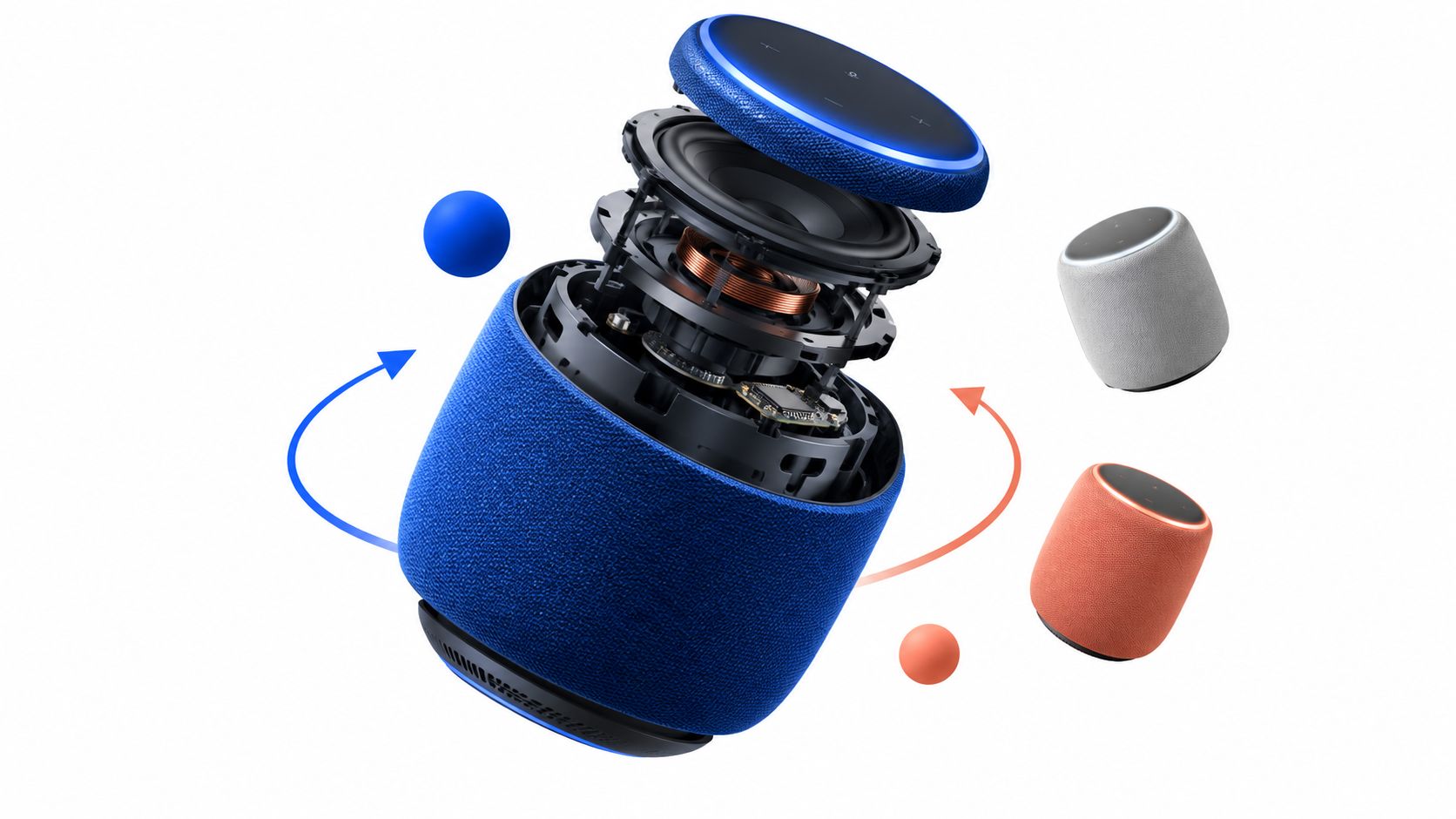
3D product animation means building a product as a computer model, then lighting it and shooting it with a virtual camera. Brands use it for the shots a real camera can’t get, which mostly means the inside of things and products that don’t exist yet.
At Moonb, where I work, plenty of product-film requests open with “we want it in 3D.” Fine by me. What I ask in return is what the viewer should believe once the film ends (“this fits in my living room,” say, or “there’s something clever inside”). That answer decides whether 3D is worth the modeling hours or you’d do better booking a studio and filming the thing.
The twelve below are grouped loosely by that job, all from the brands’ own YouTube channels and dated 2022 to 2025. When I describe a shot, I’m going off frames I paused on or the brand’s own description.
The 12 examples at a glance
| Example | Year | Category | What the 3D had to prove | Where it ran |
|---|---|---|---|---|
| Samsung Galaxy Z TriFold | 2025 | Foldable phone | Interior: two hinges inside a thin body | Samsung global YouTube |
| Shark PowerDetect Clean & Empty | 2024 | Cordless vacuum | Interior: what the nozzle does on the floor | Shark Home YouTube |
| Oral-B iO | 2022 | Electric toothbrush | Mechanism: micro-vibrations plus rotation | Oral-B North America YouTube |
| PlayStation DualSense Edge | 2022 | Game controller | Assembly: parts that come apart and swap | PlayStation YouTube |
| IKEA POÄNG, “IKEA THINGS” | 2024 | Furniture | Assembly and price: parts building one chair | IKEA UK YouTube |
| Logitech MX Master 4 | 2025 | Computer mouse | An invisible feature: haptic feedback | Logitech YouTube |
| Roborock Saros Z70 | 2025 | Robot vacuum | Mechanism: a folding arm and self-cleaning | Roborock global YouTube |
| Nothing Phone (3a) Series | 2025 | Smartphone | Spec: which camera does what | Nothing YouTube |
| OnePlus 13 | 2024 | Smartphone | Material: finish and color under light | OnePlus YouTube |
| Garmin Forerunner 970 | 2025 | Running watch | Variants: colorways and a built-in flashlight | Garmin YouTube |
| Hyundai IONIQ 9 | 2024 | Electric SUV | Form: aerodynamics you cannot see | Hyundai Worldwide YouTube |
| Kia EV9 lighting patterns | 2024 | Electric SUV | A setting: light patterns an owner can choose | Kia Worldwide YouTube |
The twelve films
1. Samsung, Galaxy Z TriFold Design Film (2025)
If a client wanted one example, I’d send this. A phone that folds twice makes everybody wonder where the hinges go, and Samsung answers by drawing the body see-through.
One still draws the phone almost like glass, both hinge assemblies visible inside, under the caption “Dual hinges. Fold in twice.” Further on it moves to the open display and the line “The shape of what’s next.” Samsung put it on its global channel on December 4, 2025, billed as “surprisingly thin, built with dual hinges, and engineered to fold in twice.” It had passed 31 million views when I checked in late October 2026.
2. Shark, PowerDetect Clean & Empty (2024)
Shark’s 31-second film for the PowerDetect Clean & Empty stick vacuum (model IP3251, according to the description) goes inside the floor head.
The DuoClean Detect nozzle shows up with its top turned transparent, so you can see the green-striped brushroll underneath. Elsewhere a “Designed to capture more” badge sits beside the head on a wood floor, with a test-standard footnote at the bottom, and in another frame the vacuum is docked in a living room.
3. Oral-B, Introducing Oral-B iO Technology (2022)
Toothbrushes don’t film well, and none of the frames I paused on in Oral-B’s film shows a bathroom.
Everything I saw is CGI: swirling magenta and blue strands, then a round brush head built from glowing filaments. The description says the video “explores how the implementation of micro-vibrations paired with an oscillating-rotating brush head functions to improve plaque removal efficiency,” and the chapter list puts “How It Works: Microvibrations and cleaning below gum line” at 0:30. Micro-vibrations are exactly the kind of thing an animator can slow down and blow up until you notice them.
4. PlayStation, DualSense Edge Wireless Controller Reveal Trailer (2022)
The DualSense Edge sells customization, so the reveal trailer (posted August 23, 2022) treats the controller as a kit.
Components float free of the shell on dark blue, and there’s a tight render of the controller’s surface, all of it in service of what the description calls “creating your own custom controls to fit your playstyle.” I reach for exploded views a lot on briefs like this, because they sell assembly and build quality in the same shot, and people read the clean gaps between parts as precision.
5. IKEA UK, “IKEA THINGS: Price first” (2024)
The only furniture entry, and the least serious of the twelve, which I mean as praise.
You get soft yellow blob shapes, then a POÄNG armchair surrounded by floating parts and white bubbles, an £80 price tag, and an on-screen question asking how IKEA makes wonderful things cost less. IKEA’s description says the brand is always looking for ways to make quality furniture cost less, and the floating parts read as its answer to how the chair gets down to £80. Silly, and a better argument about manufacturing than most voiceovers I’ve read.
6. Logitech, Introducing MX Master 4 (2025)
You can’t see haptic feedback. You feel it in your thumb or you don’t know it’s there, which is awkward for a video.
Logitech went hybrid. In one frame a real hand rests on the mouse with teal ripples drawn around it and the caption “with haptic feedback.” Another still shows the Actions Ring, a radial menu of tool icons, and a third is a rendered mouse with purple and pink rings spreading out from the thumb rest. Logitech’s own wording is “customisable haptic feedback built into the thumb rest.” Most hybrid briefs I see end up somewhere near this, with the hand filmed and the feeling drawn on top.
7. Roborock, Saros Z70 (2025)
A robot vacuum with an arm is an odd idea, and the film has to make it look ordinary.
The arm appears under the caption “Foldable Five-axis Mechanical Arm,” then holds up a gray slipper. Elsewhere, rendered water swirls behind the line “80°C Hot Water Self-Cleaning, For Both the Mop and the Dock.” At 2:45 it’s long for a launch film. I didn’t mind, because each claim I saw got a shot to itself.
8. Nothing, Phone (3a) Series: Power in Perspective (2025)
Nothing’s film is mostly a spec sheet, which I expected to be dull.
One shot isolates the camera module on a pale background with four callouts: a 50 MP shake-free OIS camera, a 50 MP telephoto, an 8 MP ultra-wide Sony camera and a 32 MP front camera. Other stills show a sample photo and a row of five phone screens. Nothing posted it on March 4, 2025, and the channel shows over two million views. The labels sit on the hardware, so you never have to work out which number belongs to which lens.
9. OnePlus 13, The Next Chapter (2024)
Finish is the category where renders make me most nervous.
OnePlus’s 44-second film, posted December 3, 2024, spends most of what I saw on extreme close-ups of a curved blue surface, then lines up three phones in white, blue and dark finishes against a sky. The copy goes all in on craft, “Timeless craftsmanship refined by precision-driven innovation.” It’s beautiful, and it worries me a little. A phone back that looks like silk in a render has to look like silk in the store, or you’ve made a returns problem. NRF and Happy Returns estimated that 19.3% of online sales would be returned in 2025, and a finish that disappoints in daylight adds to that pile easily.
10. Garmin, Forerunner 970 (2025)
Garmin’s 1:14 launch film mixes real running footage with 3D, and the 3D has a specific job.
At one point a fan of watch bands in different colors spreads across a black background, lit from the edges, the flashlight caption partly hidden behind them. Other shots follow a runner at dusk and after dark. Garmin’s copy lists “our brightest AMOLED display, durable sapphire lens, lightweight titanium bezel and built-in LED flashlight.” Colorways are one of the oldest reasons to build a model, since you make the watch once and swap band colors in software.
11. Hyundai, IONIQ 9 Design Film (2024)
Car films lean hard on 3D, and it’s easy for one to lose track of what it’s proving.
Hyundai’s film, posted November 20, 2024, wraps the SUV in flowing airflow lines in a dark forest, then shows it at a glass pavilion at dusk, where a small disclaimer (I’d like to see one on far more renders) reads “This video is for illustrative purpose only and may differ from the actual product.” Hyundai pitches the car as “the ultimate fusion of aerodynamic performance and sleek beauty.” In the frames I paused on, those airflow lines are the only evidence for the first half.
12. Kia, EV9 Lighting Pattern (2024)
Barely an ad. It reads more like a manual.
Kia Worldwide posted it on January 30, 2024, under a one-line pitch, “The Kia EV9 allows you to choose from a variety of lighting patterns to suit your preferences!” A light blue EV9 sits on a white void, seen from above and at three-quarters, and a dark close-up of the front lights carries the word “FOCUSED.” A link sends viewers on to the Kia How-to channel, so this is for owners, after the sale, and a product render is now doing support work.
What 3D costs next to filming the real product
I won’t give you a price range here, because no single range would be true. What I can do is show where the money goes on each side, and our breakdown of what animation costs goes further into the numbers.
A real shoot pays for physical things: finished samples, a studio or location, crew days, art direction, shipping, and a reshoot if the color changes afterward. Most of that is per production. Shoot a new colorway and you pay for most of it again.
3D puts the cost up front. Modeling, materials, lighting tests and the first animation pass carry most of the bill, and after that a new angle or a 15-second cutdown reuses the same model, which is why the Garmin and Kia films make sense. CAD files from engineering help, though they usually need cleanup before they animate well, so don’t count on them making the first pass cheap.
In my experience the cheapest 3D deliverable is a turntable, one slow spin of the product on a clean background, and it’s the piece product pages reuse most. Sculpty’s guide to 360-degree turntable renders covers the unglamorous parts, like setting the pivot before the camera, keeping light consistent through the whole rotation, and picking export formats depending on whether the spin goes to ecommerce, review or a portfolio. Turntables and product films built off the same model are both part of what our 3D animation service covers.
When a real shoot is the better answer
Film it when the claim lives in how the product feels or sounds in use: fabric drape, the click of a button, steam off a pan, the way a shoe creases on a runner’s foot. Rendering any of that convincingly eats hours, and viewers tend to notice anyway.
Same if the product already exists, comes in one or two variants, and hides nothing. A simple, finished object in good light rarely needs a model.
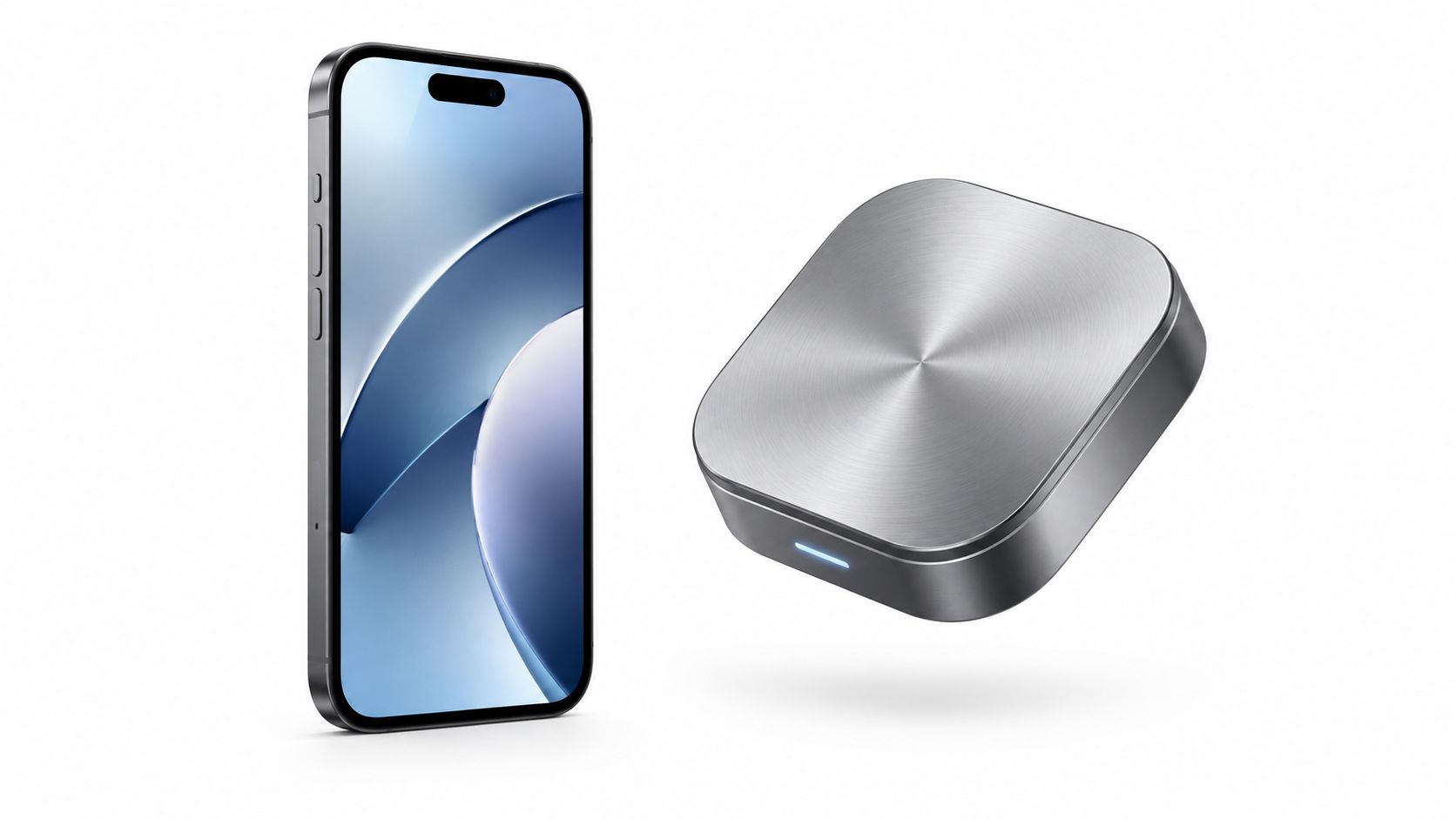
Go 3D when the product isn’t finished yet, when the story is inside the housing or can’t be seen at all, when it comes in a dozen colors, or when it’s too big or too small to shoot well. The Samsung, Oral-B and Hyundai films all sit there. Shark, Logitech and Garmin mix both, and so do most of my briefs. We film the hand and the room, and render whatever is hidden.
For more in the same family, we have lists of 3D explainer videos, animated product videos and product launch videos. The product explainer formats guide helps if you are still choosing between live action, animation and a hybrid.
Frequently asked questions
Mostly to show what filming can't, like how a product works inside, how it comes apart, or how it looks in every colorway before the factory has made one. It turns up in launch films, on product pages, in paid social and in how-to content for owners, and one model often serves all of those.
That depends on how many versions you need. A shoot costs roughly the same each time you add a colorway or reshoot a changed part. 3D puts most of the cost into building the first model, and every extra angle, color or cutdown after that gets cheaper. For one finished product in one color, filming is usually the simpler choice.
Accurate dimensions or CAD files, a physical sample or reference photos under known light, material and color references, and one clear sentence on what the viewer should believe at the end. CAD files speed up modeling, but they usually need cleanup before they animate well, so leave time for that.


