12 performance creative agencies compared
I compared 12 performance creative agencies on their own sites: who each fits, whether it buys media, how it tests ads, and one limitation apiece.

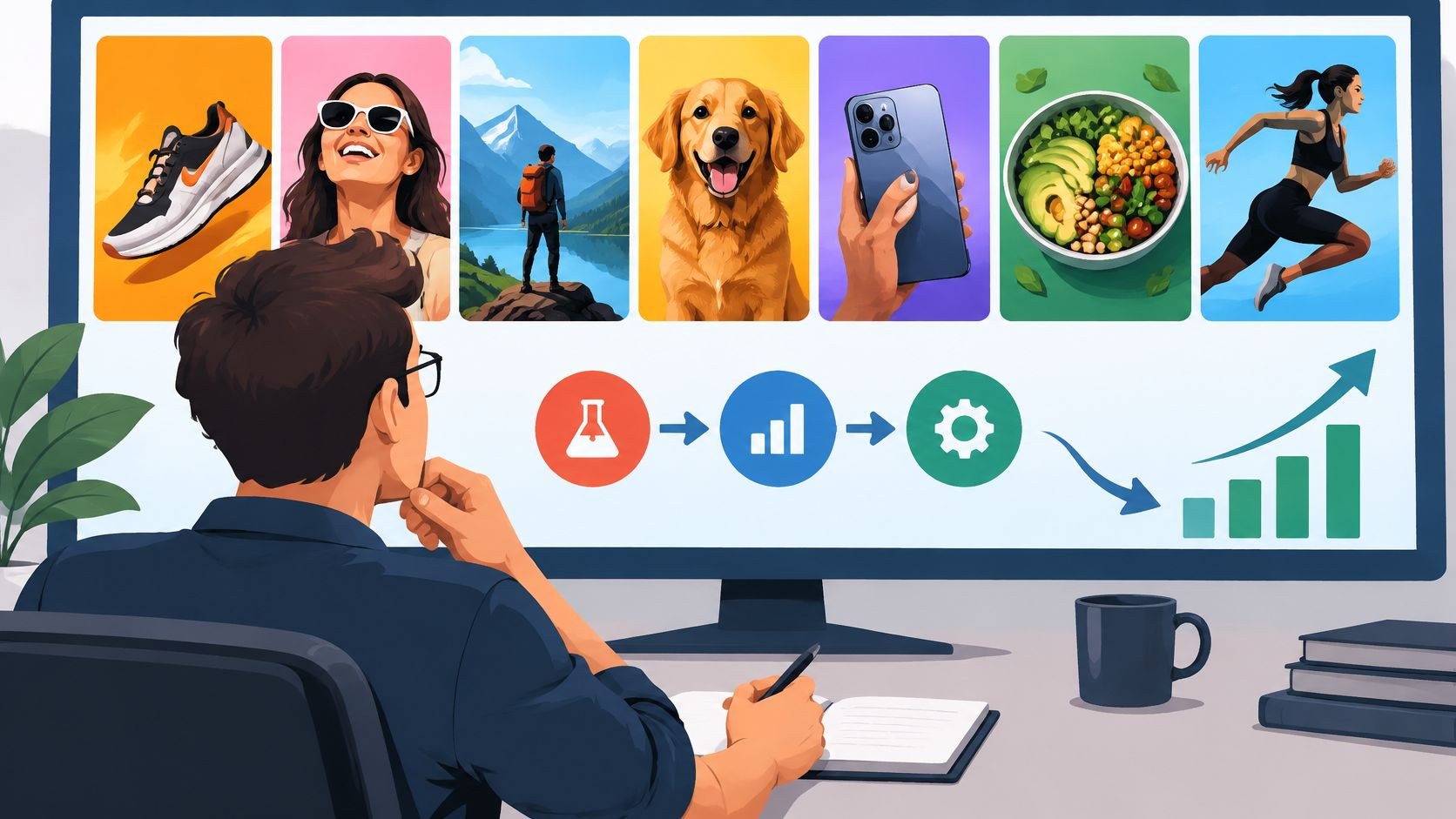
Twelve performance creative teams are worth a look right now: Moonb (the studio I run), Quality Media, Creative Milkshake, inBeat, Common Thread Collective, Chamber Media, VID, Conductor, WITHIN, Hey Digital, Vidsy and MuteSix. Performance creative means ads made to be tested: lots of versions of one concept, each changing a single thing, judged on a result you agreed before launch and replaced before the winners wear out.
Picture the account I see most: an ad set six weeks old, frequency creeping up, click-through sliding, and nobody has touched the targeting. Those ads are worn out and need replacing, which is why a partner’s turnaround speed ends up being most of what you pay for.
I took every claim below from the companies’ own websites, in November 2026.
What performance creative is, and how it differs from media buying
A media buyer decides where the money goes: campaigns, audiences, bids, budgets. A performance creative team decides what people see, from the concept and the first three seconds down to the version cut for each placement. They meet in the ad account, where the buyer reports what won and the creative side writes the next brief from it.
Some companies on this list do both, and the table further down marks which. With those, the first thing I’d want to know is which desk owns the next edit. If buyer and creative are two separate companies, put the handoff in writing, down to who sends finished files in which specs and who brings the results back.
If you’re picking a media partner as well, Wojo Media’s guide to performance marketing services has a decent section on vetting one, with questions that test how deep an operation really goes and advice on checking case studies.
How creative testing works in practice
I think of the loop in four layers. The teams I’d hire keep them apart.
- A concept is the idea: a before and after, a founder story, a product demo, a problem and its fix.
- A hook is the opening that sells the concept, usually the first one to three seconds of video or the headline on a static.
- Variations change one element at a time: the presenter, the length, the call to action, the visual treatment.
- Formats adapt the winner to each placement, from a 9:16 story to a square feed ad to a banner.
Test one layer at a time against the same result, and feed the answer into the next brief. Our ad creative testing playbook goes much further into test design. When you run short of concepts, the 15 ad creative patterns we keep coming back to are where I’d look first.
Meta’s business education team has a short explainer on creative fatigue. Around the midpoint there’s a checklist with four ways to refresh an ad: highlight a different product benefit, show a new use case, offer a fresh perspective, and feature different people and situations.
One new cut a month won’t save a fading ad set. You want a concept turned into a batch of variations quickly, and you want what the buyer learned to show up in the next brief.
The 12 performance creative agencies
1. Moonb
More on Moonb
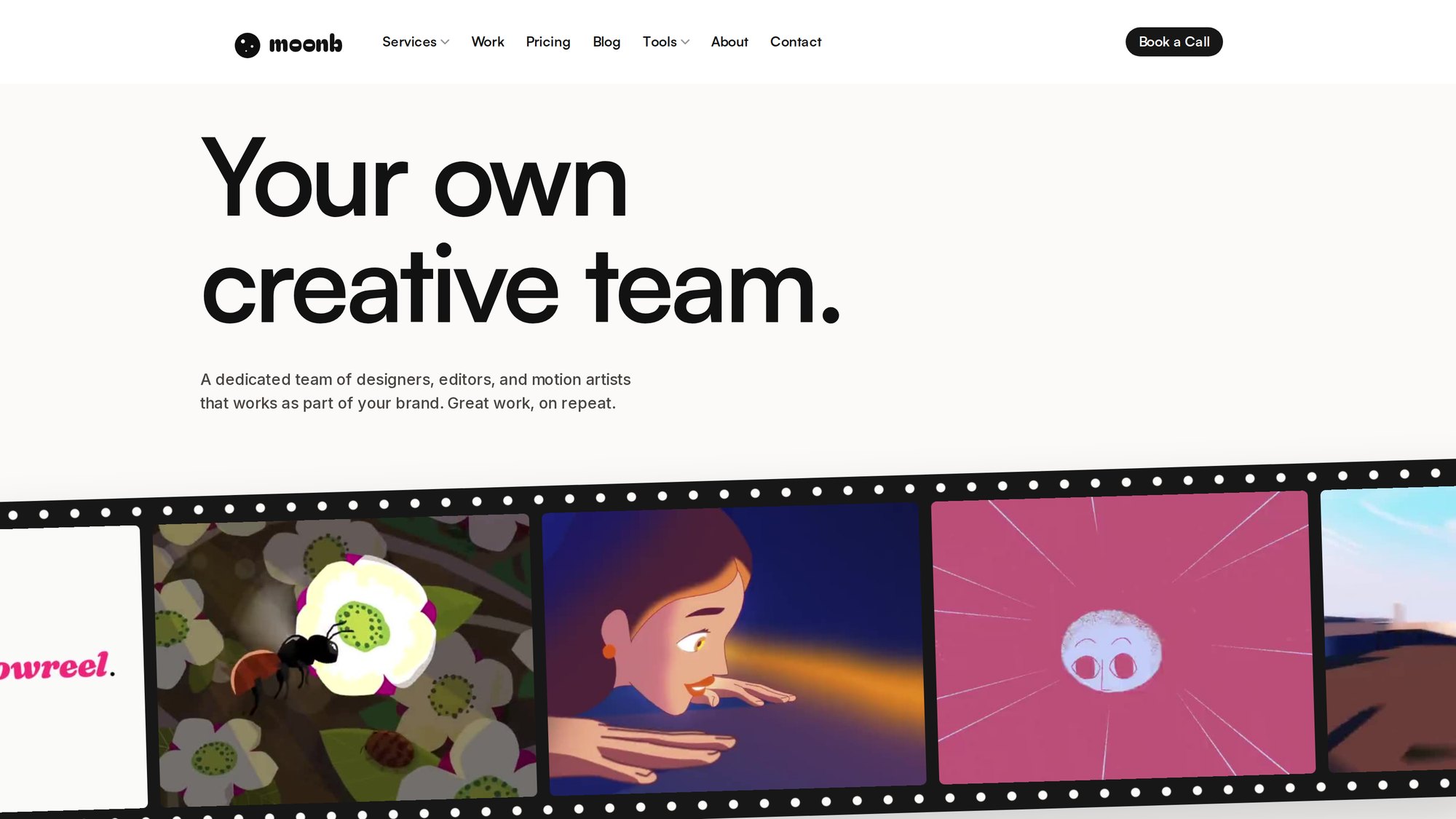
On paid accounts we sit next to your media buyer as a dedicated creative team, for companies big and small. The useful unit there is one concept turned into several hooks and first frames, then versions of length, call to action and treatment, exported to the specs your buyer runs.
For paid social, what I care about most is that a launch stays in one queue, from the strategy note through static sets and animated cuts to the resized winner. When your buyer reports back, it goes to the Creative Director who wrote the last brief, so the next round knows what lost as well as what won.
Motion goes through the same queue, like this Apple Pay spot we built from 3D renders. It’s short and makes just two points: speed and privacy.
2. Quality Media
More on Quality Media
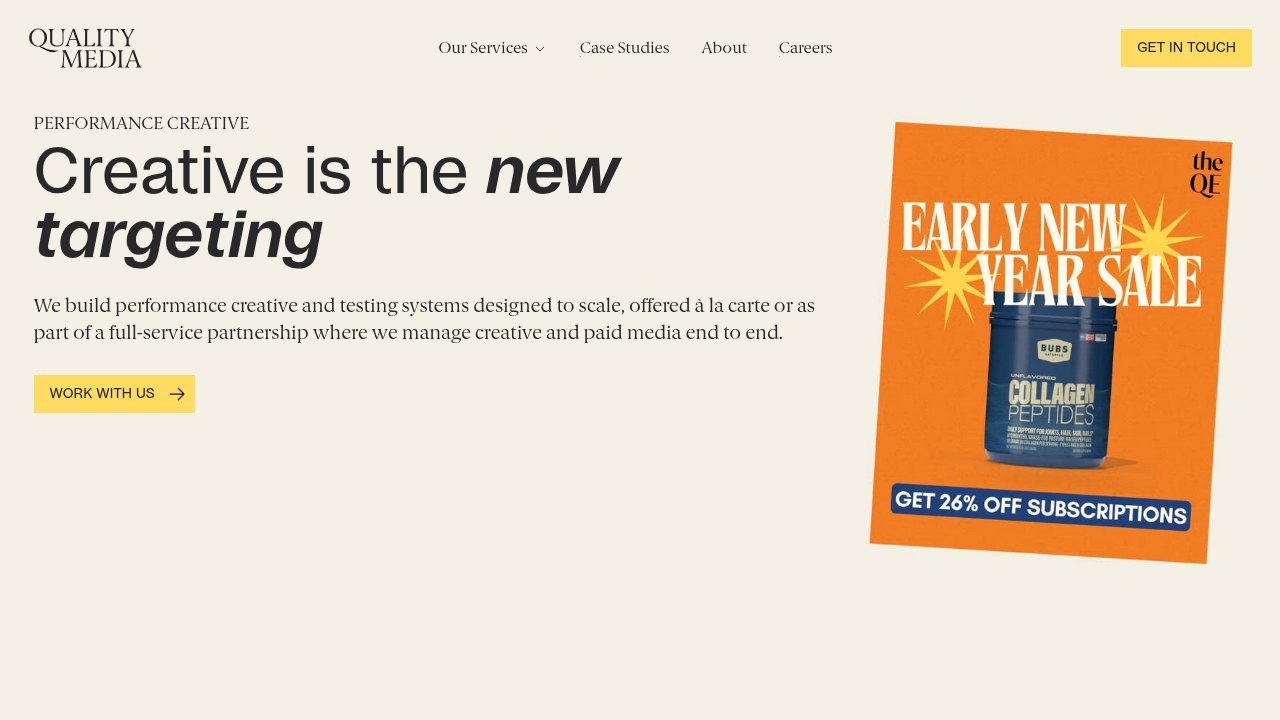
Quality Media sells four services: publisher and creator whitelisting, performance creative, full-service paid media and performance influencer work. The creative side covers strategy, concept development, UGC and creator production, ad testing and iteration, cross-platform ads and performance reporting. Formats named on the page run from creator and UGC to branded ads, motion graphics, AI-assisted creative and editorial-led creative. The company also says it supports the Boys & Girls Club of America.
It sits second because the schedule is in writing, so you have something to hold them to once the work starts. Most of the others only say they test.
3. Creative Milkshake
More on Creative Milkshake
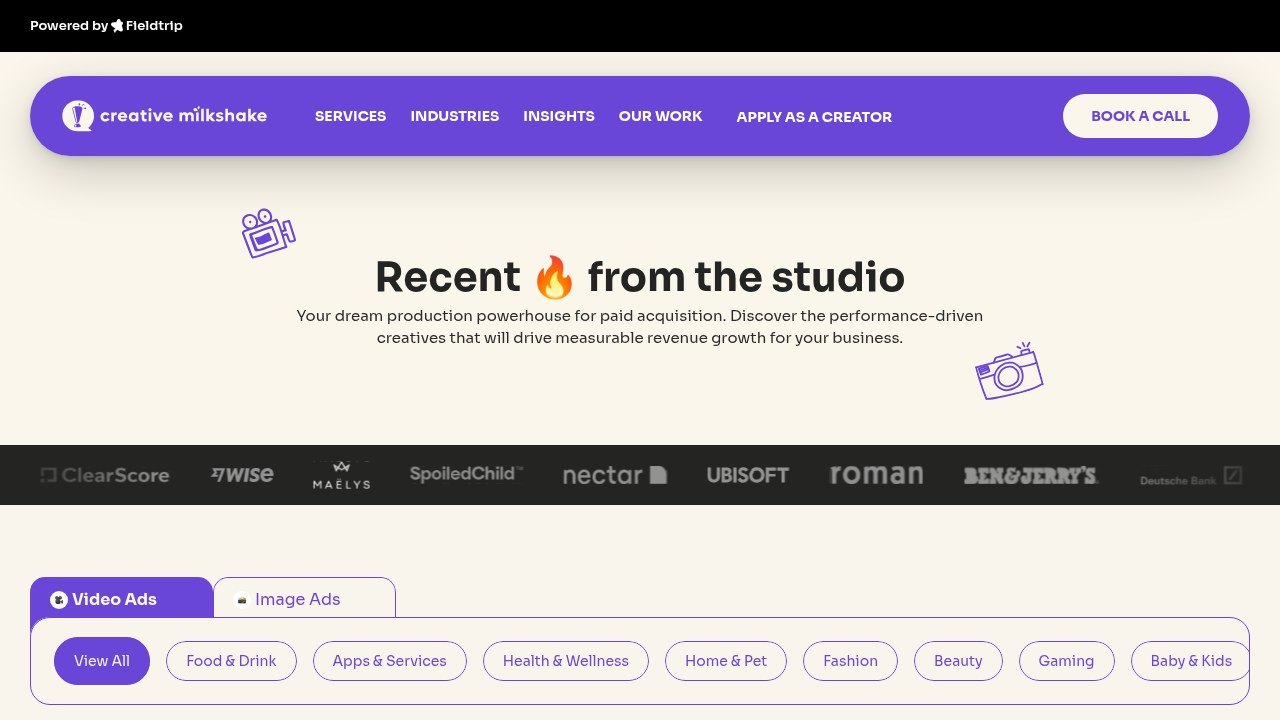
The performance creative page lists the ad types it makes: UGC ads, conversion ads, social proof mashups, before and after, product demos, hook testing ads, founder and brand story ads, and problem and solution ads. Its homepage describes a hybrid production model, high-polish studio content next to creator-led content, plus AI-assisted research, scripting and post-production. Paid media management across Meta, TikTok and YouTube is available as a separate service, and the case study list includes N26, Wise and Playtika.
I’d borrow that ad-type list as a checklist even if you never hire them. An account that has only ever run product demos gets a new concept from a before-and-after or a founder story, and that’s the kind of change a test can actually read.
4. inBeat
More on inBeat
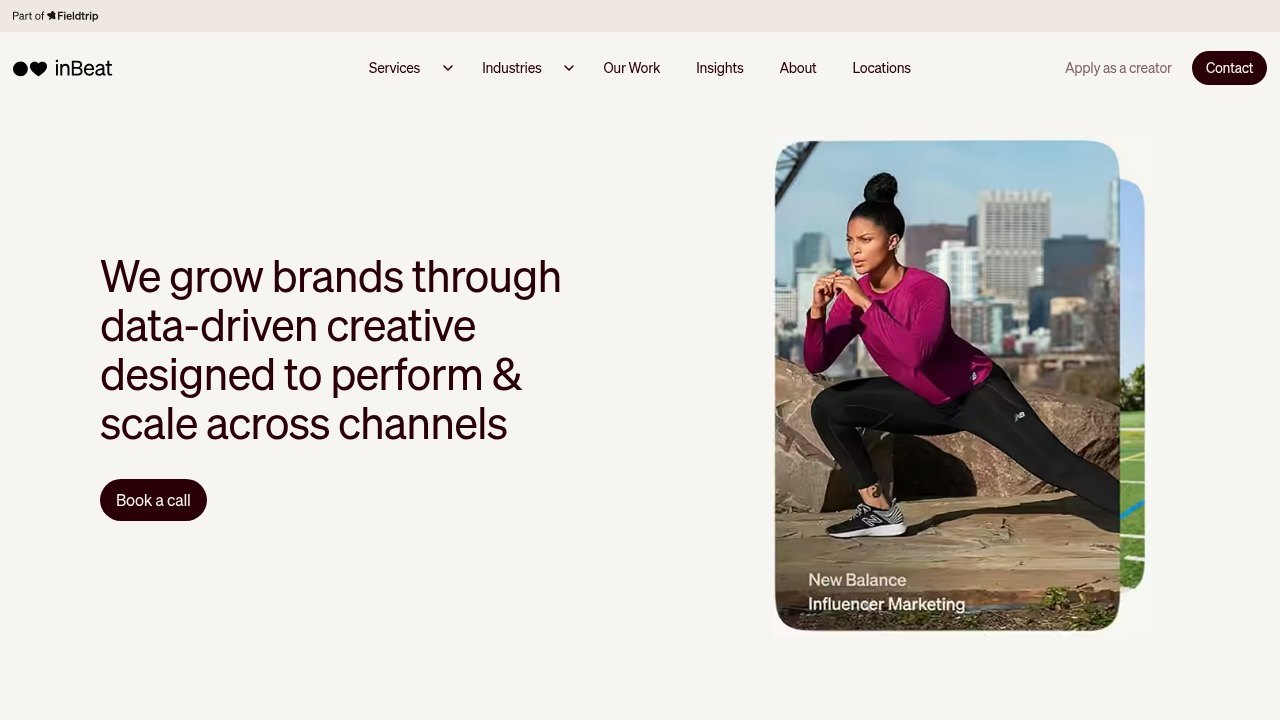
inBeat's performance creative page lists modular creative systems, high-velocity ad variant production, hook, angle and format testing, AI-enhanced post-production, and creator sourcing and vetting. On the media side it lists Meta, TikTok and YouTube ads management plus CTV and programmatic buying. Its FAQ says most partners use it for the full loop of creator sourcing, UGC, performance creative and media buying, and that it also takes launch campaigns and other one-off projects.
Same Fieldtrip banner as Creative Milkshake. I couldn’t tell from either site how the two teams split the work, and with both on a shortlist I’d want that clear early.
5. Common Thread Collective
More on Common Thread Collective
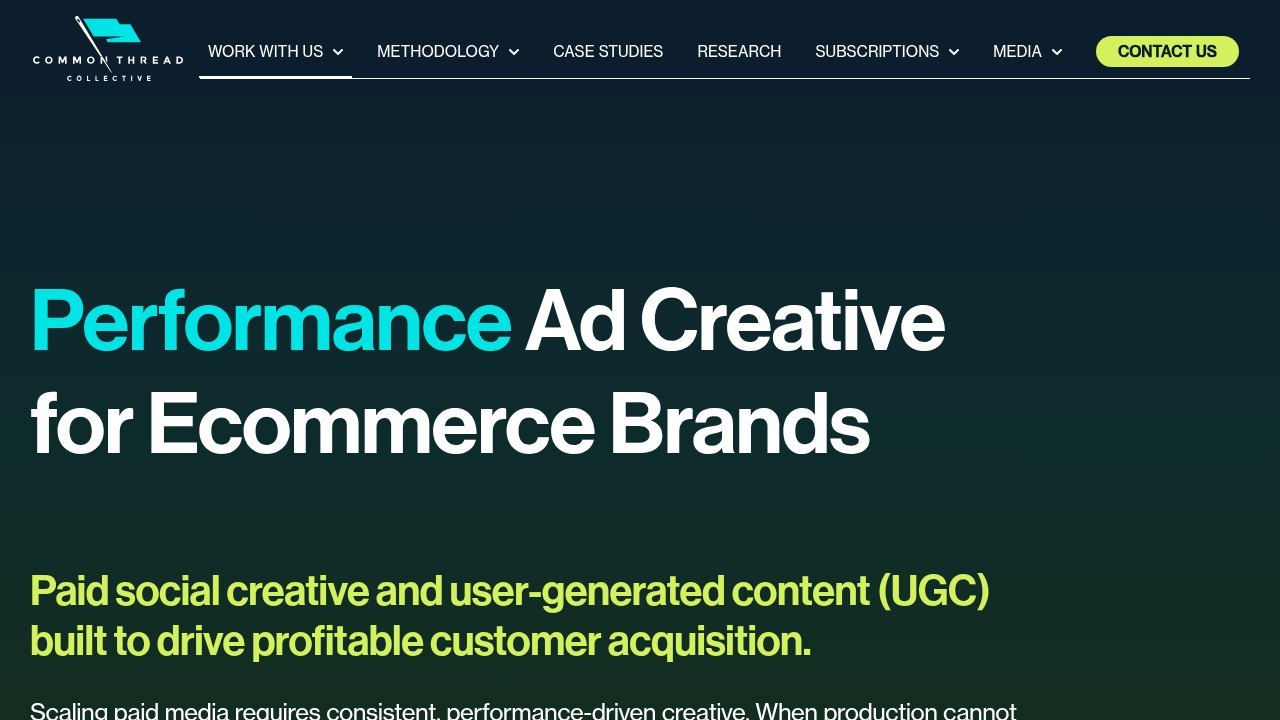
The creative production page names Meta, YouTube, TikTok, AppLovin and Snapchat as channels. The UGC workflow covers product seeding, creator selection, briefing, revisions, creator costs and agreements, with hooks and calls to action informed by account performance and final cuts delivered with raw assets. Branded ads start from product selection and a persona and pain point brief, and come back ready to traffic. Its case study for PRO Compression describes UGC built around distinct fitness communities such as marathoners, trail runners and run clubs.
Planning volume off a package size is handy, even if forty ads could just as easily be forty takes on one idea.
6. Chamber Media
More on Chamber Media
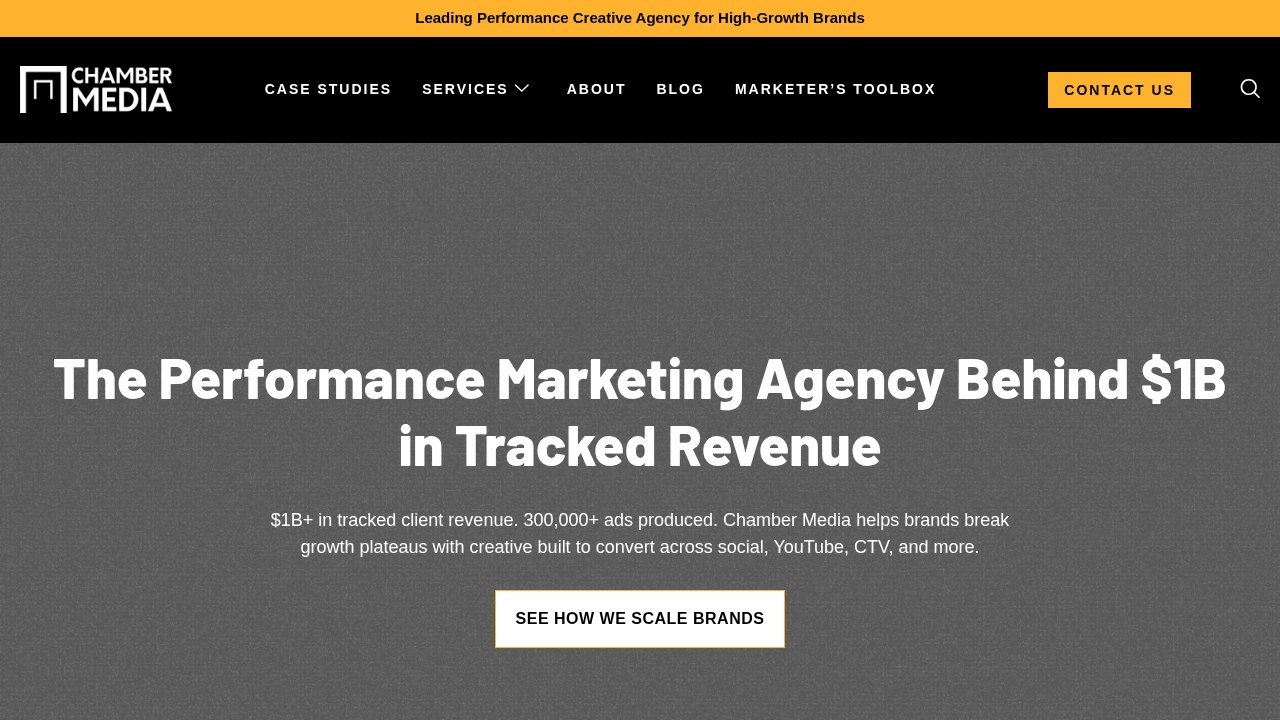
Chamber Media describes performance creative that runs from long-form to short-form video and static images. It also describes The Brain 2.0, a proprietary database of ad and performance analysis that informs each campaign. Case studies on the homepage include MRCOOL, Tuft & Needle, Puragain Water and Fabletics. Treat the tracked-revenue and ad-count totals on the homepage as the company's own figures.
If you only want the ads, ask on the first call how a creative-only scope is priced and who on the account team owns your briefs.
7. VID
More on VID
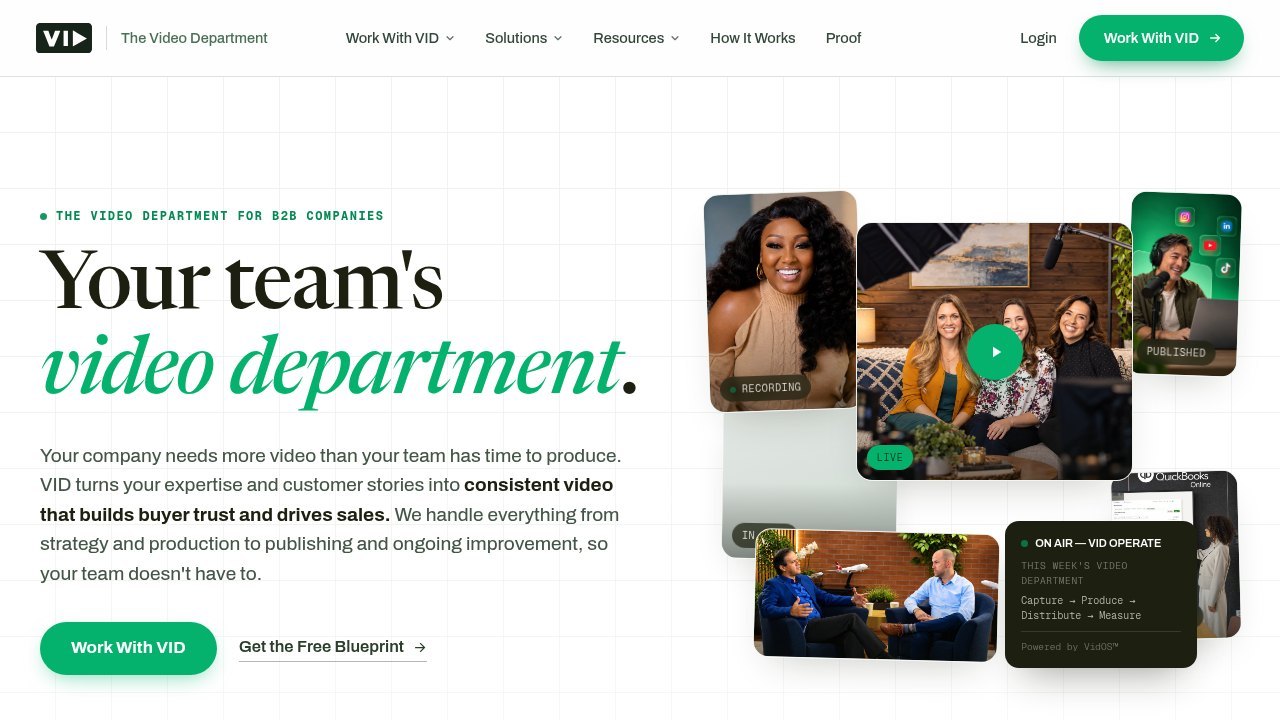
VID's performance creative page covers Meta, LinkedIn, TikTok, YouTube and connected TV, and works with UGC, spokesperson, AI-generated and studio-produced formats. It describes the system as installed inside your paid media operation, which reads as a partner for the team that already buys the media. Other parts of the company sell executive video, customer stories, video podcasts and product marketing video, among others.
Of the twelve pages I read, this is the one I’d hand a new hire to explain what performance creative is, because the testing framework comes before any talk of production. Retirement gets one line on the page (a documented workflow for when to pause, refresh or retire an ad), so I’d ask to see how the scoring framework actually makes that call.
8. Conductor
More on Conductor
Conductor's homepage lists concept and development, pre-viz and testing, hybrid and live-action production, directors, celebrity and non-union talent, editing and post, media team integration and archiving. It cites an eight-year relationship with Fanatics covering more than 1,000 TV commercials, retail spots and social edits, and a number four spot in the Top 10 TV category of the fourth annual Kantar Creative Effectiveness Awards for its "Dear L.L.Bean" campaign. Its performance creative page argues that brand and response work get stronger when they are made together.
That pre-production test is the reason to call them, especially when the shoot is the expensive line in your plan.
9. WITHIN
More on WITHIN
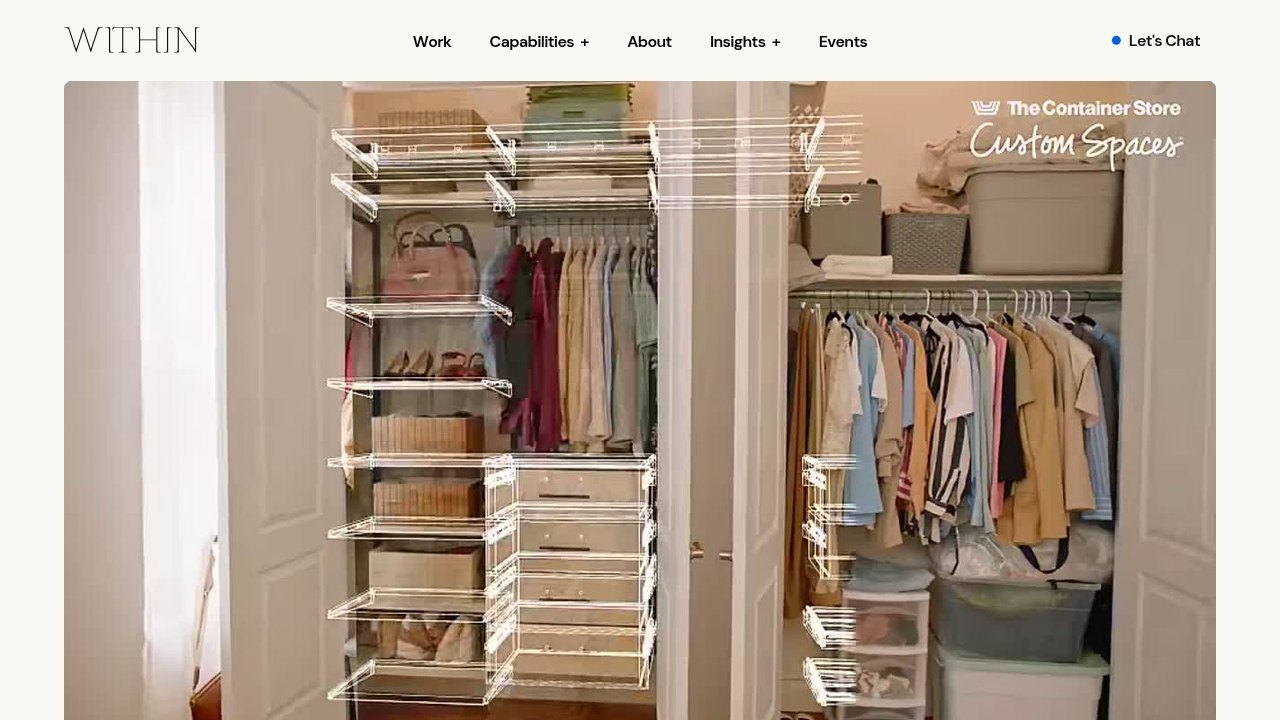
WITHIN lists live-action capture, studio production, 2D and 3D animation and creator-style capture on the production side, and editing, motion graphics, sound design and asset versioning across markets in post. It offers free creative audits of existing paid and owned creative. Selected creative work on the page includes RTIC, 1800 Tequila and The RealReal, and the homepage features Ben & Jerry's, Touchland and Champs Sports.
The free audit is the cheap way in. I’d judge it on whether it names your next three tests in specific terms.
10. Hey Digital
More on Hey Digital
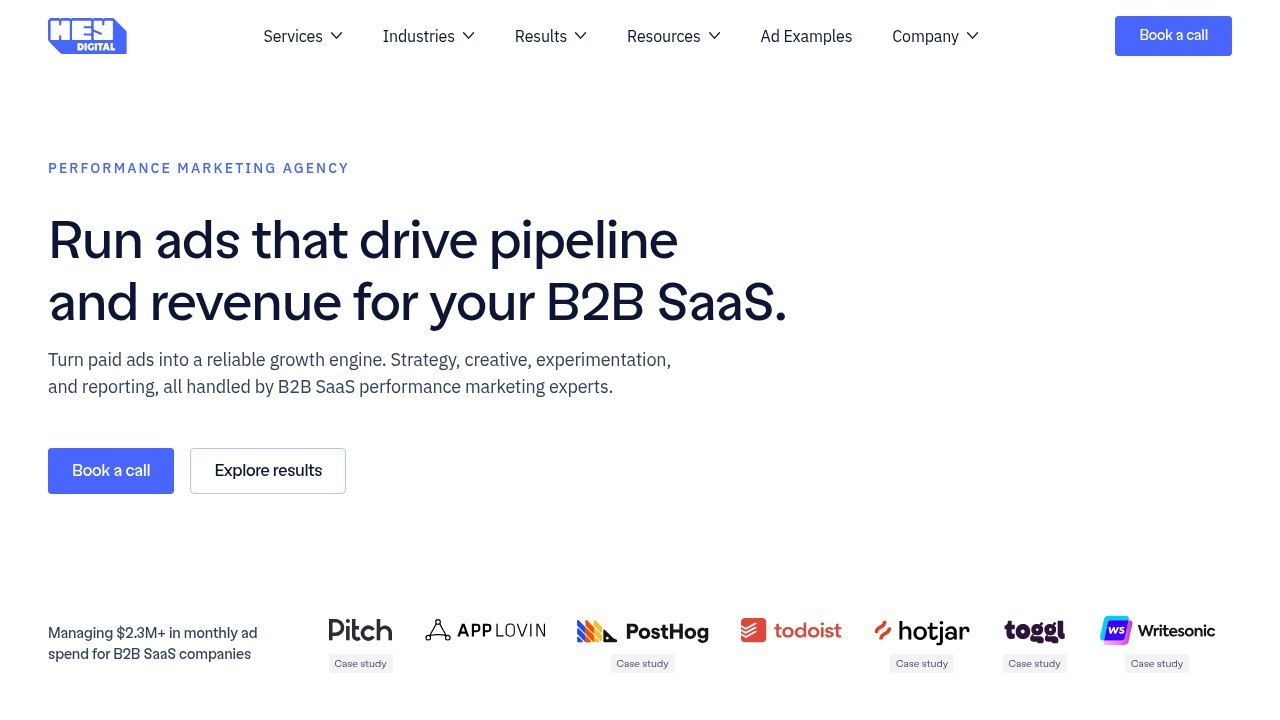
Hey Digital's creative page says each static variant ties back to a specific ICP pain point and buying stage, and that on the Hey Design route you submit briefs through a client portal and get ads back within 48 hours. The full-service route adds campaign management, testing and CRM-connected reporting in one team. The site says it is behind more than 126,000 ads and has spent seven years working with over 200 brands; those are its own totals.
In SaaS a lot of the test happens after the click, so I like that they build the landing page along with the ad. Take our breakdown of the best SaaS video ads to the first call as a benchmark.
11. Vidsy
More on Vidsy
Vidsy describes three parts to its system: human creativity through a global creator network and creative experts, orchestration that replaces fragmented tools and teams with one workflow, and an intelligence layer that remembers what worked so each campaign builds on the last. Creators can apply and log in through the same site, which tells you the production side runs on that network.
Cortex is the part I’m most curious about, mainly whether it would change what goes into your next brief.
12. MuteSix
More on MuteSix
MuteSix lists paid social on Instagram, Meta, TikTok, Snapchat and Pinterest, retail media on Amazon, Walmart and Target, paid search, programmatic, lifecycle marketing and marketing science. Its bespoke production covers storyboarding, concepting, live action, animation and CGI, photography and full post, and the page says creative decisions sync with the paid media strategy through historical learnings and multivariate testing results.
One shoot feeding several placements only works if the formats are in the brief before anyone rolls camera.
Media buying, price and model, side by side
| # | Company | Best for | Media buying | Pricing signal | Model |
|---|---|---|---|---|---|
| 1 | Moonb | Steady weekly ad creative for teams with a media buyer | No | One set monthly rate, or a per-project quote | Dedicated team with a Creative Director |
| 2 | Quality Media | Creator and branded ads for DTC on Meta, TikTok, Pinterest, Snap | Optional | On request | Creative only, or creative plus paid media |
| 3 | Creative Milkshake | Multilingual direct response ads | Optional | Packages on request | Studio plus creator production |
| 4 | inBeat | Creators, UGC and media in one loop | Optional | On request | Full-loop partnership or one-off projects |
| 5 | Common Thread Collective | Ecommerce UGC in planned volumes | Yes, separate service | Packages, prices on request | UGC packages and branded ad batches |
| 6 | Chamber Media | Video and statics across social, YouTube and CTV | Yes | Minimum of about $5K to $10K a month, per its FAQ | Full performance management, no strict long-term agreements |
| 7 | VID | B2B and DTC paid video testing | Not listed; built into your media team | On request | Installed testing system plus 4 to 8 videos a month |
| 8 | Conductor | Testing concepts before a big production | Media team integration | On request | End-to-end production company |
| 9 | WITHIN | Integrated creative, AI production and media | Yes | On request | Performance branding partnership |
| 10 | Hey Digital | B2B SaaS ads and landing pages | Optional | Hey Design from €2,500/month | Full service or on-demand creative |
| 11 | Vidsy | Enterprise creator-led video at global scale | Not listed | On request | Enterprise creative system |
| 12 | MuteSix | Full-funnel media with production attached | Yes | On request | Media partnership or production-only package |
Picking between them
Most of these companies sit somewhere between two models. At one end, creative teams that hand finished ads to your buyer: VID, Vidsy and the studio I run. At the other, performance marketing companies where creative is one service next to media: Chamber Media, WITHIN, MuteSix and Common Thread Collective. Quality Media, Creative Milkshake, inBeat and Hey Digital work either way, and Conductor is its own thing, a production company with a testing step in front.
A good media buyer and a shortage of fresh ads points to a creative-only partner, so the account stays where it is and output goes up. If nobody owns the account, a combined company saves you a second contract, though you’re then letting one vendor grade its own work.
Whether to hire out at all comes before any of this, and I weigh it in in-house vs agency production. If your ads lean on creators, our piece on UGC video vs polished video helps with the mix.
For an online store, the product has to read in the first frames. The ecommerce video ads I collected run from one-take proof demos like Purple’s raw egg test to celebrity comedy, a decent spread to brief from.
Before you sign
Get it down to two or three, then ask each for its last three rounds of concepts on one account, with the single variable each round tested and what changed in the round after. That’s how you see whether one round’s result actually shaped the next brief, which finished portfolio pieces never show.
Agree on what a win is before anything ships. Think with Google’s experiments playbook recommends one goal KPI, such as incremental conversions, revenue or app installs, and one constraint KPI, such as incremental ROAS or CPA, and says the aim is to maximize the goal while staying at or above the constraint target.
Then wait, which is the hard part. Google’s playbook of marketing experiment principles warns against stacking tests on overlapping audiences, says to exclude a ramp-up period of typically one to two weeks plus conversion lag, and notes that Conversion Lift captures conversions within a 7 to 56 day window.
Hooks are the layer most tests start with. In this Think with Google talk, Ariane Le Port, Google’s global creative effectiveness lead, sets out three strategies for catching and holding attention in a YouTube ad, which is a useful list to bring to a first hook test.
The latest IAB and PwC internet advertising revenue study, published in April 2026, put U.S. internet advertising revenue at a record $294.6 billion for 2025, with social media advertising at $117.7 billion. That social figure is roughly the U.S. share of the market these companies sell into.
Frequently asked questions
It makes ads meant to be tested and replaced on a schedule. One concept becomes several hooks and variations, each shipped in the specs its placement needs; the team reads which version won on a metric agreed up front and writes the next brief from that. The point is a steady supply, so replacements are ready before an ad set's results start to slide.
No. The media buyer controls where the money goes (campaigns, audiences, bids, budgets), and the performance creative team controls what people see once it gets there. Some companies sell both and some sell one. If you split them, write down who delivers files, in which specs and by when, and who carries test results back to whoever writes the next brief.
Enough to isolate one change at a time. Usually that's a few versions of the same concept that differ only in the hook, the presenter, the length or the call to action. A big batch where every version differs in several ways makes it hard to say why the winner won. And give each test the time your platform needs to get past its ramp-up before you call a winner.