The 12 Brand Archetypes (With Real Examples)
A practitioner's guide to all twelve brand archetypes, each with a real brand example and a clear method for choosing the right one for your own brand.

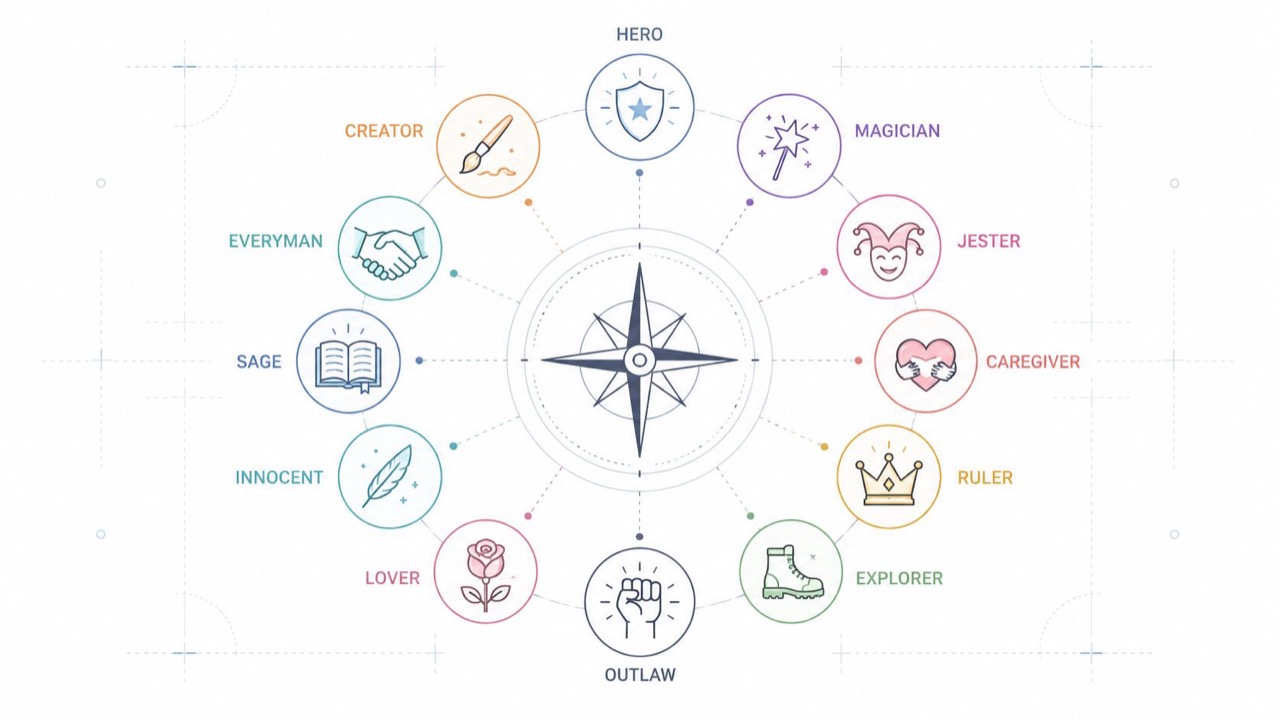
Brand archetypes are twelve character patterns that give a brand one recognizable personality, and the full set is the Innocent, the Everyman, the Hero, the Outlaw, the Explorer, the Creator, the Ruler, the Magician, the Lover, the Caregiver, the Jester, and the Sage. Choose one as the lead and the way you write and design starts pointing in the same direction, whether the output is a social post or a product page.
The idea comes from Carl Jung, who argued that certain character patterns recur across cultures because they sit in a shared layer of the human mind. Margaret Mark and Carol Pearson moved it into branding in their 2001 book The Hero and the Outlaw. They sorted the twelve archetypes along two axes, independence versus belonging and stability versus mastery, which is why the set breaks cleanly into four families. That grouping is the part most write-ups skip, and it is the part that makes the model usable.
Here is why I bother with any of this. A brand with a clear personality is easier to feel something about, and feeling is where the money is. Harvard Business Review found that fully connected customers are 52 percent more valuable, on average, than customers who are merely satisfied. An archetype will not manufacture that connection on its own. What it does is keep every touchpoint aiming at the same emotion instead of a new one each quarter.
I work at Moonb, a creative studio, so most of my time goes to turning an archetype into actual frames and layouts rather than into a slide. Below you get all twelve with a real brand for each, the four families they sort into, a method for choosing yours, and a plain read on where the model runs out of road.
The 12 brand archetypes at a glance
| Archetype | Core desire | Real brand | What to take from it |
|---|---|---|---|
| Innocent | Simplicity and reassurance | Coca-Cola | Works when the product truly delivers an easy good feeling. Falls flat if it papers over a real problem. |
| Everyman | Belonging without pretense | IKEA | Reads as trustworthy, so protect it by sounding like a person and never a brand deck. |
| Hero | Proving worth through effort | Nike | High energy sells, but set the bar so the viewer feels invited rather than judged. |
| Outlaw | Breaking the rules | Harley-Davidson | Only credible if you actually challenge something. Costume rebellion gets found out. |
| Explorer | Freedom and discovery | Jeep | Give people a frontier to picture themselves in, beyond the product spec. |
| Creator | Making something original | Lego | Hand the audience the tools and the credit. Their work becomes your marketing. |
| Ruler | Order and status | Rolex | Every detail signals control, so a sloppy asset does real damage here. |
| Magician | Turning the ordinary into wonder | Disney | Sell the transformation, then make sure the product pays off the promise. |
| Lover | Intimacy and beauty | Chanel | Craft the feeling first. Product features come second. |
| Caregiver | Protecting others | Dove | Warmth builds retention, but give it a point of view so it does not read as generic. |
| Jester | Play and humor | Old Spice | Comedy travels fast online, so one flat joke costs more than it would elsewhere. |
| Sage | Truth and understanding | HubSpot | Teach something usable in the first minute or the authority never registers. |
Brand archetypes borrow directly from Carl Jung. This primer on Jung’s archetypes and the collective unconscious explains where the whole framework comes from.
The four families
The twelve are not a random list. Mark and Pearson grouped them by the core motivation driving each one, which gives you four families. Reading the families first makes the individual archetypes much easier to place.
The independence family: Innocent, Explorer, Sage
These three chase freedom and understanding over belonging. They suit brands that help people become more themselves.
Innocent. Coca-Cola has run on the same promise for decades, a small uncomplicated moment of happiness. The Innocent works when the product can actually deliver that feeling. I have watched it fail when a team reaches for cheerful optimism to cover a product that frustrates people, because the gap between the ad and the experience just makes the frustration louder.
Explorer. Jeep sells a frontier more than a vehicle, the muddy trail and the version of you that drives off the map. Explorer brands work when they hand people a place to picture themselves. The risk is aimlessness, adventure for its own sake, so tie the freedom to a concrete promise.
Sage. HubSpot built an audience by teaching marketing in public, through its blog and its certifications, long before it pushed the software hard. The Sage earns trust by being useful first. The failure mode is sounding like a textbook, so the test I use is simple: can a reader act on this in the next hour, or is it just clever?
The mastery family: Hero, Outlaw, Magician
These three want to leave a mark and push past limits. They carry the most energy, and the most risk of alienating people who feel left out.
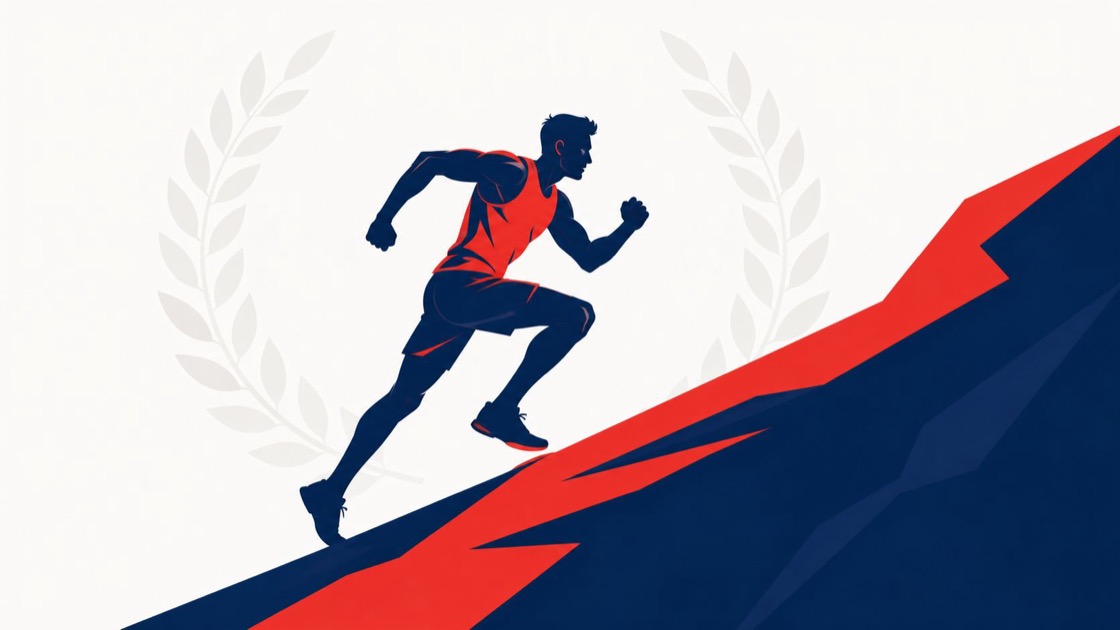
Hero. Nike is the reference Hero, and “Just Do It” has cast ordinary people as athletes since 1988. The archetype gives you a clear emotional hook and a built-in call to action. The trap is setting the bar so high that the viewer feels judged, so I try to make the effort look reachable instead of superhuman.
Outlaw. Harley-Davidson sells membership in a tribe that rejects the ordinary, and the motorcycle almost comes along for the ride. The Outlaw only holds up if the brand actually stands against something. When the rebellion is a costume, audiences work it out fast.
Magician. Disney turns a day at a park into something a child remembers for thirty years, which is the Magician’s whole game. Apple runs a version of it too, presenting a phone as a small act of transformation. The danger is a promise the product cannot keep, so the wonder has to survive contact with the actual thing you sell.
The belonging family: Everyman, Lover, Jester
These three are built on connection. They win on warmth and relatability, and they lose when the personality gets so safe it disappears.
Everyman. IKEA designs for the many rather than the few, and the whole system stays deliberately unpretentious, from the meatballs to the flat-pack. Everyman brands read as trustworthy because they sound like a neighbor. The moment an Everyman starts talking in corporate language, the trust it was built on evaporates.
Lover. Chanel sells desire and beauty, and its films invite you into a private world where the perfume is almost secondary. The Lover works on feeling, so build the mood before you talk features. Handled without care it reads as shallow, all surface and no idea, which is why the aesthetic has to carry something real.
Jester. Old Spice took a tired product and made it a cultural moment with “The Man Your Man Could Smell Like,” pure absurdist comedy. The Jester earns huge reach online because funny gets shared. The cost is that humor is fragile, and a joke that reads as tone-deaf travels just as fast as one that works.
The structure family: Creator, Ruler, Caregiver
These three promise order and stability. They suit brands whose job is to be dependable, and their weakness is coming across as cold or controlling.
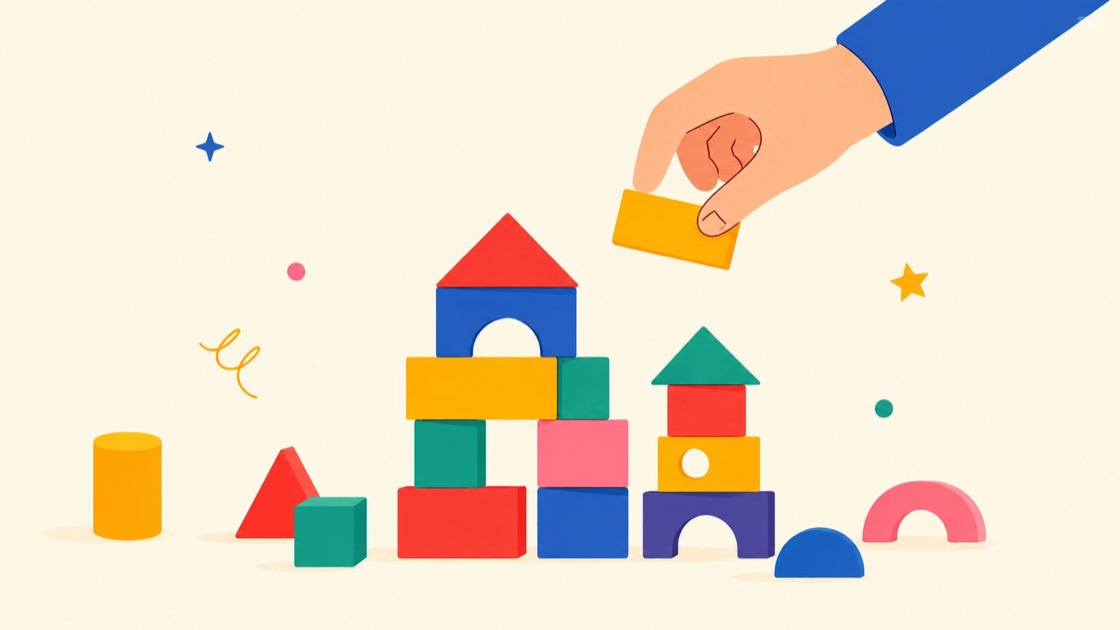
Creator. Lego puts the audience in the maker’s seat, and every product circles back to one idea, you build it. Creator brands turn customers into contributors, and that customer work becomes some of the best marketing you will get. Keep the barrier to making something low, or the invitation starts to feel like homework.
Ruler. Rolex signals control and status in every detail, which is why a Ruler brand cannot afford a sloppy asset. The archetype supports premium positioning and inspires confidence. Push it too far and it reads as elitist, so the authority works best when it feels earned rather than announced.
Caregiver. Dove reframed beauty care around self-acceptance with its Real Beauty work and stuck with real people for two decades. The Caregiver builds deep trust and strong retention. Its weakness is blandness, so a Caregiver still needs a point of view, or it turns into wallpaper no one remembers.
How to choose your archetype
Start from the emotional job you do, not the product you ship. A bank technically sells accounts, but the feeling it trades in might be safety, which points to Caregiver, or command, which points to Ruler. That single choice changes the copy and the color palette. Your brand positioning work should already point at the answer, so read it before you reach for the archetype list.
The Hero is the most reached-for archetype, and it runs on the same story structure every time. This TED-Ed explainer of the hero’s journey is a good map before you cast your brand as one.
Then look at your category. If every competitor is running the Hero play, you can either out-execute them on the same ground or pick a different archetype and own a lane no one else is in. Sameness is the real enemy, and archetypes are a fast way to find open space.
Next, check what your best customers already believe about you. Read the reviews, sit in on a few sales calls, run a quick brand audit. The archetype your audience already projects onto you is usually the one worth making official, because you are formalizing a perception that exists rather than inventing one from nothing.
One rule I hold to: pick the truest archetype rather than the most flattering one. Plenty of founders want to be the Magician when the business is really a very good Caregiver, and customers can feel the mismatch. If you are stuck, your mission statement is a good tell, since the archetype and the mission should be saying the same thing in different words.
Expressing it across the work
Choosing the archetype is the easy part. The work is holding it across everything you publish, because that consistency is what turns a personality into a brand personality people actually recognize. An Outlaw wants a punchy voice and raw, high-contrast footage. A Caregiver wants warm language and softer visuals. Both are right, as long as each stays itself.

This is where most archetypes fall apart in practice. The strategy deck says Outlaw, but the actual posts and videos get made by different people at different times, and the personality smears out into nothing you could name. Holding a voice steady across a real volume of output takes a team that knows the archetype cold. Some companies build that in house. Others run a creative design services setup or bring in an embedded creative team like the one I work on at Moonb, so the same hands shape the whole output. Whatever route you pick, the point is continuity, one personality made by people working from the same brief. The same discipline applies to the small copy most teams overlook, since even writing product descriptions should carry the archetype’s voice rather than drift into generic category language.
Can a brand use more than one archetype?
Yes, and most strong brands do. They run one dominant archetype and borrow a second for flavor. Apple reads as a Creator with an Outlaw streak. Patagonia blends Explorer and Hero. The rule that keeps this from turning to mush is simple: one clear lead, the second in small doses. Stack three or four at once and the personality cancels itself out.
Where archetypes fall short
Archetypes align a team around who the brand is. They are not a strategy by themselves, and they will not tell you who to sell to or why you win. Forced too hard, they flatten a brand into a stereotype, and a real company is always more specific than a one-word character.
Treat the framework as a compass rather than a cage. Pair it with real audience research and positioning work, and revisit the choice when the business changes, because an archetype set at launch can stop fitting a company that has grown into something else. Used that way, an archetype earns its keep. It gives everyone from the copywriter to the editor the same starting point, so the work holds together without anyone having to police it.
Frequently asked questions
No. An archetype describes who the brand is, its personality and its voice. A buyer persona describes who you are selling to. You want both, and the strongest brands make the archetype speak straight to the persona's motivation. Keep them in separate documents so you never confuse the brand's character with the customer's profile.
Longer than most other brand assets. A logo or a color palette might get refreshed every few years, but an archetype describes the brand's core character, so it should hold through several visual refreshes. Revisit it only when the business itself changes, for example after a pivot or a move into a very different market. Swapping archetypes often is usually a sign the first choice was never right.
Yes, and it is arguably more useful for a small team than a large one. When one or two people make everything, a single archetype gives you a fast decision rule for tone and design without a heavy brand book. Write one paragraph describing your archetype and one line on how it should never sound, then check new work against it. That is enough to keep a small brand consistent.