12 Brand Mission Statement Examples to Inspire Yours
See 12 great brand mission statement examples from companies like Patagonia, Nike, and TED. Learn what makes them work and how to write your own.

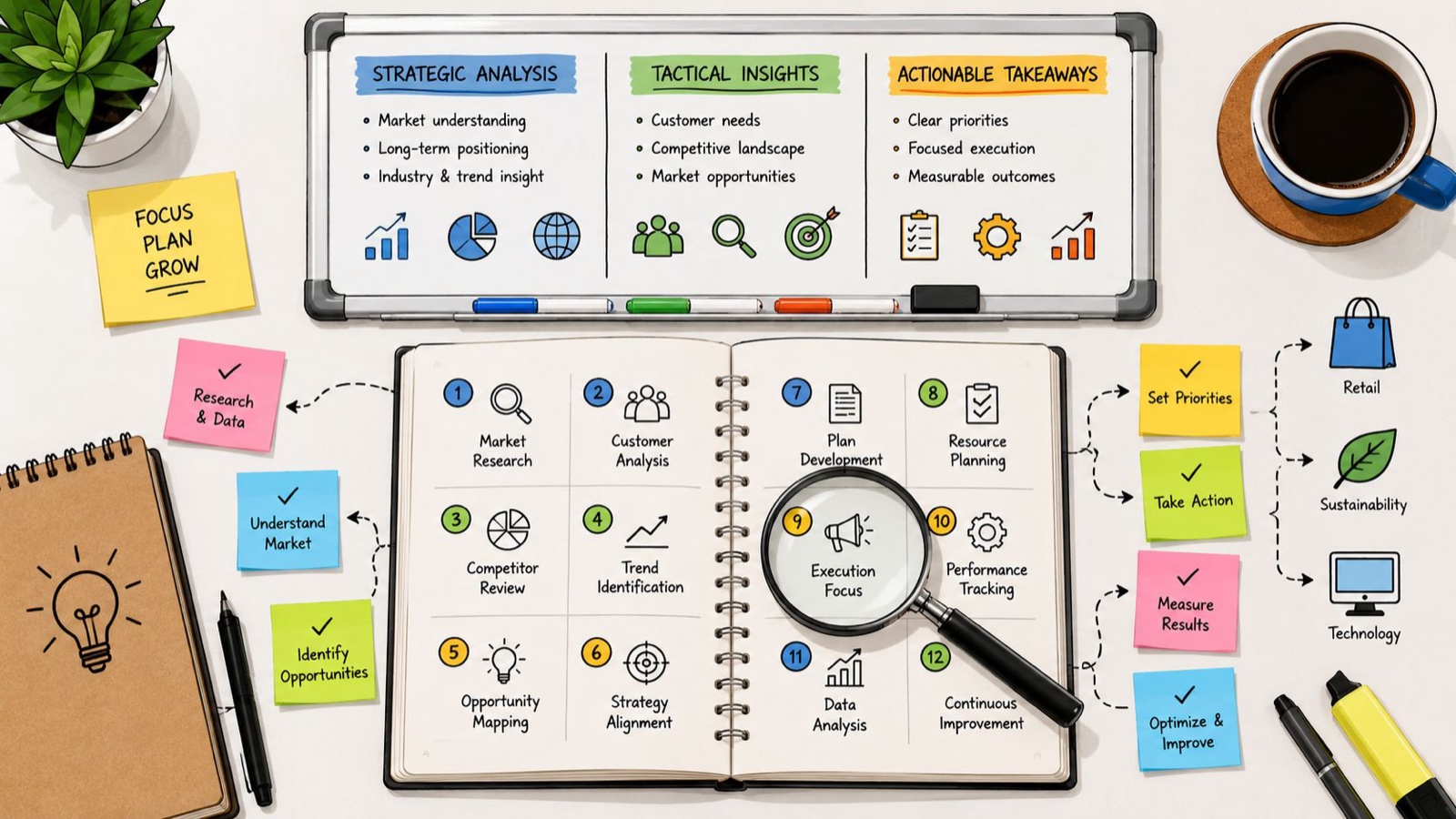
What is the most common thing I see go wrong with a mission statement? Someone writes a line that sounds noble, everyone nods in the meeting, and then no one can actually use it. When I help a brand with this, I tell them a real mission statement has one job. It should tell your team what you do, who you do it for, and why it matters right now, in words people can remember and act on. I keep it separate from the vision statement, and I keep it separate from the tagline. What I want is the working line that helps a brand make decisions.
I care about that difference because a mission is meant to be short and usable. Guidance from Reward Gateway, WordStream, and Built In all points to the same pattern I reach for, one to three sentences, often under 100 words, with brevity doing the heavy lifting. The versions I like most are compact enough to live on websites, recruiting pages, and internal docs without turning into brand wallpaper.
So here is how I explain the split to a client. A mission statement says what the company does now. A vision statement describes the future it wants to create. A tagline is the short public line people remember in ads and campaigns. For example, Google’s mission is about organizing information, while a tagline would be a much smaller marketing line. If you want the deeper brand framework around positioning or story, I point people to Moonb’s posts on brand positioning statements, brand-tagline-examples, and brand-story-examples.
The mistake is easy for me to spot after doing this a while. Teams write a dreamy slogan, call it a mission, and then wonder why product, hiring, and comms drift in different directions. I have watched exactly that happen on a job. A mission needs enough shape that it can guide actual choices, not just sound polished in a deck. When a client is also thinking about social media planning and distribution, I hand them the blueprint for social media success as a companion read, because your mission has to survive well beyond the About page.
1. TED and the power of a verb
TED’s mission, “Spread ideas,” is almost aggressively simple. That is the point. In two words, it names a clear action and a clear output, and it skips the usual fog of “inspire,” “enable,” or “drive innovation” language that could belong to almost any organization.
Simon Sinek’s TED talk on starting with why is the canonical explanation of the purpose that any mission statement below is trying to put into words.
What makes it work for me is the verb. Spread is concrete, active, and easy to test against real decisions. If a speaker, event format, or content piece helps ideas move farther and land better, it fits. If it is just clever noise, it does not.
Practical rule: Choose a verb outsiders would actually use to describe your work. If the word sounds like a slide deck, it is probably too vague.
TED’s mission also shows me the value of restraint. It does not explain every channel or format, which leaves room for the organization to move from live talks to digital distribution without rewriting its purpose. I find that flexibility useful for any brand that expects its delivery model to change.
I also run every mission through what I call the competitor test. If another company could paste its name into your sentence and nothing would break, the statement is too broad. TED avoids that trap because the line feels inseparable from its role in the world.
2. Patagonia and the value of layered commitments
Patagonia’s mission, “Build the best product, cause no unnecessary harm, use business to inspire and implement solutions to the environmental crisis,” runs longer than most, and that length does real work. It layers commitments in a clear order. Product quality comes first, harm reduction comes next, and environmental purpose follows.
That sequence reflects the trade-offs Patagonia has to make. The company is not asking teams to judge every decision through a single lens. It is telling them to build excellent products, reduce avoidable damage, and use business as a force for environmental change. For product, sourcing, and advocacy teams, I think that creates a practical way to weigh materials, suppliers, and public positions without pretending the choice is simple.
The phrase “no unnecessary harm” does a lot of heavy lifting. It does not promise perfection, which is useful because perfection is not how operations work. It leaves room for judgment, and that is exactly what a real mission needs when a team has to decide whether a trade-off is acceptable.
There is also a practical benefit for alignment, and this is the part I care about most on a job. A product designer can use the statement. A sourcing team can use it. A marketer can use it. That kind of cross-functional usefulness is rare in a mission this broad, and it is part of why Patagonia’s purpose reads as operational rather than decorative. When I have a client reviewing their current positioning before they rewrite a mission, I walk them through Moonb’s brand audit guide, which covers the same kind of alignment check.
The source collection at OnStrategy’s mission statement examples is one I keep going back to, because it shows how strong missions combine action, audience, and outcome without sliding into slogan territory. Patagonia’s version does that by giving teams a hierarchy they can use.
3. Nike and the power of inclusion
Nike’s mission, “To bring inspiration and innovation to every athlete in the world,” works because it widens the category. The word athlete is not reserved for elite professionals here. Nike uses it broadly, which lets the mission speak to runners, gym users, weekend players, and anyone trying to improve.
That broad definition is strategic. It makes the mission emotionally inclusive without going vague. It also lets Nike connect inspiration and innovation as two different forms of value. One is about motivation. The other is about performance and product.
I see a lot of brands try to sound aspirational at this exact moment and end up with a mushy promise. Nike stays sharp because the sentence still points to real business behavior. Product design, storytelling, athlete partnerships, and retail experience can all be judged against whether they bring inspiration and innovation to that wider audience.
This is also a good example of a mission that shapes messaging without becoming messaging. The brand can speak to elite sports, grassroots participation, or casual fitness, and the mission still holds. That gives the team flexibility without losing identity.
A useful test: If your mission uses a broad word like customer, user, or athlete, define it internally. Otherwise, every team will interpret it differently.
Nike’s mission reminds me that clarity is not the same as narrowness. A good mission can be inclusive and still specific enough to guide product and brand choices. That balance is what makes it useful.
4. IKEA and the discipline of ordinary language
IKEA’s mission, “To create a better everyday life for the many people,” is powerful because it sounds like a real person wrote it. The phrase better everyday life is plain language, and the many people signals who the brand is for without pretending to serve everyone in the same way.
That wording matters to me. IKEA is not chasing prestige for its own sake. It is making a clear promise about usefulness, accessibility, and daily function. That helps explain why the company keeps returning to practical design, mass appeal, and affordability rather than premium one-off pieces.
The mission also creates a strong internal filter. If a proposed product or experience makes life better in everyday use, it belongs in the conversation. If it adds status but not utility, the mission pushes back. That is the kind of friction I want a good mission to create.
IKEA is also a reminder that the best mission statements often borrow the language of the customer. People do not shop for “optimization.” They shop for furniture that fits their home, their money, and their routines. The mission reflects that reality instead of dressing it up.
For teams building a brand system around this kind of clarity, I point them to Moonb’s brand guidelines examples to connect the mission to visual and verbal consistency. A mission like IKEA’s only works if the rest of the brand behaves the same way.

5. LinkedIn and the value of naming the audience
LinkedIn’s mission, “To connect the world’s professionals to make them more productive and successful,” is a strong example of audience plus outcome. It does not say “connect people.” It says professionals, which gives the mission a clear context and keeps it from drifting into generic social networking language.
That specificity is why I think the statement has aged well. Whether LinkedIn is building recruiting tools, learning products, or content features, the mission still holds because each product can help professionals connect, work better, or advance. The mission does not need to name every product line to stay relevant.
The pair of benefits, productive and successful, is also smart. One is practical, the other is aspirational. In my experience a mission works better when it captures both. Users need to get work done, but they also want progress in their careers. LinkedIn gives both ideas room in one line.
This is a good model for B2B brands that serve real people, not just accounts. If your mission only names the organization buying the tool, you miss the person using it. If it only names the person, you may lose the business context. LinkedIn balances both.
Strong missions name the real world they live in. “Professionals” gives LinkedIn a different job than a broad social platform, and that clarity helps every product choice.
If you are also shaping your positioning, I send people to Moonb’s brand-positioning statement guide as the right adjacent read. Mission says why you exist. Positioning says where you fit.
6. Warby Parker and the honesty of trade-offs
Warby Parker’s mission, “To offer designer eyewear at a reasonable price without compromising on style or quality,” is useful because it names the tension out loud. Price, style, and quality are all there. Most brands pretend they do not have to choose. Warby Parker admits the choice and says it will hold all three.
That is why the statement reads as credible to me. A customer can judge it. If the eyewear is stylish but flimsy, the mission fails. If the quality is strong but the price feels excessive, it fails again. The sentence creates standards that are easy to understand and hard to fake.
The phrase reasonable price is especially strong because it is customer-facing. It avoids internal language like margin optimization or channel strategy. I always tell clients a mission should speak to the outside world in the language the outside world uses.
This also helps explain why the brand’s direct-to-consumer model makes sense. The mission and the business model point in the same direction. That alignment is what gives a mission teeth. If the promise and the operating model fight each other, the mission becomes decoration.
Warby Parker is a good reminder that a mission can run longer than ideal and still work if every phrase is doing real work. No word is dead weight here. That is the standard I aim for.
7. Google and the discipline of outcomes over mechanisms
Google’s mission, “To organize the world’s information and make it universally accessible and useful,” is one of the cleanest mission statements I have ever read. It explains what the company does, who it serves, and what value it creates, without trapping the brand inside one product or one technology.
Its strength is that it describes an outcome, not a mechanism. Google does not say search, ads, or algorithms. That leaves room for products like Google Scholar and Google Translate, which still fit the mission because they organize information and make it easier to reach and use. I want that kind of flexibility in any mission that has to last.
The pairing of accessible and useful is also smart. Accessible alone is not enough. Useful alone is not enough. Together, they define the quality bar. A brand can build something that is technically available and still fail if people cannot get value from it.
I see a lot of mission statements fall apart at this point. They lean on scale words like “world,” “global,” or “universal,” but never explain the human benefit. Google does both. The result is simple enough to remember and broad enough to support major product growth.
For teams writing their own, the lesson I draw is clear. If your mission describes the result you create instead of the process you use, you give the company room to evolve. That is one of the biggest advantages a mission can have.
8. Microsoft and the breadth of empowerment
Microsoft’s mission, “To empower every person and every organization on the planet to achieve more,” is broad, but it is not vague. The word empower does the heavy lifting. It signals that Microsoft gives tools and capability, it does not force a single way of working.
The phrase every person and every organization is doing important audience work too. It keeps the mission from being locked into one customer type. It helps explain why Microsoft can serve consumers, enterprises, education, nonprofits, and teams across many product lines.
The phrase achieve more is intentionally open. I read that as a strength. It can mean different things to different users, and that flexibility makes the mission easier to apply across products like cloud services, productivity tools, accessibility features, and gaming. The mission does not need to define the destination for every user. It just needs to say the company helps people and organizations get farther than they could alone.
This is a good example of a mission that is broad enough to scale, but still concrete enough to guide decisions. If a product, acquisition, or feature does not help someone do more, the mission gives you a reason to question it.
It also shows why broad missions need internal discipline, and this is where I have watched things go sideways. When the audience is huge, the team needs clear operating principles so the mission does not dissolve into generic good intentions. Big missions only stay useful when teams keep translating them into specific choices.

9. Coca-Cola and the power of short, emotional language
Coca-Cola’s mission, “To refresh the world and make a difference,” is short, but it carries a lot of weight. Refresh is both functional and emotional. It describes the immediate experience of the product. Make a difference adds purpose beyond the drink itself.
That combination is why the mission works. It gives employees a simple way to understand the brand’s role in the moment of consumption, while also leaving room for broader responsibility. It is easy to remember, but it is not empty.
Short missions like this only work when the company reinforces them constantly, and that is the part I flag for clients. If the organization never connects the mission to product, marketing, or community action, the line goes stale fast. The clarity is only valuable if the business keeps using it.
Coca-Cola also shows that a mission does not have to be intellectually complex to be effective. It just has to be true to the brand’s role. A drink can refresh. A large company can also try to make a difference. That simplicity is part of why the mission has lasted.
The best short missions survive because employees can repeat them without hesitation, and customers can feel them in the product.
If you are writing your own, I would be careful with words like this. Broad emotional language is fine only when the team knows what it means in practice. Otherwise, it becomes a nice sentence with no operational value.
10. Airbnb and the force of belonging
Airbnb’s mission, “To belong anywhere,” is exceptional because it is both brief and emotionally specific. Belong is about acceptance, comfort, and connection. Anywhere gives the mission scale. Together, the two words create a powerful promise without mentioning travel, homes, or bookings.
I think that is smart brand strategy. The mission focuses on the human experience, not the category mechanics. People do not remember platforms. They remember how a brand makes them feel, especially in places where they are new or vulnerable. Airbnb puts that feeling at the center.
The mission also works across customer, host, and culture contexts. It can guide product design, community standards, trust features, and hiring decisions. That matters because the mission is not just for travelers. It is a culture signal inside the company too.
For a mission this emotional, I always push for concrete examples. Teams have to show what belonging looks like in policy, safety, and design. Otherwise the words float away. Airbnb’s strength is that the phrase is so short people can carry it around in their heads, which helps it stay active.
I like pairing this one with Moonb’s brand-story-examples piece, because a mission like Airbnb’s gets stronger when the story around it is equally clear. The mission gives the promise. The story gives it shape.
11. The Honest Company and the value of explicit responsibility
The Honest Company’s mission, “To create a trusted brand that makes people’s lives better, while being mindful of our impact on the planet,” brings product trust and environmental responsibility into one sentence. That is not easy to do well, but this version stays grounded.
The first half, trusted brand and makes people’s lives better, is customer-facing. The second half, mindful of our impact on the planet, makes the company’s broader responsibility explicit. I think that balance matters for values-driven brands, because the mission has to speak to both use and ethics.
What I like here is that the statement acknowledges complexity. Ethical business usually involves trade-offs in sourcing, packaging, labeling, and cost. A mission can make room for that without losing clarity. The important thing is to define what the brand is responsible for, instead of hiding behind vague words like responsible or conscious.
This kind of mission should show up early, and I tell clients it belongs in hiring most of all. If the team does not share the values, the mission becomes a poster. If they do, it becomes a filter for product and supply chain choices. That is where it earns its place.
The Honest Company is also a good example of how a mission can support transparency. When a brand makes stronger claims about trust and impact, it has to back them up with behavior. That accountability is part of the deal.
12. Charity Water and the strength of specificity
Charity Water’s mission, “To bring clean, safe drinking water to people in developing nations,” is specific enough to be useful and narrow enough to be honest. It says what the organization does, who it serves, and what the outcome is. There is no fluff to decode.
That specificity is the point. A mission that tries to cover every related problem usually ends up helping none of them clearly. Charity Water’s wording makes its focus unmistakable, which helps donors, staff, and partners know exactly what they are supporting.
The phrase clean, safe drinking water is important because it names a real outcome, not a vague hope. That makes the mission easier to measure and easier to communicate. It also leaves less room for mission creep, which I have seen quietly derail a lot of nonprofit and purpose-led work.
This is the kind of statement that can shape everything from fundraising priorities to technology partnerships to geographic focus. When the mission is this sharp, people can tell whether a project fits or distracts. I would take that clarity over a grand line any day.
A lot of brands avoid being this clear because they worry about excluding something. But exclusion is part of focus. If you say everything, you stand for nothing. Charity Water shows how clarity can be a strength, not a limitation.
12 Brand Mission Statements Compared
| Organization / Mission | Implementation complexity | Resource requirements | Expected outcomes | Ideal use cases | Key advantages |
|---|---|---|---|---|---|
| TED: Spread Ideas Worth Spreading | Low, clear, single action to operationalize | Moderate, content creation, curation, distribution | Widely shared, high-quality ideas and talks | Thought leadership events, content platforms | Memorable, directive, guides programming decisions |
| Patagonia: Build the Best Product; Cause No Unnecessary Harm; Use Business for Environmental Change | High, three-priority structure requires cross-functional alignment | High, sustainable sourcing, manufacturing, advocacy | Durable products with environmental stewardship and activism | Values-driven manufacturing, sustainable brands | Clear trade-off hierarchy, resists greenwashing |
| Nike: To Bring Inspiration and Innovation to Every Athlete in the World | Moderate, inclusive definition needs consistent internal definition | High, R&D, storytelling, athlete partnerships | Broad reach combining performance and emotional engagement | Sports and lifestyle brands blending function and story | Inclusive customer framing, dual benefit (inspiration + innovation) |
| IKEA: To Create a Better Everyday Life for the Many People | Moderate, product + pricing + operations must align globally | High, design, efficient supply chain, logistics | Affordable, functional furniture at scale | Mass-market retail, cost-focused product design | Aligns pricing with design, scalable across markets |
| LinkedIn: To Connect the World’s Professionals to Make Them More Productive and Successful | Moderate, product decisions tied to professional value | High, platform, content moderation, enterprise features | Professional connections, measurable career and business outcomes | B2B platforms, career networks, learning ecosystems | Clear audience/context, guides product scope and monetization |
| Warby Parker: Offer Designer Eyewear at a Reasonable Price without Compromising Style or Quality | Moderate to high, balancing three non-negotiables requires trade-off rules | Moderate, DTC operations, design partnerships, manufacturing | Affordable stylish eyewear with transparent distribution | DTC disruption in regulated/quality-sensitive consumer goods | Explicit trade-offs, measurable customer promises |
| Google: To Organize the World’s Information and Make It Universally Accessible and Useful | Moderate, outcome-focused, mechanism-agnostic implementation | Very high, data infrastructure, engineering, content quality | Organized, accessible, and useful information across products | Information platforms, search, data services | Broad scope enabling product expansion, user-focused outcome |
| Microsoft: To Empower Every Person and Every Organization on the Planet to Achieve More | High, serves diverse customer types and large-scale solutions | Very high, cloud, enterprise sales, product ecosystems | Empowered individuals and organizations across segments | Enterprise software, cloud platforms, productivity tools | Extremely flexible across consumer and enterprise needs |
| Coca‑Cola: To Refresh the World and Make a Difference | Low, short, easy-to-apply mission across categories | High, manufacturing, distribution, global marketing | Consumable refreshment and purpose-driven initiatives | Consumer packaged beverages, brand-led campaigns | Simple, memorable, flexible across beverage portfolio |
| Airbnb: To Belong Anywhere | Low, emotionally focused but requires cultural reinforcement | Moderate, platform, trust & safety, community programs | Sense of belonging and inclusive travel experiences | Community marketplaces, hospitality and experiences | High emotional resonance, strong recall and culture fit |
| The Honest Company: Create a Trusted Brand That Makes People’s Lives Better, Mindful of Planet | High, combines product trust, user benefit, and sustainability | Moderate to high, clean ingredients, transparency, sustainable sourcing | Trusted, safer consumer products with reduced environmental impact | Ethical consumer goods, transparency-driven brands | Differentiates on values, attracts mission-aligned customers |
| Charity: Water: To Bring Clean, Safe Drinking Water to People in Developing Nations | Low, highly specific, focused implementation | Moderate, fundraising, field operations, monitoring tech | Measurable access to clean, safe drinking water | Focused international NGOs with measurable outcomes | Extremely specific and measurable, clear donor message |
Putting Your Mission into Action
The mission statements I keep coming back to all share the same discipline. They are short, active, and specific. They name who the company serves, what change it creates, and why that matters in language people can repeat. They also dodge the usual traps, vague purpose language, jargon, and statements that sound better than they function.
The way I coach a team through writing their own is to start with three plain answers. What do you do. Who do you do it for. What change do you create. Write one sentence from those answers, then cut every word that does not earn its place. If the sentence could describe a competitor, make it more specific. If your team cannot recite it, make it shorter. Once the mission is set, it is worth strengthening the pages where it lives, and Keyword Kick’s guide to brand mentions and backlinks is a practical starting point.
Get input from founders, early employees, and the people closest to customers. Then pressure-test the line against real decisions. Would it help you choose a product feature, a hiring profile, or a campaign direction. If not, it is too vague. I want a mission that is visible in how the company behaves, not just in the About page copy.
The common mistakes are easy for me to call out. Companies make the statement too broad, fill it with buzzwords, confuse it with a vision or tagline, write for investors instead of customers and employees, or make it so long nobody remembers it. They also write it once and never use it again. That is the failure I see most. A mission only matters when it changes choices.
Keep the mission in the places where decisions happen, the About page, onboarding, investor decks, and internal brand docs. Use it as a check on product and hiring. If it starts to sound like a plaque on the wall, rewrite it.
If your mission is working, it should also show up in video and social content. I give clients a simple content rule, every post should reflect the same promise in a concrete way. Show the mission in customer stories, team behavior, and product demos. I work at Moonb, and this is exactly the work my team does, we plug in as an embedded creative team and turn that kind of brand clarity into steady weekly video, motion, and design. If your mission is already set, keep refining the message until your team can say it without looking.
Frequently asked questions
It has to help someone say no. A real mission names what the company is for clearly enough that it rules some choices out. If it could be pasted onto any competitor without anyone noticing, it is describing the category, not the company, and it will not guide a single decision.
Mission is what you do now and for whom, vision is the future you are working toward, and purpose is the enduring reason the company exists beyond profit. Mission and vision can change with strategy; purpose usually should not. Muddling the three is the most common reason these statements read as noise.
Short enough that a new hire can repeat it from memory. One sentence is usually plenty. The value is not in the wording being clever, it is in the whole company pointing the same way, and a paragraph nobody remembers cannot do that job.