12 Best Motion Graphics Studios in 2026
A working shortlist of 12 motion graphics studios for 2026, from big brand houses to boutiques, with real clients, pricing, and who each one is best for.

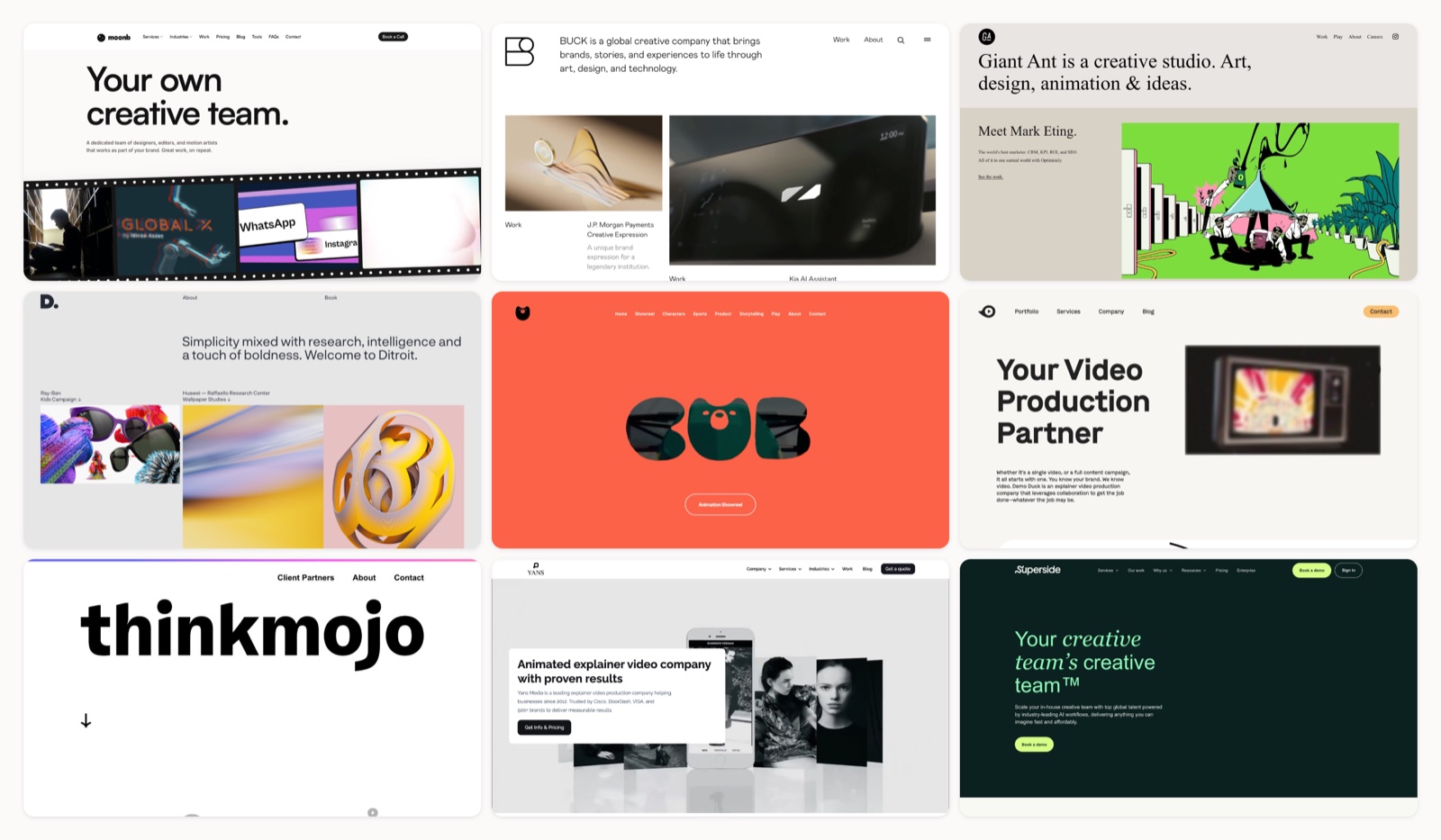
Motion graphics is a specific craft. Type that moves, charts that build, a logo that resolves, product UI that comes alive on screen. Done well, it can make a dense idea readable in fifteen seconds and give a brand a sense of movement that static design never will. If you want the full taxonomy first, here is a primer on the types of motion graphics.
This is the shortlist I would actually work from in 2026. It runs from large multi-office brand houses to five-person boutiques, and I have tried to be specific about where each one wins, so you are not comparing a 3D title-sequence studio against a weekly-social-motion team as if they do the same job.
One disclosure up front: I work at Moonb, and Moonb is number one below. I put us there because I stand behind what we build, not because this ranking is neutral. Read our entry against the other eleven and pick the team whose reel fits your brief.
1. Moonb
More on Moonb
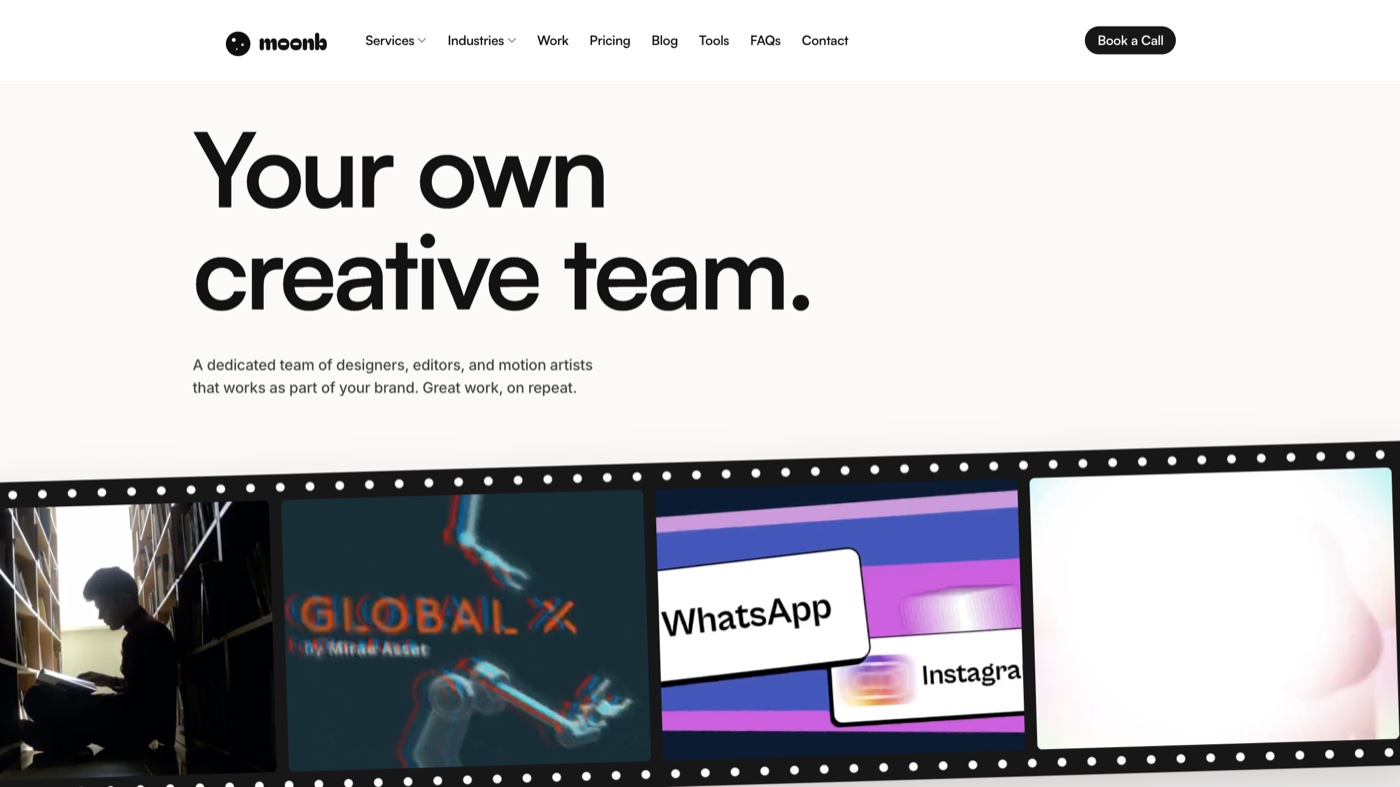
Moonb is an embedded creative team rather than a project shop. You get a dedicated creative director plus the motion, design, and animation talent to match, working from a shared brief on a rolling basis. That structure is the point: the team learns your brand once, so the fortieth asset stays as sharp as the first, and you are not re-briefing a new freelancer every month. It suits companies with continuous motion needs (product launches, social, ads, brand refreshes) more than a single one-off sting. Full disclosure again, this is where I work, so treat this entry as informed rather than neutral.
2. Buck
More on Buck
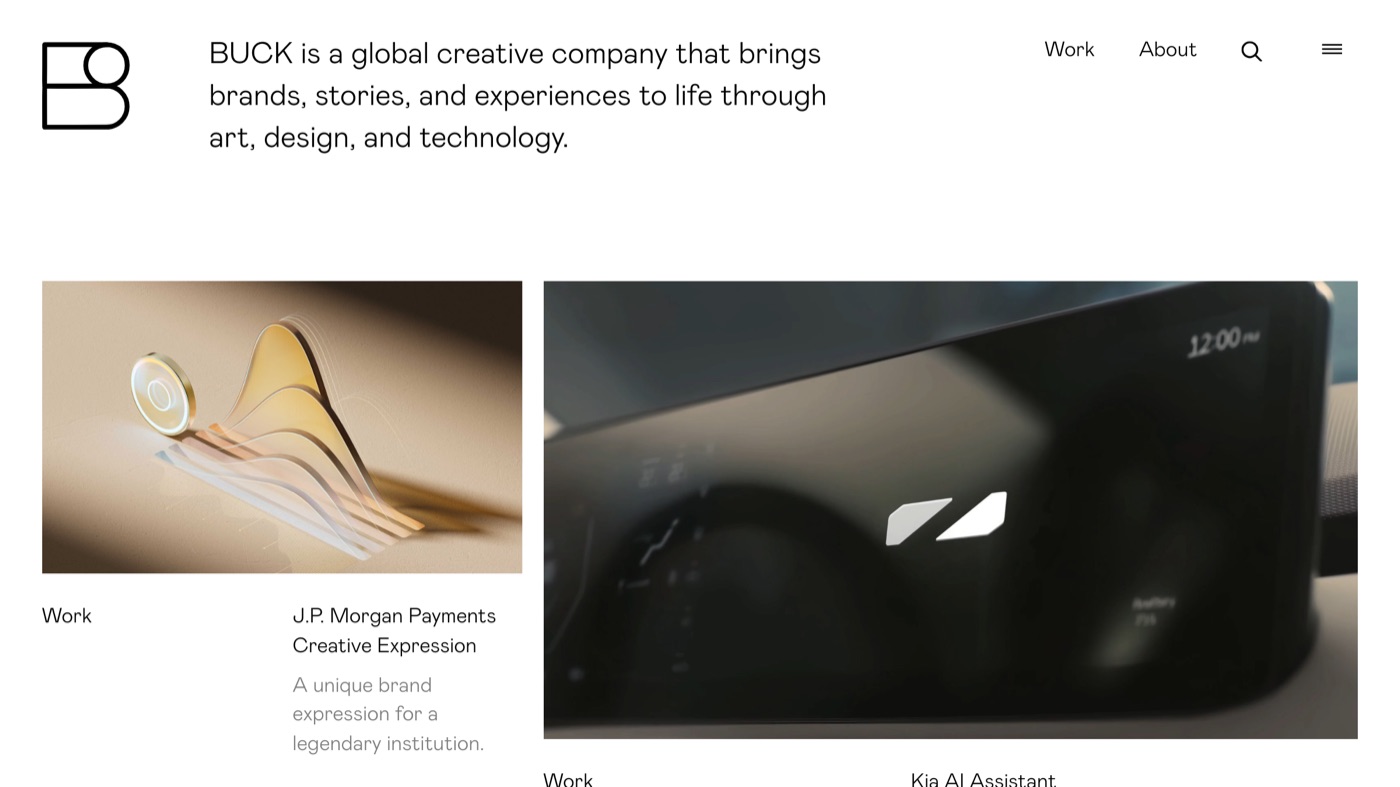
Buck is one of the most awarded motion studios in the world, founded in 2004 and now running offices across Los Angeles, New York, Sydney, Amsterdam, and London. Its reputation was built on motion design and animation, and it has since expanded into branding systems, creative technology, and AR work (Instagram face filters and Facebook's illustration system among them). The upside is a bench deep enough to run a global, multi-format campaign end to end. The trade-off is cost and lead time; a studio of that scale prices accordingly, and a small single-video brief is not where it shines. Best when you have a flagship campaign and the budget to match its ambition.
3. Giant Ant
More on Giant Ant
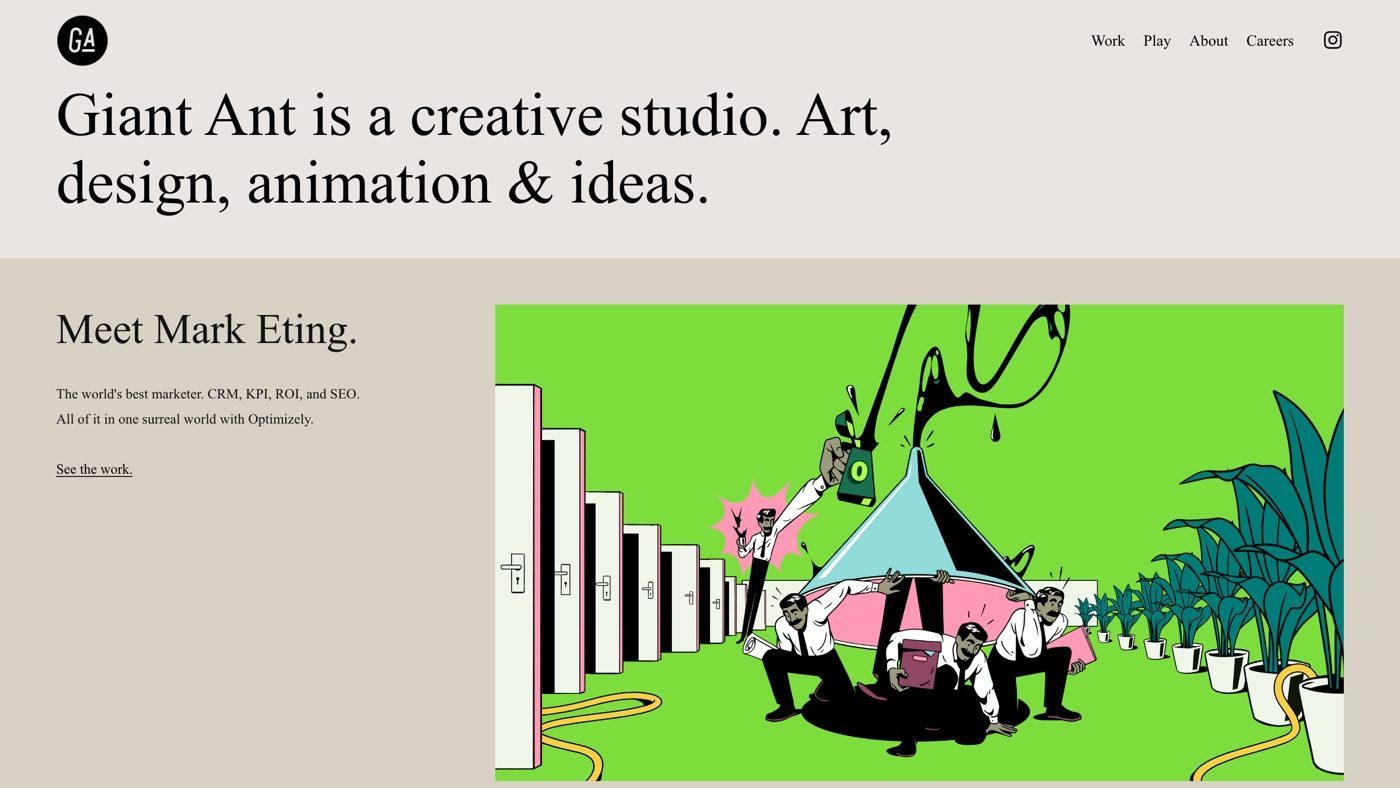
Giant Ant is a 22-person Vancouver studio founded in 2007 by Jay Grandin and Leah Nelson, known for illustration-led films with real writing behind them. Their sweet spot is taking a subject that sounds dull on paper and turning it into something warm and watchable, which is why brands like Mailchimp, Google, and Airbnb keep coming back. Expect premium, project-based pricing and a limited number of slots, since a small team in high demand cannot take everything. Best for brand and explainer films where storytelling and a handmade visual voice matter more than raw 3D horsepower.
4. Ditroit
More on Ditroit
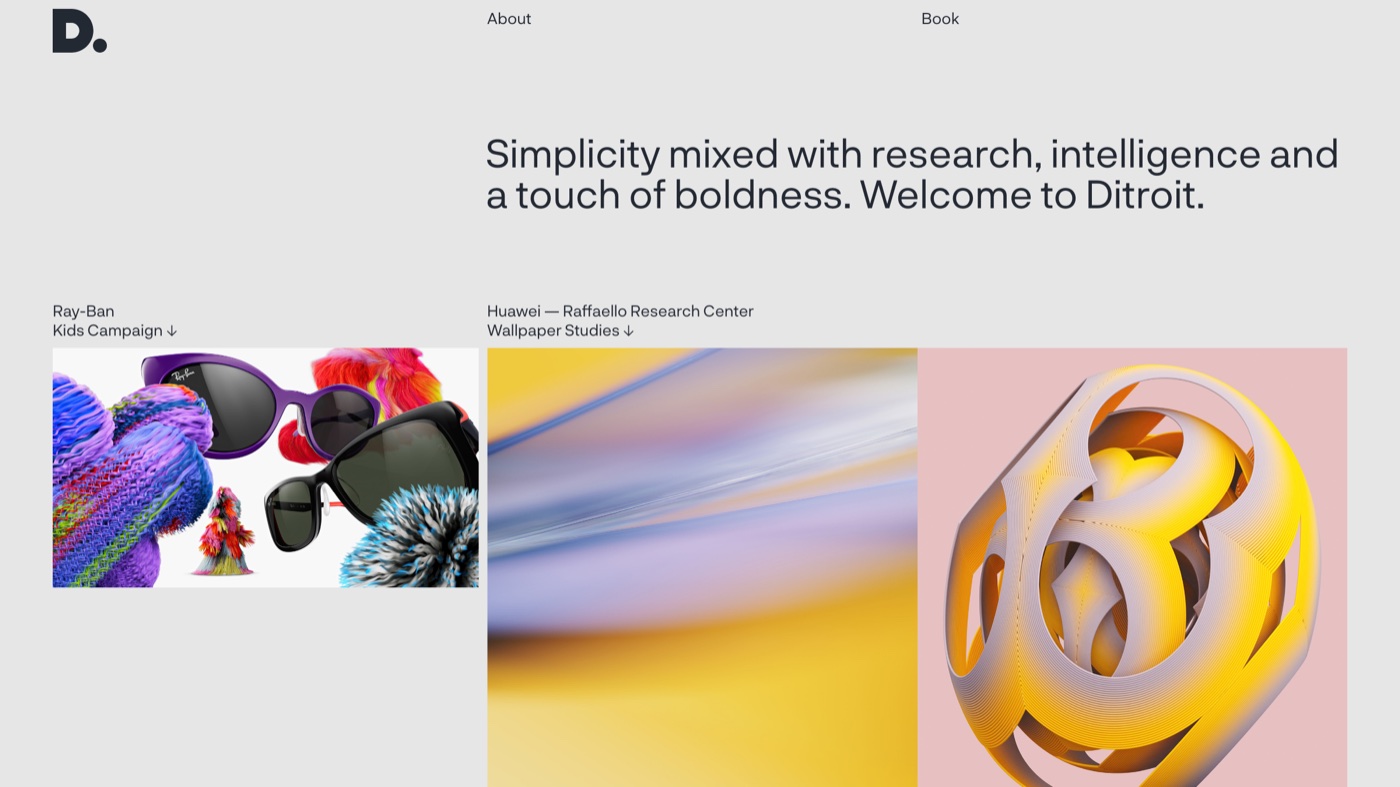
Ditroit is a Milan studio founded in 2009, focused on high-end 3D motion design with a clean, minimal aesthetic that reads as expensive in the best way. Their work spans brand films, title sequences, and product hero shots for clients like Nike and Hublot, always with the pursuit of purity and abstract realism they are known for. Because they specialise in 3D craft, they are the wrong call for whiteboard or simple 2D explainer work. Pricing is project-based and sits at the premium end. Best when you need a short, striking piece of 3D that has to look flawless.
5. Oddfellows
More on Oddfellows
Oddfellows is a Portland studio (founded 2012) that built its name on character-driven, illustrated animation with a real sense of humor and story. The team moves comfortably across 2D, 3D, stop-motion, and live action, and picked up serious recognition early, including a Best New Studio award. Clients include Google, Cartoon Network, and Twitter. As a boutique, they book selectively, so timelines can stretch when they are busy. Best for work that leans on personality and craft rather than corporate polish.
6. Cub Studio
More on Cub Studio
Cub Studio is a Brighton-based team co-founded by Fraser Davidson, and for over a decade it has been one of the leading names in sports animation specifically. If you have watched motion graphics around the Premier League, Formula E, or World Rugby, you have likely seen their style. Beyond sports they handle character animation, motion graphics, and branded content for agencies and broadcasters. The narrow focus is a feature, not a gap, but it does mean corporate SaaS explainers are not their strong suit. Best for sports brands, broadcasters, and anyone who wants characterful, confident 2D animation.
7. Demo Duck
More on Demo Duck
Demo Duck is a Chicago studio that has been making explainer and live-action video since 2011, with 300-plus clients ranging from startups to the Fortune 500 (Netflix and Dropbox among them). What sets it apart is doing both animation and live action in-house with a clear, staged process, so you are not stitching two vendors together. Typical productions run six to twelve weeks and land roughly in the 15,000 to 60,000 dollar range depending on format, which rules it out for same-week turnarounds. Best for a considered explainer or brand story where you want one team owning the whole arc.
8. Thinkmojo
More on Thinkmojo
Thinkmojo is a San Francisco studio (founded 2012) that specialises in helping technology companies explain their products through video. Its portfolio leans heavily B2B and SaaS, with work for Google, Slack, Zendesk, and Notion, and a knack for making software make sense to technical buyers. Projects typically start around 25,000 dollars and climb from there, so it is aimed at funded companies rather than first-video startups. The focus is narrow by design. Best when your challenge is communicating a complex product clearly, not producing a broad slate of everyday content.
9. Yans Media
More on Yans Media
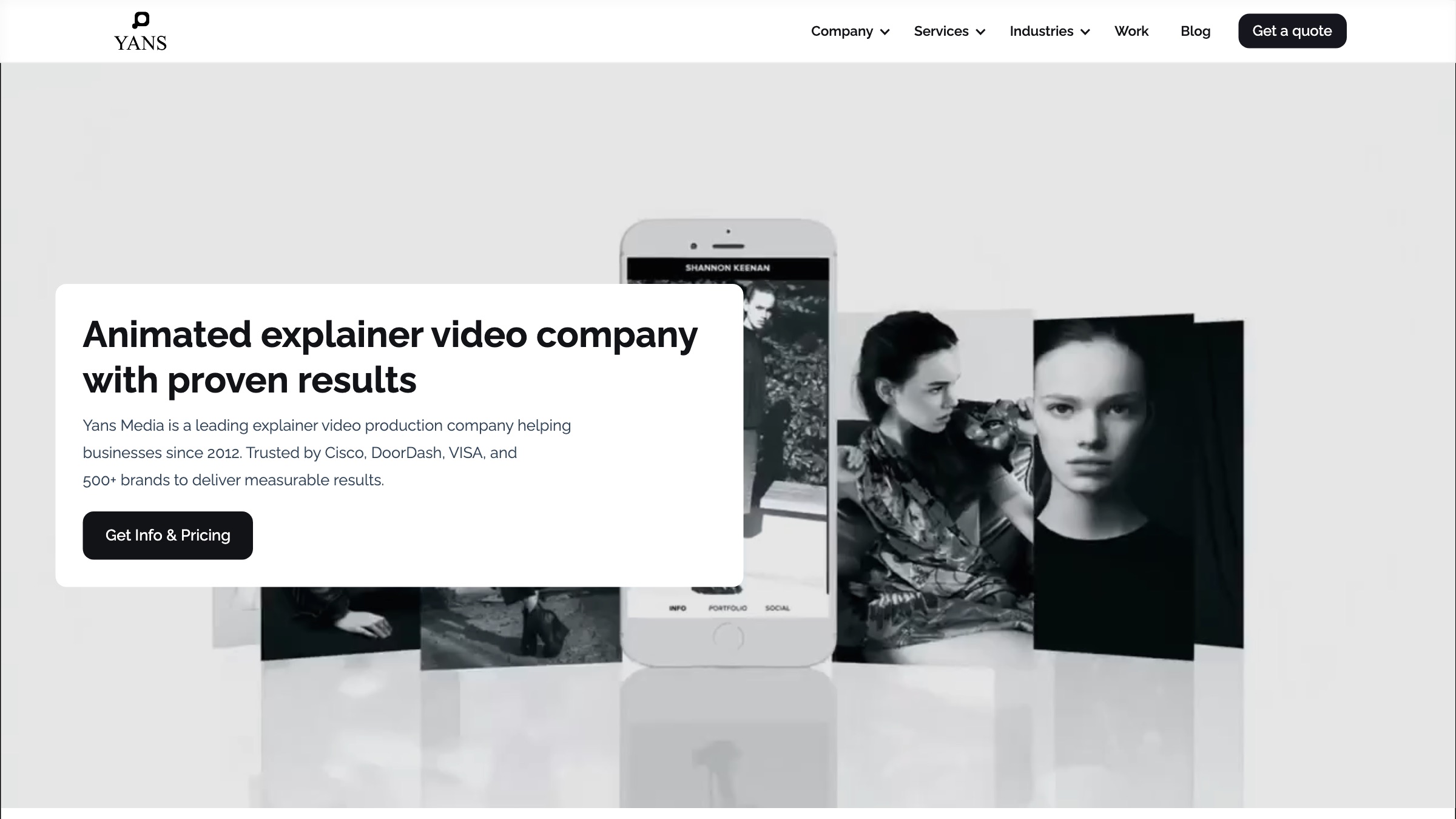
Yans Media is an explainer-video specialist operating since 2012, with teams in Armenia and the United States and more than 650 animated videos shipped. Clients include Cisco, DoorDash, and Visa, and the studio is known for a transparent, stage-by-stage process where you sign off on script, storyboard, voiceover, and animation drafts before anything moves forward. That structure makes it a comfortable pick for a first serious explainer. Because the focus is 2D and mixed-media explainers, it is not the place to commission a high-end 3D brand film. Best for startups and mid-market companies that want a clear explainer with predictable milestones.
10. Superside
More on Superside
Superside is a large distributed creative team built for volume, offering motion graphics alongside a broader design service for enterprise marketing departments. It leans on AI-assisted workflows to move fast across ad motion, social cuts, and animated presentations, and works with big in-house teams that need a steady stream of output. Pricing starts around 10,000 dollars a month and runs on a one-year commitment, so it is an operational choice rather than a one-off. The heavy use of AI in the pipeline is strong for throughput but less suited to brand-defining hero work that lives or dies on craft. Best for scaled, always-on motion demand inside a big marketing org.
11. BluBlu Studios
More on BluBlu Studios
BluBlu Studios is a design-driven animation company with offices in London, Poland, and Tokyo, and a catalog of more than 400 animations produced in over 20 languages. The work is festival-grade and frequently lands in top explainer rankings, with clients including IKEA, Forbes, Nickelodeon, and Panasonic. The multi-country setup is useful for localized campaigns but can add a layer to scheduling across time zones. Pricing is project-based and sits mid-to-high depending on scope. Best for polished animated commercials and explainers that may need to run in several markets.
12. Frantic
More on Frantic
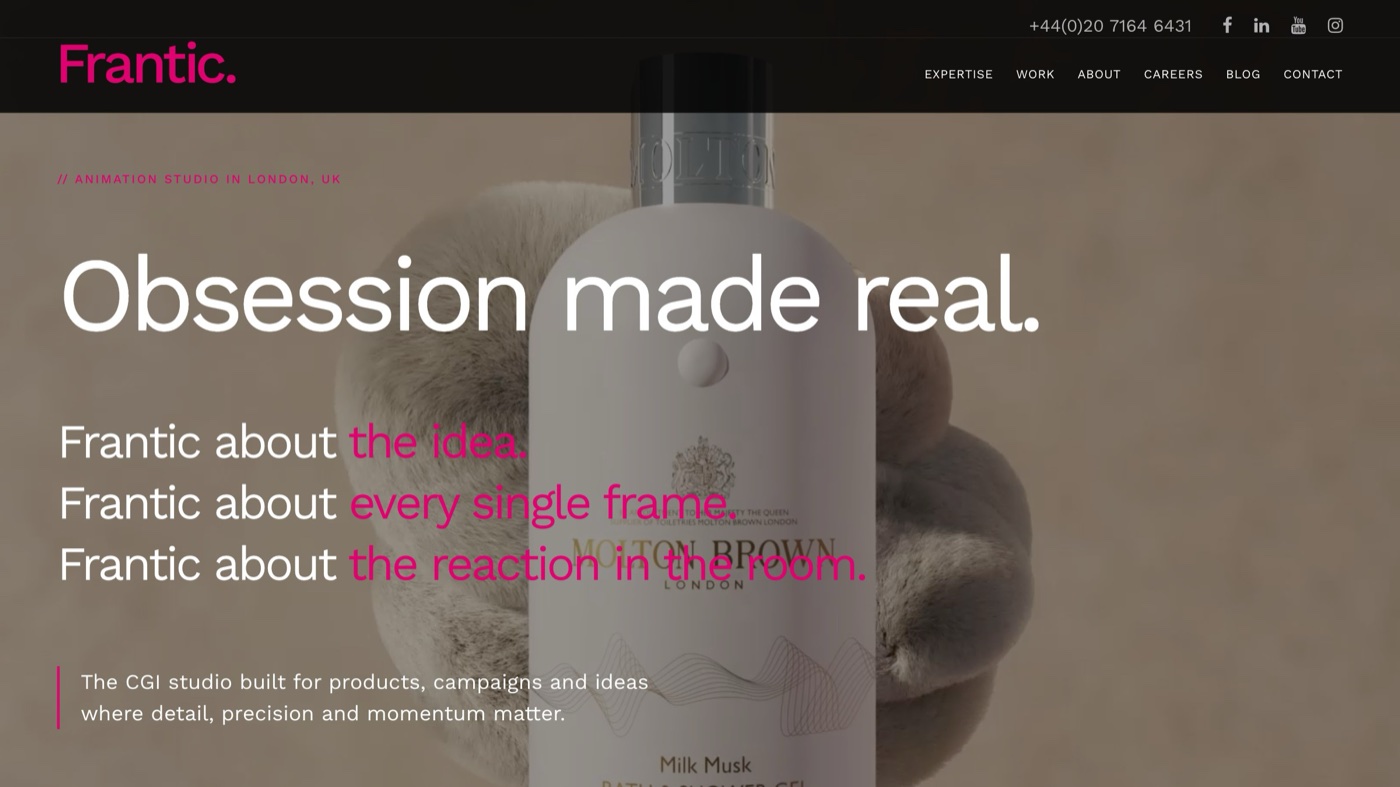
Frantic (We Are Frantic) is a London and Oxford studio that has been producing motion design and animation since 2001, with a strength in high-end 3D, CGI, and TV-commercial-grade work. They run the full arc from concept and scriptwriting through modeling, animation, and delivery, for brands like Coca-Cola, Molton Brown, and Harrods. The team is small (fewer than ten), so they take on a limited number of projects at once and pricing reflects the craft involved. This is a specialist, not a volume shop. Best when you need photoreal CGI or a premium product animation that has to look broadcast-ready.
Here is every studio side by side.
| # | Company | Best for | Pricing | Limitation |
|---|---|---|---|---|
| 1 | Moonb | Teams that need motion graphics as an ongoing capability, not a single one-off, with a dedicated creative director attached. | Predictable monthly pricing for a dedicated team; quote on request. | Built for continuous output, so a lone 20-second logo sting with no follow-on work is a poor fit, and Moonb is newer and smaller than the marquee studios below. |
| 2 | Buck | Flagship brand campaigns and design systems from a large, multi-office studio. | Project-based, premium; large campaigns start high. | Scale and prestige come with premium rates and lead times, and it is overkill for a single short explainer. |
| 3 | Giant Ant | Illustration-led brand and explainer films with warmth and strong writing. | Project-based, premium. | A small team in high demand means limited slots, so expect to book ahead. |
| 4 | Ditroit | High-end 3D motion for brand films, title sequences, and product hero shots. | Project-based, high-end 3D. | Their focus is 3D craft, so whiteboard or simple 2D explainer work is not their lane. |
| 5 | Oddfellows | Character-driven, illustrated animation with a real sense of humor and story. | Project-based, premium. | Boutique size, and they book selectively, so timelines can stretch when they are busy. |
| 6 | Cub Studio | Sports animation, character work, and branded content. | Project-based, mid to high. | Deep on sports and character animation; corporate SaaS explainers are not their center of gravity. |
| 7 | Demo Duck | Explainer videos plus live action, from startups to enterprise. | Project-based, roughly $15k to $60k+ depending on scope. | Full productions take six to twelve weeks, so it is not built for same-week turnarounds. |
| 8 | Thinkmojo | B2B and SaaS product videos, brand films, and launch content. | Project-based, typically $25k and up. | Minimums start around $25k, so a smaller one-off piece may be out of range. |
| 9 | Yans Media | Animated explainer videos for startups and mid-market companies. | Project-based, mid-market. | Explainer-focused, so it is not the pick for a high-end 3D brand film. |
| 10 | Superside | Motion graphics at volume for in-house marketing teams. | Monthly retainer from about $10k, one-year commitment. | Built for scale on a one-year commitment, and the heavy AI in the pipeline suits volume more than brand-defining hero work. |
| 11 | BluBlu Studios | Design-driven animated commercials and explainers, in many languages. | Project-based, mid to high. | Offices span London, Poland, and Tokyo, so kickoff scheduling can cross time zones. |
| 12 | Frantic | High-end 3D, CGI, and TV-commercial-grade motion. | Project-based, high-end CGI. | A team of fewer than ten, so they take on a limited number of projects at a time. |
How to choose
A few practical filters. Match the studio to the deliverable, since a 3D brand film and a batch of weekly social cuts are different jobs and few teams are great at both. Check the reel for work in your register, not just work you admire. Ask about timeline and revision rounds before you fall for the aesthetic, because a six-week production cannot become a three-day one. And be clear on whether you need a one-time film or an ongoing pipeline, since that single question rules half of this list in or out. For a sense of what animation actually costs across formats, this breakdown of video production cost is a good starting point, and if you want a wider field to compare against, see the longer list of motion graphics companies.
Who I would hire
If you have a single hero film with real budget behind it and time to spare, one of the marquee studios (Buck, Giant Ant, Ditroit, Frantic) will give you work that wins awards. If you need software explained to buyers, Thinkmojo, Demo Duck, or Yans Media know that job cold. And if motion graphics is a standing need rather than a one-off, where fresh work lands every week and has to stay on brand, that is the gap Moonb was built to fill, with a dedicated creative director who learns your brand once and applies it to everything after. Whichever way you go, the studios above are all real, working teams in 2026, so the only wrong move is picking on price alone. If you are still weighing formats, this read on animation vs live action helps.
See it in action
New to this craft? Here is a two-minute primer on what motion design actually is, before you start comparing reels.
Frequently asked questions
The terms overlap, and many studios do both. Motion graphics usually means animated design elements (type, shapes, logos, data, UI), while animation more often implies characters and narrative frames. In practice, look at what a studio's reel actually shows rather than the label it uses, because a team can call itself either and still be right or wrong for your brief.
It ranges widely. Simple 2D pieces from smaller teams can start in the low thousands, mid-market explainer studios commonly land between 8,000 and 30,000 dollars, and premium 3D or brand-campaign work from the marquee studios can run 40,000 dollars and well beyond. Format, length, and how much original design is involved move the number most.
It depends on how often you need motion. For a single hero film, a specialist studio per project makes sense. If new motion work lands every week and has to stay on brand, an embedded team (which is Moonb's model) tends to be steadier and easier to plan around, because the same people carry your brand from one deliverable to the next.