14 Best Motion Graphics Companies for High-Craft Work
A working shortlist of 14 motion graphics studios, sorted by specialism, pace, and budget, with how I read a reel before hiring one.

The best motion graphics company for you is the one whose specialism, pace, and typical budget match your brief, and the strongest names in the category are BUCK, Giant Ant, Oddfellows, Ordinary Folk, Moonb, ManvsMachine, Golden Wolf, Cub Studio, Territory Studio, Sarofsky, Ntropic, Hornet, Not to Scale, and Nice Shoes. Which one is right depends less on the reel and more on whether they can make the exact kind of motion you need, at the pace you need, without turning every round into rework. This list leans toward high-craft studios built for brand films, broadcast, and title work; if you want a broader field that also includes explainer-focused and transparent-priced shops, our 20 best motion graphics companies guide covers that end.
I co-founded Moonb, a creative studio that runs embedded creative teams for marketing departments, so a big part of my week is spent looking at motion reels and deciding which studio fits which brief. Moonb is my studio, and I have opened the list with it, which is exactly the kind of self-ranking you should read with a raised eyebrow: several studios below beat it on cinematic titles, high-end CGI, or character work, and I say where in each entry. What follows is how I actually read a shortlist, then the fourteen studios I would put in front of a client, sorted by the kind of work each one is built for.
A quick note on how to use this. A gorgeous reel can still be the wrong hire if the studio’s format, budget band, or production rhythm does not match yours, so I have written each entry around fit rather than fame. Where a name is a specialist, I say what it specializes in. Where it is a generalist, I say what it is set up to carry.
What to check before you shortlist a studio
Start with the reel, but do not treat it as the brief. A studio worth hiring shows the same standard across several projects, not one polished opener, because a single standout piece can hide a team that struggles to hold quality across a full campaign or a series that needs the same bar from start to finish. Specialism is the next filter. Some studios are built for 2D narrative, others for 3D and product visuals, others for design systems, title sequences, or broadcast graphics, and a team that nails character-led brand films can still fall short on precise interface graphics for a technical launch. Client size and price band are not status signals; they tell you what kind of work a studio is set up to take on, whether that is a large multi-round engagement or a quicker, tighter scope. If you want a market read before outreach, Moonb’s motion graphics studios guide helps frame where different studios tend to sit.
Capacity is where a lot of good-looking reels fall apart in practice. A studio can have the right style and still be wrong for you if it is booked out, moves slowly, or only works well on long lead times, so the real question is whether it can absorb revision cycles and keep approvals moving at your pace. I weight communication as heavily as taste, because a strong reel with a weak producer still buys you late approvals and awkward handoffs. Portfolio fit gets you interested; a clear production process gets the work finished. If a team cannot explain how it handles feedback and deadlines, the visuals will not carry the engagement.
The fourteen studios, sorted by fit
1. Moonb
More on Moonb
Moonb runs as an extension of an in-house marketing team rather than a per-project vendor. Clients get a dedicated Creative Director who owns the brand's visual language, with designers, editors, and motion artists behind them, so the queue never resets to a cold brief. The trade genuinely works when the problem is volume with consistency: launch films, product motion, social cutdowns, and sales assets that all need to look like one brand. I co-founded it, so weigh this entry accordingly and judge the work on the site for yourself.
Full disclosure before anything else: Moonb is my studio, so read its place at the top of this list with the skepticism you would give any company ranking itself. Moonb is a dedicated creative team that learns a brand, works alongside the client’s existing marketing team, and keeps motion, video, and design moving on a weekly rhythm. That model earns its place when the problem is keeping output flowing without adding internal headcount or juggling several freelancers, and when continuity across deliverables matters more than a single signature piece. One Creative Director holds the tone so the work does not reset every few weeks. The honest limit: if you only need one prestige film or a highly specialized title sequence, a marquee studio elsewhere on this list will fit better. If you want to define scope first, our guide to types of motion graphics is a reasonable starting point.
2. BUCK
More on BUCK
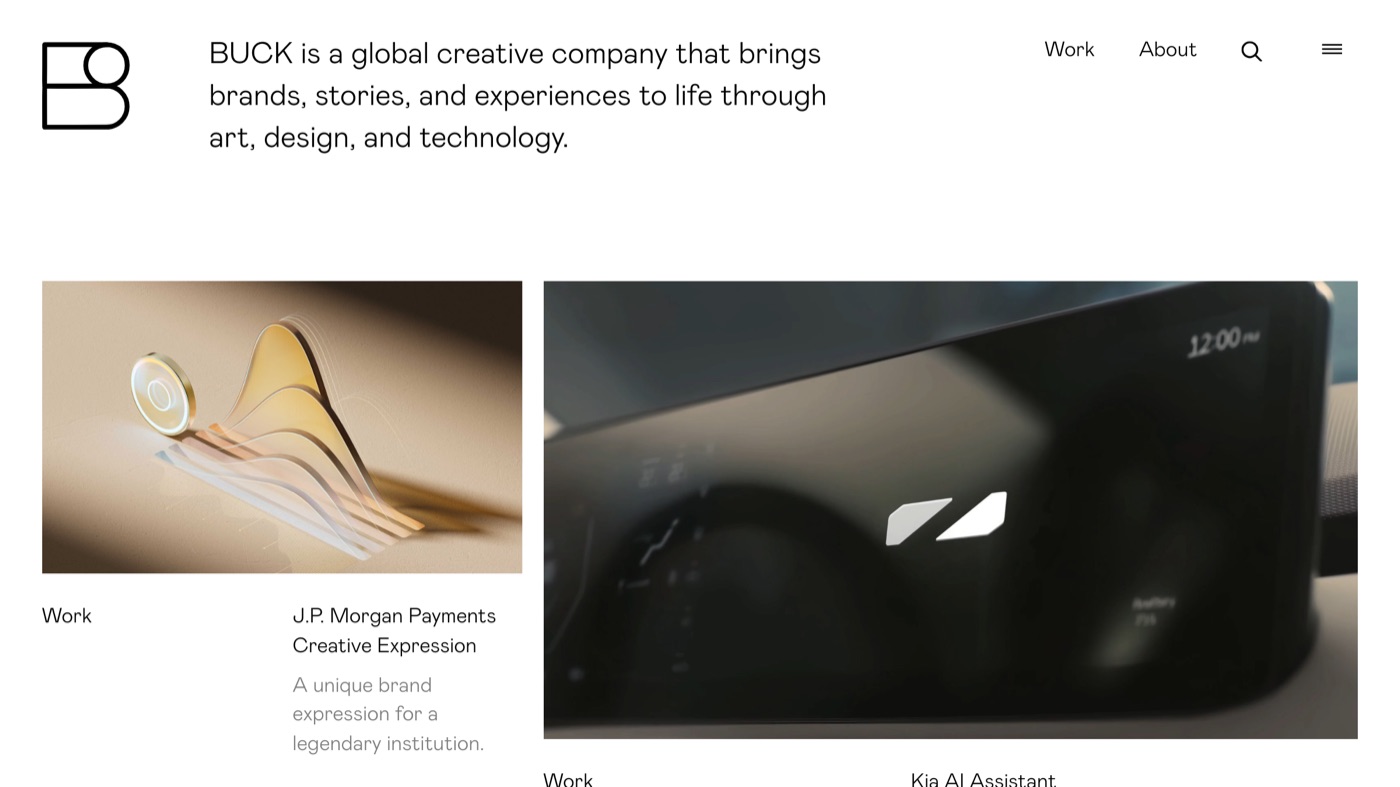
Founded in 2004 by Orion Tait, Ryan Honey, and Jeff Ellermeyer, BUCK has grown to more than 400 people across offices in Los Angeles, New York, Sydney, Amsterdam, and London. It is widely regarded as one of the most influential and awarded design and animation shops in the field. The work spans broadcast, brand systems, product film, and experiential, often for the world's biggest technology and consumer brands. Buyers should expect a deep bench, strong creative direction, and the rare ability to hold one visual language consistent across dozens of deliverables and multiple markets.
BUCK is the name that comes up first in most serious shortlist conversations, and for good reason. It works across 2D, 3D, and full brand-system motion, so one team can carry a visual language through a product launch, a campaign, and the social cutdowns that follow. That range is why large organizations keep it on speed dial. The thing to plan around is that a studio built for polished, high-stakes work tends to run stricter selection and a more deliberate pace, so it rewards briefs that have real scale behind them rather than a fast one-off. When I have pointed a client toward BUCK, it has been because the motion needed to feel like part of the brand, not a single asset bolted on at the end.
3. Giant Ant
More on Giant Ant
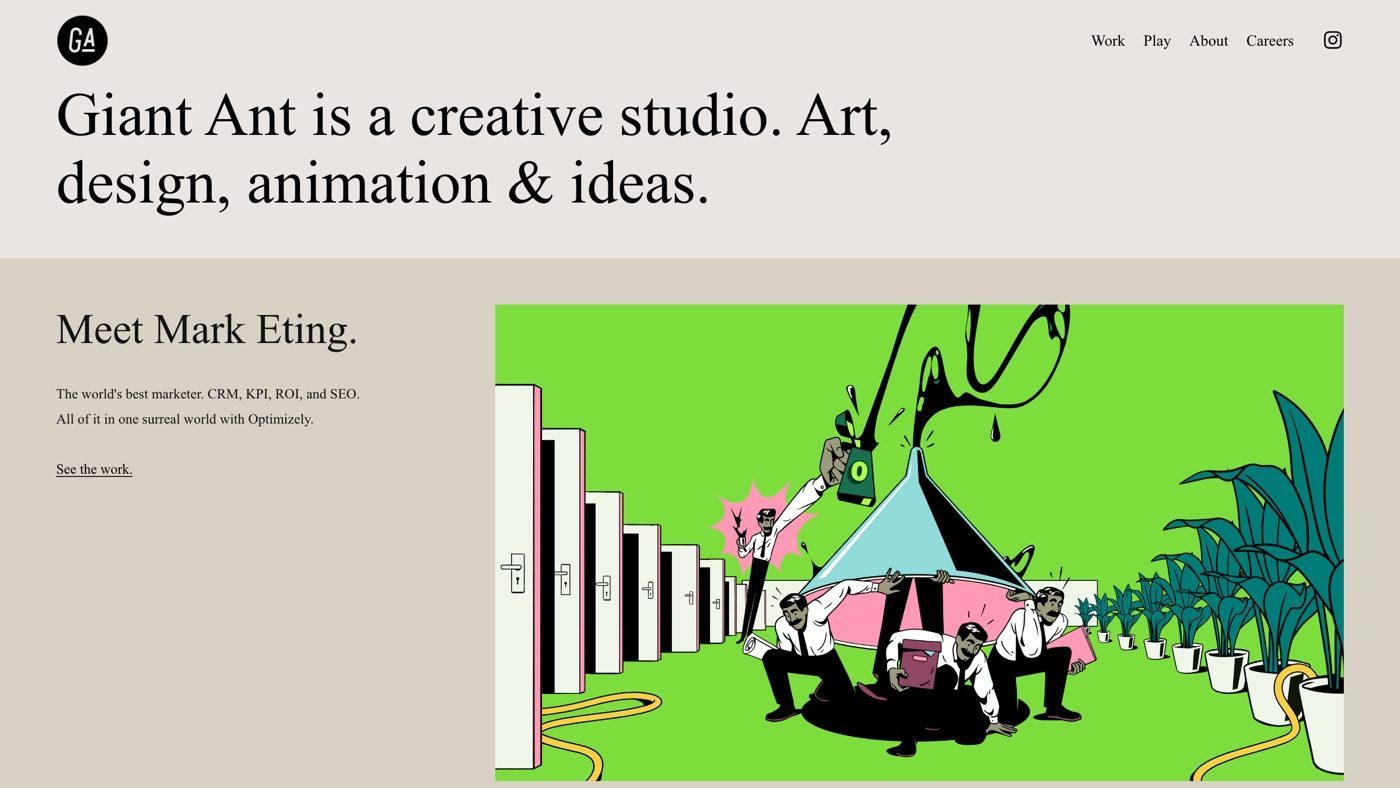
Giant Ant was built by partners Jay Grandin and Leah Nelson, who met at Emily Carr University and grew the studio into one of Canada's leading animation houses. It is known for emotive, hand-crafted 2D and mixed-media storytelling, and has earned recognition from award bodies including the Clios and the ADC. This is a boutique with a tight, senior team rather than a high-volume production line. Expect distinctive art direction, narrative-first thinking, and a clear preference for craft over throughput.
Giant Ant is who I think of when a brief needs character rather than clean execution alone. Its lane is character-driven storytelling, with tone and timing that feel warmer than most corporate motion. That makes it a practical pick for brand films, explainers, and campaign pieces where the job is to get people to care, not just to understand. The same authored voice is the constraint: if a brand wants something neutral or visually plain, Giant Ant can read as too much personality for the room. It lands best with clients who are comfortable letting a point of view stay visible in the work.
4. Oddfellows
More on Oddfellows
Oddfellows was founded in 2012 by Chris Kelly, Colin Trenter, and TJ Kearney, and joined Passion Animation Studios in 2017, giving it the backing of a larger international group. It is known for illustrated, human, design-first animation that pairs strong art direction with clear storytelling. The studio works with a distributed, senior creative team on brand and product films for technology and consumer clients. Buyers should expect a highly art-directed process, a recognizable style, and polished craft rather than fast, high-volume output.
Oddfellows wins on clarity. Its motion tends to feel design-forward and built to make something complex easy to follow, which is exactly what a SaaS launch or a technical marketing push needs. What I like is that the motion seems built into the system from the start rather than animated on afterward, so a launch film, a feature explainer, and a set of social cutdowns hold together instead of drifting apart. The caveat is that the house style is refined, so if you want grit, texture, or an illustrative edge, this is not the first door to knock on. A useful test in the intro call: ask how they would carry one visual system across a landing page, a launch film, and a social snippet, and treat a vague answer as a signal.
5. Ordinary Folk
More on Ordinary Folk
Ordinary Folk is a Vancouver-based studio built around a distributed roster of directors and animators, founded and led by Jorge R. Canedo Estrada, a well-known figure in the motion-design community. The work leans into warm, human, character-driven animation, and clients have included Google, Webflow, TED, Twilio, and SAP. Expect a collaborative, education-minded approach that treats each piece as a chance to make a viewer genuinely understand and feel something. Buyers should plan for boutique capacity and craft-led timelines rather than high-volume, fast-turnaround production.
Ordinary Folk is one of the better calls when you want motion to feel human. The work leans warm and character-led, which suits explainers, onboarding, and brand messages that need to feel inviting rather than over-produced. The part I trust is the consistency: the body of work suggests they can hold a visual voice across several projects, and plenty of buyers say they want warmth and then hire a team whose output feels sterile. Ordinary Folk avoids that. The trade-off is that a gentler style does not fit every brief, so if you need aggressive launch energy or a hard product-marketing push, look elsewhere.
6. ManvsMachine
More on ManvsMachine
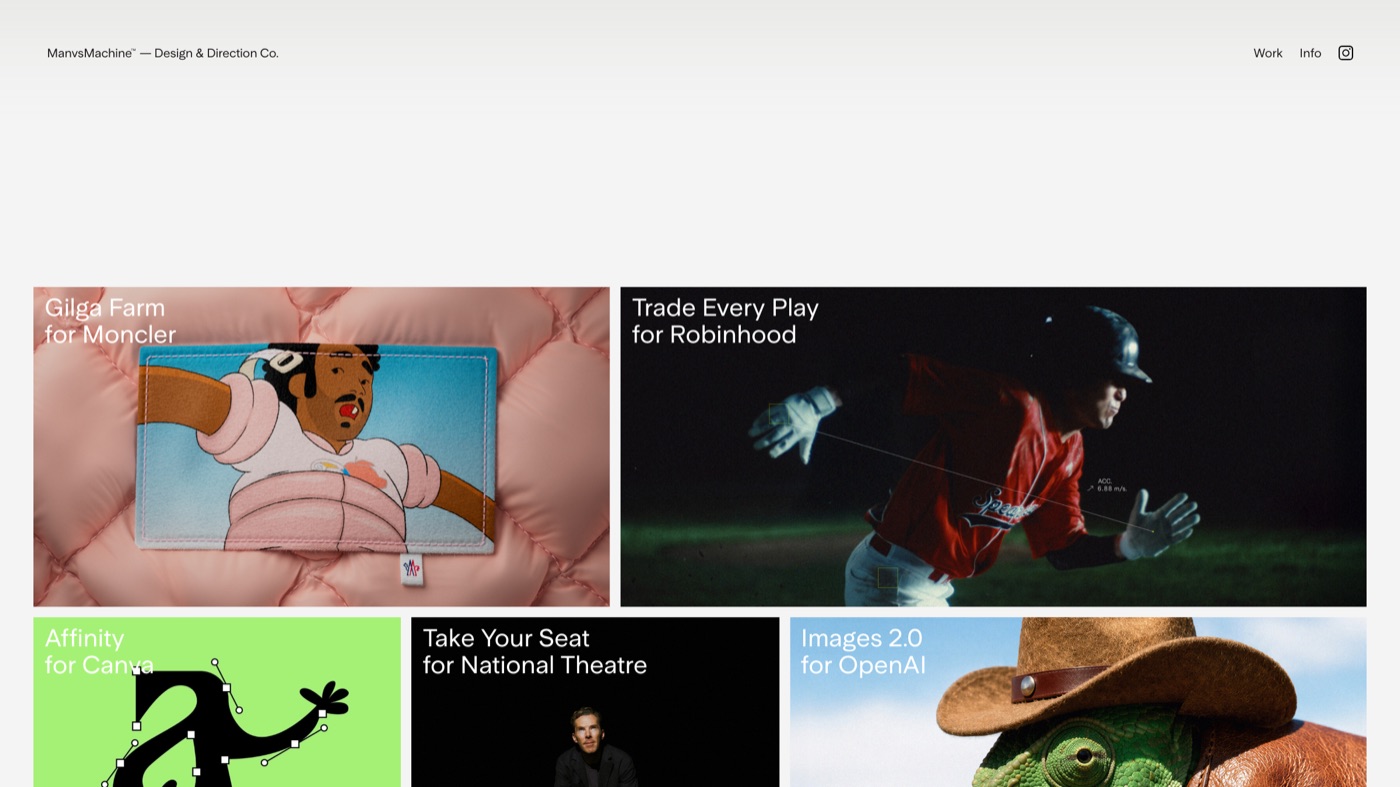
ManvsMachine is a motion and design studio founded in Shoreditch, East London in 2007 by Mike Alderson and Tim Swift, with a Los Angeles office added in 2016. It built its reputation on high-end CGI, art direction, and product films, and its client roster includes Nike, Apple, Pepsi, Squarespace, Adidas, and Spotify. The awards shelf holds Cannes Gold Lions, a D&AD Black Pencil, and Emmy recognition. The studio was acquired by WPP's Landor, so buyers now work with a group-backed operation rather than a small independent shop, and should expect flagship-level craft priced and scheduled accordingly.
ManvsMachine sits near the top for high-end 3D and CGI. The work is sleek, often abstract, and built around product visuals that need to look premium from the first frame, so it fits launch films and luxury spots that have to feel expensive without being literal. That finish can make ordinary product messaging feel cinematic, which helps when a brand wants to signal precision or design credibility and can support the production time that craft demands. If your brief is a simple 2D explainer or a fast social asset, this is more studio than the job needs. It works best when the visuals carry as much of the story as the script does.
7. Golden Wolf
More on Golden Wolf
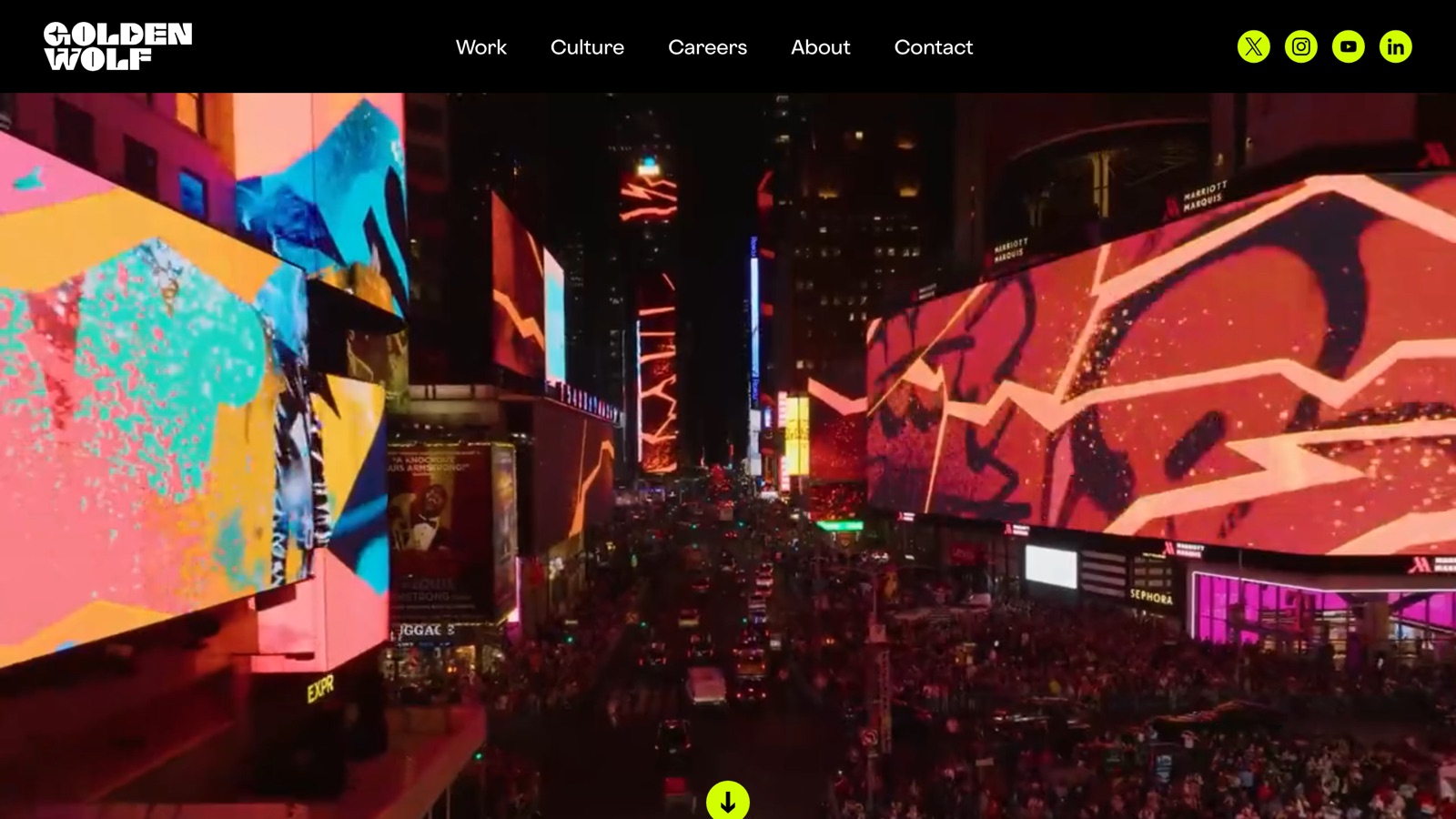
Golden Wolf is an animation studio founded in London in 2013 by executive creative director Ingi Erlingsson, a former graffiti artist and ilovedust creative, with a New York studio added later. It is known for irreverent, kinetic, psychedelia-tinged animation aimed at youth culture, with clients including Nike, Adidas, Cartoon Network, MTV, Disney, ESPN, and Red Bull. Signature work includes the adidas x Parley Run for the Oceans campaign and an Emmy-nominated main title sequence for Disney's DuckTales reboot. In 2023 the studio was acquired by the Web3 brand Doodles, which has pulled some focus toward original IP, so expect a bold house style that shines on energetic briefs and overwhelms restrained ones.
Golden Wolf brings speed and energy. The work is loud and stylized, with a visual urgency that suits sports, music, gaming, and youth-focused social. If a brand wants motion that feels current and a little unruly, this belongs on the shortlist, because the style grabs attention fast and holds up in short-form spaces full of clutter. That intensity is also what makes it polarizing: some brands want playful, others need restraint, and Golden Wolf is the wrong call for conservative sectors or long, calm corporate stories. Match it to a younger audience and a brief that can afford to be bold.
8. Cub Studio
More on Cub Studio
Cub Studio is a Brighton, England animation studio that has spent more than a decade becoming one of the most established names in sports motion and character animation. Its sports and broadcast credits include the Premier League, World Rugby, FIA Formula E, the FIA World Endurance Championship, ESPN, Fox Sports, and BT Sport. Beyond sport it produces branded content, explainer, and product animation for brands such as MasterClass, HelloFresh, Bremont, and Polaroid. Buyers can expect polished, personality-rich character animation and a team fluent in the fast turnaround rhythms of live sport and broadcast. The work is playful and craft-led rather than austere or minimal, which suits brands that want warmth and energy.
Cub Studio has a clear lane: sports motion. That focus shows up in sharp animation and character work built for leagues, broadcasters, and sports brands that need to communicate fast. A studio that lives in sports content does not have to learn the category from scratch, so it moves quickly on pacing, audience expectations, and how to make data feel visual rather than dry. The trade-off is scope. If you work in B2B or SaaS, a sports-first visual language may not map cleanly onto your brief. Cub reads as a strong specialist, not a general-purpose motion shop.
9. Territory Studio
More on Territory Studio
Territory Studio was founded in London in 2010 by David Sheldon-Hicks and became the leading name in fictional user interface, known as FUI, and screen graphics for film. Its credits read like a modern science fiction canon, including The Martian, Guardians of the Galaxy, Blade Runner 2049, Ad Astra, Prometheus, Zero Dark Thirty, and Dune. The studio is often brought on before filming begins to design the on-set screens and interfaces the actors interact with, which demands both design polish and technical credibility, as on The Martian where the graphics had to respect real NASA systems. Territory has since grown well beyond film into games, branding, and real product and experience design. Expect rigorous, high-craft, information-rich motion and interface work rather than soft or whimsical animation.
Territory Studio is the right call for FUI, screen graphics, and futuristic system design. It is known for making interfaces and data visuals feel cinematic, which is why it turns up so often around film, games, and technically complex brand work. The skill here is translation: turning abstract or technical information into something that looks plausible and high-end, which is really rare and exactly what UI-heavy storytelling needs. The cost of that focus is narrowness, so a studio this good at futuristic interfaces is not your best option for a warm character explainer or a broad brand campaign.
10. Sarofsky
More on Sarofsky
Sarofsky was founded in 2009 by Erin Sarofsky in Chicago, where she remains owner and executive creative director. The studio built its name on cinematic main-on-end title design for Marvel films and on title sequences for TV series including Community, Shameless, and The Killing. It has since grown into a full-service production company handling commercials, social content, Times Square digital billboards, and experiential work for live events. Expect a design-led process where narrative concept and typography carry as much weight as the animation itself. Buyers come here for signature, high-craft moments, not for cheap volume.
Sarofsky is one of the most respected names in cinematic motion design, especially title work. Its main-title and entertainment pedigree gives it a strong instinct for pacing, tone, and compressed storytelling, and that instinct carries into brand projects: a studio that knows how to tell a story in a short runtime can make a launch film feel tighter and more intentional. The constraint is cost and fit. This is a premium choice, and that level of craft is hard to justify for a routine social pack or an internal video. Save it for work where cinematic polish is a real business advantage.
11. Ntropic
More on Ntropic
Ntropic is a content, VFX, and post-production studio founded in 1996, with offices in San Francisco, Los Angeles, New York, London, and Ho Chi Minh City. Its work spans commercials, music videos, feature-film effects, and digital experiences, backed by services from CGI and motion design to color grading, editorial, and Unreal Engine. Publicly documented work includes VFX and finishing for automotive and consumer brands and music videos for artists such as Justin Timberlake and Green Day. Expect a finishing-house sensibility where realism, lighting, and craft polish are the core value. Bring them work that lives or dies on visual fidelity rather than on writing or character comedy.
Ntropic is built for VFX, CGI, and polished post-production, which makes it a strong fit for beauty, automotive, and luxury brands that need product visuals to feel precise and controlled. That focus gives it a real edge when the job is to make something look flawless, and it is useful on integrated campaigns where motion has to sit comfortably beside stills and brand photography. It is less centered on character storytelling or lighter explainer formats, so if the brief needs warmth or classroom-style clarity, another studio will serve you better. Good CGI here makes the product feel real and the brand feel expensive without showing its own work.
12. Hornet
More on Hornet
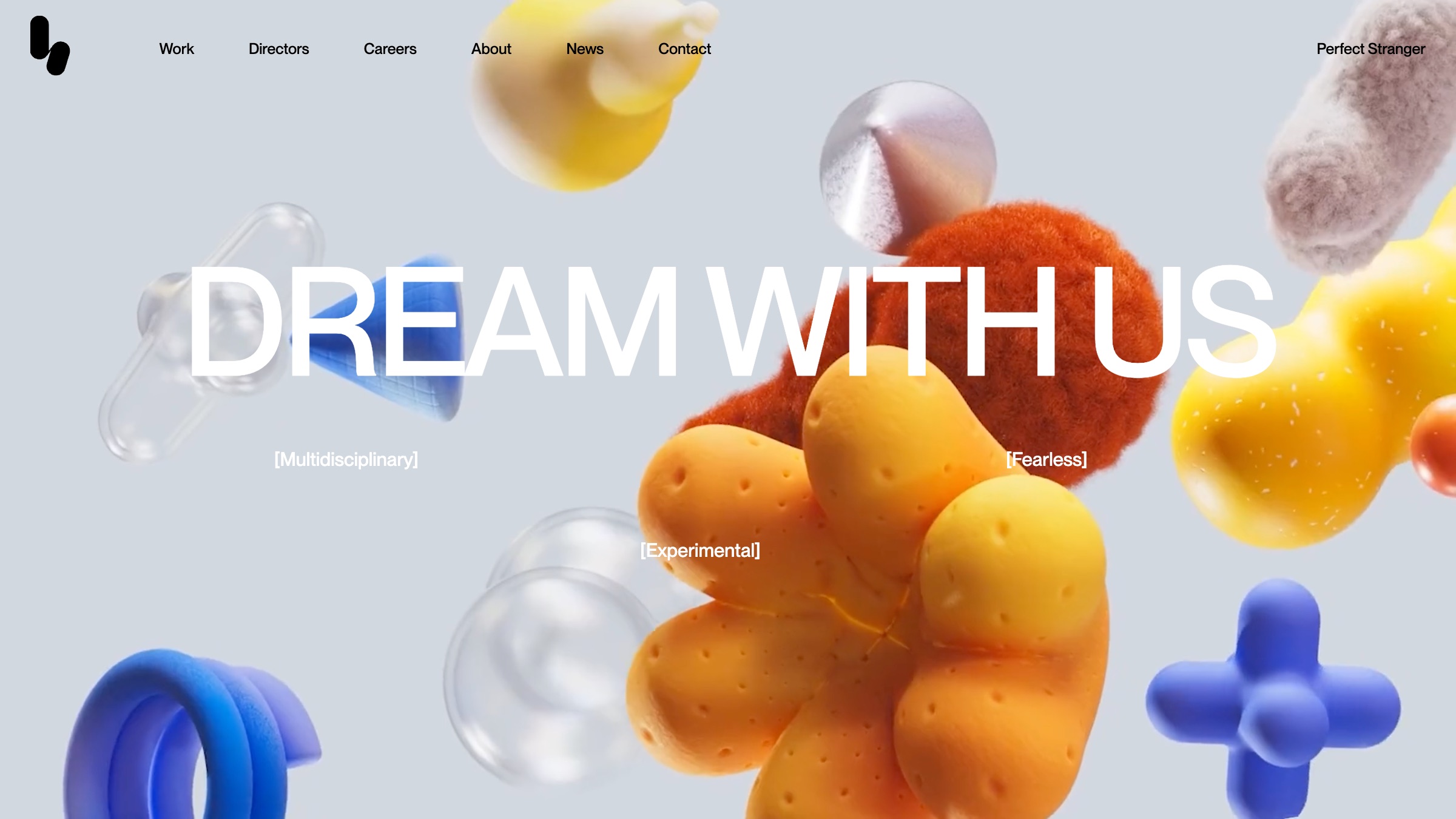
Hornet is a director-driven animation and production studio based in New York, known for building work around the distinct authorship of its roster rather than one fixed house style. Its directors handle everything from character animation and mixed media to broadcast design and branded content. The studio has produced award-winning work for major clients including Nike, Google, Disney, and The New Yorker, with recognition at Cannes, D&AD, and other major festivals. Because the offer is a roster, the right fit depends on matching your brief to a director whose voice suits it. Review individual director reels closely before committing, since range and sensibility vary widely across the bench.
Hornet is a good choice when the director matters as much as the studio name. It represents a roster of artists with different styles, which gives you real range across 2D, 3D, stop-motion, and mixed media. That model is powerful because you can match a brief to a specific artistic perspective, and for the right project it produces work that feels fresher than a single house look. The thing to watch is consistency: a director roster means the experience varies from one team to another, so vet the specific director’s portfolio, not just the company name.
13. Not to Scale
More on Not to Scale
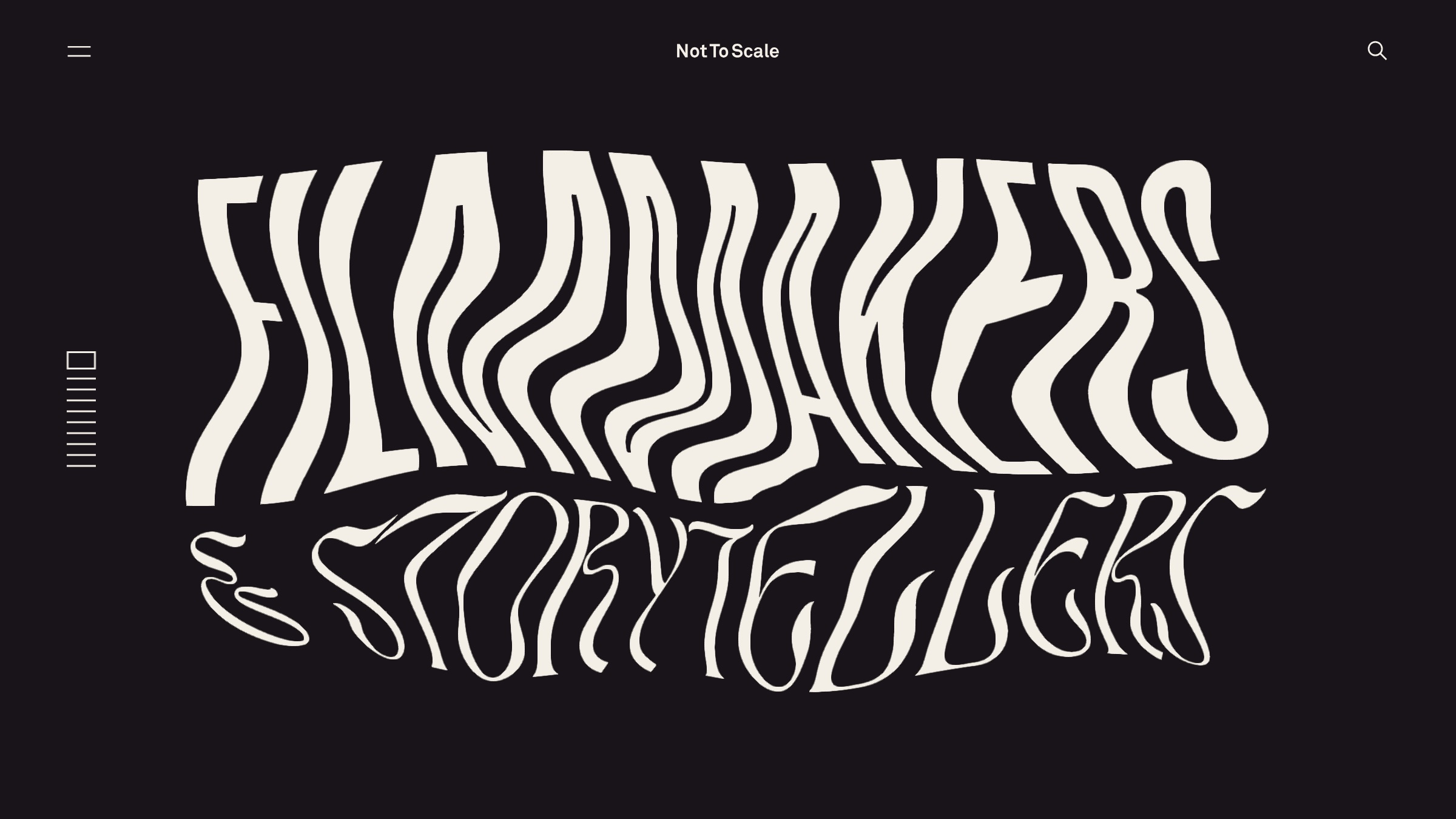
Founded by Daniel O'Rourke in London in 2005, Not to Scale has grown into a global film and animation studio with offices in London, New York, Los Angeles and Barcelona. Rather than pushing one fixed house style, it represents an international roster of multi-disciplined directors working across 2D, 3D, CGI, stop motion and VFX, and matches the right filmmaker to each brief. It partners directly with agencies, brands and broadcasters to concept and deliver hero films where storytelling and finish carry the piece. Buyers should expect a director-led, craft-first process built around a curated talent roster rather than a fast, always-on content pipeline.
Not to Scale is a strong fit for design-led motion and film craft. The studio has long been associated with work that feels thoughtful, cinematic, and visually disciplined across 2D, 3D, CGI, and stop-motion, with production facilities in several markets. The value of a shop like this is judgment: design-heavy teams tend to make stronger calls on pacing, framing, and restraint, which often matters more than flashy effects when a brand needs elegance. The caveat is volume, since a highly crafted sensibility is not always the best fit for recurring, high-output content. It is strongest on signature pieces where every frame earns its place.
14. Nice Shoes
More on Nice Shoes
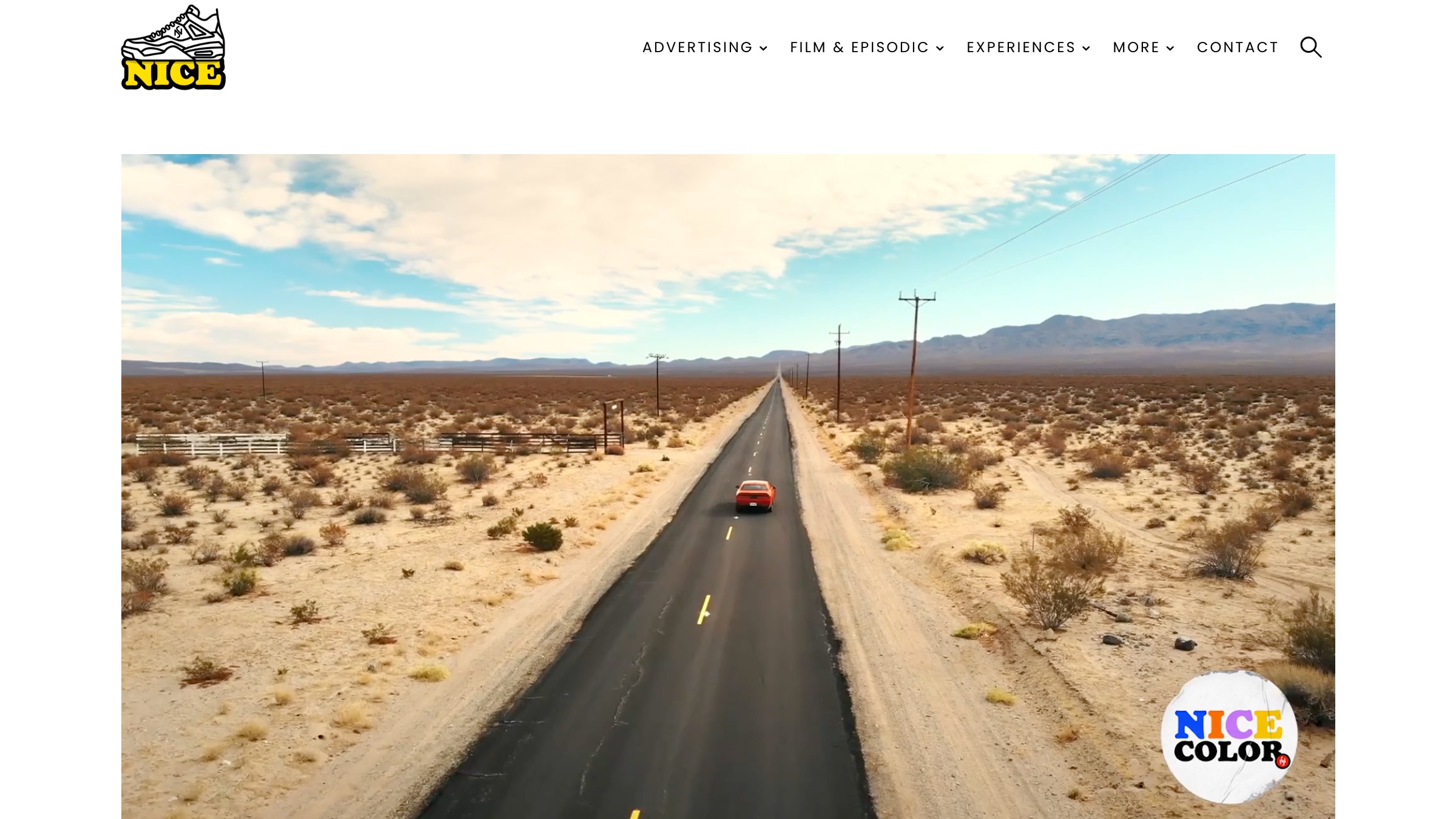
Founded in 1996 and headquartered on New York's Crosby Street, Nice Shoes is a full-service, artist-driven post studio with additional locations including Toronto and Minneapolis. It built its reputation on color grading and finishing, backed by a partner-level colorist bench, and was an early mover in remote color workflows for agency clients. Under the Nice Shoes Creative Studio banner it also offers design, animation, VFX and editorial, so one vendor can carry a spot from edit through final delivery. Documented clients span national advertisers such as Bud Light, Hellmann's, Carvana, Instacart and UFC, so expect a broadcast-grade production and finishing partner rather than a boutique illustration house.
Nice Shoes is known for post, design, and motion that supports commercial work, which makes it a useful partner when a brief needs finishing discipline and a polished final delivery. The advantage is integration: when motion, color, finishing, and design live closer together, the result tends to feel more controlled, and that matters on campaigns where motion has to sit alongside live action or premium photography. It is a strong choice for finishing and production support rather than a singular illustrative voice, so if you want one distinctive authored look, weigh that against the studios higher up.
The fourteen studios at a glance
| Studio | Specialism / model | Best for | Trade-off |
|---|---|---|---|
| BUCK | 2D, 3D, and brand-system motion at scale | Enterprise launches needing one visual language everywhere | Built for larger scopes; less flexible on small, fast briefs |
| Giant Ant | Character-driven 2D storytelling | Brand films and explainers that need emotion | Strong authored voice can be too much for neutral briefs |
| Oddfellows | Design-forward motion systems | SaaS and tech product launches | Refined style; not for grit or an illustrative edge |
| Ordinary Folk | Warm, character-led animation | Human-centered explainers, onboarding, tutorials | Gentle tone underpowers hard-sell or technical work |
| Moonb | Embedded creative team, weekly cadence | Ongoing motion, video, and design across campaigns and social | Built for continuity, not a single prestige one-off |
| ManvsMachine | High-end 3D and CGI | Premium product films that must look expensive | Overbuilt for simple 2D or fast social |
| Golden Wolf | Bold, high-energy stylized 2D | Youth, sports, music, and gaming social | Intensity polarizes; not for conservative sectors |
| Cub Studio | Sports motion and character work | Leagues, broadcasters, and sports brands | Sports-first language may not fit B2B or SaaS |
| Territory Studio | FUI, screen graphics, data visualization | Cinematic UI for film, games, and tech storytelling | Narrow specialism; not for warm character work |
| Sarofsky | Cinematic titles and motion design | Film and TV titles, prestige brand films | Premium; overkill for routine social packs |
| Ntropic | VFX, CGI, polished post-production | Automotive, beauty, and luxury product visuals | Less centered on character or lighter explainers |
| Hornet | Director roster across many styles | Projects wanting a specific auteur voice | Experience varies by director; vet the person |
| Not to Scale | Design-led, cinematic film craft | Premium signature pieces where every frame counts | Crafted sensibility less suited to high-output volume |
| Nice Shoes | Integrated post, color, design, and motion | Commercial work needing finishing discipline | Finishing-first; not a singular illustrative voice |
How to make your final choice
The best choice usually comes from the job, not the name on the reel. For prestige, cinematic finish, or a one-off flagship, a marquee studio like BUCK, ManvsMachine, or Sarofsky tends to fit. For a distinct style or niche expertise, specialist shops like Giant Ant, Golden Wolf, Territory Studio, or Cub Studio usually make more sense. For ongoing work that spans campaigns, product, and social, an embedded team keeps continuity high and cuts handoffs, which is the problem Moonb was built to solve.
Do not shortlist by fame. Watch the full reel, then open recent project pages and check whether the studio is still making the kind of work you need, in your target format, whether that is 16:9, vertical social, or broadcast. Look for public client or festival credits you can verify, and treat any mismatch between the credits and the reel as a warning sign. Directories like Clutch are a fine place to sanity-check a studio’s team size and typical project range before you reach out.
Then write a tight brief covering the goal, audience, format, runtime, deadline, reference style, and the assets you already have. That usually leads to cleaner scoping and fewer revision loops, and it gives you a faster read on which studio actually understands the assignment. Three to five studios is enough before you ask for quotes or treatment ideas, and comparing how each responds to the same brief tells you more than another ranking ever will. If you are weighing a specialist against an ongoing team, motion graphics pricing and how to brief an animation studio will help you narrow scope first.
Frequently asked questions
Cost tracks scope, length, and complexity far more than any list price. A short social animation from a small studio sits at the low end, while a cinematic 3D or CGI product film from a top-tier shop runs into five or six figures. Rather than anchor on a benchmark, send the same brief to three studios and compare their quotes against what each one includes, since revision rounds, sound, and licensing often explain the gap between two numbers. Moonb's motion graphics pricing guide breaks the drivers down in more detail.
2D motion works with flat design elements and is usually the better fit for explainers, character stories, and simpler brand systems, where speed and clarity matter most. 3D adds depth and realism, which pays off for product visualization, premium launches, and CGI-heavy work that needs to look tangible. Many studios do both, so the real question is which one serves your message, not which is more advanced. Budget and timeline usually rise with 3D because it takes more setup, lighting, and render time.
There is no single timeline. A short social asset can move in a week or two, while a larger explainer or brand film needs time for script, storyboard, design, animation, sound, and revisions, often several weeks to a couple of months. The pace also depends on how fast your side approves each stage, which is frequently the real bottleneck. Ask every studio for a schedule tied to your exact scope, then compare the plans rather than just the promised delivery date.