12 boutique creative agencies for buyers who want senior people on the work
Twelve small, independent creative studios: who does the work, what each is built for, the one public price list, and where each one falls short.
A boutique creative agency is a small, independently owned studio where the senior people who pitch you also do the work, usually a founder or two plus a team you could fit around one table. The twelve below are the studio I work at, Order, Gretel, Morcos Key, Lundgren+Lindqvist, Hey, Hingston Studio, Little Tiger, Friends ’n Allies, Yellow Lion, MLTI NYC and Verken.
I work at Moonb, so it sits at number one, and you should read that entry with more suspicion than the rest. The fear behind most boutique searches fits in one line: you liked the founder in the pitch, and you want the founder still around in week six.
As of November 2026, none of the twelve sits inside a holding company, going by their own sites and the press I could find. I left out one studio I had looked at, because it had no team page and mixed a spec shoot in with its client work. For the bigger names, see our list of the best creative agencies; for the term itself, our piece on what a creative studio is.
What boutique means when you are the one paying
You can name everyone who will touch your project. The most experienced people do the work themselves (a partner draws the logo, a founder directs the shoot), so the hours you pay for are theirs, with no account layer in between. And because senior time is the thing in short supply, it decides almost everything else, from when a studio can start to what happens when two clients need the same person in the same week.
Most of this industry is built that way. In the UK, the government counted 23,655 advertising and marketing businesses with nine or fewer employees in 2023, against 85 with 250 or more (DCMS business demographics, table 4).
The trade-off is depth. A studio of eight cannot staff a global rollout in four weeks, and if the one motion designer gets sick, your timeline moves with them. Large firms also tend to carry procurement paperwork, insurance and security reviews as standard, and some buyers cannot onboard a vendor without those. For most mid-size projects I would still take the small team, for the direct line to the people doing the work and for the same hand staying on it from start to finish.
The twelve studios
1. Moonb
How our team is set up
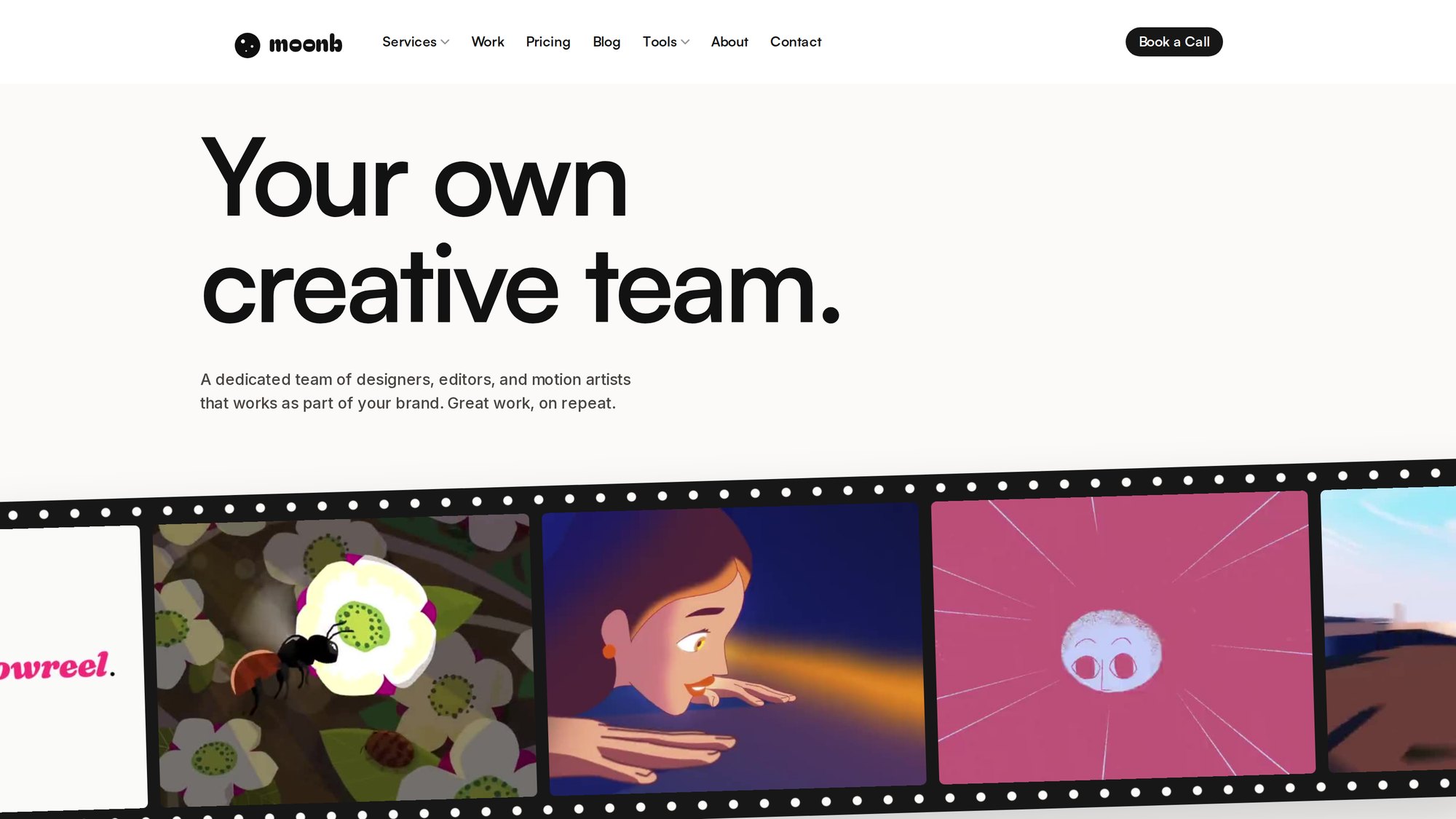
Inside a client's marketing department, Moonb is the dedicated team for graphic design, video, motion and animation, whatever the size of the company. The group you work with is small, one senior person directing and a few people making the work, with no account manager relaying feedback in between. Those turnaround and retention numbers come from our own site and nobody outside audits them. Anyone can read the Clutch reviews, and you should.
Test us the way I would test anyone here. Ask who your Creative Director will be, and ask to meet that person before you sign.
The other half of that test is the work itself. We made this three-and-a-half-minute character animation for Jaguar Gene Therapy, the kind of long, careful piece a small studio does well, and its cast and setting were designed for this film.
2. Order
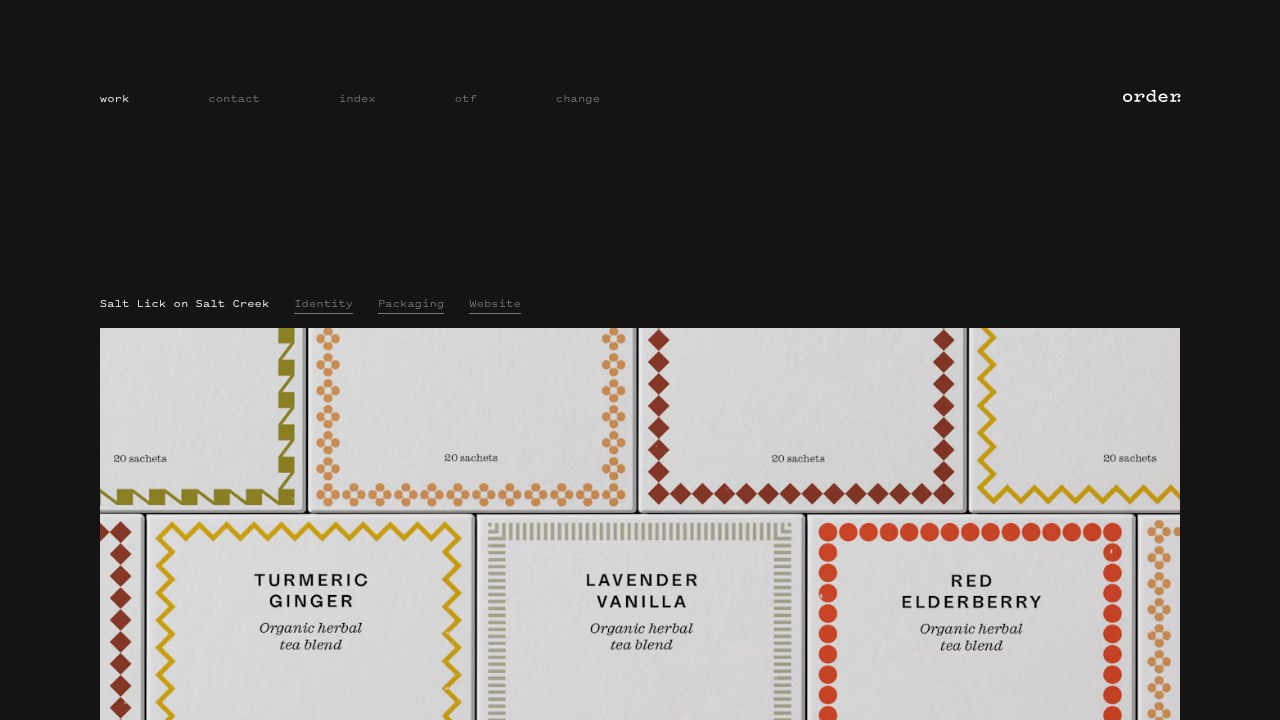
Few studios are as open as Order about who does the work. The Brooklyn contact page lists Jesse Reed as principal, then a design director, designers, a design apprentice and a head of operations. On a pure identity job, that page is a fair benchmark for what a published team list should look like.
Order calls its approach research-based, systematic and practical, and the capabilities run from naming and brand strategy through type design, guidelines, packaging and wayfinding. The press list includes an identity for the Frank Lloyd Wright Building Conservancy, an interview about updating Herman Miller’s brand identity, and Vanity Fair’s profile of the founders turning old graphic design manuals into Kickstarter hits. Order also runs its own type foundry, and Jesse Reed gave the talk below at the Typographics conference in New York, if you want to hear how he thinks about type.
3. Gretel
Gretel's process and recent work
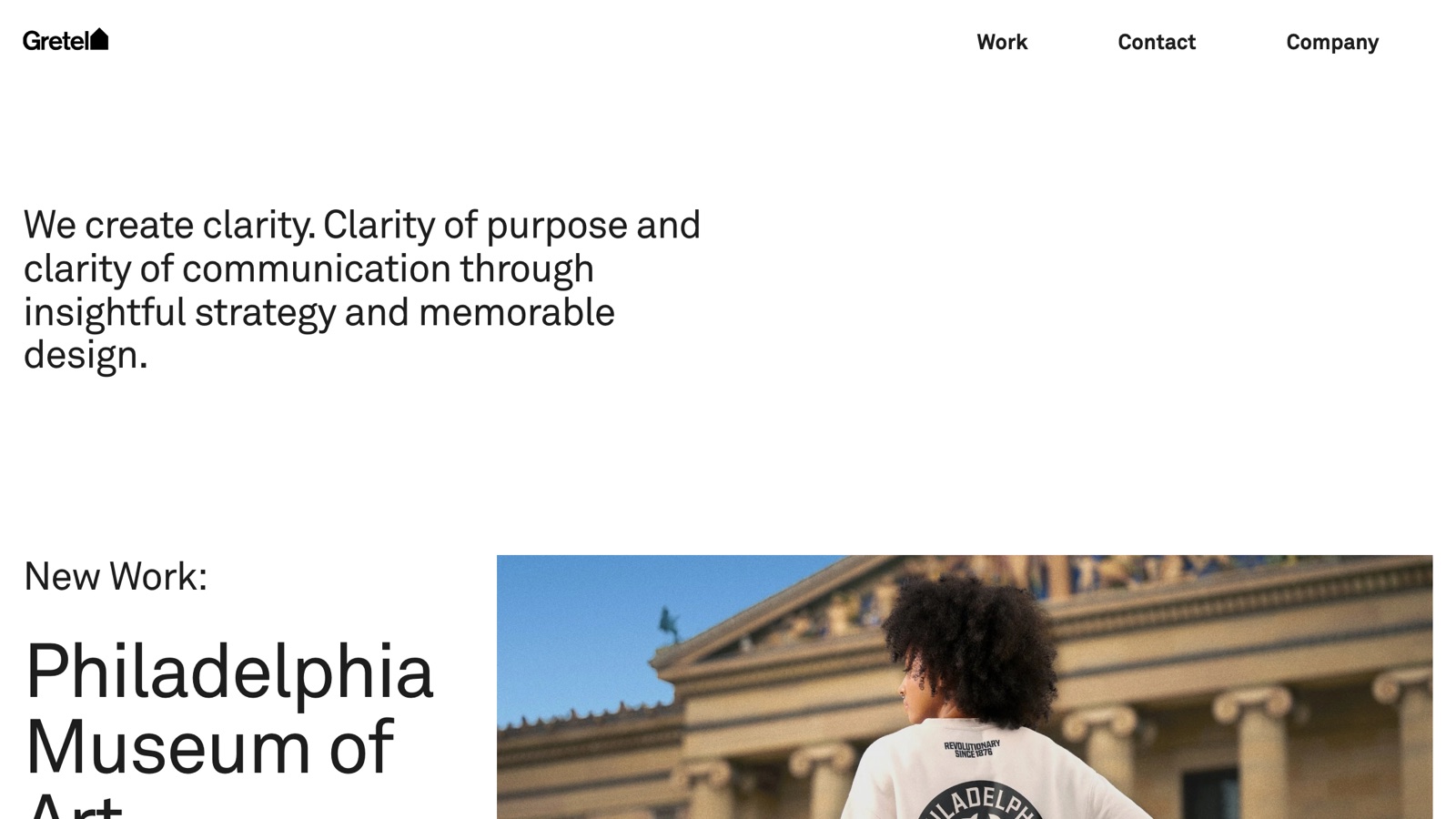
The process starts with discovery, which means meetings with internal teams, a read of existing research and briefs, and commissioned research where needed. What the studio is after, in its own words, is "clarity of purpose and clarity of communication" through strategy and design. Recent work on its homepage includes the Philadelphia Museum of Art, a vinyl and audio goods shop called Finer Sounds, and Hija de Sanchez, described on the site as Mexican Modern in Copenhagen. Its executive creative director, Ryan Moore, has spoken publicly about the studio's ongoing partnership with Noma.
Gretel suits work where the strategy has to survive a board review.
4. Morcos Key
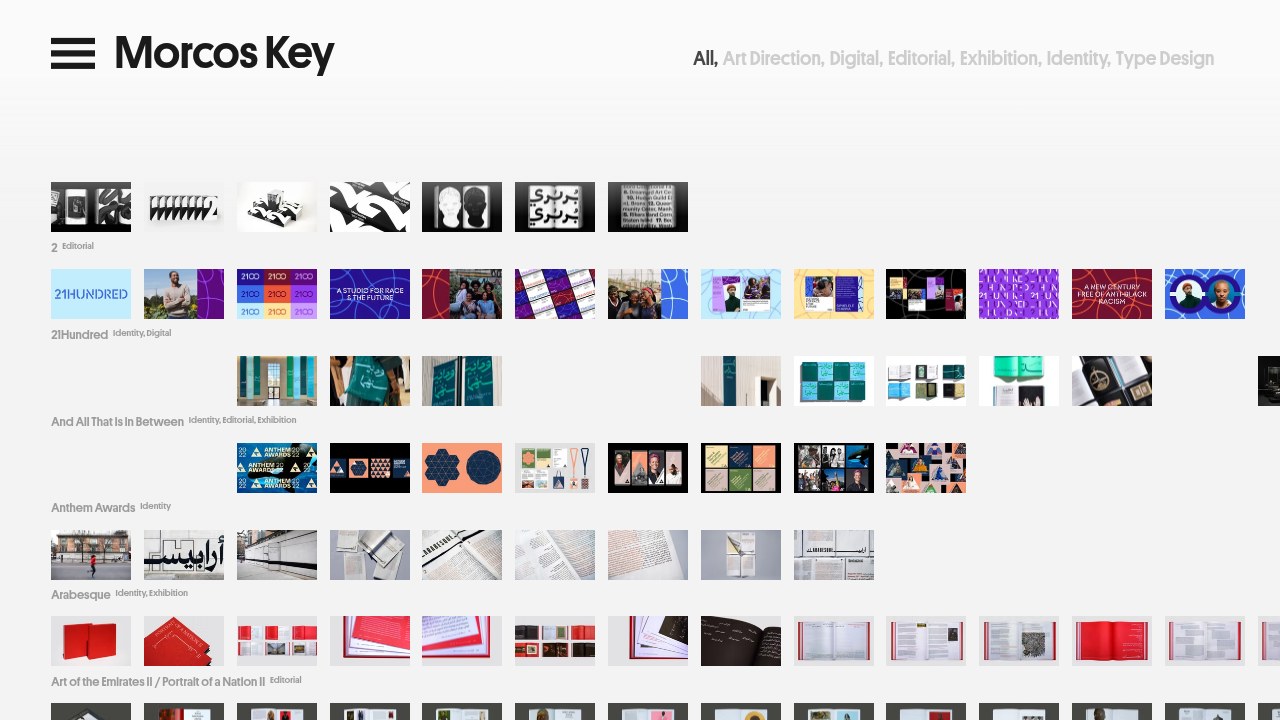
Wael Morcos leads multilingual identity, editorial and digital projects for institutions between the USA and the Middle East, and type design has its own line on the services list. Clients are arts and cultural institutions, non-profits and commercial enterprises in North America and the Middle East, and recent projects include the identity, exhibition graphics and catalogs for the 2025 Islamic Arts Biennale and a hands-on sound design exhibition at Cooper Hewitt, Smithsonian Design Museum. Its client list names Nike, Bloomberg Businessweek, The Public Theater and Penguin Random House. Jon Key also teaches at Cooper Union.
5. Lundgren+Lindqvist
Services and clients
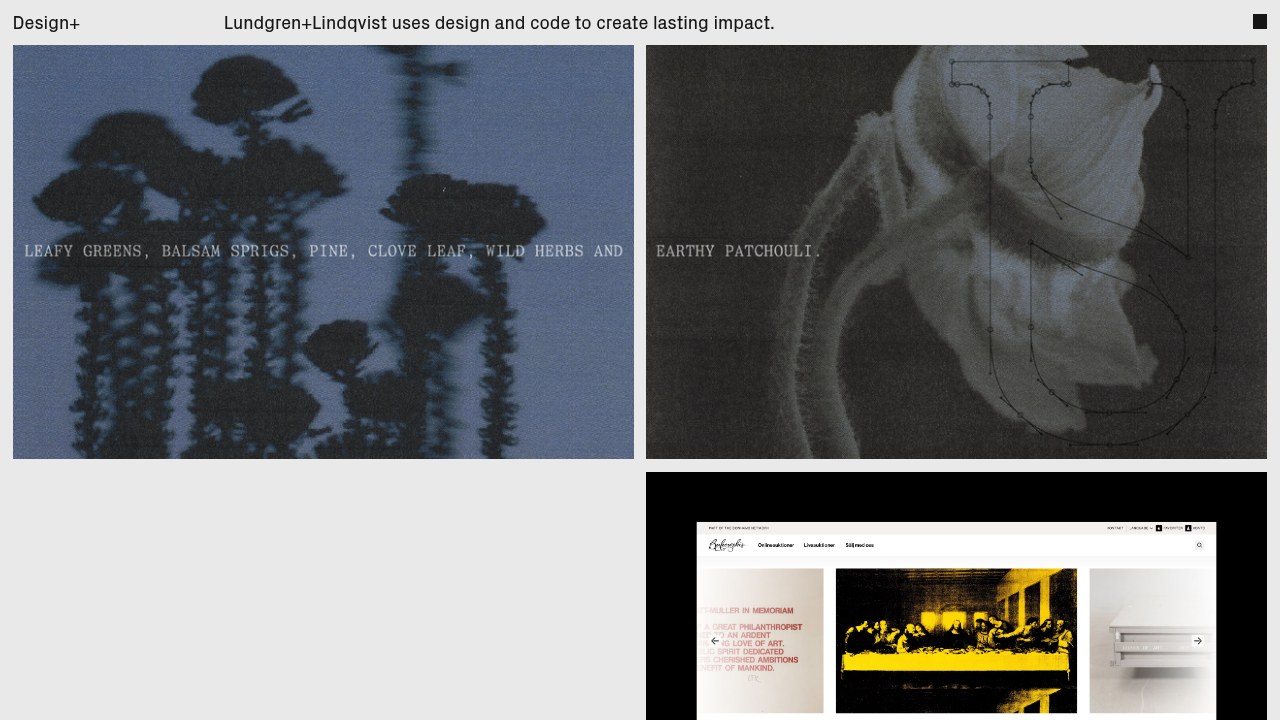
Lundgren+Lindqvist offers visual identity, print and digital design, packaging, signage and wayfinding, and web development. Its profile page says it frequently collaborates with designers, design studios and communication agencies worldwide as a development partner. Selected clients include Polestar, Oatly, Klarna, Braun and the United Nations. Recent case studies on the homepage include identities for Uniscent and WA3RM and publication design for Polestar.
The people who design the site also build it, which helps when a site has to look in the browser the way it did in the design file.
6. Hey
Clients, craft and a podcast
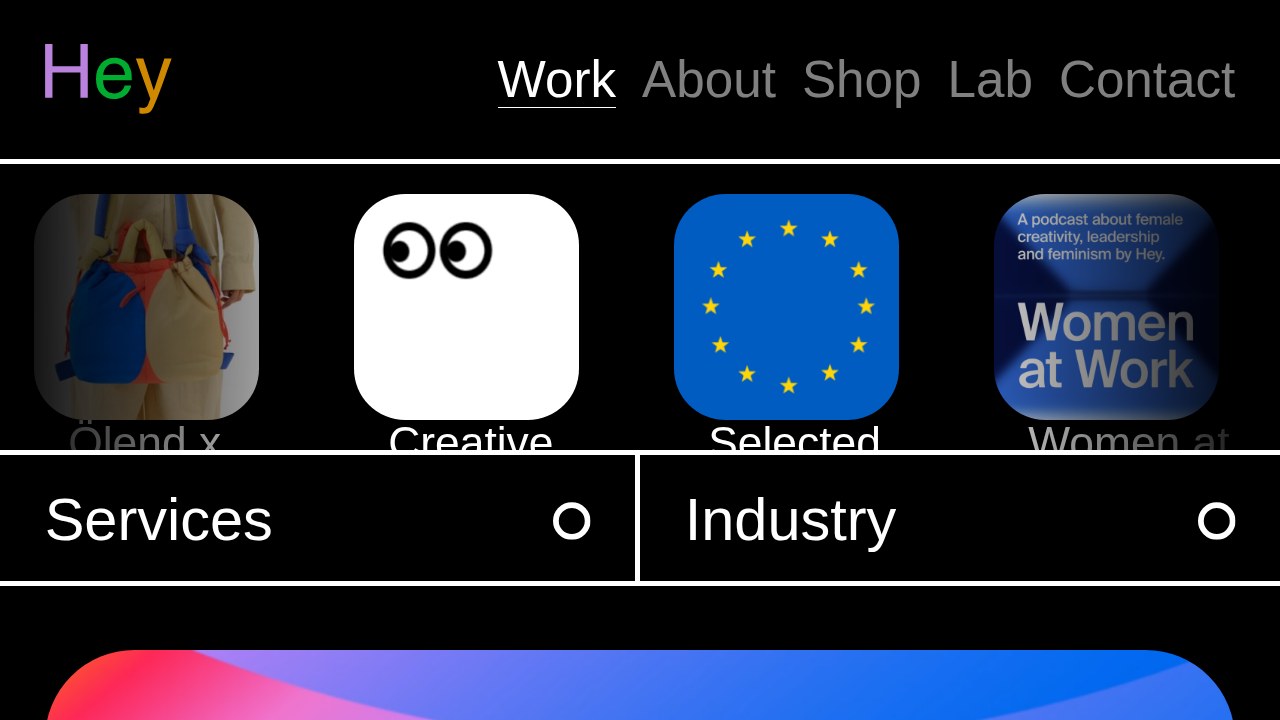
Hey builds brands through strategy, identity, typography, illustration, motion, packaging, editorial, signage and digital work, and lists clients from Apple and Amazon to the Barcelona city council. Creative Boom describes its style as vibrant and rooted in handmade craft, including marbling and silk-screen printing. The studio also makes Women at Work, a podcast that interviews women across the creative industry, and publishes its own website template as open source.
It’s Nice That put Fuerte on stage to talk about building a creative community.
7. Hingston Studio
Services and selected work
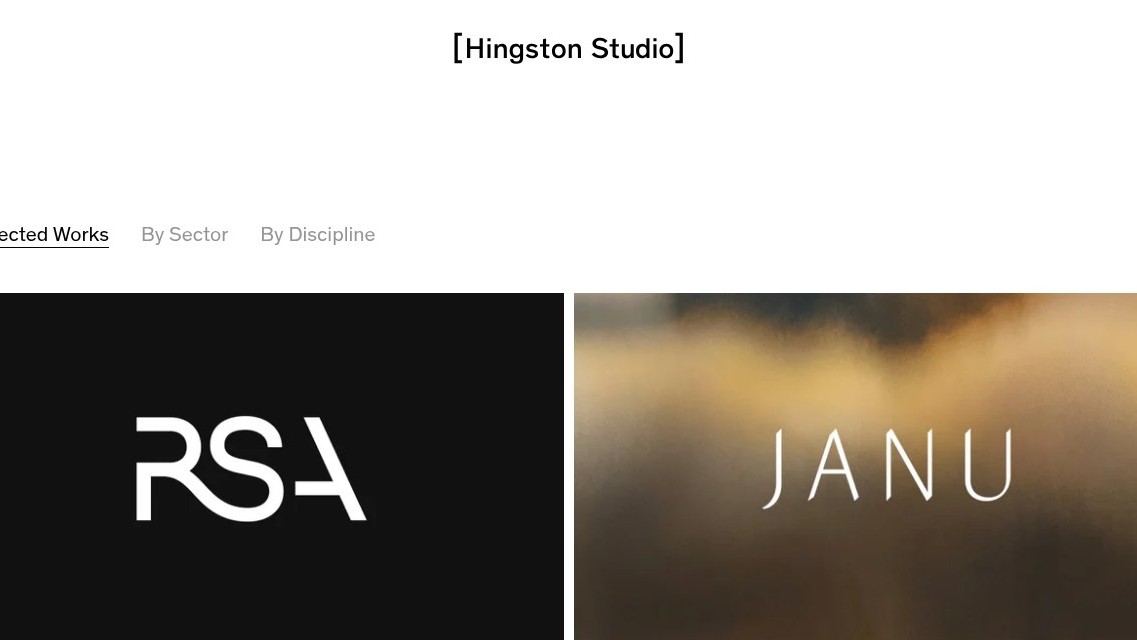
Hingston calls itself an independent studio specializing in motion, design and creative direction. Its services run from art direction, brand identity and CGI animation to exhibition design, packaging, publishing and type design. Selected clients include Netflix, the BBC, Nike, Dior and The New York Times, and the work page features title sequences for Sky, a vinyl series for Massive Attack and a digital brand story for Rolls-Royce Motor Cars.
8. Little Tiger
From its about and team pages
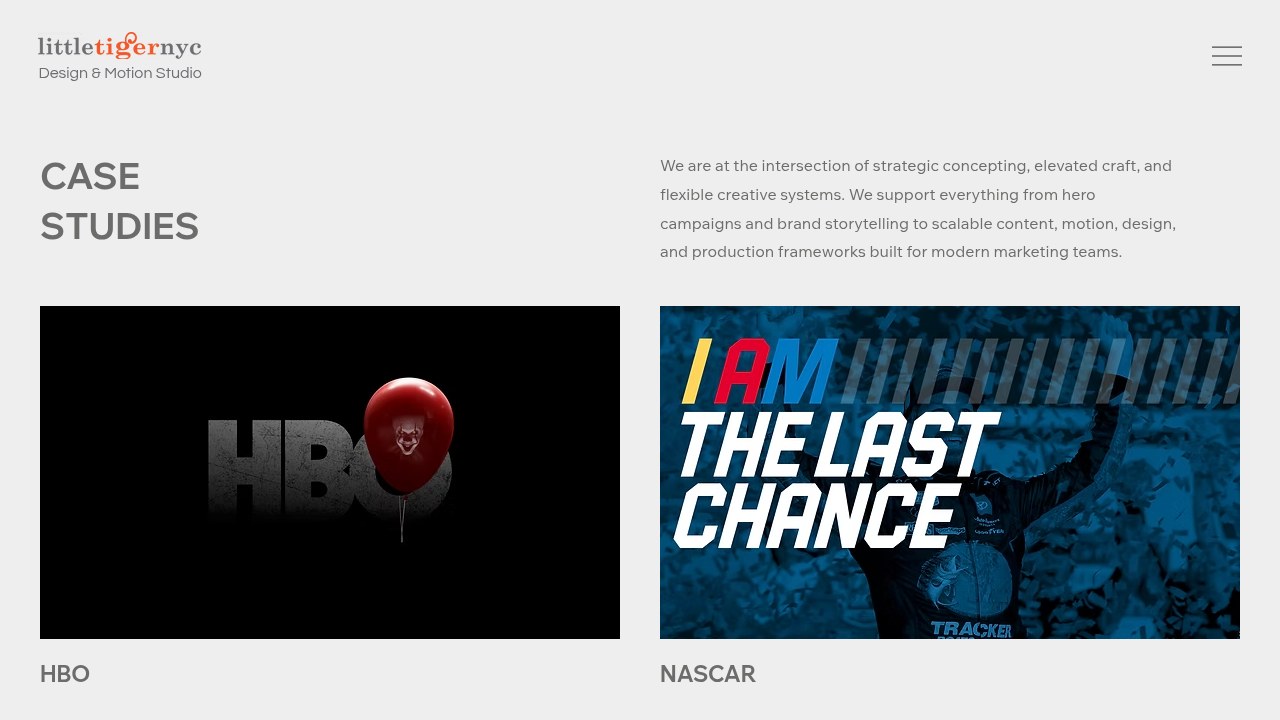
Theatrical trailer campaigns, television promo packages, commercials, corporate videos and trade show installations are the specialties of what Little Tiger calls a creative services studio and post-production company. Its about page pitches it as offering the range of a large agency with the responsiveness and managed costs of a boutique. Case studies on the site include work for HBO, NASCAR, Oculus and Coca-Cola. The team page names a brand strategist, directors and editors, a designer and motion artist, and an art director.
9. Friends ’n Allies
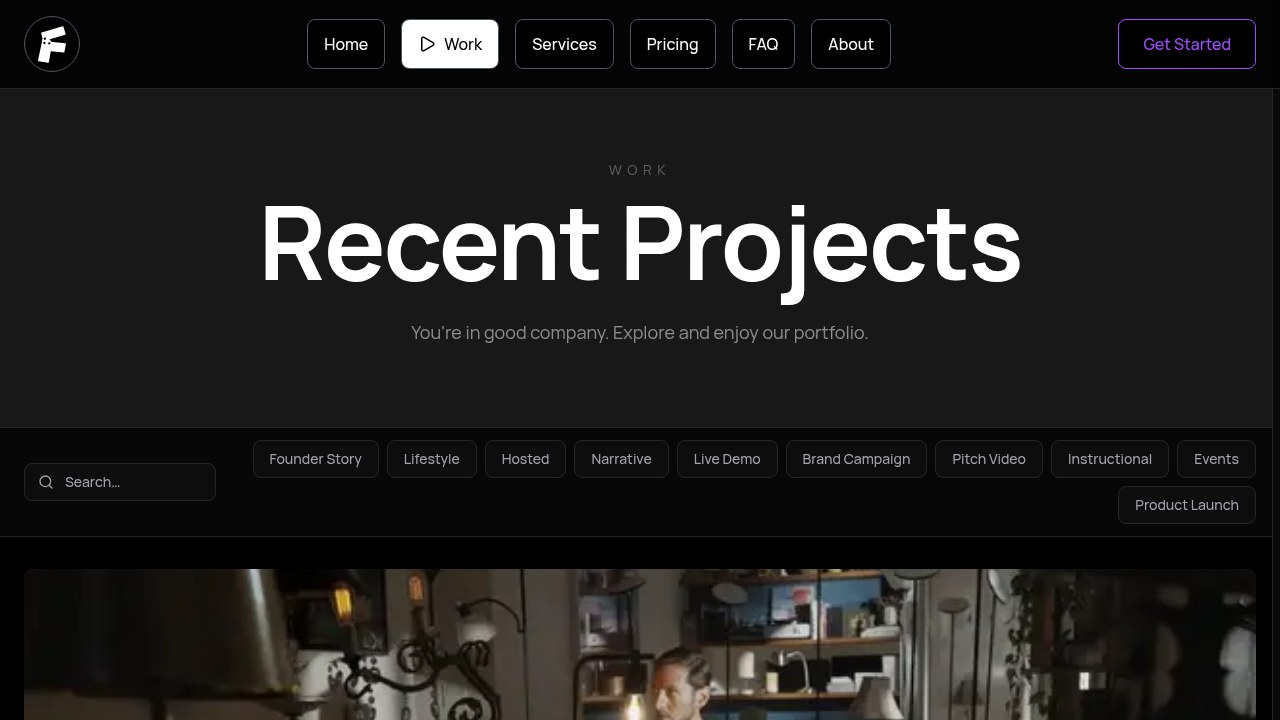
Friends ‘n Allies calls itself a boutique creative agency that helps build brands, launch products and scale startups, and it sells the work in phases. Plan covers brand, voice, scripting and a pre-launch site; Produce is the shoot days, with crew and gear; Post is edit, color, sound and cutdowns, with three revision rounds included. After that an ongoing Partner phase picks up later content and brand work. The recent projects list is heavy on Kickstarter and product launches, and the founders say they met nearly a decade ago when one of them needed a director of photography a week before a shoot.
I would send this pricing page to anyone, even a buyer who ends up hiring someone else. Published starting prices are rare in this category, and these give you an anchor for what a shoot with prep and post costs at a small studio.
10. Yellow Lion
The founder on staying small
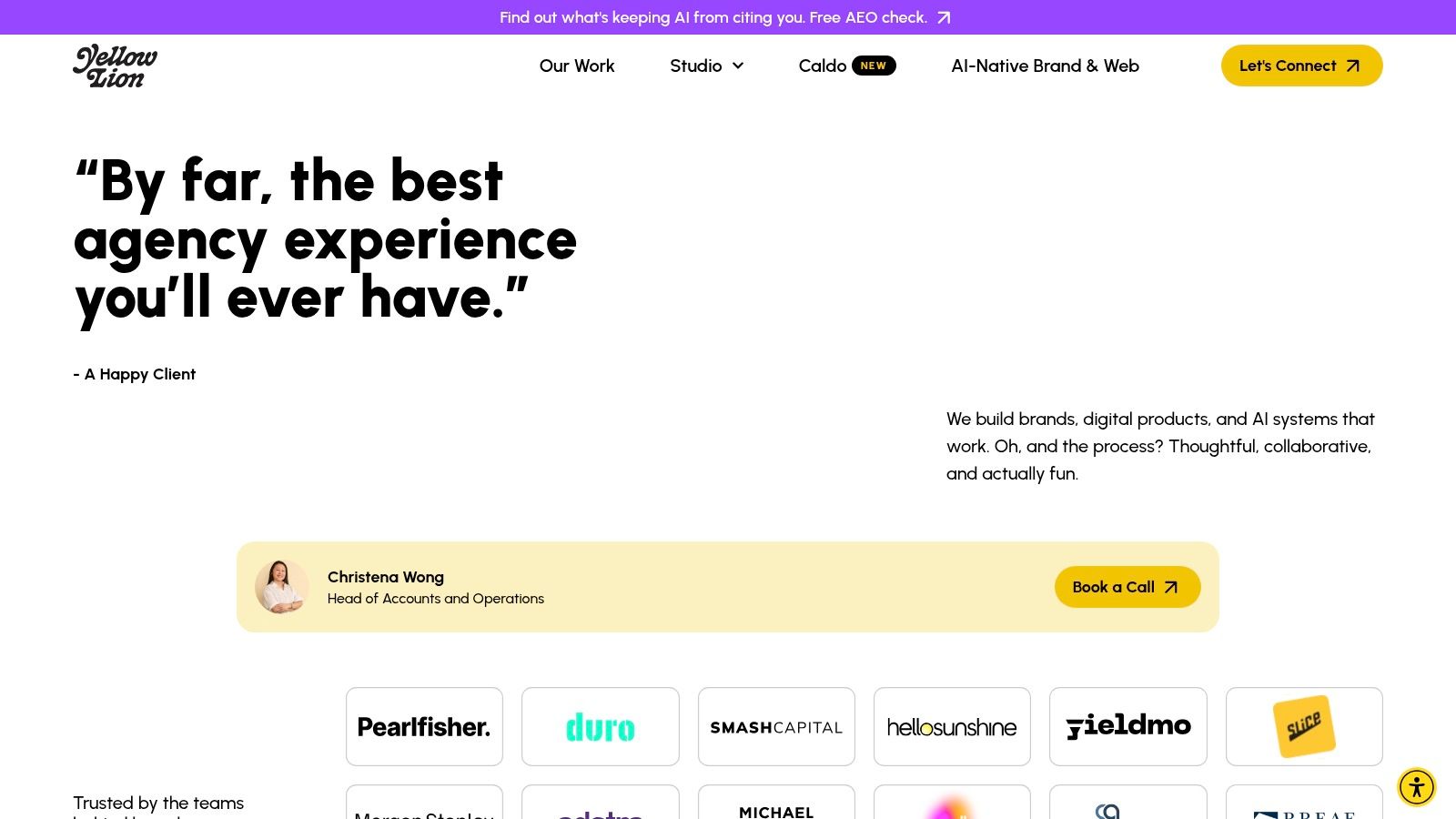
Founder Michael Verez Mora puts it plainly on the about page: "The team you meet is the team you get." In a ten-year anniversary piece the studio says it is not interested in outside investment or scaling up at the expense of client relationships. Case studies include Candle Media, Michael Graves, C&S and the PLM software company Duro. It has also launched Caldo, an AI-native brand and web offer.
11. MLTI NYC
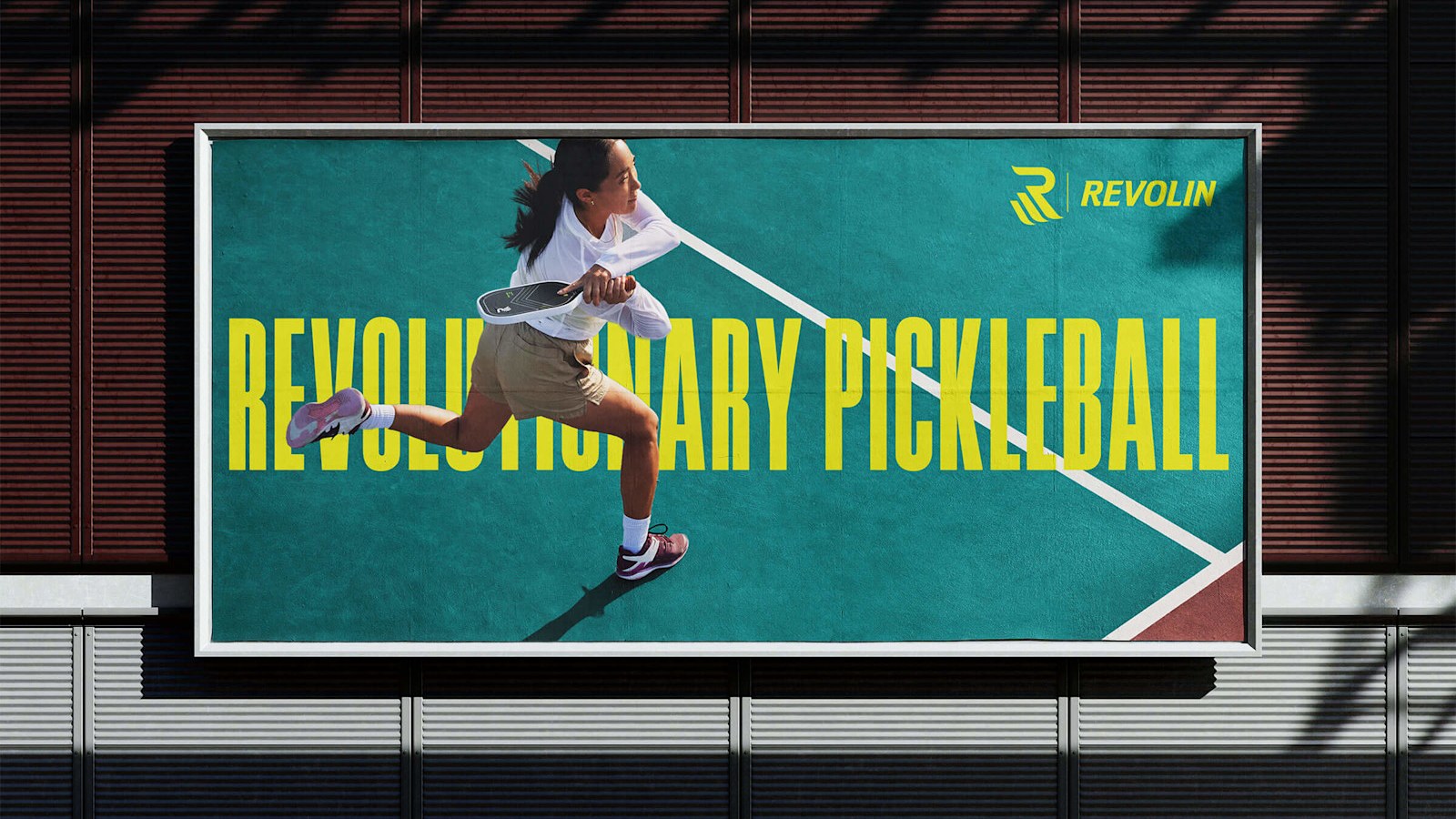
A Revolin Sports campaign mockup from MLTI NYC’s portfolio. Image: mltinyc.com
Shenk’s studio covers brand identities, campaigns, motion design systems, brand films, photography, packaging and copy, and it is female-founded and led. It says it works for Fortune 100 companies and startups alike. Recent work includes a brand refresh for Superfeet, the Revolin Sports pickleball campaign above and work for Wilson around the US Open. My favorite detail sits on the about page, a testimonial in which the Superfeet client’s VP of marketing thanks the founder and two senior team members by name.
12. Verken
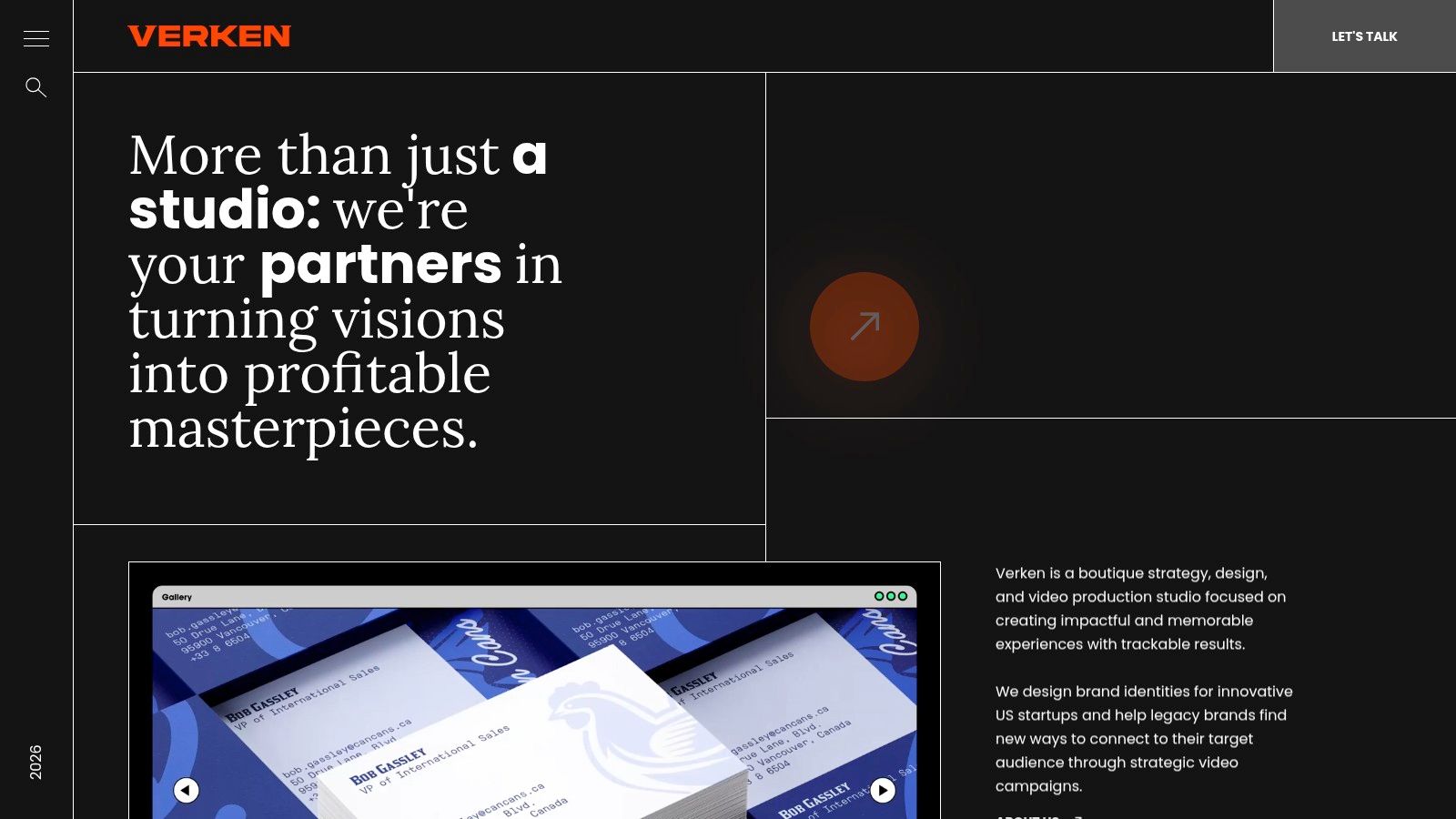
For US startups the work is mostly brand identity; for legacy brands it is strategic video campaigns aimed at reaching their audience. Its process covers brand and video strategy, naming, logo and identity design, 3D rendering, animation and illustration, then film and production, and finally print, web, social and ad campaigns. Case studies include Hero Recycling, Juvenescence, GlassesUSA.com and Painting With A Twist, and one client testimonial credits its connections in West Michigan for getting a project made.
The twelve side by side
Only one studio prints prices, which is why the last column is almost all No.
| # | Studio | Base | Built for | Who leads your work | Prices online |
|---|---|---|---|---|---|
| 1 | Moonb | Remote team | Ongoing design, video and motion for marketing teams | A dedicated Creative Director | No; one set monthly rate, or a per-project quote |
| 2 | Order | Brooklyn and Miami | Identity, type, design systems | A co-founding principal per office | No |
| 3 | Gretel | Brooklyn | Strategy and identity for culture and consumer brands | Executive creative director | No |
| 4 | Morcos Key | Brooklyn | Identity, editorial, exhibition, multilingual type | Wael Morcos and Jon Key | No |
| 5 | Lundgren+Lindqvist | Sweden | Identity plus websites designed and coded in-house | The two founding partners | No |
| 6 | Hey | Barcelona | Bright, crafted brand languages | Founder Verònica Fuerte | No |
| 7 | Hingston Studio | London | Motion, titles and identity for luxury and culture | A studio team of designers, writers, strategists and animators | No |
| 8 | Little Tiger | New York and Los Angeles | Trailers, promos, commercials | Founder Azin Shamma | No |
| 9 | Friends ’n Allies | US, several cities | Startup launch films and pages | Two co-founding creative directors | Yes, starting packages |
| 10 | Yellow Lion | New York | Brand, web and video for tech companies | Founder-led senior team | No |
| 11 | MLTI NYC | Brooklyn | Rebrands and campaigns for sport and consumer brands | Founder Kristen Shenk | No |
| 12 | Verken | Allendale, Michigan | Naming, identity and video campaigns | Owner Troy Spoelma | No |
When a boutique is the wrong hire
For a single, well-defined deliverable (one logo refresh, one explainer) that you can brief and review yourself, a freelancer is usually the better call. You do lose the second pair of senior eyes, and the project management becomes your job. Once the volume is steady and mostly one discipline, hiring your own designer or editor starts to pay off; the numbers in building an in-house creative team show what that person costs beyond the salary.
A large firm is the right call for a global rebrand across many markets, heavy procurement, or a launch that needs dozens of people in the same month. The firms in our best creative agencies roundup are set up for that, and our comparison of in-house vs agency teams covers the build-or-buy side.
Availability swings more than people expect. Much of a small studio’s work arrives through referrals, which tend to come in waves, so some studios pay outbound services that book sales calls for branding agencies to keep conversations coming in between. A boutique that can start next week in March may be booked until June by April, so I would ask about start dates on the very first call.
Before you sign with a small studio
Get names. Most of the studios above name their people on their sites, so ask which of those people will be on your project and how many hours a week each one gives it.
Ask, too, what happens when someone is out. In a team of six, one absence is a dent you will feel, and a good boutique has the answer ready, usually a named freelancer it has used before.
I would sort out ownership before any work starts. Under US copyright law, a commissioned work counts as “work made for hire” only in specific categories, such as part of a motion picture or other audiovisual work, and only “if the parties expressly agree in a written instrument signed by them” (U.S. Copyright Office, Title 17, chapter 1). A logo is not on that list. For identity work, ask your lawyer about a written assignment of copyright in the contract, plus delivery of source files and type licenses.
Write a proper brief before you compare quotes; the template in how to write a creative brief will get you most of the way. After that, if the studio agrees, pay for something small first, like a two-week identity sprint or a single cutdown. Two weeks is usually enough to learn who answers your emails and how fast.
If you are still deciding between a small studio and a design firm with a broader bench, our guide to hiring a brand design agency covers scoping identity work with either.
Frequently asked questions
On our list, teams run from two people to about fifteen. A better test than the number is whether you can name everyone who will touch your project, and whether the founders or partners do part of the work themselves. As a studio grows, account managers and review layers tend to appear, and the direct access you were paying for starts to thin out.
The day rates often come out close to a bigger firm's, because you are paying for experienced people whose time is scarce. The saving, when there is one, comes from fewer billed hours, since no account team or extra review layer shows up on the invoice. One studio on our list publishes starting packages of about $9,000 to $42,000 for a shoot, which is a useful anchor for small-studio video work.
The named people and their weekly time on your project, a plan for when one of them is out, the number of revision rounds, delivery formats, and ownership. In the US most identity work is not automatically a work made for hire, so ask your lawyer about a written copyright assignment, delivery of source files, and licenses for any typefaces or stock used.