12 innovative marketing campaigns from 2026
Twelve real campaigns that launched in 2026, from Svedka's AI-made Super Bowl spot to Wendy's own video game, with the format that made each one new and what the brand reported.

Dove ran the first 50 Reddit reviews of a hair mask as its ads this year, and Liquid Death wrote a song about peeing on AI data centers. They’re both here, next to Svedka’s openly AI-made Super Bowl spot and a role-playing game Wendy’s released as its own.
I co-founded Moonb, a creative studio making video, motion and design for marketing teams, and a lot of briefs we get open with a link to someone else’s campaign and the words “something like.” The 2026 campaigns worth that treatment mostly had something people could join in on, or a format new to its category.
Everything below launched between January and November 2026. Where a brand or the trade press reported results, I’ve included them. More than half published no numbers at all, so don’t expect a scoreboard. For older campaigns that still teach something, our ad campaign examples go further back.
1. Svedka, “Shake Your Bots Off” (February 2026)
Svedka bought its first Super Bowl slot for Super Bowl LX and was upfront about how the ad got made. Marketing Dive’s Super Bowl 60 ad tracker says it was billed as a collaboration between “man and machine,” managed by parent company Sazerac’s in-house team, with production by the AI lab Silverside. The Fembot mascot came back after a 12-year break, now with a sidekick called BroBot, in the first national Super Bowl spot dedicated solely to vodka in over three decades. Before the game, Svedka ran a TikTok and Instagram dance challenge with actress Victoria Justice, and the winner’s moves became Fembot’s routine.
There was backlash. When the follow-up launched in November, Marketing Dive wrote that the brand “faced controversy earlier this year” for using AI to bring the mascot to life, and in the launch video Andy Cohen quotes the ad being called “bold, bizarre and a dystopian nightmare.” So now consumers make the ad. They submit a 15-second spot for Svedka’s Vodka Water, entries close December 1, and the winner gets $500,000. As for business, Marketing Dive reports Svedka has been the top volume growth driver in U.S. spirits over the last year, per Nielsen data cited by the brand.
The disclosure is why Svedka goes first. The IAB’s January 2026 research found that 82% of ad executives believe Gen Z and millennial consumers feel positive about AI-generated ads; among those consumers, 45% do. Svedka said how the ad was made, got hammered for it, and turned the criticism into November’s contest. Small teams have the same decision coming. Tools like ShortGenius already produce short-form videos and UGC-style ads and post them for you, and whoever runs that account still has to choose what viewers get told.
2. Hellmann’s, “Mayo for a Melody” (February 2026)
Hellmann’s sixth straight Super Bowl spot, “Sweet Sandwich Time” from VML, cast Andy Samberg as Meal Diamond in a spot meant to celebrate the legacy of Neil Diamond, with an Elle Fanning cameo (per the same Marketing Dive tracker). So far, a normal Super Bowl ad.
The new part lived on Fire TV, built to keep people singing for weeks after the game, and it’s the biggest piece of interactive video marketing I saw all year. Amazon Ads’ Brand Innovation Lab built “Mayo for a Melody,” which its case study calls “a first-ever AI-powered karaoke experience on Fire TV”. Viewers who sang along to “Sweet Sandwich Time” got 15% off Hellmann’s products. According to the case study, the experience was “built entirely with generative AI video assets” and the campaign ran through February 28.
The longform cut puts Meal Diamond in a wood-paneled diner with a sandwich and a squeeze bottle of Hellmann’s, and in a later shot Elle Fanning sits beside him.
Amazon is grading its own product here, so read accordingly. The case study says shoppers who met the karaoke alongside other formats saw a 96% increase in conversion compared with single-format exposure, and conversion climbed 5.2 times for people reached through three or more touchpoints including Fire TV. New-to-brand rates jumped 10 percentage points when the karaoke was part of a multi-format journey, 59.7% against 49.5%. Year-on-year, Hellmann’s sales during the campaign period were up 38.2% in January and 26.2% in February. Even if you knock a chunk off those numbers, I like a Super Bowl ad people keep singing into their TV for weeks.
3. Dove, “r/eal reviews” (February 2026)
Dove set one rule for its Intensive Repair 10-in-1 Serum Mask: the ads would be the first 50 Reddit reviews, whatever they said. Marketing Dive’s launch report from February 10 says the reviews “were unaltered and used with the express permission of the original poster,” that reviewers stayed anonymous behind avatars based on Reddit’s Snoo mascot, and that some placements showed reviews in real time. Film, out of home, streaming, digital and social, made with David London, AKQA Paris and WPP Media.
It made Marketing Dive’s best brand campaigns of H1 2026, where Emily Barfoot, head of Dove U.S., explains the bet: “We took a shot because we had a lot of confidence in the product itself. We’re not going to please everyone.”
Smaller brands can copy this almost as is. Anyone can check a rule like “the first 50,” so people believe it, and when a couple of those reviews are lukewarm, the rule is your excuse for running them. Dove got each poster’s permission, and you’d need the same paperwork (our UGC video guide walks through the rights side) before one review goes live.
4. Coach, “Explore Your Story” (spring 2026)
Coach built its spring campaign around the Tabby bag and a set of tiny book charms made with Penguin Random House. The publisher’s February 25 announcement calls them “readable book charms,” chosen “with help from Gen Z readers across the globe,” on sale in early April. Marketing Dive’s H1 roundup adds that it was co-created with Gen Z voices and Forsman & Bodenfors, with ambassadors including Elle Fanning and basketball player Paige Bueckers.
On an earnings call, Joanne Crevoiserat, CEO of parent company Tapestry, said the campaign helped Coach win its target Gen Z consumer “on all metrics,” per Marketing Dive. For a fashion brand, it’s the most useful of the twelve.
5. Aerie, “100% Aerie Real” with Pamela Anderson (March 2026)
Aerie launched “100% Aerie Real” in October 2025 with a pledge never to use AI-generated bodies or people in its marketing. In March it came back with Pamela Anderson. Marketing Dive’s March 26 launch piece describes a 60-second spot where Anderson prompts an AI bot to generate models, keeps asking for them to look happier and more natural, and finally demands to “make them feel real” before the artificial scene dissolves into a real Aerie set. Then she looks at the camera: “You can’t prompt this.” Creators Aerie works with have to commit to the same promise.
You can see the device in Aerie’s upload: a synthetic-looking model with the prompt text “Generate a female model. Make her happier, more joyful” beside her, and, in another shot, the pledge on screen, “We Commit: No AI Generated Bodies or People. 100% Aerie Real.”
The H1 roundup reports that Aerie passed $2 billion in revenue on a trailing 12-month basis, with executives naming marketing as a growth lever, and that its new creator program, the Aerie Realmakers Community, “blew past its six-month target within weeks,” according to Jennifer Foyle, Aerie’s president.
6. Expedia, “Going Places with IShowSpeed” (April 2026)
In late April the streamer IShowSpeed named Expedia his official travel partner. Marketing Dive’s report says the launch was a Caribbean island-hopping livestream on Twitch and YouTube across Dominica, Guadeloupe, St. Kitts & Nevis and St. Maarten, on yellow Expedia-branded planes, boats and dune buggies. Fans could follow on an “Exspeedia” hub with an interactive 3D globe, book IShowSpeed-inspired trips and vote on where he should go in the future.
In June the brand “extended the campaign with a shoppable travel experience that connected content with commerce,” and the H1 roundup credits the first livestream with “sharp surges in search demand” for the islands he visited. Statlyst puts livestream shopping and creator-led affiliate commerce first and fourth on its list of social commerce trends for 2026, and this is both of them at a size few brands can pay for. You can do a modest version with one creator your buyers already watch, as long as you own the page where people book.
7. Liquid Death and Garage Beer, “We Want Your Pee” (August 2026)
Where to build AI data centers has turned into a hot topic, so two challenger drinks brands wrote a song about it. Marketing Dive reports that on August 18 Liquid Death and Garage Beer released a 90-second music video in which NFL great and Garage Beer co-owner Jason Kelce explains the AI data center cooling issue, then joins Liquid Death’s Murder Man mascot and dozens of characters carrying containers of pee, singing “let’s pee on computers, together, to save humanity.” It promotes a “Coolant Collector” product and asks people to send their pee to an AI data center of their choice. The same article cites a Gallup poll where more than seven in 10 people opposed AI data centers being built in their area.
Marketing Dive also reports that Liquid Death convenes a writers’ room with outside comedians and writers, and that comedian Sabrina Jalees came up with the original data center idea. More brands should pay comedians.
8. Hoka, “Run Your City” (September 2026)
Hoka took its Strava partnership and turned New York into a borough-versus-borough race. Marketing Dive reports that through September, runners in Manhattan, Queens, Brooklyn, the Bronx and Staten Island logged miles on Strava to see which borough would come out on top, while digital screens in Times Square, Tribeca, SoHo and Williamsburg showed weekly updates in ticker-style creative: miles logged, pace and other stats. Six creators representing the boroughs documented their own progress, and the plan was to wrap it all up with a block party on October 3. Jellyfish developed the concept.
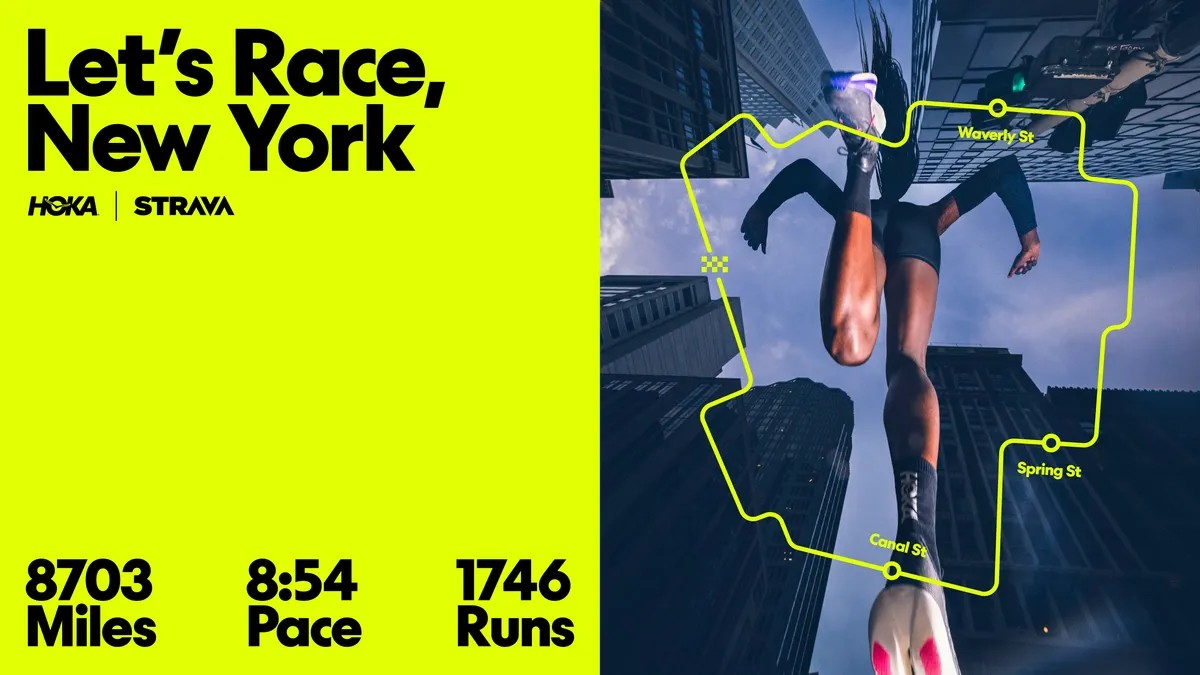
The coverage I found had no participation totals, and the stats on that graphic are campaign creative, so please don’t quote them as results. The billboard changes because people ran. Someone who logs five miles on a Tuesday now has a reason to look up at a Times Square screen on Saturday, which is more than most of the boards in my roundup of the best billboard ads can offer, and I like those a lot.
9. Staples, “Hard vs. Easy” (September 2026)
“We don’t have an awareness problem, we have a perception problem,” CMO Bob Sherwin told Marketing Dive in a September 17 interview. People picture stores, ink and toner. Staples wants business buyers picturing furniture consultations, janitorial supply and same-day delivery. So it took a brand asset from over 20 years ago, the famous red Easy Button, and gave it a black alter ego: the Hard Button, whose presses lead to workplace mishaps such as a store sign misprinted as “Golf Sharts.” The spots run on YouTube, Hulu and Netflix, shorter cuts go to LinkedIn and Meta, and the media plan adds billboards in travel hubs and elevator placements in corporate buildings, plus “Hard vs. Easy” collateral for the sales team.
One of the spots, on Staples’ channel, carries a small on-screen note: “Contains AI-generated images of people.” That IAB gap is a good argument for exactly this kind of label.
If you sell B2B, look at the media plan. Elevator screens and sales collateral put the same joke in front of the office manager who orders the supplies, during the workday.
10. Beats, Beats 360 with Kendall Jenner (September 2026)
Beats 360 is an over-ear workout headphone with customizable ear cushions, and the launch film turns that feature into a casting gag. Marketing Dive’s September 22 report describes Kendall Jenner attaching lime green cushions to her headphones in a cafe called Kendalls, then realizing everyone in it is a different version of her, set to Gary Numan and Tubeway Army’s “Are Friends Electric?” Uncommon Creative Studio did the creative and Magna Studios produced it. It runs on Instagram, TikTok, Snapchat, YouTube, Reddit and Pinterest, with outdoor in Los Angeles, New York, London and Shanghai.
CMO Chris Thorne explained the casting in the same piece: “We don’t need to put all these other people in this ad. Why don’t we get a bunch of Kendalls?”
11. Wet Ones, “Just For Hands” (October 2026)
Wet Ones hadn’t run a major campaign in years. Its research found that more than half of consumers have used hand wipes on an intimate area, and BBH USA turned that into “hand butts,” extreme close-ups of fingers that look like posteriors, created with photographer Ale Burset. Marketing Dive’s Campaign Trail piece lists LinkNYC kiosks, transit shelters, digital newsstands, wild postings, bus wraps and a Times Square takeover, plus interactive walls that dispensed travel packs and single wipes to people walking by.
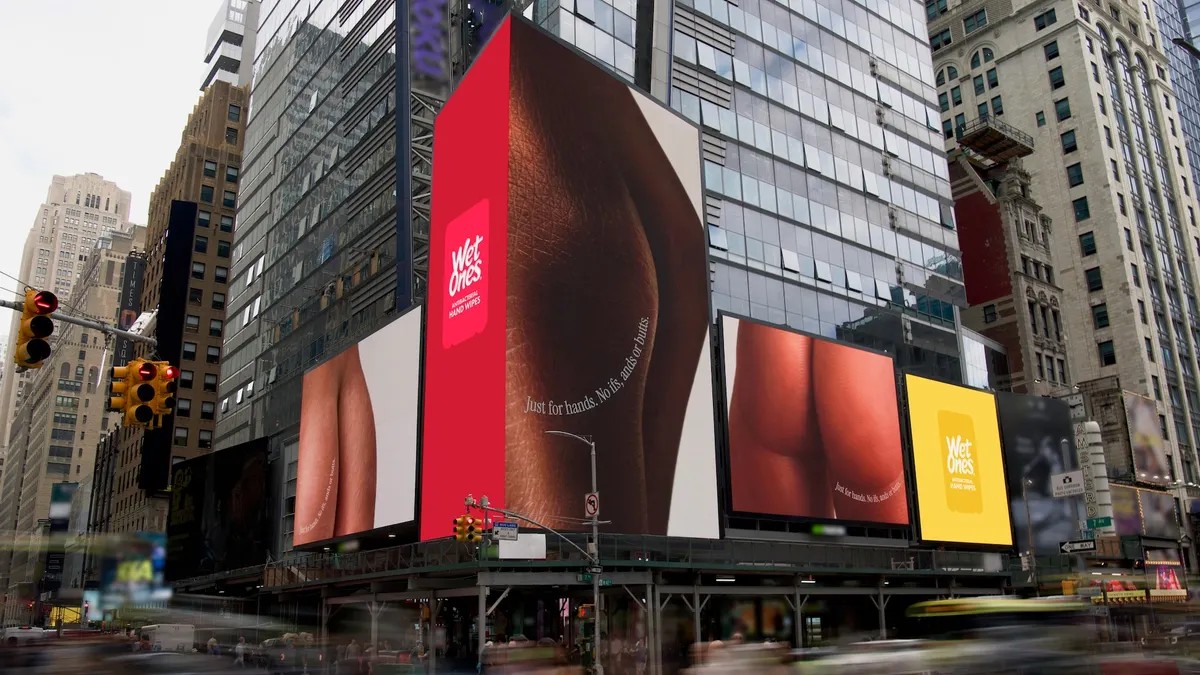
The subway was in the original plan, until the Metropolitan Transportation Authority vetoed the creative. “When they refused us for being a little too risque, it was perfect,” said Nicole Harris, Edgewell’s head of marketing for sun and skin, and the PR team used the rejection to drive earned media. Harris says the team also turned around a new piece of creative for Times Square within hours, a record in her time at the company. Edgewell shared no figures beyond “great consumer response.” Hours, for a Times Square board.
12. Wendy’s, “WendyQuest: Legend of the Four Corner Stones” (November 2026)
In early November Wendy’s released its own 8-bit-inspired role-playing game, free on iOS, Android and Steam. Marketing Dive’s report says players explore five food-themed regions and fight bosses like the Golden Archers and battle mechs including a Mech Chicken (a fairly obvious shot at McDonald’s). The game offers up to 10 hours of play and, according to the brand, “was built by hand over several years without the help of artificial intelligence shortcuts.” Indie studio 81monkeys built it, VML handled creative. Rewards such as a free medium fry or a Dave’s Single come from copying a promo code out of the game’s inventory into the Wendy’s app.
Marketing Dive notes the launch comes while the chain works on a turnaround after a 5.7% drop in U.S. same-restaurant sales in the third quarter. The rewards only come out as a code you paste into the Wendy’s app, so anyone who wants the free fry ends up in the ordering app anyway. A game takes years. One strange spot can do a lot of the same work (I’ve collected plenty in my creative video ads post) in a few weeks of production.
Format and channels for each campaign
| # | Brand | Campaign | Launched (2026) | Format that made it new | Main channels |
|---|---|---|---|---|---|
| 1 | Svedka | Shake Your Bots Off | February | Openly AI-made ad, then a fan-made sequel contest | Super Bowl TV, TikTok, Instagram, YouTube |
| 2 | Hellmann’s | Mayo for a Melody | February | TV spot turned into a karaoke game that pays out 15% off | Super Bowl TV, Fire TV, Prime Video, Amazon |
| 3 | Dove | r/eal reviews | February | First 50 Reddit reviews used as the ads, unedited | Film, out of home, streaming, social |
| 4 | Coach | Explore Your Story | Spring (charms in April) | Readable book charms as product-as-media | Film, product, Gen Z experiences |
| 5 | Aerie | 100% Aerie Real with Pamela Anderson | March | No-AI pledge as the idea, extended to creators | Paid social, CTV, YouTube, creators |
| 6 | Expedia | Going Places with IShowSpeed | April | Creator livestream with a bookable hub, then shoppable | Twitch, YouTube, Exspeedia hub |
| 7 | Liquid Death and Garage Beer | We Want Your Pee | August | Mock benefit song on a live news topic, with a joke product | Social, CTV |
| 8 | Hoka | Run Your City | September | Strava data feeding weekly updates on outdoor screens | Digital out of home, Strava, TikTok, Meta |
| 9 | Staples | Hard vs. Easy | September | B2B repositioning placed in offices and sales collateral | Streaming, LinkedIn, Meta, elevator screens |
| 10 | Beats | Beats 360 with Kendall Jenner | September | Casting that demonstrates the product feature | Social, streaming, outdoor in four cities |
| 11 | Wet Ones | Just For Hands | October | Visual double take, with a subway ban as the PR hook | NYC out of home, Times Square, social |
| 12 | Wendy’s | WendyQuest | November | Brand-owned game with rewards redeemed in the app | iOS, Android, Steam, Wendy’s app |
What these campaigns have in common
Half of them asked people to do something small, whether that was singing along to a mayo jingle, logging a run, voting on where IShowSpeed goes next, pasting a code into an app or entering a contest. Liquid Death asked for pee in the mail.
A lot of them also take a public position on AI, and the positions don’t agree. Svedka and Hellmann’s used generative tools and said so. Aerie and Wendy’s made “no AI” part of the message. Staples labeled its AI-generated people on screen. Given the 37-point gap the IAB found between executives and young consumers, I’d write the disclosure decision into the brief.
Hoka’s screens moved with the runs, and Wet Ones’ walls handed out wipes to people walking past. Neither leaned on a QR code, but a lot of outdoor and packaging work does, and if yours will, RedirHub has a roundup of QR code campaigns that earn every scan with notes on where each scan should send people.
Frequently asked questions
Usually a new mechanic, or a format its category has never used. Hellmann's turned its Super Bowl spot into a karaoke game on connected TV, and Wendy's went as far as building a full video game. When I judge one, I look at whether people actually did something, and whether the brand or the trade press reported what happened.
For anything consumer-facing, yes, mostly because of trust. IAB research published in January 2026 found that 82% of ad executives think Gen Z and millennial consumers feel positive about AI-generated ads; only 45% of those consumers do. Svedka disclosed its AI-made Super Bowl ad and still got backlash, then turned the criticism into a contest for a fan-made sequel. Staples put a small "Contains AI-generated images of people" note on one of its spots, and I'd do the same.
Mostly by copying the mechanic at a smaller size. Dove published the first 50 reviews; you can do it with 10 reviews on Instagram. Hoka's Strava screens become a monthly leaderboard post built from your own community's numbers. Expedia's creator deal works with one niche creator your buyers already watch. That one only works if you own the page where people book or buy.