12 tech branding agencies for SaaS and AI companies
Twelve tech branding firms for SaaS and AI companies, from their own sites in November 2026, with the price where one is published and what to check with each.


A tech branding agency works out how a software company should describe itself and look, then makes that hold up inside the product as well as on the homepage. For SaaS and AI work I’d look at twelve: Moonb (my own studio, so weigh that entry accordingly), Focus Lab, Ramotion, Clay, Emotive Brand, Phable, Column Five, Upperquad, Bakken & Bæck, Lazarev, Outcrowd and Second Eight.
Founders tell me some version of the same story. The product launched as three screens and a login. Two years later it has an API, an admin console, an enterprise tier and a security page sales sends to every prospect, and the homepage still describes the three-screen version. Nobody did anything wrong; the old identity fit the company it was made for, and between releases there was never a spare month to redo it.
Prices and claims below are from each firm’s own site in November 2026.
What tech branding asks for that consumer branding doesn’t
Someone skims your homepage and should leave knowing what the product does and why it beats the spreadsheet they use today. That’s why positioning and messaging sit so close to the center of this work, and why I get suspicious of any tech branding firm whose portfolio is all logos and no sentences. If your product is hard to describe, my colleague’s breakdown of SaaS explainer videos shows ten companies that managed it on screen.
Most of your users meet the brand inside the product: navigation, empty states, error messages, settings pages, all the places the logo never appears. Color has to pass contrast checks at 12 pixels and type has to hold up in dense tables, in dark mode as well as light. This is design system territory, and it’s where a lot of rebrands fall apart, with the marketing site in the new look and the app still wearing the old one.
Before you hire anyone, watch Cam Worboys (Head of Design, OS at Cash App) at Config 2024 on where design systems fall short of their promises.
Each quarterly release wants its own page, deck, demo cut and social set, and the channels keep multiplying. IAB’s 2025 Internet Advertising Revenue Report, conducted by PwC and released in April 2026, put U.S. internet advertising revenue at $294.6 billion for 2025, up 13.9% year over year, and every one of those placements wants a version of your story that still looks like you.
A brand system is the fixed parts (logo, color tokens, type scale, voice) plus rules for what each channel is allowed to bend, and keeping it consistent is a bigger job in software than in most categories. Clipcreator’s practical guide to consistency in branding is written for creators, but its split between fixed and flexible elements across TikTok, Shorts and Reels maps neatly onto a SaaS launch calendar. Alexandra’s walkthrough of creating brand guidelines covers what goes in the document.
Tokens, the values that carry color and type into code, get the least attention, and in my experience that’s where most systems start to break. Figma’s Schema 2025 session on design tokens and multiple brands shows how it works in practice.
If you want general branding firms that happen to have a software client or two, my roundups of B2B branding agencies and branding agencies for startups cover wider ground.
Twelve tech branding firms
1. Moonb
More on Moonb
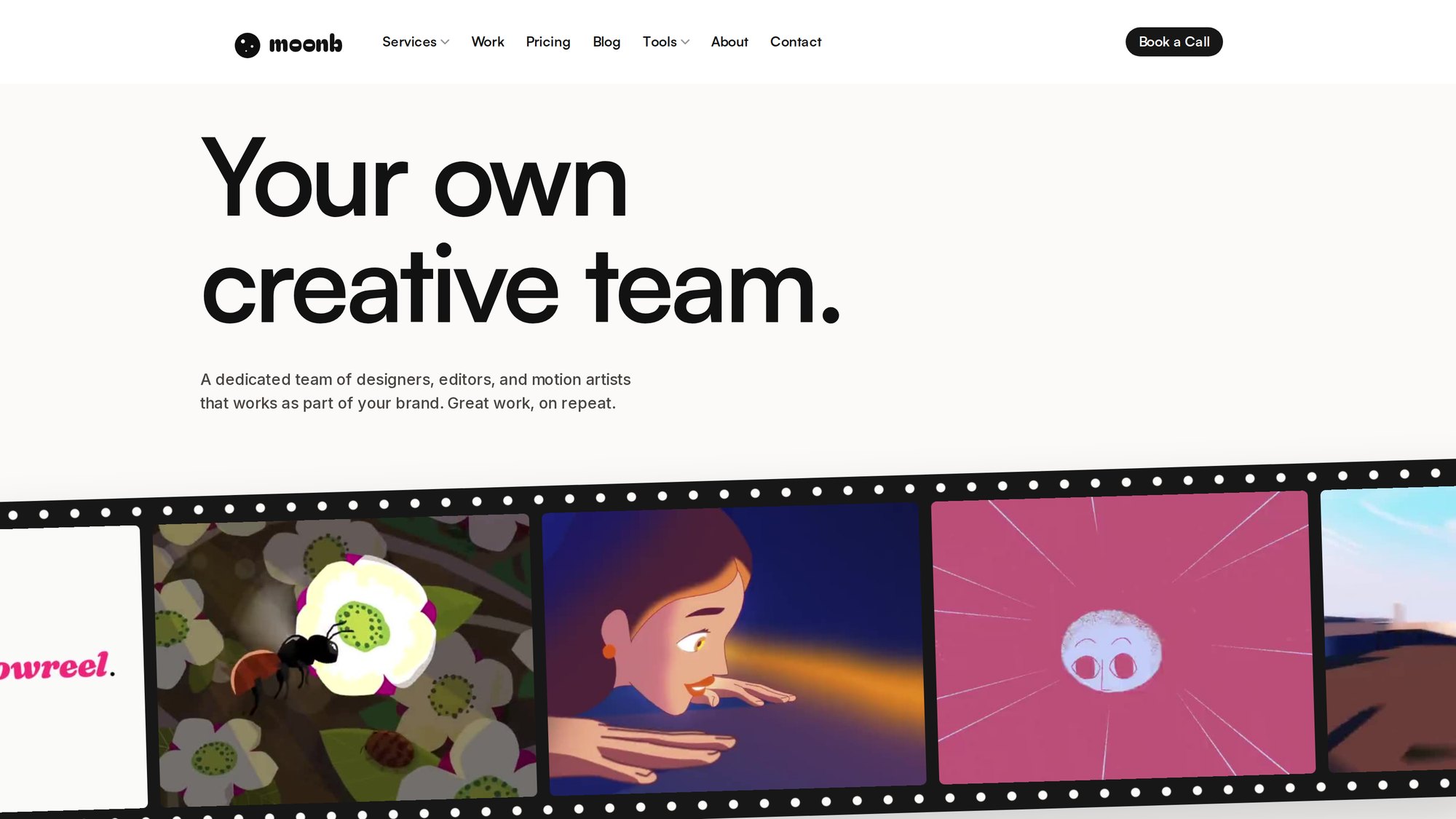
For a software client of any size, our identity work covers the mark and its small cuts (favicon, app icon), the color and type system, and guidelines short enough that people actually open them. After that the same team makes the release assets, from launch pages and sales decks to product visuals and animated cuts for social.
The software piece I’d show you first is the product film we made for Franz, an app that puts every messaging app a team uses in one window. Our designers stacked the app screens in 3D, and the line that sums it up is “All your chat apps in one place.”
2. Focus Lab
More on Focus Lab
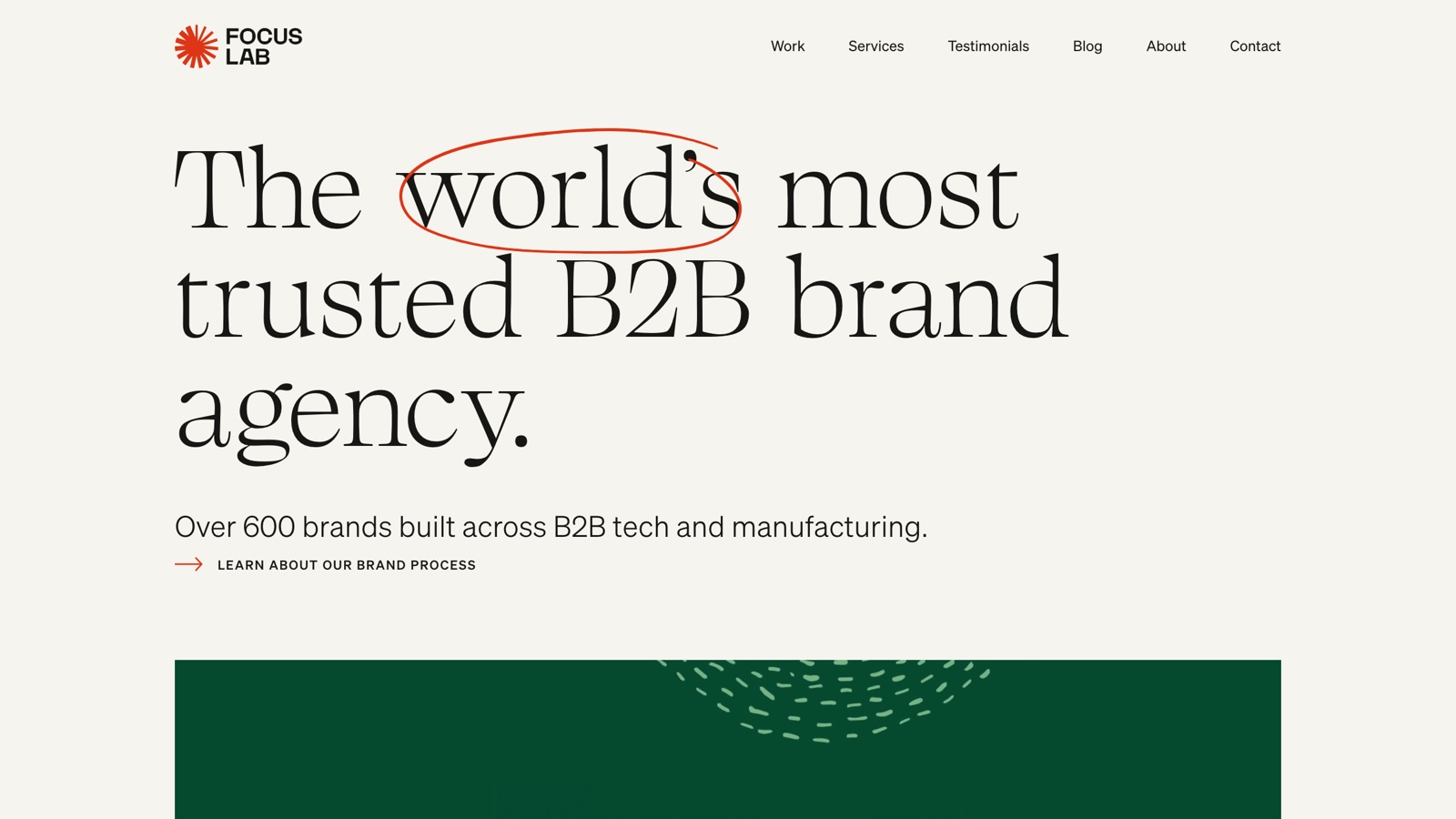
The FAQ lays out three timelines: monthly retainers from a few hours a month, a six-week branding sprint for early-stage startups, and comprehensive branding over nine to twelve weeks. The site puts a focused engagement at around $15,000 to $50,000 in total and a structural rebrand (merger, acquisition, full rebrand) at around $75,000 to $350,000. Verbal identity shows up as its own line in project credits (Giga Energy has one), a good sign if your product needs explaining. Focus Lab is on my B2B and startup lists too; it's here as well because it prints its prices, which almost nobody in this category does.
3. Ramotion
More on Ramotion
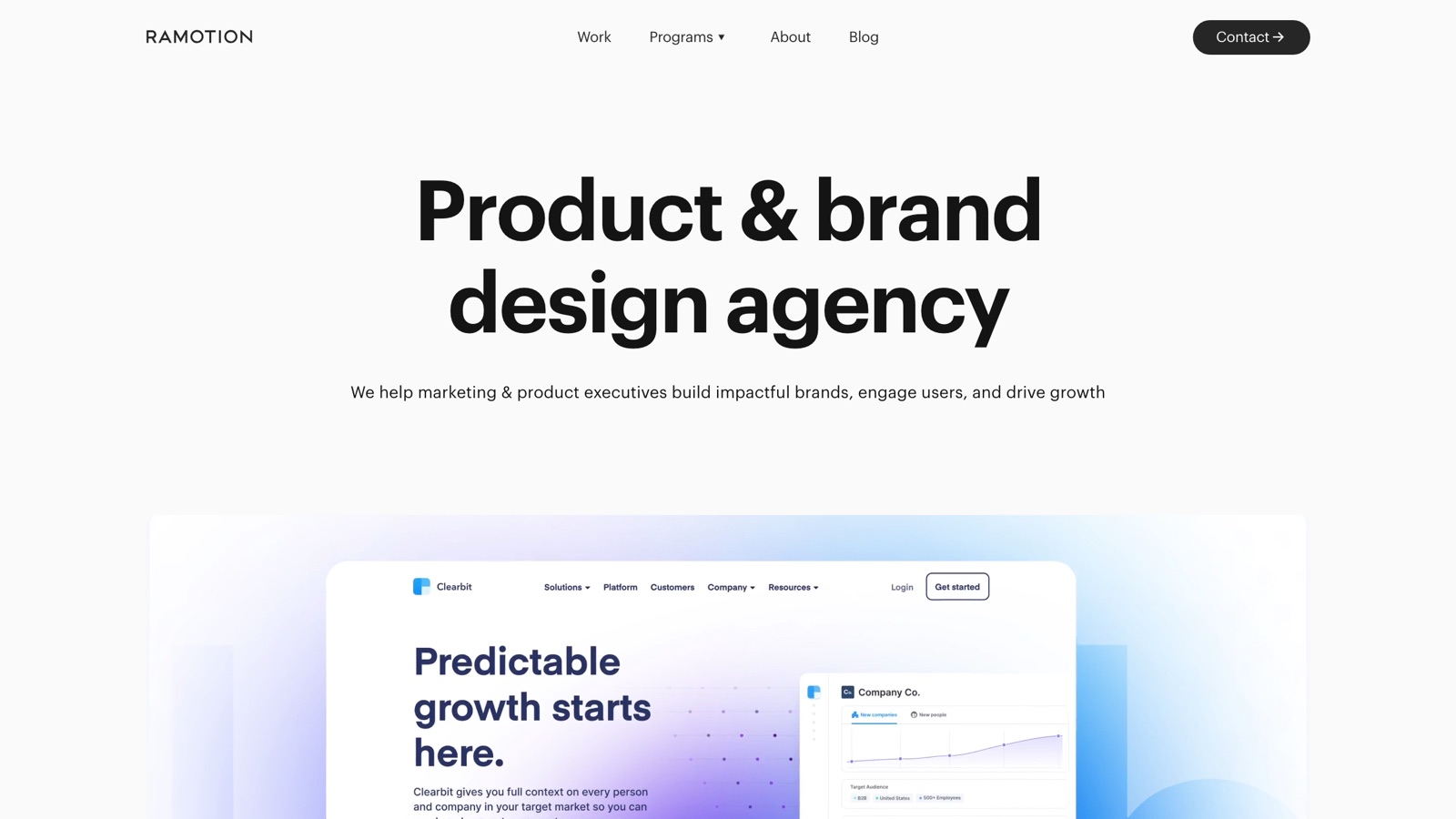
Ramotion pitches itself as a product and brand design agency for marketing and product executives. Its SaaS branding page claims businesses of all sizes, from early-stage startups to Fortune 500 companies. The brand creation program even lists the team, eight roles from client partner and brand strategist down to the QA engineer, and the redesign program covers brand strategy, a visual identity system, brand book, templates, website redesign and a web UI kit.
4. Clay
More on Clay
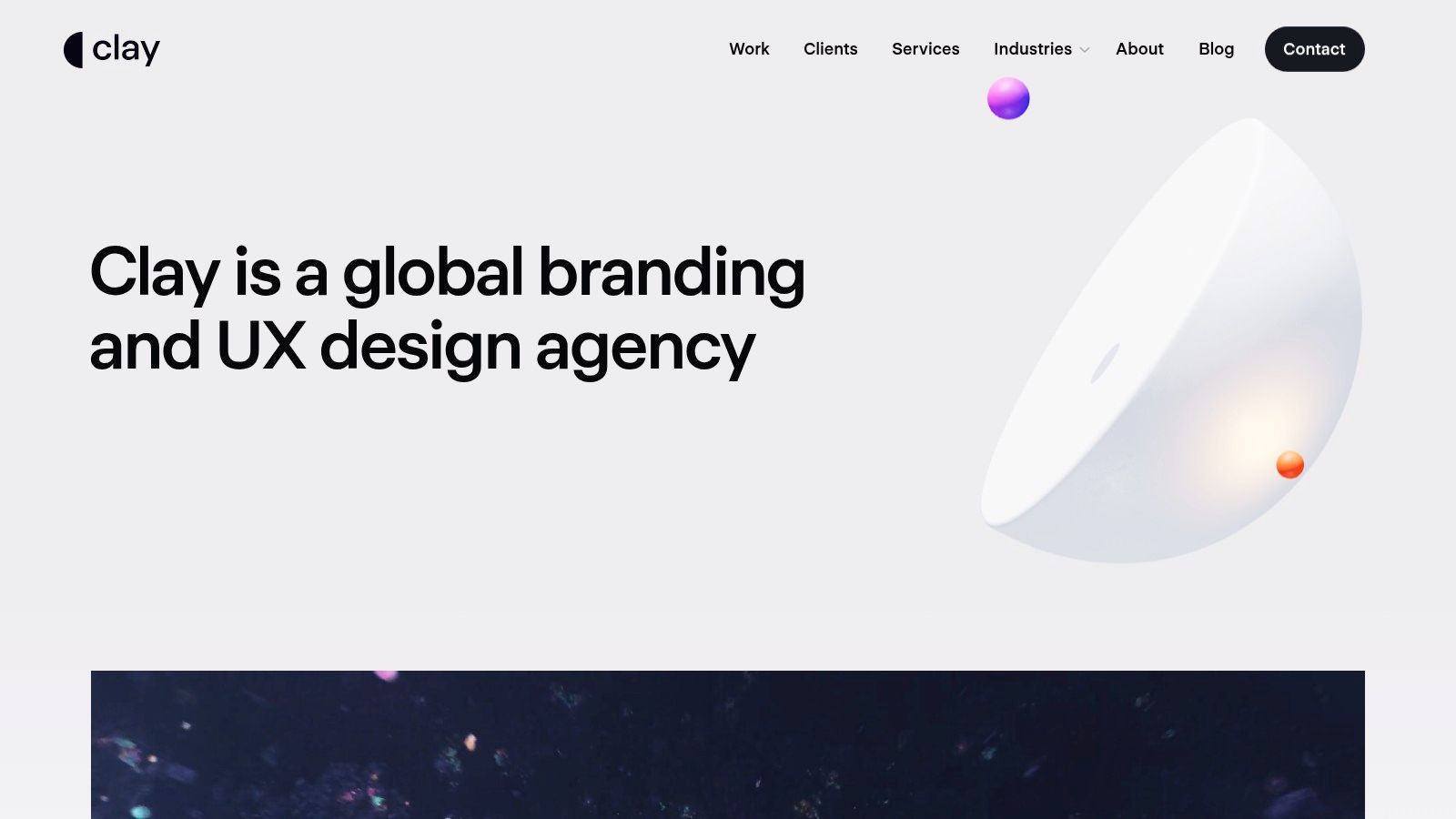
Services cover branding (visual and verbal identity, assets, guidelines), digital products, websites, development and content, with offices in San Francisco, New York, Austin, Denver and two European cities. The FAQ says one of its most common scenarios is getting SaaS startups ready to sell to enterprise clients by revamping brand, product and marketing site together. That upmarket move is the job I'd hire Clay for: once procurement is the buyer, everything they see has to look like a vendor that will pass security review, and a shop that started in UX tends to get that. Fintech and crypto have their own industry pages too.
5. Emotive Brand
More on Emotive Brand
The core offering is called Recognition Readiness, built for companies "whose businesses are evolving faster than the market's understanding of them." It runs as a continuous cycle around a brand foundation, so it keeps pace with a company that keeps adding products. The homepage names problems every SaaS founder will recognize: seen as older, seen as smaller (a platform read as a feature), seen as a follower. Harness and Bloomerang are in its featured work.
I’d send a Series C platform to Emotive when its category has moved on and the brand never caught up.
6. Phable
More on Phable
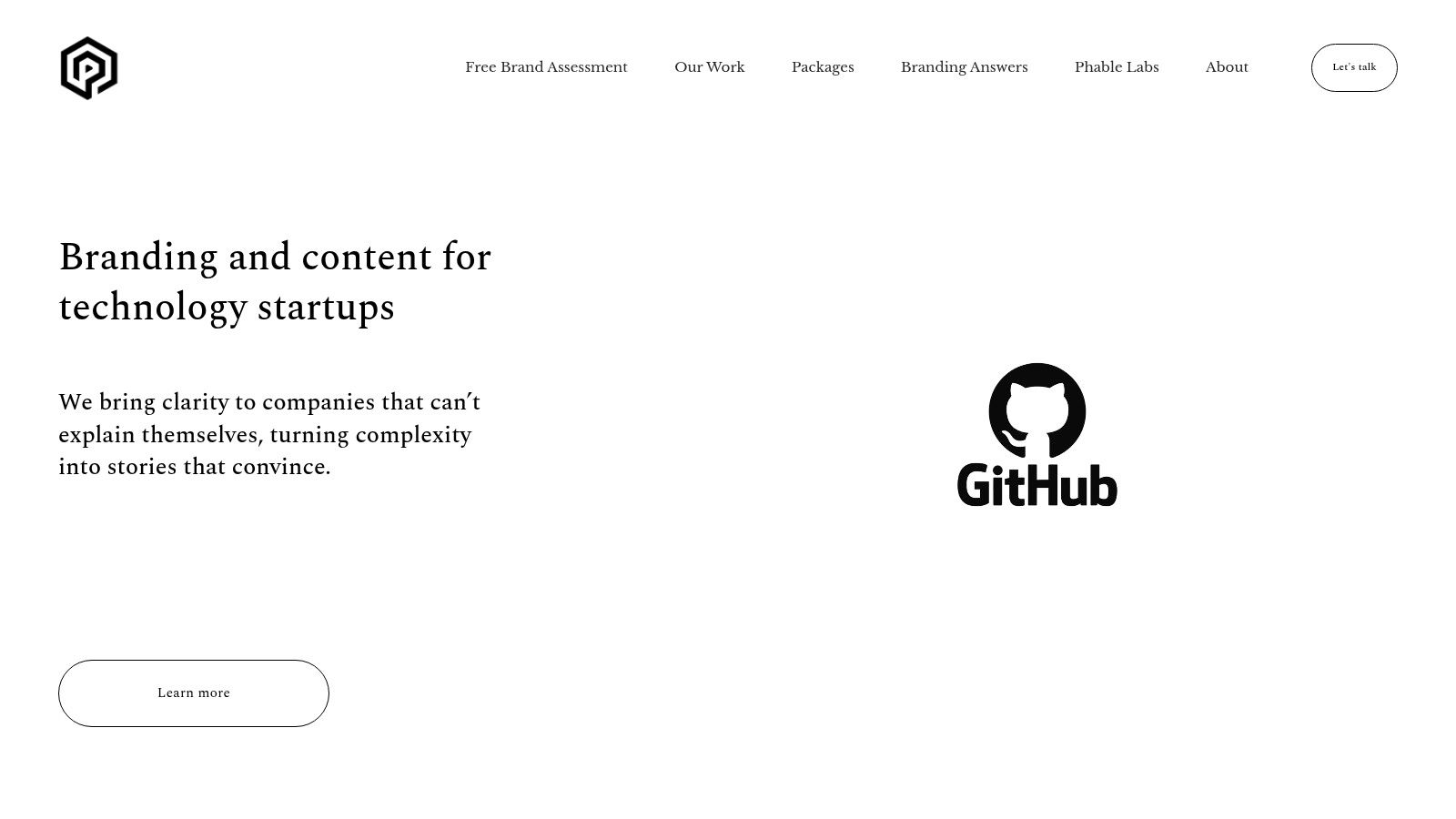
A branding and content agency for technology startups, by its own description, with the bluntest homepage line on this list: it brings "clarity to companies that can't explain themselves." The homepage has sections on branding for seven kinds of company, AI, data and SaaS among them, plus cloud, crypto, fintech and climate. The Startup Accelerator package runs positioning, messaging, brand and launch materials as one structured process, useful when a seed-stage team has a raise and a launch in the same quarter. If your sales team burns the first ten minutes of every call explaining what the product is, I'd talk to Phable before anyone else here.
7. Column Five
More on Column Five
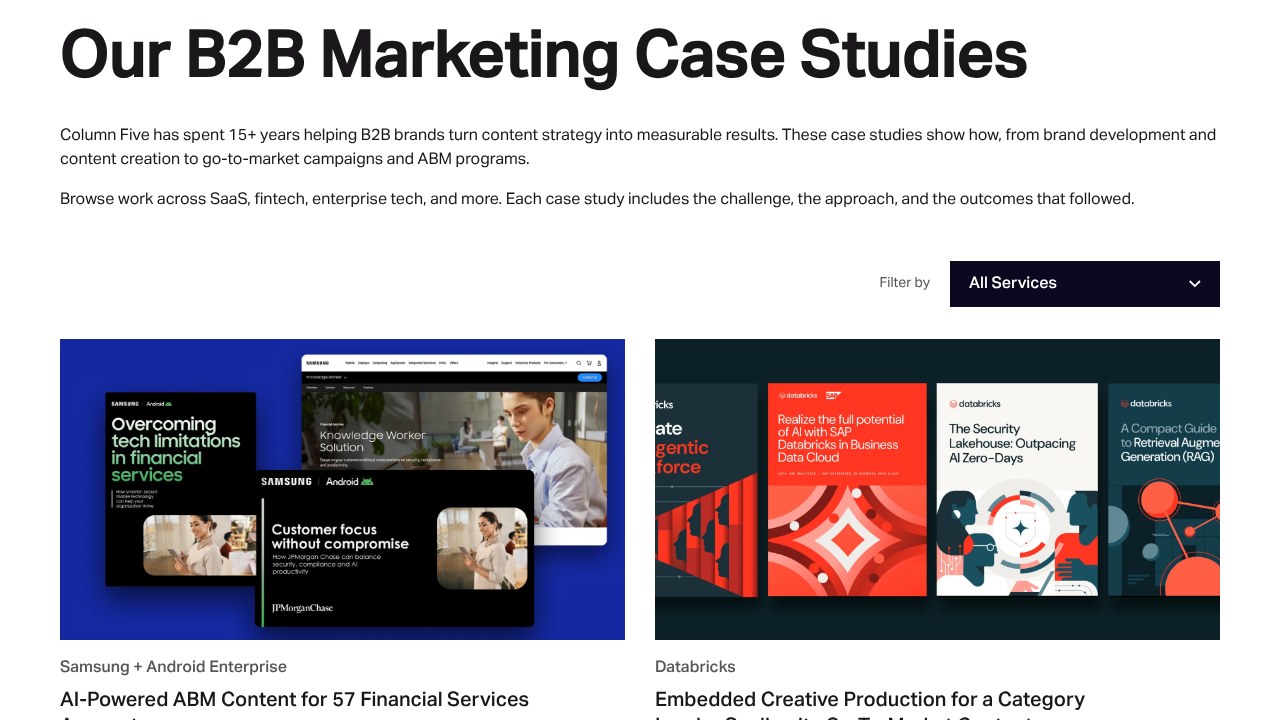
Fifteen years of building brands for B2B SaaS and AI companies, it says, and the homepage promise is a content system that scales the brand "without brand drift." Services come in four parts (story, strategy, system, scale), and it can run the system for you or alongside your team. By its own account, many clients move from Brand Development into the monthly content work once the foundation is in place.
8. Upperquad
More on Upperquad
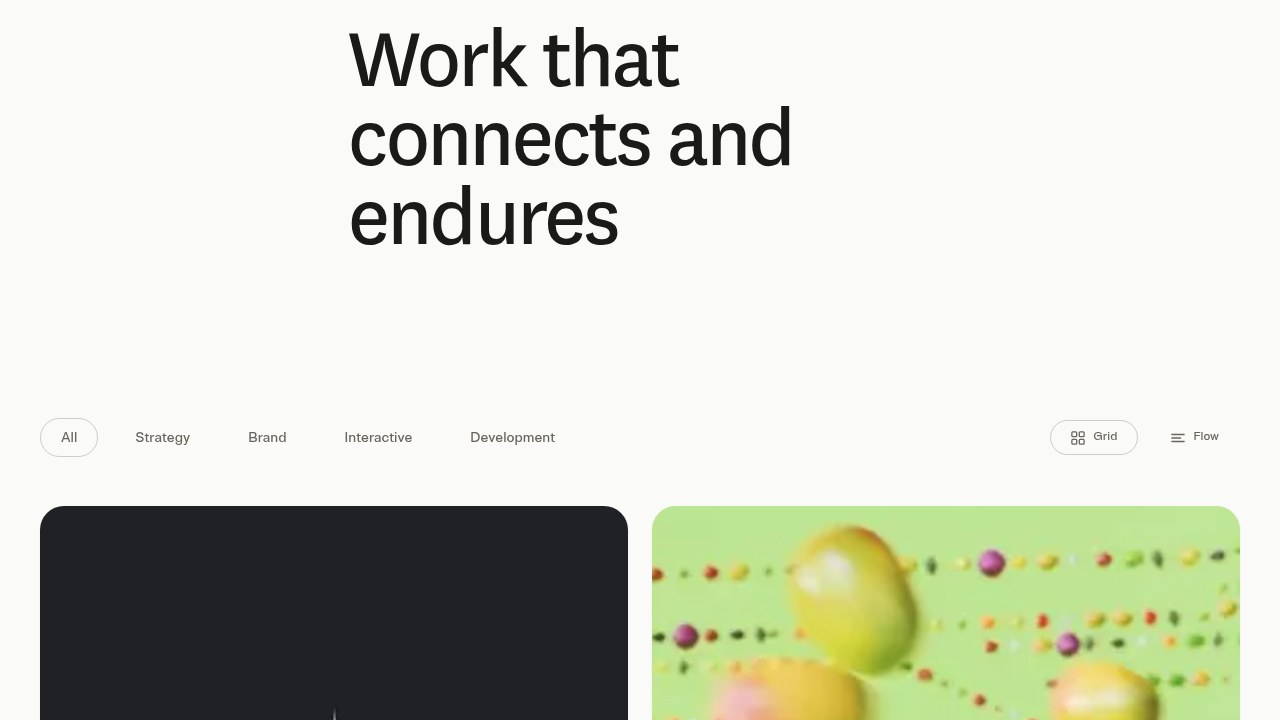
Upperquad groups its services into strategy, brand identity, interactive and technology, and its work page filters projects by strategy, brand, interactive and development. The tagline is "Building for what's next," and it describes its clients as forward-thinking teams of all sizes.
Four of the five projects featured on Upperquad’s homepage are AI or technology brands. I’d put it on the shortlist when the brand has to live on a heavy interactive site from launch.
9. Bakken & Bæck
More on Bakken & Bæck
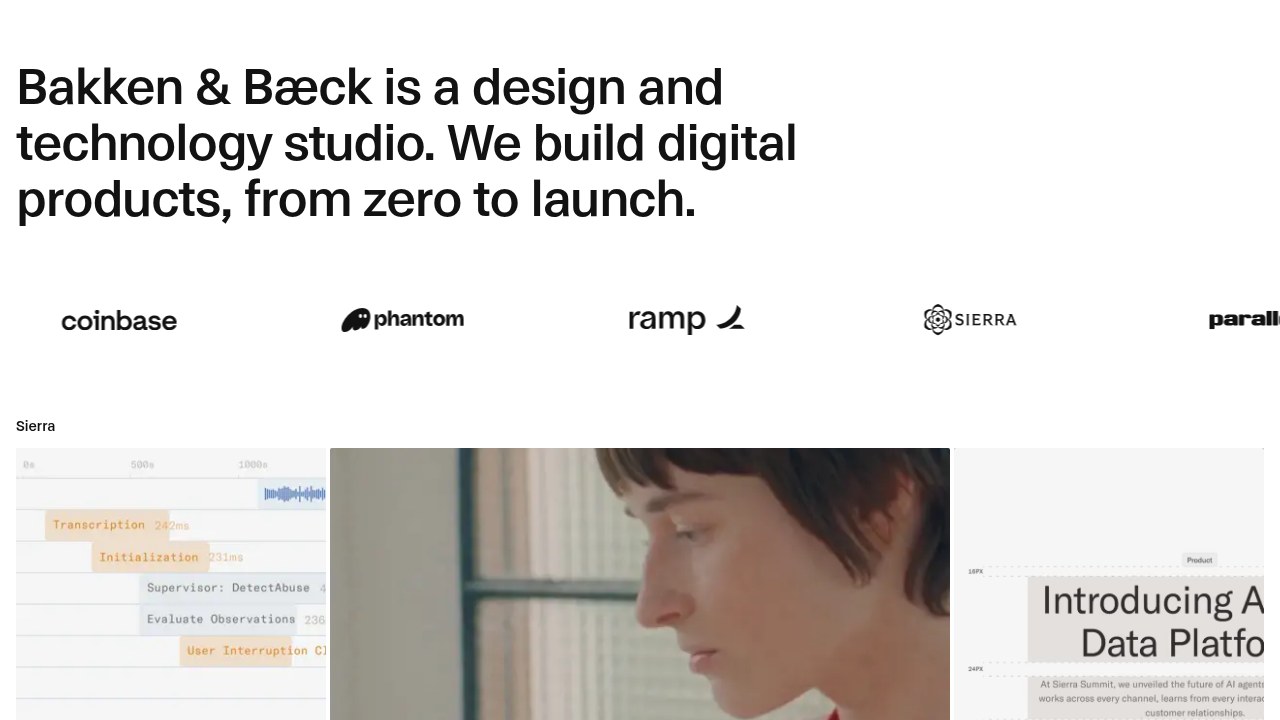
A design and technology studio, in its own words, that builds digital products from zero to launch, with offices in Oslo, Amsterdam, Bonn, London and Barcelona. Its capability list runs from brand narrative and tone of voice through visual identity, motion systems and design systems to full-stack development and model integration, which is why I'd look here when brand and product launch together: the people drawing the design system also write the code. Sierra's co-founder Clay Bavor is quoted on the homepage on the brief: how to express the power of conversational AI for sophisticated enterprises.
10. Lazarev.agency
More on Lazarev.agency
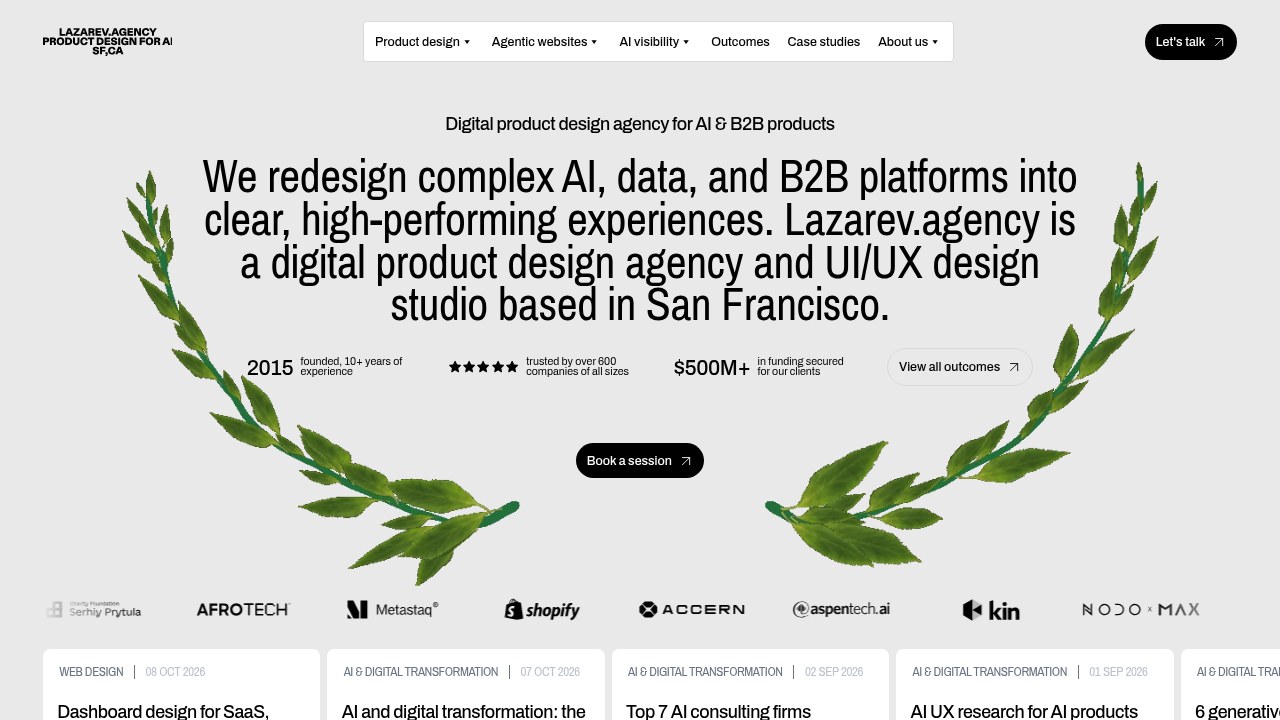
Lazarev.agency's site describes its branding service as "investor-ready brand identities that help AI, FinTech, and Web3 companies raise capital, launch products, and scale with clarity and consistency." Everywhere else the site leans hard into AI interfaces (conversational design, AI UX patterns, interfaces for people and AI agents), and its case studies include an AI research product for Accern.
Lazarev starts the identity from the screens. For an AI tool with a busy dashboard, where users spend the whole day inside the app, that’s the reason to call.
11. Outcrowd
More on Outcrowd
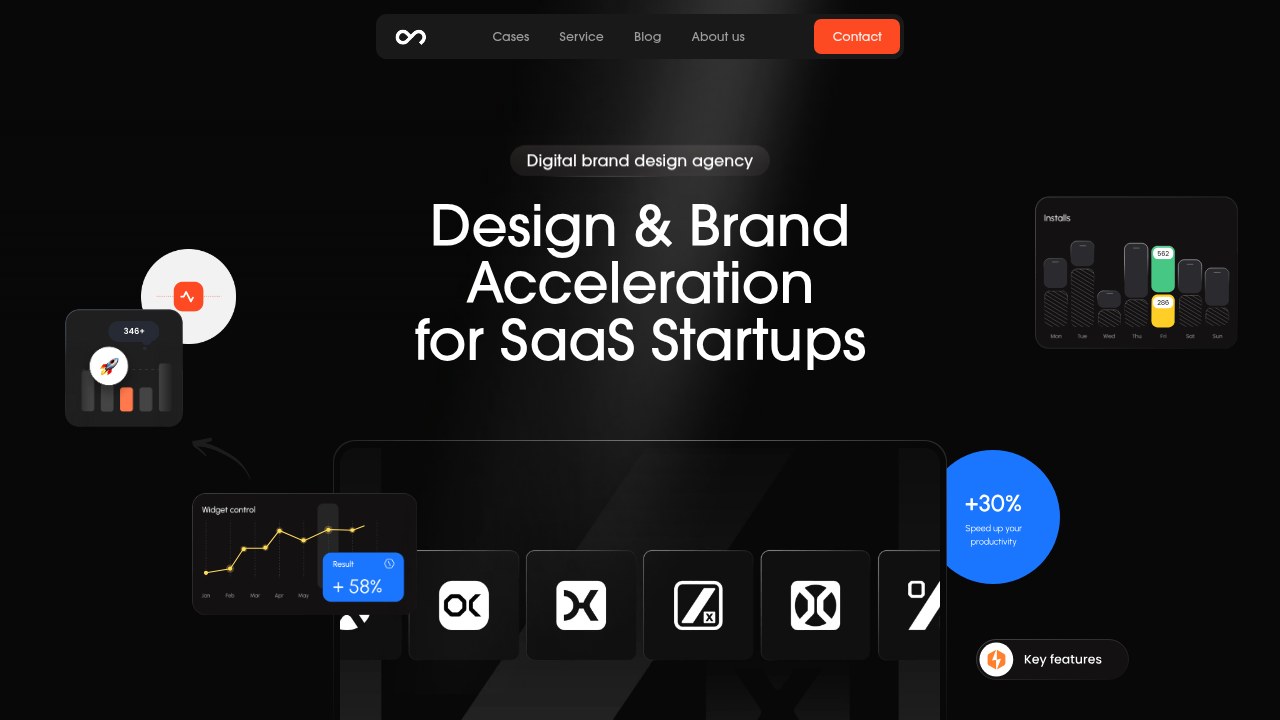
I'd point a seed-stage SaaS team with one designer and a launch date at Outcrowd. Its stage map runs from pre-seed (proof of concept), through seed (MVP and first marketing) to Series A (product optimization). Its FAQ says every project starts with an analysis of requirements and an estimate in a price proposal; the more detailed the requirements, the more accurate the estimate, which it calls the closest it gets to a fixed-price model. The Nopan work covered a logo, brand guide, investor pitch deck and landing page for an account-to-account payments product.
12. Second Eight
More on Second Eight
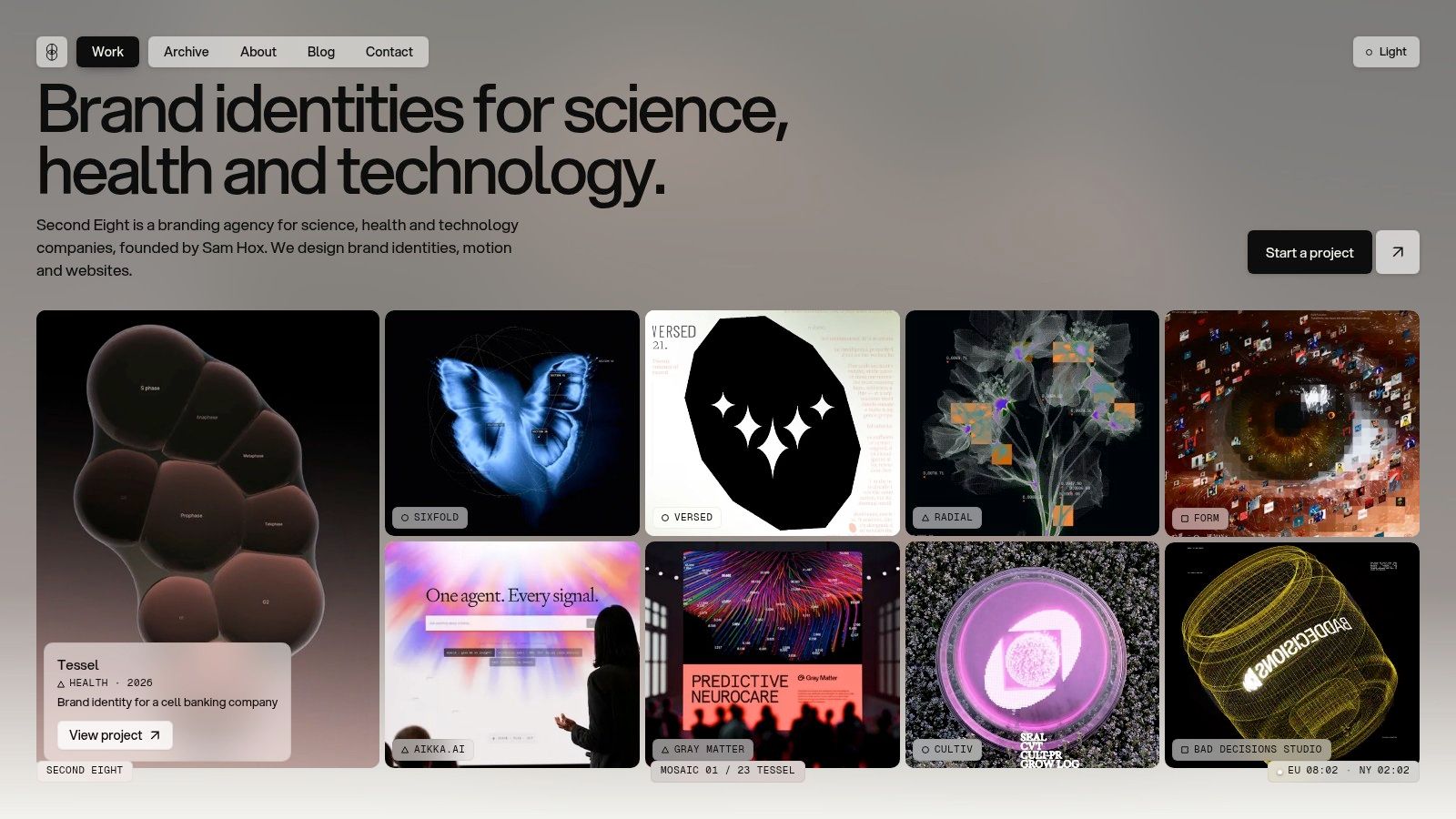
A brand identity studio for science, health and technology companies, working from Europe and New York. Its founder has more than ten years in brand identity, UI/UX, 3D, graphics and animation, and the about page lists recognition from LogoLounge. Its homepage portfolio is current, with projects dated as recent as 2026, and it filters by health, science and technology.
Some teams like being one of only a few projects on a founder’s desk. If your product is something nobody can see, like an AI model, look closely at its motion and 3D work.
The twelve side by side, with prices where they exist
| # | Firm | Best for | Pricing signal | Worth knowing |
|---|---|---|---|---|
| 1 | Moonb | Identity plus the weekly production that applies it | One set monthly rate, or a per-project quote | Company names, sub-brand architecture and custom typefaces go elsewhere |
| 2 | Focus Lab | Strategy-led B2B tech identities, early-stage to enterprise | From $15,000 a month (Focused Branding) | Manufacturing clients too; ask for software references |
| 3 | Ramotion | SaaS brand, site and product UI from one team | Brand creation from $60,000 | Multi-month timelines |
| 4 | Clay | SaaS companies moving upmarket | Quoted per project | Brand-only briefs may not need the full bench |
| 5 | Emotive Brand | Product-proven B2B tech and AI companies | Not published | Focus is product-proven companies |
| 6 | Phable | Hard-to-explain AI, data and SaaS products | Packages, no prices listed | Messaging leads; check the visual portfolio |
| 7 | Column Five | Series A to IPO brands that need a content engine | Brand Development from $50K | Logo-only briefs don't match its model |
| 8 | Upperquad | AI and tech identities with ambitious sites | Not published | Scope only comes out of a first call |
| 9 | Bakken & Bæck | Brand, web and product built together | Not published | European offices; plan overlap hours |
| 10 | Lazarev.agency | Interface-heavy AI, fintech and Web3 products | Not on its homepage | Product design is the core business |
| 11 | Outcrowd | Pre-seed to Series A SaaS startups | Price proposal after analysis | Stages stop at Series A |
| 12 | Second Eight | Founder-led identities for science and deep tech | Fee agreed in writing up front | Few projects at a time |
Only three of the twelve publish real numbers, and even those don’t line up. Focus Lab quotes monthly rates, Column Five pairs a fixed eight-week engagement with monthly content work, Ramotion prices by program. Put a monthly fee that runs three months next to a one-off program fee and you’re comparing two different purchases, so match the scopes first. What usually sits inside each range is in my breakdown of how much branding costs.
When a SaaS company should rebrand
I talk founders out of rebrands about as often as into them. A dated logo by itself doesn’t get my vote. These do:
- The product changed shape. You were a tool and now you’re a platform, with an API, admin controls and an enterprise tier the site never mentions.
- The buyer changed. Self-serve signups got you here, and now procurement, security review and a buying committee decide. Clay’s FAQ names this as one of its most common jobs.
- The category moved. A term you coined became a commodity, or a competitor now owns the phrase you built the company on.
Two of those and I’d go ahead. If it’s only the logo that feels tired, live with it another year and put the money into more of the work that uses it. My guide on how to rebrand covers the order of operations once you’ve decided.
How to shortlist in a week
Three firms from the table that fit your stage is plenty. Ask each for two examples from companies your size (the biggest logo on their wall tells you very little about how they’d treat you), plus one small test: describe our product in one plain paragraph, no category jargon.
Your head of sales can read the three paragraphs in an afternoon. I’d call back whichever firm wrote the one they’d be willing to read out on a call.
Frequently asked questions
The identity has to explain a complicated product and keep working inside the app. So there's more positioning and messaging up front, plus design tokens and component rules the product team can build with. When you meet a candidate, ask to see the identity inside a real product screen, ideally one in dark mode or with a dense table.
Usually after the product grew from a tool into a platform, or the buyer moved from self-serve users to an enterprise buying committee. A competitor taking over the phrase you built the company on is another good reason. If only the logo feels dated, I wouldn't rebrand at all; live with it another year and keep the recognition you already have with customers.
Few firms publish numbers, though the ones that do give you a range to work with. In November 2026 Focus Lab listed focused engagements from $15,000 a month, Column Five an eight-week brand development engagement from $50,000, and Ramotion brand creation from $60,000. Bigger rebrands that pull in the website and product design cost more, and a monthly fee and a one-off program fee aren't the same purchase.