14 Best Branding Agencies for Startups in 2026
Fourteen branding studios ranked on early stage mechanics rather than portfolio prestige, with client names taken only from each studio's own site, and the point where each one stops fitting a startup.

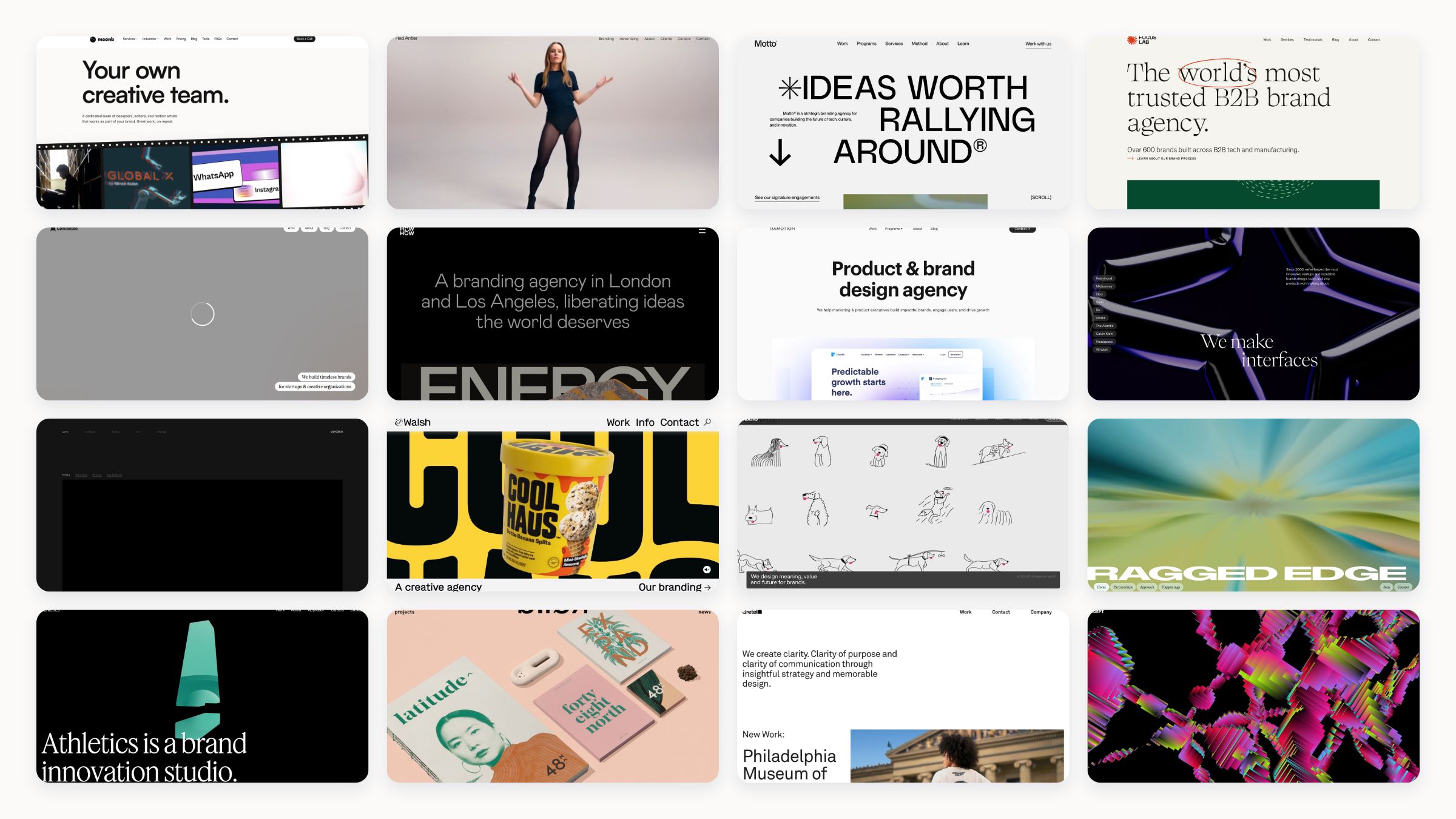
I am one of Moonb’s original founders, and we have put ourselves at number one on a list published on our own website, which is exactly the kind of move you should treat with suspicion before you read a single word of the entry. Grade us the way you would grade any company marking its own paper. If our entry does not survive comparison with the thirteen studios underneath it, skip it and go to the ones that do.
Most branding roundups rank studios on portfolio prestige, which is close to useless if you are between pre-seed and Series B. The studios with the most impressive portfolios are usually staffed, scoped and priced for companies fourteen times your size, and the case study that made you write the email was a long programme run with a client who already had an internal brand team. What actually decides whether an engagement works at your stage is duller and more specific: which named people will be on the tools, when they can realistically start, how many other projects those people are carrying that quarter, whether the founders show up weekly or only at kickoff and final presentation, and whether the studio has ever taken a company from nothing to an actual market launch rather than refreshing something that already existed.
There are four shapes of partner available to you, and they behave differently in ways the websites do not advertise. A small studio of roughly five to ten people gives you guaranteed access to the principal, which is the single best thing money buys at this stage, but capacity is absolute and their calendar sets your timeline rather than the other way round. An independent studio of fourteen to forty can hold two or three workstreams at once and will usually give you a start date some weeks out rather than immediately, though the senior bench is thin enough that one departure changes the character of your project. A large independent of a hundred people and up can run a multi-market rollout and will show you an intimidating roster, and the people who charm you in the pitch are frequently not the people who open the files. Network owned studios, meaning anything sitting inside WPP, Publicis, Stagwell, Dept or a Nordic holding group, come with scale minimums, account layers and a reporting structure that can be reorganised mid-engagement for reasons that have nothing to do with your company.
Because of that, I have deliberately left the enterprise consultancies out of this list entirely. Interbrand, Landor, Prophet, Wolff Olins, Lippincott, Siegel+Gale, Monigle, Vivaldi, Design Bridge and Partners, Kurppa Hosk, Instrument and Code and Theory are all serious firms doing serious work, and none of them are built for a company that needs a name, a mark, a site and a pitch deck before the next board meeting. Every other roundup you will read puts them in the top five. Positions one through fourteen below are the set I would actually shortlist at seed and Series A. Positions fifteen through fourteen are there under a different heading, the studios you graduate to once the first identity has done its job and stopped fitting, and I have flagged each of them for the specific reason they are wrong for you today.
For context on where I sit while writing this: at Moonb we run as an embedded creative team rather than a branding studio, and the work I see most often starts the week after somebody else’s identity is signed off. On a product launch we usually inherit a brand book and a set of files, then produce the launch film, the motion system, the social cutdowns, the sales deck visuals and whatever the demand generation lead needs next month, with a senior Creative Director holding the line so the fortieth asset still looks related to the first. What tends to happen is that the volume problem arrives shortly after the rebrand party, when the founder discovers that a beautiful set of guidelines does not produce anything on its own, and that the studio who wrote them is already booked on their next identity project. That is the gap we sit in, and it is a different purchase from the one most of this list is selling.
Y Combinator has Garry Tan walk founders through why design and brand matter before you think you can afford them, which is the argument I end up making on most first calls.
I checked all fourteen sites myself in July 2026. Every studio here resolves at the URL I have published and is trading under the name I have used. Client names come only from each studio’s own website, never from a directory or a press release, which is why two entries here, Red Antler and our own, carry no client names at all. Several of the domains commonly cited elsewhere are now wrong, and I have flagged those in the entries. Each entry ends with one real limitation, written to be the thing I would tell a founder over the phone rather than the thing an agency would put in a proposal.
The 14 best branding agencies for startups
1. Moonb
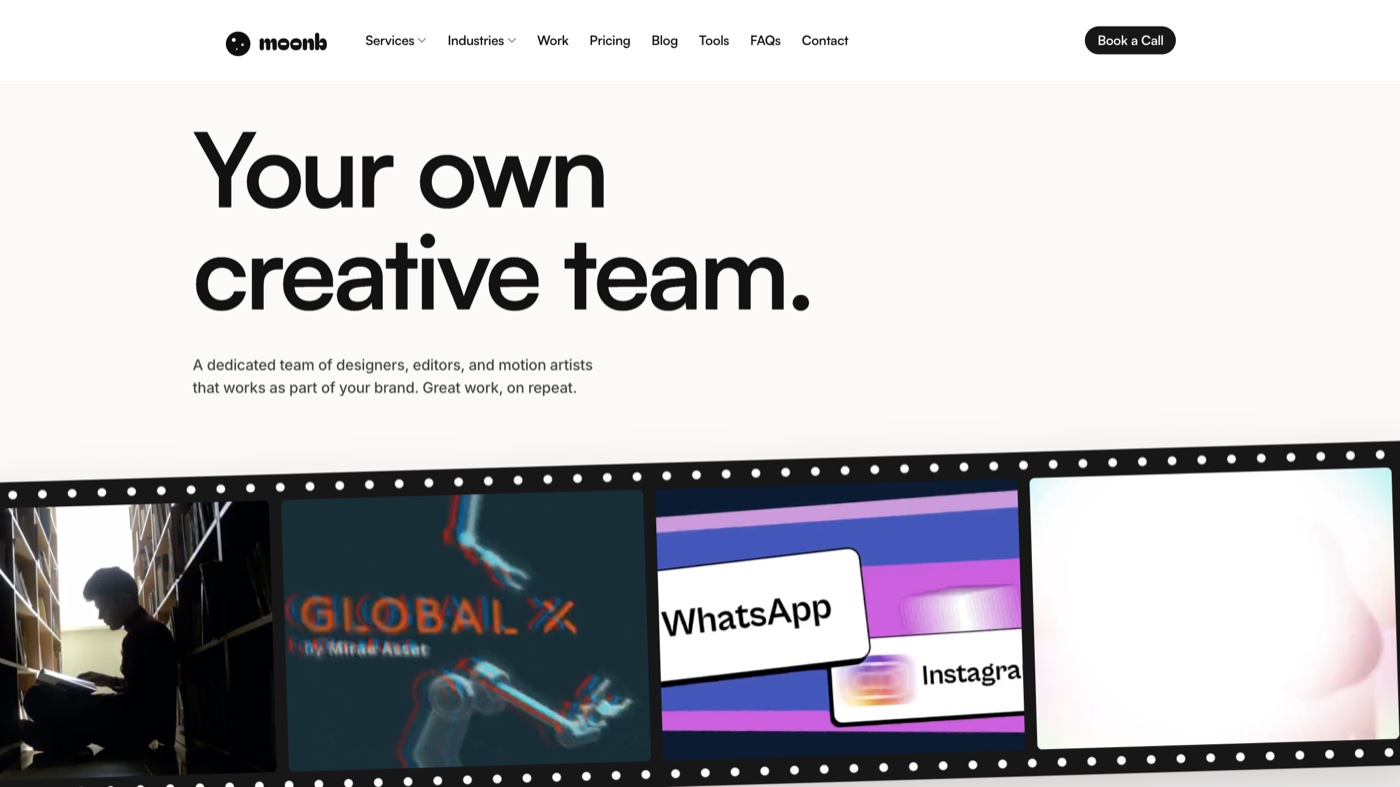
Putting ourselves first on our own list is self-serving, so let me be precise about what Moonb is and is not, because the distinction matters more here than in any other article we publish. Moonb is not a branding agency and does not compete with the studios below for identity work, naming or brand strategy. We are an embedded creative team that produces video, motion, brand design and design output continuously for a marketing team, with a senior Creative Director keeping everything on-brand as volume climbs.
- Best for: funded startups that already have an identity, or are about to have one, and need the launch film, motion system, campaign assets and deck visuals produced week after week without hiring four people
- Clients they name: Dell, Toyota, Nestle. I work here, so weigh that the way you would weigh any company citing itself, and ask us for references you can actually call
- Pricing: a set monthly cost, or a per-project quote when the work suits that better
- Why they stand out: the model is continuous rather than project shaped, so the twentieth asset is made by the same team who made the first, and the Creative Director carries the brand logic between them instead of re-explaining it to a new freelancer every quarter
- Worth knowing: if what you need is the identity itself, the name, the wordmark, the type system and the strategy underneath it, we are the wrong call and you should be talking to Focus Lab at number four if you are B2B SaaS, or Condensed at number five if you want a small senior team on a founder-led venture. Come to us after that work exists and needs to be produced against.
More on Moonb
| Best for | Continuous video, motion and design against an existing identity |
|---|---|
| Scale | Embedded creative team |
| Where they are | Remote and London |
| Named clients | Dell, Toyota, Nestle. I work here, so weigh that the way you would weigh any company citing itself, and ask us for references you can actually call |
| Pricing | a set monthly cost, or a per-project quote when the work suits that better |
The practical shape of a Moonb engagement is a standing creative capacity rather than a defined deliverable. A marketing lead sends requests into a queue, a Creative Director triages and art directs, and the output comes back as finished video, motion and design work. It suits companies producing more than they can staff for and less than justifies an in-house team of five.
Where this works best is the window after a rebrand or a funding round, when the demand for assets suddenly outruns the ability to make them. Product launches, paid social variants, conference films, investor and sales decks, lifecycle motion, all of it drawing on one identity and one art direction.
Where it works badly is anything upstream of that. We do not run naming workshops, we do not write positioning territories, and we do not build a visual identity from a blank page. Studios on this list do that for a living and do it better.
The other reason to skip us is if your volume is low. If you need three videos a year, a continuous team is the wrong structure and you should hire per project.
2. Red Antler
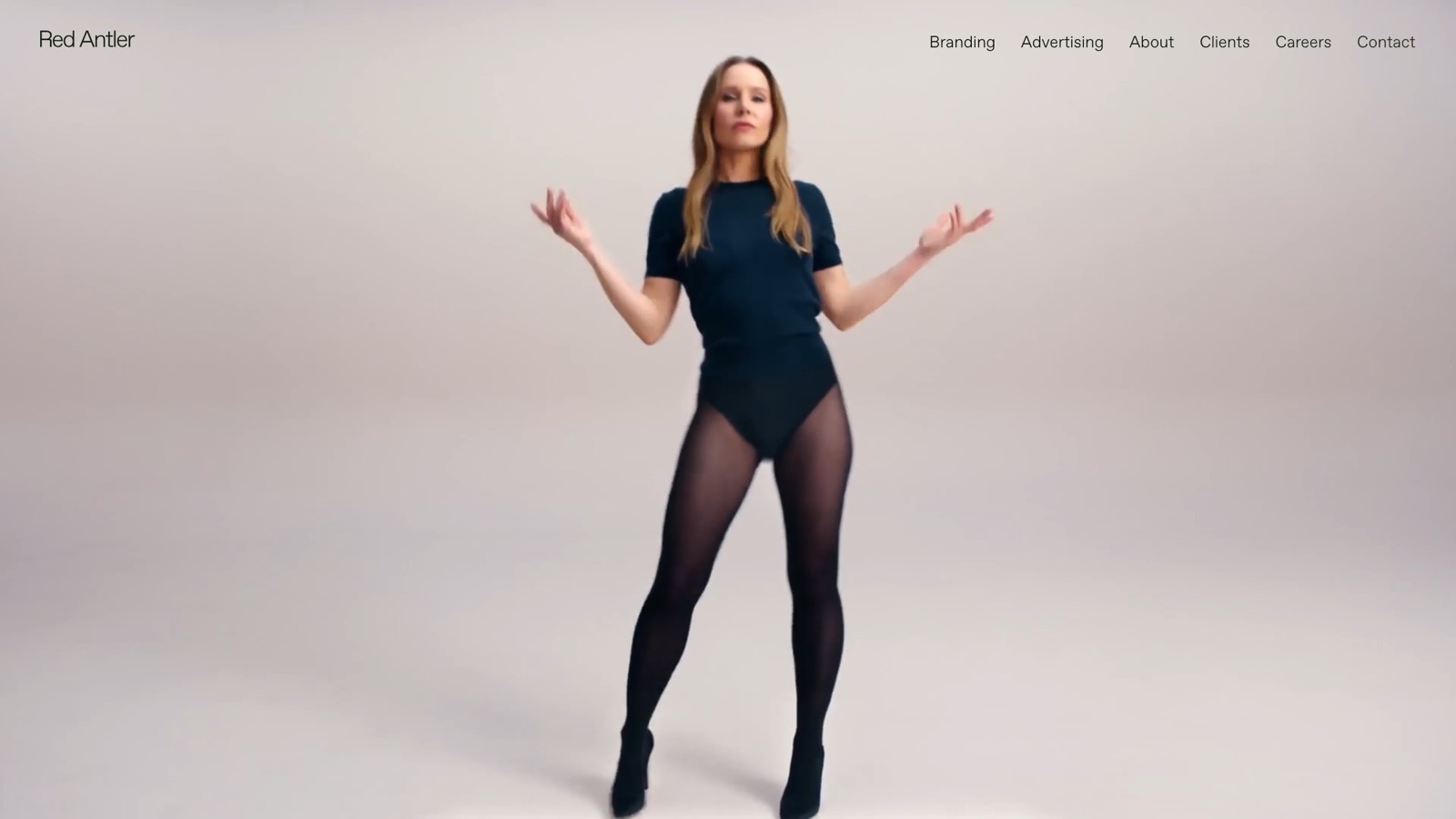
Red Antler built its reputation on launches, meaning companies that did not exist yet, which is a different discipline from rebranding something with existing equity and existing customers to protect. The unusual thing about their site in 2026 is what it does not contain.
- Best for: pre-launch and pre-seed companies building a brand before there is a product in market
- Clients they name: none. Their own clients page attaches zero names, so I have nothing verified to publish here. What they present instead is the launch practice itself, the work of taking a company to market for the first time, without a public roster attached to it
- Pricing: per project, undisclosed
- Why they stand out: the whole practice is organised around the zero-to-one moment, which is the exact moment most branding studios are least comfortable in, because there is no research base, no existing customer, and nothing to test against except the founders’ conviction
- Worth knowing: with no client names published on their own site, you cannot check category fit or recency before you get on a call, and you are relying entirely on what they choose to show in a private deck. Every third-party list attributes famous clients to them. I could not verify a single one from the source, so I have not repeated any.
More on Red Antler
| Best for | Pre-launch and pre-seed launch branding |
|---|---|
| Scale | Independent studio |
| Where they are | New York |
| Named clients | none. Their own clients page attaches zero names, so I have nothing verified to publish here. What they present instead is the launch practice itself, the work of taking a company to market for the first time, without a public roster attached to it |
| Pricing | per project, undisclosed |
Launch branding is a distinct skill. You are making decisions about a company that has no data, no customers and often no finished product, which means the strategy work is closer to co-founding than to consulting, and the studio has to be comfortable being wrong in public.
The engagement shape is typically a full identity build, name through to launch assets, compressed into the runway available before a funding announcement or a market entry date.
The absence of a public client list cuts both ways. Some studios do this because clients ask for confidentiality at launch, which is reasonable. It also means a founder doing due diligence has to ask for references directly and should insist on speaking to two companies from the last twelve months rather than the greatest hits.
If you need to see comparable work in your category before committing, start with a studio further down that publishes its roster, then come back to Red Antler with a sharper brief.
3. Motto
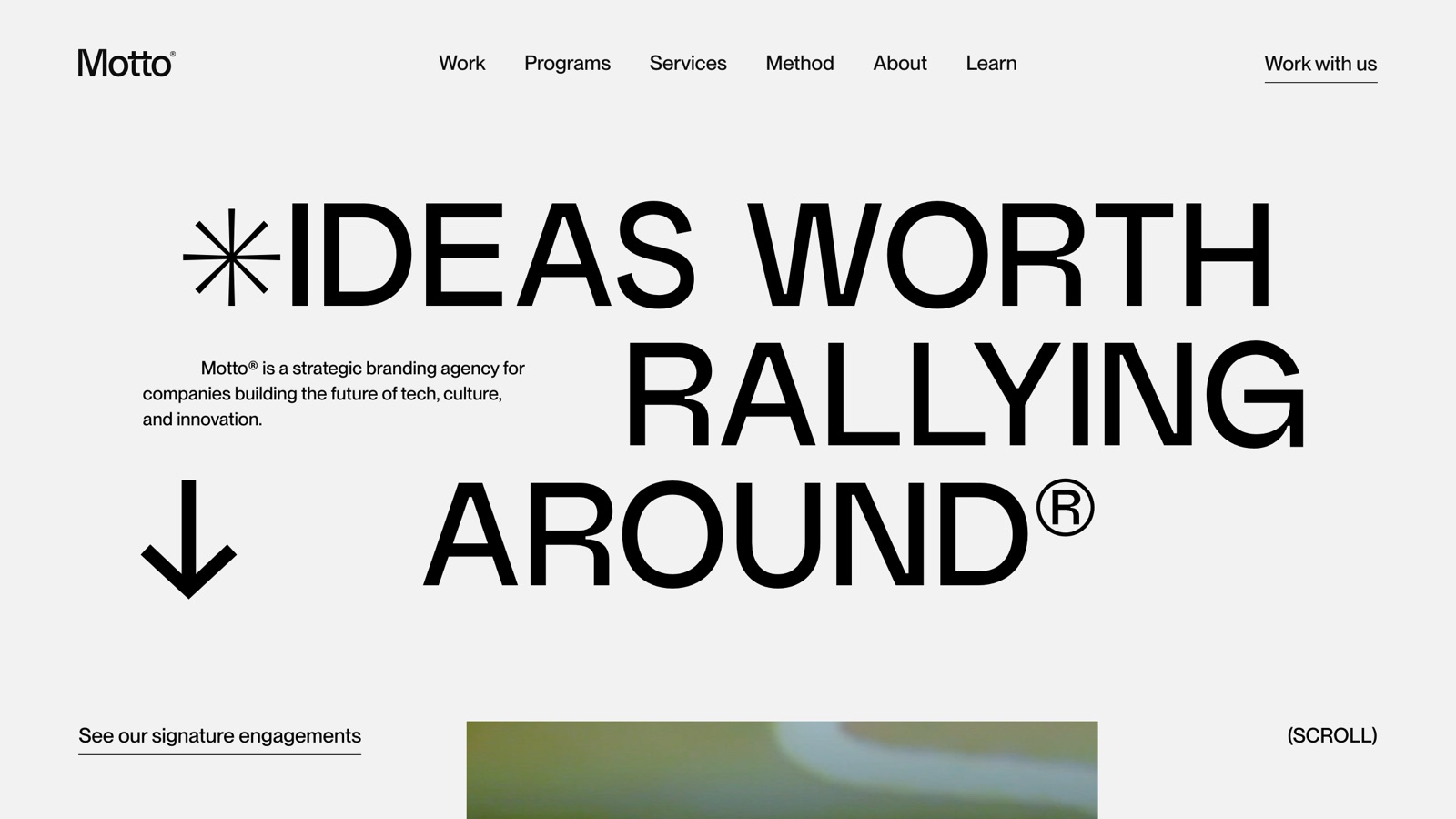
Motto sells a trademarked method, the Idea Worth Rallying Around, and runs positioning and category definition work at founder or executive level before any design begins. Two domain warnings before you go looking: wearemotto.com sits behind a bot challenge and returns a 403 to automated tools while loading perfectly in a browser, and motto.agency is a parked domain listing that has nothing to do with them.
- Best for: technology founders who need an outside point of view on positioning before they commission any visual work
- Clients they name: Google, Klaviyo, Virgin Voyages, Goodnotes, Cresta, Andela, Route, Impel, Protege, Attend, Nomina, Ivo, Blix, Bandana, CloudBees, Earnest, Solidatus, Artnet
- Pricing: per project, undisclosed
- Why they stand out: the client list contains a visible tail of small, early names alongside the recognisable ones, which is unusual and tells you they still take companies that are not yet famous
- Worth knowing: roughly fourteen people with the two founders visibly acting as the product, so availability rather than capability is the constraint you will hit, and the method is prescriptive enough that it is a poor fit if you have already set a brand framework internally and want someone to execute inside it. They are remote-first with a meeting space in New York rather than a studio you can sit in.
More on Motto
| Best for | Founder-level positioning and category definition |
|---|---|
| Scale | Small studio, roughly 20 people |
| Where they are | New York, London |
| Named clients | Google, Klaviyo, Virgin Voyages, Goodnotes, Cresta, Andela, Route, Impel, Protege, Attend, Nomina, Ivo, Blix, Bandana, CloudBees, Earnest, Solidatus, Artnet |
| Pricing | per project, undisclosed |
The proprietary method is the thing to evaluate. It gives you a strong external opinion delivered fast, which is worth a lot when a founding team has been arguing about positioning for six months and cannot break the tie. It also means the process runs their way.
Engagements start upstream, in strategy and category definition, and move into identity from there. If you approach them with a purely visual brief you will probably be sold the strategy phase first, and in most cases that is the correct sequence.
Who should not hire them: a company with an existing brand architecture and an internal creative director who needs additional hands. That is a capacity problem, not a positioning problem, and this is an expensive way to solve it.
Who should: a founder at seed or Series A who can describe what the product does but cannot yet explain why anyone should care, and who wants that answer from someone senior rather than a junior strategist.
4. Focus Lab
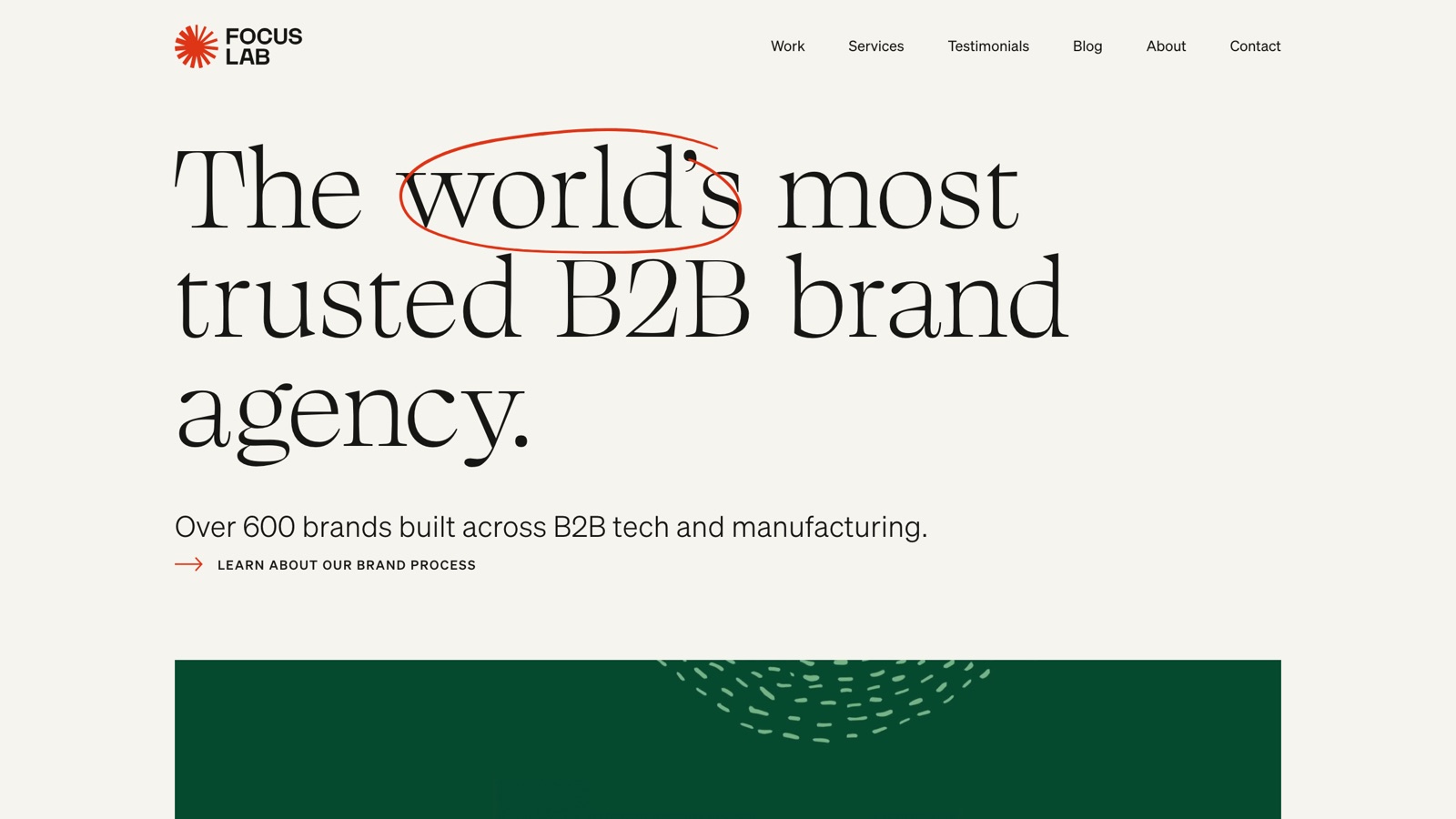
Focus Lab works on B2B SaaS and nothing else, which sounds like a limitation until you have sat through a pitch from a generalist studio trying to make a developer tooling company look like a beverage brand. Their own site states that client companies have raised 7.8 billion dollars and that sixteen of them became unicorns, which is the strongest single piece of evidence in this entire pool that a studio understands the venture path.
- Best for: B2B software companies from Series A upward that need an identity built by people who already understand pipeline, category creation and technical buyers
- Clients they name: Salesloft, Zuora, LaunchDarkly, Braze, Frame.io, Marketo, Contentstack, PolyAI, Laravel
- Pricing: per project, undisclosed
- Why they stand out: the specialism is real and enforced, so you skip the education phase entirely and the strategy conversation starts at a level most studios reach in month two
- Worth knowing: the named roster skews heavily to funded scale-ups rather than pre-seed companies, which tells you where the engagement sizing sits, and a pre-seed founder with a small raise should expect to be qualified out. If you are consumer, DTC or anything outside software, there is no comparable proof here to judge against.
More on Focus Lab
| Best for | B2B SaaS identity for funded scale-ups |
|---|---|
| Scale | Independent studio |
| Where they are | United States |
| Named clients | Salesloft, Zuora, LaunchDarkly, Braze, Frame.io, Marketo, Contentstack, PolyAI, Laravel |
| Pricing | per project, undisclosed |
Category specialism changes the economics of an engagement. A studio that has built identities for a dozen developer tools already knows what the buyer looks at, what the competitive set does visually, and which conventions are load bearing versus which are just copied.
The published clients are recognisable names in B2B software rather than consumer brands, and several of them raised substantially after the brand work. Correlation is not causation and I would not claim the identity caused the round, but it does confirm they are working at the right point in a company’s life.
Hire them if you are a software company with real funding and a serious go-to-market problem that is partly a brand problem.
Do not hire them if you are pre-revenue with under a million raised, or if you are in a consumer category. On the first count the sizing will not work. On the second you would be their experiment.
5. Condensed
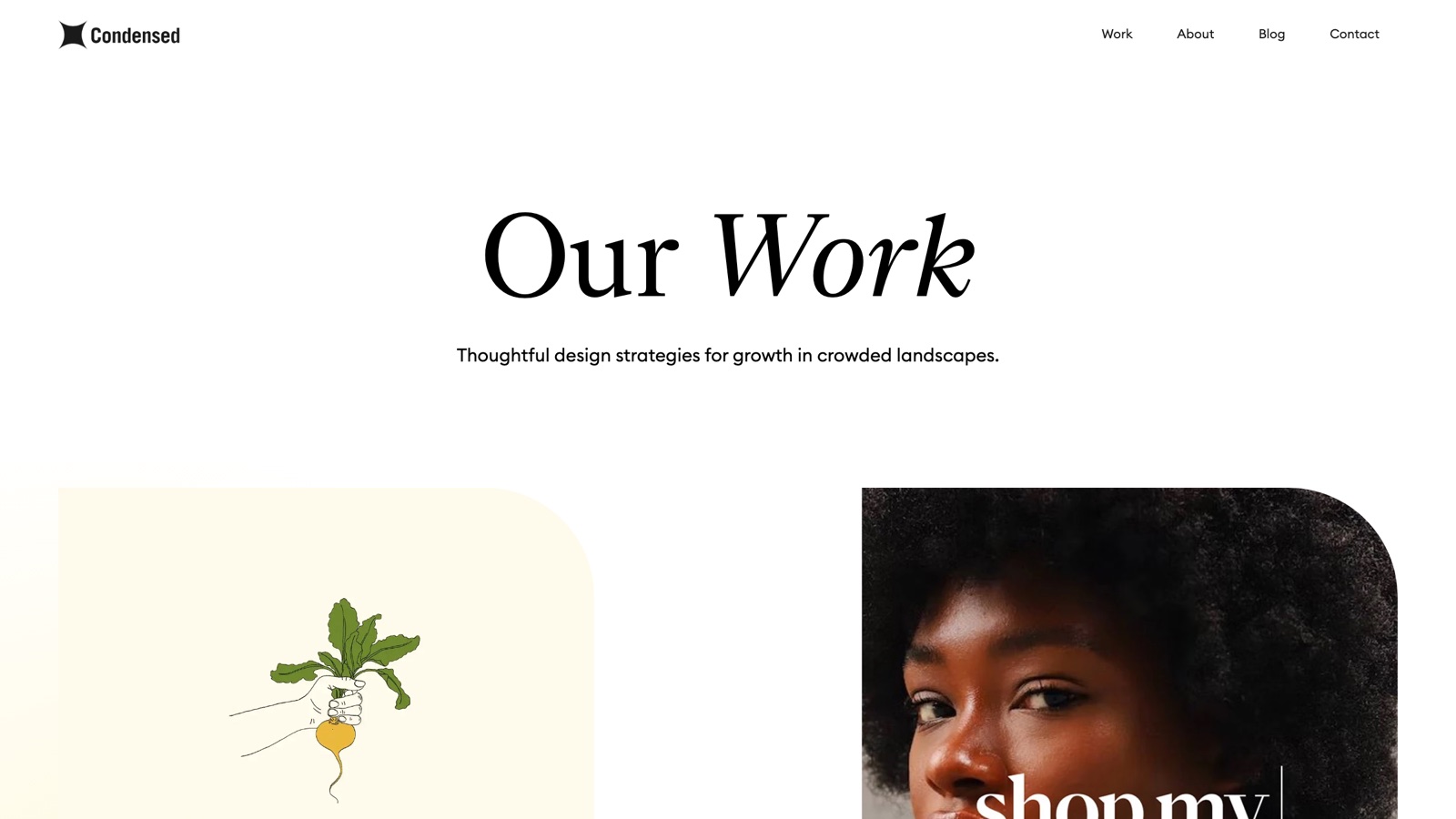
Condensed is the smallest verified operation on this list, five core people plus roughly five more who come in per project, split between Brooklyn and the Hudson Valley with team members further afield. That size is the entire proposition, because the people you meet are the people who do the work, with nobody in between.
- Best for: founder-led ventures, foundations and cultural organisations that want senior hands on the file rather than an account structure
- Clients they name: ShopMy, Keepers, Folio, Somble, Ally, Crossing Minds, The Good Face Project, Zenlist, Cut & Crafted, BollyX, Tough Mudder, Butterbean Organics, Boundless Adventures, Glynwood Center for Regional Food and Farming, Saul Steinberg Foundation, Woodman Family Foundation, Lenore G. Tawney Foundation, Leon Polk Smith Foundation
- Pricing: per project, undisclosed
- Why they stand out: the offer runs from brand strategy and naming through to packaging, illustration, animation and web development, which is a wider span than a five person studio normally covers and means you are not stitching three vendors together
- Worth knowing: capacity is the binding constraint and they say so themselves. Parallel workstreams, compressed deadlines and continuous high volume output are not possible, and their availability sets your schedule. If you have a hard launch date eight weeks out, ask about it in the first email rather than the third.
More on Condensed
| Best for | Founder-led ventures wanting senior hands on the file |
|---|---|
| Scale | Small studio, 5 core plus per-project |
| Where they are | Brooklyn, Hudson Valley |
| Named clients | ShopMy, Keepers, Folio, Somble, Ally, Crossing Minds, The Good Face Project, Zenlist, Cut & Crafted, BollyX, Tough Mudder, Butterbean Organics, Boundless Adventures, Glynwood Center for Regional Food and Farming, Saul Steinberg Foundation, Woodman Family Foundation, Lenore G. Tawney Foundation, Leon Polk Smith Foundation |
| Pricing | per project, undisclosed |
Studios this size give you the best ratio of senior attention to money spent at seed stage and the highest risk on timing. You get principal-level attention on every deliverable, and you also get a queue, because five people cannot absorb an unplanned scope change without pushing something else.
The client list is early stage and founder-led, mixed with arts foundations, which suggests a studio that takes work on the basis of interest rather than logo value.
Hire them if you want craft and senior attention, have a realistic timeline, and can define scope once and hold it.
Do not hire them if your project needs four workstreams running at once, or if you expect always-on output after launch. That second need is a different kind of partner entirely.
6. How&How
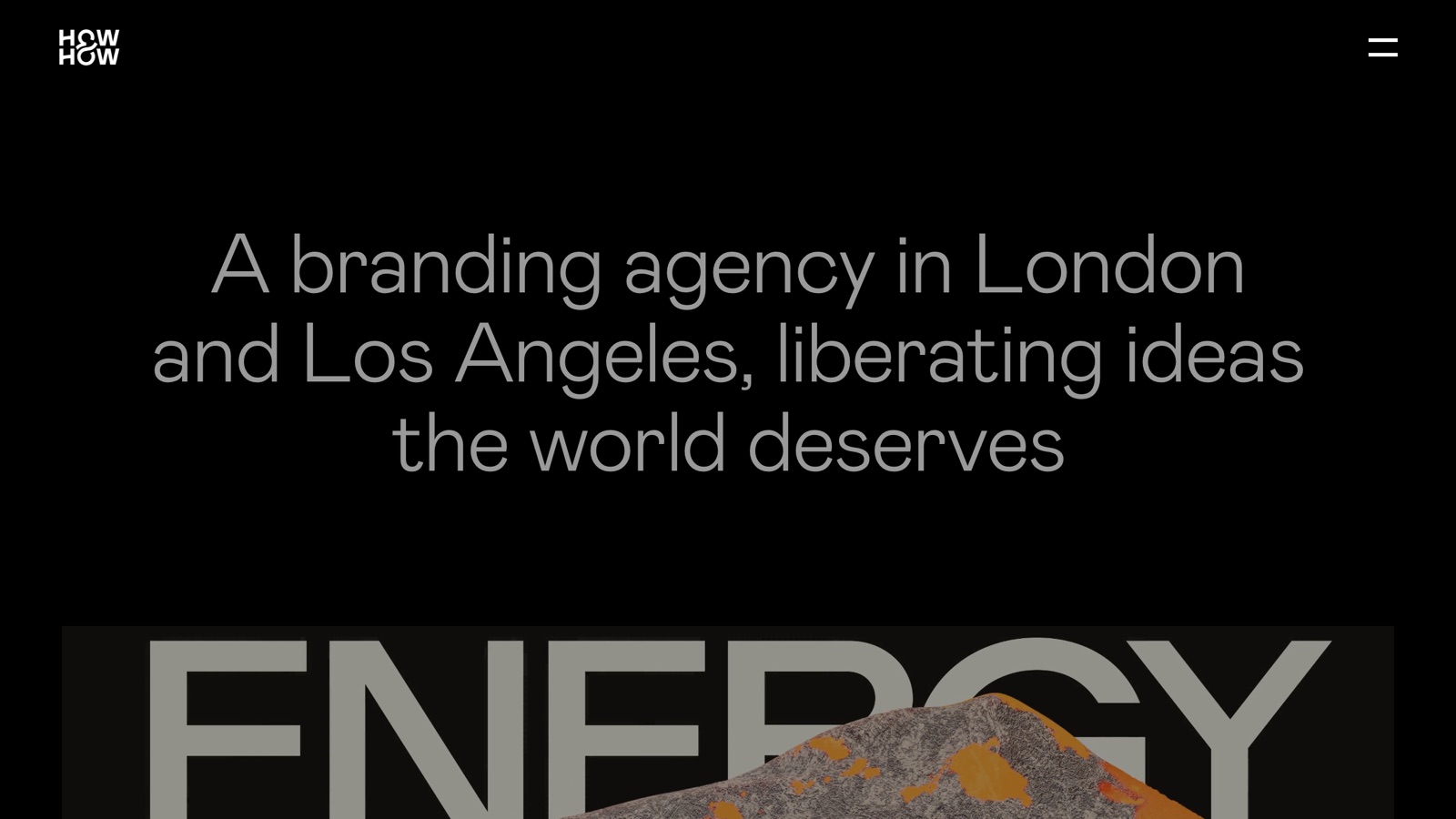
How&How was founded in 2020 and has built a client list weighted toward venture-backed technology companies rather than heritage brands, which is unusual for a studio of that age with three offices. Note the domain, since howandhow.co does not resolve and how.studio is the correct address.
- Best for: technology and climate startups that want expressive identity work rather than a conservative corporate system
- Clients they name: Hotjar, Big Cartel, Ideogram, Sauce Labs, Veriff, Pachama, Hometree, Chester Zoo
- Pricing: per project, undisclosed
- Why they stand out: the roster mixes current AI companies with climate and verification businesses, so they are working in categories that barely existed when older studios on this list set their house style
- Worth knowing: founded in 2020, so there is no decade of evidence about how they behave when a project goes sideways, and three offices for a studio of that age means the team is spread thinner per location than the footprint suggests. Ask which office staffs your project and who leads it.
More on How&How
| Named clients | Hotjar, Big Cartel, Ideogram, Sauce Labs, Veriff, Pachama, Hometree, Chester Zoo |
|---|---|
| Pricing | per project, undisclosed |
A young studio is a real trade. You get hunger, current visual references and a team that is not bored of your category, against a shorter record of delivery under pressure and fewer long-term client relationships to check.
The work sits in a more expressive register than the B2B specialists on this list, which fits companies that want to be noticed rather than trusted on sight.
Hire them if your category is new, your audience is not conservative, and you want an identity that looks like 2026 rather than 2016.
Do not hire them if you sell into regulated enterprise procurement, where the expressive route creates friction you will spend two years apologising for.
7. Ramotion
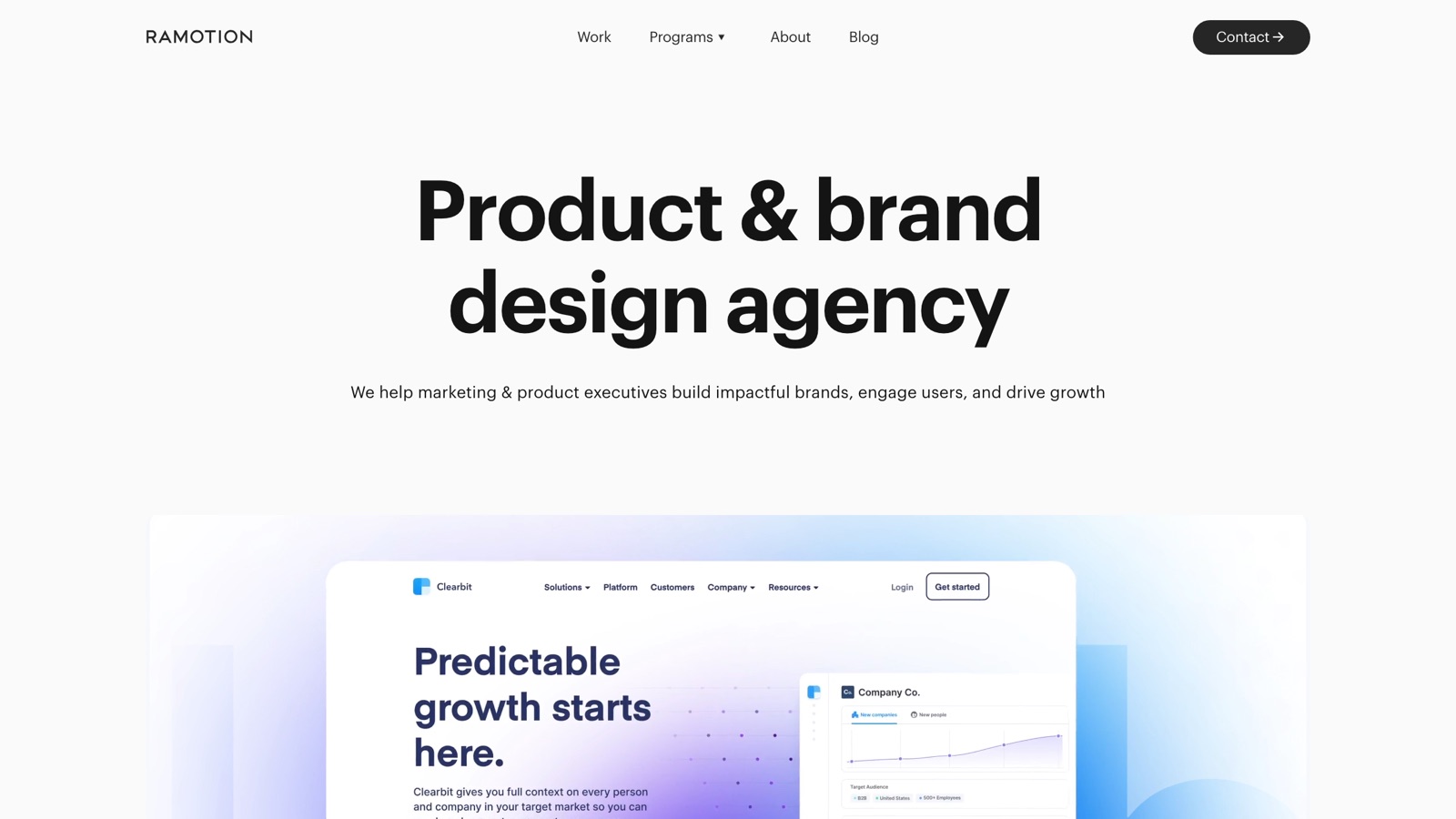
Ramotion pairs brand design with product and interface design in a single engagement, which for a software startup removes the most common handoff failure, where the identity looks nothing like the product it is supposed to wrap. Offices in San Francisco, Los Angeles and New York put them on US hours across both coasts of the funding map.
- Best for: software startups that need the brand and the product interface designed by the same team
- Clients they name: Netflix, Stripe, Adobe, Salesforce, Okta, Mozilla Firefox, NBCUniversal, Crunchbase, Xero, Descript
- Pricing: per project, undisclosed
- Why they stand out: brand and product under one roof is rarer than it sounds, and it matters most at exactly the stage where your website, your app and your identity are all being built in the same quarter
- Worth knowing: the published roster is dominated by large technology companies, so a seed-stage project is competing for attention against accounts with far more revenue attached. I would ask directly which team is assigned and what else they are carrying that quarter before signing anything.
More on Ramotion
| Best for | Brand and product interface designed by one team |
|---|---|
| Scale | Independent studio |
| Where they are | San Francisco, Los Angeles, New York |
| Named clients | Netflix, Stripe, Adobe, Salesforce, Okta, Mozilla Firefox, NBCUniversal, Crunchbase, Xero, Descript |
| Pricing | per project, undisclosed |
The combined brand and product model suits companies whose brand is mostly experienced inside the software. If your customer never sees a billboard and only ever sees the dashboard, splitting those two disciplines across two vendors creates a mismatch you pay to fix later.
Engagements typically cover identity, design system and interface work together, which makes scoping cleaner but also makes the number larger than an identity-only project.
Hire them if your product is the brand, and if you want one team accountable for both.
Do not hire them if you need heavy offline expression, packaging, retail or event environments, where a dedicated identity studio will give you more.
8. Metalab
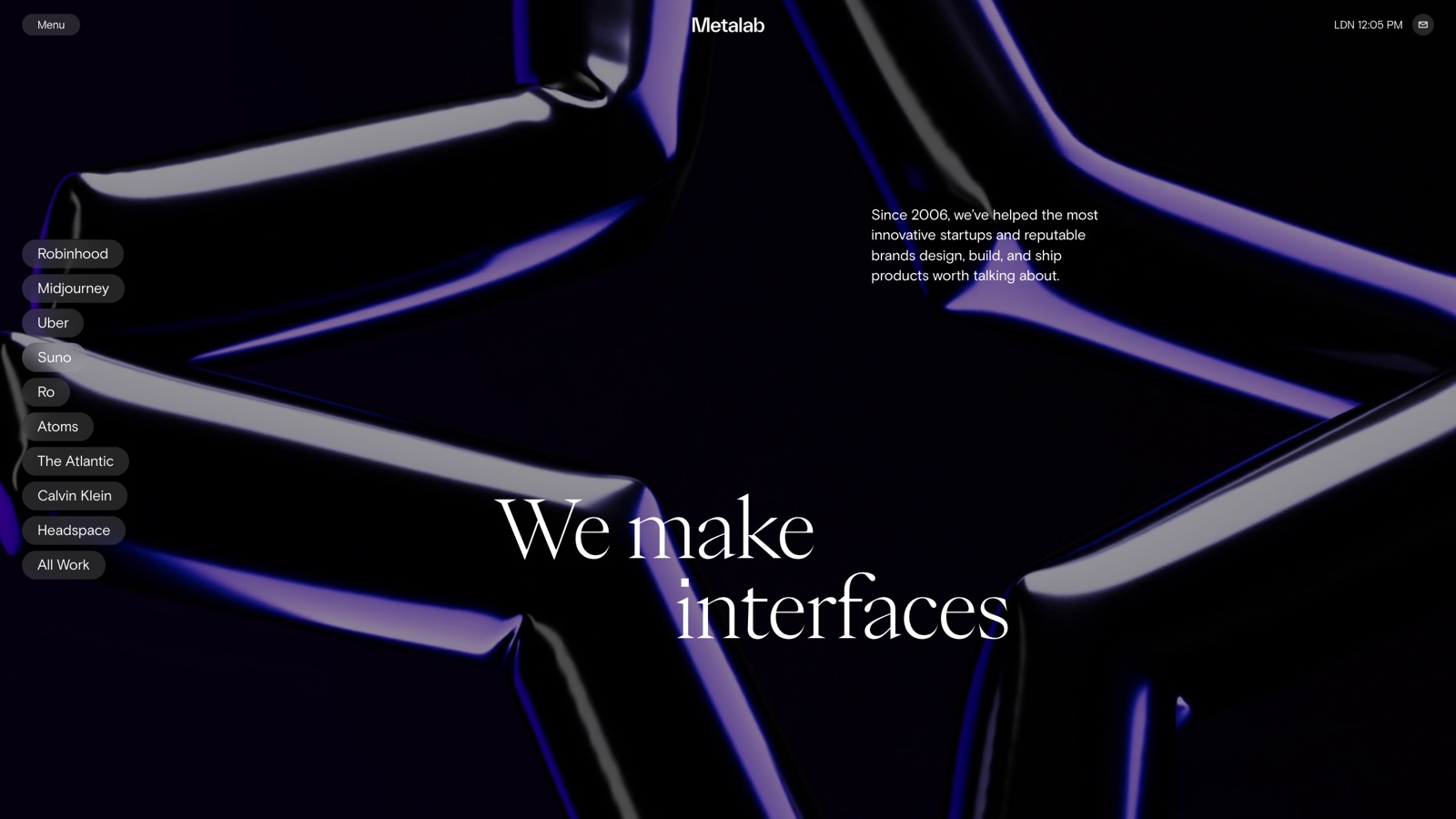
Metalab’s client list reads like a snapshot of the current AI wave, with Midjourney, Suno, Pika, Windsurf and Crusoe AI sitting alongside the older platform names, and that recency is the reason it is placed this high for an early stage audience. Two corrections worth carrying: metalab.co now redirects to metalab.com, and the studio styles itself Metalab, not MetaLab, despite what most listicles print.
- Best for: software and AI companies whose brand lives almost entirely inside an interface
- Clients they name: Midjourney, Suno, Pika, Windsurf, Crusoe AI, Loom, Instacart, Slack, Webflow, Nubank, Wealthsimple, Patreon, Coinbase, Robinhood, Neuralink, Together AI, Hinge Health, Ro, Addepar, Pitch
- Pricing: per project, undisclosed
- Why they stand out: they are demonstrably being hired right now by companies at the frontier of their category, which is a much stronger signal than a decade-old rebrand for a household name
- Worth knowing: their own positioning line is that they make interfaces, and brand design is a secondary capability tagged onto a handful of case studies. If you need naming, a full identity system or anything that prints, you are shopping outside the core competence. They are fully distributed with no published studio address, so there is no office to visit and no single time zone to organise a project around.
More on Metalab
| Best for | AI and software companies whose brand lives in the interface |
|---|---|
| Scale | Large independent, distributed |
| Where they are | No published offices, global team |
| Named clients | Midjourney, Suno, Pika, Windsurf, Crusoe AI, Loom, Instacart, Slack, Webflow, Nubank, Wealthsimple, Patreon, Coinbase, Robinhood, Neuralink, Together AI, Hinge Health, Ro, Addepar, Pitch |
| Pricing | per project, undisclosed |
Product-first design shops treat the brand as something the interface expresses rather than something applied on top. For a software company that is often correct, and it produces identities that hold up in the place customers actually spend their time.
The AI-stage client list is the thing to weigh. It says the studio is currently trusted by companies moving very fast, which usually means they can work at that pace too.
Hire them if the screen is the product and you want brand and interface resolved together by people with current pattern knowledge.
Do not hire them for a category-defining strategy exercise or a full identity system with print, packaging and environmental applications. Pair them with a studio higher up this list if you need both.
9. Order
Order runs a research-based, systematic practice out of Brooklyn with a Miami office by appointment, and it operates its own type foundry alongside the Standards Manual publishing imprint. If you have seen the domain orderorder.com cited anywhere, ignore it, because it belongs to an unrelated party registered eighteen years before this studio existed and times out on every request.
- Best for: startups that want a rigorous, systematic identity with custom type rather than a mood-led one
- Clients they name: Google, Apple News, Apple Podcasts, Kickstarter, Greenhouse, Justworks, OpenStore, Enigma, Valon, Particle Health, Ribbon, Maxio, Every, Heyday, AidKit, Chapter, Industrious Labs, Songtrust, Floyd, Knoll, Herman Miller, MoMA, Shake Shack
- Pricing: per project, undisclosed
- Why they stand out: in-house type design means your wordmark and your typeface come from the same hand, which is a level of ownership most startups assume they cannot afford and occasionally can
- Worth knowing: their own contact page names six people in Brooklyn, one on contract, and the two offices run independently under separate co-founders, so you are buying one principal’s team rather than a shared bench. A visible share of the portfolio is self-initiated, the book reissues and their own typefaces, which competes with client work for the same calendar.
More on Order
| Best for | Systematic identity with custom type |
|---|---|
| Scale | Small studio, six named people |
| Where they are | Brooklyn, Miami by appointment |
| Named clients | Google, Apple News, Apple Podcasts, Kickstarter, Greenhouse, Justworks, OpenStore, Enigma, Valon, Particle Health, Ribbon, Maxio, Every, Heyday, AidKit, Chapter, Industrious Labs, Songtrust, Floyd, Knoll, Herman Miller, MoMA, Shake Shack |
| Pricing | per project, undisclosed |
Systematic identity work suits companies that will produce a lot of material over time, because a well built system costs less to run than a set of one-off assets. It suits companies with a strong internal design sensibility less well, since the system is the opinion.
The type foundry is not decoration. Custom or semi-custom type is one of the few identity investments that is hard for a competitor to copy, and it changes how a brand reads at every size.
Hire them if you want rigour, ownership of your letterforms, and a system rather than a look.
Do not hire them if you need speed, parallel workstreams or a large rollout team. Six people cannot do that, and they do not pretend otherwise.
10. &Walsh
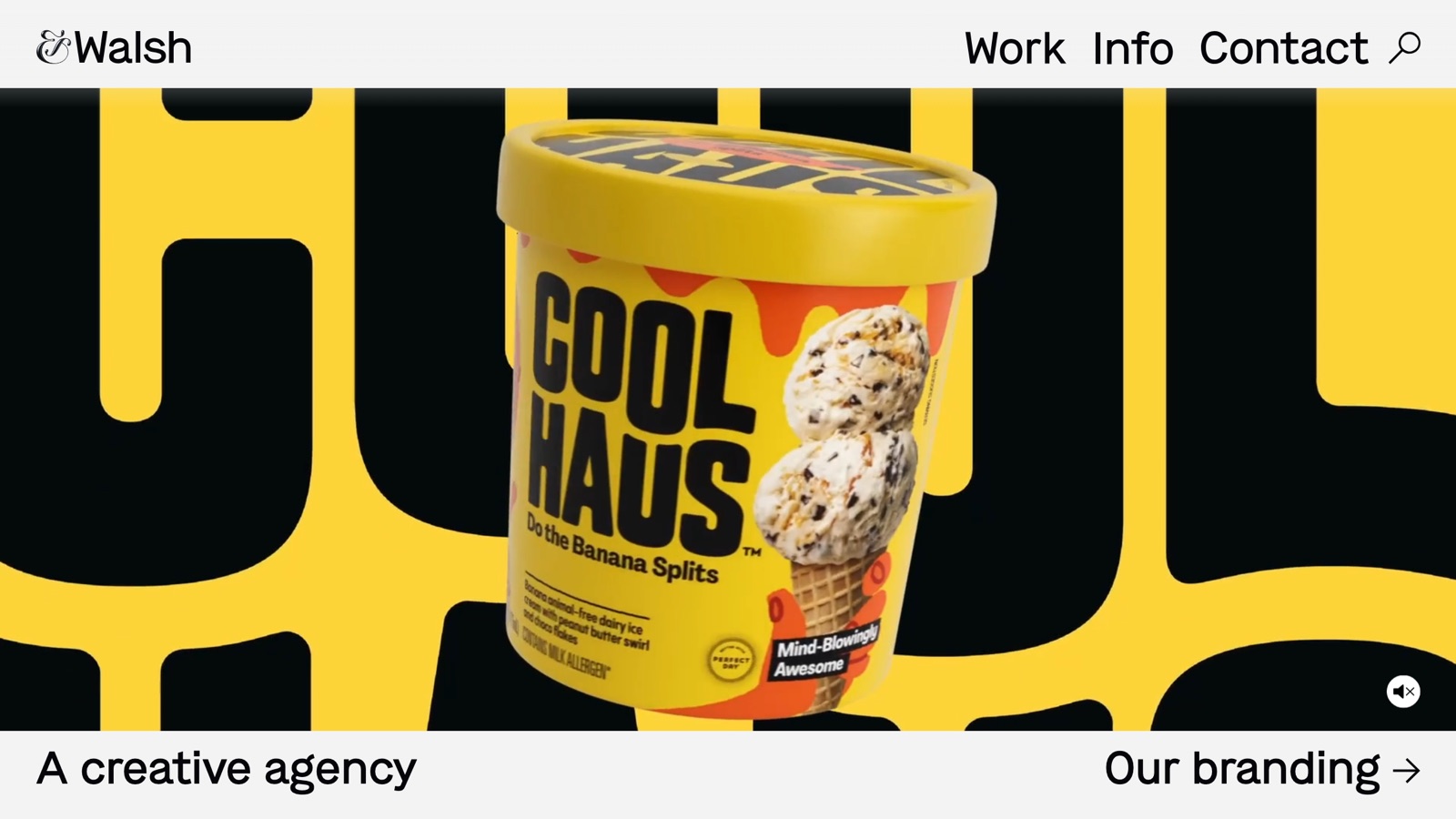
&Walsh works in New York and produces some of the most visually loud identity work of any studio on this list, which is either exactly what you need or exactly what will get you rejected in an enterprise procurement review. The named work skews consumer and expressive rather than corporate.
- Best for: consumer and DTC startups that need to be impossible to ignore in a crowded shelf or feed
- Clients they name: Bombas, Google I/O 2023, Plenty, Pet Plate, Geltor, Parle Agro
- Pricing: per project, undisclosed
- Why they stand out: very few studios commit this hard to a visual point of view, and for a consumer brand fighting for attention against incumbents with far larger media spends, distinctiveness is worth more than polish
- Worth knowing: the house style is strong and recognisable, so you are buying a specific aesthetic rather than a neutral partner who will disappear into your brief. There is almost no B2B, industrial or regulated-sector work published, which leaves a technical founder without comparable proof to judge fit against.
More on &Walsh
| Named clients | Bombas, Google I/O 2023, Plenty, Pet Plate, Geltor, Parle Agro |
|---|---|
| Pricing | per project, undisclosed |
Studios built around a named principal carry a visible signature. That is a feature when the signature suits your category and a problem when it does not, and the way to test it is to look at four recent projects and ask whether they read as four brands or as one studio.
The published work is consumer weighted, with food, apparel and technology events represented.
Hire them if your growth problem is attention, your category is visually conservative, and you have the nerve to ship something people will argue about.
Do not hire them if your buyer is a procurement committee, or if your internal stakeholders will sand the edges off the work in review. You would be paying a premium for something you then neutralise.
11. Mucho
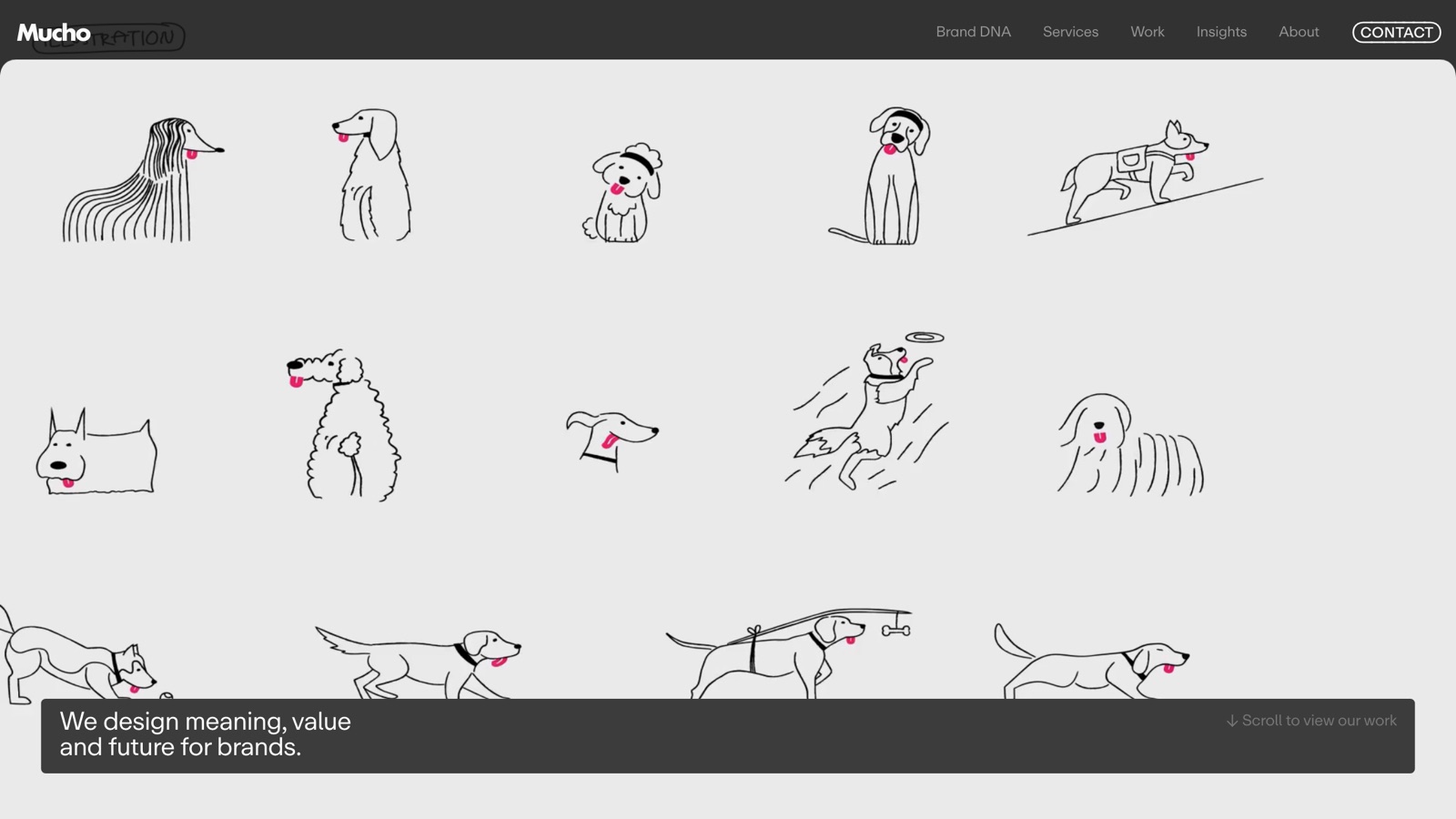
Mucho runs from Barcelona and San Francisco, states that it has worked with more than 250 brands, and publishes a 72 percent client return rate, which is a rare metric for a design studio to put in public. The domain to use is wearemucho.com, since mucho.design does not resolve.
- Best for: startups with a European or Latin American market focus that want a studio comfortable across both continents
- Clients they name: Visa, Aeromexico, MACBA, Eko Health, Gobi Cashmere
- Pricing: per project, undisclosed
- Why they stand out: publishing a return rate is a commitment most studios avoid, and repeat business is the most reliable proxy there is for what an engagement is actually like once the pitch is over
- Worth knowing: the published roster leans corporate and institutional rather than early stage, so a seed company should ask to see recent work at its own scale, and a US startup engaging the Barcelona team is working across a six to nine hour gap depending on which coast it sits on, unless the San Francisco office leads.
More on Mucho
| Best for | European and Latin American market focus |
|---|---|
| Scale | Independent studio |
| Where they are | Barcelona, San Francisco |
| Named clients | Visa, Aeromexico, MACBA, Eko Health, Gobi Cashmere |
| Pricing | per project, undisclosed |
Two-continent studios are useful when your market spans both and expensive overhead when it does not. The question to ask is which office holds the account and where the designers physically sit.
The 72 percent return figure is worth probing on a call. Ask what counts as a return, since a small follow-on project and a second full identity are different things.
Hire them if you are building for European or Latin American markets and want cultural fluency rather than a translation layer.
Do not hire them if you are a US-only company at seed stage, where a domestic studio of similar size will give you faster feedback loops for the same money.
12. Ragged Edge
Ragged Edge builds challenger brands out of London, and the client list includes companies that went from startup to household name in the UK while the studio was working with them. The tone of voice work is as strong as the visual work, which is unusual and matters more than founders expect.
- Best for: challenger companies attacking an incumbent in a category where the established players all look and sound the same
- Clients they name: Wise, Papier, Marshmallow, Globe-Trotter, Omlet, Palmetto, Granola
- Pricing: per project, undisclosed
- Why they stand out: they treat verbal identity as a first-class deliverable rather than a paragraph in the guidelines, which is why their clients tend to sound different, not just look different
- Worth knowing: a single London office, so a US company works entirely across time zones with no local presence, and the challenger register is a specific posture that some categories cannot wear. If your customer needs to feel safe rather than excited, this is the wrong voice.
More on Ragged Edge
| Best for | Challenger brands with a named incumbent to attack |
|---|---|
| Scale | Independent studio |
| Where they are | London |
| Named clients | Wise, Papier, Marshmallow, Globe-Trotter, Omlet, Palmetto, Granola |
| Pricing | per project, undisclosed |
Challenger positioning is a strategy before it is a design direction. It works when there is a visible incumbent to define yourself against and a customer who is already slightly annoyed with that incumbent.
Their fintech work in particular shows what happens when a regulated category gets a brand that talks like a person, and it has been copied widely enough that the approach is no longer novel, which is worth raising with them directly.
Hire them if you have a real enemy in your category and the appetite to name it.
Do not hire them if you are the category leader, or if your growth depends on being the reassuring option. Challenger tone on an incumbent reads as insecurity.
13. DIA
DIA builds kinetic identity systems, typographic systems and generative design tools, which is a deliberately narrow offer and the reason to hire them. Two things to know before you look them up: dia.tv now redirects to dia.studio, and the studio is now based in the French Alps rather than New York, having been founded in SoHo in 2009.
- Best for: startups whose brand needs to move, on screen, in product, and in every video the marketing team will ever make
- Clients they name: Coinbase, Mailchimp, Squarespace, Pinterest, Flodesk, Roblox, SSENSE, Maison Kitsuné, SPACE10, Typotheque, Nike, Spotify, YouTube
- Pricing: per project, undisclosed
- Why they stand out: motion-native identity is designed from the start to animate, rather than being a static logo that somebody later tries to make move, and the difference is obvious the first time you brief a video team
- Worth knowing: the about page names only two partners with no wider team published, so real delivery capacity is opaque and a large rollout would likely lean on freelancers. The offer stops short of full brand strategy, positioning and campaign delivery, so it works alongside a strategy partner rather than instead of one. The move to Chamonix also changes what US-hours coverage looks like.
More on DIA
| Best for | Kinetic identity and custom type systems |
|---|---|
| Scale | Small studio, two named partners |
| Where they are | Chamonix, New York |
| Named clients | Coinbase, Mailchimp, Squarespace, Pinterest, Flodesk, Roblox, SSENSE, Maison Kitsuné, SPACE10, Typotheque, Nike, Spotify, YouTube |
| Pricing | per project, undisclosed |
Kinetic identity is the right buy for companies whose brand appears mostly on screens, and an expensive one for companies whose brand appears mostly on packaging.
The teaching background of the creative director, across several European design schools, shows in the systems thinking. These are identities with rules that hold up rather than a set of nice frames.
Hire them if motion and type are the centre of your brand problem and you already know your positioning.
Do not hire them if you need someone to tell you who you are first, or if you need a bench big enough to roll a brand out across fifteen markets.
14. Athletics
Athletics sits in Brooklyn and is usually listed for its enterprise technology work, which is not why it belongs on a startup list. The reason it is here is the venture-backed part of the roster, companies that were nowhere near household names when the work was made.
- Best for: venture-backed companies in health, education, housing and infrastructure that need an identity with institutional credibility
- Clients they name: Culdesac, Tia, Guild, Trace, Nimble, Galileo, Zapier, Okta, Square, Reaktor, Intuitive, XQ Institute, Major League Soccer, Seattle Sounders FC, New Museum
- Pricing: per project, undisclosed
- Why they stand out: the identity work includes sonic and motion systems as standard, and the venture-backed names on the list are in categories where a startup has to look trustworthy on day one, which is a harder brief than looking exciting
- Worth knowing: the same studio serves large enterprise technology accounts, which means engagement sizing is calibrated for those clients and a small startup should establish the minimum early. It is a single Brooklyn office with no other location, so non-US clients work fully remote.
More on Athletics
| Best for | Venture-backed companies needing institutional credibility |
|---|---|
| Scale | Independent studio |
| Where they are | Brooklyn |
| Named clients | Culdesac, Tia, Guild, Trace, Nimble, Galileo, Zapier, Okta, Square, Reaktor, Intuitive, XQ Institute, Major League Soccer, Seattle Sounders FC, New Museum |
| Pricing | per project, undisclosed |
Studios that straddle enterprise and venture work can give an early stage company something valuable, which is an identity that does not look early stage. For a health or fintech startup selling into cautious buyers, that credibility is the point.
The sonic and motion capability is worth noting, since very few studios of this size build sound into an identity system rather than treating it as a later add-on.
Hire them if your startup needs to be taken seriously by institutions, hospitals, schools, municipalities or enterprise buyers.
Do not hire them if you are pre-seed with a small raise, or if you are in consumer packaged goods, retail or fashion, where there is very little published work to compare against.
The six studios below are the ones I would put on a shortlist once the first identity has stopped fitting, which usually happens somewhere between Series B and Series C. All six are excellent. All six are wrong for a company at pre-seed through Series B, and I have said why in each case rather than leaving you to find out during a scoping call.
Every studio in one table
| Studio | Best for | Scale | Where they are |
|---|---|---|---|
| Moonb | Continuous video, motion and design against an existing identity | Embedded creative team | Remote |
| Red Antler | Pre-launch and pre-seed launch branding | Independent studio | New York |
| Motto | Founder-level positioning and category definition | Small studio, roughly 20 people | New York, London |
| Focus Lab | B2B SaaS identity for funded scale-ups | Independent studio | United States |
| Condensed | Founder-led ventures wanting senior hands on the file | Small studio, 5 core plus per-project | Brooklyn, Hudson Valley |
| How&How | Technology and climate startups wanting expressive identity | Independent studio, founded 2020 | London, Los Angeles |
| Ramotion | Brand and product interface designed by one team | Independent studio | San Francisco, Los Angeles, New York |
| Metalab | AI and software companies whose brand lives in the interface | Large independent, distributed | No published offices, global team |
| Order | Systematic identity with custom type | Small studio, six named people | Brooklyn, Miami by appointment |
| &Walsh | Consumer and DTC brands that need to be impossible to ignore | Independent studio | New York |
| Mucho | European and Latin American market focus | Independent studio | Barcelona, San Francisco |
| Ragged Edge | Challenger brands with a named incumbent to attack | Independent studio | London |
| DIA | Kinetic identity and custom type systems | Small studio, two named partners | Chamonix, New York |
| Athletics | Venture-backed companies needing institutional credibility | Independent studio | Brooklyn |
How I would recommend choosing
Start by working out which of two problems you actually have, because founders regularly buy the wrong one. Once a startup is past that stage, the full best branding agencies list opens up the larger studios too. If you cannot explain in one sentence why a customer should choose you over the obvious alternative, that is a positioning problem and the studios to talk to are Motto, Focus Lab and Red Antler, where the strategy comes first and the design follows from it. If you can explain it perfectly well and the issue is that everything you produce looks like it came from four different companies, you have a systems problem, and Order, DIA and Athletics build the kind of identity that holds together under volume. Paying strategy prices to solve a systems problem is the most common way I see early stage money wasted.
Then ask about the calendar before you ask about the work, which is the reverse of how most founders run a first call. Every studio in the top eight here can produce something you would be proud of, and several of them will not be free when you need them, which makes the portfolio conversation academic if you have a launch date. Ask for a start date, ask for the names of the people who will be on it, and ask what else those people are carrying that quarter. A studio that answers all three clearly is telling you something real about how it operates. A studio that gets vague at the second question is telling you something too.
Be realistic about what your stage can carry. At pre-seed and seed, a small studio of five to ten people gives you the best ratio of senior attention to money spent, and the trade you are accepting is that their availability governs your timeline and they cannot run parallel workstreams. At Series A and B, an independent studio of fourteen to forty can hold more at once and will have processes that survive a scope change. Above that, the large independents and the network-owned studios start to make sense, because you finally have the multi-market, multi-product problems they are built for. Reaching up two tiers early does not get you better work, it gets you a junior team on a prestigious letterhead.
Plan for the twelve months after the identity ships, because that is where most brand investments go wrong and almost nobody scopes for it. The studio that built your identity will hand over a system and move to its next project, and from that day you own the problem of producing everything the system describes. Some companies solve that with an in-house hire, some with an embedded team, some by going back to the same studio on a retainer if it offers one. Decide which before you sign, and factor the cost in, because a brand book with nothing being made from it is an expensive PDF.
One last piece of process advice. Do not run a speculative pitch with three studios producing free concepts. The concepts you get back will be made without access to your business, your data or your team, and choosing between them is choosing between three guesses. Pay two studios for a short paid discovery instead, compare how they think rather than what they drew, and hire the one whose questions were better.
Frequently asked questions
None of the studios on this list publish pricing, and any number you read elsewhere is a guess. What you can infer is shape. A five to ten person studio taking founder-led work sits well below a five-office studio rebranding platform companies, because the overhead being paid for is different. Ask each studio for a typical engagement range on the first call before you invest time in a brief, and treat an unwillingness to answer as its own answer.
Before, if the brand is what gets you the meetings that produce the evidence, which is common in consumer and in categories where trust is the barrier. After, if you are still changing what the product does every six weeks, because an identity built around a positioning you abandon in month four is money spent twice. A lower cost middle path is a working identity now and a proper one once the story stops moving.
A branding studio builds the identity, the strategy underneath it and the system that governs it, then hands over guidelines and moves to its next project. An embedded creative team produces work against those guidelines continuously, video, motion, campaign and design assets, week after week. They solve different problems and most companies eventually need both, in that order. Confusing the two is why some brand books sit unused.