7 event video production companies compared
I compared 7 event video production companies against their own sites: who each one fits, how the engagement runs, and one honest limitation apiece, from AV powerhouses to editorial studios.

The seven event video production companies worth comparing right now are Moonb (my own company, disclosed below), Cramer, Freeman, Encore, LAI Video, VMG Studios, and Multi Image Group, and the real difference between them is not camera quality; it is whether they are built for the room, the stream, or the content that outlives both.
I run Moonb, and a good share of the briefs that reach us start the same way: someone booked “an event videographer,” got a clean recording of the keynote, and then discovered the marketing team expected thirty social clips, a highlight film, and a session library. The vendor did exactly what was quoted. The buyer bought the wrong shape of vendor. So this list sorts by operating model rather than by showreel. I checked every company against its own website in September 2026, wrote one honest limitation for each, and since Moonb publishes this list and sits at number one, read that slot with the appropriate skepticism.
One piece of popular advice to ignore: comparing camera counts and day rates first. Camera plans matter, and mixing wide, medium, and close-up angles with two or three switched cameras is a sensible baseline for a corporate stage, as Events.com’s event video production guide lays out. But more cameras never fix unclear goals or a weak audio plan. Start with what the footage has to do after the room clears, then work backwards to the production scale. If you are still deciding whether to hire out at all, my comparison of in-house vs agency production is the honest place to start.
1. Moonb
Slot one is my company, so read it lightly and let the production houses below earn your shortlist on their own.
More on Moonb
Moonb is a creative studio that works as a dedicated team inside marketing departments, for companies of all sizes, and event work is where that structure earns its keep. The event is one day; the content is a year. Our event engagements cover multi-camera capture with switched livestreams, session and speaker recording with board audio, sponsor reels, and vertical clips cut on-site so the social team posts while the event is still running. The turnaround and retention figures above are company-reported, so weigh them the way you would weigh any vendor's own numbers; the Clutch rating is third-party and checkable. The honest read is in the red box: when the brief is really staging, rigging, and room infrastructure, that is a different trade, and it is the one several companies below have spent decades in.
2. Cramer
More on Cramer
Cramer runs out of Norwood, Massachusetts, and covers in-person, hybrid, and virtual events plus content marketing, with production services that span lighting, AV, technical direction, and stage management alongside its Boston video studios. The useful signal for a buyer is how it describes its own crew: a true extension of the creative team, handling everything from planning to execution so the client is not coordinating between a show caller and a separate camera vendor. That integration is exactly what you want when the general session, the livestream, and the recap all have to feel like one show. It is also what you are paying for, so bring Cramer a program with real complexity: multiple rooms, a webcast audience, a stage that needs designing, not just recording.
3. Freeman
More on Freeman
Freeman calls itself the leader in live events, and whatever you make of the superlative, the case studies on its site are the giant end of the market: HIMSS, Shoptalk, Money 20/20, major industry expos. The right question for Freeman is not whether it can film your event. It can. The question is whether your event needs the production system around the cameras: rigging that has to be engineered, scenic and projection work, session capture across many rooms at once, and a broadcast layer on top. If the answer is yes, consolidating those workstreams with one provider genuinely reduces coordination risk. If the answer is no, you are shopping in the wrong aisle.
For a program that repeats across cities, the useful test is how the work moves between locations, whatever provider you pick at this scale. Ask for a city-by-city quote that separates reusable production planning from local costs, and confirm the handoff plan: who approves the shot list, who checks media after each stop, and whether the same editorial leads review every city. A rotating local crew keeps travel costs down, but without one set of reviewing eyes the framing, sound, and brand treatment drift a little more at each stop.
4. Encore
More on Encore
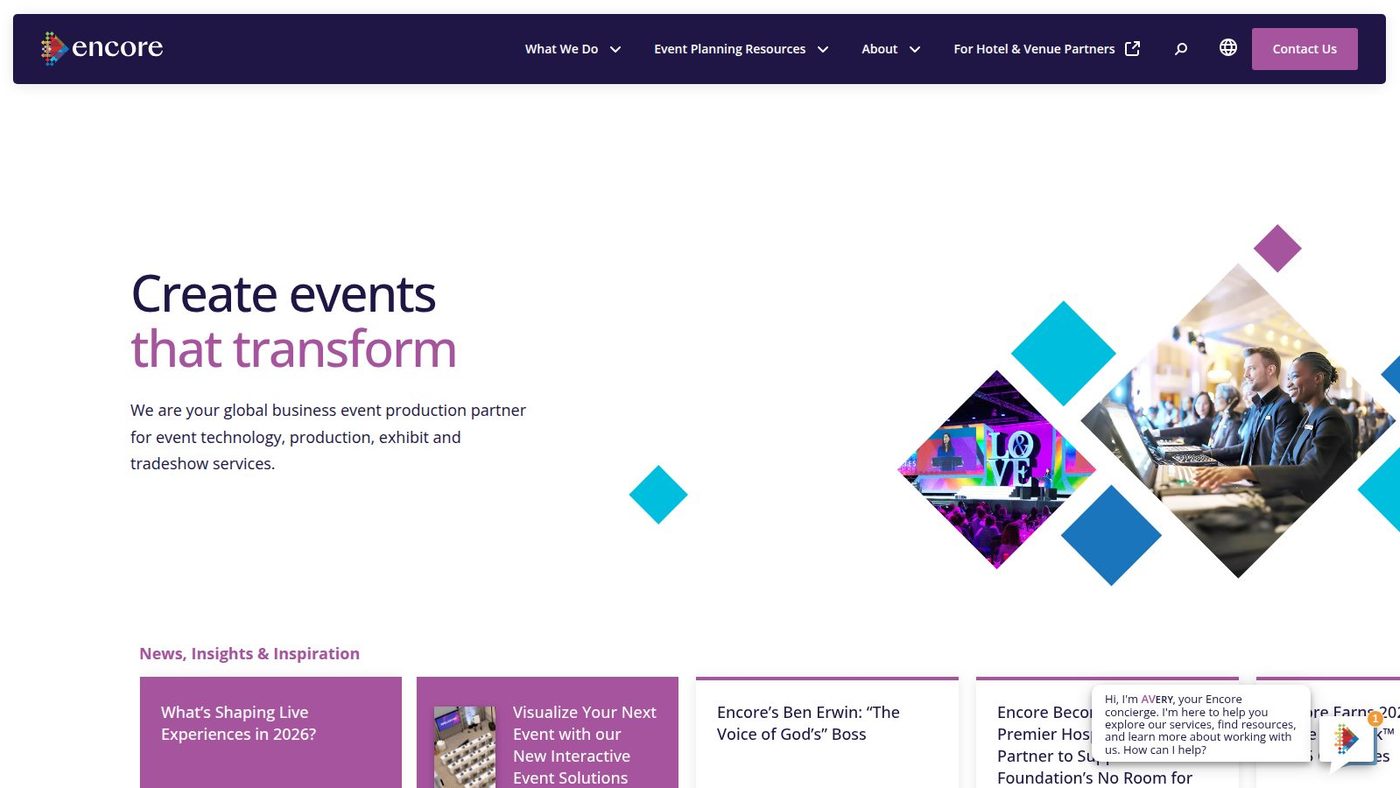
Encore describes itself as a global business event production partner for event technology, production, exhibit, and trade show services, and it operates across regional arms covering the Americas, EMEA, and APAC. The practical scenario where it wins is the hotel ballroom program: your venue contract may already name Encore as the in-house technology provider, and fighting that arrangement usually costs more than working with it. My advice is to treat the event day and the footage as two separate line items in the negotiation. Get the in-room production scoped, then ask the harder second question: what exactly leaves the building afterward, in what format, edited by whom, and who owns it. The answer decides whether you need an editorial partner alongside.
5. LAI Video
More on LAI Video
LAI Video sits inside the Leading Authorities family and lists corporate conferences, networking events, trade shows, award ceremonies, and hybrid gatherings as its home turf. It also runs a dedicated associations practice, the kind of client base you would expect from its Washington address. Splitting the technical show from the editorial program, the way this model implies, is not a compromise; for many organizers it is the cleanest structure. The AV house owns the room, the content team owns the story, and neither is stretched into the other's trade. It becomes a problem only when one vendor is quietly expected to do both, which is worth settling in writing before anyone loads in. The entry's real lesson applies to every company on this list: ask who is responsible for the moment a speaker goes off script and the hallway conversation becomes the best footage of the day.
If you want a benchmark for what a content-led event recap looks like, HubSpot’s own recap of its INBOUND conference is a useful reference: fast, people-first, built from show-floor moments rather than stage wides.
6. VMG Studios
More on VMG Studios
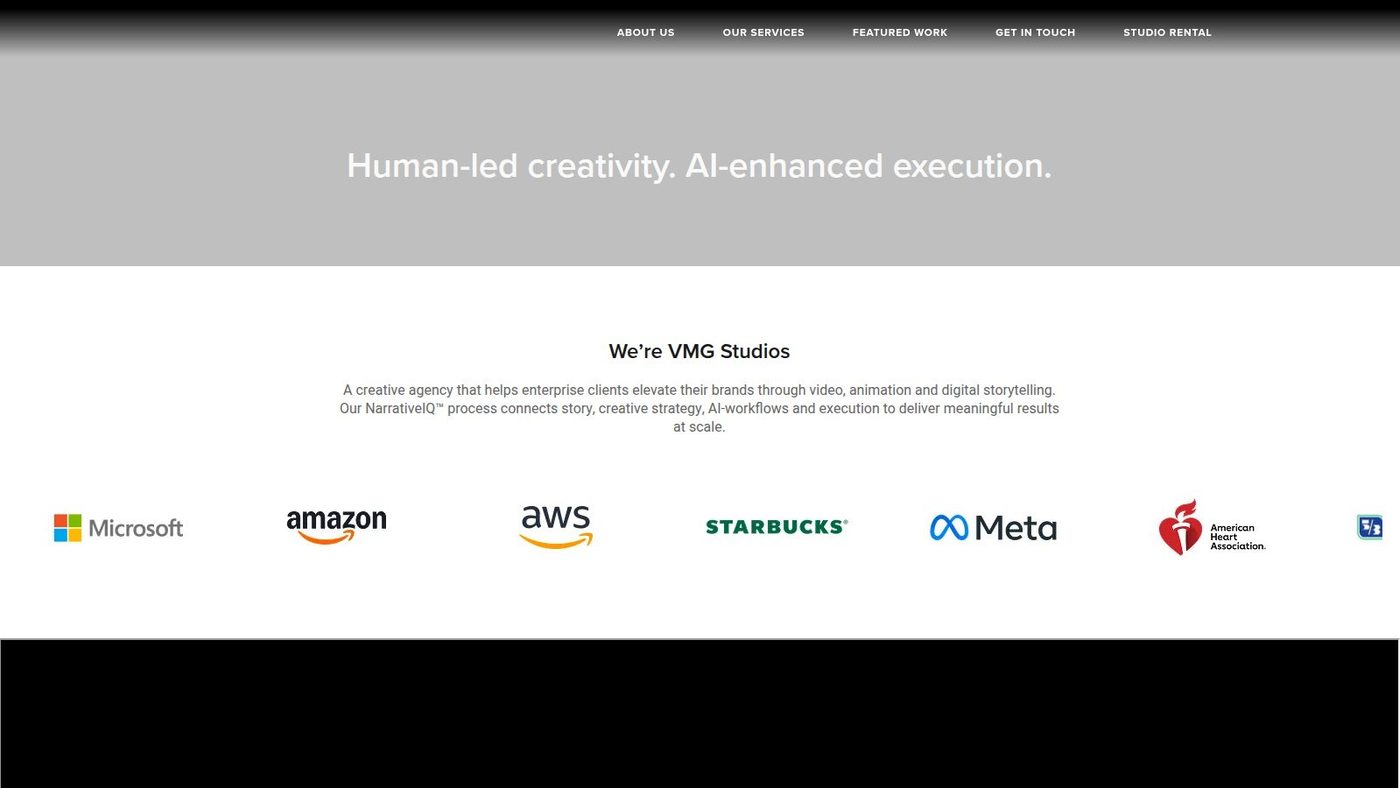
VMG Studios is based in Bellevue, Washington, and its services page frames event content exactly the way a marketing buyer thinks: keynotes, corporate events, and trade shows, on the show floor, in the auditorium, and on the big stage. The published testimonials skew toward large West Coast technology companies, which tells you the intake process is comfortable with procurement, brand review, and tight launch timelines. One thing to know going in: the company now leads its positioning with human-led creativity paired with AI-enhanced execution, its NarrativeIQ process. If your organization has rules about AI in vendor workflows, in either direction, that is a first-call conversation rather than a surprise for the contract stage.
7. Multi Image Group
More on Multi Image Group
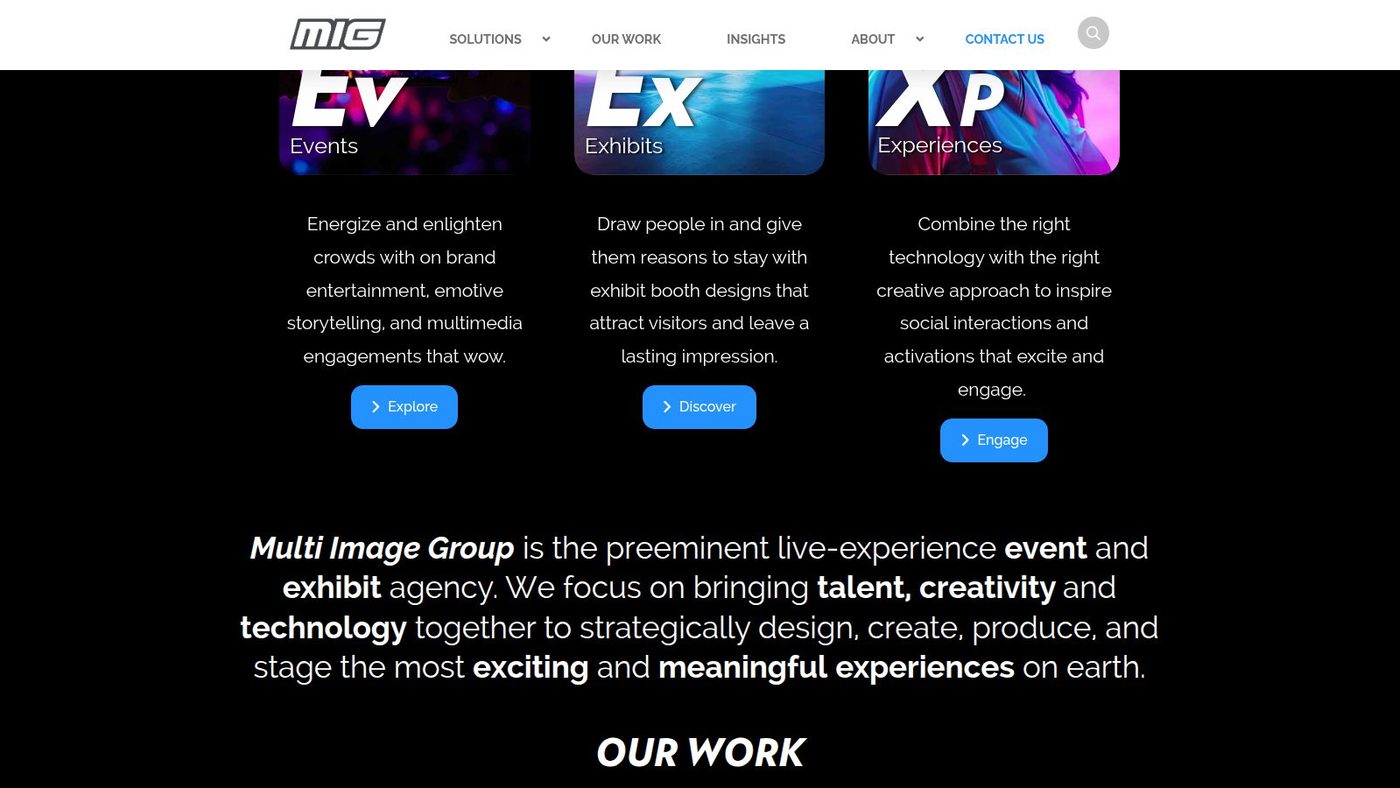
MIG is the veteran of this list, employee-owned and running since 1979, and the equipment and headcount numbers above are its own published figures, so treat them as vendor-reported. What they signal reliably is that MIG does not sub out its core: staging, show control, and streaming pass between teams that share a building. That matters most on programs where a handoff between separate vendors is the biggest single risk, a hybrid general session, say, where the room production and the broadcast have to hit the same cue. For a small single-room event with a recap and a few interviews, this is more production model than the job needs, and MIG's own positioning does not pretend otherwise.
The whole list side by side
| # | Company | Best for | Model | Limitation |
|---|---|---|---|---|
| 1 | Moonb | Events that feed an ongoing content program | Dedicated creative team; one set monthly rate, or a per-project quote | Not an on-site AV or staging house |
| 2 | Cramer | Shows where strategy, stage, and video are one engagement | B2B brand experience agency; quoted per project | Big machine for a simple keynote recording |
| 3 | Freeman | Large conferences, trade shows, multi-city programs | Trade show and event company with full AV production | Small events pay for unneeded infrastructure |
| 4 | Encore | Hotel and convention center programs using the in-house provider | Global venue-embedded event production; quoted per venue | Editorial package after the event needs line-by-line scoping |
| 5 | LAI Video | Editorial event storytelling, interviews, fast social edits | Emmy-winning DC video and communications agency | Not a staging or rigging house |
| 6 | VMG Studios | Pre-event creative plus event coverage from one partner | Seattle-area creative agency; quoted per project | Room infrastructure still needs an AV vendor |
| 7 | Multi Image Group | One technical partner across room and stream | Employee-owned live experience agency since 1979 | Custom scope, travel beyond Florida adds cost |
Models beyond the named companies
Not every event needs a company from this list, and it helps to know the categories the list sits inside, because the right answer for a given event is sometimes a model rather than a name.
A local videography specialist is often the honest choice for a small, single-room event: one operator, a defined shot list, a clean recording, and a short recap. The trade is simultaneous coverage. One person cannot hold the stage, the audience reaction, the sponsor booth, and the hallway interviews at the same time, and inclusions vary so widely that you should never assume editing, captions, music licensing, or raw footage come with the rate. Get the complete deliverables list in writing before comparing that quote with anyone bigger.
A broadcast-focused specialist is the right shape when the livestream is the product: live switching, redundant streaming, remote speakers, clean session files. The gap tends to be editorial depth afterward. Plenty of broadcast crews hand over flawless recordings and consider the job done, which is fine if you have an editor and a real gap if the marketing team expected a campaign. My video production checklist covers both halves, the live workflow and the post-event requirements, so nothing falls between the two quotes.
An editorial content studio is the inverse: built to turn one event into a library of interviews, speaker clips, and short-form edits, but not to run venue screens, show control, or simultaneous rooms. If you pair one with an AV provider, make the quotes separate capture from editing explicitly, and settle captions, music licensing, releases, raw footage, and file ownership per studio, because none of it is standard.
And a full-service event production agency bundles strategy, creative direction, production management, and video into one engagement. Useful for a major launch with many stakeholders; heavier to scope and manage than a focused production brief, and often structured around big projects rather than the steady weekly content that follows one. Ask what is produced in house, what goes to partners, and who owns the post-event edit. My breakdown of video production cost helps separate capture, production management, and deliverables when an agency quote arrives as one number.
Match the partner to the work after the event
Compare quotes line by line only after the scopes match. A one-camera capture quote and a three-camera production quote are not the same product, and neither is a livestream package versus a post-event editorial package. Decide what the shoot needs to produce first, then how the vendor will capture it. If you are still forming that picture, my guide on how to choose a video production company walks through the vetting questions that apply to every vendor type on this page.
A serious vendor will ask for the run-of-show, the room layout, or a walkthrough before quoting, and you should hand over one more thing unprompted: an honest list of the three moments that matter most. Those two documents determine camera positions, roaming coverage, and the whole edit plan. If a vendor quotes without asking for either, that tells you what kind of coverage you will get.
Audio deserves its own line in every production plan. Ask for a feed from the venue sound board, independent recorders on it, and on-camera reference audio as backup, because camera microphones alone will not save a keynote in a reflective ballroom. A quote that cannot explain where the clean speaker audio comes from is not a finished coverage plan; I have seen more event footage ruined by audio than by any camera decision.
Then agree on the deliverables before the day, not in the week after: which sessions get clean recordings, whether vertical clips are cut on-site, what the highlight film is for, and when captions, speaker releases, music licensing, raw footage ownership, usage rights, and final files are handled. The most useful shape I can offer comes from an annual SaaS user conference we can leave anonymous: two stages over two days, one team on capture and edit, and the output was captioned vertical clips for the social team during the event, a tight keynote cut for the follow-up email, a highlight film reused to sell the next edition, a session library released over the following months, and a sponsor reel for renewal reporting. That is the deliverables list every shortlisted vendor should be able to spell out and price. My longer field notes on corporate event video production go deeper on the shot list behind it.
The keynote cut deserves special attention because it is the piece executives actually forward. The reference standard is what Google does after its I/O conference: the full keynote compressed into a fast, watchable edit on its own channel, published while the announcements are still news.
Measure the result as a content system rather than a view count. Count the finished assets the shoot produced, how fast the first post went live, how the session library performs over the months after, whether sales uses the clips in follow-ups, and whether sponsors renew. Raw views are not comparable across companies; compare against last year’s event, or against the events you never filmed.
The recurring hiring mistakes are boringly consistent: booking the vendor too late for a walkthrough, sending a one-line brief instead of the run-of-show, ignoring audio until the quote stage, buying “a video” instead of a listed set of assets, leaving raw footage ownership out of the contract, comparing quotes with unequal camera plans, assuming the livestream vendor also edits the recap, forgetting releases and music licensing, and hiring the AV provider for editorial work without ever checking whether it has an editorial process. Every one of those is avoidable in a single planning call, which is why the vendors worth hiring insist on that call. The full menu of what a production partner should cover, event work included, is in my overview of video production services; define the content library first, then pick the operating model that can deliver it.
Frequently asked questions
Use both, for different jobs. The venue's in-house provider is usually the most efficient way to run screens, sound, and room production, and venue contracts can make outside AV expensive anyway. But in-room delivery and post-event content are different trades, so scope them as separate line items: let the house team own the room, and hire an editorial partner if you need a highlight film, session library, or social clips afterward. The failure mode is assuming one quote covers both.
Six to eight weeks before the event is a comfortable window for a single-venue corporate event, and longer for multi-city programs or anything with a livestream. The deadline that actually matters is the planning call: the vendor needs the run-of-show, a room walkthrough, and your list of priority moments early enough to plan camera positions and the audio feed. A vendor booked the week before can still record the stage; what you lose is the coverage plan that makes the footage usable afterward.
You should, and it belongs in the contract before filming, not in a negotiation after. Ask for three things in writing: ownership or perpetual usage rights to the raw footage, a defined delivery format and storage handoff, and clarity on speaker releases and music licensing for anything the vendor edits. Raw footage from a two-day event keeps producing value for a year or more, and vendors price and archive it very differently, so an event quote without a footage clause is incomplete.