12 Best Design Trends & News Sites in 2026
Twelve design news sites, galleries, and newsletters worth following in 2026. What each does best, real pricing, and a real limitation for every pick.

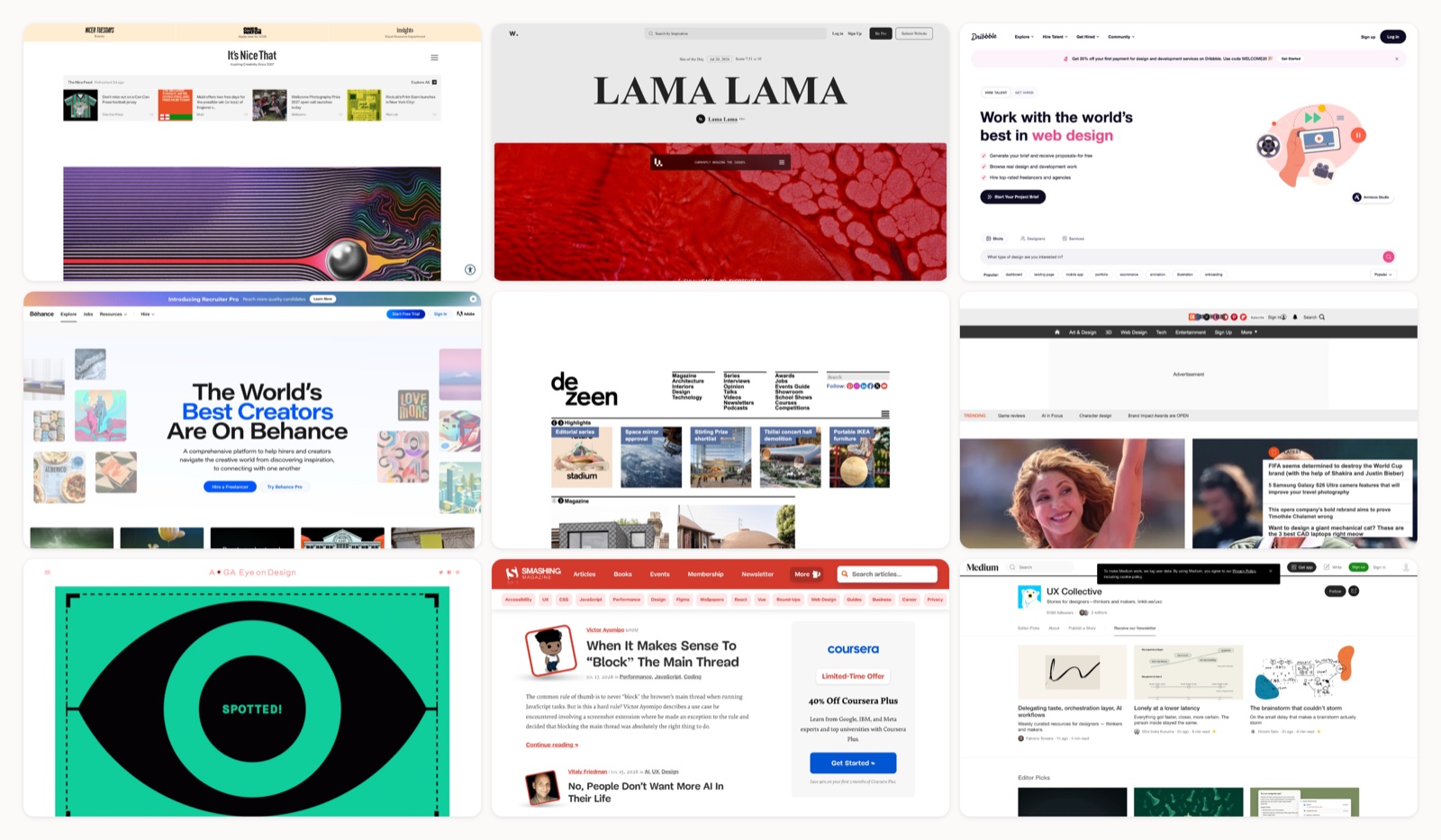
Design does not sit still. New type, fresh interaction patterns, and new tools appear faster than any one person can track, and most “best design blogs” lists answer that by dumping fifty links on you and walking away. This one is shorter on purpose. I read most of these every week, so I have said what each is actually good for instead of padding the count. Twelve sources, each earning its spot, with a note on who it actually helps and where it comes up short.
One thing to clear up first. Designer News, a community you will still see recommended on older roundups, has wound down, so it is not worth your time in 2026. Everything below is active and maintained. Some are galleries you skim in two minutes. Others are long reads you save for the weekend. A couple are research libraries you cite when a stakeholder questions a decision. Pick three or four that fit your role, drop their newsletters in one folder, and you have a habit instead of an open-tab graveyard. If you want the macro view first, Figma’s rundown of 2026 web design trends and Adobe’s 2026 design trends are decent primers.
1. It’s Nice That
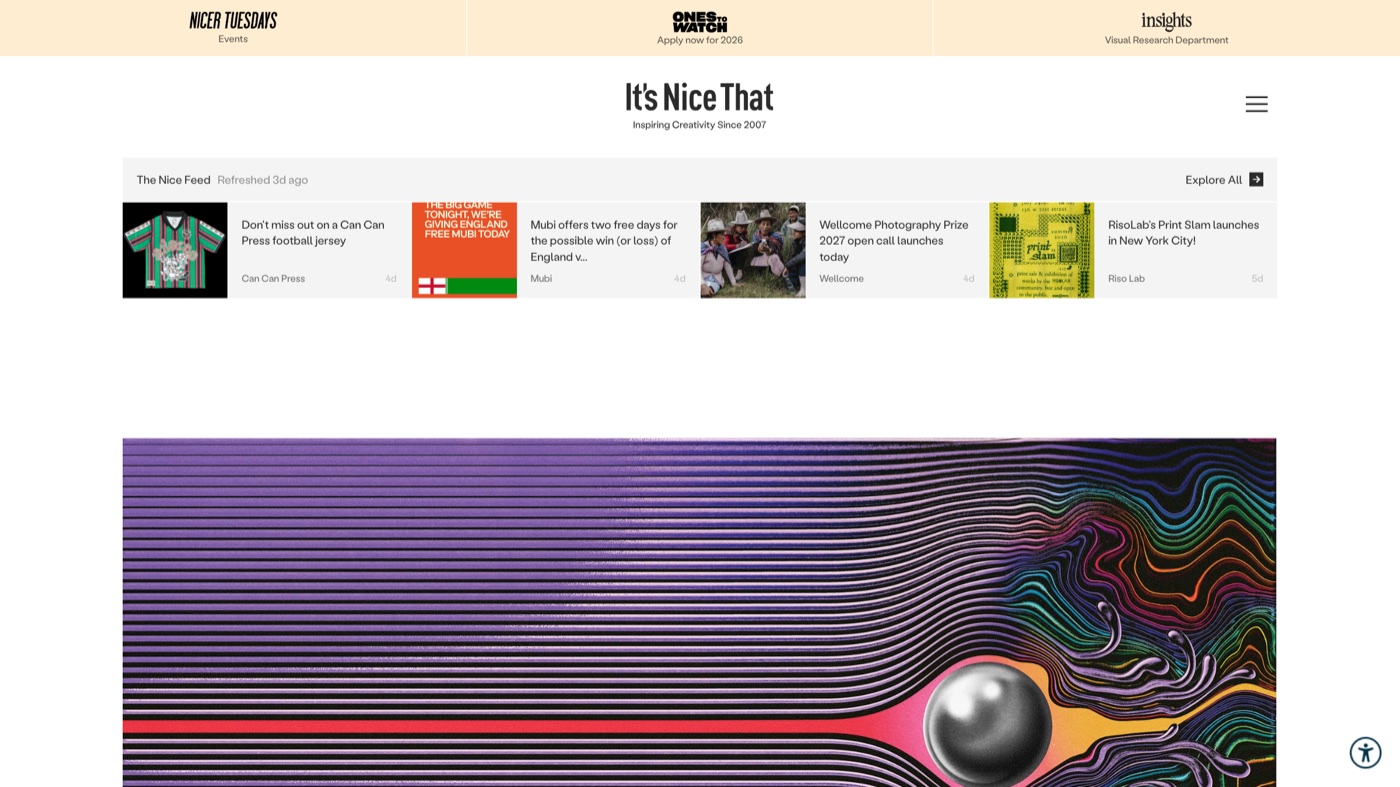
- Best for: Cross-discipline inspiration across illustration, graphic design, photography, and art.
- Pricing: Free.
- Why it stands out: The editors have taste, and they use it. It’s Nice That surfaces standout projects from studios you know and graduates you have never heard of, which makes it one of the better places to catch a visual idea before it goes mainstream.
- Worth knowing: It shows you the what, rarely the how. You leave inspired, not with a tutorial.
2. Awwwards
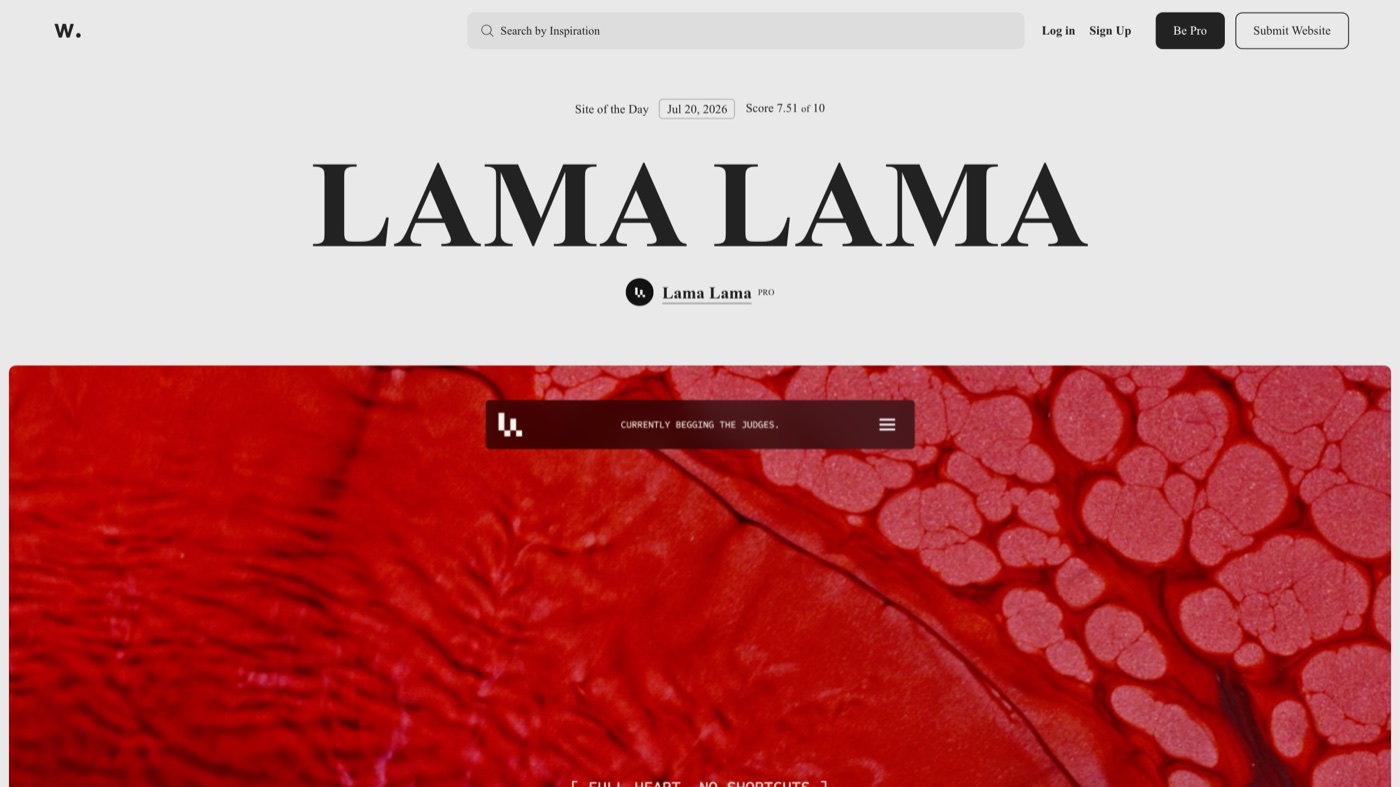
- Best for: Reading where web and interaction design are heading.
- Pricing: Free to browse; Awwwards Academy courses and awards entries are paid.
- Why it stands out: The Site of the Day is scored by a jury and the community, so the daily feed doubles as a running record of the color, motion, and layout moves designers are trying right now.
- Worth knowing: Winners lean toward showpiece sites. Plenty are heavier and more experimental than anything you would ship to a conversion-focused page.
3. Dribbble
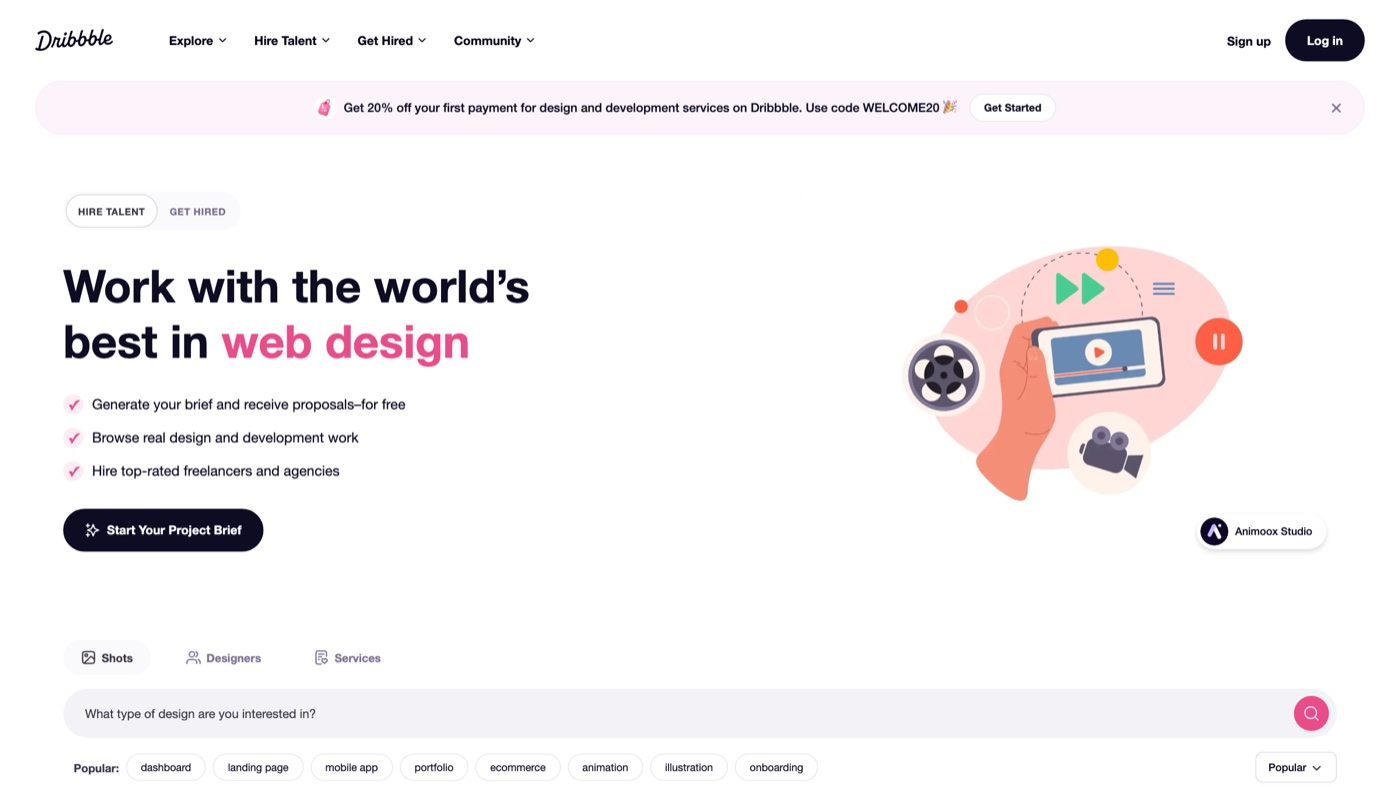
- Best for: A fast pulse on UI, illustration, and visual style.
- Pricing: Free to view; Pro from about $5/month billed annually.
- Why it stands out: Designers post “shots” as they work, so you see color palettes, type pairings, and animation ideas forming in near real time. Filtering by tag (dashboard, landing page, icon set) narrows it fast.
- Worth knowing: A lot of shots are concept eye candy. A beautiful screen on Dribbble has not been tested by a single real user.
4. Behance
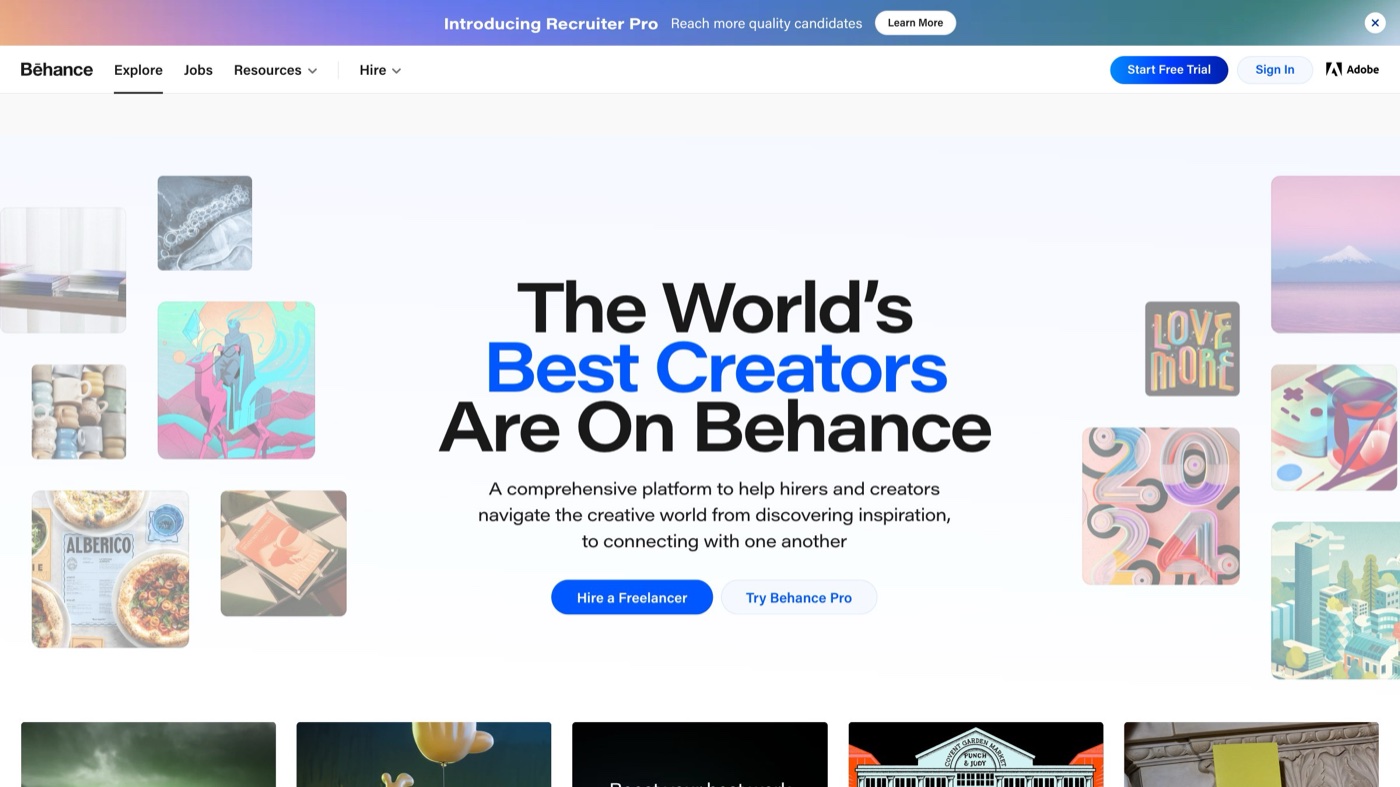
- Best for: Full project case studies, not just single frames.
- Pricing: Free.
- Why it stands out: Adobe’s portfolio network runs on a show-your-work culture, so the strong projects walk you from brief to final art. That makes it a good hunting ground for visual storytelling examples you can learn the structure from.
- Worth knowing: The volume is enormous. Without the curated galleries, you are panning for gold in a very big river.
5. Dezeen
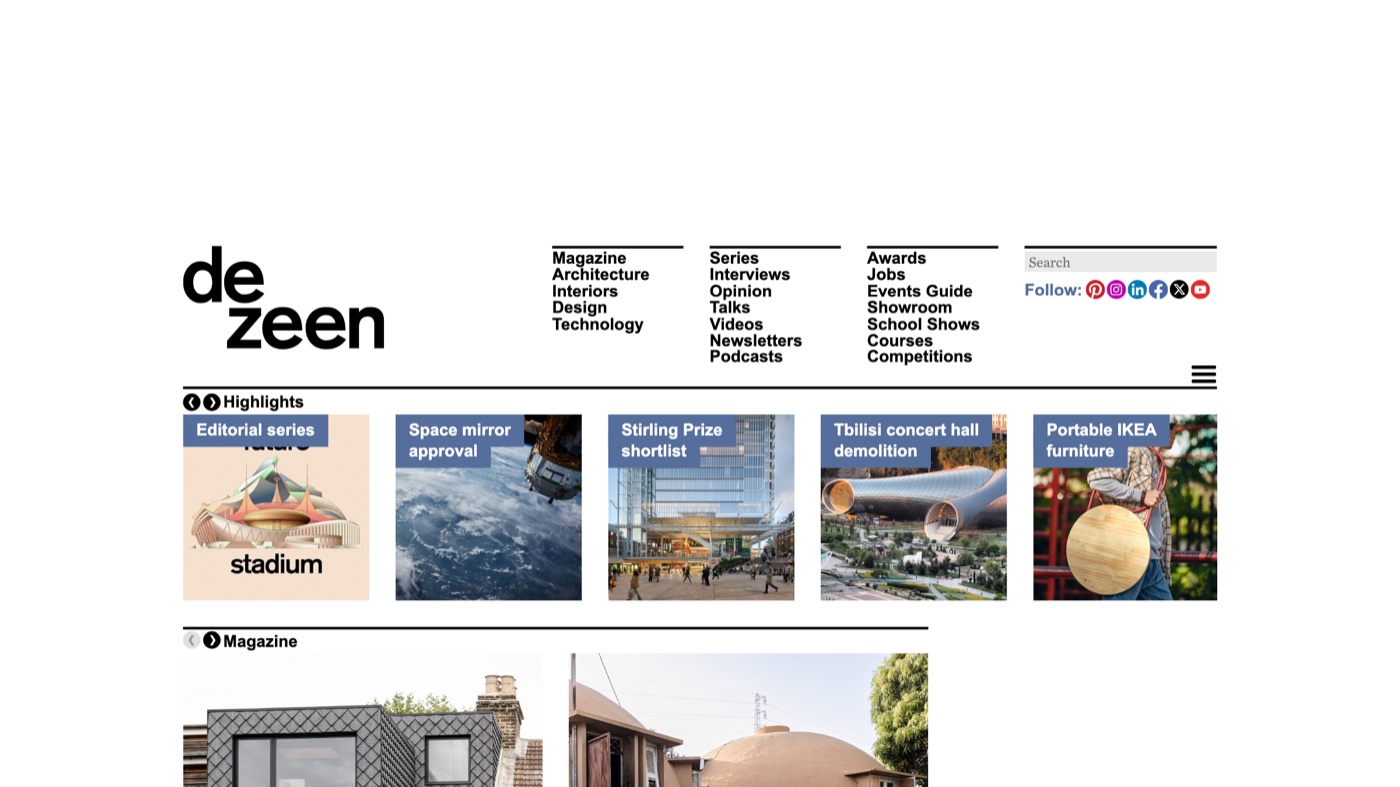
- Best for: Daily architecture, interior, and product design news.
- Pricing: Free; Dezeen Awards entries are paid.
- Why it stands out: It is fast, prolific, and beautifully photographed, and it pulls your eye out of the screen and into physical design, where a lot of color and material trends start before they reach digital work.
- Worth knowing: The focus sits on the built world. If you only want UX or brand identity, most of the feed will not apply.
6. Creative Bloq
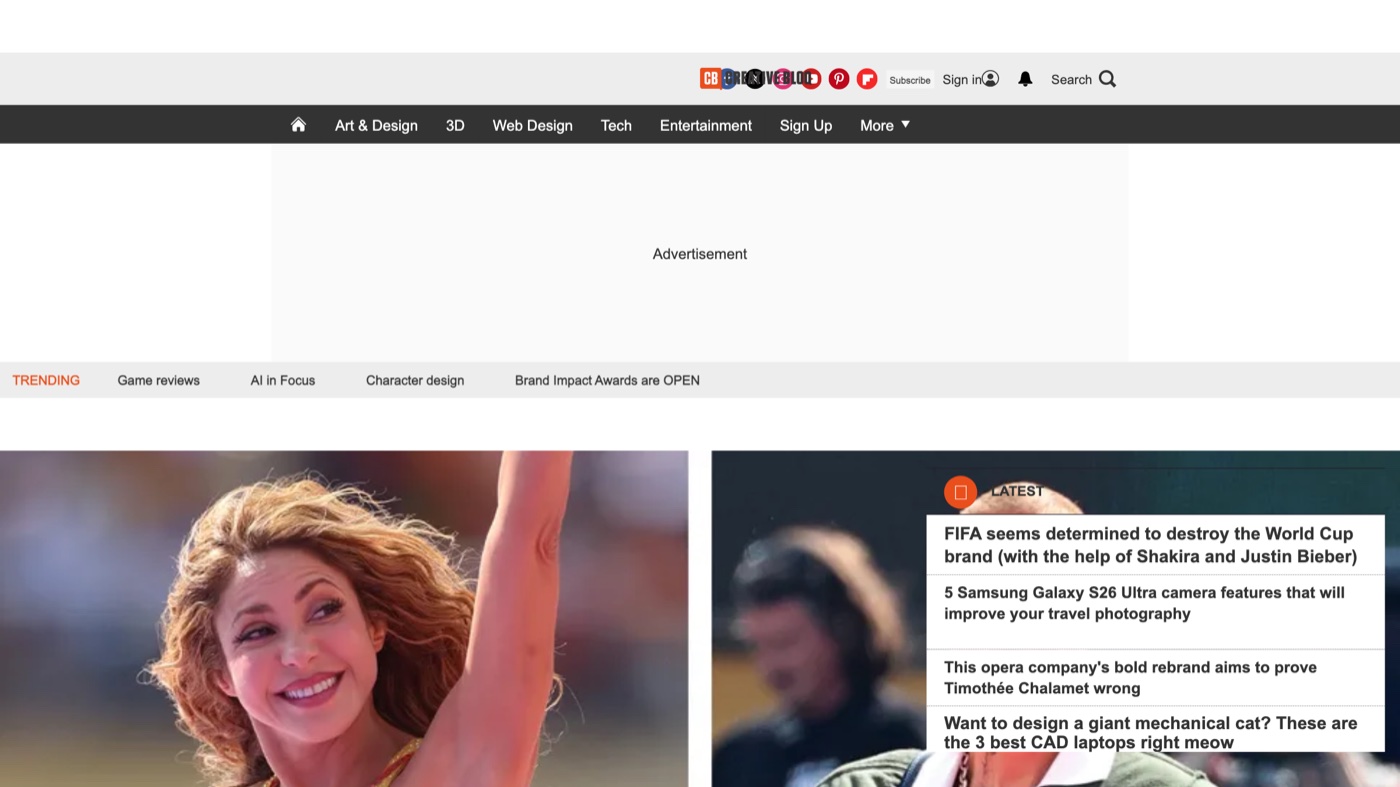
- Best for: Daily creative news, tutorials, and tool roundups in one place.
- Pricing: Free, ad-supported.
- Why it stands out: It covers a wide field, from graphic design and 3D to UI, and mixes trend pieces with practical buying advice on hardware and software. Good for a quick morning scan.
- Worth knowing: The ad and affiliate load is heavy, and the pace can favor volume over depth.
7. AIGA Eye on Design
- Best for: Design culture, criticism, and the story behind the work.
- Pricing: Free.
- Why it stands out: As AIGA’s editorial arm, Eye on Design reports like a magazine, with interviews, criticism, and spotlights on independent studios and influential graphic designers you should know.
- Worth knowing: Come for perspective, not for a how-to or a trend checklist.
8. Smashing Magazine
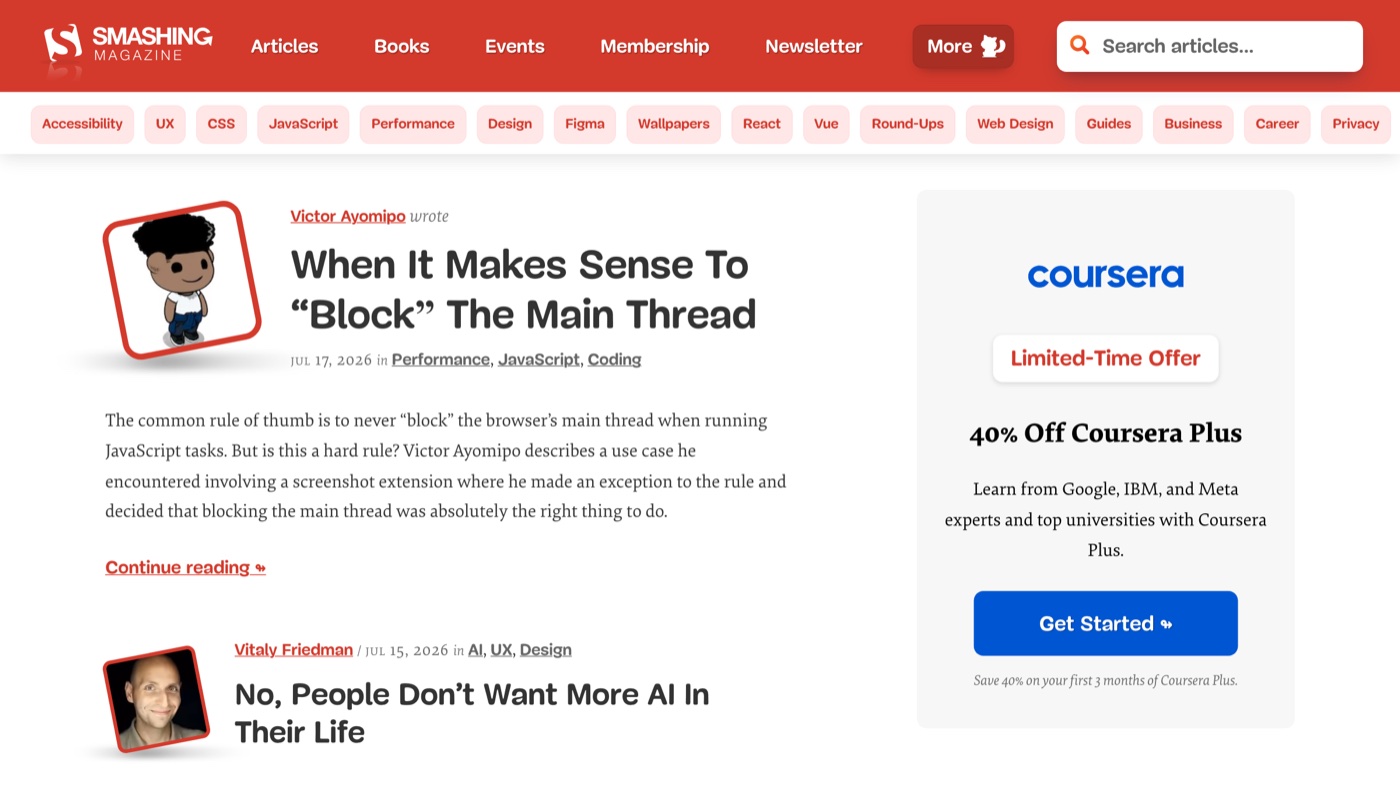
- Best for: Practical front-end, UX, accessibility, and performance.
- Pricing: Free articles; books, workshops, and conferences are paid.
- Why it stands out: The articles are written by people who ship, and they explain the how and the why, not just the trend. It pairs well with a repeatable design process rather than one-off inspiration.
- Worth knowing: It leans engineering and usability. For pure visual inspiration, look elsewhere.
9. UX Collective
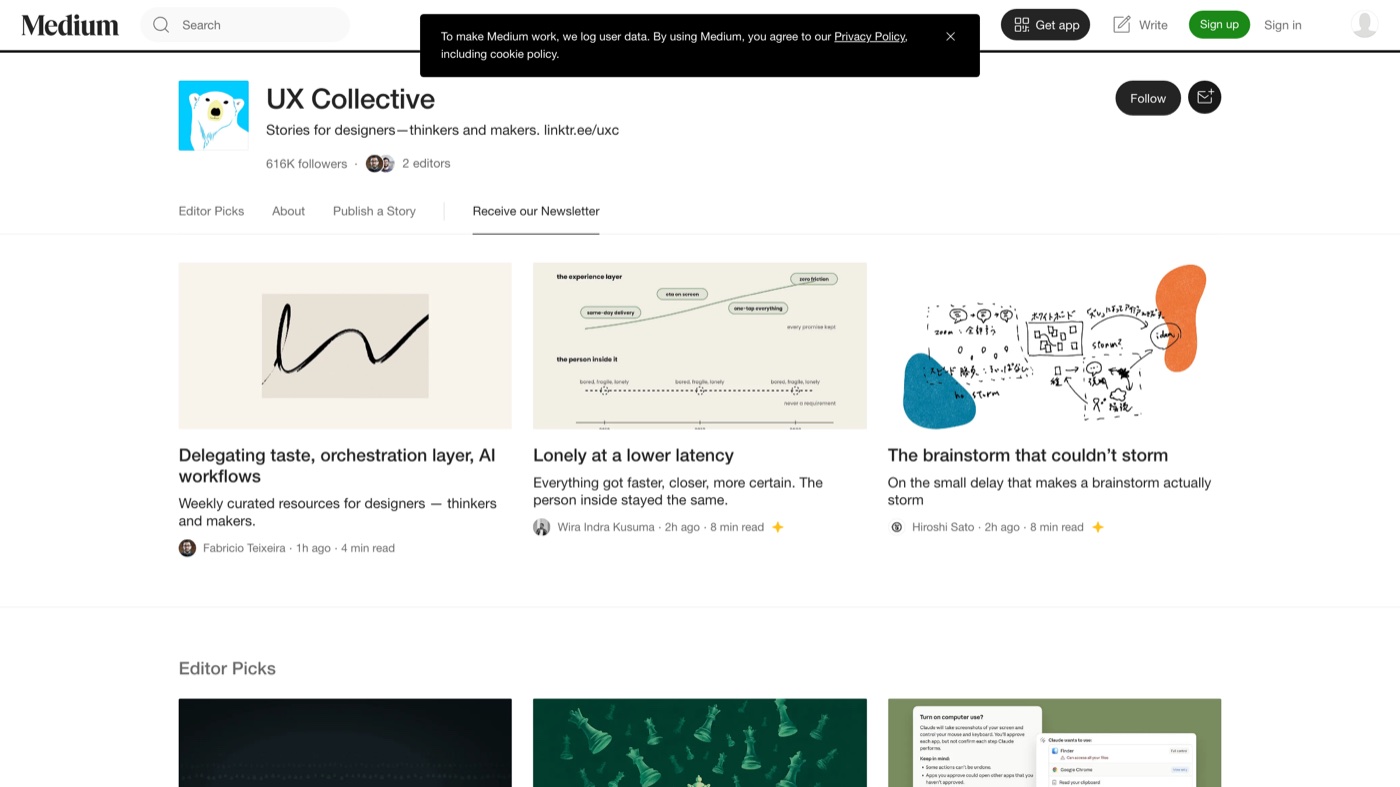
- Best for: UX thinking, case studies, and a well-edited weekly newsletter.
- Pricing: Free to read; some pieces sit behind Medium’s meter (about $5/month for full access).
- Why it stands out: A large pool of practicing designers contributes, and heavy curation keeps the signal high. The topical collections (design systems, careers, research) are an easy way to go deep on one thread.
- Worth knowing: It lives on Medium, so the meter can interrupt a good read at the worst moment.
10. Nielsen Norman Group
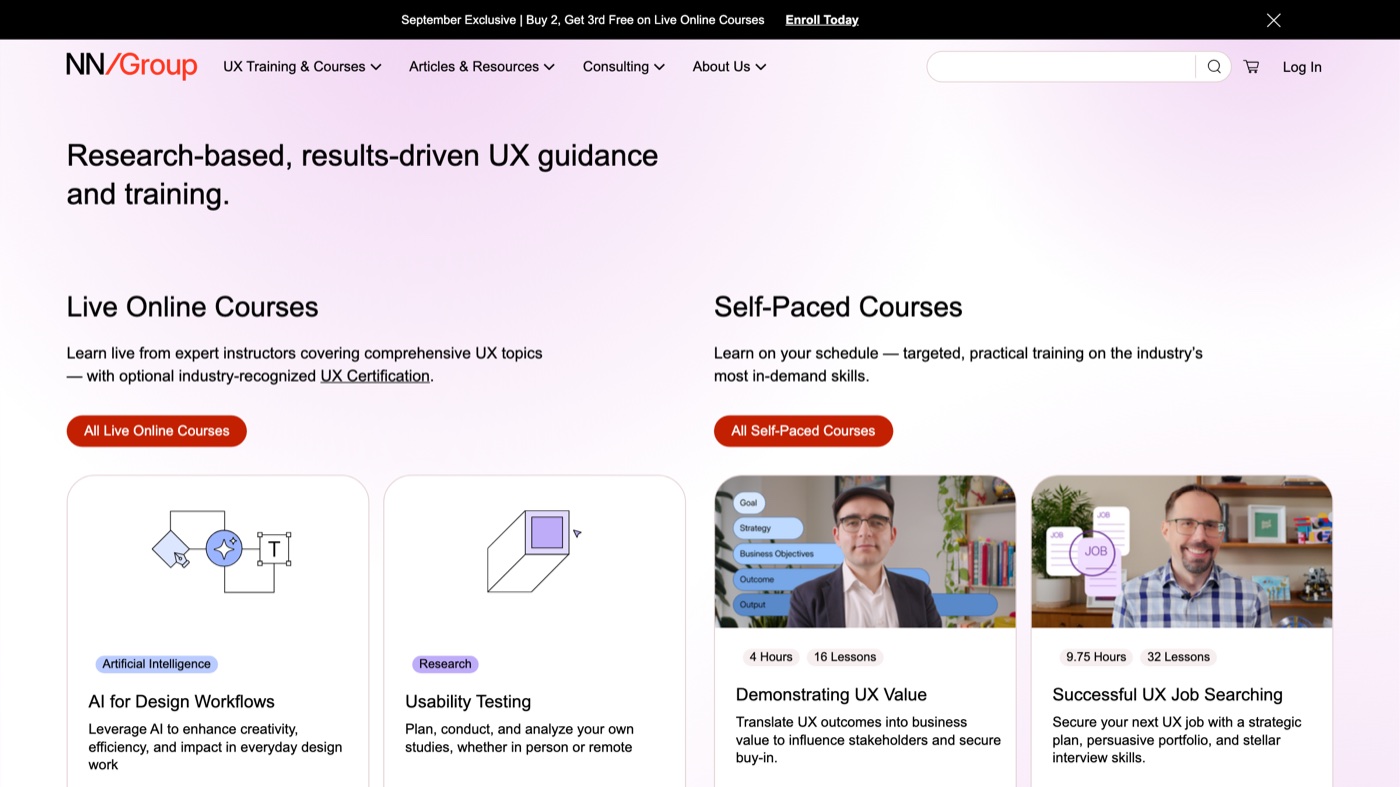
- Best for: Evidence-based UX research and usability guidelines.
- Pricing: Free articles; reports, courses, and certification are paid.
- Why it stands out: Co-founded by Jakob Nielsen, NN/g runs on user testing, not opinion. When you need to defend a design choice with something a stakeholder cannot wave away, this is the citation.
- Worth knowing: It is evergreen and plain-looking by design. Come here for principles that outlast the latest aesthetic, not for the aesthetic itself.
11. Brand New
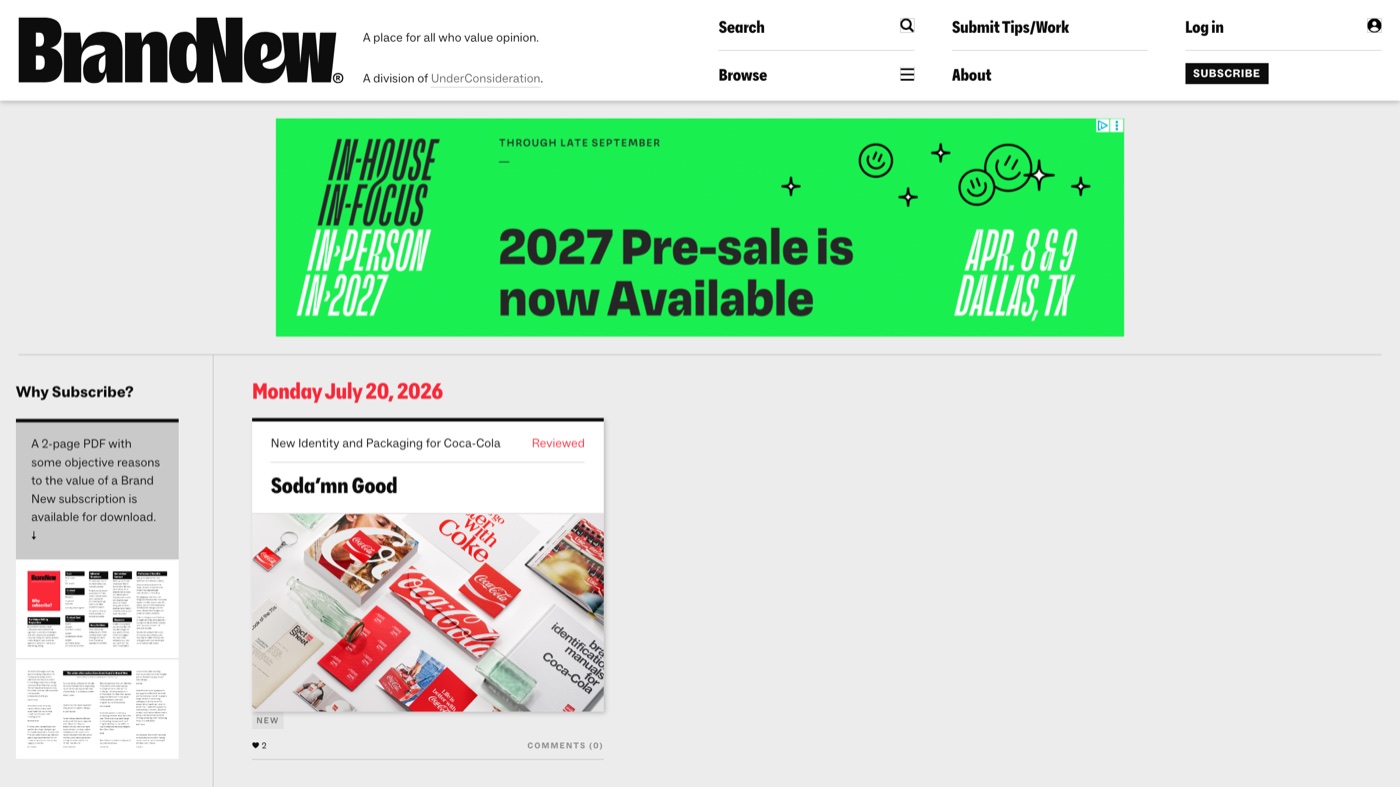
- Best for: Brand identity and logo redesign critique.
- Pricing: Free brief posts; the full archive runs about $20/year (BN Acolyte membership).
- Why it stands out: Part of UnderConsideration, Brand New reviews rebrands with sharp before-and-after breakdowns and opinions that do not hedge. It is a fast way to study how identity work holds up, which helps when you are learning how to create brand guidelines of your own.
- Worth knowing: It is narrow by design (identity only), and the full archive sits behind that small yearly membership.
12. Fast Company Design (Co.Design)
- Best for: Where design meets business, strategy, and culture.
- Pricing: Free metered access; full access needs a paid membership.
- Why it stands out: Renamed from Co.Design, this is the section that reports the business story behind a launch or rebrand, which is useful when you have to sell a creative decision to a room of executives.
- Worth knowing: The metered paywall stops you a few articles in, and the remit is broader business, not design alone.
Prefer to watch?
If a video is an easier way in, this walkthrough of 2026 web design trends is a solid primer before you start browsing the galleries above.
Compare the twelve
| # | Tool | Best for | Pricing | Limitation |
|---|---|---|---|---|
| 1 | It's Nice That | Cross-discipline creative inspiration across illustration, graphic design, photography, and art | Free | Inspiration only; it shows the what, rarely the how, and offers no tutorials. |
| 2 | Awwwards | Reading where web and interaction design are heading | Free to browse; Academy courses and awards entries paid | Winners skew to heavy showpiece sites that are more experimental than production-realistic. |
| 3 | Dribbble | A fast pulse on UI, illustration, and visual style | Free to view; Pro from about $5/month billed annually | Many shots are concept eye candy that has never been tested by a real user. |
| 4 | Behance | Full project case studies, not just single frames | Free | The volume is enormous; you rely on the curated galleries to filter for quality. |
| 5 | Dezeen | Daily architecture, interior, and product design news | Free; Dezeen Awards entries paid | Physical-design heavy; light on UX and brand identity if that is all you want. |
| 6 | Creative Bloq | Daily creative news, tutorials, and tool roundups in one place | Free, ad-supported | The ad and affiliate load is heavy, and the pace can favor volume over depth. |
| 7 | AIGA Eye on Design | Design culture, criticism, and the story behind the work | Free | Editorial and cultural, not a how-to resource or a trend checklist. |
| 8 | Smashing Magazine | Practical front-end, UX, accessibility, and performance | Free articles; books, workshops, and conferences paid | Leans engineering and usability over visual-trend spotting. |
| 9 | UX Collective | UX thinking, case studies, and a well-edited weekly newsletter | Free to read; some pieces behind Medium's meter (about $5/month) | Hosted on Medium, so the meter can interrupt a good read. |
| 10 | Nielsen Norman Group | Evidence-based UX research and usability guidelines | Free articles; reports, courses, and certification paid | Evergreen and utilitarian by design, not a place for the latest aesthetic. |
| 11 | Brand New | Brand identity and logo redesign critique | Free brief posts; full archive about $20/year (BN Acolyte) | Narrow by design (identity only), and the full archive is behind a small yearly membership. |
| 12 | Fast Company Design (Co.Design) | Where design meets business, strategy, and culture | Free metered access; full access needs a paid membership | Metered paywall stops you a few articles in, and the remit is broad business, not design alone. |
How to actually use this list
Do not follow all twelve. Choose three or four that match your role, a couple of galleries for the eye and one or two reads for the head, and let their newsletters come to you. A B2B software team might live in UX Collective and NN/g. A consumer brand might lean on It’s Nice That and Dezeen. The point is a short, trusted rotation you will keep up, not a bookmark folder you feel guilty about.
When a feed is not enough
Reading these sites keeps you current. It does not put finished work on your calendar. Sooner or later the question stops being “what should we make” and becomes “who has the hours and the craft to make it,” and that is a hiring decision with a few real answers. Building an in-house team gives you the most control and the slowest start, and you carry the salary whether the pipeline is full or empty. Freelancers flex with the work but need managing, and the good ones book out weeks ahead. An embedded creative team like Moonb sits between those two: people who learn your brand and stay, with a dedicated creative director covering video, design, motion, and animation, without adding headcount. I lean toward the embedded option myself when the work is steady, because managing a rotating cast of freelancers tends to eat the time it was meant to save. Whichever route you choose, the sites above are still where the ideas start.
Frequently asked questions
There is no single best site; the right mix depends on your role. For a fast visual read, Awwwards and Dribbble. For editorial and culture, It's Nice That and AIGA Eye on Design. For daily news, Dezeen and Creative Bloq. For research you can cite, Nielsen Norman Group and Smashing Magazine. Pick three or four and check them weekly.
For most people, once a week is plenty. A weekly newsletter folder covers the news without the daily pull, and the deeper reads like Smashing Magazine or NN/g work fine as a monthly sit-down. Consistency matters more than frequency.
Most are free to read. A few have paid tiers: Fast Company Design is metered, UX Collective sits partly behind Medium's meter, and Brand New's full archive is about $20 a year. None of the core reading is locked away.