How to Choose the Best Social Media Marketing Agency in 2026
A practitioner's guide to choosing a social media marketing agency, with 18 firms compared by focus and fit and a checklist for what to compare before signing.

The best social media marketing agency is the one that fits your channels and your production pace, not the one with the flashiest award shelf. Approvals matter just as much, because the team that wins on the pitch stage is rarely the one that makes an account run smoothly six months later. I’ve sat on both sides of these rooms, and social is a fragmented, fast-moving market, so agencies get judged on execution rather than slogans.
The buyer side of this market is enormous. Statista’s social media marketing topic page puts the global social media ad market at about 234.14 billion USD and counts 5.17 billion social network users worldwide, which tells you the decision is about performance and fit, not discovery, according to Statista’s social media marketing topic page. Before you trust a pitch, ask what the agency specializes in, who sits on your account, how it reports, how it prices, and whether it keeps work in house or pushes it to white-label partners. Then compare the options below by business need.
1. Moonb
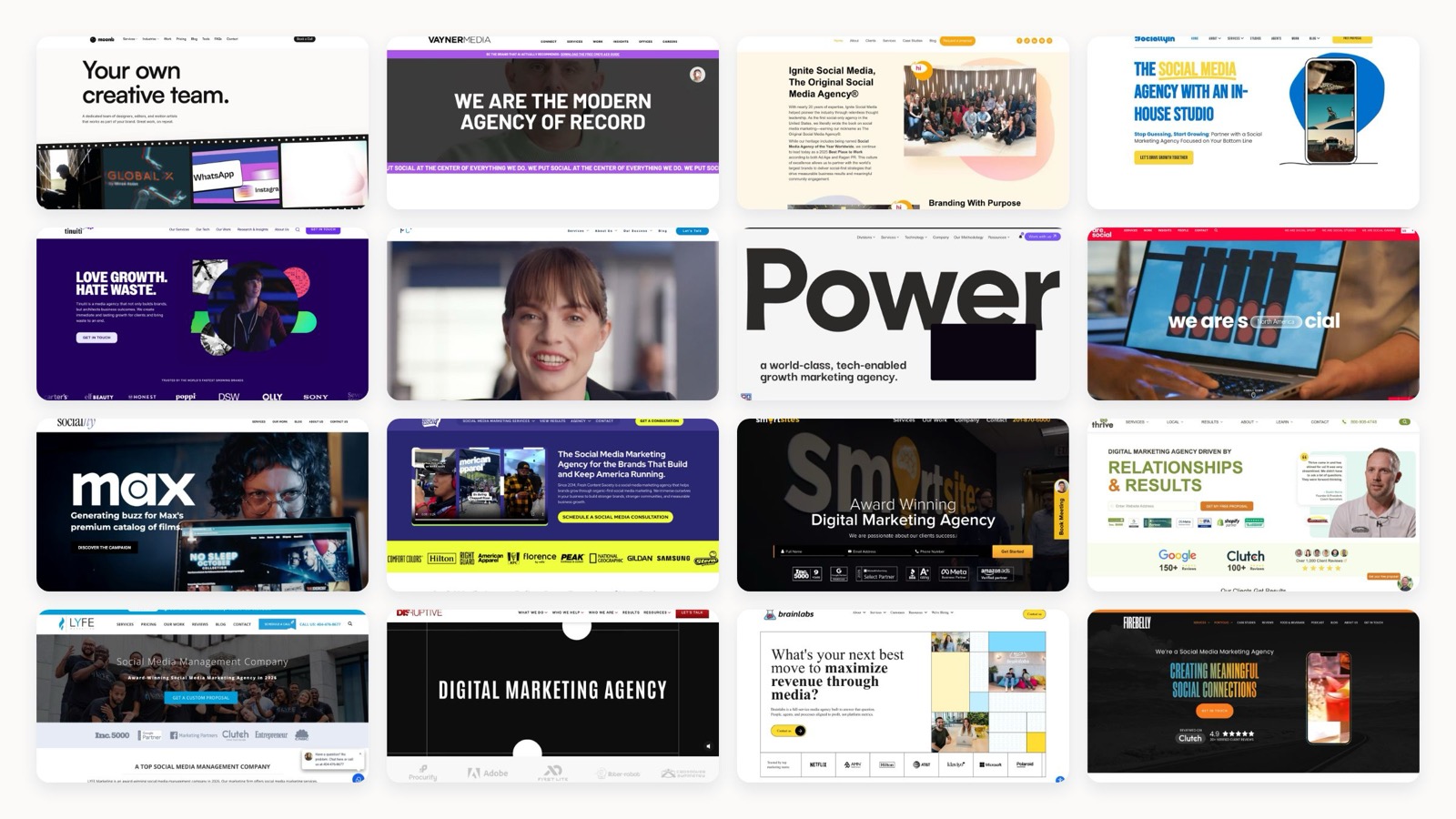
I work at Moonb, so read this entry with the suspicion you would apply to any company that ranks itself first. Moonb is a creative studio, not a paid-social or community-management agency; think of it as the creative engine behind social, the social media video and design the channels actually run on, not the team that manages the campaigns.
- Best for: teams that need the content itself, produced on a steady weekly rhythm, rather than building an in-house creative team from scratch.
- Focus: creative production of video, design, and motion for social and broadcast.
- Why it stands out: it works as an embedded partner, so the same people learn the brand and turn out work ready for social; the real numbers I can share are a 4.9 out of 5 client rating, 95 percent client retention, and roughly 48-hour turnaround on many assets.
- Worth knowing: not a full social agency with paid media, influencer, and community management; pair it with one of the agencies below if you need those.
More on Moonb
A creative studio like Moonb fits when you want social video, motion, and brand content to move without standing up a full internal department. In practice that covers social video native to Reels, TikTok, and Shorts, plus explainers, ads, product demos, recurring series, design systems, and 2D and 3D animation, so one team keeps brand language consistent while shipping new creative every week. If you need strategy plus multi-channel paid social plus reporting in one line item, one of the agencies below is closer to what you need.
2. Aimers
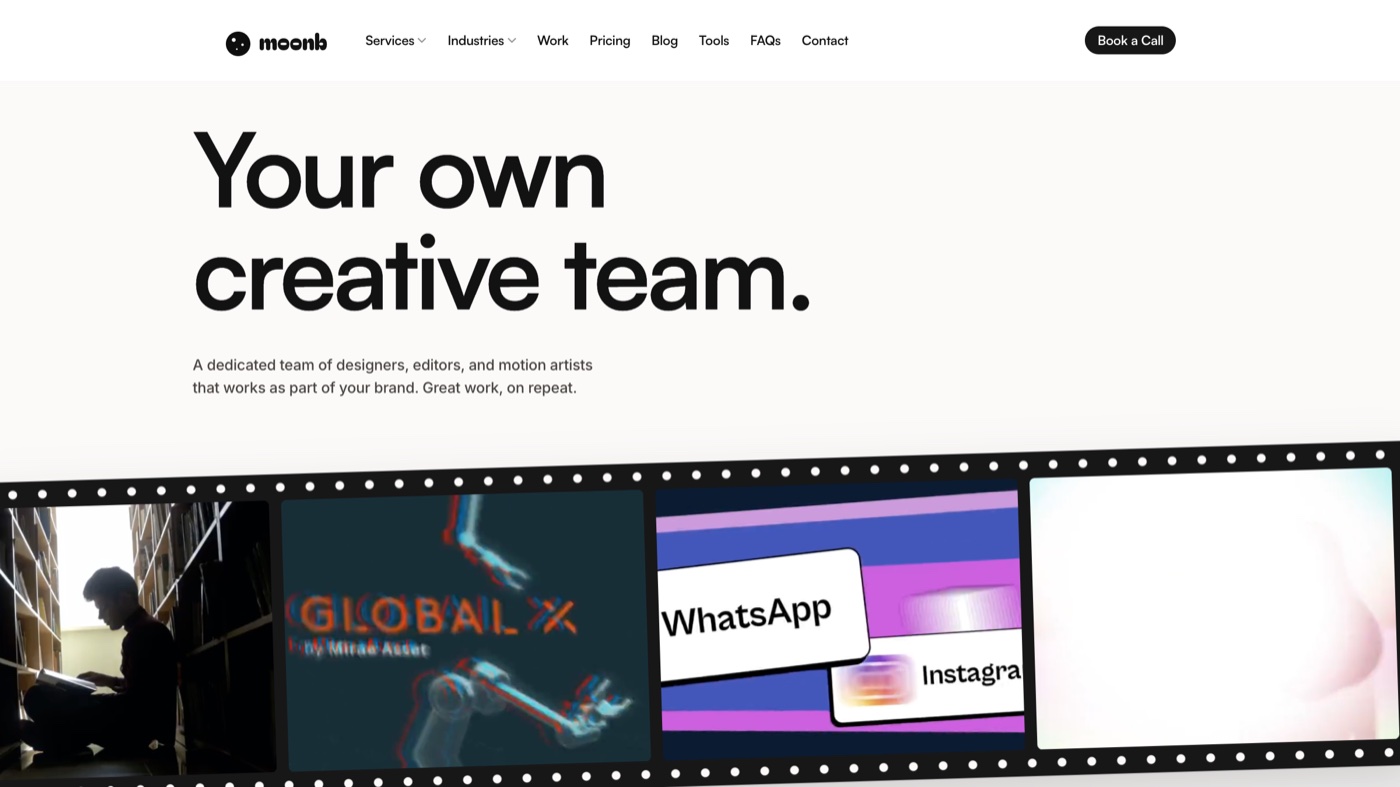
Aimers is the pick when your social goal is pipeline, not follower count. It is a B2B SaaS marketing agency that runs paid social and PPC next to CRO and landing page work, so the ad account and the page it points at share one owner instead of being split across vendors.
- Best for: B2B SaaS and tech teams judged on demos and pipeline rather than followers.
- Focus: paid social for SaaS, tied to CRO and analytics.
- Why it stands out: a Google Premier Partner and Meta Business Partner with more than 30 million USD in managed ad spend, and banner creative produced in house, which matters most on LinkedIn where creative fatigue kills a campaign faster than targeting.
- Worth knowing: the focus is paid B2B growth, which is exactly why it works best next to a team that owns organic and brand.
More on Aimers
Aimers has run paid acquisition for 100+ SaaS and tech clients, covering PPC, paid social, CRO, and analytics in one scope. That single-owner setup helps when the ad and the landing page need to move together, and the paid focus is why it pairs cleanly with a team that owns organic and brand rather than replacing one.
3. VaynerMedia
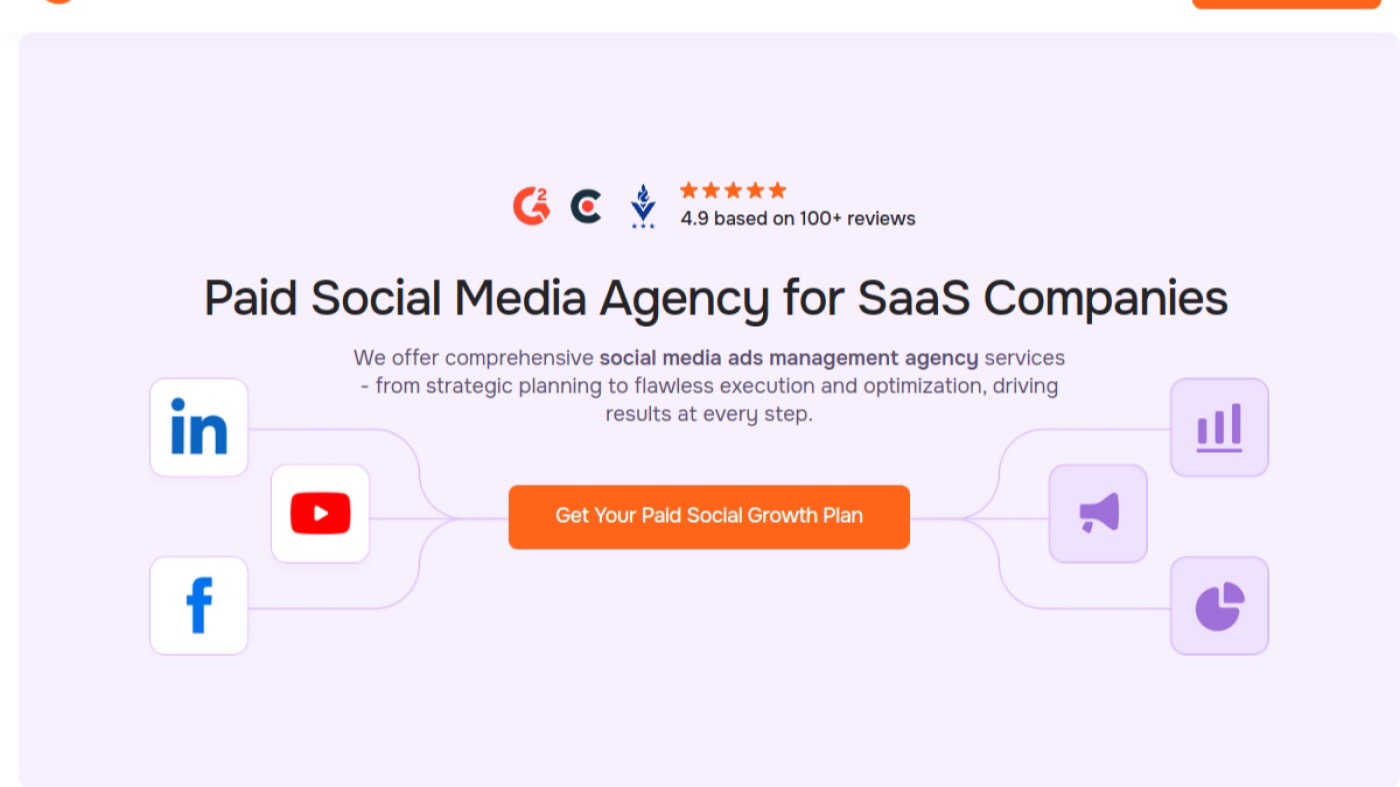
VaynerMedia is the strongest pick if you want social-led creative wired directly into media, analytics, influencer work, and commerce. I point larger brands here when they need platform-native ideas and the operational muscle to run them across paid and organic without bouncing work between vendors.
- Best for: mid-market and enterprise teams that need integrated execution across many moving parts.
- Focus: social-led creative plus media, influencer, and commerce.
- Why it stands out: it treats social as a core business function, and holds platform partnerships such as TikTok Agency Marketing Partner and TikTok Shop Partner, which helps when you want to test new placements early.
- Worth knowing: the process is heavier than a small brand needs; if you only want a few content streams and simple reporting, expect more onboarding and more internal stakeholders before work flows.
More on VaynerMedia
VaynerMedia suits teams that need integrated execution across paid and organic in one place. The trade-off is scale: if you only need a few content streams and a simple reporting rhythm, the process will feel heavier than necessary. Pick it when the real challenge is coordination across multiple teams and channels rather than raw production speed.
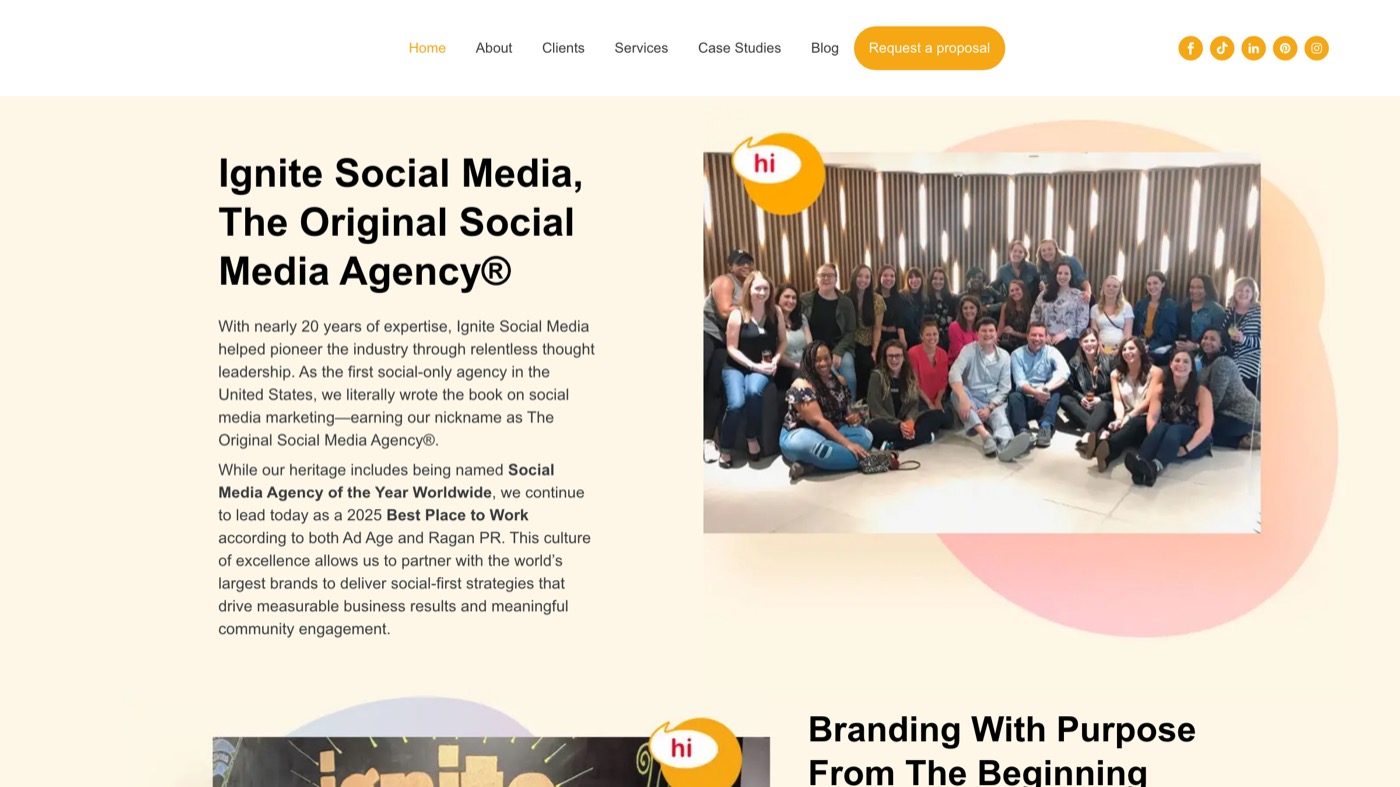
4. Ignite Social Media
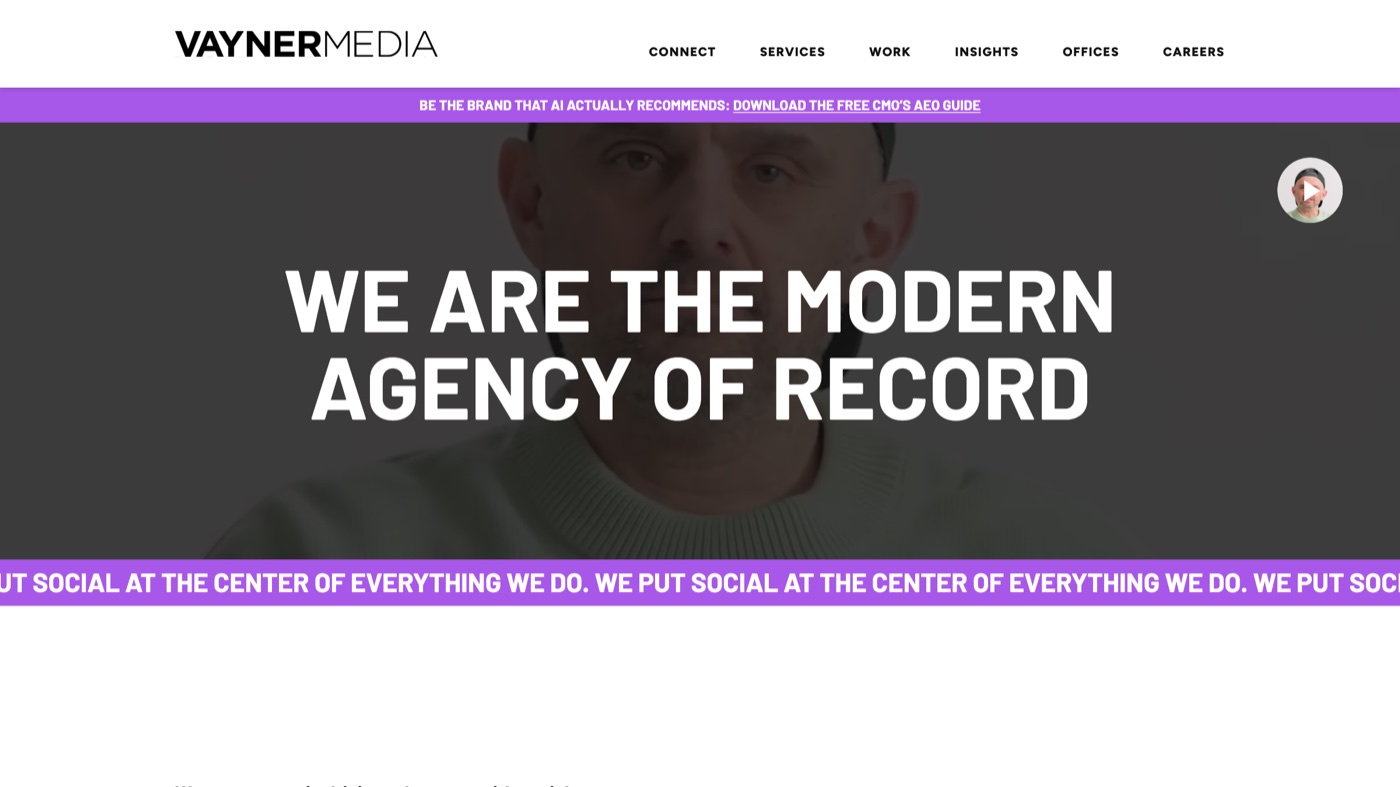
Ignite Social Media is the pick when you want a pure-play social partner. It is a social-only shop, which helps when your team needs specialized support without bolting social onto a generalist digital agency.
- Best for: B2B and enterprise brands where social sits at the center of the plan.
- Focus: pure-play social, organic plus paid.
- Why it stands out: the social-only focus buys real depth, and it shows in how the team handles social ROI and influencer compliance.
- Worth knowing: if you also need search, CRO, or affiliate work under one roof, you will still need other partners; ask for the exact account team before you sign.
More on Ignite Social Media
Ignite specializes in strategy, content, community management, paid social, and analytics, which gives it more depth than a generalist that treats social as one line among many. A strong pitch team is not always the people who run your account week to week, so confirm who actually staffs it before you commit.
5. Sociallyin
Sociallyin works well when you want social strategy and in-house production connected in one workflow. That matters if you need fast creative iteration for Reels, TikTok, and Shorts and you don’t want production separated from the social team.
- Best for: social-first and consumer brands running active short-form programs.
- Focus: social strategy plus in-house production.
- Why it stands out: it keeps production close enough that variants get turned around quickly and improved round to round, so production and performance share one operating rhythm.
- Worth knowing: watch for scope gaps outside social, and custom pricing that depends on scoping.
More on Sociallyin
Plenty of agencies say they can produce content; fewer keep production close enough that variants get turned around quickly. That in-house studio is the main draw here, and it fits consumer brands that want production and performance moving in the same operating rhythm.
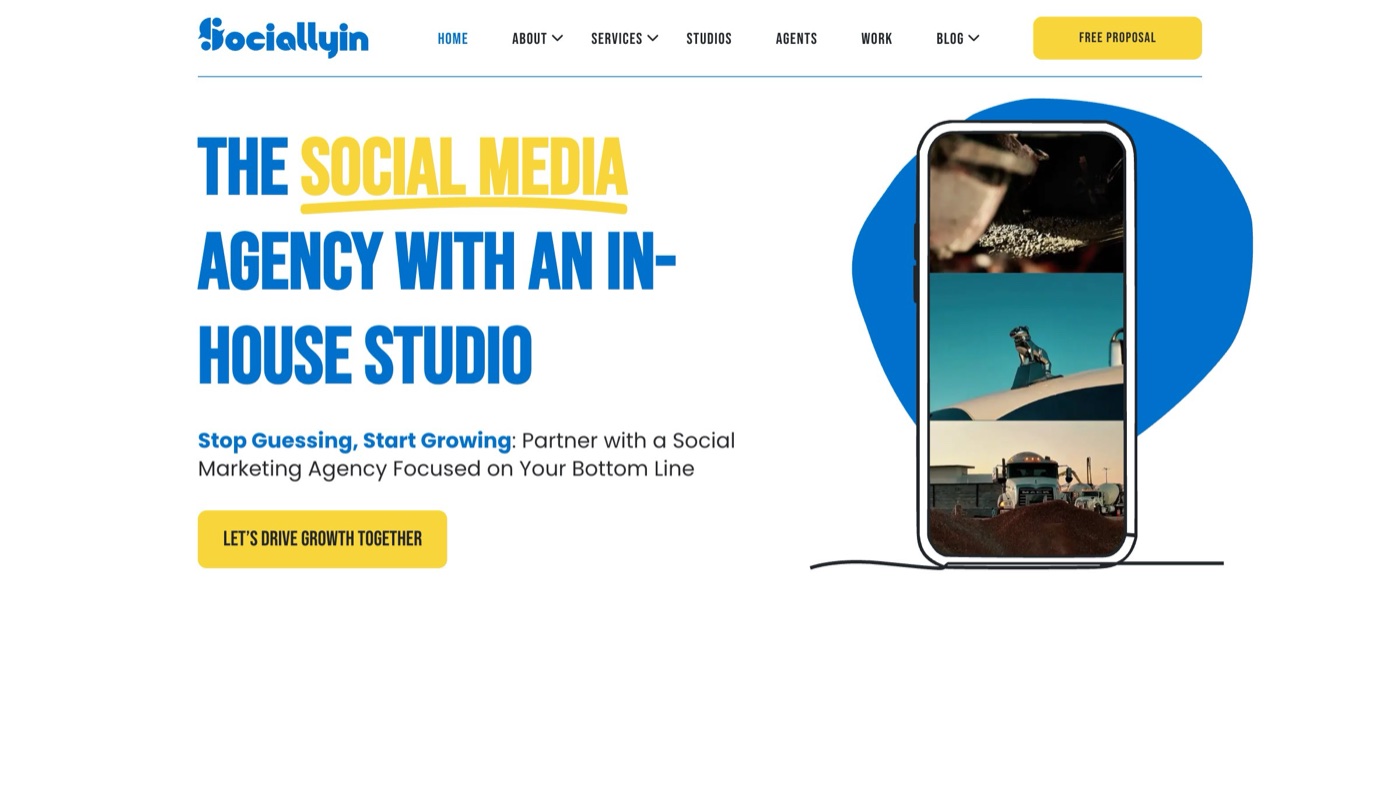
VaynerMedia and Sociallyin get shortlisted together, but they solve different problems. Pick VaynerMedia when the challenge is coordination at scale across multiple teams and channels. Pick Sociallyin when the challenge is production speed and asset iteration inside social. If you are a lean team and every new asset matters, Sociallyin is easier to manage; if you are already running a complex media stack, VaynerMedia reduces fragmentation. The right question is not who has the bigger name, it is who moves your work through approvals and delivery with the least friction.
6. Tinuiti
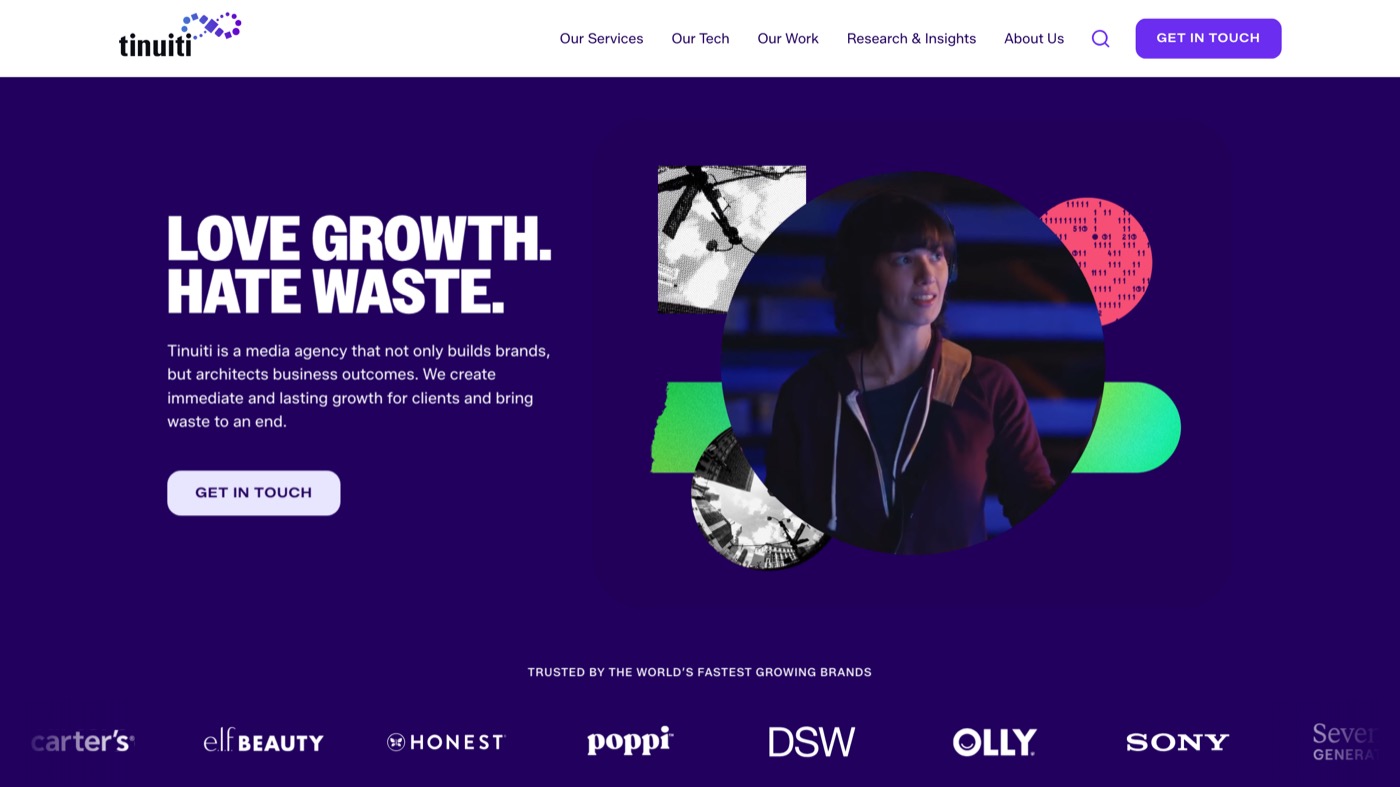
Tinuiti is a strong choice when you need paid social connected to measurement. It is an independent full-funnel agency, so it can combine social with search, retail media, and streaming rather than treating social as isolated spend.
- Best for: mid-market and enterprise ecommerce brands with real media complexity.
- Focus: paid social tied to measurement.
- Why it stands out: it ties investment decisions to performance logic, and its proprietary Bliss Point technology is part of that measurement story.
- Worth knowing: the rigor can slow down teams that want quick, lightweight engagements; if your goal is mostly content output, this is more machine than you need.
More on Tinuiti
Tinuiti appeals to brands that want disciplined cross-channel decisions rather than social run in a silo. One test I use: if an agency cannot explain how it measures waste and incrementality, it is too shallow for serious paid growth, and Tinuiti passes that test. That is exactly why it suits ecommerce brands with genuine media complexity and less so a team that just wants steady posting.
7. MuteSix
MuteSix is a practical option for DTC and ecommerce brands that live on paid social. It concentrates on performance creative and paid growth for Meta and TikTok, built around testing and creative sprints.
- Best for: DTC and ecommerce brands with conversion goals.
- Focus: performance creative for Meta and TikTok.
- Why it stands out: it is built for ad creative that can be tested and refined fast under real in-market pressure, which fits conversion-driven briefs better than pure brand storytelling.
- Worth knowing: less compelling if your main need is organic community or broader CRM work; the performance-first model is the point.
More on MuteSix
The strength here is focus: a team that understands paid social mechanics and short-form formats. If your brief is a hero brand film or a long-term community program, this is the wrong shape of partner. When the metric is conversion and the creative has to keep moving, it is a strong fit.
8. Power Digital
Power Digital fits when you want social connected to a larger growth model. Its value is bringing paid social, TikTok, influencer programs, lifecycle marketing, and analytics into one operating model.
- Best for: brands with several growth levers in play.
- Focus: social inside a broader growth model.
- Why it stands out: it cuts the stop-start behavior that happens when too many vendors own too many parts of the funnel.
- Worth knowing: the broader the scope, the less ideal it is for single-channel needs, and pricing and minimums are not public, so scope carefully.
More on Power Digital
Power Digital makes the most sense when you are balancing paid social with content, CRO, and lifecycle, because one connected partner saves internal coordination. If you only need one channel handled well, this is more operating model than the job requires, and a specialist will feel leaner.
9. Ogilvy
Ogilvy is the name to consider when your brand needs global creative thinking with social folded into broader brand work. It is one of the better-known large agencies, which matters when social has to sit beside advertising and corporate communications.
- Best for: enterprise brands operating across many markets.
- Focus: global brand creative with social folded in.
- Why it stands out: its scale and creative reputation let social live comfortably alongside advertising and corporate communications.
- Worth knowing: scale means more process and more layers between strategy and execution; if your team wants speed above all, a specialist will feel faster.
More on Ogilvy
Large agencies like Ogilvy earn their place when internal stakeholders want one partner that already understands global brand systems, which is especially relevant for enterprise brands across many markets. That alignment can be a strength, but it is a poor fit for a lean team that values turnaround over pedigree.
10. We Are Social
We Are Social fits brands that want social thinking rooted in culture and platform behavior. It is closely associated with social-first creative and global brand work, so it is a natural consideration when you want social to feel native rather than adapted.
- Best for: international and creator-led brands.
- Focus: culture-led, platform-native social.
- Why it stands out: it produces ideas that fit how people actually use platforms, not recycled ad concepts pasted into a feed.
- Worth knowing: as with most large agencies, scale adds process; if you are smaller, ask whether the team that wins the pitch is the team that stays on the account.
More on We Are Social
Its cultural awareness across markets is a genuine advantage for international brands that want social to read as native everywhere they operate. The downside is the one shared by most large agencies: scale adds process, so smaller brands should confirm staffing before they sign.
11. Socialfly
Socialfly is a reasonable option for brands that want social-first creative with a consumer feel. It is usually positioned around social content, influencer work, and audience engagement.
- Best for: creator and consumer brands that need ongoing content support.
- Focus: social-first content and influencer work.
- Why it stands out: it is relevant for brands that lean on social presence and community signals and want content that looks native to the platform while staying on brand.
- Worth knowing: ask how the work is staffed and how much is done in house, and ask for the reporting rhythm in plain language rather than a sample dashboard.
More on Socialfly
Socialfly fits brands that need ongoing content support more than broad enterprise consulting. It is a focused social shop, so the questions to press on are staffing and in-house versus outsourced production before you compare it with larger firms.
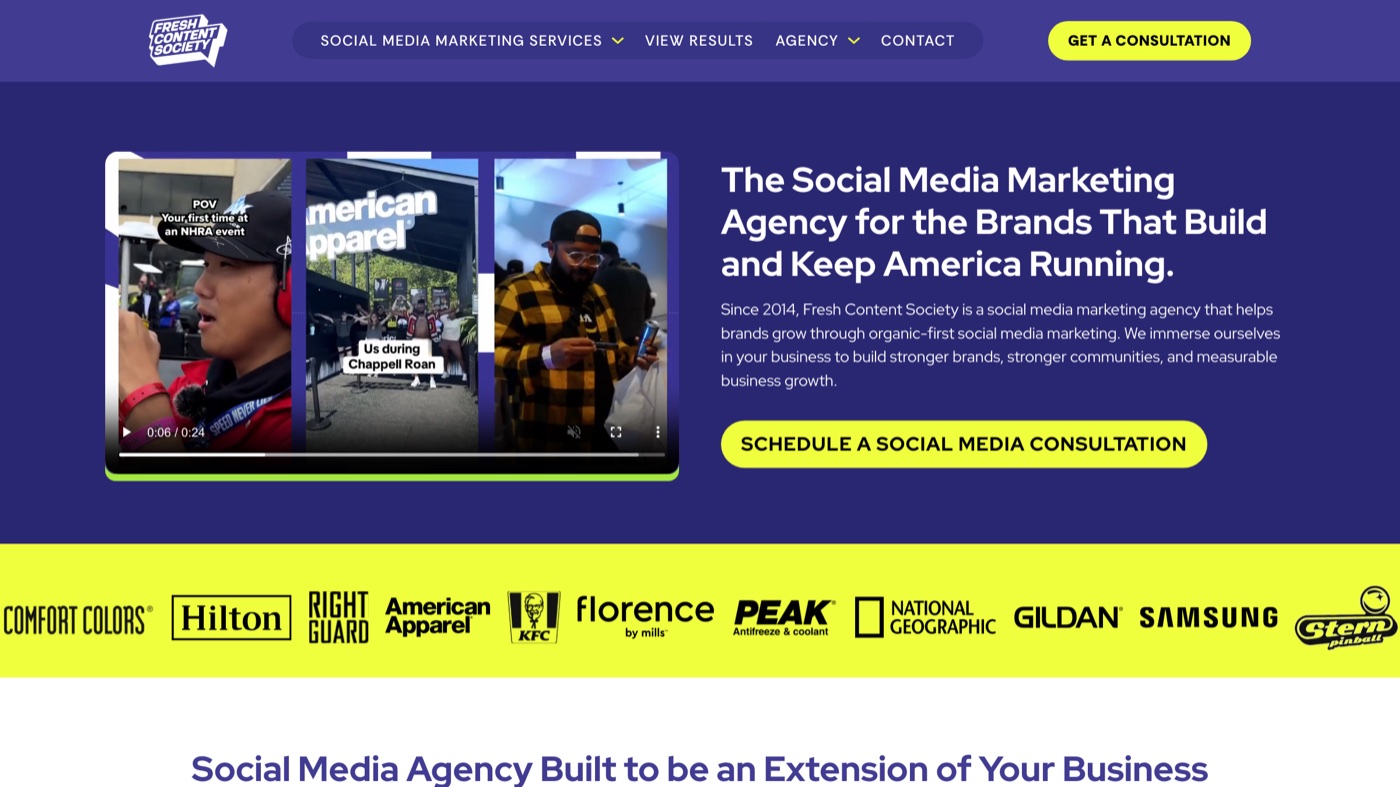
12. Fresh Content Society
Fresh Content Society is a useful contender when you want social content and community management with a practical, platform-aware feel. It is a good fit when you need a presence kept active and responsive without pretending every post has to be a campaign.
- Best for: brands that need a steady day-to-day presence kept active and responsive.
- Focus: social content and community management.
- Why it stands out: it keeps a presence useful and responsive, which suits awareness and day-to-day interaction rather than one big campaign at a time.
- Worth knowing: if you also need search, lifecycle, or broader growth strategy, you will want a more integrated partner.
More on Fresh Content Society
Some brands simply need a steady stream of work that supports awareness and community interaction, and this is the kind of team for that. The narrow focus is an advantage when the job is keeping social alive and useful, and a limitation when the job is broader growth.
13. SmartSites
SmartSites works when you want a broader digital marketing partner with social as part of the mix. That suits smaller companies that need practical execution across several channels rather than pure social specialization.
- Best for: SMBs that want one partner to coordinate several channels.
- Focus: broad digital with social in the mix.
- Why it stands out: for many SMBs the problem is not finding a social expert but finding a partner that can manage enough of the stack to keep things moving.
- Worth knowing: it may not be as socially specialized as a pure-play agency; if your brand lives on platform-native content and constant iteration, ask how much of the team’s day is actually spent on social.
More on SmartSites
A broader digital shop can be efficient because it keeps several channels moving under one roof. The trade-off is depth: it will rarely match a social-only agency on constant iteration and platform-native creative, so weigh how central social really is to your plan.
14. Thrive
Thrive is a sensible option for small business and local brands that want a general digital partner with social in the mix. It belongs on a shortlist when the goal is keeping marketing organized without overcomplicating the stack.
- Best for: small business and local brands that want a general digital partner.
- Focus: broad digital with social in the mix.
- Why it stands out: it works well for businesses that need social support but not a large creative department.
- Worth knowing: for brands that need advanced social creative systems, the scope may feel basic; ask whether the team has real short-form production depth.
More on Thrive
Thrive is a practical general partner when the goal is keeping marketing organized across channels. Social is one service among many here, so confirm the short-form production depth before you rely on it for platform-native creative.
15. LYFE Marketing
LYFE Marketing is a common fit for small businesses that want straightforward social support and some paid social help. For smaller teams, clarity and readable reporting often matter more than prestige.
- Best for: small businesses that want clarity and readable reporting.
- Focus: straightforward social plus some paid.
- Why it stands out: a well-scoped engagement with readable reporting beats an enterprise-focused agency a small team cannot fully use.
- Worth knowing: the trade-off is depth; if you need complex multi-channel strategy or heavier creative production, ask which parts of the work are done in house.
More on LYFE Marketing
LYFE Marketing suits small businesses that want social support without a heavy operating model wrapped around it. Ask what happens if you need to scale quickly, and which parts of the work sit in house, since depth is the limit here, not clarity.
16. Disruptive Advertising
Disruptive Advertising is a strong contender when you want paid social with performance discipline, especially in ecommerce and lead generation. It is known more broadly for performance marketing.
- Best for: ecommerce and lead-generation brands with conversion-focused plans.
- Focus: paid social with performance discipline.
- Why it stands out: it tests cleanly and keeps creative and media aligned, which is what a paid-social partner is really being hired to do.
- Worth knowing: if you need a lot of organic community work or brand storytelling, the fit is less complete; performance specialists are strongest when the metric is conversion.
More on Disruptive Advertising
Disruptive Advertising is at its best when your social work is part of a conversion-focused plan. The team's discipline shows in clean testing and tight creative-to-media alignment. It is a weaker match when the goal is conversation rather than conversion.
17. Brainlabs
Brainlabs is worth a look if your team wants paid-media depth and structured experimentation. It is a large independent agency with a reputation for data-driven media work.
- Best for: enterprise and performance-led mid-market with real media complexity.
- Focus: data-driven paid media at scale.
- Why it stands out: it is useful when social spend has to be justified inside a broader performance context, because it can test and optimize with discipline.
- Worth knowing: it can feel more technical than creative; if your core need is social-native content production, you will still want a creative partner alongside it.
More on Brainlabs
Brainlabs suits teams that need social spend justified with structured experimentation across a broader media stack. That rigor is the draw, but it is a media specialist first, so plan to pair it with a content or creative partner when platform-native production is the real gap.
18. Firebelly
Firebelly is a good fit when you want a social media specialist with content and community depth. It sits in the B2B and content-led bucket, where teams need a partner that keeps messaging steady and approachable across channels.
- Best for: B2B and content-led brands that want steady, approachable messaging.
- Focus: social content and community, specialist shop.
- Why it stands out: it keeps content moving and community engagement active as a focused specialist rather than a generalist.
- Worth knowing: as with many focused agencies, ask how far the service stack really goes across strategy, reporting, and production before comparing it with larger firms.
More on Firebelly
Firebelly is a straightforward choice when you want a partner that keeps content and community active without a lot of overhead. The main question is reach: confirm the stack covers strategy, reporting, and production to the level you need before you sign.
19. Sculpt
Sculpt is often the better fit for B2B teams that need social content, community, and paid support without losing the tone of the brand. B2B social has its own rhythm of message discipline, stakeholder alignment, and enough content variety to keep an audience engaged over time.
- Best for: B2B teams that need social content, community, and paid support in one place.
- Focus: B2B social, content and community.
- Why it stands out: it is built for the B2B rhythm of message discipline, stakeholder alignment, and steady content variety.
- Worth knowing: the B2B specialization narrows the fit; if you need broad consumer campaign work or entertainment-style creative, it may not be the match.
More on Sculpt
Sculpt is built for teams with real B2B needs, so it holds message discipline and stakeholder alignment better than a generalist consumer shop. That focus is a genuine strength, and it is also the reason to look elsewhere for consumer or entertainment-style briefs.
When you should not hire a full social media agency
A full agency isn’t always the answer. If you’re an early-stage brand with one or two channels, a single strong freelancer or a small in-house hire can be enough. If your main need is consistent content and video, a dedicated creative team may fit better than a broader agency, which is the studio case I made at the top of the list.
The feeds these agencies work in are engineered around ad-targeting algorithms, and it helps to understand that machinery before you brief anyone. Zeynep Tufekci lays out how it actually works.
There’s also a case for keeping community management in house, so voice and timing stay close to the people who know the product best. That matters even more in regulated or technical categories, where approvals and version control slow everything down if the workflow is messy.
The simplest test: if you need strategy plus multi-channel paid plus reporting, a full agency earns its keep. If you mainly need content, a leaner option makes more sense. For a broader view of partner types, see full-service marketing agency.
What to compare before you sign
A shortlist is only useful if the comparison is honest. Start with channel specialisms. If your business lives on TikTok and Instagram, don’t hire a team whose strength is long-form Facebook management or generic posting. Then check deliverables, because strategy, content calendars, creative production, community management, paid media, influencer work, and reporting are all separate things even when agencies bundle them.
Ask how the work is staffed. A team that leans on undisclosed subcontractors is harder to manage than one that keeps core production in house. Ask for the specific people who’d run your account, not the pitch team, then ask about reporting cadence, the metrics they track, pricing structure, contract length, and exit terms. If part of what you’re scoping is brand identity work, it helps to know how much branding costs before you compare quotes.
A few red flags are easy to spot: guarantees of viral results or follower counts, vague dashboards that only show vanity metrics, no named account team, and long lock-ins with weak exit language. Be wary too of portfolios that never match your industry or company size. Don’t choose on awards or a big logo alone. Choose the team that can show relevant work and a reporting style you can actually use.
Social media agencies compared
| Agency | Focus | Best for | Trade-off |
|---|---|---|---|
| Moonb | Creative production of video, design, motion | Teams that need the content itself, not campaign management | Not a paid-social or community-management agency |
| Aimers | Paid social for SaaS, tied to CRO and analytics | B2B SaaS and tech teams judged on demos and pipeline | Focused on paid B2B growth, not organic or brand |
| VaynerMedia | Social-led creative plus media, influencer, commerce | Mid-market and enterprise integrated programs | Heavier process than small brands need |
| Ignite Social Media | Pure-play social, organic plus paid | B2B and enterprise where social is central | Needs other partners for non-social channels |
| Sociallyin | Social strategy plus in-house production | Social-first brands running short-form programs | Scope gaps outside social |
| Tinuiti | Paid social tied to measurement | Ecommerce brands with real media complexity | Rigor can slow light engagements |
| MuteSix | Performance creative for Meta and TikTok | DTC and ecommerce with conversion goals | Light on organic community |
| Power Digital | Social inside a broader growth model | Brands with several growth levers | Overbuilt for single-channel needs |
| Ogilvy | Global brand creative with social folded in | Enterprise brands across many markets | More layers between strategy and execution |
| We Are Social | Culture-led, platform-native social | International and creator-led brands | Scale adds process |
| Socialfly | Social-first content and influencer work | Creator and consumer brands | Ask how much is done in house |
| Fresh Content Society | Social content and community management | Brands needing steady day-to-day presence | Thin beyond social |
| SmartSites | Broad digital with social in the mix | SMBs wanting one coordination point | Less socially specialized than pure-play |
| Thrive | Broad digital with social in the mix | Small business and local brands | Basic for advanced social creative |
| LYFE Marketing | Straightforward social plus some paid | Small businesses wanting clarity | Limited depth for complex strategy |
| Disruptive Advertising | Paid social with performance discipline | Ecommerce and lead generation | Less complete for organic community |
| Brainlabs | Data-driven paid media at scale | Enterprise and performance-led mid-market | More technical than creative |
| Firebelly | Social content and community, specialist | B2B and content-led brands | Ask how far the stack goes |
| Sculpt | B2B social, content and community | B2B teams needing content plus paid | Narrow fit for consumer campaigns |
Making your final choice
The best social media marketing agency is the one that fits your goals and how your team likes to operate. There’s no single winner. A global consumer company, a B2B SaaS team, a local service business, and an ecommerce operator all need different levels of strategy, production, paid support, and reporting, which is why the most useful shortlist is organized by fit, not prestige.
Score the agencies you’re considering against the criteria at the top of this guide: specialisms, services, team structure, reporting, pricing model, contract terms, and portfolio relevance. Then ask how they handle approvals, how fast they can turn assets, and what happens when your priorities change mid-campaign. Those conversations reveal more than any polished case study.
If your need is mostly content, compare a social agency against a dedicated creative team before you sign. If your need is paid social plus reporting, lean toward a specialist or a full-funnel partner that can show real operating discipline. If your need is broader than social, look at the best AI tools for social media only after the team and scope are clear, because tools help but don’t replace a strong operating model. Either way, slow down, compare scope carefully, and meet the actual people who’ll do the work.
Further reading: Sprout Social’s 2026 social media statistics, top social media platforms 2026, Sculpt, this outreach platform for agencies.
Frequently asked questions
A social media agency manages your channels: strategy, paid media, community management, influencer programs, and reporting. A creative studio produces the assets those channels run on, mainly video, motion, and design. Some brands need one, some need both, and confusing the two is the most common shortlist mistake.
Score them on the same criteria: channel specialisms, deliverables, who actually staffs your account, reporting cadence, pricing model, contract length, and portfolio relevance to your industry. Ask for the specific team that will run the work, not the pitch team, and treat guarantees of viral results or follower counts as a red flag.
If you are early-stage with one or two channels, a strong freelancer or a small in-house hire is often enough. If your main gap is consistent content and video rather than campaign management, a dedicated creative team usually fits better. A full agency earns its keep when you need strategy plus multi-channel paid plus reporting together.