Annual report design services: 10 studios compared
I compared 10 annual report design services on their own sites, from disclosure firms that work in Workiva to sustainability and nonprofit report specialists, with one limitation each.

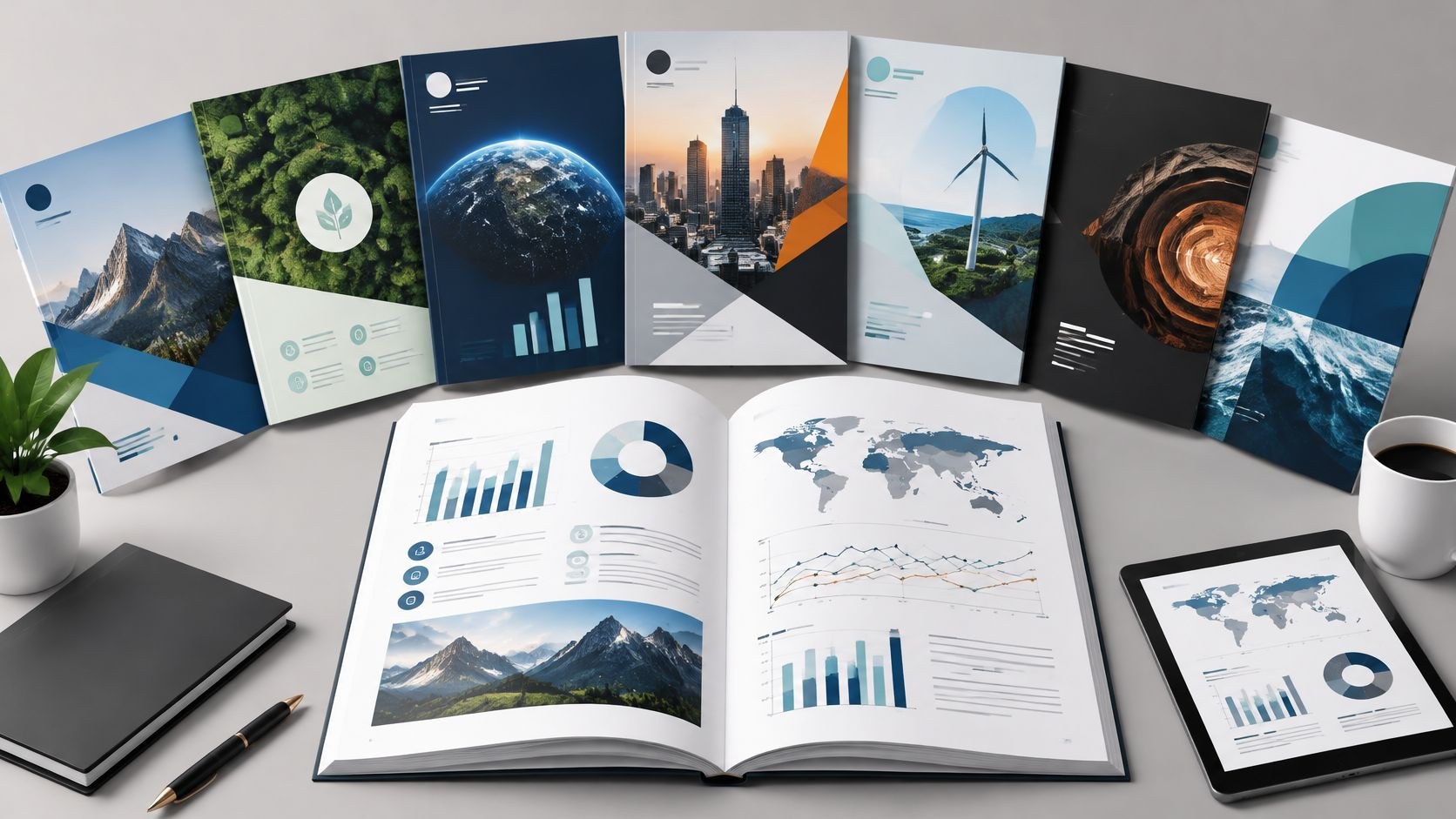
The annual report design services I’d put on a shortlist right now are Moonb (my own studio, so read that entry as the least neutral one), Curran & Connors, Labrador Transparency, Ideas On Purpose, Avila Creative, Report Design Studio, Sutter Group, Tobi Designs, Flynn Design, and Acton Circle. They split into three camps: disclosure firms built around public-company filings, studios that live in sustainability and impact reporting, and small publication or nonprofit specialists.
Most springs, some version of the same email reaches me. Someone attaches last year’s cover, says they love it, and asks whether we can handle “the rest.” The rest is where reports go wrong, usually in the tables legal keeps reworking and the footnotes that have to match the audited numbers, and then the CEO letter turns up the week the printer wants files. A strong cover says almost nothing about how a studio copes with that. So this fall I read what each firm says about the inside of the document on its own site, and noted where each one falls short, my studio included.
Before you brief anyone, know which document you’re making. A U.S. public company files its annual report on Form 10-K, and the SEC’s investor.gov bulletin on reading a 10-K notes that the annual report to shareholders “sometimes appears as a colorful, glossy publication,” while some companies “simply take their 10-K and send it as their annual report to shareholders.” The glossy book and the filed 10-K need different people writing and checking them, and they carry very different amounts of design.
The 10 studios
1. Moonb
More on Moonb
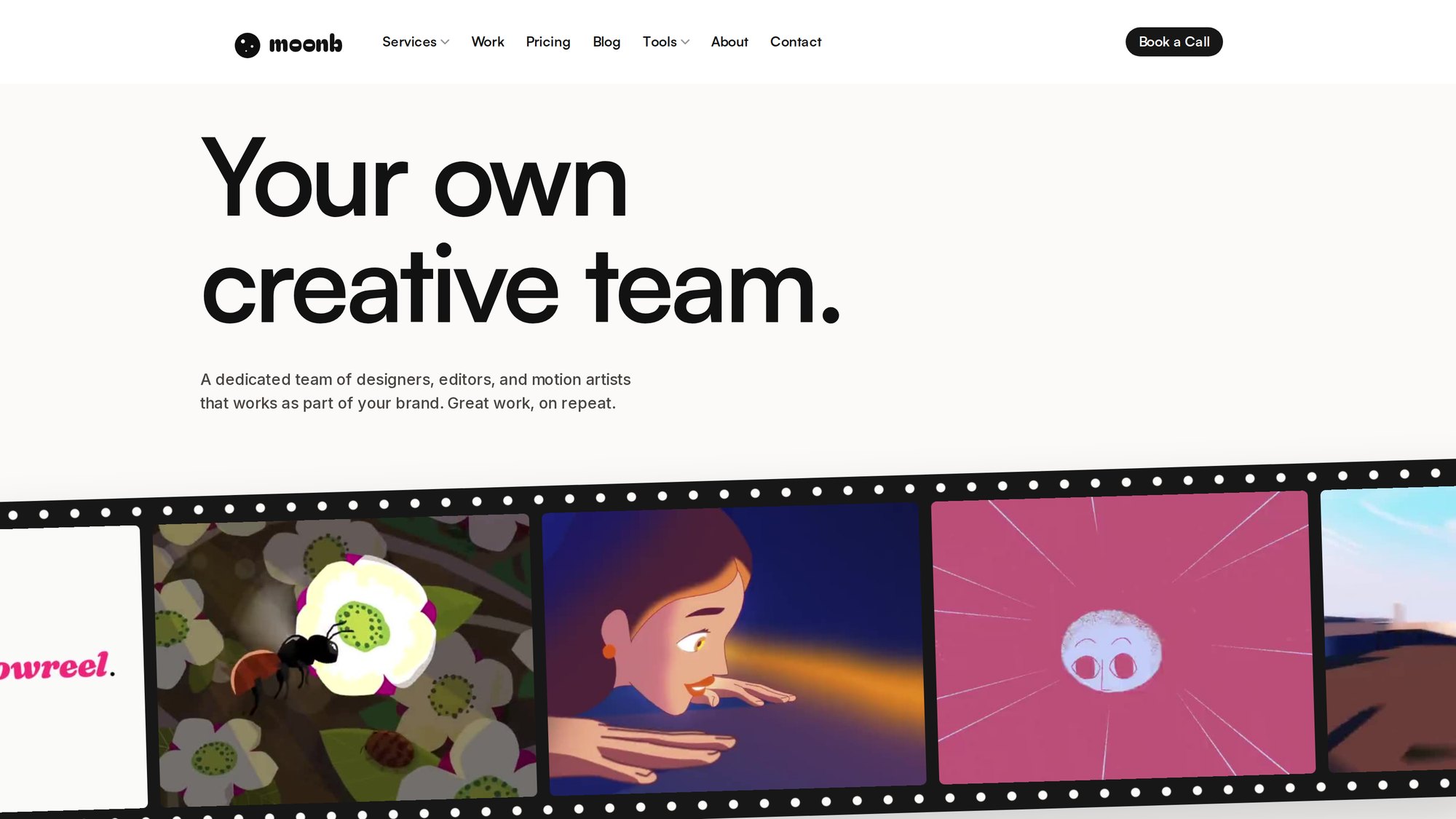
Reporting season rarely produces one file. Around the report come the investor presentation, a highlights PDF, chart animations for the all-hands, and a run of posts on results day. That surrounding work is where Moonb tends to help, since one team can hold the report's type and chart system steady across all of it. Treat our turnaround and retention figures with the suspicion you'd give any vendor's. The Clutch reviews are public, so read a few. If the filing itself is the hard part, I'd pair us with a disclosure firm from further down.
2. Curran & Connors
More on Curran & Connors
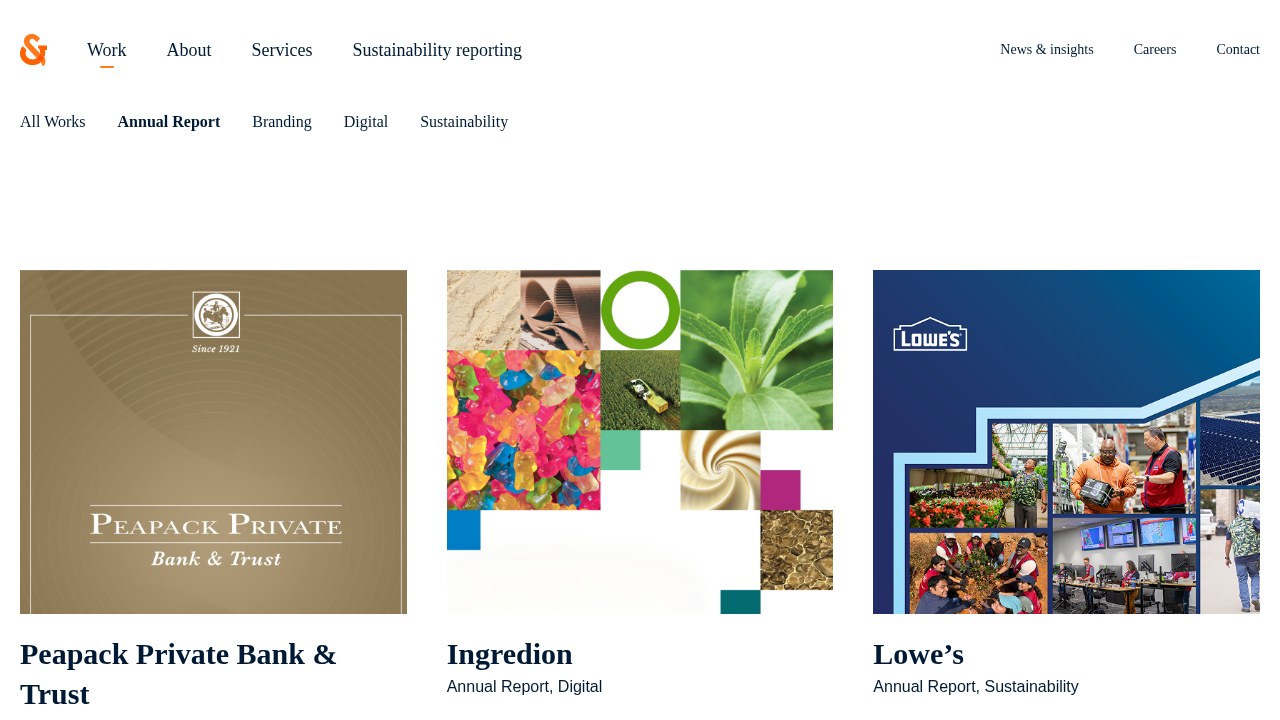
The work page filters by Annual Report, Branding, Digital, and Sustainability. Under annual reports you get Peapack Private Bank & Trust, Ingredion, Lowe's, and Reynolds Consumer Products, among others, and the homepage adds OPENLANE (digital) and Ocean Spray (sustainability). Its about page lists 14 GDUSA American Digital Design Awards in May 2025. A post on the homepage argues for connecting strategy, performance, and long-term value across annual reports, proxy statements, sustainability reports, and investor presentations. I'd hire the firm for exactly that job, keeping those four documents in one voice.
Ask for one client’s complete set from a single year, print and digital, and check whether chart labels and definitions hold across both. I’d trust that over the award list.
3. Labrador Transparency
More on Labrador Transparency
Labrador organizes its site by client type (public companies, private corporations, asset management and private equity, institutions), then by document: proxy statements, annual reports, Form 10-Ks, sustainability reports, codes of conduct, and websites. The annual report page promises calendars that keep internal teams aligned and informed from kickoff to publication. For a document with a legal deadline, I like that it leads with the calendar. The company used to sit at labrador-company.com, which now forwards to the Labrador Transparency domain.
I’d call Labrador when the design problem and the filing problem are one and the same. That usually means finance owns the Workiva file, and every design change has to survive the next legal turn.
4. Ideas On Purpose
More on Ideas On Purpose
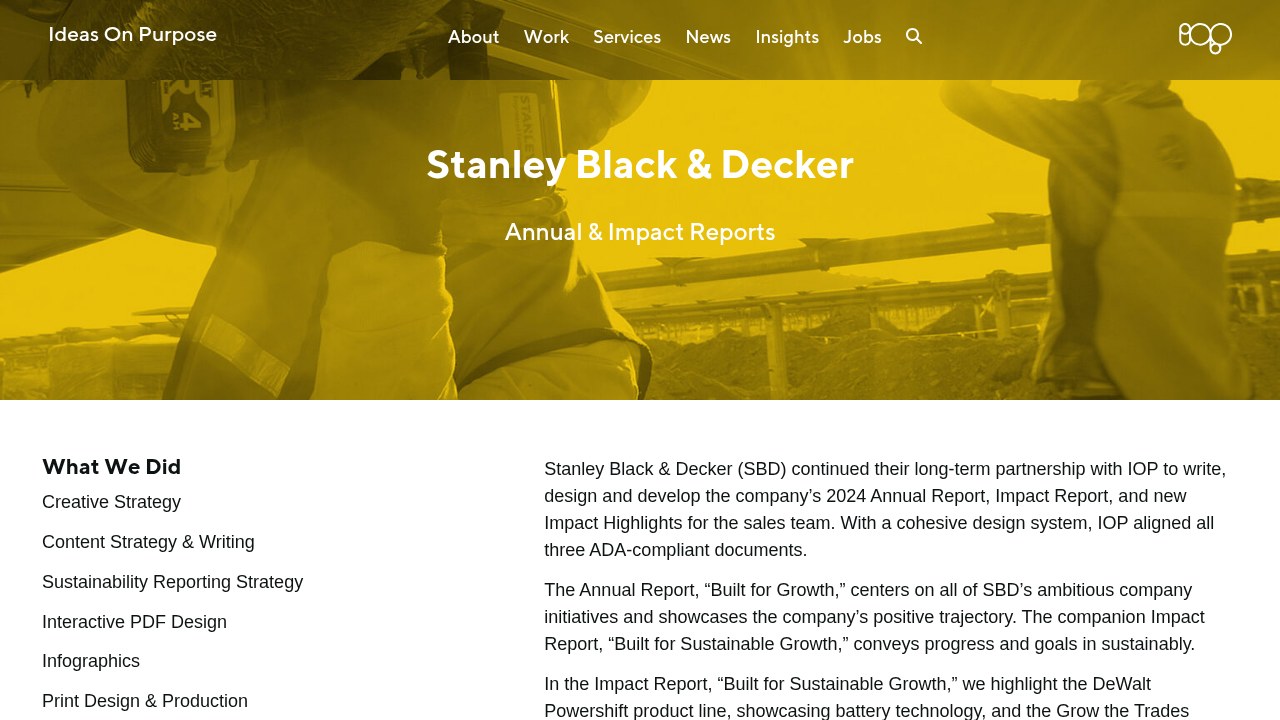
Read the Stanley Black & Decker case. The annual report ("Built for Growth") and the impact report ("Built for Sustainable Growth") share one design system, and the services listed on the job include content strategy and writing, sustainability reporting strategy, interactive PDF design, infographics, and print production. The work list also shows an ESG report and highlights for Integra LifeSciences, plus sustainability communications for Hilton.
Most companies struggle to keep the annual report and the impact report looking like siblings, and IOP has a whole case built on solving that. Of all the case pages in this roundup, it’s the one I’d send a client first.
5. Avila Creative
More on Avila Creative
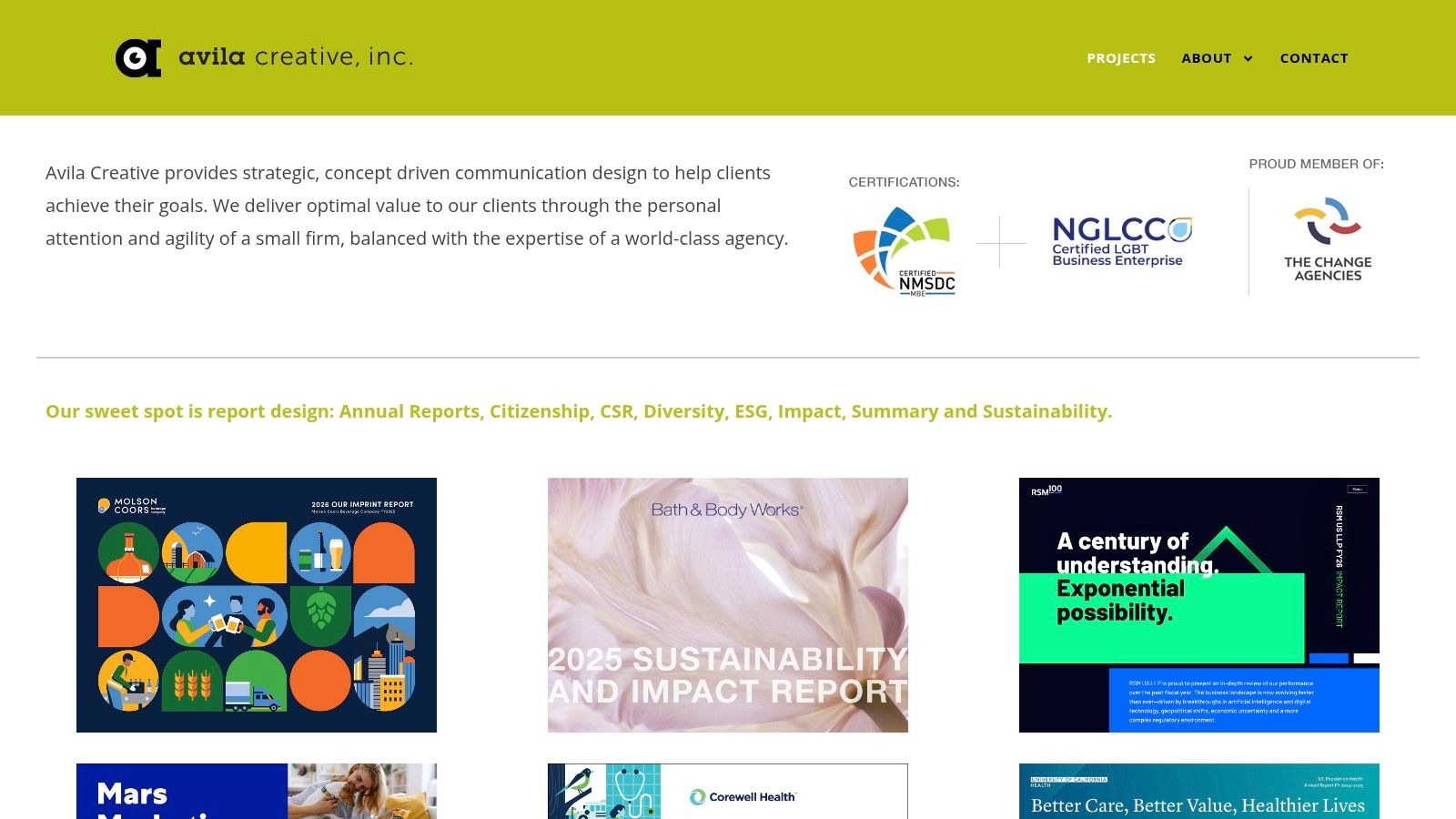
Avila's homepage names its sweet spot as annual reports, citizenship, CSR, diversity, ESG, impact, summary, and sustainability reports. Most project links point to a separate aci-clients.com domain, so ask which reports were built as web versions and which shipped as PDFs. If you are a smaller public company, raise the Lindsay 10-K wrap. Designed pages around the filed document sit close to the case investor.gov describes, where the 10-K itself goes out as the shareholder report.
Bring Avila the whole reporting calendar, not one document.
6. Report Design Studio
More on Report Design Studio
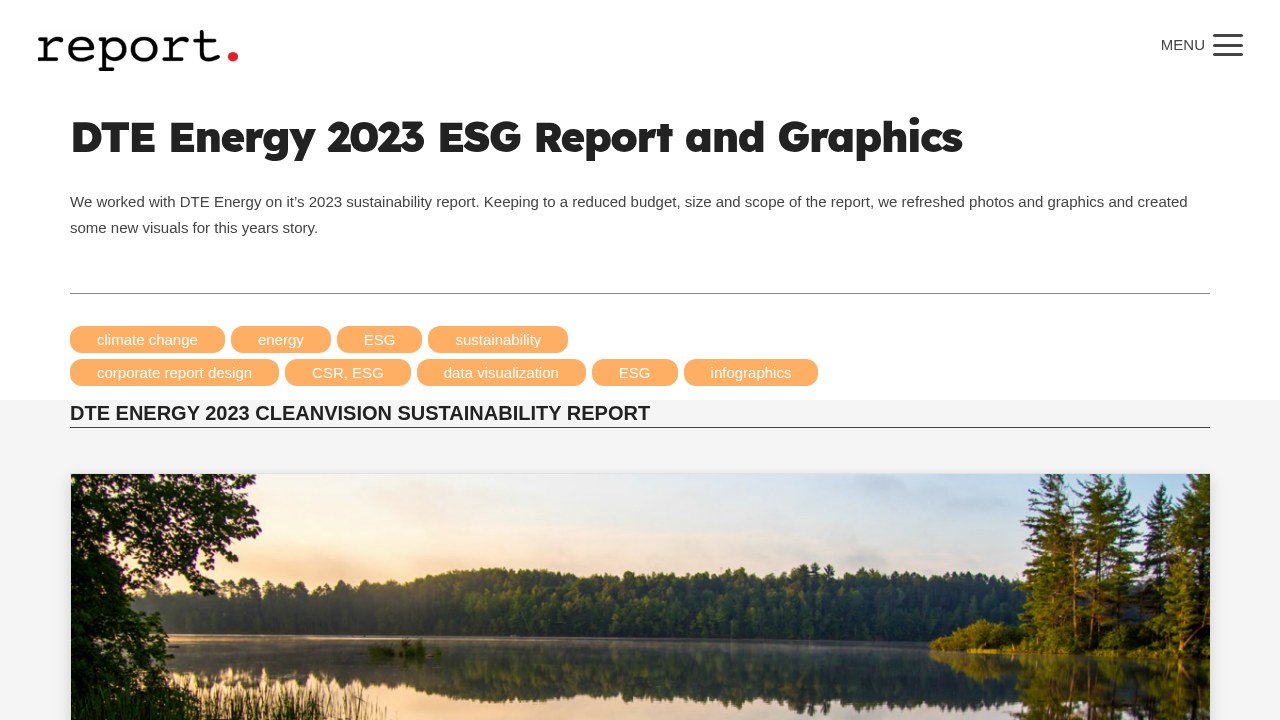
The case pages read like a working studio's notes. On DTE Energy's 2023 sustainability report it describes working to a smaller scope that year, refreshing photos and graphics and adding some new visuals. That's what a later year of a report system often looks like, and I appreciate a studio that says so. Other work includes a Getting to Zero report for C2ES and an economic development report for Business Leaders for Michigan. The homepage pitch is that the studio brings creative, sustainability, and business expertise together.
When the methodology matters as much as the look, I’d call them first. Say a draft arrives with a measurement boundary nobody has explained; a designer who knows the frameworks asks about it before touching the chart, and that question can save you a correction after publication.
7. Sutter Group
More on Sutter Group
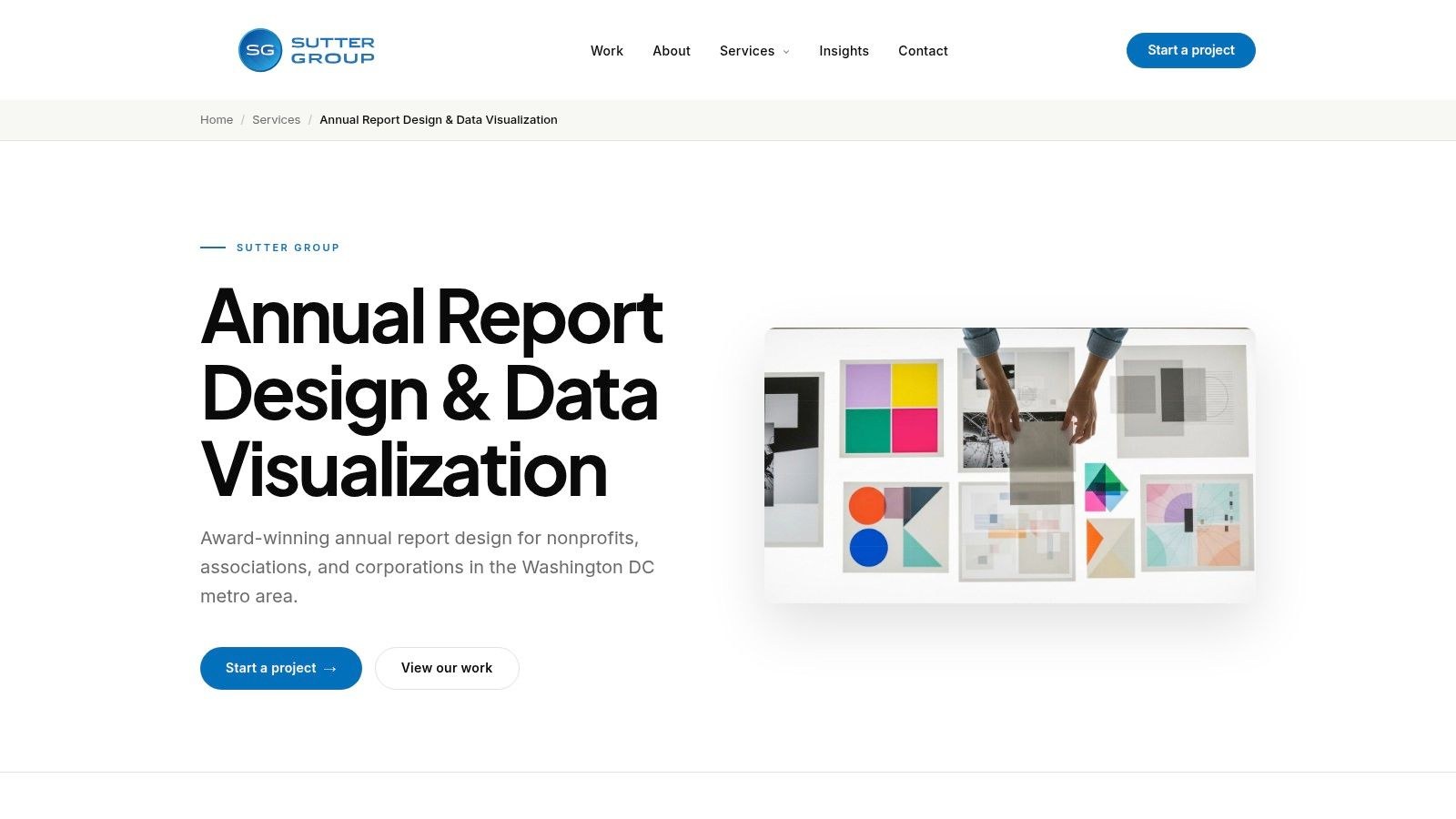
The service page names two projects: the DAR State of the Society, a 2020 annual publication, and the Audi of America Responsibility Report, a multi-program sustainability publication. For organizations that publish every year, Sutter also builds template systems so the team has a starting point each cycle. Its notes on digital reports cover layouts adapted for scrolling, file sizes small enough for email, and accessibility standards.
I’d keep Sutter’s six to ten weeks in my pocket when other studios start quoting schedules.
8. Tobi Designs
More on Tobi Designs
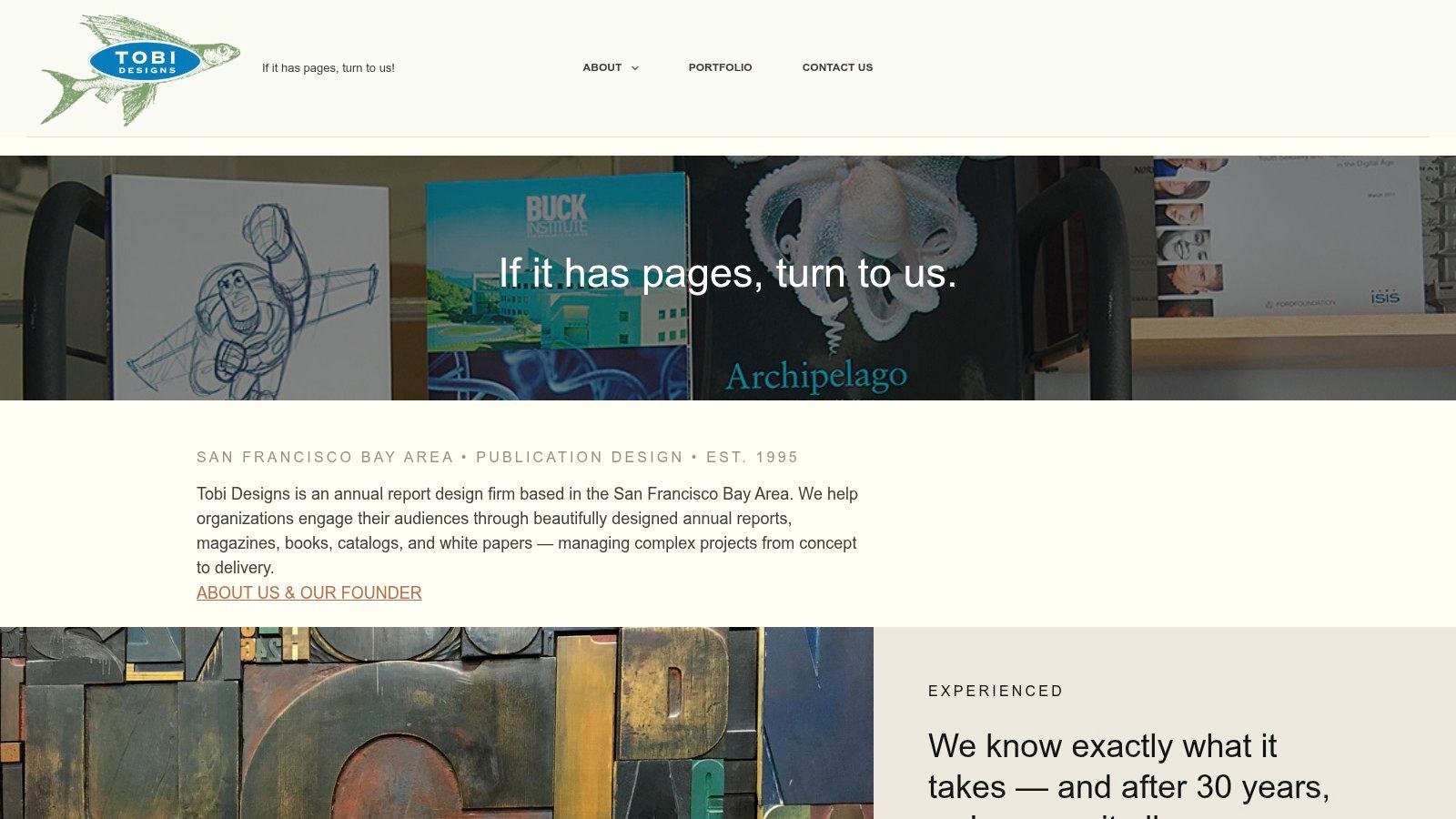
Tobi's tagline is "If it has pages, turn to us," and the homepage describes the firm as an annual report design firm that helps companies and nonprofits communicate with stakeholders through annual reports, magazines, books, catalogs, and white papers. The ACFR is the piece I'd look at, because a public pension fund's financial report is mostly tables that have to be right.
Some reports behave more like books: an anniversary history, say, or a long foundation report with essays. For those, BarkerBooks’ author’s guide to professional book publishing services walks through editorial work, design, production, and rights, and the stages carry over to a long report better than you’d expect.
9. Flynn Design
More on Flynn Design
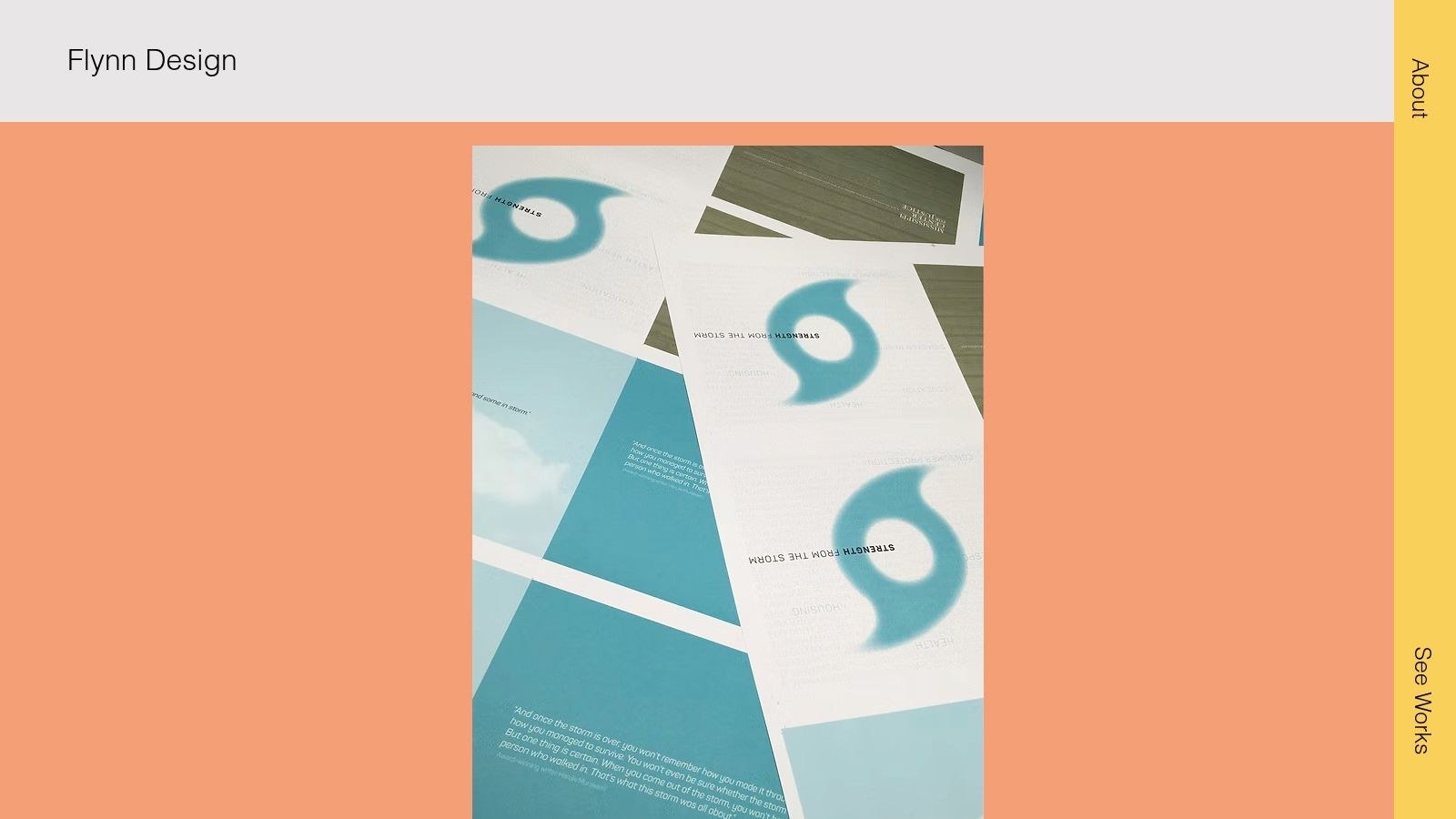
The homepage introduces Flynn as a communication designer working toward a better world through community and collaborative partnerships, and the annual report page features the Mississippi Center for Justice. That suits an advocacy or community organization whose report has to be honest about hard years. The same designer can handle the infographics and short animations that go out with it. I'd still ask what happens if that one person is out sick in the final week.
10. Acton Circle
More on Acton Circle
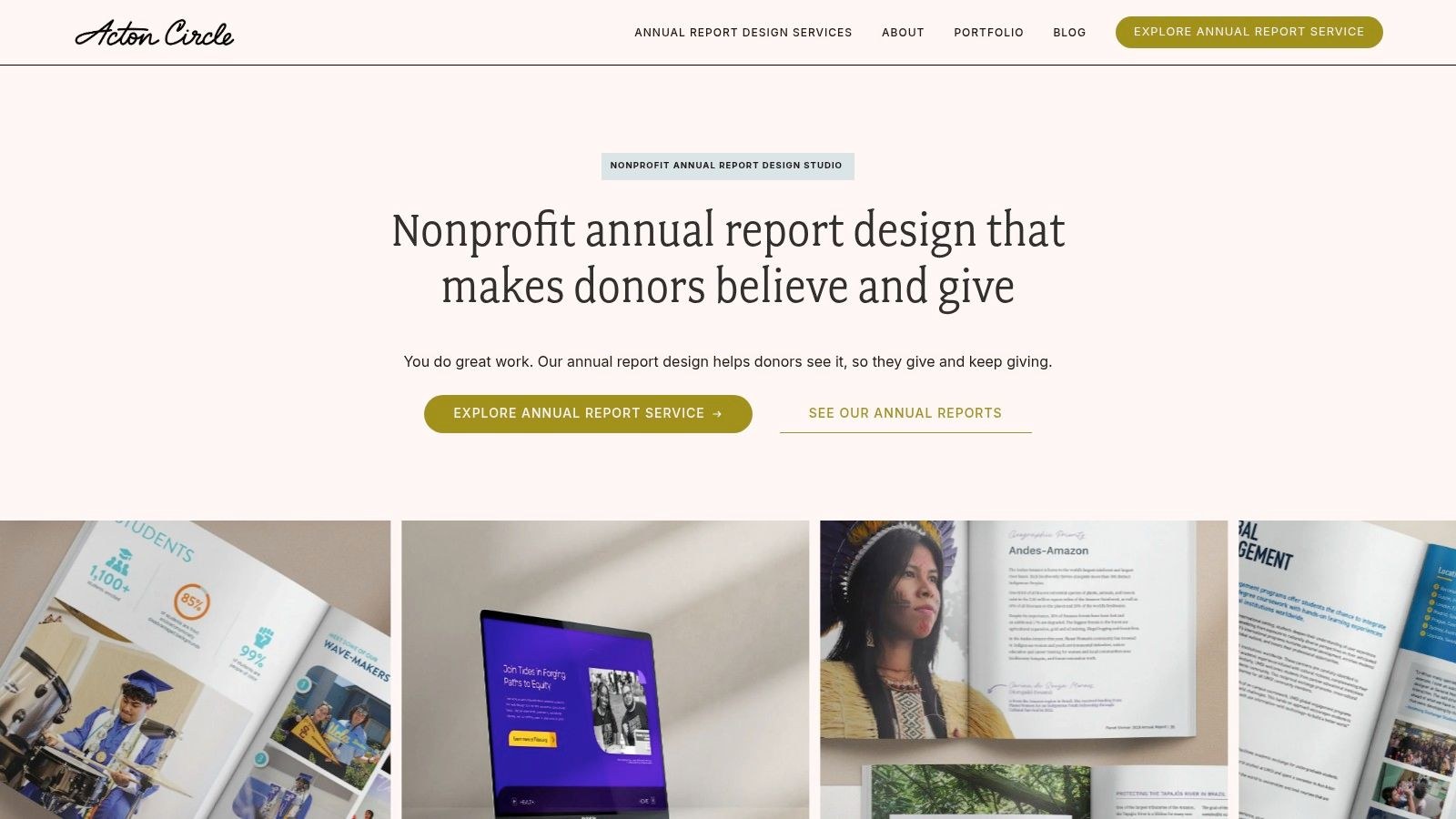
Acton Circle writes about the annual report as a stewardship and retention tool, and its blog covers report layout, measuring impact, and template kits. There's also a resource of questions to work through before designing. The idea is to help donors see the work, so they give and keep giving.
Choosing between the Design Intensive and a template kit usually comes down to staff time. With a kit, your own people take on the layout, plus chart accuracy, accessibility, and exports.
Other routes: templates, freelancers, and your own team
Not every report needs a studio. A short nonprofit report can run off a good template (Acton Circle’s Canva kits are one version of that). A freelance editorial designer suits a team that already writes well and has a clean brand, though you become the project manager. In-house makes sense when the same designer will update the report quarterly. Whichever way you go, somebody on your side still owns the numbers and the corrections. Our guide to choosing a graphic design firm covers the wider trade-offs between firms, freelancers, and staff.
Sustainability and impact reports
Give these their own brief. A sustainability report has to show measurement boundaries, metric definitions, methodology notes, and gaps in the data, and a reader should be able to tell a measured result from a future commitment at a glance, which means the designer has to know the reporting frameworks. GRI, which describes its standards as the world’s most widely used for sustainability reporting, says on its About GRI page that companies reporting with its standards account for 62% of global market capitalization, citing The State of Sustainability Reporting (June 2026). So ask any candidate whether they have built a GRI content index before.
From the list above, Curran & Connors does sustainability strategy and copywriting before design, Report Design Studio says its team is GRI trained, Ideas On Purpose pairs impact and annual reports, and Avila lists ESG, impact, and citizenship reports as core work. Labrador lists sustainability reports among its documents, next to its Workiva work.
If your finance and sustainability teams already work in Workiva, this short demo from Workiva shows what the sustainability side of the platform covers, including pulling data from ERP, HR, finance, and sustainability systems and collaborating with outside partners. A Workiva-literate studio will be designing inside that environment.
All 10 compared
| Studio | Base | Best for | Report work it shows | Pricing signal | Published turnaround |
|---|---|---|---|---|---|
| Moonb | Remote team | The report plus the deck, highlights, and social around it | Reports and decks as part of wider design work | One set monthly rate, or a per-project quote | 48-hour average turnaround (our figure) |
| Curran & Connors | Holbrook, New York | Public-company annual, proxy, and sustainability sets | Annual, sustainability, and digital reports | No public pricing | Not published |
| Labrador Transparency | Offices on three continents | Workiva-based 10-K, proxy, and annual reports | Annual reports, 10-Ks, proxies, sustainability reports | Quoted after a consultation | 24-hour document execution teams; no project length published |
| Ideas On Purpose | New York | Paired annual and impact reports | Annual, impact, and ESG reports | No public pricing | Not published |
| Avila Creative | Chicago | A family of corporate and institutional reports | Annual, impact, sustainability, 10-K wrap | No public pricing | Not published |
| Report Design Studio | Michigan | Energy, climate, and policy reports | ESG reports, integrated resource plans | No public pricing | Not published |
| Sutter Group | Washington, DC area | Associations, nonprofits, corporations | Annual and responsibility reports | Roughly $5,000 to $25,000 or more | Six to ten weeks to print-ready |
| Tobi Designs | San Francisco Bay Area | Institutions with a publishing program | Annual reports, an ACFR | No public pricing | Not published |
| Flynn Design | Jackson, Mississippi | Mission-led organizations | Nonprofit annual reports | No public pricing | Not published |
| Acton Circle | SF Bay Area | Nonprofit donor and funder reports | Nonprofit annual reports, template kits | Fixed price shared up front | Not published |
How to choose and brief a studio
Judge studios on the inside pages. Ask each one for a complete report with dense tables, notes, and cross-references. Then ask who wrote it, who checked the charts against source data, and who handled accessibility, print, and the web version, because a finished PDF won’t tell you which parts the studio did. If the design work around the report is broad, my guide to design services helps separate report production from the launch graphics and investor slides. And if the board deck needs its own partner, start with the presentation design company comparison.
It also helps to read the document the way an investor does. In this webcast, NYU Stern’s Aswath Damodaran works through Procter & Gamble’s 10-K, then the statements and a valuation spreadsheet. One of its slides lays out a template for reading a financial disclosure. Treat it as a rough map of the pages an analyst reads closely; those are the pages that deserve the most design care.
A usable brief names the audience, the publication date, the report type, the formats (print, PDF, HTML), brand assets, data owners, approval owners, and accessibility requirements. Attach last year’s report and mark what should change. If the identity itself needs work, settle that first, because brand identity design services and applying an existing brand to a report are different jobs on different calendars. My graphic design agency guide has a longer list of vetting questions that apply to any design partner.
Write accessibility into the contract as acceptance criteria: tagged PDF structure, a logical reading order, chart descriptions, bookmarks, and who tests them, so nobody is arguing about what “accessible” meant once the report is live.
Working back from the publication date
Reports run to a fixed date, so plan backward from it. The safest pattern I know is to build the design system early, with representative spreads, chart styles, and table styles filled with clearly marked placeholder content. The final weeks then become controlled content flow-in and corrections. I have yet to see report content arrive on time, which is the whole reason to build the system first.
The table below is one way to lay out a full annual report. Read the timing column as a planning example and adapt it to your own approvals; every company’s calendar differs, and the only published duration in this roundup is Sutter Group’s six to ten weeks from kickoff to print-ready files.
| Stage | Planning example (time before publication) | What has to be true at the end |
|---|---|---|
| Scope and owners | About four months | Formats, page count, approval owners, and sign-off dates agreed |
| Design system | About three months | Type, grid, chart and table styles approved on placeholder spreads |
| Content flow-in | About two months | Approved sections laid out; one source register and one correction log |
| Final numbers | About one month | Audited figures and signed statements in; every chart and cross-reference rechecked |
| Publication prep | Final two weeks | Accessible PDF validated, print proofs signed, web version tested |
Send your shortlisted studios the same brief and ask each to mark the latest safe dates for content approval and final corrections. Then notice which of them explains how it would protect your publication date.
Frequently asked questions
Most studios quote per project, because the cost moves with page count, copywriting, data visualization, and whether you need print, PDF, and an HTML version. Sutter Group is one of the few firms that publishes a range, roughly $5,000 to $25,000 or more. When you compare quotes, hold the scope identical: same page count, same number of charts, same formats, same number of correction rounds.
Not always. A U.S. public company files its annual report with the SEC on Form 10-K, and investor.gov notes the 10-K typically holds more detail than the annual report to shareholders. Some companies send a designed, glossy report. Others send the 10-K itself, sometimes inside designed cover pages called a wrap. Decide which one you're making before you brief a designer.
Usually yes, as long as the studio understands reporting frameworks such as GRI. One design system across both keeps charts, terms, and tone consistent, and readers notice when the two documents look unrelated. I'd split them only if the sustainability report needs advisory work (materiality, framework alignment) your annual report designer doesn't offer.