11 ad design services compared
I compared 11 ad design services on their own sites: who each fits, how the engagement runs, public pricing where it exists, and one fair limitation apiece.
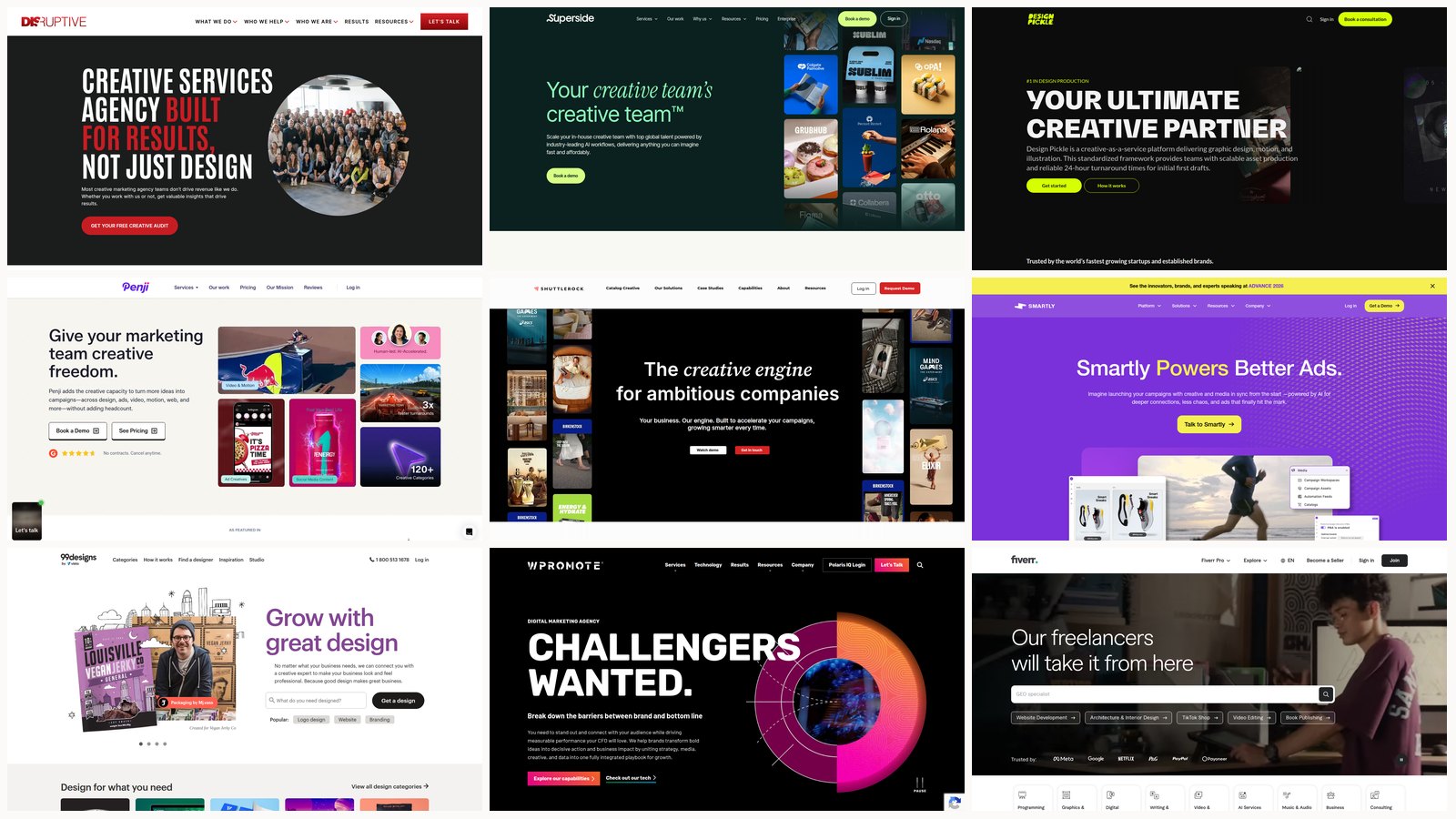
The eleven ad design services I would put side by side are Moonb (where I work), Superside, Design Pickle, Penji, Kimp, Shuttlerock, Smartly, Disruptive Advertising, Wpromote, 99designs by Vista, and Fiverr. Some are built for volume testing, some for flagship campaign craft, and that split matters more than anything else between them. If you are not sure how many variants your testing needs each month, our ad creative testing playbook helps you size it before the first sales call.
Clients forward me proposals from half the companies below, and the most common mistake I see is picking on the portfolio alone. I get it, the portfolio is the fun part. It just won’t tell you whether a provider can turn one working ad into forty placement versions by Thursday, or whether a fast production queue leaves any room to think about your launch.
So the list is grouped by how each company works, using what each one says on its own website as of September 2026.
Volume or flagship comes first
Ad design covers static social ads, display banners, motion versions, short video cuts, and once in a while the big campaign film. Volume partners push that work through queues and production templates, and you want one when a single concept has to become dozens of variants for different audiences, sizes, and placements. Flagship partners spend their hours on concept development and art direction, with senior people reviewing. Call them when the idea itself is the hard part. I wouldn’t rank one above the other; it depends on what’s on your desk this quarter. If what’s on your desk is the brand system underneath the ads, my list of graphic design firms covers studios built around brand and design systems.
On every sales call I’d ask about concepts per month, and keep that number apart from files per month. Ten concepts in five sizes and three lengths is a very different job from fifty concepts in one size, even though both leave you with a big folder of files. My piece on high-converting ad creatives covers the patterns behind ads that test well, if you want to know what you’re paying for first.
If most of your ad spend goes into video, our roundup of social media video agencies is a better place to start than this list. If short-form video is only part of the mix, watch TikTok’s walkthrough of its creative tools and best practices before you brief anyone.
The 11 ad design services
1. Moonb
I work here. Read this one with that in mind.
More on Moonb
We're a creative studio, and companies of any size bring us in as the dedicated team for their marketing department. On ad work it usually starts with one brief. That becomes a concept, and the concept becomes the statics, a motion cut, and whatever placement versions the media team asked for, with the same Creative Director reviewing every round. The 48-hour and 95% figures are our own. The Clutch score comes from Clutch, where you can read the reviews yourself.
2. Superside
More on Superside
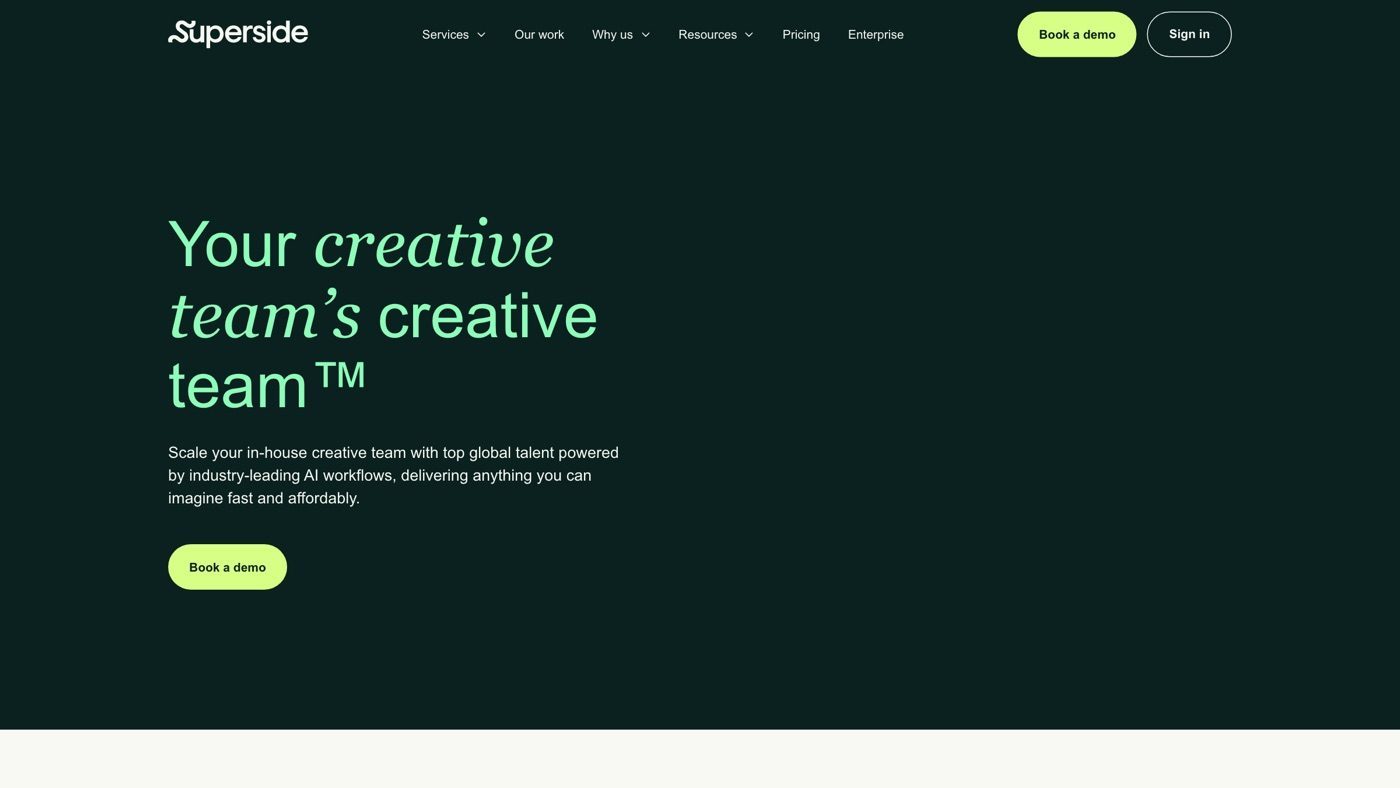
Superside calls itself your creative team's creative team. Its pricing page is unusually specific for this category, and I wish more of them were, because you can check a year of your own ad and design requests against it before the first call. Flex subscriptions start at the $15,000 monthly minimum on an annual term, and unused Flex budget rolls over for up to three months. A Dedicated AI-Native Team starts at $30,000 a month on a 12-month term. Either route carries the same $1,000 monthly fee for Superspace, its platform.
3. Design Pickle
More on Design Pickle
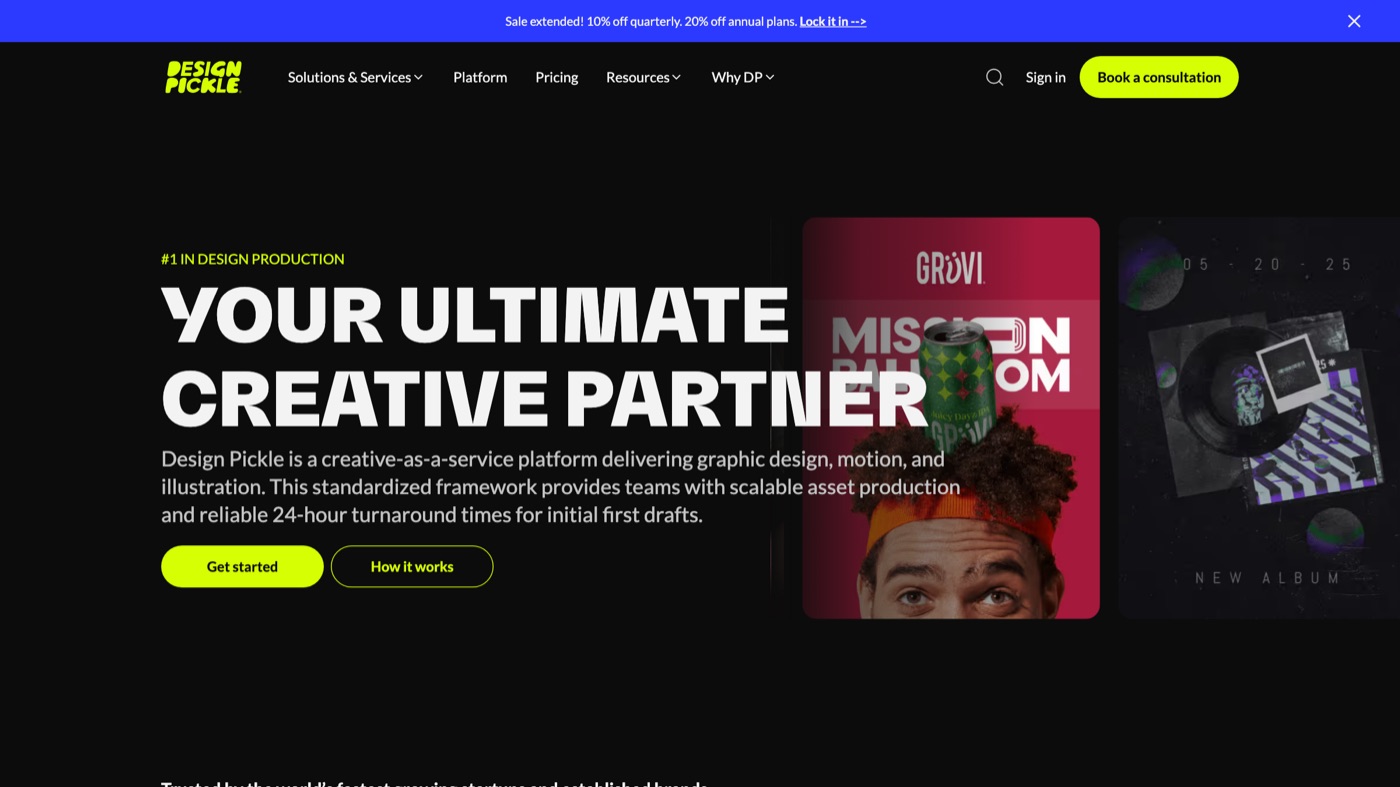
By its own description, Design Pickle delivers graphic design, motion, and illustration, and the homepage says the request form takes anything from ad banners to brand refreshes. When I looked in September 2026, the public tiers were gone from the pricing page. Plans are now sized to volume, turnaround, and services, and billing runs in quarterly or annual cycles with cancellation before the next renewal date. Clients own the work outright and get layered source files with delivery.
4. Penji
More on Penji
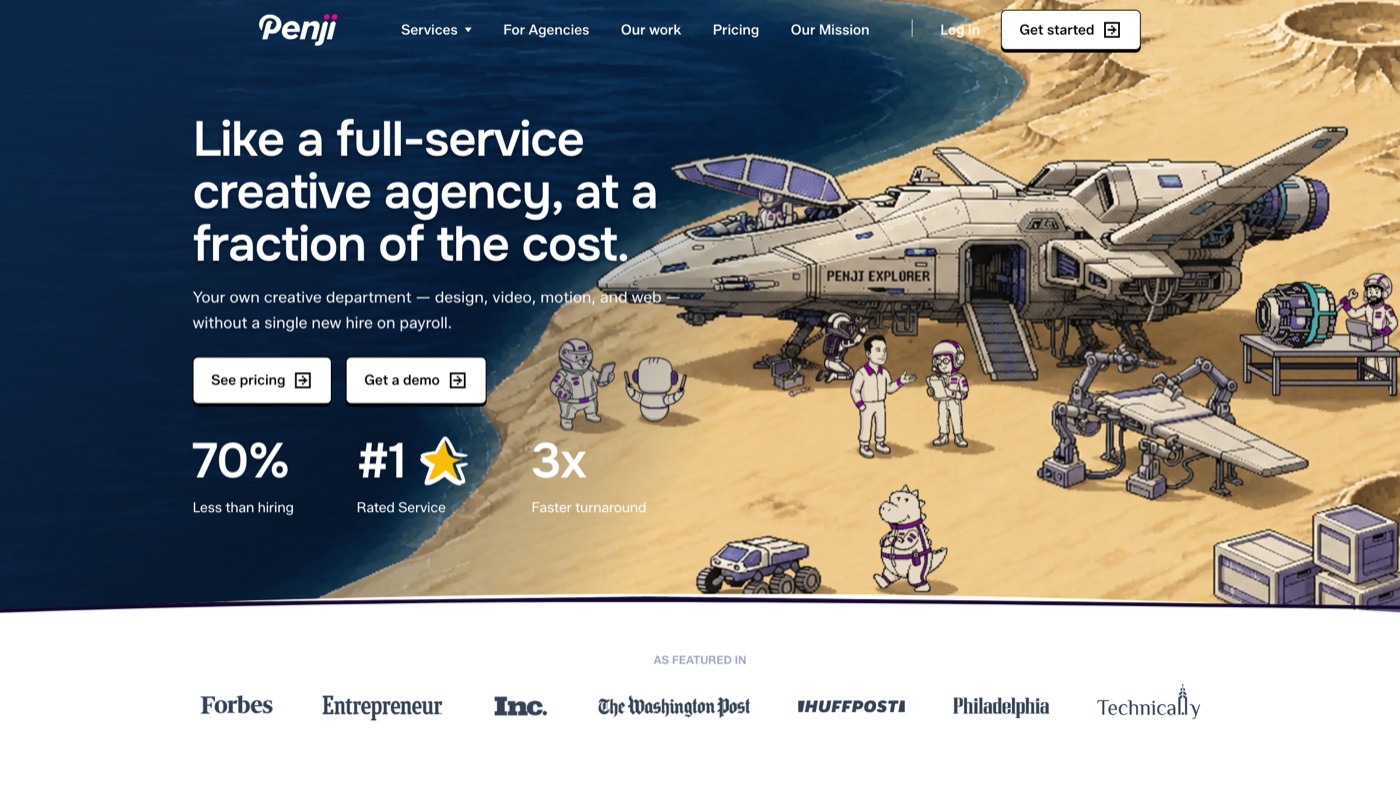
Penji's pricing page has three tiers. Essentials covers ad creatives and social media, branding, email, print, and presentations, with two active workstreams (Penji equates that to 2 to 4 hours a day) and a one-day turnaround. Agency Partner adds short-form videos and reels, motion graphics and animation, and web design, along with an Art Director and same-day turnaround. Dedicated Team adds a Senior Art Director and a creative pod. There's a 30-day money-back guarantee and no contracts.
Before picking a tier, count how much of your queue is motion or video, since that’s where the price steps up.
5. Kimp
More on Kimp
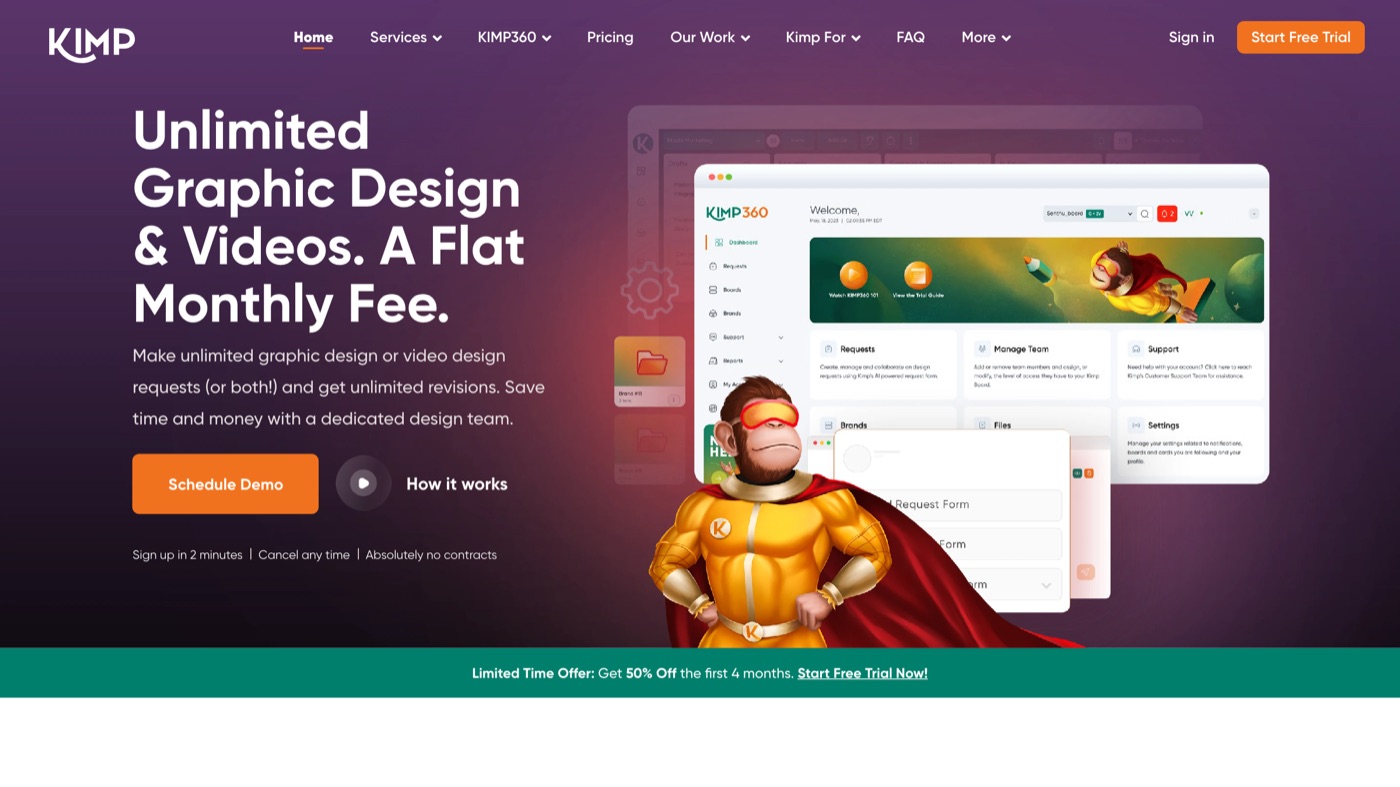
Kimp keeps the core lineup to those three monthly products, with a separate Canva design service on the side. Prices are public and there's no contract, so you can start next week without a sales process; count the requests you need in flight at once first, and see how many subscriptions that takes. For ads, its design categories include display ads, web ads, social media posts and ads, and animated video ads, though HTML5 ads are on its list of requests it does not take. Statics go under Graphics. Video editing, animation, and motion graphics go under Video. I like that the FAQ puts capacity in hours, too. The design team allocates 2 to 2.5 hours each business day, per product, to your requests.
6. Shuttlerock
More on Shuttlerock
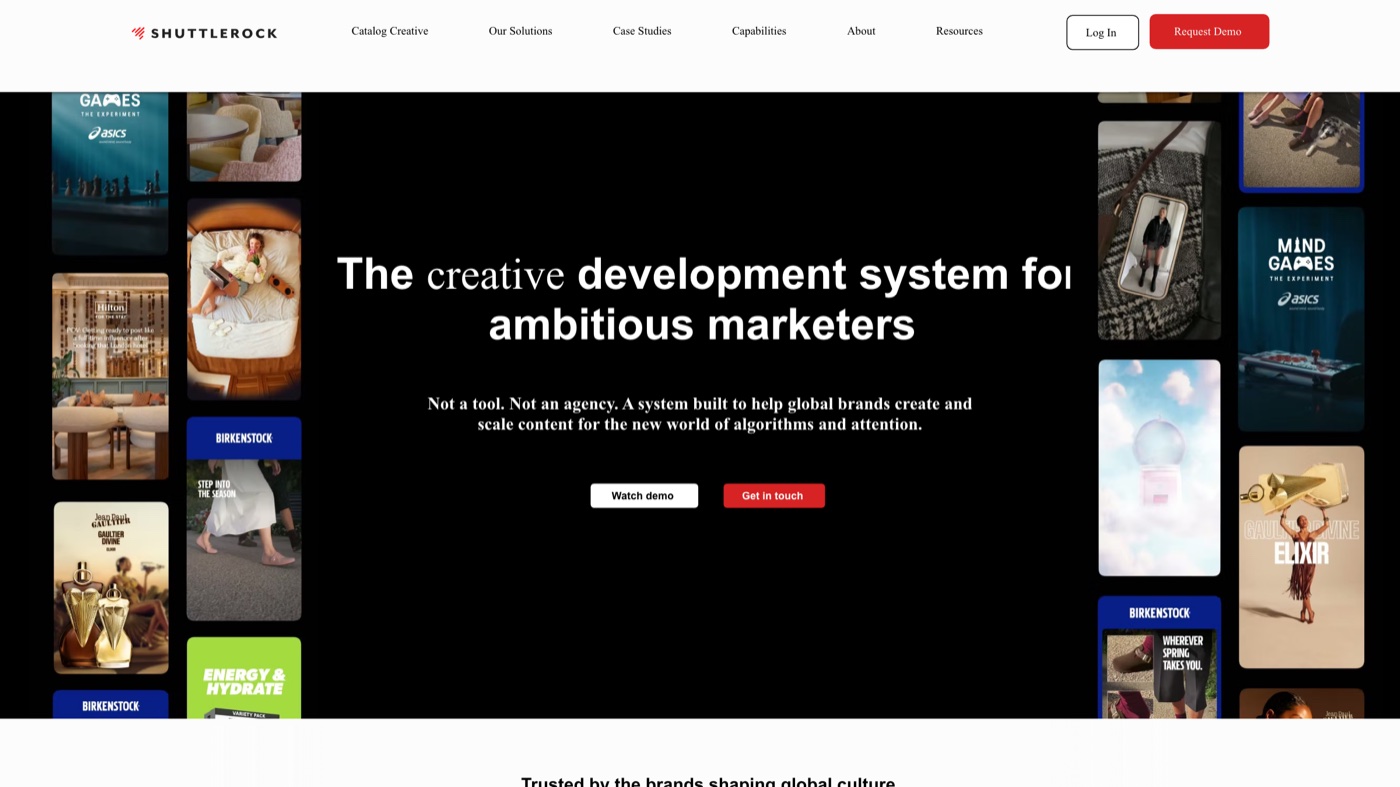
I think of Shuttlerock as the production engine you hire once somebody has already concepted the campaign. It is blunt about the problem it solves. Ambitious brands, its pitch goes, no longer need dozens of assets; they need thousands, personalized across audiences, channels, languages, and formats. The work splits between a creative service (strategy, taste, and judgement, in its words) and a proprietary platform that handles briefing, review, delivery, and insights. A creator roster sits on top, for what it calls authentic, on-trend content at scale.
7. Smartly
More on Smartly
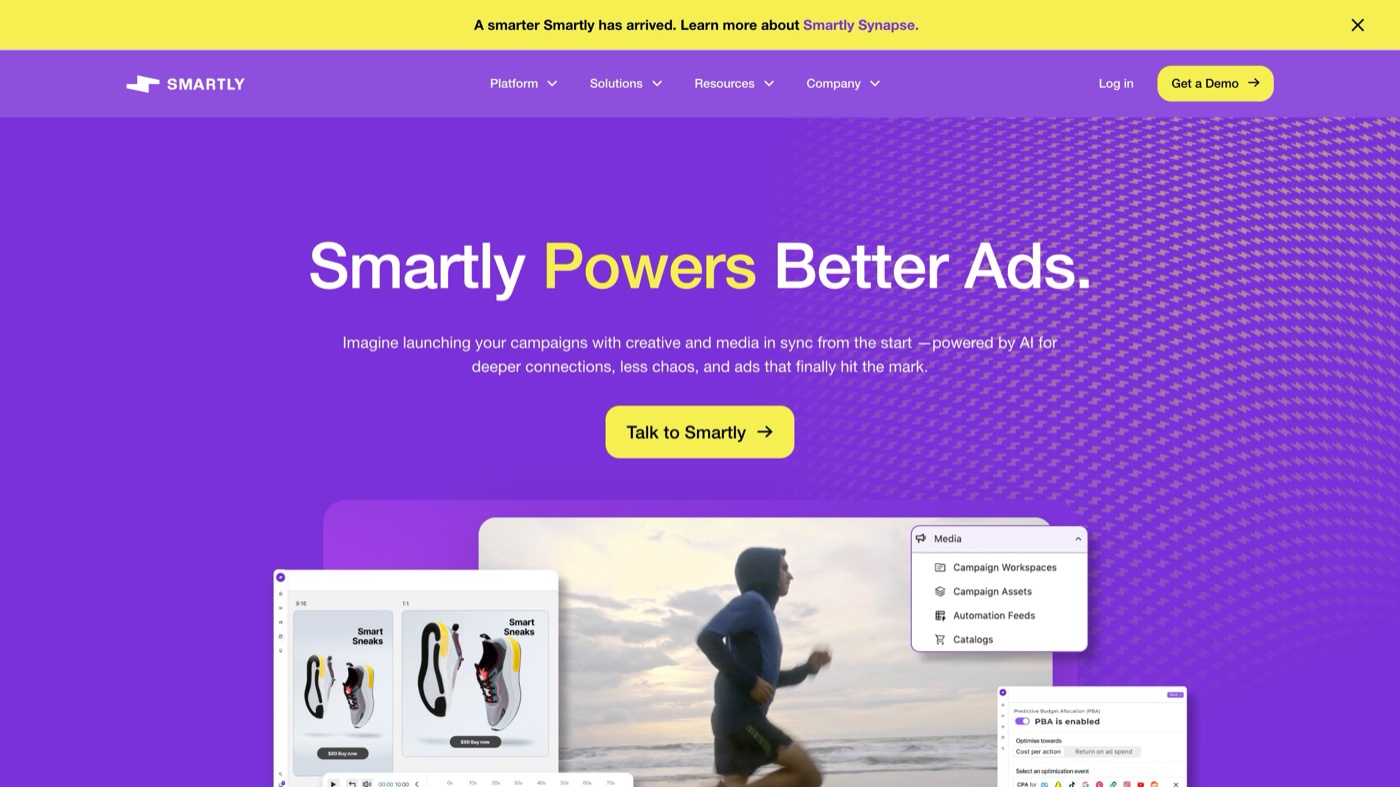
Smartly calls itself an AI advertising platform and says outright that it is not a creative studio, which saves buyers some guessing. Its services page puts that creative team on retainer to build, ship, and iterate as an extended part of your teams, next to managed services for running campaigns. The creative is shaped around its templates and dynamic creative tools. If all you need is designers, it's a heavy way to get them. Ask on the first call how much of the work goes through templates and how much is designed from scratch, because that is what the retainer is buying.
8. Disruptive Advertising
More on Disruptive Advertising
On its creative services page, Disruptive Advertising calls itself a full-service design agency covering brand identity, high-converting ad creatives, landing pages, and video, with a testing framework built around results. The homepage says it turns away more than 80% of the companies that approach it. There's a performance promise on the creative page too. If it does not show measurable improvements within 90 days, you do not pay. I'd get the measurement written into the contract, along with who owns the brief and whether the source files come back to you if the relationship ends.
9. Wpromote
More on Wpromote
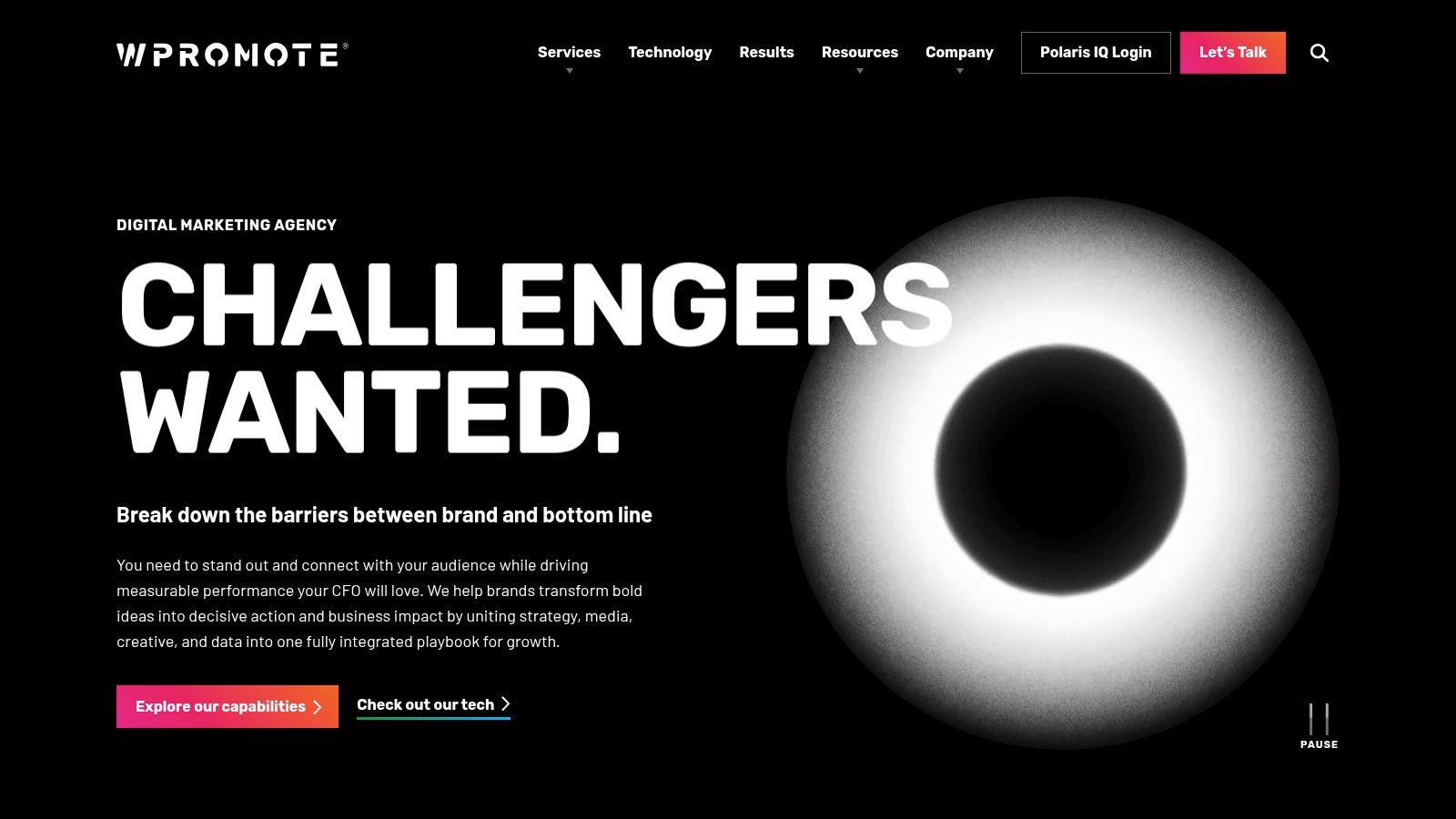
Wpromote's creative services page describes a hybrid model with creative strategy, production, and media under one roof, and creative teams embedded in media planning and post-launch optimization. The addition of Giant Spoon brought award-winning brand strategy, creative, and experiential marketing into the same company, and that pushes Wpromote toward the flagship end of this list. Polaris IQ also handles cross-channel tracking. This is where I'd bring a brand platform or a major campaign.
Ask early who handles the day-to-day production and how revisions are controlled. Big-agency work often passes through several hands.
10. 99designs by Vista
More on 99designs by Vista
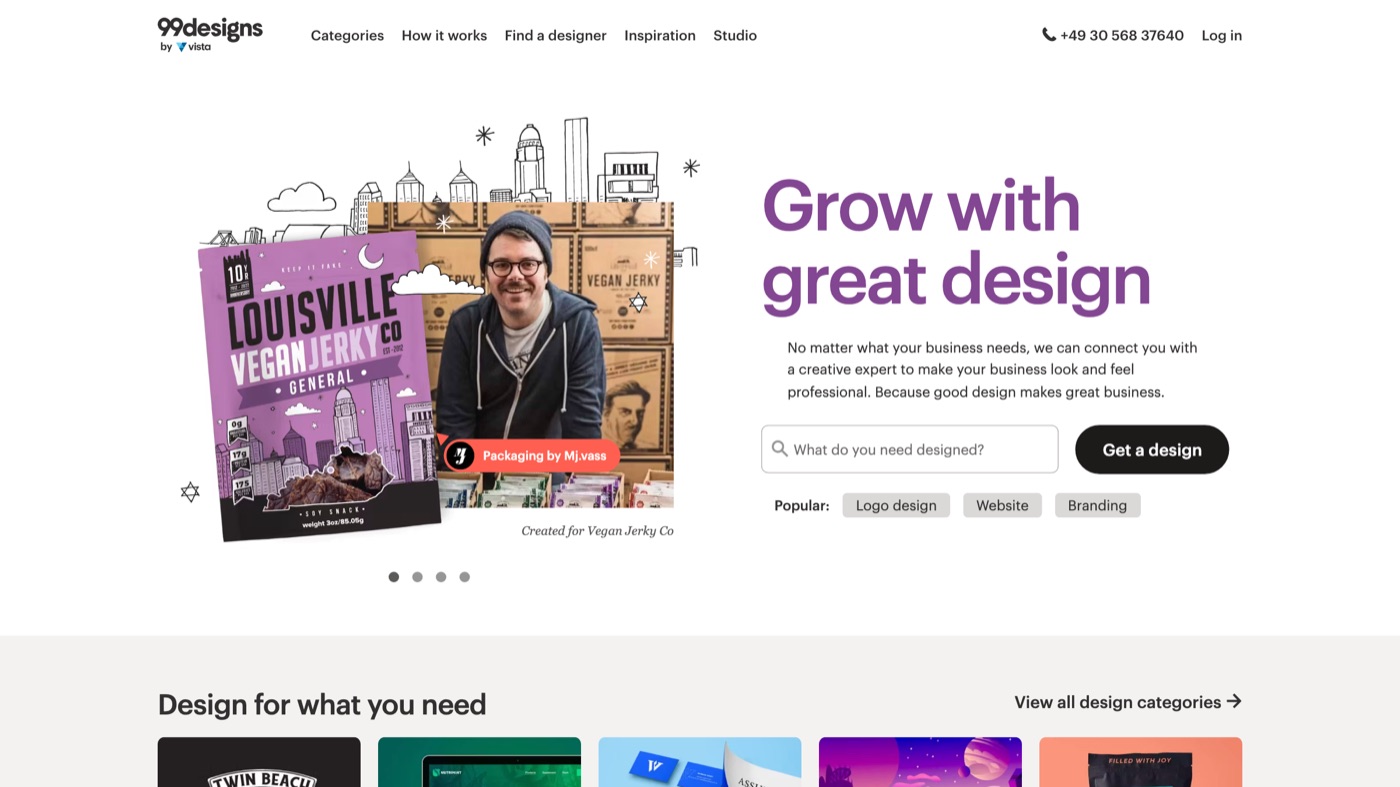
Banner ad contests on 99designs deliver files in formats such as JPG, GIF, PNG, or PSD, and its page explains that higher packages bring bigger prizes and more experienced designers. The Gold and Platinum packages also add dedicated managers who write the brief and give designers feedback. For anything recurring, the part I'd actually use comes after the contest. You can keep working with the winning designer in a 1-to-1 project, which turns a one-off into a working relationship.
11. Fiverr
More on Fiverr
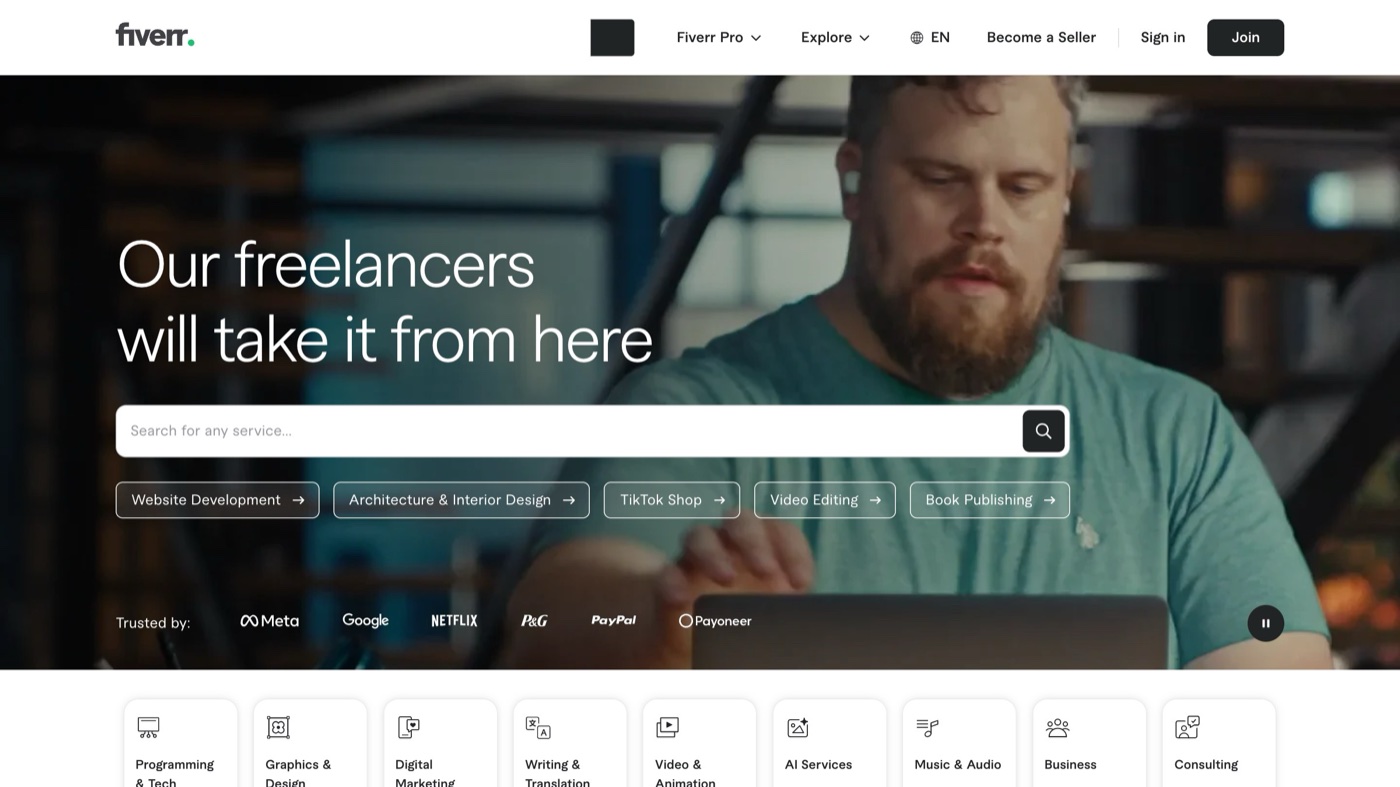
Fiverr's homepage frames it as the place to find the best global talent, and its categories cover the core of ad design (graphics and design, video and animation, video editing). I'd go there to fill one specific gap and keep the ongoing testing program with a team that stays put. Before you hand a freelancer a campaign, pay for one small job and settle source files and usage rights in the order. The spec should work for someone who has never seen your brand. Fiverr Pro adds vetted freelancers, plus a service where experts source and interview candidates for you.
The whole list side by side
| Provider | Model | Best for | Formats | Trade-off |
|---|---|---|---|---|
| Moonb | Dedicated creative team with a Creative Director | Mixed monthly ad queues across static, motion, and video | Static, motion, video, animation | Makes the ads; does not buy the media |
| Superside | Annual subscription, from a $15,000 monthly minimum | Large in-house teams with steady multi-format demand | Static, video, motion, 3D, copy | High entry point and annual term |
| Design Pickle | Creative-as-a-service platform, quoted on a call | Clear briefs that need fast, steady execution | Static, motion, illustration | No public price; concept work stays with you |
| Penji | Public monthly tiers from $995 | Smaller teams that want published pricing | Static on every tier; video from $1,995 | Entry tier is self-managed, no Art Director |
| Kimp | Month-to-month Graphics, Video, or both | Simple, contract-free day-to-day ad graphics | Static, display, social, video | Active-request limits cap batch size |
| Shuttlerock | Creative service plus production platform | Adapting one idea into thousands of versions | Social video, UGC, localized variants | Enterprise scale; no public pricing |
| Smartly | Ad platform with retainer creative services | Advertisers already running on Smartly | Templated and dynamic social, CTV | Tied to the platform |
| Disruptive Advertising | Performance agency with creative practice | Ads, landing pages, and media as one funnel | Static, video, landing pages | Conversion-first; done-for-you tier has no public price |
| Wpromote | Full-funnel agency with Giant Spoon | Flagship brand campaigns tied to media | Campaign, brand, experiential, performance | Big-agency pace and scope |
| 99designs by Vista | Design contests and 1-to-1 projects | Exploring directions for a one-off ad | Static, banner sets | Weak fit for ongoing testing |
| Fiverr | Freelance marketplace, plus Fiverr Pro | Small, well-specified ad jobs | Anything a freelancer offers | You own direction and consistency |
Other routes worth pricing against
Some ad programs don’t need a company at all. Before you sign anything, price the quotes against these.
A good independent freelancer from your network or a portfolio site can be excellent for a defined job, and often costs less than any retainer, as long as you can live with depending on one person. If they get sick or book another client, your testing calendar stops, and if they don’t do motion, you’re hiring a second person anyway. The Fiverr advice holds here too, so pay for a test job first and get the rights in writing.
An in-house designer knows the brand best and turns feedback around fastest, and for a steady queue that can be the right long-term answer. It’s rare, though, for one hire to be equally strong in static, motion, and video, and the salary, tools, and management time cost the same in a quiet month as in a busy one. Our comparison of in-house vs agency production walks through the math.
Then there are self-serve and AI tools, from template editors to AI ad platforms such as Pencil. Once a concept exists they turn out variants fast, and I have no problem using them to resize and version a proven ad.
What to send for an accurate quote
Quotes come back faster, and closer to the final number, when the first message says how production actually works on your side. Put this in it:
- Brand assets: logo files, fonts, color values, guidelines, and any existing templates or design-system references.
- The product: usable footage, screen recordings, product photography, or access to the person who can supply them.
- Approved claims: the proof points, required disclaimers, and the claims legal will sign off on.
- Placement details: platforms, sizes, aspect ratios, video lengths, safe areas, file formats, and naming conventions.
- Past ads and results: what ran, what was paused, and whatever performance context you can share. This one shortens the first round more than a long brief does.
- Delivery conditions: launch dates, who reviews, how many approval stages, and which source files and rights you need at the end.
Spend the most time on placements, since every platform wants its assets in a different shape. Google’s tutorial on creative best practices for app campaigns covers the mix of text, image, and video assets a single campaign draws on, and a provider needs that list from you before it can price anything.
Don’t compare quotes until the scopes match. Ten concepts with variants and ten finished files are different products, the same way a contest, a monthly queue, and a media-plus-creative retainer are. (I’ve covered how the ongoing kind is usually structured in creative as a service.) My own rule is to buy for the work you repeat every month, then check that the big campaigns still get enough thinking to say something clear.
Frequently asked questions
Marketplaces and contests charge per job. On-demand design teams publish or quote monthly tiers; Penji's public tiers start at $995 a month, and Superside's pricing starts at a $15,000 monthly minimum on an annual term plus a $1,000 monthly software fee, both per their own pricing pages in September 2026. Performance and full-funnel agencies price custom scopes that often include media management. Line up concepts per month, formats, revisions, and file ownership before you compare any two quotes, or you end up comparing different jobs.
Usually a freelancer, if it is a single, well-specified job like one banner set or a launch graphic and you can supply the art direction yourself. A service makes sense once the work is ongoing. You get concepts and variants across static, motion, and video from one team that keeps the brand consistent from batch to batch, and someone covers when a designer is out. Niche formats can still go to a freelancer alongside it.
Volume creative takes an idea that already works and multiplies it into versions for testing across audiences, sizes, lengths, and placements, so speed and consistency matter most. Flagship creative is about finding that idea, and it needs concept development, art direction, and senior review time. Most brands need both, so be wary of buying one model to do both jobs. A fast production queue rarely produces a breakthrough concept, and a flagship shop is slow and costly for weekly variants.