13 Testimonial Video Examples That Actually Build Trust
Thirteen testimonial video formats that actually build trust, with real brand examples and a simple way to pick the one that fits your story.

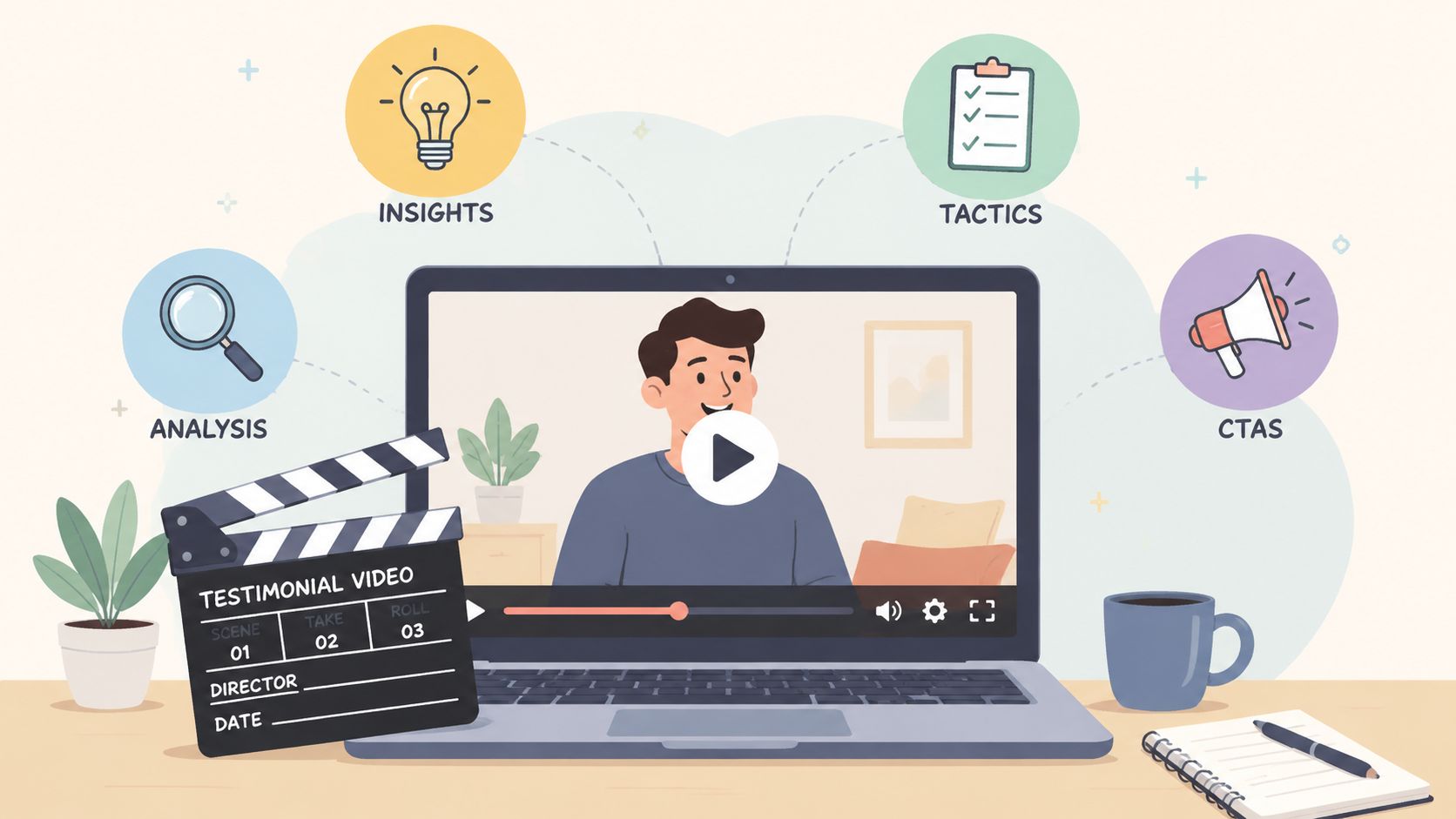
A testimonial video example is a real customer telling their own story on camera, shaped into a format that fits the audience and the channel it will run on. The container can be a single sit-down interview, a mini-documentary, a montage of one-line quotes, or a product walkthrough narrated by the person using it. Same raw material, different edit.
I work at Moonb, a creative studio, and planning and cutting customer stories for marketing teams is a big part of my week. The mistake I watch people make over and over is spending the whole budget on production polish and almost no thought on the format. A written quote can carry a fact, but a video carries expression, pacing, and the context around the claim, which is what makes a stranger believe it. Nielsen’s long-running work on advertising trust keeps landing on the same finding: people believe other people far more than they believe brands talking about themselves. A testimonial video is the closest you get to putting one customer in the room with the next one.
There are 13 formats I reach for, running from the most focused to the most opportunistic: the single-customer interview, the mini-documentary case study, the day-in-the-life story, the before-and-after transformation, the multi-customer quote montage, the vox pop, the user-generated selfie, the results-driven data story, the founder-to-customer conversation, the employee testimonial, the event-floor highlight, the animated quote, and the product-in-use walkthrough. Each one answers a different question in the buyer’s head, so the real skill is matching the container to what they need to see before they trust you.
Choose the format before you book the shoot
Before I lock a format, I answer three questions. Does the buyer need depth or breadth? One long story builds empathy, while a stack of short quotes builds a sense that everyone is already on board. Does the story need polish or rawness? A regulated enterprise buyer expects a clean, considered edit, while a consumer buyer will often trust a slightly rough phone clip more than a glossy one. And who actually carries the credibility here: the customer, a founder sitting across from them, or an employee who cares about the work? The 13 formats below sort along those three axes, which means you can pick by what the buyer needs instead of by what looks expensive.
1. The single-customer interview
The single-customer interview is the cleanest format in the set. One person tells one story along a simple arc: the problem, the moment it turned, and the result. That shape lines up with how Goldcast and Testimonial.to describe a strong proof asset, a clear before-and-after with shorter cutdowns you can reuse later. Goldcast’s testimonial video examples walk through the same structure.
Slack’s “So Yeah, We Tried Slack…” is the version everyone remembers. It stays with one team and one change, which is exactly why it reads as a real experience instead of a pitch. When I run these, I ask for a story rather than a slogan. If the customer can describe what changed in plain language, without reaching for marketing words, the edit almost always comes out stronger. I start with what was hard, move to how they found the fix, and end on what is different now. This format earns its keep with SaaS, services, and any product complicated enough that one person needs a few minutes to explain the pain.
2. The mini-documentary case study
A mini-documentary gives the story more room. It usually carries more than one speaker, real b-roll, and a stronger sense of place, which helps when the product touched several parts of a business or when the audience needs context before the result will land. Salesforce leans on this with its Customer 360 films, which show broader business impact rather than a single quote, so the viewer can see how the product sits inside a working team.
The cost is planning. You need a tighter shoot day, more location coverage, and an edit plan before anyone points a camera. When a team skips the environment footage, the film collapses into a long talking head instead of a case study. On the day I try to capture a few things at once: more than one voice, usually a leader plus a daily user and sometimes someone customer-facing; the actual work happening on screens and in the room; and a single throughline so the story stays about one business change rather than five. The strongest mini-docs feel earned, showing enough detail that the stakes are obvious without a slide deck.
3. The day-in-the-life story
A day-in-the-life testimonial works because it shows the product inside a real routine instead of asking the customer to describe value in the abstract. You let the viewer watch the thing appear naturally in the workday. Airbnb host stories do this well, following a host as they prepare a space, greet guests, and move through the small moments of hosting, so the proof feels lived-in rather than argued.
The risk is over-directing. Stage every beat and it curdles into an ad wearing a documentary costume. I keep the crew light and let the customer move through their own space at their own pace, and the moment they start glancing at the camera instead of their task, the illusion is gone. This format is strong for hospitality, consumer brands, and tools that quietly disappear into daily habits, and it pairs naturally with wider brand storytelling. Moonb’s company culture video examples sit in the same territory, where the environment does much of the persuading.
4. The before-and-after transformation
A before-and-after testimonial is the easiest to sell because it draws a straight line between life before the product and life after it, then lets the contrast make the argument. That is why it shows up so often in renovation, fitness, and software stories. HubSpot uses the logic well, taking a messy process and showing it become calm and manageable.
Its strength is clarity, since viewers do not have to decode the payoff, they see it, which matters when a buyer is comparing options and wants a fast reason to care. A good version leans on visual contrast too, letting the before feel cramped or slow and the after feel controlled, with small shifts in color, pacing, and on-screen text carrying the change without a narrator spelling it out. Where it falls apart is vagueness. “Things got better” is not a story, but a specific problem and a specific turning point are. If you cannot name what actually changed, this is the wrong format.
5. The multi-customer quote montage
A quote montage is quick and useful when you need breadth more than depth. Several customers each give a short line, and the edit stacks them into one broader proof point, which suits launches, recap videos, and event reels built for momentum. HubSpot’s customer collections work this way, mixing short voices instead of leaning on one long interview, so the viewer hears a room agree rather than one polished fan.
The enemy here is sameness. If every clip is the same sentence with a different face, attention drops fast. I give everyone the same prompt but push for different angles, different pain points, and different outcomes, then vary the visual rhythm by alternating close-ups, wider frames, and b-roll. Each line stays short and specific, cut hard. Mixing speaker types helps too, since a founder, an operator, and an end user each prove something slightly different. This format shines when your customer base is really varied and you want the market to feel broad, and it struggles when the product needs a longer explanation to make sense.
6. The vox pop interview
A vox pop feels spontaneous because it is gathered in public, usually at a conference, launch, or trade show. The name comes from vox populi, the voice of the people, and brands reach for it when they want quick reactions and event energy without much setup. The setting lowers the polish, and that lower polish tends to raise trust, because someone talking near a booth sounds more direct than the same person seated under studio lights.
What you give up is control. Background noise, rough framing, and rushed answers can wreck a cut, so this format needs one very simple question everyone can answer in a sentence and a crew that can move fast and keep rolling long enough to catch a real reaction. I use it when the event itself is part of the story, for launch moments, user conferences, and roadshows where the energy is the point. It is the wrong tool when the product needs careful explanation or the buyer is expecting a deeper case study.
7. The user-generated selfie testimonial
User-generated selfie testimonials are the low-friction end of customer proof. The customer records themselves on a phone or webcam, often from their own kitchen or desk, and sends the file over. That rawness is the feature, not a flaw, because it reads as a real person for the simple reason that it is one. GoPro built an enormous amount of trust on content made by actual users, and the same logic carries into testimonials: when a product is best understood in the wild, a polished studio setup can feel less believable than a handheld clip.
My whole job with this format is removing friction. If the customer has to install software, hunt for a tripod, or guess at framing, the file never arrives. I send a short prompt, a one-tap upload path, and two small notes: film horizontally so there are more reuse options later, and stand near a window, since daylight beats most gear. Then I ask for one story, clearly told, with one problem, one change, and one takeaway. These are not the format for a high-end brand film, but for social proof at volume they are hard to beat.
8. The results-driven data story
A results-driven data story anchors the testimonial to a real outcome. HubSpot’s customer stories often work this way, framing the result clearly enough that the reader understands why the story matters, which is exactly what analytical buyers need to defend a decision internally. A manager might like your product, but the leadership team still wants something concrete to point at in the approval meeting, and a clean result gives them that.
The trap is turning the whole video into a number hunt. If the metric lands before the viewer understands the problem, it feels thin and unearned, so the number should arrive after the story has set it up. On screen I try to show three things: the result itself in a clean graphic, the path to it through the actual workflow or product use, and the human reaction, because a figure means more when the customer explains what they changed to get it. For teams building this format, Moonb’s note on video marketing ROI is a useful companion when you need to connect the story back to distribution and business goals. This is one of the most reusable formats in B2B, since the same proof point clips neatly into ads, landing pages, and decks.
9. The founder-to-customer conversation
A founder-to-customer conversation feels different from a standard interview because the leader is inside the story rather than behind it. Instead of handing a host the microphone, the founder or CEO talks with the customer and reacts in real time, which sets a tone of curiosity instead of performance. It suits founder-led brands and smaller teams that want to show they are still close to the people they serve.
It only works if the exchange is genuine. A founder reading questions off a page and never responding loses the one advantage the format has. I let the conversation breathe, let the customer interrupt, and encourage the founder to drop in a small observation before the next question, so it plays like two people comparing notes rather than an interrogation. That proximity can be persuasive while trust is still forming. The format weakens when the founder has no real relationship to how the product gets used day to day, because the audience can feel the distance.
10. The employee testimonial
Employee testimonials work because they show belief from the inside. When the people building the product speak well of it, the brand feels more grounded, and the format travels well beyond customer marketing. Microsoft and Intel both use employee stories in talent and culture content, which is a good sign of how far this reach can go.
The strong versions stay on personal experience rather than job titles, because a title alone builds no trust. What lands is an employee describing what they are proud of, the problem they care about, and why the work matters to them. Push too hard on the script and it turns into corporate wallpaper, so I let people sound like themselves instead of like the brand deck. The prompts I lean on are simple: what makes you proud to work here, what problem are you helping solve, and what would you want a customer to understand about how this team actually works. Moonb’s piece on employee testimonial videos goes deeper for teams that want internal proof to support employer brand work alongside customer trust. This format is strongest when your own people have a clear, specific connection to the mission.
11. The event-floor highlight
Event-floor testimonials are short reactions gathered from attendees at a conference, trade show, or user summit. Salesforce is known for turning Dreamforce into highlight reels stitched from attendee soundbites, and the energy is the whole point, since these clips exist for momentum rather than deep explanation. Live events create a natural sense of occasion, so people are already engaged and primed to say what they think, which makes the footage feel current and social.
Consistency is the hard part. Event audio goes wrong quickly and a chaotic booth area reads as noise on camera, so a dedicated, well-lit spot with a simple backdrop saves the edit later. A good reel mixes emotion with specifics, because if everyone just says “great event,” the video has no shape. I ask attendees what they learned, what surprised them, or what they are taking back to their team. The format is most useful in the days right after an event, when the footage can feed social posts, recap pages, and sales follow-up, and least useful when you need a lasting proof asset with a real narrative.
12. The animated quote testimonial
An animated quote testimonial uses the customer’s audio as voiceover while motion graphics or kinetic typography carry the visuals. It is a strong option when the customer is camera-shy, when privacy matters, or when the story is simply easier to tell with graphics than with live action, and it suits abstract or technical products. A plain audio clip becomes a polished proof asset while the message stays human, with the visuals reinforcing structure, pacing, and the key phrases.
The rule I never break is matching the animation to the voice. A calm, considered speaker wants measured motion, while a story with real energy can take faster movement. When the visual rhythm fights the person talking, the whole piece feels off, so I keep on-screen lines short, let pauses breathe, and pair each important claim with a clear motion cue rather than a wall of text. Moonb’s work on animated advertisements points the same direction, letting motion do the heavy lifting without losing clarity. This is a good fit for B2B software, regulated industries, and topics that are hard to film directly, and it repurposes easily across landing pages, paid social, and sales enablement.
13. The product-in-use walkthrough with voiceover
A product-in-use testimonial keeps the visuals on the product itself while the customer’s voiceover carries the story. Zoom customer videos, like its Rubrik testimonial, use this well, showing the interface while the user talks about how it supports the way their team communicates, so the value is easy to grasp because you are watching the exact tool in context. It is a strong choice for software, apps, and any workflow with visible actions, because the customer can describe what changed while the viewer watches the feature that caused it.
It also rescues the customer who is a great talker but stiff on camera. Voiceover tends to relax people, and it lets the edit stay on what the product does. The weakness is that thin screen capture or mismatched visuals make the story feel abstract, so the cut has to stay tight and the footage has to match the words. Moonb’s product demo videos piece is a useful companion here, because the line between testimonial and demo gets thin, and the difference is that the customer still leads the story. This format tends to perform in sales and landing-page contexts, since it keeps the promise and the proof side by side.
The 13 formats at a glance
| Format | What it is | Best for | Trade-off |
|---|---|---|---|
| 1. Single-customer interview | One customer, one problem-to-result arc, shot clean | Deep SaaS and services stories where one person can explain the pain | Rests entirely on one voice, so a weak speaker sinks it |
| 2. Mini-documentary case study | Multiple voices, b-roll, and a real sense of place | Enterprise proof and brand positioning that needs context | Needs a planned shoot day and full location coverage |
| 3. Day-in-the-life story | The product observed inside a real routine | Hospitality, consumer brands, tools that fade into habit | Over-direct it and it looks like a staged ad |
| 4. Before-and-after transformation | A clear contrast between life before and after the product | Renovation, fitness, and process or performance stories | Falls flat when the change cannot be named specifically |
| 5. Multi-customer quote montage | Short lines from several customers stacked together | Launches, recaps, and event reels that need momentum | Goes dull fast if every clip sounds the same |
| 6. Vox pop interview | Quick public reactions gathered at an event | Launch moments, conferences, and roadshows | You give up control of audio, framing, and answers |
| 7. User-generated selfie | Customer-shot phone or webcam clip, sent in | High-volume social proof and global reach | Not built for a high-end brand film |
| 8. Results-driven data story | A story anchored to one concrete outcome | Sales enablement and analytical, approval-driven buyers | Lead with the number and it feels thin |
| 9. Founder-to-customer conversation | The founder interviews the customer in real time | Founder-led brands and community-driven products | Weak when leadership is far from daily product use |
| 10. Employee testimonial | The team behind the product speaks from the inside | Recruitment, culture, and employer-brand trust | Over-scripted, it becomes corporate wallpaper |
| 11. Event-floor highlight | Attendee soundbites cut into a fast reel | Conferences, trade shows, and summit recaps | Short shelf life and fragile event audio |
| 12. Animated quote testimonial | Customer audio over motion graphics or kinetic type | Camera-shy customers, privacy needs, abstract topics | Motion that fights the voice sinks the piece |
| 13. Product-in-use walkthrough | Product visuals under a customer voiceover | Software demos, onboarding, and conversion pages | Thin screen capture makes the story feel abstract |
How to pick the format that fits your story
The strongest testimonial videos all do the same basic thing: they make the customer feel real, keep the story specific, and show a change the viewer can believe. The container shifts from a single interview to a montage to a product walkthrough, but the job underneath stays constant. The viewer needs to think “that sounds like me,” and then “I can see how this actually worked.”
That is why polish alone never carries a piece. A glossy video full of vague praise fades within a week, while a slightly rough one built around a real problem, a named customer, and a specific outcome tends to stick. The guides from Goldcast, B2W TV, Dock, and Teraleap all point the same way: shorter cuts for distribution, a clear problem-solution-result arc, and enough reuse to feed social, sales, and the website.
The easiest way to improve your next shoot is to start with fit. Pick the customer with the clearest story for the audience you want to reach, send the questions ahead of time, and then resist scripting the answers. Ask about the problem first, then the turning point, then the result, and let the person speak in their own words with their environment visible wherever you can manage it. That is where the trust comes from.
It also helps to think past the first edit. A strong testimonial should not live in one place, since it can become a landing-page embed, a short social cut, a sales clip, and a piece of proof the team pulls up months later. That kind of library compounds, especially when the brand needs fresh customer stories on a steady rhythm. If you want a creative team to help plan, capture, and turn those stories into on-brand video and motion work, Moonb can slot into that workflow as an embedded partner rather than a replacement for your own team.
Frequently asked questions
For a landing page or a social feed, aim for 60 to 90 seconds, because a viewer decides fast whether the story sounds like them. Save the longer two to three minute versions for case-study pages and sales follow-up, where the audience has already opted in. Whatever the length, cut a 15 to 30 second version from the same footage so one shoot feeds several placements.
Start with the problem the customer had before you, then the moment things turned, then the specific result. Those three, in that order, give the edit a natural arc. Send the questions ahead of time so the person can think, but ask them to answer in their own words rather than reading a script, and avoid anything they can answer with a plain yes or no.
Not always, and the right call depends on the buyer. Regulated and enterprise audiences expect a clean, considered edit, but consumer audiences often trust a phone-shot clip more than a studio one, because the rawness reads as real. A weak story with high production value still fails, while a strong story shot on a phone near a window can carry a landing page.