12 Facebook advertising agencies compared
Twelve Facebook and Instagram ad agencies, each checked on its own site in November 2026: who makes the creative, who runs the ad account, pricing signals and one limit apiece.

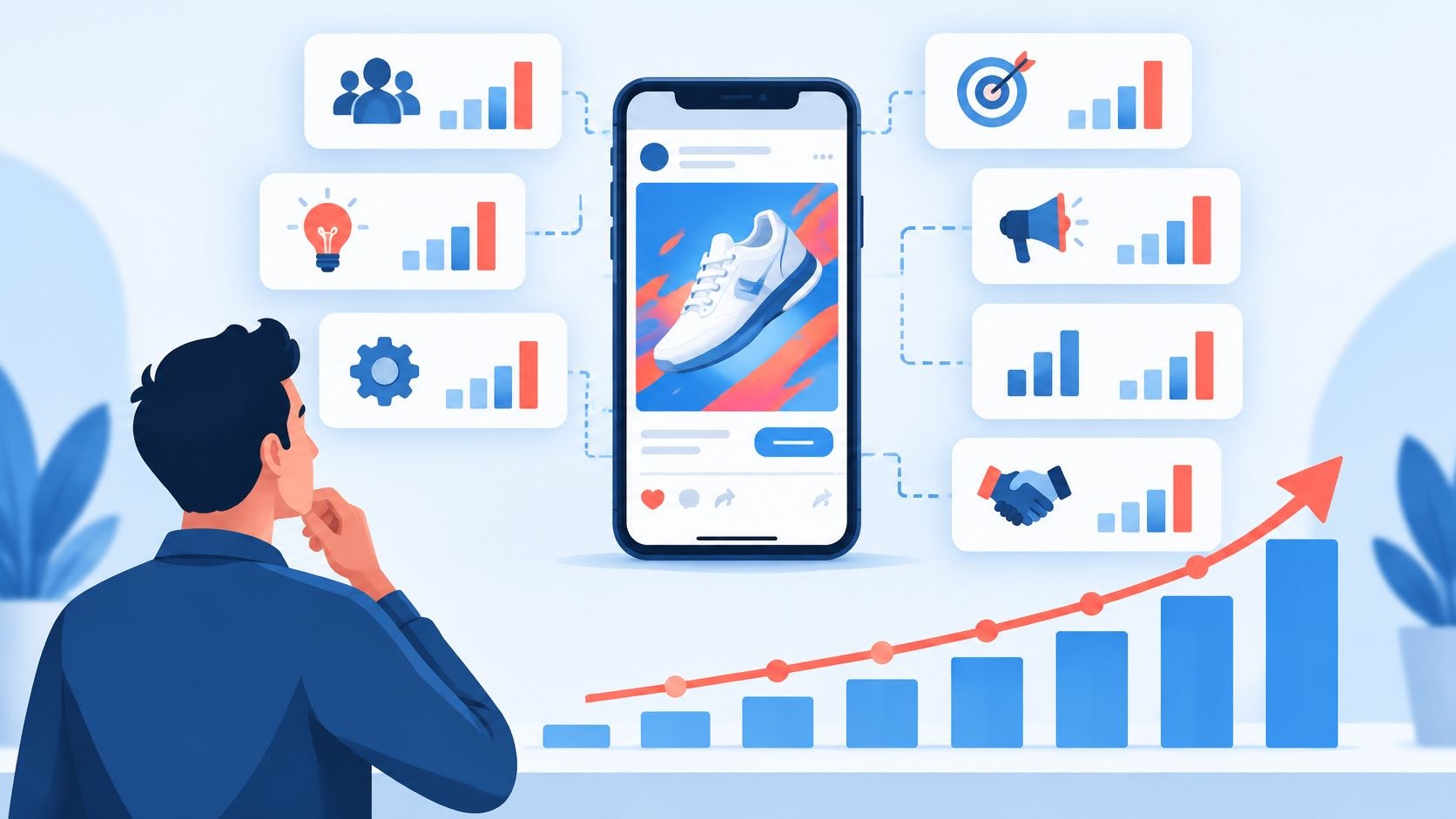
A Facebook advertising agency plans, buys and optimizes ads on Facebook and Instagram through Meta’s ad tools; the good ones also make the ads, or sit very close to whoever does. These are the twelve I’d call if I were hiring today.
The first one is Moonb, which I run, so read its spot at the top with that in mind. We make Meta ads all week and never touch the ad account, which means you’d pair us with one of the other eleven for the buying, or with the buyer you already have.
I keep getting called into the same account. Cost per purchase has crept up for a month, the buyer has rebuilt the campaign structure twice, and the same four ads are still running, because nobody asked for new ones.
The details are from the companies’ own pages as they stood in November 2026.
Buying the media and making the ads
There are two separate jobs in here.
- Buying: objectives, campaign structure, audiences, budgets and bids, tracking, reporting, and the weekly read on what the account is doing.
- Making: concepts, scripts, design, edits, cutdowns for each placement, and fresh angles before the current ones wear out.
Some companies do both under one roof. Others buy media and hand creative to a freelancer, or make ads and leave the account to you. You feel the difference around month three, when the winning concept has tired and somebody has to replace it. My first question to anyone on this list is who makes the ads and how often new ones go live.
Buying keeps getting more automated. Meta for Business has an explainer on Advantage+ sales campaigns; going by its description, the campaigns use AI to reach the right people and leave out existing customers, and the advertiser steers with budget, audience and placement.
Why creative carries more of the result on Meta
Meta’s engineers more or less said so when they introduced Andromeda, the retrieval stage that narrows tens of millions of ad candidates down to a few thousand before ranking picks what a person sees. Their December 2024 write-up on Andromeda expects the number of ad creatives in Meta’s recommendation systems to grow significantly as generative tools spread, and says the new index was built to scale with that volume. My reading of that (theirs is more careful) is that more ads now compete for each slot, so an account sending in five near-copies of one idea gives the system very little to choose between.
The slots also cost more. Meta’s third quarter 2026 results report 3.64 billion daily active people across its apps on average for September 2026, ad impressions up 10% year over year, and the average price per ad up 14%.
Researchers got there years ago. A 2017 Nielsen analysis of NCSolutions research across 863 cross-media campaigns called creative “the undisputed champ” among sales drivers and found that weak creative results in weak sales lift, on TV and digital alike. LeadEnforce’s outlook for Facebook ads makes the platform-specific version of the argument, with a section on creative becoming the main performance lever as targeting options narrow.
Formats change by category, too. SimpleLab Digital, which markets law firms, wrote up the most effective Facebook ad formats for solo attorneys and local operators, ranking eight of them by the job each one does and adding the compliance line law firms can’t skip.
The 12 Facebook advertising agencies
1. Moonb
More on Moonb
A Meta week for us usually starts with the buyer's read of the account, and the next brief comes out of that. One idea then goes out with several openings, first frames and calls to action, each exported to the Feed, Stories and Reels specs. Companies of every size use us this way, as a dedicated creative team next to the buyer they already trust.
Talking about short formats, here’s one we did for NattoPharma. Twenty seconds, hand-drawn, and the star is a little calcium guy making his way to the bones.
2. MuteSix
More on MuteSix
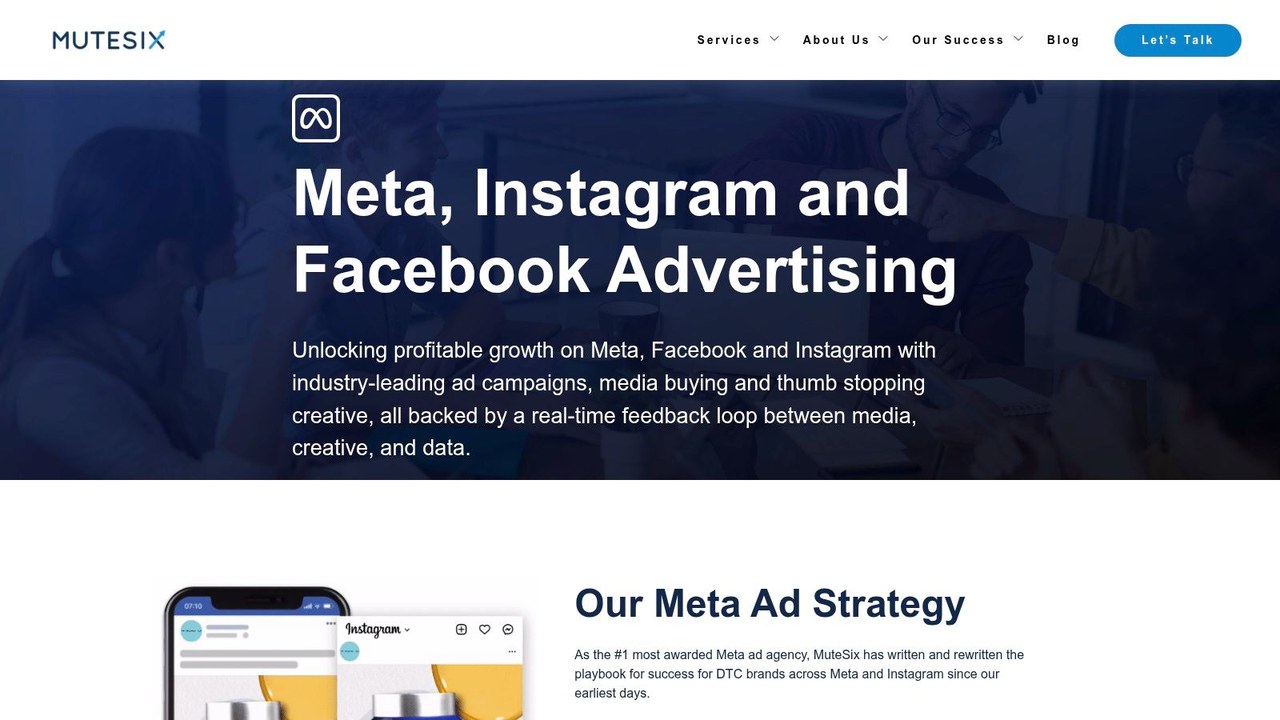
The menu runs well past Meta. Next to paid social (Instagram, Meta, TikTok, Snapchat, Pinterest), MuteSix sells retail media for Amazon, Walmart and Target, paid search for Google, YouTube and Bing, programmatic, lifecycle marketing and marketing science, and it says it is a Meta Business Partner. Creative services sit in the same menu as a performance studio, design, story and content production. Its Meta page also claims what it calls hybrid expertise in content creation and direct-response practice.
Call them for the creator network. Native-looking video without recruiting a single creator yourself is worth a lot on Reels. Our performance creative agency roundup looks at MuteSix from the production side.
3. Pilothouse
More on Pilothouse
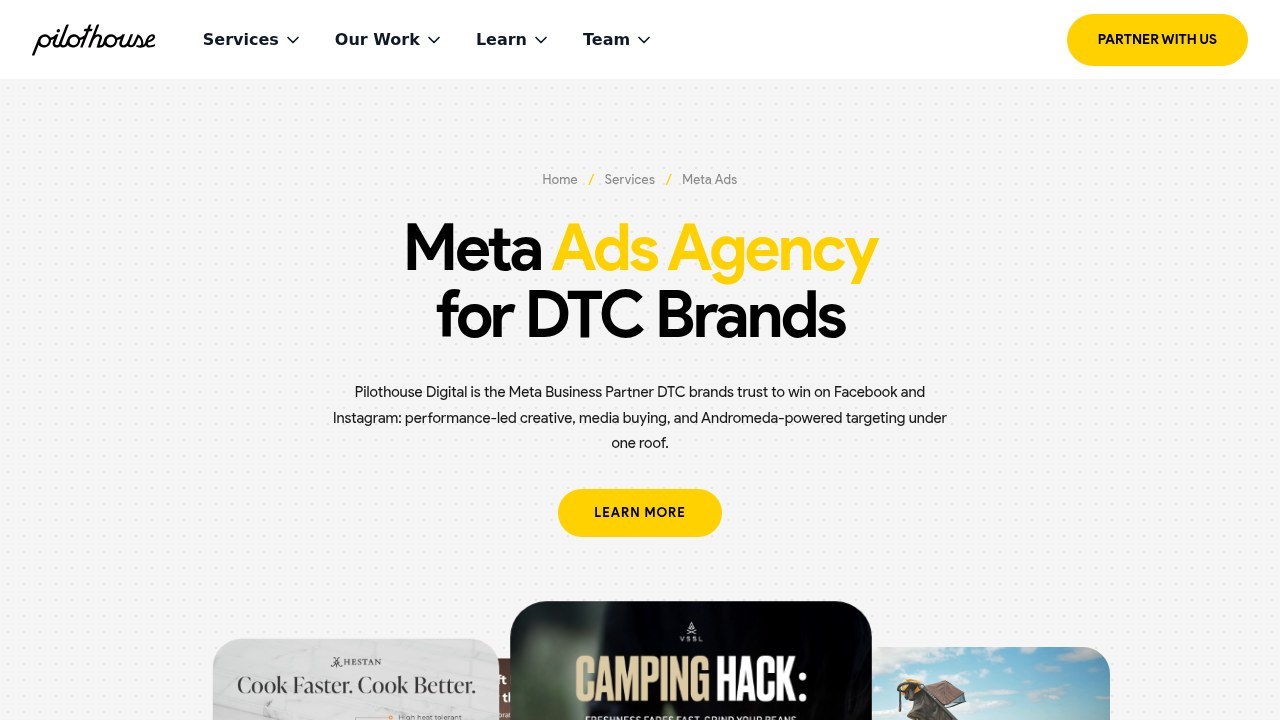
Pilothouse splits its Meta service into six parts: performance-led creative, funnels and landing pages, active media buying across an Advantage+ Shopping, Sales and Awareness mix, brand development, promotion planning and reporting down to creative-level performance. Brands on the page include L'Oreal and Therabody, and a Hestan Culinary case study lists the partnership at 4+ years. The page quotes Jacob Geary, its head of Meta.
If I had to read one page on this list first, it would be this one. It’s the clearest about the buyer and the creative team planning for the same delivery system. Whether the ads live up to the writing, I can’t tell from the outside.
4. KlientBoost
More on KlientBoost
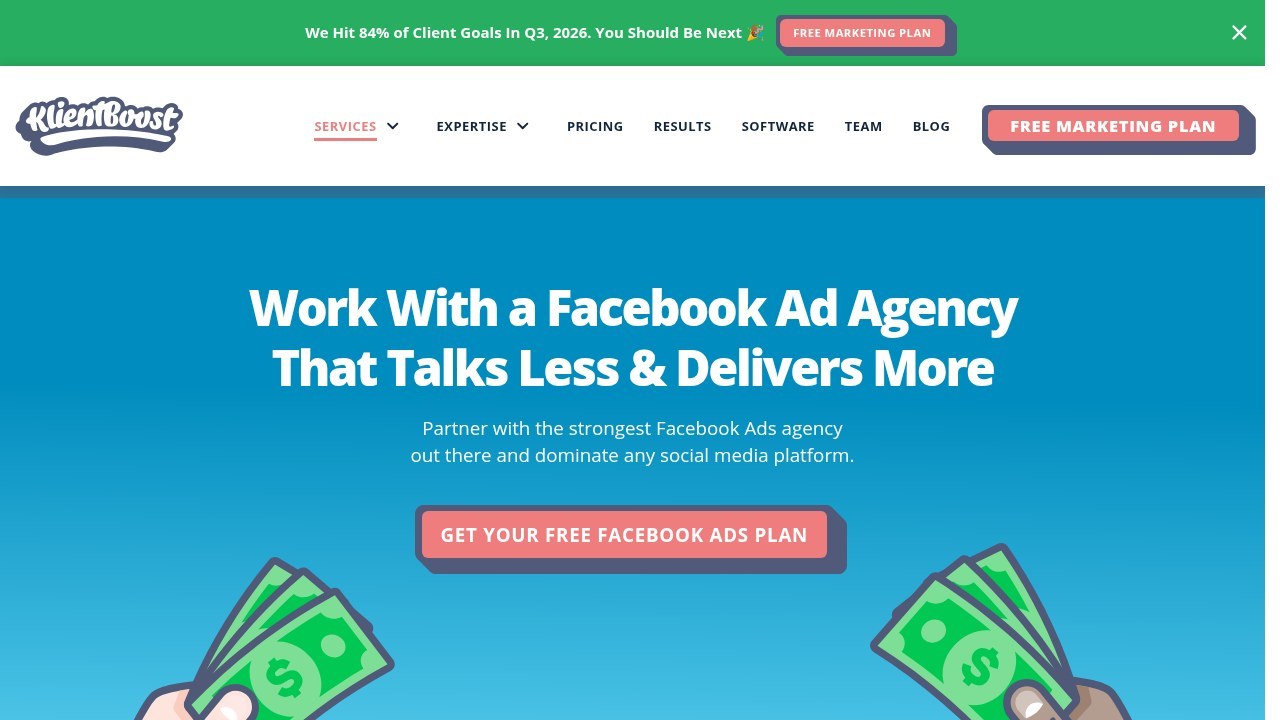
The Facebook page lists the work it expects any Facebook ads company to cover, from direct video ad targeting and lookalike audiences to pixel installation, fresh image ads for testing, custom reporting and Instagram ads. Its FAQ says clients range from as little as $5,000 a month in spend to beyond $1,000,000, and that you can meet the whole team before signing. The site lists offices in Santa Monica, Raleigh and London.
The one-time setup is the option I’d point an in-house team toward: an expert build, then you run it. Under full management, the FAQ promises designers but never says how many ads they deliver a month.
5. Jives Media
More on Jives Media
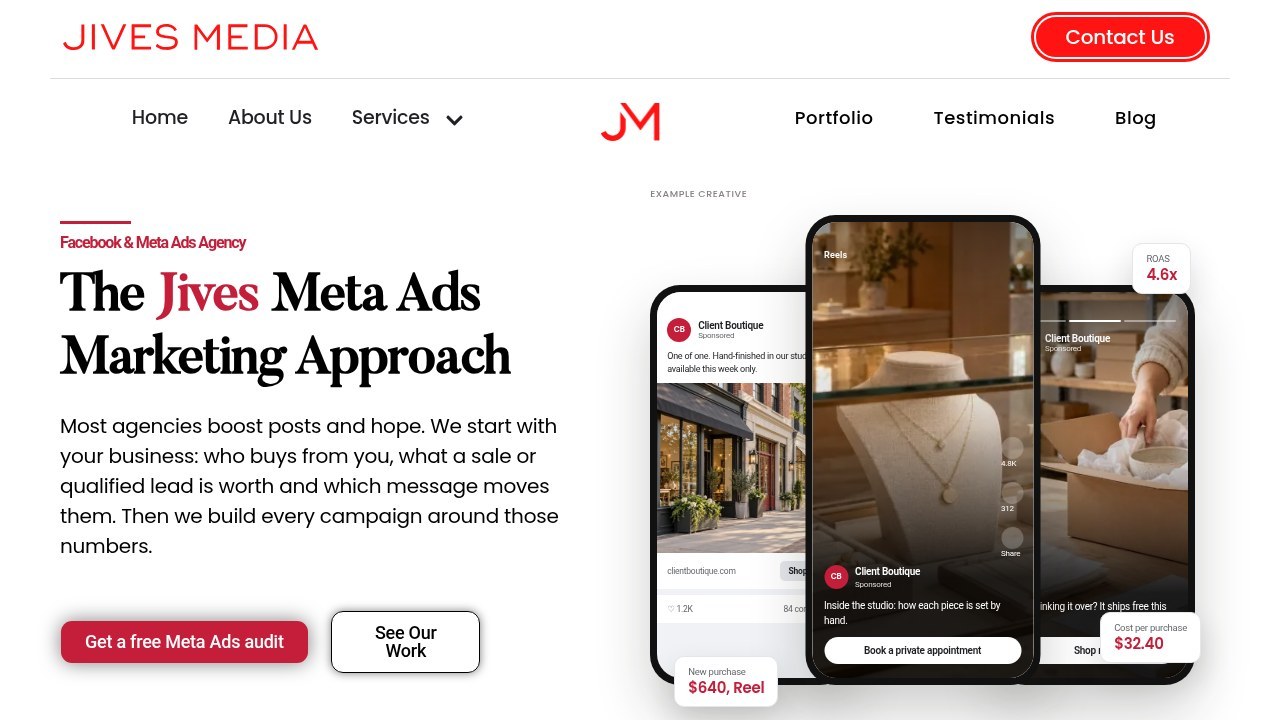
Jives says it installs and tests the Meta Pixel and Conversions API before scaling spend, builds lookalikes from past buyers, and sends CRM outcomes back to Meta for B2B and high-ticket leads so the system learns from closed deals. Its optimization queue lets software flag creative fatigue, audience overlap and spend shifts while a strategist approves, adjusts or declines each change. The ad account, pixel and data stay in your name, and it offers a free Meta Ads audit.
My favorite line on any page here is that rule about launching new versions before performance drops. Most accounts I see refresh after the numbers fall, which is a month late.
6. MetaAdsAgency
More on MetaAdsAgency
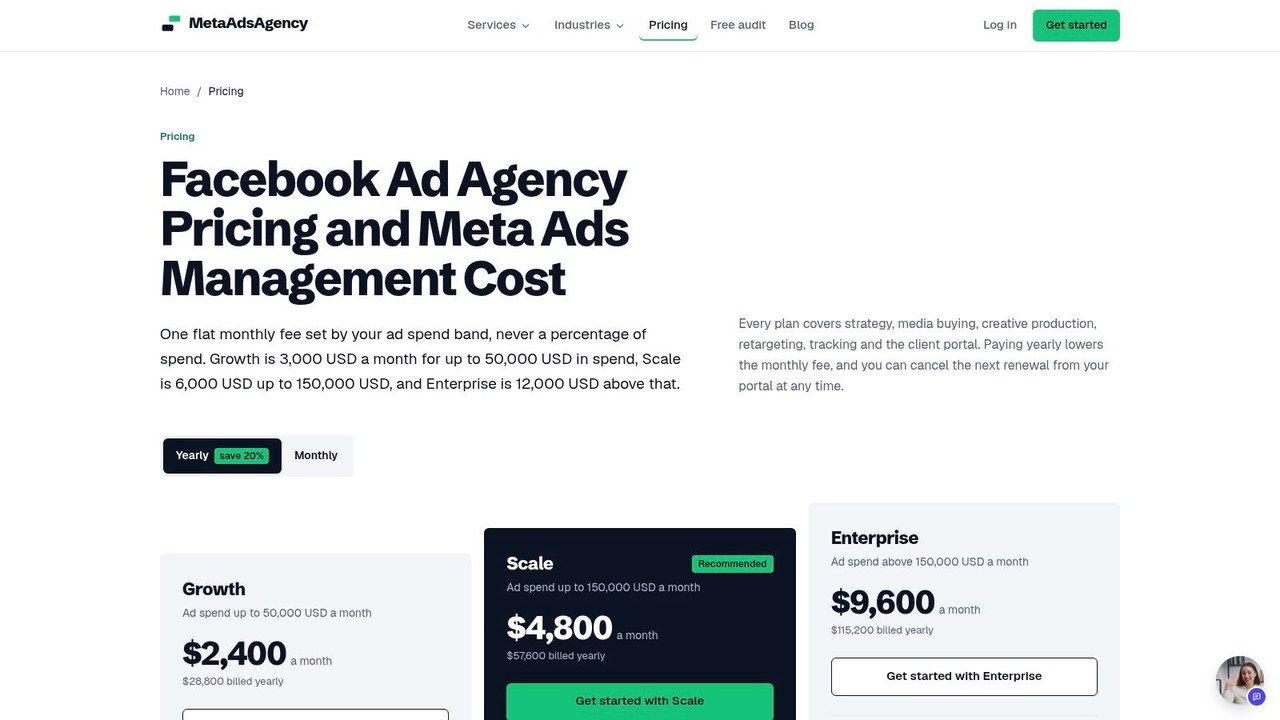
Every tier includes strategy, media buying, creative production, retargeting, tracking and a client portal. The tiers differ in landing page or CRO tests (one, two or four a month), ad accounts and countries and reply times, and offline and CRM conversions start at the middle tier. Ad spend is paid by the client directly to Meta. The portal suggests an upgrade when spend stays above the band for two weeks in a row or 80 percent of the creative quota is used, and nothing changes until a workspace owner accepts.
Twelve or sixty a month sounds concrete until you ask what one creative is. If a resize counts, the number shrinks fast, so get the format list and the revision limit before you put it next to anyone’s retainer.
7. Disruptive Advertising
More on Disruptive Advertising
On the Meta page, Disruptive says it monitors client campaigns weekly and keeps optimizing ads and targeting, and that prospecting and remarketing should carry different creative for each stage of the customer journey, made by its internal design team. The creative services page covers ad creative, landing pages, video and brand identity work. Testimonials on the Meta page include Copart and Guitar Center.
Our Instagram roundup covers Disruptive as an account auditor. For Meta I find the standalone creative route more interesting, because a brand with a good in-house buyer can hire the design team and leave the account where it is.
8. LYFE Marketing
More on LYFE Marketing
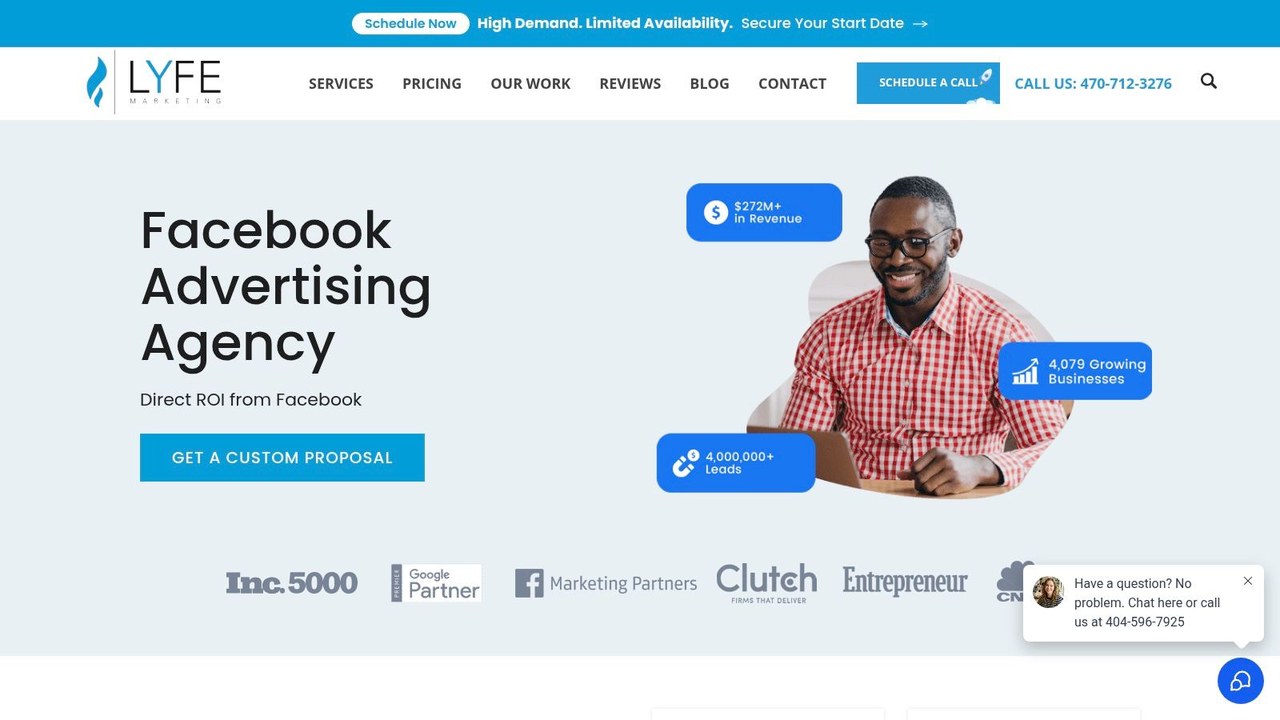
LYFE also sells Instagram advertising, ecommerce ads with dynamic product retargeting, social media management, PPC, email, web design and short video. Its page says it has managed more than $5 million in Facebook and Instagram ad spend and driven over 4 million leads.
You can see the price before you call, and for a small business running its first campaign that counts for a lot. My worry is the quarter when those two videos stop working and the next two aren’t due yet.
9. SmartSites
More on SmartSites
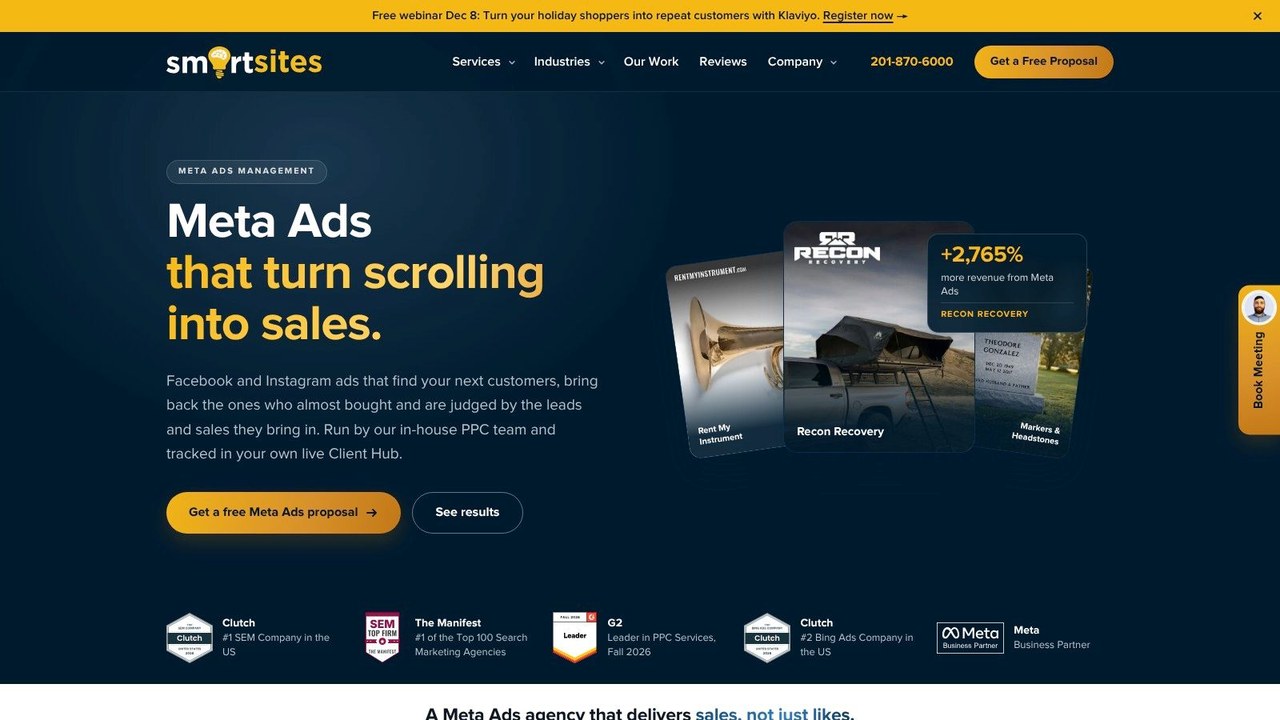
SmartSites sets up the Meta Pixel and Conversions API, then builds audiences from people who already know you, lookalikes of your best customers and new interest and behavior audiences. It runs Advantage+ shopping and catalog ads from your product feed, lead ads and retargeting, and tests hooks, formats and offers across images, video, Reels, Stories and carousels.
An owner who wants Meta and Google on one screen every morning will like the Client Hub. The creative packages are the part I’d look at hardest, since they decide how fresh the account stays.
10. Directive
More on Directive
Directive's paid social team combines audience strategy, creative, media buying, optimization and measurement. It structures prospecting and retargeting campaigns by buyer role and stage, and builds creative, messaging and landing experiences for each stage. It calls its method DiscoverabilityOS, and its paid social page features a Meta case study with SentinelOne.
I like that it grades Meta on opportunities. Whether that CRM data ever reaches the person writing the next brief is another question.
11. Moburst
More on Moburst
Moburst says it works with the social and search platforms through their global teams in Dublin, New York, San Francisco and Tel Aviv, that it is a key agency for TikTok and a Premier Google Partner, and that it creates, launches and optimizes campaigns across Google, Meta, TikTok and LinkedIn. Its case studies are app-heavy, from dating and parking apps to Shopkick and the Samsung Galaxy App Store.
Moburst sells the Meta ads and the store listing they point to. I’d find out whether one team writes both, or two.
12. NoGood
More on NoGood
NoGood lists Facebook, Instagram, TikTok, X, Snapchat, LinkedIn, YouTube, Pinterest, WhatsApp, Reddit and Spotify ads, plus social campaign structure, creative copy optimization, multimedia content creation and audience segmentation. Its blog explains a Creative Media Matrix, a way of mapping creative assets across key dimensions.
Useful if you don’t know yet whether Meta should be your main channel. If you already know, NoGood’s spread-it-around approach may pull spend where you don’t want it.
The 12 side by side
| # | Company | Best for | Makes creative in-house | Buys media | Pricing signal |
|---|---|---|---|---|---|
| 1 | Moonb | A steady supply of new Meta ads for teams that have a buyer | Yes, all of it | No | One set monthly rate, or a per-project quote |
| 2 | MuteSix | DTC brands that want creator content plus buying | Yes, plus a creator network | Yes | On request |
| 3 | Pilothouse | DTC brands planning creative, landing pages and buying together | Yes, its own studio | Yes | On request |
| 4 | KlientBoost | Advertisers from about $5,000 a month in spend | Yes, in-house designers | Yes, or audit, setup or consulting only | Percentage of spend or a flat fee; three options after a free plan |
| 5 | Jives Media | Local, lead-gen and high-ticket businesses | Yes | Yes | Flat rate per service |
| 6 | MetaAdsAgency | Ecommerce brands that want the price up front | Yes, quotas per tier | Yes | $3,000, $6,000 or $12,000 a month by spend band |
| 7 | Disruptive Advertising | Multi-channel accounts, or creative on its own | Yes, internal design team | Yes | After a free audit; creative options listed separately |
| 8 | LYFE Marketing | Small businesses on their first managed campaign | Yes, set amounts per package | Yes | $500, $800 or $1,400 a month |
| 9 | SmartSites | Local and ecommerce businesses on Meta and Google | Partly: built from your assets, new designs in packages | Yes | Free proposal |
| 10 | Directive | B2B companies measured on pipeline | Yes | Yes | On request |
| 11 | Moburst | Mobile apps | Yes, creative and content team | Yes | On request |
| 12 | NoGood | Startups testing several social platforms | Yes, its own studio | Yes | On request |
Eleven of the twelve run the ad account; we’re the one that doesn’t. Our list of Instagram advertising agencies covers mostly different companies, and if YouTube is part of the mix, there’s a YouTube ads agency comparison as well.
What to ask about testing and creative refresh
Send everyone on your shortlist the same one-page brief: who you sell to, the product angle, what has worked before, the formats you need and your last three months of results.
What I’d want to hear back:
- A monthly count of new concepts, with resizes and copy swaps left out, and the reasoning behind it from your spend, audience size and placements. Bonus points if they say what they’d cut when spend halves.
- Tests that change one thing at a time, such as the hook, the offer, the format or the person on screen, so you know what a win came from.
- A retirement rule for ads, tied to cost per result over a set period and agreed before launch.
- Brief-to-live time in days or weeks, counted from the moment you send the brief.
- Who keeps the ad account, the pixel, the source files and the test log when the contract ends, written into the contract itself.
Our ad creative testing guide goes deeper on test design. When a team runs dry, I send them to our ad creative patterns, or to these Facebook ad examples.
Talk about measurement in the same meeting, since a test can only judge the conversions it sees. Meta’s business education team has a video on the Conversions API; going by its description and on-screen titles, it covers three ways to set it up and the steps in Meta Events Manager.
Frequently asked questions
In November 2026 the published prices ran from $500 a month for LYFE Marketing's small-business image package to $12,000 a month for MetaAdsAgency's top spend band. Most of the larger companies only quote after an audit or a proposal. Ad spend is usually billed on top, and the fee itself is a percentage of spend, a fixed monthly amount, or a tier tied to how much you spend. Which one you're on matters most the month your spend goes up.
Either works, as long as someone clearly owns the next round of ads. One company saves you a handoff, though it ends up grading its own creative. A buyer plus a separate creative team can each be better at their half; agree up front who sends which files in which specs and who reports what won, so neither side assumes the other is planning the refresh.
There's no calendar for it. Agree before launch on the cost per result that retires an ad, and have the replacement ready before you hit it. High-spend accounts and small audiences wear ads out faster, so they need new concepts more often than a small local account does. When you count what you're getting, leave resizes out, since ten sizes of one ad are still one concept in a test.