13 UI and UX design agencies for software and product teams
Thirteen UI and UX design agencies for SaaS, web app and mobile teams, compared by how they work (research projects, monthly designers, design plus code) and by published price.

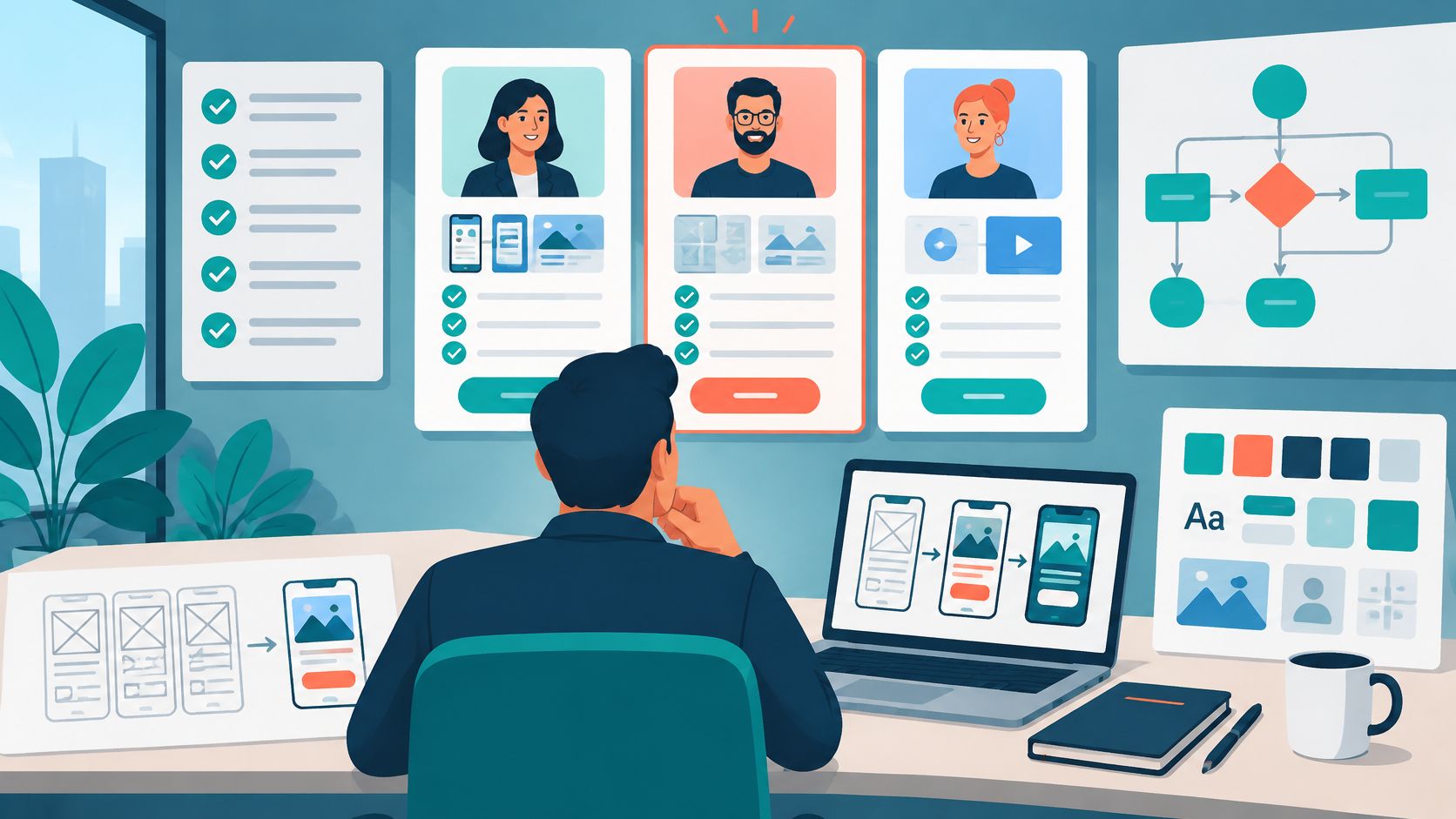
Most shortlists get built from portfolios, and I understand why. Phone mockups and a famous logo are easy to compare. They tell you almost nothing about month three, though, when the research says one thing and your head of sales says another.
A UI and UX design agency is an outside team that researches how people use your software, designs the flows and screens, tests them as clickable prototypes, and hands your engineers files they can build from. Where these firms really differ is the setup. Some spend six weeks finding out what’s broken before drawing a screen. Others rent you a designer by the month, or write the code as well. I’ve got thirteen below, with each one’s setup in the table: Moonb (mine, so I’m biased on that one), Clay, Blink UX, Fuzzy Math, Eleken, Goji Labs, Work & Co, Adam Fard UX Studio, IDEO, Huge, HTEC Momentum, Ramotion and UX studio. Unless a line links elsewhere, it comes from the firm’s own site in November 2026.
What a full engagement includes
Seven things, more or less in this order.
- Research. Interviews, usability tests on what you have now, analytics, a look at competitors. The output is a short list of problems ranked by how much they cost you.
- User flows. The paths people take to finish a task, drawn as diagrams before anyone starts arguing about colors.
- Wireframes. Rough screens that settle layout and hierarchy while changes are still quick.
- Interface design. The finished screens, with type, color, icons and every state a component can be in.
- Prototypes. Clickable versions you can put in front of real users and test.
- A design system. The reusable components, tokens and rules, so screen forty looks like screen four.
- Developer handoff. Specs, assets and annotated files your engineers build from.
Not every firm sells all seven. A research shop may stop after step one, sometimes rightly, and a monthly designer usually starts around step three because you already know what’s wrong, so I’d have my own list of the steps I need before the first call.
Step seven is where I’d watch the money. A file that looks done but skips empty states, error states and focus order turns into guesswork once the sprint starts. Figma’s own tutorial on collaboration and handoff in Dev Mode is below, and Dev Mode is what your engineers will be opening.
If your team will run the marketing site on a no-code builder, read up on that builder before anyone signs off the designs, because its limits change what a designer should hand over. If it’s Webflow, FruitPunch has a scored Webflow review that includes the CMS limits.
The list leans toward software and digital products. Alexandra’s roundup of digital design agencies casts a wider net, with digital brand studios and embedded teams next to the product shops.
The thirteen agencies
1. Moonb
More on Moonb
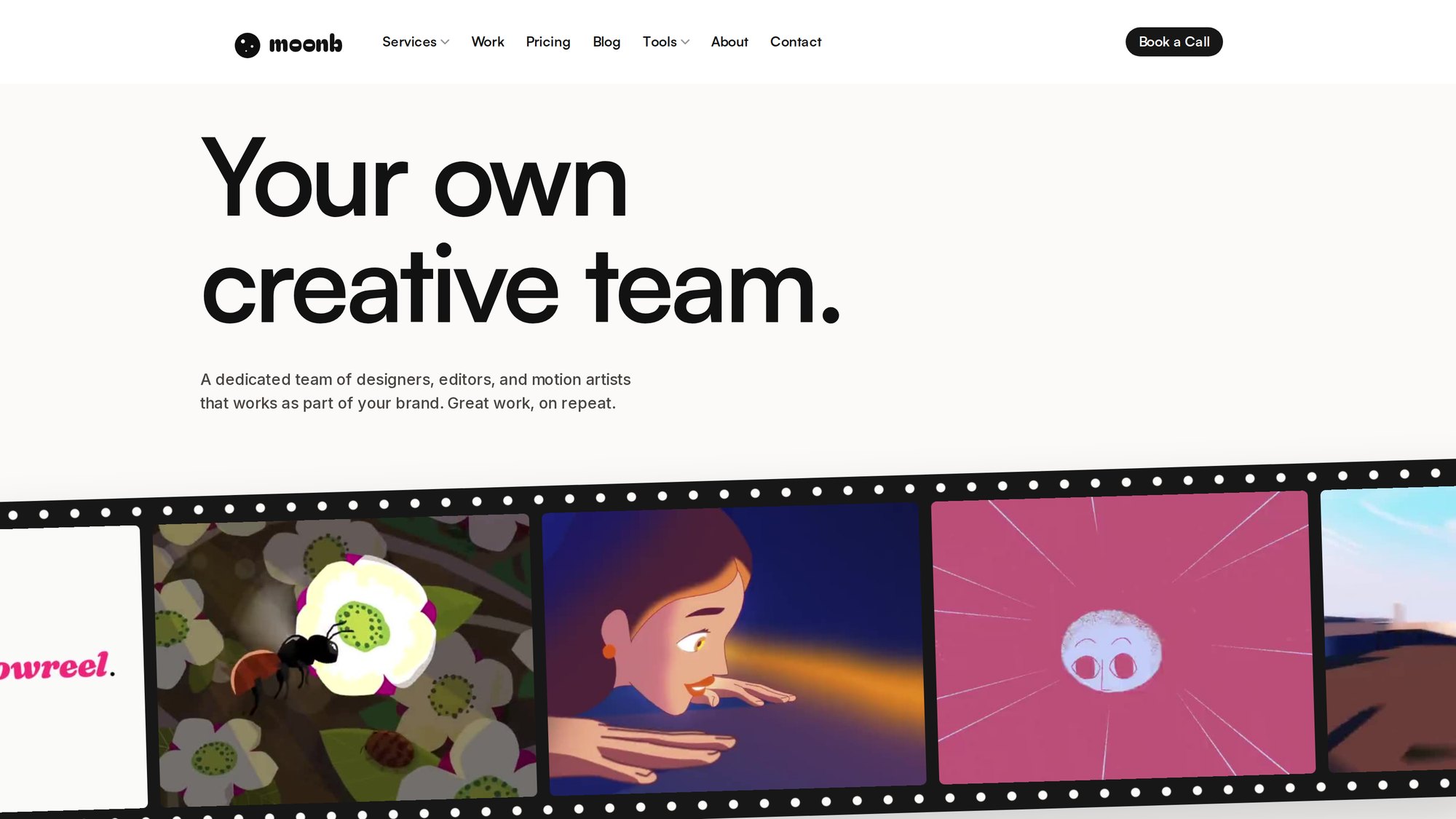
Every client gets a Creative Director and the same designers, editors and motion people month after month. For the web that means marketing sites, landing pages, page redesigns and the component library behind them, drawn phone first and handed over in Figma. For the product, it's how-it-works videos for SaaS (screen capture mixed with UI animation) and icon sets drawn so the app and the website look like one family. It suits teams who already know what the product should do and need the screens and motion around each release.
Product motion is what I’d show a software team first. In our platform film for Academy One, the glitchy data look gives way to clean gradient motion graphics, with one diagram linking all five products.
2. Clay
More on Clay
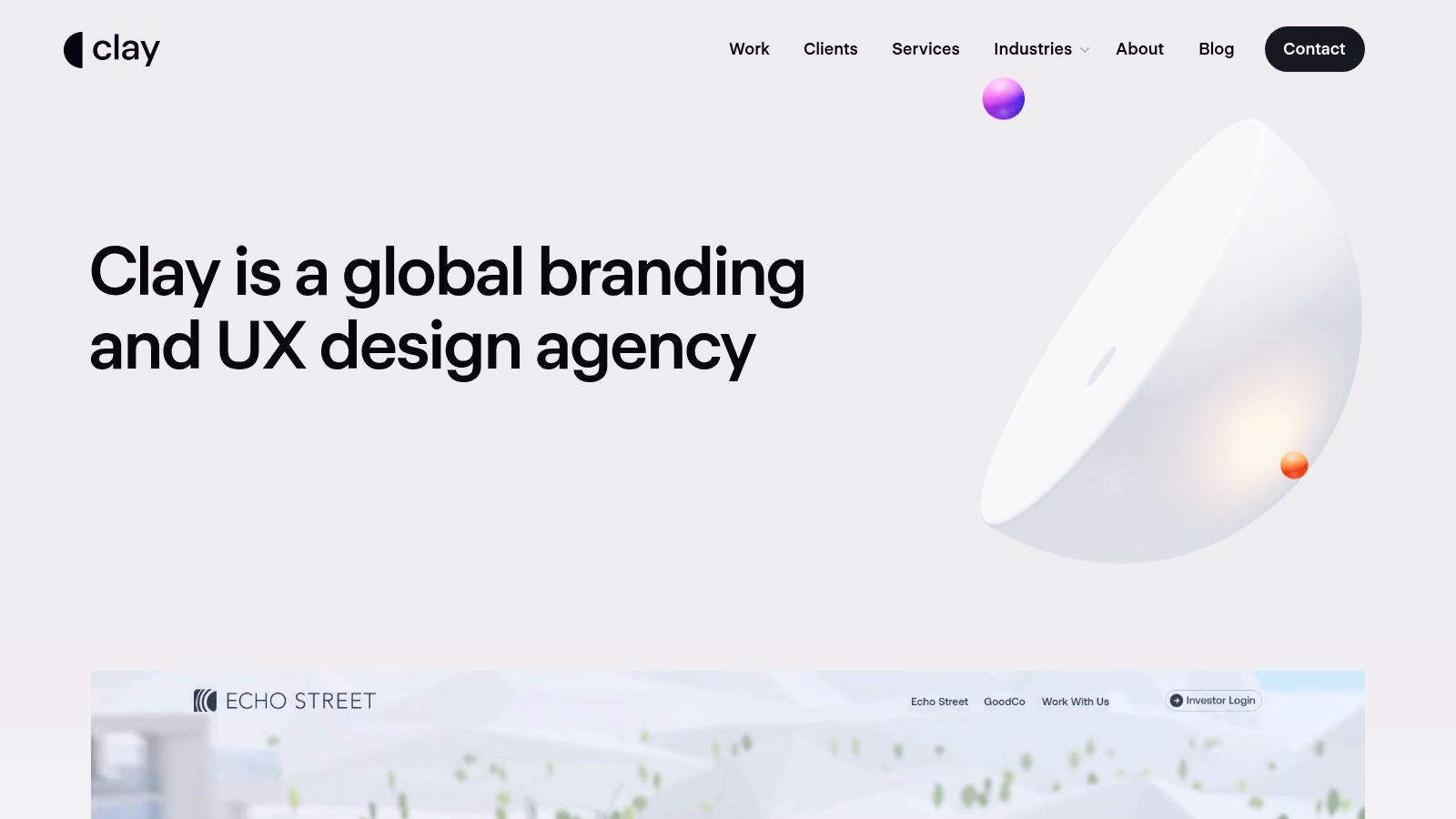
Clay calls itself a global branding and UX design agency. Its services section talks about pairing design with behavioral science, and the work grid is heavy on fintech: a digital banking app for STC Bank, a web redesign for Grayscale, a site for the card-issuing platform Marqeta, a payables redesign for Tipalti. It also lists generative AI work as its own service line.
Clay is on my shortlist when the app, the website and the brand look like three different companies made them, because there the identity and the interface get decided by the same people.
3. Blink UX
More on Blink UX
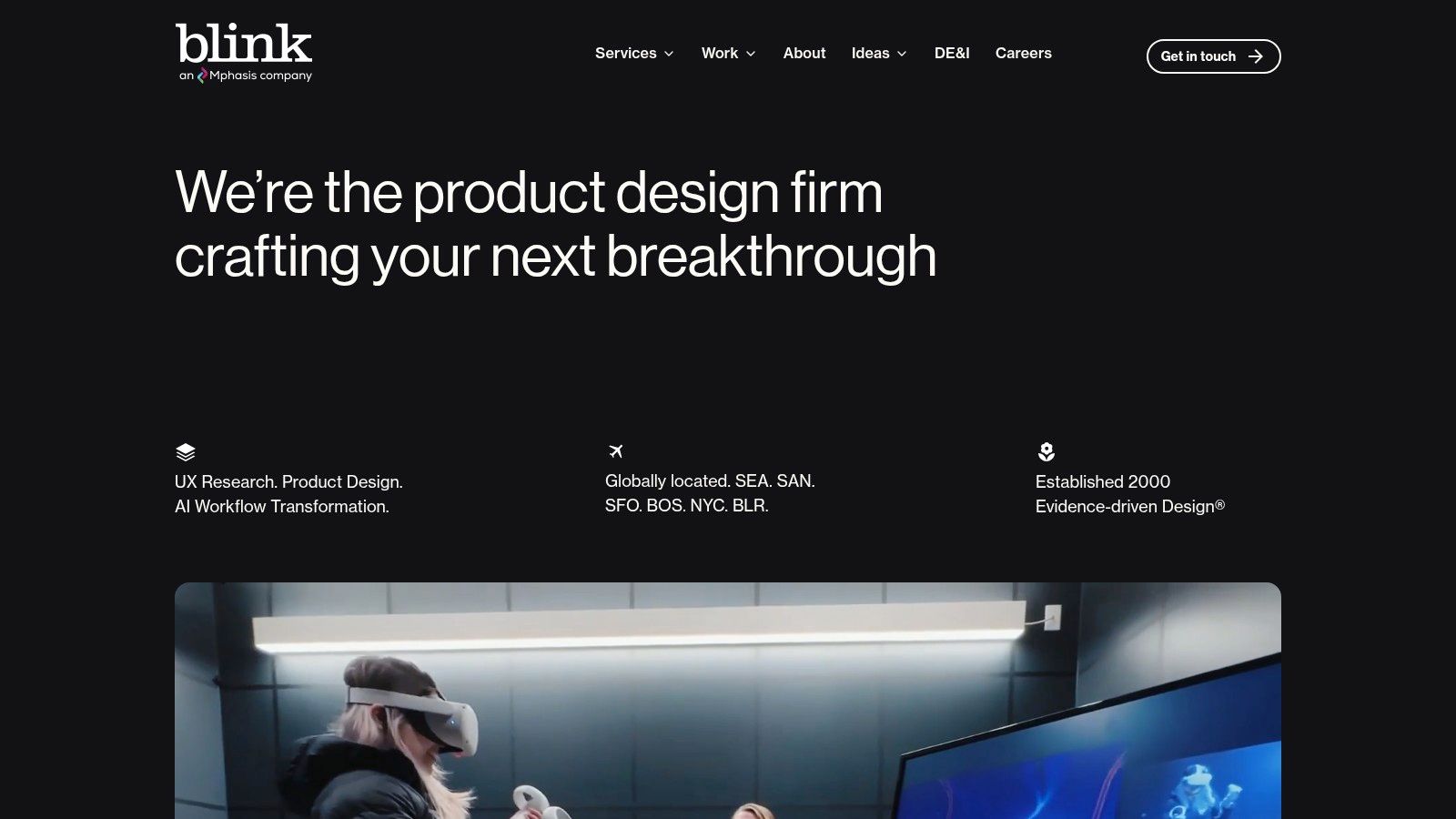
Blink was established in 2000 and trademarks its method as "Evidence-driven Design." The homepage lists offices in Seattle, San Diego, San Francisco, Boston, New York City and Bengaluru, and its services menu lists insights and strategy, AI transformation, product design, business transformation and embedded contingent workers. Its own announcement of the Mphasis acquisition is dated September 21, 2021.
If several departments can’t agree on what the problem even is, I’d call Blink before anyone else on this list and let its researchers bring back what users actually do.
4. Fuzzy Math
More on Fuzzy Math
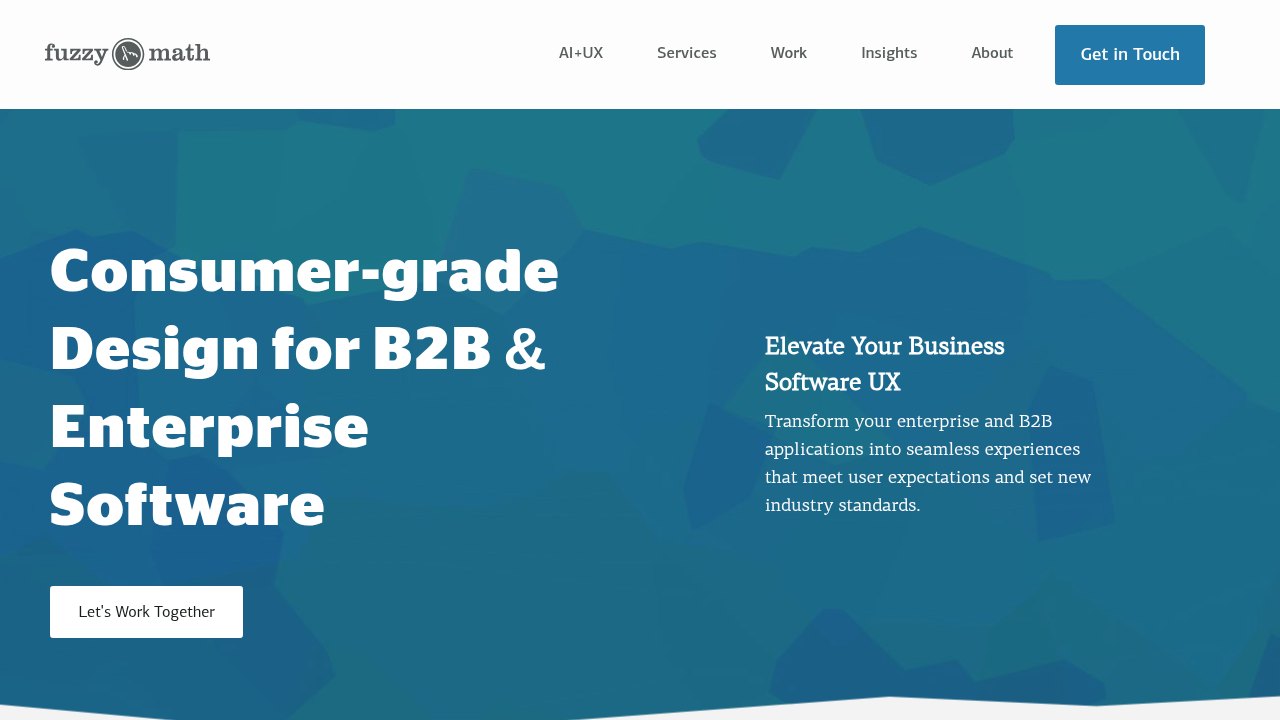
Fuzzy Math has been doing user experience design and strategy since 2009, with offices in Chicago and Toronto. The homepage pitches "consumer-grade design for B2B and enterprise software" and names its own process the UX Transformation System. The three short engagements are an AI in design training, a strategy workshop and a UX and competitive evaluation, each a week long.
I like the one-week evaluation most: an outside read on your product before you sign anything large, and a chance to watch the team work.
5. Eleken
More on Eleken
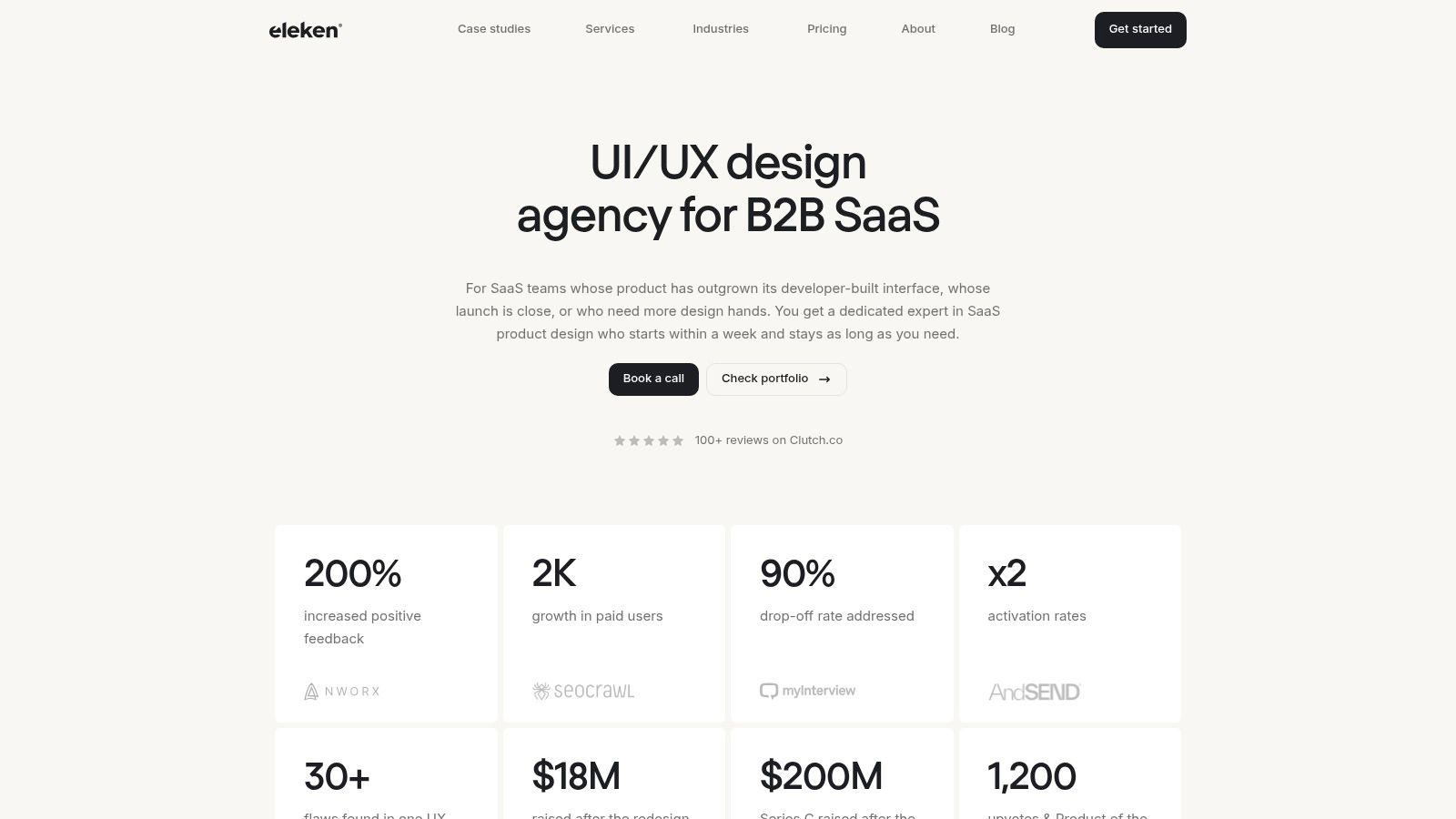
Eleken describes itself as a UI/UX design agency for B2B SaaS. The services menu covers product redesign, MVP design, team extension, UX audits, design systems and what it calls product design engineering. Every plan includes guidance from its Head of Design, and the FAQ says designers only start client work after a three-month internal training. To cancel on a monthly arrangement, the FAQ asks for a month's notice.
Public prices let you set the monthly figure against the real cost of a hire before any call. Then ask for a handoff file from a past client, because with one embedded designer those files are most of what you get.
6. Goji Labs
More on Goji Labs
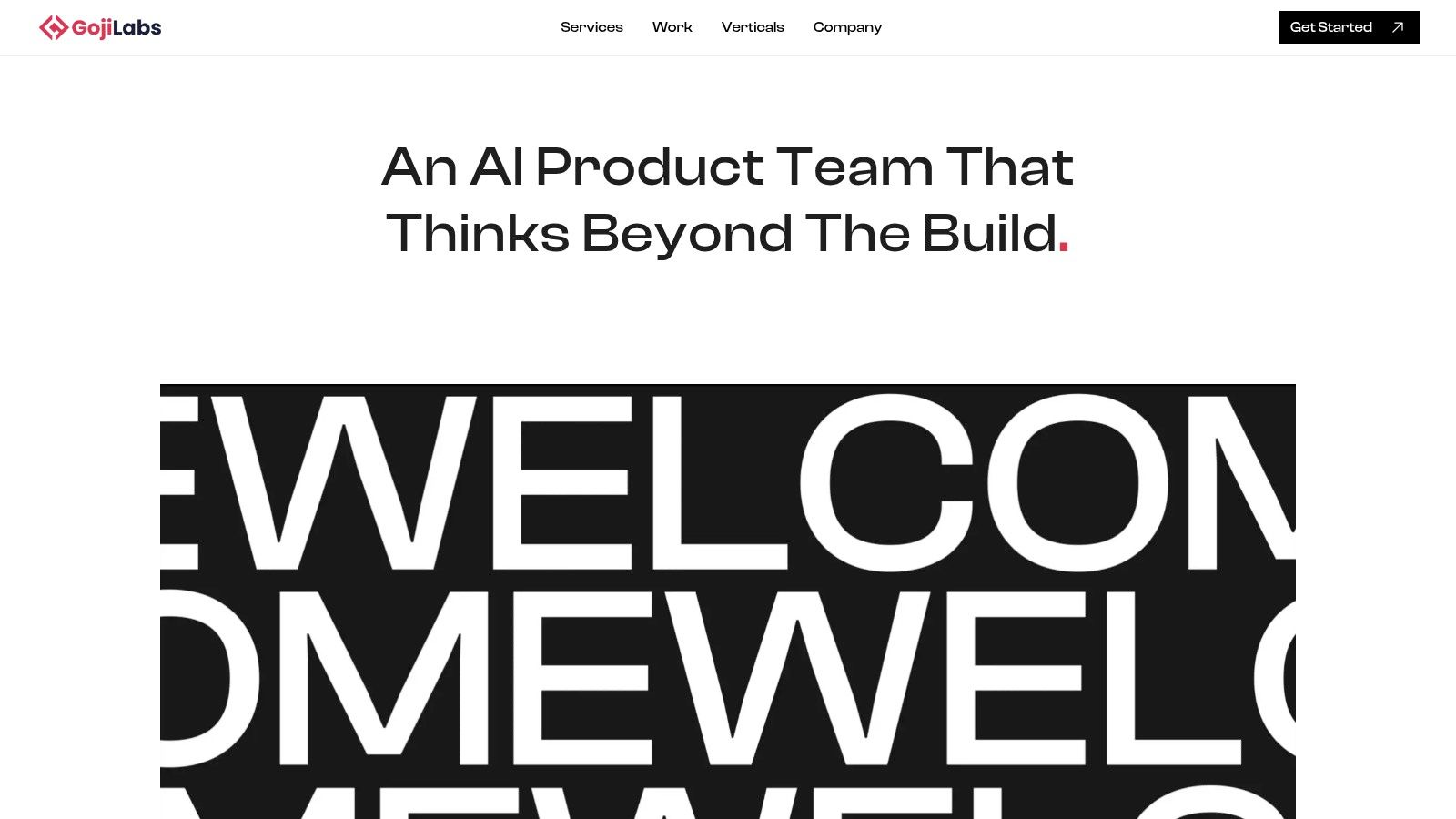
Goji Labs pitches itself as "an AI product team that thinks beyond the build." Case studies include a cross-platform child onboarding product for k-ID, a rental management SaaS for Valara and a reimagined mobile app for the radio station KCRW. Its design practice talks about AI-accelerated prototyping and testing direction with users before it gets expensive, and about shipping on a design system your team can grow.
Goji means fewer handoffs. If the people who drew a flow are still around while it gets built, the expensive compromises come up in a design review, well before anyone reaches QA.
7. Work & Co
More on Work & Co
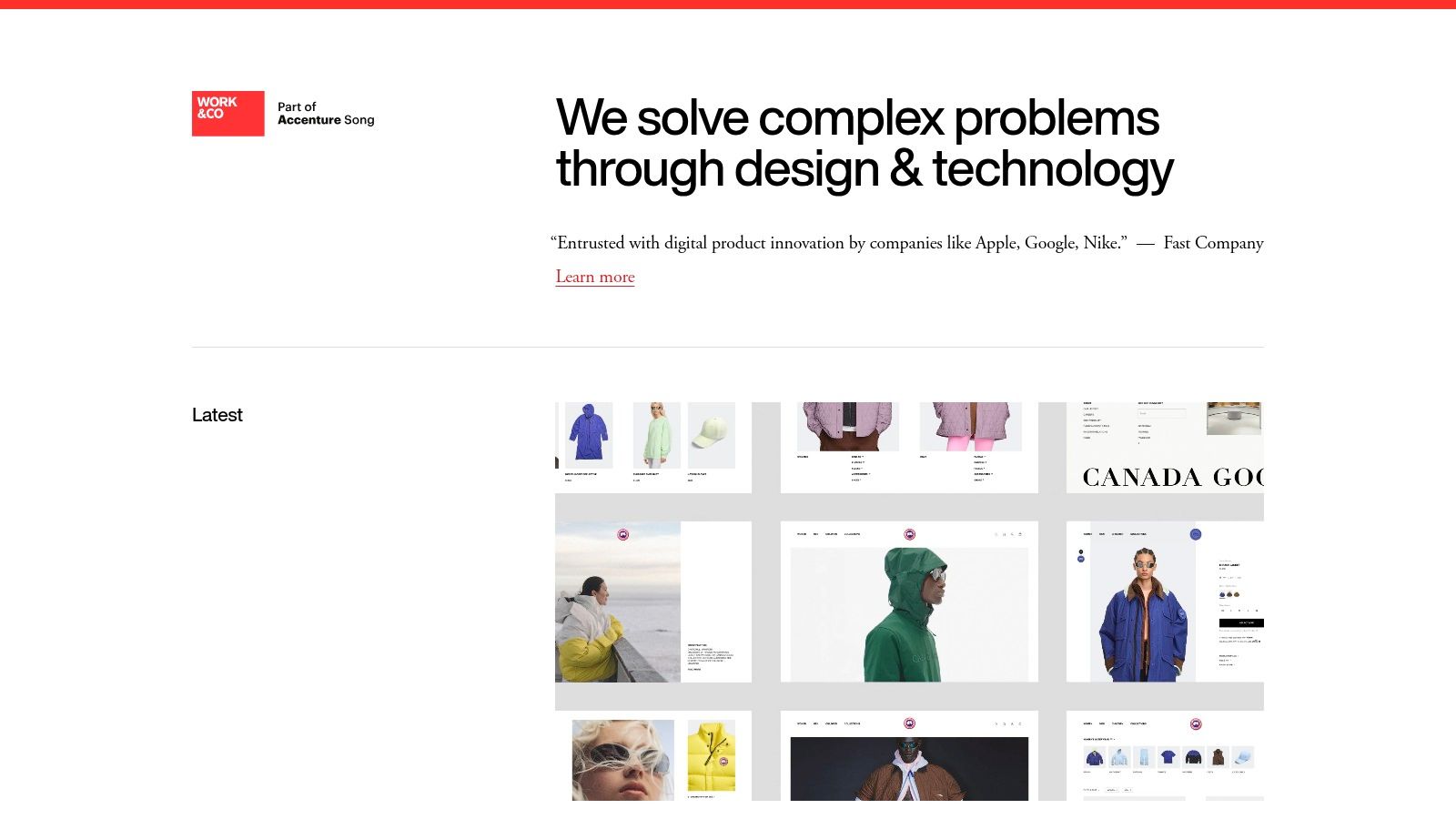
Work & Co was founded in 2013. Accenture completed its acquisition of the firm on January 22, 2024, adding nearly 400 people to Accenture Song. The studio still runs its own site and headquarters in Brooklyn, publishes new work under its own name, and quotes Fast Company on the homepage about the product work it has done for companies like Apple, Google and Nike.
You’d be hiring a specialist inside a very large group, for its senior product people. I’d ask for their names before signing.
8. Adam Fard UX Studio
More on Adam Fard UX Studio
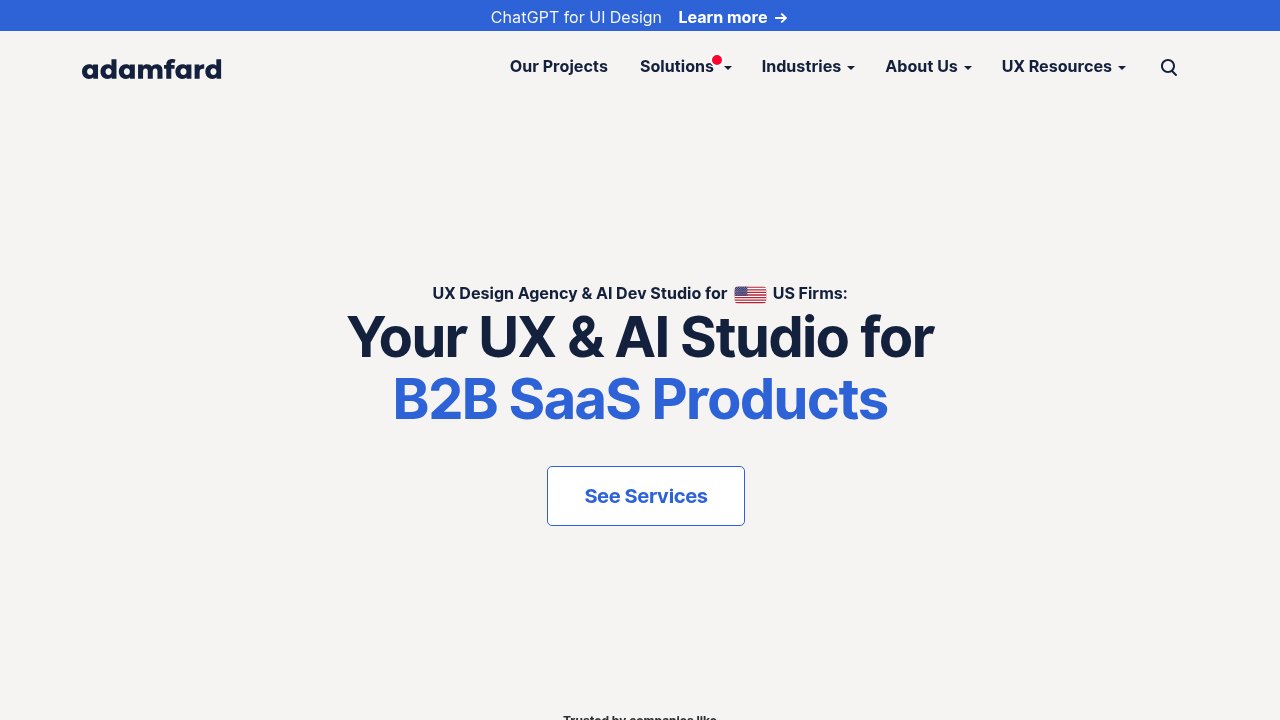
The studio presents itself as a UX design agency and AI dev studio for B2B SaaS, with industry pages for fintech, AI, SaaS and edtech. Beyond the consultation and the review, it sells MVP prototypes, product improvement work, customer research and a design service called DesignStream. The written review covers up to 20 screens with a 24-hour turnaround, according to its page.
If you book the hour, bring the flow that worries you and the decision your team keeps going around in circles on.
9. IDEO
More on IDEO
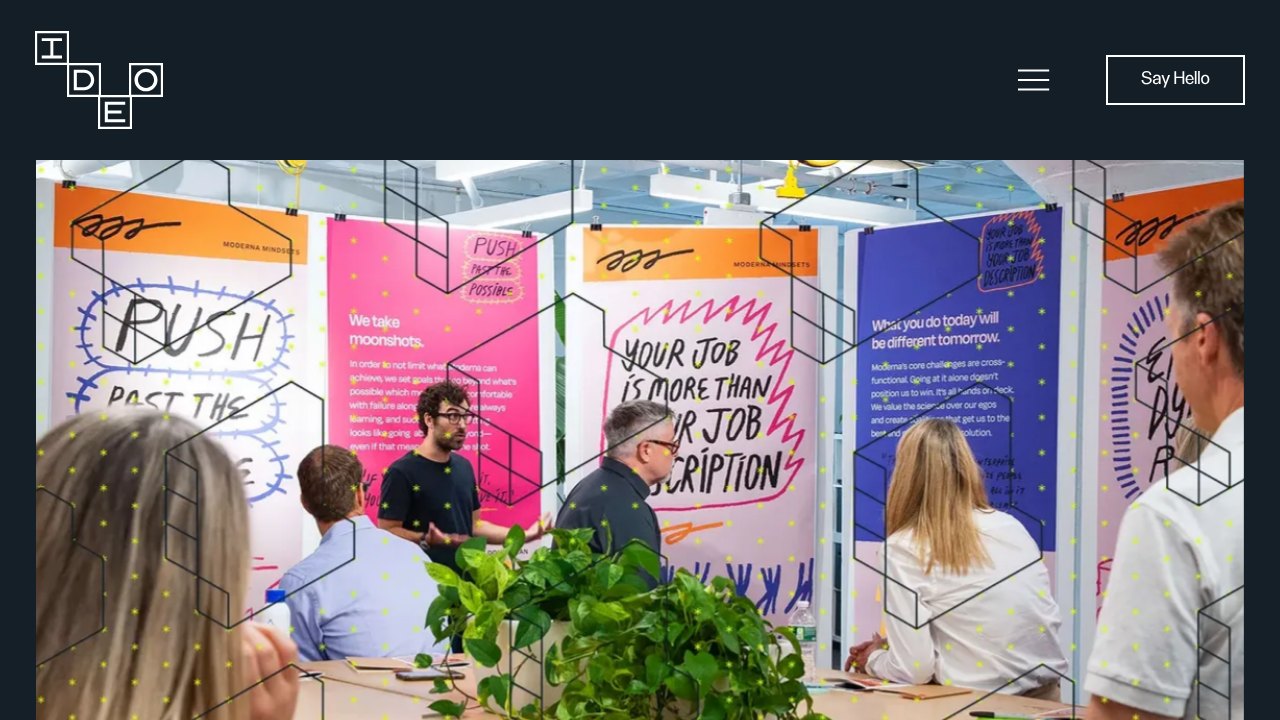
IDEO lists studios in Cambridge, Chicago, London, San Francisco and Shanghai, plus labs for health, AI and play. Its homepage says it envisions new businesses and brands and designs the experiences and capabilities that bring them to life. It also publishes the IDEO IQ report, which for 2026 surveyed leaders from 100 of the world's largest companies.
I’d only bring IDEO in when fixing the app means changing how the company around it works, as with the Sephora store and the Ford program.
10. Huge
More on Huge
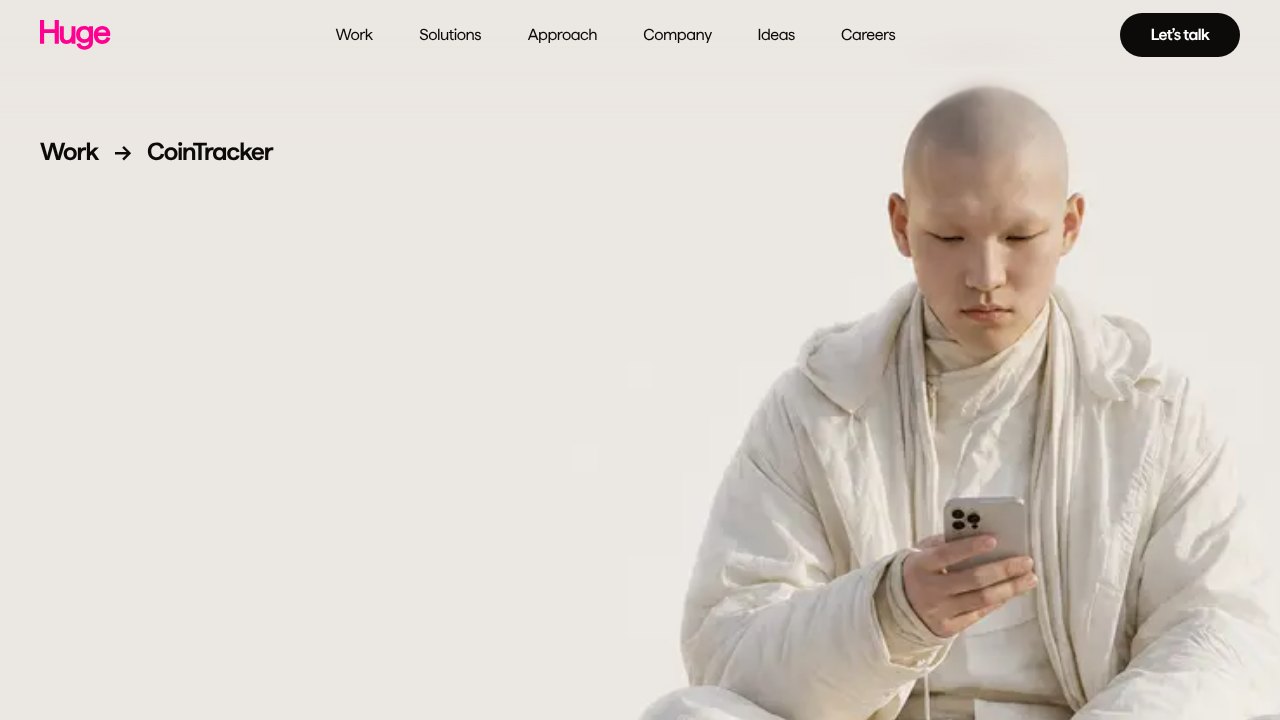
The six solutions listed on the homepage are brand strategy and design, marketing and content, products and platforms, composable commerce, customer experience, and AI activation. "Never one and done" is how it frames its client work: co-create with the client, measure the impact, then do it again. It still publishes regularly; a piece on the hidden costs of ecommerce apps went up on November 18, 2026.
11. HTEC Momentum
More on HTEC Momentum
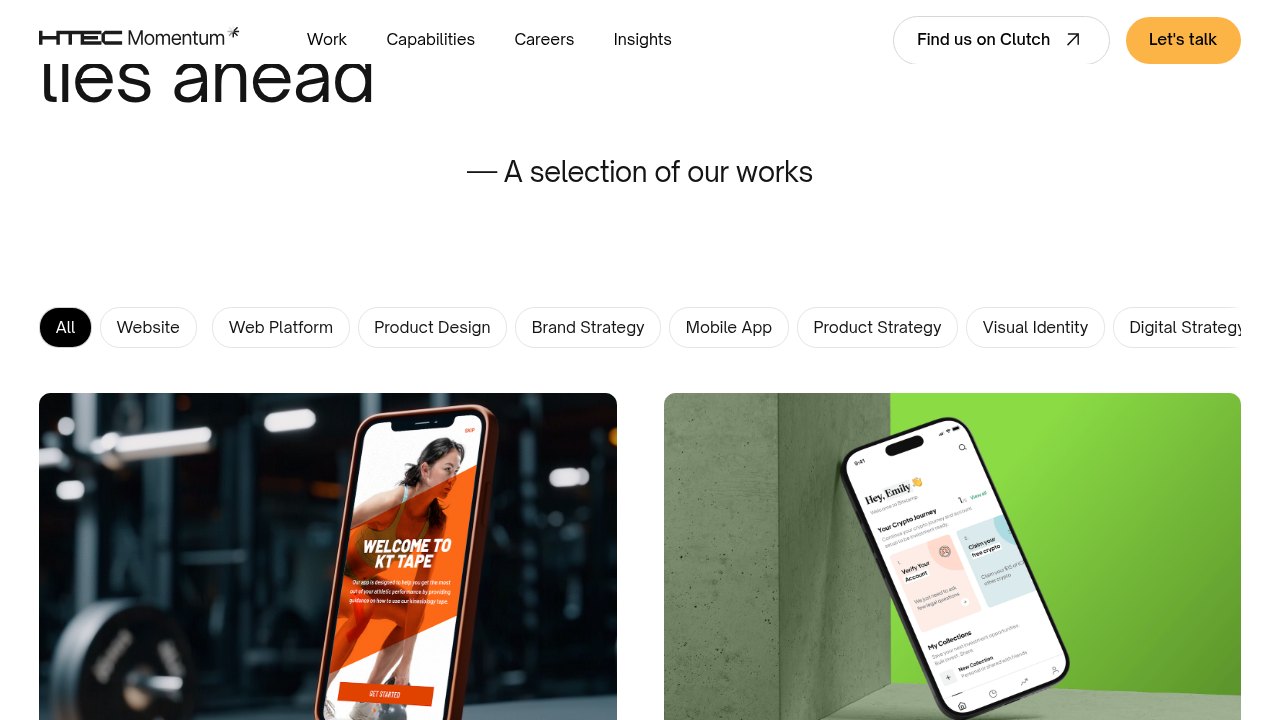
The site lists offices in Palo Alto, London and Belgrade. For Bitstamp it reimagined the investor experience in a mobile app, for KT Tape it designed a digital companion with on-demand taping guidance, and for Nasdaq Private Market it did brand strategy, a visual identity and the website. Its August 2026 article on "the end of the handoff" is worth reading before any design-to-engineering conversation.
12. Ramotion
More on Ramotion
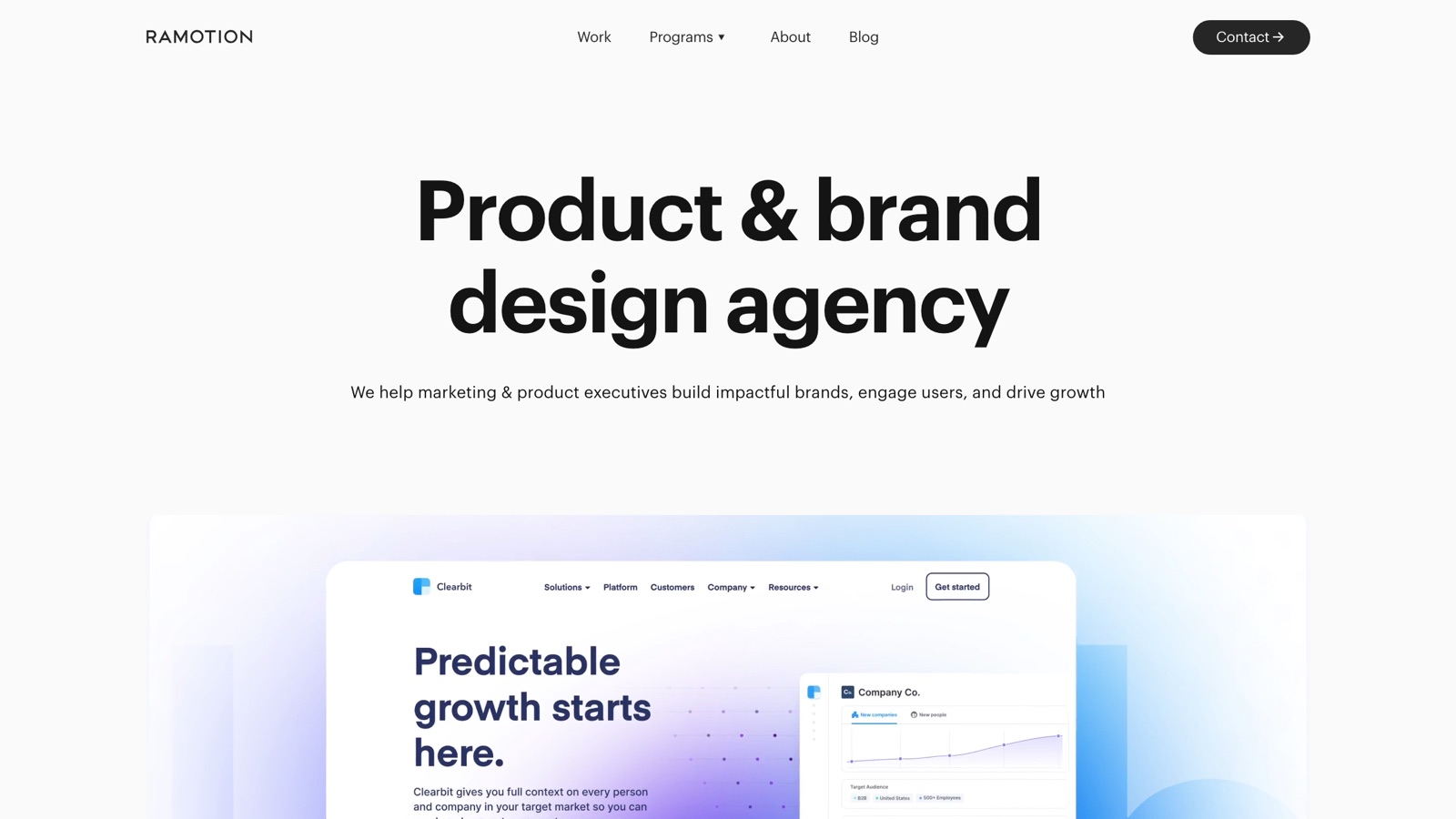
Ramotion sells branding, web design, UX design, design systems and web app development. The redesign program lists its deliverables, among them user flows and wireframes, high-fidelity product UI, an interactive prototype, and front-end build and QA. A discovery pod (product, design and delivery support) starts at $25,000 a month. Its icon work for Stripe and Citrix shows up on the homepage too.
Its program pages list the deliverables next to each price, which makes it a useful yardstick even if you hire someone else.
13. UX studio
More on UX studio
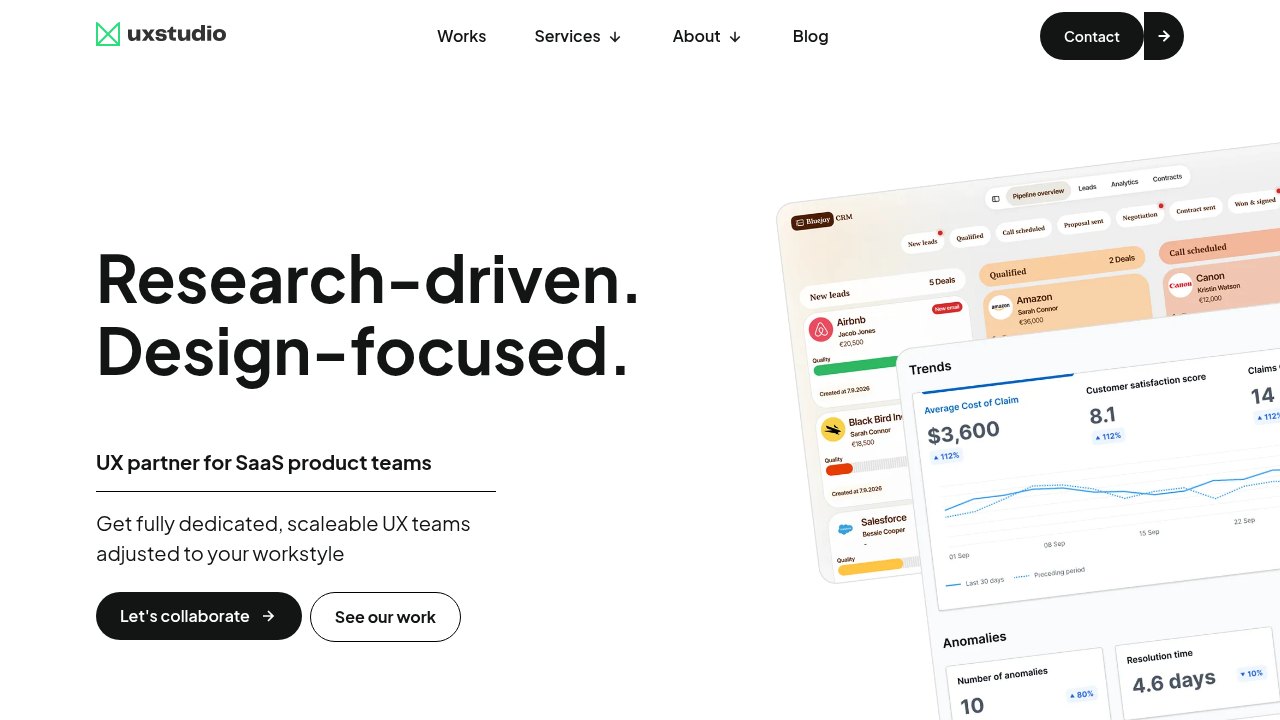
UX studio is headquartered in Budapest and sells UX design, UX research, UX consultancy and development. Its designers join your Slack, Linear and Figma once the work starts. Featured projects include catching AI slip-ups for insurers, building confidence in AI for legal work and a kid-friendly robotics app, and it pitches design systems "built for continuous shipping."
UI and UX design agencies at a glance
| Company | Best for | Engagement model | Pricing signal (own site, Nov 2026) | One limitation |
|---|---|---|---|---|
| Moonb | Product sites, landing pages and product motion from one steady team | Dedicated design, video and motion team with a Creative Director | One set monthly rate, or a per-project quote | Production code stays with your engineers |
| Clay | Brand, app and site redone together | Project teams across branding, product, web and development | Not published | Wide bench for a narrow brief |
| Blink UX | Evidence before a big redesign | Research, strategy and product design projects | Not published | Owned by Mphasis since 2021 |
| Fuzzy Math | B2B and enterprise software | Projects, plus UX training and team design | One-week starter engagements, no rates | Consumer apps sit outside its focus |
| Eleken | SaaS teams with a steady backlog | Dedicated designer by the month | $4,599 to $11,999 a month, two-month minimum | One or two people, not a discovery program |
| Goji Labs | New products from strategy to code | Embedded pods for strategy, design and development | Not published | Pitch leans toward the build |
| Work & Co | Flagship consumer products | Design and technology teams inside Accenture Song | Not published | Contracts through Accenture |
| Adam Fard UX Studio | An outside read before a redesign | Paid consults and reviews, then projects | €149 consult, US$99 review | An hour diagnoses, it doesn’t redesign |
| IDEO | Service and organization change | Consulting engagements | Not published | Too upstream for a fast UI job |
| Huge | Platforms and commerce for big brands | Six solutions from brand to AI | Not published | Product is one solution of six |
| HTEC Momentum | Fintech and data-heavy products | Strategy, design and engineering | Contact form ranges from under $50,000 | Staffing spans several offices |
| Ramotion | Fixed-price discovery before a redesign | Programs from discovery to build | $35,000 discovery; from $10,000 a month | Floors assume a funded company |
| UX studio | Research-led B2B SaaS work | Embedded research and design teams | Fixed price or rate card after a call | Research start takes time |
How to judge a UI and UX agency before you sign
I’d put the same four questions to every firm on the shortlist.
First, case studies on products like yours, and what changed because of the work. Which flow got cut, which form field went away. Final screens alone mostly tell you about art direction. Our guide to UX best practices worth defending with data is a fair benchmark for what an evidence-based answer sounds like.
Second, who does the work. I want names and roles, and I want to know whether those people are still on the project in month four. Plenty of firms send seniors to the pitch and juniors to the work, so I’d put the names into the statement of work.
Third, how and when they test with real users. Jakob Nielsen’s classic argument for testing with five users says that after a first study with five participants has found 85% of the usability problems, you fix them and test again. His four-minute video on the design process makes the same case: small tests leave time and money to test more design iterations.
Last, ask for a sample handoff file and open it yourself. Look for named layers, component states, spacing tokens, empty and error states, focus order and responsive frames. If the sample skips them, I’d ask why before signing.
Uxia’s guide to choosing a design service web partner is written for the buyer, and its section on pricing models and contract terms is the one I’d reread before a pitch call.
Ask about accessibility separately, because it gets skipped. The 2026 WebAIM Million report found detected WCAG 2 failures on 95.9% of the top million home pages, up from 94.8% in 2025. Ask which level of WCAG 2.2 the team designs to (the standard defines three, A, AA and AAA) and where you’ll see it in the components and the test plan, not in an overlay widget added at launch.
When you may not need an agency at all
I’d bring in an outside team for a redesign or a brand new product, or when a spike of work is more than your people can take on. A steady stream of small improvements is usually better handled by designers you employ or embed; I went through that trade-off in my piece on in-house versus agency creative work. Freelancers can cover a single flow or an audit, as long as someone on your side owns the decisions afterward.
Whatever you choose, pick the success metric before the work starts: task completion, say, or support tickets per hundred sessions. Plenty of SaaS adoption problems turn out to be comprehension problems (I wrote about that in SaaS product adoption), and you can’t tell whether a redesign helped if nobody measured the thing first. If onboarding is the weak spot, my roundup of app walkthrough examples shows how good products teach on the first run, and the UI animation examples cover the motion details that belong in the handoff file.
Frequently asked questions
UX design is how the product works: the research, the user flows, what happens at each step and what someone needs to finish a task. UI design is how each screen looks and behaves, from type and color to components and their states. Most agencies sell both but weight them differently, so ask how much of the schedule goes to research and testing before the first screen gets drawn.
A paid review or audit can be back within days. Redesigning one flow usually takes a few weeks, and a full product with research, a design system and developer handoff takes months. Ask for the timeline in phases with a review after each one, so you can stop or change course without throwing away the work already done.
The research findings in writing, the final user flows, design files with every component state drawn (hover, empty, error, loading), a clickable prototype, and a design system or component library your developers can build from. Insist on editable source files and put your ownership of them in the contract, or the next team ends up working from screenshots.