7 small business video production companies
Seven small business video production companies checked against their own sites, with who each one fits, the pricing signals they publish, and the routes worth weighing before you hire any of them.

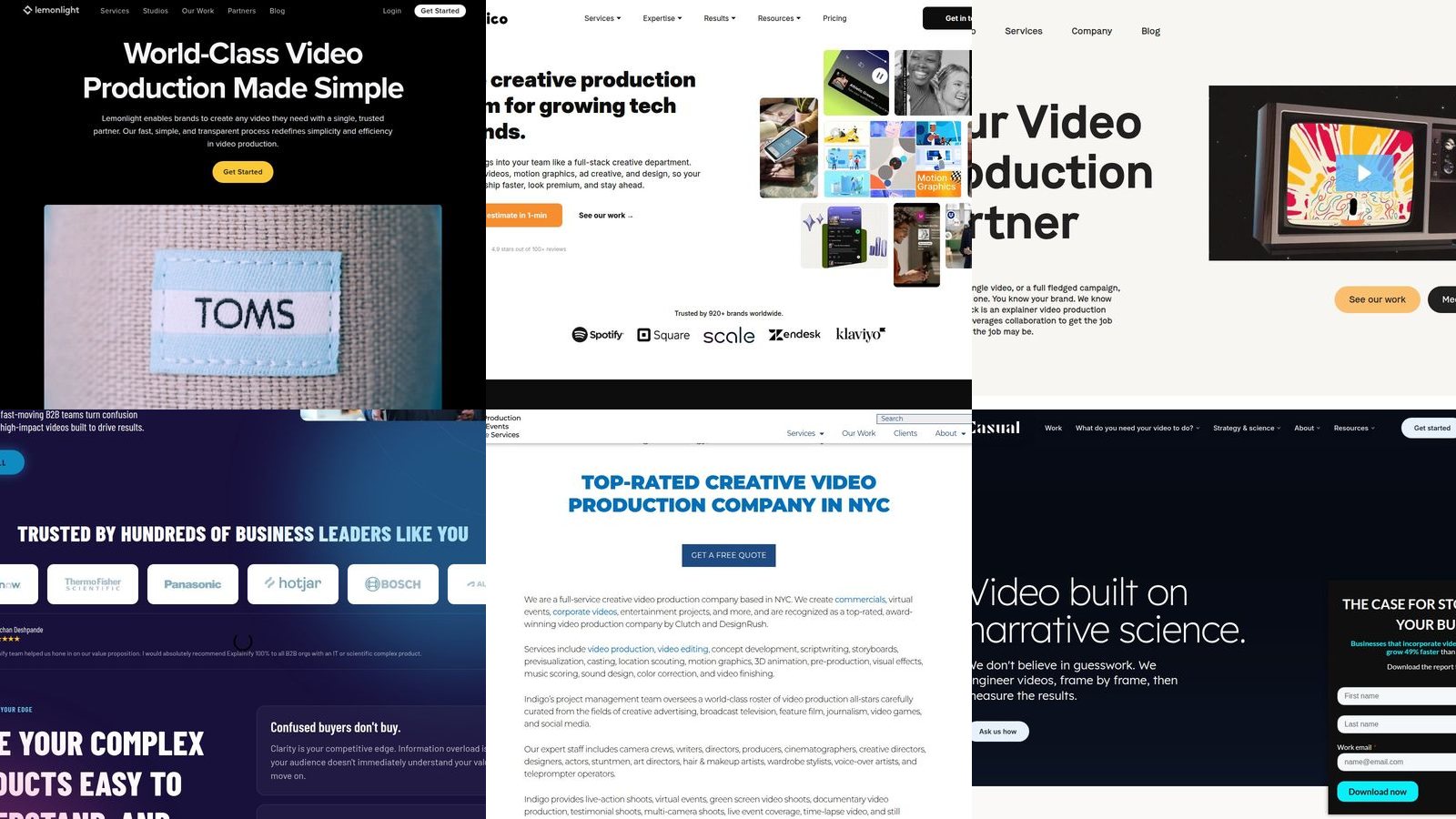
The seven small business video production companies worth comparing right now are Moonb (my employer, disclosed below), Lemonlight, Vidico, Demo Duck, Explainify, Indigo Productions, and Casual Films.
I work at Moonb, and part of my job is reading the proposals small business owners forward us when they are weighing video partners. The pattern never changes: every company promises quality and speed on page one, and the real differences hide in what they are actually built to produce. So this list sorts the seven by the job each one does best. I checked every company against its own website in September 2026, kept pricing to what each site actually publishes, and wrote one honest limitation apiece. Nobody paid to be here.
One thing before the list. Define the job before the runtime. “We need a two-minute video” is not a brief. “We need a homepage film that makes visitors trust us enough to book a call” is. So is “we need weekly clips cut from one shoot.” The job decides the crew, the edit, the approval path, and which of these seven you should even call.
1. Moonb
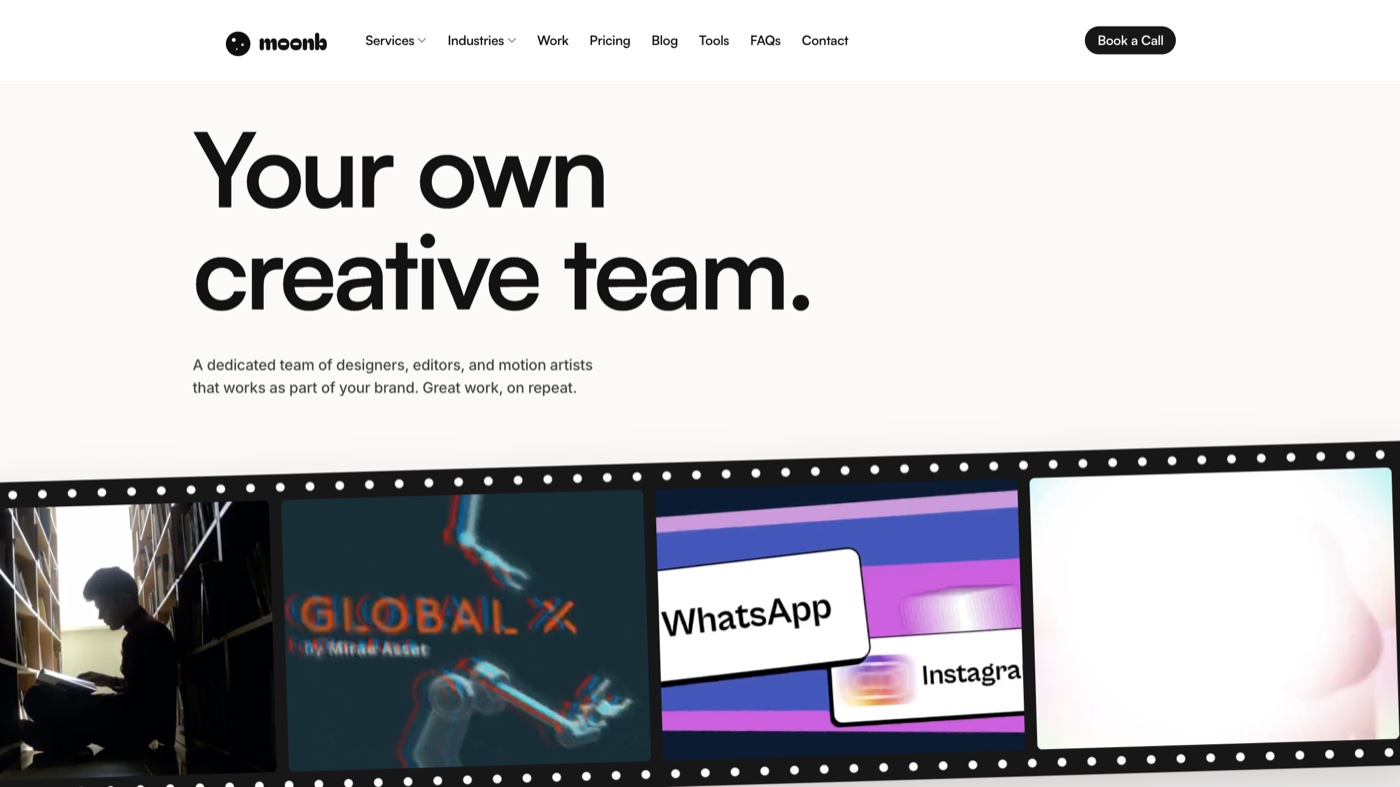
Slot one is where I work, so read it with that in mind and let the six below earn your shortlist on their own.
More on Moonb
Moonb is a creative studio that works as a dedicated team inside marketing departments, with video production sitting next to motion graphics, animation, and brand design. For a small business the fit question is frequency, plainly. When video demand is real every month, one team that holds the brand beats re-briefing a new vendor per project, and the design work that ships around each video (thumbnails, landing pages, ad statics) comes from the same hands. When the demand is one flagship film, a specialist project shop is the cleaner buy, which is exactly what the rest of this list is for.
2. Lemonlight
More on Lemonlight
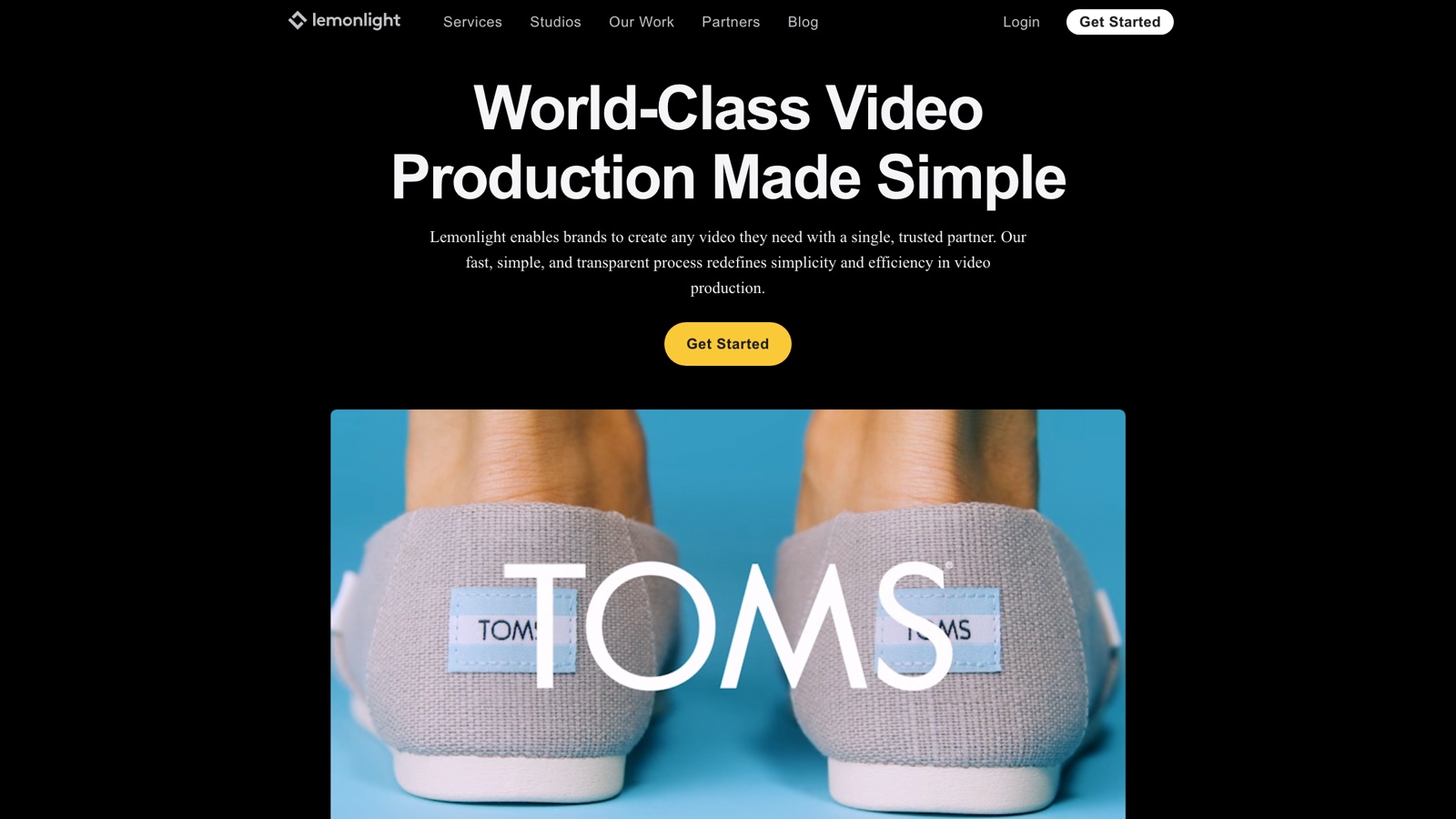
Lemonlight leads with "world-class video production made simple," and the operation backs the word simple: it says over 4,500 brands have used it, and the service menu spans doc-style, scripted, animated, and curated stock-based video, plus brand photography. For a small business the practical appeal is coordination. Production usually breaks down in logistics rather than camera work, and a partner with local crews in 80+ cities removes the travel line from the quote and the scheduling excuse from the timeline. The Pro arrangement exists for companies that come back monthly; a first-time buyer can ignore it and just scope one clean project.
Lemonlight is the entry I point owners to when the job is a straightforward shoot and the business wants someone else to run the day. It is also the one where brief discipline pays off most directly, since the scope you sign is the scope you get.
3. Vidico
More on Vidico
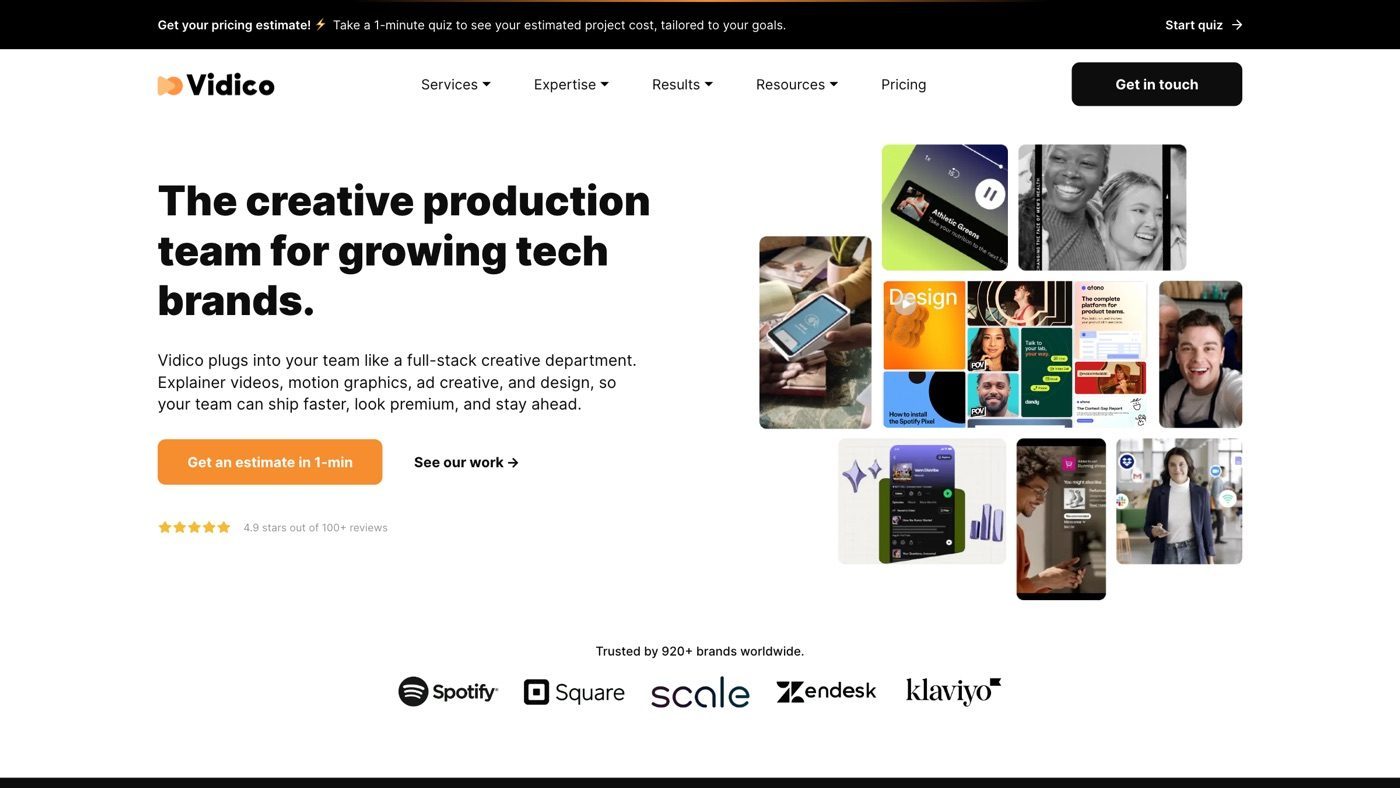
Vidico calls itself the creative production team for growing tech brands, and the roster of services reads like a SaaS marketing calendar: explainers, app UI videos, demo videos, case study films, short-form social, plus ad creative and presentation design on the side. For a small software company the useful part is that the message work comes first. With a technical product, the script decides whether the finished video sells anything; polished visuals cannot rescue a vague one. Half of Vidico's business is in the United States by its own account, with the rest across Australia and Asia-Pacific, so remote-first collaboration is the default rather than an accommodation.
4. Demo Duck
More on Demo Duck
Demo Duck introduces itself with "you know your brand, we know video," and its portfolio makes the range concrete: animated explainer series for a nonprofit health foundation, educational animation for a gene therapy society, and a live-action explainer showing how a WiFi product serves small businesses. The team mixes designers, directors, animators, and editors, which is why the mixed-media work (animation layered over live footage) reads as one piece instead of two stapled together. A lot of owners say they need video production when they really need message compression; this is the shop built for that slower, more deliberate kind of project.
5. Explainify
More on Explainify
Explainify's homepage pitch is animated videos for hard-to-explain products, and the client reviews it publishes echo the same theme: teams with an IT or scientific product crediting the process for sharpening their value proposition before a frame was drawn. That order of operations is the point. For a founder or product marketer with four weeks and one high-stakes asset, the work starts with audience, objections, and script pressure-testing, and the visuals then support that logic instead of covering for weak positioning. One strong explainer tends to end up working the website, outbound follow-ups, and the sales deck at once, which is what justifies buying it properly.
6. Indigo Productions
More on Indigo Productions
Indigo is a full-service NYC production company covering commercials, corporate videos, live streaming, documentary work, testimonial shoots, and multi-camera event coverage, with post-production in-house. It is one of the few shops on this list that puts a number in writing: the FAQ answers the cost question directly with a $10,000 starting point for most projects, small ones excepted, which is genuinely useful when you are triaging vendors before a first call. Most video problems are messaging problems; this entry is for the ones that are not, where the plan calls for lights, sound, a crew, and fewer production variables for you to manage yourself.
7. Casual Films
More on Casual Films
Casual's framing is "video built on narrative science": engineer the story before the camera rolls, then measure whether audiences watched, remembered, and acted. The structure of its site tells you who it fits, since work is organized by outcome (make noise for your brand, recruit and retain, drive sales now, train and motivate) rather than by format. That outcome-first setup suits a business where recruiting clips, customer stories, and internal updates all pile up with different owners and review chains. Local crews across its nine offices handle the shooting, with what the site calls one team that picks up the phone, and price and delivery guaranteed. The trade is structure for spontaneity; if your brief changes every few days, a lighter setup will frustrate you less.
The seven side by side
| # | Company | Best for | Pricing signal | Where the fit ends |
|---|---|---|---|---|
| 1 | Moonb | Recurring video, motion, and design from one team | One set monthly rate, or a per-project quote | A single video this year; a project shop is the cleaner buy |
| 2 | Lemonlight | Clean live-action shoots anywhere in the US | On request; Pro adds a dedicated team | Ambitious concepts that outgrow the streamlined process |
| 3 | Vidico | Tech explainers that become families of assets | On request; startup-friendly by its own description, free first script | Lean local shoots far from its five office hubs |
| 4 | Demo Duck | One carefully made explainer for a complex service | On request, per project | Weekly social clips and fast-turn volume |
| 5 | Explainify | B2B clarity when buyers do not get the product | On request, per project | Recurring live-action and monthly content programs |
| 6 | Indigo Productions | Polished NYC shoot days with full crew | Most projects from $10,000 (site FAQ) | Volume content; the floor buys polish rather than quantity |
| 7 | Casual Films | Scheduled output across several departments | On request; price and delivery guaranteed per its site | One-off films for very small teams |
The routes that are not companies
Half the small businesses I talk to should not hire any of the seven above yet, and it would be dishonest to pretend the only options wear a company logo. Four other routes cover most real situations, and each has a failure mode worth knowing in advance.
A freelancer is the smartest buy when the job is narrow: a founder story, a customer interview, a month of simple social cutdowns. One strong operator takes a clear brief and turns it around fast, with no producer layers and no meeting tax. The risk is that one person is rarely excellent at everything; someone may shoot beautifully and move slowly in post, or edit well and deliver rough audio on interview days. If you are screening candidates, my colleague’s guide on how to hire a video editor covers the questions that surface those gaps early. The other limit is capacity; the moment you need multiple shoots and a steady stream of formats, one person becomes the bottleneck.
A small local production company is the practical answer for one strong live-action piece: a homepage film, a testimonial, a founder story that needs real lighting and sound. You get production discipline on the day without a national firm’s overhead structure. The trade shows up after delivery, because most local shops are built for projects rather than recurring output, and the thumbnails, captions, and resized versions you still need afterward are nobody’s line item unless you put them in the scope.
An online marketplace solves a staffing problem, not a strategy problem. It suits a team that already knows what it needs each month, motion graphics this month, subtitles and an edit the next, and mostly needs hands. The comparison of platforms to hire video editors is the place to start if that sounds like you. Two warnings from experience. First, consistency is the weak point; different editors read pacing and hooks differently, and a channel can start to feel stitched together. Second, briefs get narrower than buyers expect once content has to match a specific audience and visual standard; this breakdown of AI video production for fashion brands is a good illustration of how specialized the requirements become in a single niche.
A phone workflow is underrated and overused at the same time. It is the right engine for weekly founder clips, jobsite footage, and social posts with a short shelf life, where the message matters more than the finish. Batch a month of topics, film them in one afternoon, trim and caption in week three, publish and read the results in week four. A video production checklist keeps the audio and framing from drifting, and a practical list of YouTube video ideas for small businesses is more useful than another accessory. Where I draw the line: the homepage film, anything carrying paid traffic, and anything regulated. Once a phone-shot topic proves it drives replies or bookings, that is the moment to hand the concept to a stronger production setup.
Getting a professional look without professional spend is mostly craft decisions, and this walkthrough shows which ones actually move the needle.
The fifth route, hiring in-house, sounds like a cost saving until the workload turns into an operating function: briefs, scripting, filming, editing, file management, publishing, reporting. Proximity is the genuine upside, since an internal person sits close to sales calls and product changes and wastes less time getting the message right. Range is the limit; one editor and one marketer can keep a basic calendar alive, but strain arrives the month the business also wants motion graphics, paid cutdowns, and a testimonial shoot. My breakdown of building video in-house versus hiring it out sorts out which parts belong inside. The workable hybrid I see most often: an internal lead owns the calendar and the phone-shot layer, and outside help handles whatever needs a higher standard.
Choose the output you can actually sustain
The wrong way to buy small business video production is to start with style. The right way is to start with frequency, capacity, and stakes. One video this year: a freelancer or local production company, or Demo Duck, Explainify, Lemonlight, or Indigo depending on the job. A few videos a quarter: a trusted freelancer or a marketplace, with one person on your side owning the brief. Weekly or monthly output across formats: that is when a dedicated team or a program-shaped partner starts to make sense, and only when the recurring demand is real.
The market reality behind the question is not in dispute anymore. HubSpot’s own research reports that 93% of marketers say video is an important part of their marketing strategy, and 37% plan to increase their investment in video marketing in 2026. The competitive question is no longer whether to produce video; it is whether you can produce it consistently without making your team miserable.
Whichever route you pick, the shape of a sane first project is the same. Week one, a short call: settle the job the video has to do, who it is for, where it runs, and who signs off, then name one approver. Weeks one to two, a one-page script or shot outline, approved in writing. Weeks two to three, a half-day or one-day shoot, often at the business, with the owner and a customer or two on camera if that helps the story. Weeks three to four, first cut, one consolidated round of notes, final cut, exports in the sizes you need. Delays almost always happen on the client side, waiting for feedback or for people to be available, not in the edit. Most of what makes that month go smoothly is decided before anyone touches a camera, and this short breakdown covers the three pre-production steps that matter most.
Pick the metric before the shoot, because it changes what gets filmed. A homepage video lives on watch time and whether viewers reach the contact page. Social clips live on watch-through and shares rather than raw views. Sales and testimonial videos live on how often the sales team actually sends them. Ads live on cost per lead against the same spend without video. And plan the vertical cutdowns from the same shoot day instead of treating them as an afterthought: Google reports that YouTube Shorts now has 1.5 billion monthly active users and more than 30 billion daily views, which is a strong argument for never buying a single hero edit with nothing cut from it.
The buying mistakes I see repeat themselves. Briefing a runtime instead of a job. Taking the lowest quote without checking whether music, captions, revisions, and exports are included. Skipping the ownership conversation, so the raw footage and project files live with a vendor you may never rebook. Letting five people give notes when one approver would have shipped a week earlier. If you want the full vetting question list before you sign anything, the guide on how to choose a video production company is built for exactly that, and the wider video marketing playbook for small business covers what to do with the footage once you have it. This list is here for the step before both: picking the kind of partner that matches the output you can sustain.
Frequently asked questions
Expect the quote to move with four things: shoot days, crew size, animation versus live action, and how many versions you need delivered. Most companies on this list quote per project rather than publishing rates; Indigo Productions is the exception, stating on its own site that most projects begin at $10,000. The most reliable way to lower any quote is a settled brief with one approver, because revision rounds and re-scoping are where costs quietly grow. Always confirm whether music licensing, captions, and social cutdowns are inside the number before comparing vendors.
Yes, for the recurring layer: founder updates, behind-the-scenes clips, and social posts with a short shelf life work fine shot on a phone with a basic mic and a batching routine. Where phone footage costs you is the trust layer, meaning the homepage film, testimonials, and anything carrying paid spend, because viewers read rough audio and lighting as a signal about the business itself. The setup that works for most owners is a hybrid: keep the weekly clips in-house, and bring in a production partner for the two or three assets each year that have to convince a stranger.
Three things prevent most disputes: ownership terms for the raw footage and project files, a definition of what counts as a revision round and who consolidates feedback on your side, and the exact deliverable list, including exports, captions, and vertical versions for social. Ask who does the work day to day as well, since the person on the sales call is not always the person on the edit. Vendors comfortable answering all of that in writing are usually the ones that run clean projects.