Effective Healthcare & Product Advertisements (Examples & Tips)
Six health and wellness ads worth studying, from Cleveland Clinic to Oura, read through the 2025 FDA rules that reshaped what health advertising can do.

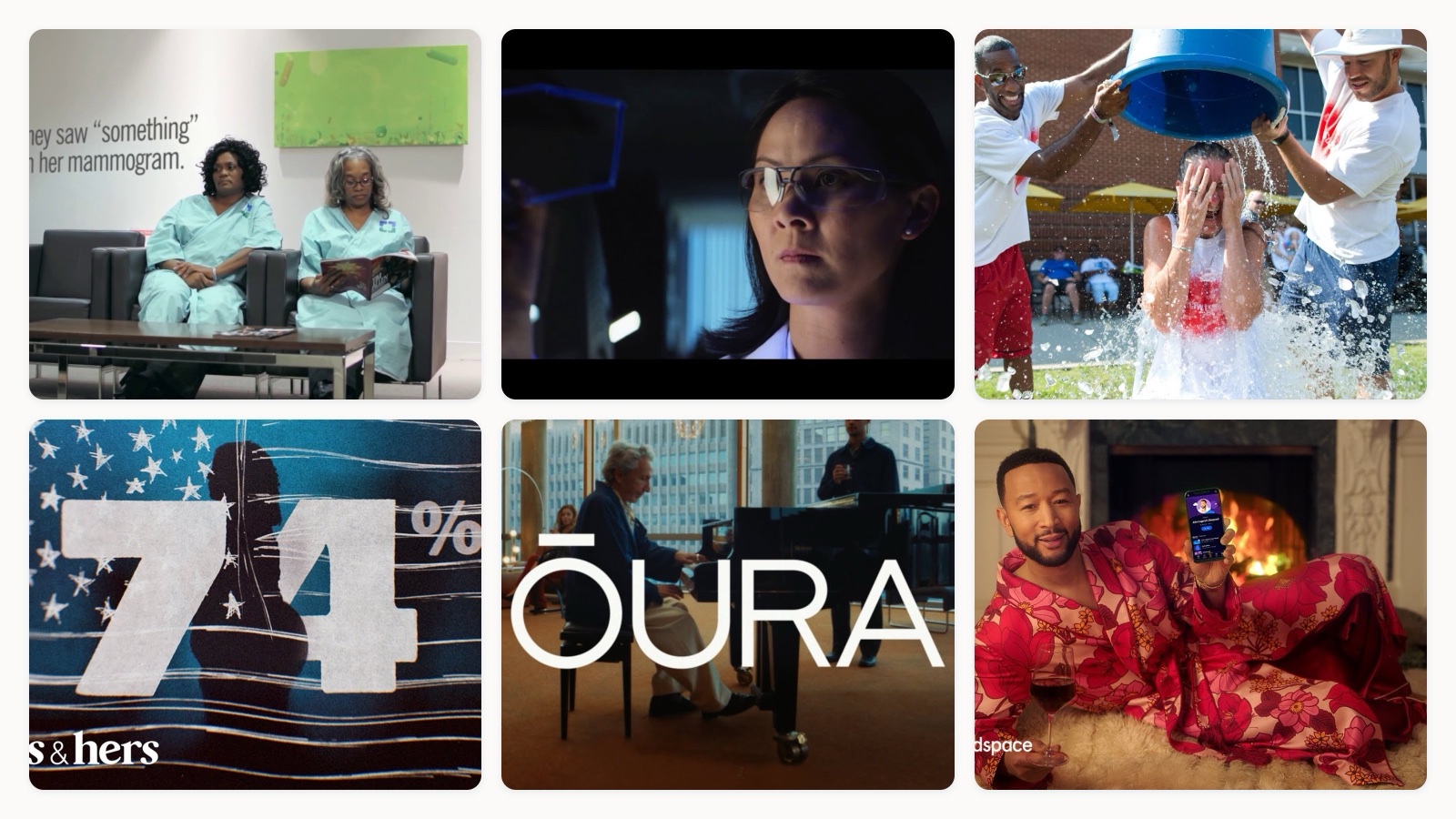
The most useful thing I can tell you before you brief a health ad in 2026 is that the rulebook changed in September 2025, and most of the “best healthcare videos” roundups still ranking on Google were written before it did. I co-founded Moonb, a creative studio, and a real share of what lands on my desk is health and pharma work, wellness apps included. So this is not a gallery of pretty commercials. These are six ads I keep sending clients as reference, read through the one lens that now decides whether a health ad stays on air: what earns a viewer’s trust, and what a regulator will let you keep running.
Here is the shift. On September 9, 2025, HHS and the FDA moved to close the decades-old “adequate provision” option and sent more than 100 enforcement letters at direct-to-consumer ads whose visuals pull attention away from the required side-effect statement. In plain terms, the glossy spot that shows a couple kayaking while a voice speed-reads the risks is now a marked target. The ads that keep working build belief out in the open, so the safety information reads as candor rather than something the brand is trying to slip past you.
If you only want the examples:
- Cleveland Clinic’s “Empathy” is the benchmark. It sells a hospital without naming a single service, which is also the safest possible ground under the new rules.
- Brand belief beats product claims. Pfizer advertises the company and its mission, which sidesteps the whole side-effect-disclosure problem the 2025 rule targets.
- Match the film to what you are selling. A prescription drug, a telehealth service, a wearable, and a meditation app each want a different ad and carry a different compliance risk. There is a table for that below.
The rules for health ads just changed, and most roundups have not caught up
Understand the “major statement” standard before you write a word of script. For as long as I have produced this work, drug advertisers leaned on a rule called “adequate provision,” which let a broadcast ad point viewers to a website or a phone number instead of spelling out every risk on screen. The September 2025 proposal (RIN 0910-AJ14) moves to shut that door and hold ads to a stricter test: the side-effect statement has to be clear, conspicuous, and neutral, and the visuals cannot fight it. The letters that went out alongside it targeted the exact trick that used to be standard practice, busy imagery and upbeat music laid over the risk copy so nobody registers it.
I am not a lawyer, and this piece is not legal advice; your regulatory team signs off, not me. What I can tell you is how it changes a brief. The old game was misdirection, and misdirection is now the thing that gets you a letter. The money has not moved: US pharma ad spend is estimated at about $39 billion for 2025, roughly triple what it was a decade ago, and prescription-drug TV spend alone hit $1.25 billion in Q3 2025. Nobody is pulling back. Brands are being pushed to spend it on ads that respect the viewer, and the useful news for anyone who cares about the craft is that respectful ads have always been the stronger ads anyway.
Six health ads worth studying, and what each one gets right
I picked these six because each one solves a real problem I get asked about, and because all six live on the brand’s own channel, verified and ready to play. Watch for the through-line: not one of them opens on a product claim.
1. Cleveland Clinic, “Empathy”
Cleveland Clinic posted this on its own YouTube channel. I open almost every health kickoff with it. The film puts a camera inside a hospital and floats one line of text over each stranger you pass, what they are carrying that day, the news they just heard in a room down the hall. It has passed 8.2 million views and it never names a service or quotes a price.
The lesson for health marketers: advertise how the place makes people feel, and let the services sit behind that. It is the whole move in health marketing, and it happens to be the safest ground under the new rules, because there is no claim to disclose against. You cannot overstate a benefit you never stated. When a client tells me their category is “too clinical for emotion,” this is the film I make them watch first, and it is the clearest argument I know for the storytelling approach to ads.
2. Pfizer, “Science Will Win”
Pfizer ran this on its own channel as a corporate brand film. Its answer to a hard moment was to make a two-minute case for belief in scientific progress, shot like a film and scored like one, with no product anywhere in it.
The lesson matters more now than when it launched. A corporate brand ad that sells the company’s mission carries zero product claims, so it slides past the side-effect-disclosure problem entirely. If you are a pharma brand nervous about the new scrutiny, the lowest-risk, highest-trust play on the board is to advertise who you are and save the drug names for a different asset. Pfizer worked that out early, and it is the reason a mission film like this keeps its value while a product spot ages fast. If brand-level work is where you need to start, our piece on brand awareness videos walks through the same logic outside health.
3. The ALS Association, “The Ice Bucket Challenge”
The ALS Association hosts the original on its channel. Here is the far end of the spectrum from a media buy: an ad that ran itself. The mechanic was participation, dump ice water over your head, film it, nominate three friends, and it raised more than $115 million in a single summer.
The lesson holds even if you never go viral: it turned the audience into the media. For a cause or a health nonprofit, a small ask that people can act on and pass along outperforms a polished film they only watch. I would never promise a client a $115 million summer. I would push almost every cause brand toward a simple thing viewers can do, over one more thing for them to admire. There is a whole family of these participation mechanics in our rundown of creative video ads.
4. Hims & Hers, “Sick of the System”
Hers ran this on its own channel, and it aired in the Super Bowl LIX broadcast in February 2025. A Super Bowl slot cost around $8 million for thirty seconds that year, so this was the most expensive real estate in American advertising pointed at direct-to-consumer telehealth. The film is angry and cinematic, a montage that attacks a broken healthcare “system” and positions the brand as the way out.
The lesson here is the regulatory reality, not the craft. The ad promoted weight-loss treatment without naming a specific drug or reading a single risk, and it drew a bipartisan letter from two US senators to the FDA arguing it skirted the safety-disclosure rules that a named-drug ad would have to follow. Telehealth advertising sits in a gap: sell access to care and you are not making a drug claim, so the “major statement” standard does not obviously bite. That gap is exactly what the 2025 scrutiny is closing in on. If you build a campaign in that space, I would treat the disclosure question as live from the first storyboard, because “technically we never named the drug” is a thin place to be standing when the letters go out.
5. Oura, “Give Us the Finger”
Oura posted this product film on its own channel for the Oura Ring. The campaign leans on a playful pun, the one finger you actually want people to give you, and it sells a smart ring as an object of desire rather than a clinical instrument.
The lesson is where the film keeps its language. A health wearable lives on a line: market wellness insight and lifestyle, and you stay clear of FDA device territory; claim the ring diagnoses or treats a condition, and you become a regulated medical device with everything that carries. Notice that this ad talks about how the ring feels to own and never promises to catch a disease. That restraint is a compliance decision as much as a creative one, and it is the reason a wearable brand can be this confident and this loose at the same time.
6. Headspace, “Sleep With John Legend”
Headspace released this on its own channel, a wellness-app ad built around John Legend, who partnered with the company as its music voice. He sings you toward sleep, and the whole thing sells calm rather than a cure.
Two lessons sit inside this one. First, a celebrity earns his fee when he embodies the product’s feeling instead of just reading a line, and Legend’s voice is the sleep aid the ad is selling. Second, the paid relationship behind an endorsement has to be disclosed under the FTC endorsement guides, and a wellness app stays out of medical-device regulation only as long as it markets relaxation and never claims to treat insomnia as a condition. Say “sleep better” and you are fine. Say “cures your sleep disorder” and you have written yourself a different, much harder ad.
What the best health ads have in common
Look across all six and the pattern is almost boringly consistent, which is what makes it reliable. Three things repeat.
They lead with trust, not features. Every strong example advertises a feeling or a mission and lets the product sit back behind it. They are specific about people: a named worry and a real face move more than any sweeping claim about outcomes. And they have nothing to hide, which the new rules reward directly, because an ad that never overstates a benefit turns disclosing a risk into plain candor.
I will add the uncomfortable note, since it is the one I give most often. Bad health ads happen because a compliance team and a creative team meet too late, after the concept is locked, so the legal review lands as a list of things to cut and the risk copy gets bolted on like an apology. On the projects that come out clean, the regulatory reviewer is in the room during the concept, before anything is shot. That single scheduling change fixes more health ads than any camera ever will.
Matching the ad format to what you are actually selling
Health is not one category, and the mistake I see most is a team copying a format that worked for a different kind of health company. A hospital and a meditation app have almost nothing in common in how they should advertise, or in what will get them in trouble. Here is how I map format to product before I write anything.
| What you are selling | Best format | Primary goal | Compliance watch-out |
|---|---|---|---|
| Prescription drug | Brand or condition-awareness film | Recognition and belief, not a hard sell | The "major statement" must be clear and neutral; visuals cannot distract from it |
| Hospital or health system | Emotional brand film plus patient testimonials | Build trust before anyone needs you | Written HIPAA consent and a release for every real patient shown |
| Telehealth service | Product-demo walkthrough or brand film | Remove the "how does it work" doubt | If a specific treatment is implied, the drug-ad disclosure rules can still reach you |
| Health wearable | Design-led product film | Make the device desirable and easy to wear | Wellness language keeps you clear of FDA device rules; diagnostic claims do not |
| Wellness or meditation app | Celebrity or mood-led short | Sell a feeling, drive the download | Disclose paid endorsements; never claim to treat a diagnosed condition |
The column I would not skim is the last one. Every format has a specific way it gets a health brand in trouble, and knowing yours before you shoot is far less painful than discovering it in legal review. If you are still deciding which shape the ad should take at all, our rundown of commercial advertisement examples walks through the options outside the health context too.
How to make a health ad that survives the new FDA scrutiny
Bring the compliance thinking into the concept, and most of this becomes routine rather than a fire drill. Here is the checklist I run before a health project starts, in order of how often it saves someone.
- Watch your trigger words. “Cure,” “guarantee,” and “miracle” are close to automatic rejections, on the ad platforms and under FDA eyes both. Absolute claims are the fastest way to get an ad pulled. Write in the language of help and evidence.
- Get the release before you roll, not after. Any real patient, any testimonial, needs written HIPAA consent and a signed release covering where and how long you can run the footage. A moving, unscripted story you cannot legally air was a reshoot, not a saving.
- Design the risk statement in, not on. If you are advertising a drug, treat the side-effect statement as a real part of the edit from the first storyboard. The standard reads clear, conspicuous, and neutral, and it is easy to meet when you plan for it. The moment your visuals start pulling attention off that statement, you have built the exact ad the 2025 letters went after.
- Disclose the relationships. Any paid endorsement, sponsorship, or financial tie behind a claim has to be visible, which is the whole point of the FTC guides the Headspace example lives under. Undisclosed influence is its own category of trouble now.
- Put the reviewer in the room early. The single highest-return move on this list. A regulatory reviewer who sees the concept before it is shot saves you the version where legal notes arrive as amputations after the fact.
None of this dulls a good ad. The six above are proof: the most-trusted health advertising already lives on the open side of these rules, because that is where trust is, and trust is the entire product. Mapping a creative idea to a rulebook that keeps moving is the part my team owns for health clients, so the idea never gets stuck waiting on the paperwork. If that is the part slowing your team down, see how Moonb works.
Frequently asked questions
It is far riskier than it used to be. Since the September 2025 proposal, the required side-effect "major statement" has to be clear, conspicuous, and neutral, which means readable pace, no busy visuals fighting it, and no burying it in fine print at the end. Speed-reading the risks or laying them under fast-cut b-roll is exactly what the FDA's enforcement letters flagged. Treat the statement as a designed part of the edit, not a legal afterthought bolted on at the finish.
Yes, in writing, every time. A real patient telling a real story needs signed HIPAA consent plus a talent release that specifies where the footage can run and for how long. This holds even when the moment is unscripted and heartfelt, and even when the patient offered the story freely. Get the paperwork before you roll. A moving testimonial you are not legally cleared to air is not footage, it is a reshoot waiting to happen.
Absolute-claim words are the usual trip wires: "cure," "guarantee," "miracle," and their cousins can trigger near-automatic disapproval on ad platforms and draw FDA scrutiny at the same time. The safer register is help and evidence rather than certainty, so "can support" or "studied for" instead of "cures." Supplements and OTC products also need the structure-function disclaimer, and any claim tied to a study or an endorsement has to be verifiable and sourced.