8 Commercial Advertisement Examples to Learn From
Eight of the best commercial advertisement examples ever made, each embedded and broken down for the one idea you can actually borrow for your own brand.

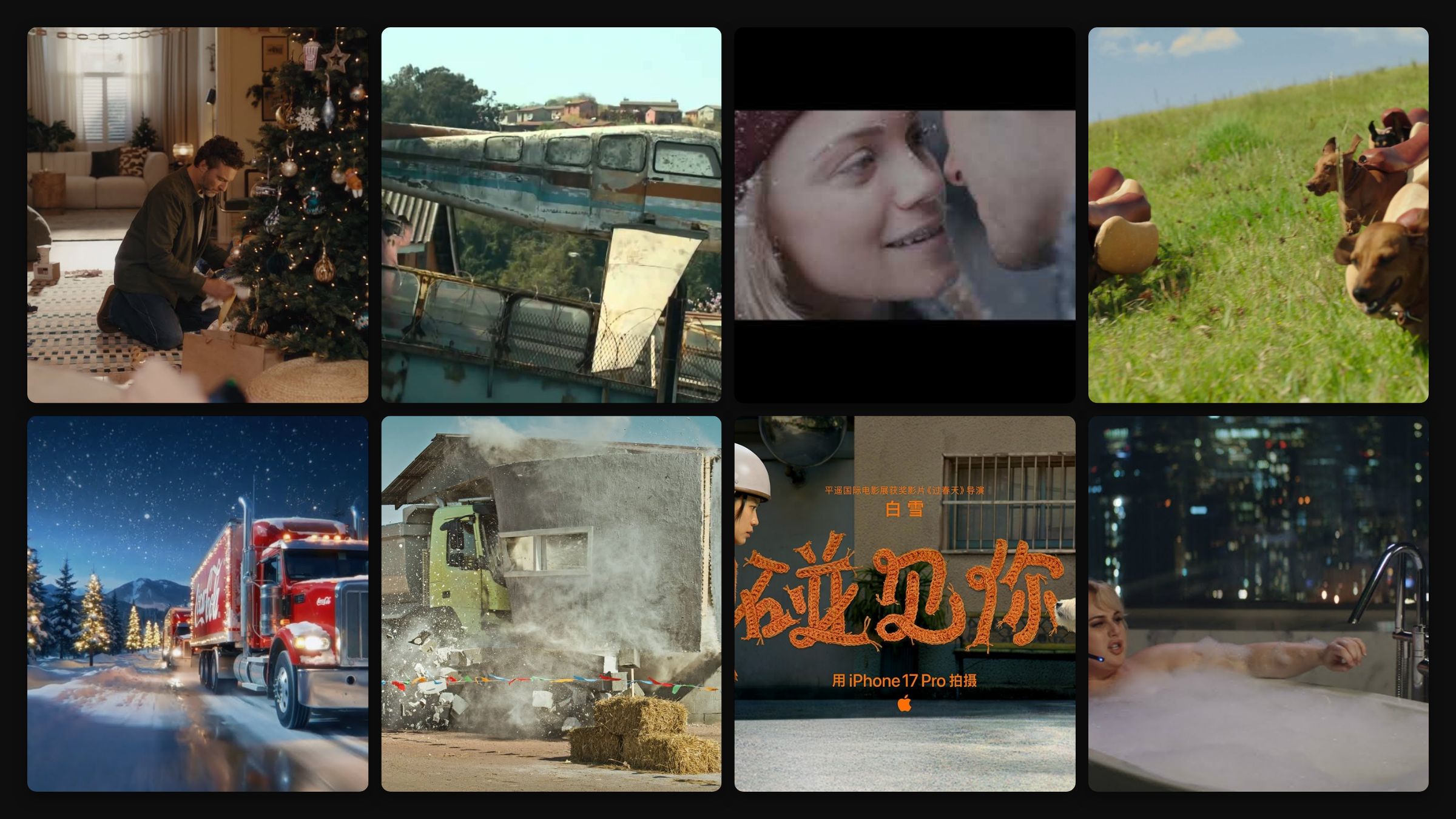
Most articles with this title show you a wall of thumbnails and call it a day. This one embeds eight commercials worth actually watching, and after each I have pulled out the single thing that made it work, because a great ad is never lucky, it is built. I picked these from the brand’s own YouTube channel wherever possible. Where the brand no longer hosts the ad, the version below comes from the news outlet or music label behind it, never a stranger’s re-rip.
They span thirty-second stunts and three-minute films, but they share a spine: one clear idea, executed without flinching. Watch for that as you go, because it is the part that transfers to any budget.
The eight commercials, and what to steal from each
John Lewis, “Where Love Lives” (2025)
The John Lewis Christmas ad is a genre unto itself, and 2025’s entry keeps the formula that made it a national event: one wordless emotional arc, a stripped-back cover song, and a product that shows up only as the payoff, never the pitch. What to steal: lead with a feeling and let the product arrive last. The audience forgives being sold to when they were moved first.
WestJet, “Christmas Miracle: Real-time Giving” (2013)
Passengers checking in for two flights to Calgary told a video-screen Santa what they wanted for Christmas. While they were in the air, WestJet staff went shopping, and the wrapped gifts came down the baggage carousel when they landed. Nobody on camera says the airline cares about its customers; the faces at the carousel say it for them. What to steal: if you want people to believe a brand value, do something that proves it, film it straight, and let the reactions carry the tagline.
Extra Gum, “The Story of Sarah & Juan” (2015)
A full love story told in two minutes, using one repeated device: the gum wrappers Juan sketches on at every milestone. The product is not a prop dropped into the ad, it is the narrative spine. What to steal: if you sell something small and low-interest, make it the physical thread the story is built around, not a logo bolted onto the end.
Heinz, “Wiener Stampede” (2016)
Dachshunds dressed as hot dogs sprint in slow motion toward people dressed as condiment bottles, scored to Nilsson’s “Without You” for mock-epic contrast. The whole idea is legible with the sound off, in about two seconds. What to steal: build the ad around a single visual pun so simple it survives a muted autoplay feed. That is where most people will meet it.
Coca-Cola, “Holidays Are Coming”
The glowing red trucks are barely an ad in the modern sense, they are a ritual. Coca-Cola runs a near-identical spot every year because consistency itself has become the message: winter is here, and so are we. What to steal: the power of repetition. A distinctive asset you are brave enough to run unchanged for years becomes shorthand no competitor can buy their way into.
Volvo Trucks, “Look Who’s Driving”
Volvo demonstrates its trucks’ precision by appearing to hand control to a four-year-old in a toy car, steering the real vehicles through an obstacle course. It is a product claim turned into a spectacle you cannot look away from. What to steal: dramatise the spec. Nobody remembers a stat about steering accuracy, everybody remembers a toddler parking a lorry.
Apple, “Shot on iPhone”
Apple’s long-running “Shot on iPhone” idea proves the product by making the product invisible: a properly cinematic short film, then a soft end card revealing it was all captured on a phone. The demonstration is the whole ad. What to steal: show, do not claim. If your product’s quality is the pitch, put the audience inside a result so good they forget they are being sold anything.
Amazon, “Alexa Loses Her Voice” (2018)
Amazon’s Super Bowl spot runs a celebrity gag (Alexa’s voice replaced by Gordon Ramsay, Cardi B, and more) that is really a feature tour in disguise: every joke shows you something Alexa does. What to steal: hide the product demo inside the entertainment. People will happily watch a feature list if it is wearing a comedy costume.
The pattern underneath all eight
Strip away the budgets and the same principles keep surfacing.
- One idea, fully committed. None of these hedges. Each picks a single thought and follows it to the end, which is exactly why you can describe them in a sentence years later.
- The product earns its place. Whether it arrives last (John Lewis), threads the story (Extra Gum), or is the whole spectacle (Volvo), it is never a logo stapled on at the finish.
- Feeling before information. Even the demos work by emotion first: awe, laughter, warmth. The facts land only after the feeling has opened the door.
- Built for how people actually watch. The strongest ones read in a muted, scrolling feed, then reward the viewer who stays for the full thing.
Watch one more, then a note from us
Our own team at Moonb makes brand films in this tradition, and the clearest way to show what that looks like is to show the work rather than describe it. Here is a Moonb brand piece for Toyota:
Full disclosure, since I work at Moonb: the reason a commercial like the ones above lands is rarely the budget, it is the judgment about which single idea to chase and the discipline to cut everything that is not it. That is the part a dedicated creative team is really for. If you want the same thinking behind your next ad, see how Moonb works. And if you are still scoping the project, our guides to commercial video production companies and how to make a commercial are the natural next reads, alongside a wider gallery of advertisement examples if you want more to study.
Frequently asked questions
The eight here sit at the top end, national-TV and Super Bowl money, often six or seven figures once you count crew, talent and music licensing, plus the media spend to air them. But the article's point holds: that money bought scale, not the idea. The Sapeurs film and the Extra Gum love story would still read on a fraction of the money, because the concept, not the gloss, is doing the work.
Yes, and the constraint often helps. You cannot out-spend Coca-Cola, so you compete on one sharp idea and on knowing your audience better than a global brand can. Strip the ambition down to a single thing you can execute well (one location, or one strong visual) rather than shooting a diluted version of a large-scale spot.
Start from something true about the product or the buyer that you would still believe if you covered up your logo, then find the simplest way to make someone feel it. Run the mute check the article mentions: if the idea does not read with the sound off in about two seconds, you probably have two ideas fighting each other. Write it as one sentence, and if you need three sentences to explain it, you have not found it yet.