16 Storytelling Ads That Actually Stick With You
A working list of storytelling ads I keep going back to, with a short teardown of the one craft choice that makes each film stick in memory.

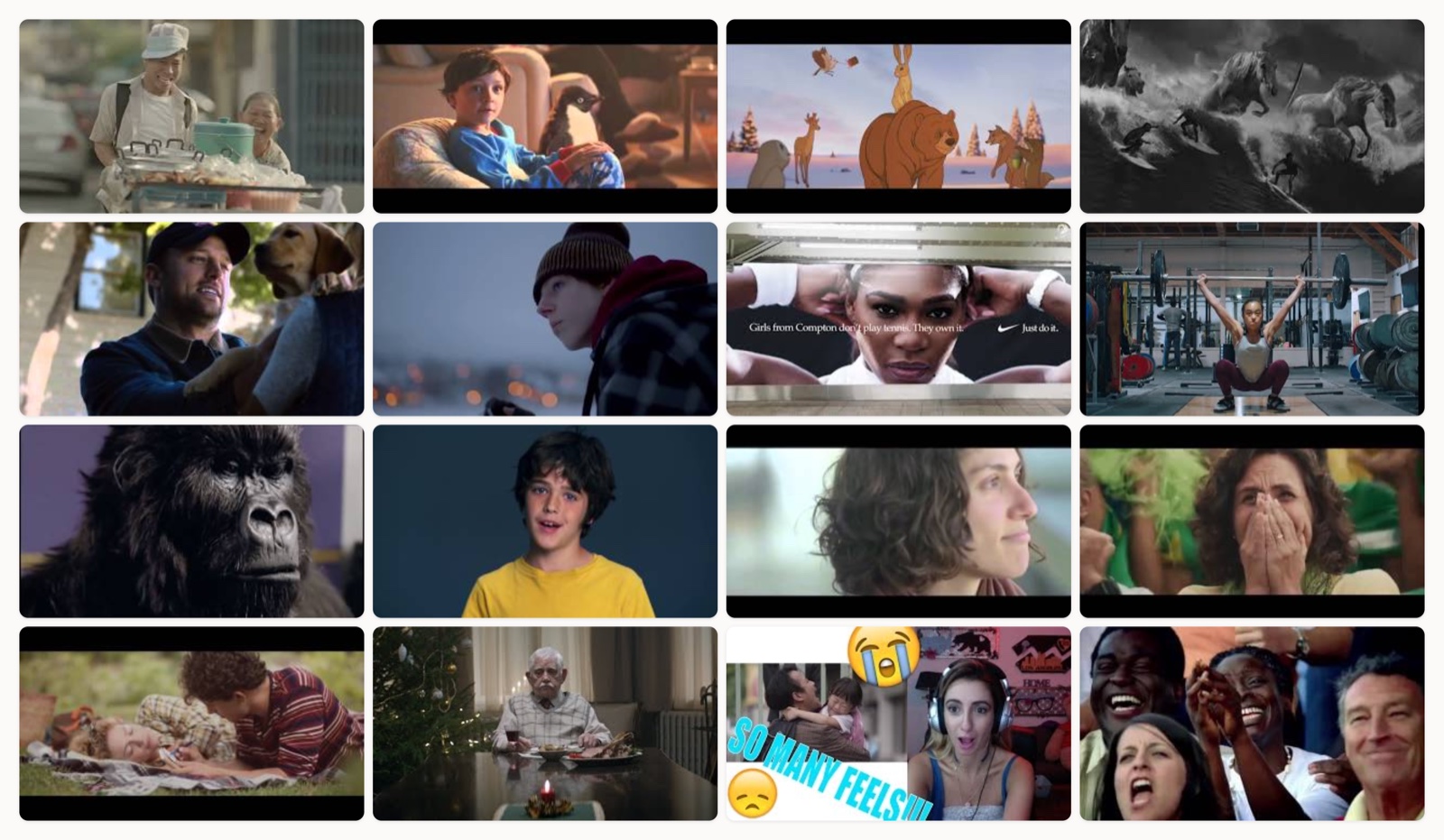
I have sat through more ads than any person should admit to, and almost all of them slide off my memory before the hour is out. A small handful never do. Years later I can still replay the last ten seconds of some of these in my head, which is the whole point of the exercise. This is my running list of the ones that earned that spot, the films that treat thirty seconds or three minutes like a short story rather than a billboard with a soundtrack.
What I look for is simple to say and hard to pull off. I want a want. Somebody on screen has to need something, and I have to feel the gap between where they are and where they want to be. Everything good flows from that gap, from the pacing to the way the payoff gets withheld. When a brand nails it, I stop thinking about the product and start caring about the person, and then the product borrows that feeling on the way out. When a brand skips it, I get a list of features set to stock music and I forget it instantly.
How I picked these
I left out the ones that are famous only for spending a fortune or booking a celebrity, because those are lessons in money, not craft. I kept the films where the story does the heavy lifting, where you could strip the logo off and still be moved. Some are ninety-second epics and some barely run a minute. A couple are animated and one has no dialogue at all. What ties them together is that each one made a deliberate choice about how to build and release tension, and I want to point at that choice in every case. If you are also working through what makes a commercial video worth watching, study the mechanics here, not the budgets.
Thai Life Insurance, the young man who keeps doing small kind things
The whole film is a man doing small favors that nobody seems to notice or reward. He waters a dying plant one day and helps a woman drag her food cart the next. For most of the runtime it looks like nothing is happening, and that patience is the entire trick. The ad banks every small act like a deposit, then cashes them out in one line about what he gets in return, and by then you have already felt it before the words arrive.
John Lewis, the boy and his penguin
One want carries this whole thing: a penguin who looks lonely. That is it. A child notices his toy friend watching couples with a sad little face, and the entire arc is built to answer that single need. I love how disciplined it is. There is no subplot and no second idea competing for attention, just one clear longing followed all the way to its payoff.
John Lewis, the bear who has never seen Christmas
There is no dialogue here, just hand-crafted animation wrapped around a fable structure older than advertising itself. A bear hibernates through every Christmas and his friend the hare wants him to see one. The emotional turn is a gift, an alarm clock, and it works because gift-giving is the exact behavior the brand wants you associating with it. The story and the sell are the same gesture, which is rare.
Guinness, the surfer waiting for his wave
A surfer stands in the water waiting, and the voiceover tells us that good things come to those who wait. The wait is the pint settling. The whole dramatic structure is one extended metaphor, and it commits so hard that the surf turns into stampeding white horses. Most brands would panic and cut to the product every five seconds. This one trusts the metaphor to carry the tension and lets the delay itself become the reward.
Budweiser, the puppy who keeps running back to the horse
A puppy and a Clydesdale become inseparable, and the story invents a real threat: the puppy is going to be adopted away. Suddenly a beer commercial has stakes, because I do not want these two friends split up. That is the sleight of hand. Give me a friendship and then put it in danger, and a sixty-second spot starts to feel like a short film with an ending I actually want.
Apple, the teenager who seems checked out
A kid stares at his phone through the entire family Christmas while everyone else lives their lives, and you spend the film half-judging him. Then you find out what he was making the whole time, and the judgment flips into something warmer. What I admire is the withholding. The ad hides its real subject until the last moment, so the ending reaches back and rewrites everything you just watched.
Nike, the montage built on belief
This one works less like a narrative and more like a point of view set to images. Athlete after athlete, each one told they dreamed too big, all anchored by a single narrator and a single conviction. It works because the brand takes a stance and lets the montage argue for it. You either share the belief or you do not, and Nike is fine with that, which is what gives it force.
Nike, taking back the word “crazy”
The companion film does something sharper. It takes an insult thrown at women in sport, “crazy,” and spends the runtime turning it into the rallying cry. Serena Williams narrates while the footage escalates the word from a slur to a badge. The structure is a reclamation: start with the wound, then hand it back as a weapon. That reversal is the whole idea and it works.
Cadbury, the gorilla and the drum solo
A gorilla sits in front of a drum kit. The camera holds on his face for an absurdly long time while Phil Collins builds, and then he starts drumming and the release is enormous. There is no chocolate in it until the final frame. The entire spot is tension and payoff with nothing to explain, and it remains one of the boldest bets I have ever seen a brand make on pure feeling.
Always, the girl who runs like a girl
A director asks grown adults to run and throw “like a girl,” and they perform the caricature without thinking. Then young girls get the same prompt and just do it, full speed, no self-consciousness. The film dramatizes a belief changing in real time, on the faces of the participants and hopefully on yours. It uses a casting-and-reaction format instead of a script, and the unguarded reactions are what make it stick.
Dove, the sketches drawn from description
A forensic artist sketches women twice, once from how they describe themselves and once from how a stranger describes them, without ever seeing their faces. The two portraits go side by side and the gap between them is the payoff. It is built like a social experiment, so the emotional turn feels discovered rather than staged. The structure earns the tears because the participants get there before the audience does.
P&G, the athletes and the mothers behind them
This one cross-cuts two timelines: an athlete facing a hard moment, and a mother who steadied them through some earlier version of that same fear. The parallel editing is the engine. Every setback on the track rhymes with a childhood scrape, so by the final beat the gratitude has been built beat by beat rather than announced. I keep coming back to how the montage does the storytelling that a voiceover usually tries to fake.
Extra Gum, the love story told on wrappers
A whole relationship unfolds across a montage, and one small object threads through all of it: the gum wrappers he keeps sketching their moments onto. The product never plays the subject here, it plays the memory-keeper, which is a much smarter role for it. By the time those drawings come back at the end, the throughline has already done its job. It is the clearest lesson I know in how to let a product live inside a story instead of interrupting one.
Edeka, the grandfather nobody visits
An old man eats Christmas dinner alone, year after year, while his adult children are always too busy to come. Then the film takes a properly dark turn to get them all in one room, and the resolution knocks the wind out of you. The misdirect is the craft here. It lets you sit in one grim assumption long enough that the real message hits like a confession. Bold work, and it fully commits to the discomfort.
MetLife, the girl who wrote about her dad
A little girl reads an essay listing everything wonderful about her father, and it plays as pure sweetness. Then she admits, in the same innocent voice, the things he hides from her and the sacrifices behind them. Her plain words reframe every scene you just watched of his hidden struggle. Using a child’s perspective to carry an adult’s burden is a devastating choice, and the ad wields it with control rather than melodrama.
P&G, the hardest job in the world
This is the one that started the franchise, and its thesis is stated by what it chooses to film. Not the medals, but the pre-dawn drives and the years of unglamorous support that no highlight reel ever shows. By following the unseen labor all the way to the podium, it makes the closing line feel earned instead of tacked on. I think it is the cleanest example on this list of showing the story instead of telling it.
What the best ones share
The pattern is not subtle once you have watched them back to back. Every single one of these establishes a clear want in the first breath, then refuses to satisfy it right away. The withholding is where the feeling lives. Cadbury holds on a gorilla’s face while Phil Collins climbs, Guinness holds on a man watching the water, and in each case the delay is doing the emotional labor.
The second thing they share is restraint about the product. Watch how late the logo shows up in most of these, and how little the brand explains itself. The story is allowed to be the whole event, and the brand takes its meaning by association at the very end. That takes nerve, because the instinct in most rooms is to sell earlier and harder. These films prove the opposite pays off.
The third thing is that they trust one idea. None of these hedge, and none of them run a second concept as insurance. Monty is lonely, that is the film. A word gets reclaimed, that is the film. When you commit to a single want and follow it all the way, you get something a viewer can hold onto. When you stack three ideas hoping one connects, you get something nobody remembers.
How to get this right
Start with the want, not the product. Before I write a single shot, I want to be able to say in one sentence who wants what and why they cannot have it yet. If that sentence is fuzzy, the film will be fuzzy, and no amount of nice footage fixes a missing spine.
Then earn your ending by holding back. Decide the exact moment your audience gets relief, and protect it. Resist the note that says show the product sooner, because the emotional return on waiting is almost always higher than the return on explaining. The gorilla does nothing for a very long time, and that nothing is the reason you remember the drumming.
Let the story carry the brand rather than the brand interrupting the story. The strongest spots here would still move you with the logo removed, which is the test I apply to our own work. If the film only functions because a product keeps reminding you it exists, the story was never really doing its job. For more on structuring the piece itself, it helps to think about how long an ad should actually run before you lock the edit.
Last, cast and shoot for real reaction where you can. The documentary-style films on this list, Always and Dove, get their power from faces that are not performing. You cannot script that texture, you can only create the conditions for it and be patient enough to catch it.
A closing thought
None of these ads sold anything in the thirty seconds you watched them. What they did was earn a place in memory, and the selling happened later, every time you saw the brand again. That is the trade storytelling makes: give the audience something worth feeling, and the brand equity compounds long after the view count stops moving.
If you are trying to make story-driven commercials that hold up next to these, the hard part is rarely the camera or the edit. It is the discipline to find the one true want and protect the payoff. That is the part a strong creative team obsesses over with you, and it is most of what we do at Moonb. Study the sixteen above, steal their structure without shame, and hold that same bar for your own work.
Frequently asked questions
A storytelling ad is built around a character with a want and a gap between where they are and where they want to be, and it makes you feel that gap before it resolves it. A normal commercial lists features or benefits and asks for the sale directly. The difference shows up in the structure: storytelling ads withhold the payoff and let the product take its meaning by association, often only appearing near the end.
No. Several films on this list get their power from a single idea executed with discipline rather than from money, whether that is a lonely toy or a single word handed back as a badge. The expensive-looking ones are famous for scale, but the ones that stick are famous for a clear want and a protected payoff, both of which are choices any team can make regardless of spend.
Long enough to establish a want and hold back the payoff, and no longer. Some of the strongest examples run under a minute while others stretch past two, so runtime follows the story rather than a fixed rule. The real constraint is the delay: you need enough time to build tension, but every second that is not earning emotion should be cut before you lock the edit.