12 creative production agencies for in-house marketing teams
Twelve creative production companies that make video, motion, design and ad assets at volume for in-house teams: who each suits, how it works, what it costs to find out, and one limitation apiece.

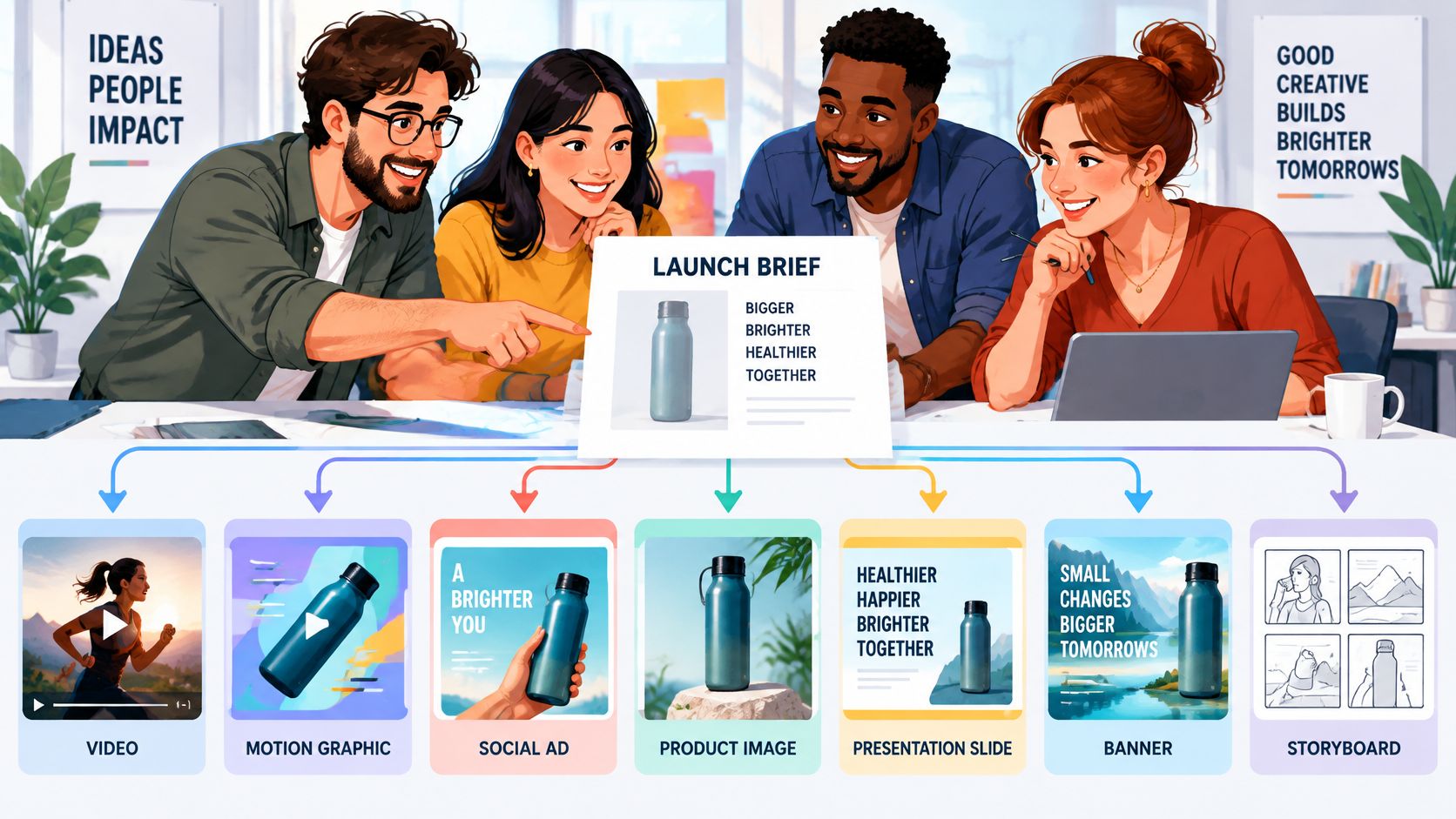
A creative production agency takes an idea your team has already approved and turns it into finished assets (videos, motion pieces, ad sets, decks, banners) at the volume a launch needs. My shortlist has twelve names, and the first is my own company, Moonb. After it come WPP Production (where Hogarth now lives), OLIVER, Monks, Shuttlerock, Vidsy, RIOT, Team13, CLING Creative, Fruit Punch Media, Talking Heads and Four Winds Creative.
Most teams go looking during the same kind of week. Launch in two weeks, message signed off, campaign idea approved, and then the asset list shows up: an explainer, a dozen paid social cuts in three ratios, a sales deck, banners for every placement, a motion version of the key visual. Your in-house designer is good. There’s one of them. Getting from the approved idea to a full set of correctly sized, on-brand files is what these companies get paid for.
Creative production company or creative agency
People use the two names as if they meant the same thing, and the difference decides what you pay for. An agency leads the thinking: positioning, the campaign concept, the line, the strategy behind it. A production company takes a direction that already exists and makes it real in every format and language the plan calls for, fast and in quantity.
Plenty of firms sell both. RIOT, further down, calls itself a creative agency and a production studio in the same sentence. What you want to know is who owns which part. If your positioning still needs work, or the campaign has no idea yet, buy concept and strategy first, because a production partner will politely build whatever you hand it. If the idea is settled and delivery is where things are stuck, concept development is money you don’t need to spend.
When teams ask me which one they need, I get them to count this quarter’s work. If it’s mostly one campaign film around a big idea, I send them to an agency or a hybrid studio; two hundred assets that all need to look like the same brand is a production job.
Twelve creative production companies
I went through all twelve websites in November 2026, and the claims below are theirs, so read them as claims.
1. Moonb
More on Moonb
Marketing departments at companies of all sizes use Moonb as their own creative team. Everything goes into one queue and the Creative Director orders it by what the launch needs first, so a deck, a batch of paid social variants and a motion cut can all move in the same week. The Clutch score is the only one of the three numbers someone else checked.
Numbers aside, you can judge the craft yourself. We made this 81-second campaign film for Microsoft from material that already existed: people from stock footage sit inside blue, yellow, orange and green panels while words like Customer care and Wow appear in kinetic type, and the result still has a look of its own.
2. WPP Production
More on WPP Production
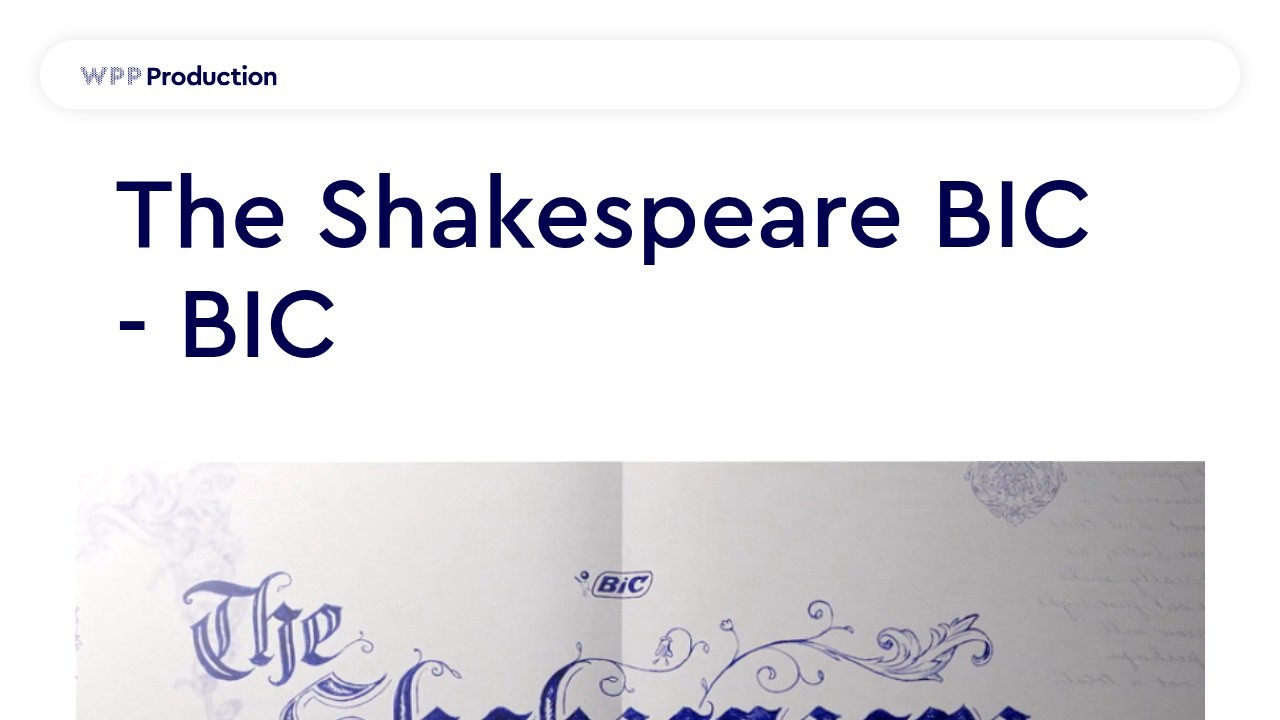
If your brand already works with a WPP creative agency, find out whether your production runs through here before you brief anyone else. WPP announced the unit on January 22, 2026, putting Hogarth together with production teams from across its network under Richard Glasson, who was Hogarth's global CEO; the release put it at close to 10,000 people. One piece on its site is The Shakespeare BIC, where an AI-powered robot handwrote all 212 pages of Romeo and Juliet with one BIC pen in 20 days.
3. OLIVER
More on OLIVER
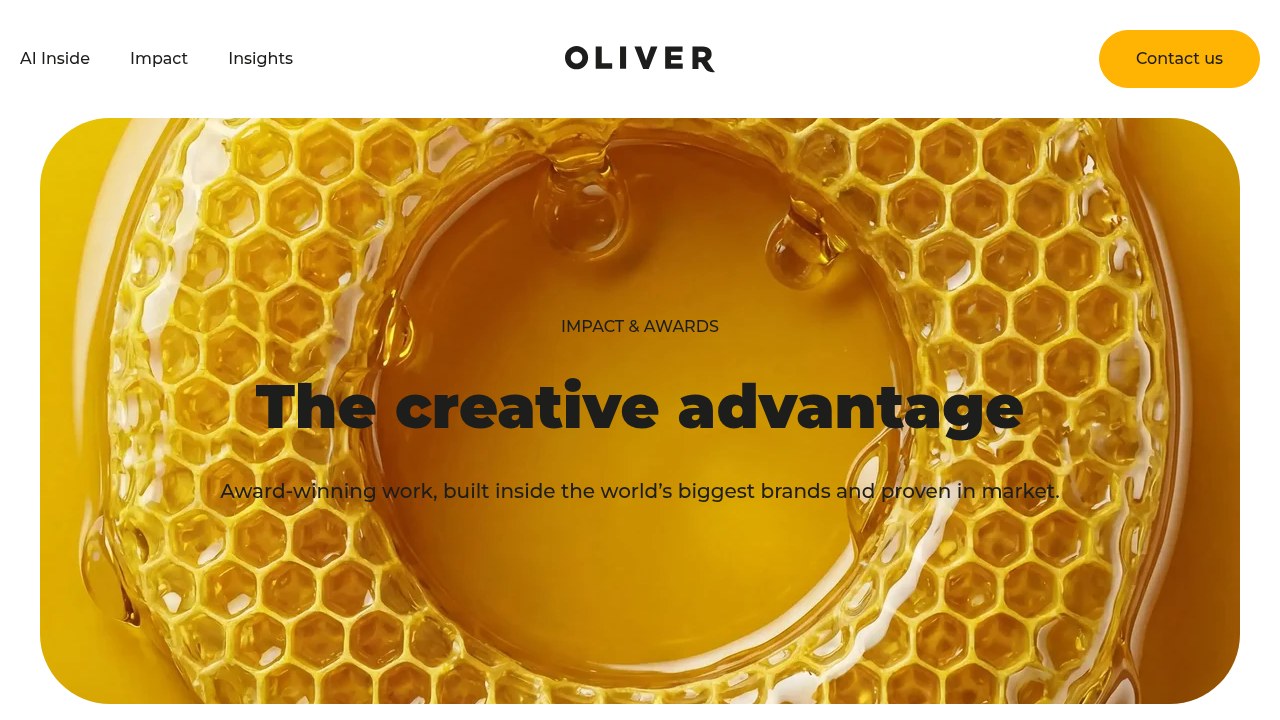
If you're seriously thinking about building your own department, OLIVER's site is worth reading even if you never hire it. The company says it pioneered in-housing more than 20 years ago. Today it sells the model as AI Inside, with the skills, training and governance for AI arriving alongside the people. It belongs to The Brandtech Group, which David Jones founded in 2015, and its impact page also lists a 2025 Global Digital Transformation Agency of the Year title. Its pitch to clients is that you keep the data and the intelligence.
4. Monks
More on Monks
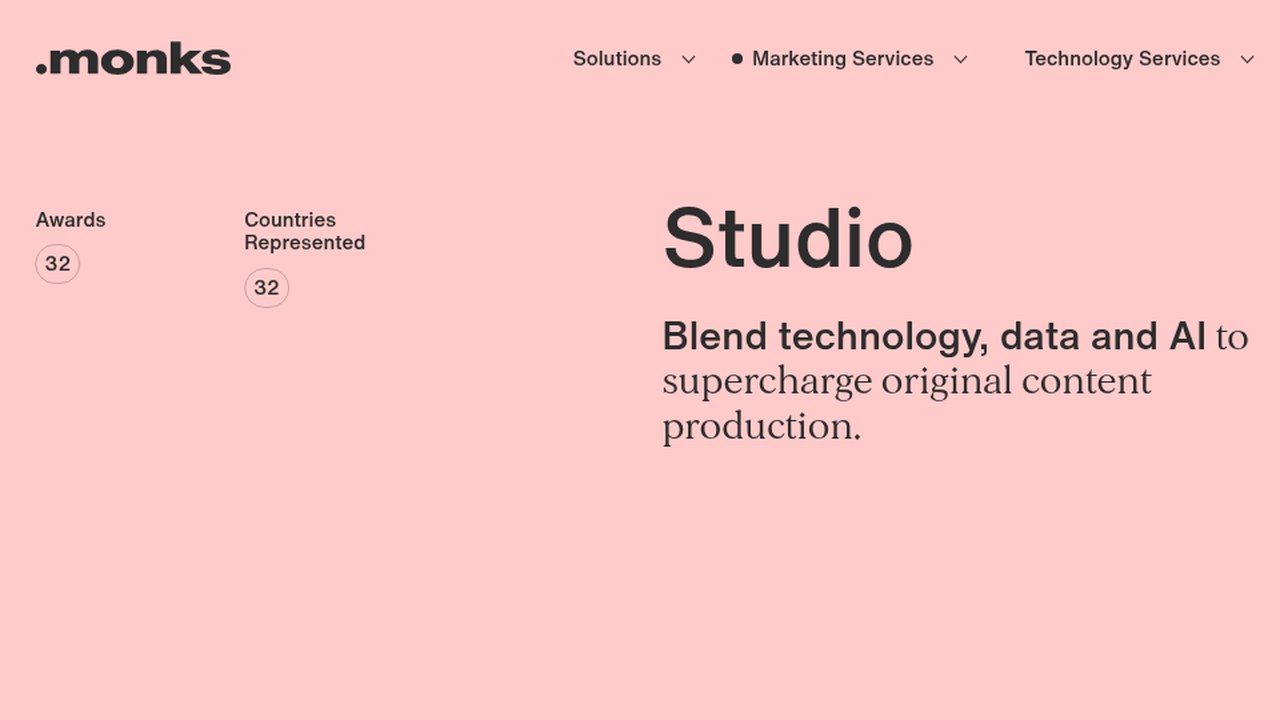
Monks is part of S4 Capital, where Sir Martin Sorrell is executive chairman, and I'd only bring it in when the production setup as a whole is broken. Its homepage describes the orchestration offer as collapsing "your content supply chain into one AI-powered system", and the studio page points to a case study on unifying General Motors' content operations, with a header counting 32 awards and 32 countries represented.
5. Shuttlerock
More on Shuttlerock
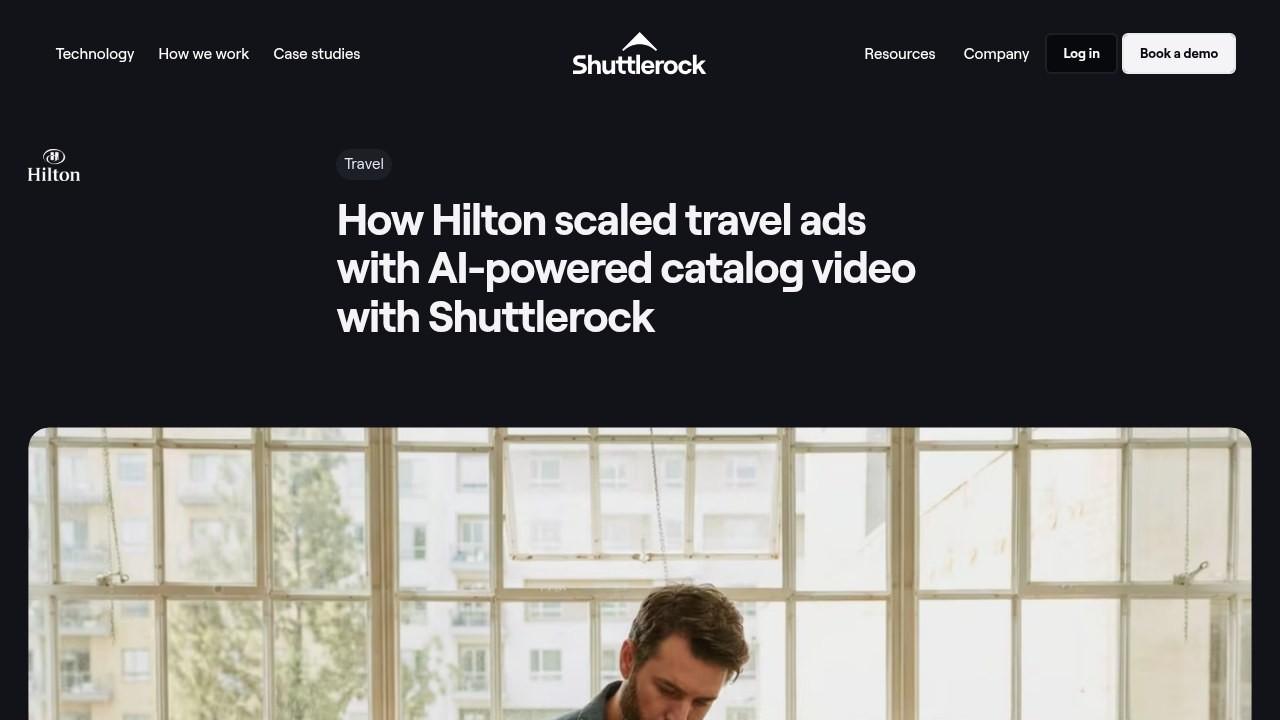
Shuttlerock calls itself a creative production partner and says it helps marketers "turn one asset into thousands, for every channel, format, and audience." Its homepage splits the process into building the creative system, bespoke design from its team, and testing every asset so performance data decides what launches next. The Hilton work ran in partnership with Meta, and the case study says Hilton is now rolling it out across its US properties.
6. Vidsy
More on Vidsy
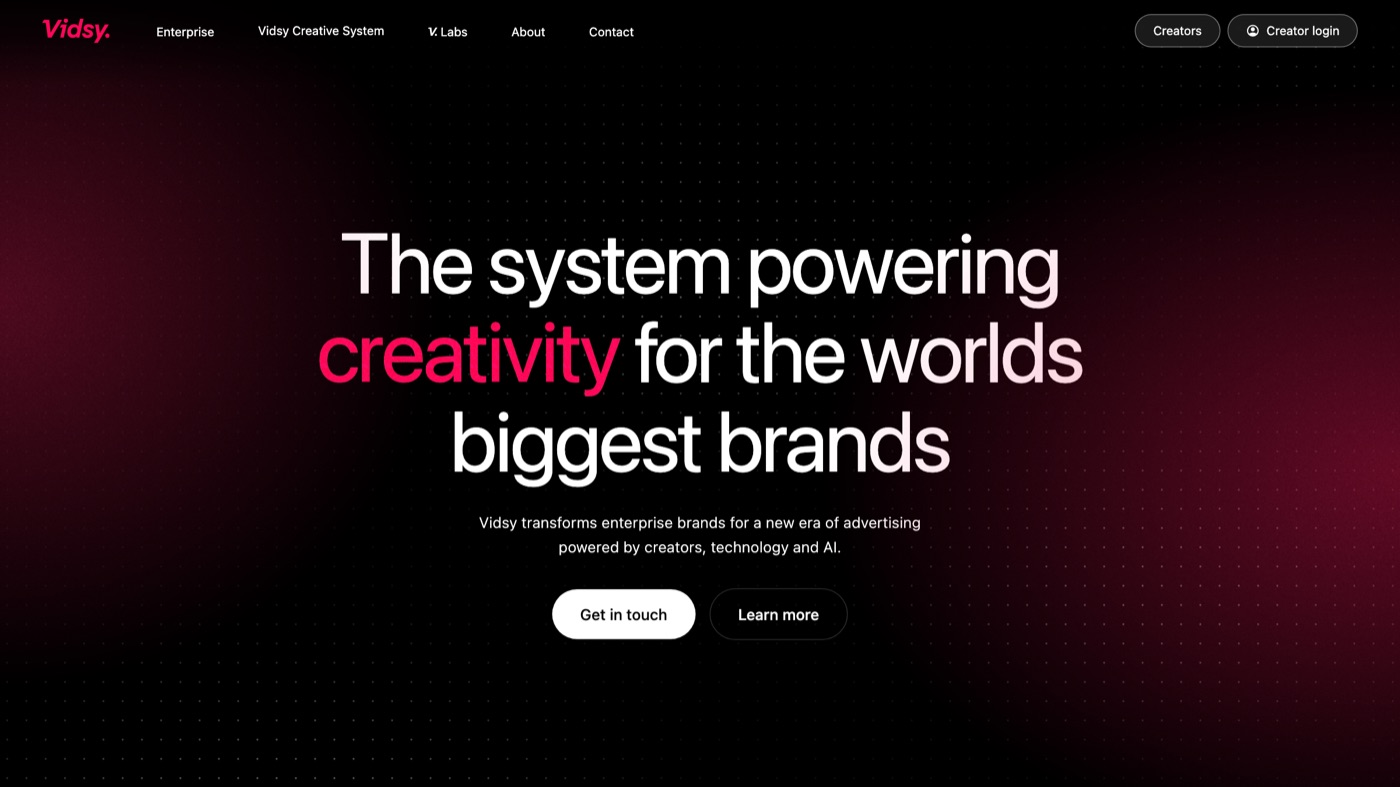
Vidsy pitches one system for a whole brand portfolio, replacing fragmented partners and regional silos with a single workflow, and Cortex, in Vidsy's description, remembers what has worked so each campaign builds on the last. Creators sign up on the same site, which tells you where the footage comes from. The homepage also claims a 5x increase in ad performance, with no method next to it, and I'd want to see the case study first.
Shuttlerock and Vidsy both lean heavily on software, which suits ad platforms that want variants by the hundred. Before you sign with either, ask how much of the work is software and how much is people, and what happens when a brief doesn’t fit their template.
7. RIOT
More on RIOT
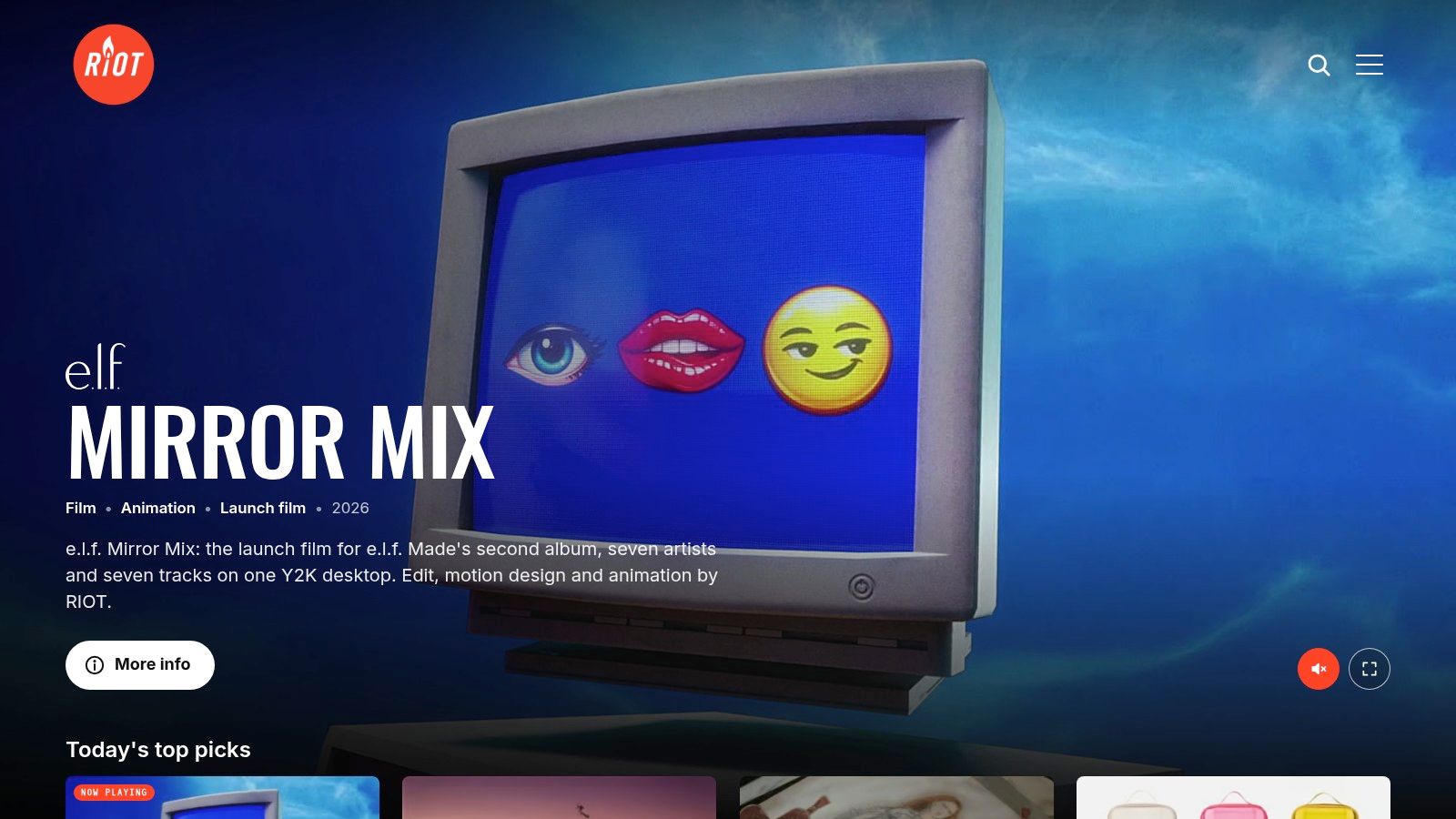
RIOT's homepage counts 201 projects for 68 brands since 2012, with studios in Hudson Yards and Clifton, New Jersey. Its argument is that an idea "loses something every time it changes hands", so the people who pitch the concept also shoot and edit it. I agree with that one. Recent work includes the e.l.f. Mirror Mix launch film, where RIOT did the edit, motion design and animation. On cost, it says a focused edit from footage you already own runs a fraction of a rebrand with a launch campaign and a shoot.
8. Team13
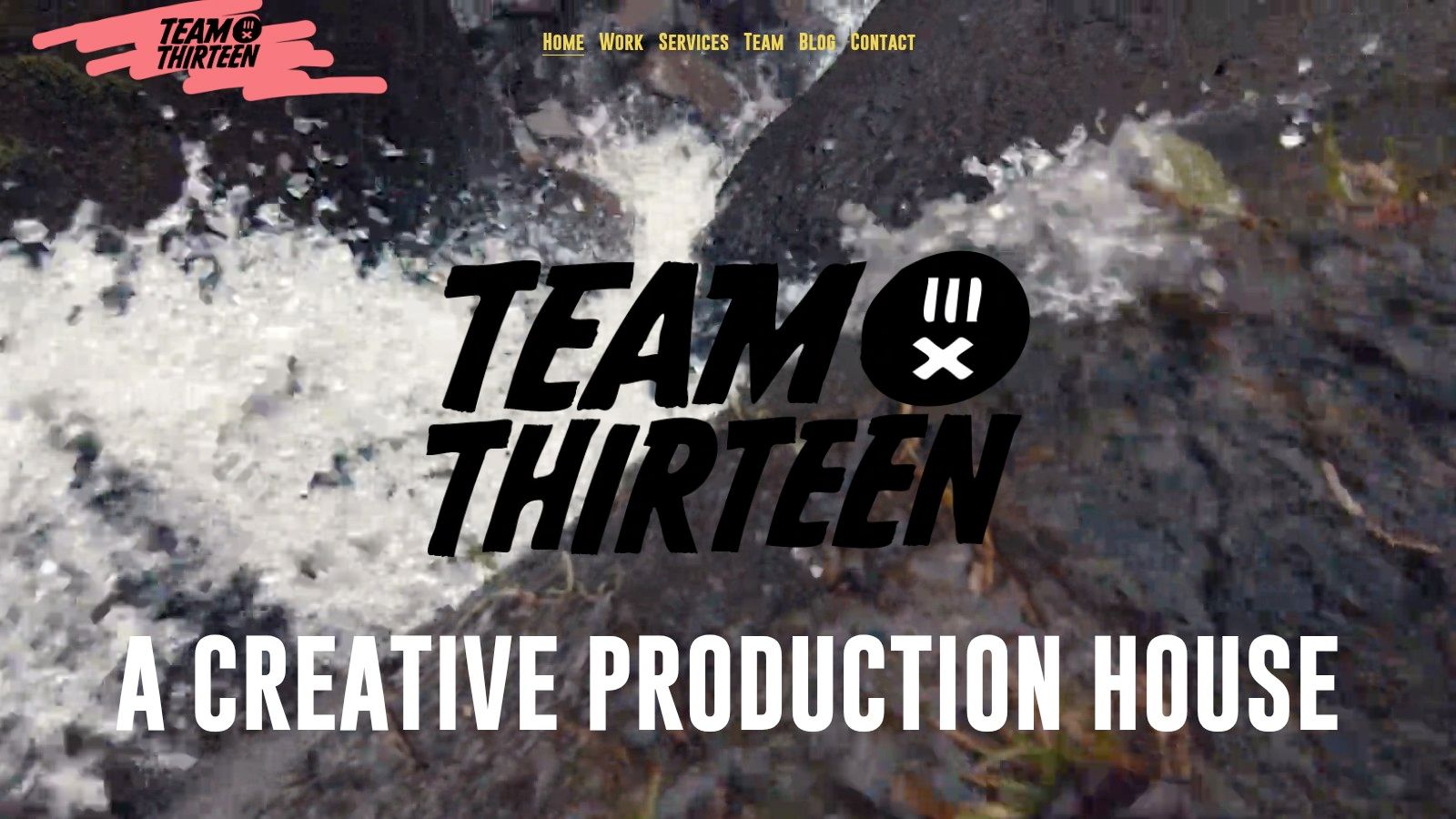
More on Team13
Team13 groups its work into creative direction and ideation, production, motion graphics and post-production. Ideation covers series for TikTok and YouTube and scripted :30 commercials. The motion work is 2D and 2.5D, anything from a full-length explainer down to a few frames of sparkle for a TikTok reveal, and the post team says it's used to delivering content at scale. Brand design, decks and static ad sets need a second partner.
A lot of the teams I talk to have footage nobody has had time to cut, and the homepage speaks to them directly: "Already have content shot? Use us as your post-production partner."
9. CLING Creative
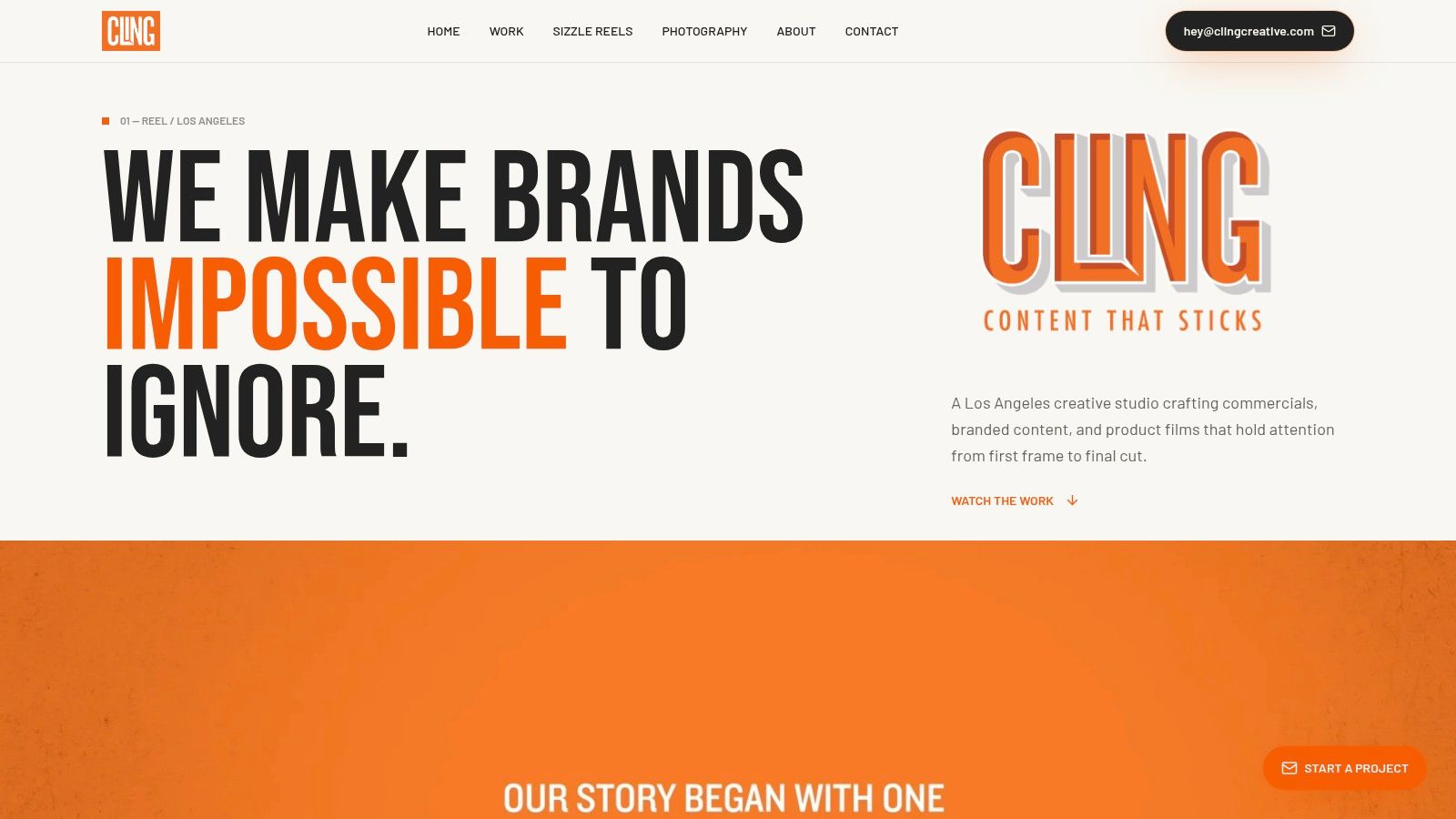
More on CLING Creative
CLING is led by Zan Passante, a creative director, writer and producer with more than 25 years in branded content who has created more than 500 videos. I like that the tiers sit right on the homepage, so you can tell before any call which kind of project fits what you can spend. Its branded content programs include ongoing work for StarKist, Truvia and Campari, and it cuts sizzles and sales videos from the footage and product shots a brand already has. The site says generative AI comes into the toolkit when it serves the idea.
10. Fruit Punch Media
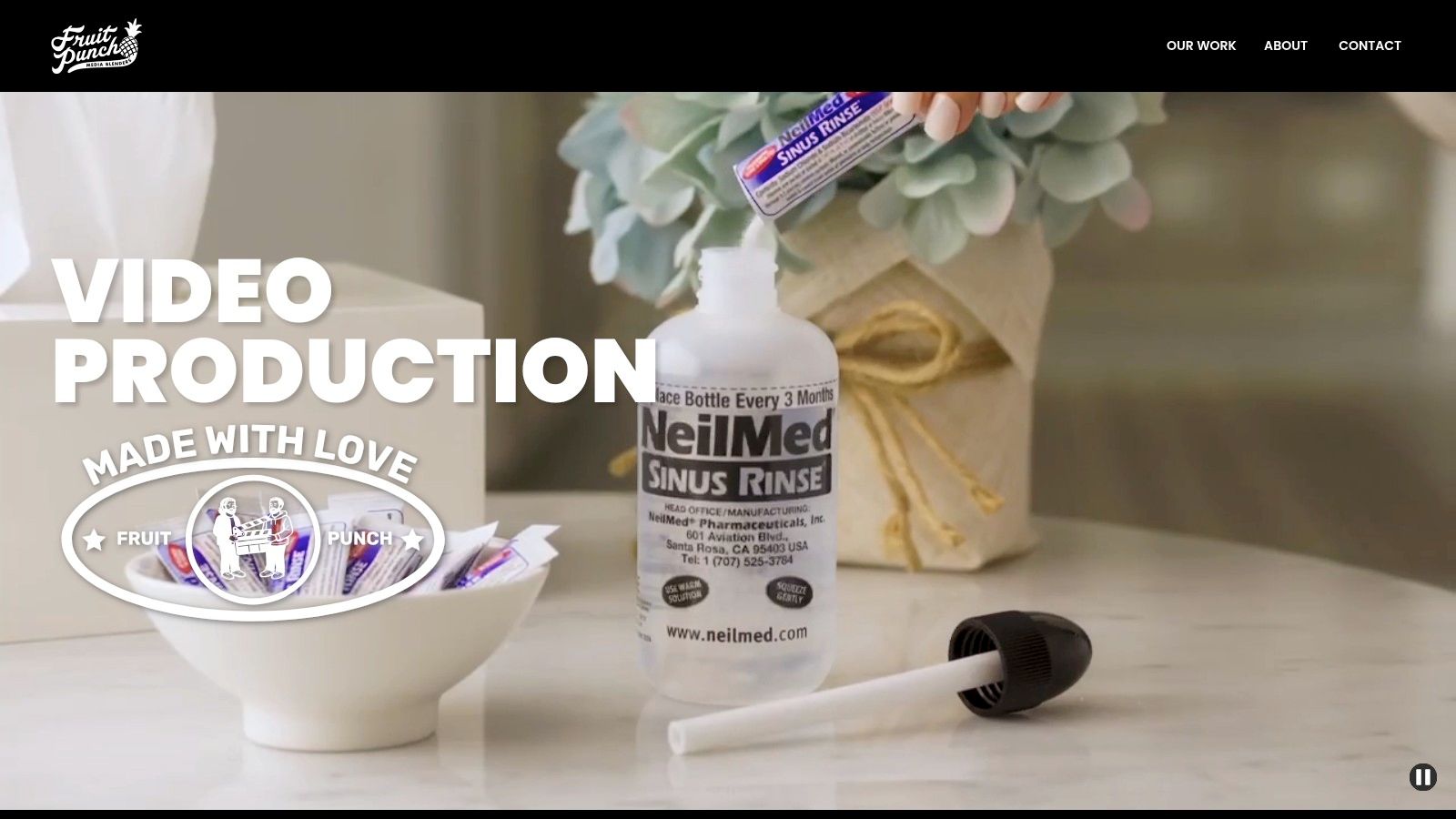
More on Fruit Punch Media
Fruit Punch lists 15+ years of experience and 600+ videos produced for brands and agencies across the US. It produces in English and Spanish, handy if your campaigns run in both. Decide between a shoot and an asset-led spot before anyone writes a treatment that assumes a crew. Custom commercials cover concept, scripting, casting, filming and post-production; the branded content side includes documentaries, behind-the-scenes features and content marketing series.
11. Talking Heads
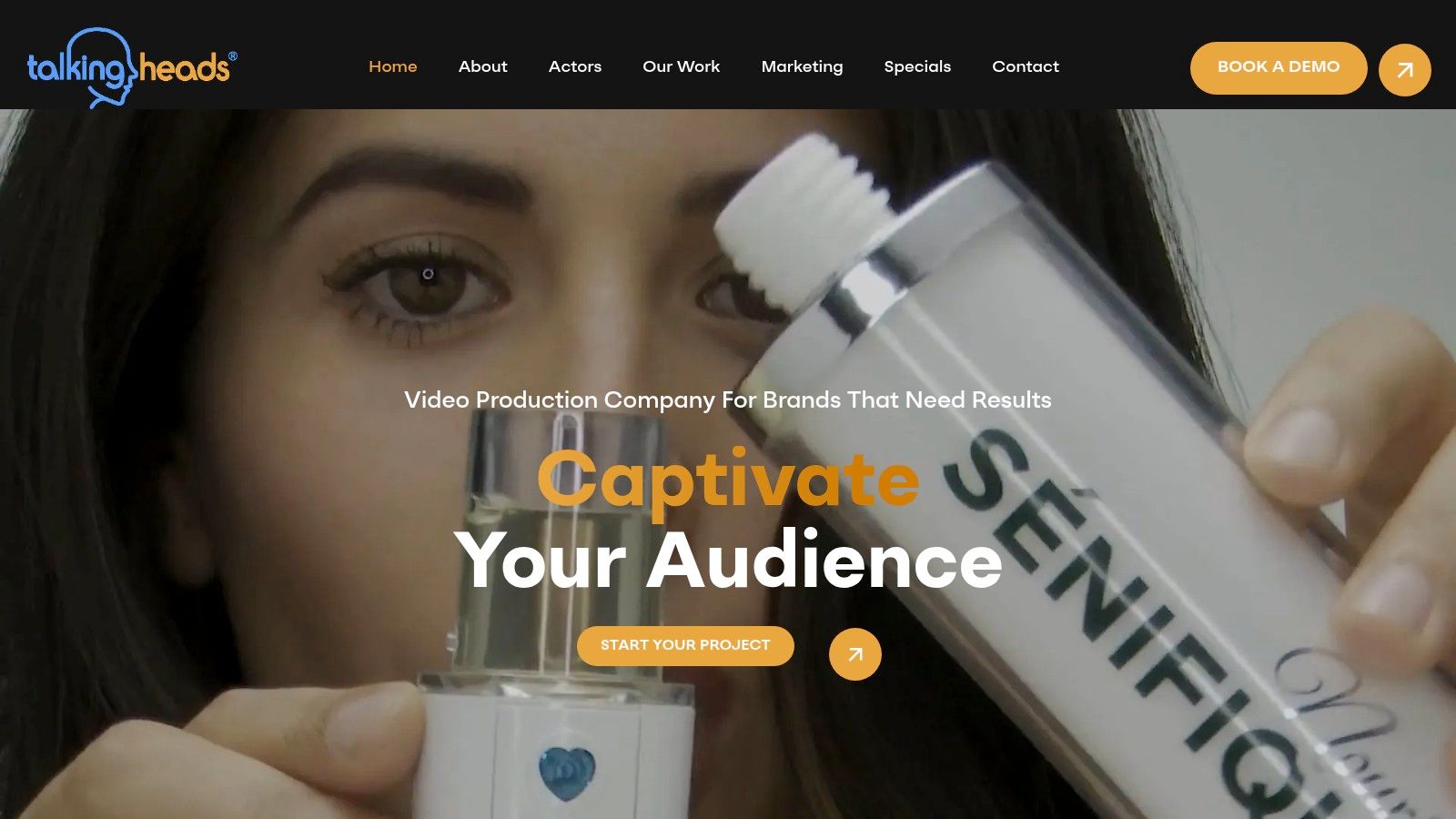
More on Talking Heads
Talking Heads says it shoots and builds every video in its own studio and does not outsource filming, and with a cast already on call it's a sensible pick if presenter videos are a monthly thing for you. Its list of formats runs from 3D and 2D animation and motion graphics to whiteboard videos, app walkthroughs and funny ads, and it sells social media marketing as well. The site names work for FedEx, 3M and Four Seasons.
12. Four Winds Creative
More on Four Winds Creative
According to its company page, Four Winds Creative was founded in May 2014 by Charlyn, Todd and Keith, who met in 2001 at a Fortune 50 technology company. Services run from scriptwriting to final delivery, plus a full animation studio, 2D motion graphics and consulting on post-production workflow. Portfolio names include Analog Devices, McAfee, Ericsson and SanDisk.
Freelancers, staff hires and in-house teams
These don’t fit a numbered list, and most teams combine one of them with a production partner anyway.
Freelancers are the fastest way to add one skill. A good motion designer or editor booked for a month skips procurement entirely, and for a single skill it’s usually the cheaper route. But someone on your side still writes the briefs, reviews, chases files and keeps twenty freelancers’ work looking like one brand, and that someone is usually the person who was already too busy.
Hire when one discipline is busy every week and needs to sit close to the product team. Do the math first. A film or video editor alone earned a median $75,420 a year in May 2025, according to BLS figures, and that’s before benefits, software, hardware and the weeks between launches when there’s less to cut. If you go that way anyway, our post on which creative hires come first covers the order.
A full in-house agency is the bigger version: a department with its own leadership, process and tools, sometimes built and staffed by an outside firm like OLIVER. Specsavers keeps its creative inside, and the session description calls it one of the UK’s best-regarded in-house agencies. In this 2021 talk from Henry Stewart’s Creative Operations Europe, Nicola Wardell covers her own move from agency to in-house and how to build the culture and processes that serve the business. One of her slides reads “We were in-house before in-house was a thing.”
Still torn between the two broad routes? I lay out the trade-offs in in-house vs agency production.
The twelve side by side
| # | Company | Best fit | How you engage | Price on the site |
|---|---|---|---|---|
| 1 | Moonb | A steady mixed queue of video, motion, design and ad assets | A Creative Director and a team of your own | One set monthly rate, or a per-project quote |
| 2 | WPP Production | Global campaigns adapted across markets and languages | Scoped programs | Not published |
| 3 | OLIVER | Building an in-house team inside a large brand | Embedded, built and run by OLIVER | Not published |
| 4 | Monks | Fixing an enterprise content supply chain | Scoped projects and programs | Not published |
| 5 | Shuttlerock | Ad variants and catalog video at scale | Technology plus design team | Not published (demo first) |
| 6 | Vidsy | Creator-made video ads across markets | Enterprise system and creator network | Not published |
| 7 | RIOT | Concept and production together | Project, with a tailored plan and bid | No rate card; a number after the brief |
| 8 | Team13 | Video series, commercials and post-production | Project | Not published |
| 9 | CLING Creative | Consumer brand commercials and photography | Project | Tiers from $7.5k to $50k+ |
| 10 | Fruit Punch Media | Commercials, with or without a shoot | Project | Not published |
| 11 | Talking Heads | Spokesperson, demo and e-learning video | Project | Not published (demo call) |
| 12 | Four Winds Creative | Tech explainers, animation and event streams | Project | Not published |
Most of that price column is blank, which is normal in this category. The engagement column is the more useful one. Pick the company whose model matches how your requests come in, a steady weekly flow or a big project now and then.
How to choose a production partner
Start with last quarter’s requests and pull them into piles: video, motion, static design, ad variants, decks. When one pile dwarfs the rest, a specialist from the list may be all you need, say a commercial house for spots or a variant engine for paid social. When the piles are roughly even and arrive every week, you need one team that covers all of them. Social-first video has its own list, social media video agencies, and so does motion: motion graphics companies.
Then send two or three companies on your shortlist the same brief, ideally one from the launch you have coming up. Put in the audience, the approved message, the assets you already have, every format and size, who reviews, and the deadline; our template for writing a creative brief covers the rest. Ask each one to walk you from that page to finished files, and compare the answers on four things:
- Craft range: which work its own people do, and which goes to subcontractors.
- Speed: approval points and delivery dates in writing. A general promise of fast turnaround tells you nothing.
- A named creative lead you can hold to the plan.
- Pricing in writing: scope, revision rounds, usage rights, source files and what counts as extra.
Ask about quality control in the same conversation: how they check brand consistency, product accuracy, captions, export settings and placement specs. A finished asset should go straight to its placement without your designer fixing it first. The discipline that holds all of this together is creative operations, and Nicky Russell, a partner at WDC and conference chair for Creative Operations London 2023, explains it in a few minutes here.
If part of the variant work stays with your own team, Nim’s guide to ad creative design with AI workflows shows how to build variants that differ in one variable at a time, so each test tells you something. For the internal side (requests, approvals, handoffs), our piece on creative operations management covers the setup.
Frequently asked questions
It turns an approved idea into finished assets at volume: video edits, motion pieces, ad variants, decks, banners, and every size and language a campaign needs. A creative agency usually leads the concept and strategy, and a production company makes it. Some firms do both, and the scope of work shows which part you're paying for.
Give two or three of them the same brief from your next launch, with the audience, approved message, existing assets, every format and the deadline. Then compare the plans on four things: which crafts their own people cover, approval and delivery dates in writing, a named creative lead, and pricing that spells out revisions, usage rights and source files.
When demand comes in peaks or spans several crafts. A launch might need editing, motion, illustration and deck design for six weeks and far less afterward, and a full-time specialist sits idle between campaigns. Hire when one discipline is busy every single week and has to sit next to the product team.