8 Corporate Video Examples to Learn From
Eight corporate video examples that prove a brand film for a serious company does not have to be boring, each embedded and broken down.

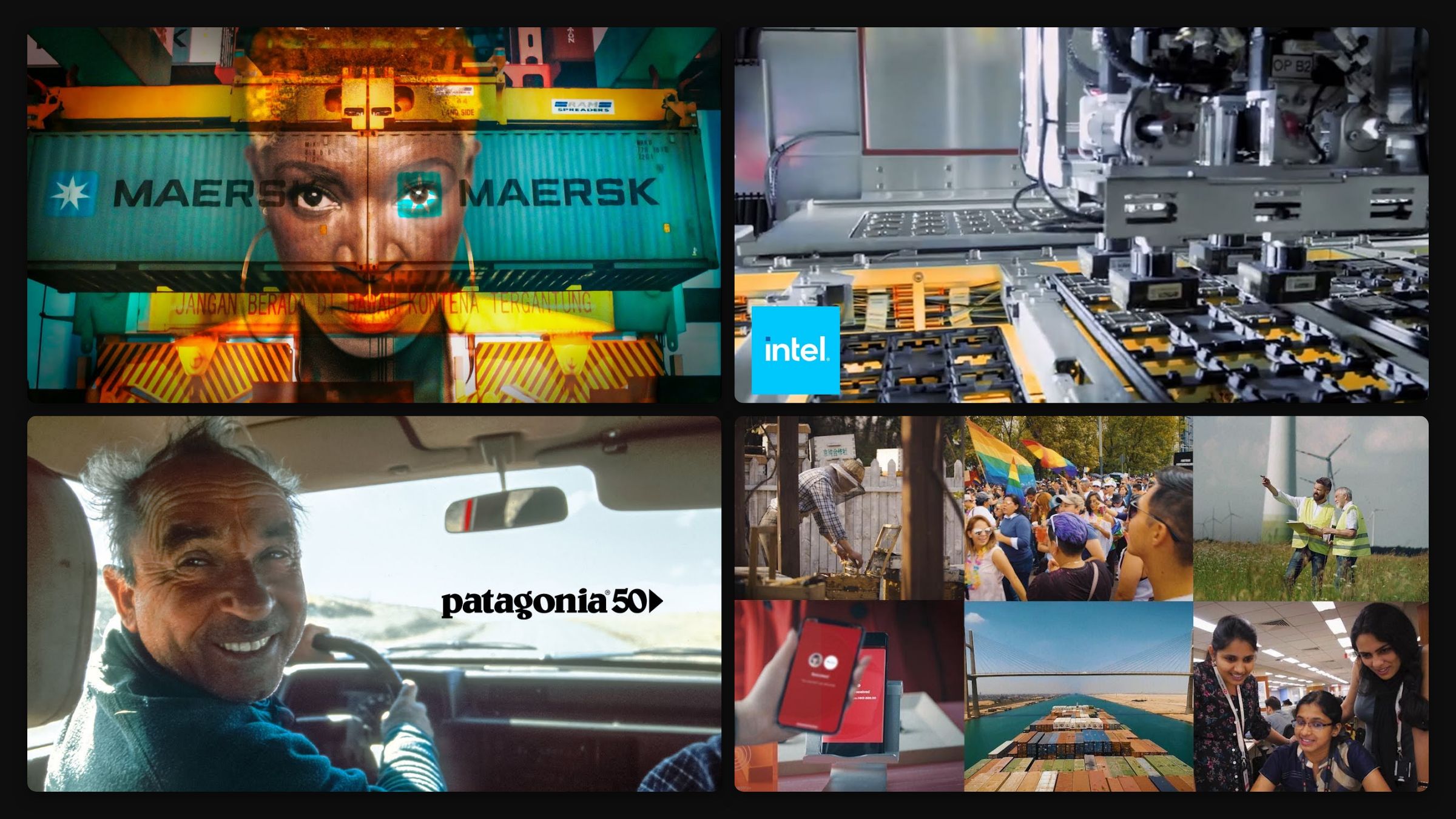
I run a creative studio, and “corporate video” is the phrase clients say with an apology, as if it can only mean an executive reading a script over a stock-music bed. It does not have to. The eight films below come from large, serious companies, in unglamorous categories, and every one is worth watching. Each is the company’s own upload, and after each I have named the move that lifted it above the corporate default.
The common thread is simple: a big company is still made of people, and the films that work remember that. They translate an abstract corporate story into a human one.
The eight corporate films, and the move behind each
Maersk, “Together, All the Way”
Maersk turns global shipping logistics, about as unglamorous a B2B category as exists, into a cinematic brand anthem: real ports, real vessels, real frontline workers cut to a rousing score. The move: shoot your unglamorous reality beautifully. The scale and grit of what a company actually does is often more cinematic than any concept, if you point a real camera at it.
Intel, “Do Something Wonderful”
The anthem film for Intel’s brand refresh translates an abstract technology story into a human one, framing the chips as the enablers of human ideas rather than the hero themselves. The move: make your product the enabler, not the star. For a deep-tech company, the emotional story is what people do with the technology, not the technology.
Patagonia, “What’s Next?”
Patagonia’s anniversary purpose film states its thesis outright: purpose over profit, the planet as the point. It is a corporate film that risks a real position instead of hedging. The move: stake an actual belief. A corporate film that says something specific and potentially divisive is remembered; one that offends nobody is forgotten instantly.
HSBC, “Opening Up a World of Opportunity”
HSBC’s purpose film articulates why the bank exists, opening up opportunity, rather than pitching accounts or rates. It sells the reason before the service. The move: answer the “why do you exist” question before the “what do you sell” one. A clear purpose gives a faceless institution a reason for a customer to prefer it.
Salesforce, “We Are Ohana”
The canonical articulation of Salesforce’s Ohana culture frames employees, customers, partners, and communities as one family. It is a culture film that doubles as a recruiting and brand asset. The move: put a name to your culture and let a film make it tangible. A named, felt culture is both an internal rallying point and an external differentiator.
Google, “25 Years in Search”
Google’s anniversary film stitches 25 years of real search queries into a single emotional arc about how the world looks for answers, turning its own product data into a human story. The move: mine your own data for the story. The truest material a company has is the trace of how people actually use it, and shaped well, that beats any invented concept.
Caterpillar, “Cat Trials: Stack”
Caterpillar plays a giant game of Jenga using its real construction machinery, proving heavy equipment can be genuinely entertaining without a word of corporate messaging. The move: demonstrate, do not describe. Showing your product do something remarkable, playfully, sells capability better than any spec sheet or mission statement.
Nike, “You Can’t Stop Us”
Nike’s split-screen anthem syncs dozens of athletes across sports into perfectly matched halves, turning a technical editing feat into a message about unity and resilience. The move: let craft carry the meaning. The astonishing edit is not decoration, the seamless matching itself is the point about togetherness, so technique and message reinforce each other.
What lifts a corporate film above the default
The eight share a handful of instincts that the boring ones lack.
- Find the human story inside the corporate one. People, purpose, and craft translate; org charts and revenue do not.
- Shoot the real thing well. A company’s actual operations, filmed with care, beat generic concept footage almost every time.
- Risk a real position. The films that land say something specific enough that someone could disagree with it.
- Let the product enable, not dominate. Especially in tech and finance, the emotional weight belongs to what the product makes possible.
One from us, and an honest note
At Moonb we make corporate and brand video for exactly these kinds of companies. Here is a Moonb piece in this space:
I co-founded Moonb, so weigh the framing: the reason most corporate video is forgettable is not the subject, it is the absence of a point of view and the fear of shooting the real thing boldly. The films above had teams that pushed past that. If you want that behind your next film, see how Moonb works, and our roundup of corporate video production companies covers the wider field.
Frequently asked questions
Yes, because the moves are about a point of view, not scale or spend. A regional manufacturer can shoot its real floor as carefully as Maersk shoots its ports, and a fifty-person company can state a belief as plainly as Patagonia does. What does not shrink well is the vague film that tries to please everyone. Find one true, specific thing about your company and build the whole film around it.
Start from what is actually true about you, then match the move to that. If your operations look striking on camera, shoot them (Maersk, Caterpillar). If your product enables something bigger than itself, make that the story (Intel, HSBC). If you hold a real belief, state it (Patagonia). The wrong way is copying a move because a film you admired used it. The right way is picking the move your own material already points to.
Show them what the safe version costs. A film built to offend nobody gets watched by nobody, and returns nothing on the money and time it took to make. Bring these examples into the room: the corporate films people remember all say something specific, and the hedged ones vanish. Keep the position narrow and tied to what the company really does, so it reads as conviction rather than a stunt.