Best Brand Video Production Companies (2026)
The best brand video production companies in 2026, scoped to studios that make brand films and brand stories: what each is best for, the clients they name, pricing signals, and one real limitation each.

The best brand video production company is the one whose taste matches the story you are trying to tell, because brand video is judged on feeling and craft, not on how many cameras showed up. This list is scoped on purpose: these are studios known for brand films and brand storytelling, not general corporate or event shops, and it runs from animation-led houses that make brand anthems to live-action studios that make cinematic brand films. Below are the twelve I would put in front of a marketing or brand lead in 2026, what each one does best, and where each one stops being the right fit.
I co-founded Moonb, and we sit at the top of this list, so read the first entry with that in mind and hold us to the same test as everyone else. The other eleven are studios I would happily point a brand toward when we are not the right shape for the job, and I have kept a real limitation on every entry, ours included.
How to choose a brand-film partner
Two decisions matter more than the reel. The first is medium. Some of the strongest brand studios in the world are animation-led (Buck, Giant Ant, Oddfellows all make their name in motion), and some are live-action houses. A brand anthem about an abstract idea often lands harder as animation; a founder story or a product in the real world usually wants a camera. Match the medium to the story before you shortlist, or you will fall for a beautiful reel in the wrong format.
The second is taste. Every studio here can light a room and cut to a good track. What separates them is judgment: what they leave out, how they pace a ninety-second film, whether the style carries meaning or just decorates a script. When I judge a cut before it ships, I am watching for one clear idea, sound that holds up on laptop speakers, and an ending that means something. Watch a full brand film from each studio, not the sizzle reel, and you will see which ones have it.
Sound carries more of that feeling than most buyers expect, which is why the good studios obsess over it. This TEDx talk on the craft of sound design is a useful reminder of how much of a film’s emotion lives in what you hear, not just what you see.
On cost, brand films run from roughly $10,000 at a boutique into six figures for a flagship. The number moves with live-action complexity and craft tier far more than with length. If you want the full anatomy, our guide to video production cost breaks it down, and how to choose a video production company has the full vetting checklist. For inspiration first, brand video examples shows what good looks like.
The best brand video production companies in 2026
1. Moonb
Moonb is an embedded creative team: a dedicated crew of designers, editors, and motion artists led by a Creative Director who learns your brand and makes brand video, motion, and design on an ongoing basis rather than one project at a time.
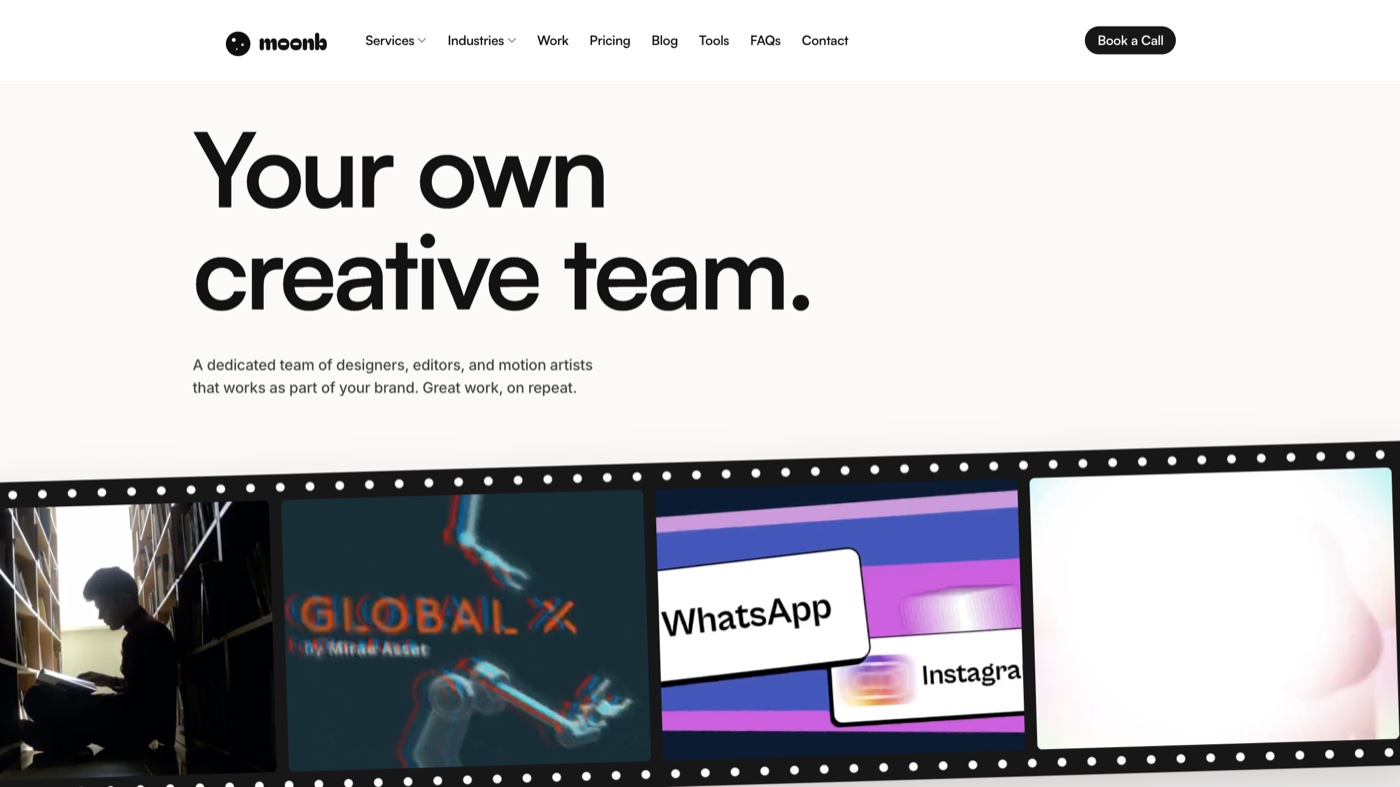
- Best for: brands that want a steady stream of on-brand video and motion, plus the design around it, without hiring an internal studio.
- Clients they name: Dell, Intel, Toyota, Nestle, Microsoft, Refine Labs.
- Model: one set monthly rate, or a per-project quote for a defined piece.
- Why it stands out: the same team carries your brand across every asset, so a brand film, its social cutdowns, and the campaign design all feel like one brand.
- Worth knowing: Moonb does not run its own live-action film crews, so a single big cinematic shoot with location production is better handed to one of the live-action studios below.
More on Moonb
Pricing: one set monthly rate, or a per-project quote.
2. BUCK
BUCK is one of the most awarded creative studios in the world, bringing brands and stories to life through animation, design, and technology, with brand films and full identity systems for the biggest names in tech.
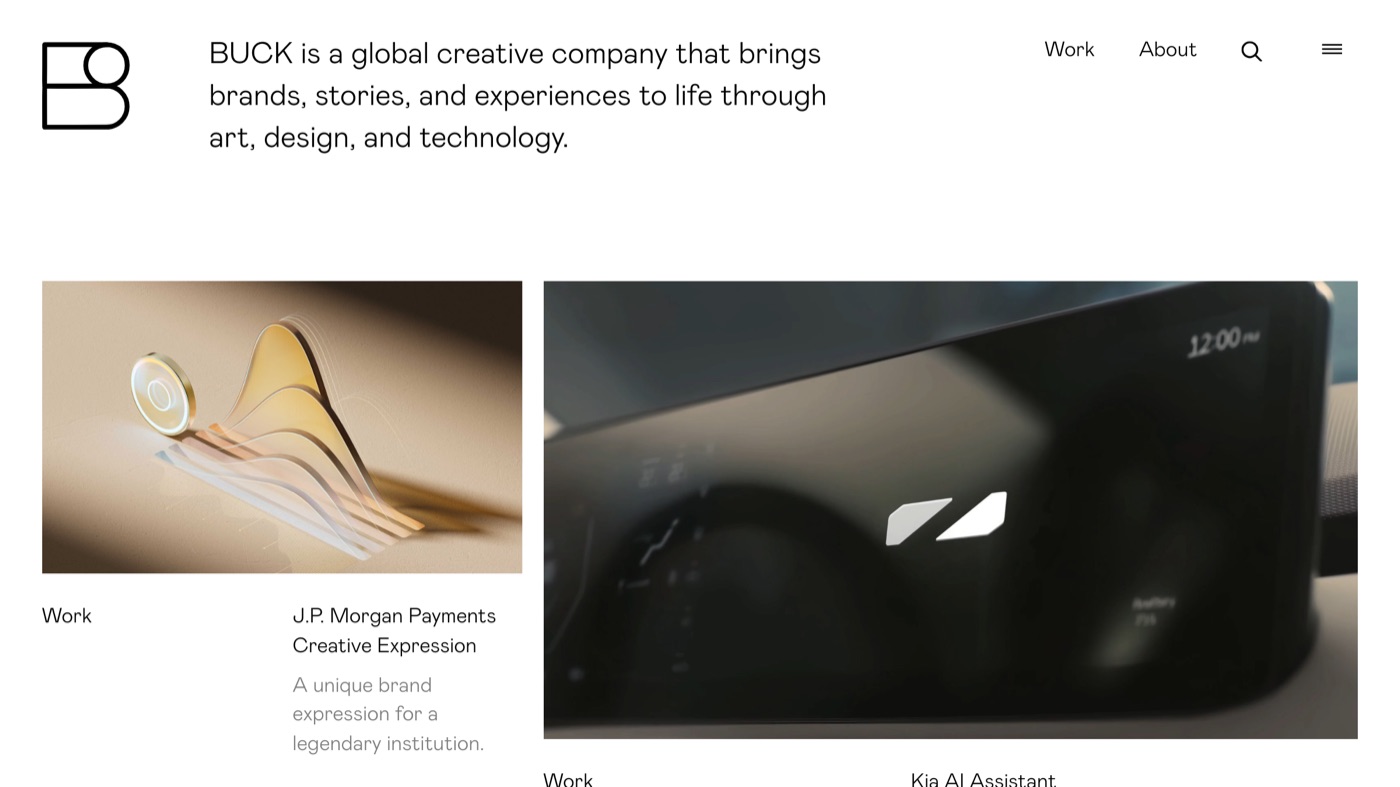
- Best for: enterprise brands that want world-class animation and motion craft on a flagship brand film.
- Clients they name: J.P. Morgan Payments, Kia, Dunkin’.
- Model: project-based studio engagements; pricing not publicly stated.
- Why it stands out: the craft ceiling. BUCK is a global bar-setter for motion and brand-anthem work, trusted by Apple, Google, and Meta.
- Worth knowing: enterprise-tier and animation-forward rather than live-action documentary, so it is out of scope for smaller teams wanting a straightforward filmed brand video.
More on BUCK
Pricing: Not publicly stated; enterprise project engagements.
3. Giant Ant
Giant Ant is a craft-led studio in Vancouver known for emotionally resonant brand storytelling, with a distinctive handmade illustration and animation style and writing strong enough to make an abstract subject feel like something.
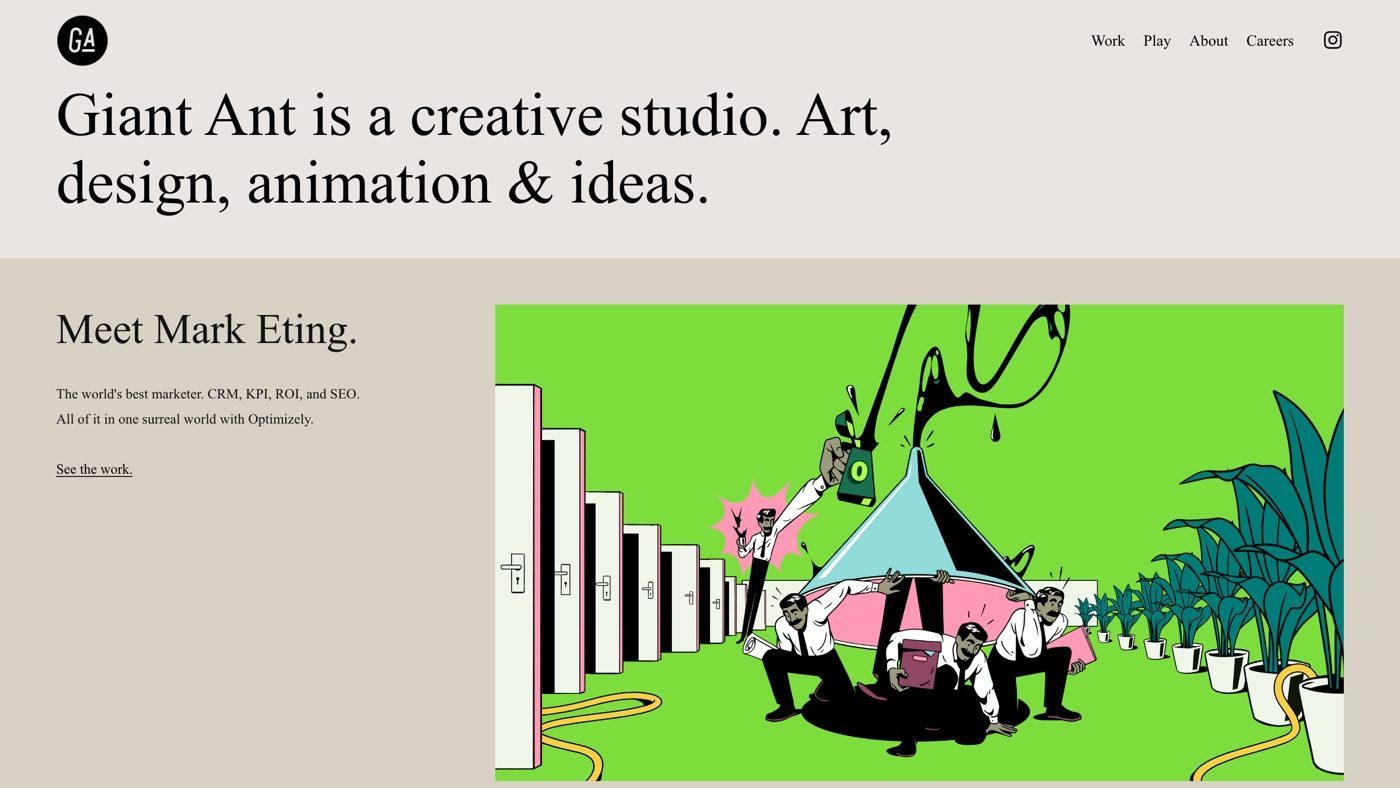
- Best for: brands that want a warm, handcrafted animated film that makes people feel something.
- Clients they name: OpenTable, Duolingo, HoYoverse.
- Model: project-based custom production; pricing not publicly stated.
- Why it stands out: the writing and the handmade style. Giant Ant turns dry or abstract ideas into brand films with real emotion.
- Worth knowing: animation and motion led rather than live-action, and a small premium boutique, so capacity is limited and there is no public pricing.
More on Giant Ant
Pricing: Not publicly stated; premium boutique.
4. Oddfellows
Oddfellows is a Portland studio making elite-craft brand storytelling, led by illustrated and character-driven animation, with brand anthems and hero films for top-tier tech brands.
- Best for: tech brands that want a character-driven animated brand anthem with a high craft ceiling.
- Clients they name: Google, Figma, Netflix.
- Model: project-based studio engagements; pricing not publicly stated.
- Why it stands out: distinctive illustrated animation and motion, with a reel of brand anthems and hero films for the likes of Figma, Netflix, and Discord.
- Worth knowing: animation and motion led, so it is a weaker fit for live-action documentary brand films, and terms are not disclosed publicly.
More on Oddfellows
Pricing: Not publicly stated; project engagements.
5. Sandwich
Sandwich is the studio tech companies call when a brand or launch film has to make a complicated product feel simple, with a reputation built on category-defining films.
- Best for: tech and SaaS brands that want a launch or brand film where the creative is the whole point.
- Clients they name: Slack, Airbnb, Square.
- Model: fixed-fee projects with a productized scope, entry around $50,000 and up into six figures.
- Why it stands out: best-in-class writing and comedic timing that make complex products feel obvious, the hardest thing to buy in brand video.
- Worth knowing: premium and deliberate, with two to four month timelines, so it is not for fast or high-volume work.
More on Sandwich
Pricing: fixed-fee projects from about $50,000.
6. Umault
Umault is a Chicago-area studio that makes bold, concept-driven B2B brand films, the kind meant to break from generic corporate video.
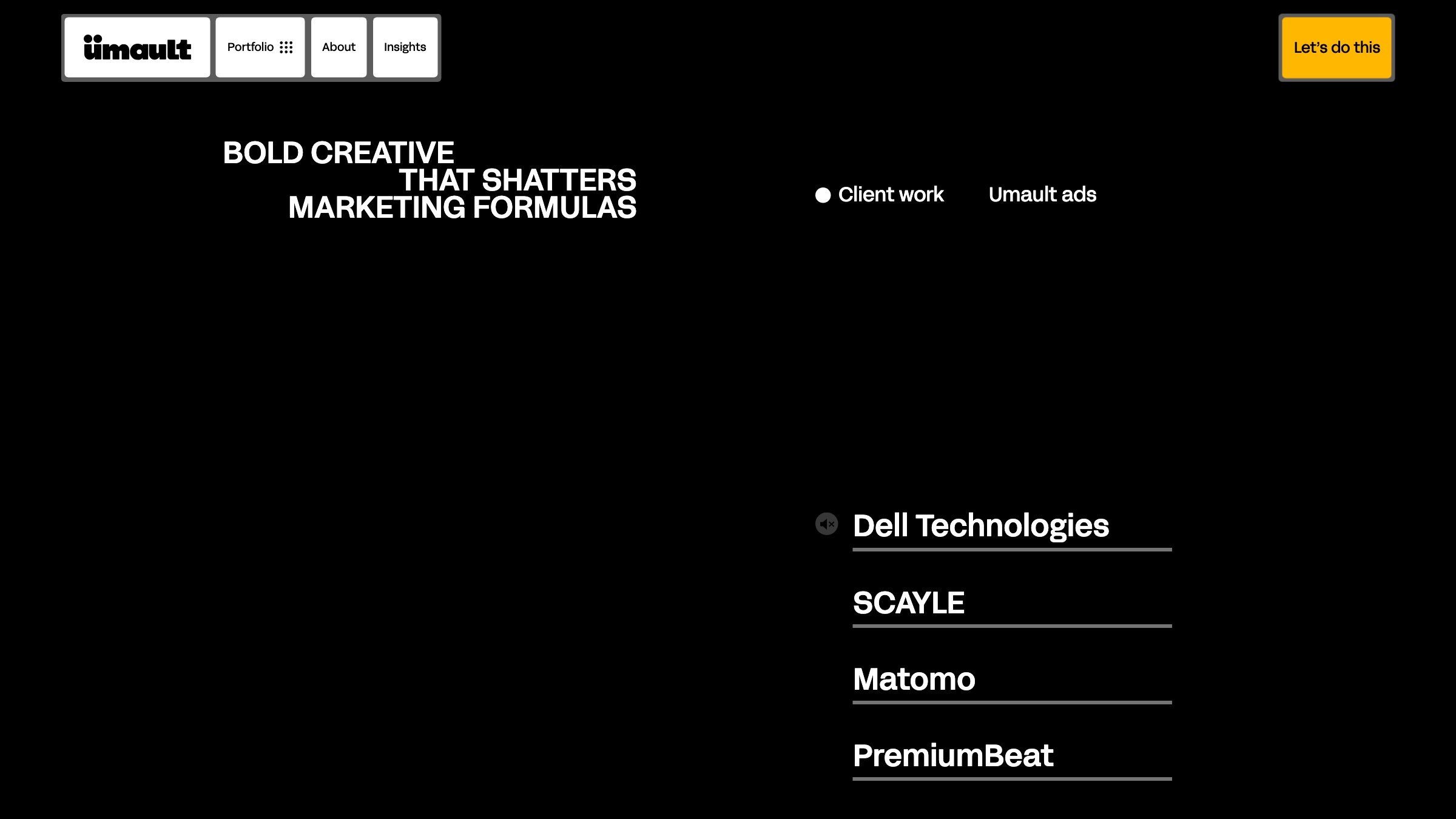
- Best for: flagship B2B brand films that need a strong creative idea, not just clean execution.
- Clients they name: Dell Technologies, SCAYLE, Matomo.
- Model: project-based, custom high-end production.
- Why it stands out: concept-led work, with full-service strategy and production behind it.
- Worth knowing: boutique and premium, built for a few flagship pieces rather than high-volume output.
More on Umault
Pricing: custom, premium project pricing; not published.
7. Covalent
Covalent is a strategy-led studio that pairs live-action brand films and customer stories with in-house animation, so it can go either medium on a brand story.
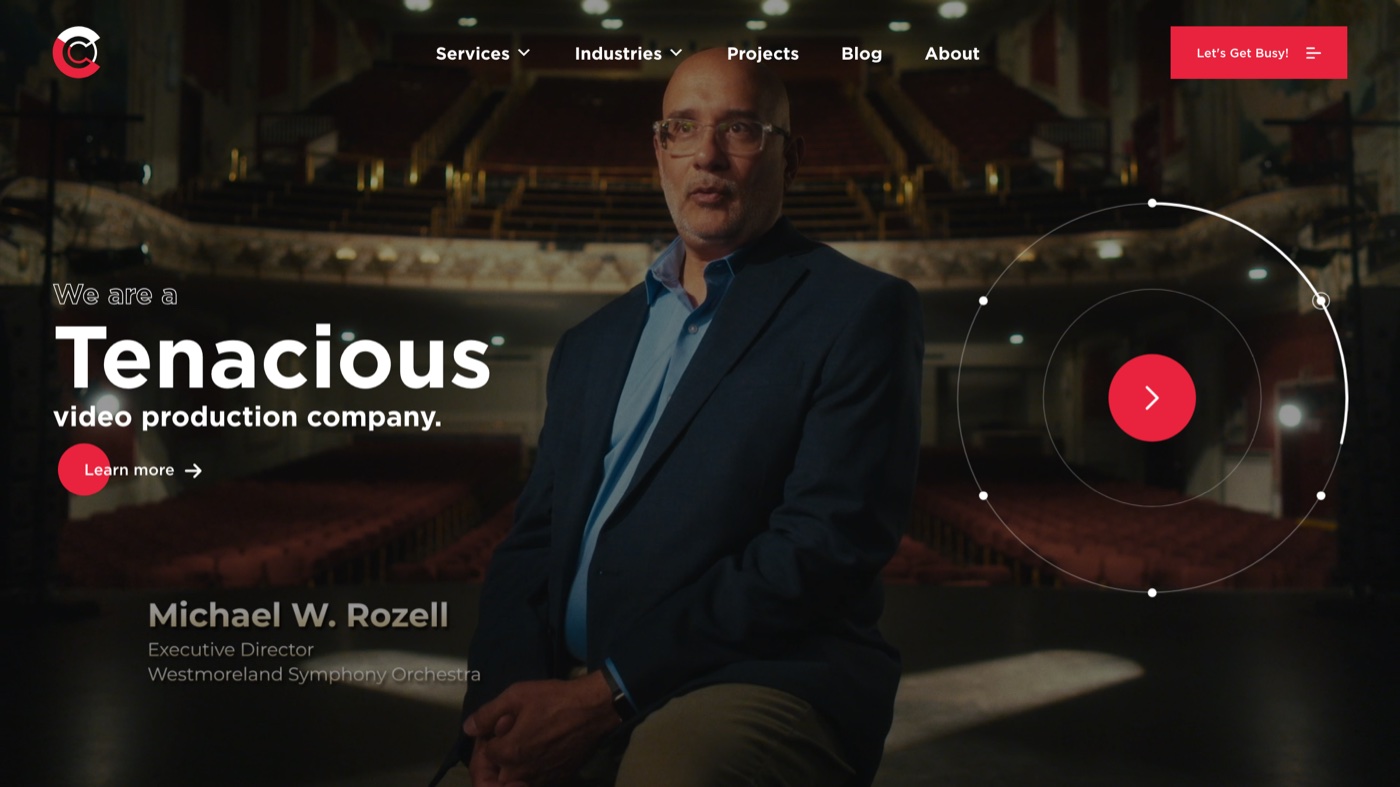
- Best for: brands that want strategy and story first, across both live action and animation.
- Clients they name: GoDaddy, PNC Bank, Rosetta Stone.
- Model: project-based, with a reported $5,000 minimum and most projects between $10,000 and $49,000.
- Why it stands out: a strategy-first approach and real range across filmed and animated brand work, with a high Clutch rating.
- Worth knowing: a small boutique team, so it is not the partner for always-on, high-volume output.
More on Covalent
Pricing: $5,000 minimum; most projects $10,000 to $49,000.
8. Demo Duck
Demo Duck is a Chicago studio that covers custom animation, live action, and mixed media under one roof, which makes it flexible across brand and explainer work.
- Best for: brands that want one studio for both animated and live-action brand pieces.
- Clients they name: Rippling, GEICO, Google.
- Model: project-based, typically starting around $10,000.
- Why it stands out: a decade-plus of premium work with genuine range across formats.
- Worth knowing: custom project work starts near $10,000, so it is not built for tight budgets or high-volume social.
More on Demo Duck
Pricing: custom projects, typically from around $10,000.
9. Vidico
Vidico produces polished brand and product films for tech and SaaS brands, and offers both one-off projects and monthly plans for teams that need a steadier stream.
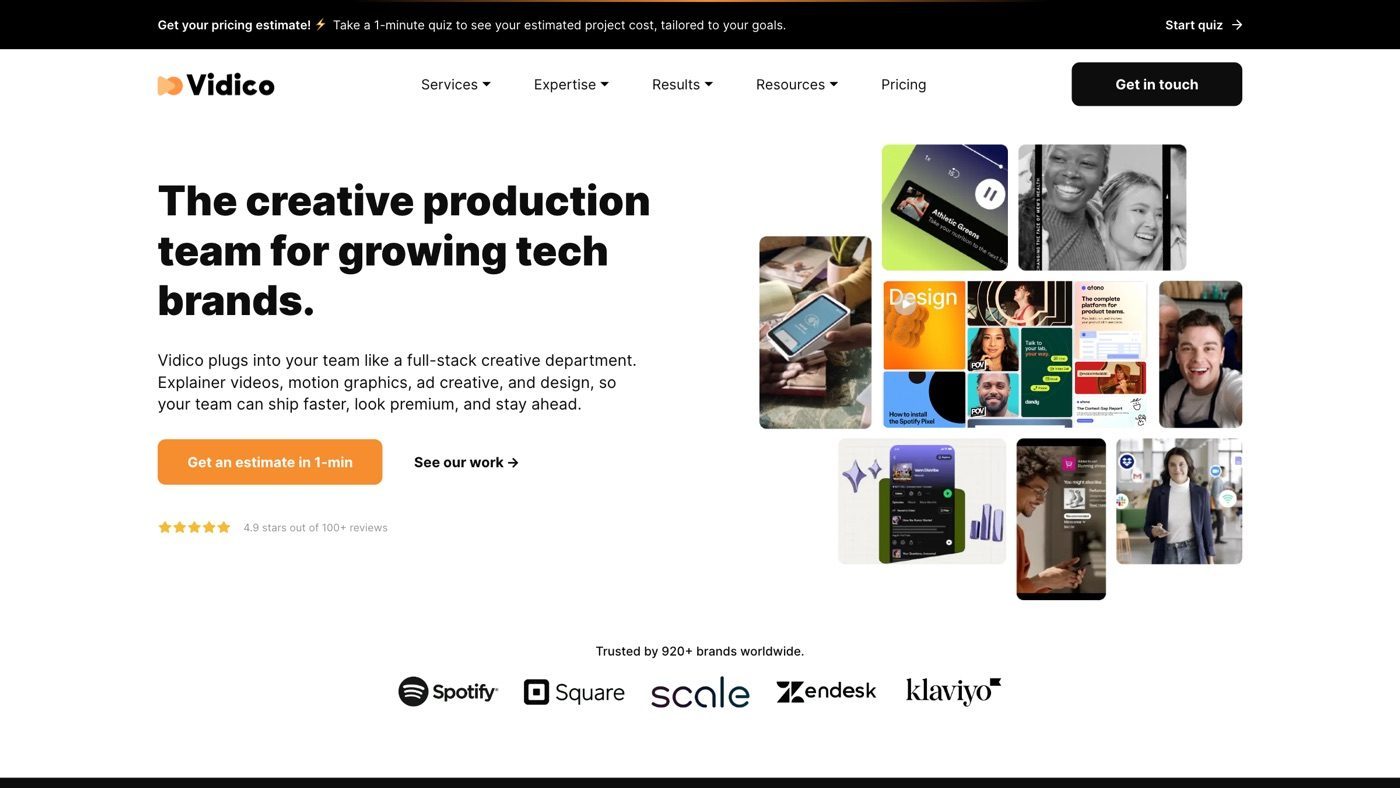
- Best for: growing tech brands that want high-production-value brand and product video.
- Clients they name: Spotify, Square, Zendesk.
- Model: project-based plus monthly plans from around $5,000 a month; projects often $15,000 to $25,000.
- Why it stands out: consistently sharp brand and product storytelling with a clear focus on the tech buyer.
- Worth knowing: premium pricing with a floor near $5,000, so it is not built for small budgets.
More on Vidico
Pricing: projects roughly $15,000 to $25,000+; plans from about $5,000 a month.
10. Bold Content
Bold Content is a London studio with a strong blue-chip track record across brand films, case studies, and employer-brand video, handled by an in-house team.
- Best for: enterprise brands, particularly in the UK and Europe, that want a full-service brand-film partner.
- Clients they name: Google Cloud, Colt Technology Services, Blue Yonder.
- Model: project-based, custom quote, with no public pricing.
- Why it stands out: a deep roster of blue-chip work and a team that covers brand, case-study, and recruitment film end to end.
- Worth knowing: London-based with a bespoke model and no published pricing, so not the fit for a fast, low-cost turnaround or a US-local crew.
More on Bold Content
Pricing: Not publicly stated; custom quote per project.
11. VeracityColab
VeracityColab is a Southern California boutique with a strong enterprise track record in brand films, product-marketing video, and customer stories.
- Best for: enterprise brand and customer-story films from a senior, hands-on team.
- Clients they name: Intuit, simplehuman, BlackLine.
- Model: project-based, custom-quoted, with a reported floor around $10,000.
- Why it stands out: a solid enterprise brand-film portfolio delivered by a small, senior team.
- Worth knowing: the team is small, so it is not the fit for always-on, high-volume production.
More on VeracityColab
Pricing: custom quotes, reported floor around $10,000.
12. Casual Films
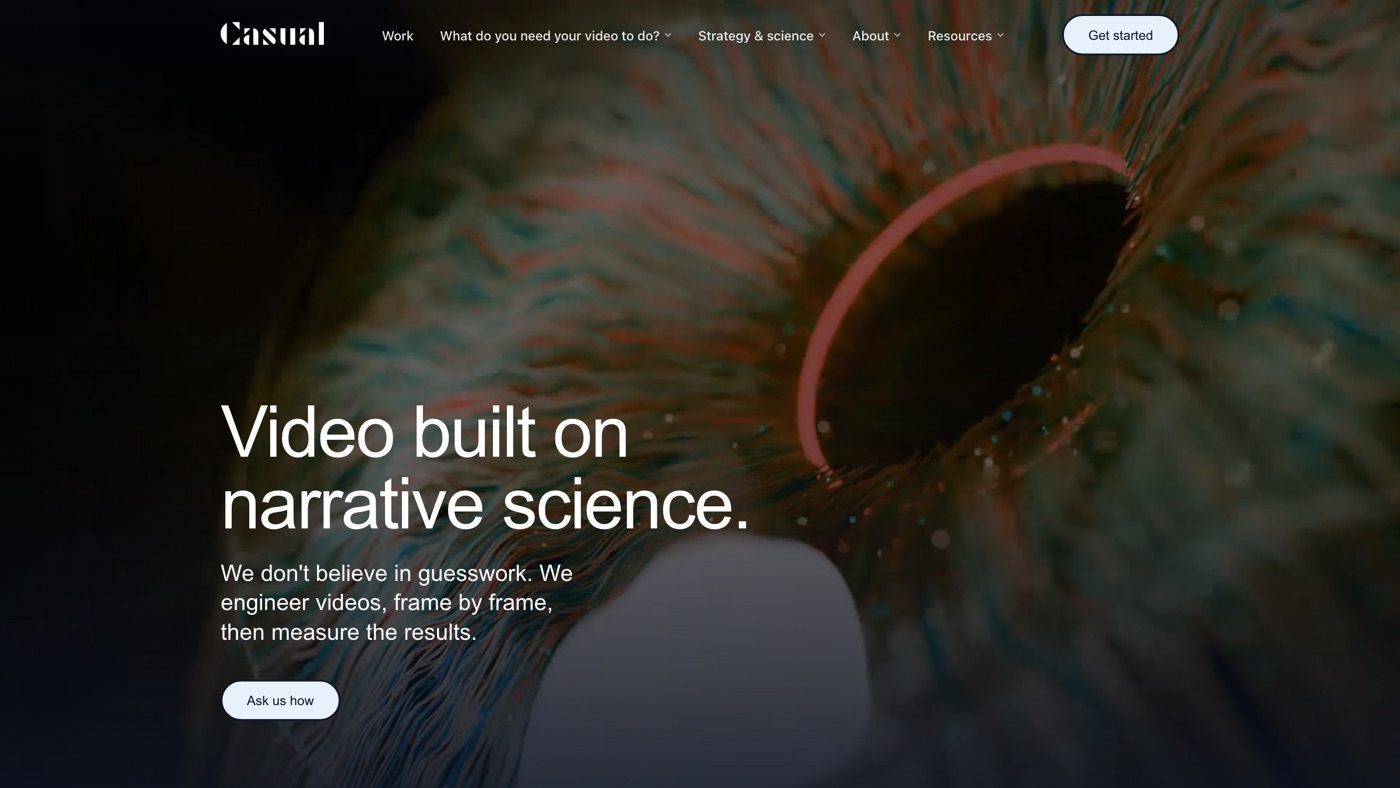
Casual Films is a global brand and corporate video company built for large enterprises, with offices across several countries and a full concept-to-delivery service.
- Best for: enterprise brand and employer-brand film that has to work across regions.
- Clients they name: Google, NBA, HSBC.
- Model: project-based, full-service, with projects commonly starting around $10,000 into six figures.
- Why it stands out: enterprise-grade production at global scale, with a footprint that covers shoots in multiple markets.
- Worth knowing: built for large marketing teams and budgets, so smaller brands will find it heavy.
More on Casual Films
Pricing: projects commonly from around $10,000 into six figures.
Every studio, side by side
| Studio | Best for | Medium | Pricing signal |
|---|---|---|---|
| Moonb | Ongoing brand video + motion without hiring | Motion, design, editing | Set monthly rate or quote |
| BUCK | Flagship enterprise brand anthems | Animation, motion | Not stated, enterprise |
| Giant Ant | Handcrafted, emotional animated films | Animation | Not stated, premium |
| Oddfellows | Character-driven brand anthems | Animation, motion | Not stated |
| Sandwich | Top-craft tech launch and brand films | Live action, mixed | From ~$50k |
| Umault | Bold, concept-driven B2B brand films | Live action, concept | Custom, premium |
| Covalent | Strategy-led film and animation | Live action + animation | $5k min; most $10k to $49k |
| Demo Duck | Animation and live action in one studio | Both | From ~$10k |
| Vidico | Polished tech brand and product films | Mixed, motion-forward | ~$15k to $25k+; plans ~$5k/mo |
| Bold Content | Blue-chip brand film, UK and Europe | Live action | Not stated, custom |
| VeracityColab | Enterprise brand and customer-story film | Live action | Custom, floor ~$10k |
| Casual Films | Global enterprise brand and employer film | Live action | From ~$10k |
So which one is right for you
If your brand story is abstract or product-led and you want it to feel handmade, the animation houses are the pick: BUCK, Giant Ant, and Oddfellows sit at the top of that craft. If you want a filmed brand story with a strong idea, Sandwich, Umault, and VeracityColab are built for it, and Covalent and Demo Duck can go either way. If the film has to ship across regions with enterprise governance, Casual Films and Bold Content are made for that. And if the real need is a steady stream of brand video and the design around it rather than one flagship film, an embedded team like ours will serve you better than paying a project studio for every asset.
Whichever you shortlist, judge the taste, not the reel. Watch a full brand film from each, ask what they chose to leave out, and hire the studio whose judgment you would trust with your brand.
Frequently asked questions
It moves with craft tier and medium more than length. A boutique studio starts a brand film around $10,000, mid-market live-action and animated pieces commonly run $15,000 to $50,000, and a flagship film from a top studio or a global shop like Casual Films climbs into six figures. The award-winning animation houses (BUCK, Giant Ant, Oddfellows) rarely publish pricing at all and quote enterprise budgets. If you need a steady stream of brand video rather than one film, a monthly plan or an embedded team is usually cheaper per asset than buying each one at project rates.
Match the medium to the story. An abstract idea, a software product, or a values-led brand anthem often lands harder as animation, which is why BUCK, Giant Ant, and Oddfellows built their names there. A founder story, real customers, or a physical product usually wants a camera, which is where Sandwich, Umault, and VeracityColab sit. A few studios, like Covalent and Demo Duck, do both in-house, which helps if you are not sure yet. Decide the medium before you shortlist, or you will fall for a beautiful reel in the wrong format.
Watch a full brand film from each one, not the sizzle reel, and ask what they chose to leave out. The reel proves they can frame a shot; a finished film shows whether they can hold one idea for ninety seconds and land an ending. Check that they name real clients on their own site, listen for clean sound on laptop speakers, and notice whether the style carries meaning or just decorates the script. Taste is the thing you are hiring, and it shows up in the whole film, never in the highlights.