13 Tools to Add Text to Images in 2026
Thirteen tools to add text, captions, bubbles, and watermarks to images in 2026, compared on fonts, effects, export quality, price, and where each one falls short.

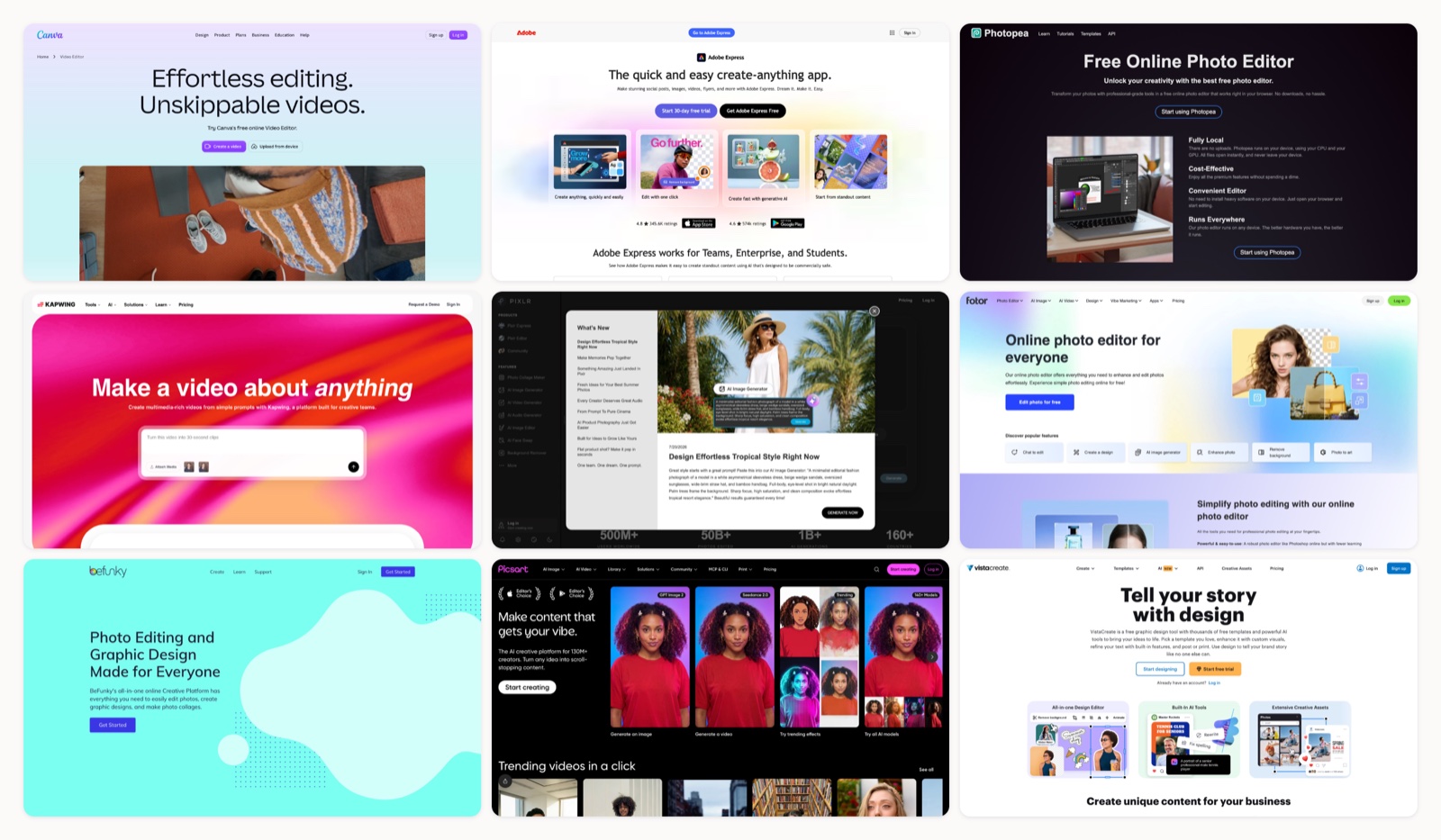
Adding a headline, a caption, or a watermark to an image used to mean opening Photoshop and waiting for it to load. Now most of it happens in a browser tab in under a minute. I picked the tools I actually reach for across those jobs, and I note where each one slows you down. The real work is picking the tool that fits the job, because a meme caption, a branded quote card, and a product mockup each want different things from an editor.
If you only need to drop text or a logo onto one image right now, Moonb’s watermark tool does it in the browser, and nothing gets uploaded to a server, while our guide to animate text online covers the moving-caption case. For everything more involved, here are thirteen tools worth knowing, tested against the questions that actually matter: font control, text effects, export quality, price, and where each one runs out of road. Readers judge an image before they read a word of it (Nielsen Norman Group), so the tools that keep your caption clear and on brand earn their place. If the text is headed for social feeds, it helps to set a few rules first (see our notes on social media best practices).
1. Canva
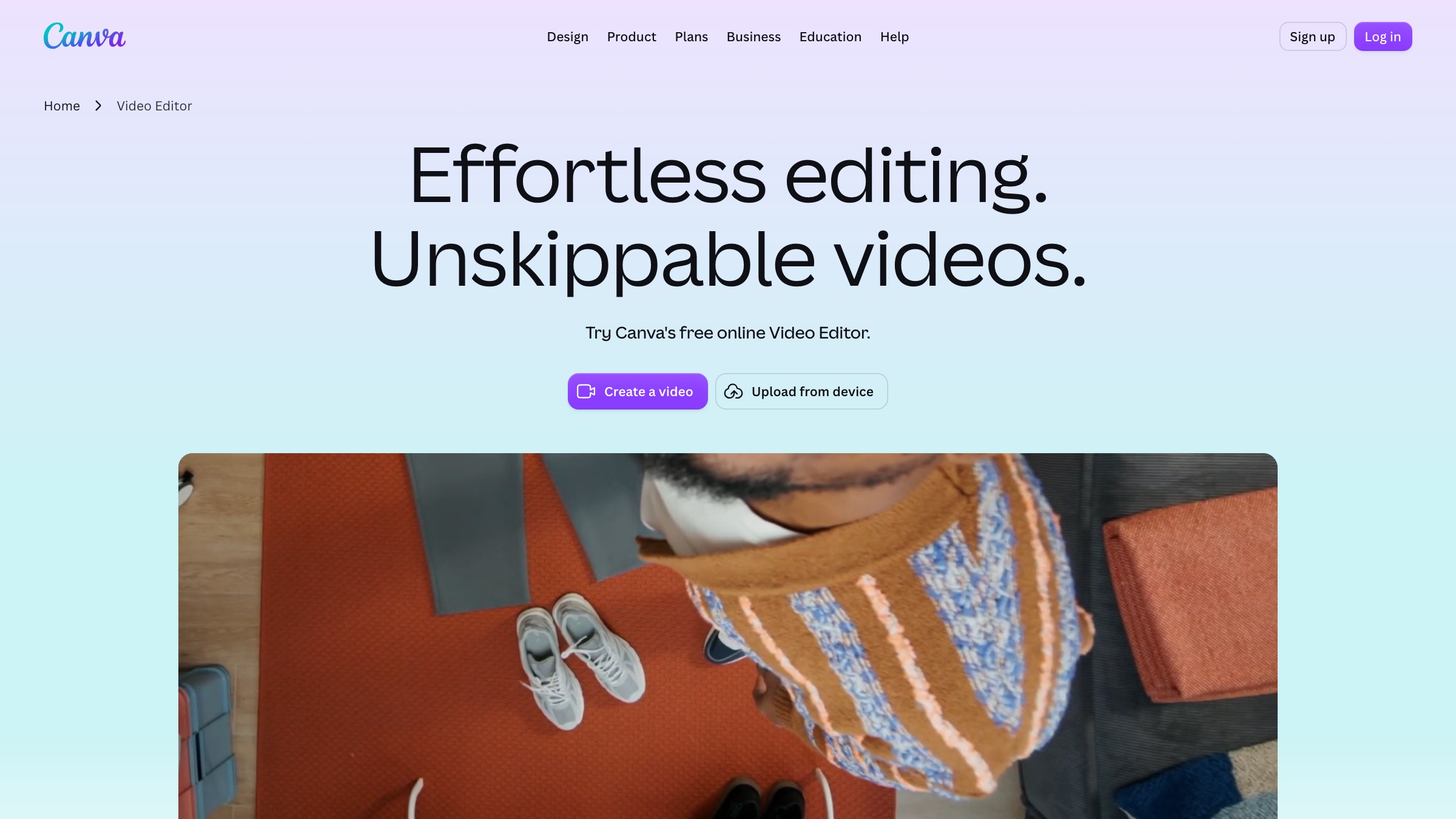
- Best for: Teams that want templates, brand controls, and a huge font list without opening a design app.
- Pricing: A strong free tier; Canva Pro runs $15 per month.
- Why it stands out: Drop a text box on any photo, then reach for curve, shadow, or a highlight background. Filling letters with a photo (the image-in-text mask) takes a couple of clicks. Brand Kit pins your fonts and colors so a whole team stays consistent, which is the same discipline behind good brand guidelines.
- Worth knowing: The nicest fonts, the background remover, and Magic effects sit behind Pro, and the editor feels heavy when all you want is one line of text.
2. Adobe Express
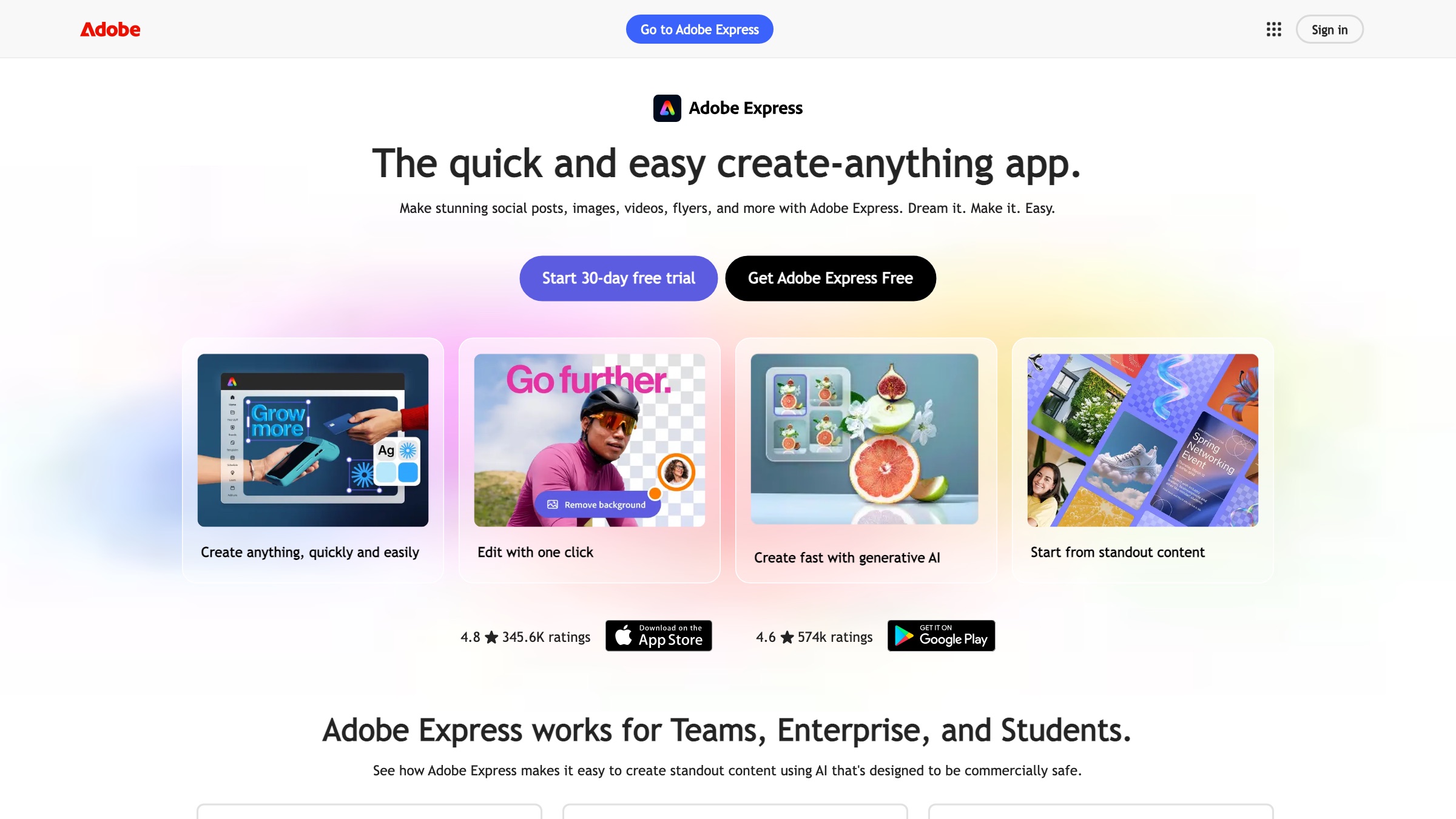
- Best for: Marketers who want Adobe-grade type and polish without launching Photoshop.
- Pricing: Free tier; Premium is $9.99 per month.
- Why it stands out: The Text on Photo action walks you from upload to a styled caption, and thousands of Adobe Fonts are open on the free tier, which is rare at this level. One-click effects and simple animations need no design background, and Quick Resize spits out platform-sized versions in seconds.
- Worth knowing: You need an Adobe account, and a good share of the best templates and effects are Premium only.
3. Photopea
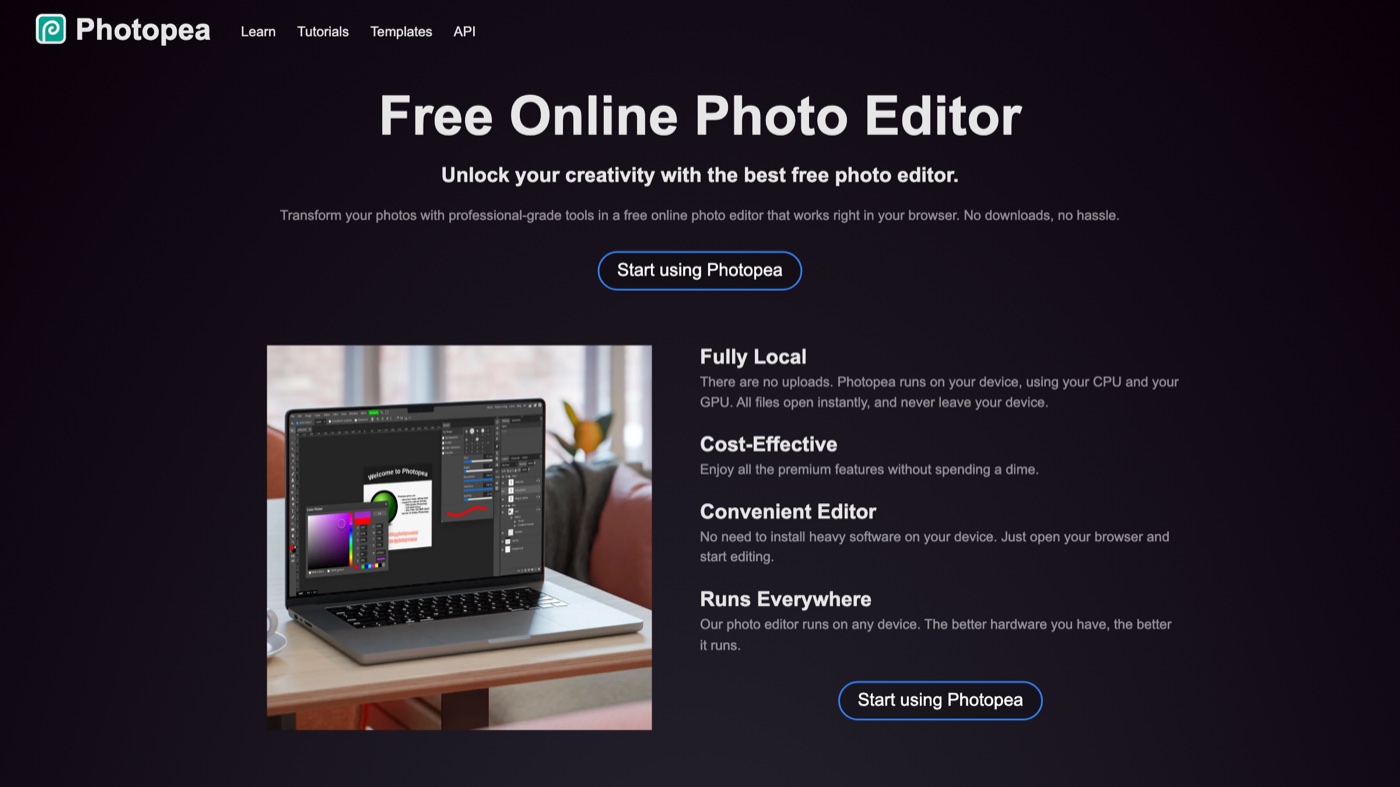
- Best for: Anyone who misses Photoshop’s type and layer controls but wants to stay in a browser tab.
- Pricing: Free with ads; Premium is about $5 per month.
- Why it stands out: It reads and writes PSD and AI files, so a text layer you set here keeps its stroke, shadow, gradient, and blend mode when it lands in a real design pipeline. You can run type along a path, warp it, or mask it, and there is no signup to start.
- Worth knowing: The interface assumes you already know a pro editor, so a first-timer will hunt for the type tool, and ads sit in the free version.
4. Kapwing
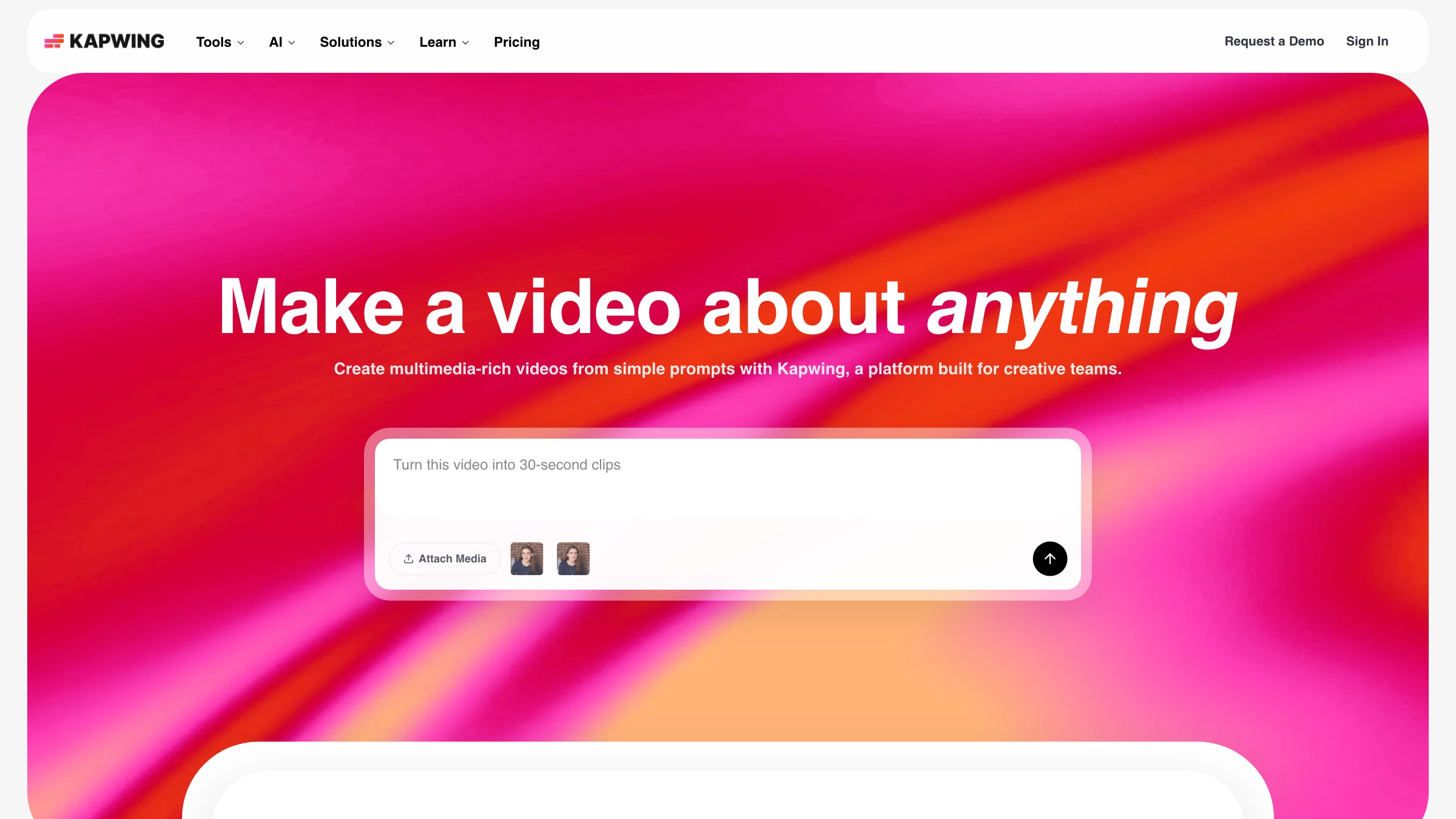
- Best for: People adding text to images, GIFs, and video in the same sitting.
- Pricing: Free with a watermark; Pro is $24 per month ($16 a month on yearly billing).
- Why it stands out: One studio covers a static caption, an animated meme, and a burned-in subtitle. Outlines, shadows, custom fonts, and text animation are all present, and you can pull media in by pasting a link. It is a fast way to caption YouTube thumbnails and reaction clips.
- Worth knowing: Free exports carry a watermark and resolution caps, and the workspace leans video-first, so plain image jobs come with extra clutter around them.
5. Pixlr
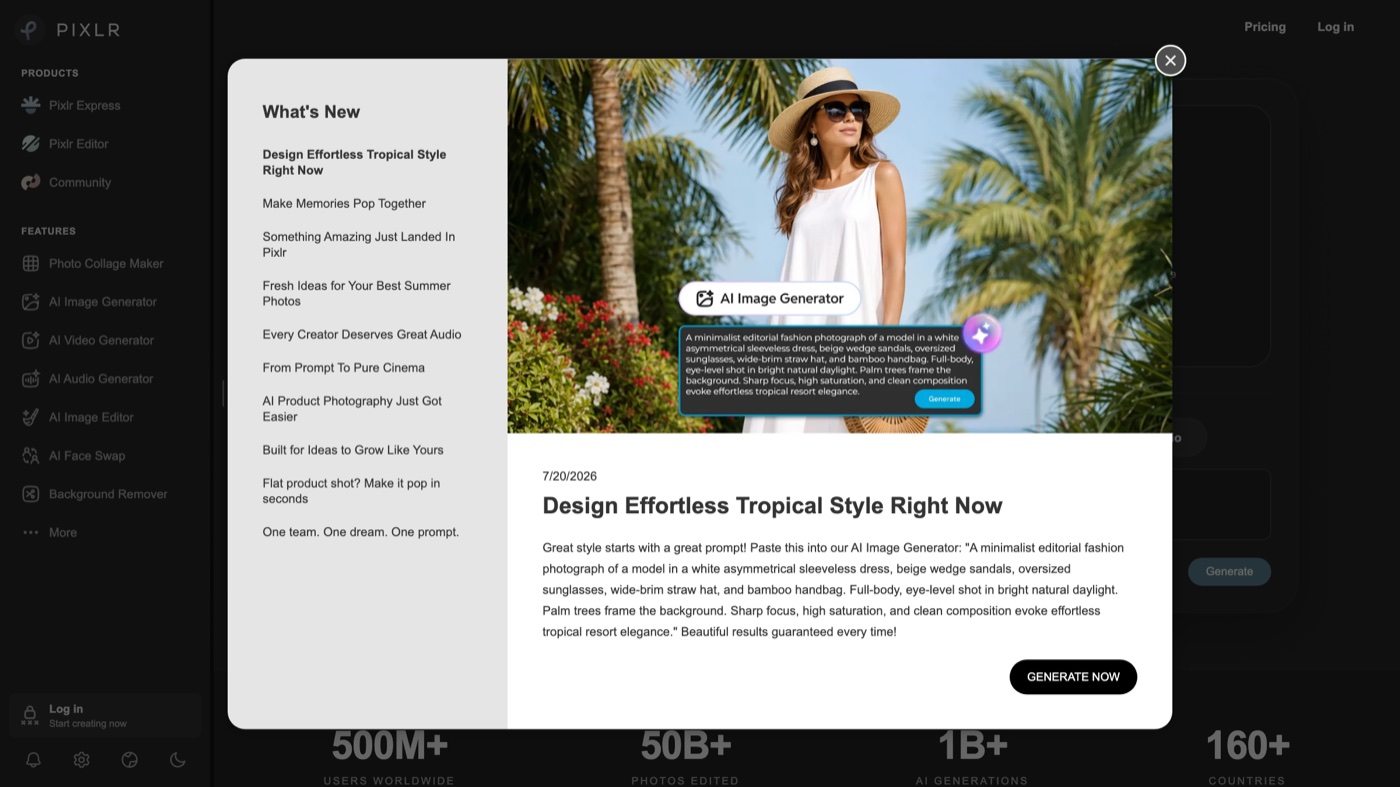
- Best for: Quick browser edits where you want an actual editor with layers, not a template gallery.
- Pricing: Free with ads; Plus starts at $2.49 per month, Premium at $9.99.
- Why it stands out: Pixlr X handles quick, playful edits and Pixlr E adds layer control. Both let you style text in seconds, and extras like one-click background removal and generative fill are uncommon at this level. Nothing to install.
- Worth knowing: The free tier shows ads and meters its AI actions with daily credits, and its typography is lighter than a dedicated design suite.
6. Fotor
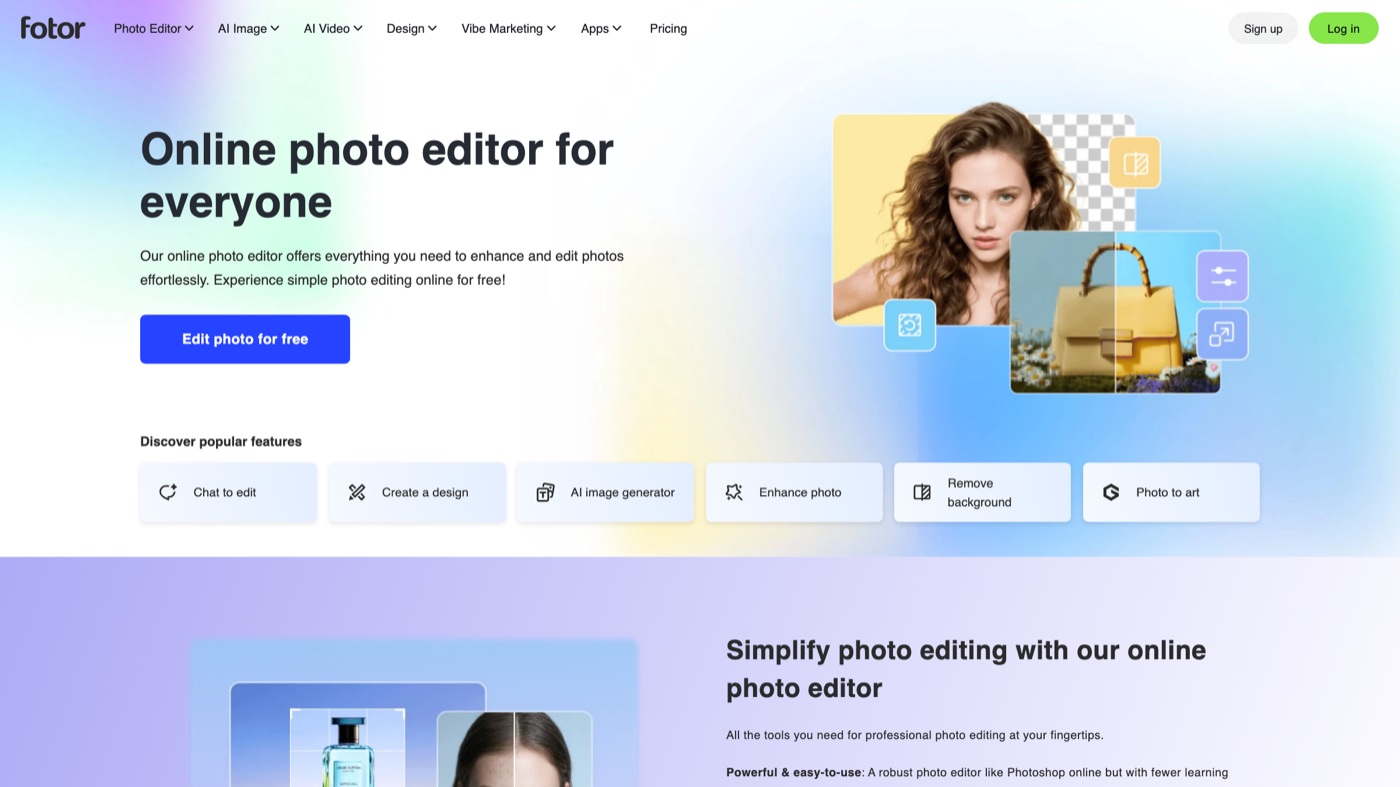
- Best for: Casual editors who want curved text and presets without a learning curve.
- Pricing: Free with limits; Pro is $8.99 per month.
- Why it stands out: The Add Text to Photo flow is simple, with curved text and a preset library many quick editors skip. Batch text and watermarking on the paid tiers help once you have forty images to caption at once.
- Worth knowing: The free version stamps a watermark on exports and keeps batch processing behind the paywall.
7. BeFunky
- Best for: Beginners who want text effects plus help docs that actually explain them.
- Pricing: Free with ads; Plus is $6.99 per month on yearly billing (about $11.99 month to month).
- Why it stands out: Curved text, outlines, and highlight styles live right in the editor, and you can start with no account. A collage maker and a full set of photo tools sit alongside, so it works as a general editor too.
- Worth knowing: The strongest effects and premium templates are Plus only, and the free view carries on-site ads.
8. Picsart
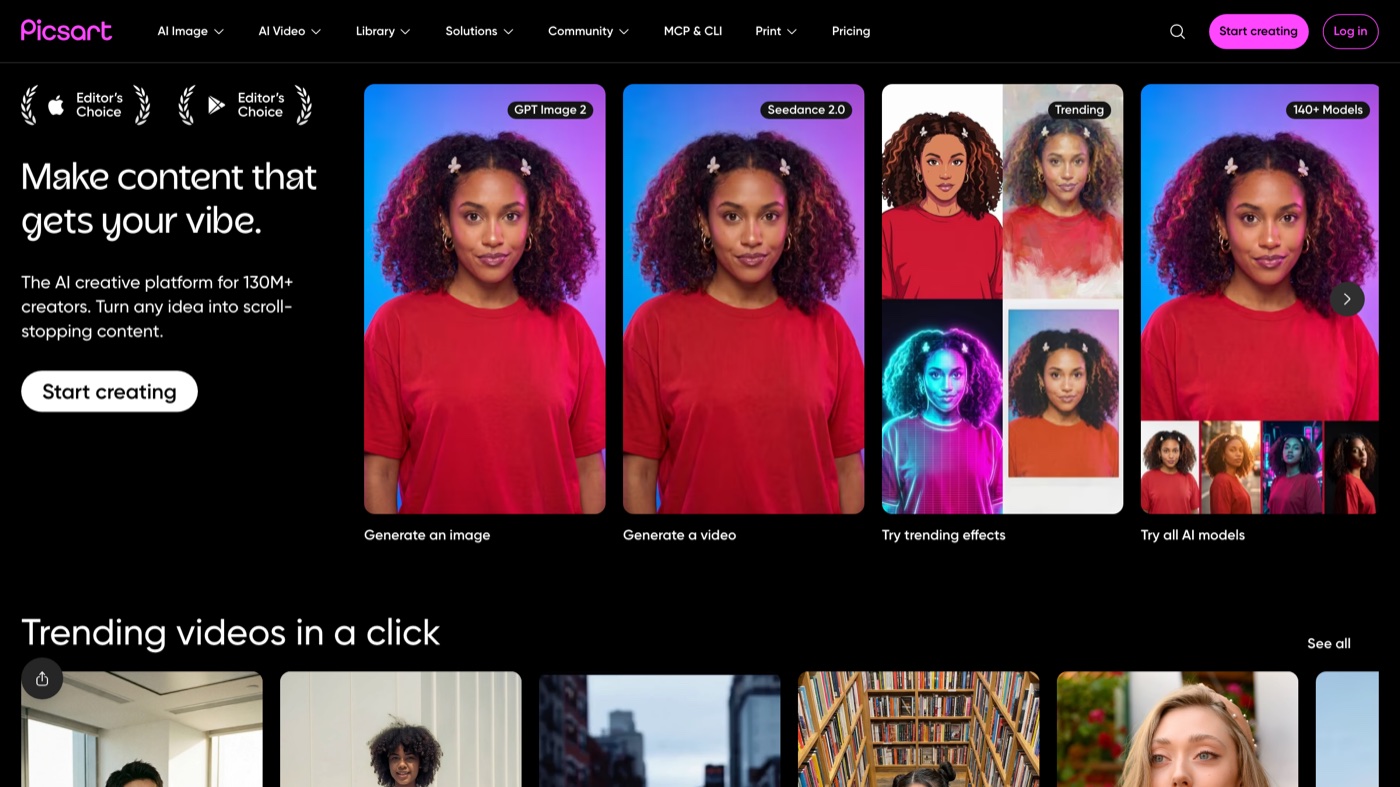
- Best for: A no-signup caption in seconds, or a deep mobile-and-web editor when the job grows.
- Pricing: The Quicktools are free; Plus is $5 per month on yearly billing ($15 month to month).
- Why it stands out: The Quicktools Add Text to Photo utility skips accounts entirely: upload, type, download. Step up to the full editor and you get a large library of fonts, stickers, and templates for heavier work.
- Worth knowing: The full app can overwhelm a newcomer, and many of the best fonts and AI features want a paid tier.
9. VistaCreate
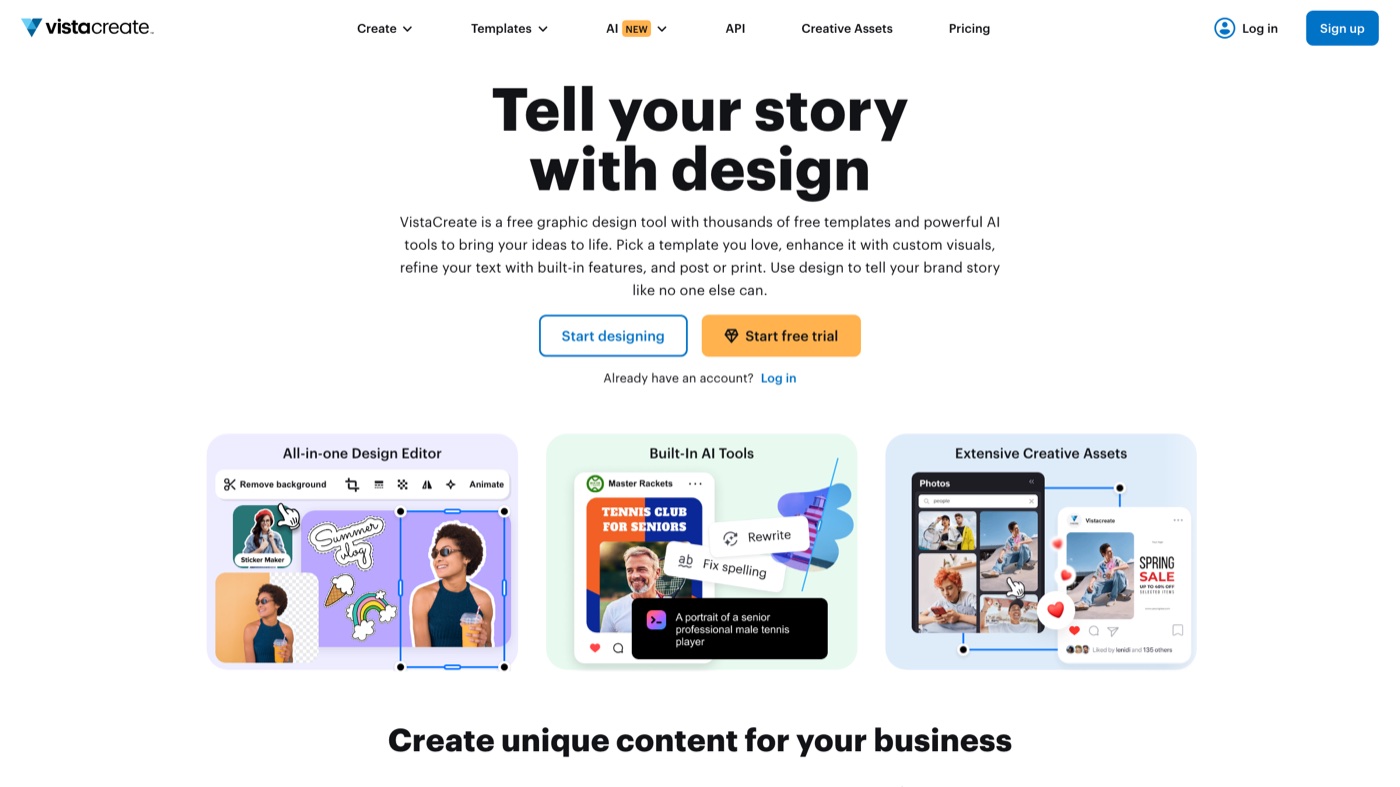
- Best for: Non-designers who want real typography and photo-in-text masking.
- Pricing: Free tier; Pro is $10 per month on yearly billing ($13 month to month).
- Why it stands out: Outlines, shadows, and curved text come standard, and the photo-text mask fills letters with an image for a poster-grade result. More than 680 fonts and dozens of ready-made text styles carry the load.
- Worth knowing: Brand kits and the full asset library are Pro only, and living in Canva’s shadow means a smaller template pool.
10. OverlayText
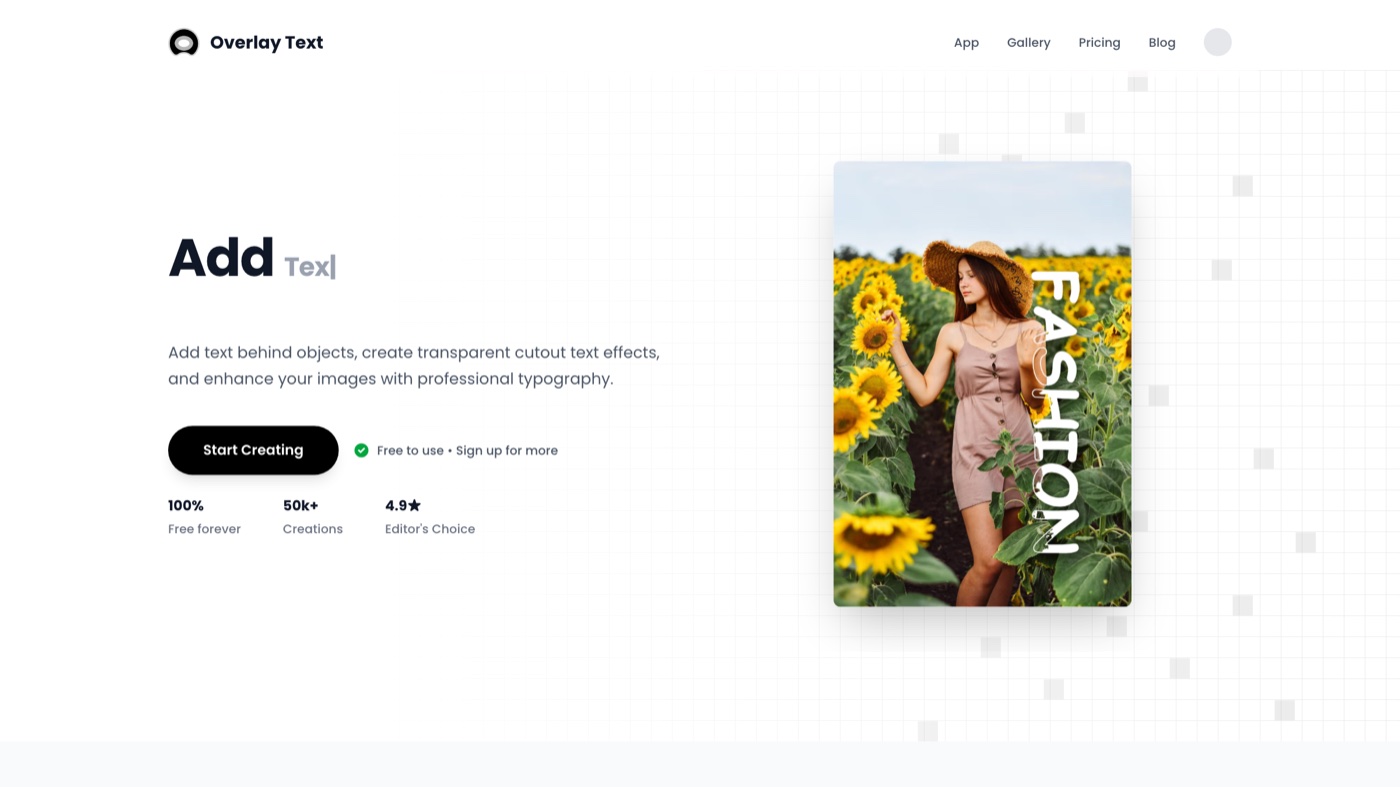
- Best for: The text-behind-the-subject look borrowed from magazine covers and year-end music recaps.
- Pricing: Free at 720px exports; Pro removes the watermark and unlocks full resolution.
- Why it stands out: It runs three modes: a standard overlay, text behind objects (AI cuts the subject so the words sit behind them), and knockout text that shows the photo through the letters. Subject detection finishes in roughly twenty seconds.
- Worth knowing: The free tier caps exports at 720px and adds a watermark, so anything print-bound needs the paid tier.
11. Watermarkly
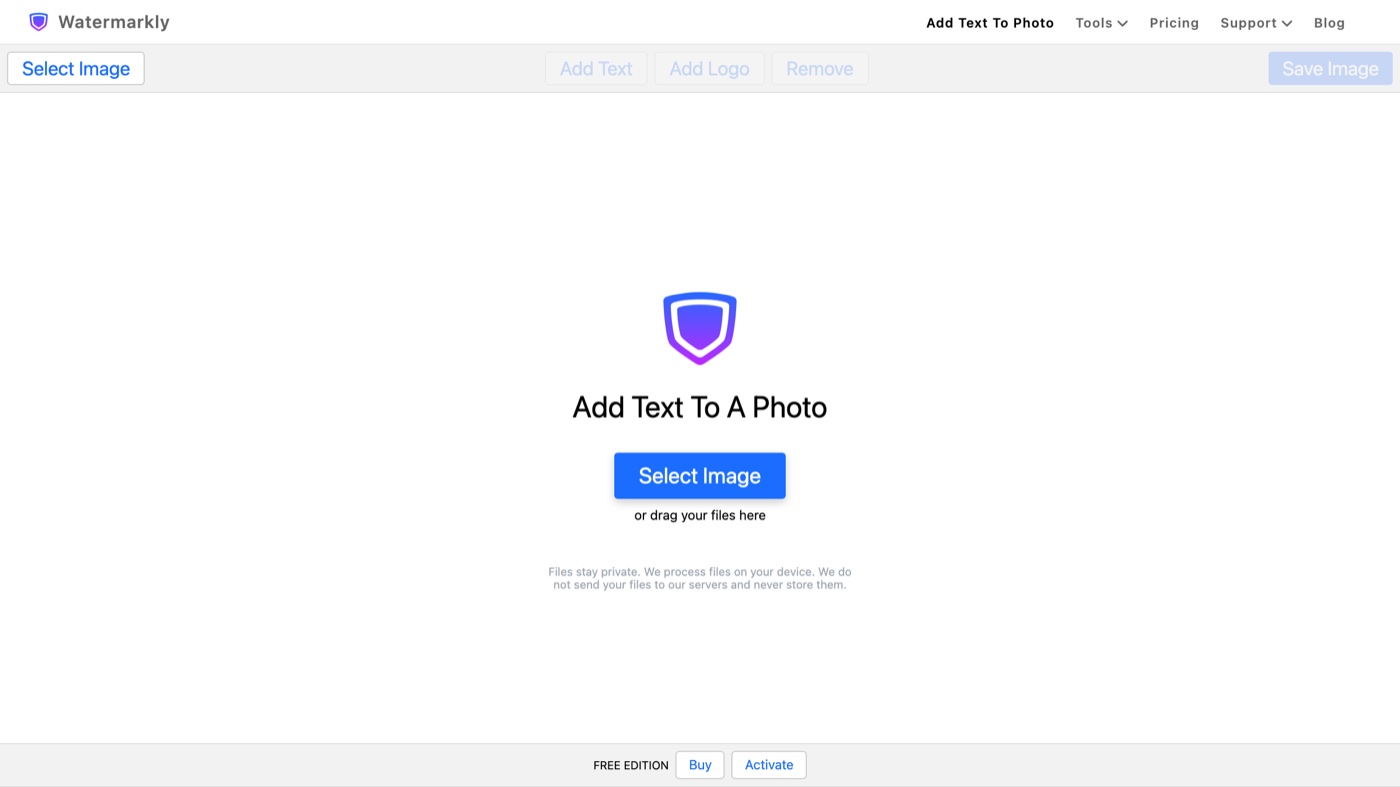
- Best for: A quick caption or logo watermark with no account and no server upload.
- Pricing: Free for up to 5 photos a day; paid tiers add fonts and higher limits.
- Why it stands out: No signup, and files are processed on your own device instead of being uploaded, which matters for anything sensitive. Even the free view offers shadows, 3D text, and contrasting text backgrounds, plus logo upload with background removal.
- Worth knowing: The free version handles five photos a day, one at a time, and opens with a short font list (the full 900-plus set is paid).
12. iLoveIMG
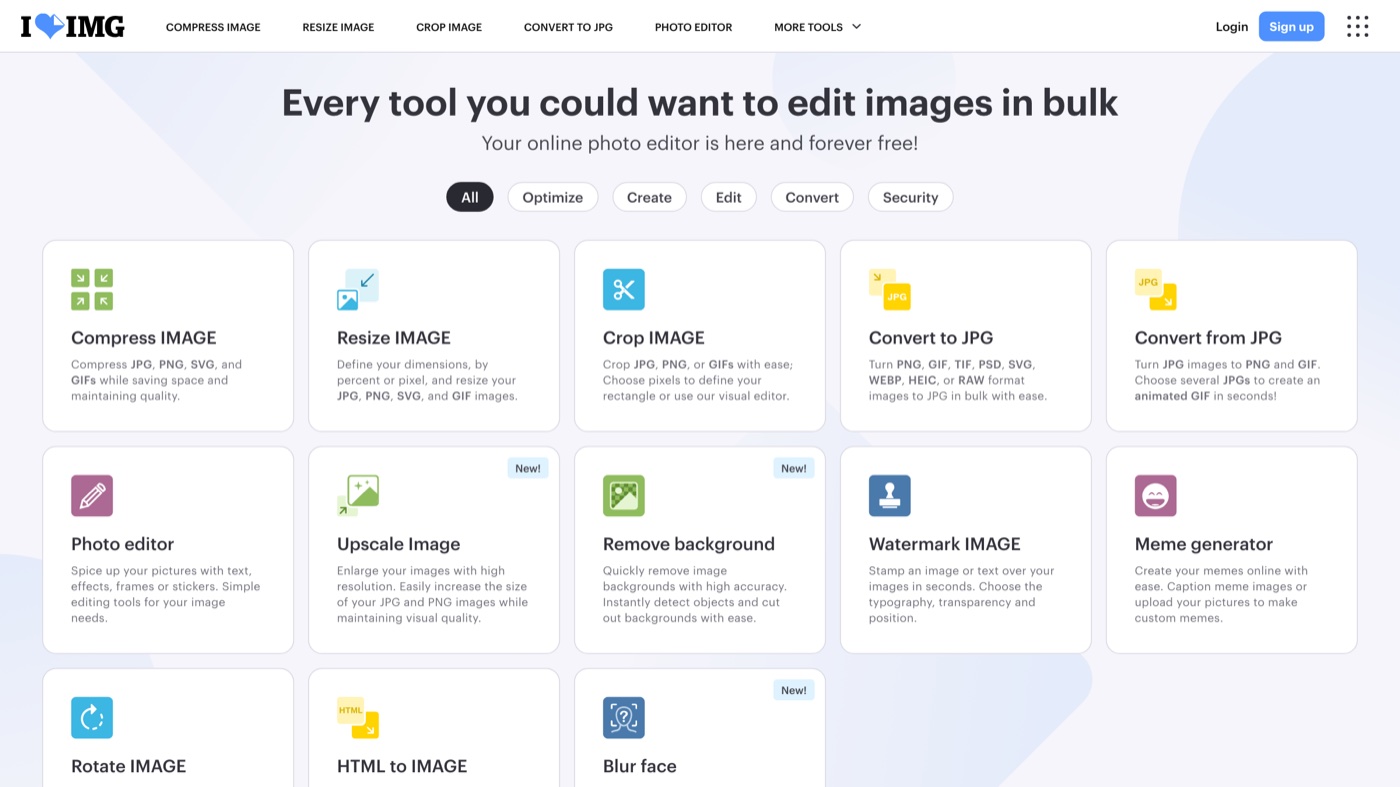
- Best for: One-off captions folded into resize, compress, and watermark in a single pass.
- Pricing: Free with limits; Premium starts around $4 per month on yearly billing.
- Why it stands out: The Add Text tool is spare and quick, sitting next to a shelf of image utilities, so you can caption, then compress, then export for the web without changing sites. An API covers high-volume automation.
- Worth knowing: Design options are thin (few fonts, minimal effects), and the free editor caps files at 50 MB.
13. SpeechBubble Studio
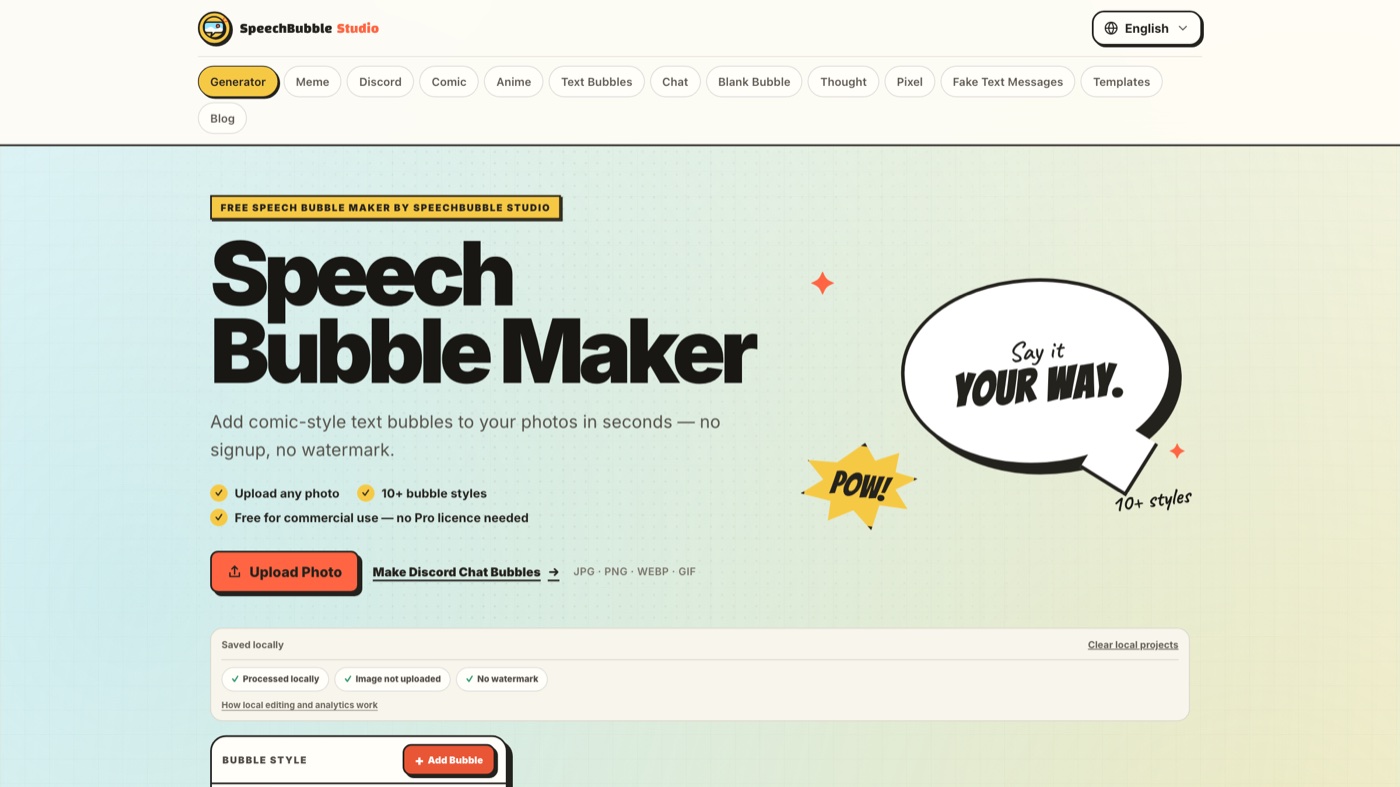
- Best for: Dropping a speech, thought, shout, or pixel bubble onto a photo without opening a full design app.
- Pricing: Free, with no signup and no watermark.
- Why it stands out: It does one job and does it fast. Load your image, place a bubble, type the line, drag the tail to the speaker, export. Eleven bubble styles cover classic dialogue, thought clouds, shout bursts, manga, pixel, and chat-style boxes, and everything runs in the browser so the photo never leaves your machine. Exports come out as PNG, JPG, WebP, or a single-frame GIF, and PNG and WebP keep a transparent canvas for layering over other work.
- Worth knowing: Still images only, so the GIF export is one frame rather than an animation, and it does not cut the background out of a photo. Lining up the tail is easier on a desktop than on a phone.
Making the text actually readable
Every tool here lets you place text. None of them promise anyone can read it. Set type over a busy photo and the words vanish into the picture. The fix is contrast: drop a shadow, sit the caption on a semi-transparent band, or darken the image a notch behind it. The Web Accessibility Initiative publishes minimum contrast ratios worth hitting, and WebAIM runs a checker that tells you in a second whether your caption passes. Keep the line short, because a reader scans an image long before deciding to read it.
| # | Tool | Best for | Pricing | Limitation |
|---|---|---|---|---|
| 1 | Canva | Template-driven social graphics with a big font library | Free tier; Pro $15/mo | Best fonts and Magic effects are Pro-only, and the editor feels heavy for a single caption |
| 2 | Adobe Express | Marketers who want Adobe typography without Photoshop | Free; Premium $9.99/mo | Requires an Adobe account, and many premium templates and effects are gated |
| 3 | Photopea | Layer-level type control in the browser | Free (ads); Premium ~$5/mo | Assumes you already know a pro editor; steeper for beginners, and ads in the free version |
| 4 | Kapwing | Text on images, GIFs, and video in one studio | Free (watermark); Pro $24/mo | Free exports carry a watermark and resolution caps, and the UI leans video-first |
| 5 | Pixlr | Fast browser edits with layers | Free (ads); Plus $2.49/mo | Free tier shows ads and meters AI with daily credits; lighter typography than a design suite |
| 6 | Fotor | Simple curved text and presets | Free; Pro $8.99/mo | Free version stamps a watermark on exports and locks batch processing behind the paywall |
| 7 | BeFunky | Beginners wanting text effects with clear help docs | Free (ads); Plus $6.99/mo yearly | Strongest effects and premium templates are Plus-only, and the free view carries ads |
| 8 | Picsart | No-signup quick captions or a deep full editor | Quicktools free; Plus $5/mo yearly | Full app can overwhelm newcomers, and many best fonts and AI features need a paid tier |
| 9 | VistaCreate | Non-designers wanting typography and text masking | Free; Pro $10/mo yearly | Brand kits and the full asset library are Pro-only, and the template pool is smaller than Canva's |
| 10 | OverlayText | The text-behind-the-subject and knockout look | Free (720px); Pro for full-res | Free tier caps exports at 720px and adds a watermark, so print work needs the paid tier |
| 11 | Watermarkly | No-account caption or logo watermark, processed on-device | Free (5/day); paid for more | Free version handles five photos a day, one at a time, with a short font list (900-plus is paid) |
| 12 | iLoveIMG | One-off captions inside a resize/compress/watermark pass | Free; Premium ~$4/mo yearly | Thin design options (few fonts, minimal effects) and a 50 MB file cap on the free editor |
| 13 | SpeechBubble Studio | Speech, thought, and shout bubbles dropped onto a photo | Free; no signup or watermark | Still images only (single-frame GIF, no animation), no background removal, and tail placement is fiddly on a phone |
When a tool stops being the answer
A text tool fits when the job is small and you already know what the words should say. It stops fitting when the volume climbs, the brand rules get strict, or the caption is really a design problem: a campaign key visual, a run of forty on-brand social cuts, a motion piece where the type has to move in time with the edit. That is people work, not utility work. If you keep reaching for a tool to cover missing capacity, that is usually the sign to bring in a dedicated team. Moonb runs an embedded creative team (design, video, motion, and animation) led by a Creative Director who learns your brand, built for companies that need this kind of output every week rather than once a quarter. I draw that line on real projects constantly: a one-off caption is a tool job, and a campaign is a people job. For anything short of that, the thirteen tools above will carry you a long way.
Frequently asked questions
There is no single winner. Canva and Adobe Express suit template-driven social work, Photopea gives you layer-level control and PSD support, Kapwing covers images and video together, and OverlayText handles the text-behind-subject look. Match the tool to the specific job.
Yes. Watermarkly, Picsart Quicktools, and Photopea all let you start with no signup. Moonb's watermark tool also overlays text or a logo in the browser, and the file never leaves your device.
Build in contrast. Add a drop shadow, place the text on a semi-transparent band, or darken the image behind it. Aim for the minimum contrast ratios in WCAG so the words stay clear on small screens.