Creative Design Services: A Guide for Growing Businesses
A practical guide to creative design services. Understand the types, delivery models, pricing, and how to choose a partner that delivers consistent, great work.

Creative design is a business function, not a coat of paint you add at the end. I’ve spent years running creative work for marketing teams, and the pattern holds: the companies that treat design as a core operation get compounding returns, and the ones that treat it as decoration keep paying to redo it.
Creative design services are the practice of using visual communication to solve business problems. It starts with brand identity, then extends into the daily work that carries the brand into the market: ads, landing pages, decks, motion, video, and the steady stream of assets a team needs to ship campaigns.
Most buyers miss the operational part. Deciding whether you need design is easy. The harder question is how that work gets produced well, week after week, without work stalling between handoffs and five people each reading the brand a different way.
What Are Creative Design Services
Creative design services are applied design work tied to a business outcome. The outcome might be a stronger brand identity, a clearer product story, a landing page that converts, or campaign assets that hold together across every channel.
That sounds obvious, but plenty of teams still treat design as the final polish at the end of a project. In my experience it earns its keep much earlier, when it’s shaping the message, the hierarchy, the path a user takes, and the format of the content itself.
The reason companies keep investing here isn’t mysterious. Design that helps a customer make sense of what you do and act on it pays for itself. Design that only makes things look nicer doesn’t.
Practical rule: If the work doesn’t help a customer understand, trust, remember, or act, it isn’t doing its job.
In day-to-day terms, this work sits between strategy and execution. It turns positioning into something a customer can actually see and respond to.
If you want a fuller picture of how the newer delivery models around this work in practice, we keep an explainer on what a creative service can look like in practice.
What Does Creative Design Actually Include
Most companies don’t need a pile of one-off deliverables. They need a system that starts with identity and feeds the daily asset machine.
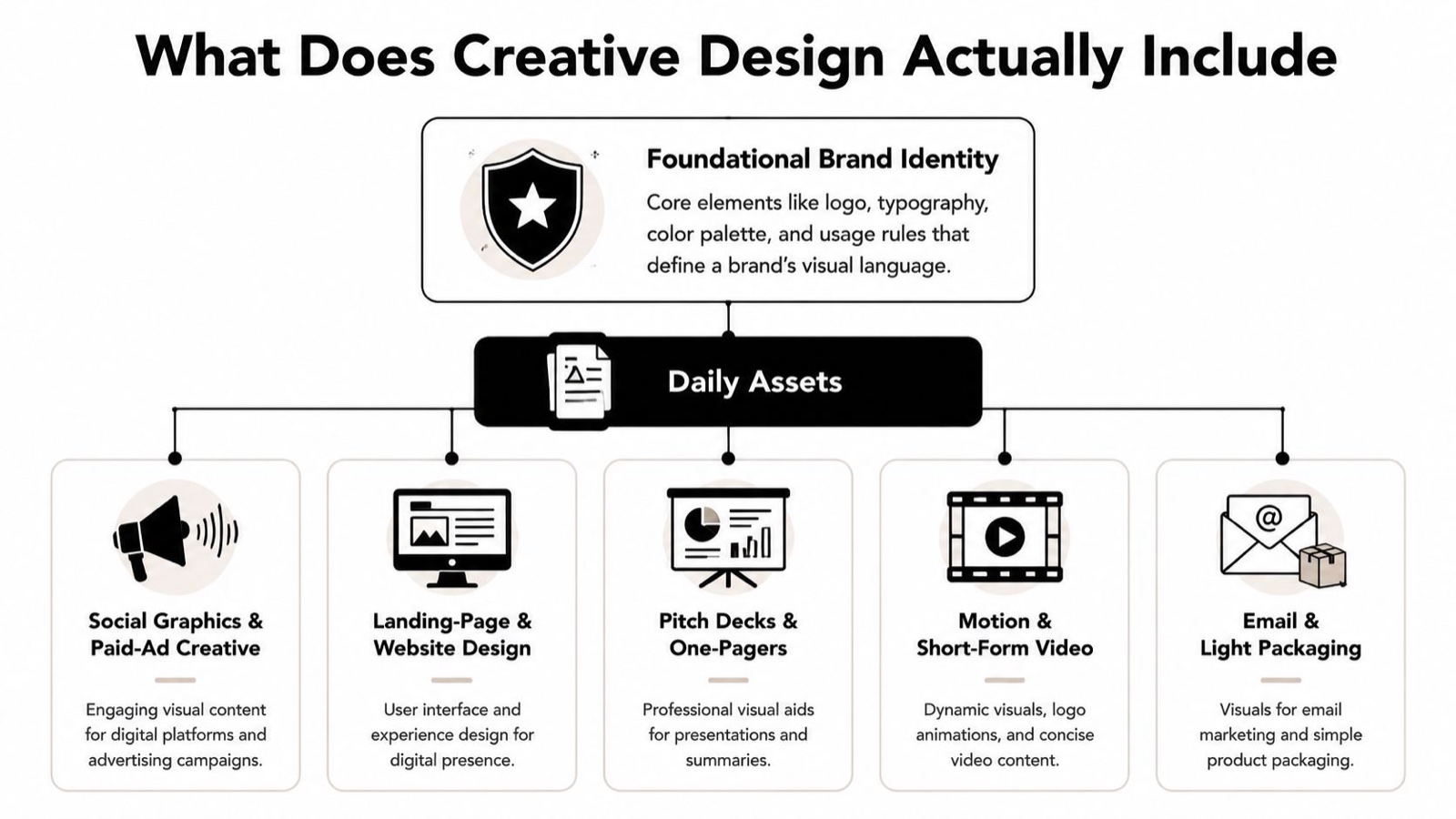
Foundation first, then production
The foundation is your brand identity: the logo, typography, color palette, layout principles, image treatment, and the rules for using all of it. Skip this and every future asset takes longer while every new contributor improvises.
Then come the working assets. These are the things marketing, sales, product, and leadership reach for every week.
- Social graphics and paid ad creative: Static and motion assets for campaigns, launches, retargeting, and organic posting.
- Landing page and website design: Page layouts, visual hierarchy, component styling, and the interface decisions that support conversion.
- Pitch decks and one-pagers: Sales decks, investor materials, internal strategy docs, and leave-behind PDFs.
- Motion and short-form video: Logo animation, animated explainers, social edits, ad cuts, and moving versions of campaign ideas.
- Email and light packaging: Email modules, launch visuals, product inserts, and simple packaging work where relevant.
Plenty of teams also need illustrations, product mockups, trade show graphics, presentation templates, and design systems. The exact mix shifts by business. The underlying structure doesn’t.
The practical bundle most growing brands need
If a brand has no in-house designers, the strongest setup is usually one team owning the whole visual system. The logo should inform the deck, the deck should inform the landing page, and the landing page should inform the ad creative. Split that across four disconnected freelancers and consistency starts slipping within a month.
I’ve watched this go wrong in very ordinary ways. One freelancer uses a different button style. Another picks a new accent color for social because it looked good that day. A video editor invents motion behavior that matches nothing on the website. No single mistake looks big. Stacked together, they make a brand feel unsure of itself.
One consistent system beats ten talented people working in isolation.
If you’re tightening up your visual system, we also have a piece on graphic design and branding fundamentals.
How Do You Get Creative Work Done
The real trade-off isn’t just what gets made. It’s who owns the work and how much coordination lands on your team to get it out the door.
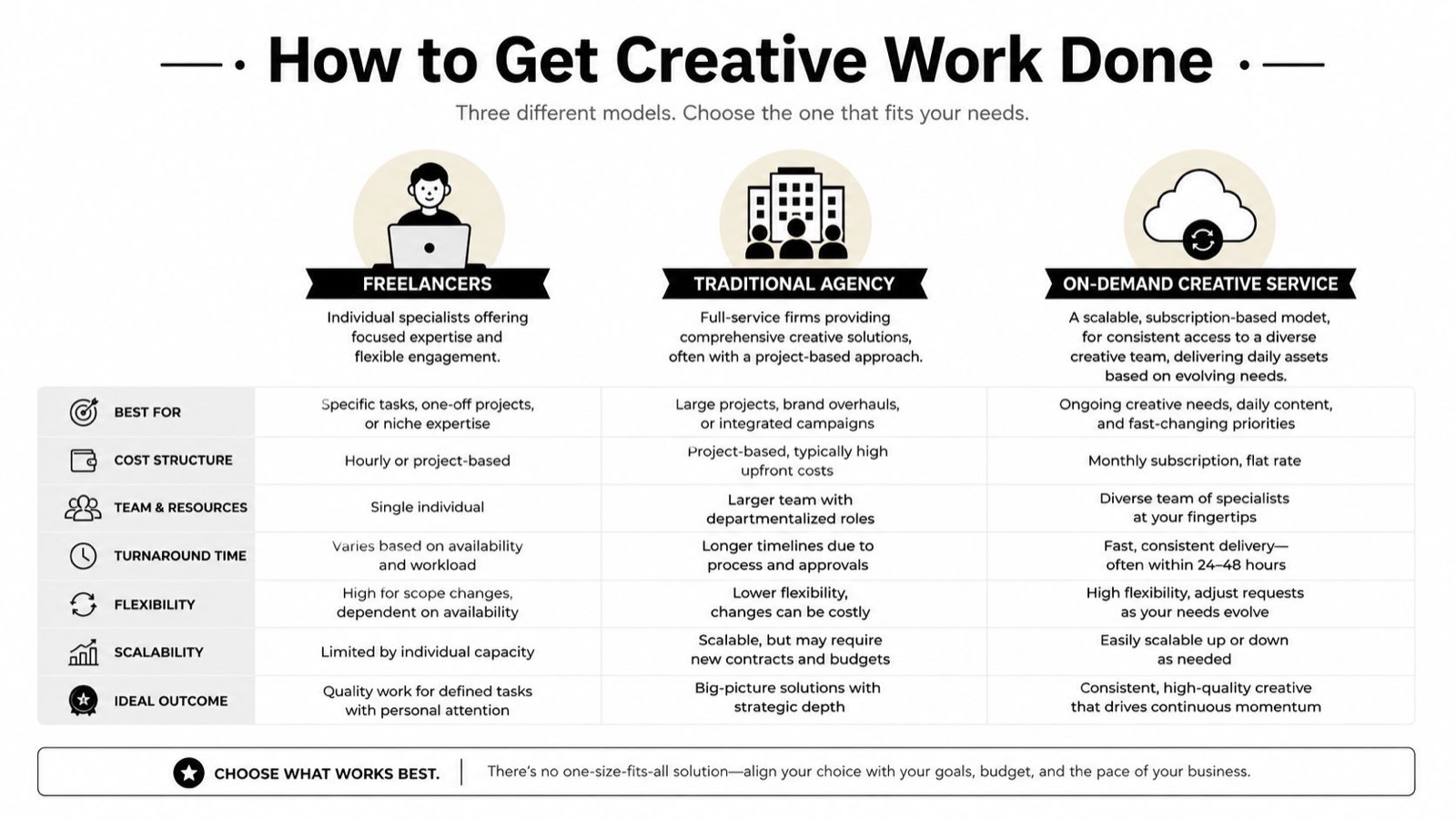
The three main delivery models
Freelancers are the right call when you need one clear skill for one clear job. A motion designer for a launch film. A presentation designer for a board deck. A web designer for a page refresh. You get focus. What you give up is cohesion the moment you need several asset types at once.
Traditional agencies earn their keep on the big stuff: a major campaign, a rebrand, senior strategy tied to a launch that matters. They bring process and cross-disciplinary talent. They can also be slow to route work and heavy for a team that needs constant production rather than a few large projects a year.
Embedded creative teams fit when the need is ongoing and spans channels. Brand work, campaign assets, motion, decks, web updates, social output, all on a steady rhythm. One dedicated team learns your brand, works inside your cadence, and behaves like an extension of your team rather than an outside vendor.
That embedded model is what we do at Moonb: a dedicated creative team producing work on a steady weekly rhythm, on brand and ready when you need it.
A twelve-point comparison
Before the table, one line item most teams forget to price in: coordination. Every extra freelancer or vendor adds briefing time and review loops, plus someone on your side reconciling all the pieces at the end. It rarely shows up on an invoice, but it’s real, and it’s often where the hours go.
Here’s the comparison I’d use when choosing a model:
| Decision Factor | Freelancers | Traditional Agency | Embedded Creative Team |
|---|---|---|---|
| Best for | Narrow specialist tasks | Big launches and rebrands | Ongoing multi-channel production |
| Brand consistency | Varies by person | Usually strong at campaign level | Strong when the same team stays close |
| Speed on repeat work | Can be uneven | Often slower due to routing | Usually stronger with recurring cadence |
| Strategic context | Often limited to the brief | Strong at kickoff | Builds over time through repetition |
| Management overhead | Highest when using several | Moderate to high | Lower with one point of coordination |
| Feedback handling | Depends on the individual | Structured, but can be layered | Best when feedback is consolidated |
| Asset variety | Often one specialty at a time | Broad capability | Broad if the team is set up for it |
| Scalability | Hard to scale across formats | Scales, but often with more process | Scales well when systems exist |
| Institutional memory | Fragile | Mixed, depending on team turnover | Strong if the team remains assigned |
| Cost predictability | Variable | Variable by scope | Usually clearer across recurring work |
| Fit for fast campaigns | Good in bursts | Mixed | Strong when priorities shift weekly |
| Who it suits | Hands-on managers | Teams buying major projects | Teams that need output without more hiring |
A sharp brief changes the whole thing too. If your process still kicks off with a vague Slack message, start from a proper creative brief template instead.
What Does a Good Creative Workflow Look Like
Good creative work rarely comes out of constant motion. It comes from a paced workflow with clear gates and fewer surprises.
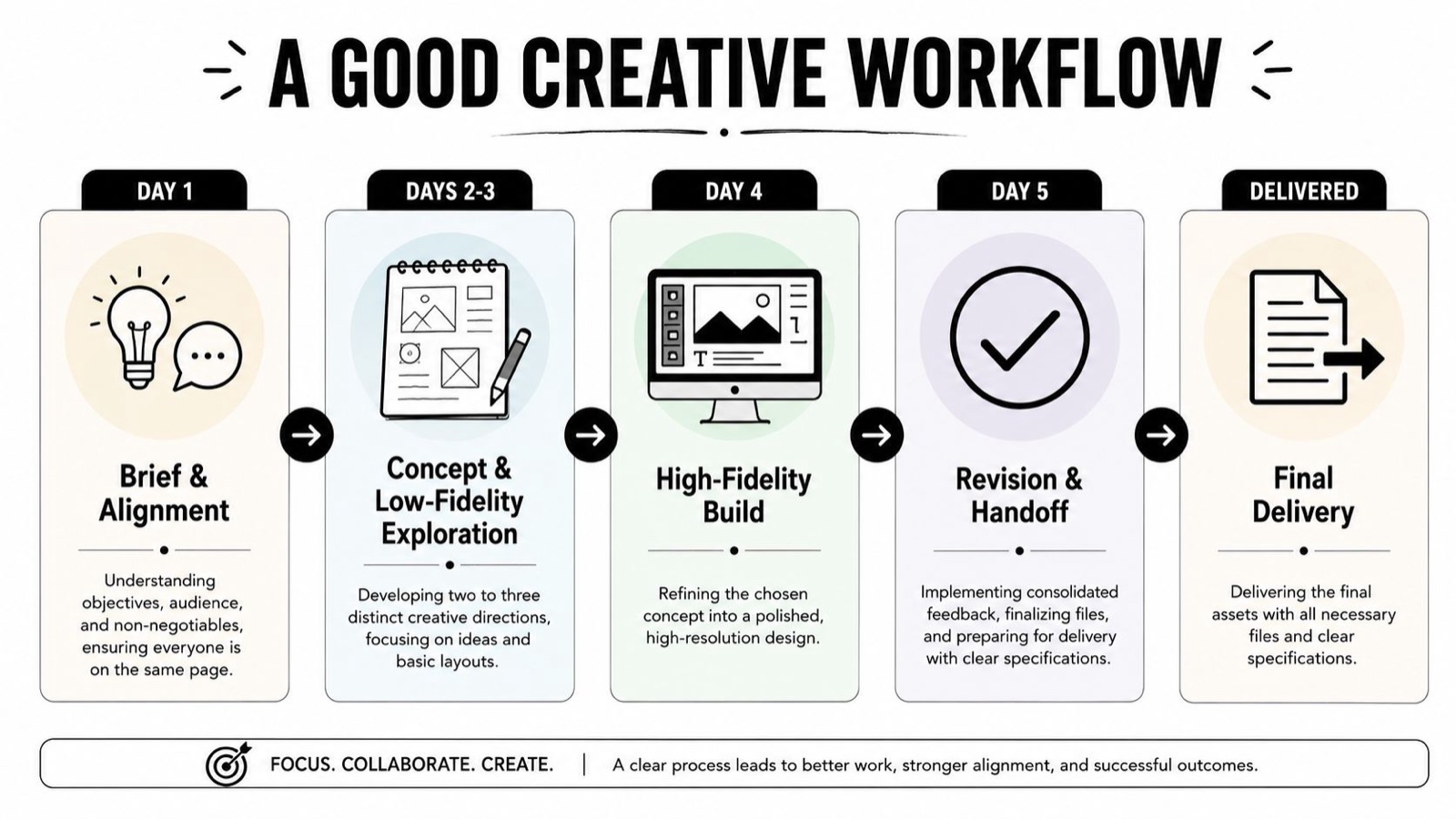
The week that actually works
Here’s the weekly rhythm I trust most.
Day 1: Brief and alignment. Lock the single objective, the audience, the references, the required formats, and the non-negotiables before anyone opens Figma, After Effects, Keynote, or Illustrator.
Days 2 and 3: Concept and low-fidelity exploration. I’d rather see two or three distinct directions than one polished safe option. Rough storyboards, layout comps, frame ideas, and a messaging hierarchy are plenty at this stage.
Here’s a useful walkthrough to pair with that process:
Day 4: Pick a direction and build it to high fidelity. Now type, spacing, motion behavior, and production detail start earning their place.
Day 5: Run one structured revision round with consolidated feedback, then package final files, exports, and handoff notes.
Why direction gates matter
The teams that move fastest aren’t the ones grinding hardest. They’re the ones that stop bad ideas early, so their high-fidelity hours go into a concept worth finishing. Slower teams lose their time somewhere less visible: waiting on approvals, and reworking a direction nobody actually signed off on.
Direction check: A team can burn a full week polishing the wrong concept if nobody stops the work early enough.
That’s the job a creative director does. Someone has to gate each stage and ask the blunt question: is this the right idea, or are we just making the wrong idea prettier?
If your workflow still feels messy after the brief, the problem usually isn’t talent. It’s operations. This guide to creative operations management is a good next read.
How Much Do Creative Design Services Cost
Pricing makes more sense once you stop treating all design as one thing. A landing page, a product UI sprint, a deck, a motion ad cut, and a full brand system each demand a different level of thinking, production time, and review complexity, so they don’t belong in the same price bracket.
Two structures cover most of the market. Project work is priced per deliverable or per scope, which suits a one-time need like a rebrand or a campaign. Ongoing work is priced for a team that produces continuously, which suits a marketing function that ships something new most weeks. Rates swing widely inside both, depending on seniority, location, and how much direction you’re paying for versus pure production.
Typical Costs for Creative Design Services 2026
I won’t hand you a precise cost table, and I’d be wary of anyone who does. Most of the neat numbers floating around online are laundered from unrelated product-design studies and don’t survive contact with a real quote. What I can tell you is what actually moves the price, so you can read any proposal with clearer eyes.
What changes the price
Three things push the price up fast.
- Complexity of the system: A single ad is one thing. A brand system feeding web, motion, decks, and campaign formats is another entirely.
- Speed and review load: Fast turnaround has real value, but only when feedback is clean and scope is settled. Rushed work on top of messy input just produces expensive rework.
- Who owns the thinking: Production is the less expensive part. Concept development, messaging judgment, and someone accountable for the brand cost more, because that’s the part software can’t do for you.
The most common mistake when comparing costs is looking only at the hourly rate while ignoring the management overhead and who ends up owning the source files. If you want a real benchmark for current options, we keep our pricing here.
How Do I Choose the Right Creative Partner
A portfolio tells you someone can make nice work. It doesn’t tell you what they’re like to work with, and that second thing usually decides whether the project goes well.
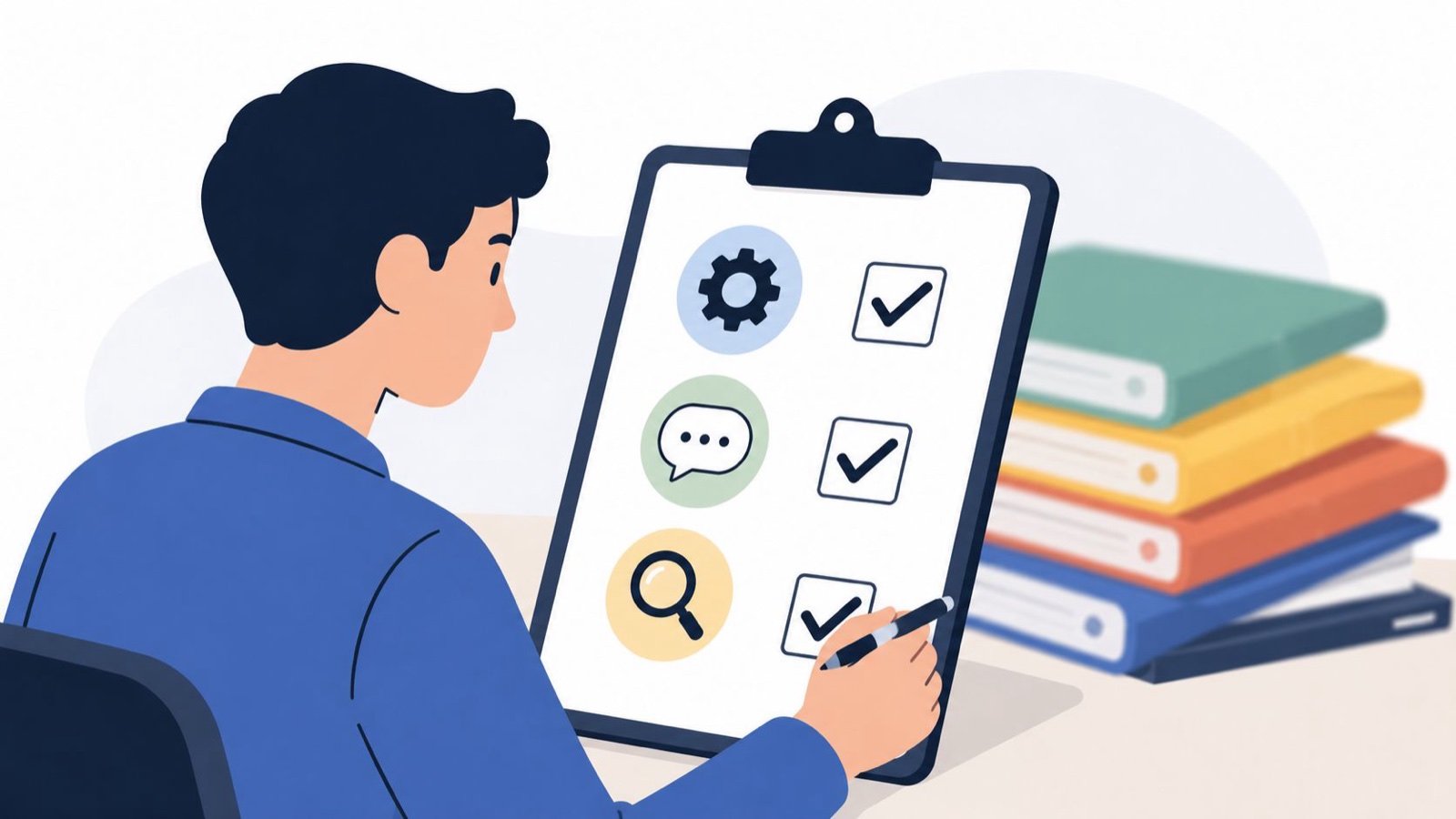
I’ve seen gorgeous portfolios attached to painful working relationships. The work looked sharp. The process was chaos. Deadlines slipped and feedback landed in five different places, and no one could explain why a given concept was right for the brief.
Ask these before you hire anyone:
- How do you brief work? If they can’t describe how they pin down objective, audience, and constraints, expect rework.
- How do you handle feedback? You want one structured round with consolidated comments, not ten stakeholders leaving notes in five places.
- Who protects the brand? Someone needs authority over consistency, not just output.
- What happens at handoff? Ask about file delivery, specs, source files, and ownership.
- How do you prioritize when everything is urgent? This one exposes whether they have an operating model or just good intentions.
The right partner does more than show taste. They take decisions off your plate.
The best fit usually feels calm. Fewer surprises, and better questions asked before the work starts.
How Can I Measure the Impact of Creative Design
You can measure creative work. The trick is to separate service quality from business impact, because they answer different questions.
What to track internally
- Service-level metrics: NPS or CSAT, turnaround time, approval cycles, and revision count.
- Asset performance metrics: Conversion rate on landing pages, click-through on ads, bounce rate, time on page, and ad recall.
- Workflow signals: Where approvals stall, which asset types eat the most revisions, and which channels create the most confusion.
What good measurement changes
This kind of tracking keeps creative from turning into opinion tennis. Instead of hearing “I don’t love this blue,” you can ask sharper questions. Did the page hold attention? Did the ad earn its clicks? Did the team approve quickly because the brief was clear the first time?
If you only review creative by taste, you’ll keep tweaking surface details and miss the real problem.
You don’t need perfect attribution to improve. You need a consistent scorecard and the discipline to actually look at it.
Frequently asked questions
Motion and short-form video, almost every time. A brand comes in wanting static assets, then sees what happens when the same idea moves. A logo animation sharpens an intro. A fifteen-second social edit sets a tone faster than any static tile. The second common add-on is a proper design system or template kit. Once a team feels the pain of rebuilding the same assets from scratch, they want reusable components, page sections, deck templates, and ad layouts their in-house people can use safely. Presentation design is the underrated one. Good decks still close rooms.
Three practices do most of the work. First, a per-brand design system with tokens, components, approved templates, and rules for how the brand behaves. Second, a single source of truth for assets, with clear naming and versioning. Third, templated but not generic formats, so campaigns can flex across channels without losing their character. The trap is speed. Teams get busy, then start redrawing from scratch instead of assembling from approved parts. That's where quality starts slipping. It's also why the embedded model works well for multi-brand support. A dedicated team that stays close to each brand holds the standard while still moving quickly.
Because someone has to make decisions early. Without one, teams tend to polish whatever landed first. They push weak concepts into high fidelity, burn hours on revisions, and end the week with files that look finished but don't solve the original problem. A creative director's main contribution is sequence. Brief first. Direction second. Fidelity third. Feedback last. That order is what keeps the work coherent, and it's the part most teams skip when they're in a hurry. If you're trying to build that kind of support without hiring a full team in-house, we're worth a look. Moonb works as a dedicated creative team producing strong work on a steady weekly rhythm, on brand and ready when you need it, across video, motion, design, animation, and brand content.