16 Best AI Video Editors in 2026 (Tested & Compared)
The 16 best AI video editors in 2026, from generative tools to auto-clippers and pro editors with AI baked in, each with honest pros, cons, real pricing, and a feature table.

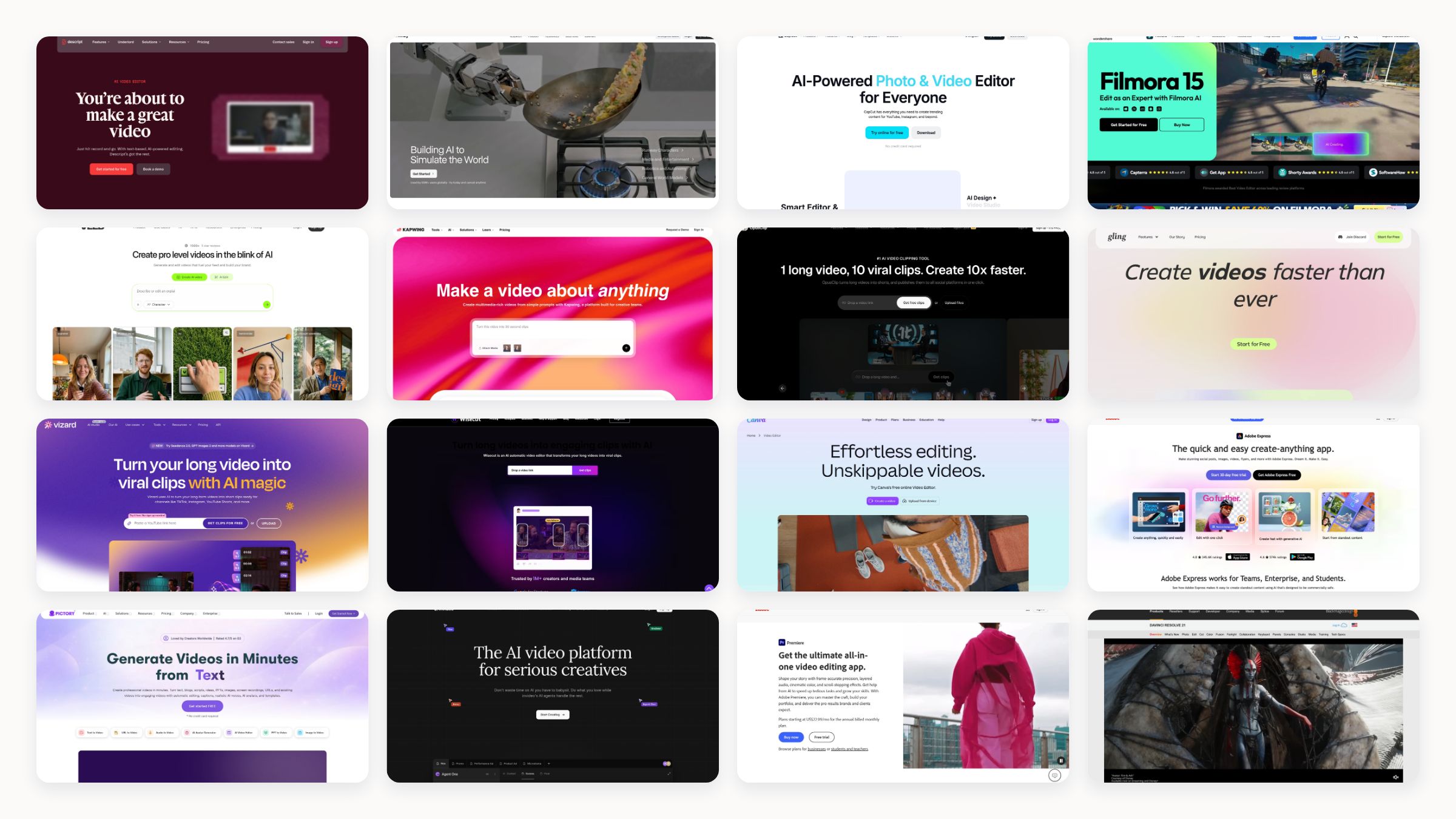
“AI video editor” now covers at least three different kinds of tool, and buying the wrong kind is the fastest way to waste a month. Some of these tools generate video from a prompt, some auto-cut long footage into short clips, and some are traditional professional editors that have folded AI features on top of a real timeline. They rarely overlap in what they are good at, so this list sorts them by the job rather than pretending they are interchangeable.
I checked all sixteen in July 2026, confirmed each is live, read the pricing published on each site, and wrote an honest set of pros and cons for every one. Where a tool hides its tiers behind a login I say so rather than inventing numbers. There is a feature-comparison table at the end once you have the detail, and a short note from me, since I run a creative studio, on where a human editor still beats all of them.
The 16 best AI video editors
1. Descript: edit video like a document
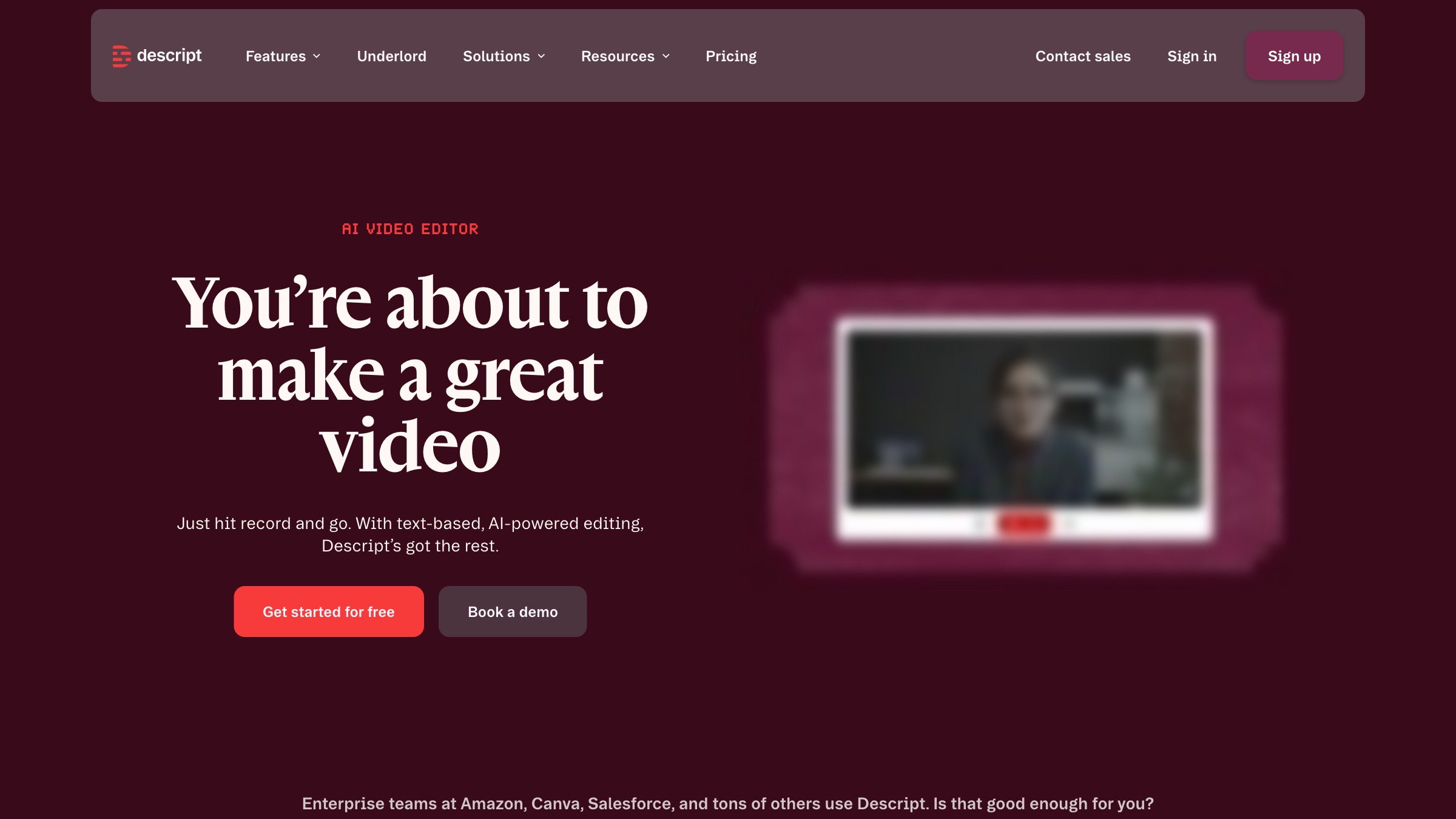
Descript’s trick is that you edit the video by editing its transcript. Delete a sentence of text and the matching footage disappears, filler words and all, which makes it uniquely fast for talking-head and podcast content.
| Pros | Cons |
|---|---|
| Transcript-based editing is a real time-saver Studio Sound, captions, and eye-contact fix in one app Usable free tier and a gentle learning curve | Not a full timeline for effects-heavy or cinematic work Can slow down on longer projects Media and transcription caps add up per seat |
Best for: podcasters, YouTubers, and course creators who record a lot of talking-head footage. Free tier, then from $16/mo billed annually.
2. Runway: generative video and AI VFX
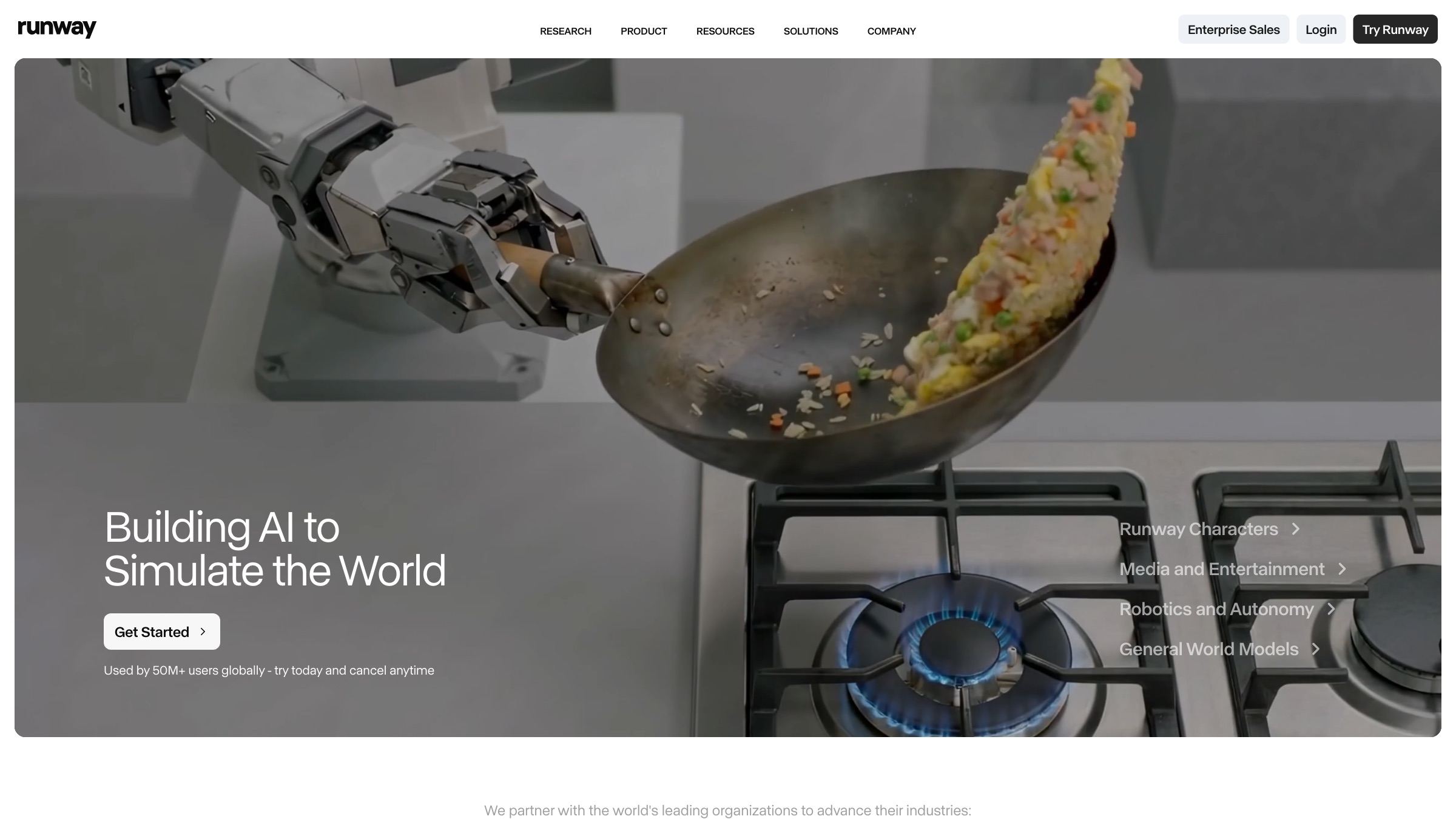
Runway is the closest thing to a generative-video studio, with best-in-class text-to-video quality plus AI editing tools like performance capture and object removal. It is where you go to create clips and effects, not to assemble a long edit.
| Pros | Cons |
|---|---|
| Leading generative-video quality and motion control A deep AI toolkit beyond text-to-video Browser-based with a free tier to trial | Credit system burns fast at real volume Not a traditional multi-track timeline editor Output often needs several regenerations to land |
Best for: creators and agencies generating short cinematic clips, VFX, and b-roll. Free credits, then $12/mo annual and up.
3. CapCut: the social creator’s AI toolkit
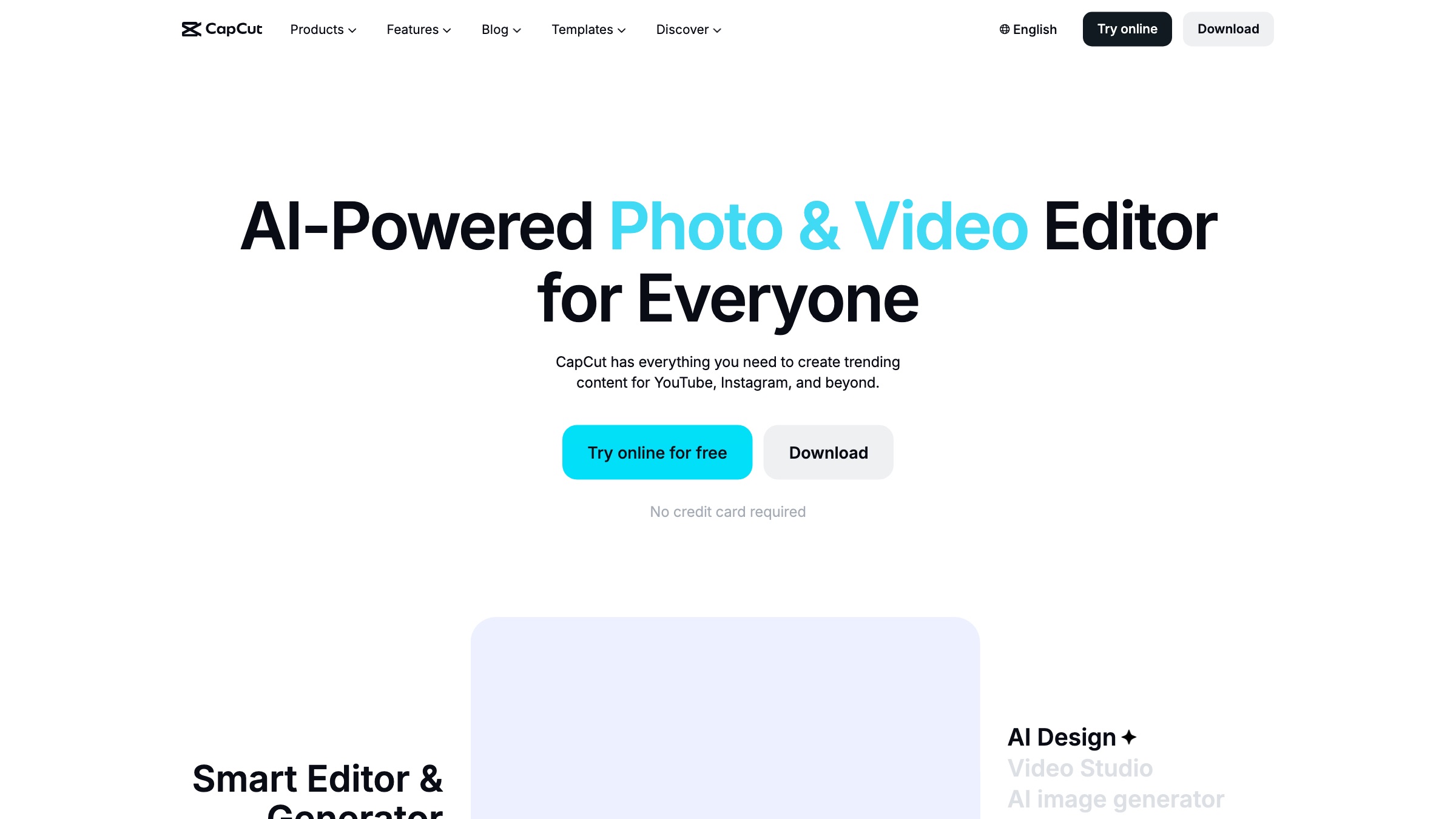
CapCut is the default for short-form social video, with a fast-shipping AI toolkit (auto-captions, background removal, text-to-video) and a free tier that does not watermark standard exports.
| Pros | Cons |
|---|---|
| Capable free tier with no watermark on standard exports Strong, fast-evolving AI features for social Runs on web, desktop, and mobile with sync | ByteDance ownership raises data questions for some teams 2026 pricing split key AI and 4K into the $20/mo tier Template-first, less suited to precise long-form work |
Best for: creators and small teams making TikTok, Reels, and Shorts. Free, then $10/mo.
4. Filmora: beginner-friendly editing packed with AI
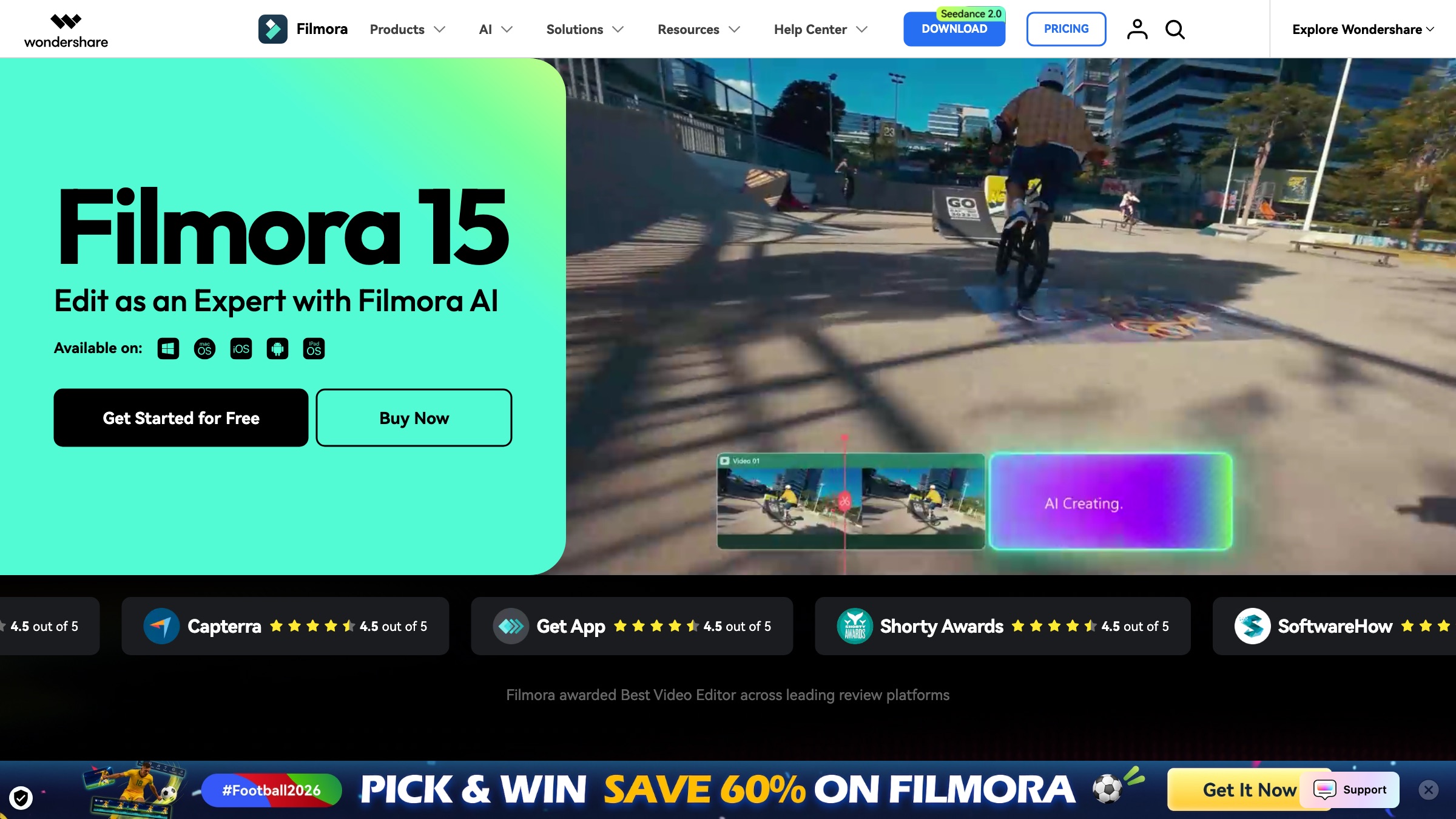
Wondershare’s Filmora pairs a shallow learning curve with a surprisingly current AI set, including text-to-video, object removal, and text-based editing, at a price that undercuts the pro suites.
| Pros | Cons |
|---|---|
| Beginner-friendly with a deep, current AI toolset One-time perpetual option and cross-platform coverage Good balance of ease and capability | Free tier watermarks exports; AI features use credits Perpetual license only covers the version you bought Not as deep as Premiere or DaVinci for advanced work |
Best for: beginners and social creators who want ease plus plenty of AI. Free tier, annual plan around $70/yr.
5. VEED: browser editing built for subtitles and social
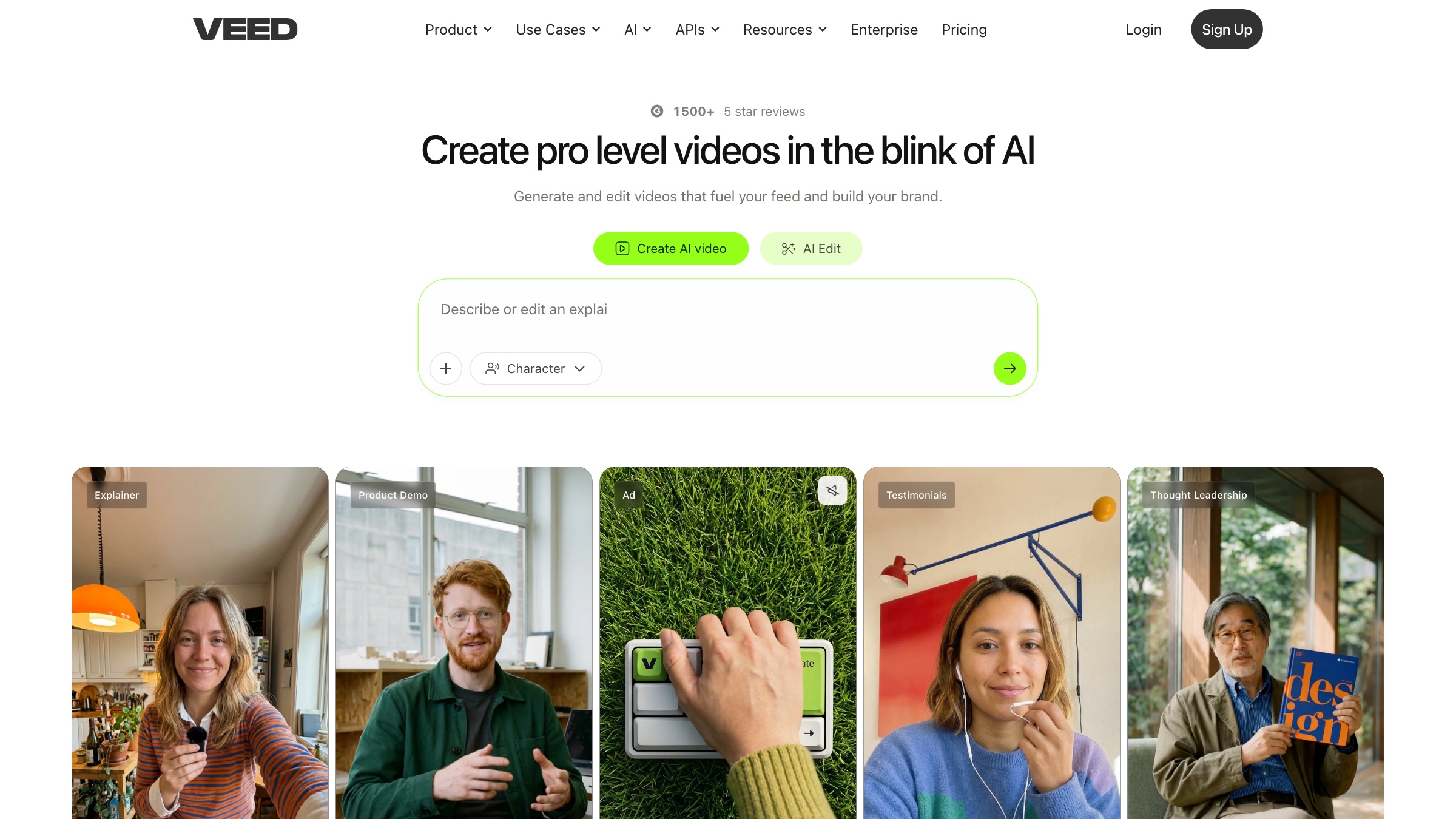
VEED runs entirely in the browser and shines at subtitles, translation, and quick social clips, with a solid AI layer (avatars, voice cloning, background and noise removal) that non-editors pick up fast.
| Pros | Cons |
|---|---|
| No install; fast for subtitles and quick clips Broad AI toolkit and a friendly interface Used by large brands for quick content | Per-user billing gets pricey for teams Free plan watermarks and caps exports Can lag on long or complex projects in-browser |
Best for: marketers and social teams producing subtitled, translated content quickly. Free tier, paid from roughly $18/user/mo.
6. Kapwing: collaborative browser editor with AI subtitling
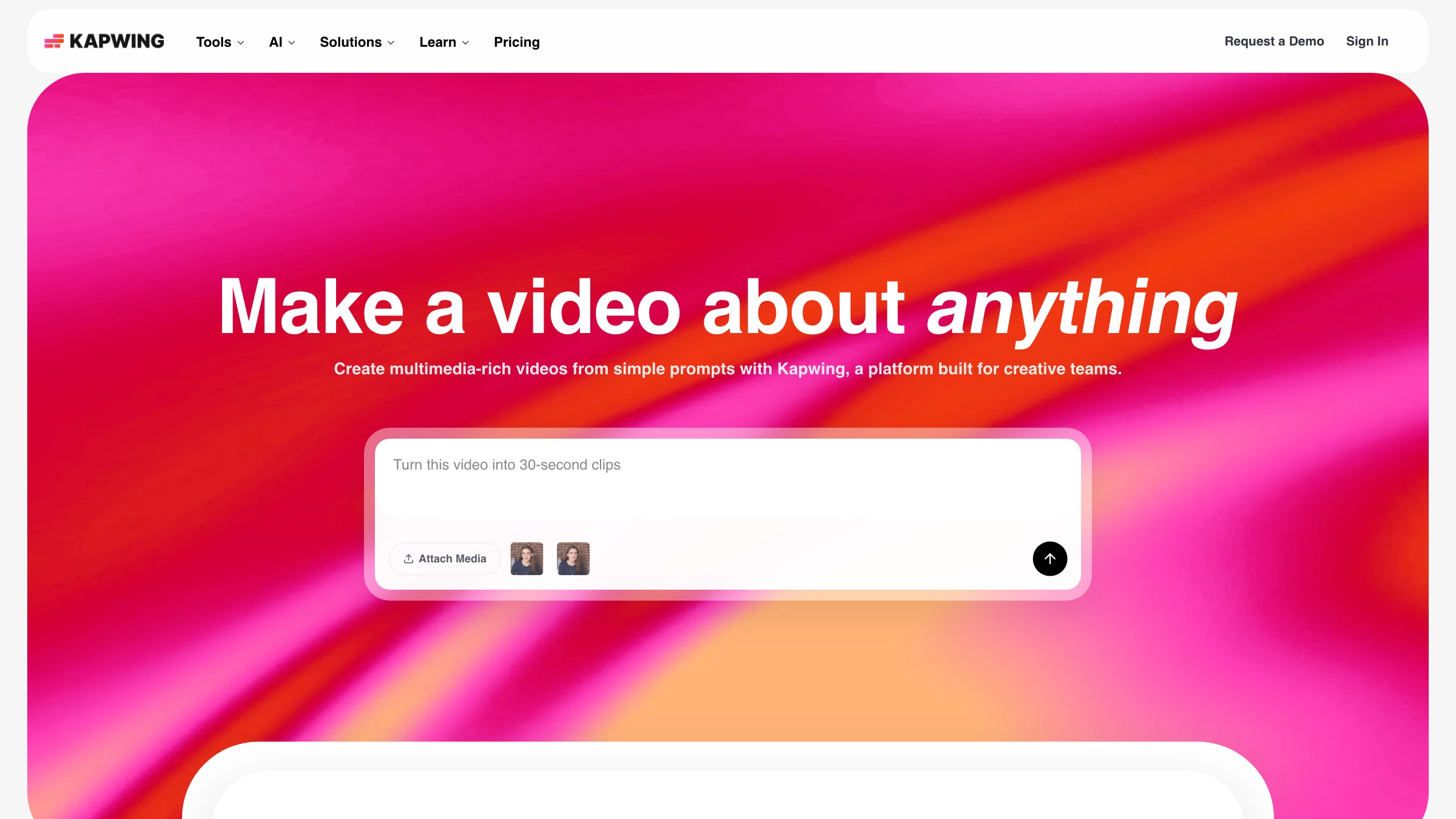
Kapwing is a browser editor built for teams, combining a real timeline with auto-subtitles, translation and dubbing in 40-plus languages, and screen recording in one place.
| Pros | Cons |
|---|---|
| Browser-based and good for team collaboration Strong all-in-one toolkit with subtitling and dubbing Reasonable free tier for one-off edits | Per-member pricing adds up for teams Free plan watermarks and limits exports In-browser performance can dip on big projects |
Best for: marketers and educators who want a fast, collaborative browser editor. Free tier, Pro from $16/member/mo annual.
7. OpusClip: turn long videos into viral shorts
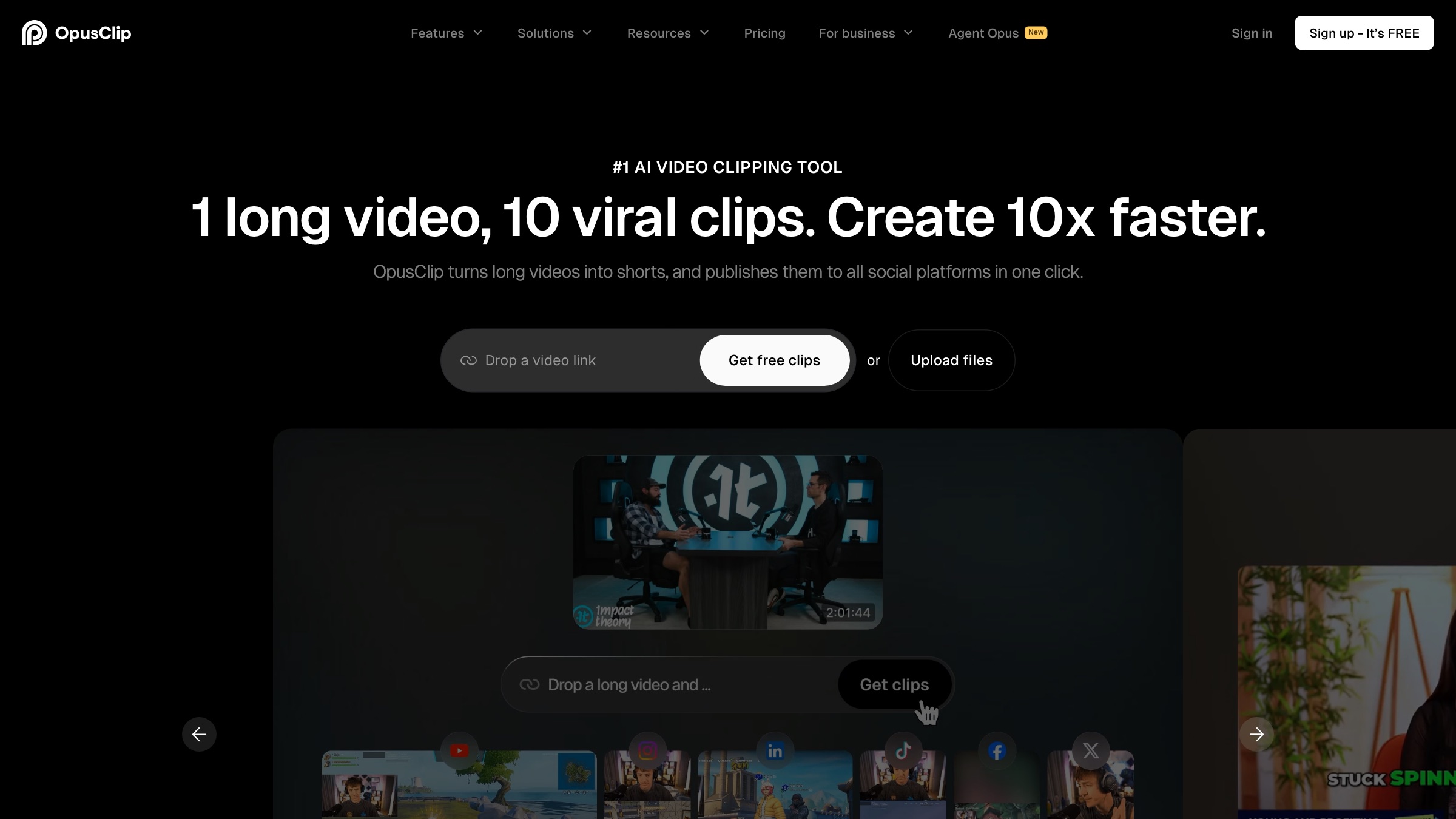
OpusClip does one thing at the top of the class: it finds the best moments in a long video and reframes them into captioned vertical shorts, then helps you publish them.
| Pros | Cons |
|---|---|
| Best-in-class auto-clipping of long video into shorts Accurate captions and one-click reframing A free-forever tier to test the workflow | Processing minutes get costly for high volume Built for repurposing, not editing from scratch Clip picks and caption timing still need a review |
Best for: podcasters and social teams repurposing long video into shorts. Free, then $9/mo annual.
8. Gling: auto-remove silences and filler
Gling handles the tedious first pass of a talking-head edit, cutting silences, filler words, and bad takes automatically, then exporting to Premiere, Final Cut, or DaVinci so it slots into a real workflow.
| Pros | Cons |
|---|---|
| Automates the rough cut and saves real hours Exports to the major pro editors, no lock-in Bundles captions, auto-zoom, and noise removal | Narrow to talking-head and YouTube content Metered by hours, so heavy users hit caps Free plan is barely usable at one hour a month |
Best for: solo YouTubers and course creators who record long talking-head footage. Free tier, then $10/mo annual.
9. Vizard: AI clipping for podcasts and long video

Vizard is another strong auto-clipper, turning long recordings into captioned vertical shorts with translation across 100-plus languages and transcript-based editing.
| Pros | Cons |
|---|---|
| Fast, useful highlight detection and reframing Strong captions and translation in 100-plus languages Transcript-based editing lowers the barrier | Credit limits mean heavy users hit caps quickly Reframing and clip picks need manual cleanup Not a full timeline for complex edits |
Best for: podcasters and content teams repurposing long video at scale. Free tier, Creator around $20/mo.
10. Wisecut: automated cuts for talking-head content
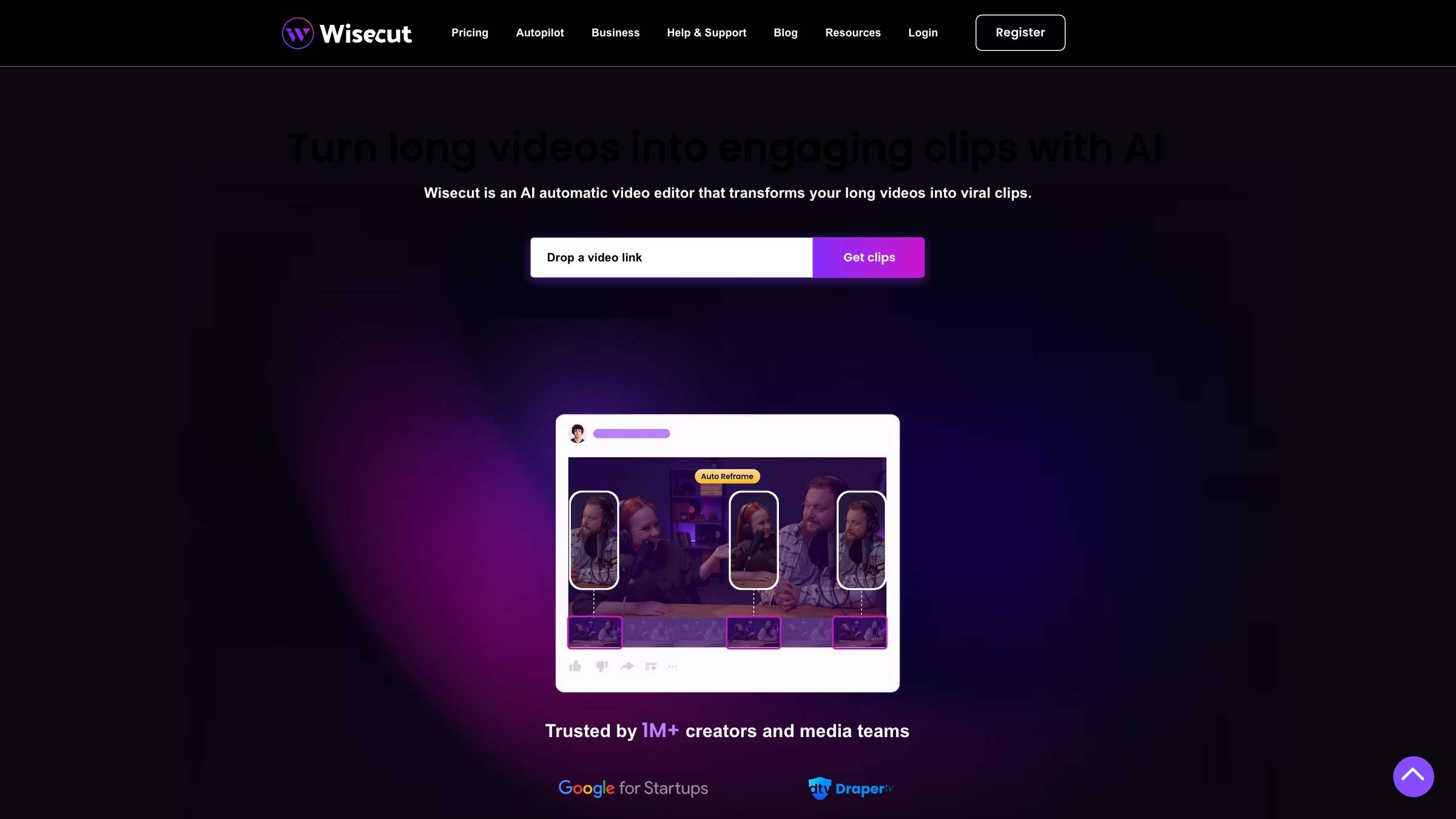
Wisecut leans hard into automation for interviews and webinars: silence removal, auto-captions in 13 languages, auto-reframing, and music that ducks under speech, with almost no manual editing.
| Pros | Cons |
|---|---|
| Heavy automation for talking-head footage Auto music ducking and captioning built in Browser-based, works on desktop and mobile | Weak for narrative or effects-heavy editing Lower tiers cap minutes and watermark output Best only for its one specific use case |
Best for: podcasters and webinar creators auto-cutting long recordings. Free tier, paid from around $16/mo annual.
11. Canva: template-driven AI video in a design suite
Canva folds a drag-and-drop video editor into its wider design suite, with AI tools (text-to-video, background removal, auto-captions) and a huge template library that non-editors can use immediately.
| Pros | Cons |
|---|---|
| Very easy for non-editors, with a big template library Strong free tier and integrated AI in one suite Real-time collaboration and brand kit | Not built for long-form or precise editing Best AI features and clean exports are gated Heavy projects can lag in-browser |
Best for: marketers and small teams making fast, on-brand social clips. Free tier, Pro around $15/mo.
12. Adobe Express: fast, Firefly-powered social video
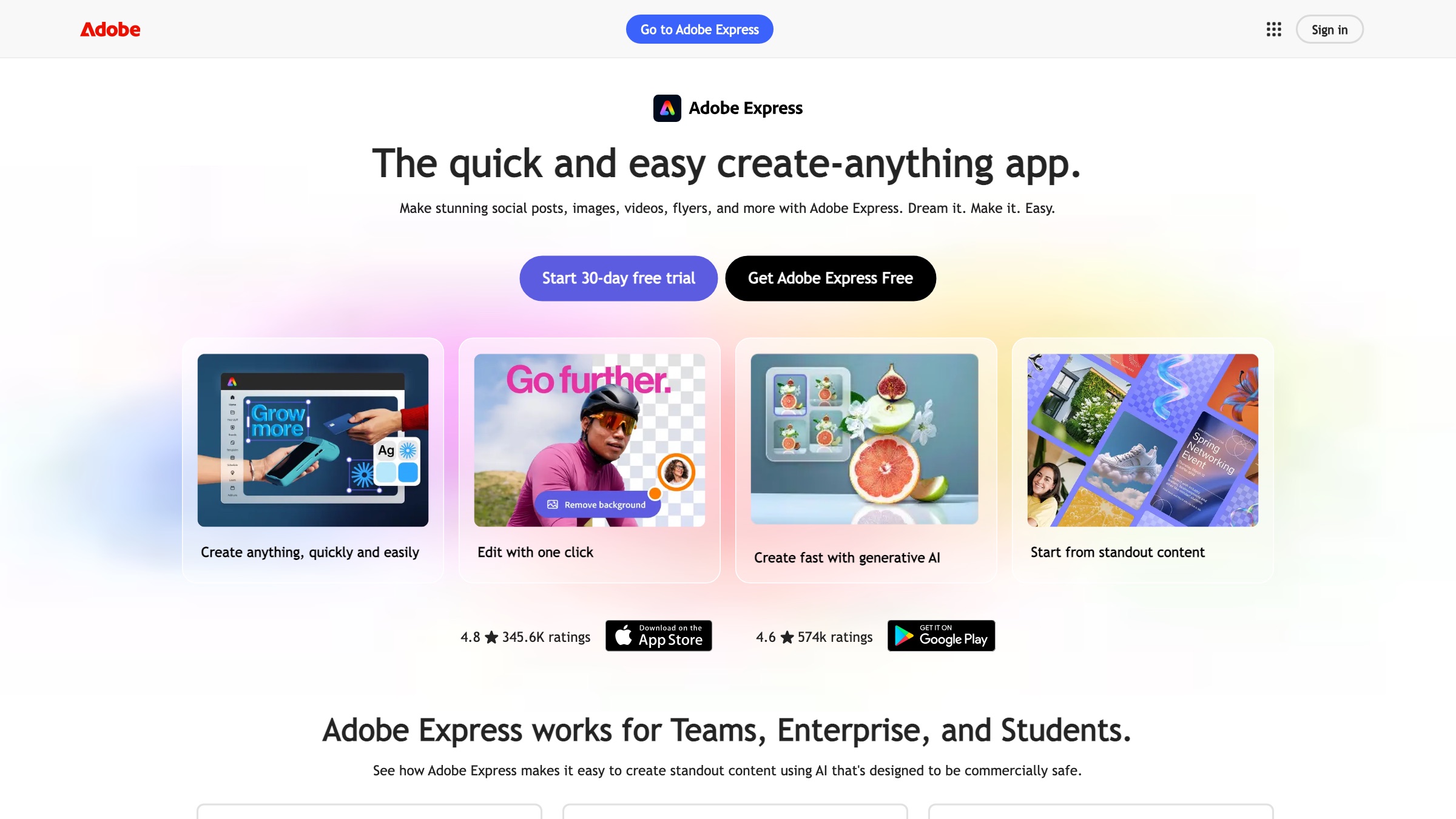
Adobe Express is the light, no-skills-needed sibling of the Creative Cloud, with Firefly generative AI baked into a template editor and commercially safe stock behind it.
| Pros | Cons |
|---|---|
| Usable free tier with AI features included Firefly generative AI in an easy editor Commercially safe stock and Adobe integration | AI credits are capped and burn quickly Template and social focus, not a real timeline Best features sit behind the paid tier |
Best for: marketers wanting fast, on-brand short video with Adobe’s stock. Free tier, Premium around $10/mo.
13. Pictory: text and long content into short video
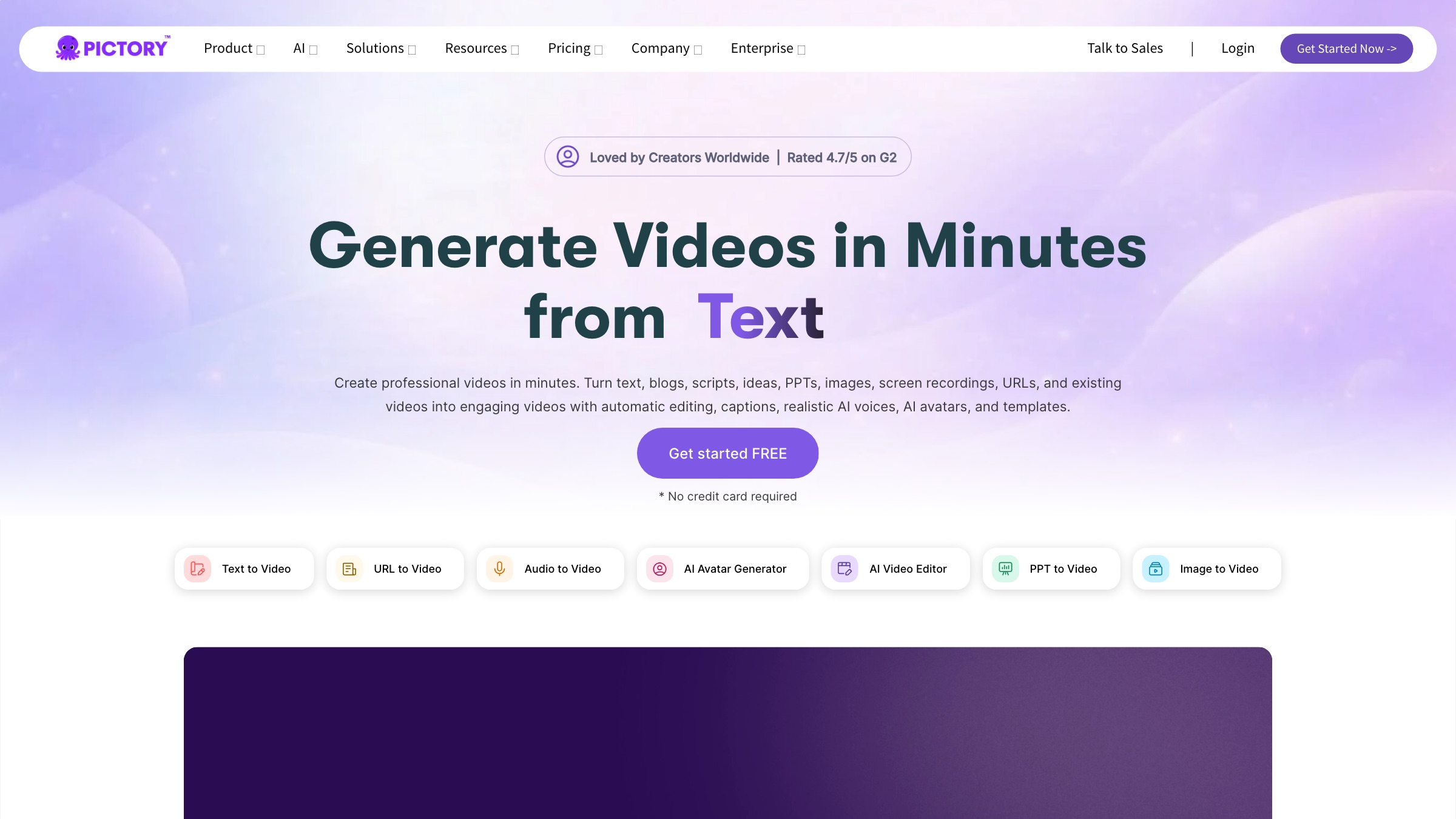
Pictory turns a script, a blog post, or a long recording into a captioned short video with AI voiceover and licensed stock, editable by editing the transcript.
| Pros | Cons |
|---|---|
| Fast text-to-video and content repurposing Transcript-based editing and auto-captions Large licensed stock library | Metered minutes, so heavy users pay up quickly Output can feel template-driven and generic Web-only, with repetitive stock and AI voices |
Best for: marketers and bloggers turning written content into captioned clips. Trial, then $25/mo annual.
14. InVideo: prompt-to-video generation
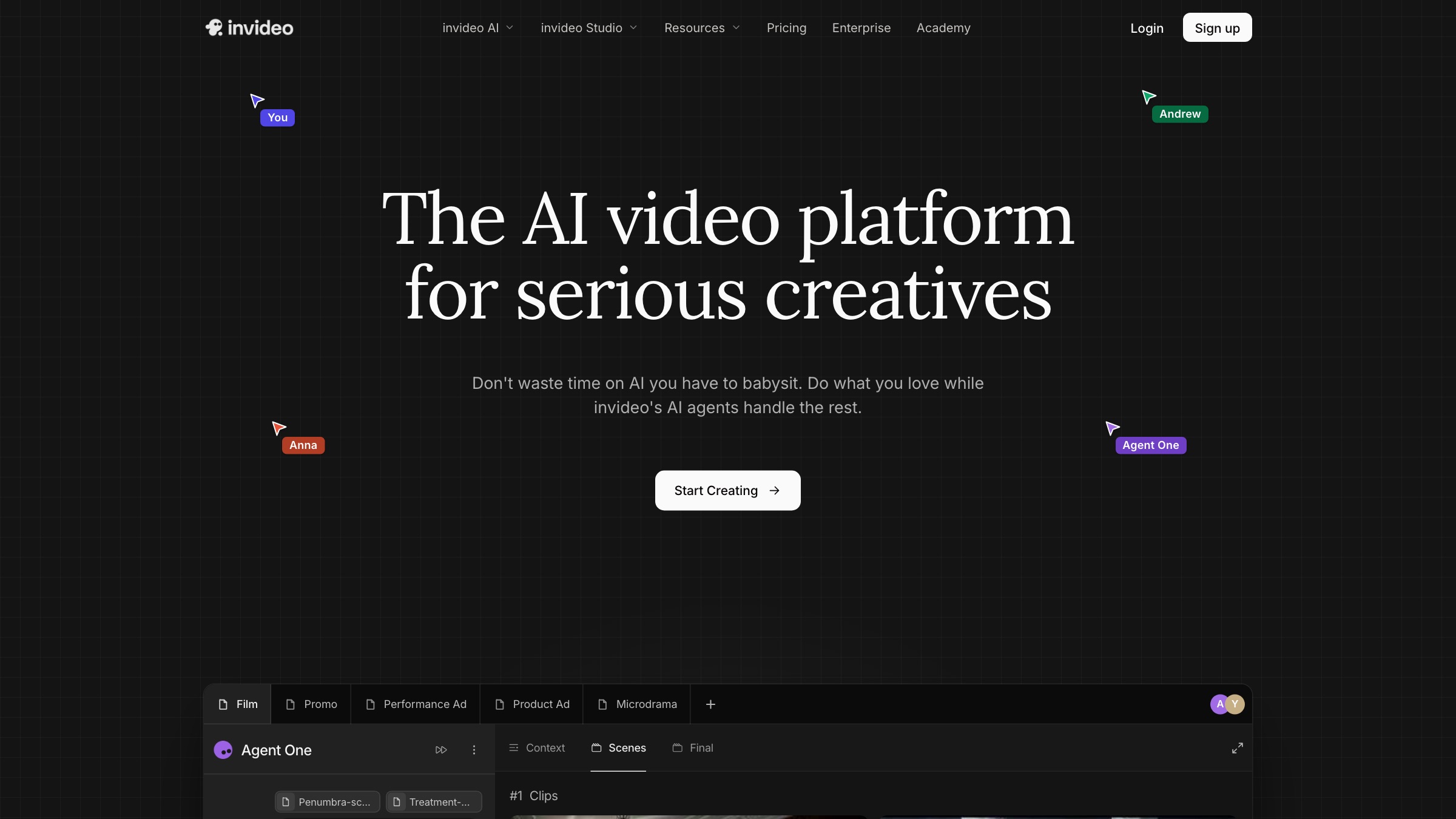
InVideo is built around a prompt, generating a full narrated video from a single instruction and bundling access to heavyweight generative models in one pipeline.
| Pros | Cons |
|---|---|
| Fast prompt-to-video from a script or idea Broad access to current generative models Good for quick social and YouTube drafts | AI-minute pools run out fast, so real cost creeps up Output often needs manual cleanup Free tier watermarks and caps weekly use |
Best for: solo creators and marketers turning a prompt into a finished clip fast. Free tier, Plus around $20/mo annual.
15. Adobe Premiere Pro: the industry standard, now AI-assisted
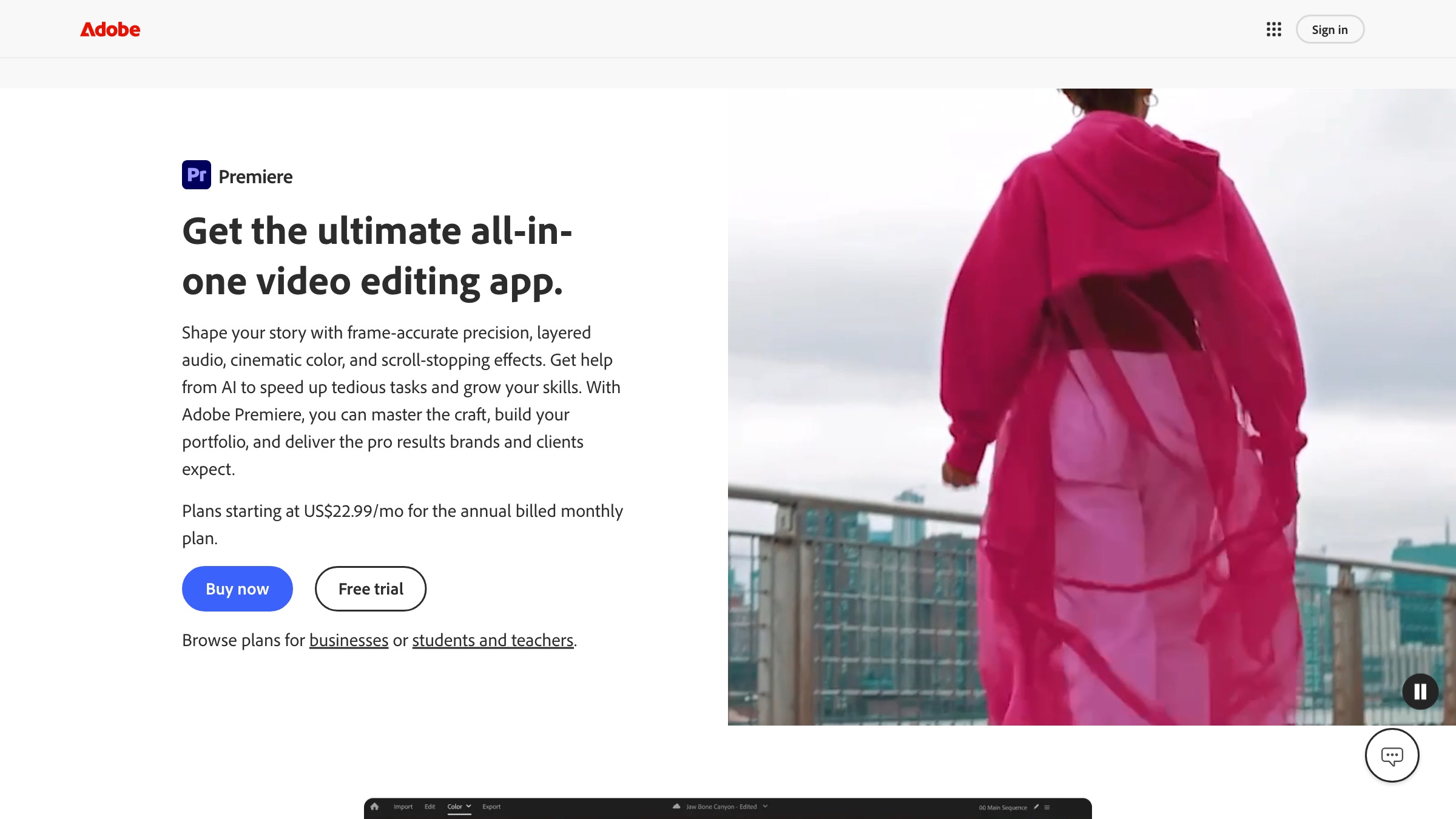
Premiere Pro is the professional benchmark, and its AI features (text-based editing, auto-transcription, speech enhancement, generative extend) now sit on top of the deepest timeline in the business.
| Pros | Cons |
|---|---|
| Industry-standard depth in timeline, color, and audio Tight Creative Cloud integration Real AI features baked into a pro workflow | Recurring cost only, with no perpetual license Steep learning curve and heavy hardware needs No true browser or mobile editing |
Best for: professional editors and agencies who need a full industry-standard editor. From $20.99/mo annual.
16. DaVinci Resolve: pro post with an AI edge and a real free tier
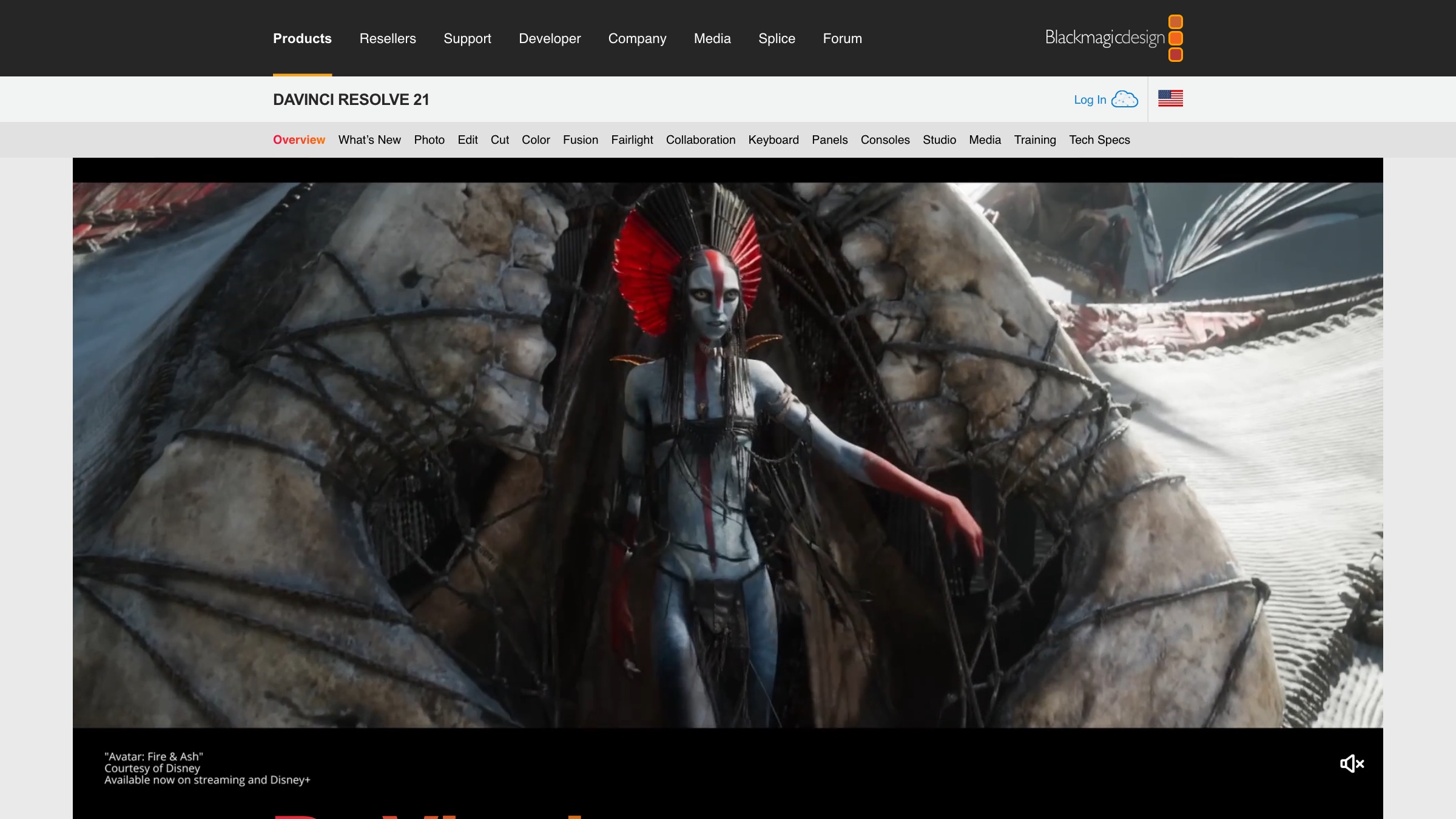
DaVinci Resolve is a full edit, color, VFX, and audio suite in one app, famous for color grading, and its free version is not crippled, while the one-time Studio upgrade adds an AI Neural Engine.
| Pros | Cons |
|---|---|
| A free version that is fully featured, not crippled Industry-leading color plus an all-in-one pipeline Studio is a one-time $295, no recurring fee | Steep learning curve across its many pages Resource-heavy; needs a capable machine No web app and weaker auto-editing than light tools |
Best for: filmmakers and editors who want a complete post suite, and anyone who wants pro power for free. Free, Studio $295 one-time.
Every tool in one table
| # | Tool | Best at | Platforms | Starting price |
|---|---|---|---|---|
| 1 | Descript | Transcript-based editing | Web, Mac, Win, iOS | Free / $16/mo |
| 2 | Runway | Generative video and VFX | Web | Free / $12/mo |
| 3 | CapCut | Short-form social video | Web, desktop, mobile | Free / $10/mo |
| 4 | Filmora | Easy editing plus AI | Win, Mac, mobile | Free / ~$70/yr |
| 5 | VEED | Subtitles and social clips | Web, iOS | Free / ~$18/mo |
| 6 | Kapwing | Collaborative browser editing | Web | Free / $16/mo |
| 7 | OpusClip | Long video into shorts | Web | Free / $9/mo |
| 8 | Gling | Auto-cutting talking heads | Web, Mac, Win | Free / $10/mo |
| 9 | Vizard | AI clipping long video | Web | Free / ~$20/mo |
| 10 | Wisecut | Automated talking-head cuts | Web | Free / ~$16/mo |
| 11 | Canva | Template social video | Web, desktop, mobile | Free / ~$15/mo |
| 12 | Adobe Express | Firefly-powered social video | Web, desktop, mobile | Free / ~$10/mo |
| 13 | Pictory | Content into short video | Web | Trial / $25/mo |
| 14 | InVideo | Prompt-to-video | Web, mobile | Free / ~$20/mo |
| 15 | Adobe Premiere Pro | Professional timeline editing | Mac, Win | $20.99/mo |
| 16 | DaVinci Resolve | Pro post and color | Mac, Win, Linux | Free / $295 once |
How I would recommend choosing
Match the tool to the job before you compare features. If you need to assemble a real edit, choose a timeline editor like Premiere, DaVinci, or Filmora. If you record talking-head content and want the boring cuts done for you, an auto-editor like Descript, Gling, or Wisecut will save the most time. If your job is turning long video into a stream of shorts, OpusClip and Vizard are purpose-built for it. And if you want to generate footage from a prompt, Runway and InVideo live there. Watch the credit meters on the AI-native tools especially, since a headline monthly price can hide how fast the finished minutes run out.
One more thing worth your ten minutes before you commit to a generative tool. Marques Brownlee published a review of OpenAI’s Sora that is itself AI-generated footage, and it shows better than any spec sheet both how startling the output has become and exactly where it still falls apart.