pseudo illustration

How to Plan a Month of Content in 1 Day: Easy Strategy Tips

calendar icon
October 22, 2025
read time
8 minutes
How to Plan a Month of Content in 1 Day: Easy Strategy Tips

Imagine having every single piece of content for the next 30 days completely planned out, created, and ready to go. Sound too good to be true? It’s not. By setting aside a single, focused day for strategy, brainstorming, and scheduling, you can map out an entire month's worth of content. This batching approach completely ends the daily scramble for ideas and frees up your creative headspace for the rest of the month.

The Power of a Single Planning Day

Image

Let’s be honest: the daily pressure to come up with fresh, engaging content is exhausting. Too many creators and marketers are stuck in a reactive loop, just posting whatever they can think of on any given day. This leads to a messy, inconsistent brand message, a lot of last-minute stress, and content that doesn’t actually move the needle on business goals. That constant decision-making just eats away at the mental energy you could be using for your best creative work.

Dedicating one full day to planning completely flips the script. It’s a strategic move away from reactive scrambling and into proactive, intentional execution. When you know exactly what’s going out every day for the next four weeks, you build incredible momentum.

Build Trust Through Consistency

Audiences don’t just like reliability—they reward it. When your followers know to expect a valuable blog post every Wednesday or an insightful video every Friday, they start to see you as a trusted source. A single planning day ensures you never miss a beat, cementing your authority in your niche. That kind of consistency is the bedrock of a loyal community, and it's almost impossible to achieve when you're flying by the seat of your pants.

This is where a content calendar becomes your best friend. A good calendar is what allows you to plan an entire month in one focused session. The trick is to set clear goals first—like driving website traffic or boosting engagement—so every single piece of content has a purpose. With a structured plan, you can batch-prepare everything at once, creating a steady, intentional publishing rhythm. To get deeper into this, check out the insights on building a content calendar over at Draft.dev.

Eliminate Decision Fatigue

Just think about all the little decisions that go into one post: the topic, the format, the caption, the hashtags, the visual. Now multiply that by 30. You’re looking at hundreds of decision points scattered throughout your month.

By batching all those choices into a single strategic session, you free up so much cognitive space for the rest of the month. Your daily thought process shifts from, "What on earth should I post?" to "How can I make this planned post amazing?"

This approach elevates you from being a content tactician to a true content strategist. You can finally see the big picture, connect ideas across different platforms, and weave a cohesive narrative that guides your audience on a journey. It's the difference between throwing spaghetti at the wall and actually building something that lasts.

Set Your Strategic Foundation in the Morning

A great content plan starts with a strong foundation. Before you even think about brainstorming topics, your morning needs to be dedicated to one thing: strategy. This is where you lay the groundwork for everything that follows, turning a chaotic mess of ideas into a focused, goal-oriented roadmap.

First things first, what are you trying to accomplish this month? Are you launching a new service and need to drive qualified leads? Maybe you're looking to build a more tight-knit community on Instagram. Or perhaps the goal is simply to cast a wider net and boost overall brand awareness. Your answer is the North Star for every single piece of content you'll create.

Define Your Monthly Mission

Vague goals like "get more followers" are useless. You need to get specific and attach a number to it. That's how you know if what you're doing is actually working.

Let's make this real:

  • Lead Generation Goal: "Increase webinar sign-ups by 15% through targeted LinkedIn and blog content."
  • Community Building Goal: "Boost comment rates on Instagram posts by 25% by asking more engaging questions and running weekly polls."
  • Brand Awareness Goal: "Increase website traffic from Pinterest by 20% by creating three new infographic pins per week."

Clarity like this is a game-changer. When you know exactly what you're aiming for, it becomes much easier to create engaging content that actually hits the mark.

Conduct a Rapid Content Audit

With your mission locked in, it's time to look back before you leap forward. A quick audit of last month's content is pure gold. It shows you what resonated with your audience versus what you thought would resonate. No need to spend days on this—a focused 30-minute review is all it takes.

Jump into your analytics and find your star performers. What patterns do you see? Did that casual, behind-the-scenes video get double the engagement of a slick, polished graphic? Did a blog post drilling down on a specific customer problem bring in a ton of traffic?

This isn’t about judging past performance; it’s about gathering intelligence. Every piece of data, good or bad, is a clue that helps you make smarter decisions for the month ahead, ensuring your new plan is built on a foundation of proven success.

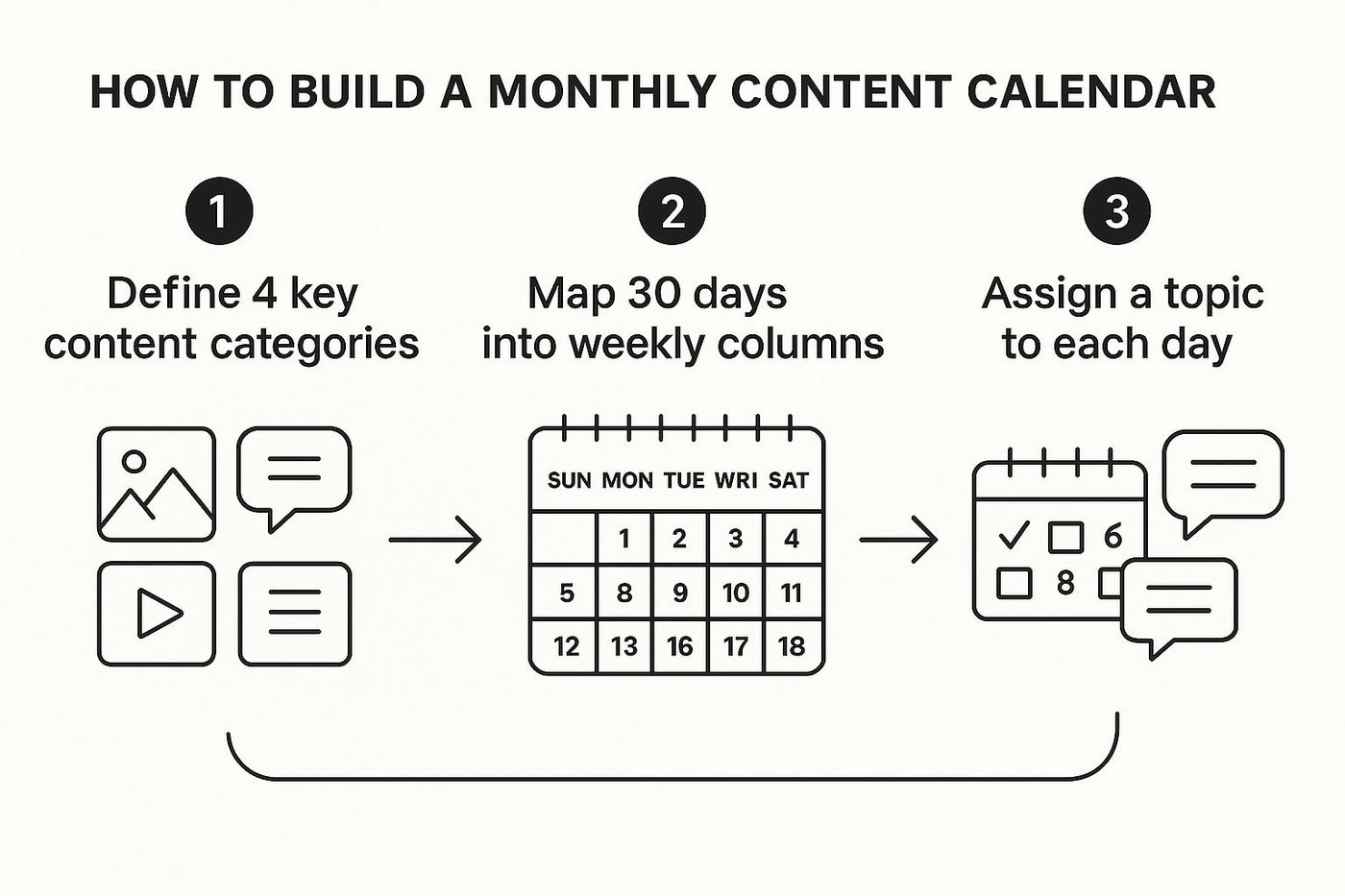
Visualizing this entire process helps connect the dots from high-level goals to your daily posts.

Image

As you can see, defining your core themes first allows you to systematically fill your calendar with purpose-driven content. By spotting the winners from your audit, you can double down on what your audience already loves. This is how you make sure your morning planning session sets you up for a month of real impact.

If you're looking for a structured way to lay this all out, exploring a proven https://www.moonb.io/blog/content-marketing-plan-template can provide the perfect framework.

Develop Your Core Content Pillars

Image

Now that you have your monthly mission, it's time to get down to the nitty-gritty of idea generation. This is the exact spot where most creators hit a wall, staring at a blank document and waiting for inspiration that never comes. The secret isn't just brainstorming—it's brainstorming with a solid structure.

That's where content pillars come in. These are the foundational themes that will hold up your entire content strategy for the month.

Think of content pillars as 3-4 core topics that are deeply connected to your business goals and your audience's biggest headaches. They're the main categories of your expertise. Instead of chasing dozens of random ideas, you'll build out a whole ecosystem of related content from these pillars, making sure every single post, video, and email feels connected and builds your authority.

Choosing Your Pillars

Your pillars should live at the intersection of what your audience is desperate for and what your brand actually delivers. For instance, if you're a financial advisor for freelancers, your pillars can't just be "budgeting" and "saving." That’s way too broad.

Instead, you'd want something much more specific, like:

  • Quarterly Tax Strategy: This could cover everything from estimating payments to uncovering deductions specific to the self-employed.
  • Retirement Planning for the Self-Employed: A deep dive into SEP IRAs, Solo 401(k)s, and building long-term wealth without a corporate pension.
  • Income Stream Management: Practical advice on how to handle fluctuating income and create real financial stability.

See the difference? These pillars are specific, packed with value, and speak directly to the unique challenges of your target audience. They give you a clear, powerful framework for everything you'll create this month.

The demand for this kind of relevant content is only growing. Projections show Americans will be spending over eight hours a day on digital platforms by 2024. That's a massive opportunity, but only if your content is organized and consistently hitting the mark.

From Pillars to a Flood of Ideas

Once you have your pillars locked in, coming up with a month's worth of topics becomes surprisingly easy. Each pillar acts as an idea-multiplier. Just take one and start breaking it down into smaller, more focused sub-topics.

A single strong content pillar is like the trunk of a tree. The sub-topics are the branches, and the individual posts—like tweets, Reels, and blog articles—are the leaves. Everything is connected back to a strong, central theme.

Let’s stick with the "Quarterly Tax Strategy" pillar. From that one central theme, you could easily generate a month’s worth of diverse content without breaking a sweat:

  • Blog Post: The Complete Freelancer's Guide to Estimated Quarterly Taxes.
  • Instagram Reel: 3 Common Tax Deductions Freelancers Always Forget.
  • LinkedIn Post: A case study on how proper tax planning saved a client $5,000.
  • Newsletter: Your Q3 Tax Checklist: Are You Prepared?

Do this for each of your 3-4 pillars, and you'll quickly have more ideas than you know what to do with. This approach gives you a rich mix of formats and angles while keeping everything laser-focused on your core message. For even more inspiration, check out our guide on effective content marketing ideas.

Build Your Actionable Content Calendar

Image

Once you've got a solid list of ideas flowing from your core content pillars, it's time to get down to business. An idea is just a thought until you give it a deadline and a place to live. This is the logistical heart of your planning day—where you turn all that creative energy into a real, actionable roadmap for the month.

Think of your content calendar as more than just a schedule; it's your strategic command center. It helps you create a healthy mix of content so your audience stays hooked and you don't burn out. The last thing you want is to publish five dense, technical blog posts in a row. A little variety goes a long way.

A great week might look something like this:

  • Monday: A quick, high-energy video for social media to grab attention.
  • Wednesday: A deep-dive blog post that really cements your authority on a core pillar.
  • Friday: An interactive Instagram Story Q&A to build community and get direct feedback.

This kind of rhythm keeps your feed fresh and gives people multiple ways to connect with your brand.

Structuring Your Visual Roadmap

Honestly, the tool you use matters less than the system you create. Whether you're a spreadsheet wizard or prefer a visual board like Trello or a project manager like Asana, the goal is identical: create a single source of truth for your month's content.

Here’s a simple look at what a content calendar in Trello can do, showing the entire journey from a raw idea to a scheduled post.

Image

This visual flow is a lifesaver. It makes it crystal clear where every piece of content stands, preventing bottlenecks and those frantic last-minute scrambles.

When you start filling in your calendar, drop in your biggest content pieces first—the blog posts, the YouTube videos. Then, build smaller, related social media content around them. Every major piece needs its own supporting cast, which is where a solid briefing process comes in. To make sure every asset is on-brand and hits its mark, it’s worth learning how to write a creative brief that gives your team unmistakable direction.

A well-structured content calendar is your best defense against inconsistency. It turns random acts of content into a deliberate, cohesive marketing strategy that builds momentum day after day.

Aligning Content with Key Moments

Your calendar also needs to sync up with important dates. Got a product launch on the 15th? A holiday sale at the end of the month? Pin those events on the calendar first, then build your content around them. This helps you balance promotional posts with the educational and entertaining stuff so you don't wear out your audience with constant sales pitches.

At the end of the day, your content calendar is the roadmap that guides everything from brainstorming to tracking performance. This kind of organized approach is proven to maintain a consistent brand voice and keep you aligned with your bigger marketing goals. It just makes everything—from external communication to internal teamwork—run smoother. When you turn great ideas into a concrete schedule, planning a whole month of content in a single day is totally within reach.

Maximize Your Output with Batching and Repurposing

Okay, you've got your content calendar locked in. That's a huge step, but the real magic happens in how you bring that plan to life. The secret to making a single planning day feel insanely productive comes down to two things I swear by: content batching and smart repurposing.

This is how you turn a simple roadmap into a high-volume, low-stress content machine.

Content batching is just a fancy term for grouping similar tasks together and knocking them out in one dedicated session. Instead of writing a blog post one day, shooting a video the next, and then trying to design graphics the day after, you do all of one type of task at once. It's a simple shift, but trust me, it’s a game-changer.

The Power of Themed Creation Blocks

Think about the mental energy it takes to constantly switch gears. Jumping from writing mode to video editing mode to graphic design mode forces your brain to recalibrate every single time, and that friction absolutely kills your momentum. Batching smooths all of that out.

You can organize your execution week around these focused blocks of time:

  • Monday Morning: Write all four of this month's blog posts.
  • Tuesday Afternoon: Film all the short-form videos (Reels, TikToks, Shorts) you need for the month.
  • Wednesday: Design every social media graphic and video thumbnail on your list.

This approach doesn't just save you time; it actually improves the quality of your work. When you're deep in a "writing zone," your ideas connect more easily. When you stay in a "video mindset," you maintain a consistent energy and delivery on camera that's hard to fake.

For a deeper look at how this fits into a bigger system, our guide on refining your creative workflow process offers some great structure.

By dedicating specific blocks of time to similar creative tasks, you minimize context switching and maximize deep work. This is the assembly line model applied to content creation, and it's incredibly effective.

Turn One Idea Into Ten Assets

Once your core content pieces are created, the next move is to squeeze every last drop of value out of them. A great idea should never live in just one format. A single, well-researched blog post is a goldmine of smaller content pieces just waiting to be pulled out.

For instance, one 2,000-word blog post can easily become:

  • Five Key Takeaway Tweets: Pull out the most powerful quotes or surprising stats.
  • One Instagram Carousel: Turn the main sections into a visually engaging slideshow.
  • A Short Video Script: Use the blog's outline as the backbone for a quick, educational video.
  • Newsletter Content: Feature the most valuable section as an exclusive tip for your subscribers.

This strategy gets your core message in front of different people on the platforms they actually use. You're not creating more work from scratch; you're just intelligently repackaging the work you’ve already done.

To really get the most out of every piece of content you create, you should explore these powerful content repurposing strategies. Adopting this mindset is what makes your one-day planning session powerful enough to fuel your marketing for the entire month.

Common Content Planning Questions

Even with the perfect roadmap, you're bound to have questions when you first try to plan a month of content in a single day. Let's walk through some of the most common hurdles people run into when switching to this super-efficient workflow.

The biggest concern I hear is about rigidity. What happens if a new trend explodes overnight, or some unexpected industry news breaks? Your monthly plan isn't a contract set in stone; think of it more as a flexible framework. The trick is to build in a few "flex days" or wildcard slots right into your calendar.

These open slots are your secret weapon, letting you jump on timely conversations without throwing your entire strategy into chaos. If nothing major comes up, you can use that time to double down on a topic that’s already killing it with your audience.

What Are the Best Tools for a Content Calendar?

Honestly, the perfect tool is the one you’ll actually open and use every day. That fancy project management software is totally useless if it’s too complicated for what you need. Plenty of top-tier creators get by just fine with simple, effective tools that keep them organized without a huge learning curve.

  • Google Sheets: It’s free, you can customize it endlessly, and it’s perfect for a straightforward, spreadsheet-style calendar. Just create columns for date, topic, platform, status, and notes. Simple.
  • Trello: If you’re a visual person, this card-based system is fantastic. You can literally drag your content ideas through different stages, from "Idea" to "Drafting" to "Scheduled."
  • Notion: For anyone who loves an all-in-one workspace, Notion lets you build a super-detailed content database. You can link your ideas, drafts, and all the related assets together in one place.

No matter what you choose, the goal is to have a single source of truth. Keeping track of all your final videos, graphics, and copy is critical. This is where a good system for marketing asset management becomes a lifesaver, making sure nothing gets lost in the shuffle.

How Long Will My First Planning Day Take?

Let's be real—your first one-day planning session is probably going to take longer than a standard eight-hour day. You’re not just planning content; you’re building a whole new system from scratch. So, give yourself some grace. Maybe even split it over two days the first time around.

The first time is all about creating the process. Every planning day after that will get faster and more efficient as you dial in your workflow. After two or three months, you’ll be stunned at how quickly you can map everything out.

The investment you make upfront pays off big time. You're trading one long, focused day for 29 days of clarity and creative freedom. Trust me, it’s a trade that will fundamentally change how you create content for the better.

Table of Content

Frequently Asked Questions

Who exactly is Moonb for?

We’re built for marketing directors, creative directors, founders, or entrepreneurs who know great marketing requires exceptional content but don't have the time, resources, or expertise to build or scale an internal creative department. Whether you have a small internal team or just one overwhelmed designer, Moonb immediately levels up your creative capabilities.

Why should we choose Moonb instead of hiring internally?

Building an internal creative department takes months of hiring, onboarding, and management, and comes with substantial fixed costs and risks. With Moonb, you get immediate, scalable, high-quality creative output, expert strategic input, and total flexibility for less than the cost of a single senior creative hire.

Will Moonb replace my existing creative team?

Not necessarily. Moonb is designed to either fully replace your need for an internal creative team or powerfully complement your existing team, allowing them to focus on what they do best, while we amplify your creative capacity and strategic depth.

What does the onboarding process look like?

Once you sign up with us you will receive an email within a few minutes containing two essential links. The first link directs you to our production platform where you can access all your videos and request reviews. The second link takes you to your customer portal to manage your account with us. Your dedicated Creative Director will contact you immediately to schedule a first call, during which we'll gather all the necessary information to get started. We'll then create a content strategy plan and begin working on your productions. We will develop a content calendar with precise deliverables and a review process. You can be as involved as you wish or leave it entirely in our hands.

What types of creative projects can Moonb handle?

Almost everything creative: animations (explainer, product launches, campaigns), graphic design (social media, digital, print, packaging), branding (visual identities, logos, guidelines), and strategic creative consultation and concept development.

Will I have the working files? What about ownership of the work?

Absolutely, you'll receive the working files, and you'll own all the intellectual property created.

Who will be my point of contact?

As soon as you sign up, you'll be assigned a dedicated creative team, supervised by a Creative Director who will be your main point of contact. You will be onboarded to our production platform, where you can oversee the entire process and manage each production.

Do you sign non-disclosure agreements?

Absolutely, your privacy matters to us. We can offer you our standard Non-Disclosure Agreement (NDA), or you are welcome to provide your own.