
A Guide to Business Video Productions


At its core, business video productions are all about creating strategic video content that’s laser-focused on hitting a specific business goal. This isn’t just about making something that looks nice; it’s about crafting a powerful communication tool that actually drives results, whether that’s for marketing, internal training, or telling your brand’s story. It's a structured journey, from a simple idea to a polished, final asset.
What Are Business Video Productions Anyway?
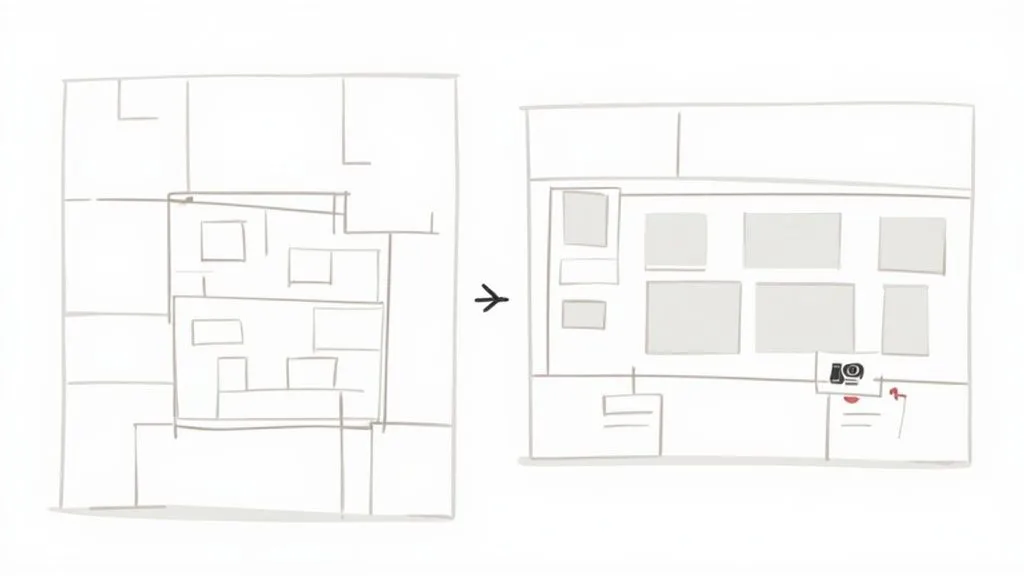
Think of it less like making a Hollywood movie and more like building a custom piece of machinery. Every single component has to be carefully planned and perfectly executed for the final product to work as intended. Just like an architect wouldn’t start building without a blueprint, a video project needs a clear, strategic plan to be effective.
This structured process is broken down into three distinct phases. Each stage builds on the one before it, making sure the final video isn’t just high-quality but is also perfectly aligned with its purpose.
The Three Pillars of Production
The entire workflow rests on these three critical stages, which take your project from an abstract idea to a concrete deliverable. Without this framework, projects often fall victim to scope creep, busted budgets, and a final product that just misses the mark.
- Pre-Production (The Blueprint): This is where all the strategic heavy lifting happens. We're defining the "why" and the "how." This stage covers everything from developing the core concept and writing the script to creating storyboards and handling all the logistics—casting, location scouting, and scheduling. A successful project is almost always decided by the quality of its pre-production.
- Production (The Build): This is the filming stage, where the plan finally comes to life. A crew gets on set to capture all the necessary footage, sound, and visual elements, following the blueprint created during pre-production to a T.
- Post-Production (The Polish): Here’s where all the raw materials get assembled into a finished product. Editors piece together the story, colorists enhance the mood, sound designers mix the audio, and graphic artists add any animations or titles. This is where the real magic happens, turning hours of footage into a compelling narrative.
Shifting your perspective from "making a video" to "producing a strategic asset" is the first step toward unlocking its true business potential. A well-produced video is an investment in clear communication.
Once you understand this process, you start to see video not just as a creative one-off but as a powerful driver for your entire organization. The use cases are incredibly diverse; you can learn more about the specific types of corporate videos and how they apply to different business goals in our detailed guide. From attracting top talent with recruitment videos to closing deals with powerful testimonials, the applications are practically endless.
Why Video Is a Must-Have for Modern Business
In a marketplace overflowing with noise, grabbing—and holding—your audience's attention is everything. While good old text and images still have their place, video consistently blows other content formats out of the water. The reason is simple and hardwired into our psychology: our brains process visuals thousands of times faster than text, making video a ridiculously efficient way to get a message across.
This isn't just a hunch; the numbers back it up in a big way. An incredible 89% of businesses now consider video a core part of their marketing toolkit. Why the massive shift? Because it works. 89% of marketers report a positive ROI from their video efforts, and 87% say it has directly boosted sales.
Connecting Beyond the Screen
What’s the real magic behind business video productions? It’s their ability to weave sight, sound, and motion together to tell a story. This multi-sensory cocktail forges an emotional connection that static content just can't replicate.
Think about it. Reading a product description gives you the facts, but watching a demo showing how that product solves a real problem? That's persuasive. You don't just learn about the features; you see the value in action. It’s this "show, don't tell" approach that builds a deep level of trust and understanding.
A well-crafted video does more than just explain what you do. It conveys your brand's personality, builds trust, and makes your company feel more human and approachable.
This human touch has a direct line to your bottom line. Whether you're trying to generate qualified leads, nudge conversion rates higher, or build lasting customer loyalty, video is a strategic investment that delivers returns across the entire customer journey.
Simplifying the Complex
One of video's superpowers is its ability to make complicated things simple. Whether you’re launching a sophisticated software platform, detailing an intricate manufacturing process, or explaining a new healthcare protocol, video makes the information easy to digest and hard to forget.
- Explainer Videos: These are perfect for breaking down complex products or services into simple, often animated, stories that anyone can grasp.
- How-To Guides: By showing a process step-by-step, these videos empower your customers and can seriously lighten the load on your support teams.
- Testimonials: There’s a world of difference between reading a review and hearing a satisfied customer share their success in their own words. It's authentic, credible, and far more impactful.
To make sure your videos connect with the largest audience possible, don't forget about captioning. Learning how to effectively caption your business videos for SEO and engagement is a crucial step that boosts both accessibility and search visibility.
Ultimately, investing in business video isn’t about chasing trends. It’s about communicating more effectively, building stronger relationships, and driving real, measurable growth for your business.
Choosing the Right Video for Your Business Goals
Picking the right type of video for your business is a lot like choosing the right tool for a job. You wouldn’t use a hammer to saw a plank of wood, and you shouldn’t expect a brand awareness video to close a high-ticket sale. The real key to seeing a return on your business video productions is aligning the video format with your specific business goal.
The secret sauce is mapping your video strategy directly to the customer journey. Different videos shine at different stages, guiding your audience from that first spark of curiosity all the way to becoming a loyal customer. When you're strategic, every single piece of content serves a clear purpose.
Top-of-Funnel Videos for Building Awareness
At the very top of your marketing funnel, the objective is simple: grab attention and introduce your brand to people who've never heard of you. These videos aren't about making a hard sell. They're about creating a memorable first impression and sparking some genuine interest.
- Brand Films: These are your big-picture, story-driven videos. They communicate your company’s mission and values, building an emotional bridge to establish what your brand truly stands for.
- Explainer Videos: Perfect for breaking down complex products, services, or ideas into something anyone can understand. Through clear demonstrations or animation, they answer the fundamental question: "What is this, and why should I even care?"
- Short Social Ads: Think quick, punchy, and engaging clips built for platforms like Instagram, TikTok, and YouTube Shorts. You've got about three seconds to hook them, so the message has to be powerful and concise.
It's crucial to keep up with the latest short-form video trends, as these platforms change at lightning speed. What’s popular today could be old news by next quarter.
It's also impossible to ignore how much media consumption has changed. Back in 2016, the average business video was a lengthy 168 seconds. Fast forward to 2023, and that number has plummeted by 75% to just 76 seconds. This shift is driven by mobile viewing habits, where a staggering 85% of videos are watched without sound. This just underscores the need for short, visually-driven content to cut through the noise.
Mid-Funnel Videos for Nurturing Leads
Okay, so a potential customer knows who you are. Now what? The next step is to build trust and show them you’re the expert. Mid-funnel videos are all about educating and providing real value, positioning your company as the obvious solution to their problems.
A great mid-funnel video answers your prospect's questions before they even have to ask. It builds confidence by showcasing your product's value and your company's credibility in a tangible way.
Product Demo Videos are a classic for a reason. They move beyond a simple list of features to show your product in action, solving a real-world problem. This helps potential buyers actually visualize themselves using your solution and succeeding with it.
Case Study Videos are another incredibly powerful tool. They let your happiest customers do the selling for you. Hearing a success story directly from a peer is often far more persuasive than anything your sales team could say. Our guide on the different types of videos dives deeper into how each format can be used to strengthen your marketing.
To help you get started, here’s a simple table that connects common business goals to the video types that are best suited to achieve them.
Matching Video Type to Business Goal
This table helps businesses choose the right video format based on their specific objective, audience, and stage in the customer journey.
By pairing your objective with the right video format and tracking the corresponding KPI, you can create a much more effective and measurable video strategy.
Bottom-of-Funnel Videos for Driving Conversions
When your audience reaches the bottom of the funnel, they're on the verge of making a decision. These videos are designed to give them that final, confident nudge to take action—whether that's booking a demo, hitting "buy now," or signing on the dotted line.
The goal here is to erase any lingering doubts and make the decision to buy from you feel like a no-brainer.
- Customer Testimonials: These are shorter and more personal than case studies, offering raw, authentic social proof. A simple clip of a happy customer sharing their positive experience can be the tipping point for a hesitant buyer.
- Personalized Sales Videos: A quick, custom video from a sales rep that addresses a prospect's specific questions can skyrocket response rates. It shows you’ve done your homework and are genuinely invested in helping them succeed.
- Onboarding and How-To Videos: While often seen as post-purchase content, these videos can actually help close deals. By showing prospects how easy it is to get started with your product, you reduce any perceived friction and make the "yes" that much easier.
Your Step-by-Step Video Production Workflow
Ever wonder how a business video goes from a simple idea to a polished final cut? It might seem like a chaotic, artistic whirlwind, but professional business video productions actually follow a highly structured, three-phase workflow. Each stage builds directly on the last, making sure the project stays on track, on budget, and true to its original goal.
Think of it like building a house. You wouldn't just start hammering boards together without a detailed architectural blueprint, right? In the same way, you can't start filming without a solid plan. This methodical approach is what separates a professional, high-impact video from an amateur effort.
Phase 1: Pre-Production — The Blueprint
This is, without a doubt, the most critical phase of the whole project. Pre-production is where all the strategic heavy lifting happens. A strong plan at this stage saves you from costly mistakes and headaches down the line. It’s all about nailing down the "why" and "how" before a single camera starts rolling.
Success here comes down to meticulous planning and crystal-clear communication. This stage is the foundation of the entire video and involves several key activities.
- Strategy and Goal Setting: What is this video supposed to accomplish? Is it about generating leads, training new employees, or boosting brand awareness? Defining a clear objective and identifying your target audience will steer every decision that follows.
- Concept and Scriptwriting: This is where the core message and story start to take shape. The script gives you the narrative structure, dialogue, and voiceover, while a storyboard or shot list visually maps out every single scene.
- Logistics and Scheduling: This covers all the practical, real-world details. It means scouting and locking down locations, casting actors or on-screen talent, scheduling the shoot days, and getting the entire crew coordinated and on the same page.
This infographic breaks down the basic decision-making process for choosing the right video for your business goals.
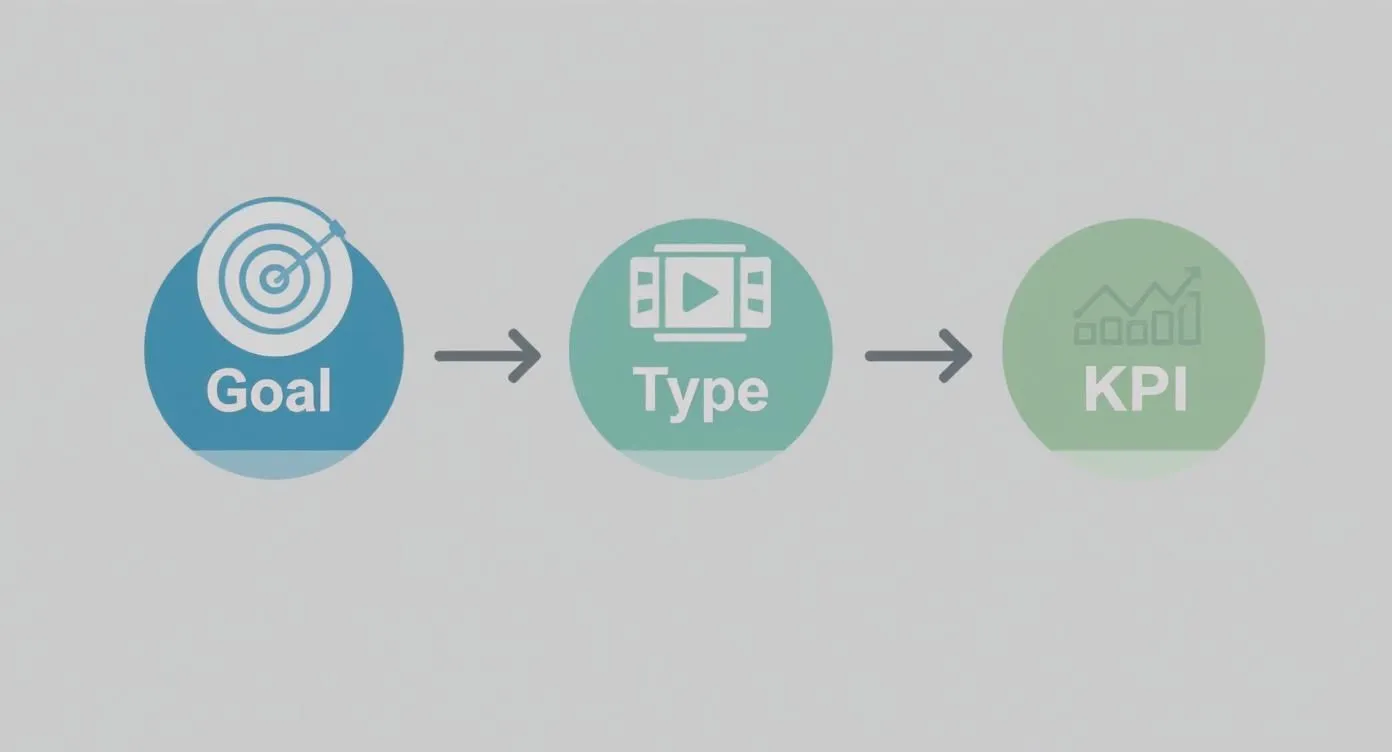
As you can see, every successful video starts with a clear business goal. That goal then dictates the type of video you create and the metrics you'll use to measure its success.
Phase 2: Production — The Build
With a detailed blueprint in hand, it’s time for the production phase—the actual filming. This is what most people picture when they think of video production: cameras, lights, and action. On set, the director and crew work together to bring the script and storyboard to life, capturing all the visual footage and audio needed.
During this stage, the focus shifts from planning to pure execution. The crew, which can be anything from a one-person-band videographer to a large team of specialists, is responsible for a mix of technical and creative tasks.
"The magic of production day lies in translating a written plan into a living, breathing visual story. It's where preparation meets performance."
Key activities during the production phase include setting up lighting to create the perfect mood, operating cameras to capture compelling angles, and recording crystal-clear audio. Every single element is carefully managed to align with the vision that was established back in pre-production. For a more detailed look at what to prepare, our comprehensive video production checklist covers everything you need to remember.
Phase 3: Post-Production — The Polish
Once filming wraps, the project moves into post-production. This is where all the raw materials—hours of footage, audio recordings, and graphics—are assembled, refined, and polished into the final product. It’s a process that demands both technical wizardry and a sharp creative eye.
The post-production workflow is what transforms all that raw footage into a cohesive and engaging story.
- Editing: The editor gets to work, piecing together the best takes and arranging them in a sequence that tells a compelling story. This first version, often called the "rough cut," focuses on structure, pacing, and the overall flow.
- Sound Design and Mixing: Don't forget, audio is just as important as the visuals. This step involves cleaning up dialogue, adding music and sound effects, and balancing all the audio levels to create a rich, immersive auditory experience.
- Color Grading: Colorists adjust the color and tone of the footage to create a consistent, professional look. It’s a crucial step that enhances the mood and ensures the visuals are vibrant and impactful.
- Graphics and Effects: Finally, any motion graphics, text overlays, or special effects are added to put the finishing touches on the video.
After a couple of revision rounds to incorporate feedback, the final video is exported and delivered, ready to be deployed and start achieving its business objective. Each of these phases is absolutely essential for creating high-quality, effective business video content.
How to Budget for Business Video Productions
Let's talk money. Budgeting for business video productions can feel like the trickiest part of the puzzle, but getting it right is one of the most powerful things you can do. A clear budget isn't a limitation; it's a strategic roadmap that aligns your creative vision with what's financially realistic. It makes sure every dollar has a purpose.
Why does one video cost a few thousand dollars while another costs a few hundred thousand? The price tag is a direct reflection of the resources, time, and talent needed to bring your idea to life. Once you understand the core parts that make up the final cost, you can start making smarter, more informed decisions.
Deconstructing Your Video Production Budget
So, where does the money actually go? A professional video budget is never just a single lump sum. It's a collection of individual costs spread across every phase of production, from the first brainstorm to the final export.
Every choice you make—from the complexity of your script to the number of locations you shoot at—directly impacts the bottom line. The real key is knowing which levers you can pull to scale your project up or down to fit your financial comfort zone.
These are the primary factors that will shape your overall cost:
- Concept Complexity and Scope: A simple, interview-style video is far less expensive than a narrative-driven story with actors, multiple locations, and visual effects. The more intricate the concept, the more planning, filming, and editing it will require.
- Crew Size and Expertise: Your team is a huge part of the budget. A basic shoot might just need a videographer and a sound operator. A bigger production could bring in a director, producer, multiple camera operators, lighting techs, and makeup artists—each adding their specialized skill (and cost) to the project.
- Equipment and Gear: To get that polished, professional look, you need professional-grade cameras, lenses, lighting, and audio gear. Costs climb with specialized equipment like drones, gimbals, or high-speed cameras.
- Talent and Locations: Hiring professional actors or getting permits for specific filming locations will add to the budget. On the flip side, using your own office and featuring employees can be a great way to keep costs down.
A well-defined budget isn't about limiting creativity; it's about channeling it. It forces you to be resourceful and make strategic choices that deliver the biggest impact for your investment.
To give you a clearer picture, here’s a quick breakdown of what different budget levels can typically get you.
Video Production Budget Tiers
These ranges are just a starting point, but they illustrate how scope and resources directly influence the final price.
Post-Production's Role in Your Budget
The work is far from over when the cameras stop rolling. Post-production is where the magic really happens and the story comes together, and it accounts for a major slice of your budget. For a much deeper dive, check out our complete guide on video production cost and what to expect.
Here are the key post-production costs to keep in mind:
- Editing: This is where the bulk of the time is spent—sifting through all the footage, building the narrative, and refining the pacing and flow.
- Color Grading: A professional colorist takes the raw footage and enhances it to create a specific mood and a consistent, cinematic look. It's a subtle art that makes a huge difference.
- Sound Design and Mixing: This involves cleaning up dialogue, adding a music track, and layering in sound effects to create a truly immersive audio experience.
- Graphics and Animation: Things like custom motion graphics, animated logos, or visual effects can really elevate a video, but they also add to the cost and timeline.
When you understand these components, you can have a much more productive conversation with a potential production partner. You’ll be able to talk about not just what you want to create, but also what you're prepared to invest, leading to a partnership built on clarity and shared goals from day one.
Finding the Right Video Production Partner
A brilliant video idea is only half the battle. Your project’s success truly hinges on the team you pick to bring that vision to life. The world of business video productions is full of different creative partners, and choosing the right one is a huge strategic decision—it impacts everything from your budget to the final cut.
The goal is to find a partner who does more than just point a camera. You need a team that gets your business goals, acts like a natural extension of your marketing department, and can deliver the goods time and time again. You’ll generally run into three main options: freelancers, traditional agencies, and modern subscription-based models.
Comparing Your Partnership Options
Each model has its own flavor, with clear pros and cons. A freelancer might be your best bet for a straightforward, one-off project. An agency is built to handle massive, complex campaigns. And a subscription service? That's for businesses that need a consistent pipeline of high-quality creative work.
- Freelancers: These are your individual specialists—the videographers, editors, and animators who are perfect for specific, clearly defined tasks. They’re flexible and often the most budget-friendly choice for smaller jobs, but trying to juggle multiple freelancers for a bigger project can quickly turn into a logistical nightmare.
- Traditional Agencies: A full-service agency rolls deep with an entire team, managing everything from high-level strategy to final execution. They are the go-to for big-budget, high-stakes projects like a national TV spot, but their hefty overhead and project-by-project pricing can be a dealbreaker for businesses needing ongoing content.
- Subscription Models: This is a newer approach where partners like Moonb provide a complete creative team for a flat monthly fee. This model is all about consistency. It gives you a predictable budget and a reliable output, which is perfect for businesses that need a steady stream of videos and graphics without the headaches of scope creep or the hiring process.
Key Questions to Ask Any Potential Partner
Before you sign on the dotted line, you have to do your homework. A few pointed questions can tell you everything you need to know about a potential partner's process, expertise, and whether they’re actually on the same page as you. A great partner isn't just a vendor; they're a collaborator who's as invested in your success as you are.
To make sure you find that perfect match, you need a solid evaluation process. For a detailed checklist, check out our guide on how to choose a video production company. It lays out a complete framework to help you make the right call.
The best creative partnerships are built on a shared understanding of your "why." A partner who is curious about your business goals—not just your video specs—is far more likely to produce work that truly moves the needle.
Here are a few essential questions to get the conversation started:
- Can you walk me through your creative process from start to finish? A clear, structured workflow is a dead giveaway that you’re dealing with a professional and reliable team.
- How do you measure the success of a video project? You want to hear answers that go beyond vanity metrics. Look for partners who tie video performance to real business goals, like lead generation or conversion rates.
- What is your revision and feedback process like? A project lives or dies by its feedback loop. A collaborative and well-defined process is critical for keeping things on track and ensuring you love the final product.
- How will you get to know our brand, audience, and goals? The right partner will have a real onboarding process designed to get them completely immersed in your world.
Common Questions About Business Video Production
Diving into business video productions for the first time is exciting, but it almost always comes with a few practical questions. Getting a handle on the process is the best way to move forward with confidence. Below, we'll clear up some of the most common things businesses wonder about when they start their video journey.
Our goal is simple: give you the clarity you need to make smart decisions and get your video strategy off to a great start.
How Long Does a Video Project Usually Take?
Honestly, timelines can be all over the map depending on what we're creating. A simple, straightforward testimonial video? We could probably wrap that up in 2-4 weeks, from the first call to the final file. But a bigger, more involved brand film or a detailed animated explainer video could take anywhere from 6-12 weeks, sometimes even longer.
No matter the project, the timeline always breaks down into three core phases:
- Pre-Production: This is all the upfront planning, strategy, and creative development. It often takes up the most time because getting this part right is what makes the rest of the process smooth.
- Production: The actual shoot days might only be a few days, even for a larger project. It’s the most visible part, but often the shortest.
- Post-Production: Here’s where the magic happens. Editing, motion graphics, sound design, and revisions take up a good chunk of the total project timeline.
One of the most important things you can do at kickoff is to get a clear timeline for each phase from your production partner. It sets expectations for everyone and keeps the project from going off the rails.
Who Owns the Final Video and Raw Footage?
This is a big one, and it absolutely needs to be spelled out in your contract. In most standard agreements, you (the client) own the rights to the final, delivered video for its intended use. You can put it on your website, share it on social media, and run it in your campaigns—no problem.
Where it gets tricky is the raw, unedited footage and all the project files. The production company usually hangs onto ownership of that. If you think you might need those raw clips for other projects down the road, you'll want to negotiate a buyout or a specific licensing agreement before any work begins. Always, always clarify ownership upfront to avoid headaches later.
What Does a Standard Revision Process Look Like?
A good, structured feedback process is what keeps a project on schedule and on budget. Most production partners will build two to three rounds of revisions into their workflow. Each round has a specific job to do, getting the video closer to that polished final version.
- Rough Cut: Your first look is all about the big picture. Is the story right? Does the structure make sense? Is the overall message coming through?
- Fine Cut: In the second round, we get more granular. We're looking at things like pacing, which specific shots are used, and the timing of any graphics.
- Final Polish: This last round is for the tiny tweaks—minor color adjustments, sound mixing touch-ups, or fixing a small typo in a graphic.
The key to making this work smoothly is giving clear, consolidated feedback at each stage. It's the secret to a great collaboration and a video everyone is proud of.